

- Industry Size (2025)
- USD 10.2 Mn
- Forecast (2035)
- USD 14.7 Mn
- CAGR (2025 to 2035)
- 3.8%
Demand for Systemic Lupus Erythematosus (SLE) Drugs in Japan Forecast and Outlook 2025 to 2035
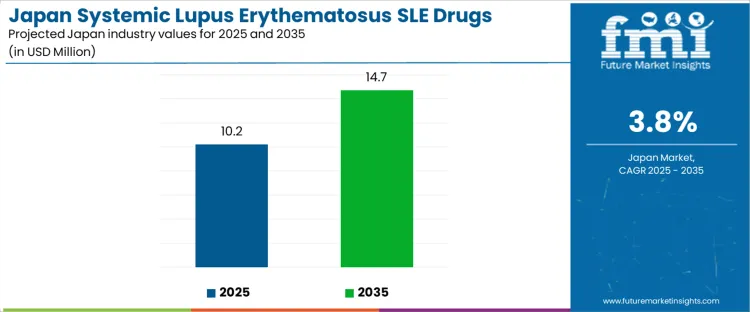
Demand for systemic lupus erythematosus (SLE) drugs in Japan is expected to grow from USD 10.2 million in 2025 to USD 14.7 million by 2035, reflecting a compound annual growth rate (CAGR) of 3.8%. This growth is driven by the increasing prevalence of lupus in Japan and by advancements in the development of new treatments that better manage the symptoms and progression of the disease. SLE, an autoimmune condition that primarily affects women, often requires long-term therapy. With the ongoing development of targeted biologic therapies and novel medications, the demand for these drugs is expected to rise.
The industry is also supported by Japan’s aging population, which is more susceptible to autoimmune diseases like lupus. Furthermore, as more effective therapies are introduced, patients will experience improved outcomes, increasing the number of individuals requiring treatment. As awareness of the disease grows and more treatment options become available, the market for SLE drugs is projected to expand steadily over the next decade.
Quick Stats of the Demand for Systemic Lupus Erythematosus (SLE) Drugs in Japan
- Demand for Systemic Lupus Erythematosus (SLE) Drugs in Japan Value (2025): USD 10.2 million
- Demand for Systemic Lupus Erythematosus (SLE) Drugs in Japan Forecast Value (2035): USD 14.7 million
- Demand for Systemic Lupus Erythematosus (SLE) Drugs in Japan Forecast CAGR (2025-2035): 3.8%
- Demand for Systemic Lupus Erythematosus (SLE) Drugs in Japan Leading Route of Administration: Oral (50.0%)
- Demand for Systemic Lupus Erythematosus (SLE) Drugs in Japan Key Growth Regions: Kyushu & Okinawa, Kanto, Kansai, Chubu, Tohoku, Rest of Japan
- Demand for Systemic Lupus Erythematosus (SLE) Drugs in Japan Key Players: GSK plc, Anthera Pharmaceuticals BMS, ImmuPharma, Merck KGaA, UCB S.A.
What is the Growth Forecast for the Systemic Lupus Erythematosus (SLE) Drug Market through 2035?
Inflection point mapping for the systemic lupus erythematosus (SLE) drug market in Japan shows a steady, consistent increase in market value with key moments of acceleration. Starting at USD 10.2 million in 2025, the market gradually increases to USD 10.6 million in 2026 and USD 11.0 million in 2027. These early years reflect initial growth driven by the introduction of new treatments and the growing recognition of lupus as a serious, chronic condition. The demand for SLE drugs increases as healthcare providers integrate newer therapies into their treatment protocols and more patients seek better options for managing the disease.
From 2028 onward, the growth trajectory accelerates, with the market reaching USD 11.4 million in 2028 and USD 11.8 million in 2029, marking the first significant inflection point. This acceleration reflects the growing availability and adoption of novel biologic treatments that offer more effective disease management. By 2030, market will reach USD 12.3 million, driven by continued advancements in drug development and a rising patient population. Pace of growth remains steady, with the market reaching USD 12.7 million in 2031, USD 13.2 million in 2032, and USD 13.7 million in 2033, before ultimately reaching USD 14.7 million in 2035.
Key Takeaways of Systemic Lupus Erythematosus (SLE) Drugs Industry in Japan
| Metric | Value |
|---|---|
| Industry Sales Value (2025) | USD 10.2 million |
| Industry Forecast Value (2035) | USD 14.7 million |
| Industry Forecast CAGR (2025-2035) | 3.8% |
What Is Driving the Demand for Systemic Lupus Erythematosus (SLE) Drugs in Japan?
Demand for SLE drugs in Japan is shaped by the persistent prevalence of the disease, rising diagnosis and treatment rates, and increasing awareness of autoimmune disorders among both patients and healthcare providers. Epidemiological data indicate that SLE affects a significant portion of the population, with recent studies identifying thousands of patients across various age groups. Most SLE patients are treated with glucocorticoids, immunosuppressants, or other therapies. Treatment demand is driven by the chronic and systemic nature of SLE, which can affect multiple organs and requires ongoing management. Growing medical infrastructure, improved diagnostic capabilities, and increased physician awareness have contributed to higher detection rates and a greater need for effective SLE drug therapies.
Future demand for SLE drugs in Japan is expected to rise as treatment strategies evolve and new therapies become available. The development of targeted therapies, including biologic agents and small-molecule inhibitors that target immune pathways, addresses unmet needs arising from the variable manifestations of SLE across individuals. Expanding treatment options beyond conventional immunosuppressants and corticosteroids will broaden the patient pool eligible for therapy. Ongoing research and increasing awareness of autoimmune disease management will likely support higher uptake of advanced drugs. The regulatory environment in Japan appears favorable for the introduction of innovative therapies that offer improved safety and disease control.
What Are the Key Segments in Systemic Lupus Erythematosus (SLE) Drugs Market in Japan?
The systemic lupus erythematosus (SLE) drugs market in Japan is segmented by drug class and route of administration. NSAIDs lead the drug class segment, accounting for 30% of the market share. In terms of route of administration, oral drugs dominate, representing 50% of the market. The increasing prevalence of SLE and the need for effective treatments are driving the demand for various drug classes and administration methods in Japan.
Which Drug Class Drives SLE Drug Demand in Japan?
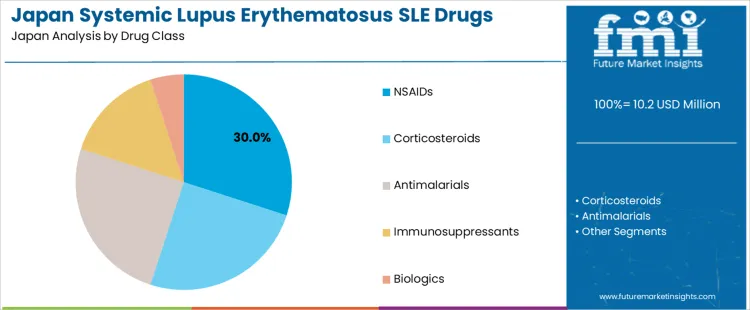
NSAIDs (Non-Steroidal Anti-Inflammatory Drugs) lead the drug class segment for SLE treatment in Japan, holding 30% of the market share. NSAIDs are commonly used to manage inflammation and pain associated with SLE, particularly during flare-ups. These drugs provide symptomatic relief by reducing inflammation, fever, and pain, making them a first-line treatment option for many patients. Although corticosteroids, antimalarials, and immunosuppressants are also important in managing the disease, NSAIDs remain popular for their effectiveness in controlling mild to moderate symptoms of SLE. As SLE is a chronic autoimmune disease characterized by periods of remission and flare-ups, NSAIDs play a crucial role in managing these episodes and improving the patient's quality of life.
Which Route of Administration Drives SLE Drug Demand in Japan?
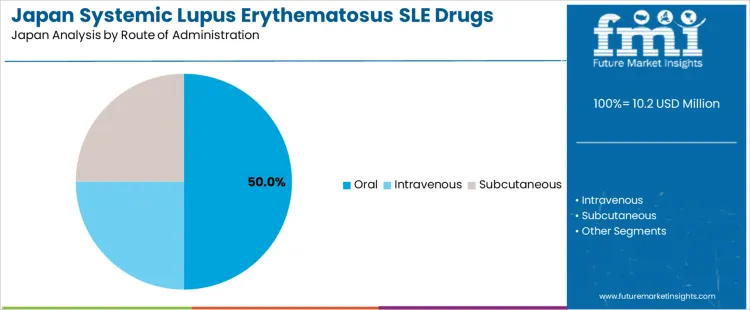
Oral administration is the most common route for SLE drugs in Japan, accounting for 50% of the market share. Oral medications, such as NSAIDs, antimalarials (e.g., hydroxychloroquine), and corticosteroids, are preferred due to their convenience, ease of use, and the ability to manage the chronic nature of SLE effectively at home. Oral drugs provide patients with a non-invasive and manageable treatment option for long-term control of their condition.
While intravenous and subcutaneous routes are used for biologics and some immunosuppressive treatments in more severe cases, the preference for oral drugs remains dominant due to patient comfort, cost-effectiveness, and adherence to treatment regimens. The demand for oral SLE drugs is expected to continue to grow, particularly as more treatments become available in convenient oral formulations.
What is the Demand for Systemic Lupus Erythematosus (SLE) Drugs in Japan?
Demand for systemic lupus erythematosus (SLE) drugs in Japan is increasing due to the rising prevalence of lupus and the growing awareness of the condition. SLE is a chronic autoimmune disease that causes inflammation and affects various organs in the body, including the skin, joints, kidneys, and heart. As the understanding of lupus and its impact on patient health improves, the need for effective treatment options is growing. The market for SLE drugs in Japan is expanding, driven by advances in drug development, increasing healthcare access, and the emphasis on personalized medicine for autoimmune diseases.
What are the Drivers of Demand for SLE Drugs in Japan?
Several factors are driving the demand for SLE drugs in Japan. First, the increasing prevalence of autoimmune diseases, including lupus, is contributing to the rising need for effective treatments. As more people are diagnosed with SLE, especially among women in their childbearing years, the demand for specific therapies designed to manage the condition is growing. Second, the advances in drug development, including biologics and targeted therapies, have significantly improved the treatment options available for SLE, leading to better patient outcomes and encouraging adoption by healthcare providers.
Third, Japan’s healthcare system’s strong focus on improving patient outcomes and managing chronic diseases is supporting the growing demand for innovative treatments. Additionally, the growing emphasis on personalized medicine, where treatments are tailored to individual genetic profiles, is fueling the development and use of drugs that offer better efficacy and fewer side effects for lupus patients.
What are the Restraints on Demand for SLE Drugs in Japan?
Despite the increasing demand, several challenges may limit the widespread adoption of SLE drugs in Japan. One key restraint is the high cost of advanced SLE treatments, particularly biologic drugs, which can be expensive for both patients and healthcare systems. This high cost may limit access to these treatments, particularly for individuals without comprehensive insurance coverage. Another challenge is the potential side effects of some SLE drugs, which may limit their use or require careful monitoring, particularly for biologics and immunosuppressive therapies.
Additionally, the long-term nature of SLE treatment requires ongoing management, and some patients may experience difficulty adhering to prolonged treatment regimens. Finally, the limited availability of newer treatment options in some regions, especially in rural areas, may hinder broader access to effective therapies.
What are the Key Trends Influencing Demand for SLE Drugs in Japan?
Several key trends are shaping the demand for SLE drugs in Japan. One major trend is the growing adoption of biologic therapies and other targeted treatments, which offer more effective and specific ways to manage SLE compared to traditional medications. Another trend is the increasing focus on precision medicine and individualized treatment plans, allowing for more tailored therapies that suit the unique needs of each lupus patient.
The rising awareness of autoimmune diseases and their impact on quality of life is also contributing to the demand for better treatment options. Additionally, improvements in diagnostic techniques are enabling earlier detection and better management of SLE, leading to a greater need for effective and timely drug interventions. Lastly, as the understanding of SLE continues to evolve, research into new drug candidates and therapies is expected to further enhance treatment options for patients, driving continued growth in the market.
What is the Regional Demand Outlook for Systemic Lupus Erythematosus (SLE) Drugs in Japan?
Systemic Lupus Erythematosus (SLE) Drugs market in Japan is projected to grow steadily, with Kyushu & Okinawa leading the way at a projected CAGR of 4.7%. Kanto follows closely with a growth rate of 4.3%, while Kansai is expected to grow at 3.8%. Chubu is projected to grow at a rate of 3.3%, while Tohoku and Rest of Japan show more moderate growth, with CAGRs of 2.9% and 2.8%, respectively. As the prevalence of autoimmune diseases like SLE increases and advancements in treatment options continue, the demand for SLE drugs is expected to rise across Japan.
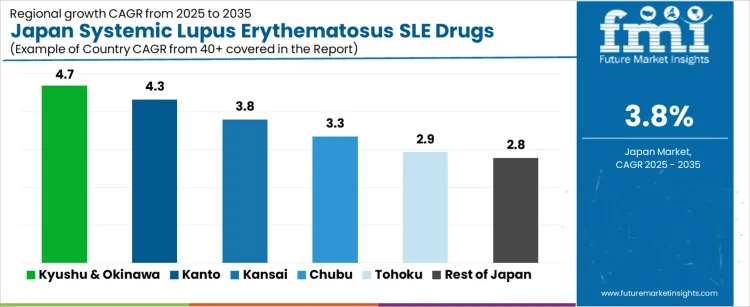
| Region | CAGR (2025-2035) |
|---|---|
| Kyushu & Okinawa | 4.7% |
| Kanto | 4.3% |
| Kansai | 3.8% |
| Chubu | 3.3% |
| Tohoku | 2.9% |
| Rest of Japan | 2.8% |
What is Driving the Growth of SLE Drugs in Kyushu & Okinawa?
Kyushu & Okinawa is projected to experience the highest growth in the SLE Drugs market, with a projected CAGR of 4.7%. The region’s increasing incidence of autoimmune diseases, particularly SLE, combined with growing awareness and advancements in treatment options, is driving demand for SLE drugs. As the population in Kyushu & Okinawa ages, the number of individuals diagnosed with autoimmune conditions is rising.
This, in turn, increases the need for effective treatments to manage SLE symptoms and improve patients’ quality of life. The region’s healthcare providers are increasingly adopting biologic therapies and immunosuppressive drugs that are proven to be effective in controlling the disease. Moreover, the focus on enhancing healthcare services and providing specialized care for autoimmune diseases is contributing to the expansion of the SLE drug market in Kyushu & Okinawa.
Why is the SLE Drug Market Expanding in Kanto?
In Kanto, the demand for SLE drugs is projected to grow at a CAGR of 4.3%. As Japan’s most populous region and a hub for healthcare innovation, Kanto is at the forefront of adopting new and effective treatments for chronic diseases, including autoimmune disorders like SLE. Cities like Tokyo and Yokohama have a large patient population, with many individuals suffering from SLE and other autoimmune diseases.
Healthcare providers in the region are increasingly offering advanced biologics and targeted therapies for SLE patients to improve disease management and minimize flare-ups. The region’s strong healthcare infrastructure, combined with research initiatives focused on autoimmune diseases, is driving the adoption of more effective treatments. As awareness of the disease and its treatments continues to rise, the market for SLE drugs in Kanto is expected to expand steadily.
How is the SLE Drug Market Growing in Kansai?
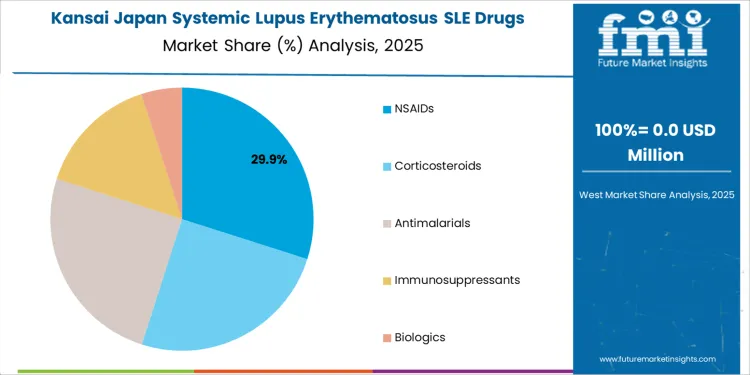
In Kansai, the SLE Drugs market is projected to grow at a CAGR of 3.8%. Kansai, which includes major cities such as Osaka and Kyoto, has a well-established healthcare system and a growing focus on providing specialized treatments for autoimmune diseases like SLE. The region is witnessing an increase in the number of SLE diagnoses, driven by factors such as an aging population and greater awareness of the condition. As the need for effective management of autoimmune diseases rises, Kansai’s healthcare providers are increasingly adopting advanced therapies, such as biologics and disease-modifying drugs, to improve patient outcomes. Furthermore, Kansai’s focus on improving healthcare access and offering cutting-edge treatments is contributing to the steady growth of the SLE drugs market in the region.
What is Contributing to the Growth of SLE Drugs in Chubu?
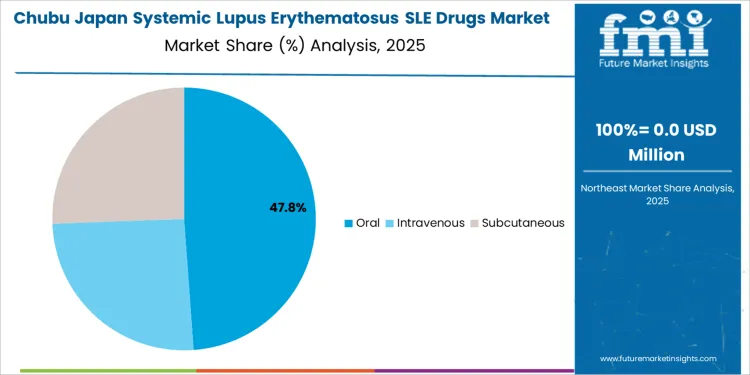
In Chubu, the SLE Drugs market is expected to grow at a CAGR of 3.3%. The region’s increasing healthcare investments and the rising number of patients diagnosed with autoimmune diseases are driving the demand for SLE drugs. Chubu, with cities like Nagoya, has a growing healthcare market, with hospitals and clinics increasingly adopting advanced therapies to treat SLE and other autoimmune conditions. The rise in awareness of the benefits of targeted therapies and biologics is also contributing to the demand for these drugs. Although the growth rate in Chubu is slower compared to Kyushu & Okinawa and Kanto, the market is expected to expand steadily as healthcare providers continue to offer better disease management options for patients with SLE.
What is Influencing the Growth of SLE Drugs in Tohoku?
In Tohoku, the SLE Drugs market is projected to grow at a CAGR of 2.9%. While the growth rate is more moderate compared to other regions, the demand for effective SLE treatments is rising due to an aging population and increasing healthcare awareness. Tohoku’s healthcare providers are becoming more focused on improving treatment outcomes for patients with chronic conditions like SLE. The increasing availability of advanced treatments and the adoption of biologic therapies are expected to drive the market in the region. As healthcare infrastructure improves and access to specialized care for autoimmune diseases becomes more widespread, the market for SLE drugs in Tohoku is expected to grow gradually.
What is Contributing to the Growth of SLE Drugs in Rest of Japan?
In Rest of Japan, the SLE Drugs market is expected to grow at a more moderate rate of 2.8%. While the region does not have as large a patient population as major metropolitan areas, there is still a growing need for effective treatments for autoimmune diseases like SLE. Healthcare providers in Rest of Japan are increasingly offering advanced drug options, including biologics, to patients suffering from SLE. The growing awareness of the condition, combined with expanding access to medical care in rural areas, is contributing to steady market growth. As healthcare systems continue to prioritize improved care for autoimmune diseases, the demand for SLE drugs in Rest of Japan is expected to rise at a steady pace.
What is the Competitive Landscape for Demand for Systemic Lupus Erythematosus (SLE) Drugs in Japan?
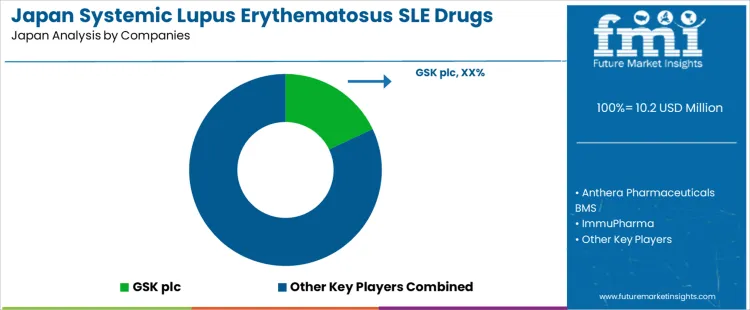
Demand for SLE drugs in Japan is rising as awareness of autoimmune diseases improves and diagnostic capabilities increase. Estimates suggest there are between 60,000 and 100,000 people living with SLE in Japan, with the condition affecting mostly women and commonly diagnosed between ages 20 and 40. As more patients seek treatment to manage flares, organ involvement, and long-term outcomes, the overall burden on healthcare grows, which increases the need for effective and sustained SLE therapies. In addition to traditional therapies such as immunosuppressants, calcineurin inhibitors, corticosteroids, and antimalarials, there is growing interest in advanced biologic and targeted treatments that promise better disease control and fewer side effects.
On the supply side, a number of global pharmaceutical firms compete to capture share of the Japanese SLE drugs market. Among those named, GSK plc holds a leading share, followed by Anthera Pharmaceuticals, BMS, ImmuPharma, Merck KGaA, and UCB S.A. These companies aim to address the unmet need for safer and more effective SLE therapies in Japan by advancing biologics, immunomodulators, and newer active drugs.
As more treatment options become available and regulatory approvals expand, competition centers on drug efficacy in controlling flares, organ protection (especially renal involvement), safety profiles, ease of administration (oral vs injectable), and long-term tolerability. Firms that invest in clinical research, regulatory compliance, and patient support infrastructure are best positioned to lead as demand for SLE drugs continues to rise in Japan.
Key Players of the Systemic Lupus Erythematosus (SLE) Drugs Industry in Japan
- GSK plc
- Anthera Pharmaceuticals BMS
- ImmuPharma
- Merck KGaA
- UCB S.A.
Scope of the Report
| Items | Details |
|---|---|
| Quantitative Units | USD Million |
| Regions Covered | Japan |
| Drug Class | NSAIDs; Corticosteroids; Antimalarials; Immunosuppressants; Biologics |
| Route of Administration | Oral; Intravenous; Subcutaneous |
| Distribution Channel | Hospital Pharmacies; Retail Pharmacies; Online Pharmacies |
| Key Companies Profiled | GSK plc; Anthera Pharmaceuticals / BMS; ImmuPharma; Merck KGaA; UCB S.A. |
| Additional Attributes | Dollar sales by drug class and route show that corticosteroids and immunosuppressants remain widely used for SLE in Japan, while biologics are gradually gaining share as add-on therapies - especially for patients with inadequate response to conventional treatment. Rising diagnosis rates, growing awareness of SLE, and improved access to care and reimbursement support increasing demand. |
Key Segments in the Demand for Systemic Lupus Erythematosus (SLE) Drugs in Japan
Drug Class
- NSAIDs
- Corticosteroids
- Antimalarials
- Immunosuppressants
- Biologics
Route of Administration
- Oral
- Intravenous
- Subcutaneous
Distribution Channel
- Hospital Pharmacies
- Retail Pharmacies
- Online Pharmacies
Region
- Kyushu & Okinawa
- Kanto
- Kansai
- Chubu
- Tohoku
- Rest of Japan
Frequently Asked Questions
How big is the demand for systemic lupus erythematosus SLE drugs in Japan in 2025?
The demand for systemic lupus erythematosus SLE drugs in Japan is estimated to be valued at USD 10.2 million in 2025.
What will be the size of systemic lupus erythematosus SLE drugs in Japan in 2035?
The market size for the systemic lupus erythematosus SLE drugs in Japan is projected to reach USD 14.7 million by 2035.
How much will be the demand for systemic lupus erythematosus SLE drugs in Japan growth between 2025 and 2035?
The demand for systemic lupus erythematosus SLE drugs in Japan is expected to grow at a 3.8% CAGR between 2025 and 2035.
What are the key product types in the systemic lupus erythematosus SLE drugs in Japan?
The key product types in systemic lupus erythematosus SLE drugs in Japan are nsaids, corticosteroids, antimalarials, immunosuppressants and biologics.
Which route of administration segment is expected to contribute significant share in the systemic lupus erythematosus SLE drugs in Japan in 2025?
In terms of route of administration, oral segment is expected to command 50.0% share in the systemic lupus erythematosus SLE drugs in Japan in 2025.
Preview the report firsthand - request a free sample
Get SampleGet the brochure for pricing and purchase details.
Get PDFTable of Content
- Executive Summary
- Japan Market Outlook
- Demand-side Trends
- Supply-side Trends
- Technology Roadmap Analysis
- Analysis and Recommendations
- Market Overview
- Market Coverage / Taxonomy
- Market Definition / Scope / Limitations
- Market Background
- Market Dynamics
- Drivers
- Restraints
- Opportunity
- Trends
- Scenario Forecast
- Demand in Optimistic Scenario
- Demand in Likely Scenario
- Demand in Conservative Scenario
- Opportunity Map Analysis
- Product Life Cycle Analysis
- Supply Chain Analysis
- Investment Feasibility Matrix
- Value Chain Analysis
- PESTLE and Porter’s Analysis
- Regulatory Landscape
- Regional Parent Market Outlook
- Production and Consumption Statistics
- Import and Export Statistics
- Market Dynamics
- Japan Market Analysis 2020 to 2024 and Forecast, 2025 to 2035
- Historical Market Size Value (USD Million) Analysis, 2020 to 2024
- Current and Future Market Size Value (USD Million) Projections, 2025 to 2035
- Y-o-Y Growth Trend Analysis
- Absolute $ Opportunity Analysis
- Japan Market Pricing Analysis 2020 to 2024 and Forecast 2025 to 2035
- Japan Market Analysis 2020 to 2024 and Forecast 2025 to 2035, By Drug Class
- Introduction / Key Findings
- Historical Market Size Value (USD Million) Analysis By Drug Class , 2020 to 2024
- Current and Future Market Size Value (USD Million) Analysis and Forecast By Drug Class , 2025 to 2035
- NSAIDs
- Corticosteroids
- Antimalarials
- Immunosuppressants
- Biologics
- Y-o-Y Growth Trend Analysis By Drug Class , 2020 to 2024
- Absolute $ Opportunity Analysis By Drug Class , 2025 to 2035
- Japan Market Analysis 2020 to 2024 and Forecast 2025 to 2035, By Route of Administration
- Introduction / Key Findings
- Historical Market Size Value (USD Million) Analysis By Route of Administration, 2020 to 2024
- Current and Future Market Size Value (USD Million) Analysis and Forecast By Route of Administration, 2025 to 2035
- Oral
- Intravenous
- Subcutaneous
- Y-o-Y Growth Trend Analysis By Route of Administration, 2020 to 2024
- Absolute $ Opportunity Analysis By Route of Administration, 2025 to 2035
- Japan Market Analysis 2020 to 2024 and Forecast 2025 to 2035, By Distribution Channel
- Introduction / Key Findings
- Historical Market Size Value (USD Million) Analysis By Distribution Channel, 2020 to 2024
- Current and Future Market Size Value (USD Million) Analysis and Forecast By Distribution Channel, 2025 to 2035
- Hospital Pharmacies
- Retail Pharmacies
- Online Pharmacies
- Y-o-Y Growth Trend Analysis By Distribution Channel, 2020 to 2024
- Absolute $ Opportunity Analysis By Distribution Channel, 2025 to 2035
- Market Structure Analysis
- Competition Dashboard
- Competition Benchmarking
- Market Share Analysis of Top Players
- By Regional
- By Drug Class
- By Route of Administration
- By Distribution Channel
- Competition Analysis
- Competition Deep Dive
- GSK plc
- Overview
- Product Portfolio
- Profitability by Market Segments (Product/Age /Sales Channel/Region)
- Sales Footprint
- Strategy Overview
- Marketing Strategy
- Product Strategy
- Channel Strategy
- Anthera Pharmaceuticals BMS
- ImmuPharma
- Merck KGaA
- UCB S.A.
- GSK plc
- Competition Deep Dive
- Assumptions & Acronyms Used
- Research Methodology


