

- Industry Size (2026)
- USD 304 Mn
- Forecast (2036)
- USD 713 Mn
- CAGR (2026 to 2036)
- 8.9%
Label, Adhesive and Ink Systems for High-Recyclability Plastic Packaging Market Forecast and Outlook 2026 to 2036
The market for label, adhesive, and ink systems supporting high-recyclability plastic packaging begins at USD 304 million in 2026 and is expected to reach USD 713 million by 2036, reflecting a CAGR of 8.9%. Initial growth from 2026 to 2031, rising from roughly USD 304 million to USD 451 million in cumulative value, is fueled by adoption in food, beverage, and FMCG packaging. Sustainable adhesives and recyclable-compatible inks encourage early implementation, while compliance with regulatory mandates and circular economy principles drives uptake among leading brands and converters.
Over the latter half of the forecast period, from 2031 to 2036, cumulative market value accelerates from approximately USD 488 million to USD 713 million. Growth is reinforced by broader industrial adoption, improvements in adhesive and ink chemistries, and scaling across multi-national packaging lines. Compounded gains result from repeat procurement, operational efficiency improvements, and regulatory incentives supporting recyclability. The long-term accumulation curve illustrates both direct revenue growth and structural value creation through sustainable packaging integration, indicating a resilient and expanding market trajectory.
Quick Stats of the Label, Adhesive and Ink Systems for High-Recyclability Plastic Packaging Market
- Label, Adhesive and Ink Systems for High-Recyclability Plastic Packaging Market Value (2026): USD 304 million
- Label, Adhesive and Ink Systems for High-Recyclability Plastic Packaging Market Forecast Value (2036): USD 713 million
- Label, Adhesive and Ink Systems for High-Recyclability Plastic Packaging Market Forecast CAGR (2026-2036): 8.9%
- Leading Packaging Format in Label, Adhesive and Ink Systems for High-Recyclability Plastic Packaging Market: Roll-stock Labels & Shrink Sleeves (45%)
- Key Growth Regions in Label, Adhesive and Ink Systems for High-Recyclability Plastic Packaging Market: India, China, USA, Brazil, Germany, Japan
- Top Players in Label, Adhesive and Ink Systems for High-Recyclability Plastic Packaging Market: Avery Dennison, Henkel, Siegwerk, LINTEC, BASF, CCL, Shantou Label, UFlex, Huhtamaki India, Aplix, Toyo Ink
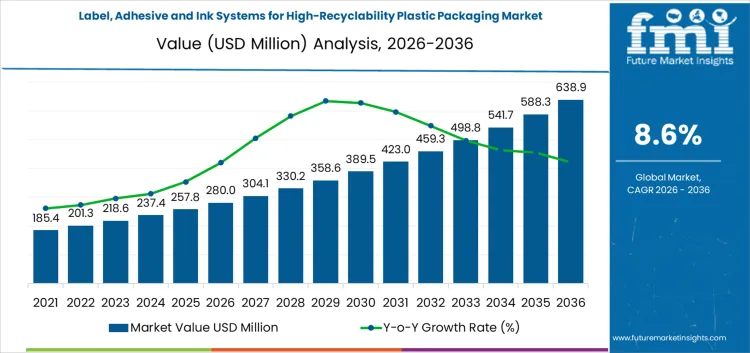
What is the Growth Forecast for the Label, Adhesive and Ink Systems for High-Recyclability Plastic Packaging Market through 2036?
From 2026 to 2031, the label, adhesive, and ink systems market grows from USD 304 million to approximately USD 451 million, representing the first half-decade weighted growth phase. Expansion in this period is driven by early adoption in food, beverage, and personal care packaging where high-recyclability plastic formats require compatible labeling solutions. Growth is concentrated in pilot programs and selective SKUs as manufacturers validate adhesion, print clarity, and recyclability performance. Year-on-year value additions increase gradually, reflecting cautious scaling, tooling optimization, and alignment with evolving recycling standards.
Between 2031 and 2036, the market expands from roughly USD 451 million to USD 713 million, marking the second half-decade weighted growth phase. Growth accelerates as compatible labels, adhesives, and inks become embedded in high-volume production lines and multi-SKU portfolios. Annual value additions are significantly higher in this phase due to broader adoption across global packaging networks, repeat procurement, and standardization of sustainable labeling practices. Early expansion relied on selective deployment and validation, while later growth is driven by portfolio-wide integration, scaled production, and consistent compliance with high-recyclability standards across diverse packaging applications.
Label Adhesive and Ink Systems for High Recyclability Plastic Packaging Market Key Takeaways
| Metric | Value |
|---|---|
| Market Value (2026) | USD 304 million |
| Forecast Value (2036) | USD 713 million |
| Forecast CAGR (2026-2036) | 8.9% |
What Is Driving the Demand for Label, Adhesive and Ink Systems for High-Recyclability Plastic Packaging?
Initial demand for label, adhesive, and ink systems tailored to high-recyclability plastic packaging emerged from material compatibility challenges in mechanical recycling streams. Traditional labels and adhesives often impeded clean separation of polymers, reducing the quality of recovered resin and limiting reuse potential. Early adopters in beverage, personal care, and consumer goods sectors began testing solutions that facilitated easier detachment during sorting and wash processes. Historical adoption reflected pressure from brand owners seeking incremental improvements in recyclability claims and compliance with emerging voluntary guidelines. Uptake remained selective due to cost differentials and limited infrastructure that could fully capitalise on enhanced separability, keeping demand concentrated in premium segments rather than across broad packaging portfolios.
Future demand for specialised label, adhesive, and ink systems is expected to align with evolving regulatory frameworks and circular economy requirements rather than incremental performance adjustments alone. Policy developments in major markets are introducing recyclability definitions, mandatory design for recycling criteria, and extended producer responsibility schemes that factor in adhesive residue and label removal efficiency. Packaging developers are prioritising formulations that support clean release in standard recycling processes without compromising visual clarity or adhesion during use. Advances in water soluble and heat release adhesive technologies, alongside minimal impact ink chemistries, will expand application scope. Unlike historical demand driven by pilot projects and selective brand positioning, future growth will be compliance led and integrated into end-to-end packaging design strategies. Adoption will widen as recyclers enhance sorting capabilities and material recovery targets tighten.
What Factors Are Affecting the Demand for Label Adhesive and Ink Systems for High Recyclability Plastic Packaging Market in Terms of End Use Application and Packaging Format and Type?
Demand for label, adhesive, and ink systems designed for high recyclability plastic packaging is segmented by end use application and packaging format and type. Beverage and FMCG applications account for about 40% of total demand, making this the leading end use segment. Personal care, food packaging, retail and industrial uses, and logistics and shipping labels represent additional applications without disclosed share splits. These segments differ in labeling speed, substrate compatibility, and regulatory exposure. High recyclability requirements influence adhesive wash off performance, ink migration control, and label separation behavior. Packaging format and type determine system selection and compliance outcomes. Together, these segments explain demand distribution based on packaging volumes, recycling constraints, and operational labeling requirements rather than branding driven differentiation.
What Drives Demand by End Use Application in the Label Adhesive and Ink Systems for High Recyclability Plastic Packaging Market?
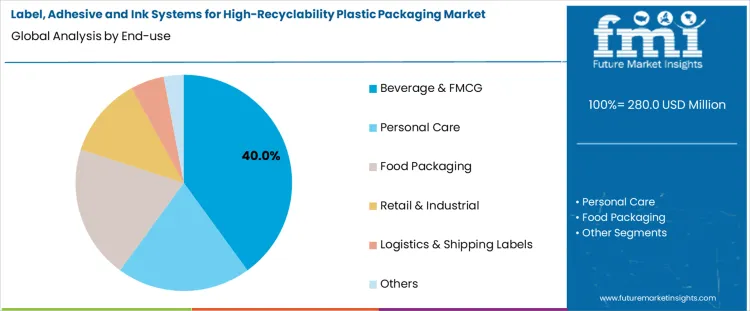
Beverage and FMCG applications lead demand with a 40% share due to high labeling volumes and stringent recycling performance requirements. These products rely on labels and inks that separate cleanly during recycling processes. Personal care applications prioritize durability and aesthetics while meeting recyclability criteria. Food packaging requires inks and adhesives that comply with safety and migration standards. Retail and industrial labeling emphasizes barcode clarity and adhesion across varied handling conditions. Logistics and shipping labels demand reliable performance during transport while minimizing contamination in recycling streams. Adoption intensity correlates with packaging throughput and regulatory scrutiny. End use demand therefore reflects labeling volume concentration and recycling system compatibility rather than discretionary packaging upgrades.
Application driven demand remains stable because labeling is integral to product identification and compliance. Beverage producers integrate recyclable label systems into standardized packaging platforms. FMCG brands adjust gradually to align with packaging redesign cycles. Personal care and food producers balance performance with regulatory compliance. Industrial and logistics users prioritize reliability over frequent system changes. These patterns limit short term volatility. End use segmentation highlights structural dependence on compliant labeling solutions. Demand therefore aligns with recycling infrastructure requirements and packaging continuity across consumer and industrial goods sectors.
How Does Packaging Format and Type Shape Demand for Label Adhesive and Ink Systems for High Recyclability Plastic Packaging Market?
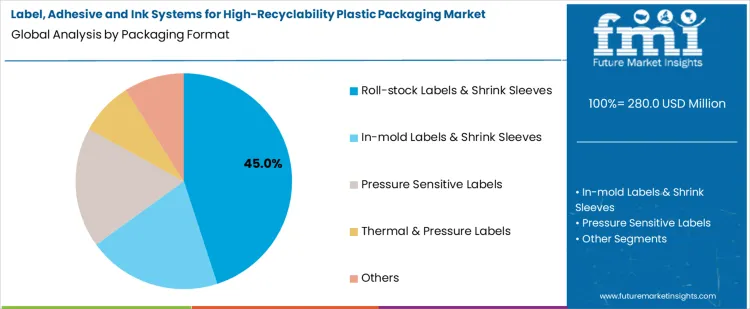
Roll stock labels and shrink sleeves account for about 45% of total demand, making them the leading packaging format. Their dominance reflects widespread use in beverage and FMCG containers. In mold labels and shrink sleeves are applied where durability and seamless integration are required. Pressure sensitive labels are common in food packaging due to flexibility and application speed. Thermal and pressure labels support retail, industrial, and logistics identification needs. Other formats address niche labeling requirements. Packaging format selection depends on container geometry, line speed, and recycling compatibility. Demand follows established packaging practices rather than experimentation with alternative labeling structures.
Roll stock and shrink sleeve formats maintain leadership due to scalability and compatibility with high speed lines. In mold labels remain relevant for durable containers. Pressure sensitive labels persist where versatility is required. Thermal labels serve functional tracking needs rather than branding. Producers favor incremental improvements within existing formats to avoid relabeling costs. This constrains rapid format shifts. Packaging format and type therefore stabilize demand by reinforcing widely adopted labeling systems while enabling recyclability compliance through material and adhesive optimization.
How Are Label, Adhesive, and Ink Systems Being Applied in High Recyclability Plastic Packaging?
Use appears in packaging where end-of-life recyclability is prioritized without compromising product identification or branding. Beverage bottles, personal care containers, and household product pouches integrate specialized labels and inks compatible with mono-material formats. Adhesives are selected to allow label removal or in-package recycling streams without leaving residue. Retailers and brand owners apply these systems to maintain compliance with recycling regulations while preserving visual quality. These applications reflect operational priorities around material recovery, labeling integrity, and print durability rather than purely decorative or promotional aspects.
What Operational and Material Conditions Support Adoption of Specialized Label, Adhesive, and Ink Systems?
Selection aligns with packaging lines that require compatibility with high-speed filling, capping, and labeling equipment. Inks must withstand production temperatures and environmental exposure while remaining removable or compatible with recycling processes. Adhesives are engineered to balance adhesion during handling with separability at recycling facilities. Packaging engineers coordinate label placement and material selection to maintain barrier properties and structural integrity. Brands leverage these systems to comply with corporate sustainability initiatives and regional regulatory standards. These conditions arise from the need for efficiency, compliance, and product protection in structured packaging workflows.
Which Practical Considerations Limit Wider Use of Label, Adhesive, and Ink Systems in High-Recyclability Plastic Packaging?
Material compatibility is critical; some conventional adhesives and inks can compromise recycling streams. Cost per unit may be higher compared with standard labeling systems. Printing and curing processes may require adjustments to maintain adhesion while remaining removable. Limited availability of recyclable-compatible materials across label types restricts design flexibility. Regulatory and consumer recycling infrastructure must support separation processes to achieve environmental benefit. These factors result in selective adoption where recyclability, regulatory compliance, and operational feasibility outweigh incremental costs and equipment adaptation needs.
What is the Demand for Label, Adhesive and Ink Systems for High Recyclability Plastic Packaging by Country?
| Country | CAGR (%) |
|---|---|
| USA | 8.6% |
| Germany | 6.8% |
| China | 10.5% |
| India | 11.5% |
| Brazil | 7.5% |
| Japan | 5.0% |
The demand for label, adhesive, and ink systems for high recyclability plastic packaging varies across countries, influenced by sustainable packaging adoption, regulatory compliance, and consumer demand for recyclable products. India leads with an 11.5% CAGR, supported by growing FMCG and packaged food sectors adopting recyclable plastic formats and compatible labeling solutions. China follows at 10.5%, driven by large scale manufacturing and increasing integration of recyclable plastic packaging across industries. The USA grows at 8.6%, reflecting adoption among established brands in food, beverage, and healthcare packaging. Brazil records 7.5%, shaped by expanding organized retail. Germany posts 6.8%, supported by regulatory standards and recycling compliance, while Japan grows at 5.0%, reflecting mature markets and steady adoption.
How Is High-Recyclability Labeling Driving Growth in the United States?
In the United States, revenue from the label, adhesive, and ink systems for high recyclability plastic packaging market is expanding at a CAGR of 8.60% through 2036, driven by adoption of labeling solutions compatible with mono-material and recyclable packaging. Manufacturers are integrating specialized inks, adhesives, and label materials to maintain recyclability while ensuring product identification and branding. Demand is concentrated in food, beverage, and personal care packaging distributed through retail and industrial channels. Domestic suppliers are providing compliant inks and adhesives that do not interfere with recycling streams. Stable production volumes, recurring labeling requirements, and sustainability mandates are sustaining predictable procurement across packaging operations nationwide.
- Food, beverage, and personal care producers adopt recyclable label, adhesive, and ink systems
- Specialized inks and adhesives ensure label durability without compromising recyclability
- Domestic suppliers provide compliant materials compatible with recycling processes
- Recurring labeling requirements sustain predictable procurement volumes
How Do Regulatory and Sustainability Standards Shape Demand in Germany?
Germany continues to record steady growth in the label, adhesive, and ink systems for high recyclability plastic packaging market at a CAGR of 6.80% through 2036, supported by strict environmental regulations and recycling standards. Manufacturers are using high-recyclability labels, adhesives, and inks to comply with sustainability guidelines while maintaining product traceability and branding. Demand is concentrated in retail and industrial packaging segments for beverages, food, and personal care products. Domestic suppliers provide specialized materials that meet regulatory and performance requirements. Compliance-driven procurement practices and stable production volumes are sustaining measured adoption across packaging operations nationwide.
- Environmental and recycling regulations support adoption of high-recyclability labeling systems
- Beverages, food, and personal care packaging anchor demand
- Domestic suppliers provide inks and adhesives compliant with sustainability standards
- Compliance-driven procurement sustains steady adoption levels
How Is Industrial Packaging Expansion Accelerating Adoption in China?
In China, revenue from the label, adhesive, and ink systems for high recyclability plastic packaging market is growing at a CAGR of 10.50% through 2036, driven by expansion of industrial and retail packaging operations. Manufacturers are adopting recyclable label, adhesive, and ink solutions for beverages, snacks, and personal care products to improve material recovery and sustainability performance. Demand is strong across e-commerce, modern retail, and industrial channels. Domestic suppliers are scaling production of high-recyclability inks and adhesives. High production volumes and structured procurement practices are sustaining rapid adoption nationwide.
- Industrial and retail packaging growth drives demand for high-recyclability labeling systems
- Beverages, snacks, and personal care products are primary applications
- Domestic suppliers scale production of compliant inks and adhesives
- High production volumes sustain consistent adoption
How Is Organized Manufacturing Supporting Growth in India?
India is witnessing strong expansion in the label, adhesive, and ink systems for high recyclability plastic packaging market at a CAGR of 11.50% through 2036, supported by growth in organized food, beverage, and personal care manufacturing. Manufacturers are integrating high-recyclability label, adhesive, and ink systems to improve sustainability and comply with environmental standards. Demand is rising across urban retail, e-commerce, and institutional supply channels. Domestic suppliers are offering cost-aligned, recyclable labeling solutions suitable for high-volume production. Expanding retail networks and organized manufacturing are sustaining robust procurement nationwide.
- Organized food, beverage, and personal care manufacturing increases demand for high-recyclability labeling systems
- Urban retail and e-commerce channels drive high-volume adoption
- Domestic suppliers provide cost-aligned recyclable inks and adhesives
- Retail expansion and organized production sustain procurement growth
How Are Consumer Goods Shipments Supporting Adoption in Brazil?
Brazil is seeing steady growth in the label, adhesive, and ink systems for high recyclability plastic packaging market at a CAGR of 7.50% through 2036, supported by rising distribution of packaged food, beverages, and personal care products. Manufacturers are using recyclable label, adhesive, and ink systems to maintain brand visibility while supporting recycling initiatives. Demand is concentrated in organized retail and regional distribution hubs. Domestic suppliers are expanding production and improving label material consistency. Growth in retail and product availability is sustaining recurring procurement across packaging operations nationwide.
- Packaged food, beverages, and personal care products drive adoption of high-recyclability labeling systems
- Recyclable inks and adhesives maintain brand visibility while supporting recycling
- Domestic suppliers expand production and ensure material consistency
- Retail growth sustains recurring procurement volumes
How Does Mature Packaging Demand Influence Stability in Japan?
Japan is maintaining measured growth in the label, adhesive, and ink systems for high recyclability plastic packaging market at a CAGR of 5.00% through 2036, supported by mature packaging markets and selective adoption of recyclable labeling systems. Brands apply high-recyclability inks, adhesives, and labels for beverages, personal care, and specialty food products. Demand remains focused on material compatibility with recycling streams, label durability, and consistent quality. Domestic suppliers emphasize precision in adhesive application and ink formulation. Stable consumption patterns and replacement-driven purchasing are sustaining predictable procurement across established packaging operations nationwide.
- Mature markets favor selective adoption of high-recyclability labeling systems
- Beverages, personal care, and specialty foods anchor baseline demand
- Domestic suppliers ensure precision in ink formulation and adhesive application
- Replacement-driven purchasing sustains procurement continuity
Which Companies Are Shaping Competition in Label Adhesive and Ink Systems For High Recyclability Plastic Packaging Market Applications?
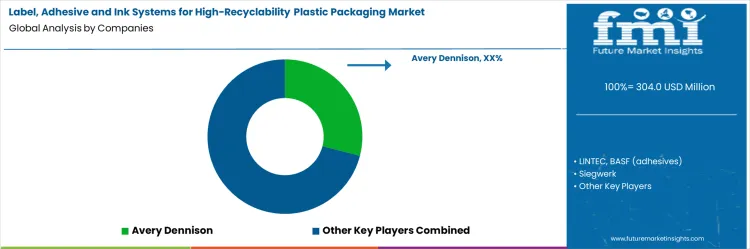
Competition in label, adhesive, and ink systems for high recyclability plastic packaging is shaped by materials suppliers aligning formulations with recycling compatibility requirements. Avery Dennison plays a central role through pressure sensitive label materials designed for clean separation and recyclability. Henkel contributes adhesive systems engineered to wash off or remain compatible with mono material recycling streams. Siegwerk and Toyo Ink influence the market through low migration and de inkable ink technologies used in flexible and rigid plastic packaging. BASF participates from the adhesive chemistry side, supplying base materials rather than finished label systems. These companies compete on formulation reliability, performance during packaging operations, and compliance with recycling guidelines across food and consumer packaging uses.
Regional players and converters add structural depth to the competitive landscape. LINTEC supplies specialty labels and adhesive technologies with a strong presence in Asia, particularly for electronics and consumer goods packaging. CCL operates through localized label production and material adaptation rather than proprietary chemistry leadership. Shantou based label producers support cost competitive supply for export oriented packaging applications. UFlex and Huhtamaki India participate through integrated packaging operations, aligning labels and inks with in house flexible packaging formats. Aplix and local label converters focus on application specific customization and rapid customer response. Competitive positioning is shaped by recyclability validation, converter collaboration, and alignment with national collection and sorting systems rather than scale alone.
Key Players in the High Recyclability Plastic Packaging Market
- Avery Dennison
- Henkel
- Siegwerk
- LINTEC
- BASF (adhesives), CCL
- Siegwerk,
- Shantou Label
- UFlex
- Huhtamaki India
- Aplix
- Local Label Converters
- Toyo Ink
Scope of the Report
| Items | Values |
|---|---|
| Quantitative Units (2026) | USD million |
| End-use / Application | Beverage & FMCG; Personal Care; Food Packaging; Retail & Industrial; Logistics & Shipping Labels; Others |
| Packaging Format / Type | Roll-stock Labels & Shrink Sleeves; In-mold Labels & Shrink Sleeves; Pressure Sensitive Labels; Thermal & Pressure Labels; Others |
| Material | Recyclable Adhesives (PE/PP Compatible); Water-based / Low-Migration Inks; PP-Compatible Adhesives; Eco-Adhesive Formulations; Others |
| Technology | Removable / Repulpable Adhesive Systems + Recyclable Inks; Laser-Removable Adhesives; Digital UV Inks (Recycling-Friendly); Solvent-Free Lamination Adhesives; Others |
| Region | Asia Pacific; Europe; North America; Latin America; Middle East & Africa |
| Countries Covered | China; Japan; South Korea; India; Australia & New Zealand; ASEAN; Germany; United Kingdom; France; Italy; Spain; Nordic; BENELUX; United States; Canada; Mexico; Brazil; Chile; Kingdom of Saudi Arabia; Other GCC Countries; Turkey; South Africa; Other African Union; Rest of Asia Pacific; Rest of Europe; Rest of Latin America; Rest of Middle East & Africa |
| Key Companies Profiled | Avery Dennison; Henkel; Siegwerk; LINTEC; BASF (adhesives); CCL; Shantou Label; UFlex; Huhtamaki India; Aplix; Local Label Converters; Toyo Ink |
| Additional Attributes | Dollar by sales across end-use applications, packaging formats, adhesives, and ink technologies; Roll-stock and shrink sleeves lead due to widespread use in beverage and FMCG containers; Adhesives and inks optimized for separability and recyclability drive compliance and operational efficiency; Integration with high-speed labeling lines ensures production continuity; Growth driven by regulatory compliance, circular economy mandates, and sustainability initiatives; Repeat procurement, multi-SKU adoption, and portfolio-wide integration reinforce structural demand; Performance attributes include adhesion reliability, print clarity, low migration, and clean removability. |
High Recyclability Plastic Packaging Market Segmentation
End-use / Application:
- Beverage & FMCG
- Personal Care
- Food Packaging
- Retail & Industrial
- Logistics & Shipping Labels
- Others
Packaging Format / Type:
- Roll-stock Labels & Shrink Sleeves
- In-mold Labels & Shrink Sleeves
- Pressure Sensitive Labels
- Thermal & Pressure Labels
- Others
Material:
- Recyclable Adhesives (PE/PP compatible)
- Water-based / Low-migration inks
- PP-Compatible Adhesives
- Eco-adhesive Formulations
- Others
Technology:
- Removable/Repulpable Adhesive Systems + Recyclable Inks
- Laser-removable Adhesives
- Digital UV inks (recycling-friendly)
- Solvent-free Lamination Adhesives
- Others
Region:
- Asia Pacific
- China
- Japan
- South Korea
- India
- Australia & New Zealand
- ASEAN
- Rest of Asia Pacific
- Europe
- Germany
- United Kingdom
- France
- Italy
- Spain
- Nordic
- BENELUX
- Rest of Europe
- North America
- United States
- Canada
- Mexico
- Latin America
- Brazil
- Chile
- Rest of Latin America
- Middle East & Africa
- Kingdom of Saudi Arabia
- Other GCC Countries
- Turkey
- South Africa
- Other African Union
- Rest of Middle East & Africa
Frequently Asked Questions
How big is the label, adhesive and ink systems for high-recyclability plastic packaging market in 2026?
The global label, adhesive and ink systems for high-recyclability plastic packaging market is estimated to be valued at USD 304.0 million in 2026.
What will be the size of label, adhesive and ink systems for high-recyclability plastic packaging market in 2036?
The market size for the label, adhesive and ink systems for high-recyclability plastic packaging market is projected to reach USD 713.0 million by 2036.
How much will be the label, adhesive and ink systems for high-recyclability plastic packaging market growth between 2026 and 2036?
The label, adhesive and ink systems for high-recyclability plastic packaging market is expected to grow at a 8.9% CAGR between 2026 and 2036.
What are the key product types in the label, adhesive and ink systems for high-recyclability plastic packaging market?
The key product types in label, adhesive and ink systems for high-recyclability plastic packaging market are beverage & fmcg, personal care, food packaging, retail & industrial, logistics & shipping labels and others.
Which packaging format segment to contribute significant share in the label, adhesive and ink systems for high-recyclability plastic packaging market in 2026?
In terms of packaging format, roll-stock labels & shrink sleeves segment to command 45.0% share in the label, adhesive and ink systems for high-recyclability plastic packaging market in 2026.
Preview the report firsthand - request a free sample
Get SampleGet the brochure for pricing and purchase details.
Get PDFTable of Content
- Executive Summary
- Global Market Outlook
- Demand-side Trends
- Supply-side Trends
- Technology Roadmap Analysis
- Analysis and Recommendations
- Market Overview
- Market Coverage / Taxonomy
- Market Definition / Scope / Limitations
- Market Background
- Market Dynamics
- Drivers
- Restraints
- Opportunity
- Trends
- Scenario Forecast
- Demand in Optimistic Scenario
- Demand in Likely Scenario
- Demand in Conservative Scenario
- Opportunity Map Analysis
- Product Life Cycle Analysis
- Supply Chain Analysis
- Investment Feasibility Matrix
- Value Chain Analysis
- PESTLE and Porter’s Analysis
- Regulatory Landscape
- Regional Parent Market Outlook
- Production and Consumption Statistics
- Import and Export Statistics
- Market Dynamics
- Global Market Analysis 2021 to 2025 and Forecast, 2026 to 2036
- Historical Market Size Value (USD Million) Analysis, 2021 to 2025
- Current and Future Market Size Value (USD Million) Projections, 2026 to 2036
- Y-o-Y Growth Trend Analysis
- Absolute $ Opportunity Analysis
- Global Market Pricing Analysis 2021 to 2025 and Forecast 2026 to 2036
- Global Market Analysis 2021 to 2025 and Forecast 2026 to 2036, By End-use
- Introduction / Key Findings
- Historical Market Size Value (USD Million) Analysis By End-use , 2021 to 2025
- Current and Future Market Size Value (USD Million) Analysis and Forecast By End-use , 2026 to 2036
- Beverage & FMCG
- Personal Care
- Food Packaging
- Retail & Industrial
- Logistics & Shipping Labels
- Others
- Y-o-Y Growth Trend Analysis By End-use , 2021 to 2025
- Absolute $ Opportunity Analysis By End-use , 2026 to 2036
- Global Market Analysis 2021 to 2025 and Forecast 2026 to 2036, By Packaging Format
- Introduction / Key Findings
- Historical Market Size Value (USD Million) Analysis By Packaging Format, 2021 to 2025
- Current and Future Market Size Value (USD Million) Analysis and Forecast By Packaging Format, 2026 to 2036
- Roll-stock Labels & Shrink Sleeves
- In-mold Labels & Shrink Sleeves
- Pressure Sensitive Labels
- Thermal & Pressure Labels
- Others
- Y-o-Y Growth Trend Analysis By Packaging Format, 2021 to 2025
- Absolute $ Opportunity Analysis By Packaging Format, 2026 to 2036
- Global Market Analysis 2021 to 2025 and Forecast 2026 to 2036, By Material
- Introduction / Key Findings
- Historical Market Size Value (USD Million) Analysis By Material, 2021 to 2025
- Current and Future Market Size Value (USD Million) Analysis and Forecast By Material, 2026 to 2036
- Recyclable Adhesives (PE/PP compatible)
- Water-based / Low-migration inks
- PP-Compatible Adhesives
- Eco-adhesive Formulations
- Others
- Y-o-Y Growth Trend Analysis By Material, 2021 to 2025
- Absolute $ Opportunity Analysis By Material, 2026 to 2036
- Global Market Analysis 2021 to 2025 and Forecast 2026 to 2036, By Technology
- Introduction / Key Findings
- Historical Market Size Value (USD Million) Analysis By Technology, 2021 to 2025
- Current and Future Market Size Value (USD Million) Analysis and Forecast By Technology, 2026 to 2036
- Removable/Repulpable Adhesive Systems + Recyclable Inks
- Laser-removable Adhesives
- Digital UV inks (recycling-friendly)
- Solvent-free Lamination Adhesives
- Others
- Y-o-Y Growth Trend Analysis By Technology, 2021 to 2025
- Absolute $ Opportunity Analysis By Technology, 2026 to 2036
- Global Market Analysis 2021 to 2025 and Forecast 2026 to 2036, By Region
- Introduction
- Historical Market Size Value (USD Million) Analysis By Region, 2021 to 2025
- Current Market Size Value (USD Million) Analysis and Forecast By Region, 2026 to 2036
- North America
- Latin America
- Western Europe
- Eastern Europe
- East Asia
- South Asia and Pacific
- Middle East & Africa
- Market Attractiveness Analysis By Region
- North America Market Analysis 2021 to 2025 and Forecast 2026 to 2036, By Country
- Historical Market Size Value (USD Million) Trend Analysis By Market Taxonomy, 2021 to 2025
- Market Size Value (USD Million) Forecast By Market Taxonomy, 2026 to 2036
- By Country
- USA
- Canada
- Mexico
- By End-use
- By Packaging Format
- By Material
- By Technology
- By Country
- Market Attractiveness Analysis
- By Country
- By End-use
- By Packaging Format
- By Material
- By Technology
- Key Takeaways
- Latin America Market Analysis 2021 to 2025 and Forecast 2026 to 2036, By Country
- Historical Market Size Value (USD Million) Trend Analysis By Market Taxonomy, 2021 to 2025
- Market Size Value (USD Million) Forecast By Market Taxonomy, 2026 to 2036
- By Country
- Brazil
- Chile
- Rest of Latin America
- By End-use
- By Packaging Format
- By Material
- By Technology
- By Country
- Market Attractiveness Analysis
- By Country
- By End-use
- By Packaging Format
- By Material
- By Technology
- Key Takeaways
- Western Europe Market Analysis 2021 to 2025 and Forecast 2026 to 2036, By Country
- Historical Market Size Value (USD Million) Trend Analysis By Market Taxonomy, 2021 to 2025
- Market Size Value (USD Million) Forecast By Market Taxonomy, 2026 to 2036
- By Country
- Germany
- UK
- Italy
- Spain
- France
- Nordic
- BENELUX
- Rest of Western Europe
- By End-use
- By Packaging Format
- By Material
- By Technology
- By Country
- Market Attractiveness Analysis
- By Country
- By End-use
- By Packaging Format
- By Material
- By Technology
- Key Takeaways
- Eastern Europe Market Analysis 2021 to 2025 and Forecast 2026 to 2036, By Country
- Historical Market Size Value (USD Million) Trend Analysis By Market Taxonomy, 2021 to 2025
- Market Size Value (USD Million) Forecast By Market Taxonomy, 2026 to 2036
- By Country
- Russia
- Poland
- Hungary
- Balkan & Baltic
- Rest of Eastern Europe
- By End-use
- By Packaging Format
- By Material
- By Technology
- By Country
- Market Attractiveness Analysis
- By Country
- By End-use
- By Packaging Format
- By Material
- By Technology
- Key Takeaways
- East Asia Market Analysis 2021 to 2025 and Forecast 2026 to 2036, By Country
- Historical Market Size Value (USD Million) Trend Analysis By Market Taxonomy, 2021 to 2025
- Market Size Value (USD Million) Forecast By Market Taxonomy, 2026 to 2036
- By Country
- China
- Japan
- South Korea
- By End-use
- By Packaging Format
- By Material
- By Technology
- By Country
- Market Attractiveness Analysis
- By Country
- By End-use
- By Packaging Format
- By Material
- By Technology
- Key Takeaways
- South Asia and Pacific Market Analysis 2021 to 2025 and Forecast 2026 to 2036, By Country
- Historical Market Size Value (USD Million) Trend Analysis By Market Taxonomy, 2021 to 2025
- Market Size Value (USD Million) Forecast By Market Taxonomy, 2026 to 2036
- By Country
- India
- ASEAN
- Australia & New Zealand
- Rest of South Asia and Pacific
- By End-use
- By Packaging Format
- By Material
- By Technology
- By Country
- Market Attractiveness Analysis
- By Country
- By End-use
- By Packaging Format
- By Material
- By Technology
- Key Takeaways
- Middle East & Africa Market Analysis 2021 to 2025 and Forecast 2026 to 2036, By Country
- Historical Market Size Value (USD Million) Trend Analysis By Market Taxonomy, 2021 to 2025
- Market Size Value (USD Million) Forecast By Market Taxonomy, 2026 to 2036
- By Country
- Kingdom of Saudi Arabia
- Other GCC Countries
- Turkiye
- South Africa
- Other African Union
- Rest of Middle East & Africa
- By End-use
- By Packaging Format
- By Material
- By Technology
- By Country
- Market Attractiveness Analysis
- By Country
- By End-use
- By Packaging Format
- By Material
- By Technology
- Key Takeaways
- Key Countries Market Analysis
- USA
- Pricing Analysis
- Market Share Analysis, 2025
- By End-use
- By Packaging Format
- By Material
- By Technology
- Canada
- Pricing Analysis
- Market Share Analysis, 2025
- By End-use
- By Packaging Format
- By Material
- By Technology
- Mexico
- Pricing Analysis
- Market Share Analysis, 2025
- By End-use
- By Packaging Format
- By Material
- By Technology
- Brazil
- Pricing Analysis
- Market Share Analysis, 2025
- By End-use
- By Packaging Format
- By Material
- By Technology
- Chile
- Pricing Analysis
- Market Share Analysis, 2025
- By End-use
- By Packaging Format
- By Material
- By Technology
- Germany
- Pricing Analysis
- Market Share Analysis, 2025
- By End-use
- By Packaging Format
- By Material
- By Technology
- UK
- Pricing Analysis
- Market Share Analysis, 2025
- By End-use
- By Packaging Format
- By Material
- By Technology
- Italy
- Pricing Analysis
- Market Share Analysis, 2025
- By End-use
- By Packaging Format
- By Material
- By Technology
- Spain
- Pricing Analysis
- Market Share Analysis, 2025
- By End-use
- By Packaging Format
- By Material
- By Technology
- France
- Pricing Analysis
- Market Share Analysis, 2025
- By End-use
- By Packaging Format
- By Material
- By Technology
- India
- Pricing Analysis
- Market Share Analysis, 2025
- By End-use
- By Packaging Format
- By Material
- By Technology
- ASEAN
- Pricing Analysis
- Market Share Analysis, 2025
- By End-use
- By Packaging Format
- By Material
- By Technology
- Australia & New Zealand
- Pricing Analysis
- Market Share Analysis, 2025
- By End-use
- By Packaging Format
- By Material
- By Technology
- China
- Pricing Analysis
- Market Share Analysis, 2025
- By End-use
- By Packaging Format
- By Material
- By Technology
- Japan
- Pricing Analysis
- Market Share Analysis, 2025
- By End-use
- By Packaging Format
- By Material
- By Technology
- South Korea
- Pricing Analysis
- Market Share Analysis, 2025
- By End-use
- By Packaging Format
- By Material
- By Technology
- Russia
- Pricing Analysis
- Market Share Analysis, 2025
- By End-use
- By Packaging Format
- By Material
- By Technology
- Poland
- Pricing Analysis
- Market Share Analysis, 2025
- By End-use
- By Packaging Format
- By Material
- By Technology
- Hungary
- Pricing Analysis
- Market Share Analysis, 2025
- By End-use
- By Packaging Format
- By Material
- By Technology
- Kingdom of Saudi Arabia
- Pricing Analysis
- Market Share Analysis, 2025
- By End-use
- By Packaging Format
- By Material
- By Technology
- Turkiye
- Pricing Analysis
- Market Share Analysis, 2025
- By End-use
- By Packaging Format
- By Material
- By Technology
- South Africa
- Pricing Analysis
- Market Share Analysis, 2025
- By End-use
- By Packaging Format
- By Material
- By Technology
- USA
- Market Structure Analysis
- Competition Dashboard
- Competition Benchmarking
- Market Share Analysis of Top Players
- By Regional
- By End-use
- By Packaging Format
- By Material
- By Technology
- Competition Analysis
- Competition Deep Dive
- Avery Dennison
- Overview
- Product Portfolio
- Profitability by Market Segments (Product/Age /Sales Channel/Region)
- Sales Footprint
- Strategy Overview
- Marketing Strategy
- Product Strategy
- Channel Strategy
- LINTEC, BASF (adhesives)
- Siegwerk
- Uflex
- Aplix
- Toyo Ink
- Henkel
- Huhtamaki India
- Local Label Converters
- Siegwerk
- Shantou Label
- CCL
- Avery Dennison
- Competition Deep Dive
- Assumptions & Acronyms Used
- Research Methodology


