

- Industry Size (2026)
- USD 577.3 Mn
- Forecast (2036)
- USD 1122.2 Mn
- CAGR (2026 to 2036)
- 6.90%
Laser Vibrometer Market Forecast and Outlook 2026 to 2036
The laser vibrometer market is valued at USD 577.3 million in 2026 and is projected to reach USD 1,122.2 million by 2036, growing at a CAGR of 6.90%. Dominant players in this market defend their pricing power through technological differentiation and integration with advanced software analytics, ensuring their products deliver higher precision and reliability than those of new entrants. These companies, such as Polytec and HBK, leverage their established reputations and the premium nature of their solutions to maintain pricing authority, often offering bundled services that enhance customer value.
Quick Stats for Laser Vibrometer Market
- Laser Vibrometer Market Value (2026): USD 577.3 Million
- Laser Vibrometer Market Forecast Value (2036): USD 1,122.2 Million
- Laser Vibrometer Market Forecast CAGR (2026 to 2036): 6.90%
- Leading Technology in Laser Vibrometer Market: Scanning Laser Doppler Vibrometers (SLDV)
- Leading Application in Laser Vibrometer Market: Automotive NVH (Noise, Vibration, Harshness)
- Key Growth Regions in Laser Vibrometer Market: Asia Pacific, North America, Top Key Players in Laser Vibrometer Market: Polytec, HBK, Keyence, Ono Sokki, Dewesoft, Microflown AVISA, Metra Mess- und Frequenztechnik, Optomet, Kistler, Rohde & Schwarz
Entry barriers in the laser vibrometer market are substantial due to high R&D costs, technical expertise requirements, and the need for precise calibration in challenging environments. Smaller competitors face significant challenges in replicating the capabilities of market leaders, which are often deeply integrated into industries like aerospace and automotive. Fragmentation persists due to the variety of applications ranging from automotive NVH testing to research-driven precision devices which necessitates different technologies and measurement ranges. As industries demand greater versatility and all-in-one solutions, this fragmentation is gradually narrowing, with key players focusing on multi-modal systems to capture a larger share. This consolidation is a response to the increasing demand for comprehensive, scalable, and easy-to-integrate measurement tools.
Laser Vibrometer Market Key Takeaways
| Metric | Value |
|---|---|
| Industry Value (2026) | USD 577.3 Million |
| Forecast Value (2036) | USD 1122.2 Million |
| Forecast CAGR (2026 to 2036) | 6.90% |
How is the Global Laser Vibrometer Market Advancing?
The global laser vibrometer market is experiencing steady growth as industries increasingly adopt non-contact vibration measurement technologies for precise analysis of mechanical systems. Laser vibrometers are advanced optical devices used to measure vibrations, displacements, and dynamic behavior of materials and components in real time. Their non-contact nature makes them particularly valuable for testing delicate, high-precision components in industries like aerospace, automotive, manufacturing, and electronics.
The market growth is driven by the growing need for accurate, high-resolution vibration measurements in product development, quality control, and maintenance applications. Laser vibrometers offer several advantages, such as high sensitivity, accuracy, and the ability to measure vibrations in challenging environments without physical contact, which can influence the quality or integrity of the measured object. These capabilities are increasingly being used in the development of high-performance systems and in industries requiring precise vibration analysis, such as automotive engineering for chassis and engine testing, as well as aerospace for structural analysis.
Technological advancements, including integration with advanced software and real-time data processing capabilities, are enhancing the functionality and versatility of laser vibrometers. The increasing emphasis on reducing product defects, improving product reliability, and optimizing manufacturing processes is contributing to the growing adoption of these systems. As industries continue to push for higher-quality standards and more efficient production methods, the laser vibrometer market is expected to expand, with the demand for non-contact vibration testing solutions set to increase in the coming years.
What Is the Segment-Wise Analysis for the Laser Vibrometer Market?
The laser vibrometer market is segmented by technology and application. Scanning Laser Doppler Vibrometers (SLDV) lead the market with a 34% share, followed by Single-Point LDV, 3D or Multipoint LDV, and Other technologies. These technologies are essential for measuring and analyzing vibrations with high precision. In terms of applications, Automotive NVH (Noise, Vibration, Harshness) dominates with a 30% share, driven by the need for accurate vibration measurements in automotive testing.
How Do Scanning Laser Doppler Vibrometers Lead the Laser Vibrometer Market?
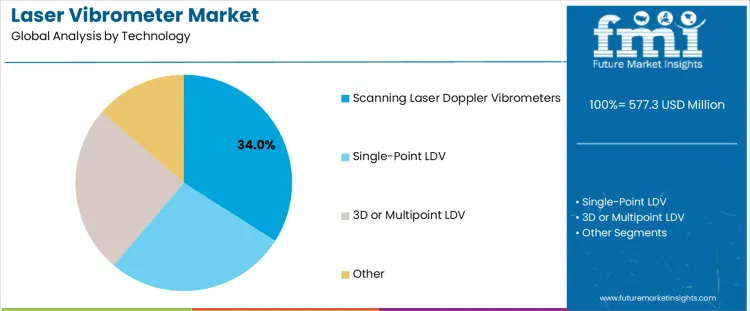
Scanning laser doppler vibrometers (SLDV) hold a 34% share of the laser vibrometer market due to their ability to measure vibrations across multiple points on a surface in a scan area. This makes SLDV ideal for complex applications requiring high-precision vibration analysis, such as automotive NVH testing, aerospace, and industrial research. The versatility of scanning laser vibrometers allows them to create detailed vibration maps of structures and components, which are essential for performance testing, quality control, and product development. Their accuracy and efficiency in measuring dynamic behavior across large surfaces make them the preferred choice in industries that require in-depth vibration analysis, contributing significantly to their dominance in the market.
How Does Automotive NVH Contribute to the Laser Vibrometer Market?
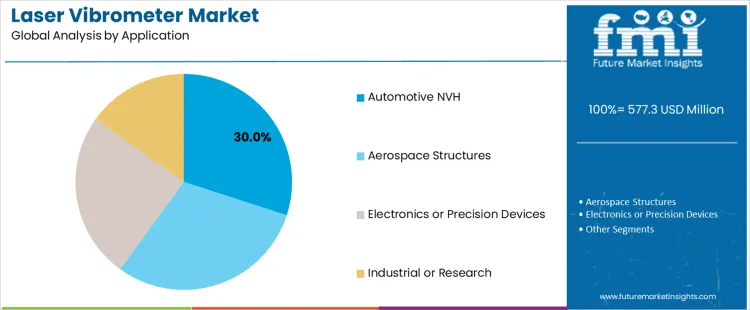
Automotive NVH (Noise, Vibration, Harshness) applications represent 30% of the laser vibrometer market share. The automotive industry relies on laser vibrometers for precise NVH testing, crucial for evaluating vehicle comfort, safety, and component durability. Measuring vibrations and noise at various vehicle points ensures that vehicles meet regulatory standards and customer expectations for performance. Laser vibrometers are particularly effective for testing vehicle components, materials, and entire structures, allowing manufacturers to identify vibration sources and optimize designs. As the automotive industry continues to focus on reducing noise and vibrations for better driving experiences, the demand for laser vibrometers in NVH testing remains high, making it a key market driver.
What Are the Key Dynamics for the Laser Vibrometer Market?
Laser vibrometers enable precise, high-resolution vibration and dynamic analysis without physically touching the test object, making them ideal for fragile or moving components. As product designs become more complex and stringent quality standards are enforced, engineers increasingly rely on laser vibrometry for accurate data collection. Rising investment in research and development, predictive maintenance, and advanced diagnostic testing is shaping the market, elevating the need for sophisticated and reliable vibration measurement solutions.
Why Are There Restraints Impacting the Laser Vibrometer Market?
Despite promising growth, the laser vibrometer market faces several challenges. A key restraint is the high cost of advanced laser vibrometer systems, which can deter small and mid sized enterprises with limited testing budgets. The complexity of operating these systems and interpreting detailed vibration data often requires skilled technicians, creating a barrier for organizations without specialized personnel. Integration challenges with legacy test and data acquisition systems can also limit seamless deployment. The sensitivity of laser instruments to environmental conditions like dust, temperature, and ambient light requires controlled testing environments, adding to operational constraints.
What Are the Key Trends Shaping the Laser Vibrometer Market?
One prominent trend is the integration of software driven analytics and AI, which enhances the ability to extract actionable insights from complex vibration data. There is also a growing emphasis on portable and compact laser vibrometer systems that support field testing and on site diagnostics. Connectivity features such as wireless data transfer and real time monitoring are becoming more common, aligning with industrial IoT initiatives. Manufacturers are focusing on multi modal systems capable of capturing vibration, displacement, and velocity within a single platform, broadening the scope of applications and improving overall measurement versatility.
What is the Growth Outlook for the Laser Vibrometer Market by Country?
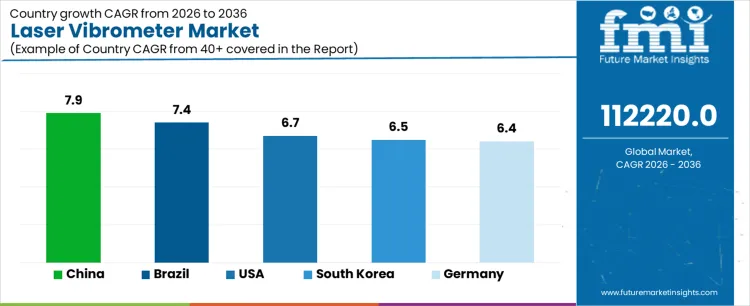
| Country | CAGR (%) |
|---|---|
| USA | 6.7% |
| South Korea | 6.5% |
| Germany | 6.4% |
| China | 7.9% |
| Brazil | 7.4% |
The laser vibrometer market is experiencing steady growth, with China leading at a 7.9% CAGR, driven by its rapid industrial expansion, particularly in automotive, aerospace, and electronics. Brazil follows with 7.4%, supported by the modernization of its automotive, aerospace, and energy sectors. The USA’s market grows at 6.7%, fueled by advancements in aerospace, automotive, and manufacturing industries, where vibration testing is crucial for quality assurance. South Korea’s market grows at 6.5%, driven by its leadership in electronics, automotive, and semiconductor industries, while Germany’s market grows at 6.4%, supported by its strong industrial base and focus on precision engineering.
What is Driving the Growth of the Laser Vibrometer Market in China?
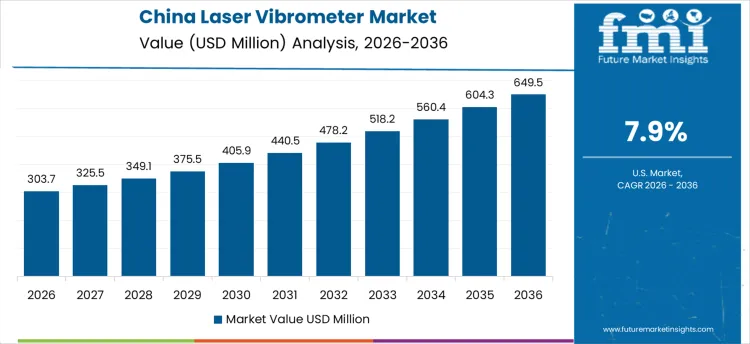
China’s laser vibrometer market is growing at 7.9%, driven by the country’s rapid industrial expansion, particularly in automotive, aerospace, and electronics sectors. As Chinese manufacturers increasingly adopt automation and advanced testing technologies, the demand for precise vibration measurement solutions, like laser vibrometers, is growing. These devices are essential for ensuring the quality and reliability of components exposed to vibrations, such as in vehicle manufacturing, electronics assembly, and structural testing. China’s continuous push for innovation in smart manufacturing and the expansion of its aerospace industry further contribute to the market’s growth. With increasing government investments in research and development and the ongoing industrial modernization, the demand for laser vibrometers in China is expected to remain strong.
What is Contributing to the Growth of the Laser Vibrometer Market in Brazil?
Brazil’s laser vibrometer market is growing at 7.4%, supported by the expansion of its automotive, aerospace, and energy sectors. As Brazil’s manufacturing industry modernizes and integrates more advanced technologies, the demand for high-precision measurement tools like laser vibrometers increases. These devices play a crucial role in testing the durability and reliability of machinery and components, ensuring that products meet stringent quality standards. The country’s focus on improving infrastructure, including renewable energy projects such as wind and solar, further contributes to the need for reliable vibration measurement. Brazil’s investment in industrial automation and smart manufacturing solutions is expected to continue fueling the demand for laser vibrometers, positioning the market for sustained growth.
How is the Laser Vibrometer Market Expanding in the USA?
The USA’s laser vibrometer market is growing at 6.7%, driven by advancements in the aerospace, automotive, and manufacturing sectors. As industries continue to push for higher performance and precision in their systems, the demand for reliable vibration measurement technologies, such as laser vibrometers, is rising. These devices are essential for ensuring the quality of components in applications ranging from automotive to aerospace to electronics. The USA’s focus on innovation, quality control, and smart manufacturing further boosts the need for laser vibrometers in production and testing environments. With continued growth in industries such as aerospace, automotive, and electronics, the demand for precise vibration measurement systems is expected to drive further expansion of the market.
Why is the Laser Vibrometer Market Growing in South Korea?
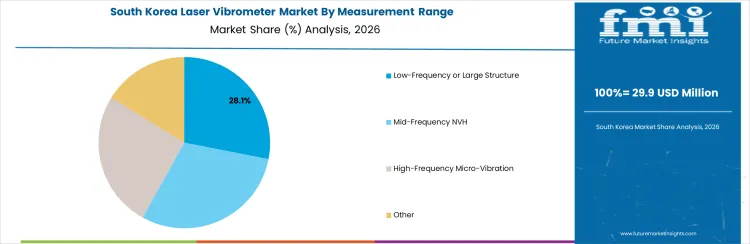
South Korea’s laser vibrometer market is growing at 6.5%, driven by its leadership in electronics, automotive, and semiconductor industries. As South Korea’s manufacturing capabilities continue to evolve, particularly in high-tech industries, the need for accurate vibration measurement tools is increasing. Laser vibrometers are essential for ensuring the quality and performance of components used in advanced technologies, including electronics and automotive systems. South Korea’s strong push for smart manufacturing and automation technologies further fuels the demand for high-precision testing equipment. As industries continue to adopt IoT and smart technologies, the need for real-time vibration monitoring solutions will continue to drive the market forward, making South Korea a key player in the global laser vibrometer market.
What is Driving the Growth of the Laser Vibrometer Market in Germany?
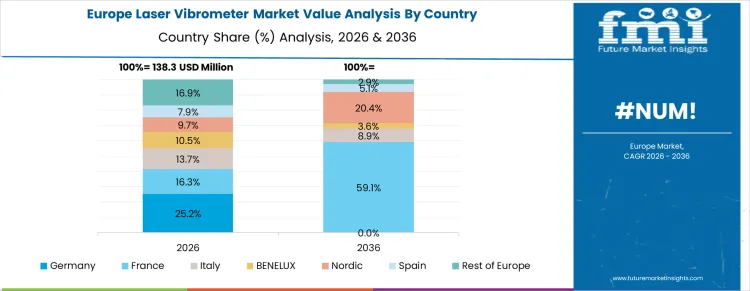
Germany’s laser vibrometer market is growing at 6.4%, supported by the country’s advanced manufacturing, automotive, and industrial automation sectors. Germany’s commitment to precision engineering and high-quality manufacturing standards drives the demand for advanced vibration measurement tools like laser vibrometers, which ensure the reliability and durability of components. The automotive and aerospace sectors, where vibration testing is critical for safety and performance validation, are major drivers for the market. Germany’s focus on renewable energy and smart manufacturing technologies also contributes to the growing need for vibration measurement systems. With its strong industrial base and emphasis on quality, Germany continues to be a key contributor to the laser vibrometer market.
How Do Key Players Compete in the Laser Vibrometer Market?
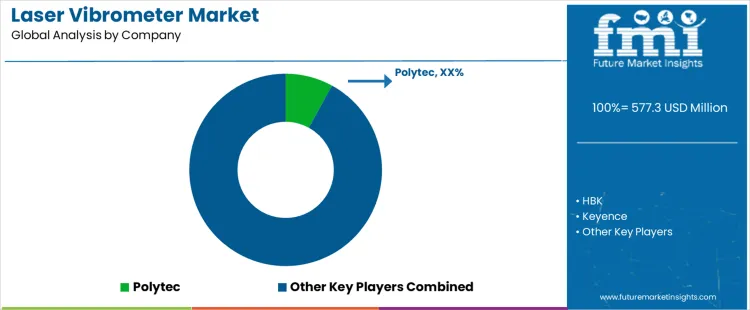
Competition in the laser vibrometer market is driven by measurement precision, non contact capability, speed, software integration, and application flexibility. Polytec leads with a wide range of laser Doppler vibrometers that deliver high-resolution vibration and velocity measurements. Its product literature emphasizes non-contact sensing, wide frequency ranges, and turnkey solutions that support research and industrial diagnostics. HBK competes with laser vibrometer systems integrated into broader test platforms that combine optical measurement with advanced analysis software, appealing to users needing synchronized multi modal data.
Keyence positions itself with compact, user friendly laser vibrometer units designed for quick setup and real time visualization, often highlighted in brochures as ideal for production line troubleshooting and quality control. Ono Sokki and Dewesoft focus on versatile laser vibrometer systems that pair optical displacement measurement with intuitive software for detailed time and frequency domain analysis, marketed for both lab and field environments.
Microflown AVISA brings specialized laser vibrometers with a focus on acoustic and airflow coupled vibration measurement, with collateral stressing unique sensor technologies. Metra Mess und Frequenztechnik and Optomet offer systems that balance precision and affordability, targeting academic and industrial labs needing reliable non contact vibration data without excessive complexity. Kistler rounds out the market with laser vibrometer solutions integrated into comprehensive sensor and measurement ecosystems, its brochures highlighting synergy with force and acceleration data for complete dynamic analysis. Rohde & Schwarz adds high performance optical measurement tools that complement its broader test and measurement portfolios, marketed for applications demanding tight accuracy and robust data workflows. Across the market, product materials are crafted to showcase high sampling rates, ease of use, and compatibility with advanced analysis suites, helping buyers match measurement tools to specific application needs.
Key Players in Laser Vibrometer Market
- Polytec
- HBK
- Keyence
- Ono Sokki
- Dewesoft
- Microflown AVISA
- Metra Mess- und Frequenztechnik
- Optomet
- Kistler
- Rohde & Schwarz
Scope of Report
| Items | Values |
|---|---|
| Quantitative Unit (2026) | USD million |
| Technology | Scanning Laser Doppler Vibrometers, Single-Point LDV, 3D or Multipoint LDV, Other |
| Measurement Range | Low-Frequency or Large Structure, Mid-Frequency NVH, High-Frequency Micro-Vibration, Other |
| Application | Automotive NVH, Aerospace Structures, Electronics or Precision Devices, Industrial or Research |
| Regions Covered | Asia Pacific, Europe, North America, Latin America, Middle East & Africa |
| Countries Covered | USA, China, Japan, South Korea, India, Australia & New Zealand, ASEAN, Germany, UK, France, Italy, Spain, Nordic, BENELUX, Brazil, Chile, Mexico, Saudi Arabia, Other GCC Countries, Turkey, South Africa, Other African Union |
| Key Companies Profiled | Polytec, HBK, Keyence, Ono Sokki, Dewesoft, Microflown AVISA, Metra Mess- und Frequenztechnik, Optomet, Kistler, Rohde & Schwarz |
| Additional Attributes | Dollar sales segmented by technology, measurement range, application, and region. Regional CAGR and growth outlook are provided to give deeper insights into the market dynamics and expected growth trends across different segments and regions. |
Laser Vibrometer Market by Key Segments
Technology:
- Scanning Laser Doppler Vibrometers
- Single-Point LDV
- 3D or Multipoint LDV
- Other
Measurement Range:
- Low-Frequency or Large Structure
- Mid-Frequency NVH
- High-Frequency Micro-Vibration
- Other
Application:
- Automotive NVH
- Aerospace Structures
- Electronics or Precision Devices
- Industrial or Research
Region:
- Asia Pacific
- China
- Japan
- South Korea
- India
- Australia & New Zealand
- ASEAN
- Rest of Asia Pacific
- Europe
- Germany
- United Kingdom
- France
- Italy
- Spain
- Nordic
- BENELUX
- Rest of Europe
- North America
- United States
- Canada
- Mexico
- Latin America
- Brazil
- Chile
- Rest of Latin America
- Middle East & Africa
- Kingdom of Saudi Arabia
- Other GCC Countries
- Turkey
- South Africa
- Other African Union
- Rest of Middle East & Africa
Frequently Asked Questions
How big is the laser vibrometer market in 2026?
The global laser vibrometer market is estimated to be valued at USD 577.3 million in 2026.
What will be the size of laser vibrometer market in 2036?
The market size for the laser vibrometer market is projected to reach USD 1,122.2 Million by 2036.
How much will be the laser vibrometer market growth between 2026 and 2036?
The laser vibrometer market is expected to grow at a 6.90% CAGR between 2026 and 2036.
What are the key product types in the laser vibrometer market?
The key product types in laser vibrometer market are scanning laser doppler vibrometers, single-point ldv, 3d or multipoint ldv and other.
Which measurement range segment to contribute significant share in the laser vibrometer market in 2026?
In terms of measurement range, low-frequency or large structure segment to command 28.0% share in the laser vibrometer market in 2026.
Preview the report firsthand - request a free sample
Get SampleGet the brochure for pricing and purchase details.
Get PDFTable of Content
- Executive Summary
- Global Market Outlook
- Demand-side Trends
- Supply-side Trends
- Technology Roadmap Analysis
- Analysis and Recommendations
- Market Overview
- Market Coverage / Taxonomy
- Market Definition / Scope / Limitations
- Market Background
- Market Dynamics
- Drivers
- Restraints
- Opportunity
- Trends
- Scenario Forecast
- Demand in Optimistic Scenario
- Demand in Likely Scenario
- Demand in Conservative Scenario
- Opportunity Map Analysis
- Product Life Cycle Analysis
- Supply Chain Analysis
- Investment Feasibility Matrix
- Value Chain Analysis
- PESTLE and Porter’s Analysis
- Regulatory Landscape
- Regional Parent Market Outlook
- Production and Consumption Statistics
- Import and Export Statistics
- Market Dynamics
- Global Market Analysis 2021 to 2025 and Forecast, 2026 to 2036
- Historical Market Size Value (USD Million) Analysis, 2021 to 2025
- Current and Future Market Size Value (USD Million) Projections, 2026 to 2036
- Y-o-Y Growth Trend Analysis
- Absolute $ Opportunity Analysis
- Global Market Pricing Analysis 2021 to 2025 and Forecast 2026 to 2036
- Global Market Analysis 2021 to 2025 and Forecast 2026 to 2036, By Technology
- Introduction / Key Findings
- Historical Market Size Value (USD Million) Analysis By Technology , 2021 to 2025
- Current and Future Market Size Value (USD Million) Analysis and Forecast By Technology , 2026 to 2036
- Scanning Laser Doppler Vibrometers
- Single-Point LDV
- 3D or Multipoint LDV
- Other
- Scanning Laser Doppler Vibrometers
- Y-o-Y Growth Trend Analysis By Technology , 2021 to 2025
- Absolute $ Opportunity Analysis By Technology , 2026 to 2036
- Global Market Analysis 2021 to 2025 and Forecast 2026 to 2036, By Measurement Range
- Introduction / Key Findings
- Historical Market Size Value (USD Million) Analysis By Measurement Range, 2021 to 2025
- Current and Future Market Size Value (USD Million) Analysis and Forecast By Measurement Range, 2026 to 2036
- Low-Frequency or Large Structure
- Mid-Frequency NVH
- High-Frequency Micro-Vibration
- Other
- Low-Frequency or Large Structure
- Y-o-Y Growth Trend Analysis By Measurement Range, 2021 to 2025
- Absolute $ Opportunity Analysis By Measurement Range, 2026 to 2036
- Global Market Analysis 2021 to 2025 and Forecast 2026 to 2036, By Application
- Introduction / Key Findings
- Historical Market Size Value (USD Million) Analysis By Application, 2021 to 2025
- Current and Future Market Size Value (USD Million) Analysis and Forecast By Application, 2026 to 2036
- Automotive NVH
- Aerospace Structures
- Electronics or Precision Devices
- Industrial or Research
- Automotive NVH
- Y-o-Y Growth Trend Analysis By Application, 2021 to 2025
- Absolute $ Opportunity Analysis By Application, 2026 to 2036
- Global Market Analysis 2021 to 2025 and Forecast 2026 to 2036, By Region
- Introduction
- Historical Market Size Value (USD Million) Analysis By Region, 2021 to 2025
- Current Market Size Value (USD Million) Analysis and Forecast By Region, 2026 to 2036
- North America
- Latin America
- Western Europe
- Eastern Europe
- East Asia
- South Asia and Pacific
- Middle East & Africa
- Market Attractiveness Analysis By Region
- North America Market Analysis 2021 to 2025 and Forecast 2026 to 2036, By Country
- Historical Market Size Value (USD Million) Trend Analysis By Market Taxonomy, 2021 to 2025
- Market Size Value (USD Million) Forecast By Market Taxonomy, 2026 to 2036
- By Country
- USA
- Canada
- Mexico
- By Technology
- By Measurement Range
- By Application
- By Country
- Market Attractiveness Analysis
- By Country
- By Technology
- By Measurement Range
- By Application
- Key Takeaways
- Latin America Market Analysis 2021 to 2025 and Forecast 2026 to 2036, By Country
- Historical Market Size Value (USD Million) Trend Analysis By Market Taxonomy, 2021 to 2025
- Market Size Value (USD Million) Forecast By Market Taxonomy, 2026 to 2036
- By Country
- Brazil
- Chile
- Rest of Latin America
- By Technology
- By Measurement Range
- By Application
- By Country
- Market Attractiveness Analysis
- By Country
- By Technology
- By Measurement Range
- By Application
- Key Takeaways
- Western Europe Market Analysis 2021 to 2025 and Forecast 2026 to 2036, By Country
- Historical Market Size Value (USD Million) Trend Analysis By Market Taxonomy, 2021 to 2025
- Market Size Value (USD Million) Forecast By Market Taxonomy, 2026 to 2036
- By Country
- Germany
- UK
- Italy
- Spain
- France
- Nordic
- BENELUX
- Rest of Western Europe
- By Technology
- By Measurement Range
- By Application
- By Country
- Market Attractiveness Analysis
- By Country
- By Technology
- By Measurement Range
- By Application
- Key Takeaways
- Eastern Europe Market Analysis 2021 to 2025 and Forecast 2026 to 2036, By Country
- Historical Market Size Value (USD Million) Trend Analysis By Market Taxonomy, 2021 to 2025
- Market Size Value (USD Million) Forecast By Market Taxonomy, 2026 to 2036
- By Country
- Russia
- Poland
- Hungary
- Balkan & Baltic
- Rest of Eastern Europe
- By Technology
- By Measurement Range
- By Application
- By Country
- Market Attractiveness Analysis
- By Country
- By Technology
- By Measurement Range
- By Application
- Key Takeaways
- East Asia Market Analysis 2021 to 2025 and Forecast 2026 to 2036, By Country
- Historical Market Size Value (USD Million) Trend Analysis By Market Taxonomy, 2021 to 2025
- Market Size Value (USD Million) Forecast By Market Taxonomy, 2026 to 2036
- By Country
- China
- Japan
- South Korea
- By Technology
- By Measurement Range
- By Application
- By Country
- Market Attractiveness Analysis
- By Country
- By Technology
- By Measurement Range
- By Application
- Key Takeaways
- South Asia and Pacific Market Analysis 2021 to 2025 and Forecast 2026 to 2036, By Country
- Historical Market Size Value (USD Million) Trend Analysis By Market Taxonomy, 2021 to 2025
- Market Size Value (USD Million) Forecast By Market Taxonomy, 2026 to 2036
- By Country
- India
- ASEAN
- Australia & New Zealand
- Rest of South Asia and Pacific
- By Technology
- By Measurement Range
- By Application
- By Country
- Market Attractiveness Analysis
- By Country
- By Technology
- By Measurement Range
- By Application
- Key Takeaways
- Middle East & Africa Market Analysis 2021 to 2025 and Forecast 2026 to 2036, By Country
- Historical Market Size Value (USD Million) Trend Analysis By Market Taxonomy, 2021 to 2025
- Market Size Value (USD Million) Forecast By Market Taxonomy, 2026 to 2036
- By Country
- Kingdom of Saudi Arabia
- Other GCC Countries
- Turkiye
- South Africa
- Other African Union
- Rest of Middle East & Africa
- By Technology
- By Measurement Range
- By Application
- By Country
- Market Attractiveness Analysis
- By Country
- By Technology
- By Measurement Range
- By Application
- Key Takeaways
- Key Countries Market Analysis
- USA
- Pricing Analysis
- Market Share Analysis, 2025
- By Technology
- By Measurement Range
- By Application
- Canada
- Pricing Analysis
- Market Share Analysis, 2025
- By Technology
- By Measurement Range
- By Application
- Mexico
- Pricing Analysis
- Market Share Analysis, 2025
- By Technology
- By Measurement Range
- By Application
- Brazil
- Pricing Analysis
- Market Share Analysis, 2025
- By Technology
- By Measurement Range
- By Application
- Chile
- Pricing Analysis
- Market Share Analysis, 2025
- By Technology
- By Measurement Range
- By Application
- Germany
- Pricing Analysis
- Market Share Analysis, 2025
- By Technology
- By Measurement Range
- By Application
- UK
- Pricing Analysis
- Market Share Analysis, 2025
- By Technology
- By Measurement Range
- By Application
- Italy
- Pricing Analysis
- Market Share Analysis, 2025
- By Technology
- By Measurement Range
- By Application
- Spain
- Pricing Analysis
- Market Share Analysis, 2025
- By Technology
- By Measurement Range
- By Application
- France
- Pricing Analysis
- Market Share Analysis, 2025
- By Technology
- By Measurement Range
- By Application
- India
- Pricing Analysis
- Market Share Analysis, 2025
- By Technology
- By Measurement Range
- By Application
- ASEAN
- Pricing Analysis
- Market Share Analysis, 2025
- By Technology
- By Measurement Range
- By Application
- Australia & New Zealand
- Pricing Analysis
- Market Share Analysis, 2025
- By Technology
- By Measurement Range
- By Application
- China
- Pricing Analysis
- Market Share Analysis, 2025
- By Technology
- By Measurement Range
- By Application
- Japan
- Pricing Analysis
- Market Share Analysis, 2025
- By Technology
- By Measurement Range
- By Application
- South Korea
- Pricing Analysis
- Market Share Analysis, 2025
- By Technology
- By Measurement Range
- By Application
- Russia
- Pricing Analysis
- Market Share Analysis, 2025
- By Technology
- By Measurement Range
- By Application
- Poland
- Pricing Analysis
- Market Share Analysis, 2025
- By Technology
- By Measurement Range
- By Application
- Hungary
- Pricing Analysis
- Market Share Analysis, 2025
- By Technology
- By Measurement Range
- By Application
- Kingdom of Saudi Arabia
- Pricing Analysis
- Market Share Analysis, 2025
- By Technology
- By Measurement Range
- By Application
- Turkiye
- Pricing Analysis
- Market Share Analysis, 2025
- By Technology
- By Measurement Range
- By Application
- South Africa
- Pricing Analysis
- Market Share Analysis, 2025
- By Technology
- By Measurement Range
- By Application
- USA
- Market Structure Analysis
- Competition Dashboard
- Competition Benchmarking
- Market Share Analysis of Top Players
- By Regional
- By Technology
- By Measurement Range
- By Application
- Competition Analysis
- Competition Deep Dive
- Polytec
- Overview
- Product Portfolio
- Profitability by Market Segments (Product/Age /Sales Channel/Region)
- Sales Footprint
- Strategy Overview
- Marketing Strategy
- Product Strategy
- Channel Strategy
- HBK
- Keyence
- Ono Sokki
- Dewesoft
- Microflown AVISA
- Metra Mess- und Frequenztechnik
- Optomet
- Kistler
- Rohde & Schwarz
- Polytec
- Competition Deep Dive
- Assumptions & Acronyms Used
- Research Methodology


