

- Industry Size (2025)
- USD 860.0 Mn
- Forecast (2035)
- USD 1428.0 Mn
- CAGR (2025 to 2035)
- 5.2%
Glass Laser Engraving Machine Market Forecast and Outlook 2025 to 2035
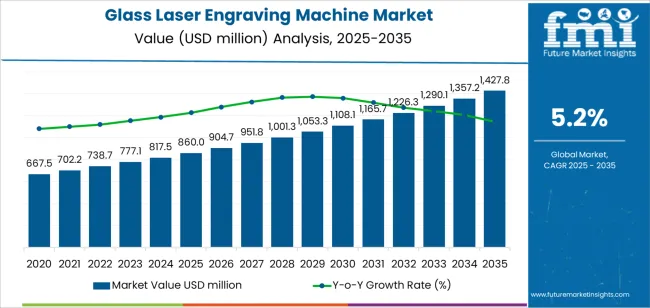
The global glass laser engraving machine market is valued at USD 860.0 million in 2025. The market is slated to reach USD 1,427.8 million by 2035. This records an absolute increase of USD 568.0 million over the forecast period. The total growth amounts to 66.0%. The market forecast shows expansion at a compound annual growth rate (CAGR) of 5.2% between 2025 and 2035. The overall market size is expected to grow by approximately 1.66X during the same period. Growth is supported by increasing personalization demand. Growing architectural glass applications drive expansion. Rising precision engraving requirements support market development. Expanding electronics and optics applications create opportunities.
The glass laser engraving machine market represents a specialized segment of the global laser processing equipment industry. The market shows rapid technological advancement. Consistent demand exists across decorative glass channels. Awards and gifts channels drive growth. Market dynamics are influenced by changing customization requirements toward precision laser engraving. Growing interest in architectural applications shapes development. Expanding partnerships between equipment manufacturers drive growth. Glass processing operators in developed economies show increased adoption. Emerging economies demonstrate growing demand patterns. Traditional engraving methods continue evolving. Operators seek proven laser alternatives. Enhanced precision benefits attract industrial users. Reliable performance characteristics remain essential requirements.
Quick Stats for Glass Laser Engraving Machine Market
- Glass Laser Engraving Machine Market Value (2025): USD 860.0 million
- Glass Laser Engraving Machine Market Forecast Value (2035): USD 1,427.8 million
- Glass Laser Engraving Machine Market Forecast CAGR: 5.2%
- Leading Laser Source in Glass Laser Engraving Machine Market: CO₂ Laser (46.0%)
- Key Growth Regions in Glass Laser Engraving Machine Market: North America, Europe, and Asia-Pacific
- Key Players in Glass Laser Engraving Machine Market: Trotec, Epilog Laser, Gravotech, Han's Laser, GCC LaserPro, Thunder Laser, OMTech, Universal Laser Systems, Lotus Laser, CERMETEK
Consumer behavior in the glass laser engraving machine market reflects broader customization trends. Efficient engraving systems provide functional benefits. Effective systems deliver precision results. The market benefits from growing popularity of personalized products. These systems are recognized for sophisticated manufacturing integration. Technical approach to glass processing gains acceptance. The versatility of laser engraving machines supports multiple applications. Standalone engraving devices serve specific needs. Integrated manufacturing system components expand market reach. Multiple decorative applications drive demand growth. Awards segments show increased adoption patterns.
Regional adoption patterns vary significantly across global markets. North American markets show strong preference for standardized glass laser engraving implementations. European markets demonstrate similar standardization trends. Asian markets show increasing adoption of advanced engraving solutions. Conventional engraving methods remain popular in developing regions. The industrial landscape continues evolving with sophisticated products. Quality-controlled glass laser engraving products gain traction in mainstream applications. Industrial applications reflect operator willingness to invest in improvements. Proven engraving system enhancements attract investment. Performance-oriented features drive adoption decisions.
The competitive environment features established laser equipment companies. Specialized engraving solution providers focus on unique capabilities. Advanced laser methods drive differentiation. Manufacturing efficiency remains critical for market participants. Product development optimization continues as key factor. Raw material costs create ongoing challenges. Quality standardization requirements fluctuate regularly. Distribution strategies emphasize multi-channel approaches. Traditional industrial supply chains combine with direct partnerships. Technical service platforms expand market reach. Supply distribution agreements strengthen customer relationships.
Market consolidation trends indicate acquisition strategies by larger manufacturers. Laser equipment manufacturers acquire specialized engraving companies. Product portfolio diversification drives acquisition activity. Access to specialized engraving system segments motivates purchases. Private label development has gained momentum. Industrial companies seek differentiation opportunities. Competitive pricing structures remain important considerations. Specialized glass laser engraving variants emerge in the market. UV laser options reflect changing operator priorities. Automated options create new market opportunities. Innovative engraving system developers benefit from emerging trends. Manufacturing automation enables consistent production scaling. Quality control improvements maintain traditional performance characteristics. Operators expect established performance from engraving system brands.
Between 2025 and 2030, the glass laser engraving machine market projects expansion from USD 860.0 million to USD 1,144.0 million. This results in a value increase of USD 284.0 million. The increase represents 50.0% of the total forecast growth for the decade. This development phase will be shaped by increasing adoption of UV laser technology. Rising demand for precision engraving drives growth. Customization solutions gain market acceptance. Growing emphasis on architectural applications supports expansion. Enhanced precision characteristics attract users. Manufacturing operators expand engraving capabilities. Growing demand for specialized glass laser engraving implementations continues. Advanced laser options gain popularity. Industrial offerings across decorative segments increase.
Glass Laser Engraving Machine Market Key Takeaways
| Metric | Value |
|---|---|
| Estimated Value (2025E) | USD 860.0 million |
| Forecast Value (2035F) | USD 1,428.0 million |
| Forecast CAGR (2025 to 2035) | 5.20% |
From 2030 to 2035, the market is forecast to grow from USD 1,144.0 million to USD 1,428.0 million. This adds another USD 284.0 million. The addition constitutes 50.0% of the overall ten-year expansion. This period is expected to be characterized by expansion of UV laser systems. Integration of advanced automation solutions continues. Development of specialized glass laser engraving implementations occurs. Enhanced precision profiles gain importance. Extended performance capabilities attract users. Growing adoption of fully automated manufacturing will drive demand. Glass laser engraving machines with superior accuracy characteristics gains acceptance. Compatibility with digital manufacturing technologies across industrial operations expands.
Between 2020 and 2025, the glass laser engraving machine market experienced steady development. Personalization demand drove market growth. Growing recognition of laser engraving as essential customization technology supported expansion. Precision engraving programs across decorative applications gained momentum. Architectural applications showed growth. The market developed as operators recognized potential benefits. Glass laser engraving solutions provide functional advantages. Customization benefits enable convenient manufacturing protocols. Technological advancement in laser systems began development. Precision-critical applications emphasize importance of maintaining performance. Consistency in diverse manufacturing environments becomes critical.
Why is the Glass Laser Engraving Machine Market Growing?
Market expansion is supported by increasing demand for personalized products. Customization requirements drive growth. Product differentiation management creates demand. Corresponding need for engraving solutions provides superior precision benefits. Decorative advantages enable enhanced product outcomes. Extended compatibility across various awards applications drives growth. Architectural applications show expansion. Modern operators focus on implementing proven engraving equipment. Precision specialists seek effective customization support. Minimized engraving complexity appeals to users. Consistent performance throughout complex manufacturing configurations attracts adoption. Diverse decorative environments require reliable solutions. Glass laser engraving machines deliver exceptional engraving efficacy against traditional alternatives. Advanced manufacturing integration capabilities support modern protocols. Essential components for contemporary decorative operations gain acceptance.
Growing emphasis on product personalization drives demand for advanced engraving adoption. Glass laser engraving machines support large-scale manufacturing requirements. Improved customization outcomes attract users. Advanced engraving systems gain acceptance. Operator preference for products combines effective engraving support with proven performance. Precision benefits create opportunities for innovative implementations. Rising influence of automation trends contributes to increased demand. Efficiency awareness drives market growth. Glass laser engraving machines provide advanced reliability. Seamless manufacturing integration appeals to users. Consistent performance across extended operation periods remains important.
Opportunity Pathways - Glass Laser Engraving Machine Market
The glass laser engraving machine market shows potential for steady growth. Technological advancement continues development. Manufacturing operators across North America seek equipment delivering exceptional engraving quality. Europe shows similar trends. Asia-Pacific markets demonstrate growth potential. Emerging markets seek advanced precision capabilities. Reliable engraving options gain acceptance. Glass laser engraving solutions gain prominence beyond traditional equipment. Strategic enablers of manufacturing automation expand applications. Advanced customization functionality grows in importance.
Rising personalization adoption in Asia-Pacific amplifies demand. Expanding precision initiatives globally support growth. Manufacturers leverage innovations in laser engineering. Advanced manufacturing integration gains momentum. Precision management technologies advance rapidly.
Pathways like high-performance implementations show promise for strong margin uplift. Specialized engraving platforms demonstrate potential. Advanced precision solutions target premium manufacturing segments. Geographic expansion captures volume opportunities. Product diversification addresses market needs. Local operator preferences become critical factors. Advanced automation adoption drives regional growth. Regulatory support around precision certification provides structural foundation. Engraving efficacy standards gain importance. Quality protocols strengthen market development.
- Pathway A - UV Laser Technology Implementations. Awards manufacturers require glass laser engraving solutions with advanced UV capabilities. Large facilities demand automated precision profiles for enhanced engraving appeal. Premium positioning capabilities attract investment. Engraving system developers creating high-performance platforms with superior laser standards command premium pricing. Expected revenue pool: USD 172.0 million to USD 215.0 million.
- Pathway B - Specialized Engraving Platforms. Growing demand for specialized engraving implementations drives market growth. Advanced precision capabilities attract users. Unique automation features create demand for advanced manufacturing capabilities. Specialized decorative integration opportunities exist. Revenue opportunity: USD 149.0 million to USD 186.0 million.
- Pathway C - Advanced Automation Solutions. Advanced glass laser engraving formulations meet specific manufacturing requirements. Engraving compatibility requirements grow. Specialized precision profiles enable market expansion. Enhanced operator appeal attracts accuracy-focused manufacturers. Revenue lift: USD 128.0 million to USD 160.0 million.
- Pathway D - Architectural Glass Applications. Expanding reach into architectural platforms creates opportunities. Optimized engraving delivery gains importance. Advanced industrial integration capabilities expand. Extended performance capabilities attract users. Operators seek partners supplying integrated solutions with complete engraving functionality. Pool: USD 136.0 million to USD 170.0 million.
- Pathway E - Geographic Expansion & Local Manufacturing. Strong growth in APAC markets continues. China shows particular potential. India demonstrates expansion opportunities. Southeast Asia markets develop rapidly. Local manufacturing lowers costs. Supply complexity reduction enables faster response to regional preferences. Expected upside: USD 143.0 million to USD 179.0 million.
- Pathway F - CO₂ Laser Development. Increasing demand for traditional formulations grows. Application-specific functionality gains importance. Specialized engraving profiles with validated performance characteristics attract manufacturing companies. Revenue opportunity: USD 106.0 million to USD 133.0 million.
- Pathway G - Digital Integration. Developing comprehensive automation solutions creates differentiation. Digital platform compatibility services expand applications. Engraving programs address specialized requirements for manufacturing operators. Decorative companies show growing demand from digital engraving services. Pool: USD 97.0 million to USD 121.0 million.
Segmental Analysis
The market is segmented by laser source, work envelope, end use, sales channel, and region. By laser source, the market divides into fiber laser, CO₂ laser, UV laser, and green/other categories. By work envelope, it covers desktop/benchtop, mid-format, and large-format segments. By end use, it includes awards/gifts/decor, architectural glass, electronics & optics, and automotive/other categories. By sales channel, it spans direct OEM, distributors, and online. Regionally, the market covers North America, Europe, Asia-Pacific, Latin America, and Middle East & Africa.
By Laser Source, the CO₂ Laser Segment Accounts for 46.0% Market Share
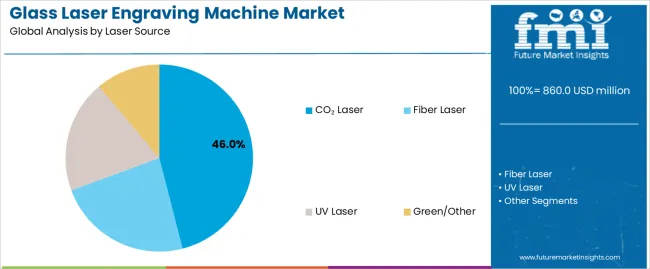
The CO₂ laser segment projects to account for 46.0% of the glass laser engraving machine market in 2025. This reaffirms its position as the leading laser source category. Manufacturing operators utilize CO₂ implementations for superior engraving standards. Laser system integrators prefer these systems when operating across diverse glass platforms. Excellent precision properties attract users. Widespread acceptance ranges from basic engraving operations to critical decorative processing. CO₂ laser technology's advanced engraving methods address operator requirements for efficient engraving solutions. Complex manufacturing environments benefit from these capabilities.
This laser source segment forms the foundation of modern glass engraving adoption patterns. The implementation offers greatest operational versatility. Established market demand exists across multiple decorative categories. Engraving segments show strong adoption. Operator investments in CO₂ standardization continue. Engraving efficiency improvements strengthen adoption among manufacturing operators. Decorative companies prioritize precision with operational reliability. CO₂ implementations align with functionality preferences. Performance expectations make these systems central components of comprehensive glass engraving strategies.
By Work Envelope, the Mid-Format Segment Accounts for 40.0% Market Share
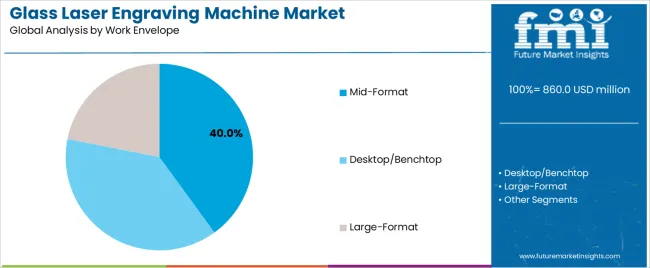
The Mid-Format applications project to represent 40.0% of glass laser engraving demand in 2025. This underscores their critical role as primary size range for engraving devices. Manufacturing operations use these systems across decorative applications. Production operations benefit from engraving capabilities. Industrial manufacturing applications show strong adoption. Operators prefer this format size for exceptional versatility characteristics. Scalable engraving options appeal to users. Ability to handle diverse product demands while ensuring consistent engraving performance attracts adoption. Various manufacturing platforms benefit from engraving methods. Essential format size for modern decorative operations offers functional advantages. Performance benefits remain important considerations.
The segment gains support from continuous innovation in laser technologies. Growing availability of specialized implementations enables diverse manufacturing requirements. Enhanced engraving uniformity capabilities expand applications. Extended precision capabilities attract investment. Manufacturing operators invest in advanced engraving systems supporting large-scale decorative integration. Operational development drives growth. Manufacturing automation trends become prevalent. Operator efficiency awareness increases acceptance. Mid-format applications continue representing major implementation markets. Advanced manufacturing utilization strategies gain support. Engraving integration initiatives expand market reach.
By End Use, the Awards/Gifts/Decor Segment Accounts for 36.0% Market Share
Awards/Gifts/Decor applications project to represent 36.0% of glass laser engraving demand in 2025. This demonstrates significance as primary deployment industry for engraving systems. Decorative manufacturing operations benefit from customization advantages. Awards facilities show strong adoption. Awards/Gifts/Decor operators utilize engraving equipment for exceptional personalization characteristics. Proven reliability in demanding environments attracts users. Ability to maintain consistent engraving performance across diverse operational conditions appeals to operators. The segment's leadership reflects critical nature of precision customization in decorative operations. Industry commitment to quality standards drives adoption.
The awards/gifts/decor sector drives innovation in engraving technology through demanding customization requirements. Stringent quality regulations exist. Operators invest heavily in advanced engraving systems ensuring operational continuity. Quality compliance requirements grow. Increasing emphasis on manufacturing efficiency supports market position. Customization management initiatives expand. Awards/Gifts/Decor applications maintain position as largest end use segment. Technological advancement initiatives continue. Performance optimization across glass laser engraving markets gains momentum.
By Sales Channel, the Direct OEM Segment Accounts for 48.0% Market Share
Direct OEM applications project to represent 48.0% of glass laser engraving demand in 2025. This demonstrates significance as primary distribution approach for engraving systems. Manufacturing operations benefit from direct advantages. Industrial facilities show strong adoption. Direct OEM operators utilize engraving equipment for exceptional service characteristics. Proven reliability in manufacturing environments attracts users. Ability to maintain consistent engraving performance across various operational conditions appeals to operators. The segment's dominance reflects critical nature of direct manufacturing sales in industrial operations. Industry commitment to direct service standards drives adoption.
The direct OEM sector drives innovation in manufacturing technology through demanding service requirements. Stringent service regulations exist. Operators invest heavily in advanced engraving systems ensuring service continuity. Service compliance requirements grow. Increasing emphasis on manufacturing efficiency supports market position. Direct service management initiatives expand. Direct OEM applications maintain position as largest sales segment. Service advancement initiatives continue. Performance optimization across glass laser engraving markets gains momentum.
What are the Drivers, Restraints, and Key Trends of the Glass Laser Engraving Machine Market?
The glass laser engraving machine market advances steadily due to increasing personalization demand driven by customization trends. Product differentiation initiatives support growth. Growing adoption of engraving systems provides superior precision characteristics. Customization benefits enable enhanced product outcomes across diverse decorative applications. Architectural applications expand market reach. The market faces challenges including high equipment costs compared to traditional alternatives. Complex laser requirements create compliance needs. Specialized operator training requirements grow. Manufacturing programs become more sophisticated. Innovation in UV laser technology continues influencing product development. Automated solutions drive market expansion patterns.
Expansion of Personalization and Customization Trends
Growing personalization sectors enable market development. Advanced customization management capabilities expand applications. Consumer awareness drives equipment manufacturers to produce advanced glass laser engraving solutions. Superior precision positioning attracts users. Enhanced reliability profiles gain acceptance. Seamless integration functionalities expand market reach. Advanced engraving systems provide improved operational outcomes. More efficient manufacturing workflows develop. Reliable performance across various decorative applications continues. Operating conditions improve with advanced systems. Developers recognize competitive advantages of customization solution integration capabilities. Market differentiation opportunities expand. Precision positioning becomes increasingly important.
Integration of UV Laser Technology and Advanced Control Systems
Modern glass laser engraving providers incorporate advanced UV laser technology. Automation system integration expands capabilities. Sophisticated engraving solutions enhance product appeal. Intelligent processing features develop rapidly. Value-added solutions for manufacturing customers gain acceptance. These technologies improve engraving efficiency. New market opportunities emerge including standardized performance. Optimized precision enhancement capabilities expand. Enhanced reliability characteristics attract users. Advanced automation integration allows developers supporting comprehensive manufacturing technologies. Market expansion beyond traditional engraving approaches continues.
Development of Architectural Glass Applications and Large-Format Systems
Growing adoption of architectural solutions enables market development. Advanced glass management capabilities expand applications. Building design awareness drives equipment manufacturers to produce advanced glass laser engraving solutions. Superior architectural positioning attracts users. Enhanced durability profiles gain acceptance. Seamless integration functionalities expand market reach. Advanced architectural systems provide improved operational outcomes. More efficient building workflows develop. Reliable performance across various architectural applications continues. Operating conditions improve with specialized systems. Developers recognize competitive advantages of architectural solution integration capabilities. Market differentiation opportunities expand. Architectural positioning becomes increasingly important.
Analysis of the Glass Laser Engraving Machine Market by Key Countries
| Country | CAGR (2025 to 2035) |
|---|---|
| China | 6.4% |
| Brazil | 6.0% |
| United States (USA) | 4.9% |
| United Kingdom (UK) | 4.9% |
| Germany | 4.8% |
| South Korea | 4.4% |
| Japan | 3.7% |
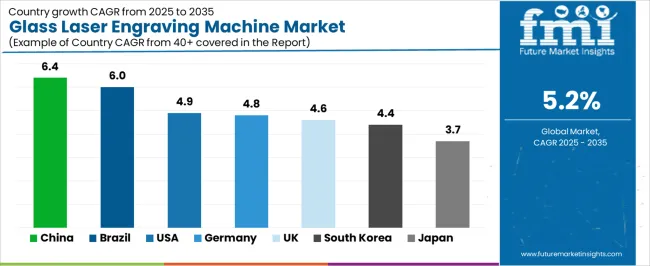
The glass laser engraving machine market experiences robust growth globally. China leads at 6.4% CAGR through 2035. Expanding manufacturing capacity drives growth. Growing decorative sector supports development. Significant investment in laser technology continues. Brazil follows at 6.0%. Increasing decorative production supports growth. Growing manufacturing modernization patterns develop. Expanding engraving infrastructure drives demand. The United States records 4.9% growth. Expanding customization capabilities support market development. Manufacturing automation modernization continues. The UK demonstrates 4.9% growth. Advanced engraving technology development occurs. Precision adoption trends drive market expansion. Germany exhibits 4.8% growth. Engraving technology innovation emphasizes development. Industrial advancement continues. South Korea shows 4.4% growth. Quality control initiatives support development. Japan records 3.7% growth supported by technology-focused production patterns.
The report covers in-depth analysis of 40+ countries, top-performing countries receive highlighting below.
China Leads Global Market Growth with Manufacturing Excellence
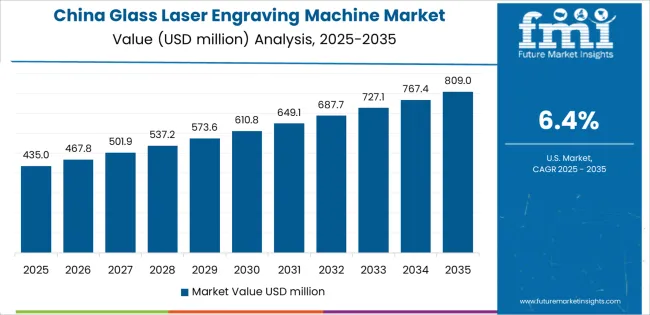
Revenue from glass laser engraving machines in China projects exceptional growth with 6.4% CAGR through 2035. Expanding decorative manufacturing capacity drives development. Rapidly growing customization sector receives government initiative support promoting advanced manufacturing development. The country's strong position in manufacturing technology supports growth. Increasing investment in laser infrastructure creates substantial demand for advanced implementations. Major decorative companies establish comprehensive engraving capabilities. Equipment system companies serve domestic manufacturing demand. Expanding export markets drive growth.
China leads global market growth due to its massive manufacturing base and strong consumer market for personalized products. The country benefits from large electronics industry requiring precision glass engraving. Major factors include growing gift and awards industry needing customization services. Expanding architectural glass sector requiring decorative engraving. Strong automotive industry requiring glass component processing. Government policies promoting manufacturing upgrade and automation. Large consumer base driving personalization demand. Advanced laser technology development programs. Strong supply chain supporting equipment production. Rising focus on high-precision manufacturing capabilities.
Government support for manufacturing modernization initiatives drives demand for advanced engraving systems. Major production regions benefit from development. Manufacturing centers across the country show expansion. Strong decorative technology growth occurs. Expanding network of automation-focused producers supports rapid adoption. Manufacturing operators seek advanced engraving capabilities. Integrated automation technologies gain acceptance.
Brazil Demonstrates Strong Market Potential with Industrial Growth
Revenue from glass laser engraving machines in Brazil expands at 6.0% CAGR. The country's growing decorative sector supports development. Expanding manufacturing capacity drives growth. Increasing adoption of engraving technologies continues. Country initiatives promoting industrial modernization create demand. Growing engraving awareness drives requirements for quality-controlled engraving systems. International manufacturing providers establish extensive capabilities. Domestic industrial companies address growing demand for advanced engraving solutions.
Brazil shows strong growth potential driven by industrial expansion and decorative manufacturing modernization. The country experiences significant manufacturing growth supported by domestic demand. Key factors include growing awards and gifts industry requiring customization services. Expanding architectural sector needing decorative glass solutions. Rising automotive industry requiring glass component processing. Government initiatives to modernize industrial capabilities. Growing adoption of international quality standards. Strategic position for serving Latin American markets. Increasing focus on manufacturing competitiveness. Strong consumer market driving personalization demand.
Rising industrial requirements create opportunities for glass laser engraving adoption. Metropolitan manufacturing centers show growth. Progressive manufacturers invest in modern engraving facilities. Major industrial regions expand operations. Growing focus on industrial integration drives adoption. Engraving features appeal to manufacturers seeking enhanced operational capabilities. Advanced precision delivery experiences attract investment.
United States Shows Market Leadership with Manufacturing Innovation
Revenue from glass laser engraving machines in the United States expands at 4.9% CAGR. The country's advanced manufacturing technology sector supports development. Strategic focus on customization solutions continues. Established decorative capabilities drive growth. The US engraving system innovation leadership supports market expansion. Manufacturing technology integration drives demand for specialized implementations in decorative applications. Architectural operations show growth. Advanced performance products expand market reach. Operators invest in comprehensive engraving development serving domestic specialty markets. International quality applications benefit from development.
The United States shows consistent growth driven by manufacturing innovation and customization culture. Strong awards and gifts sector requiring advanced engraving solutions. Key factors include large architectural glass industry needing precision engraving equipment. Advanced electronics manufacturing demanding quality engraving systems. Government support for advanced manufacturing initiatives. Focus on manufacturing competitiveness through precision technology. Major defense industry requiring specialized engraving equipment. Strong emphasis on automation and Industry 4.0. Major medical device sector needing precision engraving solutions. Growing focus on high-value manufacturing.
Manufacturing optimization and engraving technology advancement create opportunities for specialized engraving adoption in advanced systems. Decorative services benefit from development. Technology-focused manufacturing operations among leading enterprises gain acceptance. Growing emphasis on advanced engraving delivery drives adoption. Engraving features support quality implementations with enhanced technology profiles. Integrated engraving management throughout the country's manufacturing technology sector expands market reach.
United Kingdom Emphasizes Precision Engineering and Manufacturing Excellence
Revenue from glass laser engraving machines in the UK expands at 4.9% CAGR. The country's precision engineering heritage supports development. Strategic focus on manufacturing solutions continues. Established decorative capabilities drive growth. The UK's engraving system innovation leadership supports market expansion. Engineering technology integration drives demand for specialized implementations in manufacturing applications. Architectural operations show growth. Advanced quality products expand market reach. Operators invest in comprehensive engraving development serving domestic precision markets. International applications benefit from development.
The UK shows consistent growth driven by precision engineering heritage and manufacturing excellence. Strong decorative sector requiring precision engraving solutions. Key factors include advanced architectural programs requiring high-precision engraving. Growing manufacturing sector needing specialized engraving capabilities. Strong emphasis on manufacturing excellence driving quality requirements. Focus on high-value manufacturing through precision technology. Advanced automotive industry requiring precision engraving. Strong position in decorative manufacturing. Growing emphasis on manufacturing innovation. Strong technical education supporting skilled operators.
Engineering optimization and precision technology advancement create opportunities for specialized engraving adoption in advanced systems. Manufacturing services benefit from development. Technology-focused engineering operations among leading enterprises gain acceptance. Growing emphasis on advanced engraving delivery drives adoption. Engraving features support quality implementations with enhanced technology profiles. Integrated precision management throughout the country's engineering technology sector expands market reach.
Germany Demonstrates Engineering Excellence with Industrial Innovation
Revenue from glass laser engraving machines in Germany expands at 4.8% CAGR. The country's engineering heritage supports development. Strong emphasis on engraving technology continues. Robust demand for advanced engraving systems exists in manufacturing applications. Decorative applications drive growth. The nation's mature manufacturing sector supports development. Technology-focused operations drive sophisticated implementations throughout the engraving industry. Leading manufacturers invest extensively in technology development. Advanced engraving methods serve domestic markets. International markets benefit from German expertise.
Germany maintains its position as Europe's precision engineering leader with Industry 4.0 initiatives driving automation adoption. The country's advanced manufacturing culture supports intelligent engraving systems. Growth drivers include world-class automotive industry requiring precision engraving solutions. Advanced decorative manufacturing sector demanding quality engraving equipment. Strong architectural industry needing specialized engraving systems. Excellent engineering education producing precision manufacturing expertise. High quality standards encouraging sophisticated equipment. Advanced manufacturing processes requiring extreme precision. Well-developed industrial infrastructure supporting precision equipment. Strong tradition of engineering excellence in manufacturing.
Rising demand for high-performance precision technologies creates requirements for sophisticated solutions. Exceptional engraving capabilities appeal to quality-conscious manufacturers. Enhanced manufacturing experiences gain acceptance. Advanced engraving methods attract investment. Strong engineering tradition supports growth. Growing investment in precision technologies drives adoption. Quality platforms with advanced development methods appeal to users. Enhanced precision profiles across manufacturing operations expand in major industrial regions.
South Korea Demonstrates Technology Integration and Manufacturing Growth
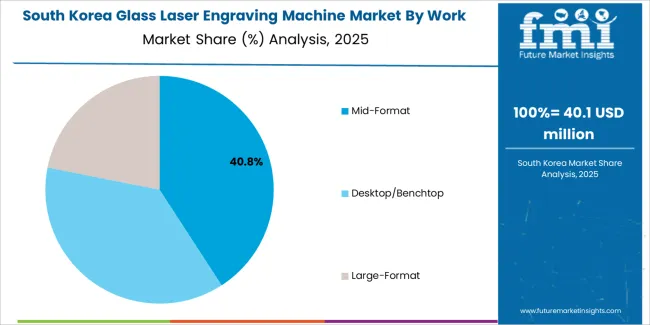
Revenue from glass laser engraving machines in South Korea grows at 4.4% CAGR. The country's technology integration initiatives drive development. Expanding electronics sector supports growth. Strategic focus on engraving development continues. South Korea's advanced manufacturing capabilities support market expansion. Commitment to industrial modernization drives investment in specialized technologies. Major manufacturing regions benefit from development. Industry leaders establish comprehensive technology integration systems. Domestic electronics operations benefit from advanced engraving applications.
South Korea exhibits growth driven by advanced manufacturing culture and electronics industry development. Key drivers include major electronics companies like Samsung and LG requiring precision engraving solutions. Strong semiconductor industry needing specialized glass processing equipment. Government support for advanced manufacturing technologies. Growing focus on precision manufacturing in electronics sector. High technology adoption culture in industrial applications. Rising emphasis on quality control in manufacturing processes. Advanced manufacturing automation capabilities. Strong emphasis on export competitiveness through precision technology. Growing automotive electronics sector requiring precision engraving.
Innovations in engraving platforms create demand for advanced implementations. Technology integration capabilities attract users. Exceptional precision properties appeal to progressive manufacturers. Enhanced technology differentiation gains acceptance. Operational appeal drives adoption. Growing electronics adoption supports market development. Increasing focus on engraving innovation drives advanced platform adoption. Integrated engraving delivery gains acceptance. Manufacturing optimization across electronics enterprises throughout the country expands market reach.
Japan Shows Quality Control Focus and Technology-Driven Production
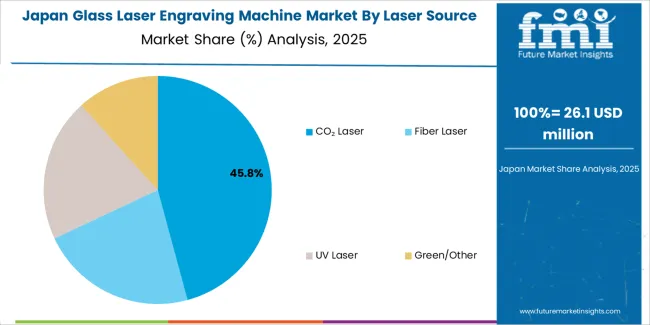
Revenue from glass laser engraving machines in Japan expands at 3.7% CAGR. The country's engraving system excellence initiatives support development. Growing precision technology sector continues expansion. Strategic emphasis on advanced manufacturing development drives market growth. Japan's advanced quality control capabilities support demand. Integrated engraving systems drive demand for high-quality platforms in manufacturing operations. Electronics applications grow. Advanced technology applications expand market reach. Leading manufacturers invest in specialized capabilities. Technology-focused manufacturing requirements gain attention. Precision industries demand sophisticated solutions.
Japan shows steady growth supported by quality-focused manufacturing culture and advanced technology development. Growth factors include highly sophisticated electronics industry with companies like Panasonic and Sony. Strong emphasis on quality control and continuous improvement (kaizen). Advanced manufacturing processes requiring extreme precision. Strong laser technology manufacturing capabilities producing engraving equipment. Focus on precision manufacturing for competitive advantage. High technology adoption in manufacturing processes. Strong materials science and precision engineering capabilities. Advanced automation in manufacturing requiring precision engraving. Growing focus on sustainable manufacturing through precision technology.
Quality control advancement creates requirements for specialized solutions. Superior quality integration appeals to users. Exceptional precision capabilities attract investment. Advanced performance features gain acceptance among quality-conscious manufacturing operations. Manufacturing operators seek sophisticated systems. Strong position in precision technology innovation supports adoption. Advanced systems with validated engraving characteristics gain acceptance. Quality integration capabilities throughout the country's manufacturing technology sector expand.
Europe Market Split by Country
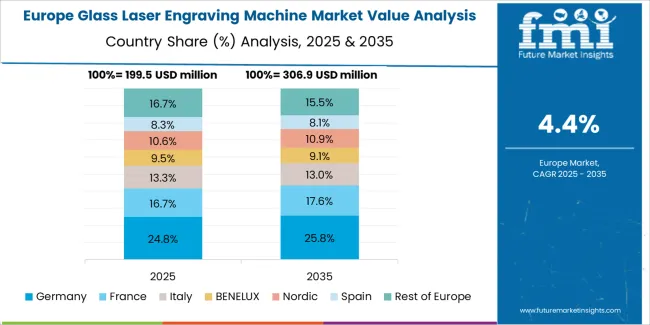
The glass laser engraving machine market in Europe projects growth from USD 258.0 million in 2025 to USD 428.4 million by 2035. This registers CAGR of 5.2% over the forecast period. Germany expects to maintain leadership position with 32.6% market share in 2025. This declines slightly to 32.3% by 2035. Support comes from strong engineering culture. Sophisticated engraving manufacturing capabilities continue. Comprehensive industrial sector serves diverse applications across Europe.
United Kingdom follows with 26.0% share in 2025. This projects to reach 26.2% by 2035. Robust demand for advanced engraving technologies in manufacturing applications drives growth. Precision modernization programs support development. Engraving markets benefit from established industrial infrastructure. Technology integration expertise continues. France holds 18.6% share in 2025. This expects to reach 18.8% by 2035. Strong precision technology sector supports growth. Growing manufacturing activities drive development. Italy commands 12.8% share in 2025. This projects to reach 12.9% by 2035. Spain accounts for 7.0% in 2025. This expects to reach 7.1% by 2035. Rest of Europe region anticipates maintaining momentum. Collective share moves from 3.0% to 2.7% by 2035. Increasing engraving modernization in Eastern Europe drives development. Growing technology penetration in Nordic countries implementing advanced manufacturing programs supports expansion.
Competitive Landscape of the Glass Laser Engraving Machine Market
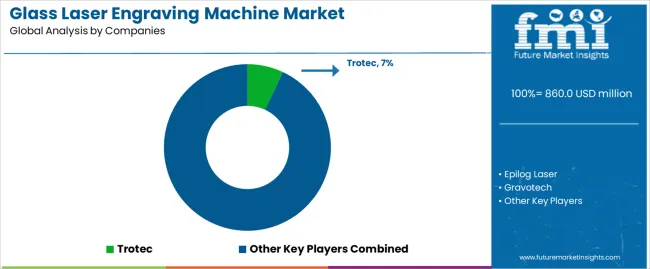
The glass laser engraving machine market demonstrates moderate competition among established laser equipment manufacturers, specialized glass processing providers, and integrated manufacturing solution companies. Companies invest significantly in CO₂ laser technology development, UV laser innovation, precision engineering advancement, and comprehensive service capabilities to deliver reliable, accurate, and cost-effective glass laser engraving solutions. Innovation in fiber laser systems, digital controls, advanced software integration, and IoT connectivity remains central to strengthening market position and competitive advantage across global markets.
Trotec leads the market with a 7.0% market share, offering comprehensive glass laser engraving solutions including quality CO₂ laser platforms and advanced UV systems with particular focus on decorative and architectural applications. The company's strength lies in laser engraving innovation, providing integrated solutions that combine traditional laser expertise with modern automation technology. Epilog Laser provides specialized precision engraving capabilities with strong emphasis on advanced glass laser implementations and innovative software solutions, particularly serving awards and decorative markets. Gravotech delivers comprehensive engraving services with focus on integrated platforms and large-scale manufacturing applications, combining laser technology with complete production solutions.
Han's Laser specializes in industrial laser applications and precision engraving implementations for manufacturing environments, expanding market reach through comprehensive laser processing solutions. GCC LaserPro focuses on premium engraving integration and innovative technology solutions for decorative markets. Thunder Laser offers advanced engraving platforms with emphasis on cost-effective and versatile applications, serving both industrial and commercial sectors. The competitive environment also includes significant players like OMTech, Universal Laser Systems, Lotus Laser, and CERMETEK, each focusing on specific market segments and technological specializations in laser engraving and glass processing equipment.
The competitive landscape reflects ongoing technological advancement as companies develop more sophisticated laser systems, automated handling capabilities, and integrated quality control systems. Companies focus on developing comprehensive solutions that combine glass laser engraving technology with digital design software, predictive maintenance capabilities, and advanced control technologies to differentiate offerings and capture higher-value market segments. Strategic partnerships between equipment manufacturers and glass processing operators drive innovation and market expansion, while increasing emphasis on operator training and technical support creates opportunities for companies to develop comprehensive service ecosystems around their equipment platforms.
Key Players in the Glass Laser Engraving Machine Market
- Trotec
- Epilog Laser
- Gravotech
- Han's Laser
- GCC LaserPro
- Thunder Laser
- OMTech
- Universal Laser Systems
- Lotus Laser
- CERMETEK
Scope of the Report
| Item | Value |
|---|---|
| Quantitative Units | USD 860.0 million |
| Laser Source | Fiber Laser; CO₂ Laser; UV Laser; Green/Other |
| Work Envelope | Desktop/Benchtop; Mid-Format; Large-Format |
| End Use | Awards/Gifts/Decor; Architectural Glass; Electronics & Optics; Automotive/Other |
| Sales Channel | Direct OEM; Distributors; Online |
| Regions Covered | North America; Europe; Asia-Pacific; Latin America; Middle East & Africa |
| Countries Covered | United States; China; Germany; United Kingdom; Japan; South Korea; Brazil; and 40+ additional countries |
| Key Companies Profiled | Trotec; Epilog Laser; Gravotech; Han's Laser; GCC LaserPro; Thunder Laser |
| Additional Attributes | Dollar sales by laser source and end use category; regional demand trends; competitive landscape; technological advancements in precision engraving; UV laser development; automation innovation; manufacturing integration protocols |
Glass Laser Engraving Machine Market by Segments
Laser Source:
- Fiber Laser
- CO₂ Laser
- UV Laser
- Green/Other
Work Envelope:
- Desktop/Benchtop
- Mid-Format
- Large-Format
End Use:
- Awards/Gifts/Decor
- Architectural Glass
- Electronics & Optics
- Automotive/Other
Sales Channel:
- Direct OEM
- Distributors
- Online
Region:
- North America
- United States
- Canada
- Mexico
- Europe
- Germany
- United Kingdom
- France
- Italy
- Spain
- Rest of Europe
- Asia-Pacific
- China
- Japan
- South Korea
- India
- Australia
- Rest of Asia-Pacific
- Latin America
- Brazil
- Argentina
- Rest of Latin America
- Middle East & Africa
- Saudi Arabia
- UAE
- South Africa
- Rest of Middle East & Africa
Frequently Asked Questions
How big is the glass laser engraving machine market in 2025?
The global glass laser engraving machine market is estimated to be valued at USD 860.0 million in 2025.
What will be the size of glass laser engraving machine market in 2035?
The market size for the glass laser engraving machine market is projected to reach USD 1,427.8 million by 2035.
How much will be the glass laser engraving machine market growth between 2025 and 2035?
The glass laser engraving machine market is expected to grow at a 5.2% CAGR between 2025 and 2035.
What are the key product types in the glass laser engraving machine market?
The key product types in glass laser engraving machine market are co₂ laser, fiber laser, uv laser and green/other.
Which work envelope segment to contribute significant share in the glass laser engraving machine market in 2025?
In terms of work envelope, mid-format segment to command 40.0% share in the glass laser engraving machine market in 2025.
Preview the report firsthand - request a free sample
Get SampleGet the brochure for pricing and purchase details.
Get PDFTable of Content
- Executive Summary
- Global Market Outlook
- Demand-side Trends
- Supply-side Trends
- Technology Roadmap Analysis
- Analysis and Recommendations
- Market Overview
- Market Coverage / Taxonomy
- Market Definition / Scope / Limitations
- Market Background
- Market Dynamics
- Drivers
- Restraints
- Opportunity
- Trends
- Scenario Forecast
- Demand in Optimistic Scenario
- Demand in Likely Scenario
- Demand in Conservative Scenario
- Opportunity Map Analysis
- Product Life Cycle Analysis
- Supply Chain Analysis
- Investment Feasibility Matrix
- Value Chain Analysis
- PESTLE and Porter’s Analysis
- Regulatory Landscape
- Regional Parent Market Outlook
- Production and Consumption Statistics
- Import and Export Statistics
- Market Dynamics
- Global Market Analysis 2020 to 2024 and Forecast, 2025 to 2035
- Historical Market Size Value (USD Million) Analysis, 2020 to 2024
- Current and Future Market Size Value (USD Million) Projections, 2025 to 2035
- Y-o-Y Growth Trend Analysis
- Absolute $ Opportunity Analysis
- Global Market Pricing Analysis 2020 to 2024 and Forecast 2025 to 2035
- Global Market Analysis 2020 to 2024 and Forecast 2025 to 2035, By Laser Source
- Introduction / Key Findings
- Historical Market Size Value (USD Million) Analysis By Laser Source , 2020 to 2024
- Current and Future Market Size Value (USD Million) Analysis and Forecast By Laser Source , 2025 to 2035
- CO₂ Laser
- Fiber Laser
- UV Laser
- Green/Other
- Y-o-Y Growth Trend Analysis By Laser Source , 2020 to 2024
- Absolute $ Opportunity Analysis By Laser Source , 2025 to 2035
- Global Market Analysis 2020 to 2024 and Forecast 2025 to 2035, By Work Envelope
- Introduction / Key Findings
- Historical Market Size Value (USD Million) Analysis By Work Envelope, 2020 to 2024
- Current and Future Market Size Value (USD Million) Analysis and Forecast By Work Envelope, 2025 to 2035
- Mid-Format
- Desktop/Benchtop
- Large-Format
- Y-o-Y Growth Trend Analysis By Work Envelope, 2020 to 2024
- Absolute $ Opportunity Analysis By Work Envelope, 2025 to 2035
- Global Market Analysis 2020 to 2024 and Forecast 2025 to 2035, By Region
- Introduction
- Historical Market Size Value (USD Million) Analysis By Region, 2020 to 2024
- Current Market Size Value (USD Million) Analysis and Forecast By Region, 2025 to 2035
- North America
- Latin America
- Western Europe
- Eastern Europe
- East Asia
- South Asia and Pacific
- Middle East & Africa
- Market Attractiveness Analysis By Region
- North America Market Analysis 2020 to 2024 and Forecast 2025 to 2035, By Country
- Historical Market Size Value (USD Million) Trend Analysis By Market Taxonomy, 2020 to 2024
- Market Size Value (USD Million) Forecast By Market Taxonomy, 2025 to 2035
- By Country
- USA
- Canada
- Mexico
- By Laser Source
- By Work Envelope
- By Country
- Market Attractiveness Analysis
- By Country
- By Laser Source
- By Work Envelope
- Key Takeaways
- Latin America Market Analysis 2020 to 2024 and Forecast 2025 to 2035, By Country
- Historical Market Size Value (USD Million) Trend Analysis By Market Taxonomy, 2020 to 2024
- Market Size Value (USD Million) Forecast By Market Taxonomy, 2025 to 2035
- By Country
- Brazil
- Chile
- Rest of Latin America
- By Laser Source
- By Work Envelope
- By Country
- Market Attractiveness Analysis
- By Country
- By Laser Source
- By Work Envelope
- Key Takeaways
- Western Europe Market Analysis 2020 to 2024 and Forecast 2025 to 2035, By Country
- Historical Market Size Value (USD Million) Trend Analysis By Market Taxonomy, 2020 to 2024
- Market Size Value (USD Million) Forecast By Market Taxonomy, 2025 to 2035
- By Country
- Germany
- UK
- Italy
- Spain
- France
- Nordic
- BENELUX
- Rest of Western Europe
- By Laser Source
- By Work Envelope
- By Country
- Market Attractiveness Analysis
- By Country
- By Laser Source
- By Work Envelope
- Key Takeaways
- Eastern Europe Market Analysis 2020 to 2024 and Forecast 2025 to 2035, By Country
- Historical Market Size Value (USD Million) Trend Analysis By Market Taxonomy, 2020 to 2024
- Market Size Value (USD Million) Forecast By Market Taxonomy, 2025 to 2035
- By Country
- Russia
- Poland
- Hungary
- Balkan & Baltic
- Rest of Eastern Europe
- By Laser Source
- By Work Envelope
- By Country
- Market Attractiveness Analysis
- By Country
- By Laser Source
- By Work Envelope
- Key Takeaways
- East Asia Market Analysis 2020 to 2024 and Forecast 2025 to 2035, By Country
- Historical Market Size Value (USD Million) Trend Analysis By Market Taxonomy, 2020 to 2024
- Market Size Value (USD Million) Forecast By Market Taxonomy, 2025 to 2035
- By Country
- China
- Japan
- South Korea
- By Laser Source
- By Work Envelope
- By Country
- Market Attractiveness Analysis
- By Country
- By Laser Source
- By Work Envelope
- Key Takeaways
- South Asia and Pacific Market Analysis 2020 to 2024 and Forecast 2025 to 2035, By Country
- Historical Market Size Value (USD Million) Trend Analysis By Market Taxonomy, 2020 to 2024
- Market Size Value (USD Million) Forecast By Market Taxonomy, 2025 to 2035
- By Country
- India
- ASEAN
- Australia & New Zealand
- Rest of South Asia and Pacific
- By Laser Source
- By Work Envelope
- By Country
- Market Attractiveness Analysis
- By Country
- By Laser Source
- By Work Envelope
- Key Takeaways
- Middle East & Africa Market Analysis 2020 to 2024 and Forecast 2025 to 2035, By Country
- Historical Market Size Value (USD Million) Trend Analysis By Market Taxonomy, 2020 to 2024
- Market Size Value (USD Million) Forecast By Market Taxonomy, 2025 to 2035
- By Country
- Kingdom of Saudi Arabia
- Other GCC Countries
- Turkiye
- South Africa
- Other African Union
- Rest of Middle East & Africa
- By Laser Source
- By Work Envelope
- By Country
- Market Attractiveness Analysis
- By Country
- By Laser Source
- By Work Envelope
- Key Takeaways
- Key Countries Market Analysis
- USA
- Pricing Analysis
- Market Share Analysis, 2024
- By Laser Source
- By Work Envelope
- Canada
- Pricing Analysis
- Market Share Analysis, 2024
- By Laser Source
- By Work Envelope
- Mexico
- Pricing Analysis
- Market Share Analysis, 2024
- By Laser Source
- By Work Envelope
- Brazil
- Pricing Analysis
- Market Share Analysis, 2024
- By Laser Source
- By Work Envelope
- Chile
- Pricing Analysis
- Market Share Analysis, 2024
- By Laser Source
- By Work Envelope
- Germany
- Pricing Analysis
- Market Share Analysis, 2024
- By Laser Source
- By Work Envelope
- UK
- Pricing Analysis
- Market Share Analysis, 2024
- By Laser Source
- By Work Envelope
- Italy
- Pricing Analysis
- Market Share Analysis, 2024
- By Laser Source
- By Work Envelope
- Spain
- Pricing Analysis
- Market Share Analysis, 2024
- By Laser Source
- By Work Envelope
- France
- Pricing Analysis
- Market Share Analysis, 2024
- By Laser Source
- By Work Envelope
- India
- Pricing Analysis
- Market Share Analysis, 2024
- By Laser Source
- By Work Envelope
- ASEAN
- Pricing Analysis
- Market Share Analysis, 2024
- By Laser Source
- By Work Envelope
- Australia & New Zealand
- Pricing Analysis
- Market Share Analysis, 2024
- By Laser Source
- By Work Envelope
- China
- Pricing Analysis
- Market Share Analysis, 2024
- By Laser Source
- By Work Envelope
- Japan
- Pricing Analysis
- Market Share Analysis, 2024
- By Laser Source
- By Work Envelope
- South Korea
- Pricing Analysis
- Market Share Analysis, 2024
- By Laser Source
- By Work Envelope
- Russia
- Pricing Analysis
- Market Share Analysis, 2024
- By Laser Source
- By Work Envelope
- Poland
- Pricing Analysis
- Market Share Analysis, 2024
- By Laser Source
- By Work Envelope
- Hungary
- Pricing Analysis
- Market Share Analysis, 2024
- By Laser Source
- By Work Envelope
- Kingdom of Saudi Arabia
- Pricing Analysis
- Market Share Analysis, 2024
- By Laser Source
- By Work Envelope
- Turkiye
- Pricing Analysis
- Market Share Analysis, 2024
- By Laser Source
- By Work Envelope
- South Africa
- Pricing Analysis
- Market Share Analysis, 2024
- By Laser Source
- By Work Envelope
- USA
- Market Structure Analysis
- Competition Dashboard
- Competition Benchmarking
- Market Share Analysis of Top Players
- By Regional
- By Laser Source
- By Work Envelope
- Competition Analysis
- Competition Deep Dive
- Trotec
- Overview
- Product Portfolio
- Profitability by Market Segments (Product/Age /Sales Channel/Region)
- Sales Footprint
- Strategy Overview
- Marketing Strategy
- Product Strategy
- Channel Strategy
- Epilog Laser
- Gravotech
- Han's Laser
- GCC LaserPro
- Thunder Laser
- OMTech
- Universal Laser Systems
- Lotus Laser
- CERMETEK
- Trotec
- Competition Deep Dive
- Assumptions & Acronyms Used
- Research Methodology


