

- Industry Size (2026)
- USD 2.1 Bn
- Forecast (2036)
- USD 5.0 Bn
- CAGR (2026 to 2036)
- 9%
Low-Carbon PVC Piping and Water Distribution Systems Market Forecast and Outlook 2026 to 2036
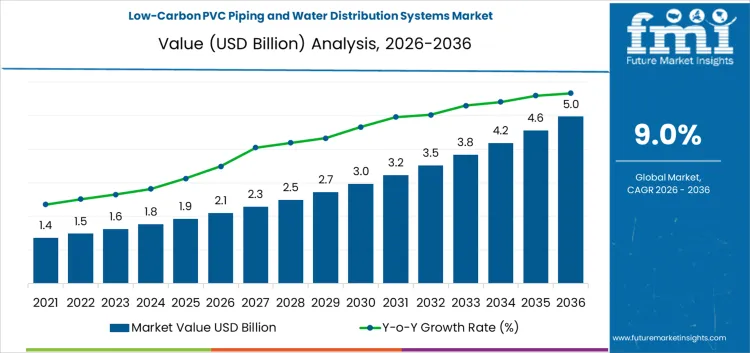
The low-carbon PVC piping and water distribution systems market is expected to experience consistent growth from 2026 to 2036. Starting at USD 2.1 billion in 2026, the market is projected to reach USD 5.0 billion by 2036, reflecting a compound annual growth rate (CAGR) of 9%. This growth is driven by the increasing demand for sustainable and durable piping solutions in water distribution systems. Low-carbon PVC, which is produced with reduced carbon emissions, offers an environmentally friendly alternative to traditional piping materials, providing long-lasting, corrosion-resistant solutions that meet the needs of both municipal and industrial water infrastructure projects.
The market’s expansion is supported by global regulatory efforts to reduce carbon footprints and the growing emphasis on sustainability in construction and infrastructure projects. The increasing adoption of low-carbon PVC is also driven by its superior performance in water distribution systems, including improved resistance to chemical degradation and environmental stress. Additionally, technological advancements in production processes are improving the efficiency and cost-effectiveness of low-carbon PVC pipes, further driving adoption. Over the forecast period, the market is expected to continue growing steadily, driven by these trends and the ongoing shift toward eco-friendly building materials in the water distribution sector.
Quick Stats of the Low-Carbon PVC Piping and Water Distribution Systems Market
- Low-Carbon PVC Piping and Water Distribution Systems Market Value (2026): USD 2.1 billion
- Low-Carbon PVC Piping and Water Distribution Systems Market Forecast Value (2036): USD 5.0 billion
- Low-Carbon PVC Piping and Water Distribution Systems Market Global Forecast CAGR (2026-2036): 9%
- Low-Carbon PVC Piping and Water Distribution Systems Market Leading Segment: End Use (Infrastructure & Public Works) 46%
- Key Growth Regions in Low-Carbon PVC Piping and Water Distribution Systems Market: USA
- Top Players in Low-Carbon PVC Piping and Water Distribution Systems Market: Aliaxis Group, Georg Fischer AG, Saint-Gobain PAM, Westlake Chemical Corporation, INEOS Group Ltd., Sekisui Chemical Co., Ltd., JM Eagle, China Lesso Group, VinylPlus PVC Circular Economy Initiative, Aalberts Integrated Piping Systems
What is the Growth Forecast for the Low-Carbon PVC Piping and Water Distribution Systems Market through 2036?
The inflection point mapping for the low-carbon PVC piping and water distribution systems market shows the distinct phases where growth accelerates and then stabilizes. From 2026 to 2031, the market will grow from USD 2.1 billion to USD 3.5 billion, experiencing rapid acceleration as low-carbon PVC becomes more widely accepted in water distribution systems. This growth is driven by increasing awareness of the material’s environmental benefits, as well as the rising demand for sustainable infrastructure solutions. The first inflection point is likely to occur around 2028–2029, when adoption reaches a critical mass, driven by regulatory pressures and the rising demand for eco-friendly solutions in public infrastructure projects.
From 2031 to 2036, the market will continue to expand, but at a more stable and predictable rate, increasing from USD 3.5 billion to USD 5.0 billion. This represents a deceleration phase, where the market moves from rapid growth to steady, sustained adoption. The second inflection point will occur as the low-carbon PVC market matures and becomes standard in water distribution systems. As the technology becomes more entrenched in the industry, the focus will shift from rapid adoption to efficiency and optimization, with manufacturers and suppliers focusing on cost reductions and improvements in the material’s performance. The market will continue to grow, but at a slower pace compared to the earlier years.
Low-Carbon PVC Piping and Water Distribution Systems Market Key Takeaways
| Metric | Value |
|---|---|
| Industry Sales Value (2026) | USD 2.1 billion |
| Industry Forecast Value (2036) | USD 5.0 billion |
| Industry Forecast CAGR (2026-2036) | 9% |
What Is Driving the Demand for Low-Carbon PVC for Window Profile and Door Systems Market?
Historical demand for PVC piping and related materials, including window and door profiles, was shaped by the widespread use of polyvinyl chloride in construction due to its durability, light weight, corrosion resistance, and cost efficiency. PVC became a dominant choice for water distribution, sanitation, and plumbing systems, with global PVC pipe volumes valued in the tens of millions of tons and growing steadily over recent years as infrastructure and urbanization expanded worldwide. PVC pipe products have been widely adopted in potable water delivery systems owing to efficient water flow and leak resistance. Sustainable PVC initiatives highlight that PVC pipes yield energy savings and reduced greenhouse gas emissions when compared with metals like copper or steel over their lifecycle, and the materials also offer high recyclability potential, which supports lifecycle energy and carbon performance.
Future demand for low carbon PVC used in window profiles, door systems, and water distribution applications is expected to be influenced by heightened emphasis on sustainability and embodied carbon reduction in building materials. Regulatory frameworks and green building standards increasingly prioritize materials with lower carbon footprints, and manufacturers are investing in energy efficient production processes, renewable energy use, and recycling initiatives to lower PVC’s lifecycle emissions. Energy efficient PVC production and recycling can reduce greenhouse gas outputs relative to conventional metal alternatives, further supporting material selection in infrastructure applications including interior surfaces and distribution systems. The broader PVC pipes market is forecast to expand at a moderate compound annual growth rate into the next decade as infrastructure development and water management remain key drivers, with sustainability considerations likely to reinforce interest in low carbon formulations across construction and utilities sectors.
What are the Leading Segments in the Global Low-Carbon PVC Piping and Water Distribution Systems Market?
The global low-carbon PVC piping and water distribution systems market is segmented by application segment and end use. Among application segments, municipal water distribution leads the market, capturing 41% of the share, followed by industrial fluid systems, residential plumbing, irrigation & agriculture, and specialty infrastructure projects. Municipal water distribution is favored for its large-scale use in urban and rural water systems. On the end-use side, infrastructure & public works dominate, holding 46% of the share, followed by industrial & commercial, residential construction, specialized contracting projects, and other sectors. Infrastructure & public works lead due to the high demand for reliable, cost-effective, and sustainable piping systems in public utilities.
What Drives the Growth of Municipal Water Distribution in the Low-Carbon PVC Piping and Water Distribution Systems Market?
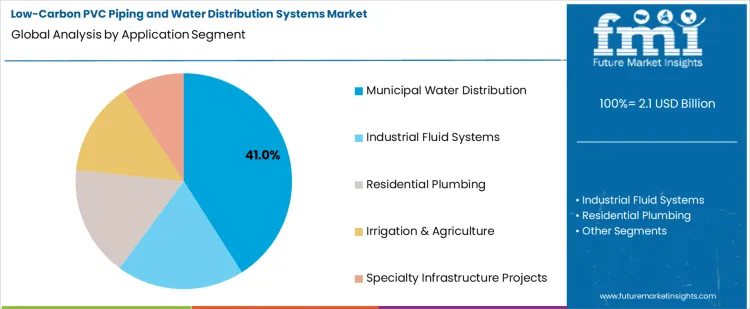
Municipal water distribution is the leading application segment in the low-carbon PVC piping and water distribution systems market, holding 41% of the share. This growth is driven by the increasing global focus on upgrading water infrastructure, particularly in urban areas, to ensure safe and reliable water supply systems. Low-carbon PVC pipes are preferred in municipal water distribution systems because they offer durability, corrosion resistance, and ease of installation at a lower cost compared to other materials like metal. Additionally, low-carbon PVC pipes are lightweight, which reduces transportation and handling costs. As cities and municipalities strive to meet sustainability goals and improve the efficiency of their water distribution systems, low-carbon PVC is seen as an environmentally friendly option due to its reduced carbon footprint during production and use. The demand for these pipes is also driven by the need to replace outdated infrastructure, particularly in developed economies, and the growing focus on water conservation and management.
What is Driving the Demand for Infrastructure & Public Works in the Low-Carbon PVC Piping and Water Distribution Systems Market?
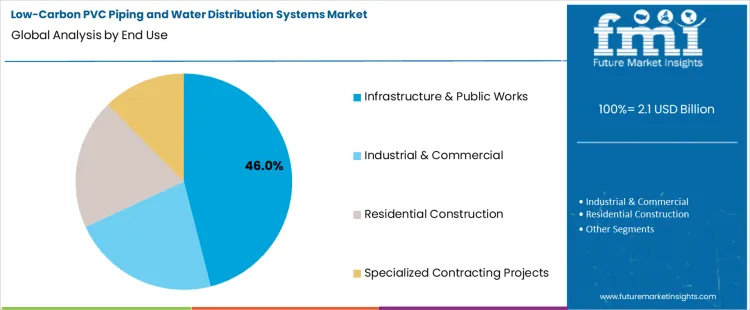
Infrastructure & public works is the leading end-use sector in the low-carbon PVC piping and water distribution systems market, capturing 46% of the share. This demand is driven by the continued expansion and modernization of public infrastructure, including water and sewage systems, across the globe. Governments and municipalities are investing heavily in the renewal of aging infrastructure to improve service delivery and reduce water loss, making low-carbon PVC piping an attractive option due to its longevity and efficiency. Low-carbon PVC pipes are cost-effective, easy to maintain, and resistant to many corrosive elements, making them ideal for public works projects, including municipal water distribution and sewage systems. Furthermore, regulatory pressure to adopt sustainable materials in construction and infrastructure projects, coupled with the growing emphasis on reducing carbon emissions, is increasing the adoption of low-carbon PVC in infrastructure development. As urbanization continues and infrastructure demands grow, low-carbon PVC piping will continue to be in high demand, especially in large-scale public works projects.
What are the Key Dynamics in the Low Carbon PVC Piping and Water Distribution Systems Market?
The low carbon PVC piping and water distribution systems market is defined by demand for polyvinyl chloride materials with reduced embodied greenhouse gas emissions while meeting performance criteria for potable water, wastewater, and infrastructure applications. PVC remains widely used in piping because of its corrosion resistance, chemical stability, and long service life. Manufacturers are working to lower production carbon intensity by using renewable energy, improving process efficiency, or incorporating recycled and alternative feedstocks. End users evaluate products on compliance with water safety standards, lifecycle emissions, and durability in field conditions. Regulatory emphasis on infrastructure sustainability, public sector procurement policies that include carbon metrics, and construction industry standards for environmental performance shape market activity.
What are the Main Drivers Supporting Growth in This Market?
Growth in the low carbon PVC piping and water distribution systems market is supported by policy frameworks that prioritize reduction of embodied carbon in building and infrastructure materials. Public investment in water infrastructure renewal and expansion, often linked with sustainability criteria, sustains demand for low carbon materials. Municipalities and utilities are incorporating lifecycle carbon reporting into procurement decisions, which encourages use of materials with documented lower emissions. Technical improvements in PVC compounding and production that reduce energy use also help lower carbon intensity. Increasing focus on resilient infrastructure that combines long service life with environmental impact considerations reinforces interest in PVC solutions that demonstrate lower carbon footprints in both manufacture and use.
What Restraints Are Limiting Market Expansion?
Cost considerations remain a restraint for broader adoption of low carbon PVC piping systems. Materials with reduced production emissions can carry higher manufacturing costs, which can affect competitiveness relative to conventional PVC or alternative materials such as polyethylene or metal piping. Variable availability of low carbon feedstocks or renewable energy sources can constrain consistent supply and raise input cost. Differences in regional standards and certification frameworks for embodied carbon create compliance complexity for suppliers and buyers operating across multiple jurisdictions. Some infrastructure specifiers may prioritize initial capital outlay and proven performance history over long term carbon metrics when selecting piping systems.
What Emerging Trends Are Shaping the Future of This Market?
Emerging trends include the use of environmental product declarations and lifecycle assessment tools to quantify and communicate carbon performance of PVC piping products. Manufacturers are increasingly investing in energy efficient production processes, use of recycled content, and integration of cleaner power sources to achieve lower carbon footprints. There is growing interest in mass balance and traceability systems that allow attribution of renewable or recycled inputs through complex supply chains. Infrastructure projects with explicit sustainability goals, including net zero and climate resilience targets, are influencing specification of materials with measured lower emissions. Collaboration between utilities, standards bodies, and material producers is advancing frameworks for standardized carbon measurements and procurement criteria in water distribution and piping systems.
What is the Country-Wise Analysis of the Low-Carbon PVC Piping and Water Distribution Systems Market?
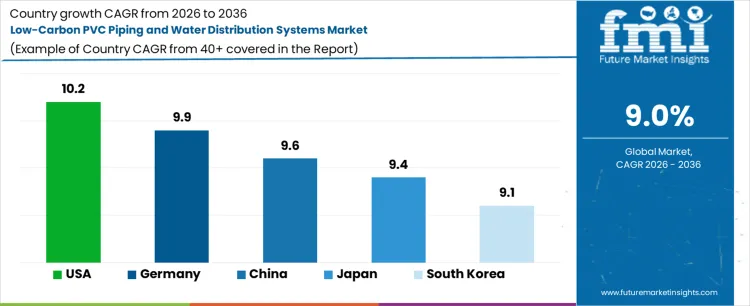
The low-carbon PVC piping and water distribution systems market is growing as industries focus on reducing their carbon footprint and adopting sustainable materials in infrastructure projects. Low-carbon PVC pipes, produced with a reduced environmental impact compared to traditional PVC, are gaining traction in water distribution systems due to their durability, corrosion resistance, and eco-friendly qualities. Developed markets like the USA, Germany, and Japan are leading the adoption of low-carbon PVC in water distribution systems due to their strong regulatory frameworks, increased demand for sustainable infrastructure, and government incentives for green construction practices. Emerging markets like China and South Korea are also experiencing growth, driven by urbanization, government policies supporting sustainable infrastructure, and increasing environmental awareness. As the global push for sustainable development continues, the market for low-carbon PVC piping and water distribution systems is expected to grow steadily.
What are the Main Drivers Supporting Growth in This Market?
Growth in the low carbon PVC piping and water distribution systems market is supported by policy frameworks that prioritize reduction of embodied carbon in building and infrastructure materials. Public investment in water infrastructure renewal and expansion, often linked with sustainability criteria, sustains demand for low carbon materials. Municipalities and utilities are incorporating lifecycle carbon reporting into procurement decisions, which encourages use of materials with documented lower emissions. Technical improvements in PVC compounding and production that reduce energy use also help lower carbon intensity. Increasing focus on resilient infrastructure that combines long service life with environmental impact considerations reinforces interest in PVC solutions that demonstrate lower carbon footprints in both manufacture and use.
What Restraints Are Limiting Market Expansion?
Cost considerations remain a restraint for broader adoption of low carbon PVC piping systems. Materials with reduced production emissions can carry higher manufacturing costs, which can affect competitiveness relative to conventional PVC or alternative materials such as polyethylene or metal piping. Variable availability of low carbon feedstocks or renewable energy sources can constrain consistent supply and raise input cost. Differences in regional standards and certification frameworks for embodied carbon create compliance complexity for suppliers and buyers operating across multiple jurisdictions. Some infrastructure specifiers may prioritize initial capital outlay and proven performance history over long term carbon metrics when selecting piping systems.
What Emerging Trends Are Shaping the Future of This Market?
Emerging trends include the use of environmental product declarations and lifecycle assessment tools to quantify and communicate carbon performance of PVC piping products. Manufacturers are increasingly investing in energy efficient production processes, use of recycled content, and integration of cleaner power sources to achieve lower carbon footprints. There is growing interest in mass balance and traceability systems that allow attribution of renewable or recycled inputs through complex supply chains. Infrastructure projects with explicit sustainability goals, including net zero and climate resilience targets, are influencing specification of materials with measured lower emissions. Collaboration between utilities, standards bodies, and material producers is advancing frameworks for standardized carbon measurements and procurement criteria in water distribution and piping systems.
| Country | CAGR (2026-2036) |
|---|---|
| USA | 10.2% |
| Germany | 9.9% |
| China | 9.6% |
| Japan | 9.4% |
| South Korea | 9.1% |
What is the Growth Outlook for the Low-Carbon PVC Piping and Water Distribution Systems Market in the USA?
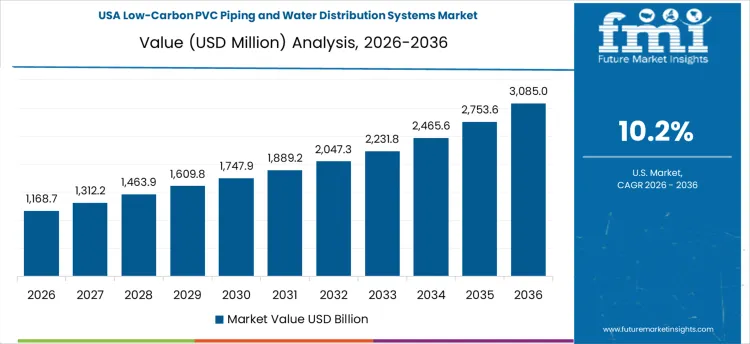
The low-carbon PVC piping and water distribution systems market in the USA is projected to grow steadily, with a projected CAGR of 10.2% from 2026 to 2036. The USA has a strong commitment to sustainability, and the demand for low-carbon building materials is increasing in the water distribution infrastructure sector. Low-carbon PVC pipes offer advantages in reducing carbon emissions, improving water quality, and enhancing the overall sustainability of water systems. The USA government’s regulatory frameworks, aimed at reducing plastic waste and encouraging the use of eco-friendly materials, are driving the adoption of low-carbon PVC in water distribution systems. As the USA continues to prioritize green infrastructure, the market for low-carbon PVC piping is expected to experience steady growth.
What is the Market Outlook for the Low-Carbon PVC Piping and Water Distribution Systems Market in Germany?
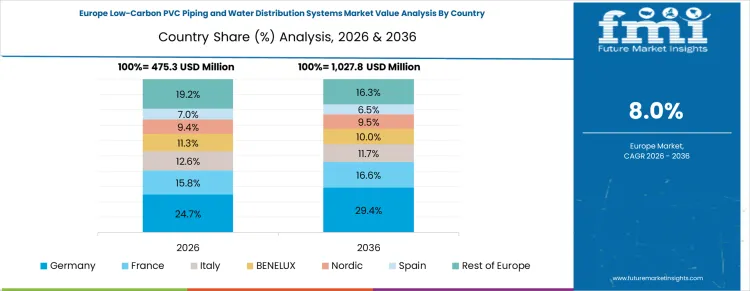
Germany is expected to see steady growth in the low-carbon PVC piping and water distribution systems market, with a projected CAGR of 9.9% from 2026 to 2036. Germany has long been a leader in sustainability and environmental innovation, and the demand for low-carbon materials in water distribution systems is increasing. The German government’s strong regulatory framework, aimed at reducing carbon emissions and promoting sustainable construction practices, is driving the adoption of low-carbon PVC in infrastructure projects. As German cities focus on improving water distribution systems and meeting sustainability goals, the market for low-carbon PVC piping in the country is expected to grow steadily in the coming years.
What is the Growth Forecast for the Low-Carbon PVC Piping and Water Distribution Systems Market in China?
China is projected to experience steady growth in the low-carbon PVC piping and water distribution systems market, with a projected CAGR of 9.6% from 2026 to 2036. As one of the world’s largest producers of PVC, China is increasingly focused on reducing its carbon footprint and improving sustainability in its infrastructure projects. Government initiatives supporting green development and sustainable urbanization are driving the adoption of low-carbon PVC pipes for water distribution systems. The demand for these materials is growing as China seeks to improve its water management systems while reducing environmental impacts. As China continues to modernize its infrastructure and prioritize sustainable development, the market for low-carbon PVC piping is expected to grow steadily.
What is the Market Outlook for the Low-Carbon PVC Piping and Water Distribution Systems Market in Japan?
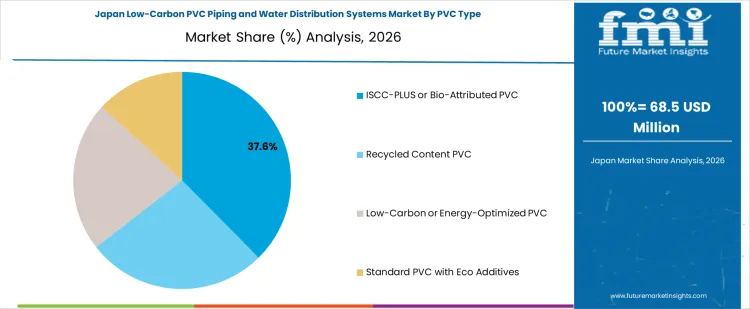
Japan is expected to see steady growth in the low-carbon PVC piping and water distribution systems market, with a projected CAGR of 9.4% from 2026 to 2036. Japan is known for its commitment to environmental sustainability, and the demand for low-carbon materials in water distribution systems is increasing as part of the country’s focus on green infrastructure. The Japanese government’s regulations, aimed at reducing plastic waste and improving water quality, are driving the adoption of low-carbon PVC piping in the construction of water distribution systems. As Japan continues to invest in sustainable infrastructure projects, the market for low-carbon PVC in water distribution is expected to grow steadily.
What is the Growth Forecast for the Low-Carbon PVC Piping and Water Distribution Systems Market in South Korea?
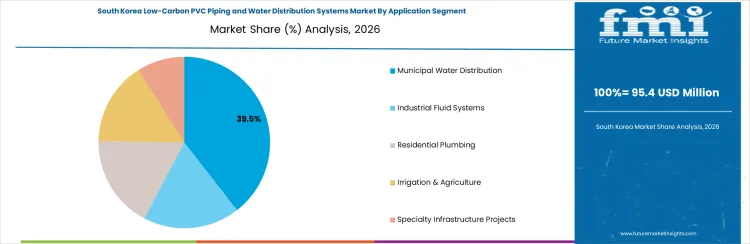
South Korea is projected to experience steady growth in the low-carbon PVC piping and water distribution systems market, with a projected CAGR of 9.1% from 2026 to 2036. South Korea has made significant strides in adopting sustainable technologies and green construction practices. The demand for low-carbon PVC pipes in water distribution systems is rising as the country focuses on building more sustainable infrastructure. Government policies promoting environmental responsibility, coupled with increasing consumer awareness of sustainability issues, are driving the adoption of low-carbon PVC in water systems. As South Korea continues to prioritize green development, the market for low-carbon PVC piping and water distribution systems is expected to grow steadily.
What is the Competitive Landscape for the Low-Carbon PVC Piping and Water Distribution Systems Market?
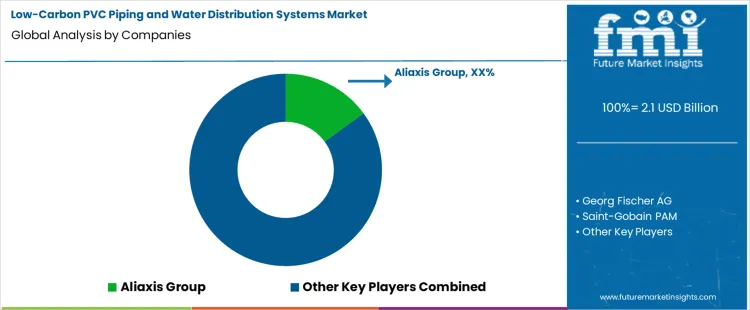
The low-carbon PVC piping and water distribution systems market is growing as the demand for sustainable, eco-friendly solutions in infrastructure and water management increases. Aliaxis Group leads the market with its innovative low-carbon PVC piping systems, offering sustainable, durable, and high-performance solutions for water distribution. Their focus on reducing carbon emissions in the manufacturing process, along with their commitment to innovation and regulatory compliance, has positioned them as a dominant player in this sector. Georg Fischer AG, Saint-Gobain PAM, and Westlake Chemical Corporation are significant competitors, each providing advanced low-carbon PVC solutions for water distribution systems. Georg Fischer AG focuses on delivering high-quality, sustainable piping solutions for water and wastewater systems, while Saint-Gobain PAM specializes in corrosion-resistant, eco-friendly water distribution materials. Westlake Chemical Corporation offers PVC solutions that meet growing demands for sustainable infrastructure.
INEOS Group Ltd., Sekisui Chemical Co., Ltd., and JM Eagle further contribute to the competitive landscape by offering their own low-carbon PVC piping systems. INEOS Group Ltd. delivers high-performance, sustainable PVC pipes for a range of applications, including water distribution, while Sekisui Chemical Co., Ltd. focuses on advanced piping systems that minimize environmental impact. JM Eagle offers durable, low-carbon PVC piping solutions for water systems, emphasizing strength and sustainability. China Lesso Group, VinylPlus PVC Circular Economy Initiative, and Aalberts Integrated Piping Systems also play key roles in the market by offering solutions that align with sustainable development goals and circular economy principles. These companies compete by focusing on product innovation, sustainability, and the growing need for eco-friendly infrastructure solutions. As demand for sustainable materials in construction and water management continues to rise, the market for low-carbon PVC piping and water distribution systems is expected to expand, fostering further innovation and competition in the sector.
Key Players of the Low-Carbon PVC Piping and Water Distribution Systems Market
- Aliaxis Group
- Georg Fischer AG
- Saint‑Gobain PAM
- Westlake Chemical Corporation
- INEOS Group Ltd.
- Sekisui Chemical Co., Ltd.
- JM Eagle
- China Lesso Group
- VinylPlus PVC Circular Economy Initiative
- Aalberts Integrated Piping Systems
Scope of the Report
| Items | Values |
|---|---|
| Quantitative Units (2026) | USD Billion |
| PVC Type | ISCC PLUS or Bio-Attributed PVC, Recycled Content PVC, Low-Carbon or Energy-Optimized PVC, Standard PVC with Eco Additives |
| Application Segment | Municipal Water Distribution, Industrial Fluid Systems, Residential Plumbing, Irrigation & Agriculture, Specialty Infrastructure Projects |
| End Use | Infrastructure & Public Works, Industrial & Commercial, Residential Construction, Specialized Contracting Projects |
| Companies | Aliaxis Group, Georg Fischer AG, Saint-Gobain PAM, Westlake Chemical Corporation, INEOS Group Ltd., Sekisui Chemical Co., Ltd., JM Eagle, China Lesso Group, VinylPlus PVC Circular Economy Initiative, Aalberts Integrated Piping Systems |
| Regions Covered | North America, Latin America, Western Europe, Eastern Europe, South Asia & Pacific, East Asia, Middle East & Africa |
| Countries Covered | United States, Canada, Mexico, Brazil, Argentina, Germany, France, United Kingdom, Italy, Spain, Netherlands, China, India, Japan, South Korea, ANZ, GCC Countries, South Africa |
| Additional Attributes | Dollar sales by PVC type, application segment, end use, and region. Includes analysis of market trends in low-carbon PVC piping and water distribution systems, performance in municipal, industrial, residential, and agricultural fluid conveyance, cost and formulation factors, regulatory and sustainability drivers for low-carbon and recycled PVC adoption, circular economy impacts through initiatives like VinylPlus, competitive positioning and market share of key companies, innovations in energy-optimized PVC materials and eco additives, and evaluation of impact on durability, lifecycle emissions, infrastructure resilience, and water system performance. |
Low-Carbon PVC Piping and Water Distribution Systems Market Segmentation
PVC Type:
- ISCC-PLUS or Bio-Attributed PVC
- Recycled Content PVC
- Low-Carbon or Energy-Optimized PVC
- Standard PVC with Eco Additives
Application Segment:
- Municipal Water Distribution
- Industrial Fluid Systems
- Residential Plumbing
- Irrigation & Agriculture
- Specialty Infrastructure Projects
End Use:
- Infrastructure & Public Works
- Industrial & Commercial
- Residential Construction
- Specialized Contracting Projects
Region:
- Asia Pacific
- China
- Japan
- South Korea
- India
- Australia & New Zealand
- ASEAN
- Rest of Asia Pacific
- Europe
- Germany
- United Kingdom
- France
- Italy
- Spain
- Nordic
- BENELUX
- Rest of Europe
- North America
- United States
- Canada
- Mexico
- Latin America
- Brazil
- Chile
- Rest of Latin America
- Middle East & Africa
- Kingdom of Saudi Arabia
- Other GCC Countries
- Turkey
- South Africa
- Other African Union
- Rest of Middle East & Africa
Frequently Asked Questions
How big is the low-carbon PVC piping and water distribution systems market in 2026?
The global low-carbon PVC piping and water distribution systems market is estimated to be valued at USD 2.1 billion in 2026.
What will be the size of low-carbon PVC piping and water distribution systems market in 2036?
The market size for the low-carbon PVC piping and water distribution systems market is projected to reach USD 5.0 billion by 2036.
How much will be the low-carbon PVC piping and water distribution systems market growth between 2026 and 2036?
The low-carbon PVC piping and water distribution systems market is expected to grow at a 9.0% CAGR between 2026 and 2036.
What are the key PVC types in the low-carbon PVC piping and water distribution systems market?
The key PVC types in the low-carbon PVC piping and water distribution systems market are ISCC‑plus or bio‑attributed PVC, recycled content PVC, low‑carbon or energy‑optimized PVC, and standard PVC with eco additives.
Which application segment to contribute significant share in the low-carbon PVC piping and water distribution systems market in 2026?
In terms of application segment, municipal water distribution segment to command 41.0% share in the low-carbon PVC piping and water distribution systems market in 2026.
Preview the report firsthand - request a free sample
Get SampleGet the brochure for pricing and purchase details.
Get PDFTable of Content
- Executive Summary
- Global Market Outlook
- Demand-side Trends
- Supply-side Trends
- Technology Roadmap Analysis
- Analysis and Recommendations
- Market Overview
- Market Coverage / Taxonomy
- Market Definition / Scope / Limitations
- Market Background
- Market Dynamics
- Drivers
- Restraints
- Opportunity
- Trends
- Scenario Forecast
- Demand in Optimistic Scenario
- Demand in Likely Scenario
- Demand in Conservative Scenario
- Opportunity Map Analysis
- Product Life Cycle Analysis
- Supply Chain Analysis
- Investment Feasibility Matrix
- Value Chain Analysis
- PESTLE and Porter’s Analysis
- Regulatory Landscape
- Regional Parent Market Outlook
- Production and Consumption Statistics
- Import and Export Statistics
- Market Dynamics
- Global Market Analysis 2021 to 2025 and Forecast, 2026 to 2036
- Historical Market Size Value (USD Million) Analysis, 2021 to 2025
- Current and Future Market Size Value (USD Million) Projections, 2026 to 2036
- Y-o-Y Growth Trend Analysis
- Absolute $ Opportunity Analysis
- Global Market Pricing Analysis 2021 to 2025 and Forecast 2026 to 2036
- Global Market Analysis 2021 to 2025 and Forecast 2026 to 2036, By PVC Type
- Introduction / Key Findings
- Historical Market Size Value (USD Million) Analysis By PVC Type , 2021 to 2025
- Current and Future Market Size Value (USD Million) Analysis and Forecast By PVC Type , 2026 to 2036
- ISCC‑PLUS or Bio‑Attributed PVC
- Recycled Content PVC
- Low‑Carbon or Energy‑Optimized PVC
- Standard PVC with Eco Additives
- ISCC‑PLUS or Bio‑Attributed PVC
- Y-o-Y Growth Trend Analysis By PVC Type , 2021 to 2025
- Absolute $ Opportunity Analysis By PVC Type , 2026 to 2036
- Global Market Analysis 2021 to 2025 and Forecast 2026 to 2036, By Application Segment
- Introduction / Key Findings
- Historical Market Size Value (USD Million) Analysis By Application Segment, 2021 to 2025
- Current and Future Market Size Value (USD Million) Analysis and Forecast By Application Segment, 2026 to 2036
- Municipal Water Distribution
- Industrial Fluid Systems
- Residential Plumbing
- Irrigation & Agriculture
- Specialty Infrastructure Projects
- Municipal Water Distribution
- Y-o-Y Growth Trend Analysis By Application Segment, 2021 to 2025
- Absolute $ Opportunity Analysis By Application Segment, 2026 to 2036
- Global Market Analysis 2021 to 2025 and Forecast 2026 to 2036, By End Use
- Introduction / Key Findings
- Historical Market Size Value (USD Million) Analysis By End Use, 2021 to 2025
- Current and Future Market Size Value (USD Million) Analysis and Forecast By End Use, 2026 to 2036
- Infrastructure & Public Works
- Industrial & Commercial
- Residential Construction
- Specialized Contracting Projects
- Infrastructure & Public Works
- Y-o-Y Growth Trend Analysis By End Use, 2021 to 2025
- Absolute $ Opportunity Analysis By End Use, 2026 to 2036
- Global Market Analysis 2021 to 2025 and Forecast 2026 to 2036, By Region
- Introduction
- Historical Market Size Value (USD Million) Analysis By Region, 2021 to 2025
- Current Market Size Value (USD Million) Analysis and Forecast By Region, 2026 to 2036
- North America
- Latin America
- Western Europe
- Eastern Europe
- East Asia
- South Asia and Pacific
- Middle East & Africa
- Market Attractiveness Analysis By Region
- North America Market Analysis 2021 to 2025 and Forecast 2026 to 2036, By Country
- Historical Market Size Value (USD Million) Trend Analysis By Market Taxonomy, 2021 to 2025
- Market Size Value (USD Million) Forecast By Market Taxonomy, 2026 to 2036
- By Country
- USA
- Canada
- Mexico
- By PVC Type
- By Application Segment
- By End Use
- By Country
- Market Attractiveness Analysis
- By Country
- By PVC Type
- By Application Segment
- By End Use
- Key Takeaways
- Latin America Market Analysis 2021 to 2025 and Forecast 2026 to 2036, By Country
- Historical Market Size Value (USD Million) Trend Analysis By Market Taxonomy, 2021 to 2025
- Market Size Value (USD Million) Forecast By Market Taxonomy, 2026 to 2036
- By Country
- Brazil
- Chile
- Rest of Latin America
- By PVC Type
- By Application Segment
- By End Use
- By Country
- Market Attractiveness Analysis
- By Country
- By PVC Type
- By Application Segment
- By End Use
- Key Takeaways
- Western Europe Market Analysis 2021 to 2025 and Forecast 2026 to 2036, By Country
- Historical Market Size Value (USD Million) Trend Analysis By Market Taxonomy, 2021 to 2025
- Market Size Value (USD Million) Forecast By Market Taxonomy, 2026 to 2036
- By Country
- Germany
- UK
- Italy
- Spain
- France
- Nordic
- BENELUX
- Rest of Western Europe
- By PVC Type
- By Application Segment
- By End Use
- By Country
- Market Attractiveness Analysis
- By Country
- By PVC Type
- By Application Segment
- By End Use
- Key Takeaways
- Eastern Europe Market Analysis 2021 to 2025 and Forecast 2026 to 2036, By Country
- Historical Market Size Value (USD Million) Trend Analysis By Market Taxonomy, 2021 to 2025
- Market Size Value (USD Million) Forecast By Market Taxonomy, 2026 to 2036
- By Country
- Russia
- Poland
- Hungary
- Balkan & Baltic
- Rest of Eastern Europe
- By PVC Type
- By Application Segment
- By End Use
- By Country
- Market Attractiveness Analysis
- By Country
- By PVC Type
- By Application Segment
- By End Use
- Key Takeaways
- East Asia Market Analysis 2021 to 2025 and Forecast 2026 to 2036, By Country
- Historical Market Size Value (USD Million) Trend Analysis By Market Taxonomy, 2021 to 2025
- Market Size Value (USD Million) Forecast By Market Taxonomy, 2026 to 2036
- By Country
- China
- Japan
- South Korea
- By PVC Type
- By Application Segment
- By End Use
- By Country
- Market Attractiveness Analysis
- By Country
- By PVC Type
- By Application Segment
- By End Use
- Key Takeaways
- South Asia and Pacific Market Analysis 2021 to 2025 and Forecast 2026 to 2036, By Country
- Historical Market Size Value (USD Million) Trend Analysis By Market Taxonomy, 2021 to 2025
- Market Size Value (USD Million) Forecast By Market Taxonomy, 2026 to 2036
- By Country
- India
- ASEAN
- Australia & New Zealand
- Rest of South Asia and Pacific
- By PVC Type
- By Application Segment
- By End Use
- By Country
- Market Attractiveness Analysis
- By Country
- By PVC Type
- By Application Segment
- By End Use
- Key Takeaways
- Middle East & Africa Market Analysis 2021 to 2025 and Forecast 2026 to 2036, By Country
- Historical Market Size Value (USD Million) Trend Analysis By Market Taxonomy, 2021 to 2025
- Market Size Value (USD Million) Forecast By Market Taxonomy, 2026 to 2036
- By Country
- Kingdom of Saudi Arabia
- Other GCC Countries
- Turkiye
- South Africa
- Other African Union
- Rest of Middle East & Africa
- By PVC Type
- By Application Segment
- By End Use
- By Country
- Market Attractiveness Analysis
- By Country
- By PVC Type
- By Application Segment
- By End Use
- Key Takeaways
- Key Countries Market Analysis
- USA
- Pricing Analysis
- Market Share Analysis, 2025
- By PVC Type
- By Application Segment
- By End Use
- Canada
- Pricing Analysis
- Market Share Analysis, 2025
- By PVC Type
- By Application Segment
- By End Use
- Mexico
- Pricing Analysis
- Market Share Analysis, 2025
- By PVC Type
- By Application Segment
- By End Use
- Brazil
- Pricing Analysis
- Market Share Analysis, 2025
- By PVC Type
- By Application Segment
- By End Use
- Chile
- Pricing Analysis
- Market Share Analysis, 2025
- By PVC Type
- By Application Segment
- By End Use
- Germany
- Pricing Analysis
- Market Share Analysis, 2025
- By PVC Type
- By Application Segment
- By End Use
- UK
- Pricing Analysis
- Market Share Analysis, 2025
- By PVC Type
- By Application Segment
- By End Use
- Italy
- Pricing Analysis
- Market Share Analysis, 2025
- By PVC Type
- By Application Segment
- By End Use
- Spain
- Pricing Analysis
- Market Share Analysis, 2025
- By PVC Type
- By Application Segment
- By End Use
- France
- Pricing Analysis
- Market Share Analysis, 2025
- By PVC Type
- By Application Segment
- By End Use
- India
- Pricing Analysis
- Market Share Analysis, 2025
- By PVC Type
- By Application Segment
- By End Use
- ASEAN
- Pricing Analysis
- Market Share Analysis, 2025
- By PVC Type
- By Application Segment
- By End Use
- Australia & New Zealand
- Pricing Analysis
- Market Share Analysis, 2025
- By PVC Type
- By Application Segment
- By End Use
- China
- Pricing Analysis
- Market Share Analysis, 2025
- By PVC Type
- By Application Segment
- By End Use
- Japan
- Pricing Analysis
- Market Share Analysis, 2025
- By PVC Type
- By Application Segment
- By End Use
- South Korea
- Pricing Analysis
- Market Share Analysis, 2025
- By PVC Type
- By Application Segment
- By End Use
- Russia
- Pricing Analysis
- Market Share Analysis, 2025
- By PVC Type
- By Application Segment
- By End Use
- Poland
- Pricing Analysis
- Market Share Analysis, 2025
- By PVC Type
- By Application Segment
- By End Use
- Hungary
- Pricing Analysis
- Market Share Analysis, 2025
- By PVC Type
- By Application Segment
- By End Use
- Kingdom of Saudi Arabia
- Pricing Analysis
- Market Share Analysis, 2025
- By PVC Type
- By Application Segment
- By End Use
- Turkiye
- Pricing Analysis
- Market Share Analysis, 2025
- By PVC Type
- By Application Segment
- By End Use
- South Africa
- Pricing Analysis
- Market Share Analysis, 2025
- By PVC Type
- By Application Segment
- By End Use
- USA
- Market Structure Analysis
- Competition Dashboard
- Competition Benchmarking
- Market Share Analysis of Top Players
- By Regional
- By PVC Type
- By Application Segment
- By End Use
- Competition Analysis
- Competition Deep Dive
- Aliaxis Group
- Overview
- Product Portfolio
- Profitability by Market Segments (Product/Age /Sales Channel/Region)
- Sales Footprint
- Strategy Overview
- Marketing Strategy
- Product Strategy
- Channel Strategy
- Georg Fischer AG
- Saint‑Gobain PAM
- Westlake Chemical Corporation
- INEOS Group Ltd.
- Sekisui Chemical Co., Ltd.
- JM Eagle
- China Lesso Group
- VinylPlus PVC Circular Economy Initiative
- Aalberts Integrated Piping Systems
- Aliaxis Group
- Competition Deep Dive
- Assumptions & Acronyms Used
- Research Methodology


