

- Industry Size (2026)
- USD 1.1 Bn
- Forecast (2036)
- USD 2.8 Bn
- CAGR (2026 to 2036)
- 9.6%
Low-Carbon PVC for Window Profile and Door Systems Market Forecast and Outlook 2026 to 2036
The low-carbon PVC for window profile and door systems market is valued at USD 1.1 billion in 2026 and is projected to reach USD 2.8 billion by 2036, growing at a compound annual growth rate (CAGR) of 9.6%. The commercial realities in this market are shaped by a delicate balance between pricing discipline and the need to meet sustainability demands. As regulations tighten, buyers will increasingly leverage their position to negotiate lower prices, especially as low-carbon alternatives become more widely available. Volume predictability remains a challenge, given the cyclical nature of construction projects and the long lead times involved in product adoption. Suppliers must navigate fluctuating raw material costs and manage supply chain risks while maintaining consistent product quality. Pricing pressures will intensify as competition grows, particularly from established players who can scale production efficiently. Companies that can deliver cost-effective, compliant solutions while securing long-term relationships with buyers will be best positioned to thrive in this evolving market.
Quick Stats of the Low-Carbon PVC for Window Profile and Door Systems Market
- Low-Carbon PVC for Window Profile and Door Systems Market Value (2026): USD 1.1 billion
- Low-Carbon PVC for Window Profile and Door Systems Market Forecast Value (2036): USD 2.8 billion
- Low-Carbon PVC for Window Profile and Door Systems Market Global Forecast CAGR (2026-2036): 9.6%
- Low-Carbon PVC for Window Profile and Door Systems Market Leading Segment: Application by System (Window Profiles) 58%
- Key Growth Regions in Low-Carbon PVC for Window Profile and Door Systems Market: USA
- Top Players in Low-Carbon PVC for Window Profile and Door Systems Market: VEKA AG, Deceuninck NV, REHAU Window Solutions, Aluplast GmbH, Profine Group (Kömmerling), LIXIL Corporation, Ply Gem Holdings, Fenplast, Eurocell PLC, LG Chem Ltd.

What is the Growth Forecast for the Low-Carbon PVC for Window Profile and Door Systems Market through 2036?
The breakpoint analysis for the low-carbon PVC for window profile and door systems market reveals significant phases where growth accelerates and then stabilizes as the technology becomes widely adopted. From 2026 to 2031, the market will grow from USD 1.1 billion to USD 2 billion, reflecting a strong increase of USD 900 million. This period will see the market reach its first breakpoint around 2028-2029, driven by the early adoption of low-carbon PVC in the construction sector, where demand for sustainable building materials is rising. The rapid increase in adoption will be driven by industry initiatives and regulatory incentives, pushing the market to higher growth rates.
From 2031 to 2036, the market will continue to grow, increasing from USD 2 billion in 2031 to USD 2.8 billion in 2036. This represents an additional USD 1 billion in value. However, the growth rate will begin to slow down as the technology becomes standard practice in the industry, and the market reaches its second breakpoint. This deceleration is typical of maturing markets, where the initial surge of adoption levels off, and further growth is driven by incremental improvements in technology and continued regulatory support. The market will continue to expand, but at a more stable and predictable pace during the later years of the forecast period.
Low-Carbon PVC for Window Profile and Door Systems Market Key Takeaways
| Metric | Value |
|---|---|
| Industry Sales Value (2026) | USD 1.1 billion |
| Industry Forecast Value (2036) | USD 2.8 billion |
| Industry Forecast CAGR (2026-2036) | 9.6% |
What Is Driving the Demand for Low Carbon PVC for Window Profile and Door Systems Market?
Historical demand for polyvinyl chloride (PVC) in window and door systems evolved from PVC’s role as a rigid, durable polymer widely used in construction, utilities, and consumer products. PVC became a preferred material for rigid profiles because it offers weather resistance, low maintenance, sound insulation, and cost advantages compared with alternatives such as wood or aluminum. Global PVC consumption across sectors expanded through the late 20th century and into the 21st century, contributing to large volumes of PVC in construction. The broader PVC market has been projected to grow steadily, with total global value increasing into the tens of billions of USA dollars and a moderate compound annual growth rate in the 3-5% range in recent forecasts. Demand for PVC window profiles and door systems specifically has risen alongside residential and commercial construction activity as urbanization, infrastructure development, and renovation projects increased worldwide. Building codes that emphasize thermal performance and energy efficiency also contributed to adoption of PVC fenestration products that provide insulation performance and lower heating and cooling loads relative to less efficient materials. PVC windows and doors have been positioned as durable and low maintenance components for a wide range of climates and construction types.
Future demand for low carbon PVC used in window profile and door systems will be shaped by sustainability drivers that amplify requirements for materials with lower life cycle carbon emissions and improved environmental credentials. Regulatory pressure on building materials’ embodied carbon is increasing in many regions, with energy codes and green building standards prioritizing low emission and energy efficient products. The construction sector’s focus on reducing operational and embodied carbon encourages adoption of materials certified for sustainability performance, including low carbon PVC that incorporates recycled content or bio based feedstocks and uses decarbonized energy in manufacturing. Market drivers also include rising demand for energy efficient building envelopes and fenestration solutions that contribute to broader carbon reduction goals in new and retrofit construction. In addition, consumer and corporate commitments to sustainable building practices elevate the value of materials that can demonstrate reduced carbon footprints. Challenges include the need to secure certified feedstocks, manage costs relative to conventional PVC, and maintain performance standards for durability, insulation, and fire resistance. Continued advancements in low carbon production processes, supply chain traceability, and sustainability certification frameworks are likely to support broader uptake of low carbon PVC in window profiles and door systems as part of decarbonizing building materials markets.
What are the Leading Segments in the Global Low-Carbon PVC for Window Profile and Door Systems Market?
The global low-carbon PVC for window profile and door systems market is segmented by application by system and end-use sector. Among application by system, window profiles lead the market, capturing 58% of the share, followed by door profiles, frame components & accessories, and specialty architectural profiles. Window profiles are favored for their critical role in residential and commercial construction due to their durability, insulation properties, and energy efficiency. On the end-use sector side, residential construction dominates the market, holding 47% of the share, followed by commercial buildings, infrastructure & public projects, and modular or prefab systems. Residential construction leads due to the high demand for energy-efficient and sustainable materials in housing development.
What Drives the Growth of Window Profiles in the Low-Carbon PVC for Window Profile and Door Systems Market?
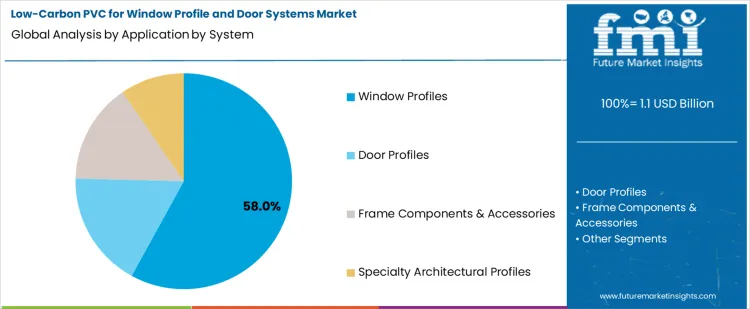
Window profiles are the leading application type in the low-carbon PVC for window profile and door systems market, holding 58% of the share. This growth is driven by the significant demand for energy-efficient and sustainable materials in both residential and commercial construction. Window profiles made from low-carbon PVC offer superior insulation, reducing the need for heating and cooling in buildings, which is critical in minimizing energy consumption and lowering carbon footprints. As sustainability becomes a key focus in the building sector, especially in response to regulatory pressures and consumer preferences for eco-friendly products, low-carbon PVC is increasingly being adopted for window profiles. Furthermore, the durability and long lifespan of PVC windows, coupled with their recyclability, contribute to their dominance in the market. As the construction industry continues to embrace green building practices, the demand for low-carbon PVC in window profiles will remain strong, driving the growth of this segment.
What is Driving the Demand for Residential Construction in the Low-Carbon PVC for Window Profile and Door Systems Market?
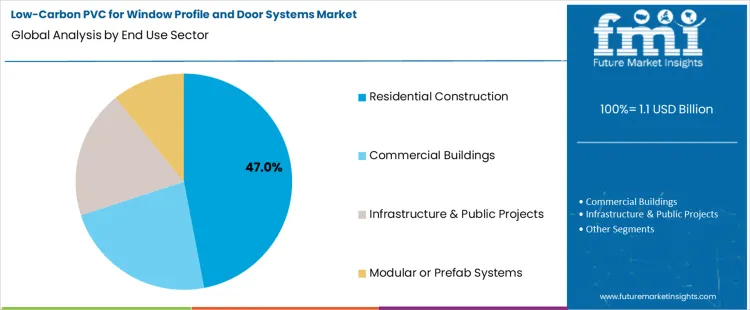
Residential construction is the leading end-use sector in the low-carbon PVC for window profile and door systems market, capturing 47% of the share. This demand is primarily driven by the growing focus on building energy-efficient, sustainable homes. Consumers and builders alike are increasingly prioritizing eco-friendly materials that not only reduce energy consumption but also contribute to lower carbon emissions in line with green building standards. Low-carbon PVC for window and door profiles offers an excellent solution for residential construction, providing thermal insulation, durability, and ease of maintenance while being environmentally friendly. The rising demand for energy-efficient homes, combined with government incentives and building codes that favor sustainable construction practices, has contributed to the significant uptake of low-carbon PVC products in residential projects. As energy efficiency continues to be a central concern for homeowners and builders, the demand for low-carbon PVC in residential construction will remain a dominant force in the market.
What are the Key Dynamics in the Low Carbon PVC for Window Profile and Door Systems Market?
The low carbon PVC for window profile and door systems market is centered on supplying polyvinyl chloride materials with reduced lifecycle carbon intensity for use in building fenestration. PVC remains a dominant material in window and door applications due to its durability, low maintenance, and energy efficient performance in construction sectors. The shift toward low carbon PVC reflects broader industry efforts to lower material greenhouse gas emissions and meet regulatory and voluntary sustainability standards within building materials and low carbon construction frameworks. Adoption is influenced by roofing and facade requirements for energy performance, environmental reporting standards, and demand for traceable, lower emission supply chains in construction projects. Market dynamics span raw material sourcing, production processes, certification mechanisms, and integration with energy efficient building design practices.
What are the Main Drivers Supporting Growth in This Market?
Growth in the low carbon PVC for window profile and door systems market is supported by increasing emphasis on energy efficiency and low carbon construction practices. Demand for PVC based windows and doors continues to grow with rising residential and commercial construction activity globally. Urbanization and infrastructure expansion are driving volume growth in PVC windows and doors, including systems that contribute to overall building performance objectives. Energy efficient fenestration products that reduce heating and cooling loads are aligned with low carbon building strategies. Pressure from regulatory bodies and building codes that prioritize reduced embodied carbon in materials encourages manufacturers to adopt lower carbon feedstocks, improved production technologies, and certified sustainability credentials within PVC supply chains.
What Restraints Are Limiting Market Expansion?
Market expansion for low carbon PVC in window profile and door systems is constrained by challenges related to production costs and raw material sourcing. Producing PVC with lower carbon intensity, including integration of bio based or recycled feedstocks, can raise input and processing costs relative to conventional PVC, limiting price competitiveness in cost sensitive projects. Variability in availability and supply of alternative feedstocks affects consistency of low carbon material supply. Regulatory and certification frameworks for low carbon materials differ by region, creating compliance complexity for manufacturers operating globally. Some construction specifiers remain cautious regarding long term performance and verification of carbon intensity claims, which can slow adoption in certain markets.
What Emerging Trends Are Shaping the Future of This Market?
Emerging trends in the low carbon PVC market include integration of sustainability criteria into building material procurement and corporate environmental, social, and governance (ESG) reporting. Interest in transparent carbon accounting and material traceability is increasing, with greater use of certification and reporting frameworks to demonstrate lower carbon footprints. Adoption of manufacturing technologies that reduce energy consumption and greenhouse gas emissions in PVC production is gaining attention. Demand for PVC windows and doors that contribute to low carbon building certification schemes and green building standards is rising, fostering innovation in material formulations and supply chain practices. There is also growing interest in combining low carbon PVC with enhanced insulation and design features to further improve building energy performance.
What is the Country-Wise Analysis of the Low-Carbon PVC for Window Profile and Door Systems Market?
The low-carbon PVC for window profile and door systems market is growing as the demand for sustainable building materials rises. Low-carbon PVC, which is produced with a focus on reducing carbon emissions, is gaining traction in construction applications, especially in window profiles and door systems. Developed markets such as the USA, Germany, and Japan are at the forefront of adopting low-carbon PVC due to their focus on sustainability, energy efficiency, and reducing the carbon footprint of building materials. Emerging markets like China and South Korea are also seeing growth, driven by increasing urbanization, regulatory policies promoting green building practices, and the growing need for eco-friendly construction materials. As governments worldwide strengthen their environmental regulations and the construction industry seeks to meet sustainability goals, the market for low-carbon PVC for window profiles and door systems is expected to expand steadily.
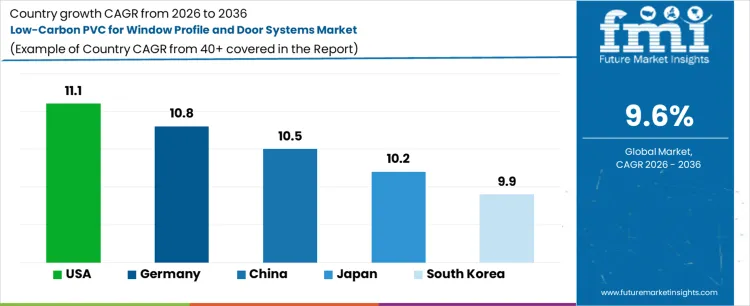
| Country | CAGR (2026-2036) |
|---|---|
| USA | 11.1% |
| Germany | 10.8% |
| China | 10.5% |
| Japan | 10.2% |
| South Korea | 9.9% |
What is the Growth Outlook for the Low-Carbon PVC for Window Profile and Door Systems Market in the USA?
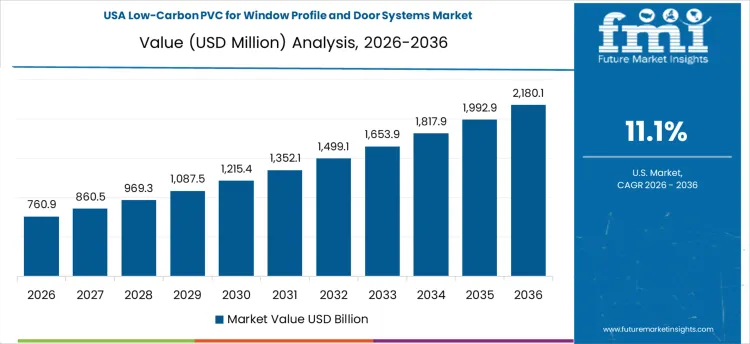
The low-carbon PVC for window profile and door systems market in the USA is projected to grow steadily, with a projected CAGR of 11.1% from 2026 to 2036. The USA is a global leader in construction innovation, and the demand for eco-friendly building materials is increasing. Low-carbon PVC is being adopted in the construction industry to reduce the environmental impact of window profiles and door systems. Government incentives for green building practices and regulations focused on reducing carbon emissions are further driving the adoption of low-carbon materials. As the construction sector in the USA continues to prioritize sustainability and energy efficiency, the market for low-carbon PVC for window profiles and door systems is expected to experience steady growth.
What is the Market Outlook for the Low-Carbon PVC for Window Profile and Door Systems Market in Germany?
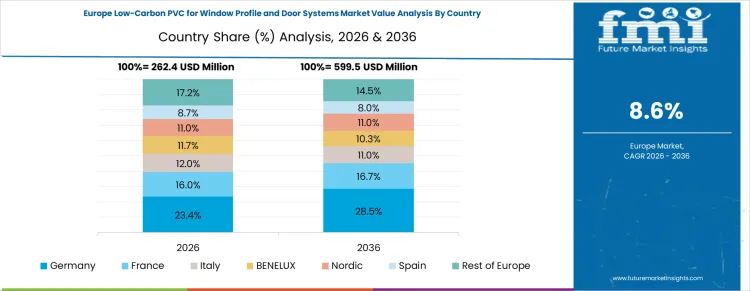
Germany is expected to see steady growth in the low-carbon PVC for window profile and door systems market, with a projected CAGR of 10.8% from 2026 to 2036. Germany has long been a leader in sustainability, and the demand for low-carbon building materials is rising as the country works to meet its ambitious climate goals. The adoption of low-carbon PVC in window and door systems is being driven by government regulations, consumer demand for sustainable products, and the push for energy-efficient construction. With Germany’s strong focus on green building standards and circular economy principles, the market for low-carbon PVC is expected to grow steadily in the coming years as the construction sector embraces eco-friendly alternatives.
What is the Growth Forecast for the Low-Carbon PVC for Window Profile and Door Systems Market in China?
China is projected to experience steady growth in the low-carbon PVC for window profile and door systems market, with a projected CAGR of 10.5% from 2026 to 2036. As one of the largest construction markets globally, China is increasingly focusing on sustainability in its building practices. The demand for low-carbon PVC is growing as the country works to reduce its carbon emissions and improve energy efficiency in the construction industry. Government policies promoting sustainable building practices, along with increasing awareness of environmental issues, are driving the adoption of low-carbon materials in window and door systems. As the Chinese construction industry continues to modernize, the market for low-carbon PVC is expected to grow steadily.
What is the Market Outlook for the Low-Carbon PVC for Window Profile and Door Systems Market in Japan?
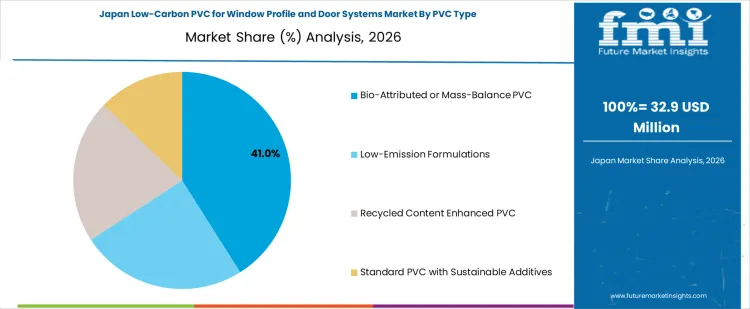
Japan is expected to see steady growth in the low-carbon PVC for window profile and door systems market, with a projected CAGR of 10.2% from 2026 to 2036. Japan is committed to reducing its environmental footprint, and the demand for sustainable building materials, such as low-carbon PVC, is rising. The construction industry in Japan is increasingly adopting eco-friendly solutions in response to government regulations and consumer demand for energy-efficient and sustainable products. As Japan continues to focus on achieving its climate goals and improving the environmental performance of its buildings, the market for low-carbon PVC for window profiles and door systems is expected to grow steadily in the coming years.
What is the Growth Forecast for the Low-Carbon PVC for Window Profile and Door Systems Market in South Korea?
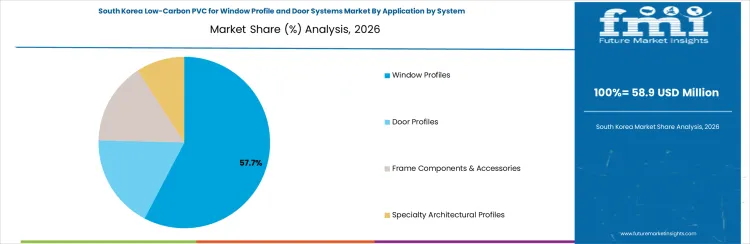
South Korea is projected to experience steady growth in the low-carbon PVC for window profile and door systems market, with a projected CAGR of 9.9% from 2026 to 2036. South Korea’s focus on sustainability and green technologies is driving the adoption of low-carbon building materials, including low-carbon PVC in window and door systems. The South Korean government has introduced regulations that encourage the use of environmentally friendly materials in construction projects. As consumer demand for sustainable building materials increases and industries seek to meet environmental standards, the market for low-carbon PVC in South Korea is expected to continue growing steadily. The construction industry’s shift towards greener practices will contribute to the expansion of this market.
What is the Competitive Landscape for the Low-Carbon PVC for Window Profile and Door Systems Market?
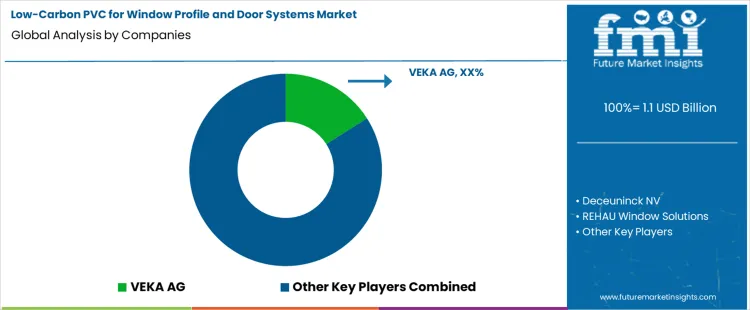
The low-carbon PVC for window profile and door systems market is expanding rapidly as the demand for sustainable building materials increases, driven by both environmental regulations and consumer preference for eco-friendly solutions. VEKA AG leads the market with its innovative low-carbon PVC profiles for window and door systems, offering high-quality, durable, and sustainable products. Their commitment to sustainability, energy efficiency, and product performance has positioned them as a dominant player in this market. Deceuninck NV, REHAU Window Solutions, and Aluplast GmbH are key competitors, each providing low-carbon PVC solutions that offer excellent thermal performance, durability, and aesthetic appeal for windows and doors. Deceuninck NV focuses on environmentally friendly profiles with reduced carbon footprints, while REHAU Window Solutions and Aluplast GmbH offer innovative solutions that align with green building standards and energy-efficient designs.
Profine Group (Kömmerling), LIXIL Corporation, and Ply Gem Holdings further contribute to the competitive landscape by offering their own low-carbon PVC window and door systems. Profine Group focuses on providing high-performance, energy-efficient profiles, while LIXIL Corporation delivers sustainable, long-lasting solutions for the building industry. Ply Gem Holdings is known for its environmentally responsible building materials, including low-carbon PVC profiles. Fenplast, Eurocell PLC, and LG Chem Ltd. also play a key role by offering their low-carbon PVC systems that meet sustainability demands for window and door applications. These companies compete by focusing on product innovation, energy efficiency, and their ability to meet the growing demand for low-carbon, eco-friendly building materials. As sustainability and energy efficiency remain top priorities in construction, the market for low-carbon PVC in window and door systems is expected to grow, driving further innovation and competition in the sector.
Key Players of the Low-Carbon PVC for Window Profile and Door Systems Market
- VEKA AG
- Deceuninck NV
- REHAU Window Solutions
- Aluplast GmbH
- Profine Group (Kömmerling)
- LIXIL Corporation
- Ply Gem Holdings
- Fenplast
- Eurocell PLC
- LG Chem Ltd.
Scope of the Report
| Items | Values |
|---|---|
| Quantitative Units (2026) | USD Billion |
| PVC Type | Bio Attributed or Mass Balance PVC, Low Emission Formulations, Recycled Content Enhanced PVC, Standard PVC with Sustainable Additives |
| Application by System | Window Profiles, Door Profiles, Frame Components & Accessories, Specialty Architectural Profiles |
| End Use Sector | Residential Construction, Commercial Buildings, Infrastructure & Public Projects, Modular or Prefab Systems |
| Companies | VEKA AG, Deceuninck NV, REHAU Window Solutions, Aluplast GmbH, Profine Group (Kömmerling), LIXIL Corporation, Ply Gem Holdings, Fenplast, Eurocell PLC, LG Chem Ltd. |
| Regions Covered | North America, Latin America, Western Europe, Eastern Europe, South Asia & Pacific, East Asia, Middle East & Africa |
| Countries Covered | United States, Canada, Mexico, Brazil, Argentina, Germany, France, United Kingdom, Italy, Spain, Netherlands, China, India, Japan, South Korea, ANZ, GCC Countries, South Africa |
| Additional Attributes | Dollar sales by PVC type, application by system, end use sector, and region. Includes analysis of market trends in low carbon PVC for window profile and door systems adoption, performance in construction applications, cost and formulation factors, regulatory and sustainability drivers for low carbon and recycled PVC, circular economy integration, competitive positioning and market share of key companies, innovations in sustainable PVC technologies, and evaluation of impact on product durability, thermal and acoustic performance, and construction sector demand. |
Low-Carbon PVC for Window Profile and Door Systems Market Segmentation
PVC Type:
- Bio-Attributed or Mass-Balance PVC
- Low-Emission Formulations
- Recycled Content Enhanced PVC
- Standard PVC with Sustainable Additives
Application by System:
- Window Profiles
- Door Profiles
- Frame Components & Accessories
- Specialty Architectural Profiles
End Use Sector:
- Residential Construction
- Commercial Buildings
- Infrastructure & Public Projects
- Modular or Prefab Systems
Region:
- Asia Pacific
- China
- Japan
- South Korea
- India
- Australia & New Zealand
- ASEAN
- Rest of Asia Pacific
- Europe
- Germany
- United Kingdom
- France
- Italy
- Spain
- Nordic
- BENELUX
- Rest of Europe
- North America
- United States
- Canada
- Mexico
- Latin America
- Brazil
- Chile
- Rest of Latin America
- Middle East & Africa
- Kingdom of Saudi Arabia
- Other GCC Countries
- Turkey
- South Africa
- Other African Union
- Rest of Middle East & Africa
Frequently Asked Questions
How big is the low-carbon pvc for window profile and door systems market in 2026?
The global low-carbon pvc for window profile and door systems market is estimated to be valued at USD 1.1 billion in 2026.
What will be the size of low-carbon pvc for window profile and door systems market in 2036?
The market size for the low-carbon pvc for window profile and door systems market is projected to reach USD 2.8 billion by 2036.
How much will be the low-carbon pvc for window profile and door systems market growth between 2026 and 2036?
The low-carbon pvc for window profile and door systems market is expected to grow at a 9.6% CAGR between 2026 and 2036.
What are the key product types in the low-carbon pvc for window profile and door systems market?
The key product types in low-carbon pvc for window profile and door systems market are bio‑attributed or mass‑balance pvc, low‑emission formulations, recycled content enhanced pvc and standard pvc with sustainable additives.
Which application by system segment to contribute significant share in the low-carbon pvc for window profile and door systems market in 2026?
In terms of application by system, window profiles segment to command 58.0% share in the low-carbon pvc for window profile and door systems market in 2026.
Preview the report firsthand - request a free sample
Get SampleGet the brochure for pricing and purchase details.
Get PDFTable of Content
- Executive Summary
- Global Market Outlook
- Demand-side Trends
- Supply-side Trends
- Technology Roadmap Analysis
- Analysis and Recommendations
- Market Overview
- Market Coverage / Taxonomy
- Market Definition / Scope / Limitations
- Market Background
- Market Dynamics
- Drivers
- Restraints
- Opportunity
- Trends
- Scenario Forecast
- Demand in Optimistic Scenario
- Demand in Likely Scenario
- Demand in Conservative Scenario
- Opportunity Map Analysis
- Product Life Cycle Analysis
- Supply Chain Analysis
- Investment Feasibility Matrix
- Value Chain Analysis
- PESTLE and Porter’s Analysis
- Regulatory Landscape
- Regional Parent Market Outlook
- Production and Consumption Statistics
- Import and Export Statistics
- Market Dynamics
- Global Market Analysis 2021 to 2025 and Forecast, 2026 to 2036
- Historical Market Size Value (USD Million) Analysis, 2021 to 2025
- Current and Future Market Size Value (USD Million) Projections, 2026 to 2036
- Y-o-Y Growth Trend Analysis
- Absolute $ Opportunity Analysis
- Global Market Pricing Analysis 2021 to 2025 and Forecast 2026 to 2036
- Global Market Analysis 2021 to 2025 and Forecast 2026 to 2036, By PVC Type
- Introduction / Key Findings
- Historical Market Size Value (USD Million) Analysis By PVC Type , 2021 to 2025
- Current and Future Market Size Value (USD Million) Analysis and Forecast By PVC Type , 2026 to 2036
- Bio‑Attributed or Mass‑Balance PVC
- Low‑Emission Formulations
- Recycled Content Enhanced PVC
- Standard PVC with Sustainable Additives
- Bio‑Attributed or Mass‑Balance PVC
- Y-o-Y Growth Trend Analysis By PVC Type , 2021 to 2025
- Absolute $ Opportunity Analysis By PVC Type , 2026 to 2036
- Global Market Analysis 2021 to 2025 and Forecast 2026 to 2036, By Application by System
- Introduction / Key Findings
- Historical Market Size Value (USD Million) Analysis By Application by System, 2021 to 2025
- Current and Future Market Size Value (USD Million) Analysis and Forecast By Application by System, 2026 to 2036
- Window Profiles
- Door Profiles
- Frame Components & Accessories
- Specialty Architectural Profiles
- Window Profiles
- Y-o-Y Growth Trend Analysis By Application by System, 2021 to 2025
- Absolute $ Opportunity Analysis By Application by System, 2026 to 2036
- Global Market Analysis 2021 to 2025 and Forecast 2026 to 2036, By End Use Sector
- Introduction / Key Findings
- Historical Market Size Value (USD Million) Analysis By End Use Sector, 2021 to 2025
- Current and Future Market Size Value (USD Million) Analysis and Forecast By End Use Sector, 2026 to 2036
- Residential Construction
- Commercial Buildings
- Infrastructure & Public Projects
- Modular or Prefab Systems
- Residential Construction
- Y-o-Y Growth Trend Analysis By End Use Sector, 2021 to 2025
- Absolute $ Opportunity Analysis By End Use Sector, 2026 to 2036
- Global Market Analysis 2021 to 2025 and Forecast 2026 to 2036, By Region
- Introduction
- Historical Market Size Value (USD Million) Analysis By Region, 2021 to 2025
- Current Market Size Value (USD Million) Analysis and Forecast By Region, 2026 to 2036
- North America
- Latin America
- Western Europe
- Eastern Europe
- East Asia
- South Asia and Pacific
- Middle East & Africa
- Market Attractiveness Analysis By Region
- North America Market Analysis 2021 to 2025 and Forecast 2026 to 2036, By Country
- Historical Market Size Value (USD Million) Trend Analysis By Market Taxonomy, 2021 to 2025
- Market Size Value (USD Million) Forecast By Market Taxonomy, 2026 to 2036
- By Country
- USA
- Canada
- Mexico
- By PVC Type
- By Application by System
- By End Use Sector
- By Country
- Market Attractiveness Analysis
- By Country
- By PVC Type
- By Application by System
- By End Use Sector
- Key Takeaways
- Latin America Market Analysis 2021 to 2025 and Forecast 2026 to 2036, By Country
- Historical Market Size Value (USD Million) Trend Analysis By Market Taxonomy, 2021 to 2025
- Market Size Value (USD Million) Forecast By Market Taxonomy, 2026 to 2036
- By Country
- Brazil
- Chile
- Rest of Latin America
- By PVC Type
- By Application by System
- By End Use Sector
- By Country
- Market Attractiveness Analysis
- By Country
- By PVC Type
- By Application by System
- By End Use Sector
- Key Takeaways
- Western Europe Market Analysis 2021 to 2025 and Forecast 2026 to 2036, By Country
- Historical Market Size Value (USD Million) Trend Analysis By Market Taxonomy, 2021 to 2025
- Market Size Value (USD Million) Forecast By Market Taxonomy, 2026 to 2036
- By Country
- Germany
- UK
- Italy
- Spain
- France
- Nordic
- BENELUX
- Rest of Western Europe
- By PVC Type
- By Application by System
- By End Use Sector
- By Country
- Market Attractiveness Analysis
- By Country
- By PVC Type
- By Application by System
- By End Use Sector
- Key Takeaways
- Eastern Europe Market Analysis 2021 to 2025 and Forecast 2026 to 2036, By Country
- Historical Market Size Value (USD Million) Trend Analysis By Market Taxonomy, 2021 to 2025
- Market Size Value (USD Million) Forecast By Market Taxonomy, 2026 to 2036
- By Country
- Russia
- Poland
- Hungary
- Balkan & Baltic
- Rest of Eastern Europe
- By PVC Type
- By Application by System
- By End Use Sector
- By Country
- Market Attractiveness Analysis
- By Country
- By PVC Type
- By Application by System
- By End Use Sector
- Key Takeaways
- East Asia Market Analysis 2021 to 2025 and Forecast 2026 to 2036, By Country
- Historical Market Size Value (USD Million) Trend Analysis By Market Taxonomy, 2021 to 2025
- Market Size Value (USD Million) Forecast By Market Taxonomy, 2026 to 2036
- By Country
- China
- Japan
- South Korea
- By PVC Type
- By Application by System
- By End Use Sector
- By Country
- Market Attractiveness Analysis
- By Country
- By PVC Type
- By Application by System
- By End Use Sector
- Key Takeaways
- South Asia and Pacific Market Analysis 2021 to 2025 and Forecast 2026 to 2036, By Country
- Historical Market Size Value (USD Million) Trend Analysis By Market Taxonomy, 2021 to 2025
- Market Size Value (USD Million) Forecast By Market Taxonomy, 2026 to 2036
- By Country
- India
- ASEAN
- Australia & New Zealand
- Rest of South Asia and Pacific
- By PVC Type
- By Application by System
- By End Use Sector
- By Country
- Market Attractiveness Analysis
- By Country
- By PVC Type
- By Application by System
- By End Use Sector
- Key Takeaways
- Middle East & Africa Market Analysis 2021 to 2025 and Forecast 2026 to 2036, By Country
- Historical Market Size Value (USD Million) Trend Analysis By Market Taxonomy, 2021 to 2025
- Market Size Value (USD Million) Forecast By Market Taxonomy, 2026 to 2036
- By Country
- Kingdom of Saudi Arabia
- Other GCC Countries
- Turkiye
- South Africa
- Other African Union
- Rest of Middle East & Africa
- By PVC Type
- By Application by System
- By End Use Sector
- By Country
- Market Attractiveness Analysis
- By Country
- By PVC Type
- By Application by System
- By End Use Sector
- Key Takeaways
- Key Countries Market Analysis
- USA
- Pricing Analysis
- Market Share Analysis, 2025
- By PVC Type
- By Application by System
- By End Use Sector
- Canada
- Pricing Analysis
- Market Share Analysis, 2025
- By PVC Type
- By Application by System
- By End Use Sector
- Mexico
- Pricing Analysis
- Market Share Analysis, 2025
- By PVC Type
- By Application by System
- By End Use Sector
- Brazil
- Pricing Analysis
- Market Share Analysis, 2025
- By PVC Type
- By Application by System
- By End Use Sector
- Chile
- Pricing Analysis
- Market Share Analysis, 2025
- By PVC Type
- By Application by System
- By End Use Sector
- Germany
- Pricing Analysis
- Market Share Analysis, 2025
- By PVC Type
- By Application by System
- By End Use Sector
- UK
- Pricing Analysis
- Market Share Analysis, 2025
- By PVC Type
- By Application by System
- By End Use Sector
- Italy
- Pricing Analysis
- Market Share Analysis, 2025
- By PVC Type
- By Application by System
- By End Use Sector
- Spain
- Pricing Analysis
- Market Share Analysis, 2025
- By PVC Type
- By Application by System
- By End Use Sector
- France
- Pricing Analysis
- Market Share Analysis, 2025
- By PVC Type
- By Application by System
- By End Use Sector
- India
- Pricing Analysis
- Market Share Analysis, 2025
- By PVC Type
- By Application by System
- By End Use Sector
- ASEAN
- Pricing Analysis
- Market Share Analysis, 2025
- By PVC Type
- By Application by System
- By End Use Sector
- Australia & New Zealand
- Pricing Analysis
- Market Share Analysis, 2025
- By PVC Type
- By Application by System
- By End Use Sector
- China
- Pricing Analysis
- Market Share Analysis, 2025
- By PVC Type
- By Application by System
- By End Use Sector
- Japan
- Pricing Analysis
- Market Share Analysis, 2025
- By PVC Type
- By Application by System
- By End Use Sector
- South Korea
- Pricing Analysis
- Market Share Analysis, 2025
- By PVC Type
- By Application by System
- By End Use Sector
- Russia
- Pricing Analysis
- Market Share Analysis, 2025
- By PVC Type
- By Application by System
- By End Use Sector
- Poland
- Pricing Analysis
- Market Share Analysis, 2025
- By PVC Type
- By Application by System
- By End Use Sector
- Hungary
- Pricing Analysis
- Market Share Analysis, 2025
- By PVC Type
- By Application by System
- By End Use Sector
- Kingdom of Saudi Arabia
- Pricing Analysis
- Market Share Analysis, 2025
- By PVC Type
- By Application by System
- By End Use Sector
- Turkiye
- Pricing Analysis
- Market Share Analysis, 2025
- By PVC Type
- By Application by System
- By End Use Sector
- South Africa
- Pricing Analysis
- Market Share Analysis, 2025
- By PVC Type
- By Application by System
- By End Use Sector
- USA
- Market Structure Analysis
- Competition Dashboard
- Competition Benchmarking
- Market Share Analysis of Top Players
- By Regional
- By PVC Type
- By Application by System
- By End Use Sector
- Competition Analysis
- Competition Deep Dive
- VEKA AG
- Overview
- Product Portfolio
- Profitability by Market Segments (Product/Age /Sales Channel/Region)
- Sales Footprint
- Strategy Overview
- Marketing Strategy
- Product Strategy
- Channel Strategy
- Deceuninck NV
- REHAU Window Solutions
- Aluplast GmbH
- Profine Group (Kömmerling)
- LIXIL Corporation
- Ply Gem Holdings
- Fenplast
- Eurocell PLC
- LG Chem Ltd.
- VEKA AG
- Competition Deep Dive
- Assumptions & Acronyms Used
- Research Methodology


