

- Industry Size (2026)
- USD 15.0 Mn
- Forecast (2036)
- USD 86.4 Mn
- CAGR
- (2026 to 2036)
eVTOL Panoramic Window and Skylight Systems Market Size, Market Forecast and Outlook By FMI
The eVTOL panoramic window and skylight systems market crossed a valuation of USD 12.6 million in 2025. Sales are poised to reach USD 15.0 million in 2026 at a CAGR of 19.10% during the forecast period. Sustained funding propels cumulative revenue to USD 86.4 million through 2036, establishing a robust eVTOL panoramic glazing forecast 2036 as civilian operators demand expansive external visibility to overcome passenger anxiety associated with uncrewed rotorcraft.
Airframe designers face extreme weight penalties when integrating massive glass structures into electric propulsion platforms. Procurement directors analyzing the eVTOL cabin window systems market size currently delay signing long-term advanced air mobility hardware contracts until material scientists prove that lightweight polycarbonates can survive continuous urban debris strikes. Cabin architects attempt to replicate traditional helicopter visibility using synthetic composite panels that frequently fail acoustic insulation tests during high-torque vertical ascent phases. FMI notes that operators prioritize solar rejection capabilities over pure structural strength because heavy greenhouse heating immediately drains auxiliary cooling batteries, severely restricting overall flight range.
Certification bodies cap total transparent surface areas until manufacturers demonstrate sufficient structural rigidity during simulated hard landings. Finalizing specific bird strike resistant eVTOL windows regulations acts as the primary gate condition for large-scale assembly. Standardized regulatory testing forces suppliers to adopt thick hybrid laminates rather than relying entirely on unproven lightweight panoramic aircraft windows to pass safety audits.
Summary of eVTOL Panoramic Window and Skylight Systems Market
- eVTOL Panoramic Window and Skylight Systems Market Definition
- Purpose-built transparent structural enclosures designed specifically for electric vertical takeoff and landing airframes, balancing extreme impact resistance with essential thermal rejection capabilities.
- Demand Drivers in the Market
- Passenger experience requirements compel fleet operators to demand expansive external visibility mitigating altitude-related claustrophobia.
- Strict weight reduction mandates force airframe designers to integrate advanced polycarbonates replacing traditional heavy aviation glass.
- Thermal management limitations require engineers to utilize coated transparencies preventing auxiliary battery drain from oversized air conditioning units.
- Key Segments Analyzed in the FMI Report
- Product Type: Panoramic side window systems are expected to hold 35.0% share in 2026, driven by primary cabin visibility requirements for daily air taxi commuters.
- Material System: Coated polycarbonate transparencies are anticipated to record 44.0% share in 2026, as OEMs prioritize shatter resistance over extreme scratch immunity.
- Aircraft Type: Passenger air taxi eVTOLs are projected to claim 62.0% share in 2026, benefiting from massive capital backing aimed at commercial passenger launch targets.
- Installation Type: OEM factory-installed systems are estimated to secure 88.0% share in 2026, because retrofitting structural transparencies into cured composite skins introduces severe stress fractures.
- Window Technology: Fixed passive panoramic glazing is poised to capture 47.0% share in 2026, reflecting the high cost and weight penalties associated with active electrical dimming technologies.
- UAE: 20.6% compound growth, anchored by rapid state-level approvals for highly scenic commuter routes requiring massive skylights.
- Analyst Opinion at FMI
- Nikhil Kaitwade, Principal Analyst for Automotive at Future Market Insights, notes that "Generalist metrics assume transparent surface areas scale linearly with airframe dimensions within the broader eVTOL panoramic window systems market. Real structural complexity reveals itself when engineers calculate acoustic insulation limits. Procurement directors do not just buy windows; they buy acoustic barriers and thermal shields. Supplier dominance relies on surviving extreme vibration cycles while maintaining perfect optical clarity without requiring heavy reinforced framing. Over-indexing on pure aesthetics ruins battery range entirely."
- Strategic Implications / Executive Takeaways
- Aerostructures suppliers must prioritize acoustic damping testing to pass stringent OEM supplier qualification audits.
- Airframe designers risk total project failure if expansive skylights conflict with load-bearing composite stress paths.
- Fleet operations directors face severe operational bottlenecks if they fail to secure specialized scratch-resistant replacement panels.
- Methodology
- Primary Research: Direct interviews with line maintenance directors validating surface degradation rates under real-world conditions.
- Desk Research: Systematic review of FAA and EASA certification guidelines dictating precise bird-strike impact resistance.
- Market-Sizing and Forecasting: Baseline calculation derived from verified airframe prototype transparent surface architectural specifications.
- Data Validation and Update Cycle: Continuous cross-referencing against specialized aerospace coatings production volume disclosures globally.
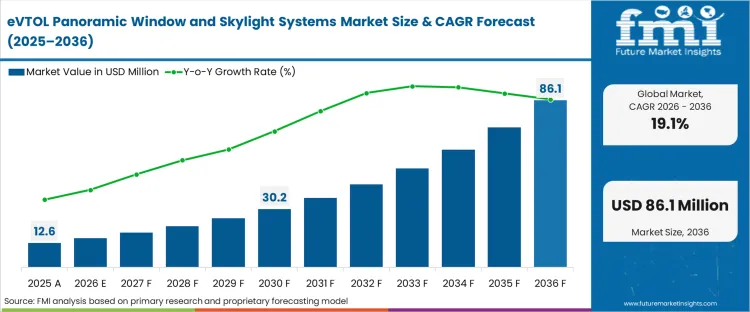
eVTOL Panoramic Window and Skylight Systems Market Key Takeaways
| Metric | Details |
|---|---|
| Industry Size (2026) | USD 15.0 Million |
| Industry Value (2036) | USD 86.4 Million |
| CAGR (2026-2036) | 19.10% |
Source: Future Market Insights (FMI) analysis, based on proprietary forecasting model and primary research
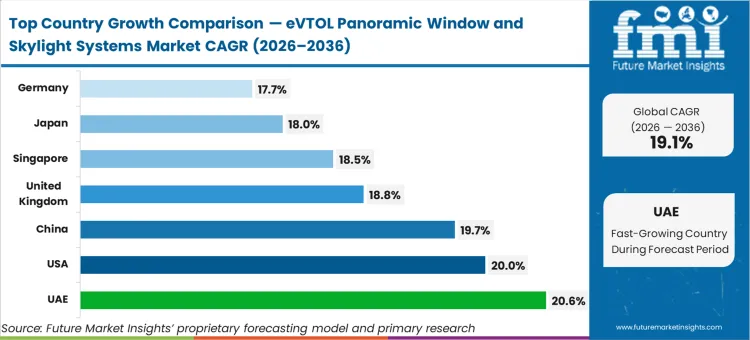
UAE expands at 20.6% optimizing dedicated smart-city aviation corridors. United States advances at 20.0% as domestic operators push aggressively toward commercial launch targets across the regional electric air taxi window market. China registers 19.7% driven by heavy state funding for uncrewed logistics platforms. United Kingdom secures 18.8% utilizing established aerospace clusters. Singapore progresses at 18.5% prioritizing urban density logistics. Japan tracks at 18.0% leveraging highly controlled regulatory environments. Germany secures a 17.7% rate anchored by legacy aerospace consortiums. Divergence across these jurisdictions hinges entirely on local regulatory willingness to approve commercial electric flight paths.
eVTOL Panoramic Window and Skylight Systems Market Definition
Addressing what is an eVTOL panoramic window system requires looking at purpose-built transparent structural enclosures designed specifically for electric vertical takeoff and landing airframes. These components provide passengers with expansive external viewing angles while maintaining strict aerodynamic continuity and high-altitude cabin pressurization. Equipment within the panoramic glazing for eVTOL market balances extreme impact resistance with thermal rejection properties to protect delicate cabin interiors from severe solar heat gain during low-altitude urban operations.
eVTOL Panoramic Window and Skylight Systems Market Inclusions
Scope covers load-bearing composite side panels, roof skylight modules for eVTOL, pilot canopy glazing, and the specialized aerodynamic weather seals surrounding transparent cutouts. Analytical coverage extends to multi-layer aircraft transparency hardware containing embedded heating elements or electrochromic dimming layers. Factory-installed mounting frames designed explicitly to support these curved transparent cabin modules for urban air mobility fall within these analytical boundaries alongside specialized UV-blocking chemical laminates.
eVTOL Panoramic Window and Skylight Systems Market Exclusions
Main passenger ingress doors lacking integrated transparent sections fall entirely outside this perimeter. Internal cabin partition glass, cosmetic interior trim covers, and non-structural decorative displays lack direct exterior airframe integration. Ground-based infrastructure glazing and standard commercial aviation windows requiring structural bonding incompatible with composite synthetic fuselages do not qualify as specialized aircraft panoramic transparency systems for eVTOL.
eVTOL Panoramic Window and Skylight Systems Market Research Methodology
- Primary Research: Chief airworthiness engineers, structural composites directors, and aerostructures procurement officers at tier-1 electric aviation startups.
- Desk Research: Federal Aviation Administration type certificate applications, EASA special condition VTOL documentation, and public material science patent filings.
- Market-Sizing and Forecasting: Baseline production volumes derived directly from stated OEM manufacturing capacity roadmaps regarding transparency surface area per aircraft.
- Data Validation and Update Cycle: Independent cross-referencing against quarterly aerospace polycarbonate shipment volume disclosures.
Segmental Analysis
eVTOL Panoramic Window and Skylight Systems Market Analysis by Product Type

Panoramic side window systems are expected to capture 35.0% share in 2026 as chief engineers attempt to maximize commuter viewing angles without compromising structural integrity. Evaluating cockpit canopy vs panoramic side windows eVTOL configurations, procurement directors at tier-1 startups demand massive continuous side panels allowing aircraft sensors to operate behind protective glazing while delivering unimpeded city views. Hardware must maintain perfect optical clarity across tightly curved surfaces, avoiding the visual distortion common in early thermoplastic prototypes. Integrating seamless panoramic door windows for air taxis presents massive acoustic challenges, as oversized unreinforced sections act as acoustic amplifiers that destroy premium passenger experiences.
- Continuous optical clarity: Complex curvature induces refractive distortion, causing passenger nausea during banking maneuvers. Engineers mandate precision molding techniques to guarantee perfect visual fidelity across all viewing angles.
- Low-frequency acoustic penetration: Unreinforced panels vibrate sympathetically with rotor frequencies. Flight test directors note that oversized windows act as acoustic amplifiers, destroying premium passenger experiences.
- Structural load diversion: Massive side cutouts force structural engineers to reinforce surrounding frames heavily. Weight saving gained from removing opaque fuselage composite is instantly lost to thick framing reinforcements.
eVTOL Panoramic Window and Skylight Systems Market Analysis by Material System
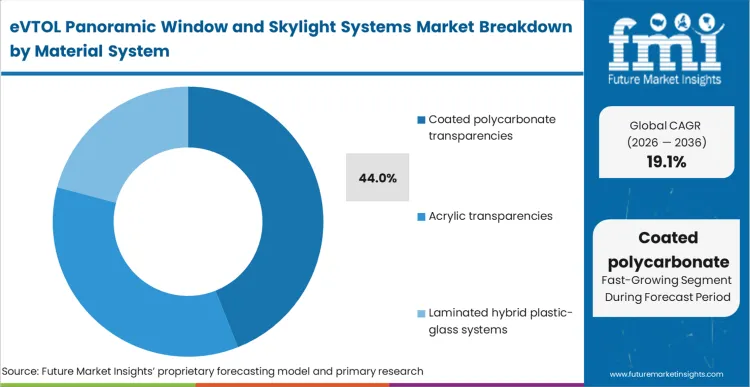
Weight budgets restrict initial hardware selection severely. Coated polycarbonate transparencies is projected to record 44.0% share in 2026 because traditional silicate glass instantly exceeds rigid electric payload limits. Airworthiness engineers analyzing polycarbonate vs acrylic eVTOL windows specify these highly pliable composite materials to survive severe flexing during high-torque vertical maneuvers. Technicians evaluating polycarbonate windows for eVTOL aircraft require materials capable of absorbing direct bird strikes without shattering into hazardous fragments over populated areas. According to FMI's estimates, raw polycarbonates degrade rapidly under intense ultraviolet radiation, requiring sophisticated chemical coatings. Maintenance directors who ignore these coating requirements discover their highly efficient engineering plastics turning completely opaque after just six months of continuous tarmac exposure.
- Flexural fatigue survival: Rigid materials fracture under immense airframe torque. Material scientists formulate specialized synthetic blends capable of bending repeatedly without micro-cracking.
- Ultraviolet radiation degradation: Direct solar exposure breaks down molecular bonds within untreated synthetics. Operators must apply costly secondary chemical barriers to prevent irreversible yellowing.
- Bird-strike energy absorption: Regulations require materials to stretch and capture high-velocity impacts. Certification officers reject any formulation exhibiting brittle failure characteristics during ballistic cannon testing.
eVTOL Panoramic Window and Skylight Systems Market Analysis by Window Technology
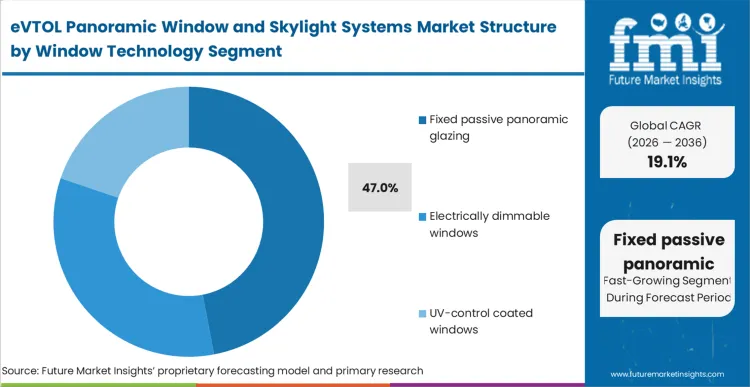
Fixed passive panoramic glazing is anticipated to secure 47.0% share in 2026 as aviation authorities fundamentally distrust unproven electromagnetic tinting systems on exterior surfaces. Contrasting fixed glazing vs dimmable windows in air taxis, airworthiness engineers specify passive components to guarantee continuous smart glass alternative visibility during complete electrical failure scenarios. Technicians implementing smart glass for eVTOL cabins require passive thermal rejection layers that function independently of main cabin power reserves. FMI observes that flush-mounted electrochromic glass systems frequently jam in opaque states when exposed to extreme temperature variations. Maintenance directors utilizing active electrochromic windows for air taxi aircraft discover their aircraft grounded when intricate wiring harnesses short circuit from basic condensation.
- Fail-safe visibility mandates: Pilots require unimpeded sightlines during emergency autorotation. Regulators forbid active dimming systems capable of defaulting to opaque states during power losses.
- Passive thermal rejection: Metal oxide layers reflect infrared radiation continuously without drawing battery current. Performance engineers rely entirely on chemical treatments to preserve auxiliary power.
- Electrical condensation vulnerabilities: Active tinting relies on exposed wiring channels. Ground crews report high failure rates as normal cabin humidity penetrates unsealed electrical connections.
eVTOL Panoramic Window and Skylight Systems Market Analysis by Installation Type

OEM factory-installed systems is projected to command 88.0% share in 2026 as cutting access holes into cured carbon fiber introduces unpredictable stress concentrations. When deciding between OEM installed vs aftermarket aircraft windows for eVTOL, manufacturing directors integrate these aerospace coatings directly into primary layups to maintain unbroken load paths across the fuselage. Hardware suppliers acting as OEM partners for eVTOL cabin windows must deliver fully assembled, optically perfect frames directly to the assembly line to meet strict production cadences. Based on FMI's assessment, late-stage design changes to exterior ports routinely delay entire aircraft certification programs by months. Airframe developers failing to freeze window locations early face catastrophic tooling redesign costs.
- Production line integration: Just-in-time delivery synchronizes with composite curing schedules. Procurement officers build highly rigid supply chains to prevent airframe assembly bottlenecks.
- Certification documentation traceability: Factory installation guarantees material provenance. Quality assurance managers satisfy regulators by maintaining unbroken chains of custody for every transparent section.
- Aftermarket upgrade limitations: Structural permanence prevents easy field modifications. Fleet operators must live with initial factory layouts, heavily penalizing early designs with suboptimal passenger visibility.
eVTOL Panoramic Window and Skylight Systems Market Analysis by Aircraft Type
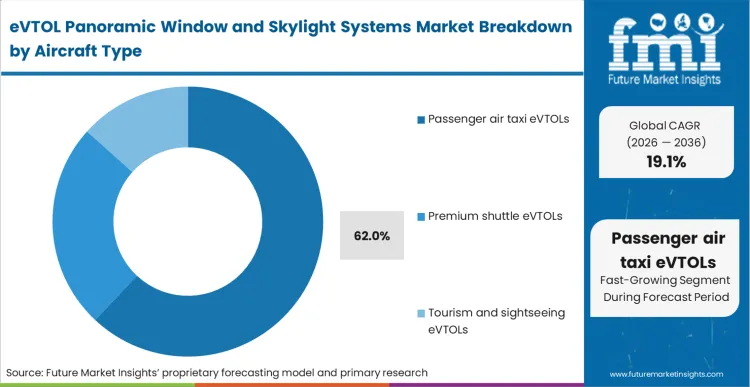
Extreme utilization targets are raising comfort engineering requirements, with passenger air taxi eVTOLs estimated to account for 62.0% share in 2026. Well-funded developers are pushing toward commercial launch with dense operating schedules that depend on fast turnaround and strong passenger appeal. This is increasing demand for panoramic transparent enclosures that support cabin visibility while maintaining a premium interior experience. These surfaces must withstand repeated contact from hurried passengers, bags, and daily boarding cycles. Passenger proximity is making material durability a core design priority. Scratch-resistant coatings are becoming essential to protect optical clarity from rings, luggage, and routine cabin abrasion. Operators that fail to specify durable interior-facing transparent hardware risk visible wear, weaker passenger perception, and lower repeat ridership.
- High-cycle passenger abuse: Commuter routes subject interiors to continuous physical contact. Hardware engineers select military-grade hardening compounds to prevent premature surface wear.
- Anxiety mitigation viewing: Claustrophobic cabins induce severe panic during vertical ascents. Acoustic engineers mandate precision optical clarity combined with sound damping to soothe inexperienced flyers.
- Reflective glare elimination: Internal cabin lighting reflects off untreated windows during night operations. Certification authorities require specialized anti-glare geometries allowing passengers clear views of urban skylines.
eVTOL Panoramic Window and Skylight Systems Market Drivers, Restraints, and Opportunities
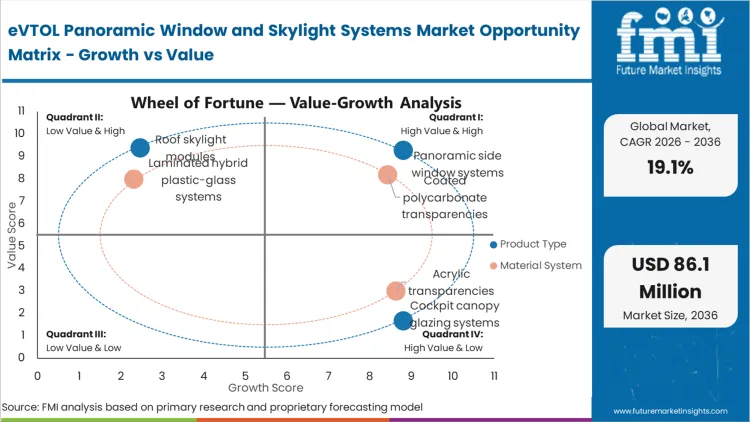
Weight reduction mandates force airframe designers to integrate advanced polycarbonates replacing traditional heavy silicate glass immediately. Chief engineering officers cannot rely solely on legacy materials due to extreme payload limitations restricting electric battery performance. Delaying procurement of specialized lightweight aerospace glazing systems destroys the fundamental economic viability of long-range electric aviation by forcing unacceptable reductions in passenger capacity. Regulatory bodies mandate these highly reliable UV control aircraft windows for eVTOL before granting any high-density airspace access over populated urban centers.
Engineering teams face a strict tradeoff when expanding exterior glazing in eVTOL cabins. Larger transparent areas usually reduce the share of opaque fuselage materials that deliver stronger sound damping, which can weaken passenger comfort. Current hybrid laminates provide partial acoustic relief, though they often introduce weight penalties that highly efficiency-sensitive electric airframes cannot easily accommodate.
Opportunities in the eVTOL Panoramic Window and Skylight Systems Market
- Self-healing scratch coatings: Integrating reactive polymer layers repairs minor surface abrasions automatically. Procurement directors secure highly reliable optical clarity without grounding aircraft for frequent polishing cycles.
- Integrated micro-wire heating: Embedding invisible thermal threads prevents high-altitude icing completely. Software architects simplify aircraft lighting systems and defogging protocols while maintaining strict low-voltage constraints.
- Acoustic metamaterial films: Applying engineered sound-baffling decals reduces low-frequency rotor hum drastically. Airframe teams deliver continuous operational comfort across noisy urban flight corridors.
Regional Analysis
.webp "Top Country Growth Comparison Evtol Panoramic Window And Skylight Systems Market Cagr (2026 2036)")
Based on regional analysis, eVTOL Panoramic Window and Skylight Systems Market is segmented into North America, Latin America, Western Europe, Eastern Europe, East Asia, South Asia & Pacific, and Middle East & Africa across 40 plus countries.
| Country | CAGR (2026 to 2036) |
|---|---|
| UAE | 20.6% |
| United States | 20.0% |
| China | 19.7% |
| United Kingdom | 18.8% |
| Singapore | 18.5% |
| Japan | 18.0% |
| Germany | 17.7% |
Source: Future Market Insights (FMI) analysis, based on proprietary forecasting model and primary research
Middle East & Africa eVTOL Panoramic Window and Skylight Systems Market Analysis
Dedicated urban flight corridors establish clear operational boundaries for early hardware deployments. Aviation authorities proactively carve out exclusive airspace for scenic tourist routes, demanding exceptional external visibility. Fleet operators utilize these simplified environments to validate baseline thermal rejection performance under extreme desert conditions. FMI's assessment indicates severe daytime heat profiles routinely warp poorly coated synthetic panels within the UAE air taxi panoramic window market.
- UAE: State-backed logistics networks construct massive dedicated aerial corridors, driving a 20.6% CAGR. Fleet managers demand extreme thermal resilience from expansive sightseeing eVTOL skylight systems. Regional operators solving extreme heat-degradation challenges immediately secure lucrative tourism mobility contracts.
North America eVTOL Panoramic Window and Skylight Systems Market Analysis
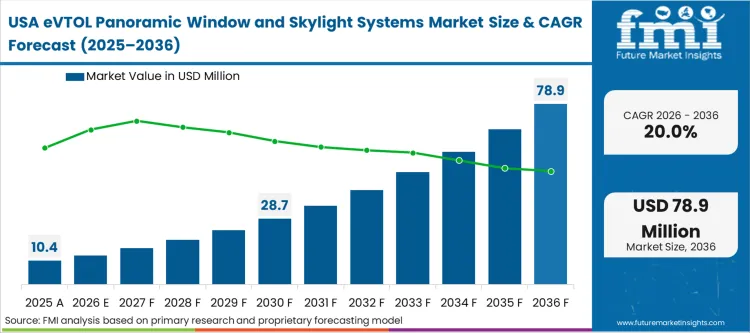
Localized experimental flight waivers govern initial operational footprints. Civil aviation authorities prioritize rapid domestic commercialization over harmonized global visibility standards. Identifying which countries will lead eVTOL window demand, procurement directors at tier-1 startups capitalize on established aerospace supply chains to source specialized impact-resistant hardware locally. FMI observes certification protocols here emphasize heavy reliance on physical bird-strike testing to mitigate structural failure risks.
- United States: Aggressive domestic certification timelines from leading electric aviation startups drive a 20.0% rate across the United States eVTOL window systems market. Chief engineering officers over-spec hardware guaranteeing compliance under intense FAA scrutiny. Domestic suppliers secure massive early prototype contracts focusing on acoustic damping.
East Asia eVTOL Panoramic Window and Skylight Systems Market Analysis
Aggressive state-backed certification frameworks dictate adoption speed across this geography. Civil aviation authorities prioritize rapid deployment of uncrewed logistics networks over stringent legacy aerospace testing timelines. Procurement directors capitalize on localized chemical manufacturing hubs to rapidly iterate coating designs. FMI notes regional operators utilize highly dense metropolitan airspace to stress-test acoustic insulation limits continuously across the China eVTOL glazing systems market.
- China: State-level mandates force rapid type certification for air taxi platforms, expanding at 19.7%. Passenger fleet directors deploy expansive networks demanding highly scratch-resistant hardware. Chinese suppliers dominate low-cost polycarbonate blank production globally.
- Japan: Urban density logistics programs receive priority airspace allocations. Public safety directors demand extreme hardware reliability, pushing an 18.0% expansion rate. Early hardware qualification grants domestic suppliers immense competitive advantages against foreign entrants.
Western Europe eVTOL Panoramic Window and Skylight Systems Market Analysis
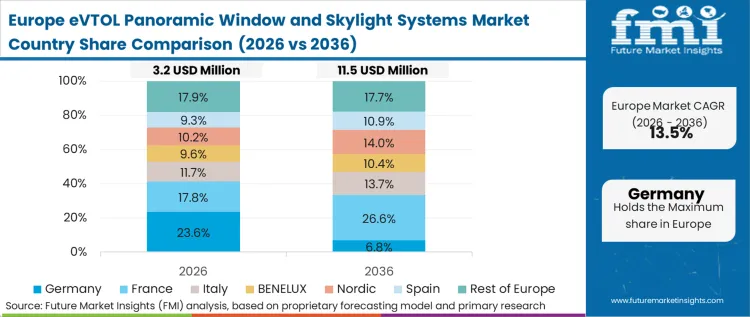
Strict legacy aerospace regulations severely restrict experimental flights, forcing suppliers to over-engineer laminates to meet EASA's unique VTOL special conditions. Engineering teams burn millions designing thick transparent panels capable of satisfying both dense urban requirements and stringent European noise pollution regulations.
- United Kingdom: Established aerospace clusters accelerate composite transparency innovation, securing an 18.8% rate. Structural engineers push heavily toward smart-dimming technologies to control cabin temperatures naturally.
- Germany: Strict legacy aerospace regulations demand extensive laboratory fatigue testing, registering a 17.7% CAGR. Component suppliers focus on ensuring absolute optical perfection avoiding even minor refractive distortions.
South Asia & Pacific eVTOL Panoramic Window and Skylight Systems Market Analysis
Island-state geography dictates highly specialized corrosion-resistant coating requirements. High humidity and intense saline exposure rapidly degrade unprotected synthetic transparent panels.
- Singapore: Dense-city mobility profiles support massive scenic flight applications, growing at 18.5%. Operators prioritize maximum external viewing angles to capitalize on premium sightseeing ticket revenues over tight urban footprints.
FMI's report indicates operators relying on unmanned aerial vehicles UAV commercial drone technology for freight entirely bypass these heavy glass requirements, drastically improving drone logistics transportation payload capacities compared to crewed alternatives.
Competitive Aligners for Market Players
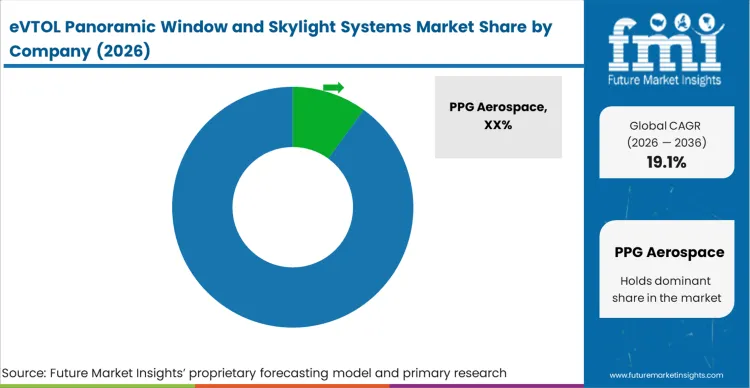
Certification experience creates a strong barrier for consumer electronics entrants seeking aerospace market share. Procurement directors comparing smart glass vs coated polycarbonate aircraft windows rarely consider uncertified formulations, even when they offer weight advantages or novel designs. Many hardware startups also underestimate the cost of proving vibration resilience through specialized acoustic and aerospace validation testing.
Established aerospace suppliers benefit from deep libraries of certified mechanical integration and specialized fastening components. Their experience in sealing exterior assemblies against pressure cycling, moisture ingress, and harsh aviation fluids helps prevent premature delamination in eVTOL window systems. Newer window system suppliers must develop these physical validation capabilities while advancing low-weight heating elements suited to next-generation electric aircraft.
Large airframe integrators fiercely resist vendor lock-in by demanding modular replacement architectures even when purchasing highly integrated structural panels. Chief engineering officers write strict interface control documents requiring air taxi window manufacturers to output precise diagnostic data validating internal heater functionality rather than relying on proprietary diagnostic tools. Competition centers on fulfilling any RFQ eVTOL skylight system by delivering optically flawless panels that integrate seamlessly into complex autonomous arrays without introducing electrical interference.
Key Players in eVTOL Panoramic Window and Skylight Systems Market
- PPG Aerospace
- GKN Aerospace
- The NORDAM Group
- Gentex Corporation
Scope of the Report

| Metric | Value |
|---|---|
| Quantitative Units | USD 15.0 million to USD 86.4 million, at a CAGR of 19.10% |
| Market Definition | Purpose-built transparent structural enclosures designed specifically for electric vertical takeoff and landing airframes, balancing extreme impact resistance with essential thermal rejection capabilities. |
| Segmentation | By Product Type, By Material System, By Window Technology, By Installation Type, and By Aircraft Type |
| Regions Covered | North America, Latin America, Western Europe, Eastern Europe, East Asia, South Asia & Pacific, Middle East & Africa |
| Countries Covered | United States, UAE, China, United Kingdom, Singapore, Japan, Germany |
| Key Companies Profiled | PPG Aerospace, GKN Aerospace, The NORDAM Group, Gentex Corporation |
| Forecast Period | 2026 to 2036 |
| Approach | Baseline production volumes derived directly from stated OEM manufacturing capacity roadmaps regarding transparency surface area per aircraft. |
Source: Future Market Insights (FMI) analysis, based on proprietary forecasting model and primary research
eVTOL Panoramic Window and Skylight Systems Market Analysis by Segments
Product Type
- Panoramic side window systems
- Cockpit canopy glazing systems
- Roof skylight modules
- Door-window integrated transparency systems
- Corner-vision panoramic glazing sections
- Passenger observation bubble-window modules
Material System
- Coated polycarbonate transparencies
- Acrylic transparencies
- Laminated hybrid plastic-glass systems
- Electrochromic smart-glass assemblies
- Scratch-resistant coated composites
Window Technology
- Fixed passive panoramic glazing
- Electrically dimmable windows
- UV-control coated windows
- Bird-strike-resistant cockpit and passenger windows
- Heated or sensor-integrated transparency assemblies
Installation Type
- OEM factory-installed systems
- Retrofit panoramic-window kits
- Aftermarket replacement transparency assemblies
Aircraft Type
- Passenger air taxi eVTOLs
- Premium shuttle eVTOLs
- Tourism and sightseeing eVTOLs
- Corporate mobility eVTOLs
- Cargo eVTOLs with crew-visibility glazing
Region
- North America
- United States
- Canada
- Latin America
- Brazil
- Mexico
- Rest of Latin America
- Western Europe
- Germany
- United Kingdom
- France
- Spain
- Italy
- BENELUX
- Rest of Western Europe
- Eastern Europe
- Russia
- Poland
- Rest of Eastern Europe
- East Asia
- China
- Japan
- South Korea
- South Asia & Pacific
- India
- ASEAN
- Oceania
- Rest of South Asia & Pacific
- Middle East & Africa
- GCC
- South Africa
- North Africa
- Rest of Middle East & Africa
Bibliography
- Eve Air Mobility. (2024, June 5). Eve names suppliers for eVTOL windows, doors, and fuselage components.
- Federal Aviation Administration. (2025, April). Roadmap for advanced air mobility aircraft type certification.
- Gentex Corporation. (2025, February 25). Form 10-K.
- Joby Aviation, Inc. (2026, February 25). Joby reports fourth quarter 2025 financial results.
This bibliography is provided for reader reference. The full FMI report contains the complete reference list with primary source documentation.
This Report Addresses
- Component certification barriers complicating aerostructures hardware deployments.
- Weight-to-payload limitations driving synthetic composite material selections.
- Airframe composite stress fractures caused by rigid aftermarket retrofit installations.
- Thermal expansion vulnerabilities inherent inside sealed aerodynamic inspection ports.
- Acoustic insulation limits restricting overall transparent surface area allocations.
- Operational shutdowns resulting from localized ultraviolet radiation panel degradation.
- Early revenue testing models leveraging strictly segregated tourism flight corridors.
- Type certificate application volumes anchoring precise hardware demand forecasting.
Frequently Asked Questions
Explain the eVTOL panoramic window and skylight systems market?
This sector involves purpose-built transparent structural enclosures designed specifically for electric vertical takeoff and landing airframes. These specialized hardware components provide essential passenger visibility while maintaining strict aerodynamic continuity and high-altitude cabin pressurization.
What is the market size of eVTOL panoramic glazing?
The industry was valued at USD 12.6 million in 2025. Strong capital backing for commercial air taxi launches propels demand, advancing the sector to USD 15.0 million in 2026 and an estimated USD 86.4 million by 2036.
Why do air taxi aircraft need panoramic windows?
Commuter anxiety dictates massive structural cutouts. Claustrophobic vertical ascents induce severe panic during uncrewed flights. Acoustic engineers mandate expansive optical clarity to soothe inexperienced flyers by connecting them visually to the outside environment.
What materials are used in eVTOL cabin windows?
Traditional silicate glass is too heavy for electric aviation. Structural engineers utilize specialized coated polycarbonate transparencies, scratch-resistant acrylics, and laminated hybrid plastic-glass systems to satisfy strict weight limits without shattering during bird strikes.
Are electrochromic windows used in eVTOLs?
Yes, but they face immense regulatory scrutiny. While they offer exceptional thermal rejection without mechanical shades, active dimming systems must incorporate fail-safe mechanisms guaranteeing clear visibility during complete electrical power losses to satisfy airworthiness officers.
Which companies make eVTOL aircraft windows?
The highly consolidated supplier landscape includes prominent legacy aerospace manufacturers like PPG Aerospace, GKN Aerospace, The NORDAM Group, Gentex Corporation.
What regulations affect eVTOL transparency systems?
The Federal Aviation Administration and EASA mandate intense physical bird-strike testing and structural flexural fatigue survival. Certification officers reject any formulation exhibiting brittle failure characteristics or significant refractive distortion during ballistic cannon testing.
How much does an eVTOL skylight system cost?
Pricing remains highly variable based on acoustic insulation requirements and specialized UV coatings. Complex overhead glazing configurations can represent multi-thousand dollar investments per airframe during early prototype and low-rate initial production phases.
Estimate price per eVTOL panoramic window assembly?
Individual curved structural panels range from thousands to tens of thousands of dollars depending on integrated micro-wire heating elements, embedded electrochromic layers, and load-bearing structural certification requirements mandated by aviation authorities.
Build a market outlook for eVTOL panoramic glazing?
The outlook projects a robust 19.10% CAGR through 2036. Sustained growth relies entirely on material scientists proving lightweight polycarbonates can survive continuous urban debris strikes while delivering perfect optical clarity without extreme acoustic noise penetration.
What limits retrofit panoramic window installation on certified platforms?
Aerodynamic testing profiles break instantly upon adding unapproved exterior structures. Fleet maintenance teams face immediate airworthiness certificate revocation if they modify external composite surfaces without full engineering revalidation.
Why do synthetic composites dominate over traditional silicate glass?
Aviation authorities fundamentally mandate extreme weight reduction to maximize electric payload capacities. Airworthiness engineers specify synthetic materials to guarantee flexural fatigue survival during high-torque vertical flight maneuvers.
How do massive skylights affect aircraft maintenance cycles?
Expansive overhead glazing requires frequent surface polishing to maintain optical clarity against abrasive urban particulate matter. Maintenance directors trade premium passenger experiences for vastly increased unit turnaround times on tarmac surfaces.
What specific operational hurdle slows passenger UAM certification?
Regulators demand thousands of verified safe impact tests before authorizing commercial human transport. Component suppliers currently lack sufficient real-world high-velocity bird-strike data proving synthetic laminate fatigue reliability conclusively.
Why do routine line-inspection ports require specialized anti-glare coatings?
Reflective cabin lighting generates unacceptable glare during night operations, ruining scenic passenger views. Acoustic engineers mandate precision optical coatings preventing internal reflections while preserving easy external observation angles.
How do thermal expansion constraints influence exterior hardware design?
Dissimilar materials expand unevenly under direct sunlight, causing composite panels to bind against rigid frames. Hardware engineers must design flexible mounting gaskets capable of overcoming this thermal friction without warping surrounding transparencies.
What structural difference explains China's accelerated hardware adoption?
Aggressive state-backed aviation authorities bypass prolonged experimental stages mandating rapid uncrewed logistics deployments. Domestic logistics directors scale massive cargo networks utilizing simplified hardware configurations lacking complex passenger visibility requirements.
Why do OEMs demand standardized hardware footprints?
Airframe designers want to retain absolute control over critical supply chains. Chief engineering officers write strict interface documents preventing vendor lock-in, allowing rapid supplier switching if specific molding manufacturers fail.
What specific advantage do legacy aerospace suppliers hold?
Incumbents possess deep institutional knowledge regarding DO-160G environmental stress protocols. Procurement teams heavily favor suppliers guaranteeing hardware survival during extreme vibration and altitude pressure cycling without spontaneous delamination.
How do urban particulates threaten continuous dispatch reliability?
Micro-debris continuously abrades soft synthetic glazing surfaces during low-altitude flight. Fleet dispatchers lose massive revenue when forced to ground entire regional networks because passenger viewing angles become completely obscured by severe micro-scratching.
Why are lightweight composite hatches critical for future hardware designs?
Heavy metallic assemblies introduce unacceptable weight penalties into strictly controlled designs. Thermoplastic composites eliminate excess mass, allowing procurement teams to meet strict mechanical tolerance budgets without sacrificing visibility.
What restricts generic fastener effectiveness during daily commuter operations?
Standard framing hardware degrades rapidly under high-frequency acoustic vibration cycles. Operations directors must replace cheap mounting gaskets constantly or risk catastrophic in-flight panel separation over densely populated metropolitan areas.
How does battery capacity dictate external hardware procurement?
Excessive auxiliary cooling directly destroys electric flight profitability. Chief engineering officers reject highly scenic transparency suites if poor thermal rejection capabilities force the air conditioning system to drain main propulsion batteries.
Why are dedicated tourism operations crucial for hardware validation?
Regulators grant scenic flight waivers rapidly over highly controlled coastal zones. Hardware engineers utilize these low-stress operations harvesting terabytes of structural fatigue data required for eventual mass commuter certification.
What causes composite delamination during retrofit installations?
Cutting expansive window sections into cured carbon fiber creates concentrated stress points during high-G maneuvers. Structural engineers prevent catastrophic airframe failure forcing all transparency integration into primary factory layups.
How do heated windows simplify autonomous flight architectures?
Embedding invisible micro-wires directly into laminates eliminates complex forced-air defogging systems. Avionics architects integrate this capability keeping central flight computers focused on trajectory management rather than manual climate control checks.
Why do Middle Eastern operators prioritize extreme thermal resilience?
Daytime desert operating profiles push external thermoplastic composites past standard aerospace heat tolerances. Fleet managers strictly evaluate suppliers based on capacity preventing critical hardware warping during peak summer dispatch windows.
What role does raw material shipment data play in FMI forecasting?
Advanced optical polycarbonates represent the foundational building block of every massive window system. Analysts track these specific chemical shipments validating actual airframe production schedules against OEM claims.
How do icing conditions cripple unprotected synthetic panels?
Moisture penetration followed by freezing temperatures creates severe micro-fracturing across uncoated surfaces. Maintenance technicians discover one frozen thermal cycle during winter flight destroys optical clarity completely, requiring total replacement.
Why do public safety fleets demand distinct hardware parameters?
Emergency operations require reliable optical clarity under extreme environmental stress. Public safety directors specify highly specialized chemical-resistant laminates capable of surviving continuous exposure to caustic firefighting retardants and dense urban smoke.
What forces airframe manufacturers into strict vendor lock-in?
Re-certifying new supplier window shapes requires millions of dollars in aerodynamic drag compatibility and acoustic re-testing. Chief engineering officers rarely switch hardware partners once original type certificates secure civil aviation approval.
How do acoustic restrictions influence external hardware packaging?
Thin unreinforced polycarbonate panels act as acoustic amplifiers during vertical ascent. Aerodynamicists sculpt transparency thickness and curvature explicitly minimizing drag-induced noise transferring directly into densely packed passenger cabins.
Preview the report firsthand - request a free sample
Get SampleGet the brochure for pricing and purchase details.
Get PDFTable of Content
- Executive Summary
- Global Market Outlook
- Demand-side Trends
- Supply-side Trends
- Technology Roadmap Analysis
- Analysis and Recommendations
- Market Overview
- Market Coverage / Taxonomy
- Market Definition / Scope / Limitations
- Research Methodology
- Chapter Orientation
- Analytical Lens and Working Hypotheses
- Market Structure, Signals, and Trend Drivers
- Benchmarking and Cross-market Comparability
- Market Sizing, Forecasting, and Opportunity Mapping
- Research Design and Evidence Framework
- Desk Research Programme (Secondary Evidence)
- Company Annual and Sustainability Reports
- Peer-reviewed Journals and Academic Literature
- Corporate Websites, Product Literature, and Technical Notes
- Earnings Decks and Investor Briefings
- Statutory Filings and Regulatory Disclosures
- Technical White Papers and Standards Notes
- Trade Journals, Industry Magazines, and Analyst Briefs
- Conference Proceedings, Webinars, and Seminar Materials
- Government Statistics Portals and Public Data Releases
- Press Releases and Reputable Media Coverage
- Specialist Newsletters and Curated Briefings
- Sector Databases and Reference Repositories
- FMI Internal Proprietary Databases and Historical Market Datasets
- Subscription Datasets and Paid Sources
- Social Channels, Communities, and Digital Listening Inputs
- Additional Desk Sources
- Expert Input and Fieldwork (Primary Evidence)
- Primary Modes
- Qualitative Interviews and Expert Elicitation
- Quantitative Surveys and Structured Data Capture
- Blended Approach
- Why Primary Evidence is Used
- Field Techniques
- Interviews
- Surveys
- Focus Groups
- Observational and In-context Research
- Social and Community Interactions
- Stakeholder Universe Engaged
- C-suite Leaders
- Board Members
- Presidents and Vice Presidents
- R&D and Innovation Heads
- Technical Specialists
- Domain Subject-matter Experts
- Scientists
- Physicians and Other Healthcare Professionals
- Governance, Ethics, and Data Stewardship
- Research Ethics
- Data Integrity and Handling
- Primary Modes
- Tooling, Models, and Reference Databases
- Desk Research Programme (Secondary Evidence)
- Data Engineering and Model Build
- Data Acquisition and Ingestion
- Cleaning, Normalisation, and Verification
- Synthesis, Triangulation, and Analysis
- Quality Assurance and Audit Trail
- Market Background
- Market Dynamics
- Drivers
- Restraints
- Opportunity
- Trends
- Scenario Forecast
- Demand in Optimistic Scenario
- Demand in Likely Scenario
- Demand in Conservative Scenario
- Opportunity Map Analysis
- Product Life Cycle Analysis
- Supply Chain Analysis
- Investment Feasibility Matrix
- Value Chain Analysis
- PESTLE and Porter’s Analysis
- Regulatory Landscape
- Regional Parent Market Outlook
- Production and Consumption Statistics
- Import and Export Statistics
- Market Dynamics
- Global Market Analysis 2021 to 2025 and Forecast, 2026 to 2036
- Historical Market Size Value (USD Million) Analysis, 2021 to 2025
- Current and Future Market Size Value (USD Million) Projections, 2026 to 2036
- Y-o-Y Growth Trend Analysis
- Absolute $ Opportunity Analysis
- Global Market Pricing Analysis 2021 to 2025 and Forecast 2026 to 2036
- Global Market Analysis 2021 to 2025 and Forecast 2026 to 2036, By Product Type
- Introduction / Key Findings
- Historical Market Size Value (USD Million) Analysis By Product Type , 2021 to 2025
- Current and Future Market Size Value (USD Million) Analysis and Forecast By Product Type , 2026 to 2036
- Floor Proximity Escape Path Marking Strips
- Exit locator overlays
- Others
- Floor Proximity Escape Path Marking Strips
- Y-o-Y Growth Trend Analysis By Product Type , 2021 to 2025
- Absolute $ Opportunity Analysis By Product Type , 2026 to 2036
- Global Market Analysis 2021 to 2025 and Forecast 2026 to 2036, By Aircraft Type
- Introduction / Key Findings
- Historical Market Size Value (USD Million) Analysis By Aircraft Type, 2021 to 2025
- Current and Future Market Size Value (USD Million) Analysis and Forecast By Aircraft Type, 2026 to 2036
- Narrow-Body Commercial Aircraft
- Wide-body commercial aircraft
- Others
- Narrow-Body Commercial Aircraft
- Y-o-Y Growth Trend Analysis By Aircraft Type, 2021 to 2025
- Absolute $ Opportunity Analysis By Aircraft Type, 2026 to 2036
- Global Market Analysis 2021 to 2025 and Forecast 2026 to 2036, By Fit Type
- Introduction / Key Findings
- Historical Market Size Value (USD Million) Analysis By Fit Type, 2021 to 2025
- Current and Future Market Size Value (USD Million) Analysis and Forecast By Fit Type, 2026 to 2036
- Retrofit/Aftermarket
- Line-fit / OEM installation
- Retrofit/Aftermarket
- Y-o-Y Growth Trend Analysis By Fit Type, 2021 to 2025
- Absolute $ Opportunity Analysis By Fit Type, 2026 to 2036
- Global Market Analysis 2021 to 2025 and Forecast 2026 to 2036, By Material-Construction
- Introduction / Key Findings
- Historical Market Size Value (USD Million) Analysis By Material-Construction, 2021 to 2025
- Current and Future Market Size Value (USD Million) Analysis and Forecast By Material-Construction, 2026 to 2036
- Flexible Photoluminescent Polymer Strips
- Rigid laminated strips
- Others
- Flexible Photoluminescent Polymer Strips
- Y-o-Y Growth Trend Analysis By Material-Construction, 2021 to 2025
- Absolute $ Opportunity Analysis By Material-Construction, 2026 to 2036
- Global Market Analysis 2021 to 2025 and Forecast 2026 to 2036, By End User
- Introduction / Key Findings
- Historical Market Size Value (USD Million) Analysis By End User, 2021 to 2025
- Current and Future Market Size Value (USD Million) Analysis and Forecast By End User, 2026 to 2036
- Airlines And Fleet Operators
- OEMs
- Others
- Airlines And Fleet Operators
- Y-o-Y Growth Trend Analysis By End User, 2021 to 2025
- Absolute $ Opportunity Analysis By End User, 2026 to 2036
- Global Market Analysis 2021 to 2025 and Forecast 2026 to 2036, By Region
- Introduction
- Historical Market Size Value (USD Million) Analysis By Region, 2021 to 2025
- Current Market Size Value (USD Million) Analysis and Forecast By Region, 2026 to 2036
- North America
- Latin America
- Western Europe
- Eastern Europe
- East Asia
- South Asia and Pacific
- Middle East & Africa
- Market Attractiveness Analysis By Region
- North America Market Analysis 2021 to 2025 and Forecast 2026 to 2036, By Country
- Historical Market Size Value (USD Million) Trend Analysis By Market Taxonomy, 2021 to 2025
- Market Size Value (USD Million) Forecast By Market Taxonomy, 2026 to 2036
- By Country
- USA
- Canada
- Mexico
- By Product Type
- By Aircraft Type
- By Fit Type
- By Material-Construction
- By End User
- By Country
- Market Attractiveness Analysis
- By Country
- By Product Type
- By Aircraft Type
- By Fit Type
- By Material-Construction
- By End User
- Key Takeaways
- Latin America Market Analysis 2021 to 2025 and Forecast 2026 to 2036, By Country
- Historical Market Size Value (USD Million) Trend Analysis By Market Taxonomy, 2021 to 2025
- Market Size Value (USD Million) Forecast By Market Taxonomy, 2026 to 2036
- By Country
- Brazil
- Chile
- Rest of Latin America
- By Product Type
- By Aircraft Type
- By Fit Type
- By Material-Construction
- By End User
- By Country
- Market Attractiveness Analysis
- By Country
- By Product Type
- By Aircraft Type
- By Fit Type
- By Material-Construction
- By End User
- Key Takeaways
- Western Europe Market Analysis 2021 to 2025 and Forecast 2026 to 2036, By Country
- Historical Market Size Value (USD Million) Trend Analysis By Market Taxonomy, 2021 to 2025
- Market Size Value (USD Million) Forecast By Market Taxonomy, 2026 to 2036
- By Country
- Germany
- UK
- Italy
- Spain
- France
- Nordic
- BENELUX
- Rest of Western Europe
- By Product Type
- By Aircraft Type
- By Fit Type
- By Material-Construction
- By End User
- By Country
- Market Attractiveness Analysis
- By Country
- By Product Type
- By Aircraft Type
- By Fit Type
- By Material-Construction
- By End User
- Key Takeaways
- Eastern Europe Market Analysis 2021 to 2025 and Forecast 2026 to 2036, By Country
- Historical Market Size Value (USD Million) Trend Analysis By Market Taxonomy, 2021 to 2025
- Market Size Value (USD Million) Forecast By Market Taxonomy, 2026 to 2036
- By Country
- Russia
- Poland
- Hungary
- Balkan & Baltic
- Rest of Eastern Europe
- By Product Type
- By Aircraft Type
- By Fit Type
- By Material-Construction
- By End User
- By Country
- Market Attractiveness Analysis
- By Country
- By Product Type
- By Aircraft Type
- By Fit Type
- By Material-Construction
- By End User
- Key Takeaways
- East Asia Market Analysis 2021 to 2025 and Forecast 2026 to 2036, By Country
- Historical Market Size Value (USD Million) Trend Analysis By Market Taxonomy, 2021 to 2025
- Market Size Value (USD Million) Forecast By Market Taxonomy, 2026 to 2036
- By Country
- China
- Japan
- South Korea
- By Product Type
- By Aircraft Type
- By Fit Type
- By Material-Construction
- By End User
- By Country
- Market Attractiveness Analysis
- By Country
- By Product Type
- By Aircraft Type
- By Fit Type
- By Material-Construction
- By End User
- Key Takeaways
- South Asia and Pacific Market Analysis 2021 to 2025 and Forecast 2026 to 2036, By Country
- Historical Market Size Value (USD Million) Trend Analysis By Market Taxonomy, 2021 to 2025
- Market Size Value (USD Million) Forecast By Market Taxonomy, 2026 to 2036
- By Country
- India
- ASEAN
- Australia & New Zealand
- Rest of South Asia and Pacific
- By Product Type
- By Aircraft Type
- By Fit Type
- By Material-Construction
- By End User
- By Country
- Market Attractiveness Analysis
- By Country
- By Product Type
- By Aircraft Type
- By Fit Type
- By Material-Construction
- By End User
- Key Takeaways
- Middle East & Africa Market Analysis 2021 to 2025 and Forecast 2026 to 2036, By Country
- Historical Market Size Value (USD Million) Trend Analysis By Market Taxonomy, 2021 to 2025
- Market Size Value (USD Million) Forecast By Market Taxonomy, 2026 to 2036
- By Country
- Kingdom of Saudi Arabia
- Other GCC Countries
- Turkiye
- South Africa
- Other African Union
- Rest of Middle East & Africa
- By Product Type
- By Aircraft Type
- By Fit Type
- By Material-Construction
- By End User
- By Country
- Market Attractiveness Analysis
- By Country
- By Product Type
- By Aircraft Type
- By Fit Type
- By Material-Construction
- By End User
- Key Takeaways
- Key Countries Market Analysis
- USA
- Pricing Analysis
- Market Share Analysis, 2025
- By Product Type
- By Aircraft Type
- By Fit Type
- By Material-Construction
- By End User
- Canada
- Pricing Analysis
- Market Share Analysis, 2025
- By Product Type
- By Aircraft Type
- By Fit Type
- By Material-Construction
- By End User
- Mexico
- Pricing Analysis
- Market Share Analysis, 2025
- By Product Type
- By Aircraft Type
- By Fit Type
- By Material-Construction
- By End User
- Brazil
- Pricing Analysis
- Market Share Analysis, 2025
- By Product Type
- By Aircraft Type
- By Fit Type
- By Material-Construction
- By End User
- Chile
- Pricing Analysis
- Market Share Analysis, 2025
- By Product Type
- By Aircraft Type
- By Fit Type
- By Material-Construction
- By End User
- Germany
- Pricing Analysis
- Market Share Analysis, 2025
- By Product Type
- By Aircraft Type
- By Fit Type
- By Material-Construction
- By End User
- UK
- Pricing Analysis
- Market Share Analysis, 2025
- By Product Type
- By Aircraft Type
- By Fit Type
- By Material-Construction
- By End User
- Italy
- Pricing Analysis
- Market Share Analysis, 2025
- By Product Type
- By Aircraft Type
- By Fit Type
- By Material-Construction
- By End User
- Spain
- Pricing Analysis
- Market Share Analysis, 2025
- By Product Type
- By Aircraft Type
- By Fit Type
- By Material-Construction
- By End User
- France
- Pricing Analysis
- Market Share Analysis, 2025
- By Product Type
- By Aircraft Type
- By Fit Type
- By Material-Construction
- By End User
- India
- Pricing Analysis
- Market Share Analysis, 2025
- By Product Type
- By Aircraft Type
- By Fit Type
- By Material-Construction
- By End User
- ASEAN
- Pricing Analysis
- Market Share Analysis, 2025
- By Product Type
- By Aircraft Type
- By Fit Type
- By Material-Construction
- By End User
- Australia & New Zealand
- Pricing Analysis
- Market Share Analysis, 2025
- By Product Type
- By Aircraft Type
- By Fit Type
- By Material-Construction
- By End User
- China
- Pricing Analysis
- Market Share Analysis, 2025
- By Product Type
- By Aircraft Type
- By Fit Type
- By Material-Construction
- By End User
- Japan
- Pricing Analysis
- Market Share Analysis, 2025
- By Product Type
- By Aircraft Type
- By Fit Type
- By Material-Construction
- By End User
- South Korea
- Pricing Analysis
- Market Share Analysis, 2025
- By Product Type
- By Aircraft Type
- By Fit Type
- By Material-Construction
- By End User
- Russia
- Pricing Analysis
- Market Share Analysis, 2025
- By Product Type
- By Aircraft Type
- By Fit Type
- By Material-Construction
- By End User
- Poland
- Pricing Analysis
- Market Share Analysis, 2025
- By Product Type
- By Aircraft Type
- By Fit Type
- By Material-Construction
- By End User
- Hungary
- Pricing Analysis
- Market Share Analysis, 2025
- By Product Type
- By Aircraft Type
- By Fit Type
- By Material-Construction
- By End User
- Kingdom of Saudi Arabia
- Pricing Analysis
- Market Share Analysis, 2025
- By Product Type
- By Aircraft Type
- By Fit Type
- By Material-Construction
- By End User
- Turkiye
- Pricing Analysis
- Market Share Analysis, 2025
- By Product Type
- By Aircraft Type
- By Fit Type
- By Material-Construction
- By End User
- South Africa
- Pricing Analysis
- Market Share Analysis, 2025
- By Product Type
- By Aircraft Type
- By Fit Type
- By Material-Construction
- By End User
- USA
- Market Structure Analysis
- Competition Dashboard
- Competition Benchmarking
- Market Share Analysis of Top Players
- By Regional
- By Product Type
- By Aircraft Type
- By Fit Type
- By Material-Construction
- By End User
- Competition Analysis
- Competition Deep Dive
- Heads Up Technologies (including STG Aerospace)
- Overview
- Product Portfolio
- Profitability by Market Segments (Product/Age /Sales Channel/Region)
- Sales Footprint
- Strategy Overview
- Marketing Strategy
- Product Strategy
- Channel Strategy
- Lufthansa Technik
- Astronics Luminescent Systems
- Bruce Aerospace
- Cobalt Aerospace
- PERMALUX
- Madelec Aero
- Heads Up Technologies (including STG Aerospace)
- Competition Deep Dive
- Assumptions & Acronyms Used


