

- Industry Size (2026)
- Forecast (2036)
- CAGR
- (2026 to 2036)
Sustainable eVTOL Cabin Interior Systems Market Size, Market Forecast and Outlook By FMI
In 2025, the sustainable eVTOL cabin interior systems market generated USD 26.3 million and is steadily expanding at a 33.4% CAGR, indicating that the revenue is poised to cross USD 35.1 million in 2026. The market forecast projects an estimation to reach USD 628.7 million by 2036, as regulatory weight penalties compel airframe OEMs to mandate closed-loop material sourcing before granting initial type certification.
Procurement directors evaluating the sustainable eVTOL cabin interior systems market face an immediate tension between aesthetic premiumization and strict battery payload constraints. Securing type certification requires finalizing weight budgets down to the gram, forcing engineering teams sourcing sustainable aircraft interior systems for eVTOL platforms to select aerospace lightweight materials not just for flight efficiency, but as a compliance necessity. Delaying these decisions extends the testing phase and pushes commercial launch dates backward, compounding investor pressure. FMI observes that what legacy suppliers miss regarding the electric air taxi cabin interiors market is the baseline requirement: materials must survive high-frequency turnaround cycles while maintaining zero-emission credentialing.
Summary of Sustainable eVTOL Cabin Interior Systems Market
- Sustainable eVTOL Cabin Interior Systems Market Definition
- Sustainable eVTOL cabin interior systems encompass weight-optimized, passenger-facing outfitting components manufactured from recycled or bio-based feedstocks designed explicitly for vertical lift aircraft.
- Demand Drivers in the Market
- Payload restrictions force airframe engineers to mandate ultra-lightweight composite paneling.
- High-frequency commuter turnaround cycles require fleet operators to select highly durable, easily replaceable modular fittings.
- Investor ESG mandates compel startup procurement directors to source traceable circular materials for passenger seating.
- Key Segments Analyzed in the FMI Report
- Seating Systems And Dress Covers: 31.0% share in 2026, satisfying extreme weight reduction mandates without compromising passenger crash protection.
- Recycled Thermoplastics And PCR Composites: 34.0% share, enabling rapid thermoforming of complex cabin geometries at lower energy costs.
- Passenger Air Taxi eVTOLs: 56.0% share, reflecting the dominant early-commercialization focus of major aerospace startups.
- OEM Line-Fit Installations: 72.0% share, as initial fleet production ramps up ahead of commercial launch targets.
- Lightweighting For Range Extension: 39.0% share, serving as the absolute non-negotiable metric for battery-constrained flight envelopes.
- United Arab Emirates: 35.6% CAGR, reflecting sovereign investment priorities establishing fully operational aerial commuter networks.
- Analyst Opinion at FMI
- Nikhil Kaitwade, Principal Analyst, Automotive, at FMI, observes that "A 16G crash-test certification in the lab is only the initial hurdle for sustainable materials. The structural paradox interior engineering heads face is that bio-based composites often require heavier bonding resins to meet aviation flammability standards, inadvertently canceling out their core weight advantage. What standard payload metrics miss entirely is that operators evaluate seating not just on flight weight, but on the turnaround geometry: if a frayed dress cover takes a maintenance technician 15 minutes to swap instead of three, that material choice actively degrades the tight operational economics required for profitable urban air mobility."
- Strategic Implications / Executive Takeaways
- Tier-1 seating suppliers must co-develop certification pathways alongside airframe OEMs to avoid costly late-stage redesigns.
- Material science startups face intense pressure to demonstrate immediate scalability to meet looming line-fit production schedules.
- Fleet operators secure long-term profitability by selecting an eVTOL interior design and certification partner capable of delivering rapid-release interior components over customized luxury finishes.
- Methodology
- Primary Research: Direct consultations with chief interior engineers and procurement directors.
- Desk Research: Analysis of EASA/FAA vertical flight certification dockets and material patent filings.
- Market-Sizing and Forecasting: Triangulation of OEM pre-order volumes with average interior completion costs.
- Data Validation and Update Cycle: Cross-referencing against independent airworthiness directives and aviation seating registries.
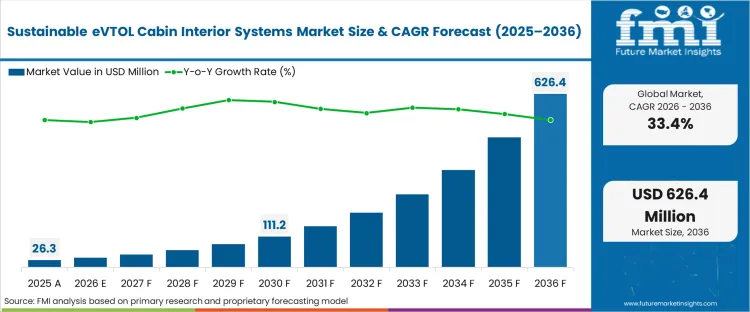
Once battery chemistry allows for energy densities above 400 Wh/kg, interior design constraints loosen marginally, permitting modular eVTOL cabin interiors. Commercial operators trigger this shift by demanding interchangeable aircraft cabin interiors that serve urban commuters during morning peaks and switch to cargo logistics by night. Reaching this payload threshold transforms cabin fittings from static weight liabilities into dynamic revenue enablers.
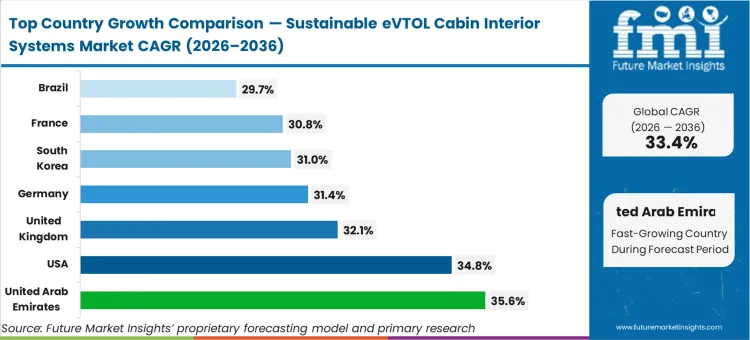
United Arab Emirates leads adoption at 35.6%, with sovereign wealth mandates accelerating infrastructure deployment ahead of global peers. United States tracks closely at 34.8% driven by venture-backed startups securing defense innovation unit contracts for dual-use prototypes. United Kingdom expects 32.1% compound expansion on the back of aggressive civil aviation authority testing corridors. Germany follows at 31.4% as legacy automotive interior suppliers pivot localized manufacturing lines toward vertical mobility. South Korea registers 31.0% alongside France at 30.8%, while Brazil advances at 29.7%. Policy alignment regarding airspace integration dictates the precise commercialization timeline across these distinct regulatory environments.
Sustainable eVTOL Cabin Interior Systems Market Inclusions
Scope incorporates eVTOL passenger cabin interiors featuring seating structures molded from post-consumer recycled polymers alongside natural-fiber composite paneling. Coverage extends to sustainable lighting systems for eVTOL cabins, volatile organic compound-free adhesives, and circular leather upholstery utilized exclusively within battery-electric or hybrid-electric vertical lift platforms.
Sustainable eVTOL Cabin Interior Systems Market Exclusions
Avionics displays and primary flight control interfaces fall outside this boundary because their primary function involves aircraft navigation rather than passenger accommodation. Battery containment shielding and external airframe structural composites are excluded because they constitute primary aerospace engineering structures rather than interior outfitting components.
Sustainable eVTOL Cabin Interior Systems Market Research Methodology
- Primary Research: Chief interior engineers and procurement directors at Tier-1 aerospace seating suppliers.
- Desk Research: EASA and FAA vertical flight certification dockets, aircraft weight budget disclosures, and sustainable aviation material patent filings.
- Market-Sizing and Forecasting: OEM pre-order book volumes combined with average per-seat interior completion costs.
- Data Validation and Update Cycle: Independent airworthiness directive monitoring and specialized aviation seating compliance registries.
Segmental Analysis
Sustainable eVTOL Cabin Interior Systems Market Analysis by Component
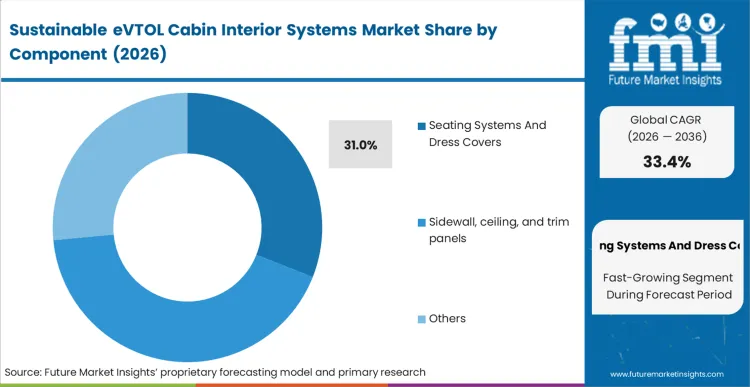
Seating structures dictate the absolute limits of passenger capacity within strict takeoff weight calculations. Seating systems and dress covers hold 31.0% share, and FMI's analysis indicates this dominance stems directly from 16G crash-test survivability requirements. Procurement directors at vertical mobility startups select structural seating platforms first, wrapping all other eVTOL floor and trim systems around this core compliance geometry. Selecting specific aircraft seat frames forces a rigid downstream material choice for circular seat dress covers aviation applications, as flammability testing requires certifying the entire cushion assembly together. What procurement comparisons often miss when requesting an eVTOL cabin seat manufacturer quote is that the lightest seating frame routinely demands heavier intumescent foam layers to pass smoke-and-toxicity mandates, narrowing the true weight variance between competing designs. Failing to finalize lightweight eVTOL seating systems locks engineering teams out of subsequent center-of-gravity approvals.
- Crash-Test Survivability Limits: Passenger protection mandates dictate rigid floor-track attachments and energy-absorbing geometries. Certification engineers face significant delays if modified geometries fail dynamic sled testing protocols.
- Integrated Flammability Testing: Authorities evaluate foam cushions and dress covers as a single combustible unit. Material procurement officers avoid substituting individual layers to prevent voiding existing burn-test data.
- Turnaround Modularity Requirements: Fleet operators demand rapid-release cushion covers for high-frequency commuter schedules. Maintenance supervisors lose operational uptime if cleaning procedures require extended aircraft grounding.
Sustainable eVTOL Cabin Interior Systems Market Analysis by Material Platform
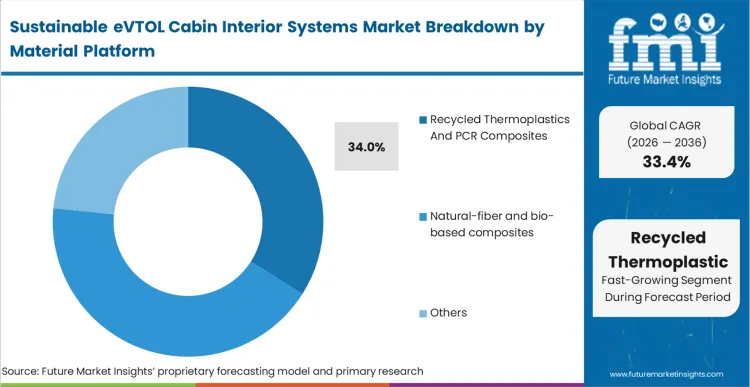
A non-obvious reality for sourcing teams evaluating natural fiber composites vs carbon fiber for aircraft interiors is that bio-based panels frequently absorb ambient cabin moisture, requiring heavier surface sealants that quietly erode their initial weight advantages. Selecting non-certified recyclable eVTOL cabin materials forces interior suppliers into a multi-year parallel testing track, threatening line-fit delivery windows. Manufacturing cycle times dictate the viability of novel materials moving from prototype to line-fit production. Recycled thermoplastics and PCR composites hold 34.0% share as these formulations permit rapid thermoforming of low-weight cabin panels for electric aircraft without extended curing intervals. Tooling engineers prefer composite airframes and thermoplastic panels because they consolidate multiple assembly parts into single continuous forms, eliminating heavy metallic fasteners. Adopting these resins accelerates production ramps, directly aligning with aggressive startup delivery schedules.
- Rapid Thermoforming Capability: Thermoplastics require minimal heat-cycle intervals compared to traditional thermoset resins. Production managers gain significant throughput advantages during the critical scale-up phase.
- Fastener Consolidation Techniques: Molding complex continuous shapes eliminates the need for secondary brackets and screws. Assembly technicians cut installation times by avoiding intricate mechanical joining processes.
- Moisture Absorption Constraints: Natural fiber composites swell under high humidity environments typical of coastal flight routes. Material engineers must apply secondary barrier coatings to maintain precise structural tolerances.
Sustainable eVTOL Cabin Interior Systems Market Analysis by Propulsion-Cabin Use Case
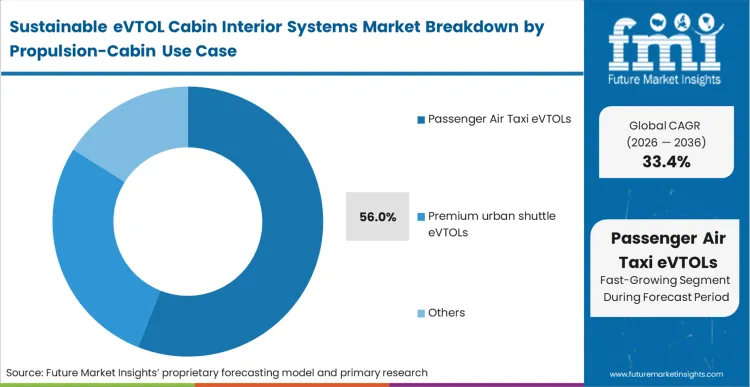
Operators deploying under-specified taxi interiors face premature cabin degradation within the first six months of active scheduling. Commercialization schedules prioritize high-volume urban commuter routes to satisfy impatient venture capital timelines. Passenger air taxi eVTOLs capture 56.0% share, reflecting the aggressive launch targets set by leading advanced air mobility operators. Route planners optimize these specific cabin variants for short 20-minute hops, intentionally stripping out lavatories and complex galley fixtures. Eliminating these heavy subsystems allows design teams to reinvest that weight budget into acoustic damping materials, masking intense rotor frequencies. The general aviation analysts overlook the fact that four-passenger taxi interiors require substantially stronger floor paneling than premium urban shuttle eVTOL interiors due to the relentless wear of high-turnover commuter boarding.
- Acoustic Frequency Masking: Rotor harmonics penetrate lightweight composite shells relentlessly. Interior acoustics engineers integrate targeted damping layers specifically tuned to counter exact motor vibration signatures.
- High-Turnover Floor Wear: Commuter flights subject localized cabin entry points to severe, concentrated friction. Fleet maintenance directors demand easily replaceable floor-layer inserts to prevent underlying structural damage.
- Weight-Budget Reallocation: Stripping out traditional aviation amenities frees critical kilos. Payload optimization managers utilize this recovered mass to extend battery range by fractional, yet commercially vital, margins.
Sustainable eVTOL Cabin Interior Systems Market Analysis by Fitment
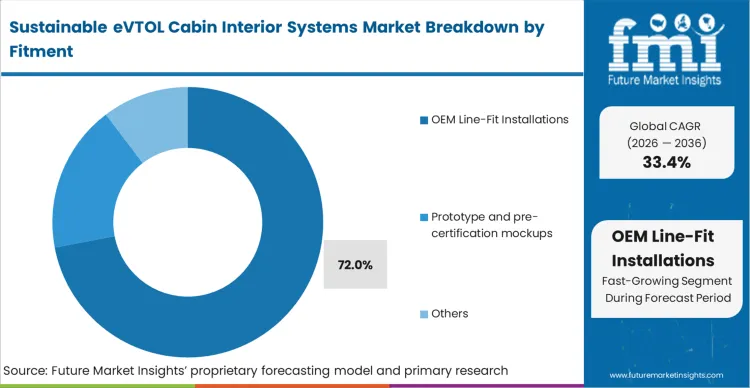
Initial fleet deployments require absolute standardization to streamline complex regulatory approvals. OEM line-fit installations account for 72.0% share as aerospace manufacturers lock down configuration variants early in the testing cycle. Certification officers approve a single, highly controlled interior specification, refusing ad-hoc customer modifications that would alter the aircraft's validated center of gravity. Establishing this rigid baseline allows assembly line directors to scale production predictably leveraging a mature urban air mobility certification supply chain. The practitioner paradox here is that while operators claim they want bespoke interiors, their actual purchasing behavior defaults to factory-standard layouts to avoid the agonizing delays associated with supplemental type certificates. Buyers insisting on customized aircraft exterior lighting or interior trims risk missing the lucrative early-commercialization window entirely.
- Center-Of-Gravity Lockdown: Regulators require precise weight distribution mapping before granting type certificates. Flight dynamics engineers reject late-stage seating changes that threaten established stability margins.
- Configuration Standardization Limits: Factory lines prioritize exact replication to achieve target production rates. Assembly directors penalize customized trim requests with prohibitive lead times and cost multipliers.
- Supplemental Certification Hurdles: Any post-factory interior modification demands separate regulatory scrutiny. Fleet operators avoid retrofitting early models to maintain uninterrupted commercial deployment schedules.
Sustainable eVTOL Cabin Interior Systems Market Analysis by Sustainability Value Proposition
Aerospace procurement teams evaluate interior materials using a ruthless cost-per-gram penalty matrix, prioritizing weight reduction above all secondary ESG credentials. Stripping weight from aircraft interior lighting and seating structures directly expands the operational radius, capturing lucrative suburban commuting zones. Battery energy density dictates every downstream architectural decision within the vertical lift sector. Lightweighting for range extension commands 39.0% share because mass translates directly to flight duration. The factor that outside sustainability consultants fail to grasp is that a heavier 100% bio-based panel will always lose procurement bids to a lighter, less sustainable carbon-fiber alternative, because range limitations constitute an existential threat to the business model. Startups missing their target weight budgets face severe operational restrictions that destroy their projected unit economics.
- Cost-Per-Gram Penalty Calculus: Engineers assign strict financial penalties to every excess ounce of cabin material. Sourcing directors reject aesthetically pleasing finishes if they breach highly restricted mass allowances.
- Operational Radius Expansion: Shaving kilos allows aircraft to serve distant suburban transport hubs. Route planners gain access to wealthier commuter demographics previously out of battery range.
- Trade-Off Realities: Genuine sustainability frequently conflicts with absolute minimum weight requirements. Material scientists struggle to match the extreme strength-to-weight ratios of traditional, non-recyclable aerospace composites.
Sustainable eVTOL Cabin Interior Systems Market Drivers, Restraints, and Opportunities
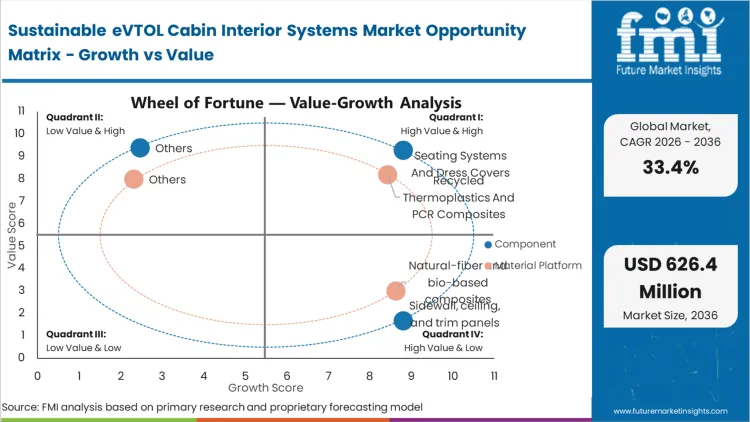
Severe battery energy density limitations compel airframe OEMs operating within the electric aircraft lightweight materials industry to mandate extreme lightweighting protocols across every interior subsystem. Stripping mass from the cabin remains the most immediate mechanical lever available to extend flight range without waiting for next-generation battery breakthroughs. Chief engineers cannot finalize type certification if the aircraft exceeds its maximum takeoff weight, making weight reduction an absolute operational necessity rather than a marketing preference. Operators failing to optimize cabin mass face drastically reduced operational radii, fundamentally undermining the commercial viability of air taxi business models.
Regulatory uncertainty regarding novel material flammability certification slows aggressive adoption even when OEMs want to integrate sustainable composites. Aviation authorities possess decades of burn-test data for traditional aerospace polymers, but lack equivalent baseline data for emerging natural-fiber resins. This data gap forces interior suppliers into agonizingly slow, custom qualification testing tracks that disrupt tight production schedules. Predictive modeling software offers partial relief, but physical burn tests remain the ultimate, unavoidable bottleneck for any new cabin material.
Opportunities in the Sustainable eVTOL Cabin Interior Systems Market
- Acoustic Meta-Material Integration: Cabin noise presents a severe barrier to urban acceptance. Noise-abatement engineers who integrate ultralight acoustic meta-materials directly into structural sidewalls capture premium supplier contracts.
- Modular Rapid-Swap Architecture: Commuter operations require airline-style turnaround efficiency. Tooling engineers gain market share by designing seating components that more electric aircraft technicians can replace without specialized equipment.
- Digital Material Passports: Operators face strict lifecycle tracking mandates for aviation components. Supply chain directors who embed digital traceability into sustainable textiles secure exclusive procurement agreements with compliance-focused operators.
Regional Analysis
.webp "Top Country Growth Comparison Sustainable Evtol Cabin Interior Systems Market Cagr (2026 2036)")
The global trajectory of the sustainable eVTOL cabin interior systems sector is heavily dictated by localized regulatory sandboxes, defense subsidies, and sovereign wealth mandates. Airframe developers across these varied geographies aggressively pursue localized supply chains to navigate distinct airspace integration policies and manufacturing scale-up timelines with the market being segmented into North America and Latin America, Europe, Middle East, and Asia Pacific across 40 plus countries.
| Country | CAGR (2026 to 2036) |
|---|---|
| United Arab Emirates | 35.6% |
| United States | 34.8% |
| United Kingdom | 32.1% |
| Germany | 31.4% |
| South Korea | 31.0% |
| France | 30.8% |
| Brazil | 29.7% |
Source: Future Market Insights (FMI) analysis, based on proprietary forecasting model and primary research
North America and Latin America Sustainable eVTOL Cabin Interior Systems Market Analysis
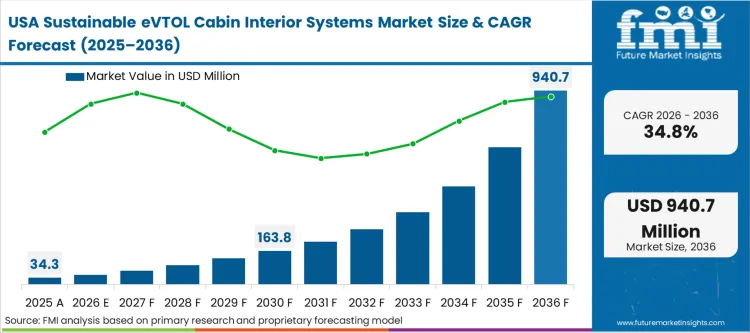
Sourcing directors across the Americas rely heavily on established aerospace networks to expedite novel material certifications, prioritizing speed-to-market over deep vertical integration due to venture-backed capitalization pressures. The intense concentration of urban air autonomous eVTOLs testing in specific domestic corridors drives component demand in the north, while legacy manufacturing infrastructure in the south provides a fertile baseline for rapid interior prototyping. FMI observes that material procurement teams leverage this combined regional expertise in commuter aircraft outfitting to rapidly refine vertical lift cabin geometries.
- United States: Expanding at a 34.8% CAGR, US manufacturers outpace global competitors by securing dual-use military and civilian flight hours. Military innovation contracts fund early-stage prototype interiors, providing a vital financial bridge for domestic suppliers before commercial demand fully materializes. Procurement managers actively utilize these defense budgets to validate extreme lightweighting concepts, an operational outcome that translates into a massively accelerated iteration cycle for cabin design.
- Brazil: Established regional jet manufacturers aggressively pivot their internal engineering divisions to capture the emerging vertical lift market. Brazilian procurement teams are growing at 29.7%, securing reliable domestic supply chains for structural seating elements. This specific trajectory positions localized manufacturers to export certified cabin modules globally as the broader sector matures.
FMI's report includes Canada, Mexico, and Argentina. Cross-border supply chain integration allows domestic interior manufacturers to tap into specialized northern composite tooling capabilities, while secondary southern manufacturing hubs provide crucial overflow capacity for specialized composite molding operations.
Europe Sustainable eVTOL Cabin Interior Systems Market Analysis
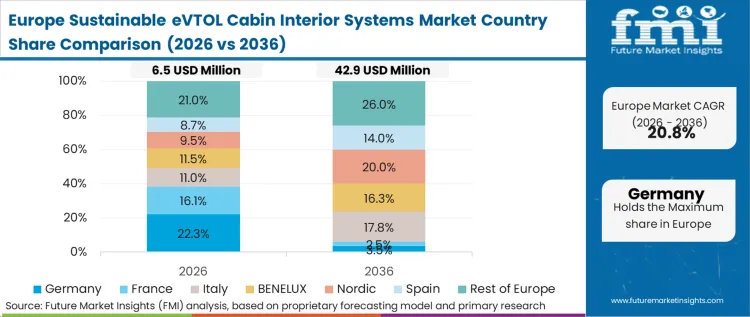
Cabin engineering teams across the continent cannot default to traditional thermoset carbon fibers, sparking a massive pivot toward bio-based resins and circular seating foams. This shift is primarily compelled by aggressive ESG mandates from the European Aviation Safety Agency, which require regional airframe designers to definitively prove end-of-life material recoverability before commercial flight approvals are granted. The legacy automotive interior further heavyweights localized within this region are actively transitioning their deep materials expertise toward the vertical mobility sector.
- United Kingdom: Civil aviation authorities have established highly structured regulatory sandboxes that allow interior suppliers to conduct live-environment testing on accelerated timelines. British operators leverage specialized urban air mobility flight test systems to rigorously refine cabin acoustics. Driving the UK market at a CAGR of 32.1%, by securing early approvals inside these test corridors provides a distinct competitive advantage for global export.
- Germany: Tracking at a 31.4% CAGR, German tooling directors completely bypass the slow artisan composite methods typical of legacy aviation. High-volume automotive interior suppliers are currently adapting thermoplastic extrusion lines to produce aerospace-grade cabin panels. Transitioning these high-speed manufacturing techniques fundamentally alters the unit economics necessary for scalable air taxi fleets.
- France: Intense domestic focus on premium aerospace finishes collides directly with strict zero-emission goals across the country. French interior architects operating at a 30.8% CAGR value continually push the absolute boundaries of circular luxury materials. This specific dynamic creates highly lucrative commercial opportunities for suppliers capable of matching traditional prestige aesthetics with recycled feedstocks.
FMI's report includes Italy and Spain. Southern European design houses increasingly dominate the aesthetic integration of low-weight seating structures.
Middle East Sustainable eVTOL Cabin Interior Systems Market Analysis
Fleet acquisition managers in this geography frequently bypass the prototype development phase entirely, opting instead to purchase fully integrated, certified platforms from foreign OEMs. This approach aligns with sovereign wealth directives that prioritize establishing functional urban air networks as powerful symbols of post-oil technological transition. According to FMI's estimates, extreme ambient temperatures uniquely force these operators to demand specialized thermal-resistant exterior coating systems for urban air mobility alongside highly efficient interior cooling enclosures.
- United Arab Emirates: State-backed mobility authorities aggressively subsidize the vertiport infrastructure required for high-frequency operations, mandating immediate commercial readiness. Leading regional CAGR at 35.6%, procurement heads demand cabin interiors strictly capable of surviving relentless, abrasive desert dust environments. Successfully addressing this localized environmental reality ultimately separates viable long-term OEM partnerships from temporary demonstration flights.
FMI's report includes Saudi Arabia and Qatar. Heavy investment in futuristic urban centers creates dedicated, captive markets for early vertical lift deployment.
Asia Pacific Sustainable eVTOL Cabin Interior Systems Market Analysis
Component sourcing managers ruthlessly exploit highly localized supply chains across the region to drive down the per-unit cost of modular seating. This strategy is enabled by an intense concentration of battery manufacturing, which grants regional airframe developers significantly tighter integration between powertrain constraints and strict interior weight budgets.
- South Korea: Registering a strong 31.0% CAGR, Korean production directors seamlessly integrate consumer electronics interfaces directly into lightweight cabin panels. Major automotive conglomerates are injecting massive capital into dedicated aerospace subsidiaries, demanding rapid cross-pollination of interior manufacturing techniques. Achieving this sophisticated integration elevates the passenger experience without adding unacceptable bulk to the underlying airframe.
FMI's report includes China, Japan, and India. Massive domestic commuter volume potential forces regional operators to demand ultra-high-density, rapid-turnaround cabin configurations.
Competitive Aligners for Market Players
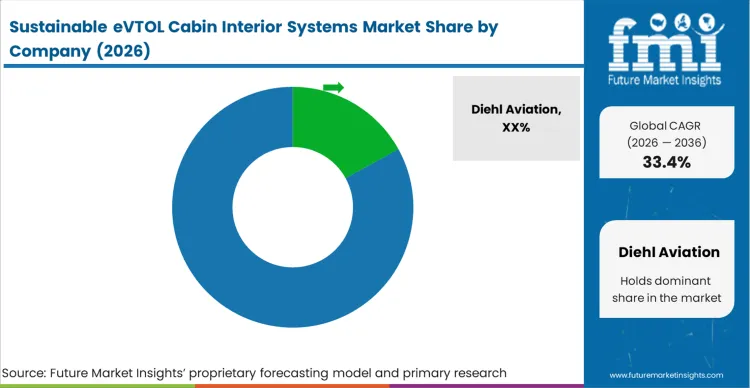
Legacy aerospace interior suppliers face a structural reckoning as the manufacturing cadence shifts from low-volume artisan assembly to automotive-style mass production. Companies like Diehl Aviation and Safran Seats cannot rely solely on historical commercial aviation relationships, because vertical mobility startups demand delivery speeds and unit costs that break traditional aviation pricing models. Competition centers on the supplier's ability to rapidly validate novel, ultra-lightweight materials through the certification bureaucracy, rather than simply offering the most luxurious finishes. Procurement directors evaluate eVTOL interior suppliers vs traditional aircraft interiors suppliers based explicitly on pre-existing dynamic testing libraries, recognizing that a vendor with pre-certified aircraft seat actuation systems saves the OEM millions in parallel testing costs.
Incumbents retain a massive, difficult-to-replicate advantage in their deep understanding of EASA and FAA flammability compliance documentation. Challengers like Gen Phoenix and Bcomp must build out extensive, highly specialized regulatory compliance teams to prove their circular materials meet exact aviation burn standards. While automotive suppliers attempt to enter the space using high-volume thermoplastic expertise, they frequently stumble over the rigorous traceability requirements mandated by aerospace authorities. The capability to map a component's structural history down to the specific resin batch constitutes the true barrier to entry, insulating experienced aviation vendors from lower-cost industrial competitors.
Airframe OEMs fiercely resist vendor lock-in by designing modular cabin attachment points that allow multiple eVTOL seating suppliers to bid on identical floor-track geometries. Fleet operators utilize this interchangeability to force price competition during the operational refresh cycles, swapping out degraded interiors without requiring OEM intervention. Startups aggressively push interior suppliers to assume the financial risk of initial certification testing, creating a tense negotiation dynamic where a low-carbon aircraft interior materials supplier demands guaranteed production volumes in exchange for underwriting the compliance data. This standoff over certification costs fundamentally shapes the speed at which sustainable materials reach the flight line.
Key Players in Sustainable eVTOL Cabin Interior Systems Market
- Diehl Aviation
- Expliseat
- Safran Seats
- RECARO Aircraft Seating
- Acro Aircraft Seating
- Bcomp
- Gen Phoenix
Scope of the Report
| Metric | Value |
|---|---|
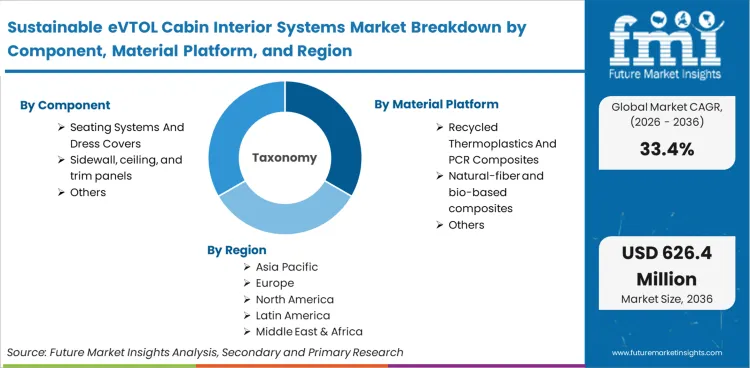
| Quantitative Units | USD 35.1 million to USD 628.7 million, at a CAGR of 33.4% |
| Market Definition | Sustainable eVTOL cabin interior systems encompass weight-optimized, passenger-facing outfitting components manufactured from recycled or bio-based feedstocks designed explicitly for vertical lift aircraft. |
| Segmentation | By Component, By Material Platform, By Propulsion-Cabin Use Case, By Fitment, By Sustainability Value Proposition, and Region |
| Regions Covered | North America, Europe, Middle East, Asia Pacific, Latin America |
| Countries Covered | United States, United Kingdom, Germany, France, United Arab Emirates, South Korea, Brazil |
| Key Companies Profiled | Diehl Aviation, Expliseat, Safran Seats, RECARO Aircraft Seating, Acro Aircraft Seating, Bcomp, Gen Phoenix |
| Forecast Period | 2026 to 2036 |
| Approach | OEM pre-order book volumes combined with average per-seat interior completion costs. |
Source: Future Market Insights (FMI) analysis, based on proprietary forecasting model and primary research
Segments:
Component
- Seating systems and dress covers
- Sidewall, ceiling, and trim panels
- Flooring and protective surface layers
- Cabin lighting and low-power HMI elements
- Stowage, partitions, and modular fittings
Material Platform
- Recycled thermoplastics and PCR composites
- Natural-fiber and bio-based composites
- Recycled leather and circular upholstery materials
- Lightweight aluminum and titanium structures
- Low-VOC foams, adhesives, and coatings
Propulsion-Cabin Use Case
- Passenger air taxi eVTOLs
- Premium urban shuttle eVTOLs
- Medical and emergency cabin variants
- Tourism and private mobility eVTOLs
- Cargo-passenger convertible platforms
Fitment
- OEM line-fit installations
- Prototype and pre-certification mockups
- Retrofit and cabin refresh programs
Sustainability Value Proposition
- Lightweighting for range extension
- Recyclability and circular content
- Bio-based material substitution
- Low-energy lighting and thermal efficiency
- End-of-life disassembly and recoverability
Regions:
- North America & Latin America
- United States
- Canada
- Mexico
- Brazil
- Argentina
- Chile
- Europe
- Germany
- United Kingdom
- France
- Italy
- Spain
- Asia-Pacific
- China
- Japan
- South Korea
- India
- ASEAN
- ANZ
- Middle East & Africa
- UAE
- Saudi Arabia
- Africa
Bibliography
- Acro Aircraft Seating. (2024, November 29). Acro and Aira: Series 9, leading the way.
- Archer Aviation Inc. (2025, April 28). 2025 Proxy Statement & 2024 Annual Report. U.S. Securities and Exchange Commission.
- Bcomp. (2026, March 6). Chapoget's Reimagined Cabin Trunk Meets Bcomp's Natural Fibre Composites.
- Diehl Aviation. (2024, July 22). Diehl Aviation Selected by Eve Air Mobility to Design and Produce eVTOL Interiors.
- Embraer S.A. / Eve Air Mobility. (2024, July 21). Eve Names Suppliers for eVTOL Interior and Power Distribution System.
- Federal Aviation Administration. (2024, June 10). FAA Statement on eVTOL Aircraft Certification.
- Hyundai Motor Group / Supernal. (2024, January 10). Supernal Debuts eVTOL Product Concept at CES 2024.
This bibliography is provided for reader reference. The full FMI report contains the complete reference list with primary source documentation.
This Report Addresses
- Includes what will drive eVTOL sustainable interiors demand through 2036 by detailing how payload restrictions compel engineers to mandate ultra-lightweight composite paneling.
- High-frequency commuter turnaround cycles dictating robust, rapid-release interior finishes.
- Investor mandates forcing startup procurement teams to prioritize traceable circular materials.
- Crash-test survivability shaping the absolute dominance of rigid 16G seating platforms.
- Moisture absorption constraints limiting the widespread integration of natural-fiber panels.
- Line-fit standardization enabling OEMs to achieve crucial initial production scaling rates.
- Acoustic frequency masking requiring specialized damping layers within taxi variants.
- Digital material passports securing compliance within stringent aviation traceability protocols.
Frequently Asked Questions
What materials are used in sustainable eVTOL cabins?
Procurement teams mandate recycled thermoplastics, natural-fiber panels, circular leather upholstery, and low-VOC foams to satisfy extreme takeoff weight limitations and stringent aviation compliance standards.
How big is the sustainable eVTOL cabin interior systems market?
The sector was valued at USD 26.3 million in 2025 and is poised to reach USD 628.7 million through 2036.
Explain the market for sustainable eVTOL cabin interior systems.
This market isolates passenger-facing outfitting components that minimize aircraft takeoff weight using circular or bio-based manufacturing streams.
Which companies are best positioned in sustainable eVTOL interiors?
Incumbents like Diehl Aviation and Safran Seats hold significant structural advantages due to their extensive FAA and EASA flammability testing libraries.
How sustainable are eVTOL cabin materials?
Genuine sustainability frequently conflicts with minimum weight requirements, as natural fibers often require heavier protective resins to pass strict aviation fire mandates.
Sustainable eVTOL seats vs conventional aircraft seats?
Unlike conventional seats that prioritize long-haul comfort, vertical lift seating focuses entirely on 16G crash survivability and rapid-release modularity for commuter routes.
Why are lightweight interiors important in eVTOL aircraft?
Because current battery energy density strictly limits operational duration, stripping kilos from structural paneling directly expands the aircraft's flight radius.
Who are the key players in eVTOL cabin interiors?
Leading suppliers executing line-fit installation contracts include Diehl Aviation, Expliseat, Safran Seats, RECARO Aircraft Seating, Acro Aircraft Seating, Bcomp, and Gen Phoenix.
Which regions are leading eVTOL interior adoption?
The United Arab Emirates accelerates deployment through sovereign wealth subsidies, while the United States advances via defense innovation unit contracts for dual-use prototype testing.
How does certification affect eVTOL interior system demand?
A lack of predictive regulatory models for emerging circular materials forces suppliers into custom physical burn-testing tracks, significantly delaying commercial delivery windows.
Compare sustainable eVTOL interior suppliers by capability.
Aerospace-native suppliers dominate certification compliance and dynamic sled testing, whereas automotive-native suppliers excel at high-speed thermoplastic extrusion but stumble over strict traceability mandates.
What limits early adoption of bio-based resins in eVTOL cabins?
Natural fiber composites struggle with high moisture absorption, requiring heavy secondary barrier sealants that cancel out their initial weight advantages.
Why do seating systems dominate the component segment?
Seating structures must pass rigid 16G dynamic sled testing, and selecting these highly engineered frames dictates all downstream material choices to prevent center-of-gravity recalculations.
How do thermoplastics accelerate startup production schedules?
Thermoplastic composites permit rapid thermoforming of complex cabin shapes without the extended oven-curing intervals required by traditional thermoset resins.
Why do passenger air taxi variants demand specialized floor panels?
High-frequency commuter turnover quickly degrades standard surfaces, forcing operators to reinvest saved weight into heavy-duty, easily replaceable floor inserts.
How does acoustic damping shape the interior weight budget?
Interior engineers must allocate specific mass allowances for specialized acoustic meta-materials to counter high-frequency rotor harmonics while balancing maximum takeoff weight limitations.
What prevents operators from customizing interiors post-delivery?
Regulators demand extensive supplemental testing for bespoke modifications to prevent voiding the aircraft's validated center of gravity, forcing operators to accept standardized factory fits.
Why do fleet operators demand rapid-swap cushion architecture?
Maintenance technicians must replace degraded dress covers in minutes to maintain the operational uptime required for urban commuter profitability.
How does cost-per-gram calculus influence material selection?
A heavier sustainable panel routinely loses sourcing bids to a lighter carbon-fiber alternative because excess mass directly limits battery range and threatens the startup's operational model.
What is the strategic value of digital material passports?
Embedding digital traceability directly into sustainable textiles allows sourcing directors to instantaneously prove compliance with strict aerospace lifecycle tracking mandates.
Why do European mandates force a pivot to circular foams?
EASA regulations increasingly tie commercial flight approvals to strict end-of-life recoverability metrics, creating urgent demand for localized interior suppliers capable of producing compliant bio-resins.
How do Middle Eastern thermal environments alter cabin design?
Extreme ambient heat forces procurement teams to demand specialized thermal-resistant coatings and highly efficient cooling enclosures that do not violate strict power constraints.
What is the risk of selecting non-certified material platforms?
Committing to untested composites forces interior suppliers onto a multi-year parallel testing track where failing initial flammability assessments threatens critical line-fit delivery windows.
Preview the report firsthand - request a free sample
Get SampleGet the brochure for pricing and purchase details.
Get PDFTable of Content
- Executive Summary
- Global Market Outlook
- Demand-side Trends
- Supply-side Trends
- Technology Roadmap Analysis
- Analysis and Recommendations
- Market Overview
- Market Coverage / Taxonomy
- Market Definition / Scope / Limitations
- Research Methodology
- Chapter Orientation
- Analytical Lens and Working Hypotheses
- Market Structure, Signals, and Trend Drivers
- Benchmarking and Cross-market Comparability
- Market Sizing, Forecasting, and Opportunity Mapping
- Research Design and Evidence Framework
- Desk Research Programme (Secondary Evidence)
- Company Annual and Sustainability Reports
- Peer-reviewed Journals and Academic Literature
- Corporate Websites, Product Literature, and Technical Notes
- Earnings Decks and Investor Briefings
- Statutory Filings and Regulatory Disclosures
- Technical White Papers and Standards Notes
- Trade Journals, Industry Magazines, and Analyst Briefs
- Conference Proceedings, Webinars, and Seminar Materials
- Government Statistics Portals and Public Data Releases
- Press Releases and Reputable Media Coverage
- Specialist Newsletters and Curated Briefings
- Sector Databases and Reference Repositories
- FMI Internal Proprietary Databases and Historical Market Datasets
- Subscription Datasets and Paid Sources
- Social Channels, Communities, and Digital Listening Inputs
- Additional Desk Sources
- Expert Input and Fieldwork (Primary Evidence)
- Primary Modes
- Qualitative Interviews and Expert Elicitation
- Quantitative Surveys and Structured Data Capture
- Blended Approach
- Why Primary Evidence is Used
- Field Techniques
- Interviews
- Surveys
- Focus Groups
- Observational and In-context Research
- Social and Community Interactions
- Stakeholder Universe Engaged
- C-suite Leaders
- Board Members
- Presidents and Vice Presidents
- R&D and Innovation Heads
- Technical Specialists
- Domain Subject-matter Experts
- Scientists
- Physicians and Other Healthcare Professionals
- Governance, Ethics, and Data Stewardship
- Research Ethics
- Data Integrity and Handling
- Primary Modes
- Tooling, Models, and Reference Databases
- Desk Research Programme (Secondary Evidence)
- Data Engineering and Model Build
- Data Acquisition and Ingestion
- Cleaning, Normalisation, and Verification
- Synthesis, Triangulation, and Analysis
- Quality Assurance and Audit Trail
- Market Background
- Market Dynamics
- Drivers
- Restraints
- Opportunity
- Trends
- Scenario Forecast
- Demand in Optimistic Scenario
- Demand in Likely Scenario
- Demand in Conservative Scenario
- Opportunity Map Analysis
- Product Life Cycle Analysis
- Supply Chain Analysis
- Investment Feasibility Matrix
- Value Chain Analysis
- PESTLE and Porter’s Analysis
- Regulatory Landscape
- Regional Parent Market Outlook
- Production and Consumption Statistics
- Import and Export Statistics
- Market Dynamics
- Global Market Analysis 2021 to 2025 and Forecast, 2026 to 2036
- Historical Market Size Value (USD Million) Analysis, 2021 to 2025
- Current and Future Market Size Value (USD Million) Projections, 2026 to 2036
- Y-o-Y Growth Trend Analysis
- Absolute $ Opportunity Analysis
- Global Market Pricing Analysis 2021 to 2025 and Forecast 2026 to 2036
- Global Market Analysis 2021 to 2025 and Forecast 2026 to 2036, By Component
- Introduction / Key Findings
- Historical Market Size Value (USD Million) Analysis By Component , 2021 to 2025
- Current and Future Market Size Value (USD Million) Analysis and Forecast By Component , 2026 to 2036
- Seating Systems And Dress Covers
- Sidewall, ceiling, and trim panels
- Others
- Seating Systems And Dress Covers
- Y-o-Y Growth Trend Analysis By Component , 2021 to 2025
- Absolute $ Opportunity Analysis By Component , 2026 to 2036
- Global Market Analysis 2021 to 2025 and Forecast 2026 to 2036, By Material Platform
- Introduction / Key Findings
- Historical Market Size Value (USD Million) Analysis By Material Platform, 2021 to 2025
- Current and Future Market Size Value (USD Million) Analysis and Forecast By Material Platform, 2026 to 2036
- Recycled Thermoplastics And PCR Composites
- Natural-fiber and bio-based composites
- Others
- Recycled Thermoplastics And PCR Composites
- Y-o-Y Growth Trend Analysis By Material Platform, 2021 to 2025
- Absolute $ Opportunity Analysis By Material Platform, 2026 to 2036
- Global Market Analysis 2021 to 2025 and Forecast 2026 to 2036, By Propulsion-Cabin Use Case
- Introduction / Key Findings
- Historical Market Size Value (USD Million) Analysis By Propulsion-Cabin Use Case, 2021 to 2025
- Current and Future Market Size Value (USD Million) Analysis and Forecast By Propulsion-Cabin Use Case, 2026 to 2036
- Passenger Air Taxi eVTOLs
- Premium urban shuttle eVTOLs
- Others
- Passenger Air Taxi eVTOLs
- Y-o-Y Growth Trend Analysis By Propulsion-Cabin Use Case, 2021 to 2025
- Absolute $ Opportunity Analysis By Propulsion-Cabin Use Case, 2026 to 2036
- Global Market Analysis 2021 to 2025 and Forecast 2026 to 2036, By Fitment
- Introduction / Key Findings
- Historical Market Size Value (USD Million) Analysis By Fitment, 2021 to 2025
- Current and Future Market Size Value (USD Million) Analysis and Forecast By Fitment, 2026 to 2036
- OEM Line-Fit Installations
- Prototype and pre-certification mockups
- Others
- OEM Line-Fit Installations
- Y-o-Y Growth Trend Analysis By Fitment, 2021 to 2025
- Absolute $ Opportunity Analysis By Fitment, 2026 to 2036
- Global Market Analysis 2021 to 2025 and Forecast 2026 to 2036, By Sustainability Value Proposition
- Introduction / Key Findings
- Historical Market Size Value (USD Million) Analysis By Sustainability Value Proposition, 2021 to 2025
- Current and Future Market Size Value (USD Million) Analysis and Forecast By Sustainability Value Proposition, 2026 to 2036
- Lightweighting For Range Extension
- Recyclability and circular content
- Others
- Lightweighting For Range Extension
- Y-o-Y Growth Trend Analysis By Sustainability Value Proposition, 2021 to 2025
- Absolute $ Opportunity Analysis By Sustainability Value Proposition, 2026 to 2036
- Global Market Analysis 2021 to 2025 and Forecast 2026 to 2036, By Region
- Introduction
- Historical Market Size Value (USD Million) Analysis By Region, 2021 to 2025
- Current Market Size Value (USD Million) Analysis and Forecast By Region, 2026 to 2036
- North America
- Latin America
- Western Europe
- Eastern Europe
- East Asia
- South Asia and Pacific
- Middle East & Africa
- Market Attractiveness Analysis By Region
- North America Market Analysis 2021 to 2025 and Forecast 2026 to 2036, By Country
- Historical Market Size Value (USD Million) Trend Analysis By Market Taxonomy, 2021 to 2025
- Market Size Value (USD Million) Forecast By Market Taxonomy, 2026 to 2036
- By Country
- USA
- Canada
- Mexico
- By Component
- By Material Platform
- By Propulsion-Cabin Use Case
- By Fitment
- By Sustainability Value Proposition
- By Country
- Market Attractiveness Analysis
- By Country
- By Component
- By Material Platform
- By Propulsion-Cabin Use Case
- By Fitment
- By Sustainability Value Proposition
- Key Takeaways
- Latin America Market Analysis 2021 to 2025 and Forecast 2026 to 2036, By Country
- Historical Market Size Value (USD Million) Trend Analysis By Market Taxonomy, 2021 to 2025
- Market Size Value (USD Million) Forecast By Market Taxonomy, 2026 to 2036
- By Country
- Brazil
- Chile
- Rest of Latin America
- By Component
- By Material Platform
- By Propulsion-Cabin Use Case
- By Fitment
- By Sustainability Value Proposition
- By Country
- Market Attractiveness Analysis
- By Country
- By Component
- By Material Platform
- By Propulsion-Cabin Use Case
- By Fitment
- By Sustainability Value Proposition
- Key Takeaways
- Western Europe Market Analysis 2021 to 2025 and Forecast 2026 to 2036, By Country
- Historical Market Size Value (USD Million) Trend Analysis By Market Taxonomy, 2021 to 2025
- Market Size Value (USD Million) Forecast By Market Taxonomy, 2026 to 2036
- By Country
- Germany
- UK
- Italy
- Spain
- France
- Nordic
- BENELUX
- Rest of Western Europe
- By Component
- By Material Platform
- By Propulsion-Cabin Use Case
- By Fitment
- By Sustainability Value Proposition
- By Country
- Market Attractiveness Analysis
- By Country
- By Component
- By Material Platform
- By Propulsion-Cabin Use Case
- By Fitment
- By Sustainability Value Proposition
- Key Takeaways
- Eastern Europe Market Analysis 2021 to 2025 and Forecast 2026 to 2036, By Country
- Historical Market Size Value (USD Million) Trend Analysis By Market Taxonomy, 2021 to 2025
- Market Size Value (USD Million) Forecast By Market Taxonomy, 2026 to 2036
- By Country
- Russia
- Poland
- Hungary
- Balkan & Baltic
- Rest of Eastern Europe
- By Component
- By Material Platform
- By Propulsion-Cabin Use Case
- By Fitment
- By Sustainability Value Proposition
- By Country
- Market Attractiveness Analysis
- By Country
- By Component
- By Material Platform
- By Propulsion-Cabin Use Case
- By Fitment
- By Sustainability Value Proposition
- Key Takeaways
- East Asia Market Analysis 2021 to 2025 and Forecast 2026 to 2036, By Country
- Historical Market Size Value (USD Million) Trend Analysis By Market Taxonomy, 2021 to 2025
- Market Size Value (USD Million) Forecast By Market Taxonomy, 2026 to 2036
- By Country
- China
- Japan
- South Korea
- By Component
- By Material Platform
- By Propulsion-Cabin Use Case
- By Fitment
- By Sustainability Value Proposition
- By Country
- Market Attractiveness Analysis
- By Country
- By Component
- By Material Platform
- By Propulsion-Cabin Use Case
- By Fitment
- By Sustainability Value Proposition
- Key Takeaways
- South Asia and Pacific Market Analysis 2021 to 2025 and Forecast 2026 to 2036, By Country
- Historical Market Size Value (USD Million) Trend Analysis By Market Taxonomy, 2021 to 2025
- Market Size Value (USD Million) Forecast By Market Taxonomy, 2026 to 2036
- By Country
- India
- ASEAN
- Australia & New Zealand
- Rest of South Asia and Pacific
- By Component
- By Material Platform
- By Propulsion-Cabin Use Case
- By Fitment
- By Sustainability Value Proposition
- By Country
- Market Attractiveness Analysis
- By Country
- By Component
- By Material Platform
- By Propulsion-Cabin Use Case
- By Fitment
- By Sustainability Value Proposition
- Key Takeaways
- Middle East & Africa Market Analysis 2021 to 2025 and Forecast 2026 to 2036, By Country
- Historical Market Size Value (USD Million) Trend Analysis By Market Taxonomy, 2021 to 2025
- Market Size Value (USD Million) Forecast By Market Taxonomy, 2026 to 2036
- By Country
- Kingdom of Saudi Arabia
- Other GCC Countries
- Turkiye
- South Africa
- Other African Union
- Rest of Middle East & Africa
- By Component
- By Material Platform
- By Propulsion-Cabin Use Case
- By Fitment
- By Sustainability Value Proposition
- By Country
- Market Attractiveness Analysis
- By Country
- By Component
- By Material Platform
- By Propulsion-Cabin Use Case
- By Fitment
- By Sustainability Value Proposition
- Key Takeaways
- Key Countries Market Analysis
- USA
- Pricing Analysis
- Market Share Analysis, 2025
- By Component
- By Material Platform
- By Propulsion-Cabin Use Case
- By Fitment
- By Sustainability Value Proposition
- Canada
- Pricing Analysis
- Market Share Analysis, 2025
- By Component
- By Material Platform
- By Propulsion-Cabin Use Case
- By Fitment
- By Sustainability Value Proposition
- Mexico
- Pricing Analysis
- Market Share Analysis, 2025
- By Component
- By Material Platform
- By Propulsion-Cabin Use Case
- By Fitment
- By Sustainability Value Proposition
- Brazil
- Pricing Analysis
- Market Share Analysis, 2025
- By Component
- By Material Platform
- By Propulsion-Cabin Use Case
- By Fitment
- By Sustainability Value Proposition
- Chile
- Pricing Analysis
- Market Share Analysis, 2025
- By Component
- By Material Platform
- By Propulsion-Cabin Use Case
- By Fitment
- By Sustainability Value Proposition
- Germany
- Pricing Analysis
- Market Share Analysis, 2025
- By Component
- By Material Platform
- By Propulsion-Cabin Use Case
- By Fitment
- By Sustainability Value Proposition
- UK
- Pricing Analysis
- Market Share Analysis, 2025
- By Component
- By Material Platform
- By Propulsion-Cabin Use Case
- By Fitment
- By Sustainability Value Proposition
- Italy
- Pricing Analysis
- Market Share Analysis, 2025
- By Component
- By Material Platform
- By Propulsion-Cabin Use Case
- By Fitment
- By Sustainability Value Proposition
- Spain
- Pricing Analysis
- Market Share Analysis, 2025
- By Component
- By Material Platform
- By Propulsion-Cabin Use Case
- By Fitment
- By Sustainability Value Proposition
- France
- Pricing Analysis
- Market Share Analysis, 2025
- By Component
- By Material Platform
- By Propulsion-Cabin Use Case
- By Fitment
- By Sustainability Value Proposition
- India
- Pricing Analysis
- Market Share Analysis, 2025
- By Component
- By Material Platform
- By Propulsion-Cabin Use Case
- By Fitment
- By Sustainability Value Proposition
- ASEAN
- Pricing Analysis
- Market Share Analysis, 2025
- By Component
- By Material Platform
- By Propulsion-Cabin Use Case
- By Fitment
- By Sustainability Value Proposition
- Australia & New Zealand
- Pricing Analysis
- Market Share Analysis, 2025
- By Component
- By Material Platform
- By Propulsion-Cabin Use Case
- By Fitment
- By Sustainability Value Proposition
- China
- Pricing Analysis
- Market Share Analysis, 2025
- By Component
- By Material Platform
- By Propulsion-Cabin Use Case
- By Fitment
- By Sustainability Value Proposition
- Japan
- Pricing Analysis
- Market Share Analysis, 2025
- By Component
- By Material Platform
- By Propulsion-Cabin Use Case
- By Fitment
- By Sustainability Value Proposition
- South Korea
- Pricing Analysis
- Market Share Analysis, 2025
- By Component
- By Material Platform
- By Propulsion-Cabin Use Case
- By Fitment
- By Sustainability Value Proposition
- Russia
- Pricing Analysis
- Market Share Analysis, 2025
- By Component
- By Material Platform
- By Propulsion-Cabin Use Case
- By Fitment
- By Sustainability Value Proposition
- Poland
- Pricing Analysis
- Market Share Analysis, 2025
- By Component
- By Material Platform
- By Propulsion-Cabin Use Case
- By Fitment
- By Sustainability Value Proposition
- Hungary
- Pricing Analysis
- Market Share Analysis, 2025
- By Component
- By Material Platform
- By Propulsion-Cabin Use Case
- By Fitment
- By Sustainability Value Proposition
- Kingdom of Saudi Arabia
- Pricing Analysis
- Market Share Analysis, 2025
- By Component
- By Material Platform
- By Propulsion-Cabin Use Case
- By Fitment
- By Sustainability Value Proposition
- Turkiye
- Pricing Analysis
- Market Share Analysis, 2025
- By Component
- By Material Platform
- By Propulsion-Cabin Use Case
- By Fitment
- By Sustainability Value Proposition
- South Africa
- Pricing Analysis
- Market Share Analysis, 2025
- By Component
- By Material Platform
- By Propulsion-Cabin Use Case
- By Fitment
- By Sustainability Value Proposition
- USA
- Market Structure Analysis
- Competition Dashboard
- Competition Benchmarking
- Market Share Analysis of Top Players
- By Regional
- By Component
- By Material Platform
- By Propulsion-Cabin Use Case
- By Fitment
- By Sustainability Value Proposition
- Competition Analysis
- Competition Deep Dive
- Diehl Aviation
- Overview
- Product Portfolio
- Profitability by Market Segments (Product/Age /Sales Channel/Region)
- Sales Footprint
- Strategy Overview
- Marketing Strategy
- Product Strategy
- Channel Strategy
- Expliseat
- Safran Seats
- RECARO Aircraft Seating
- Acro Aircraft Seating
- Bcomp
- Gen Phoenix
- Diehl Aviation
- Competition Deep Dive
- Assumptions & Acronyms Used


