

- Industry Size (2026):
- USD 143.2 Mn
- Forecast (2036):
- USD 440.5 Mn
- CAGR (2026 to 2036)
- 11.9%
Urban Air Autonomous eVTOLs Market Forecast and Outlook 2026 to 2036
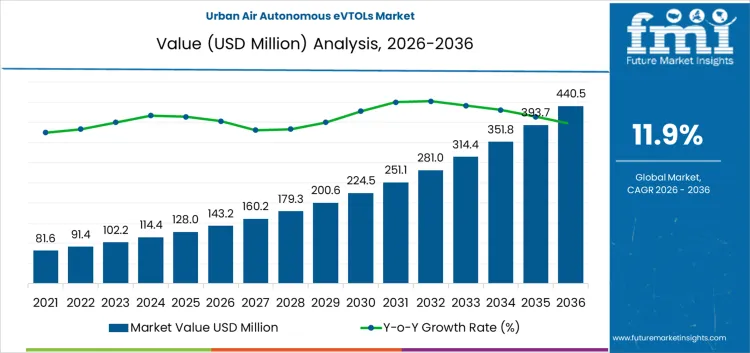
The urban air autonomous eVTOLs market is valued at USD 143.2 million in 2026 and is projected to reach USD 440.5 million by 2036, reflecting a CAGR of 11.9%. Market performance is influenced by high capital intensity, battery and propulsion technology, and compliance with urban airspace regulations. Cost structures vary according to aircraft design, autonomous navigation systems, and certification requirements. Pricing authority is concentrated among developers capable of delivering validated, operationally safe eVTOLs. Margin concentration favors companies that integrate development, testing, and urban air mobility program participation, capturing value from operational reliability rather than fleet size.
Market outcomes are shaped by alignment with urban air mobility initiatives, municipal approvals, and fleet deployment plans. Adoption varies regionally based on infrastructure readiness, regulatory frameworks, and commuter demand. Operators providing certified, multi-platform eVTOLs with proven autonomous functionality achieve higher margins. Emerging providers face constraints in certification, capital access, and operational integration. Concentrated value accrues to firms controlling production, testing, and program deployment, while unit output alone does not determine market positioning or financial performance.
Quick Stats of the Urban Air Autonomous eVTOLs Market
- Urban Air Autonomous eVTOLs Market Value (2026): USD 143.2 million
- Urban Air Autonomous eVTOLs Forecast Value (2036): USD 440.5 million
- Urban Air Autonomous eVTOLs Forecast CAGR 2026 to 2036: 11.9%
- Leading Use Case in Urban Air Autonomous eVTOLs Market: Cargo Logistics (34 % share)
- Leading Autonomy Segment in Urban Air Autonomous eVTOLs Market: Piloted (58 % share)
- Key Growth Regions in Urban Air Autonomous eVTOLs Market: USA, China, Japan, UAE
- Top Players in Urban Air Autonomous eVTOLs Market: Joby Aviation, EHang, Archer Aviation, Volocopter, Lilium, Auto Flight
What is the Growth Forecast for Urban Air Autonomous eVTOLs Market through 2036?
Between 2026 and 2031, the urban air autonomous eVTOLs market is projected to grow from USD 143.2 million to USD 224.5 million, generating an absolute increase of USD 81.3 million and reflecting a CAGR of 11.9%. Growth is driven by adoption in cargo logistics, emergency and medical services, public safety, and passenger shuttle applications. Piloted, pilot-assist, and semi-autonomous systems dominate, while short- to medium-range operations (<50 km to 150 km) are primary enablers. Expansion is supported by increasing urban air mobility initiatives, regulatory support, and demand for faster, flexible transport solutions.
From 2031 to 2036, the market is expected to expand from USD 224.5 million to USD 440.5 million, adding USD 216 million. Growth is fueled by broader adoption of semi- and fully autonomous eVTOLs, extended-range operations, and integration into urban mobility networks. Key drivers include rising demand for last-mile cargo solutions, emergency response, public safety, and government mobility programs. Competitive advantage favors companies with validated vehicle performance, safety certifications, and urban airspace integration capabilities. Leading companies include Joby Aviation, EHang, Archer Aviation, Volocopter, Lilium, and AutoFlight.
Urban Air Autonomous eVTOLs Market Key Takeaways
| Metric | Value |
|---|---|
| Market Value (2026) | USD 143.2 million |
| Forecast Value (2036) | USD 440.5 million |
| Forecast CAGR 2026 to 2036 | 11.9% |
What Is Driving Demand for Urban Air Autonomous eVTOLs?
Urban air autonomous eVTOLs are increasingly adopted to provide on-demand aerial mobility, reduce urban congestion, and support rapid passenger and cargo transport. Historically, urban transport relied on ground-based vehicles, which face traffic constraints and limited speed. Modern eVTOLs incorporate electric propulsion, autonomous flight systems, and advanced avionics to enable vertical takeoff and landing, low-noise operation, and energy-efficient urban transit. Mobility service providers, aerospace manufacturers, and city planners prioritize safety, reliability, and compliance with airspace regulations. Early adoption focused on pilot projects, demonstration flights, and controlled air corridors, while current demand spans commercial passenger transport, cargo delivery, and emergency response applications, driven by urbanization, sustainability goals, and smart city initiatives. Vehicle autonomy, battery endurance, and payload capacity influence operator adoption.
Increasing urban density, demand for rapid mobility solutions, and regulatory frameworks for urban air traffic are shaping market growth. Compared with traditional rotorcraft, autonomous eVTOLs emphasize electric propulsion, autonomous navigation, and low operational costs. Cost structures depend on battery technology, avionics, and vehicle certification, concentrating margins among suppliers delivering reliable, scalable systems. Operators adopt autonomous eVTOLs to reduce travel time, improve airspace utilization, and provide environmentally compatible urban transport. By 2036, urban air autonomous eVTOLs are expected to become an integral component of urban mobility networks, supporting efficient, safe, and rapid transportation across cities worldwide.
What Factors Are Shaping the Demand for Urban Air Autonomous eVTOLs in Terms of Use Case and Autonomy?
The demand for urban air autonomous eVTOLs is segmented by use case and autonomy level. Use cases include cargo logistics, emergency medical response, public safety, passenger transport, and government mobility programs. Autonomy levels include piloted, pilot-assist, and semi-autonomous systems. Adoption is influenced by urban airspace integration, regulatory compliance, and operational reliability. Uptake is driven by congestion mitigation, rapid transport requirements, and cost efficiency. Use case and autonomy selection depend on payload, flight distance, and mission complexity, ensuring safe, scalable, and reliable urban air mobility across commercial, governmental, and emergency operations.
Why Is Cargo Logistics Leading the Use Case Segment in Urban Air eVTOLs?
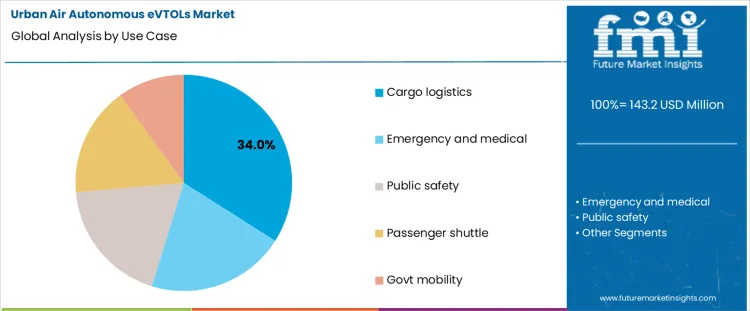
Cargo logistics accounts for 34% of total use case demand, making it the leading category. eVTOLs in cargo applications provide rapid point-to-point delivery of parcels, medical supplies, and high-value goods within dense urban areas. Adoption is driven by e-commerce growth, operational efficiency needs, and last-mile delivery challenges. Vehicles include secure cargo compartments, autonomous navigation, and real-time obstacle detection systems. Operational planning covers battery management, route scheduling, and integration with ground logistics networks to ensure timely deliveries. Reliability, scalability, and predictable operational performance reinforce adoption.
Operational factors further support adoption. eVTOLs must maintain stable flight under variable weather, navigate restricted urban corridors, and preserve communication links with control centers. Coordination with logistics software ensures real-time tracking and route optimization. Cargo logistics leads because it demonstrates measurable improvements in delivery speed, operational efficiency, and scalability for urban air mobility solutions, supporting economic and environmental objectives.
Why Is Piloted Autonomy Representing the Largest Autonomy Segment in Urban Air eVTOLs?
Piloted autonomy accounts for 58% of total autonomy demand, making it the largest category. Adoption is driven by regulatory requirements, human oversight for safety, and operational reliability. Piloted eVTOLs allow operators to manage complex routes, respond to unexpected obstacles, and maintain compliance with airspace rules. Vehicles integrate navigation support, flight assistance, real-time telemetry, and safety redundancies while retaining operator control. Operational protocols include pre-flight system diagnostics, continuous monitoring, and airspace coordination to ensure safe execution. Maintenance includes battery checks, sensor calibration, and system verification.
Operational factors further reinforce adoption. Drones must respond accurately to operator inputs, adapt to dynamic urban environments, and maintain secure communication links. Piloted autonomy leads because it balances automation with human decision-making, providing operational reliability, risk mitigation, and consistent performance. It supports passenger transport, cargo delivery, emergency response, and public safety missions, ensuring safe, efficient, and scalable urban air mobility operations.
How Are Autonomous eVTOLs Transforming Urban Air Mobility?
Urban air autonomous eVTOLs are increasingly adopted for passenger transport, air taxis, and cargo delivery to reduce ground congestion and enhance urban mobility. Adoption is strongest in regions with high population density, advanced airspace management, and supportive regulatory frameworks. Vehicles are selected for autonomous navigation, battery efficiency, and vertical takeoff and landing reliability. Growth is driven by urban traffic challenges, environmental emission reduction targets, and demand for rapid point-to-point transit. Investment focuses on battery technology, autonomous control systems, and air traffic integration. Operators prioritize eVTOLs that ensure safety, operational reliability, and compliance with regional aviation regulations.
Why Are Regional Urban Mobility Policies and Airspace Regulations Driving Adoption?
Demand is influenced by city planning initiatives, smart mobility programs, and air traffic management regulations. Operators adopt autonomous eVTOLs to provide efficient, low-emission transport and meet urban mobility goals. Platforms with robust collision avoidance, energy efficiency, and high payload capacity gain preference. Adoption is concentrated in metropolitan regions with traffic congestion challenges and regulatory support for eVTOL testing. Safety compliance, operational reliability, and urban integration drive procurement decisions rather than cost. Providers offering validated, autonomous-ready vehicles gain competitive advantage among urban transport operators and logistics providers.
What Operational Challenges Restrict Broader Deployment of Autonomous eVTOLs?
High development and production costs, battery limitations, and autonomous control complexity limit adoption. Vehicle performance can be affected by weather conditions, urban infrastructure constraints, and regulatory clearance processes. Certification and airspace approval timelines may delay deployment. Smaller operators or regions with limited air traffic management infrastructure adopt eVTOLs more slowly. These factors concentrate early deployment among well-funded urban mobility companies, advanced city programs, and regions with mature aviation regulatory frameworks.
How Are Technological Advances and Strategic Partnerships Shaping Market Growth?
Recent developments include AI-driven navigation systems, high-energy-density batteries, and lightweight composite airframes for efficiency and safety. Collaboration between manufacturers, city authorities, and airspace regulators ensures autonomous system validation, safety compliance, and integration with urban air traffic networks. Pilot programs evaluate flight reliability, collision avoidance, and energy efficiency before large-scale operation. Quality monitoring, standardization, and certification processes maintain consistency. Focus is on operational safety, reliability, and urban mobility integration rather than cost or scale. Strategic partnerships enable broader adoption of autonomous eVTOLs in regional and global urban transport networks.
What is the Demand for Urban Air Autonomous eVTOLs by Country?
| Country | CAGR (%) |
|---|---|
| USA | 11.5 |
| China | 11.0 |
| Japan | 10.5 |
| UAE | 10.0 |
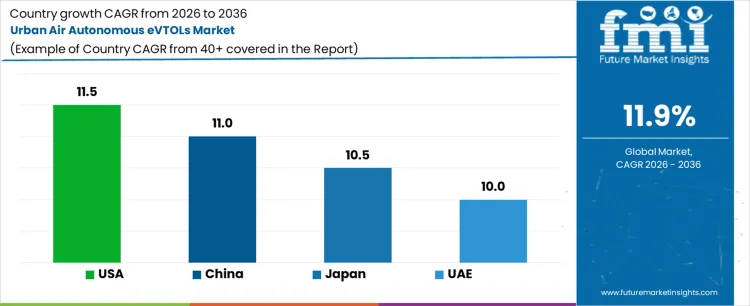
Demand for urban air autonomous eVTOLs is rising as cities and transportation authorities explore air mobility solutions to reduce congestion, improve urban connectivity, and enhance last-mile transport. The USA leads with an 11.5% CAGR, driven by strong investment in urban air mobility infrastructure, technological innovation, and early adoption programs. China follows at 11.0%, supported by government-backed smart city initiatives, large-scale pilot projects, and urban transport modernization. Japan records 10.5% growth, shaped by urban mobility planning, technology integration, and safety regulatory frameworks. The UAE shows 10.0% CAGR, reflecting proactive adoption of futuristic air transport solutions, infrastructure development, and integration into smart city initiatives.
How Is the United States Experiencing Growth in the Urban Air Autonomous eVTOLs Market?
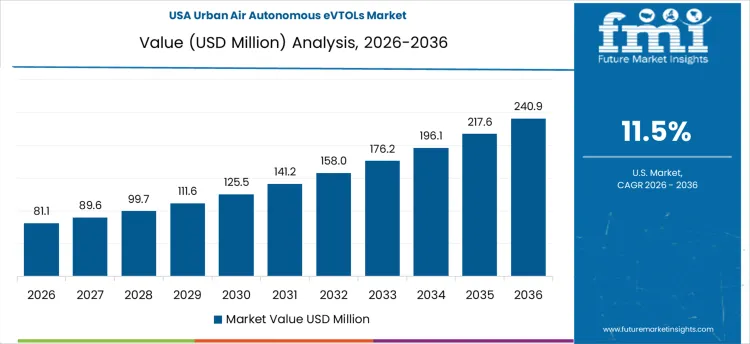
United States is experiencing growth at a CAGR of 11.5%, supported by adoption of autonomous eVTOLs for urban air mobility, last-mile transport, and commercial passenger services. Aerospace manufacturers and mobility service providers are deploying vehicles optimized for battery efficiency, autonomous navigation, and passenger safety. Demand is concentrated in urban air mobility hubs, technology clusters, and R&D centers. Investments focus on material performance, flight control systems, and regulatory compliance rather than mass fleet deployment. Growth reflects government support for urban air mobility, industrial adoption of autonomous aerial vehicles, and increasing interest from private operators in electric vertical take-off and landing technologies.
- Urban air mobility drives adoption.
- eVTOLs optimize battery efficiency and autonomous navigation.
- Urban hubs and R&D centers concentrate demand.
- Material performance and regulatory compliance guide investment.
How Is China Witnessing Rapid Growth with Smart City Initiatives?
China is witnessing growth at a CAGR of 11%, fueled by adoption of autonomous eVTOLs in urban air transport, passenger mobility, and logistics applications. Manufacturers and service providers are deploying vehicles optimized for safety, battery efficiency, and autonomous operations. Demand is concentrated in major metropolitan areas, technology clusters, and aerospace R&D hubs. Investments prioritize material performance, autonomous flight reliability, and regulatory compliance rather than large-scale deployment. Growth reflects government initiatives promoting urban air mobility, rising urbanization, and industrial adoption of electric vertical take-off and landing solutions for smart city integration.
- Smart city initiatives drive adoption.
- eVTOLs ensure safe, autonomous urban mobility.
- Metropolitan areas and R&D hubs concentrate demand.
- Material performance and flight reliability guide investment.
How Is Japan Experiencing Growth with Autonomous Aerial Transport?
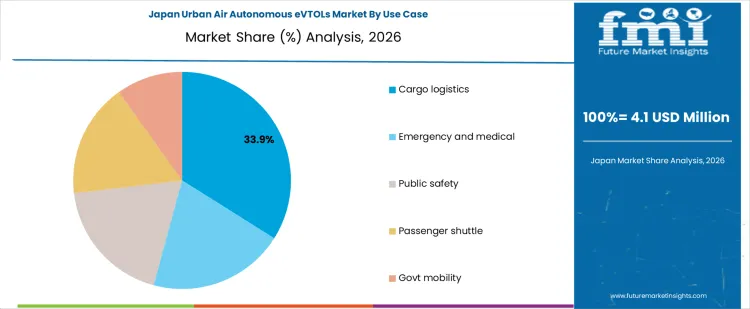
Japan is experiencing growth at a CAGR of 10.5%, supported by adoption of autonomous eVTOLs for urban air mobility, emergency transport, and passenger services. Aerospace manufacturers and mobility service providers are producing vehicles optimized for flight efficiency, autonomous navigation, and safety compliance. Demand is concentrated in urban air mobility corridors, technology clusters, and R&D centers. Investments focus on material quality, battery efficiency, and flight control system performance rather than large-scale fleet deployment. Growth reflects government support for autonomous aerial transport, industrial adoption of eVTOL technology, and urban planning initiatives integrating electric vertical take-off and landing vehicles.
- Autonomous aerial transport drives adoption.
- eVTOLs optimize flight efficiency and safety.
- Urban mobility corridors and R&D centers concentrate demand.
- Material quality and battery efficiency guide investment.
How Is UAE Witnessing Expansion with Urban Air Mobility Projects?
UAE is witnessing growth at a CAGR of 10%, fueled by adoption of autonomous eVTOLs for passenger transport, urban mobility services, and smart city applications. Aerospace manufacturers and service providers are deploying vehicles optimized for autonomous navigation, battery efficiency, and safety standards. Demand is concentrated in metropolitan urban air corridors, technology clusters, and R&D hubs. Investments prioritize material performance, flight system reliability, and regulatory compliance rather than fleet-scale expansion. Growth reflects government initiatives supporting urban air mobility, increasing investment in autonomous aerial vehicles, and industrial adoption of eVTOL solutions for commercial and public transport.
- Urban air mobility projects drive adoption.
- eVTOLs ensure autonomous navigation and energy efficiency.
- Metropolitan air corridors and R&D hubs concentrate demand.
- Material performance and flight system reliability guide investment.
Who Competes in the Urban Air Autonomous eVTOLs Market and What Defines Their Capabilities?
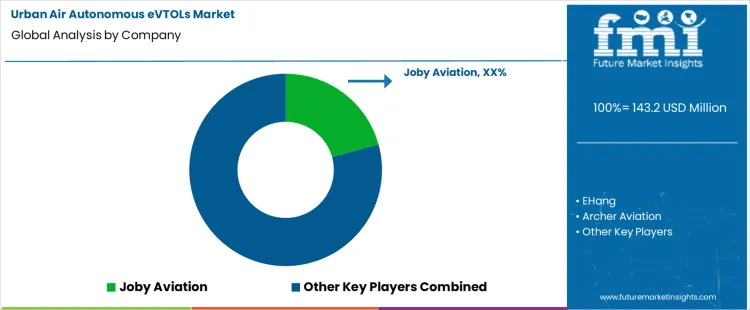
Competition in the urban air autonomous eVTOLs market is defined by vertical takeoff and landing capability, autonomous flight systems, and passenger or cargo payload integration. Joby Aviation develops eVTOL aircraft with electric propulsion, autonomous navigation, and designs targeting urban air mobility operations. EHang provides autonomous aerial vehicles optimized for passenger transport with onboard sensors for navigation and safety in dense urban airspace. Archer Aviation focuses on electrically powered vertical-lift aircraft designed for short-distance urban flights and integration with city air traffic management. Volocopter supplies multirotor eVTOLs engineered for autonomous passenger transport and low-noise operation. Lilium develops distributed-electric propulsion aircraft optimized for regional urban air mobility.
AutoFlight produces autonomous eVTOLs with modular cabin configurations and flight control systems for urban air transport. Other competitors include emerging startups and regional aerospace firms developing eVTOL platforms for cargo delivery or passenger transit in controlled urban airspace. Differentiation arises from propulsion system efficiency, flight autonomy, payload capacity, battery performance, and compliance with urban air traffic and safety regulations. Companies with tested autonomous control, verified urban operational capability, and integration with city air mobility infrastructure are positioned as relevant participants in the urban eVTOL segment.
Key Players in the Urban Air Autonomous eVTOLs Market
- Joby Aviation
- EHang
- Archer Aviation
- Volocopter
- Lilium
- AutoFlight
Scope of the Report
| Items | Values |
|---|---|
| Quantitative Units (2026) | USD million |
| Use Case | Cargo Logistics, Emergency and Medical, Public Safety, Passenger Shuttle, Government Mobility Programs |
| Autonomy | Piloted, Pilot-Assist, Semi-Autonomous |
| Range | <50 km, 50-100 km, 100-150 km |
| Region | Asia Pacific, Europe, North America, Latin America, Middle East & Africa |
| Key Countries Covered | USA, China, Japan, UAE, UK, Australia, India, Germany, South Korea, Other |
| Key Companies Profiled | Joby Aviation, EHang, Archer Aviation, Volocopter, Lilium, AutoFlight |
| Additional Attributes | Dollar sales by use case, autonomy, and range; regional CAGR, value and volume growth projections; adoption across cargo, passenger, emergency, and government applications; integration with urban air mobility infrastructure; compliance with urban airspace regulations; battery and propulsion performance; operational reliability; autonomous flight system validation; modular payload and passenger transport capabilities. |
Urban Air Autonomous eVTOLs Market Segmentation
Use Case:
- Cargo logistics
- Emergency and medical
- Public safety
- Passenger shuttle
- Govt mobility
Autonomy:
- Piloted
- Pilot-assist
- Semi-autonomous
Range:
- <50 km
- 50-100 km
- 100-150 km
Region
- Asia Pacific
- China
- Japan
- South Korea
- India
- Australia & New Zealand
- ASEAN
- Rest of Asia Pacific
- Europe
- Germany
- United Kingdom
- France
- Italy
- Spain
- Nordic
- BENELUX
- Rest of Europe
- North America
- United States
- Canada
- Mexico
- Latin America
- Brazil
- Chile
- Rest of Latin America
- Middle East & Africa
- Kingdom of Saudi Arabia
- Other GCC Countries
- Turkey
- South Africa
- Other African Union
- Rest of Middle East & Africa
Bibliography
- Federal Aviation Administration. (2024). Advanced air mobility and electric vertical takeoff and landing aircraft. USA Department of Transportation.
- European Union Aviation Safety Agency. (2023). Innovative air mobility and VTOL aircraft. EASA.
- International Civil Aviation Organization. (2024). Advanced air mobility and urban air operations. ICAO.
- Organisation for Economic Co-operation and Development. (2024). Urban air mobility and future transport systems. OECD.
- National Aeronautics and Space Administration. (2023). Advanced air mobility research and airspace integration. NASA.
Frequently Asked Questions
How big is the urban air autonomous evtols market in 2026?
The global urban air autonomous evtols market is estimated to be valued at USD 143.2 million in 2026.
What will be the size of urban air autonomous evtols market in 2036?
The market size for the urban air autonomous evtols market is projected to reach USD 440.5 million by 2036.
How much will be the urban air autonomous evtols market growth between 2026 and 2036?
The urban air autonomous evtols market is expected to grow at a 11.9% CAGR between 2026 and 2036.
What are the key product types in the urban air autonomous evtols market?
The key product types in urban air autonomous evtols market are cargo logistics, emergency and medical, public safety, passenger shuttle and govt mobility.
Which autonomy segment to contribute significant share in the urban air autonomous evtols market in 2026?
In terms of autonomy, piloted segment to command 58.0% share in the urban air autonomous evtols market in 2026.
Preview the report firsthand - request a free sample
Get SampleGet the brochure for pricing and purchase details.
Get PDFTable of Content
- Executive Summary
- Global Market Outlook
- Demand-side Trends
- Supply-side Trends
- Technology Roadmap Analysis
- Analysis and Recommendations
- Market Overview
- Market Coverage / Taxonomy
- Market Definition / Scope / Limitations
- Market Background
- Market Dynamics
- Drivers
- Restraints
- Opportunity
- Trends
- Scenario Forecast
- Demand in Optimistic Scenario
- Demand in Likely Scenario
- Demand in Conservative Scenario
- Opportunity Map Analysis
- Product Life Cycle Analysis
- Supply Chain Analysis
- Investment Feasibility Matrix
- Value Chain Analysis
- PESTLE and Porter’s Analysis
- Regulatory Landscape
- Regional Parent Market Outlook
- Production and Consumption Statistics
- Import and Export Statistics
- Market Dynamics
- Global Market Analysis 2021 to 2025 and Forecast, 2026 to 2036
- Historical Market Size Value (USD Million) Analysis, 2021 to 2025
- Current and Future Market Size Value (USD Million) Projections, 2026 to 2036
- Y-o-Y Growth Trend Analysis
- Absolute $ Opportunity Analysis
- Global Market Pricing Analysis 2021 to 2025 and Forecast 2026 to 2036
- Global Market Analysis 2021 to 2025 and Forecast 2026 to 2036, By Use Case
- Introduction / Key Findings
- Historical Market Size Value (USD Million) Analysis By Use Case , 2021 to 2025
- Current and Future Market Size Value (USD Million) Analysis and Forecast By Use Case , 2026 to 2036
- Cargo logistics
- Emergency and medical
- Public safety
- Passenger shuttle
- Govt mobility
- Cargo logistics
- Y-o-Y Growth Trend Analysis By Use Case , 2021 to 2025
- Absolute $ Opportunity Analysis By Use Case , 2026 to 2036
- Global Market Analysis 2021 to 2025 and Forecast 2026 to 2036, By Autonomy
- Introduction / Key Findings
- Historical Market Size Value (USD Million) Analysis By Autonomy, 2021 to 2025
- Current and Future Market Size Value (USD Million) Analysis and Forecast By Autonomy, 2026 to 2036
- Piloted
- Pilot-assist
- Semi-autonomous
- Piloted
- Y-o-Y Growth Trend Analysis By Autonomy, 2021 to 2025
- Absolute $ Opportunity Analysis By Autonomy, 2026 to 2036
- Global Market Analysis 2021 to 2025 and Forecast 2026 to 2036, By Range
- Introduction / Key Findings
- Historical Market Size Value (USD Million) Analysis By Range, 2021 to 2025
- Current and Future Market Size Value (USD Million) Analysis and Forecast By Range, 2026 to 2036
- <50 km
- 50–100 km
- 100–150 km
- <50 km
- Y-o-Y Growth Trend Analysis By Range, 2021 to 2025
- Absolute $ Opportunity Analysis By Range, 2026 to 2036
- Global Market Analysis 2021 to 2025 and Forecast 2026 to 2036, By Region
- Introduction
- Historical Market Size Value (USD Million) Analysis By Region, 2021 to 2025
- Current Market Size Value (USD Million) Analysis and Forecast By Region, 2026 to 2036
- North America
- Latin America
- Western Europe
- Eastern Europe
- East Asia
- South Asia and Pacific
- Middle East & Africa
- Market Attractiveness Analysis By Region
- North America Market Analysis 2021 to 2025 and Forecast 2026 to 2036, By Country
- Historical Market Size Value (USD Million) Trend Analysis By Market Taxonomy, 2021 to 2025
- Market Size Value (USD Million) Forecast By Market Taxonomy, 2026 to 2036
- By Country
- USA
- Canada
- Mexico
- By Use Case
- By Autonomy
- By Range
- By Country
- Market Attractiveness Analysis
- By Country
- By Use Case
- By Autonomy
- By Range
- Key Takeaways
- Latin America Market Analysis 2021 to 2025 and Forecast 2026 to 2036, By Country
- Historical Market Size Value (USD Million) Trend Analysis By Market Taxonomy, 2021 to 2025
- Market Size Value (USD Million) Forecast By Market Taxonomy, 2026 to 2036
- By Country
- Brazil
- Chile
- Rest of Latin America
- By Use Case
- By Autonomy
- By Range
- By Country
- Market Attractiveness Analysis
- By Country
- By Use Case
- By Autonomy
- By Range
- Key Takeaways
- Western Europe Market Analysis 2021 to 2025 and Forecast 2026 to 2036, By Country
- Historical Market Size Value (USD Million) Trend Analysis By Market Taxonomy, 2021 to 2025
- Market Size Value (USD Million) Forecast By Market Taxonomy, 2026 to 2036
- By Country
- Germany
- UK
- Italy
- Spain
- France
- Nordic
- BENELUX
- Rest of Western Europe
- By Use Case
- By Autonomy
- By Range
- By Country
- Market Attractiveness Analysis
- By Country
- By Use Case
- By Autonomy
- By Range
- Key Takeaways
- Eastern Europe Market Analysis 2021 to 2025 and Forecast 2026 to 2036, By Country
- Historical Market Size Value (USD Million) Trend Analysis By Market Taxonomy, 2021 to 2025
- Market Size Value (USD Million) Forecast By Market Taxonomy, 2026 to 2036
- By Country
- Russia
- Poland
- Hungary
- Balkan & Baltic
- Rest of Eastern Europe
- By Use Case
- By Autonomy
- By Range
- By Country
- Market Attractiveness Analysis
- By Country
- By Use Case
- By Autonomy
- By Range
- Key Takeaways
- East Asia Market Analysis 2021 to 2025 and Forecast 2026 to 2036, By Country
- Historical Market Size Value (USD Million) Trend Analysis By Market Taxonomy, 2021 to 2025
- Market Size Value (USD Million) Forecast By Market Taxonomy, 2026 to 2036
- By Country
- China
- Japan
- South Korea
- By Use Case
- By Autonomy
- By Range
- By Country
- Market Attractiveness Analysis
- By Country
- By Use Case
- By Autonomy
- By Range
- Key Takeaways
- South Asia and Pacific Market Analysis 2021 to 2025 and Forecast 2026 to 2036, By Country
- Historical Market Size Value (USD Million) Trend Analysis By Market Taxonomy, 2021 to 2025
- Market Size Value (USD Million) Forecast By Market Taxonomy, 2026 to 2036
- By Country
- India
- ASEAN
- Australia & New Zealand
- Rest of South Asia and Pacific
- By Use Case
- By Autonomy
- By Range
- By Country
- Market Attractiveness Analysis
- By Country
- By Use Case
- By Autonomy
- By Range
- Key Takeaways
- Middle East & Africa Market Analysis 2021 to 2025 and Forecast 2026 to 2036, By Country
- Historical Market Size Value (USD Million) Trend Analysis By Market Taxonomy, 2021 to 2025
- Market Size Value (USD Million) Forecast By Market Taxonomy, 2026 to 2036
- By Country
- Kingdom of Saudi Arabia
- Other GCC Countries
- Turkiye
- South Africa
- Other African Union
- Rest of Middle East & Africa
- By Use Case
- By Autonomy
- By Range
- By Country
- Market Attractiveness Analysis
- By Country
- By Use Case
- By Autonomy
- By Range
- Key Takeaways
- Key Countries Market Analysis
- USA
- Pricing Analysis
- Market Share Analysis, 2025
- By Use Case
- By Autonomy
- By Range
- Canada
- Pricing Analysis
- Market Share Analysis, 2025
- By Use Case
- By Autonomy
- By Range
- Mexico
- Pricing Analysis
- Market Share Analysis, 2025
- By Use Case
- By Autonomy
- By Range
- Brazil
- Pricing Analysis
- Market Share Analysis, 2025
- By Use Case
- By Autonomy
- By Range
- Chile
- Pricing Analysis
- Market Share Analysis, 2025
- By Use Case
- By Autonomy
- By Range
- Germany
- Pricing Analysis
- Market Share Analysis, 2025
- By Use Case
- By Autonomy
- By Range
- UK
- Pricing Analysis
- Market Share Analysis, 2025
- By Use Case
- By Autonomy
- By Range
- Italy
- Pricing Analysis
- Market Share Analysis, 2025
- By Use Case
- By Autonomy
- By Range
- Spain
- Pricing Analysis
- Market Share Analysis, 2025
- By Use Case
- By Autonomy
- By Range
- France
- Pricing Analysis
- Market Share Analysis, 2025
- By Use Case
- By Autonomy
- By Range
- India
- Pricing Analysis
- Market Share Analysis, 2025
- By Use Case
- By Autonomy
- By Range
- ASEAN
- Pricing Analysis
- Market Share Analysis, 2025
- By Use Case
- By Autonomy
- By Range
- Australia & New Zealand
- Pricing Analysis
- Market Share Analysis, 2025
- By Use Case
- By Autonomy
- By Range
- China
- Pricing Analysis
- Market Share Analysis, 2025
- By Use Case
- By Autonomy
- By Range
- Japan
- Pricing Analysis
- Market Share Analysis, 2025
- By Use Case
- By Autonomy
- By Range
- South Korea
- Pricing Analysis
- Market Share Analysis, 2025
- By Use Case
- By Autonomy
- By Range
- Russia
- Pricing Analysis
- Market Share Analysis, 2025
- By Use Case
- By Autonomy
- By Range
- Poland
- Pricing Analysis
- Market Share Analysis, 2025
- By Use Case
- By Autonomy
- By Range
- Hungary
- Pricing Analysis
- Market Share Analysis, 2025
- By Use Case
- By Autonomy
- By Range
- Kingdom of Saudi Arabia
- Pricing Analysis
- Market Share Analysis, 2025
- By Use Case
- By Autonomy
- By Range
- Turkiye
- Pricing Analysis
- Market Share Analysis, 2025
- By Use Case
- By Autonomy
- By Range
- South Africa
- Pricing Analysis
- Market Share Analysis, 2025
- By Use Case
- By Autonomy
- By Range
- USA
- Market Structure Analysis
- Competition Dashboard
- Competition Benchmarking
- Market Share Analysis of Top Players
- By Regional
- By Use Case
- By Autonomy
- By Range
- Competition Analysis
- Competition Deep Dive
- Joby Aviation
- Overview
- Product Portfolio
- Profitability by Market Segments (Product/Age /Sales Channel/Region)
- Sales Footprint
- Strategy Overview
- Marketing Strategy
- Product Strategy
- Channel Strategy
- EHang
- Archer Aviation
- Volocopter
- Lilium
- AutoFlight
- Joby Aviation
- Competition Deep Dive
- Assumptions & Acronyms Used
- Research Methodology


