

- Industry Size (2026)
- Forecast (2036)
- CAGR
- (2026 to 2036)
Vehicle Interior NVH & Acoustic Comfort Test Systems Market Forecast and Outlook (2026–2036)
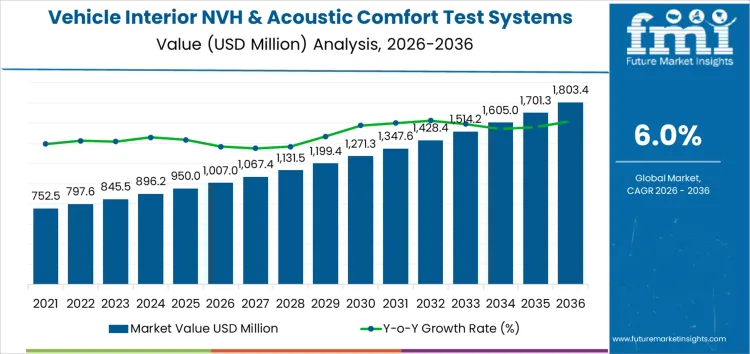
The vehicle interior NVH & acoustic comfort test systems market is valued at USD 1,007 million in 2026, projected to reach USD 1,803.4 million by 2036, growing at a CAGR of 6%. As automotive manufacturers intensify efforts to meet rising consumer expectations for quieter and more comfortable driving experiences, the demand for these test systems is expanding. These solutions are critical for assessing noise, vibration, and harshness (NVH) levels within vehicle interiors, particularly in premium and electric vehicle segments. Advancements in materials and design technologies, alongside stricter noise regulations, are driving market growth.
Quick Stats for Vehicle Interior NVH & Acoustic Comfort Test Systems Market
- Vehicle Interior NVH & Acoustic Comfort Test Systems Market Value (2026): USD 1,007 Million
- Vehicle Interior NVH & Acoustic Comfort Test Systems Market Forecast Value (2036): USD 1,803.4 Million
- Vehicle Interior NVH & Acoustic Comfort Test Systems Market Forecast CAGR (2026–2036): 6%
- Key Growth Regions in Vehicle Interior NVH & Acoustic Comfort Test Systems Market: Asia Pacific, North America
- Leading Customer Type in Vehicle Interior NVH & Acoustic Comfort Test Systems Market: OEMs
- Top Key Players in Vehicle Interior NVH & Acoustic Comfort Test Systems Market: HBK (Hottinger Brüel & Kjær), HEAD acoustics, Siemens (Simcenter), m+p international, Dewesoft, National Instruments (NI), Microflown AVISA, Polytec, Kistler, Rohde & Schwarz
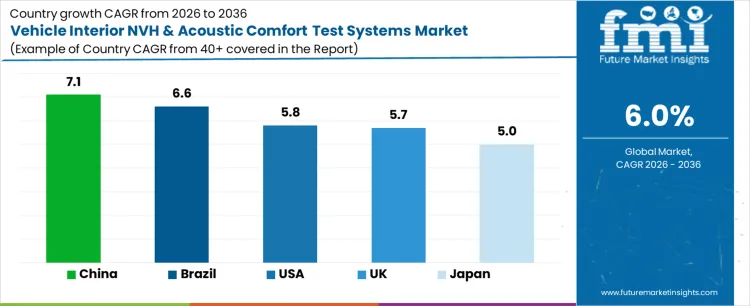
Regional adoption of NVH & acoustic comfort test systems varies, with key markets including North America, Europe, and Asia Pacific. China leads growth due to its rapid electrification of vehicles, while Brazil benefits from increasing consumer demand for electric two-wheelers and enhanced comfort features. North America show steady growth driven by regulatory pressures and the shift toward electric mobility. Uneven regional adoption persists, influenced by differences in manufacturing capabilities, infrastructure, and government incentives. Regions with strong automotive industries, like Germany, the USA, and Japan, are expected to drive substantial demand, while developing markets are likely to experience slower adoption, requiring localized solutions to accommodate unique vehicle types and infrastructure challenges.
Vehicle Interior NVH & Acoustic Comfort Test Systems Market Key Takeaways
| Metric | Value |
|---|---|
| Industry Value (2026) | USD 1,007 Million |
| Forecast Value (2036) | USD 1,803.4 Million |
| Forecast CAGR (2026–2036) | 6% |
How is the Global Vehicle Interior NVH & Acoustic Comfort Test Systems Market Advancing?
The global vehicle interior NVH (Noise, Vibration, and Harshness) and acoustic comfort test systems market is experiencing steady growth due to increasing consumer demand for quieter, more comfortable, and refined driving experiences. As automakers prioritize vehicle interior quality, the importance of testing systems that evaluate NVH performance and acoustic comfort is rising. These test systems enable manufacturers to measure and analyze the noise and vibration levels in the cabin, ensuring that vehicles meet customer expectations for comfort, particularly in premium and luxury segments.
The growth is being driven by advancements in materials and design technologies that help reduce interior noise levels, as well as stricter noise regulations and industry standards. As automotive manufacturers focus on enhancing the overall driving experience, NVH testing has become an essential part of vehicle development. These systems are used to assess factors such as road noise, engine noise, and vibrations transmitted through the chassis, which can significantly impact passenger comfort. Moreover, the growing trend of electric vehicles (EVs), which are inherently quieter than traditional internal combustion engine vehicles, is further increasing the need for advanced acoustic comfort testing to ensure a smooth, pleasant driving environment.
Technological innovations in acoustic testing, such as the use of advanced microphones, sound measurement tools, and real-time simulation systems, are enhancing the capabilities of NVH test platforms. As vehicle interiors become more sophisticated and the demand for high-quality in-cabin experiences increases, the need for precise and efficient NVH testing solutions will continue to rise. The focus on passenger comfort, noise reduction, and regulatory compliance will drive sustained growth in the vehicle interior NVH and acoustic comfort test systems market over the next decade.
What is the Segment-Wise Analysis for the Vehicle Interior NVH & Acoustic Comfort Test Systems Market?
The vehicle interior NVH & acoustic comfort test systems market is segmented by customer type and vehicle segment. OEMs dominate the market with a 48% share, followed by Tier-1 suppliers, engineering services, and academia or labs. These customers rely on test systems to ensure optimal noise, vibration, and harshness (NVH) performance in vehicle interiors. In terms of vehicle segment, passenger cars lead with a 54% share, followed by premium or luxury vehicles, light commercial vehicles, and other vehicle types.
How Do OEMs Lead the Vehicle Interior NVH & Acoustic Comfort Test Systems Market?
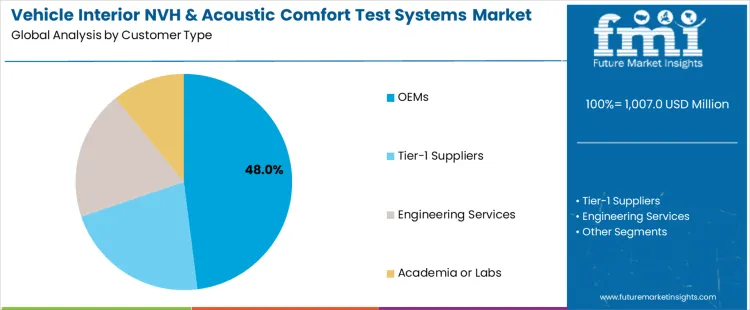
OEMs account for 48% of the vehicle interior NVH & acoustic comfort test systems market share due to their central role in designing and manufacturing vehicles. These manufacturers need advanced test systems to assess and optimize the noise, vibration, and harshness characteristics of their vehicles’ interiors. Ensuring that vehicles meet customer expectations for comfort and quietness is critical, particularly in premium and luxury segments. OEMs use NVH test systems to refine interior acoustics, minimize unwanted noise, and enhance the overall driving experience. As the demand for high-quality interior comfort rises, OEMs continue to be a major driver of growth in this market.
How Do Passenger Cars Contribute to the Vehicle Interior NVH & Acoustic Comfort Test Systems Market?
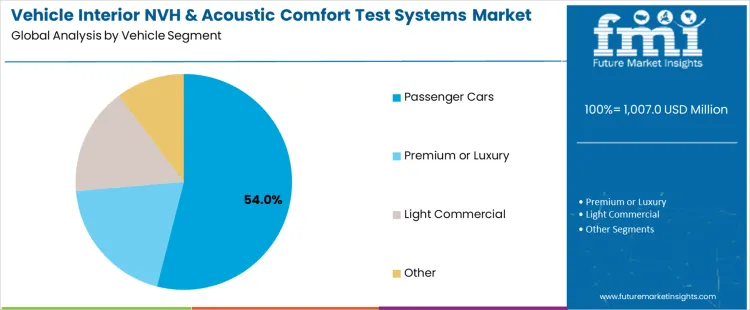
Passenger cars represent 54% of the vehicle interior NVH & acoustic comfort test systems market share, driven by consumer demand for quieter, more comfortable rides. With increasing competition in the automotive industry, manufacturers are prioritizing NVH testing to improve the quality of passenger car interiors. Acoustic comfort and the reduction of unwanted noise are key factors in vehicle design, directly impacting consumer satisfaction and brand perception. As the automotive industry evolves to include more electric vehicles and advanced technologies, the demand for NVH and acoustic comfort test systems for passenger cars continues to grow, further solidifying their dominant position in the market.
What Are the Key Dynamics for the Vehicle Interior NVH & Acoustic Comfort Test Systems Market?
The vehicle interior NVH and acoustic comfort test systems market is influenced by rising consumer demand for quieter, more refined vehicles and stricter regulatory standards for occupant comfort. As automakers pursue electrification, traditional engine noise gives way to new cabin sound concerns making interior acoustic performance a competitive differentiator. Test systems help engineers measure, analyze, and optimize sound and vibration characteristics inside cabins under varied driving conditions. Growth in luxury, electric, and autonomous vehicle segments is further accelerating the need for advanced NVH and comfort test solutions that ensure both regulatory compliance and superior user experience.
Why Are There Restraints Impacting the Vehicle Interior NVH & Acoustic Comfort Test Systems Market?
A major challenge is the high cost of advanced NVH and acoustic test systems, which often require specialized sensors, anechoic chambers, vibration shakers, and complex data acquisition hardware making them less accessible to small and medium manufacturers. Interpreting NVH data to derive actionable design insights demands skilled engineers and analysts, creating a talent gap in some regions. Legacy testing setups may not integrate seamlessly with modern vehicle architectures, increasing implementation complexity. Varying regional noise and comfort standards complicate global test strategy alignment, adding to validation costs and time.
What Are the Key Trends Shaping the Vehicle Interior NVH & Acoustic Comfort Test Systems Market?
One is the integration of AI-driven analytics and machine learning to automate pattern recognition and predict acoustic issues earlier in the design cycle. Cloud-based test data management and remote collaboration tools are enabling distributed engineering teams to share results and accelerate validation workflows. There is growing adoption of real-time, in-vehicle monitoring systems that gather NVH data during actual road tests, complementing traditional lab measurements. Modular and portable test platforms are gaining traction, helping manufacturers conduct field diagnostics more efficiently. Lastly, digital twin and simulation tools are increasingly used to reduce physical testing cycles and speed time-to-market.
What is the Growth Outlook on the Vehicle Interior NVH & Acoustic Comfort Test Systems Market by Country?
| Country | CAGR (%) |
|---|---|
| USA | 5.8% |
| UK | 5.7% |
| Japan | 5% |
| China | 7.1% |
| Brazil | 6.6% |
The vehicle interior NVH & acoustic comfort test systems market is experiencing steady growth, with China leading at a 7.1% CAGR, driven by the rapid expansion of its automotive sector, particularly in electric and autonomous vehicles. Brazil follows with 6.6%, supported by increasing demand for electric vehicles and consumer preference for enhanced comfort features. The USA’s market grows at 5.8%, fueled by advancements in electric vehicles and the demand for higher-quality vehicle interiors. The UK’s market grows at 5.7%, driven by the shift towards electric mobility and the focus on improving vehicle interior quality. Japan’s market grows at 5%, supported by its automotive industry’s focus on comfort, noise reduction, and innovation in hybrid and electric vehicles.
What is Driving the Growth of the Vehicle Interior NVH & Acoustic Comfort Test Systems Market in China?
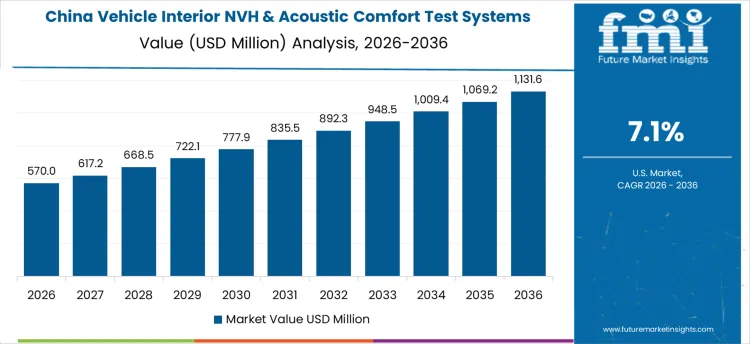
China’s vehicle interior NVH & acoustic comfort test systems market is growing at 7.1%, driven by the rapid development of the automotive industry, particularly in electric vehicles (EVs) and autonomous vehicles. As China continues to lead in EV production and adoption, the need for NVH (Noise, Vibration, Harshness) and acoustic comfort testing grows to ensure that vehicles meet high comfort standards. The increasing demand for advanced in-vehicle technologies, such as infotainment and driver-assistance systems, further contributes to the market’s growth. China’s emphasis on urban mobility solutions and smart vehicle technologies accelerates the demand for high-quality interior testing solutions, positioning China as a key player in the global NVH test systems market.
What is Contributing to the Growth of the Vehicle Interior NVH & Acoustic Comfort Test Systems Market in Brazil?
Brazil’s vehicle interior NVH & acoustic comfort test systems market is growing at 6.6%, supported by the increasing adoption of electric vehicles and rising consumer demand for enhanced comfort features in vehicles. As Brazil’s automotive sector shifts towards electric mobility, NVH testing has become a critical component for ensuring quiet, smooth, and comfortable driving experiences. Brazil’s growing automotive manufacturing base and expansion of automotive exports contribute to the demand for NVH testing systems. The country’s focus on improving vehicle quality, alongside its investments in green transportation, further fuels the need for advanced acoustic comfort solutions in both domestic and global markets. The growing emphasis on consumer preferences for vehicle interior quality supports continued market growth.
How is the Vehicle Interior NVH & Acoustic Comfort Test Systems Market Expanding in the USA?
The USA’s vehicle interior NVH & acoustic comfort test systems market is growing at 5.8%, driven by the demand for higher-quality vehicle interiors in the automotive industry. As automakers focus on enhancing comfort, reducing noise, and improving overall driving experience, the need for advanced NVH testing solutions increases. The USA’s strong automotive industry, with a focus on luxury and high-performance vehicles, is a key driver of this market. The rapid adoption of electric vehicles and increasing consumer expectations for quiet, comfortable rides contribute to the demand for acoustic comfort testing systems. As the USA continues to innovate in vehicle manufacturing and smart vehicle technologies, NVH testing plays a crucial role in ensuring vehicle quality and consumer satisfaction.
Why is the Vehicle Interior NVH & Acoustic Comfort Test Systems Market Growing in the UK?
The UK’s vehicle interior NVH & acoustic comfort test systems market is growing at 5.7%, supported by the country’s focus on electric vehicle (EV) development and improving overall vehicle quality. As UK manufacturers increasingly produce EVs and hybrid vehicles, the demand for NVH testing systems grows to ensure that interior noise levels and ride comfort meet consumer expectations. The UK government’s emphasis on sustainability, alongside the growing demand for quieter and more comfortable driving experiences, fuels the market. Consumer preferences for high-quality acoustics and soundproofing in vehicle interiors contribute to the growth. As the automotive sector in the UK continues to innovate, NVH testing will remain a vital part of the vehicle production process.
What is Driving the Growth of the Vehicle Interior NVH & Acoustic Comfort Test Systems Market in Japan?
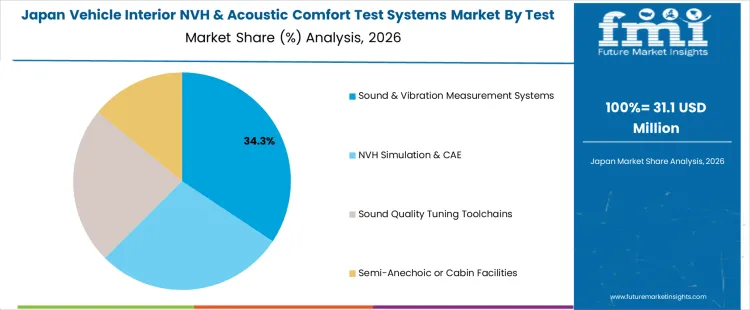
Japan’s vehicle interior NVH & acoustic comfort test systems market is growing at 5%, supported by the country’s automotive industry, which is known for producing high-quality vehicles, including hybrids and electric vehicles. Japan has a strong focus on technological innovation, and automakers are increasingly prioritizing vehicle interior comfort, including noise reduction and acoustic performance. As Japan’s automotive sector evolves with the rise of EVs and autonomous driving technologies, NVH testing has become essential for ensuring passenger comfort. The country’s commitment to improving vehicle quality, along with its leadership in consumer electronics integration into vehicles, further drives the demand for NVH and acoustic comfort test systems. Japan’s market is expected to see steady growth as manufacturers continue to innovate.
How Do Key Players Compete in the Vehicle Interior NVH & Acoustic Comfort Test Systems Market?
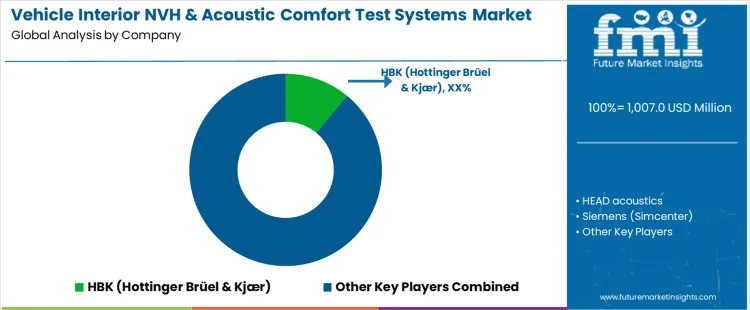
Competition in the vehicle interior NVH (noise, vibration, and harshness) & acoustic comfort test systems market revolves around measurement precision, integration with broader test workflows, and actionable analysis tools that help engineers optimize cabin comfort and structural dynamics. HBK (Hottinger Brüel & Kjær) leads with high-fidelity NVH platforms that combine advanced sensor arrays and analysis software to deliver deep insight into noise sources and vibration patterns within vehicle interiors. Its product materials highlight comprehensive frequency domain analysis and real-time data processing, enabling faster fault isolation.
HEAD acoustics focuses on acoustic measurement and psychoacoustic evaluation tools tailored for in-cabin comfort assessment. Its solutions integrate subjective and objective metrics, showcased in brochures as ideal for fine-tuning sound quality and user perception. Siemens (Simcenter) competes by embedding NVH testing within digital twin and simulation environments, allowing engineers to correlate physical tests with virtual models for predictive comfort optimization. m+p international emphasizes real-time data acquisition and modal analysis, helping users capture synchronized vibration and acoustic responses.
Dewesoft positions itself with intuitive NVH test systems that simplify complex setups and provide rich visualization, while National Instruments (NI) brings modular, software-defined measurement architectures that scale with channel count and integrate with custom analysis workflows. Microflown AVISA adds value with acoustic vector sensors that enhance sound characterization, and Polytec offers laser vibrometry solutions for non-contact vibration measurement. Kistler provides synchronized sensor systems suited for structural dynamics, and Rohde & Schwarz rounds out the market with high-performance acoustic measurement tools that support both lab and field NVH testing.
Key Players in Vehicle Interior NVH & Acoustic Comfort Test Systems Market
- HBK (Hottinger Brüel & Kjær)
- HEAD acoustics
- Siemens (Simcenter)
- m+p international
- Dewesoft
- National Instruments (NI)
- Microflown AVISA
- Polytec
- Kistler
- Rohde & Schwarz
Vehicle Interior NVH & Acoustic Comfort Test Systems Market by Key Segments
Test Type:
- Sound & Vibration Measurement Systems
- NVH Simulation & CAE
- Sound Quality Tuning Toolchains
- Semi-Anechoic or Cabin Facilities
Customer Type
- OEMs
- Tier-1 Suppliers
- Engineering Services
- Academia or Labs
Vehicle Segment:
- Passenger Cars
- Premium or Luxury
- Light Commercial
- Other
Region:
- Asia Pacific
- China
- Japan
- South Korea
- India
- Australia & New Zealand
- ASEAN
- Rest of Asia Pacific
- Europe
- Germany
- United Kingdom
- France
- Italy
- Spain
- Nordic
- BENELUX
- Rest of Europe
- North America
- United States
- Canada
- Mexico
- Latin America
- Brazil
- Chile
- Rest of Latin America
- Middle East & Africa
- Kingdom of Saudi Arabia
- Other GCC Countries
- Turkey
- South Africa
- Other African Union
- Rest of Middle East & Africa
Frequently Asked Questions
How big is the vehicle interior NVH & acoustic comfort test systems market in 2026?
The global vehicle interior NVH & acoustic comfort test systems market is estimated to be valued at USD 1,007.0 million in 2026.
What will be the size of vehicle interior NVH & acoustic comfort test systems market in 2036?
The market size for the vehicle interior NVH & acoustic comfort test systems market is projected to reach USD 1,803.4 million by 2036.
How much will be the vehicle interior NVH & acoustic comfort test systems market growth between 2026 and 2036?
The vehicle interior NVH & acoustic comfort test systems market is expected to grow at a 6.0% CAGR between 2026 and 2036.
What are the key product types in the vehicle interior NVH & acoustic comfort test systems market?
The key product types in vehicle interior NVH & acoustic comfort test systems market are sound & vibration measurement systems, NVH simulation & cae, sound quality tuning toolchains and semi-anechoic or cabin facilities.
Which customer type segment to contribute significant share in the vehicle interior NVH & acoustic comfort test systems market in 2026?
In terms of customer type, oems segment to command 48.0% share in the vehicle interior NVH & acoustic comfort test systems market in 2026.
Preview the report firsthand - request a free sample
Get SampleGet the brochure for pricing and purchase details.
Get PDFTable of Content
- Executive Summary
- Global Market Outlook
- Demand-side Trends
- Supply-side Trends
- Technology Roadmap Analysis
- Analysis and Recommendations
- Market Overview
- Market Coverage / Taxonomy
- Market Definition / Scope / Limitations
- Market Background
- Market Dynamics
- Drivers
- Restraints
- Opportunity
- Trends
- Scenario Forecast
- Demand in Optimistic Scenario
- Demand in Likely Scenario
- Demand in Conservative Scenario
- Opportunity Map Analysis
- Product Life Cycle Analysis
- Supply Chain Analysis
- Investment Feasibility Matrix
- Value Chain Analysis
- PESTLE and Porter’s Analysis
- Regulatory Landscape
- Regional Parent Market Outlook
- Production and Consumption Statistics
- Import and Export Statistics
- Market Dynamics
- Global Market Analysis 2021 to 2025 and Forecast, 2026 to 2036
- Historical Market Size Value (USD Million) Analysis, 2021 to 2025
- Current and Future Market Size Value (USD Million) Projections, 2026 to 2036
- Y-o-Y Growth Trend Analysis
- Absolute $ Opportunity Analysis
- Global Market Pricing Analysis 2021 to 2025 and Forecast 2026 to 2036
- Global Market Analysis 2021 to 2025 and Forecast 2026 to 2036, By Test Type
- Introduction / Key Findings
- Historical Market Size Value (USD Million) Analysis By Test Type , 2021 to 2025
- Current and Future Market Size Value (USD Million) Analysis and Forecast By Test Type , 2026 to 2036
- Sound & Vibration Measurement Systems
- NVH Simulation & CAE
- Sound Quality Tuning Toolchains
- Semi-Anechoic or Cabin Facilities
- Sound & Vibration Measurement Systems
- Y-o-Y Growth Trend Analysis By Test Type , 2021 to 2025
- Absolute $ Opportunity Analysis By Test Type , 2026 to 2036
- Global Market Analysis 2021 to 2025 and Forecast 2026 to 2036, By Customer Type
- Introduction / Key Findings
- Historical Market Size Value (USD Million) Analysis By Customer Type, 2021 to 2025
- Current and Future Market Size Value (USD Million) Analysis and Forecast By Customer Type, 2026 to 2036
- OEMs
- Tier-1 Suppliers
- Engineering Services
- Academia or Labs
- OEMs
- Y-o-Y Growth Trend Analysis By Customer Type, 2021 to 2025
- Absolute $ Opportunity Analysis By Customer Type, 2026 to 2036
- Global Market Analysis 2021 to 2025 and Forecast 2026 to 2036, By Vehicle Segment
- Introduction / Key Findings
- Historical Market Size Value (USD Million) Analysis By Vehicle Segment, 2021 to 2025
- Current and Future Market Size Value (USD Million) Analysis and Forecast By Vehicle Segment, 2026 to 2036
- Passenger Cars
- Premium or Luxury
- Light Commercial
- Other
- Passenger Cars
- Y-o-Y Growth Trend Analysis By Vehicle Segment, 2021 to 2025
- Absolute $ Opportunity Analysis By Vehicle Segment, 2026 to 2036
- Global Market Analysis 2021 to 2025 and Forecast 2026 to 2036, By Region
- Introduction
- Historical Market Size Value (USD Million) Analysis By Region, 2021 to 2025
- Current Market Size Value (USD Million) Analysis and Forecast By Region, 2026 to 2036
- North America
- Latin America
- Western Europe
- Eastern Europe
- East Asia
- South Asia and Pacific
- Middle East & Africa
- Market Attractiveness Analysis By Region
- North America Market Analysis 2021 to 2025 and Forecast 2026 to 2036, By Country
- Historical Market Size Value (USD Million) Trend Analysis By Market Taxonomy, 2021 to 2025
- Market Size Value (USD Million) Forecast By Market Taxonomy, 2026 to 2036
- By Country
- USA
- Canada
- Mexico
- By Test Type
- By Customer Type
- By Vehicle Segment
- By Country
- Market Attractiveness Analysis
- By Country
- By Test Type
- By Customer Type
- By Vehicle Segment
- Key Takeaways
- Latin America Market Analysis 2021 to 2025 and Forecast 2026 to 2036, By Country
- Historical Market Size Value (USD Million) Trend Analysis By Market Taxonomy, 2021 to 2025
- Market Size Value (USD Million) Forecast By Market Taxonomy, 2026 to 2036
- By Country
- Brazil
- Chile
- Rest of Latin America
- By Test Type
- By Customer Type
- By Vehicle Segment
- By Country
- Market Attractiveness Analysis
- By Country
- By Test Type
- By Customer Type
- By Vehicle Segment
- Key Takeaways
- Western Europe Market Analysis 2021 to 2025 and Forecast 2026 to 2036, By Country
- Historical Market Size Value (USD Million) Trend Analysis By Market Taxonomy, 2021 to 2025
- Market Size Value (USD Million) Forecast By Market Taxonomy, 2026 to 2036
- By Country
- Germany
- UK
- Italy
- Spain
- France
- Nordic
- BENELUX
- Rest of Western Europe
- By Test Type
- By Customer Type
- By Vehicle Segment
- By Country
- Market Attractiveness Analysis
- By Country
- By Test Type
- By Customer Type
- By Vehicle Segment
- Key Takeaways
- Eastern Europe Market Analysis 2021 to 2025 and Forecast 2026 to 2036, By Country
- Historical Market Size Value (USD Million) Trend Analysis By Market Taxonomy, 2021 to 2025
- Market Size Value (USD Million) Forecast By Market Taxonomy, 2026 to 2036
- By Country
- Russia
- Poland
- Hungary
- Balkan & Baltic
- Rest of Eastern Europe
- By Test Type
- By Customer Type
- By Vehicle Segment
- By Country
- Market Attractiveness Analysis
- By Country
- By Test Type
- By Customer Type
- By Vehicle Segment
- Key Takeaways
- East Asia Market Analysis 2021 to 2025 and Forecast 2026 to 2036, By Country
- Historical Market Size Value (USD Million) Trend Analysis By Market Taxonomy, 2021 to 2025
- Market Size Value (USD Million) Forecast By Market Taxonomy, 2026 to 2036
- By Country
- China
- Japan
- South Korea
- By Test Type
- By Customer Type
- By Vehicle Segment
- By Country
- Market Attractiveness Analysis
- By Country
- By Test Type
- By Customer Type
- By Vehicle Segment
- Key Takeaways
- South Asia and Pacific Market Analysis 2021 to 2025 and Forecast 2026 to 2036, By Country
- Historical Market Size Value (USD Million) Trend Analysis By Market Taxonomy, 2021 to 2025
- Market Size Value (USD Million) Forecast By Market Taxonomy, 2026 to 2036
- By Country
- India
- ASEAN
- Australia & New Zealand
- Rest of South Asia and Pacific
- By Test Type
- By Customer Type
- By Vehicle Segment
- By Country
- Market Attractiveness Analysis
- By Country
- By Test Type
- By Customer Type
- By Vehicle Segment
- Key Takeaways
- Middle East & Africa Market Analysis 2021 to 2025 and Forecast 2026 to 2036, By Country
- Historical Market Size Value (USD Million) Trend Analysis By Market Taxonomy, 2021 to 2025
- Market Size Value (USD Million) Forecast By Market Taxonomy, 2026 to 2036
- By Country
- Kingdom of Saudi Arabia
- Other GCC Countries
- Turkiye
- South Africa
- Other African Union
- Rest of Middle East & Africa
- By Test Type
- By Customer Type
- By Vehicle Segment
- By Country
- Market Attractiveness Analysis
- By Country
- By Test Type
- By Customer Type
- By Vehicle Segment
- Key Takeaways
- Key Countries Market Analysis
- USA
- Pricing Analysis
- Market Share Analysis, 2025
- By Test Type
- By Customer Type
- By Vehicle Segment
- Canada
- Pricing Analysis
- Market Share Analysis, 2025
- By Test Type
- By Customer Type
- By Vehicle Segment
- Mexico
- Pricing Analysis
- Market Share Analysis, 2025
- By Test Type
- By Customer Type
- By Vehicle Segment
- Brazil
- Pricing Analysis
- Market Share Analysis, 2025
- By Test Type
- By Customer Type
- By Vehicle Segment
- Chile
- Pricing Analysis
- Market Share Analysis, 2025
- By Test Type
- By Customer Type
- By Vehicle Segment
- Germany
- Pricing Analysis
- Market Share Analysis, 2025
- By Test Type
- By Customer Type
- By Vehicle Segment
- UK
- Pricing Analysis
- Market Share Analysis, 2025
- By Test Type
- By Customer Type
- By Vehicle Segment
- Italy
- Pricing Analysis
- Market Share Analysis, 2025
- By Test Type
- By Customer Type
- By Vehicle Segment
- Spain
- Pricing Analysis
- Market Share Analysis, 2025
- By Test Type
- By Customer Type
- By Vehicle Segment
- France
- Pricing Analysis
- Market Share Analysis, 2025
- By Test Type
- By Customer Type
- By Vehicle Segment
- India
- Pricing Analysis
- Market Share Analysis, 2025
- By Test Type
- By Customer Type
- By Vehicle Segment
- ASEAN
- Pricing Analysis
- Market Share Analysis, 2025
- By Test Type
- By Customer Type
- By Vehicle Segment
- Australia & New Zealand
- Pricing Analysis
- Market Share Analysis, 2025
- By Test Type
- By Customer Type
- By Vehicle Segment
- China
- Pricing Analysis
- Market Share Analysis, 2025
- By Test Type
- By Customer Type
- By Vehicle Segment
- Japan
- Pricing Analysis
- Market Share Analysis, 2025
- By Test Type
- By Customer Type
- By Vehicle Segment
- South Korea
- Pricing Analysis
- Market Share Analysis, 2025
- By Test Type
- By Customer Type
- By Vehicle Segment
- Russia
- Pricing Analysis
- Market Share Analysis, 2025
- By Test Type
- By Customer Type
- By Vehicle Segment
- Poland
- Pricing Analysis
- Market Share Analysis, 2025
- By Test Type
- By Customer Type
- By Vehicle Segment
- Hungary
- Pricing Analysis
- Market Share Analysis, 2025
- By Test Type
- By Customer Type
- By Vehicle Segment
- Kingdom of Saudi Arabia
- Pricing Analysis
- Market Share Analysis, 2025
- By Test Type
- By Customer Type
- By Vehicle Segment
- Turkiye
- Pricing Analysis
- Market Share Analysis, 2025
- By Test Type
- By Customer Type
- By Vehicle Segment
- South Africa
- Pricing Analysis
- Market Share Analysis, 2025
- By Test Type
- By Customer Type
- By Vehicle Segment
- USA
- Market Structure Analysis
- Competition Dashboard
- Competition Benchmarking
- Market Share Analysis of Top Players
- By Regional
- By Test Type
- By Customer Type
- By Vehicle Segment
- Competition Analysis
- Competition Deep Dive
- HBK (Hottinger Brüel & Kjær)
- Overview
- Product Portfolio
- Profitability by Market Segments (Product/Age /Sales Channel/Region)
- Sales Footprint
- Strategy Overview
- Marketing Strategy
- Product Strategy
- Channel Strategy
- HEAD acoustics
- Siemens (Simcenter)
- m+p international
- Dewesoft
- National Instruments (NI)
- Microflown AVISA
- Polytec
- Kistler
- Rohde & Schwarz
- HBK (Hottinger Brüel & Kjær)
- Competition Deep Dive
- Assumptions & Acronyms Used
- Research Methodology


