

- Industry Size (2026)
- USD 1300.0 Mn
- Forecast (2036)
- USD 2019.0 Mn
- CAGR (2026 to 2036)
- 4.5%
Door Frame Pair Gasket Market Forecast and Outlook 2026 to 2036
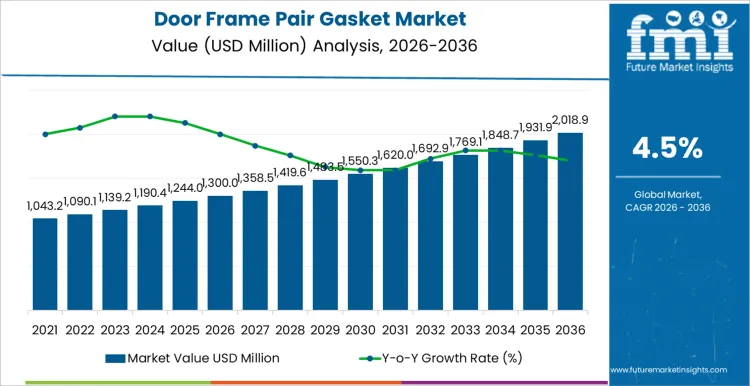
The door frame pair gasket market is positioned to expand from USD 1,300.0 million in 2026 to USD 2,019.0 million by 2036, reflecting a 4.5% CAGR throughout the forecast period. Growth reflects how automotive manufacturers and building system designers are prioritizing enhanced sealing performance, noise reduction, and energy efficiency requirements. Door frame pair gaskets are engineered for dual-sided sealing applications, weather resistance, and precise dimensional tolerance to prevent air leakage, water loss, and acoustic transmission in both mobile and stationary installations. This elevates gasket design from basic weather stripping into precision-engineered components, where material durability, compression set resistance, and installation compatibility influence long-term performance, maintenance intervals, and overall system efficiency.
High-volume production lines are adopting automated cutting, vulcanization, and assembly processes because they reduce material waste and ensure consistent cross-sectional geometry across extended production runs. Gaskets that can maintain sealing integrity under repeated compression cycles, temperature fluctuations, and UV exposure without hardening or cracking are being integrated earlier in product development phases. As electric vehicle platforms and high-performance building envelopes expand, engineers evaluate gaskets not only on initial sealing effectiveness but also on long-term elastic recovery, chemical compatibility with adjacent materials, and contribution to overall acoustic and thermal performance targets.
Quick Stats for Door Frame Pair Gasket Market
- Door Frame Pair Gasket Market Value (2026): USD 1,300.0 million
- Door Frame Pair Gasket Market Forecast Value (2036): USD 2,019.0 million
- Door Frame Pair Gasket Market Forecast CAGR: 4.5%
- Leading Application in Door Frame Pair Gasket Market: Automotive Door and Body Seals (52%)
- Key Growth Countries in Door Frame Pair Gasket Market: China, Germany, USA, South Korea, Japan, UK
- Key Players in Door Frame Pair Gasket Market: Cooper Standard, Toyoda Gosei, Hutchinson, Sumitomo Riko, Standard Profil
EPDM rubber formulations lead where weather resistance and temperature stability are critical for outdoor applications and long service life requirements. Thermoplastic elastomer systems dominate where recyclability and processing efficiency matter most in high-volume manufacturing. PVC blends compete in cost-sensitive applications requiring adequate sealing performance with simplified installation procedures. Co-extruded hollow profiles are gaining market share because they enable weight reduction and improved compression characteristics while maintaining structural integrity under dynamic loading conditions. Automotive door and body seals remain the largest application segment, followed by building and construction applications, while rail and specialty vehicle sealing provides specialized demand.
Door Frame Pair Gasket Market Key Takeaways
| Metric | Value |
|---|---|
| Market Value (2026) | USD 1,300.0 million |
| Market Forecast Value (2036) | USD 2,019.0 million |
| Forecast CAGR 2026 to 2036 | 4.5% |
How Are Energy Efficiency Standards Transforming Door Frame Gasket Specifications?
Building energy codes are driving fundamental changes in door frame pair gasket performance requirements as construction regulations establish increasingly stringent air leakage limits and thermal bridging restrictions. Modern green building certifications mandate comprehensive sealing systems that can demonstrate measurable reductions in energy consumption through verified air tightness testing protocols. This regulatory environment pushes gasket manufacturers toward advanced polymer formulations that maintain consistent sealing pressure across wide temperature ranges while demonstrating long-term elastic properties that prevent gap formation during seasonal building movement and settling processes.
The integration of smart building technologies creates additional requirements for gasket systems that can accommodate sensor integration, wireless communication pathways, and maintenance monitoring capabilities without compromising sealing effectiveness. Building automation systems increasingly relies on precise environmental control that depends on reliable door sealing to maintain zone-specific temperature and humidity targets. This technological evolution requires gasket designs that can integrate with electronic monitoring systems while providing consistent performance data that supports predictive maintenance scheduling and energy optimization algorithms.
How Is the Market Structured Across Material Performance Categories?
The door frame pair gasket market demonstrates clear segmentation patterns based on material properties and application-specific performance requirements that directly influence sealing effectiveness and durability characteristics. EPDM rubber systems capture 44.0% market share, establishing their dominance in applications requiring superior weather resistance, ozone stability, and temperature performance across automotive and building envelope applications. These materials provide exceptional aging characteristics and maintain elastic properties under prolonged UV exposure and temperature cycling that characterize outdoor sealing applications.
TPE/TPV formulations achieve 28.0% adoption were processing efficiency and recyclability considerations balance performance requirements with environmental compliance objectives. These thermoplastic systems enable automated processing techniques that reduce manufacturing complexity while providing adequate sealing performance for moderate-duty applications. Material processing advantages include simplified tooling requirements, reduced energy consumption during manufacturing, and enhanced color consistency that supports aesthetic integration with visible door frame components.
Which Profile Configuration Generates the Highest Manufacturing Adoption?
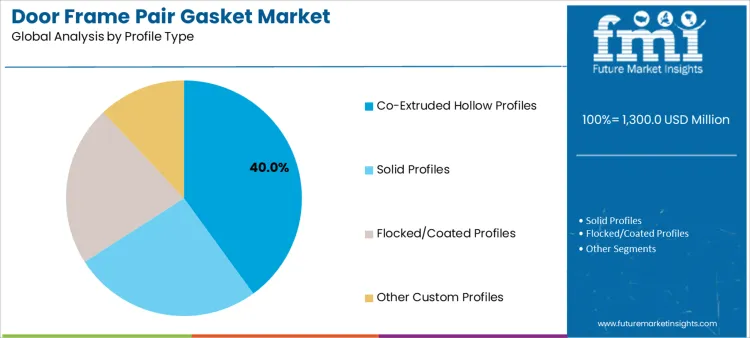
Co-extruded hollow profiles maintain 40.0% market preference, reflecting their ability to provide enhanced compression characteristics while reducing material consumption and component weight. These advanced geometries incorporate internal cavities that enable controlled deformation under sealing loads while maintaining recovery properties essential for repeated operation cycles. The hollow construction allows engineers to optimize sealing force distribution while accommodating manufacturing tolerances in door frame assemblies and installation variations.
Which Application Segment Leads Market Development?
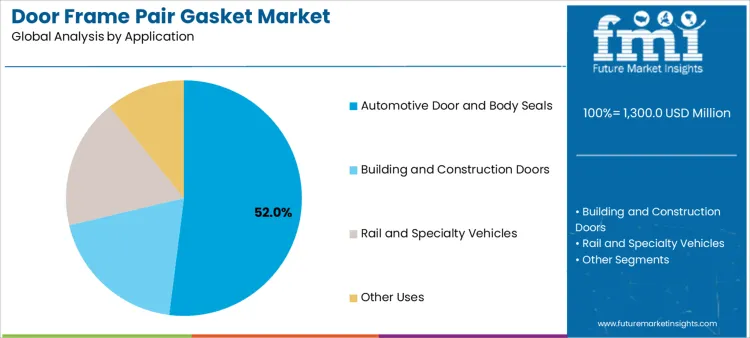
Automotive door and body seals represent 52.0% of market applications, establishing vehicle manufacturing as the primary driver of advanced gasket technology development. These applications impose demanding requirements including vibration resistance, chemical compatibility with automotive fluids, and aesthetic integration with interior and exterior trim systems. Manufacturing volumes for automotive applications create opportunities for specialized formulations optimized for specific vehicle platforms while supporting the quality consistency required for global automotive production standards.
Which Sales Channel Dominates Market Distribution?
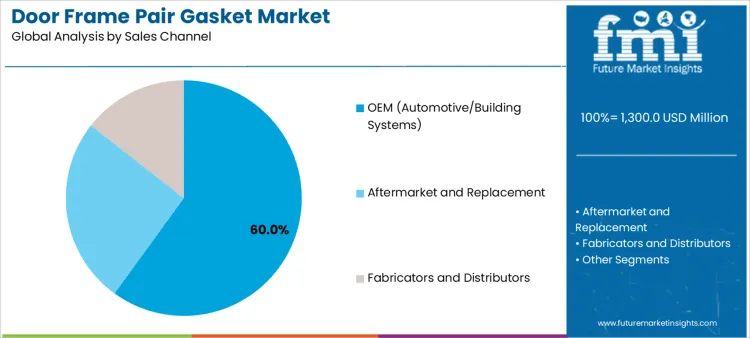
OEM channels command 60.0% of market distribution, reflecting the integrated nature of gasket specification and supply relationships in both automotive and building system manufacturing. Original equipment manufacturers typically establish long-term supplier partnerships that emphasize technical collaboration, quality consistency, and supply chain reliability rather than transactional purchasing relationships. This channel’s preference supports premium pricing for advanced gasket solutions while encouraging continuous innovation in material technology and application engineering.
How Is Vehicle Electrification Driving Acoustic Performance Innovation?
The transition toward electric vehicles is creating unprecedented requirements for door frame sealing systems that can provide enhanced acoustic isolation while maintaining traditional weather sealing functions. Electric powertrains generate significantly different noise profiles compared to internal combustion engines, making previously acceptable levels of road noise and wind noise more noticeable to occupants. This shift drives demand for gasket solutions that incorporate specialized noise reduction features including tuned cavity designs, multi-density material configurations, and integrated sound absorption elements that can address specific frequency ranges.
Advanced electric vehicle platforms also introduce unique sealing challenges through their emphasis on aerodynamic efficiency and lightweight construction that can affect door frame geometry and sealing interface design. Manufacturers require gasket solutions that can accommodate tighter manufacturing tolerances while providing enhanced sealing performance that supports improved vehicle range through reduced aerodynamic drag. These requirements push gasket technology toward precision-engineered solutions that integrate multiple performance functions within single-component designs.
What Material Science Challenges Constrain Market Innovation?
The primary technical constraint affecting door frame pair gasket development centers on the increasing difficulty of simultaneously optimizing multiple performance characteristics within single material systems. While advanced polymer chemistries can provide superior weather resistance or enhanced acoustic properties, achieving optimal performance across all requirements often requires compromise solutions that may limit adoption in demanding applications. This technical complexity drives development toward multi-component systems and specialized manufacturing processes that increase production complexity while potentially limiting market accessibility for cost-sensitive applications.
Environmental regulations targeting volatile organic compound emissions and end-of-life recyclability also constrain material selection options in certain applications. Gasket formulations must demonstrate compliance with increasingly comprehensive chemical restrictions while maintaining performance characteristics essential for selling effectiveness. These regulatory requirements drive innovation toward bio-based materials and recyclable formulations that maintain necessary durability characteristics while supporting environmental compliance objectives.
How Do Quality Standards Create Competitive Opportunities?
Evolving quality standards for sealing system performance are creating significant market opportunities for gasket manufacturers who can demonstrate superior long-term reliability through comprehensive testing and validation programs. Automotive quality standards increasingly emphasize durability testing that simulates extended service life under realistic operating conditions, favoring suppliers who invest in advanced testing capabilities and quality control systems. This emphasis on validated performance creates competitive advantages for manufacturers who can provide documented proof of long-term sealing effectiveness.
International harmonization of testing standards also creates opportunities for gasket manufacturers who can achieve multiple certifications while maintaining consistent production quality across different regional markets. Standardized testing protocols enable global automotive and building system manufacturers to streamline supplier qualification processes while ensuring consistent performance expectations across different geographic markets. This standardization trend benefits suppliers who can demonstrate compliance with multiple international standards while maintaining cost-effective production processes.
How Is the Door Frame Pair Gasket Expected to Evolve Across Major Nations?
The global landscape for door frame pair gaskets reflects regional variations in automotive production capacity, building construction standards, and manufacturing technology adoption that influence market development patterns across different economic zones. Leading automotive manufacturing regions drive innovation in high-performance sealing solutions, while emerging construction markets emphasize cost-effective products that meet local building requirements and climate conditions.
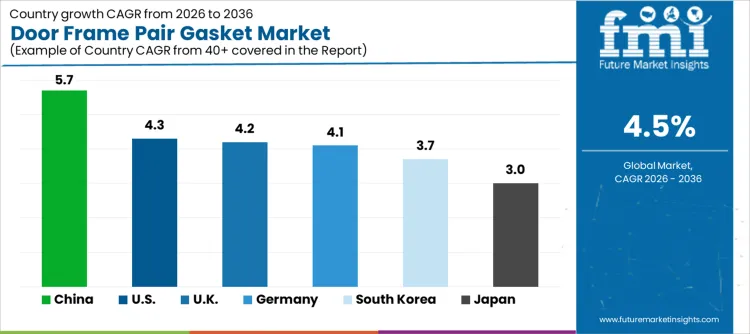
| Country | CAGR (%) |
|---|---|
| China | 5.7% |
| Germany | 4.1% |
| USA | 4.3% |
| Japan | 3.0% |
| South Korea | 3.7% |
| UK | 4.2% |
What Drives China's Market Leadership?
China's door frame pair gasket market is projected to achieve the highest growth rate at 5.7% CAGR, driven primarily by massive automotive production capacity and rapid urbanization that creates substantial demand for both vehicle and building sealing solutions. The country's position as the world's largest automotive market generates enormous volumes for advanced gasket technologies while fostering local innovation in manufacturing processes and material formulations. Chinese manufacturers are developing cost-effective solutions that meet international quality standards while leveraging domestic supply chains to achieve competitive pricing advantages.
Government policies promoting new energy vehicles and green building construction accelerate adoption of advanced sealing technologies that support energy efficiency and environmental performance targets. The integration of electric vehicle production with traditional automotive manufacturing creates opportunities for gasket suppliers who can serve both conventional and emerging powertrain technologies through flexible production capabilities and technical expertise in acoustic and thermal management applications.
How Is Germany Advancing Automotive Excellence?
Demand for door frame pai gasket in Germany is estimated to expand at a CAGR of 4.1% reflects the country's leadership in premium automotive manufacturing and advanced building technology development. German automotive manufacturers implement rigorous quality standards that favor gasket suppliers capable of demonstrating exceptional consistency and long-term reliability under demanding operating conditions. The emphasis on premium vehicle segments creates opportunities for high-performance sealing solutions that justify premium pricing through superior durability and enhanced functionality.
The country's leadership in automotive sealing systems drives innovation in multi-functional gasket designs that integrate acoustic management, thermal control, and structural support within single-component solutions. German engineering standards typically exceed international minimums, creating demand for specialized gasket formulations that can meet rigorous performance criteria while supporting automated installation processes required for high-volume manufacturing efficiency.
Why Is the USA Market Emphasizing Performance Innovation?
The United States market experiences 4.3% CAGR growth supported by strong domestic automotive production and construction activity that demands advanced sealing solutions for diverse climate conditions and application requirements. Federal regulations promoting vehicle fuel efficiency and building energy performance create market opportunities for gasket technologies that contribute measurably to system-level efficiency improvements. The emphasis on domestic manufacturing capabilities drives investment in advanced production technologies while creating demand for suppliers who can provide local technical support and rapid response capabilities.
The integration of automotive noise reduction requirements with traditional sealing functions creates demand for sophisticated gasket solutions that address multiple performance criteria simultaneously. American automotive manufacturers increasingly emphasize acoustic comfort and premium interior environments that require advanced sealing technologies capable of reducing road noise transmission while maintaining weather protection and durability characteristics.
How Is Japanese Manufacturing Setting Quality Standards?
Sales of door frame pair gasket in Japan are likely to increase at a CAGR of 3.0% is supported by the country's leadership in precision manufacturing and advanced material science that enables development of high-performance gasket solutions with exceptional quality consistency. Japanese automotive manufacturers maintain some of the industry's most stringent quality standards, creating demand for gasket technologies that demonstrate superior reliability and consistent performance across extended production runs. This quality focus drives innovation in automated manufacturing processes and quality control systems that ensure exceptional product consistency.
The country's expertise in automotive rubber components creates opportunities for gasket manufacturers who can provide specialized formulations optimized for specific vehicle platforms and operating conditions. Japanese automotive technology development emphasizes long-term reliability testing and comprehensive quality validation that influences gasket specification requirements throughout the global automotive industry.
What Opportunities Exist in South Korea's Technology Ecosystem?
Demand for door frame pair gasket in South Korea is poised to garner a CAGR of 3.7% growth is driven by the country's strong position in automotive manufacturing and advanced electronics integration that creates demand for sophisticated sealing solutions. Korean automotive manufacturers require gasket technologies that support high-density electronic integration while maintaining traditional sealing functions for vehicle door systems. This technological integration creates opportunities for gasket designs that can accommodate electronic components and wiring systems without compromising sealing effectiveness.
The country's investment in electric vehicle technology and automotive electronics systems creates demand for gasket solutions that provide electromagnetic interference shielding while maintaining environmental protection characteristics. Korean automotive production emphasizes technological innovation and manufacturing efficiency that drives development of automated installation processes and quality control systems that influence gasket design requirements.
What Strategies Help Suppliers Maintain Competitive Position in Door Frame Pair Gaskets?
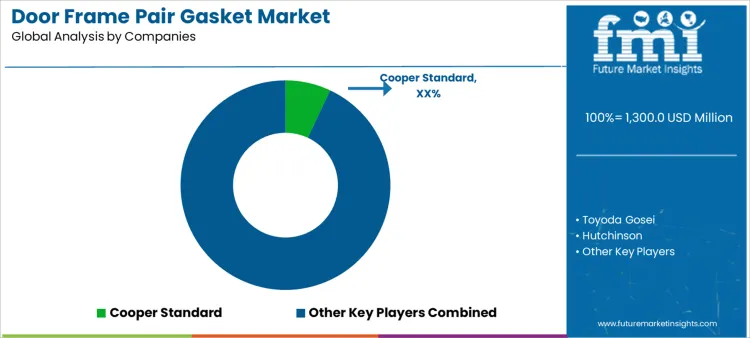
Suppliers maintain market leadership in door frame pair gaskets through demonstrated application expertise and proven performance in demanding production environments rather than competing solely on material specifications. Successful companies establish competitive advantages through comprehensive technical support capabilities that include application engineering, installation optimization, and performance validation services that help customers achieve consistent manufacturing results while minimizing quality control complications and warranty claims.
Market leaders invest in early collaboration with automotive and building system designers during product development phases, enabling gasket specifications to be optimized for specific performance requirements and manufacturing processes before production tooling investments are finalized. This collaborative approach creates switching barriers while ensuring optimal integration between gasket properties and assembly processes that benefit both suppliers and customers through improved efficiency and reliability outcomes.
Advanced manufacturing capabilities enable suppliers to provide specialized gasket solutions that address multiple performance criteria within single-component designs, reducing system complexity while enhancing overall performance characteristics. Investment in automated production equipment and quality control systems allows suppliers to maintain consistent product quality while achieving cost structures that support competitive pricing in high-volume applications.
Key Players in the Door Frame Pair Gasket Market
- Cooper Standard
- Toyoda Gosei
- Hutchinson
- Sumitomo Riko
- Standard Profil
- Kinugawa Rubber
- Henniges Automotive
- Nokian Sealing Technologies
- Minth Group
- Rehau
Scope of Report
| Items | Values |
|---|---|
| Quantitative Units | USD Million |
| Material Segments | EPDM Rubber; TPE/TPV; PVC and Blends; Other Elastomers |
| Application Types | Automotive Door and Body Seals; Building and Construction Doors; Rail and Specialty Vehicles; Other Uses |
| Profile Types | Co-Extruded Hollow Profiles; Solid Profiles; Flocked/Coated Profiles; Other Custom Profiles |
| Sales Channel Types | OEM (Automotive/Building Systems); Aftermarket and Replacement; Fabricators and Distributors |
| Regions Covered | North America, Europe, Asia Pacific, Latin America, Middle East & Africa |
| Key Countries | USA, Germany, China, Japan, South Korea, UK |
| Key Companies Profiled | Cooper Standard, Toyoda Gosei, Hutchinson, Sumitomo Riko, Standard Profil, and others |
| Additional Attributes | Dollar sales measured for door frame pair gaskets used in automotive and building applications, specified by sealing effectiveness, weather resistance, compression set resistance, temperature stability, chemical compatibility, and installation requirements |
Door Frame Pair Gasket Market by Segment
By Material:
- EPDM Rubber
- TPE/TPV
- PVC and Blends
- Other Elastomers
By Application:
- Automotive Door and Body Seals
- Building and Construction Doors
- Rail and Specialty Vehicles
- Other Uses
By Profile Type:
- Co-Extruded Hollow Profiles
- Solid Profiles
- Flocked/Coated Profiles
- Other Custom Profiles
By Sales Channel:
- OEM (Automotive/Building Systems)
- Aftermarket and Replacement
- Fabricators and Distributors
Bibliography
- International Organization for Standardization. (2024). ISO 11621: Building construction-Jointing products-Determination of resistance to weathering (1st ed.). International Organization for Standardization.
- ASTM International. (2023). ASTM C719‑23: Standard test method for adhesion and cohesion of elastomeric joint sealants under cyclic movement. ASTM International.
- International Code Council. (2024). International Energy Conservation Code (IECC). International Code Council.
Frequently Asked Questions
How big is the door frame pair gasket market in 2026?
The global door frame pair gasket market is estimated to be valued at USD 1,300.0 million in 2026.
What will be the size of door frame pair gasket market in 2036?
The market size for the door frame pair gasket market is projected to reach USD 2,018.9 million by 2036.
How much will be the door frame pair gasket market growth between 2026 and 2036?
The door frame pair gasket market is expected to grow at a 4.5% CAGR between 2026 and 2036.
What are the key product types in the door frame pair gasket market?
The key product types in door frame pair gasket market are epdm rubber, tpe/tpv, pvc and blends and other elastomers.
Which application segment to contribute significant share in the door frame pair gasket market in 2026?
In terms of application, automotive door and body seals segment to command 52.0% share in the door frame pair gasket market in 2026.
Preview the report firsthand - request a free sample
Get SampleGet the brochure for pricing and purchase details.
Get PDFTable of Content
- Executive Summary
- Global Market Outlook
- Demand-side Trends
- Supply-side Trends
- Technology Roadmap Analysis
- Analysis and Recommendations
- Market Overview
- Market Coverage / Taxonomy
- Market Definition / Scope / Limitations
- Market Background
- Market Dynamics
- Drivers
- Restraints
- Opportunity
- Trends
- Scenario Forecast
- Demand in Optimistic Scenario
- Demand in Likely Scenario
- Demand in Conservative Scenario
- Opportunity Map Analysis
- Product Life Cycle Analysis
- Supply Chain Analysis
- Investment Feasibility Matrix
- Value Chain Analysis
- PESTLE and Porter’s Analysis
- Regulatory Landscape
- Regional Parent Market Outlook
- Production and Consumption Statistics
- Import and Export Statistics
- Market Dynamics
- Global Market Analysis 2021 to 2025 and Forecast, 2026 to 2036
- Historical Market Size Value (USD Million) Analysis, 2021 to 2025
- Current and Future Market Size Value (USD Million) Projections, 2026 to 2036
- Y-o-Y Growth Trend Analysis
- Absolute $ Opportunity Analysis
- Global Market Pricing Analysis 2021 to 2025 and Forecast 2026 to 2036
- Global Market Analysis 2021 to 2025 and Forecast 2026 to 2036, By Material
- Introduction / Key Findings
- Historical Market Size Value (USD Million) Analysis By Material , 2021 to 2025
- Current and Future Market Size Value (USD Million) Analysis and Forecast By Material , 2026 to 2036
- EPDM Rubber
- TPE/TPV
- PVC and Blends
- Other Elastomers
- EPDM Rubber
- Y-o-Y Growth Trend Analysis By Material , 2021 to 2025
- Absolute $ Opportunity Analysis By Material , 2026 to 2036
- Global Market Analysis 2021 to 2025 and Forecast 2026 to 2036, By Application
- Introduction / Key Findings
- Historical Market Size Value (USD Million) Analysis By Application, 2021 to 2025
- Current and Future Market Size Value (USD Million) Analysis and Forecast By Application, 2026 to 2036
- Automotive Door and Body Seals
- Building and Construction Doors
- Rail and Specialty Vehicles
- Other Uses
- Automotive Door and Body Seals
- Y-o-Y Growth Trend Analysis By Application, 2021 to 2025
- Absolute $ Opportunity Analysis By Application, 2026 to 2036
- Global Market Analysis 2021 to 2025 and Forecast 2026 to 2036, By Profile Type
- Introduction / Key Findings
- Historical Market Size Value (USD Million) Analysis By Profile Type, 2021 to 2025
- Current and Future Market Size Value (USD Million) Analysis and Forecast By Profile Type, 2026 to 2036
- Co-Extruded Hollow Profiles
- Solid Profiles
- Flocked/Coated Profiles
- Other Custom Profiles
- Co-Extruded Hollow Profiles
- Y-o-Y Growth Trend Analysis By Profile Type, 2021 to 2025
- Absolute $ Opportunity Analysis By Profile Type, 2026 to 2036
- Global Market Analysis 2021 to 2025 and Forecast 2026 to 2036, By Sales Channel
- Introduction / Key Findings
- Historical Market Size Value (USD Million) Analysis By Sales Channel, 2021 to 2025
- Current and Future Market Size Value (USD Million) Analysis and Forecast By Sales Channel, 2026 to 2036
- OEM (Automotive/Building Systems)
- Aftermarket and Replacement
- Fabricators and Distributors
- OEM (Automotive/Building Systems)
- Y-o-Y Growth Trend Analysis By Sales Channel, 2021 to 2025
- Absolute $ Opportunity Analysis By Sales Channel, 2026 to 2036
- Global Market Analysis 2021 to 2025 and Forecast 2026 to 2036, By Region
- Introduction
- Historical Market Size Value (USD Million) Analysis By Region, 2021 to 2025
- Current Market Size Value (USD Million) Analysis and Forecast By Region, 2026 to 2036
- North America
- Latin America
- Western Europe
- Eastern Europe
- East Asia
- South Asia and Pacific
- Middle East & Africa
- Market Attractiveness Analysis By Region
- North America Market Analysis 2021 to 2025 and Forecast 2026 to 2036, By Country
- Historical Market Size Value (USD Million) Trend Analysis By Market Taxonomy, 2021 to 2025
- Market Size Value (USD Million) Forecast By Market Taxonomy, 2026 to 2036
- By Country
- USA
- Canada
- Mexico
- By Material
- By Application
- By Profile Type
- By Sales Channel
- By Country
- Market Attractiveness Analysis
- By Country
- By Material
- By Application
- By Profile Type
- By Sales Channel
- Key Takeaways
- Latin America Market Analysis 2021 to 2025 and Forecast 2026 to 2036, By Country
- Historical Market Size Value (USD Million) Trend Analysis By Market Taxonomy, 2021 to 2025
- Market Size Value (USD Million) Forecast By Market Taxonomy, 2026 to 2036
- By Country
- Brazil
- Chile
- Rest of Latin America
- By Material
- By Application
- By Profile Type
- By Sales Channel
- By Country
- Market Attractiveness Analysis
- By Country
- By Material
- By Application
- By Profile Type
- By Sales Channel
- Key Takeaways
- Western Europe Market Analysis 2021 to 2025 and Forecast 2026 to 2036, By Country
- Historical Market Size Value (USD Million) Trend Analysis By Market Taxonomy, 2021 to 2025
- Market Size Value (USD Million) Forecast By Market Taxonomy, 2026 to 2036
- By Country
- Germany
- UK
- Italy
- Spain
- France
- Nordic
- BENELUX
- Rest of Western Europe
- By Material
- By Application
- By Profile Type
- By Sales Channel
- By Country
- Market Attractiveness Analysis
- By Country
- By Material
- By Application
- By Profile Type
- By Sales Channel
- Key Takeaways
- Eastern Europe Market Analysis 2021 to 2025 and Forecast 2026 to 2036, By Country
- Historical Market Size Value (USD Million) Trend Analysis By Market Taxonomy, 2021 to 2025
- Market Size Value (USD Million) Forecast By Market Taxonomy, 2026 to 2036
- By Country
- Russia
- Poland
- Hungary
- Balkan & Baltic
- Rest of Eastern Europe
- By Material
- By Application
- By Profile Type
- By Sales Channel
- By Country
- Market Attractiveness Analysis
- By Country
- By Material
- By Application
- By Profile Type
- By Sales Channel
- Key Takeaways
- East Asia Market Analysis 2021 to 2025 and Forecast 2026 to 2036, By Country
- Historical Market Size Value (USD Million) Trend Analysis By Market Taxonomy, 2021 to 2025
- Market Size Value (USD Million) Forecast By Market Taxonomy, 2026 to 2036
- By Country
- China
- Japan
- South Korea
- By Material
- By Application
- By Profile Type
- By Sales Channel
- By Country
- Market Attractiveness Analysis
- By Country
- By Material
- By Application
- By Profile Type
- By Sales Channel
- Key Takeaways
- South Asia and Pacific Market Analysis 2021 to 2025 and Forecast 2026 to 2036, By Country
- Historical Market Size Value (USD Million) Trend Analysis By Market Taxonomy, 2021 to 2025
- Market Size Value (USD Million) Forecast By Market Taxonomy, 2026 to 2036
- By Country
- India
- ASEAN
- Australia & New Zealand
- Rest of South Asia and Pacific
- By Material
- By Application
- By Profile Type
- By Sales Channel
- By Country
- Market Attractiveness Analysis
- By Country
- By Material
- By Application
- By Profile Type
- By Sales Channel
- Key Takeaways
- Middle East & Africa Market Analysis 2021 to 2025 and Forecast 2026 to 2036, By Country
- Historical Market Size Value (USD Million) Trend Analysis By Market Taxonomy, 2021 to 2025
- Market Size Value (USD Million) Forecast By Market Taxonomy, 2026 to 2036
- By Country
- Kingdom of Saudi Arabia
- Other GCC Countries
- Turkiye
- South Africa
- Other African Union
- Rest of Middle East & Africa
- By Material
- By Application
- By Profile Type
- By Sales Channel
- By Country
- Market Attractiveness Analysis
- By Country
- By Material
- By Application
- By Profile Type
- By Sales Channel
- Key Takeaways
- Key Countries Market Analysis
- USA
- Pricing Analysis
- Market Share Analysis, 2025
- By Material
- By Application
- By Profile Type
- By Sales Channel
- Canada
- Pricing Analysis
- Market Share Analysis, 2025
- By Material
- By Application
- By Profile Type
- By Sales Channel
- Mexico
- Pricing Analysis
- Market Share Analysis, 2025
- By Material
- By Application
- By Profile Type
- By Sales Channel
- Brazil
- Pricing Analysis
- Market Share Analysis, 2025
- By Material
- By Application
- By Profile Type
- By Sales Channel
- Chile
- Pricing Analysis
- Market Share Analysis, 2025
- By Material
- By Application
- By Profile Type
- By Sales Channel
- Germany
- Pricing Analysis
- Market Share Analysis, 2025
- By Material
- By Application
- By Profile Type
- By Sales Channel
- UK
- Pricing Analysis
- Market Share Analysis, 2025
- By Material
- By Application
- By Profile Type
- By Sales Channel
- Italy
- Pricing Analysis
- Market Share Analysis, 2025
- By Material
- By Application
- By Profile Type
- By Sales Channel
- Spain
- Pricing Analysis
- Market Share Analysis, 2025
- By Material
- By Application
- By Profile Type
- By Sales Channel
- France
- Pricing Analysis
- Market Share Analysis, 2025
- By Material
- By Application
- By Profile Type
- By Sales Channel
- India
- Pricing Analysis
- Market Share Analysis, 2025
- By Material
- By Application
- By Profile Type
- By Sales Channel
- ASEAN
- Pricing Analysis
- Market Share Analysis, 2025
- By Material
- By Application
- By Profile Type
- By Sales Channel
- Australia & New Zealand
- Pricing Analysis
- Market Share Analysis, 2025
- By Material
- By Application
- By Profile Type
- By Sales Channel
- China
- Pricing Analysis
- Market Share Analysis, 2025
- By Material
- By Application
- By Profile Type
- By Sales Channel
- Japan
- Pricing Analysis
- Market Share Analysis, 2025
- By Material
- By Application
- By Profile Type
- By Sales Channel
- South Korea
- Pricing Analysis
- Market Share Analysis, 2025
- By Material
- By Application
- By Profile Type
- By Sales Channel
- Russia
- Pricing Analysis
- Market Share Analysis, 2025
- By Material
- By Application
- By Profile Type
- By Sales Channel
- Poland
- Pricing Analysis
- Market Share Analysis, 2025
- By Material
- By Application
- By Profile Type
- By Sales Channel
- Hungary
- Pricing Analysis
- Market Share Analysis, 2025
- By Material
- By Application
- By Profile Type
- By Sales Channel
- Kingdom of Saudi Arabia
- Pricing Analysis
- Market Share Analysis, 2025
- By Material
- By Application
- By Profile Type
- By Sales Channel
- Turkiye
- Pricing Analysis
- Market Share Analysis, 2025
- By Material
- By Application
- By Profile Type
- By Sales Channel
- South Africa
- Pricing Analysis
- Market Share Analysis, 2025
- By Material
- By Application
- By Profile Type
- By Sales Channel
- USA
- Market Structure Analysis
- Competition Dashboard
- Competition Benchmarking
- Market Share Analysis of Top Players
- By Regional
- By Material
- By Application
- By Profile Type
- By Sales Channel
- Competition Analysis
- Competition Deep Dive
- Cooper Standard
- Overview
- Product Portfolio
- Profitability by Market Segments (Product/Age /Sales Channel/Region)
- Sales Footprint
- Strategy Overview
- Marketing Strategy
- Product Strategy
- Channel Strategy
- Toyoda Gosei
- Hutchinson
- Sumitomo Riko
- Standard Profil
- Kinugawa Rubber
- Henniges Automotive
- Nokian Sealing Technologies
- Minth Group
- Rehau
- Cooper Standard
- Competition Deep Dive
- Assumptions & Acronyms Used
- Research Methodology


