

- Industry Size (2026)
- USD 360.0 Mn
- Forecast (2036)
- USD 959.5 Mn
- CAGR (2026 to 2036)
- 10.3%
Microbiome-Gentle Pigment Systems for Barrier-Sensitive Skin Market Forecast and Outlook 2026 to 2036
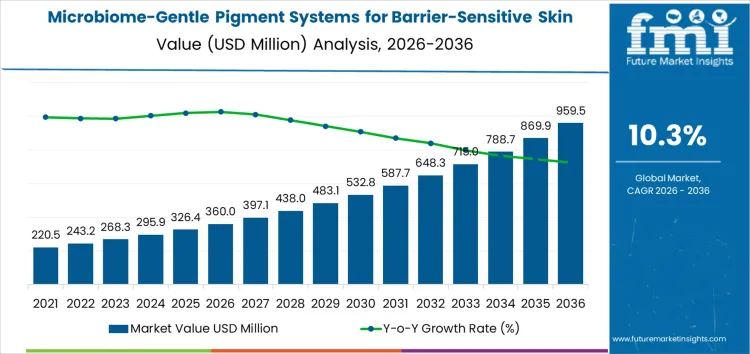
The microbiome-gentle pigment systems for barrier-sensitive skin market is valued at USD 360.0 million in 2026 and is forecasted to reach USD 959.5 million by 2036, reflecting a CAGR of 10.3%. Growth over this period is linked to structural shifts in complexion product development rather than expansion in overall color cosmetics usage. Barrier-sensitive and reactive skin profiles now influence pigment selection criteria, placing emphasis on purity, low reactivity, and compatibility with the skin’s microbial ecosystem. Demand concentrates in daily-wear products positioned for prolonged facial contact, where tolerance, comfort, and consistency of color delivery determine repeat purchasing and brand credibility. Pigment systems designed to limit microbiome disruption gain priority as sensitivity concerns become more prevalent across age groups and geographies.
Quick Stats for Microbiome-Gentle Pigment Systems for Barrier-Sensitive Skin Market
- Microbiome-Gentle Pigment Systems for Barrier-Sensitive Skin Market Value (2026): USD 360.0 million
- Microbiome-Gentle Pigment Systems for Barrier-Sensitive Skin Market Forecast Value (2036): USD 959.5 million
- Forecast CAGR (2026-2036): 10.3%
- Leading Pigment System Type in Global Demand: Microbiome-Compatible Mineral Pigments
- Fastest-Growing Countries: India, China, South Korea, USA, Germany
- Key Players in Global Demand: Sensient Technologies, Clariant AG, BASF SE, DSM-Firmenich, Sun Chemical
Application-driven requirements shape demand quality across segments. Sensitive skin foundations and tints account for the largest share due to routine use and direct interaction with compromised barriers. Post-procedure and recovery makeup follows, requiring pigments that perform under heightened skin vulnerability. Dermocosmetic color products integrate these systems within treatment-adjacent portfolios distributed through pharmacy and clinical channels.
Pediatric and baby applications remain selective, governed by stringent safety thresholds and conservative formulation strategies. Mineral-based and low-irritation pigment architectures dominate selection due to inert behavior and predictable surface interaction. Long-term expansion remains anchored in dermatological validation, regulatory alignment, and formulation trust, rather than shade proliferation or decorative innovation, reinforcing stability-led growth across global sensitive-skin cosmetic portfolios.
Microbiome-Gentle Pigment Systems for Barrier-Sensitive Skin Market Key Takeaways
| Metric | Value |
|---|---|
| Market Value (2026) | USD 360.0 million |
| Market Forecast Value (2036) | USD 959.5 million |
| Forecast CAGR (2026-2036) | 10.3% |
Why is the Demand for Microbiome-Gentle Pigment Systems for Barrier-Sensitive Skin Market Growing?
Demand for microbiome-gentle pigment systems for barrier-sensitive skin is growing globally due to rising consumer focus on skin health, tolerance, and microbiome preservation in cosmetic products. Barrier-sensitive skin, affected by environmental stressors, irritation, and frequent cosmetic wear, benefits from pigment systems formulated to minimize disruption of the skin’s natural microbiota while delivering cosmetic color performance. Cosmetic developers integrate gentle pigments with optimized particle size, surface treatment, and inert carriers that reduce potential for irritation and support compatibility with skin’s microbial ecosystem.
Regulatory frameworks in multiple regions emphasize ingredient safety, purity, and labeling transparency, which reinforces formulation of leave-on color cosmetics that meet stringent tolerance criteria. Growth in dermatologist-recommended products and clinical skincare hybrids encourages inclusion of pigments that align with sensitive skin and microbiome support claims. Advances in pigment engineering improve dispersion, stability, and color consistency without relying on harsh solvents or reactive chemistries. Retail expansion through specialty, pharmacy, and digital channels increases accessibility for consumers seeking sophisticated makeup options that respect skin barrier function. Consumer education and wellness trends reinforce preference for formulations that balance efficacy, comfort, and long-term skin health.
How Is the Microbiome-Gentle Pigment Systems for Barrier-Sensitive Skin Market Structured?
Demand for microbiome-gentle pigment systems for barrier-sensitive skin is shaped by rising incidence of compromised skin barriers, post-procedure care routines, and dermatologist-influenced formulation standards. Formulators assess pigment purity, surface interaction, and compatibility with skin microbiota. Global demand reflects expansion of sensitive-skin makeup categories where pigment systems must support color performance while minimizing disruption to barrier function and resident microbial balance.
Which Pigment System Type Accounts for the Largest Share of Global Demand?
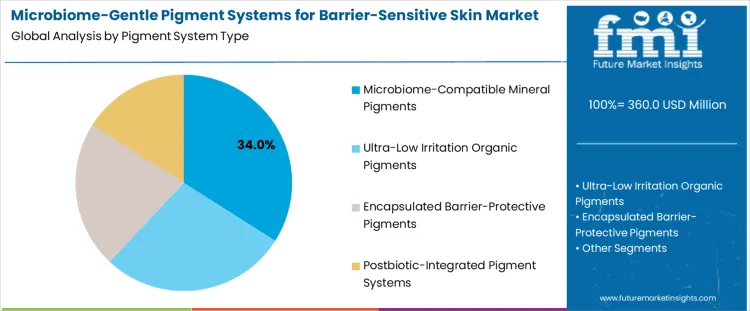
Microbiome-compatible mineral pigments account for 34.0%, representing the largest share of global demand. These pigments provide inert behavior, low reactivity, and stable color delivery suitable for compromised skin conditions. Ultra-low irritation organic pigments follow at 28.0%, supporting softer chromatic expression with controlled impurity profiles. Encapsulated barrier-protective pigments hold 22.0%, enabling reduced direct skin contact and enhanced tolerability. Postbiotic-integrated pigment systems represent 16.0%, reflecting selective adoption where microbiome support is integrated into pigment design.
Key Points
- Mineral pigments lead due to inert and low-reactivity properties
- Organic pigments support softer color with irritation control
- Encapsulation reduces direct pigment–skin interaction
Which Skin Compatibility Strategy Drives the Highest Global Demand?
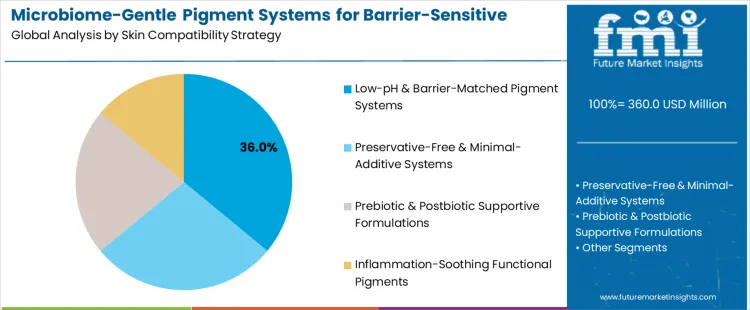
Low-pH and barrier-matched pigment systems account for 36.0%, making them the leading skin compatibility strategy globally. These systems align with natural skin acidity and reduce disruption to barrier lipids and microbiota. Preservative-free and minimal-additive systems follow at 28.0%, addressing sensitivity linked to formulation load. Prebiotic and postbiotic supportive formulations hold 22.0%, supporting microbiome stability during wear. Inflammation-soothing functional pigments represent 14.0%, used where calming benefits are integrated into color products.
Key Points
- Barrier-matched systems support microbiome stability
- Minimal additive approaches reduce sensitization risk
- Postbiotic strategies reflect emerging dermatological integration
Which Application Segment Represents the Largest Share of Global Demand?
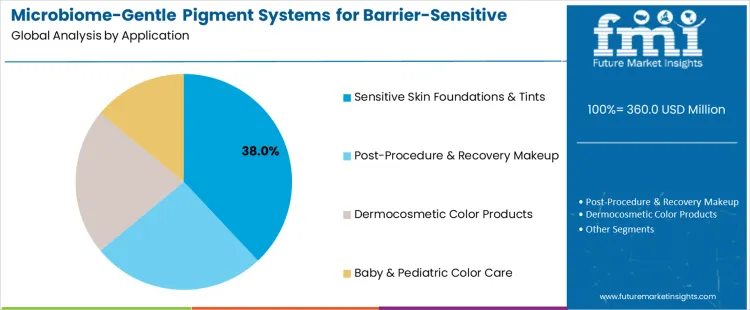
Sensitive skin foundations and tints account for 38.0%, making them the largest application segment globally. These products require daily-wear pigments that maintain coverage without aggravating barrier sensitivity. Post-procedure and recovery makeup follows at 26.0%, supporting short-term use on compromised skin. Dermocosmetic color products represent 22.0%, positioned at the intersection of treatment and cosmetic use. Baby and pediatric color care holds 14.0%, reflecting cautious adoption where safety thresholds remain highest.
Key Points
- Foundations dominate due to daily sensitive-skin usage
- Recovery makeup supports post-treatment routines
- Pediatric applications prioritize maximum tolerability
What are the Key Dynamics in the Microbiome-Gentle Pigment Systems for Barrier-Sensitive Skin Market?
Global demand rises as cosmetic brands and formulators adopt microbiome-gentle pigment systems designed to maintain skin barrier integrity while providing aesthetic color performance. These pigment systems use materials selected for minimal disruption to skin microflora and reduced irritation potential. Adoption aligns with growing prevalence of barrier-sensitive skin concerns, consumer emphasis on skin health alongside cosmetic effect, and regulatory focus on safety and skin compatibility. Usage spans foundations, concealers, tinted moisturizers, and corrective makeup aimed at sensitive, reactive, and compromised skin types across Europe, North America, Asia-Pacific, and other regions with developed and emerging beauty markets.
How do skin health awareness and sensitive skin performance expectations shape adoption?
Consumers increasingly prioritize products that support skin comfort, reduce irritation risk, and minimize disruption to natural microbiota while delivering consistent color payoff. Beauty formulators integrate microbiome-gentle pigments with supporting soothing agents, prebiotic components, and mild surfactants to achieve a balance between aesthetic requirements and barrier-friendly performance. Retailers position these products for dermatology-adjacent segments and sensitive skin lines promoted through clinical validation and consumer education. Social media and dermatologist endorsements influence demand for makeup that is both functional and noninflammatory for daily use. Performance criteria include stable color, ease of blending, and compatibility with skincare routines for diverse skin tones.
How do formulation complexity, cost structures, and regulatory requirements influence market scalability?
Microbiome-gentle pigment systems require careful formulation to maintain color stability, dispersion, and wear without employing agents that can disrupt skin flora or provoke sensitivity. Specialized pigments and supporting barrier-friendly components often involve higher raw material costs, affecting pricing strategies in sensitive skin product lines. Ingredient sourcing must consider purity, particle size distribution, and documented skin compatibility, increasing development time and testing burden. Regulatory frameworks in major markets enforce rigorous safety evaluation and labeling transparency for claims related to microbiome impact, influencing documentation and approval efforts. Availability of high-quality compliant pigment options and harmonized standards for microbiome-friendly classification support broader adoption across global cosmetics portfolios.
How Is Demand for Microbiome-Gentle Pigment Systems for Barrier-Sensitive Skin Evolving?
Demand for microbiome-gentle pigment systems for barrier-sensitive skin is increasing globally due to rising prevalence of skin sensitivity, dermatology-led product development, and avoidance of microbiome-disruptive ingredients. India leads with an 11.1% CAGR, supported by growth in sensitive skin care and expanding dermatologist-recommended cosmetics. China follows at 10.8%, driven by large-scale manufacturing and heightened safety scrutiny. South Korea records 10.5%, reflecting leadership in skin barrier science and functional cosmetics. USA posts a 10.0% CAGR, shaped by clean beauty governance and clinical validation expectations. Germany records 9.7%, supported by dermocosmetic adoption and precautionary formulation standards. Growth reflects integration of pigment purity, low reactivity, and microbiome compatibility into color cosmetics.
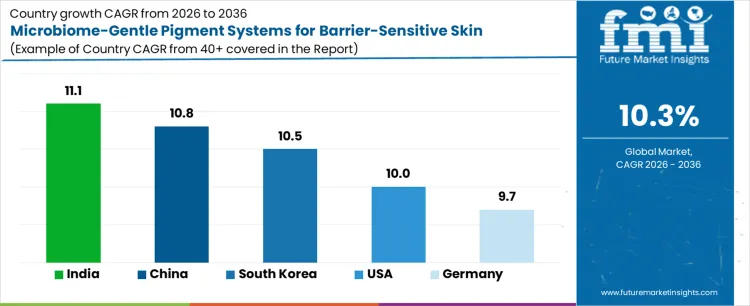
| Country | CAGR (%) |
|---|---|
| India | 11.1% |
| China | 10.8% |
| South Korea | 10.5% |
| USA | 10.0% |
| Germany | 9.7% |
What factors are driving strong adoption of microbiome-gentle pigments in India?
India demand is driven by increasing incidence of barrier-compromised skin, pollution exposure, and growth of dermatologist-influenced beauty products. CAGR of 11.1% reflects adoption of pigment systems engineered for low irritation, minimal surface treatment residue, and reduced interaction with skin flora. Consumers favor makeup compatible with active skincare routines and barrier repair products. Domestic brands expand sensitive skin ranges across mass and premium segments. Export-oriented manufacturers align pigment specifications with global microbiome safety benchmarks. Growth remains consumption-led and formulation-driven, aligned with rising skin health awareness and climate-related sensitivity concerns.
- Rising prevalence of sensitive and reactive skin
- Preference for low-irritation, microbiome-compatible pigments
- Expansion of dermatologist-recommended cosmetic lines
- Alignment with international microbiome safety standards
How is China sustaining high growth in microbiome-gentle pigment usage?
China demand reflects large-scale cosmetic manufacturing combined with increasing regulatory and consumer focus on skin safety. CAGR of 10.8% is supported by integration of gentle pigment systems into products targeting redness-prone and compromised skin. Brands emphasize purity, controlled particle morphology, and reduced contaminant profiles. E-commerce platforms amplify scrutiny of ingredient safety claims. Domestic pigment suppliers invest in purification and low-reactivity surface treatments. Growth remains scale-driven and safety-aligned, supported by manufacturing capacity and evolving consumer expectations.
- Large-scale production of sensitive skin cosmetics
- Heightened consumer and regulatory safety scrutiny
- Investment in pigment purification technologies
- Emphasis on low-reactivity surface treatments
What supports South Korea’s leadership in microbiome-friendly pigment innovation?
South Korea demand reflects advanced understanding of skin barrier biology and microbiome preservation. CAGR of 10.5% is supported by development of pigments compatible with low-pH and barrier-support formulations. Brands integrate microbiome-gentle pigments into cushions, BB creams, and corrective bases. Export-oriented formulations adopt these systems to meet global sensitive skin standards. Clinical testing and in-vivo tolerance studies support claims. Growth remains technology-led and science-driven, aligned with South Korea’s role in functional beauty innovation.
- Advanced research in skin barrier and microbiome science
- Integration into low-pH and barrier-support products
- Export-driven adoption of gentle pigment systems
- Emphasis on clinical tolerance validation
What factors shape demand growth in the USA for microbiome-gentle pigment systems?
USA demand is shaped by clean beauty positioning, dermatologist endorsement, and concern over chronic skin sensitivity. CAGR of 10.0% reflects reformulation of color cosmetics to exclude pigments associated with irritation or microbiome disruption. Brands emphasize hypoallergenic performance and compatibility with barrier-repair skincare. Retailers require substantiated safety and tolerance documentation. Professional and mass-market brands adopt microbiome-gentle pigments across daily-use makeup. Growth remains brand-led and compliance-focused, aligned with wellness-oriented personal care consumption.
- Clean beauty and dermatologist-influenced positioning
- Reformulation for barrier compatibility and tolerance
- Retail scrutiny of safety and microbiome claims
- Adoption across daily-use makeup categories
Why is Germany showing steady growth in microbiome-gentle pigment systems?
Germany demand reflects strong dermocosmetic influence and precautionary consumer protection standards. CAGR of 9.7% is supported by use of microbiome-gentle pigments in pharmacy-distributed and clinically positioned cosmetics. Manufacturers prioritize traceability, impurity control, and minimal biological interaction. Neutral sensory performance aligns with preference for understated makeup. Regulatory expectations guide conservative ingredient selection. Growth remains compliance-driven and quality-focused, supported by high consumer trust in clinically validated cosmetic products.
- Dermocosmetic and pharmacy-led product adoption
- Emphasis on traceability and impurity minimization
- Preference for clinically validated formulations
- Strong regulatory and quality assurance frameworks
What is the competitive landscape of demand for microbiome-gentle pigment systems for barrier-sensitive skin globally?
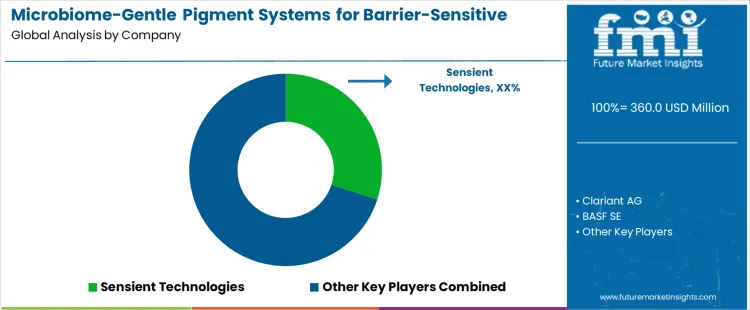
Demand for microbiome-gentle pigment systems for barrier-sensitive skin is driven by rising incidence of compromised skin barriers, dermatologist-led product guidance, and growth of sensitive-skin cosmetic segments. These pigment systems must avoid disruption of skin microbiota while delivering uniform color, low irritation potential, and compatibility with minimalist formulations. Buyers evaluate pigment surface treatment, particle morphology, impurity thresholds, microbiome interaction data, and stability within low-preservative systems. Procurement teams prioritize suppliers offering validated in-vitro and in-vivo skin compatibility data, absence of harsh dispersants, and compliance with global cosmetic safety frameworks. Trend in the global market reflects convergence of dermatological science and color cosmetics, with increased scrutiny on ingredient impact beyond visual performance.
Sensient Technologies holds leading positioning through microbiome-compatible pigment systems engineered with gentle surface treatments and supported by dermatological testing data. Clariant AG supplies cosmetic pigments designed for sensitive-skin applications with controlled impurity profiles and formulation stability. BASF SE contributes pigment technologies and formulation support aligned with skin barrier preservation and regulatory expectations. DSM-Firmenich supports demand through skin biology expertise, safety assessment capabilities, and ingredient platforms relevant to microbiome-conscious cosmetics. Sun Chemical, part of DIC Group, provides scalable pigment dispersions developed for sensitive and dermatologist-tested product lines. Competitive differentiation depends on microbiome safety validation, pigment purity, formulation compatibility, and ability to support global sensitive-skin brand portfolios.
Key Players in the Microbiome-Gentle Pigment Systems for Barrier-Sensitive Skin Market
- Sensient Technologies
- Clariant AG
- BASF SE
- DSM-Firmenich
- Sun Chemical (DIC Group)
Scope of the Report
| Items | Values |
|---|---|
| Quantitative Units | USD million |
| Pigment System Type | Microbiome-Compatible Mineral Pigments; Ultra-Low Irritation Organic Pigments; Encapsulated Barrier-Protective Pigments; Postbiotic-Integrated Pigment Systems |
| Skin Compatibility Strategy | Low-pH & Barrier-Matched Pigment Systems; Preservative-Free & Minimal-Additive Systems; Prebiotic & Postbiotic Supportive Formulations; Inflammation-Soothing Functional Pigments |
| Application | Sensitive Skin Foundations & Tints; Post-Procedure & Recovery Makeup; Dermocosmetic Color Products; Baby & Pediatric Color Care |
| Regions Covered | Asia Pacific, Europe, North America, Latin America, Middle East & Africa |
| Countries Covered | India, China, South Korea, USA, Germany, and 40+ countries |
| Key Companies Profiled | Sensient Technologies; Clariant AG; BASF SE; DSM-Firmenich; Sun Chemical (DIC Group) |
| Additional Attributes | Dollar sales by pigment system type and skin compatibility strategy; adoption trends for microbiome-friendly and barrier-supportive pigments in sensitive-skin cosmetics; irritation potential, pH tolerance, and microbiome impact assessment metrics; compatibility with preservative-free and minimal-additive formulations; encapsulation stability, release behavior, and skin feel considerations; dermatological safety standards and claim substantiation requirements influencing microbiome-gentle pigment selection. |
Microbiome-Gentle Pigment Systems for Barrier-Sensitive Skin Market by Segment
Pigment System Type:
- Microbiome-Compatible Mineral Pigments
- Ultra-Low Irritation Organic Pigments
- Encapsulated Barrier-Protective Pigments
- Postbiotic-Integrated Pigment Systems
Skin Compatibility Strategy:
- Low-pH & Barrier-Matched Pigment Systems
- Preservative-Free & Minimal-Additive Systems
- Prebiotic & Postbiotic Supportive Formulations
- Inflammation-Soothing Functional Pigments
Application:
- Sensitive Skin Foundations & Tints
- Post-Procedure & Recovery Makeup
- Dermocosmetic Color Products
- Baby & Pediatric Color Care
Region:
- Asia Pacific
- China
- Japan
- South Korea
- India
- Australia & New Zealand
- ASEAN
- Rest of Asia Pacific
- Europe
- Germany
- United Kingdom
- France
- Italy
- Spain
- Nordic
- BENELUX
- Rest of Europe
- North America
- United States
- Canada
- Mexico
- Latin America
- Brazil
- Chile
- Rest of Latin America
- Middle East & Africa
- Kingdom of Saudi Arabia
- Other GCC Countries
- Turkey
- South Africa
- Other African Union
- Rest of Middle East & Africa
Frequently Asked Questions
How big is the microbiome-gentle pigment systems for barrier-sensitive skin market in 2026?
The global microbiome-gentle pigment systems for barrier-sensitive skin market is estimated to be valued at USD 360.0 million in 2026.
What will be the size of microbiome-gentle pigment systems for barrier-sensitive skin market in 2036?
The market size for the microbiome-gentle pigment systems for barrier-sensitive skin market is projected to reach USD 959.5 million by 2036.
How much will be the microbiome-gentle pigment systems for barrier-sensitive skin market growth between 2026 and 2036?
The microbiome-gentle pigment systems for barrier-sensitive skin market is expected to grow at a 10.3% CAGR between 2026 and 2036.
What are the key pigment system types in the microbiome-gentle pigment systems for barrier-sensitive skin market?
The key pigment system types in microbiome-gentle pigment systems for barrier-sensitive skin market are microbiome-compatible mineral pigments, ultra-low irritation organic pigments, encapsulated barrier-protective pigments and postbiotic-integrated pigment systems.
Which skin compatibility strategy segment will contribute significant share in the microbiome-gentle pigment systems for barrier-sensitive skin market in 2026?
In terms of skin compatibility strategy, low-ph & barrier-matched pigment systems segment to command 36.0% share in the microbiome-gentle pigment systems for barrier-sensitive skin market in 2026.
Preview the report firsthand - request a free sample
Get SampleGet the brochure for pricing and purchase details.
Get PDFTable of Content
- Executive Summary
- Global Market Outlook
- Demand-side Trends
- Supply-side Trends
- Technology Roadmap Analysis
- Analysis and Recommendations
- Market Overview
- Market Coverage / Taxonomy
- Market Definition / Scope / Limitations
- Market Background
- Market Dynamics
- Drivers
- Restraints
- Opportunity
- Trends
- Scenario Forecast
- Demand in Optimistic Scenario
- Demand in Likely Scenario
- Demand in Conservative Scenario
- Opportunity Map Analysis
- Product Life Cycle Analysis
- Supply Chain Analysis
- Investment Feasibility Matrix
- Value Chain Analysis
- PESTLE and Porter’s Analysis
- Regulatory Landscape
- Regional Parent Market Outlook
- Production and Consumption Statistics
- Import and Export Statistics
- Market Dynamics
- Global Market Analysis 2021 to 2025 and Forecast, 2026 to 2036
- Historical Market Size Value (USD Million) Analysis, 2021 to 2025
- Current and Future Market Size Value (USD Million) Projections, 2026 to 2036
- Y-o-Y Growth Trend Analysis
- Absolute $ Opportunity Analysis
- Global Market Pricing Analysis 2021 to 2025 and Forecast 2026 to 2036
- Global Market Analysis 2021 to 2025 and Forecast 2026 to 2036, By Pigment System Type
- Introduction / Key Findings
- Historical Market Size Value (USD Million) Analysis By Pigment System Type , 2021 to 2025
- Current and Future Market Size Value (USD Million) Analysis and Forecast By Pigment System Type , 2026 to 2036
- Microbiome-Compatible Mineral Pigments
- Ultra-Low Irritation Organic Pigments
- Encapsulated Barrier-Protective Pigments
- Postbiotic-Integrated Pigment Systems
- Microbiome-Compatible Mineral Pigments
- Y-o-Y Growth Trend Analysis By Pigment System Type , 2021 to 2025
- Absolute $ Opportunity Analysis By Pigment System Type , 2026 to 2036
- Global Market Analysis 2021 to 2025 and Forecast 2026 to 2036, By Skin Compatibility Strategy
- Introduction / Key Findings
- Historical Market Size Value (USD Million) Analysis By Skin Compatibility Strategy, 2021 to 2025
- Current and Future Market Size Value (USD Million) Analysis and Forecast By Skin Compatibility Strategy, 2026 to 2036
- Low-pH & Barrier-Matched Pigment Systems
- Preservative-Free & Minimal-Additive Systems
- Prebiotic & Postbiotic Supportive Formulations
- Inflammation-Soothing Functional Pigments
- Low-pH & Barrier-Matched Pigment Systems
- Y-o-Y Growth Trend Analysis By Skin Compatibility Strategy, 2021 to 2025
- Absolute $ Opportunity Analysis By Skin Compatibility Strategy, 2026 to 2036
- Global Market Analysis 2021 to 2025 and Forecast 2026 to 2036, By Application
- Introduction / Key Findings
- Historical Market Size Value (USD Million) Analysis By Application, 2021 to 2025
- Current and Future Market Size Value (USD Million) Analysis and Forecast By Application, 2026 to 2036
- Sensitive Skin Foundations & Tints
- Post-Procedure & Recovery Makeup
- Dermocosmetic Color Products
- Baby & Pediatric Color Care
- Sensitive Skin Foundations & Tints
- Y-o-Y Growth Trend Analysis By Application, 2021 to 2025
- Absolute $ Opportunity Analysis By Application, 2026 to 2036
- Global Market Analysis 2021 to 2025 and Forecast 2026 to 2036, By Region
- Introduction
- Historical Market Size Value (USD Million) Analysis By Region, 2021 to 2025
- Current Market Size Value (USD Million) Analysis and Forecast By Region, 2026 to 2036
- North America
- Latin America
- Western Europe
- Eastern Europe
- East Asia
- South Asia and Pacific
- Middle East & Africa
- Market Attractiveness Analysis By Region
- North America Market Analysis 2021 to 2025 and Forecast 2026 to 2036, By Country
- Historical Market Size Value (USD Million) Trend Analysis By Market Taxonomy, 2021 to 2025
- Market Size Value (USD Million) Forecast By Market Taxonomy, 2026 to 2036
- By Country
- USA
- Canada
- Mexico
- By Pigment System Type
- By Skin Compatibility Strategy
- By Application
- By Country
- Market Attractiveness Analysis
- By Country
- By Pigment System Type
- By Skin Compatibility Strategy
- By Application
- Key Takeaways
- Latin America Market Analysis 2021 to 2025 and Forecast 2026 to 2036, By Country
- Historical Market Size Value (USD Million) Trend Analysis By Market Taxonomy, 2021 to 2025
- Market Size Value (USD Million) Forecast By Market Taxonomy, 2026 to 2036
- By Country
- Brazil
- Chile
- Rest of Latin America
- By Pigment System Type
- By Skin Compatibility Strategy
- By Application
- By Country
- Market Attractiveness Analysis
- By Country
- By Pigment System Type
- By Skin Compatibility Strategy
- By Application
- Key Takeaways
- Western Europe Market Analysis 2021 to 2025 and Forecast 2026 to 2036, By Country
- Historical Market Size Value (USD Million) Trend Analysis By Market Taxonomy, 2021 to 2025
- Market Size Value (USD Million) Forecast By Market Taxonomy, 2026 to 2036
- By Country
- Germany
- UK
- Italy
- Spain
- France
- Nordic
- BENELUX
- Rest of Western Europe
- By Pigment System Type
- By Skin Compatibility Strategy
- By Application
- By Country
- Market Attractiveness Analysis
- By Country
- By Pigment System Type
- By Skin Compatibility Strategy
- By Application
- Key Takeaways
- Eastern Europe Market Analysis 2021 to 2025 and Forecast 2026 to 2036, By Country
- Historical Market Size Value (USD Million) Trend Analysis By Market Taxonomy, 2021 to 2025
- Market Size Value (USD Million) Forecast By Market Taxonomy, 2026 to 2036
- By Country
- Russia
- Poland
- Hungary
- Balkan & Baltic
- Rest of Eastern Europe
- By Pigment System Type
- By Skin Compatibility Strategy
- By Application
- By Country
- Market Attractiveness Analysis
- By Country
- By Pigment System Type
- By Skin Compatibility Strategy
- By Application
- Key Takeaways
- East Asia Market Analysis 2021 to 2025 and Forecast 2026 to 2036, By Country
- Historical Market Size Value (USD Million) Trend Analysis By Market Taxonomy, 2021 to 2025
- Market Size Value (USD Million) Forecast By Market Taxonomy, 2026 to 2036
- By Country
- China
- Japan
- South Korea
- By Pigment System Type
- By Skin Compatibility Strategy
- By Application
- By Country
- Market Attractiveness Analysis
- By Country
- By Pigment System Type
- By Skin Compatibility Strategy
- By Application
- Key Takeaways
- South Asia and Pacific Market Analysis 2021 to 2025 and Forecast 2026 to 2036, By Country
- Historical Market Size Value (USD Million) Trend Analysis By Market Taxonomy, 2021 to 2025
- Market Size Value (USD Million) Forecast By Market Taxonomy, 2026 to 2036
- By Country
- India
- ASEAN
- Australia & New Zealand
- Rest of South Asia and Pacific
- By Pigment System Type
- By Skin Compatibility Strategy
- By Application
- By Country
- Market Attractiveness Analysis
- By Country
- By Pigment System Type
- By Skin Compatibility Strategy
- By Application
- Key Takeaways
- Middle East & Africa Market Analysis 2021 to 2025 and Forecast 2026 to 2036, By Country
- Historical Market Size Value (USD Million) Trend Analysis By Market Taxonomy, 2021 to 2025
- Market Size Value (USD Million) Forecast By Market Taxonomy, 2026 to 2036
- By Country
- Kingdom of Saudi Arabia
- Other GCC Countries
- Turkiye
- South Africa
- Other African Union
- Rest of Middle East & Africa
- By Pigment System Type
- By Skin Compatibility Strategy
- By Application
- By Country
- Market Attractiveness Analysis
- By Country
- By Pigment System Type
- By Skin Compatibility Strategy
- By Application
- Key Takeaways
- Key Countries Market Analysis
- USA
- Pricing Analysis
- Market Share Analysis, 2025
- By Pigment System Type
- By Skin Compatibility Strategy
- By Application
- Canada
- Pricing Analysis
- Market Share Analysis, 2025
- By Pigment System Type
- By Skin Compatibility Strategy
- By Application
- Mexico
- Pricing Analysis
- Market Share Analysis, 2025
- By Pigment System Type
- By Skin Compatibility Strategy
- By Application
- Brazil
- Pricing Analysis
- Market Share Analysis, 2025
- By Pigment System Type
- By Skin Compatibility Strategy
- By Application
- Chile
- Pricing Analysis
- Market Share Analysis, 2025
- By Pigment System Type
- By Skin Compatibility Strategy
- By Application
- Germany
- Pricing Analysis
- Market Share Analysis, 2025
- By Pigment System Type
- By Skin Compatibility Strategy
- By Application
- UK
- Pricing Analysis
- Market Share Analysis, 2025
- By Pigment System Type
- By Skin Compatibility Strategy
- By Application
- Italy
- Pricing Analysis
- Market Share Analysis, 2025
- By Pigment System Type
- By Skin Compatibility Strategy
- By Application
- Spain
- Pricing Analysis
- Market Share Analysis, 2025
- By Pigment System Type
- By Skin Compatibility Strategy
- By Application
- France
- Pricing Analysis
- Market Share Analysis, 2025
- By Pigment System Type
- By Skin Compatibility Strategy
- By Application
- India
- Pricing Analysis
- Market Share Analysis, 2025
- By Pigment System Type
- By Skin Compatibility Strategy
- By Application
- ASEAN
- Pricing Analysis
- Market Share Analysis, 2025
- By Pigment System Type
- By Skin Compatibility Strategy
- By Application
- Australia & New Zealand
- Pricing Analysis
- Market Share Analysis, 2025
- By Pigment System Type
- By Skin Compatibility Strategy
- By Application
- China
- Pricing Analysis
- Market Share Analysis, 2025
- By Pigment System Type
- By Skin Compatibility Strategy
- By Application
- Japan
- Pricing Analysis
- Market Share Analysis, 2025
- By Pigment System Type
- By Skin Compatibility Strategy
- By Application
- South Korea
- Pricing Analysis
- Market Share Analysis, 2025
- By Pigment System Type
- By Skin Compatibility Strategy
- By Application
- Russia
- Pricing Analysis
- Market Share Analysis, 2025
- By Pigment System Type
- By Skin Compatibility Strategy
- By Application
- Poland
- Pricing Analysis
- Market Share Analysis, 2025
- By Pigment System Type
- By Skin Compatibility Strategy
- By Application
- Hungary
- Pricing Analysis
- Market Share Analysis, 2025
- By Pigment System Type
- By Skin Compatibility Strategy
- By Application
- Kingdom of Saudi Arabia
- Pricing Analysis
- Market Share Analysis, 2025
- By Pigment System Type
- By Skin Compatibility Strategy
- By Application
- Turkiye
- Pricing Analysis
- Market Share Analysis, 2025
- By Pigment System Type
- By Skin Compatibility Strategy
- By Application
- South Africa
- Pricing Analysis
- Market Share Analysis, 2025
- By Pigment System Type
- By Skin Compatibility Strategy
- By Application
- USA
- Market Structure Analysis
- Competition Dashboard
- Competition Benchmarking
- Market Share Analysis of Top Players
- By Regional
- By Pigment System Type
- By Skin Compatibility Strategy
- By Application
- Competition Analysis
- Competition Deep Dive
- Sensient Technologies
- Overview
- Product Portfolio
- Profitability by Market Segments (Product/Age /Sales Channel/Region)
- Sales Footprint
- Strategy Overview
- Marketing Strategy
- Product Strategy
- Channel Strategy
- Clariant AG
- BASF SE
- DSM-Firmenich
- Sun Chemical (DIC Group)
- Sensient Technologies
- Competition Deep Dive
- Assumptions & Acronyms Used
- Research Methodology


