

- Industry Size (2026)
- USD 340 Mn
- Forecast (2036)
- USD 775.8 Mn
- CAGR (2026 to 2036)
- 8.6%
Mineral Blue-Light Filtering Pigments for Daily Wear Makeup Market Forecast and Outlook 2026 to 2036
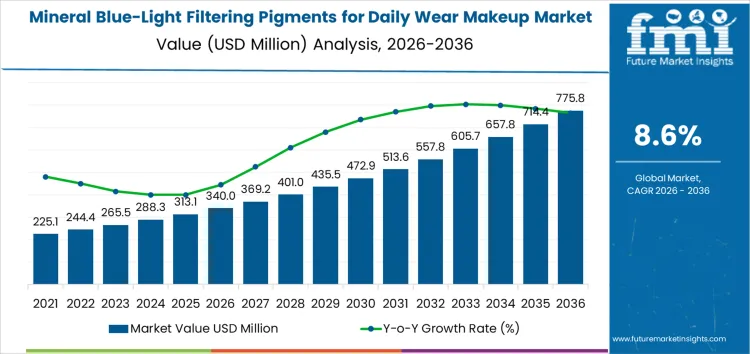
The mineral blue-light filtering pigments for daily wear makeup market is projected to grow from USD 340 million in 2026 to USD 775.8 million by 2036, reflecting a compound annual growth rate (CAGR) of 8.6%. As consumer awareness around digital screen exposure and its potential skin impact increases, demand for blue-light filtering pigments is gaining momentum. Commercially, this market is becoming increasingly relevant as beauty brands adapt to a new wave of consumer concerns, with buyers seeking products that align with both health-conscious trends and everyday skincare routines. Decision-makers in the cosmetics industry will be focused on meeting these evolving preferences while balancing innovation with cost-effectiveness. The space offers significant opportunities for companies to position themselves as leaders in protective, functional beauty. As competition intensifies, the ability to demonstrate clear consumer benefits and integrate new technologies will drive purchasing behavior, shaping long-term growth. For suppliers, aligning product offerings with both consumer demand and regulatory expectations will be critical for sustained success.
Quick Stats of the Mineral Blue-Light Filtering Pigments for Daily Wear Makeup Market
- Mineral Blue-Light Filtering Pigments for Daily Wear Makeup Market Value (2026): USD 340 million
- Mineral Blue-Light Filtering Pigments for Daily Wear Makeup Market Forecast Value (2036): USD 775.8 million
- Mineral Blue-Light Filtering Pigments for Daily Wear Makeup Market Global Forecast CAGR (2026-2036): 8.6%
- Mineral Blue-Light Filtering Pigments for Daily Wear Makeup Market Leading Segment: Pigment Type (Iron Oxide-Based) 52%
- Key Growth Regions in Mineral Blue-Light Filtering Pigments for Daily Wear Makeup Market: USA
- Top Players in Mineral Blue-Light Filtering Pigments for Daily Wear Makeup Market: BASF Care Creations, Merck Performance Materials, Sun Chemical Corporation, Sensient Cosmetic Technologies, Kobo Products Inc.
What is the Growth Forecast for the Mineral Blue-Light Filtering Pigments for Daily Wear Makeup Market through 2036?
The 5-year growth block analysis for the mineral blue-light filtering pigments for daily wear makeup market shows consistent growth over the first half of the forecast period. From 2026 to 2031, the market will increase from USD 340 million to USD 511 million, reflecting a growth of USD 171 million over the five-year period. This growth is expected to be driven by rising consumer demand for makeup products that offer added skin protection, particularly in response to concerns over blue light exposure from screens and other electronic devices.
The market will see a steady increase each year, with growth of approximately USD 29 million from 2026 to 2027, and continuing in a similar pattern through 2029. As the demand for functional, protective makeup products grows, the adoption of mineral blue-light filtering pigments will gain momentum. By 2031, the market will have expanded significantly, with continued steady growth expected throughout the decade, driven by ongoing innovation in blue-light filtering formulations and growing consumer awareness of their benefits. The second phase of growth will be more stable as the technology becomes widely accepted, marking the market’s transition toward maturity in the beauty and skincare industry.
Mineral Blue-Light Filtering Pigments for Daily Wear Makeup Market Key Takeaways
| Metric | Value |
|---|---|
| Industry Sales Value (2026) | USD 340 million |
| Industry Forecast Value (2036) | USD 775.8 million |
| Industry Forecast CAGR (2026-2036) | 8.6% |
What Is Driving the Demand for Mineral Blue Light Filtering Pigments for Daily Wear Makeup Market Globally?
The global demand for mineral blue light filtering pigments in daily wear makeup is driven by rising consumer awareness of screen exposure effects on skin and growing interest in multifunctional beauty products that combine aesthetic and protective benefits. Blue light, emitted from digital devices and artificial lighting, is perceived by many consumers to contribute to skin stress, dullness, and premature aging, prompting interest in cosmetics that offer neutral tone along with blue light filtration. Mineral pigments such as iron oxides, zinc oxide, and titanium dioxide can provide safe, broad spectrum protection while serving as colorants or light diffusers in foundations, powders, and tinted moisturizers.
Growth in time spent on smartphones, tablets, and computers around the world reinforces interest in makeup that claims to protect against environmental aggressors beyond traditional UV exposure. Social media and beauty influencers have amplified consumer interest in products that align with wellness and preventive skincare trends, increasing visibility and demand for pigment systems that offer perceived daily protection without compromising look or feel. Expansion of the clean beauty movement, in which consumers prefer mineral based ingredients with transparent sourcing and safety profiles, also supports adoption of blue light filtering pigments.
Future demand for mineral blue light filtering pigments in daily wear makeup is expected to grow as formulation science and consumer preferences continue to evolve. Innovation in pigment technologies that improve light scattering, minimize flashback in photography, and deliver consistent color across skin tones will broaden appeal to a wider range of users and product formats. As digital lifestyles expand and concern about environmental stressors persists, brands will incorporate blue light filtering claims into foundations, BB creams, and powders to differentiate offerings and meet emerging needs. Regulatory attention to ingredient safety and restrictions on certain synthetic colorants will encourage use of mineral based alternatives that align with clean labeling and safety standards.
Growth in expressive, multifunctional beauty products that combine makeup with skincare benefits will further reinforce interest, especially among younger and digitally engaged consumers. Enhanced education on blue light effects and clear performance data will help validate product claims and build trust, supporting broader market adoption. As global makeup consumption continues to rise, especially in online and direct to consumer channels, demand for mineral blue light filtering pigments that balance color performance with daily protective features is expected to expand steadily across regions.
What are the Leading Segments in the Global Mineral Blue-Light Filtering Pigments for Daily Wear Makeup Market?
The global mineral blue-light filtering pigments for daily wear makeup market is segmented by pigment type and application type. Among pigment types, iron oxide-based pigments lead the market, capturing 52% of the share, followed by titanium dioxide-enhanced, zinc oxide formulations, and synthetic mineral compounds. Iron oxide-based pigments are favored for their effective color payoff and ability to offer blue-light filtering properties. On the application side, foundation & concealer dominate the market, holding 41% of the share, followed by BB & CC creams, tinted moisturizers, and powder compacts. Foundation & concealer products are the largest application due to their widespread use and the increasing demand for makeup that offers protection from environmental stressors like blue light.
What Drives the Growth of Iron Oxide-Based Pigments in the Mineral Blue-Light Filtering Pigments for Daily Wear Makeup Market?
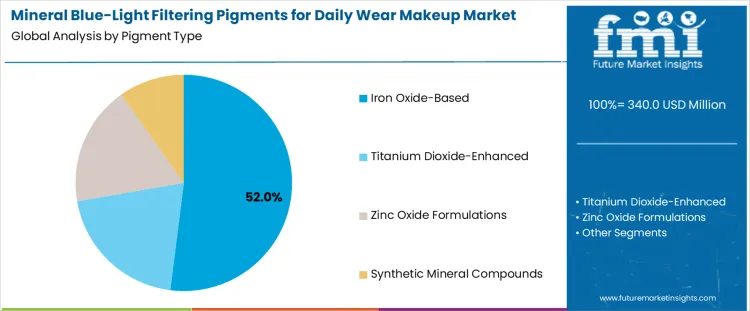
Iron oxide-based pigments are the leading pigment type in the mineral blue-light filtering pigments for daily wear makeup market, holding 52% of the share. These pigments are valued for their versatility, natural composition, and ability to provide a wide range of shades suitable for various skin tones. Iron oxide-based pigments are effective in blocking harmful blue light emitted by digital devices and artificial lighting, making them ideal for daily wear makeup products that cater to consumers seeking both beauty and protection.
The growing consumer awareness of the effects of blue light exposure on skin health has driven the demand for makeup that includes blue-light filtering ingredients. Additionally, iron oxide pigments are widely used in foundation and concealer formulations due to their ability to provide long-lasting coverage and natural finishes. As consumers continue to prioritize products with both aesthetic and functional benefits, iron oxide-based pigments are expected to remain dominant in the market.
What is Driving the Demand for Foundation & Concealer in the Mineral Blue-Light Filtering Pigments for Daily Wear Makeup Market?
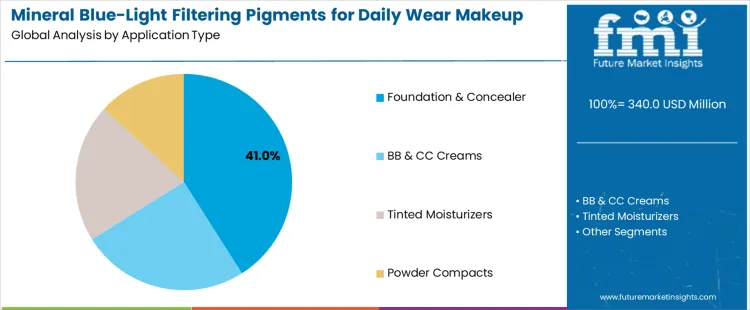
Foundation & concealer is the leading application type in the mineral blue-light filtering pigments for daily wear makeup market, capturing 41% of the share. This demand is primarily driven by the high usage of foundation and concealer in daily makeup routines, where consumers seek products that not only enhance their appearance but also provide skin protection. With the increasing use of electronic devices and growing concerns over the effects of blue light on skin, consumers are actively seeking makeup products that offer blue-light protection in addition to coverage.
Mineral-based blue-light filtering pigments, such as iron oxide and titanium dioxide, are well-suited for foundation and concealer formulations as they can provide both effective coverage and protection. As the trend toward multifunctional skincare and makeup products rises, the demand for foundation & concealer products with added blue-light filtering properties will continue to grow, securing its position as the leading application in the market.
What are the Key Dynamics in the Global Mineral Blue Light Filtering Pigments for Daily Wear Makeup Market?
The global mineral blue light filtering pigments for daily wear makeup market is growing as consumers and beauty brands recognize the impact of digital exposure on skin appearance. These pigments are incorporated into foundations, primers, setting powders and tinted moisturizers to reflect or absorb high energy visible light from screens without compromising color or texture. Growth reflects rising awareness of blue light related skin concerns such as dullness and premature aging, demand for multifunctional makeup, and wider adoption of skincare infused cosmetic products. Uptake spans premium and mass beauty categories in both online and retail channels worldwide.
What are the Key Drivers for the Mineral Blue Light Filtering Pigments for Daily Wear Makeup Market?
Rising consumer concern about prolonged screen use and its influence on skin health is a primary driver. Many users seek daily wear makeup that not only provides aesthetic benefits but also helps protect skin from environmental stressors associated with mobile devices and computers. Cosmetic formulators are integrating mineral based filters like titanium dioxide and zinc oxide that offer broad spectrum protection and blue light reflectance while fitting with clean beauty trends. Growth of digital beauty influencers and educational content boosts awareness and encourages adoption. Expansion of self expression makeup routines and demand for products that combine color with protective benefits also support market activity.
What are the Restraints for the Mineral Blue Light Filtering Pigments for Daily Wear Makeup Market?
One restraint is the formulation complexity involved in achieving effective blue light filtering without affecting product feel, shade range or finish. Mineral pigments must be finely milled and stabilized to avoid unwanted tint or texture issues, which can increase development and manufacturing costs. Consumer skepticism about the level of blue light protection provided by makeup compared with sunscreens or dedicated filters may influence purchasing decisions. Price sensitivity in value segments may limit adoption if perceived benefits do not clearly justify higher price points. Regulatory differences in claims allowed for blue light protection across regions also affect how products are marketed and positioned.
What are the Key Trends in the Mineral Blue Light Filtering Pigments for Daily Wear Makeup Market?
A key trend is integration of blue light filtering pigments with other functional ingredients such as antioxidants, moisturizers and light diffusers to create multifunctional daily wear makeup. Brands are emphasizing clean, natural mineral formulations that appeal to health conscious consumers and sensitive skin users. Customization and shade diversity are gaining attention as consumers seek products that match a wide range of skin tones while delivering protective benefits. Digital proofing and augmented reality try on tools help consumers visualize product effects and encourage purchase. Transparent ingredient labeling and science based communication strengthen consumer trust and influence market growth.
What is the Country-Wise Analysis of the Mineral Blue-Light Filtering Pigments for Daily Wear Makeup Market?
The mineral blue-light filtering pigments for daily wear makeup market is expected to experience steady growth, driven by the rising demand for protective skincare and cosmetics that shield the skin from the harmful effects of blue light exposure. Blue light, emitted by digital devices and screens, is becoming a growing concern for skin health, leading to an increased preference for products that offer protection. Mineral-based pigments, which provide natural blue-light filtering properties, are gaining popularity as safer alternatives to synthetic options. Developed markets such as the USA, South Korea, and Germany are seeing strong demand for these protective makeup solutions due to increasing awareness about blue light and its potential impact on skin aging and health. Emerging markets like China and Japan are also witnessing steady growth, driven by consumer awareness of skincare and the rising trend of multifunctional beauty products.
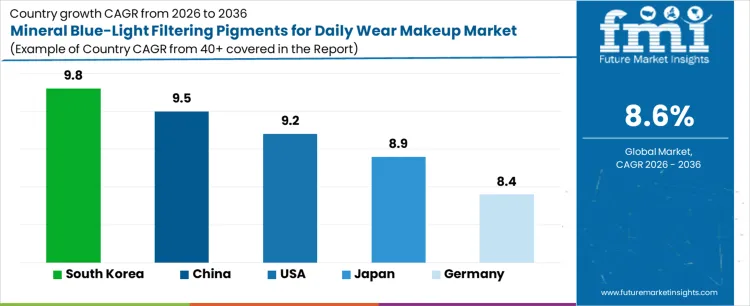
| Country | CAGR (2026-2036) |
|---|---|
| USA | 9.2% |
| South Korea | 9.8% |
| China | 9.5% |
| Japan | 8.9% |
| Germany | 8.4% |
What is the Growth Outlook on the Mineral Blue-Light Filtering Pigments for Daily Wear Makeup Market in the USA?
The mineral blue-light filtering pigments for daily wear makeup market in the USA is projected to grow steadily, with a projected CAGR of 9.2% from 2026 to 2036. The U.S. market is at the forefront of the clean beauty movement, where consumers are increasingly seeking products that not only enhance their appearance but also offer skin protection and health benefits. As blue light exposure from digital devices becomes a rising concern, consumers are more focused on skincare and makeup products that provide a barrier against environmental stressors.
Mineral pigments, known for their natural ability to filter blue light, are gaining traction in the beauty industry as effective, non-toxic alternatives to synthetic options. With an increasing emphasis on multifunctional beauty products that protect against both environmental and digital damage, the demand for mineral blue-light filtering pigments in daily wear makeup is expected to rise steadily in the U.S. market. Additionally, the U.S. regulatory environment is promoting safer beauty formulations, further supporting the growth of protective cosmetics.
What is the Market Outlook on the Mineral Blue-Light Filtering Pigments for Daily Wear Makeup Market in South Korea?
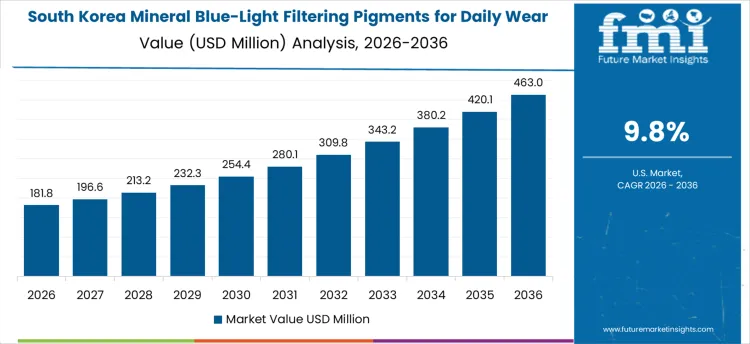
South Korea is projected to see robust growth in the mineral blue-light filtering pigments for daily wear makeup market, with a projected CAGR of 9.8% from 2026 to 2036. South Korea is a global leader in skincare and cosmetics innovation, and the demand for products that offer both beauty and skin protection is on the rise. With increasing concerns about blue light exposure from prolonged screen time, South Korean consumers are increasingly seeking makeup products that help protect the skin from digital damage.
As part of the growing clean beauty movement, mineral blue-light filtering pigments, which are natural and safe, are gaining popularity. South Korea’s advanced beauty industry is responding to these demands by integrating these functional pigments into daily wear makeup products. The trend towards multifunctional, protective skincare and makeup, along with growing consumer awareness of environmental factors impacting skin health, is expected to drive strong market growth for these pigments in South Korea.
What is the Growth Forecast for the Mineral Blue-Light Filtering Pigments for Daily Wear Makeup Market in China?
The mineral blue-light filtering pigments for daily wear makeup market in China is expected to grow steadily, with a projected CAGR of 9.5% from 2026 to 2036. As one of the largest cosmetic markets in the world, China is witnessing a growing consumer interest in multifunctional beauty products that provide both aesthetic and protective benefits. With rising concerns about the potential skin damage caused by blue light exposure from digital devices, there is a strong demand for makeup that offers blue light protection.
Mineral pigments, which provide a natural and safe solution, are increasingly being adopted in China’s rapidly expanding beauty market. The Chinese market is also influenced by the global clean beauty movement, with more consumers seeking safer, environmentally friendly, and effective cosmetic products. As awareness of skin protection grows, particularly among younger, tech-savvy consumers, the demand for mineral blue-light filtering pigments in daily wear makeup is expected to continue rising in China.
What is the Market Outlook on the Mineral Blue-Light Filtering Pigments for Daily Wear Makeup Market in Japan?
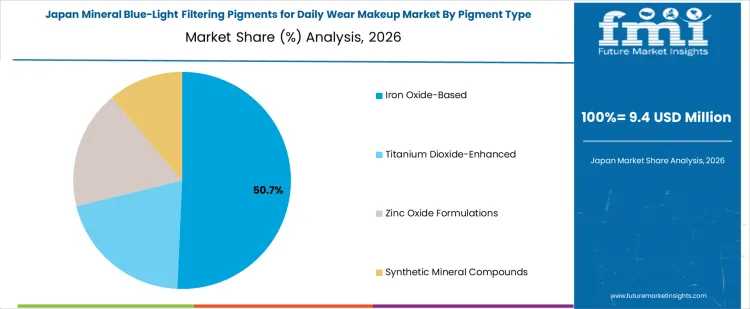
Japan is projected to experience steady growth in the mineral blue-light filtering pigments for daily wear makeup market, with a projected CAGR of 8.9% from 2026 to 2036. Japan is known for its strong skincare culture and increasing consumer interest in products that protect the skin from environmental factors, including blue light. With the rise in digital device usage and concerns about its impact on skin health, Japanese consumers are becoming more aware of the need for protective ingredients in their beauty products.
Mineral-based pigments, which are naturally effective at filtering blue light, are gaining popularity in Japan’s cosmetics market. As clean beauty and multifunctional products become more sought after, the demand for makeup solutions that offer both aesthetic enhancement and protection from digital skin damage is expected to grow. Japan’s beauty industry is quick to adopt innovative solutions that meet consumer needs for both beauty and skin care, making it a key market for blue-light filtering pigments.
What are the Growth Prospects for the Mineral Blue-Light Filtering Pigments for Daily Wear Makeup Market in Germany?
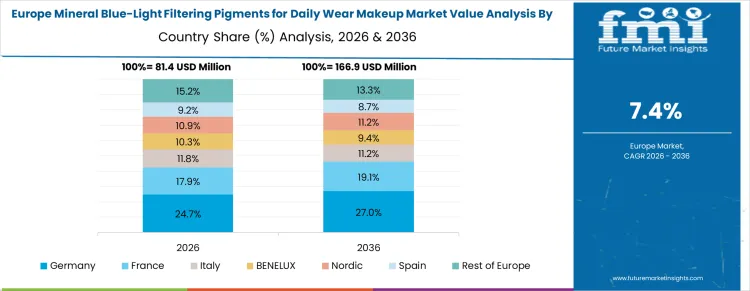
Germany is expected to see steady growth in the mineral blue-light filtering pigments for daily wear makeup market, with a projected CAGR of 8.4% from 2026 to 2036. Germany is a leader in environmental sustainability, and its beauty market is increasingly shifting towards products that combine effectiveness with eco-friendly formulations. As concerns about blue light exposure from digital devices grow, German consumers are more likely to seek products that not only enhance their beauty but also protect their skin.
Mineral pigments, which naturally offer blue light protection without the use of harmful chemicals, are gaining popularity in Germany’s clean beauty sector. With increasing regulatory pressure to reduce synthetic ingredients and the growing demand for multifunctional beauty products, the market for mineral blue-light filtering pigments in Germany is expected to continue to expand steadily. The country’s strong emphasis on health, sustainability, and product efficacy makes it a key market for the adoption of these innovative cosmetic ingredients.
What is the Competitive Landscape for the Mineral Blue-Light Filtering Pigments for Daily Wear Makeup Market?

The mineral blue-light filtering pigments for daily wear makeup market is experiencing rapid growth as consumers become more aware of the impact of blue light exposure on skin health and seek products that provide protection from environmental stressors. BASF Care Creations leads the market with its advanced mineral blue-light filtering pigments, offering innovative formulations that protect the skin from blue light while enhancing the appearance of makeup. Their commitment to high-performance, safe ingredients, and sustainability has positioned them as a dominant player in this space. Merck Performance Materials, Sun Chemical Corporation, and Sensient Cosmetic Technologies are significant competitors, each providing specialized pigments designed to offer blue-light protection while ensuring the quality and wearability of daily makeup. Merck Performance Materials offers a range of colorants with added benefits such as blue-light protection, while Sun Chemical Corporation focuses on providing high-performance pigments for various cosmetic applications. Sensient Cosmetic Technologies specializes in providing natural and effective pigments for blue-light filtering.
Kobo Products Inc. further strengthens the competitive landscape by offering mineral-based pigments for daily wear makeup that enhance skin protection and promote a healthy, glowing complexion. Kobo Products Inc. focuses on providing high-quality, effective pigments that meet consumer demand for eco-friendly and protective makeup solutions. These companies compete by focusing on product innovation, performance, and the growing need for cosmetics that provide additional skincare benefits. As consumer awareness of blue light’s effects on skin health continues to rise, the market for mineral blue-light filtering pigments is expected to expand, driving further innovation and competition in the sector.
Key Players of the Mineral Blue-Light Filtering Pigments for Daily Wear Makeup Market
- BASF Care Creations
- Merck Performance Materials
- Sun Chemical Corporation
- Sensient Cosmetic Technologies
- Kobo Products Inc
Scope of the Report
| Items | Values |
|---|---|
| Quantitative Units (2026) | USD Million |
| Pigment Type | Iron Oxide Based, Titanium Dioxide Enhanced, Zinc Oxide Formulations, Synthetic Mineral Compounds |
| Application Type | Foundation & Concealer, BB & CC Creams, Tinted Moisturizers, Powder Compacts |
| End Use | Daily Wear Cosmetics, Professional Makeup Lines, Digital Device Users, Anti Aging Beauty Products |
| Companies | BASF Care Creations, Merck Performance Materials, Sun Chemical Corporation, Sensient Cosmetic Technologies, Kobo Products Inc |
| Regions Covered | North America, Latin America, Western Europe, Eastern Europe, South Asia and Pacific, East Asia, Middle East & Africa |
| Countries Covered | United States, Canada, Mexico, Brazil, Argentina, Germany, France, United Kingdom, Italy, Spain, Netherlands, China, India, Japan, South Korea, ANZ, GCC Countries, South Africa |
| Additional Attributes | Dollar by sales by pigment type, application type, and end use by region. Includes market dynamics in mineral blue light filtering pigments adoption for daily wear makeup, performance in cosmetic formulations, cost and formulation factors, regulatory and safety considerations, consumer preferences toward blue light protection in makeup products, market share and competitive positioning of key companies, innovations in mineral filtering pigment technologies, and assessment of impact on cosmetic efficacy and skin benefits. |
Mineral Blue-Light Filtering Pigments for Daily Wear Makeup Market Segmentation
Pigment Type:
- Iron Oxide-Base
- Titanium Dioxide-Enhanced
- Zinc Oxide Formulations
- Synthetic Mineral Compounds
Application Type:
- Foundation & Concealer
- BB & CC Creams
- Tinted Moisturizers
- Powder Compacts
End Use:
- Daily Wear Cosmetics
- Professional Makeup Lines
- Digital Device Users
- Anti-Aging Beauty Products
Region:
- Asia Pacific
- China
- Japan
- South Korea
- India
- Australia & New Zealand
- ASEAN
- Rest of Asia Pacific
- Europe
- Germany
- United Kingdom
- France
- Italy
- Spain
- Nordic
- BENELUX
- Rest of Europe
- North America
- United States
- Canada
- Mexico
- Latin America
- Brazil
- Chile
- Rest of Latin America
- Middle East & Africa
- Kingdom of Saudi Arabia
- Other GCC Countries
- Turkey
- South Africa
- Other African Union
- Rest of Middle East & Africa
Frequently Asked Questions
How big is the mineral blue-light filtering pigments for daily wear makeup market in 2026?
The global mineral blue-light filtering pigments for daily wear makeup market is estimated to be valued at USD 340.0 million in 2026.
What will be the size of mineral blue-light filtering pigments for daily wear makeup market in 2036?
The market size for the mineral blue-light filtering pigments for daily wear makeup market is projected to reach USD 775.8 million by 2036.
How much will be the mineral blue-light filtering pigments for daily wear makeup market growth between 2026 and 2036?
The mineral blue-light filtering pigments for daily wear makeup market is expected to grow at a 8.6% CAGR between 2026 and 2036.
What are the key product types in the mineral blue-light filtering pigments for daily wear makeup market?
The key product types in mineral blue-light filtering pigments for daily wear makeup market are iron oxide-based, titanium dioxide-enhanced, zinc oxide formulations and synthetic mineral compounds.
Which application type segment to contribute significant share in the mineral blue-light filtering pigments for daily wear makeup market in 2026?
In terms of application type, foundation & concealer segment to command 41.0% share in the mineral blue-light filtering pigments for daily wear makeup market in 2026.
Preview the report firsthand - request a free sample
Get SampleGet the brochure for pricing and purchase details.
Get PDFTable of Content
- Executive Summary
- Global Market Outlook
- Demand-side Trends
- Supply-side Trends
- Technology Roadmap Analysis
- Analysis and Recommendations
- Market Overview
- Market Coverage / Taxonomy
- Market Definition / Scope / Limitations
- Market Background
- Market Dynamics
- Drivers
- Restraints
- Opportunity
- Trends
- Scenario Forecast
- Demand in Optimistic Scenario
- Demand in Likely Scenario
- Demand in Conservative Scenario
- Opportunity Map Analysis
- Product Life Cycle Analysis
- Supply Chain Analysis
- Investment Feasibility Matrix
- Value Chain Analysis
- PESTLE and Porter’s Analysis
- Regulatory Landscape
- Regional Parent Market Outlook
- Production and Consumption Statistics
- Import and Export Statistics
- Market Dynamics
- Global Market Analysis 2021 to 2025 and Forecast, 2026 to 2036
- Historical Market Size Value (USD Million) Analysis, 2021 to 2025
- Current and Future Market Size Value (USD Million) Projections, 2026 to 2036
- Y-o-Y Growth Trend Analysis
- Absolute $ Opportunity Analysis
- Global Market Pricing Analysis 2021 to 2025 and Forecast 2026 to 2036
- Global Market Analysis 2021 to 2025 and Forecast 2026 to 2036, By Pigment Type
- Introduction / Key Findings
- Historical Market Size Value (USD Million) Analysis By Pigment Type , 2021 to 2025
- Current and Future Market Size Value (USD Million) Analysis and Forecast By Pigment Type , 2026 to 2036
- Iron Oxide-Based
- Titanium Dioxide-Enhanced
- Zinc Oxide Formulations
- Synthetic Mineral Compounds
- Iron Oxide-Based
- Y-o-Y Growth Trend Analysis By Pigment Type , 2021 to 2025
- Absolute $ Opportunity Analysis By Pigment Type , 2026 to 2036
- Global Market Analysis 2021 to 2025 and Forecast 2026 to 2036, By Application Type
- Introduction / Key Findings
- Historical Market Size Value (USD Million) Analysis By Application Type, 2021 to 2025
- Current and Future Market Size Value (USD Million) Analysis and Forecast By Application Type, 2026 to 2036
- Foundation & Concealer
- BB & CC Creams
- Tinted Moisturizers
- Powder Compacts
- Foundation & Concealer
- Y-o-Y Growth Trend Analysis By Application Type, 2021 to 2025
- Absolute $ Opportunity Analysis By Application Type, 2026 to 2036
- Global Market Analysis 2021 to 2025 and Forecast 2026 to 2036, By End Use
- Introduction / Key Findings
- Historical Market Size Value (USD Million) Analysis By End Use, 2021 to 2025
- Current and Future Market Size Value (USD Million) Analysis and Forecast By End Use, 2026 to 2036
- Daily Wear Cosmetics
- Professional Makeup Lines
- Digital Device Users
- Anti-Aging Beauty Products
- Daily Wear Cosmetics
- Y-o-Y Growth Trend Analysis By End Use, 2021 to 2025
- Absolute $ Opportunity Analysis By End Use, 2026 to 2036
- Global Market Analysis 2021 to 2025 and Forecast 2026 to 2036, By Region
- Introduction
- Historical Market Size Value (USD Million) Analysis By Region, 2021 to 2025
- Current Market Size Value (USD Million) Analysis and Forecast By Region, 2026 to 2036
- North America
- Latin America
- Western Europe
- Eastern Europe
- East Asia
- South Asia and Pacific
- Middle East & Africa
- Market Attractiveness Analysis By Region
- North America Market Analysis 2021 to 2025 and Forecast 2026 to 2036, By Country
- Historical Market Size Value (USD Million) Trend Analysis By Market Taxonomy, 2021 to 2025
- Market Size Value (USD Million) Forecast By Market Taxonomy, 2026 to 2036
- By Country
- USA
- Canada
- Mexico
- By Pigment Type
- By Application Type
- By End Use
- By Country
- Market Attractiveness Analysis
- By Country
- By Pigment Type
- By Application Type
- By End Use
- Key Takeaways
- Latin America Market Analysis 2021 to 2025 and Forecast 2026 to 2036, By Country
- Historical Market Size Value (USD Million) Trend Analysis By Market Taxonomy, 2021 to 2025
- Market Size Value (USD Million) Forecast By Market Taxonomy, 2026 to 2036
- By Country
- Brazil
- Chile
- Rest of Latin America
- By Pigment Type
- By Application Type
- By End Use
- By Country
- Market Attractiveness Analysis
- By Country
- By Pigment Type
- By Application Type
- By End Use
- Key Takeaways
- Western Europe Market Analysis 2021 to 2025 and Forecast 2026 to 2036, By Country
- Historical Market Size Value (USD Million) Trend Analysis By Market Taxonomy, 2021 to 2025
- Market Size Value (USD Million) Forecast By Market Taxonomy, 2026 to 2036
- By Country
- Germany
- UK
- Italy
- Spain
- France
- Nordic
- BENELUX
- Rest of Western Europe
- By Pigment Type
- By Application Type
- By End Use
- By Country
- Market Attractiveness Analysis
- By Country
- By Pigment Type
- By Application Type
- By End Use
- Key Takeaways
- Eastern Europe Market Analysis 2021 to 2025 and Forecast 2026 to 2036, By Country
- Historical Market Size Value (USD Million) Trend Analysis By Market Taxonomy, 2021 to 2025
- Market Size Value (USD Million) Forecast By Market Taxonomy, 2026 to 2036
- By Country
- Russia
- Poland
- Hungary
- Balkan & Baltic
- Rest of Eastern Europe
- By Pigment Type
- By Application Type
- By End Use
- By Country
- Market Attractiveness Analysis
- By Country
- By Pigment Type
- By Application Type
- By End Use
- Key Takeaways
- East Asia Market Analysis 2021 to 2025 and Forecast 2026 to 2036, By Country
- Historical Market Size Value (USD Million) Trend Analysis By Market Taxonomy, 2021 to 2025
- Market Size Value (USD Million) Forecast By Market Taxonomy, 2026 to 2036
- By Country
- China
- Japan
- South Korea
- By Pigment Type
- By Application Type
- By End Use
- By Country
- Market Attractiveness Analysis
- By Country
- By Pigment Type
- By Application Type
- By End Use
- Key Takeaways
- South Asia and Pacific Market Analysis 2021 to 2025 and Forecast 2026 to 2036, By Country
- Historical Market Size Value (USD Million) Trend Analysis By Market Taxonomy, 2021 to 2025
- Market Size Value (USD Million) Forecast By Market Taxonomy, 2026 to 2036
- By Country
- India
- ASEAN
- Australia & New Zealand
- Rest of South Asia and Pacific
- By Pigment Type
- By Application Type
- By End Use
- By Country
- Market Attractiveness Analysis
- By Country
- By Pigment Type
- By Application Type
- By End Use
- Key Takeaways
- Middle East & Africa Market Analysis 2021 to 2025 and Forecast 2026 to 2036, By Country
- Historical Market Size Value (USD Million) Trend Analysis By Market Taxonomy, 2021 to 2025
- Market Size Value (USD Million) Forecast By Market Taxonomy, 2026 to 2036
- By Country
- Kingdom of Saudi Arabia
- Other GCC Countries
- Turkiye
- South Africa
- Other African Union
- Rest of Middle East & Africa
- By Pigment Type
- By Application Type
- By End Use
- By Country
- Market Attractiveness Analysis
- By Country
- By Pigment Type
- By Application Type
- By End Use
- Key Takeaways
- Key Countries Market Analysis
- USA
- Pricing Analysis
- Market Share Analysis, 2025
- By Pigment Type
- By Application Type
- By End Use
- Canada
- Pricing Analysis
- Market Share Analysis, 2025
- By Pigment Type
- By Application Type
- By End Use
- Mexico
- Pricing Analysis
- Market Share Analysis, 2025
- By Pigment Type
- By Application Type
- By End Use
- Brazil
- Pricing Analysis
- Market Share Analysis, 2025
- By Pigment Type
- By Application Type
- By End Use
- Chile
- Pricing Analysis
- Market Share Analysis, 2025
- By Pigment Type
- By Application Type
- By End Use
- Germany
- Pricing Analysis
- Market Share Analysis, 2025
- By Pigment Type
- By Application Type
- By End Use
- UK
- Pricing Analysis
- Market Share Analysis, 2025
- By Pigment Type
- By Application Type
- By End Use
- Italy
- Pricing Analysis
- Market Share Analysis, 2025
- By Pigment Type
- By Application Type
- By End Use
- Spain
- Pricing Analysis
- Market Share Analysis, 2025
- By Pigment Type
- By Application Type
- By End Use
- France
- Pricing Analysis
- Market Share Analysis, 2025
- By Pigment Type
- By Application Type
- By End Use
- India
- Pricing Analysis
- Market Share Analysis, 2025
- By Pigment Type
- By Application Type
- By End Use
- ASEAN
- Pricing Analysis
- Market Share Analysis, 2025
- By Pigment Type
- By Application Type
- By End Use
- Australia & New Zealand
- Pricing Analysis
- Market Share Analysis, 2025
- By Pigment Type
- By Application Type
- By End Use
- China
- Pricing Analysis
- Market Share Analysis, 2025
- By Pigment Type
- By Application Type
- By End Use
- Japan
- Pricing Analysis
- Market Share Analysis, 2025
- By Pigment Type
- By Application Type
- By End Use
- South Korea
- Pricing Analysis
- Market Share Analysis, 2025
- By Pigment Type
- By Application Type
- By End Use
- Russia
- Pricing Analysis
- Market Share Analysis, 2025
- By Pigment Type
- By Application Type
- By End Use
- Poland
- Pricing Analysis
- Market Share Analysis, 2025
- By Pigment Type
- By Application Type
- By End Use
- Hungary
- Pricing Analysis
- Market Share Analysis, 2025
- By Pigment Type
- By Application Type
- By End Use
- Kingdom of Saudi Arabia
- Pricing Analysis
- Market Share Analysis, 2025
- By Pigment Type
- By Application Type
- By End Use
- Turkiye
- Pricing Analysis
- Market Share Analysis, 2025
- By Pigment Type
- By Application Type
- By End Use
- South Africa
- Pricing Analysis
- Market Share Analysis, 2025
- By Pigment Type
- By Application Type
- By End Use
- USA
- Market Structure Analysis
- Competition Dashboard
- Competition Benchmarking
- Market Share Analysis of Top Players
- By Regional
- By Pigment Type
- By Application Type
- By End Use
- Competition Analysis
- Competition Deep Dive
- BASF Care Creations
- Overview
- Product Portfolio
- Profitability by Market Segments (Product/Age /Sales Channel/Region)
- Sales Footprint
- Strategy Overview
- Marketing Strategy
- Product Strategy
- Channel Strategy
- Merck Performance Materials
- Sun Chemical Corporation
- Sensient Cosmetic Technologies
- Kobo Products Inc
- BASF Care Creations
- Competition Deep Dive
- Assumptions & Acronyms Used
- Research Methodology


