

- Forecast (2035)
- USD 16.17 Bn
- CAGR (2025 to 2035)
- 5.4%
Molded Fiber Pulp Packaging Market Share Analysis Outlook (2025 to 2035)
The molded fiber pulp packaging market is being propelled by a growing emphasis on sustainability, driven by the need for biodegradable, recyclable, and compostable packaging solutions across food & beverage, electronics, and personal care sectors. This shift is being supported by evolving environmental regulations, rapid technological progress, and increasing consumer demand for plastic-free alternatives.
Leading manufacturers are focusing on customized structural designs, increased product durability, and advancements in thermoforming and wet-press technologies. These innovations are being introduced to accommodate the complex needs of industries that require protective yet sustainable packaging. Strategic collaborations with FMCG brands and major retailers are being pursued to ensure molded pulp solutions meet both functional and sustainability benchmarks.
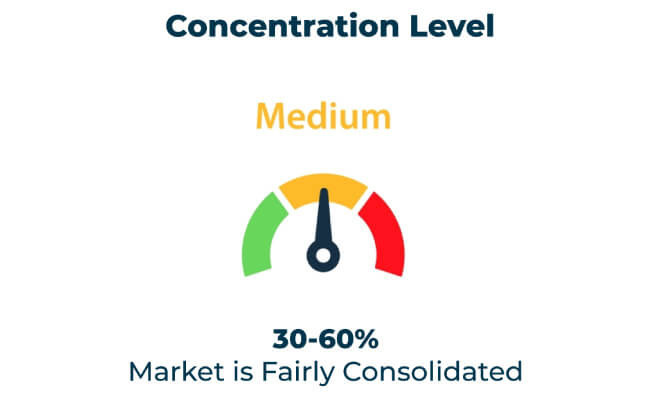
The market demonstrates a moderately consolidated landscape, with Tier 1 players such as Huhtamaki, UFP Technologies, and Brødrene Hartmann holding approximately 31% of the global share. These companies are being recognized for their global scale, advanced molding infrastructure, and diversified application portfolios. Tier 2 players including Sabert Corporation, Eco-Products, and Genpak are being relied upon for regional responsiveness, offering tailored solutions that balance performance and environmental compliance. Tier 3 manufacturers, often consisting of local converters and startups, are contributing to the ecosystem by delivering low-cost, flexible options primarily aimed at small-scale or niche segments.
Production efficiency is being enhanced through automation and digital tooling, while the shift toward premium and retail-ready pulp designs is being observed. As molded fiber continues to replace plastic trays, clamshells, and secondary packaging, its adoption is being accelerated by policy mandates and procurement preferences focused on circularity and carbon reduction.
By combining the scale of global leaders with the agility of regional players, the molded fiber pulp packaging market is being positioned for sustained growth, innovation, and resilience in a rapidly evolving packaging landscape.
Market Share & Industry Share
| Category | Market Share (%) |
|---|---|
| Top 3 Players (Huhtamaki, UFP Technologies, Brødrene Hartmann) | 15% |
| Rest of Top 5 Players (EnviroPAK, Protopak) | 6% |
| Next 5 of Top 10 Players | 10% |
Type of Player & Industry Share
| Type of Player | Market Share (%) |
|---|---|
| Top 10 Players | 31% |
| Next 20 Players | 42% |
| Remaining Players | 27% |
Market Concentration
Year-on-Year Leaders
- Huhtamaki: Drives innovation with biodegradable and compostable solutions.
- UFP Technologies: Focuses on precision-engineered and customized packaging.
- Brødrene Hartmann: Excels in sustainable and recycled molded fiber solutions.
Emerging Technology in Molded Fiber Pulp Packaging Market
- Advanced Manufacturing: Automation and precision techniques enhance scalability.
- Customized Designs: Tailored solutions meet industry-specific needs.
- Biodegradable Materials: Innovations in compostable and recyclable materials.
- Smart Packaging: Incorporation of sensors for freshness tracking and product safety.
Sustainability Trends
- Eco-Friendly Materials: Adoption of recycled and biodegradable pulp solutions.
- Energy-Efficient Production: Use of renewable energy in manufacturing processes.
- Waste Reduction: Circular economy models minimize waste and maximize resource utilization.
Consumer Trends
- Preference for Eco-Friendly Packaging: Growing demand for sustainable and biodegradable solutions.
- Focus on Product Safety: Enhanced designs prioritize safety for fragile and perishable goods.
- E-commerce Growth: Rising online retail drives demand for durable and lightweight packaging.
End-use Industry Analysis
- Food and Beverage: High demand for recyclable and biodegradable packaging.
- Healthcare: Protective and sterile packaging for medical products.
- Electronics: Customized solutions for delicate electronic devices.
- Retail and E-commerce: Lightweight, durable, and eco-friendly packaging for shipping.
Recommendations for Technology Suppliers
- Sustainable Innovations: Focus on biodegradable and recycled materials.
- Advanced Manufacturing: Invest in automation for scalable and cost-efficient production.
- Industry Partnerships: Collaborate with key industries for customized packaging solutions.
Future Roadmap
The molded fiber pulp packaging market is set for growth through sustainability initiatives, technological innovations, and expansion into emerging markets. Companies investing in scalable production, eco-friendly materials, and advanced technologies will maintain a competitive edge. Smart packaging and automated manufacturing are likely to drive future market developments.
Market KPIs
- Sustainability Metrics: Track adoption of recyclable and biodegradable solutions.
- Regional Revenue Growth: Monitor expansion in Asia-Pacific and emerging markets.
- Technological Adoption: Measure integration of automation and advanced production techniques.
Who Shaped the Year
- Huhtamaki: Led with scalable, biodegradable packaging solutions.
- UFP Technologies: Advanced precision-engineered designs.
- Brødrene Hartmann: Innovated in recycled and sustainable packaging.
Tier Structure of Key Companies
| Tier | Key Companies |
|---|---|
| Tier 1 | Huhtamaki, UFP Technologies, Brødrene Hartmann |
| Tier 2 | EnviroPAK, Protopak |
| Tier 3 | Moulded Fibre Products, PaperTech and Others |
Key Vendor Initiatives
- Huhtamaki: Expanded biodegradable product lines and invested in automation.
- UFP Technologies: Focused on high-quality, precision-engineered packaging.
- Brødrene Hartmann: Enhanced recycling capabilities and introduced new eco-friendly designs.
Conclusion
The molded fiber pulp packaging market is poised for sustained growth, driven by environmental awareness, regulatory pressures, and advancements in technology. Companies prioritizing sustainability, innovation, and market expansion will remain at the forefront of the industry.
Appendices
Key Definitions
- Molded Fiber Packaging: Biodegradable packaging made from recycled paper pulp.
- Smart Packaging: Packaging with embedded technology for enhanced functionality.
Abbreviations
- CAGR: Compound Annual Growth Rate
Research Methodology
This report is based on primary research, secondary data analysis, and market modeling. Industry expert consultations validated insights.
Market Definition
The molded fiber pulp packaging market includes biodegradable and recyclable solutions for industries like food, electronics, and personal care, aligning with global sustainability goals.
Molded Fiber Pulp Packaging Market Share Analysis Segmentation
By End-user:
- Food and Beverage
- Healthcare
- Electronics
- Retail and E-commerce
By Company
- Tier-1
- Tier-2
- Tier-3
Frequently Asked Questions
What drives growth in the molded fiber pulp packaging market?
Increasing demand for sustainable and recyclable solutions fuels growth.
What is the projected market size by 2035?
The market is projected to reach USD 16.17 billion, growing at a compound annual growth rate (CAGR) of 5.4%.
Who are the key players in the market?
Huhtamaki, UFP Technologies, and Brødrene Hartmann are market leaders.
What challenges does the market face?
High production costs, raw material volatility, and regulatory compliance challenges.
What opportunities exist in this market?
Opportunities include advancements in manufacturing, growth in e-commerce, and rising consumer demand for eco-friendly packaging.
Preview the report firsthand - request a free sample
Get SampleGet the brochure for pricing and purchase details.
Get PDFTable of Content
- Market Share Breakdown
- Executive Summary
- SWOT Analysis of the Top Key Players
- Market Size and Projection
- Global Market Share & Industry Share
- Year-on-Year Leaders
- Emerging Technology
- Sustainability Trends
- Consumer Trends
- Regulatory Insights
- Export Opportunities
- Obstacles and Possibilities
- Market Environment
- Regional Analysis
- End-Use Industry Segmentation
- Recommendations for Technology Suppliers
- Future Roadmap
- Market KPIs
- Who Shaped the Year
- Key Vendor Initiatives
- Conclusion


