

- Industry Size (2026)
- USD 563.5 Mn
- Forecast (2036)
- USD 1262.4 Mn
- CAGR (2026 to 2036)
- 8.4%
Odor Neutralizing Agents for Landfills Market Forecast and Outlook 2026 to 2036
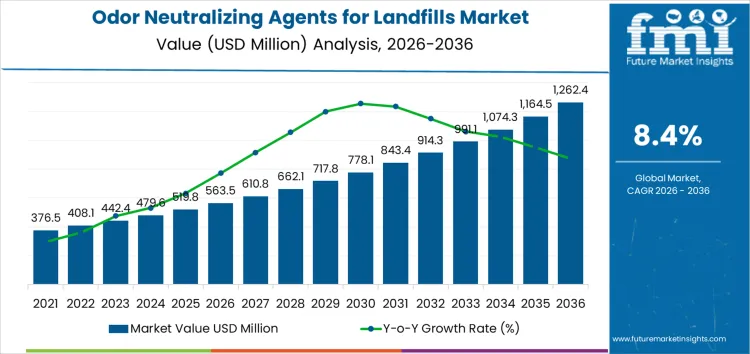
The odor neutralizing agents for landfills market is expected to grow from USD 563.5 million in 2026 to USD 1,262.4 million by 2036, reflecting a compound annual growth rate (CAGR) of 8.4%. This market is characterized by stable, ongoing demand driven by the persistent need for odor control in landfill operations. Buyers in this space tend to prioritize long-term reliability over one-off purchases, leading to repeat usage of odor neutralizing agents. Landfill operators, faced with regulatory pressures and public scrutiny, show high commitment to maintaining effective, sustainable solutions.
This commitment results in consistent demand for products that deliver dependable results over time, rather than fluctuating short-term needs. As environmental and regulatory standards continue to tighten, buyer loyalty is further reinforced by the growing need for compliant, efficient odor management solutions. This stability in demand ensures that suppliers who can demonstrate proven performance, cost-effectiveness, and regulatory compliance will solidify long-term customer relationships.
Quick Stats of the Odor Neutralizing Agents for Landfills Market
- Odor Neutralizing Agents for Landfills Market Value (2026): USD 563.5 million
- Odor Neutralizing Agents for Landfills Market Forecast Value (2036): USD 1,262.4 million
- Odor Neutralizing Agents for Landfills Market Global Forecast CAGR (2026 to 2036): 8.4%
- Odor Neutralizing Agents for Landfills Market Leading Segment: Delivery Method (Vapor/Mist-Based Spraying Systems) 38%
- Key Growth Regions in Odor Neutralizing Agents for Landfills Market: China
- Top Players in Odor Neutralizing Agents for Landfills Market: Ecolab, Veolia Environmental Services, Suez (Veolia), Clean Earth, BioAir Solutions
What is the Growth Forecast for the Odor Neutralizing Agents for Landfills Market through 2036?
The growth momentum analysis for the odor neutralizing agents for landfills market shows a steady acceleration in the early years, followed by a slight deceleration as the market matures. From 2026 to 2031, the market will experience consistent growth, driven by the increasing adoption of odor neutralizing agents in landfill operations. The market will rise from USD 563.5 million in 2026 to USD 883.9 million in 2031, reflecting a steady acceleration in demand as landfills grow and environmental regulations become more stringent. During this phase, the growth momentum will be driven by a combination of regulatory pressures and the development of more effective odor control technologies.
However, from 2031 onwards, the market will enter a phase of deceleration, where the growth rate will slow slightly as the technology becomes more widely adopted. While the market will continue to grow, the rate of increase will moderate. By 2036, the market will reach USD 1,262.4 million, with slower growth in the final years due to the maturity of the odor neutralizing technology. This deceleration is typical of a maturing market, where the product becomes a standard in landfill management, and incremental innovation rather than significant breakthroughs drive future growth.
Odor Neutralizing Agents for Landfills Market Key Takeaways
| Metric | Value |
|---|---|
| Industry Sales Value (2026) | USD 563.5 million |
| Industry Forecast Value (2036) | USD 1,262.4 million |
| Industry Forecast CAGR (2026 to 2036) | 8.4% |
What Is Driving the Demand for the Odor Neutralizing Agents for Landfills Market Globally?
The global demand for odor neutralizing agents for landfills is driven by growing concerns about public health, environmental quality, and regulatory compliance in waste management operations. Landfills produce odorous gases such as hydrogen sulfide, ammonia, and volatile organic compounds during decomposition of organic waste, and these emissions can create nuisance odors for nearby communities. Waste management authorities and private landfill operators are under pressure to control odor to maintain good community relations and reduce complaints.
In addition, environmental regulations in many regions set limits on air emissions from landfill sites, which encourages adoption of chemical and biological odor control solutions that can reduce odor intensity without creating harmful byproducts. Advances in formulation science have produced neutralizing agents that bind or transform odorous compounds, enabling better control over varying conditions in landfill gas streams. Rising solid waste volumes driven by population growth and urbanisation also contribute to demand, as larger and more active sites require robust odor management strategies to support operations.
Future demand for odor neutralizing agents for landfills is expected to grow as sustainability and operational efficiency continue to shape the waste management sector worldwide. Innovation in delivery systems and tailored formulations will improve performance in large-scale operations and variable climatic conditions, helping operators maintain consistent odor control. Integration with landfill gas collection and treatment systems will support broader environmental objectives by addressing odor and capturing methane for beneficial use.
Regulatory evolution that focuses on community exposure, air quality standards, and monitoring will reinforce the need for effective odor neutralization solutions. Expansion of waste diversion and recycling programs may not reduce the need for landfills but will influence the characteristics of waste streams and the selection of treatment chemistries. Growing emphasis on corporate responsibility and transparent environmental performance reporting will further encourage adoption of technologies that reduce nuisance emissions. As landfill operators seek to balance compliance, cost, and community impact, odor neutralizing agents that offer measurable results and compatibility with broader gas management systems are expected to see steady global growth.
What are the Leading Segments in the Global Odor Neutralizing Agents for Landfills Market?
The global odor neutralizing agents for landfills market is segmented by application zone and delivery method. Among application zones, active landfill cells lead the market, capturing 34% of the share, followed by transfer stations & waste handling zones, leachate & gas collection areas, surrounding community buffer zones, waste storage & pre-treatment sites. Active landfill cells are the primary focus for odor control, as they generate the most significant emissions. On the delivery method side, vapor/mist-based spraying systems dominate the market, holding 38% of the share, followed by solid media filters & biofilters, chemical dosing & neutralizing solutions, encapsulated odor control packs, and hybrid odor management systems. Vapor and mist-based systems are preferred for their ability to cover large areas and effectively neutralize odors in active landfill cells.
What Drives the Growth of Active Landfill Cells in the Odor Neutralizing Agents for Landfills Market?
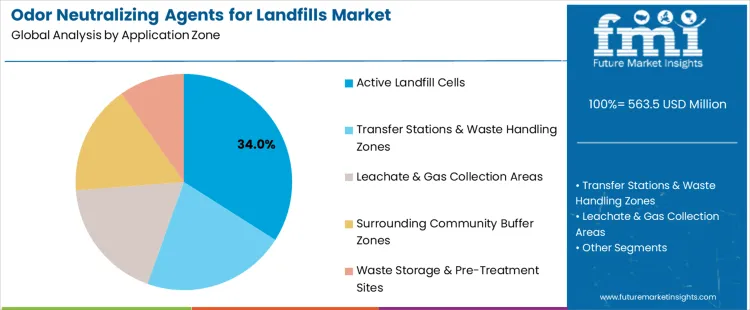
Active landfill cells are the leading application zone in the odor neutralizing agents for landfills market, holding 34% of the share. These cells, where fresh waste is deposited, generate the highest levels of odor due to the decomposition of organic materials, making odor management a priority. The demand for odor neutralizing agents in active landfill cells is driven by the need to comply with environmental regulations and mitigate the impact of landfill odors on surrounding communities. Odor neutralizing solutions, such as chemical dosing and vapor spraying systems, are highly effective in reducing these emissions. As urbanization and landfill operations expand, ensuring that odor control measures are in place is critical for maintaining public health and preventing nuisance complaints. With increasing attention on environmental sustainability and waste management practices, the demand for odor neutralizing agents in active landfill cells is expected to continue growing, reinforcing its position as the dominant application zone in the market.
What is Driving the Demand for Vapor/Mist-Based Spraying Systems in the Odor Neutralizing Agents for Landfills Market?
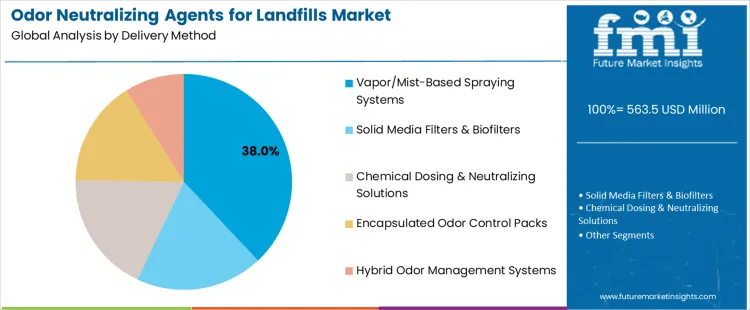
Vapor/mist-based spraying systems are the leading delivery method in the odor neutralizing agents for landfills market, capturing 38% of the share. These systems are effective in dispersing odor-neutralizing agents over large areas, making them ideal for use in active landfill cells and other high-emission zones. Vapor or mist spraying allows for even coverage and can be adjusted to treat fluctuating odor levels depending on the waste being processed. The growing adoption of these systems is driven by their ease of application, cost-effectiveness, and ability to address odors on a broad scale without the need for extensive infrastructure. As odor control becomes a more significant concern for landfills, particularly in areas near residential or commercial zones, vapor/mist-based spraying systems offer an efficient and scalable solution. With increasing regulations and the growing need for effective landfill management practices, the demand for vapor/mist-based spraying systems is expected to remain strong, positioning them as a dominant delivery method in the market.
What are the Key Dynamics in the Global Odor Neutralizing Agents for Landfills Market?
The global odor neutralizing agents for landfills market is expanding as waste management authorities, landfill operators and environmental service providers adopt solutions to manage malodors that arise from organic decomposition and gas emissions. Odor neutralizing agents bind, mask or chemically transform odor-causing compounds such as hydrogen sulfide, ammonia and volatile organic compounds, improving air quality in and around waste sites. Growth reflects increased regulatory scrutiny of landfill emissions, greater community expectations for environmental performance and demand for solutions that support worker safety, compliance and public perception. Adoption spans municipal, industrial and hazardous waste landfill operations where effective odor control enhances operational performance and stakeholder relations.
What are the Key Drivers for the Odor Neutralizing Agents for Landfills Market?
A primary driver is stricter environmental regulation and permitting requirements that compel landfill operators to implement effective odor management strategies. Authorities increasingly enforce air quality standards and nuisance control measures that influence site design and chemical use. Rising urbanization and proximity of landfill sites to residential and commercial zones intensify pressure to control odors and maintain community goodwill. Landfill operators also seek products that improve workplace conditions for employees and reduce complaints from nearby populations. Advances in formulation chemistry improve the ability of odor neutralizing agents to address a broad spectrum of compounds, increasing confidence in performance and supporting wider use.
What are the Restraints for the Odor Neutralizing Agents for Landfills Market?
One restraint is variability in performance depending on landfill characteristics, climate, waste composition and operational practices. Heterogeneity in odor sources and fluctuating emission profiles can make consistent control challenging without tailored solutions. Some operators may perceive odor neutralizers as cost centers if benefits in complaint reduction and regulatory compliance are difficult to quantify, delaying investment decisions. Handling, storage and application of odor neutralizing chemicals require appropriate training and safety protocols, which adds operational complexity. Competition from physical control methods such as biofilters and cover materials also influences product selection and market dynamics.
What are the Key Trends in the Odor Neutralizing Agents for Landfills Market?
A key trend is development of environmentally benign, biodegradable odor neutralizing agents that align with sustainability goals and minimize downstream impact on soil and water. Manufacturers are focusing on formulations that target specific molecular classes of odorants rather than broad-spectrum masking, supporting more effective and lasting control. Integration of odor monitoring technologies and real-time air quality sensors helps operators optimise dosing and reduce chemical use. There is increasing interest in combining chemical neutralizers with biological and engineered controls such as aeration and biofiltration to create multi-layered odor management strategies. Collaboration between chemical suppliers, landfill engineers and regulators supports education on best practices and performance benchmarking, encouraging broader adoption of advanced odor neutralization solutions.
What is the Country-Wise Analysis of the Odor Neutralizing Agents for Landfills Market?
The odor neutralizing agents for landfills market is expected to grow steadily, driven by the increasing need to manage unpleasant odors from landfill sites, particularly as urbanization and waste production continue to rise. These agents are crucial for improving the quality of life around landfill sites by neutralizing the strong odors associated with decomposing waste. High-growth markets such as China and Taiwan are seeing strong demand due to rapid urban development, expanding industrialization, and increasing waste production. Developed markets such as the United States, South Korea, and Japan are also experiencing steady growth, supported by stringent environmental regulations, growing awareness of landfill management, and the need to meet air quality standards.
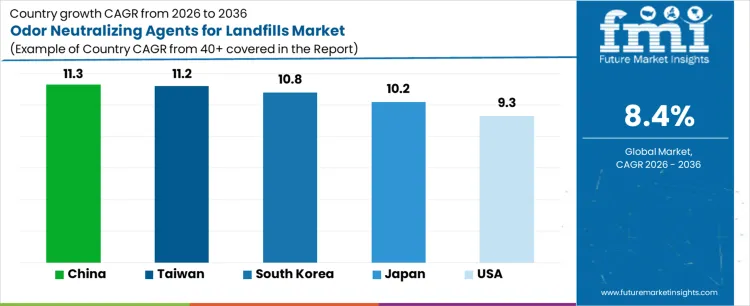
| Country | CAGR (2026 to 2036) |
|---|---|
| China | 11.3% |
| Taiwan | 11.2% |
| South Korea | 10.8% |
| Japan | 10.2% |
| USA | 9.3% |
What is the Growth Outlook for the Odor Neutralizing Agents for Landfills Market in China?
The odor neutralizing agents for landfills market in China is expected to grow at the highest rate, with a projected CAGR of 11.3%. China’s rapid urbanization and industrial expansion have significantly increased the volume of waste being generated, which in turn is driving the demand for efficient landfill management solutions. The need to address the environmental and health concerns related to landfill odors is growing as cities expand, with landfills often located near urban areas. The Chinese government’s growing focus on environmental sustainability and improving waste management practices is expected to accelerate the adoption of odor neutralizing agents. As China continues to invest in waste management infrastructure and cleaner technologies, the market for odor neutralizing agents in landfills is set for robust growth.
What is the Market Outlook for the Odor Neutralizing Agents for Landfills Market in Taiwan?
The odor neutralizing agents for landfills market in Taiwan is projected to grow steadily, with a projected CAGR of 11.2%. Taiwan's growing urbanization and waste generation have led to an increased need for effective solutions to manage landfill odors. With limited land area and a focus on sustainability, the Taiwanese government is prioritizing waste management and pollution control. The demand for odor neutralizing agents is being driven by regulations aimed at maintaining air quality and improving living conditions around landfill sites. As Taiwan continues to promote environmental initiatives, including waste reduction and cleaner technologies, the market for odor neutralizing agents is expected to grow steadily, particularly in the waste management and industrial sectors.
What is the Growth Forecast for the Odor Neutralizing Agents for Landfills Market in South Korea?
The odor neutralizing agents for landfills market in South Korea is expected to grow steadily, with a projected CAGR of 10.8%. South Korea’s rapid urbanization and industrialization have contributed to increasing waste generation, creating a greater need for efficient landfill management. The growing demand for odor control solutions is also driven by the country’s emphasis on improving public health and maintaining air quality. South Korea’s government is actively working to enhance waste management systems, with a focus on minimizing landfill odors and improving the quality of life in urban areas. As regulations around landfill management become more stringent and sustainability goals are pursued, the market for odor neutralizing agents is expected to experience steady growth.
What is the Market Outlook for the Odor Neutralizing Agents for Landfills Market in Japan?
The odor neutralizing agents for landfills market in Japan is projected to grow steadily, with a projected CAGR of 10.2%. Japan’s high population density and limited land area for waste disposal have heightened the need for effective landfill management and odor control. With a strong focus on sustainability and environmental protection, Japan has implemented stringent waste management regulations that encourage the use of odor neutralizing agents. The demand for these agents is further supported by public awareness of the environmental and health impacts of landfill odors. As Japan continues to modernize its waste management infrastructure and promote cleaner technologies, the market for odor neutralizing agents is expected to grow steadily, particularly in urban areas with large landfill sites.
What are the Growth Prospects for the Odor Neutralizing Agents for Landfills Market in the USA?
The odor neutralizing agents for landfills market in the United States is expected to grow at a steady pace, with a projected CAGR of 9.3%. The U.S. has a large number of landfill sites, particularly in urban and industrial areas, where odor control is crucial for maintaining air quality and public health. The demand for odor neutralizing agents is being driven by increased environmental awareness, regulatory standards, and the growing need for sustainable landfill management solutions. The U.S. government’s focus on waste reduction, recycling, and cleaner technologies, along with the need to comply with air quality regulations, is expected to support the growth of the market for odor neutralizing agents. As the market for cleaner landfill solutions expands, demand for effective odor management technologies is likely to continue growing steadily in the U.S.
What is the Competitive Landscape for the Odor Neutralizing Agents for Landfills Market?
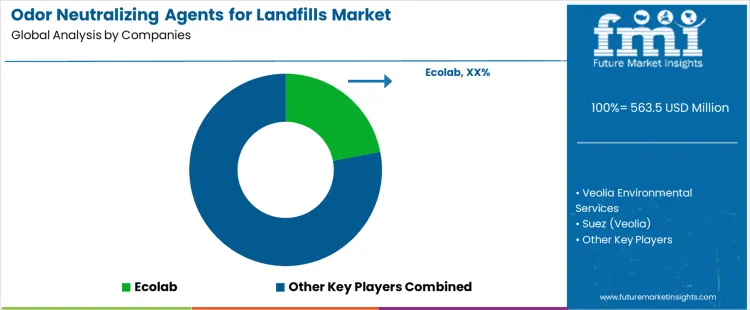
The odor neutralizing agents for landfills market is growing as industries and municipalities seek effective solutions to manage and mitigate the unpleasant odors associated with landfill sites. Ecolab leads the market with its advanced odor neutralizing solutions, offering high-performance products designed to control and neutralize odors in landfill environments. Their strong focus on sustainability, product effectiveness, and regulatory compliance has positioned them as a dominant player in the market. Veolia Environmental Services, Suez (Veolia), and Clean Earth are significant competitors, each providing specialized odor control products for waste management and landfill operations. Veolia Environmental Services offers a broad range of odor neutralizing solutions, while Suez (Veolia) focuses on providing comprehensive environmental services, including odor control, for landfill operations. Clean Earth delivers effective, eco-friendly odor control solutions that reduce the impact of landfill emissions.
BioAir Solutions further contributes to the competitive landscape with its odor neutralizing technologies, offering systems designed to treat air emissions from landfill sites and other industrial applications. BioAir Solutions emphasizes providing sustainable, reliable solutions for effective odor management. These companies compete by focusing on product innovation, environmental sustainability, and their ability to meet the growing demand for odor control solutions in landfill and waste management industries. As environmental regulations around odor emissions become stricter, the market for odor neutralizing agents is expected to continue expanding, with companies working to develop more effective, eco-friendly solutions.
Key Players of the Odor Neutralizing Agents for Landfills Market
- Ecolab
- Veolia Environmental Services
- Suez (Veolia)
- Clean Earth
- BioAir Solutions
Scope of the Report
| Items | Values |
|---|---|
| Quantitative Units (2026) | USD Million |
| Neutralizer Type | Bio-Enzymatic Odor Neutralizers, Hydrogen Sulfide (H₂S) Control Agents, Oxidizing Neutralizers (O₃, ClO₂, H₂O₂), Activated Carbon & Adsorbent Media, Other Specialty Odor Control Chemicals |
| Application Zone | Active Landfill Cells, Transfer Stations & Waste Handling Zones, Leachate & Gas Collection Areas, Surrounding Community Buffer Zones, Waste Storage & Pre-Treatment Sites |
| Delivery Method | Vapor/Mist-Based Spraying Systems, Solid Media Filters & Biofilters, Chemical Dosing & Neutralizing Solutions, Encapsulated Odor Control Packs, Hybrid Odor Management Systems |
| Companies | Ecolab, Veolia Environmental Services, Suez (Veolia), Clean Earth, BioAir Solutions |
| Regions Covered | North America, Latin America, Western Europe, Eastern Europe, South Asia and Pacific, East Asia, Middle East & Africa |
| Countries Covered | United States, Canada, Mexico, Brazil, Argentina, Germany, France, United Kingdom, Italy, Spain, Netherlands, China, India, Japan, South Korea, ANZ, GCC Countries, South Africa |
| Additional Attributes | Dollar by sales by neutralizer type, application zone, delivery method, and region. Includes market trends in odor neutralizing agents for landfills, performance in various waste management applications, cost-effectiveness, sustainability practices, regulatory compliance, market share and competitive positioning of key companies, and the role of odor neutralizers in improving air quality, controlling landfill emissions, and supporting environmentally responsible waste management practices across industries. |
Odor Neutralizing Agents for Landfills Market Segmentation
Neutralizer Type
- Bio-Enzymatic Odor Neutralizers
- Hydrogen Sulfide (H₂S) Control Agents
- Oxidizing Neutralizers (O₃, ClO₂, H₂O₂)
- Activated Carbon & Adsorbent Media
- Other Specialty Odor Control Chemicals
Application Zone
- Active Landfill Cells
- Transfer Stations & Waste Handling Zones
- Leachate & Gas Collection Areas
- Surrounding Community Buffer Zones
- Waste Storage & Pre-Treatment Sites
Delivery Method
- Vapor/Mist-Based Spraying Systems
- Solid Media Filters & Biofilters
- Chemical Dosing & Neutralizing Solutions
- Encapsulated Odor Control Packs
- Hybrid Odor Management Systems
Region
- Asia Pacific
- China
- Japan
- South Korea
- India
- Australia & New Zealand
- ASEAN
- Rest of Asia Pacific
- Europe
- Germany
- United Kingdom
- France
- Italy
- Spain
- Nordic
- BENELUX
- Rest of Europe
- North America
- United States
- Canada
- Mexico
- Latin America
- Brazil
- Chile
- Rest of Latin America
- Middle East & Africa
- Kingdom of Saudi Arabia
- Other GCC Countries
- Turkey
- South Africa
- Other African Union
- Rest of Middle East & Africa
Frequently Asked Questions
How big is the odor neutralizing agents for landfills market in 2026?
The global odor neutralizing agents for landfills market is estimated to be valued at USD 563.5 million in 2026.
What will be the size of odor neutralizing agents for landfills market in 2036?
The market size for the odor neutralizing agents for landfills market is projected to reach USD 1,262.4 million by 2036.
How much will be the odor neutralizing agents for landfills market growth between 2026 and 2036?
The odor neutralizing agents for landfills market is expected to grow at a 8.4% CAGR between 2026 and 2036.
What are the key product types in the odor neutralizing agents for landfills market?
The key product types in odor neutralizing agents for landfills market are bio-enzymatic odor neutralizers, hydrogen sulfide (h₂s) control agents, oxidizing neutralizers (o₃, clo₂, h₂o₂), activated carbon & adsorbent media and other specialty odor control chemicals.
Which application zone segment to contribute significant share in the odor neutralizing agents for landfills market in 2026?
In terms of application zone, active landfill cells segment to command 34.0% share in the odor neutralizing agents for landfills market in 2026.
Preview the report firsthand - request a free sample
Get SampleGet the brochure for pricing and purchase details.
Get PDFTable of Content
- Executive Summary
- Global Market Outlook
- Demand-side Trends
- Supply-side Trends
- Technology Roadmap Analysis
- Analysis and Recommendations
- Market Overview
- Market Coverage / Taxonomy
- Market Definition / Scope / Limitations
- Market Background
- Market Dynamics
- Drivers
- Restraints
- Opportunity
- Trends
- Scenario Forecast
- Demand in Optimistic Scenario
- Demand in Likely Scenario
- Demand in Conservative Scenario
- Opportunity Map Analysis
- Product Life Cycle Analysis
- Supply Chain Analysis
- Investment Feasibility Matrix
- Value Chain Analysis
- PESTLE and Porter’s Analysis
- Regulatory Landscape
- Regional Parent Market Outlook
- Production and Consumption Statistics
- Import and Export Statistics
- Market Dynamics
- Global Market Analysis 2021 to 2025 and Forecast, 2026 to 2036
- Historical Market Size Value (USD Million) Analysis, 2021 to 2025
- Current and Future Market Size Value (USD Million) Projections, 2026 to 2036
- Y-o-Y Growth Trend Analysis
- Absolute $ Opportunity Analysis
- Global Market Pricing Analysis 2021 to 2025 and Forecast 2026 to 2036
- Global Market Analysis 2021 to 2025 and Forecast 2026 to 2036, By Neutralizer Type
- Introduction / Key Findings
- Historical Market Size Value (USD Million) Analysis By Neutralizer Type , 2021 to 2025
- Current and Future Market Size Value (USD Million) Analysis and Forecast By Neutralizer Type , 2026 to 2036
- Bio-Enzymatic Odor Neutralizers
- Hydrogen Sulfide (H₂S) Control Agents
- Oxidizing Neutralizers (O₃, ClO₂, H₂O₂)
- Activated Carbon & Adsorbent Media
- Other Specialty Odor Control Chemicals
- Bio-Enzymatic Odor Neutralizers
- Y-o-Y Growth Trend Analysis By Neutralizer Type , 2021 to 2025
- Absolute $ Opportunity Analysis By Neutralizer Type , 2026 to 2036
- Global Market Analysis 2021 to 2025 and Forecast 2026 to 2036, By Application Zone
- Introduction / Key Findings
- Historical Market Size Value (USD Million) Analysis By Application Zone, 2021 to 2025
- Current and Future Market Size Value (USD Million) Analysis and Forecast By Application Zone, 2026 to 2036
- Active Landfill Cells
- Transfer Stations & Waste Handling Zones
- Leachate & Gas Collection Areas
- Surrounding Community Buffer Zones
- Waste Storage & Pre-Treatment Sites
- Active Landfill Cells
- Y-o-Y Growth Trend Analysis By Application Zone, 2021 to 2025
- Absolute $ Opportunity Analysis By Application Zone, 2026 to 2036
- Global Market Analysis 2021 to 2025 and Forecast 2026 to 2036, By Delivery Method
- Introduction / Key Findings
- Historical Market Size Value (USD Million) Analysis By Delivery Method, 2021 to 2025
- Current and Future Market Size Value (USD Million) Analysis and Forecast By Delivery Method, 2026 to 2036
- Vapor/Mist-Based Spraying Systems
- Solid Media Filters & Biofilters
- Chemical Dosing & Neutralizing Solutions
- Encapsulated Odor Control Packs
- Hybrid Odor Management Systems
- Vapor/Mist-Based Spraying Systems
- Y-o-Y Growth Trend Analysis By Delivery Method, 2021 to 2025
- Absolute $ Opportunity Analysis By Delivery Method, 2026 to 2036
- Global Market Analysis 2021 to 2025 and Forecast 2026 to 2036, By Region
- Introduction
- Historical Market Size Value (USD Million) Analysis By Region, 2021 to 2025
- Current Market Size Value (USD Million) Analysis and Forecast By Region, 2026 to 2036
- North America
- Latin America
- Western Europe
- Eastern Europe
- East Asia
- South Asia and Pacific
- Middle East & Africa
- Market Attractiveness Analysis By Region
- North America Market Analysis 2021 to 2025 and Forecast 2026 to 2036, By Country
- Historical Market Size Value (USD Million) Trend Analysis By Market Taxonomy, 2021 to 2025
- Market Size Value (USD Million) Forecast By Market Taxonomy, 2026 to 2036
- By Country
- USA
- Canada
- Mexico
- By Neutralizer Type
- By Application Zone
- By Delivery Method
- By Country
- Market Attractiveness Analysis
- By Country
- By Neutralizer Type
- By Application Zone
- By Delivery Method
- Key Takeaways
- Latin America Market Analysis 2021 to 2025 and Forecast 2026 to 2036, By Country
- Historical Market Size Value (USD Million) Trend Analysis By Market Taxonomy, 2021 to 2025
- Market Size Value (USD Million) Forecast By Market Taxonomy, 2026 to 2036
- By Country
- Brazil
- Chile
- Rest of Latin America
- By Neutralizer Type
- By Application Zone
- By Delivery Method
- By Country
- Market Attractiveness Analysis
- By Country
- By Neutralizer Type
- By Application Zone
- By Delivery Method
- Key Takeaways
- Western Europe Market Analysis 2021 to 2025 and Forecast 2026 to 2036, By Country
- Historical Market Size Value (USD Million) Trend Analysis By Market Taxonomy, 2021 to 2025
- Market Size Value (USD Million) Forecast By Market Taxonomy, 2026 to 2036
- By Country
- Germany
- UK
- Italy
- Spain
- France
- Nordic
- BENELUX
- Rest of Western Europe
- By Neutralizer Type
- By Application Zone
- By Delivery Method
- By Country
- Market Attractiveness Analysis
- By Country
- By Neutralizer Type
- By Application Zone
- By Delivery Method
- Key Takeaways
- Eastern Europe Market Analysis 2021 to 2025 and Forecast 2026 to 2036, By Country
- Historical Market Size Value (USD Million) Trend Analysis By Market Taxonomy, 2021 to 2025
- Market Size Value (USD Million) Forecast By Market Taxonomy, 2026 to 2036
- By Country
- Russia
- Poland
- Hungary
- Balkan & Baltic
- Rest of Eastern Europe
- By Neutralizer Type
- By Application Zone
- By Delivery Method
- By Country
- Market Attractiveness Analysis
- By Country
- By Neutralizer Type
- By Application Zone
- By Delivery Method
- Key Takeaways
- East Asia Market Analysis 2021 to 2025 and Forecast 2026 to 2036, By Country
- Historical Market Size Value (USD Million) Trend Analysis By Market Taxonomy, 2021 to 2025
- Market Size Value (USD Million) Forecast By Market Taxonomy, 2026 to 2036
- By Country
- China
- Japan
- South Korea
- By Neutralizer Type
- By Application Zone
- By Delivery Method
- By Country
- Market Attractiveness Analysis
- By Country
- By Neutralizer Type
- By Application Zone
- By Delivery Method
- Key Takeaways
- South Asia and Pacific Market Analysis 2021 to 2025 and Forecast 2026 to 2036, By Country
- Historical Market Size Value (USD Million) Trend Analysis By Market Taxonomy, 2021 to 2025
- Market Size Value (USD Million) Forecast By Market Taxonomy, 2026 to 2036
- By Country
- India
- ASEAN
- Australia & New Zealand
- Rest of South Asia and Pacific
- By Neutralizer Type
- By Application Zone
- By Delivery Method
- By Country
- Market Attractiveness Analysis
- By Country
- By Neutralizer Type
- By Application Zone
- By Delivery Method
- Key Takeaways
- Middle East & Africa Market Analysis 2021 to 2025 and Forecast 2026 to 2036, By Country
- Historical Market Size Value (USD Million) Trend Analysis By Market Taxonomy, 2021 to 2025
- Market Size Value (USD Million) Forecast By Market Taxonomy, 2026 to 2036
- By Country
- Kingdom of Saudi Arabia
- Other GCC Countries
- Turkiye
- South Africa
- Other African Union
- Rest of Middle East & Africa
- By Neutralizer Type
- By Application Zone
- By Delivery Method
- By Country
- Market Attractiveness Analysis
- By Country
- By Neutralizer Type
- By Application Zone
- By Delivery Method
- Key Takeaways
- Key Countries Market Analysis
- USA
- Pricing Analysis
- Market Share Analysis, 2025
- By Neutralizer Type
- By Application Zone
- By Delivery Method
- Canada
- Pricing Analysis
- Market Share Analysis, 2025
- By Neutralizer Type
- By Application Zone
- By Delivery Method
- Mexico
- Pricing Analysis
- Market Share Analysis, 2025
- By Neutralizer Type
- By Application Zone
- By Delivery Method
- Brazil
- Pricing Analysis
- Market Share Analysis, 2025
- By Neutralizer Type
- By Application Zone
- By Delivery Method
- Chile
- Pricing Analysis
- Market Share Analysis, 2025
- By Neutralizer Type
- By Application Zone
- By Delivery Method
- Germany
- Pricing Analysis
- Market Share Analysis, 2025
- By Neutralizer Type
- By Application Zone
- By Delivery Method
- UK
- Pricing Analysis
- Market Share Analysis, 2025
- By Neutralizer Type
- By Application Zone
- By Delivery Method
- Italy
- Pricing Analysis
- Market Share Analysis, 2025
- By Neutralizer Type
- By Application Zone
- By Delivery Method
- Spain
- Pricing Analysis
- Market Share Analysis, 2025
- By Neutralizer Type
- By Application Zone
- By Delivery Method
- France
- Pricing Analysis
- Market Share Analysis, 2025
- By Neutralizer Type
- By Application Zone
- By Delivery Method
- India
- Pricing Analysis
- Market Share Analysis, 2025
- By Neutralizer Type
- By Application Zone
- By Delivery Method
- ASEAN
- Pricing Analysis
- Market Share Analysis, 2025
- By Neutralizer Type
- By Application Zone
- By Delivery Method
- Australia & New Zealand
- Pricing Analysis
- Market Share Analysis, 2025
- By Neutralizer Type
- By Application Zone
- By Delivery Method
- China
- Pricing Analysis
- Market Share Analysis, 2025
- By Neutralizer Type
- By Application Zone
- By Delivery Method
- Japan
- Pricing Analysis
- Market Share Analysis, 2025
- By Neutralizer Type
- By Application Zone
- By Delivery Method
- South Korea
- Pricing Analysis
- Market Share Analysis, 2025
- By Neutralizer Type
- By Application Zone
- By Delivery Method
- Russia
- Pricing Analysis
- Market Share Analysis, 2025
- By Neutralizer Type
- By Application Zone
- By Delivery Method
- Poland
- Pricing Analysis
- Market Share Analysis, 2025
- By Neutralizer Type
- By Application Zone
- By Delivery Method
- Hungary
- Pricing Analysis
- Market Share Analysis, 2025
- By Neutralizer Type
- By Application Zone
- By Delivery Method
- Kingdom of Saudi Arabia
- Pricing Analysis
- Market Share Analysis, 2025
- By Neutralizer Type
- By Application Zone
- By Delivery Method
- Turkiye
- Pricing Analysis
- Market Share Analysis, 2025
- By Neutralizer Type
- By Application Zone
- By Delivery Method
- South Africa
- Pricing Analysis
- Market Share Analysis, 2025
- By Neutralizer Type
- By Application Zone
- By Delivery Method
- USA
- Market Structure Analysis
- Competition Dashboard
- Competition Benchmarking
- Market Share Analysis of Top Players
- By Regional
- By Neutralizer Type
- By Application Zone
- By Delivery Method
- Competition Analysis
- Competition Deep Dive
- Ecolab
- Overview
- Product Portfolio
- Profitability by Market Segments (Product/Age /Sales Channel/Region)
- Sales Footprint
- Strategy Overview
- Marketing Strategy
- Product Strategy
- Channel Strategy
- Veolia Environmental Services
- Suez (Veolia)
- Clean Earth
- BioAir Solutions
- Ecolab
- Competition Deep Dive
- Assumptions & Acronyms Used
- Research Methodology


