

- Industry Size (2026)
- USD 710 Mn
- Forecast (2036)
- USD 2420 Mn
- CAGR (2026 to 2036)
- 12.4%
Olive Phenolic Complexes for Metabolic Health Market Forecast and Outlook 2026 to 2036
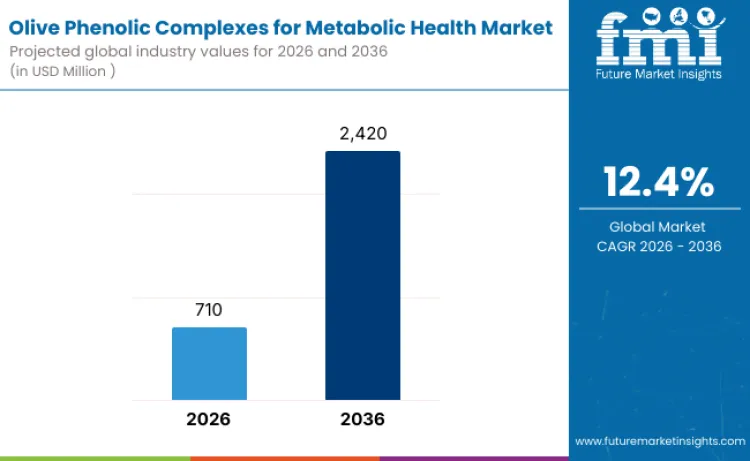
Global olive phenolic complexes for metabolic health market, valued at USD 710 million in 2026, is projected to grow to USD 2,420 million by 2036, with a CAGR of 12.4%. Demand is driven by increasing awareness of the benefits of olive phenolic compounds in supporting metabolic health and their role in managing conditions such as insulin resistance and metabolic syndrome.
Standardized olive phenolic extracts, which account for 42% of the product form market share, are the most widely used due to their consistent potency and effectiveness. Dietary supplements, representing 46% of the application segment, are the dominant consumers of olive phenolic complexes as they are increasingly incorporated into formulations aimed at supporting metabolic health. The market's growth is further supported by rising consumer demand for natural ingredients that promote overall wellness and metabolic balance.
Quick Stats for Olive Phenolic Complexes for Metabolic Health Market
- Olive Phenolic Complexes for Metabolic Health Market Value (2026): USD 710 million
- Olive Phenolic Complexes for Metabolic Health Market Forecast Value (2036): USD 2,420 million
- Olive Phenolic Complexes for Metabolic Health Market Global Forecast CAGR (2026 to 2036): 12.4%
- Top Application by Share in Olive Phenolic Complexes for Metabolic Health Market: Dietary Supplements (46%)
- Key Growth Regions in Olive Phenolic Complexes for Metabolic Health Market: China, India, USA, UK, Japan
- Top Players in Olive Phenolic Complexes for Metabolic Health Market: Indena S.p.A, Arjuna Natural Pvt Ltd, Frutarom (part of IFF), Kemin Industries, Glanbia Nutritionals
Olive Phenolic Complexes for Metabolic Health Market Key Takeaways
| Metric | Value |
|---|---|
| Industry Sales Value (2026) | USD 710 million |
| Industry Forecast Value (2036) | USD 2,420 million |
| Industry Forecast CAGR (2026 to 2036) | 12.4% |
What Are the Key Segments in Olive Phenolic Complexes for Metabolic Health Market?
The olive phenolic complexes for metabolic health market is segmented by product form and application. Standardized olive phenolic extracts lead the product form segment with 42% of the market share, offering a consistent and potent source of olive polyphenols. Dietary supplements dominate the application segment, accounting for 46%, driven by growing consumer interest in metabolic health and natural, plant-based solutions. The market is expanding as olive phenolic complexes gain recognition for their beneficial effects on metabolic function
Which Product Form Drives Olive Phenolic Complexes for Metabolic Health Market Demand Globally?
Standardized olive phenolic extracts lead the market with 42% of the share. These extracts are valued for their high concentration of polyphenols, including oleuropein and hydroxytyrosol, which are known for their antioxidant, anti-inflammatory, and metabolic health benefits. Standardized extracts offer consistent potency, which makes them an attractive option for product developers, particularly in dietary supplements and nutraceuticals aimed at improving metabolic function.
The use of standardized extracts ensures that each batch provides reliable and effective levels of active ingredients, which is essential for consumers seeking targeted health benefits. As awareness grows about the role of olive phenolics in managing metabolic health, including weight management, blood sugar regulation, and cardiovascular support, standardized olive phenolic extracts are becoming increasingly popular in both supplements and functional foods. Their versatility and proven efficacy are driving demand for this product form across health-focused industries.
Which Application Drives Olive Phenolic Complexes for Metabolic Health Market Demand Globally?
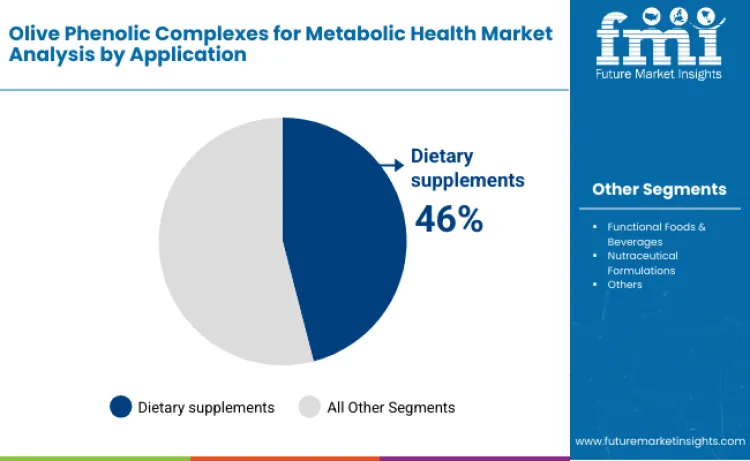
Dietary supplements dominate the application segment, accounting for 46% of the market share. As more consumers turn to natural solutions for improving metabolic health, olive phenolic complexes are becoming increasingly popular in supplements aimed at supporting weight management, regulating blood sugar, and enhancing cardiovascular health. Olive polyphenols, especially oleuropein and hydroxytyrosol, are recognized for their antioxidant properties, which play a key role in protecting metabolic processes from oxidative stress and inflammation.
The dietary supplement market is driven by consumer interest in preventive health and natural, plant-based ingredients. Olive phenolic complexes are often used in formulations targeting overall wellness and metabolic improvement, making them a key ingredient in a wide range of supplements. As demand for functional and natural ingredients in supplements grows, olive phenolic complexes are expected to continue driving the expansion of the metabolic health market. Other applications in functional foods & beverages and nutraceutical formulations also contribute to the growth, but dietary supplements remain the largest and most dynamic segment.
What is the Key Trends in the Global Olive Phenolic Complexes for Metabolic Health Market?
The global olive phenolic complexes for metabolic health market is expanding as interest grows in bioactive plant compounds that support metabolic wellbeing. Olive phenolic complexes contain natural antioxidants and polyphenols that appeal to formulators of dietary supplements, functional foods and beverages focused on blood sugar balance, weight management and overall metabolic support. Growth is underpinned by consumer focus on preventive nutrition, rising incidence of metabolic concerns and demand for clean label, plant‑based solutions that align with wellness lifestyles. Ingredient innovation is supporting broader adoption across product formats worldwide.
What are the Key Drivers for the Global Olive Phenolic Complexes for Metabolic Health Market?
A key driver is rising consumer awareness of metabolic health and the role that dietary and functional ingredients play in glycemic control, energy metabolism and antioxidant support. Olive phenolic complexes are valued for their natural origin and potential benefits related to metabolic processes, which encourages use in supplements, fortified foods and beverages. Expansion of the global nutraceutical and functional food sectors supports adoption. Scientific interest in olive polyphenols and expanding research into their mechanisms encourages formulators to integrate these complexes. Growing preference for plant‑based, clean label, and minimally processed ingredients further strengthens demand from health‑oriented brands.
What are the Restraints for the Global Olive Phenolic Complexes for Metabolic Health Market?
One restraint is variability in raw material quality due to differences in olive cultivars, growing conditions and extraction practices, which can complicate standardization of phenolic profiles. Producers must invest in controlled processing to deliver consistent bioactive content, which increases production cost. Regulatory landscapes for health claims differ by region, requiring careful compliance planning and extensive documentation to support product positioning. Price sensitivity in certain markets may limit adoption where lower‑cost ingredient alternatives are available. Skepticism among some consumer segments regarding functional ingredient efficacy may also slow penetration in mainstream products.
What is the Country-Wise Outlook for Olive Phenolic Complexes for Metabolic Health?
The Olive Phenolic Complexes for Metabolic Health market is expected to see strong growth across key countries, driven by increasing consumer demand for natural solutions to support metabolic health. Countries like India, China, and the USA are leading this growth, with rising awareness about the benefits of olive phenolic complexes, particularly in managing blood sugar levels, improving lipid profiles, and supporting overall metabolic function. As consumers seek plant-based and natural alternatives to manage metabolic health, the demand for olive phenolic complexes is projected to rise across these regions.
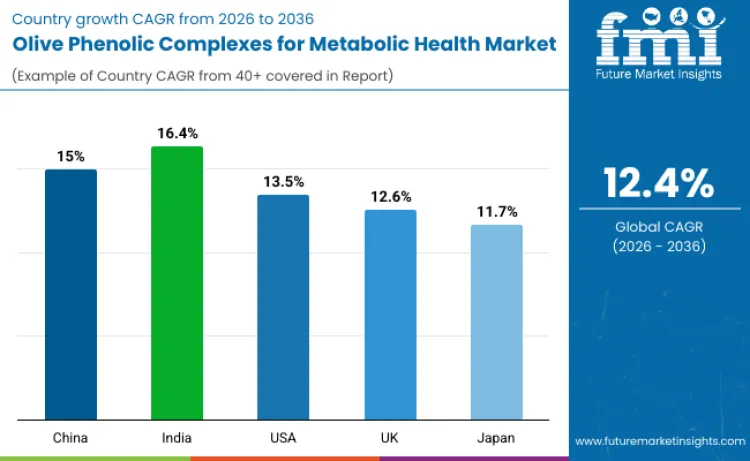
| Country | CAGR (2026 to 2036) |
|---|---|
| China | 15% |
| India | 16.4% |
| USA | 13.5% |
| UK | 12.6% |
| Japan | 11.7% |
What is Driving the Growth of Olive Phenolic Complexes for Metabolic Health in China?
China’s Olive Phenolic Complexes for Metabolic Health market is projected to grow at a CAGR of 15% from 2026 to 2036. The increasing focus on metabolic health, particularly in addressing issues like diabetes and obesity, is driving the demand for olive phenolic complexes. Known for their antioxidant and anti-inflammatory properties, olive phenolic complexes are gaining popularity as a natural solution for managing metabolic health. With rising awareness of the benefits of natural ingredients and plant-based solutions, Chinese consumers are turning to olive phenolic complexes as part of their wellness routines, supporting sustained market growth.
What is Contributing to the Growth of Olive Phenolic Complexes for Metabolic Health in India?
India’s Olive Phenolic Complexes for Metabolic Health market is expected to grow at an impressive CAGR of 16.4%. The demand for natural and effective solutions to support metabolic health is rising, especially in urban areas where lifestyle-related health issues, such as diabetes and high cholesterol, are prevalent. Olive phenolic complexes, known for their role in improving blood sugar regulation and lipid profiles, are becoming increasingly popular in India. As consumers focus more on preventive healthcare and the benefits of plant-based supplements, the demand for olive phenolic complexes is expected to continue rising, contributing to significant market growth.
What is Driving the Olive Phenolic Complexes for Metabolic Health Market Growth in the USA?
The USA’s Olive Phenolic Complexes for Metabolic Health market is expected to grow at a CAGR of 13.5%. The increasing prevalence of metabolic disorders such as type 2 diabetes and cardiovascular diseases is contributing to the growing demand for natural solutions like olive phenolic complexes. Olive phenolics are recognized for their antioxidant properties, which help reduce oxidative stress and inflammation, both of which are linked to metabolic dysfunction. As American consumers seek more natural and plant-based solutions for managing their health, the demand for olive phenolic complexes is expected to expand, particularly in the dietary supplements and functional foods sectors.
What is Influencing the Growth of Olive Phenolic Complexes for Metabolic Health in the UK?
The UK’s Olive Phenolic Complexes for Metabolic Health market is projected to grow at a CAGR of 12.6%. The rising demand for natural ingredients in supplements, particularly for metabolic health, is driving this market’s growth. As consumers in the UK increasingly turn to plant-based and natural solutions to support heart health, blood sugar regulation, and overall metabolic function, olive phenolic complexes are becoming a key ingredient in dietary supplements. The growing focus on preventive healthcare, along with greater awareness of the importance of managing metabolic health naturally, is expected to support continued growth in the UK market.
What is Contributing to the Growth of Olive Phenolic Complexes for Metabolic Health in Japan?
Japan’s Olive Phenolic Complexes for Metabolic Health market is expected to grow at a CAGR of 11.7%. The Japanese market is increasingly recognizing the importance of metabolic health, particularly in addressing issues such as diabetes and cardiovascular conditions. Olive phenolic complexes, with their natural ability to improve metabolic function, are gaining popularity as part of Japan’s growing wellness trend. As consumers seek natural, plant-based solutions to support their health, the demand for olive phenolic complexes is expected to increase, contributing to sustained market growth over the next decade. Additionally, Japan’s aging population is driving increased interest in preventive health products, further boosting the market for olive phenolic complexes.
What is the Competitive Landscape for the Olive Phenolic Complexes for Metabolic Health Market?
Global demand for olive phenolic complexes targeting metabolic health is rising as scientific interest and consumer awareness grow around natural bioactives that support glucose regulation, lipid balance, inflammation control and overall metabolic wellbeing. Olive phenolics such as hydroxytyrosol and oleuropein are valued for antioxidant and anti‑inflammatory effects that may contribute to healthier metabolic profiles. Growth in lifestyle‑related conditions, ageing populations and preventive health trends fuels use of olive phenolic complexes in dietary supplements, functional foods and nutrition programs designed for weight management, cardiovascular support and metabolic performance. Food, beverage and supplement manufacturers increasingly seek ingredient systems with clinical backing, clean‑label appeal and traceable botanical sourcing to address consumer demand for natural, science‑driven health solutions. Markets in North America, Europe and Asia Pacific show particular strength as regulatory frameworks and consumer preferences align around sustainable, plant‑derived nutraceutical components.
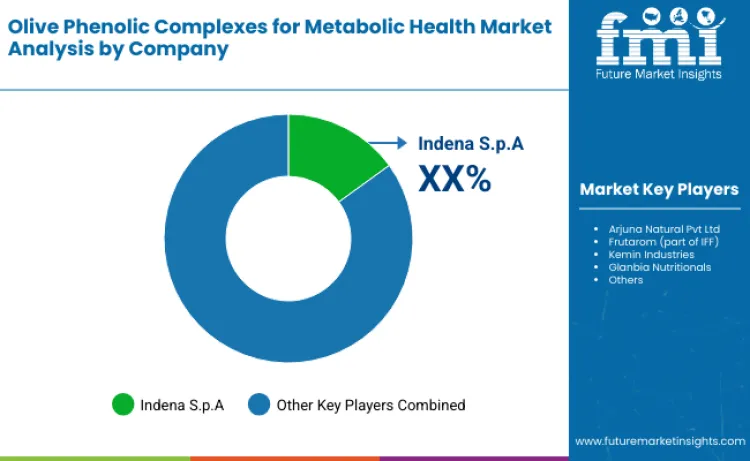
A focused group of ingredient developers and global nutrition firms compete to serve this specialized segment. Indena S.p.A is widely recognized as a leading supplier with expertise in botanical extract standardization and high‑purity phenolic complexes. Other notable competitors include Arjuna Natural Pvt Ltd, Frutarom (part of IFF), Kemin Industries and Glanbia Nutritionals, each offering variants of olive‑derived phenolics or tailored metabolic‑health ingredient systems. Competition among these suppliers centers on extract potency, consistency of bioactive content, compliance with global food and supplement standards, and the ability to support customers with formulation guidance and scientific substantiation. Firms that combine rigorous quality control, scalable production, transparent sourcing and strong technical support are best positioned to capture growth as demand for natural metabolic health ingredients continues to expand worldwide.
Key Players
- Indena S.p.A
- Arjuna Natural Pvt Ltd
- Frutarom (part of IFF)
- Kemin Industries
- Glanbia Nutritionals
Scope of the Report
| Items | Values |
|---|---|
| Quantitative Units (2026) | USD Million |
| Product Form | Standardized Olive Phenolic Extracts, Oleuropein-Rich Complexes, Hydroxytyrosol-Focused Blends, Other Phenolic Synergistic Formulations |
| Application | Dietary Supplements, Functional Foods & Beverages, Nutraceutical Formulations, Other Health Products |
| Companies | Indena S.p.A, Arjuna Natural Pvt Ltd, Frutarom (part of IFF), Kemin Industries, Glanbia Nutritionals |
| Regions Covered | North America, Latin America, Western Europe, Eastern Europe, South Asia and Pacific, East Asia, Middle East & Africa |
| Countries Covered | United States, Canada, Mexico, Brazil, Argentina, Germany, France, United Kingdom, Italy, Spain, Netherlands, China, India, Japan, South Korea, ANZ, GCC Countries, South Africa |
| Additional Attributes | Dollar by sales by product form, application, and region. Includes market trends in the use of olive phenolic complexes for metabolic health, performance in dietary supplements, functional foods, and nutraceuticals, cost-effectiveness, sustainability practices, regulatory compliance, market share and competitive positioning of key companies, and the role of olive phenolic complexes in enhancing metabolic health, cardiovascular support, and overall wellness across the nutraceutical and functional food sectors. |
Key Segments in the Olive Phenolic Complexes for Metabolic Health Market
By Product Form:
- Standardized Olive Phenolic Extracts
- Oleuropein‑Rich Complexes
- Hydroxytyrosol‑Focused Blends
- Other Phenolic Synergistic Formulations
By Application:
- Dietary Supplements
- Functional Foods & Beverages
- Nutraceutical Formulations
- Other Health Products
By Region:
- Asia Pacific
- China
- India
- Japan
- South Korea
- ASEAN
- Rest of Asia Pacific
- Europe
- Germany
- United Kingdom
- France
- Italy
- Spain
- Nordic
- BENELUX
- Rest of Europe
- North America
- United States
- Canada
- Mexico
- Latin America
- Brazil
- Chile
- Rest of Latin America
- Middle East & Africa
- Kingdom of Saudi Arabia
- Other GCC Countries
- Turkey
- South Africa
- Other African Union
- Rest of Middle East & Africa
Frequently Asked Questions
How big is the Olive Phenolic Complexes for Metabolic Health market?
The market is valued at USD 710 million in 2026 and is expected to grow at a CAGR of 12.4%, reaching USD 2.42 billion by 2036.
What is the growth outlook for the Olive Phenolic Complexes for Metabolic Health market?
The market is projected to grow at a CAGR of 12.4% from 2026 to 2036.
Which region is expected to experience the fastest growth in the Olive Phenolic Complexes for Metabolic Health market?
India is expected to lead with a growth rate of 16.4%, driven by increasing awareness of metabolic health and the growing demand for natural supplements.
What are the key applications of Olive Phenolic Complexes for Metabolic Health?
Olive Phenolic Complexes for Metabolic Health are primarily used in dietary supplements, which account for approximately 46% of the market share, due to their beneficial effects on metabolic functions.
Who are the major players in the Olive Phenolic Complexes for Metabolic Health market?
Key players include Indena S.p.A, Arjuna Natural Pvt Ltd, Frutarom (part of IFF), Kemin Industries, and Glanbia Nutritionals.
Preview the report firsthand - request a free sample
Get SampleGet the brochure for pricing and purchase details.
Get PDFTable of Content
- Executive Summary
- Market Overview
- Global Market Value, 2020 to 2025
- Global Market Forecast, 2026 to 2036
- Market Dynamics
- Drivers
- Restraints
- Opportunities
- Regulatory & Standards Landscape
- Technology & Ingredient Innovation Outlook
- Market Segmentation Analysis
- By Product Form
- Standardized Olive Phenolic Extracts
- Oleuropein-Rich Complexes
- Hydroxytyrosol-Focused Blends
- Other Phenolic Synergistic Formulations
- By Application
- Dietary Supplements
- Functional Foods & Beverages
- Nutraceutical Formulations
- Other Health Products
- By Product Form
- Regional Outlook
- North America
- Latin America
- Western Europe
- Eastern Europe
- South Asia & Pacific
- East Asia
- Middle East & Africa
- Country-Level Outlook
- United States
- Canada
- Mexico
- Brazil
- Argentina
- Germany
- France
- United Kingdom
- Italy
- Spain
- Netherlands
- China
- India
- Japan
- South Korea
- ANZ
- GCC Countries
- South Africa
- Competitive Landscape
- Market Structure Overview
- Company Positioning
- Strategic Initiatives
- Key Player Profiles
- Scope of the Report
- Research Methodology
- Assumptions & Acronyms


