

- Industry Size (2026)
- USD 780 Mn
- Forecast (2036)
- USD 2450 Mn
- CAGR (2026 to 2036)
- 11.8%
Upcycled Olive Pomace Prebiotic Fiber Market Forecast and Outlook 2026 to 2036
Global upcycled olive pomace prebiotic fiber market, valued at USD 780 million in 2026, is expected to reach USD 2,450 million by 2036, growing at a CAGR of 11.8%. Growth is driven by the increasing demand for fiber-rich, sustainable ingredients in the food and beverage sector, particularly those with prebiotic benefits that support digestive health.
Powdered prebiotic fiber, which accounts for 44% of the product form market share, is highly preferred for its versatility and ease of incorporation into a variety of food and beverage formulations. Functional foods and beverages, representing 38% of the end-use application market, dominate the market due to the growing trend of consumers seeking health-enhancing, natural ingredients in everyday products. The market expansion is further supported by the rising focus on sustainability and the upcycling of agricultural waste to create value-added ingredients.
Quick Stats for Upcycled Olive Pomace Prebiotic Fiber Market
- Upcycled Olive Pomace Prebiotic Fiber Market Value (2026): USD 780 million
- Upcycled Olive Pomace Prebiotic Fiber Market Forecast Value (2036): USD 2,450 million
- Upcycled Olive Pomace Prebiotic Fiber Market Global Forecast CAGR (2026–2036): 11.8%
- Top Product Form by Share in Upcycled Olive Pomace Prebiotic Fiber Market: Powdered Prebiotic Fiber (44%)
- Key Growth Regions in Upcycled Olive Pomace Prebiotic Fiber Market: China, India, USA, UK, Japan
- Top Players in Upcycled Olive Pomace Prebiotic Fiber Market: Indena S.p.A, Arjuna Natural Pvt Ltd, Cargill, BENEO GmbH, Silvateam S.p.A
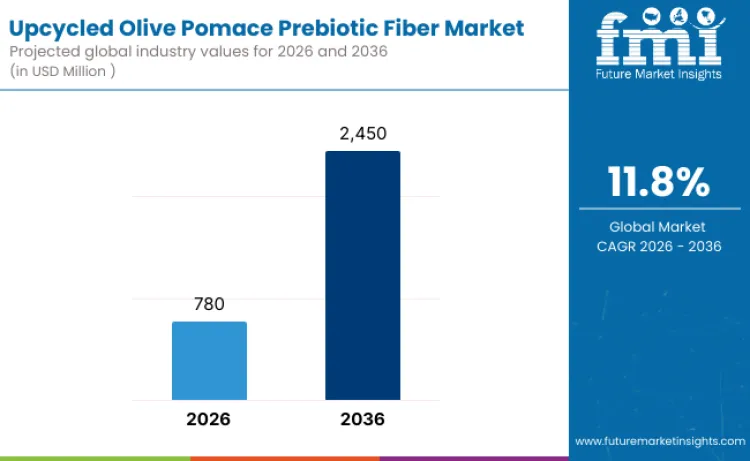
Upcycled Olive Pomace Prebiotic Fiber Market Key Takeaways
| Metric | Value |
|---|---|
| Industry Sales Value (2026) | USD 780 million |
| Industry Forecast Value (2036) | USD 2,450 million |
| Industry Forecast CAGR (2026-2036) | 11.8% |
What Are the Key Segments in Upcycled Olive Pomace Prebiotic Fiber Market?
The upcycled olive pomace prebiotic fiber market is segmented by product form and end-use application. Powdered prebiotic fiber holds 44% of the market share, offering a versatile form for various formulations. Functional foods & beverages lead the application segment with 38%, driven by consumer demand for healthier, fiber-rich products. The market is growing due to the increasing focus on sustainability and health benefits, as upcycled olive pomace provides a valuable, eco-friendly source of prebiotic fiber.
Which Product Form Drives Upcycled Olive Pomace Prebiotic Fiber Market Demand Globally?
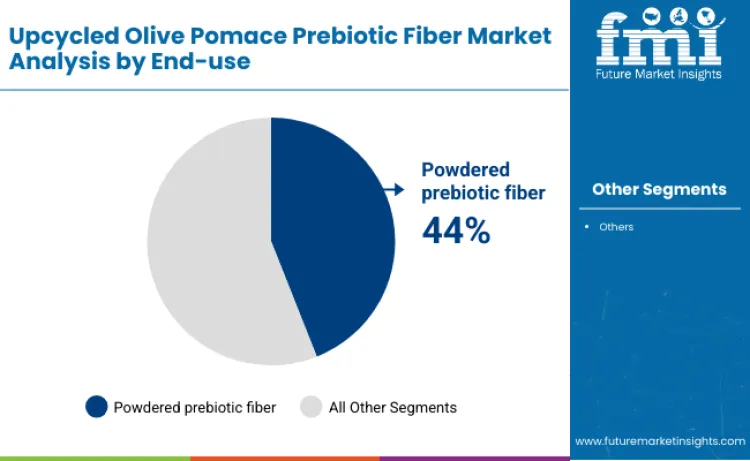
Powdered prebiotic fiber is the leading product form, accounting for 44% of the market share. Powdered fiber is highly valued for its stability, ease of use, and flexibility in various applications, particularly in dietary supplements and functional foods. Olive pomace, a byproduct of olive oil production, is rich in prebiotic fibers, which support gut health by promoting the growth of beneficial bacteria. This form of fiber is ideal for use in powder-based supplements and functional food products, where it can be easily incorporated into smoothies, protein bars, or other health-focused foods. The demand for powdered prebiotic fiber is growing as consumers seek natural, plant-based ingredients to enhance their digestive health. Additionally, as upcycling becomes a more prominent trend in food production, the use of olive pomace to produce sustainable, high-quality fiber is gaining traction, contributing to the market's expansion.
Which End-Use Application Drives Upcycled Olive Pomace Prebiotic Fiber Market Demand Globally?
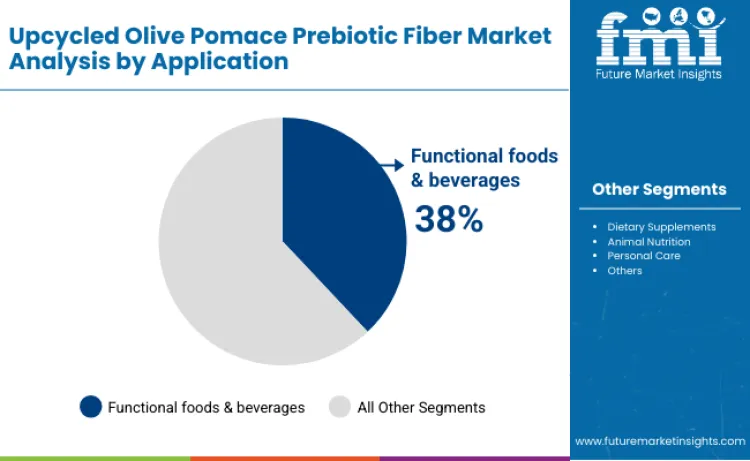
Functional foods & beverages lead the application segment with 38% of the market share. The growing consumer focus on digestive health and overall wellness is driving the demand for prebiotic fibers in functional foods and beverages. Olive pomace prebiotic fiber, rich in beneficial compounds, is increasingly used in food and beverage products like juices, smoothies, and energy bars to enhance gut health. Prebiotics are known to support the growth of beneficial gut bacteria, improving digestion and boosting immune function. The use of upcycled olive pomace aligns with the growing trend of sustainability in the food industry, making it an attractive ingredient for brands seeking to promote eco-friendly, health-conscious products. While applications in dietary supplements, animal nutrition, and personal care are also growing, functional foods and beverages remain the largest segment due to their widespread use and growing consumer demand for fiber-enriched products.
What is the Key Trends in the Global Upcycled Olive Pomace Prebiotic Fiber Market?
The global upcycled olive pomace prebiotic fiber market is expanding as food, beverage and dietary supplement manufacturers seek ingredient solutions that support gut health and reduce waste from olive oil production. Olive pomace, the solid byproduct of olive pressing, is rich in fiber and phenolic compounds that can function as prebiotics. Use of upcycled pomace aligns with circular economy initiatives by converting an abundant waste stream into value. Growth reflects rising interest in gentle digestive support ingredients and sustainable raw materials that deliver both functional and environmental benefits.
What are the Key Drivers for the Global Upcycled Olive Pomace Prebiotic Fiber Market?
A key driver is rising consumer interest in gut health and digestive wellness, motivating product developers to integrate prebiotic fibers into foods, beverages and supplements. Upcycled olive pomace prebiotic fiber appeals to brands addressing both health and sustainability priorities. Increased focus on circular processing and waste reduction encourages adoption of byproduct‑derived ingredients that reduce environmental burden while generating commercial value. Advances in extraction and purification technologies make it easier to produce high‑quality prebiotic fibers from pomace. Expansion of functional food and beverage categories that emphasize natural, plant‑derived ingredients further supports market growth.
What are the Restraints for the Global Upcycled Olive Pomace Prebiotic Fiber Market?
One restraint is variability in raw olive pomace composition due to differences in olive varieties, seasonal conditions and processing methods, which can make it challenging to standardize prebiotic fiber quality and functional performance. Production systems that extract and refine pomace into consistent prebiotic ingredients require technical expertise and capital investment, which may deter smaller producers. Regulatory frameworks for prebiotic claims and ingredient approval vary across regions, creating compliance complexity. Price sensitivity in certain product categories may limit adoption where lower‑cost fiber alternatives are available, affecting scale of use.
What is the Country-Wise Outlook for Upcycled Olive Pomace Prebiotic Fiber?
The Upcycled Olive Pomace Prebiotic Fiber market is expanding rapidly across various countries, driven by the growing interest in natural and sustainable ingredients in food, beverages, and dietary supplements. Countries like India, China, and the USA are at the forefront of this growth, fueled by increasing health awareness and the demand for functional ingredients. The rising popularity of prebiotics for digestive health and gut microbiome support is also contributing to market expansion. As consumer demand for eco-friendly, bio-based ingredients rises, the market for upcycled olive pomace prebiotic fiber is expected to continue growing across these regions.
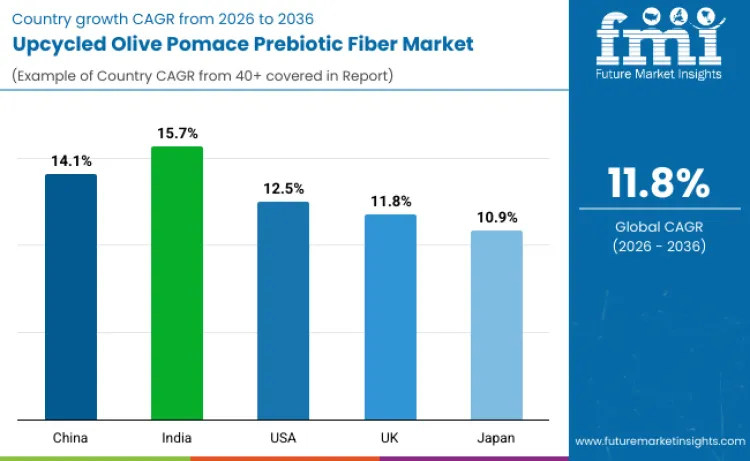
| Country | CAGR (2026-2036) |
|---|---|
| China | 14.1% |
| India | 15.7% |
| USA | 12.5% |
| UK | 11.8% |
| Japan | 10.9% |
What is Driving the Growth of Upcycled Olive Pomace Prebiotic Fiber in China?
The upcycled olive pomace prebiotic fiber market in China is expected to grow at a CAGR of 14.1% from 2026 to 2036. The growth is primarily attributed to the increasing consumer demand for health-conscious, functional food ingredients. As awareness of the importance of gut health rises, prebiotics, including those derived from olive pomace, are gaining popularity for their digestive benefits. Additionally, the growing trend of sustainable and eco-friendly products is encouraging the use of upcycled ingredients. The government’s support for sustainability initiatives further drives the adoption of upcycled olive pomace prebiotic fiber, positioning China for continued market growth in the coming years.
What is Contributing to the Upcycled Olive Pomace Prebiotic Fiber Market Growth in India?
The upcycled olive pomace prebiotic fiber market in India is projected to grow at an impressive CAGR of 15.7%. This growth is fueled by a rising consumer focus on digestive health and overall wellness. As more consumers turn to natural, plant-based products, demand for prebiotic fibers, including those derived from olive pomace, is increasing. India’s thriving wellness industry, combined with the expanding middle class and improved disposable incomes, supports the adoption of high-quality, sustainable ingredients. The trend toward eco-friendly products and the growing interest in sustainable sourcing are also key drivers for upcycled olive pomace prebiotic fiber growth in India.
What is Driving the Upcycled Olive Pomace Prebiotic Fiber Market in the USA?
The USA upcycled olive pomace prebiotic fiber market is expected to grow at a CAGR of 12.5% over the forecast period. The increasing consumer demand for prebiotics, known for their digestive health benefits, is driving the market’s expansion. As health-conscious consumers seek functional foods that support gut health and overall well-being, the demand for upcycled ingredients like olive pomace prebiotic fiber is rising. The growing focus on sustainability and clean-label products in the USA further boosts the market. With increasing consumer awareness about the importance of prebiotics and fiber, the demand for upcycled olive pomace prebiotic fiber is projected to maintain steady growth.
What is Influencing the Upcycled Olive Pomace Prebiotic Fiber Market in the UK?
The UK upcycled olive pomace prebiotic fiber market is expected to grow at a CAGR of 11.8%. The market’s growth is driven by the increasing demand for sustainable ingredients in food and beverages. UK consumers are placing greater emphasis on gut health and the digestive benefits of prebiotics, which is supporting the growth of olive pomace-derived fiber. The rising popularity of plant-based and eco-conscious products in the UK, along with a growing preference for clean-label ingredients, is further boosting market expansion. The growing focus on sustainability in the food and beverage industry is expected to continue driving demand for upcycled olive pomace prebiotic fiber in the UK.
What is the Outlook for Upcycled Olive Pomace Prebiotic Fiber in Japan?
The upcycled olive pomace prebiotic fiber market in Japan is anticipated to grow at a CAGR of 10.9%. The demand for prebiotics is rising in Japan as consumers become more focused on digestive health and wellness. Olive pomace-derived prebiotic fibers are gaining attention for their potential health benefits, including promoting gut microbiome balance. Japan’s strong tradition of health-conscious eating, coupled with the increasing interest in sustainable food ingredients, is fueling the market’s growth. As Japan’s population continues to age and the demand for functional food products increases, the market for upcycled olive pomace prebiotic fiber is expected to experience steady growth in the coming years.
What is the Competitive Landscape for the Upcycled Olive Pomace Prebiotic Fiber Market?
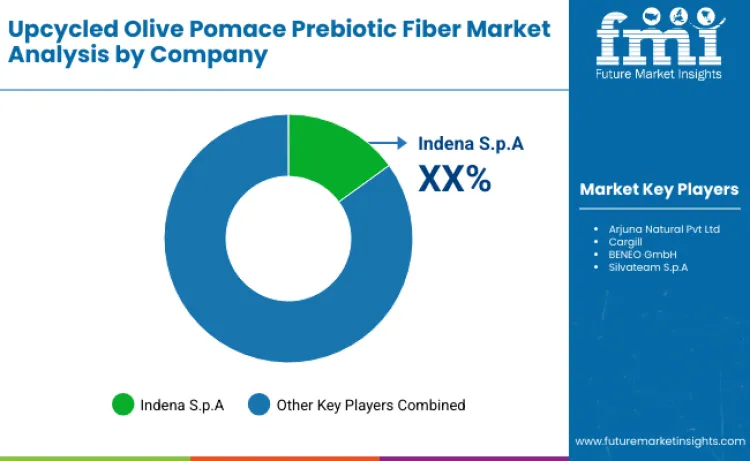
Global demand for upcycled olive pomace prebiotic fiber is growing as consumer interest in digestive health, sustainable ingredients and plant‑based nutrition rises. Olive pomace, the solid by‑product of olive oil production, is rich in dietary fibers and polyphenols. Recovering and processing this material into prebiotic fiber supports circular economy goals by reducing waste and creating value‑added functional ingredients for food, beverage, dietary supplement and nutraceutical markets. Prebiotic fibers support gut microbiota and overall digestive health, aligning with rising awareness of microbiome science and the role of dietary fiber in wellness. Growth in categories such as functional foods, fortified snacks, drinks, and clean‑label supplements further boosts demand. Manufacturers increasingly seek upcycled ingredients that offer performance benefits, traceable sustainability credentials and compatibility with health‑driven product positioning. In regions such as North America, Europe and parts of Asia Pacific, formulators prioritise clean‑label, plant‑based, environmentally responsible components, helping expand the market for prebiotic fiber derived from olive pomace.
On the supply side a select group of ingredient developers and global food‑ingredient firms compete to serve this emerging segment. Indena S.p.A is recognised as a leading supplier with strong capabilities in botanical extract standardisation and high‑quality fiber concentrates. Other competitors include Arjuna Natural Pvt Ltd, Cargill, BENEO GmbH and Silvateam S.p.A, each offering variants of upcycled fiber or related functional ingredients tailored for digestive health and food formulation needs. Competition among these firms centres on product purity and functionality, consistency of supply, compliance with food‑safety and regulatory standards, and ability to support customers with technical application guidance. Suppliers that combine rigorous quality control, scalable upcycling technology, transparent sourcing and strong formulation support are best positioned to capture growth as demand for sustainable, gut‑health focused ingredients continues to expand across global markets.
Key Players
- Indena S.p.A
- Arjuna Natural Pvt Ltd
- Cargill
- BENEO GmbH
- Silvateam S.p.A
Scope of the Report
| Items | Values |
|---|---|
| Quantitative Units (2026) | USD Million |
| Product Form | Powdered Prebiotic Fiber, Liquid Fiber Extracts, Encapsulated Fiber Blends, Other Formats |
| End-Use Application | Functional Foods & Beverages, Dietary Supplements, Animal Nutrition, Personal Care & Cosmetics |
| Companies | Indena S.p.A, Arjuna Natural Pvt Ltd, Cargill, BENEO GmbH, Silvateam S.p.A |
| Regions Covered | North America, Latin America, Western Europe, Eastern Europe, South Asia and Pacific, East Asia, Middle East & Africa |
| Countries Covered | United States, Canada, Mexico, Brazil, Argentina, Germany, France, United Kingdom, Italy, Spain, Netherlands, China, India, Japan, South Korea, ANZ, GCC Countries, South Africa |
| Additional Attributes | Dollar by sales by product form, end-use application, and region. Includes market trends in upcycled olive pomace as a source of prebiotic fiber, performance in functional foods, dietary supplements, animal nutrition, and cosmetics, cost-effectiveness, sustainability practices, regulatory compliance, market share and competitive positioning of key companies, and the role of prebiotic fiber in enhancing gut health, skin care, and overall wellness. |
Key Segments in the Upcycled Olive Pomace Prebiotic Fiber Market
Product Form:
- Powdered Prebiotic Fiber
- Liquid Fiber Extracts
- Encapsulated Fiber Blends
- Other Formats
End‑Use Application:
- Functional Foods & Beverages
- Dietary Supplements
- Animal Nutrition
- Personal Care & Cosmetics
Region:
- Asia Pacific
- China
- India
- Japan
- South Korea
- ASEAN
- Rest of Asia Pacific
- Europe
- Germany
- United Kingdom
- France
- Italy
- Spain
- Nordic
- BENELUX
- Rest of Europe
- North America
- United States
- Canada
- Mexico
- Latin America
- Brazil
- Chile
- Rest of Latin America
- Middle East & Africa
- Kingdom of Saudi Arabia
- Other GCC Countries
- Turkey
- South Africa
- Other African Union
- Rest of Middle East & Africa
Frequently Asked Questions
How big is the Upcycled Olive Pomace Prebiotic Fiber market?
The market is valued at USD 780 million in 2026 and is expected to grow at a CAGR of 11.8%, reaching USD 2.45 billion by 2036.
What is the growth outlook for the Upcycled Olive Pomace Prebiotic Fiber market?
The market is projected to grow at a CAGR of 11.8% from 2026 to 2036.
What is the growth outlook for the Upcycled Olive Pomace Prebiotic Fiber market?
India is expected to lead with a growth rate of 15.7%, driven by increasing demand for natural and sustainable prebiotic fibers in health and wellness products.
What are the key applications of Upcycled Olive Pomace Prebiotic Fiber?
Upcycled Olive Pomace Prebiotic Fiber is primarily available in powdered form, accounting for approximately 44% of the market share, and is widely used in dietary supplements and functional foods.
Who is the major player in the Upcycled Olive Pomace Prebiotic Fiber market?
The leading player in the market is Indena S.p.A.
Preview the report firsthand - request a free sample
Get SampleGet the brochure for pricing and purchase details.
Get PDFTable of Content
- Executive Summary
- Market Overview
- Global Market Value, 2020–2025
- Global Market Forecast, 2026–2036
- Market Dynamics
- Drivers
- Restraints
- Opportunities
- Regulatory & Standards Landscape
- Technology & Ingredient Innovation Outlook
- Market Segmentation Analysis
- By Product Form
- Powdered Prebiotic Fiber
- Liquid Fiber Extracts
- Encapsulated Fiber Blends
- Other Formats
- By End-Use Application
- Functional Foods & Beverages
- Dietary Supplements
- Animal Nutrition
- Personal Care & Cosmetics
- By Product Form
- Regional Outlook
- North America
- Latin America
- Western Europe
- Eastern Europe
- South Asia & Pacific
- East Asia
- Middle East & Africa
- Country-Level Outlook
- United States
- Canada
- Mexico
- Brazil
- Argentina
- Germany
- France
- United Kingdom
- Italy
- Spain
- Netherlands
- China
- India
- Japan
- South Korea
- ANZ
- GCC Countries
- South Africa
- Competitive Landscape
- Market Structure Overview
- Company Positioning
- Strategic Initiatives
- Key Player Profiles
- Scope of the Report
- Research Methodology
- Assumptions & Acronyms


