

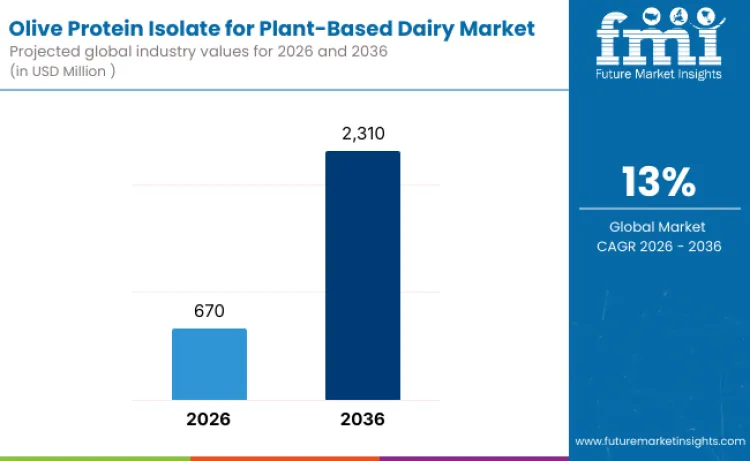
- Industry Size (2026)
- USD 670 Mn
- Forecast (2036)
- USD 2310 Mn
- CAGR (2026 to 2036)
- 13%
Olive Protein Isolate for Plant-Based Dairy Market Forecast and Outlook 2026 to 2036
Global olive protein isolate for plant-based dairy market, valued at USD 670 million in 2026, is expected to reach USD 2,310 million by 2036, growing at a CAGR of 13%. Growth is driven by the increasing demand for plant-based dairy alternatives and the growing popularity of olive-based ingredients as sustainable, high-protein options.
Powdered olive protein isolate, which makes up 51% of the product type market share, is favored for its ease of incorporation into a wide range of plant-based dairy products. Plant-based beverages, accounting for 42% of the application segment, are the leading consumers of olive protein isolates, as they provide a rich, sustainable protein source for dairy alternatives. The market is further supported by the growing trend of health-conscious consumers seeking plant-based, allergen-free, and environmentally friendly dairy substitutes.
Quick Stats for Olive Protein Isolate for Plant-Based Dairy Market
- Olive Protein Isolate for Plant-Based Dairy Market Value (2026): USD 670 million
- Olive Protein Isolate for Plant-Based Dairy Market Forecast Value (2036): USD 2,310 million
- Olive Protein Isolate for Plant-Based Dairy Market Global Forecast CAGR (2026 to 2036): 13%
- Top Product Type by Share in Olive Protein Isolate for Plant-Based Dairy Market: Powdered Olive Protein Isolate (51%)
- Key Growth Regions in Olive Protein Isolate for Plant-Based Dairy Market: China, India, South Korea, USA, UK
- Top Players in Olive Protein Isolate for Plant-Based Dairy Market: Arjuna Natural Pvt Ltd, Indena S.p.A, Ingredion Incorporated, Cargill, Roquette Frères
Olive Protein Isolate for Plant-Based Dairy Market Key Takeaways
| Metric | Value |
|---|---|
| Industry Sales Value (2026) | USD 670 million |
| Industry Forecast Value (2036) | USD 2,310 million |
| Industry Forecast CAGR (2026 to 2036) | 13% |
What Are the Key Segments in Olive Protein Isolate for Plant-Based Dairy Market?
The olive protein isolate for plant-based dairy market is segmented by product type and application. Powdered olive protein isolate holds 51% of the market share, offering versatility for various plant-based dairy products. In terms of application, plant-based beverages dominate with 42% of the market share, driven by the rising demand for dairy alternatives. The market is expanding as consumers increasingly seek plant-based options with clean, sustainable ingredients like olive protein isolate.
Which Product Type Drives Olive Protein Isolate for Plant-Based Dairy Market Demand Globally?
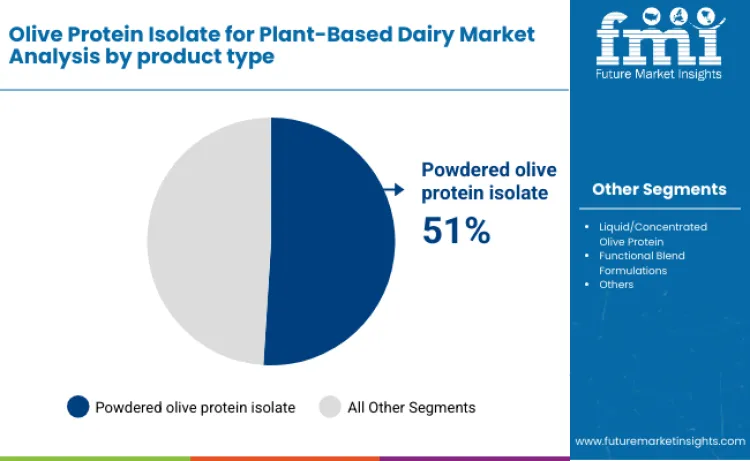
Powdered olive protein isolate leads the market with 51% of the share. This form of olive protein is highly versatile, easily incorporated into various plant-based dairy formulations such as beverages, yogurts, and cheeses. The powder form offers high stability, ease of storage, and ease of use in manufacturing processes.
It is particularly attractive to the plant-based dairy industry due to its ability to deliver a clean, neutral taste while providing the nutritional benefits of olive protein, including high-quality amino acids and antioxidants. As the demand for clean-label, sustainable ingredients grows, powdered olive protein isolate is gaining traction in plant-based dairy applications due to its high functionality and natural origins. Additionally, the versatility of the powder form allows it to be used in a wide range of dairy alternatives, making it a preferred choice among manufacturers aiming to develop innovative, healthy products for the growing plant-based consumer market.
Which Application Drives Olive Protein Isolate for Plant-Based Dairy Market Demand Globally?
Plant-based beverages are the largest application segment, holding 42% of the market share. Olive protein isolate is increasingly used in plant-based beverages like milk alternatives, protein drinks, and smoothies. These beverages are growing in popularity due to the increasing consumer shift towards plant-based diets and the rising awareness of the environmental and health benefits of plant-based options. Olive protein isolate is valued for its clean taste, high solubility, and functional properties, which contribute to the texture and mouthfeel of dairy alternatives.
The ability of olive protein isolate to improve the nutritional profile of plant-based beverages-providing essential amino acids and protein content-is further fueling its adoption in this segment. As demand for dairy-free beverages continues to rise, particularly among health-conscious consumers, the plant-based beverage market is expected to drive the growth of olive protein isolate, solidifying its role as a key ingredient in the future of dairy alternatives.
What is the Key Trends in the Global Olive Protein Isolate for Plant-Based Dairy Market?
The global olive protein isolate for plant‑based dairy market is expanding as manufacturers seek sustainable, plant‑based protein solutions that support clean label and functional nutrition. Olive protein isolate is derived from olive processing byproducts and offers essential amino acids, emulsification and texture improvement in dairy alternatives. Growth is influenced by rising consumer interest in plant‑based diets, demand for diverse protein sources, and initiatives to valorize agricultural residues. Use in yogurts, drinks, desserts and fortified beverages reflects its expanding role in product innovation and sustainable ingredient strategies worldwide.
What are the Key Drivers for the Global Olive Protein Isolate for Plant‑Based Dairy Market?
Rising demand for plant‑based dairy alternatives is a major driver of olive protein isolate adoption. Consumers seeking dairy‑free options look for products that offer high quality protein, pleasant texture and nutritional value. Olive protein isolate supports formulation goals for creamy texture, stability and nutritional enhancement in plant‑based milks, yogurts and desserts. Sustainable sourcing and circular economy priorities encourage brands to integrate byproduct‑derived ingredients that reduce waste. Growing awareness of diverse protein sources beyond soy and pea encourages manufacturers to differentiate products with novel plant proteins that meet health and environmental preferences.
What are the Restraints for the Global Olive Protein Isolate for Plant‑Based Dairy Market?
One restraint is variability in raw material quality based on olive cultivar, harvest conditions and processing methods, which may affect consistency of protein isolates. Production processes require specialized extraction and refinement to achieve desired purity and functional properties. These technical requirements can increase cost of ingredients compared with more established plant proteins. Limited awareness of olive protein isolate among some manufacturers and consumers may slow uptake compared with widely known alternatives. Regulatory frameworks and labeling requirements for novel protein ingredients differ across regions, requiring careful compliance planning to support global product launches.
What is the Country-Wise Outlook for Olive Protein Isolate for Plant-Based Dairy?
The Olive Protein Isolate for Plant-Based Dairy market is experiencing significant growth across several key countries, driven by the rising demand for plant-based alternatives to traditional dairy products. Countries such as India, China, and South Korea are leading the market expansion due to the growing adoption of plant-based diets and an increasing focus on sustainable, protein-rich alternatives. The shift towards healthier, dairy-free options, coupled with consumer interest in the health benefits of olive protein, is boosting the demand for olive protein isolate in the plant-based dairy sector. As more consumers seek dairy-free products, this market is expected to see continued growth across these regions.
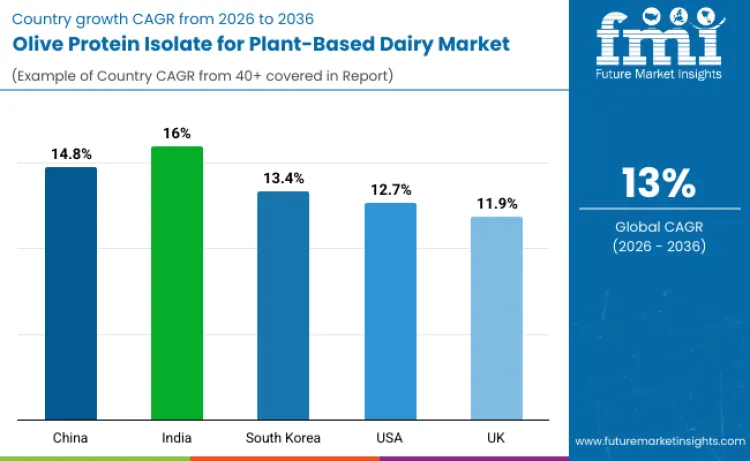
| Country | CAGR (2026 to 2036) |
|---|---|
| China | 14.8% |
| India | 16% |
| South Korea | 13.4% |
| USA | 12.7% |
| UK | 11.9% |
What is Driving the Growth of Olive Protein Isolate for Plant-Based Dairy in China?
China’s Olive Protein Isolate for Plant-Based Dairy market is projected to grow at a CAGR of 14.8% from 2026 to 2036. The rising popularity of plant-based diets, driven by increasing health consciousness and concerns over lactose intolerance, is fueling the demand for dairy alternatives. Olive protein, with its sustainable sourcing and nutritional benefits, is gaining traction as a key ingredient in plant-based dairy products. Additionally, the Chinese market’s growing interest in functional foods and plant-based protein sources supports the adoption of olive protein isolate in dairy alternatives. With increasing consumer awareness of the environmental impact of traditional dairy, the market for olive protein isolate is expected to experience steady growth.
What is Contributing to the Growth of Olive Protein Isolate for Plant-Based Dairy in India?
India’s Olive Protein Isolate for Plant-Based Dairy market is expected to grow at an impressive CAGR of 16% over the forecast period. The increasing demand for dairy-free alternatives, particularly in urban areas, is a significant driver of this market growth. With rising health concerns and a growing vegan and plant-based movement, Indian consumers are increasingly opting for dairy alternatives that provide essential proteins without compromising on taste or nutritional value. Olive protein isolate is gaining attention due to its high nutritional content and sustainability, making it a popular choice for plant-based dairy manufacturers. The expanding wellness sector in India is also supporting the adoption of these protein-rich alternatives.
What is Influencing the Growth of Olive Protein Isolate for Plant-Based Dairy in South Korea?
South Korea’s Olive Protein Isolate for Plant-Based Dairy market is projected to grow at a CAGR of 13.4%. As South Korean consumers become more health-conscious and environmentally aware, there is an increasing demand for plant-based dairy alternatives. Olive protein isolate, with its nutritional profile and sustainable sourcing, is well-positioned to meet the growing preference for functional, dairy-free foods. The demand for plant-based proteins in dairy products, such as plant-based milk, yogurt, and cheese, is rising, particularly among young, urban consumers. South Korea’s strong interest in healthy eating and natural products further supports the market’s growth, making olive protein isolate a viable ingredient for the plant-based dairy sector.
What is Driving the Growth of Olive Protein Isolate for Plant-Based Dairy in the USA?
The USA’s Olive Protein Isolate for Plant-Based Dairy market is expected to grow at a CAGR of 12.7%. The increasing demand for plant-based and dairy-free alternatives, driven by health-conscious consumers and the rise in lactose intolerance, is a major factor contributing to this market growth. Olive protein isolate is gaining popularity in the USA due to its high-quality protein content and sustainable production. With more consumers seeking protein-rich, dairy-free options, the demand for olive protein isolate in plant-based dairy products, including plant-based milk, cheeses, and yogurts, is expanding. The trend toward cleaner ingredients and environmentally friendly products further boosts the growth of this market.
What is Contributing to the Growth of Olive Protein Isolate for Plant-Based Dairy in the UK?
The UK’s Olive Protein Isolate for Plant-Based Dairy market is projected to grow at a CAGR of 11.9%. The UK’s increasing shift toward plant-based diets and growing awareness of the health benefits of olive-based ingredients are key drivers of this market. Consumers in the UK are increasingly seeking sustainable and nutritious alternatives to dairy, and olive protein isolate offers a high-quality, plant-based protein solution. The rise in veganism and the growing demand for dairy alternatives in the food and beverage sector, including plant-based milk, cheese, and yogurt, further supports market growth. As the trend for clean-label and environmentally conscious products continues, olive protein isolate is expected to see continued adoption in the UK plant-based dairy market.
What is the Competitive Landscape for the Olive Protein Isolate for Plant Based Dairy Market?
Global demand for olive protein isolate in the plant‑based dairy market is growing as consumers increasingly seek sustainable, allergen‑friendly and nutritious alternatives to traditional dairy proteins. Olive protein isolate is derived from olive seed or pomace, offering a high‑quality plant protein with good amino acid balance, mild taste and clean‑label appeal. Its upcycled nature aligns with circular‑economy goals, helping food and beverage formulators reduce waste while creating value‑added ingredients.
The shift toward plant‑based yogurts, drinks, cheeses and protein‑fortified beverages fuels interest in novel protein sources that support texture, nutritional profile and sensory expectations. Growing awareness of sustainability and environmental impact of animal agriculture further boosts adoption of plant‑based proteins like olive isolate across North America, Europe and Asia Pacific.
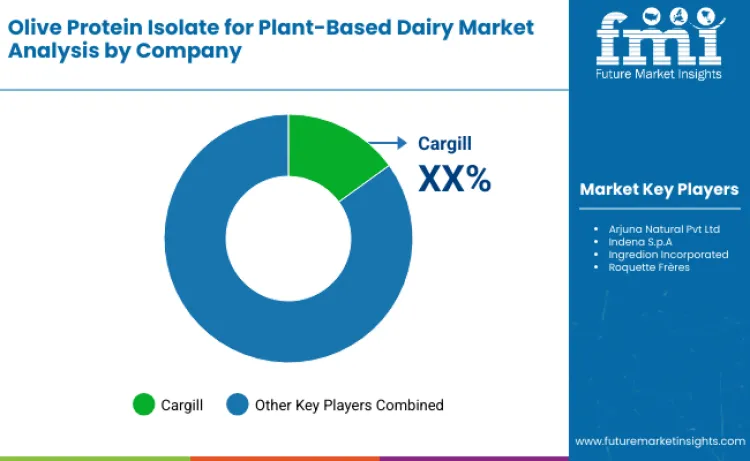
On the supply side, a mix of ingredient specialists and major food‑ingredient firms compete to provide olive protein isolate and related functional ingredients to the plant‑based dairy sector. Cargill is recognised as a leading player with broad global reach and extensive food‑industry expertise. Other significant competitors include Arjuna Natural Pvt Ltd, Indena S.p.A, Ingredion Incorporated and Roquette Frères, each offering plant‑protein solutions and formulation support to dairy alternative producers.
Competition among these suppliers focuses on protein purity and functionality, consistency of supply, formulation guidance for diverse dairy‑free applications, and compliance with food‑safety and regulatory standards. Firms that combine strong research and development, high‑quality ingredient production, transparent sourcing and robust customer support are best positioned to capture growth. As demand for nutritious, sustainable plant‑based dairy products continues to rise, suppliers that deliver versatile, clean‑label protein solutions will lead in this expanding market for olive protein isolate.
Key Players
- Arjuna Natural Pvt Ltd
- Indena S.p.A
- Ingredion Incorporated
- Cargill
- Roquette Frères
Scope of the Report
| Items | Values |
|---|---|
| Quantitative Units (2026) | USD Million |
| Product Type | Powdered Olive Protein Isolate, Liquid/Concentrated Olive Protein, Functional Blend Formulations, Other Specialty Formats |
| Application | Plant-Based Beverages, Plant-Based Yogurt & Cheese Alternatives, Plant-Based Desserts, Other Specialty Dairy Alternatives |
| Companies | Arjuna Natural Pvt Ltd, Indena S.p.A, Ingredion Incorporated, Cargill, Roquette Frères |
| Regions Covered | North America, Latin America, Western Europe, Eastern Europe, South Asia and Pacific, East Asia, Middle East & Africa |
| Countries Covered | United States, Canada, Mexico, Brazil, Argentina, Germany, France, United Kingdom, Italy, Spain, Netherlands, China, India, Japan, South Korea, ANZ, GCC Countries, South Africa |
| Additional Attributes | Dollar by sales by product type, application, and region. Includes market trends in the use of olive protein isolate in plant-based dairy alternatives, performance in various applications (beverages, yogurt, cheese, desserts), cost-effectiveness, sustainability practices, market share and competitive positioning of key companies, and the role of olive protein isolate in improving nutritional profiles, texture, and taste in plant-based dairy products. |
Key Segments in the Olive Protein Isolate for Plant-Based Dairy Market
By Product Type:
- Powdered Olive Protein Isolate
- Liquid/Concentrated Olive Protein
- Functional Blend Formulations
- Other Specialty Formats
By Application:
- Plant‑Based Beverages
- Plant‑Based Yogurt & Cheese Alternatives
- Plant‑Based Desserts
- Other Specialty Dairy Alternatives
By Region:
- Asia Pacific
- China
- India
- Japan
- South Korea
- ASEAN
- Rest of Asia Pacific
- Europe
- Germany
- United Kingdom
- France
- Italy
- Spain
- Nordic
- BENELUX
- Rest of Europe
- North America
- United States
- Canada
- Mexico
- Latin America
- Brazil
- Chile
- Rest of Latin America
- Middle East & Africa
- Kingdom of Saudi Arabia
- Other GCC Countries
- Turkey
- South Africa
- Other African Union
- Rest of Middle East & Africa
Frequently Asked Questions
How big is the Olive Protein Isolate for Plant-Based Dairy market?
The market is valued at USD 670 million in 2026 and is expected to grow at a CAGR of 13%, reaching USD 2.31 billion by 2036.
What is the growth outlook for the Olive Protein Isolate for Plant-Based Dairy market?
The market is projected to grow at a CAGR of 13% from 2026 to 2036.
Which regions are expected to experience the fastest growth in the Olive Protein Isolate for Plant-Based Dairy market?
China is expected to grow at a rate of 14.8%, India at 16.0%, South Korea at 13.4%, the USA at 12.7%, and the UK at 11.9%, driven by increasing demand for plant-based dairy alternatives.
What are the key applications of Olive Protein Isolate for Plant-Based Dairy?
Olive Protein Isolate is primarily used in plant-based dairy products, with powdered olive protein isolate accounting for approximately 51% of the market share.
Who are the major players in the Olive Protein Isolate for Plant-Based Dairy market?
Key players include Arjuna Natural Pvt Ltd, Indena S.p.A, Ingredion Incorporated, Cargill, and Roquette Frères.
Preview the report firsthand - request a free sample
Get SampleGet the brochure for pricing and purchase details.
Get PDFTable of Content
- Executive Summary
- Market Overview
- Global Market Value, 2020 to 2025
- Global Market Forecast, 2026 to 2036
- Market Dynamics
- Drivers
- Restraints
- Opportunities
- Regulatory & Standards Landscape
- Technology & Ingredient Innovation Outlook
- Market Segmentation Analysis
- By Product Type
- Powdered Olive Protein Isolate
- Liquid/Concentrated Olive Protein
- Functional Blend Formulations
- Other Specialty Formats
- By Application
- Plant-Based Beverages
- Plant-Based Yogurt & Cheese Alternatives
- Plant-Based Desserts
- Other Specialty Dairy Alternatives
- By Product Type
- Regional Outlook
- North America
- Latin America
- Western Europe
- Eastern Europe
- South Asia & Pacific
- East Asia
- Middle East & Africa
- Country-Level Outlook
- United States
- Canada
- Mexico
- Brazil
- Argentina
- Germany
- France
- United Kingdom
- Italy
- Spain
- Netherlands
- China
- India
- Japan
- South Korea
- ANZ
- GCC Countries
- South Africa
- Competitive Landscape
- Market Structure Overview
- Company Positioning
- Strategic Initiatives
- Key Player Profiles
- Scope of the Report
- Research Methodology
- Assumptions & Acronyms


