

- Industry Size (2026)
- USD 1.2 Bn
- Forecast (2036)
- USD 2.6 Bn
- CAGR (2026 to 2036)
- 8%
Upcycled Botanical Pigment Systems from Food and Agri By-Products Market Forecast and Outlook 2026 to 2036
The upcycled botanical pigment systems from food and agri by-products market is valued at USD 1.2 billion in 2026 and is expected to reach USD 2.6 billion by 2036, growing at a compound annual growth rate (CAGR) of 8%. For decision-makers, this market represents both an opportunity and a challenge in navigating the shift toward sustainability. Economic exposure will be driven by increasing consumer demand for natural, eco-friendly alternatives, with regulatory pressures further emphasizing the need for greener sourcing methods.
Prioritization should focus on securing reliable, cost-efficient supply chains, as the sourcing of by-products from food and agriculture sectors can introduce volatility. Timing is critical; companies that act early to integrate upcycled botanical pigments into their product offerings may secure a competitive edge, while others may face delays due to supply chain constraints or certification processes. In this evolving landscape, successful players will balance innovation with operational resilience, positioning themselves as leaders in sustainable beauty and textiles.
Quick Stats of the Upcycled Botanical Pigment Systems from Food and Agri By-Products Market
- Upcycled Botanical Pigment Systems from Food and Agri By-Products Market Value (2026): USD 1.2 billion
- Upcycled Botanical Pigment Systems from Food and Agri By-Products Market Forecast Value (2036): USD 2.6 billion
- Upcycled Botanical Pigment Systems from Food and Agri By-Products Market Global Forecast CAGR (2026 to 2036): 8%
- Upcycled Botanical Pigment Systems from Food and Agri By-Products Market Leading Segment: Source Type (Fruit Waste-Derived Pigments) 42%
- Key Growth Regions in Upcycled Botanical Pigment Systems from Food and Agri By-Products Market: USA
- Top Players in Upcycled Botanical Pigment Systems from Food and Agri By-Products Market: Chr. Hansen Holdings, Sensient Technologies, Naturex SA, Givaudan SA, Kerry Group PLC
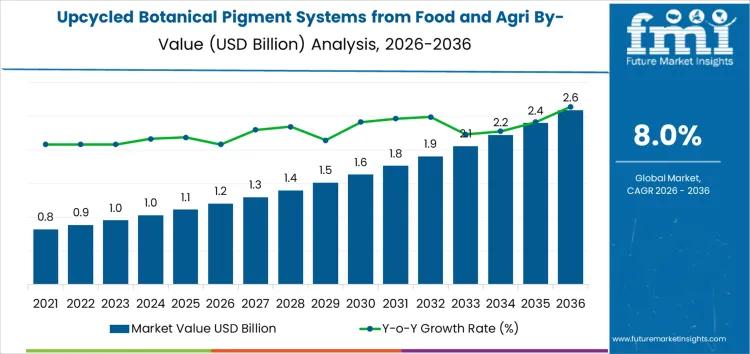
What is the Growth Forecast for the Upcycled Botanical Pigment Systems from Food and Agri By-Products Market through 2036?
The growth rate volatility index for the upcycled botanical pigment systems from food and agri by-products market will experience higher volatility in the early years (2026 to 2031), driven by several factors, including the nascent stage of the market, technological advancements, and growing consumer demand for sustainable products. The market is projected to grow from USD 1.2 billion in 2026 to USD 1.7 billion in 2030, reflecting an increase of USD 500 million over the first five years. During this period, the market will be subject to fluctuations as industries adopt upcycled pigments and innovation accelerates. The initial volatility will be influenced by market dynamics such as changes in consumer behavior, emerging regulatory standards, and competition among companies introducing upcycled pigment systems. The market will likely experience a rapid adoption curve as industries, especially in cosmetics, textiles, and food, respond to the increasing demand for sustainable alternatives.
After 2031, the volatility will gradually decrease as the market matures and the technology becomes more widely accepted. From 2031 to 2036, the market will experience a more stable growth trajectory, rising from USD 1.8 billion in 2031 to USD 2.6 billion by 2036. During this phase, the growth rate will stabilize, reflecting the widespread integration of upcycled botanical pigments into mainstream product lines. While market expansion will continue, the rate of growth will be more predictable, with less fluctuation driven by innovation and adoption. The steady increase in market value during this phase will be supported by continuous improvements in upcycling technology and increasing regulatory pressures on sustainability
Upcycled Botanical Pigment Systems from Food and Agri By-Products Market Key Takeaways
| Metric | Value |
|---|---|
| Industry Sales Value (2026) | USD 1.2 billion |
| Industry Forecast Value (2036) | USD 2.6 billion |
| Industry Forecast CAGR (2026 to 2036) | 8% |
What Is Driving the Demand for Upcycled Botanical Pigment Systems from Food and Agri By-Products?
Historical demand for upcycled botanical pigment systems from food and agri by-products emerged from growing use of natural pigments in food coloring, cosmetics, and textile dyeing where plant-based sources offered alternatives to synthetic colorants. Natural pigments derived from fruits, vegetables, grains, and flowers have been used in food and personal care formulations because they provide identifiable plant origins and functional coloration attributes. This interest aligned with broader food industry trends toward use of plant-based and clean-label inputs, and with cosmetics trends that emphasize botanical or plant-sourced ingredients. Formulators and manufacturers began valuing by-products from food and agricultural processing as sources of colorants when supply chain practices shifted to reduce waste and increase use of available plant resources. Extraction of pigments from fruit waste and vegetable residues allowed reuse of materials previously discarded in primary processing streams. These historical practices reflected industry responses to waste management costs and emerging preference for plant-derived functional materials in finished products.
Future demand for upcycled botanical pigment systems from food and agri by-products is expected to be shaped by growth in circular economy initiatives, regulatory emphasis on waste valorization, and expanding applications across food manufacturing and cosmetic industries. The global market is projected to grow from about USD 1.24 billion in 2026 to USD 2.68 billion by 2036 at a compound annual growth rate near 8 percent, reflecting expansion of fruit waste-derived pigments and other plant by-product sources. Key growth factors include adoption of upcycled pigments by food processors seeking formulation compatibility and consistent color distribution, along with cosmetic formulators looking for plant-based systems that meet evolving ingredient sourcing standards. Government policies that support waste reduction and resource efficiency influence industrial uptake of value-added by-product streams. Resource limitations such as higher procurement costs and technical complexity of integration into existing manufacturing processes may restrain some adoption. Continued refinement of extraction methods and development of ready-to-use pigment formats could influence longer-term uptake across multiple sectors.
What are the Leading Segments in the Global Upcycled Botanical Pigment Systems from Food and Agri By-Products Market?
The global upcycled botanical pigment systems from food and agri by-products market is segmented by source type and end use. Among source types, fruit waste-derived pigments lead the market, capturing 42% of the share, followed by vegetable processing by-products, grain processing residues, and flower waste materials. Fruit waste-derived pigments are valued for their rich colors and natural composition, making them ideal for use in various applications. On the end-use side, food manufacturing & processing dominates the market, holding 41% of the share, followed by the beauty & personal care industry, textile & fashion industry, and art & craft applications. Food manufacturing & processing is the largest sector due to the increasing demand for natural and sustainable food colorants derived from upcycled by-products.
What Drives the Growth of Fruit Waste-Derived Pigments in the Upcycled Botanical Pigment Systems from Food and Agri By-Products Market?
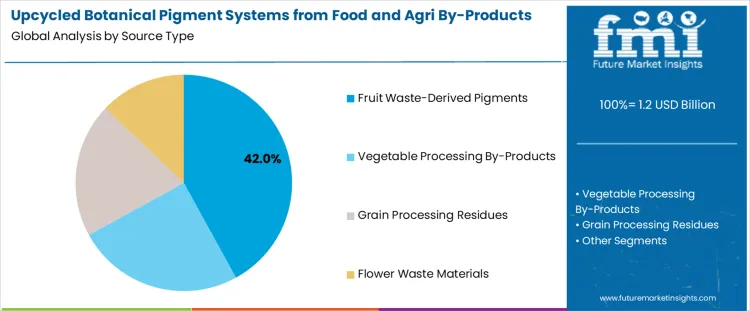
Fruit waste-derived pigments are the leading source type in the upcycled botanical pigment systems from food and agri by-products market, holding 42% of the share. These pigments are derived from the by-products of fruit processing, such as skins, seeds, and pulp, which are rich in natural colorants like anthocyanins, carotenoids, and flavonoids. The growing focus on sustainability, waste reduction, and the circular economy is driving the demand for upcycled botanical pigments, particularly those from fruit waste. These pigments offer a natural, non-toxic, and eco-friendly alternative to synthetic colorants, making them highly attractive to industries seeking to reduce their environmental footprint. As consumers and industries prioritize clean, sustainable ingredients, fruit waste-derived pigments are expected to continue growing, providing a sustainable solution for natural colorants in multiple sectors, including food, beauty, and textiles.
What is Driving the Demand for Food Manufacturing & Processing in the Upcycled Botanical Pigment Systems from Food and Agri By-Products Market?
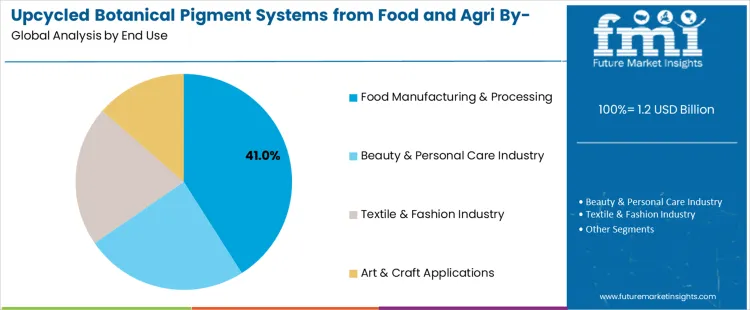
Food manufacturing & processing is the leading end-use sector in the upcycled botanical pigment systems from food and agri by-products market, capturing 41% of the share. This demand is driven by the growing preference for natural, plant-based colorants in food products as consumers seek healthier, more sustainable alternatives to synthetic additives. With increasing concerns over the environmental impact of food production and the growing trend toward clean-label products, food manufacturers are adopting upcycled botanical pigments derived from food and agricultural by-products to meet consumer expectations for eco-friendly and natural ingredients. These pigments, which are derived from fruit, vegetable, and grain waste, offer vibrant, safe, and biodegradable color options for a wide range of food products, from beverages to baked goods. As the demand for sustainable food production increases, the food manufacturing & processing sector will continue to be a key driver of growth in the upcycled botanical pigment market.
What are the Key Dynamics in the Global Upcycled Botanical Pigment Systems from Food and Agri By-Products Market?
The global upcycled botanical pigment systems from food and agri by-products market is growing as brands seek sustainable color solutions that repurpose waste streams like fruit peels, vegetable pomace and grain husks. These pigment systems are used in cosmetics, textiles, food colorants and coatings where natural color and environmental credentials matter. Growth reflects rising demand for circular economy materials, pressure on waste reduction, and consumer preference for clean label products. Adoption spreads across industries where color performance and reduced environmental impact shape formulation and sourcing decisions.
What are the Key Drivers for the Global Upcycled Botanical Pigment Systems from Food and Agri By-Products Market?
Rising environmental awareness and regulatory pressure on waste disposal drive interest in upcycled pigment systems that add value to food and agricultural by-products. Brands and manufacturers aim to reduce carbon footprint and align with sustainability goals by incorporating colorants that originate from renewable, recycled sources. Consumer demand for natural, plant-derived color in cosmetics, foods and specialty coatings supports use of botanical pigments. Advances in extraction and stabilization technologies improve color consistency, lightfastness and compatibility with diverse formulations. Growth in circular supply chain strategies also motivates investment in upcycled pigment solutions.
What are the Restraints for the Global Upcycled Botanical Pigment Systems from Food and Agri By-Products Market?
One restraint is the technical challenge of producing highly consistent pigment quality from variable raw by-product sources. Differences in crop varieties, seasonal conditions and extraction methods can affect hue, concentration and performance, requiring rigorous quality control and formulation expertise. Higher processing costs for purification and stabilization compared with conventional synthetic pigments can influence pricing, especially in cost-sensitive segments. Some industries remain cautious about substituting well-established pigments without clear data on long-term stability and regulatory acceptance. Limited awareness of upcycled pigment benefits among formulators can slow broader adoption.
What are the Key Trends in the Global Upcycled Botanical Pigment Systems from Food and Agri By-Products Market?
A key trend is the development of advanced extraction and green processing technologies that enhance yield and color performance while minimizing environmental impact. Ingredient suppliers are focusing on scalable methods that recover pigments from fruit skins, vegetable wastes and cereal by-products without harmful solvents. Collaboration between pigment developers and end use brands accelerates tailored pigment systems optimized for specific applications such as inclusive beauty, sustainable textiles and natural food color. Transparent sourcing and certification of upcycled content supports brand storytelling and consumer trust. Investment in research on novel botanical sources expands the palette of available natural hues.
What is the Country-Wise Analysis of the Upcycled Botanical Pigment Systems from Food and Agri By-Products Market?
The upcycled botanical pigment systems from food and agri by-products market is gaining momentum, driven by the increasing consumer demand for sustainable and eco-friendly beauty and personal care products. These pigments, derived from food and agricultural by-products, offer a sustainable alternative to synthetic colorants in cosmetics, as well as in textiles and other industries. As sustainability continues to be a major global trend, brands are looking for ways to minimize waste and reduce their environmental footprint, and upcycled botanical pigments provide a viable solution. Developed markets like the USA, Germany, and the UK are seeing strong demand due to their growing interest in clean beauty, circular economy principles, and sustainable sourcing. Emerging markets like Japan and Australia are also witnessing steady growth, driven by rising awareness of the environmental impact of traditional manufacturing processes and an increasing focus on eco-friendly beauty and cosmetic products.
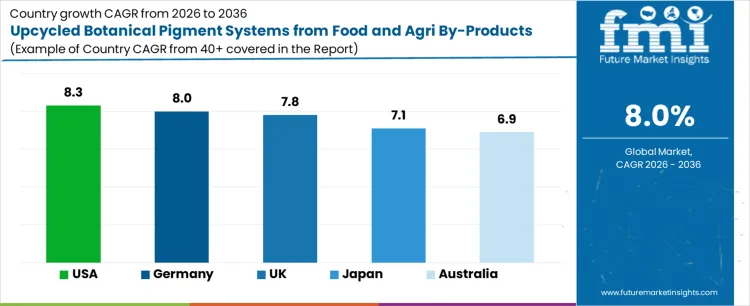
| Country | CAGR (2026-2036) |
|---|---|
| USA | 8.3% |
| Germany | 8% |
| UK | 7.8% |
| Japan | 7.1% |
| Australia | 6.9% |
What is the Growth Outlook for the Upcycled Botanical Pigment Systems from Food and Agri By-Products Market in the USA?
The upcycled botanical pigment systems from food and agri by-products market in the USA is projected to grow steadily, with a projected CAGR of 8.3% from 2026 to 2036. The USA is at the forefront of the sustainable beauty and personal care movement, with an increasing number of consumers demanding products made from natural and eco-friendly ingredients. As the awareness of environmental concerns, including waste reduction and sustainability, grows, USA consumers are actively seeking products that align with these values. The demand for upcycled botanical pigments, which are derived from food and agricultural by-products, is expected to rise as brands and manufacturers look for ways to reduce waste while offering innovative and sustainable products. With a growing focus on circular economy practices and clean beauty, the USA beauty market is well-positioned to lead the adoption of upcycled botanical pigment systems in cosmetics and personal care products. The continued shift toward eco-friendly and sustainable beauty solutions will contribute to the market's growth in the USA.
What is the Market Outlook for the Upcycled Botanical Pigment Systems from Food and Agri By-Products Market in Germany?
Germany is expected to experience steady growth in the upcycled botanical pigment systems from food and agri by-products market, with a projected CAGR of 8% from 2026 to 2036. Germany has long been a leader in sustainability and eco-conscious manufacturing, with consumers increasingly prioritizing eco-friendly products in their beauty and personal care routines. As part of its commitment to reducing waste and promoting sustainable sourcing, Germany’s beauty industry is increasingly adopting natural and upcycled ingredients, including botanical pigments derived from food and agricultural by-products. The demand for sustainable and clean beauty products is growing, and brands are responding by incorporating upcycled ingredients to meet consumer preferences. Additionally, Germany’s strong regulatory framework, which supports sustainability in the cosmetics industry, is further fueling the adoption of upcycled botanical pigment systems. As the market continues to focus on eco-consciousness and waste reduction, Germany’s market for these sustainable pigments is expected to grow steadily.
What is the Growth Forecast for the Upcycled Botanical Pigment Systems from Food and Agri By-Products Market in the UK?
The upcycled botanical pigment systems from food and agri by-products market in the UK is projected to grow steadily, with a projected CAGR of 7.8% from 2026 to 2036. The UK’s beauty market is increasingly focused on sustainability, with a growing consumer preference for natural and eco-friendly products. The demand for upcycled botanical pigments is being driven by the UK’s emphasis on waste reduction and circular economy practices. As awareness of the environmental impact of traditional pigment sourcing and the cosmetic industry’s contribution to waste grows, consumers are actively seeking out products that use sustainably sourced and upcycled ingredients. Brands in the UK are innovating to meet this demand by incorporating upcycled botanical colorants derived from food and agricultural by-products. With sustainability continuing to be a major driving force in the UK’s beauty industry, the market for upcycled botanical pigments is expected to grow steadily, as more brands align their products with consumer values of sustainability and eco-consciousness.
What is the Market Outlook for the Upcycled Botanical Pigment Systems from Food and Agri By-Products Market in Japan?
Japan is expected to experience steady growth in the upcycled botanical pigment systems from food and agri by-products market, with a projected CAGR of 7.1% from 2026 to 2036. Japan’s beauty industry is known for its strong emphasis on natural ingredients and skin health, and consumers are increasingly seeking products that are both effective and eco-friendly. The demand for upcycled botanical pigments, which are derived from food and agricultural by-products, is rising as Japanese consumers become more conscious of sustainability and waste reduction. The growing interest in clean beauty and environmentally responsible production methods is further driving the adoption of these sustainable colorants. Japan’s regulatory environment, which encourages sustainable and non-toxic beauty products, is also contributing to the market’s growth. As Japan’s beauty industry continues to innovate and prioritize sustainability, the market for upcycled botanical pigment systems is expected to expand steadily, in line with global trends toward cleaner, greener beauty solutions.
What are the Growth Prospects for the Upcycled Botanical Pigment Systems from Food and Agri By-Products Market in Australia?
Australia is projected to see steady growth in the upcycled botanical pigment systems from food and agri by-products market, with a projected CAGR of 6.9% from 2026 to 2036. As sustainability becomes a larger focus in Australia’s beauty industry, consumers are increasingly seeking products that are eco-friendly, safe, and effective. The rise in awareness about the environmental impact of waste and the importance of sustainable beauty products is fueling the demand for upcycled botanical pigments. Australia’s beauty market, which is heavily influenced by global clean beauty trends, is shifting toward more sustainable formulations, with upcycled ingredients such as botanical pigments being adopted in a variety of cosmetic products. The demand for natural, cruelty-free, and sustainable products in Australia continues to rise, contributing to the growth of the upcycled botanical pigment systems market. As Australian consumers increasingly prioritize environmental sustainability in their purchasing decisions, the market for these innovative colorant solutions is expected to expand steadily.
What is the Competitive Landscape for the Upcycled Botanical Pigment Systems from Food and Agri By-Products Market?
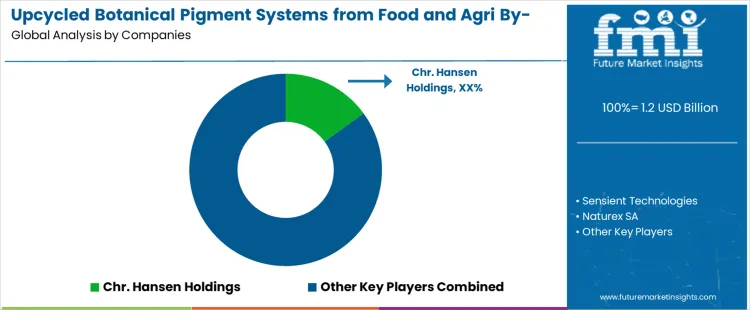
The upcycled botanical pigment systems from food and agri by-products market is growing rapidly as industries increasingly focus on sustainability and waste reduction, particularly in the cosmetics, food, and beverage sectors. Chr. Hansen Holdings leads the market with its innovative upcycled botanical pigment systems, offering high-quality, sustainable colorants derived from food and agricultural by-products. Their focus on reducing waste while providing natural, eco-friendly pigment solutions has positioned them as a dominant player. Sensient Technologies, Naturex SA, and Givaudan SA are key competitors, each offering specialized upcycled botanical pigments designed for various applications, including cosmetics and food products. Sensient Technologies focuses on delivering vibrant, sustainable colorants derived from plant-based sources, while Naturex SA and Givaudan SA provide innovative solutions that address the growing consumer demand for natural, eco-conscious pigments.
Kerry Group PLC further strengthens the competitive landscape with its upcycled botanical pigment systems, emphasizing sustainability and the reduction of food and agricultural waste in pigment production. Kerry Group PLC focuses on providing natural, high-quality colorants that align with clean label and eco-friendly trends. These companies compete by focusing on product innovation, sustainability, and the ability to meet the increasing consumer demand for upcycled, plant-based, and environmentally responsible colorants. As the push for sustainability and waste reduction continues, the market for upcycled botanical pigment systems is expected to expand, fostering further competition and innovation in the sector.
Key Players of the Upcycled Botanical Pigment Systems from Food and Agri By-Products Market
- Chr. Hansen Holdings
- Sensient Technologies
- Naturex SA
- Givaudan SA
- Kerry Group PLC
Scope of the Report
| Items | Values |
|---|---|
| Quantitative Units (2026) | USD Billion |
| Source Type | Fruit Waste-Derived Pigments, Vegetable Processing By-Products, Grain Processing Residues, Flower Waste Materials |
| Application Type | Food & Beverage Coloring, Cosmetic & Personal Care, Textile Dyeing, Natural Paint Formulations |
| End Use | Food Manufacturing & Processing, Beauty & Personal Care Industry, Textile & Fashion Industry, Art & Craft Applications |
| Companies | Chr. Hansen Holdings, Sensient Technologies, Naturex SA, Givaudan SA, Kerry Group PLC |
| Regions Covered | North America, Latin America, Western Europe, Eastern Europe, South Asia and Pacific, East Asia, Middle East & Africa |
| Countries Covered | United States, Canada, Mexico, Brazil, Argentina, Germany, France, United Kingdom, Italy, Spain, Netherlands, China, India, Japan, South Korea, ANZ, GCC Countries, South Africa |
| Additional Attributes | Dollar by sales by source type, application type, end use, and region. Includes analysis of market dynamics in upcycled botanical pigment systems from food and agri by-products adoption, performance in food, cosmetic, textile, and paint formulations, cost and supply chain considerations, regulatory and safety factors affecting upcycled pigments, consumer demand for upcycled ingredient products, market share and competitive positioning of key companies, innovations in upcycled pigment extraction and processing, and assessment of impact on product quality, sustainability outcomes, and industry acceptance. |
Upcycled Botanical Pigment Systems from Food and Agri By-Products Market Segmentation
Source Type
- Fruit Waste-Derived Pigments
- Vegetable Processing By-Products
- Grain Processing Residues
- Flower Waste Materials
Application Type
- Food & Beverage Coloring
- Cosmetic & Personal Care
- Textile Dyeing
- Natural Paint Formulations
End Use
- Food Manufacturing & Processing
- Beauty & Personal Care Industry
- Textile & Fashion Industry
- Art & Craft Applications
Region
- Asia Pacific
- China
- Japan
- South Korea
- India
- Australia & New Zealand
- ASEAN
- Rest of Asia Pacific
- Europe
- Germany
- United Kingdom
- France
- Italy
- Spain
- Nordic
- BENELUX
- Rest of Europe
- North America
- United States
- Canada
- Mexico
- Latin America
- Brazil
- Chile
- Rest of Latin America
- Middle East & Africa
- Kingdom of Saudi Arabia
- Other GCC Countries
- Turkey
- South Africa
- Other African Union
- Rest of Middle East & Africa
Frequently Asked Questions
How big is the upcycled botanical pigment systems from food and agri by-products market in 2026?
The global upcycled botanical pigment systems from food and agri by-products market is estimated to be valued at USD 1.2 billion in 2026.
What will be the size of upcycled botanical pigment systems from food and agri by-products market in 2036?
The market size for the upcycled botanical pigment systems from food and agri by-products market is projected to reach USD 2.6 billion by 2036.
How much will be the upcycled botanical pigment systems from food and agri by-products market growth between 2026 and 2036?
The upcycled botanical pigment systems from food and agri by-products market is expected to grow at a 8.0% CAGR between 2026 and 2036.
What are the key product types in the upcycled botanical pigment systems from food and agri by-products market?
The key product types in upcycled botanical pigment systems from food and agri by-products market are fruit waste‑derived pigments, vegetable processing by‑products, grain processing residues and flower waste materials.
Which application type segment to contribute significant share in the upcycled botanical pigment systems from food and agri by-products market in 2026?
In terms of application type, food & beverage coloring segment to command 38.0% share in the upcycled botanical pigment systems from food and agri by-products market in 2026.
Preview the report firsthand - request a free sample
Get SampleGet the brochure for pricing and purchase details.
Get PDFTable of Content
- Executive Summary
- Global Market Outlook
- Demand-side Trends
- Supply-side Trends
- Technology Roadmap Analysis
- Analysis and Recommendations
- Market Overview
- Market Coverage / Taxonomy
- Market Definition / Scope / Limitations
- Market Background
- Market Dynamics
- Drivers
- Restraints
- Opportunity
- Trends
- Scenario Forecast
- Demand in Optimistic Scenario
- Demand in Likely Scenario
- Demand in Conservative Scenario
- Opportunity Map Analysis
- Product Life Cycle Analysis
- Supply Chain Analysis
- Investment Feasibility Matrix
- Value Chain Analysis
- PESTLE and Porter’s Analysis
- Regulatory Landscape
- Regional Parent Market Outlook
- Production and Consumption Statistics
- Import and Export Statistics
- Market Dynamics
- Global Market Analysis 2021 to 2025 and Forecast, 2026 to 2036
- Historical Market Size Value (USD Million) Analysis, 2021 to 2025
- Current and Future Market Size Value (USD Million) Projections, 2026 to 2036
- Y-o-Y Growth Trend Analysis
- Absolute $ Opportunity Analysis
- Global Market Pricing Analysis 2021 to 2025 and Forecast 2026 to 2036
- Global Market Analysis 2021 to 2025 and Forecast 2026 to 2036, By Source Type
- Introduction / Key Findings
- Historical Market Size Value (USD Million) Analysis By Source Type , 2021 to 2025
- Current and Future Market Size Value (USD Million) Analysis and Forecast By Source Type , 2026 to 2036
- Fruit Waste‑Derived Pigments
- Vegetable Processing By‑Products
- Grain Processing Residues
- Flower Waste Materials
- Fruit Waste‑Derived Pigments
- Y-o-Y Growth Trend Analysis By Source Type , 2021 to 2025
- Absolute $ Opportunity Analysis By Source Type , 2026 to 2036
- Global Market Analysis 2021 to 2025 and Forecast 2026 to 2036, By Application Type
- Introduction / Key Findings
- Historical Market Size Value (USD Million) Analysis By Application Type, 2021 to 2025
- Current and Future Market Size Value (USD Million) Analysis and Forecast By Application Type, 2026 to 2036
- Food & Beverage Coloring
- Cosmetic & Personal Care
- Textile Dyeing
- Natural Paint Formulations
- Food & Beverage Coloring
- Y-o-Y Growth Trend Analysis By Application Type, 2021 to 2025
- Absolute $ Opportunity Analysis By Application Type, 2026 to 2036
- Global Market Analysis 2021 to 2025 and Forecast 2026 to 2036, By End Use
- Introduction / Key Findings
- Historical Market Size Value (USD Million) Analysis By End Use, 2021 to 2025
- Current and Future Market Size Value (USD Million) Analysis and Forecast By End Use, 2026 to 2036
- Food Manufacturing & Processing
- Beauty & Personal Care Industry
- Textile & Fashion Industry
- Art & Craft Applications
- Food Manufacturing & Processing
- Y-o-Y Growth Trend Analysis By End Use, 2021 to 2025
- Absolute $ Opportunity Analysis By End Use, 2026 to 2036
- Global Market Analysis 2021 to 2025 and Forecast 2026 to 2036, By Region
- Introduction
- Historical Market Size Value (USD Million) Analysis By Region, 2021 to 2025
- Current Market Size Value (USD Million) Analysis and Forecast By Region, 2026 to 2036
- North America
- Latin America
- Western Europe
- Eastern Europe
- East Asia
- South Asia and Pacific
- Middle East & Africa
- Market Attractiveness Analysis By Region
- North America Market Analysis 2021 to 2025 and Forecast 2026 to 2036, By Country
- Historical Market Size Value (USD Million) Trend Analysis By Market Taxonomy, 2021 to 2025
- Market Size Value (USD Million) Forecast By Market Taxonomy, 2026 to 2036
- By Country
- USA
- Canada
- Mexico
- By Source Type
- By Application Type
- By End Use
- By Country
- Market Attractiveness Analysis
- By Country
- By Source Type
- By Application Type
- By End Use
- Key Takeaways
- Latin America Market Analysis 2021 to 2025 and Forecast 2026 to 2036, By Country
- Historical Market Size Value (USD Million) Trend Analysis By Market Taxonomy, 2021 to 2025
- Market Size Value (USD Million) Forecast By Market Taxonomy, 2026 to 2036
- By Country
- Brazil
- Chile
- Rest of Latin America
- By Source Type
- By Application Type
- By End Use
- By Country
- Market Attractiveness Analysis
- By Country
- By Source Type
- By Application Type
- By End Use
- Key Takeaways
- Western Europe Market Analysis 2021 to 2025 and Forecast 2026 to 2036, By Country
- Historical Market Size Value (USD Million) Trend Analysis By Market Taxonomy, 2021 to 2025
- Market Size Value (USD Million) Forecast By Market Taxonomy, 2026 to 2036
- By Country
- Germany
- UK
- Italy
- Spain
- France
- Nordic
- BENELUX
- Rest of Western Europe
- By Source Type
- By Application Type
- By End Use
- By Country
- Market Attractiveness Analysis
- By Country
- By Source Type
- By Application Type
- By End Use
- Key Takeaways
- Eastern Europe Market Analysis 2021 to 2025 and Forecast 2026 to 2036, By Country
- Historical Market Size Value (USD Million) Trend Analysis By Market Taxonomy, 2021 to 2025
- Market Size Value (USD Million) Forecast By Market Taxonomy, 2026 to 2036
- By Country
- Russia
- Poland
- Hungary
- Balkan & Baltic
- Rest of Eastern Europe
- By Source Type
- By Application Type
- By End Use
- By Country
- Market Attractiveness Analysis
- By Country
- By Source Type
- By Application Type
- By End Use
- Key Takeaways
- East Asia Market Analysis 2021 to 2025 and Forecast 2026 to 2036, By Country
- Historical Market Size Value (USD Million) Trend Analysis By Market Taxonomy, 2021 to 2025
- Market Size Value (USD Million) Forecast By Market Taxonomy, 2026 to 2036
- By Country
- China
- Japan
- South Korea
- By Source Type
- By Application Type
- By End Use
- By Country
- Market Attractiveness Analysis
- By Country
- By Source Type
- By Application Type
- By End Use
- Key Takeaways
- South Asia and Pacific Market Analysis 2021 to 2025 and Forecast 2026 to 2036, By Country
- Historical Market Size Value (USD Million) Trend Analysis By Market Taxonomy, 2021 to 2025
- Market Size Value (USD Million) Forecast By Market Taxonomy, 2026 to 2036
- By Country
- India
- ASEAN
- Australia & New Zealand
- Rest of South Asia and Pacific
- By Source Type
- By Application Type
- By End Use
- By Country
- Market Attractiveness Analysis
- By Country
- By Source Type
- By Application Type
- By End Use
- Key Takeaways
- Middle East & Africa Market Analysis 2021 to 2025 and Forecast 2026 to 2036, By Country
- Historical Market Size Value (USD Million) Trend Analysis By Market Taxonomy, 2021 to 2025
- Market Size Value (USD Million) Forecast By Market Taxonomy, 2026 to 2036
- By Country
- Kingdom of Saudi Arabia
- Other GCC Countries
- Turkiye
- South Africa
- Other African Union
- Rest of Middle East & Africa
- By Source Type
- By Application Type
- By End Use
- By Country
- Market Attractiveness Analysis
- By Country
- By Source Type
- By Application Type
- By End Use
- Key Takeaways
- Key Countries Market Analysis
- USA
- Pricing Analysis
- Market Share Analysis, 2025
- By Source Type
- By Application Type
- By End Use
- Canada
- Pricing Analysis
- Market Share Analysis, 2025
- By Source Type
- By Application Type
- By End Use
- Mexico
- Pricing Analysis
- Market Share Analysis, 2025
- By Source Type
- By Application Type
- By End Use
- Brazil
- Pricing Analysis
- Market Share Analysis, 2025
- By Source Type
- By Application Type
- By End Use
- Chile
- Pricing Analysis
- Market Share Analysis, 2025
- By Source Type
- By Application Type
- By End Use
- Germany
- Pricing Analysis
- Market Share Analysis, 2025
- By Source Type
- By Application Type
- By End Use
- UK
- Pricing Analysis
- Market Share Analysis, 2025
- By Source Type
- By Application Type
- By End Use
- Italy
- Pricing Analysis
- Market Share Analysis, 2025
- By Source Type
- By Application Type
- By End Use
- Spain
- Pricing Analysis
- Market Share Analysis, 2025
- By Source Type
- By Application Type
- By End Use
- France
- Pricing Analysis
- Market Share Analysis, 2025
- By Source Type
- By Application Type
- By End Use
- India
- Pricing Analysis
- Market Share Analysis, 2025
- By Source Type
- By Application Type
- By End Use
- ASEAN
- Pricing Analysis
- Market Share Analysis, 2025
- By Source Type
- By Application Type
- By End Use
- Australia & New Zealand
- Pricing Analysis
- Market Share Analysis, 2025
- By Source Type
- By Application Type
- By End Use
- China
- Pricing Analysis
- Market Share Analysis, 2025
- By Source Type
- By Application Type
- By End Use
- Japan
- Pricing Analysis
- Market Share Analysis, 2025
- By Source Type
- By Application Type
- By End Use
- South Korea
- Pricing Analysis
- Market Share Analysis, 2025
- By Source Type
- By Application Type
- By End Use
- Russia
- Pricing Analysis
- Market Share Analysis, 2025
- By Source Type
- By Application Type
- By End Use
- Poland
- Pricing Analysis
- Market Share Analysis, 2025
- By Source Type
- By Application Type
- By End Use
- Hungary
- Pricing Analysis
- Market Share Analysis, 2025
- By Source Type
- By Application Type
- By End Use
- Kingdom of Saudi Arabia
- Pricing Analysis
- Market Share Analysis, 2025
- By Source Type
- By Application Type
- By End Use
- Turkiye
- Pricing Analysis
- Market Share Analysis, 2025
- By Source Type
- By Application Type
- By End Use
- South Africa
- Pricing Analysis
- Market Share Analysis, 2025
- By Source Type
- By Application Type
- By End Use
- USA
- Market Structure Analysis
- Competition Dashboard
- Competition Benchmarking
- Market Share Analysis of Top Players
- By Regional
- By Source Type
- By Application Type
- By End Use
- Competition Analysis
- Competition Deep Dive
- Chr. Hansen Holdings
- Overview
- Product Portfolio
- Profitability by Market Segments (Product/Age /Sales Channel/Region)
- Sales Footprint
- Strategy Overview
- Marketing Strategy
- Product Strategy
- Channel Strategy
- Sensient Technologies
- Naturex SA
- Givaudan SA
- Kerry Group PLC
- Chr. Hansen Holdings
- Competition Deep Dive
- Assumptions & Acronyms Used
- Research Methodology


