

- Market Size (2026)
- USD 640.6 Mn
- Forecast (2036)
- USD 1332.6 Mn
- CAGR (2026 to 2036)
- 7.6%
How big is the PBT retardants market in 2026?
USD 640.6 million in 2026 and USD 1,332.6 million by 2036 at a 7.6% CAGR.
The PBT retardants industry value is forecast to grow from USD 595.4 million in 2025 to USD 1,332.6 million by 2036 at 7.6% CAGR as electrical connectors, automotive electronics, and compact industrial housings require flame-safe engineering plastics. Injection molding is forecast to represent 78.0% share in 2026 because small precision components dominate PBT conversion. Direct to compounders is expected to secure 68.0% share in 2026, led by early formulation support and material qualification work.
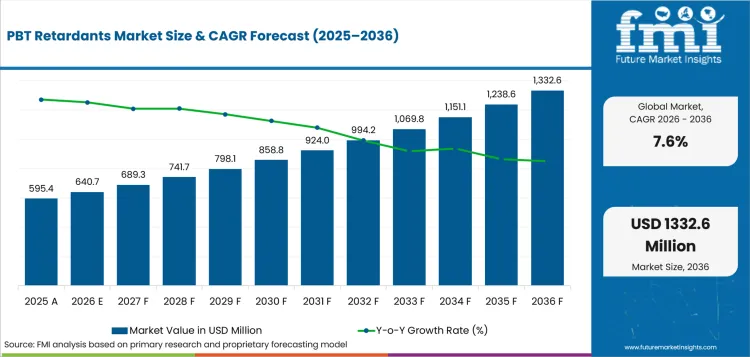
PBT Retardants Market Overview: Size and Forecast
- 2025 Market Size: USD 595.4 million
- 2026 Market Size: USD 640.6 million
- 2036 Market Size: USD 1,332.6 million
- Forecast CAGR (2026-2036): 7.6%
- Leading Processing: Injection Molding
- Injection Molding Share (2026): 78.0%
- Leading Sales Channel: Direct to Compounders
- Direct to Compounders Share (2026): 68.0%
- Fastest-growing Country: China
- China CAGR (2026-2036): 8.6%
Summary of the PBT Retardants Market
- Demand and Growth Drivers
- Electrical and electronics buyers are specifying PBT compounds that combine flame control with tracking resistance in compact connectors.
- Automotive suppliers are adding more sensors, relays, and power modules that need molded housings with qualified safety behavior.
- Compounders are comparing brominated, phosphorus-based, and mineral systems through finished-part tests rather than additive cost alone.
- Product and Segment View
- Injection molding is projected to represent 78.0% share in 2026, supported by small connector housings and precision molded electrical parts.
- Direct to compounders is expected to hold 68.0% share in 2026, influenced by formulation support and early material trial access.
- Glass-filled PBT is anticipated to account for 63.0% share in 2026, led by stiffness and flame-safety requirements in connectors.
- Geography and Competitive Outlook
- China is projected to record 8.6% CAGR by 2036, backed by electronics manufacturing plans and e-mobility component demand.
- India is expected to advance at 8.3% CAGR by 2036 as electronics and automotive localization create stronger compounder pull.
- Clariant, LANXESS, and BASF compete through phosphorus systems, engineering plastics depth, and regional supply programs.
- Nabaltec, Budenheim, ADEKA, ICL Group, and Albemarle support mineral, phosphorus-nitrogen, and brominated formulation routes.
- Analyst Opinion
- Nikhil Kaitwade, Associate Vice President at FMI, observes, "PBT retardants are moving from a simple flame-suppression purchase toward a verified performance package. Buyers want proof that the additive system can pass flame tests, retain tracking performance, and survive thin-wall molding without weakening the component. Suppliers with test data, compounding support, and region-ready compliance files should gain stronger accounts."
The PBT retardants market is expected to witness steady expansion through 2036, supported by electrical insulation needs and wider use of flame-safe polyester compounds. Market development is also supported by tighter material documentation and regional compounding programs.
Demand outlook is moving toward tested flame-retardant PBT compounds that can prove fire rating, tracking resistance, and processing stability before buyers approve new part files. The USA Census data series carried by FRED recorded USD 29,715 million in computer and electronic product new orders for April 2026, while China's official action plan targeted around 7.0% average value-added growth in computer, communication, and other electronic equipment manufacturing during 2025 to 2026. Clariant also completed its CHF 100 million Daya Bay flame-retardant expansion, with the second line fully operational in November 2025. These signals show why PBT retardants are gaining value in electronics, e-mobility, and Asian compounder supply chains.
Which factors support expansion in the PBT retardants market?
Finished additive revenue and certified PBT compound demand support market value across regulated electrical and automotive channels.
- Market value is supported by flame retardant additive sales before finished PBT components enter electrical and automotive assemblies.
- Supplier pricing reflects additive chemistry, synergist choice, and qualification support before regional distributors add service margins.
- Revenue improves when compounders shift from broad flame-retardant plastics into application-specific PBT formulations that meet connector, relay, and housing requirements.
- Buyer trust rises when additives are supported by electrical tracking, flame rating, and molding performance documentation.
Why is the PBT retardants market growing?
Electrical and automotive buyers need PBT grades that protect compact parts from ignition and insulation failure.
Growth outlook has become more structured as electronics orders and vehicle output keep expanding the use base for flame-safe molded parts. OICA reported that global vehicle production increased from 92.7 million units in 2024 to 96.4 million units in 2025, creating a larger pool of connectors, sensors, relays, and control housings that use flame-retarded engineering plastics. This supports PBT retardants because component buyers need compounds that balance flame rating, tracking resistance, dimensional stability, and processability. Suppliers that provide clear formulation data can reduce requalification risk for compounders and tier suppliers.
How is the PBT retardants market segmented?
The PBT retardants industry is segmented by retardant type, PBT grade, end use, processing, and sales channel.
- Brominated Flame Retardants are projected to secure 46.0% share in 2026, led by cost familiarity and established UL performance in legacy PBT recipes.
- Glass-Filled PBT is expected to hold 63.0% share in 2026 since connector and relay housings need stiffness, heat resistance, and flame control together.
- Electrical & Electronics is anticipated to capture 55.0% share in 2026 due to demand for insulated connectors, switches, terminal blocks, and housings near live parts.
- Injection Molding is forecast to represent 78.0% share in 2026, guided by precision part manufacturing and thin-wall housing production.
- Direct to Compounders is projected to account for 68.0% share in 2026, reflected by early additive selection and formulation troubleshooting.
Why do brominated flame retardants dominate the PBT retardants market?
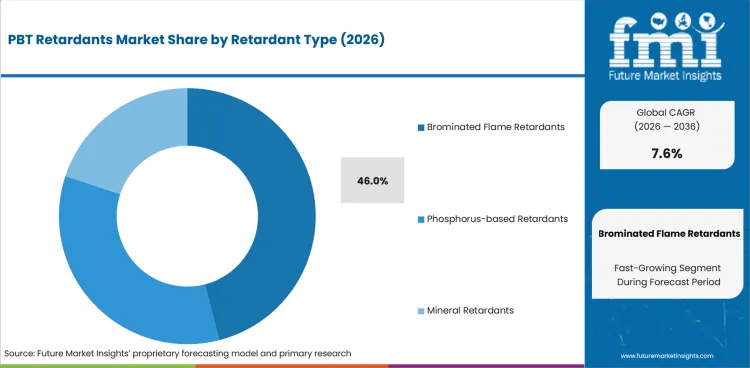
- Brominated Flame Retardants are projected to account for 46.0% share in 2026, influenced by proven flame performance and established processing knowledge across glass-filled PBT formulations.
- Phosphorus-based retardants gain attention as buyers review halogen content, although adoption needs proof that CTI and impact behavior remain stable.
Which PBT grade leads the PBT retardants market?
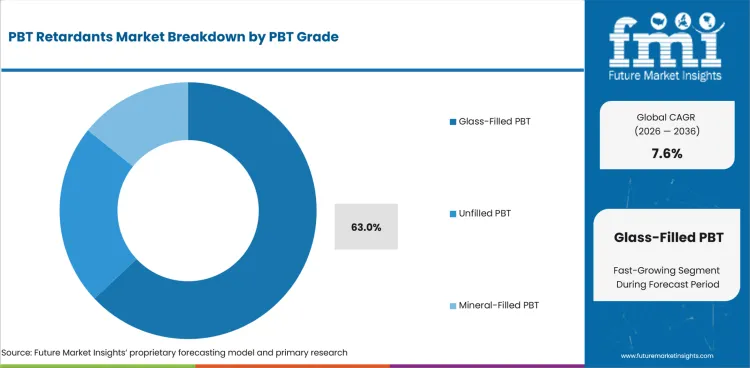
- Glass-Filled PBT is anticipated to hold 63.0% share in 2026 through connector demand where stiffness, heat resistance, and flame safety are evaluated together.
- Unfilled PBT remains relevant for selected housings and electrical parts where dimensional control matters more than reinforced mechanical strength.
Which end use leads the PBT retardants market?
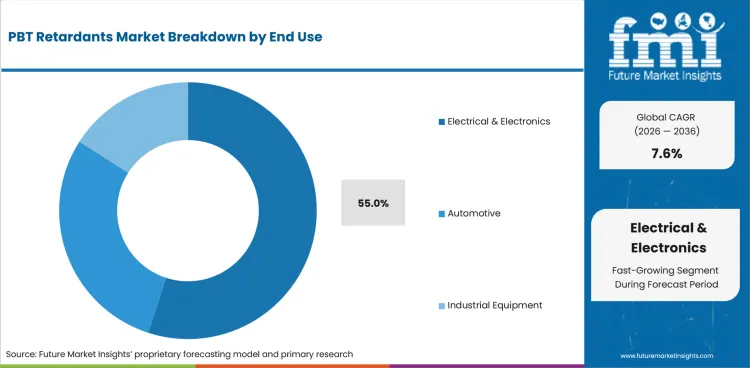
- Electrical & Electronics is forecast to secure 55.0% share in 2026, reflected by safety requirements in connectors, switches, relays, and electrical housings.
- Automotive gains value as sensors, powertrain electronics, battery-adjacent components, and power modules raise demand for qualified flame-safe materials.
Which processing route leads the PBT retardants market?
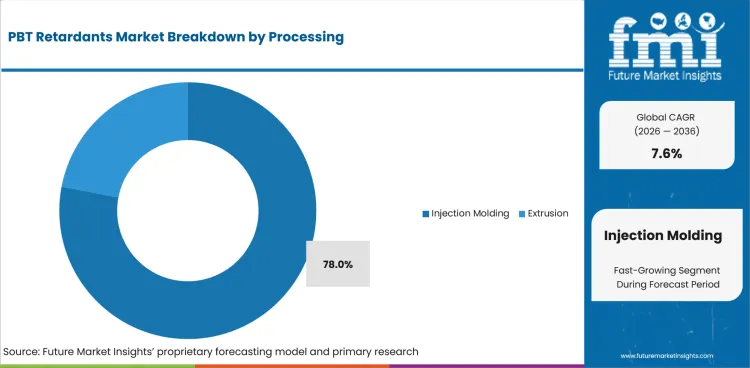
- Injection Molding is expected to represent 78.0% share in 2026, shaped by compact precision components that require flow control and consistent surface quality.
- Extrusion remains a smaller route because PBT retardant demand is concentrated in molded connector housings and electrical components.
Which sales channel leads the PBT retardants market?
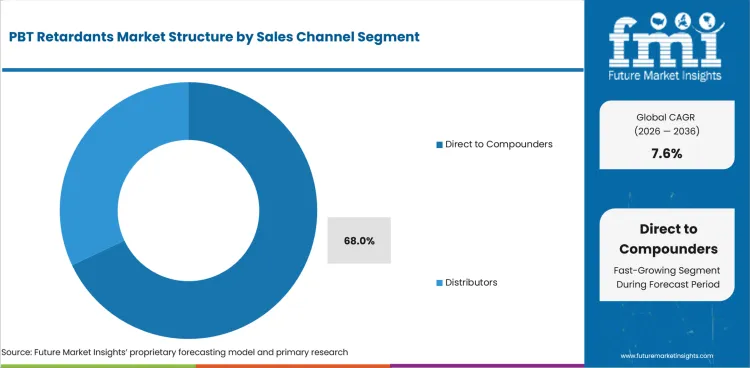
- Direct to Compounders is projected to account for 68.0% share in 2026, led by early formulation access and technical service during customer qualification.
- Distributors remain important for smaller batches and regional buyers that need reliable additive supply without large direct contracts.
What are the drivers, restraints, and opportunities in the PBT retardants market?
Electrical safety requirements support additive demand while chemical review work and processing limits influence substitution speed.
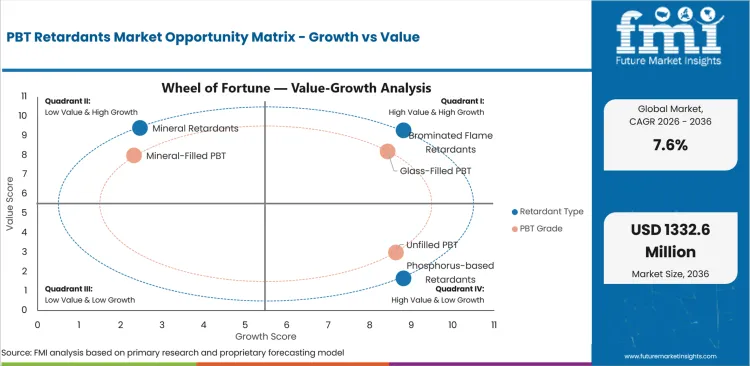
- Connector miniaturization pushes compounders to test flame rating and tracking resistance in thinner PBT walls, where small material failures can affect safety approvals.
- Chemical review pressure slows brominated additive choices when buyers need clearer substance documentation, future-use visibility, and compliance support before approval.
- Local compounding in Asia creates earlier additive selection points for suppliers that can support trials, documentation, and customer approvals near production sites.
Connector Safety Qualification
Electrical connector buyers are changing how they evaluate PBT retardants by pairing flame tests with electrical and mechanical performance checks. OICA's 96.4 million global vehicle production figure for 2025 points to a large automotive component base using connectors, relays, sensors, and housings. That scale gives additive suppliers more opportunities when vehicle platforms require tested PBT compounds rather than generic flame-retardant plastics.
Brominated Additive Review Pressure
Regulatory review is creating planning pressure for legacy brominated systems even before buyers make full substitutions. EPA proposed significant new use rules in June 2025 for three flame retardants undergoing TSCA risk evaluations, including TCEP, TBBPA, and TPP. This keeps documentation and future-use visibility high for buyers comparing brominated and phosphorus-based PBT retardant packages.
Localized Compounder Supply
Regional supply depth is becoming a stronger opportunity as electronics and automotive customers shorten qualification cycles. India approved 22 proposals under the third tranche of the Electronics Component Manufacturing Scheme in January 2026, with projected investment of Rs 41,863 crore and 33,791 direct jobs. That policy signal supports local electrical component production and creates stronger demand for suppliers serving qualified PBT compounds.
Which countries are growing fastest in the PBT retardants market?
China 8.6% CAGR, India 8.3% CAGR, South Korea 7.4% CAGR, United States 6.9% CAGR, Germany 6.8% CAGR, Japan 6.6% CAGR, France 6.1% CAGR, and United Kingdom 5.8% CAGR through 2036.
.webp "Top Country Growth Comparison Pbt Retardants Market Cagr (2026 2036)")
| Country | CAGR |
|---|---|
| China | 8.6% |
| India | 8.3% |
| South Korea | 7.4% |
| United States | 6.9% |
| Germany | 6.8% |
| Japan | 6.6% |
| France | 6.1% |
| United Kingdom | 5.8% |
Source: Future Market Insights, 2026.
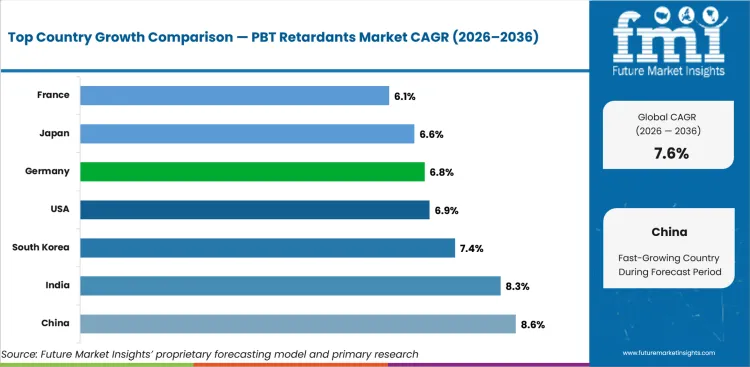
How do country-level CAGRs compare in the PBT retardants market?
China leads country expansion while the United Kingdom records the most measured outlook among profiled markets.
- China is forecast to record 8.6% CAGR by 2036 as electronics and electric mobility production support local compounder demand.
- India is expected to expand at 8.3% CAGR through 2036 due to electronics localization and automotive component policy support.
- South Korea is projected to rise at 7.4% CAGR by 2036 as semiconductors and vehicle electronics strengthen PBT use.
- The United States is estimated to grow at 6.9% CAGR through 2036 with strong electronics orders and qualification discipline.
- Germany is forecast to advance at 6.8% CAGR by 2036 through engineering plastics know-how and strict electrical testing culture.
- Japan is expected to post 6.6% CAGR through 2036 as precision connectors and automotive electronics support qualified PBT compounds.
- France is projected to expand at 6.1% CAGR by 2036 as compliance-led material selection shapes European component demand.
- The United Kingdom is anticipated to rise at 5.8% CAGR through 2036 with specification-led demand and distributor-based supply.
How fast is the PBT retardants market growing in China?
A 8.6% CAGR through 2036 reflects electronics manufacturing plans and electric mobility component demand.
Country Market Snapshot Table
| Parameter | Value |
|---|---|
| Market Size in 2025 (Value) | USD 170.3 million |
| Market Size in 2026 (Value) | USD 185.0 million |
| Market Forecast in 2036 (Value) | USD 422.2 million |
| CAGR (2026 to 2036) | 8.6% |
| Years Considered | 2021 to 2036 |
| Base Year | 2025 |
| Forecast Period | 2026 to 2036 |
| Units Considered | Value (USD million) |
| Leading Sub-Region | Guangdong and Yangtze River Delta compounding corridors |
China PBT Retardants Market Outlook
China demand is shaped by electronics manufacturing depth and electric mobility supply chains. Local compounders need flame-retardant PBT grades for connectors, appliance housings, and battery-adjacent electrical parts.
Material buyers are expected to prefer suppliers with nearby capacity and test support. Formulations that can prove flame rating, CTI behavior, and stable molding performance should gain stronger approval prospects.
Key Growth Drivers
- China's electronics manufacturing plan supports demand for flame-safe connectors and housings. The official plan targeted around 7.0% average value-added expansion in computer, communication, and other electronic equipment manufacturing from 2025 to 2026.
- Vehicle output gives PBT compounders a large mobility application base. OICA listed China at 30,269,903 passenger cars and 4,260,835 commercial vehicles in 2025.
- Local flame-retardant capacity improves access for halogen-free formulation trials serving Asian e-mobility and electrical buyers.
- Appliance and 5G-related part suppliers create recurring demand for molded materials that combine electrical insulation and dimensional control.
Key Restraints
- Price pressure from local compounders can delay premium phosphorus system adoption when brominated recipes already meet existing part files.
- Buyers require proof of electrical tracking stability before replacing known formulations across high-volume connector programs.
- Antimony-linked flame systems face license planning pressure because China controlled 6 antimony-related export categories from September 15, 2024, while USGS listed antimony as a critical mineral with no USA mine production reported in its 2025 mineral summary.
What makes China unique
China is unique because it combines high-volume electronics output, electric mobility expansion, and localized flame-retardant supply.
Key Companies
- Clariant
- BASF
- LANXESS
- ICL Group
- Albemarle
- ADEKA
- Nabaltec
Sales & Marketing Channels
- Direct sales to compounders
- Local technical service centers
- EV tier supplier approvals
- Appliance material qualification
- Regional distributors in Guangdong
- Regional distributors in Jiangsu
Country Segment Breakdown Table
| Segment | Sub-Segments |
|---|---|
| By Retardant Type | Brominated Flame Retardants, Phosphorus-based Retardants, Mineral Retardants, Other |
| By PBT Grade | Unfilled PBT, Glass-Filled PBT, Mineral-Filled PBT |
| By End Use | Electrical & Electronics, Automotive, Industrial Equipment, Other |
| By Processing | Injection Molding, Extrusion, Other |
| By Sales Channel | Direct to Compounders, Distributors |
| Key Sub-Regions Covered, Electronics and Mobility Clusters | Guangdong, Jiangsu, Zhejiang, Shanghai, Chongqing, Anhui |
Frequently Asked Questions
How fast is China PBT retardants market growing?
Sales in China are ready to scale at 8.6% CAGR from 2026 to 2036, guided by electronics and electric mobility demand.
Who leads China PBT retardants market?
Clariant, BASF, LANXESS, ICL Group, and ADEKA compete through flame-retardant additives and engineering plastics supply.
What is driving adoption in China PBT retardants market?
Electronics manufacturing, EV components, and local compounder support are moving buyers toward qualified flame-retardant PBT systems.
What is driving PBT retardants growth in India?
A 8.3% CAGR through 2036 is supported by electronics localization and automotive component manufacturing.
Country Market Snapshot Table
| Parameter | Value |
|---|---|
| Market Size in 2025 (Value) | USD 53.6 million |
| Market Size in 2026 (Value) | USD 58.0 million |
| Market Forecast in 2036 (Value) | USD 128.7 million |
| CAGR (2026 to 2036) | 8.3% |
| Years Considered | 2021 to 2036 |
| Base Year | 2025 |
| Forecast Period | 2026 to 2036 |
| Units Considered | Value (USD million) |
| Leading Sub-Region | Gujarat, Maharashtra, and southern electronics clusters |
India PBT Retardants Market Outlook
India demand is influenced by electronics localization and rising automotive component manufacturing. Compounders serving connectors and housings need locally available flame-retardant PBT grades.
Supply reliability is becoming a stronger buyer filter. Suppliers with regional production, formulation support, and approval documentation should gain stronger access to Indian electrical and automotive accounts.
Key Growth Drivers
- Electronics component localization creates direct demand for qualified insulating materials. India approved 22 ECMS proposals with projected investment of Rs 41,863 crore in January 2026.
- Electronics exports show stronger component demand. PIB stated that electronics exports reached USD 22.2 billion in the first half of FY 2025-26.
- Local availability of flame-retardant PBT grades can shorten approval cycles for Indian electrical and automotive customers.
- Auto component buyers are expected to test more flame-safe PBT materials as EV and electronics content rises across vehicle programs.
Key Restraints
- Premium additive systems can face price resistance when smaller compounders prioritize known brominated formulations.
- Technical qualification capacity can limit rapid substitution because electrical, thermal, and mechanical results must be proven together.
- India's auto component sector exports were USD 21.2 billion in FY 2024, but higher-spec material adoption still depends on platform approvals.
What makes India unique
India is unique because electronics localization and local PBT specialty grade availability are developing at the same time.
Key Companies
- BASF India Limited
- Clariant Chemicals India Limited
- LANXESS India Private Limited
- ADEKA India Private Limited
- Italmatch Chemicals
- Nabaltec AG
- ICL Group
Sales & Marketing Channels
- Direct sales to compounders
- Specialty chemical distributors
- Automotive tier approval programs
- Electronics component suppliers
- Local technical development support
- Regional resin and additive distributors
Country Segment Breakdown Table
| Segment | Sub-Segments |
|---|---|
| By Retardant Type | Brominated Flame Retardants, Phosphorus-based Retardants, Mineral Retardants, Other |
| By PBT Grade | Unfilled PBT, Glass-Filled PBT, Mineral-Filled PBT |
| By End Use | Electrical & Electronics, Automotive, Industrial Equipment, Other |
| By Processing | Injection Molding, Extrusion, Other |
| By Sales Channel | Direct to Compounders, Distributors |
| Key Sub-Regions Covered, Compounding and Electronics Areas | Gujarat, Maharashtra, Tamil Nadu, Karnataka, Telangana, Uttar Pradesh |
Frequently Asked Questions
How fast is India PBT retardants market growing?
Demand in India is ready to rise at 8.3% CAGR from 2026 to 2036 with electronics and automotive localization.
Who leads India PBT retardants market?
BASF, Clariant, LANXESS, ADEKA, ICL Group, and Nabaltec compete through materials supply and formulation support.
What is driving adoption in India PBT retardants market?
Electronics component schemes, vehicle electrification, and local specialty grade supply are moving compounders toward tested PBT retardants.
What is the PBT retardants market outlook in South Korea?
A 7.4% CAGR through 2036 reflects semiconductor exports and automotive electronics demand.
Country Market Snapshot Table
| Parameter | Value |
|---|---|
| Market Size in 2025 (Value) | USD 41.0 million |
| Market Size in 2026 (Value) | USD 44.0 million |
| Market Forecast in 2036 (Value) | USD 89.8 million |
| CAGR (2026 to 2036) | 7.4% |
| Years Considered | 2021 to 2036 |
| Base Year | 2025 |
| Forecast Period | 2026 to 2036 |
| Units Considered | Value (USD million) |
| Leading Sub-Region | Gyeonggi and Ulsan electronics-auto corridors |
South Korea PBT Retardants Market Outlook
South Korea demand is shaped by semiconductor supply chains and automotive electronics. Precision connectors and housings require flame-retardant PBT systems with dependable electrical behavior.
Material approval is likely to stay selective because large electronics and vehicle buyers require stable formulations. Suppliers with high-quality test packages can gain better access to component programs.
Key Growth Drivers
- Semiconductor exports deepen the electronics base for flame-safe polymer parts. Korea's Ministry of Trade reported semiconductor exports of USD 173.4 billion in 2025, up 22.2% year-on-year.
- South Korea's vehicle production supports connector and sensor housing demand. OICA listed South Korea at 3,844,338 passenger cars in 2025.
- High-reliability electronics buyers support demand for PBT compounds that maintain insulation and dimensional stability.
- Domestic automotive electronics suppliers create recurring qualification needs for flame-retardant housings and relay components.
Key Restraints
- Conservative qualification programs can slow additive substitution when established recipes already meet customer requirements.
- Export-facing component makers must satisfy different flame, electrical, and chemical documentation rules across destination markets.
- Korea's all-industry production index fell 0.6% month-on-month in April 2026, showing a short-term production softness that can delay material call-offs.
What makes South Korea unique
South Korea is unique because semiconductor scale and automotive electronics create a strong test-led demand base.
Key Companies
- ADEKA Korea Corporation
- BASF Korea
- Clariant Korea
- LANXESS Korea
- ICL Industrial Products
- Italmatch Chemicals
- Nabaltec AG
Sales & Marketing Channels
- Direct supplier qualification
- Electronics component supplier trials
- Automotive tier material approvals
- Specialty chemical distributors
- Trading company routes
- Technical service partnerships
Country Segment Breakdown Table
| Segment | Sub-Segments |
|---|---|
| By Retardant Type | Brominated Flame Retardants, Phosphorus-based Retardants, Mineral Retardants, Other |
| By PBT Grade | Unfilled PBT, Glass-Filled PBT, Mineral-Filled PBT |
| By End Use | Electrical & Electronics, Automotive, Industrial Equipment, Other |
| By Processing | Injection Molding, Extrusion, Other |
| By Sales Channel | Direct to Compounders, Distributors |
| Key Sub-Regions Covered, Electronics and Automotive Clusters | Gyeonggi, Seoul, Ulsan, Busan, Daegu, Incheon |
Frequently Asked Questions
How fast is South Korea PBT retardants market growing?
Sector in South Korea is projected at 7.4% CAGR from 2026 to 2036 as semiconductor and automotive electronics demand expands.
Who leads South Korea PBT retardants market?
ADEKA, BASF, Clariant, LANXESS, ICL Group, and Nabaltec compete through flame-retardant additives and technical support.
What is driving adoption in South Korea PBT retardants market?
Semiconductor exports, vehicle electronics, and precision connector demand are supporting qualified PBT retardant adoption.
What is the PBT retardants market outlook in the United States?
A 6.9% CAGR through 2036 is supported by electronics orders and strong qualification discipline.
Country Market Snapshot Table
| Parameter | Value |
|---|---|
| Market Size in 2025 (Value) | USD 135.6 million |
| Market Size in 2026 (Value) | USD 145.0 million |
| Market Forecast in 2036 (Value) | USD 282.6 million |
| CAGR (2026 to 2036) | 6.9% |
| Years Considered | 2021 to 2036 |
| Base Year | 2025 |
| Forecast Period | 2026 to 2036 |
| Units Considered | Value (USD million) |
| Leading Sub-Region | Midwest, Southeast, and electronics manufacturing corridors |
United States PBT Retardants Market Outlook
United States demand is shaped by electronics orders and automotive platform qualification. Buyers prefer additive systems that can hold flame, CTI, and molding performance across repeat production.
Regulatory visibility is high as TSCA reviews keep flame retardant chemistry under procurement scrutiny. Suppliers with documentation and substitution support should gain better acceptance in OEM files.
Key Growth Drivers
- Electronics orders support demand for molded housings and connectors. FRED recorded USD 29,715 million in computer and electronic product new orders for April 2026.
- Automotive production gives compounders recurring connector and relay demand. OICA's production table lists USA passenger car output at 1,279,247 units in 2025.
- TSCA visibility encourages suppliers to maintain stronger substance files for brominated and phosphorus systems.
- North American platform localization supports demand for qualified PBT compounds used in electrical enclosures and powertrain components.
Key Restraints
- Requalifying connector compounds can delay buyer approval when flame system chemistry changes.
- Antimony and brominated additive scrutiny can slow purchasing decisions among risk-sensitive OEMs.
- Resin cost pressure can narrow compounder room for premium additive trials. BLS-linked FRED data placed the plastics material and resin manufacturing PPI at 377.676 in May 2026.
What makes the United States unique
The United States is unique because regulatory review and customer qualification depth shape buying behavior before chemistry changes occur.
Key Companies
- LANXESS Corporation
- BASF Corporation
- Albemarle Corporation
- ICL Industrial Products
- Clariant Corporation
- Azelis Americas
- Nabaltec AG
Sales & Marketing Channels
- Direct sales to compounders
- Specialty chemical distributors
- OEM material approval routes
- UL-recognized material file support
- Automotive tier supplier trials
- Electrical component manufacturer programs
Country Segment Breakdown Table
| Segment | Sub-Segments |
|---|---|
| By Retardant Type | Brominated Flame Retardants, Phosphorus-based Retardants, Mineral Retardants, Other |
| By PBT Grade | Unfilled PBT, Glass-Filled PBT, Mineral-Filled PBT |
| By End Use | Electrical & Electronics, Automotive, Industrial Equipment, Other |
| By Processing | Injection Molding, Extrusion, Other |
| By Sales Channel | Direct to Compounders, Distributors |
| Key Sub-Regions Covered, Electrical and Automotive Supply Areas | Midwest, Southeast, Texas, California, Northeast, Pacific Northwest |
Frequently Asked Questions
How fast is United States PBT retardants market growing?
Demand in the United States is anticipated to grow at 6.9% CAGR from 2026 to 2036 reflecting electronics and automotive qualification needs.
Who leads United States PBT retardants market?
LANXESS, BASF, Albemarle, ICL Group, Clariant, Azelis, and Nabaltec compete through additive supply and technical service.
What is driving adoption in United States PBT retardants market?
Computer and electronics orders, automotive localization, and TSCA documentation needs are moving buyers toward tested PBT retardants.
How is the PBT retardants market performing in Germany?
A 6.8% CAGR through 2036 reflects engineering plastics expertise and electrical component testing discipline.
Country Market Snapshot Table
| Parameter | Value |
|---|---|
| Market Size in 2025 (Value) | USD 46.8 million |
| Market Size in 2026 (Value) | USD 50.0 million |
| Market Forecast in 2036 (Value) | USD 96.5 million |
| CAGR (2026 to 2036) | 6.8% |
| Years Considered | 2021 to 2036 |
| Base Year | 2025 |
| Forecast Period | 2026 to 2036 |
| Units Considered | Value (USD million) |
| Leading Sub-Region | Bavaria, Baden-Wurttemberg, and North Rhine-Westphalia |
Germany PBT Retardants Market Outlook
Germany demand is tied to automotive electronics and electrical equipment exports. Buyers treat PBT retardants as part of a tested performance package rather than a standalone additive.
Strict approval cycles support suppliers with complete datasets and clear formulation guidance. Mineral synergists and phosphorus systems can gain when compounders need halogen-free alternatives without losing part behavior.
Key Growth Drivers
- Vehicle production supports connector and sensor housing demand. OICA reported Germany produced 4,148,836 passenger cars in 2025.
- Electrical and digital exports strengthen the market base. ZVEI reported German electro and digital industry exports of EUR 20.4 billion in December 2025, up 10.6% year-on-year.
- Local additive expertise supports testing with mineral synergists and phosphorus-based systems for high-performance PBT compounds.
- Connector suppliers require consistent flame, CTI, and glow-wire behavior across repeated molding runs.
Key Restraints
- Qualification cycles can take longer when OEMs need proof across thermal, electrical, and mechanical tests.
- European manufacturing cost pressure can slow premium halogen-free substitution when legacy compounds remain approved.
- EU car production rose only 0.3% year-on-year in 2025, limiting volume relief for some automotive material suppliers.
What makes Germany unique
Germany is unique because buyers often judge PBT retardants through electrical test evidence and long platform approval cycles.
Key Companies
- BASF SE
- Nabaltec AG
- Budenheim
- Clariant
- LANXESS
- ADEKA Polymer Additives Europe
- Italmatch Chemicals
Sales & Marketing Channels
- Direct sales to compounders
- Automotive tier approval programs
- Electrical component supplier trials
- Technical distributor support
- Joint formulation work with testing labs
- Engineering plastics qualification channels
Country Segment Breakdown Table
| Segment | Sub-Segments |
|---|---|
| By Retardant Type | Brominated Flame Retardants, Phosphorus-based Retardants, Mineral Retardants, Other |
| By PBT Grade | Unfilled PBT, Glass-Filled PBT, Mineral-Filled PBT |
| By End Use | Electrical & Electronics, Automotive, Industrial Equipment, Other |
| By Processing | Injection Molding, Extrusion, Other |
| By Sales Channel | Direct to Compounders, Distributors |
| Key Sub-Regions Covered, Engineering Plastics Areas | Bavaria, Baden-Wurttemberg, North Rhine-Westphalia, Hesse, Saxony, Lower Saxony |
Frequently Asked Questions
How fast is Germany PBT retardants market growing?
Industry in Germany is projected to increase at 6.8% CAGR from 2026 to 2036 through automotive electronics and electrical equipment demand.
Who leads Germany PBT retardants market?
BASF, Nabaltec, Budenheim, Clariant, LANXESS, ADEKA, and Italmatch compete through tested additive and polymer systems.
What is driving adoption in Germany PBT retardants market?
Connector testing, electrical exports, and automotive electronics are moving buyers toward qualified flame-retardant PBT compounds.
What is the PBT retardants market forecast for Japan?
A 6.6% CAGR through 2036 reflects precision electronics and automotive component demand.
Country Market Snapshot Table
| Parameter | Value |
|---|---|
| Market Size in 2025 (Value) | USD 45.0 million |
| Market Size in 2026 (Value) | USD 48.0 million |
| Market Forecast in 2036 (Value) | USD 91.0 million |
| CAGR (2026 to 2036) | 6.6% |
| Years Considered | 2021 to 2036 |
| Base Year | 2025 |
| Forecast Period | 2026 to 2036 |
| Units Considered | Value (USD million) |
| Leading Sub-Region | Chubu, Kanto, and Kansai precision manufacturing clusters |
Japan PBT Retardants Market Outlook
Japan demand is shaped by precision connector manufacturing and automotive electronics. Buyers value long-term formulation stability and proven reliability across demanding component programs.
Supplier history and technical confidence remain important. Halogen-free alternatives can gain only when they match flame rating, dimensional control, and electrical behavior in validated parts.
Key Growth Drivers
- Electronics and IT production supports flame-safe connector demand. JEITA forecast production by Japanese electronics and IT companies at JPY 41,800 billion in 2025 and JPY 43,100 billion in 2026.
- Vehicle output sustains material demand across sensors and relay housings. OICA listed Japan at 7,207,025 passenger cars and 1,203,207 commercial vehicles in 2025.
- High-reliability component makers need formulations that hold electrical insulation and mechanical behavior under long qualification cycles.
- Domestic additive knowledge supports cautious evaluation of halogen-free flame retardant systems.
Key Restraints
- Conservative approval culture can slow movement away from proven brominated packages.
- Smaller additive suppliers face high testing costs when buyers demand full process and part-performance data.
- Input cost movement can make high-spec formulation trials harder to price. Bank of Japan reported the Producer Price Index rose 2.3% from the previous month in April 2026.
What makes Japan unique
Japan is unique because reliability expectations and long supplier relationships often outweigh short-term additive price savings.
Key Companies
- ADEKA Corporation
- BASF Japan Ltd.
- Clariant Japan K.K.
- LANXESS K.K.
- ICL Japan
- Italmatch Chemicals
- Nabaltec AG
Sales & Marketing Channels
- Direct supplier qualification
- Trading company routes
- Electrical component supplier trials
- Automotive tier material approvals
- Distributor support for specialty lots
- Precision molding customer programs
Country Segment Breakdown Table
| Segment | Sub-Segments |
|---|---|
| By Retardant Type | Brominated Flame Retardants, Phosphorus-based Retardants, Mineral Retardants, Other |
| By PBT Grade | Unfilled PBT, Glass-Filled PBT, Mineral-Filled PBT |
| By End Use | Electrical & Electronics, Automotive, Industrial Equipment, Other |
| By Processing | Injection Molding, Extrusion, Other |
| By Sales Channel | Direct to Compounders, Distributors |
| Key Sub-Regions Covered, Precision Manufacturing Areas | Aichi, Tokyo, Kanagawa, Osaka, Shizuoka, Fukuoka |
Frequently Asked Questions
How fast is Japan PBT retardants market growing?
Sector in Japan is projected at 6.6% CAGR from 2026 to 2036 as electronics and automotive components need reliable compounds.
Who leads Japan PBT retardants market?
ADEKA, BASF Japan, Clariant Japan, LANXESS, ICL, and Nabaltec compete through additive portfolios and qualification support.
What is driving adoption in Japan PBT retardants market?
Precision connectors, automotive electronics, and reliability-led material approval are supporting PBT retardant demand.
What is the PBT retardants market outlook in France?
A 6.1% CAGR through 2036 reflects compliance-led materials selection and European component demand.
Country Market Snapshot Table
| Parameter | Value |
|---|---|
| Market Size in 2025 (Value) | USD 30.2 million |
| Market Size in 2026 (Value) | USD 32.0 million |
| Market Forecast in 2036 (Value) | USD 57.9 million |
| CAGR (2026 to 2036) | 6.1% |
| Years Considered | 2021 to 2036 |
| Base Year | 2025 |
| Forecast Period | 2026 to 2036 |
| Units Considered | Value (USD million) |
| Leading Sub-Region | Auvergne-Rhone-Alpes and northern industrial corridors |
France PBT Retardants Market Outlook
France demand is influenced by European compliance work and specialty component manufacturing. PBT retardants serve automotive connectors, appliance housings, and industrial electrical parts.
Buyers are expected to favor suppliers with complete documentation and proven flame ratings. Technical support matters when a compounder evaluates brominated alternatives or mineral-phosphorus systems.
Key Growth Drivers
- French manufacturing activity supports selective PBT compound demand. INSEE reported manufacturing output increased 0.4% in April 2026.
- European automotive demand maintains component needs. ACEA reported global car production grew 4.2% in 2025 to 78.7 million units.
- Industrial electrical buyers need flame-safe housings for controls, connectors, and distribution equipment.
- EU chemical review work encourages French buyers to compare additive documentation before switching materials.
Key Restraints
- Automotive restructuring can reduce near-term material call-offs for local molding operations.
- Smaller local compounders may have limited leverage when requesting custom technical support from global suppliers.
- INSEE reported electrical, electronic, and computer equipment output fell 0.4% in April 2026, showing one short-term headwind for electrical material demand.
What makes France unique
France is unique because regulatory caution has a stronger influence on PBT retardant selection than local volume scale.
Key Companies
- Clariant France
- BASF France
- LANXESS France
- Italmatch Chemicals
- ICL Group
- Nabaltec AG
- Budenheim
Sales & Marketing Channels
- European chemical distributors
- Direct sales to specialty compounders
- OEM material approval channels
- Appliance supplier purchasing networks
- Industrial electrical component routes
- Technical formulation support
Country Segment Breakdown Table
| Segment | Sub-Segments |
|---|---|
| By Retardant Type | Brominated Flame Retardants, Phosphorus-based Retardants, Mineral Retardants, Other |
| By PBT Grade | Unfilled PBT, Glass-Filled PBT, Mineral-Filled PBT |
| By End Use | Electrical & Electronics, Automotive, Industrial Equipment, Other |
| By Processing | Injection Molding, Extrusion, Other |
| By Sales Channel | Direct to Compounders, Distributors |
| Key Sub-Regions Covered, Industrial and Electrical Areas | Auvergne-Rhone-Alpes, Ile-de-France, Hauts-de-France, Grand Est, Occitanie, Normandy |
Frequently Asked Questions
How fast is France PBT retardants market growing?
Demand in France is ready to rise at 6.1% CAGR from 2026 to 2036 with compliance-led material selection.
Who leads France PBT retardants market?
Clariant, BASF, LANXESS, Italmatch, ICL Group, Nabaltec, and Budenheim compete through European additive channels.
What is driving adoption in France PBT retardants market?
Industrial electrical parts, automotive connectors, and EU chemical scrutiny are supporting tested PBT retardant use.
What is the PBT retardants market outlook in the United Kingdom?
A 5.8% CAGR through 2036 reflects specification-led demand and specialty distributor access.
Country Market Snapshot Table
| Parameter | Value |
|---|---|
| Market Size in 2025 (Value) | USD 26.0 million |
| Market Size in 2026 (Value) | USD 27.5 million |
| Market Forecast in 2036 (Value) | USD 48.3 million |
| CAGR (2026 to 2036) | 5.8% |
| Years Considered | 2021 to 2036 |
| Base Year | 2025 |
| Forecast Period | 2026 to 2036 |
| Units Considered | Value (USD million) |
| Leading Sub-Region | Midlands and national electronics distribution corridors |
United Kingdom PBT Retardants Market Outlook
United Kingdom demand is steady and specification-led. The market is shaped by automotive electronics, industrial electrical parts, and imported compound availability.
Local buyers often depend on European compounders and specialty distributors. Suppliers that provide reliable documentation and technical support should secure better access to mid-sized customers.
Key Growth Drivers
- Advanced manufacturing provides a policy-backed demand base for technical materials. The UK sector plan stated advanced manufacturing directly supports around 760,000 jobs and contributes more than GBP 82 billion in gross value added.
- Electronics output gives PBT applications a tracked industrial base. ONS reported computer, electronic, and optical products output rose 2.9% during the three months to April 2026.
- European distributor networks keep PBT retardant systems available for smaller and mid-sized compounders.
- Industrial control and appliance buyers need flame-safe housings for cabinets, switches, and terminal blocks.
Key Restraints
- Lower domestic vehicle output limits scale for large direct additive contracts.
- UK customers often depend on EU-sourced compounds, which can lengthen technical approval and lead-time planning.
- SMMT reported total UK vehicle production fell 15.5% in 2025, creating a volume restraint for local automotive material demand.
What makes the United Kingdom unique
The United Kingdom is unique because it acts as a compliance-heavy specification market with modest local volume scale.
Key Companies
- BASF UK
- LANXESS UK
- Clariant UK
- ICL Group
- Italmatch Chemicals
- Nabaltec AG
- Azelis UK
Sales & Marketing Channels
- Specialty chemical distributors
- European compounder supply routes
- Automotive tier qualification channels
- Industrial electrical distributor networks
- Technical sales into appliance suppliers
- Imported additive and resin channels
Country Segment Breakdown Table
| Segment | Sub-Segments |
|---|---|
| By Retardant Type | Brominated Flame Retardants, Phosphorus-based Retardants, Mineral Retardants, Other |
| By PBT Grade | Unfilled PBT, Glass-Filled PBT, Mineral-Filled PBT |
| By End Use | Electrical & Electronics, Automotive, Industrial Equipment, Other |
| By Processing | Injection Molding, Extrusion, Other |
| By Sales Channel | Direct to Compounders, Distributors |
| Key Sub-Regions Covered, Specification and Distribution Areas | Midlands, North West England, South East England, Wales, Scotland, Yorkshire |
Frequently Asked Questions
How fast is United Kingdom PBT retardants market growing?
Industry in the United Kingdom is projected to increase at 5.8% CAGR from 2026 to 2036 through specification-led material demand.
Who leads United Kingdom PBT retardants market?
BASF UK, LANXESS UK, Clariant UK, ICL Group, Nabaltec, Italmatch, and Azelis compete through distribution and technical support.
What is driving adoption in United Kingdom PBT retardants market?
Advanced manufacturing, industrial controls, and electronics output are supporting demand for flame-retardant PBT systems.
Who are the leading companies in the PBT retardants market?
Clariant, LANXESS, BASF, Nabaltec, Budenheim, ADEKA, ICL Group, and Albemarle.
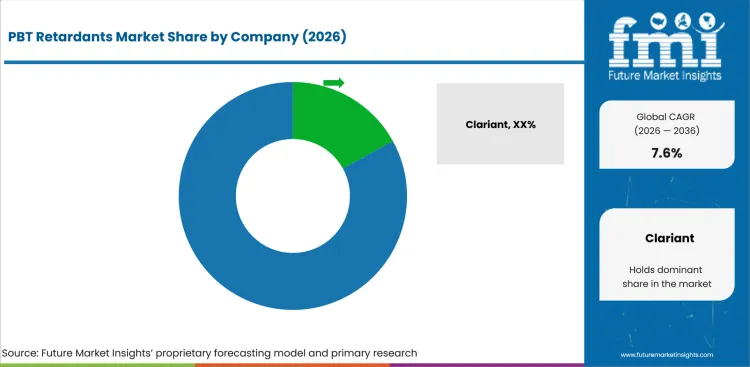
- Established additive suppliers hold an advantage through flame-retardant chemistry depth and compounder technical service.
- Engineering plastics suppliers gain account access by linking PBT grade availability with processing and testing support.
- Mineral and phosphorus specialists gain relevance as buyers evaluate lower-halogen systems for electrical applications.
- Regional distributors support smaller compounders by providing additive access, compliance documents, and batch-level supply reliability.
Global suppliers in the market compete by combining additive chemistry with test data and compounder support. Clariant and LANXESS are positioned around phosphorus flame-retardant systems for engineering plastics and electrical applications. BASF connects flame-retardant PBT compound availability with resin and polymer formulation knowledge. Buyers assess whether suppliers can support UL, CTI, glow-wire, and molding behavior before approving new additive packages.
Regional supply has become a competitive separator as electrical and automotive customers shorten approval cycles. BASF's India availability for flame-retardant Ultradur PBT grades shows how localized engineering plastics supply can reduce response time for compounders. Clariant's Daya Bay capacity supports Asian e-mobility and electrical demand where PBT retardants are evaluated early in formulation work. Nabaltec and Budenheim remain relevant where compounders test mineral synergists and phosphorus-nitrogen systems.
Specialist suppliers can win through application evidence and formulation flexibility. ADEKA supports polymer additive programs in Japan and broader Asia. ICL Group and Albemarle remain relevant to brominated chemistry routes and legacy formulations. Smaller suppliers can gain accounts when they provide stable quality, targeted technical support, and clear documentation for buyer audits. Scale alone is not enough if the formulation cannot pass electrical and processing requirements.
How do top PBT retardants companies compare?
Clariant and BASF score strongest on technical coverage while Nabaltec and Budenheim provide focused mineral and phosphorus-nitrogen support.
| Company | Relevance to Market Title | Flame Retardant Portfolio | Electrical Test Support | Compounder Support | Channel Reach | Geographic Footprint |
|---|---|---|---|---|---|---|
| Clariant | Very High | Very Strong | Very Strong | Strong | Strong | Global |
| BASF | Very High | Strong | Strong | Very Strong | Very Strong | Global |
| LANXESS | High | Strong | Strong | Strong | Strong | Global |
| Nabaltec | High | Strong | Strong | Strong | Moderate | Europe and Global |
| Budenheim | High | Strong | Moderate | Strong | Moderate | Europe and Global |
| ADEKA | High | Strong | Moderate | Moderate | Strong | Asia and Global |
| ICL Group | High | Strong | Moderate | Moderate | Strong | Global |
| Albemarle | High | Strong | Moderate | Moderate | Strong | Global |
| Italmatch Chemicals | Moderate to High | Strong | Moderate | Moderate | Moderate | Europe and Global |
Source: Future Market Insights competitive analysis, 2026.
Who are the key players in the PBT retardants market?
Clariant, BASF, LANXESS, Nabaltec, and Budenheim are listed with ADEKA, ICL Group, Albemarle, and Italmatch Chemicals among other suppliers.
Key global companies leading the PBT retardants market include:
- Clariant
- BASF
- LANXESS
- Nabaltec
- Budenheim
- ADEKA
- ICL Group
- Albemarle
- Italmatch Chemicals
Key Developments in PBT Retardants Market
- In November 2025, BASF made locally manufactured Ultradur PBT specialty grades available from India, including flame-retardant and hydrolysis-resistant grades. This supports faster local response for Indian engineering plastic customers.
- In November 2025, Clariant listed Exolit OP 1266 for thermoplastic polyester resins requiring high electrical tracking resistance. The product is suited for glass fiber reinforced and unfilled PBT and PET grades.
- In February 2025, BASF announced North American price increases for engineering plastics compounded products effective March 10, 2025, or as contracts allowed. This shows cost pressure around specialty engineering plastic supply.
Key Players in the PBT Retardants Market
Phosphorus and Halogen-Free Specialists
- Clariant
- LANXESS
- ADEKA
- Italmatch Chemicals
- Budenheim
Engineering Polymer and Compound Suppliers
- BASF
- Clariant
- LANXESS
Brominated and Mineral System Suppliers
- ICL Group
- Albemarle
- Nabaltec
- Budenheim
PBT Retardants Market - Report Scope
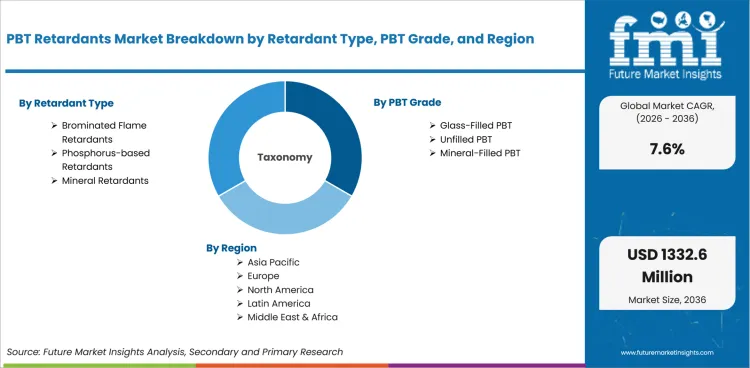
| Parameter | Details |
|---|---|
| Forecast period | 2026 to 2036 |
| Historical period | 2021 to 2025 |
| Quantitative unit | Revenue in USD million |
| By retardant type | Brominated Flame Retardants, Phosphorus-based Retardants, Mineral Retardants, Other |
| By PBT grade | Unfilled PBT, Glass-Filled PBT, Mineral-Filled PBT |
| By end use | Electrical & Electronics, Automotive, Industrial Equipment, Other |
| By processing | Injection Molding, Extrusion, Other |
| By sales channel | Direct to Compounders, Distributors |
| Regions covered | North America, Latin America, Europe, East Asia, South Asia and Pacific, Middle East and Africa |
| Countries covered | China, India, South Korea, United States, Germany, Japan, France, United Kingdom |
| Key companies profiled | Clariant, BASF, LANXESS, Nabaltec, Budenheim, ADEKA, ICL Group, Albemarle, Italmatch Chemicals |
| Approach | Hybrid bottom-up and top-down methodology using PBT compound demand, additive loading, end-use demand, and supplier portfolio checks |
Source: Future Market Insights, 2026.
PBT Retardants Market - Scope & Definition
| Attribute | Detail |
|---|---|
| Market Definition | Flame retardant additive systems designed for polybutylene terephthalate and PBT-based engineering compounds used in molded electrical, automotive, and industrial components. |
| Functions Covered | Ignition resistance, flame spread control, char formation, smoke behavior support, electrical insulation support, and formulation stabilization. |
| Applications Covered | Connectors, housings, switches, relays, sensors, terminals, appliance parts, industrial controls, and molded PBT components. |
| End-Use Industries | Electrical and electronics, automotive, industrial equipment, engineering plastics compounding, and specialty polymer distribution. |
| Grades Covered | Unfilled PBT, glass-filled PBT, mineral-filled PBT, and related PBT-based engineering compound grades. |
| Inclusions | All commercially traded flame retardant additives used in PBT compounds, including brominated, phosphorus-based, mineral, and other systems across defined end uses and channels. |
| Exclusions | Neat PBT resin sales, finished PBT components, non-PBT flame-retardant plastics, cable-only systems, textile flame retardants, foam additives, coatings additives, and fire retardants for wood, paper, or construction panels. |
PBT Retardants Market - Research Methodology
| Method | Description |
|---|---|
| Primary Research | FMI analyst interviews with compounders, resin suppliers, additive distributors, electrical component buyers, and automotive tier suppliers using flame-retarded PBT grades. |
| Desk Research | Review of regulatory chemical records, official production statistics, company product pages, product data sheets, technical brochures, and engineering plastics documentation. |
| Market Sizing & Forecasting | Hybrid bottom-up and top-down approach using PBT compound demand, additive loading ranges, regional compounding activity, end-use penetration, and country-level demand indicators. |
| Data Validation | Cross-verification using supplier portfolios, flame-retardant grade availability, product qualification patterns, electrical component demand, and automotive production signals. |
PBT Retardants Market Breakdown by Retardant Type, PBT Grade, End Use, Processing, Sales Channel, and Region
PBT Retardants Market Segmented by Retardant Type
- Brominated Flame Retardants
- Phosphorus-based Retardants
- Mineral Retardants
- Other
PBT Retardants Market Segmented by PBT Grade
- Unfilled PBT
- Glass-Filled PBT
- Mineral-Filled PBT
PBT Retardants Market Segmented by End Use
- Electrical & Electronics
- Automotive
- Industrial Equipment
- Other
PBT Retardants Market Segmented by Processing
- Injection Molding
- Extrusion
- Other
PBT Retardants Market Segmented by Sales Channel
- Direct to Compounders
- Distributors
PBT Retardants Market by Region
- North America
- Latin America
- Europe
- East Asia
- South Asia and Pacific
- Middle East and Africa
Research Sources and Bibliography
- ACEA. (2026, April 1). Economic and market report: Global and EU auto industry, full year 2025.
- Bank of Japan. (2026, May). Monthly report on the corporate goods price index: April 2026.
- BASF. (2025, February 28). BASF to increase prices for engineering plastics in North America.
- BASF. (2025, November 13). BASF scales up in India with Ultradur PBT to meet rising market demand.
- Clariant. (2025, November 22). Exolit OP 1266.
- Clariant. (2026, June 5). Clariant increases capacity in Daya Bay facility and expands Exolit OP portfolio for e-mobility.
- European Chemicals Agency. (2026, January 21). Call for evidence to support the preparation of a restriction proposal on certain non-polymeric aromatic brominated flame retardants.
- Federal Reserve Bank of St. Louis. (2026, June 3). Manufacturers' new orders: Computers and electronic products.
- Federal Reserve Bank of St. Louis. (2026, June 11). Producer Price Index by Industry: Plastics Material and Resin Manufacturing.
- INSEE. (2026, June 5). In April 2026, manufacturing output increased by 0.4%.
- International Organization of Motor Vehicle Manufacturers. (2026, May). Auto industry growth shifted east in 2025 amid global repositioning.
- International Organization of Motor Vehicle Manufacturers. (2026). Production statistics.
- Japan Electronics and Information Technology Industries Association. (2025, December 16). Production forecasts for the global electronics and information technology industries.
- Ministry of Commerce of the People's Republic of China. (2024, August 22). Regular press conference of the Ministry of Commerce.
- Ministry of Electronics and Information Technology. (2026, January 2). Government approves 22 proposals under the 3rd tranche of Electronics Component Manufacturing Scheme.
- Ministry of Electronics and Information Technology. (2026, February 3). Electronics Components Manufacturing Scheme.
- Ministry of Industry and Information Technology of China. (2025, September 4). China unveils action plan to boost electronic information manufacturing industry.
- Ministry of Trade, Industry and Resources. (2026, January 2). Korea's annual exports reach new highs in 2025.
- Nabaltec. (2025, July 2). Flame retardants for engineering plastics.
- Office for National Statistics. (2026, June 12). Index of Production, UK: April 2026.
- Society of Motor Manufacturers and Traders. (2026, January 29). Tough year for auto but new models and Industrial Strategy can deliver growth.
- UK Department for Business and Trade. (2025, June). Advanced Manufacturing Sector Plan.
- USA Environmental Protection Agency. (2025, June 2). Proposed significant new use rule for certain non-ongoing uses of three flame retardants under TSCA.
- ZVEI. (2026, February). Foreign trade report February 2026.
This bibliography is provided for reader reference and is not exhaustive. The full report contains the complete reference list and detailed citations.
This Report Answers
- Market size estimates for 2026 and forecasts through 2036 for the PBT retardants market.
- Insights across more than 30 regional and country-level markets.
- Analysis of demand drivers, material qualification trends, electrical safety needs, and purchasing behavior.
- Evaluation of key PBT grades, end uses, processing routes, and sales channels.
- Assessment of chemical review pressure, brominated additive exposure, and halogen-free substitution opportunities.
- Identification of opportunities across retardant chemistry, glass-filled PBT, direct compounder supply, and regional technical support.
- Evaluation of supply chain dynamics, company developments, and formulation support trends.
- Country-level growth analysis covering China, India, South Korea, United States, Germany, Japan, France, and United Kingdom.
- Assessment of the competitive landscape, including flame retardant additive suppliers and engineering polymer participants.
- Analysis of buyer preferences, qualification pathways, and electrical testing priorities.
- Regional outlooks across North America, Europe, East Asia, South Asia and Pacific, Latin America, and Middle East and Africa.
- Delivery of market data, forecasts, and supporting analysis in PDF and Excel formats.
Frequently Asked Questions
What is the growth prospect for PBT retardants?
Demand for PBT retardants is expected to rise at a considerable pace as electrical and automotive buyers specify flame-safe engineering plastics.
Which companies are expected to shape the PBT retardants market?
Clariant, BASF, LANXESS, Nabaltec, Budenheim, ADEKA, ICL Group, Albemarle, and Italmatch Chemicals are expected to shape market competition through additive portfolios and technical support.
Why are flame retardant suppliers investing in PBT retardants?
Suppliers are investing in PBT retardants to support electrical connectors, EV components, appliance housings, and industrial molded parts that require verified flame performance.
Why is direct compounder access important in the PBT retardants market?
Direct compounder access is important because additive suppliers must support formulation trials, processing checks, and electrical performance validation before customer approval.
Which retardant type is expected to lead the market?
Brominated Flame Retardants are expected to lead the market due to cost familiarity and proven performance in established PBT recipes.
Which PBT grade creates the largest additive requirement?
Glass-Filled PBT creates the largest additive requirement because connector parts need stiffness, dimensional stability, and flame safety together.
Which end use is expected to lead PBT retardant demand?
Electrical & Electronics is expected to lead demand as connectors, switches, relays, and housings require flame-safe materials near live parts.
Which country is projected to grow fastest in the PBT retardants market?
China is projected to grow fastest due to electronics manufacturing plans, electric mobility supply chains, and local compounder activity.
Preview the report firsthand - request a free sample
Get SampleGet the brochure for pricing and purchase details.
Get PDFTable of Content
- Key Takeaways
- Market Size and CAGR
- Top Growth Driver
- Fastest Growing Segment
- Leading Region
- Key Companies
- Emerging Opportunities
- Executive Summary
- Global Market Outlook
- Demand-side Trends
- Supply-side Trends
- Technology Roadmap Analysis
- Analysis and Recommendations
- Analyst Perspective (What is happening? Why now? What should investors know?)
- Key Questions Answered
- How large is the market?
- What is the CAGR?
- What are key trends?
- Which region dominates?
- Who are the leaders?
- Market Overview
- Market Coverage / Taxonomy
- Market Definition / Scope / Limitations
- Research Methodology
- Chapter Orientation
- Analytical Lens and Working Hypotheses
- Market Structure, Signals, and Trend Drivers
- Benchmarking and Cross-market Comparability
- Market Sizing, Forecasting, and Opportunity Mapping
- Research Design and Evidence Framework
- Desk Research Programme (Secondary Evidence)
- Expert Input and Fieldwork (Primary Evidence)
- Tooling, Models, and Reference Databases
- Data Engineering and Model Build
- Quality Assurance and Audit Trail
- Market Background
- Market Dynamics (Drivers, Restraints, Opportunity, Trends)
- Scenario Forecast (Optimistic, Likely, Conservative)
- Impact Analysis
- AI Impact
- Sustainability Impact
- Regulatory Impact
- Technology Impact
- Consumer / Buyer Analysis
- Purchase Drivers
- Adoption Barriers
- Buyer Journey
- Opportunity Map Analysis
- Product Life Cycle Analysis
- Supply Chain Analysis
- Investment Feasibility Matrix
- Value Chain Analysis
- PESTLE and Porter's Analysis
- Regulatory Landscape
- Regional Parent Market Outlook
- Production and Consumption Statistics
- Import and Export Statistics
- Global Market Analysis and Forecast, 2021 to 2036
- Historical Market Size Value (USD Million) & Volume (Unit) Analysis, 2021 to 2025
- Current and Future Market Size Value (USD Million) & Volume (Unit) Projections, 2026 to 2036
- Y-o-Y Growth Trend Analysis
- Absolute $ Opportunity Analysis
- Global Market Pricing Analysis, 2021 to 2036
- Global Market Analysis and Forecast, By Retardant Type, 2021 to 2036
- Introduction / Key Findings
- Historical Market Size Value (USD Million) & Volume (Unit) Analysis By Retardant Type, 2021 to 2025
- Current and Future Market Size Value (USD Million) & Volume (Unit) Analysis and Forecast By Retardant Type, 2026 to 2036
- Brominated Flame Retardants
- Phosphorus-based Retardants
- Mineral Retardants
- Other
- Brominated Flame Retardants
- Y-o-Y Growth Trend Analysis By Retardant Type, 2021 to 2025
- Absolute $ Opportunity Analysis By Retardant Type, 2026 to 2036
- Global Market Analysis and Forecast, By PBT Grade, 2021 to 2036
- Introduction / Key Findings
- Historical Market Size Value (USD Million) & Volume (Unit) Analysis By PBT Grade, 2021 to 2025
- Current and Future Market Size Value (USD Million) & Volume (Unit) Analysis and Forecast By PBT Grade, 2026 to 2036
- Glass-Filled PBT
- Unfilled PBT
- Mineral-Filled PBT
- Glass-Filled PBT
- Y-o-Y Growth Trend Analysis By PBT Grade, 2021 to 2025
- Absolute $ Opportunity Analysis By PBT Grade, 2026 to 2036
- Global Market Analysis and Forecast, By End Use, 2021 to 2036
- Introduction / Key Findings
- Historical Market Size Value (USD Million) & Volume (Unit) Analysis By End Use, 2021 to 2025
- Current and Future Market Size Value (USD Million) & Volume (Unit) Analysis and Forecast By End Use, 2026 to 2036
- Electrical & Electronics
- Automotive
- Industrial Equipment
- Other
- Electrical & Electronics
- Y-o-Y Growth Trend Analysis By End Use, 2021 to 2025
- Absolute $ Opportunity Analysis By End Use, 2026 to 2036
- Global Market Analysis and Forecast, By Processing, 2021 to 2036
- Introduction / Key Findings
- Historical Market Size Value (USD Million) & Volume (Unit) Analysis By Processing, 2021 to 2025
- Current and Future Market Size Value (USD Million) & Volume (Unit) Analysis and Forecast By Processing, 2026 to 2036
- Injection Molding
- Extrusion
- Other
- Injection Molding
- Y-o-Y Growth Trend Analysis By Processing, 2021 to 2025
- Absolute $ Opportunity Analysis By Processing, 2026 to 2036
- Global Market Analysis and Forecast, By Sales Channel, 2021 to 2036
- Introduction / Key Findings
- Historical Market Size Value (USD Million) & Volume (Unit) Analysis By Sales Channel, 2021 to 2025
- Current and Future Market Size Value (USD Million) & Volume (Unit) Analysis and Forecast By Sales Channel, 2026 to 2036
- Direct to Compounders
- Distributors
- Direct to Compounders
- Y-o-Y Growth Trend Analysis By Sales Channel, 2021 to 2025
- Absolute $ Opportunity Analysis By Sales Channel, 2026 to 2036
- Global Market Analysis and Forecast, By Region, 2021 to 2036
- Introduction
- Historical Market Size Value (USD Million) & Volume (Unit) Analysis By Region, 2021 to 2025
- Current Market Size Value (USD Million) & Volume (Unit) Analysis and Forecast By Region, 2026 to 2036
- North America
- Latin America
- Western Europe
- Eastern Europe
- East Asia
- South Asia and Pacific
- Middle East & Africa
- Market Attractiveness Analysis By Region
- North America Market Analysis and Forecast, By Country, 2021 to 2036
- Historical Market Size Value (USD Million) & Volume (Unit) Trend Analysis By Market Taxonomy, 2021 to 2025
- Market Size Value (USD Million) & Volume (Unit) Forecast By Market Taxonomy, 2026 to 2036
- By Country
- USA
- Canada
- Mexico
- By Retardant Type
- By PBT Grade
- By End Use
- By Processing
- By Sales Channel
- By Country
- Market Attractiveness Analysis
- By Country
- By Retardant Type
- By PBT Grade
- By End Use
- By Processing
- By Sales Channel
- Key Takeaways
- Latin America Market Analysis and Forecast, By Country
- Historical Market Size Value (USD Million) & Volume (Unit) Trend Analysis By Market Taxonomy, 2021 to 2025
- Market Size Value (USD Million) & Volume (Unit) Forecast By Market Taxonomy, 2026 to 2036
- By Country
- Brazil
- Chile
- Rest of Latin America
- By Retardant Type
- By PBT Grade
- By End Use
- By Processing
- By Sales Channel
- By Country
- Market Attractiveness Analysis
- By Country
- By Retardant Type
- By PBT Grade
- By End Use
- By Processing
- By Sales Channel
- Key Takeaways
- Western Europe Market Analysis and Forecast, By Country
- Historical Market Size Value (USD Million) & Volume (Unit) Trend Analysis By Market Taxonomy, 2021 to 2025
- Market Size Value (USD Million) & Volume (Unit) Forecast By Market Taxonomy, 2026 to 2036
- By Country
- Germany
- UK
- Italy
- Spain
- France
- Nordic
- BENELUX
- Rest of Western Europe
- By Retardant Type
- By PBT Grade
- By End Use
- By Processing
- By Sales Channel
- By Country
- Market Attractiveness Analysis
- By Country
- By Retardant Type
- By PBT Grade
- By End Use
- By Processing
- By Sales Channel
- Key Takeaways
- Eastern Europe Market Analysis and Forecast, By Country
- Historical Market Size Value (USD Million) & Volume (Unit) Trend Analysis By Market Taxonomy, 2021 to 2025
- Market Size Value (USD Million) & Volume (Unit) Forecast By Market Taxonomy, 2026 to 2036
- By Country
- Russia
- Poland
- Hungary
- Balkan & Baltic
- Rest of Eastern Europe
- By Retardant Type
- By PBT Grade
- By End Use
- By Processing
- By Sales Channel
- By Country
- Market Attractiveness Analysis
- By Country
- By Retardant Type
- By PBT Grade
- By End Use
- By Processing
- By Sales Channel
- Key Takeaways
- East Asia Market Analysis and Forecast, By Country
- Historical Market Size Value (USD Million) & Volume (Unit) Trend Analysis By Market Taxonomy, 2021 to 2025
- Market Size Value (USD Million) & Volume (Unit) Forecast By Market Taxonomy, 2026 to 2036
- By Country
- China
- Japan
- South Korea
- By Retardant Type
- By PBT Grade
- By End Use
- By Processing
- By Sales Channel
- By Country
- Market Attractiveness Analysis
- By Country
- By Retardant Type
- By PBT Grade
- By End Use
- By Processing
- By Sales Channel
- Key Takeaways
- South Asia and Pacific Market Analysis and Forecast, By Country
- Historical Market Size Value (USD Million) & Volume (Unit) Trend Analysis By Market Taxonomy, 2021 to 2025
- Market Size Value (USD Million) & Volume (Unit) Forecast By Market Taxonomy, 2026 to 2036
- By Country
- India
- ASEAN
- Australia & New Zealand
- Rest of South Asia and Pacific
- By Retardant Type
- By PBT Grade
- By End Use
- By Processing
- By Sales Channel
- By Country
- Market Attractiveness Analysis
- By Country
- By Retardant Type
- By PBT Grade
- By End Use
- By Processing
- By Sales Channel
- Key Takeaways
- Middle East & Africa Market Analysis and Forecast, By Country
- Historical Market Size Value (USD Million) & Volume (Unit) Trend Analysis By Market Taxonomy, 2021 to 2025
- Market Size Value (USD Million) & Volume (Unit) Forecast By Market Taxonomy, 2026 to 2036
- By Country
- Kingdom of Saudi Arabia
- Other GCC Countries
- Türkiye
- South Africa
- Other African Union
- Rest of Middle East & Africa
- By Retardant Type
- By PBT Grade
- By End Use
- By Processing
- By Sales Channel
- By Country
- Market Attractiveness Analysis
- By Country
- By Retardant Type
- By PBT Grade
- By End Use
- By Processing
- By Sales Channel
- Key Takeaways
- Key Countries Market Analysis
- USA
- Pricing Analysis
- Market Share Analysis, 2025
- By Retardant Type
- By PBT Grade
- By End Use
- By Processing
- By Sales Channel
- Canada
- Pricing Analysis
- Market Share Analysis, 2025
- By Retardant Type
- By PBT Grade
- By End Use
- By Processing
- By Sales Channel
- Mexico
- Pricing Analysis
- Market Share Analysis, 2025
- By Retardant Type
- By PBT Grade
- By End Use
- By Processing
- By Sales Channel
- Brazil
- Pricing Analysis
- Market Share Analysis, 2025
- By Retardant Type
- By PBT Grade
- By End Use
- By Processing
- By Sales Channel
- Chile
- Pricing Analysis
- Market Share Analysis, 2025
- By Retardant Type
- By PBT Grade
- By End Use
- By Processing
- By Sales Channel
- Germany
- Pricing Analysis
- Market Share Analysis, 2025
- By Retardant Type
- By PBT Grade
- By End Use
- By Processing
- By Sales Channel
- UK
- Pricing Analysis
- Market Share Analysis, 2025
- By Retardant Type
- By PBT Grade
- By End Use
- By Processing
- By Sales Channel
- Italy
- Pricing Analysis
- Market Share Analysis, 2025
- By Retardant Type
- By PBT Grade
- By End Use
- By Processing
- By Sales Channel
- Spain
- Pricing Analysis
- Market Share Analysis, 2025
- By Retardant Type
- By PBT Grade
- By End Use
- By Processing
- By Sales Channel
- France
- Pricing Analysis
- Market Share Analysis, 2025
- By Retardant Type
- By PBT Grade
- By End Use
- By Processing
- By Sales Channel
- India
- Pricing Analysis
- Market Share Analysis, 2025
- By Retardant Type
- By PBT Grade
- By End Use
- By Processing
- By Sales Channel
- ASEAN
- Pricing Analysis
- Market Share Analysis, 2025
- By Retardant Type
- By PBT Grade
- By End Use
- By Processing
- By Sales Channel
- Australia & New Zealand
- Pricing Analysis
- Market Share Analysis, 2025
- By Retardant Type
- By PBT Grade
- By End Use
- By Processing
- By Sales Channel
- China
- Pricing Analysis
- Market Share Analysis, 2025
- By Retardant Type
- By PBT Grade
- By End Use
- By Processing
- By Sales Channel
- Japan
- Pricing Analysis
- Market Share Analysis, 2025
- By Retardant Type
- By PBT Grade
- By End Use
- By Processing
- By Sales Channel
- South Korea
- Pricing Analysis
- Market Share Analysis, 2025
- By Retardant Type
- By PBT Grade
- By End Use
- By Processing
- By Sales Channel
- Russia
- Pricing Analysis
- Market Share Analysis, 2025
- By Retardant Type
- By PBT Grade
- By End Use
- By Processing
- By Sales Channel
- Poland
- Pricing Analysis
- Market Share Analysis, 2025
- By Retardant Type
- By PBT Grade
- By End Use
- By Processing
- By Sales Channel
- Hungary
- Pricing Analysis
- Market Share Analysis, 2025
- By Retardant Type
- By PBT Grade
- By End Use
- By Processing
- By Sales Channel
- Kingdom of Saudi Arabia
- Pricing Analysis
- Market Share Analysis, 2025
- By Retardant Type
- By PBT Grade
- By End Use
- By Processing
- By Sales Channel
- Türkiye
- Pricing Analysis
- Market Share Analysis, 2025
- By Retardant Type
- By PBT Grade
- By End Use
- By Processing
- By Sales Channel
- South Africa
- Pricing Analysis
- Market Share Analysis, 2025
- By Retardant Type
- By PBT Grade
- By End Use
- By Processing
- By Sales Channel
- USA
- Market Structure Analysis
- Competition Dashboard
- Competition Benchmarking
- Market Share Analysis of Top Players
- By Regional
- By Retardant Type
- By PBT Grade
- By End Use
- By Processing
- By Sales Channel
- Emerging Startups
- Innovation Benchmarking
- Competition Analysis
- Competition Deep Dive
- Clariant
- Overview
- Product Portfolio
- Profitability by Market Segments (Product/Region/Sales Channel)
- Sales Footprint
- Strategy Overview
- Marketing Strategy
- Product Strategy
- Channel Strategy
- BASF
- LANXESS
- ICL Group
- Albemarle
- ADEKA
- Nabaltec
- Clariant
- Case Studies
- Success Stories
- Recent Developments
- Competition Deep Dive
- Assumptions & Acronyms Used


