

- Industry Size (2026)
- USD 525.6 Mn
- Forecast (2036)
- USD 1314.5 Mn
- CAGR (2026 to 2036)
- 9.6%
Low-Impact Textile Dye Fixing Agents Market Forecast and Outlook 2026 to 2036
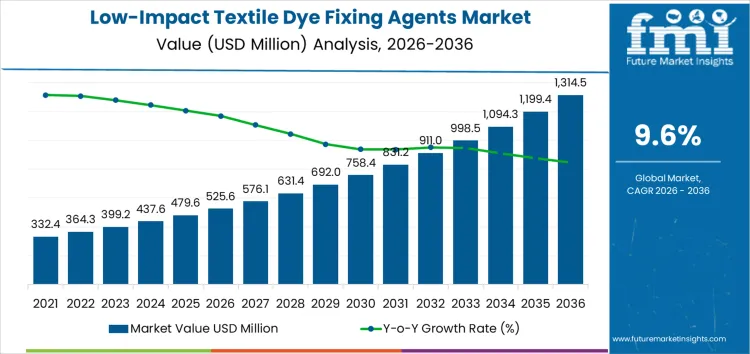
The low-impact textile dye fixing agents market is expected to experience steady growth from 2026 to 2036. In 2026, the market value is projected to be USD 525.6 million, with growth anticipated to reach USD 1,314.5 million by 2036. The compound annual growth rate (CAGR) for the market is forecasted at 9.6%, driven by the increasing demand for environmentally friendly and sustainable dyeing solutions in the textile industry. Low-impact textile dye fixing agents are gaining popularity as manufacturers seek ways to reduce the environmental impact of dyeing processes while improving color fastness and fabric durability.
The market growth is supported by rising awareness of the harmful effects of conventional textile dyes and a growing preference for eco-friendly alternatives. As the textile industry faces mounting pressure to adopt sustainable practices, the demand for low-impact dyeing solutions is expected to rise. Advances in textile chemistry and the increasing availability of environmentally friendly dye fixing agents will further drive market expansion. Over the forecast period, the market is expected to grow steadily, with innovations in dye fixing agents contributing to their wider adoption across global textile markets.
Quick Stats of the Low-Impact Textile Dye Fixing Agents Market
- Low-Impact Textile Dye Fixing Agents Market Value (2026): USD 525.6 million
- Low-Impact Textile Dye Fixing Agents Market Forecast Value (2036): USD 1,314.5 million
- Low-Impact Textile Dye Fixing Agents Market Global Forecast CAGR (2026 to 2036): 9.6%
- Low-Impact Textile Dye Fixing Agents Market Leading Segment: Cationic Dye Fixing Agents (30.0%)
- Key Growth Regions in Low-Impact Textile Dye Fixing Agents Market: India
- Top Players in Low-Impact Textile Dye Fixing Agents Market: Huntsman Corporation, Archroma, Rudolf Group, DyStar, Atul Ltd
What is the Growth Forecast for the Low-Impact Textile Dye Fixing Agents Market through 2036?
The growth forecast for the low-impact textile dye fixing agents market indicates steady expansion, with a projected CAGR of 9.6%. Starting at USD 525.6 million in 2026, the market will gradually increase, reaching USD 574.3 million in 2027, USD 626.5 million in 2028, and USD 682.5 million in 2029. By 2030, the market value is projected to rise to USD 742.8 million, continuing its steady growth over the next several years.
From 2031 to 2036, the market will experience continued growth, reaching USD 807.5 million in 2031, USD 877.2 million in 2032, and USD 952.4 million in 2033. The market will maintain its upward trajectory, with values increasing to USD 1,033.5 million in 2034, USD 1,200 million in 2035, and USD 1,314.5 million by 2036. The growth rate volatility index reveals relatively stable market expansion, indicating a predictable upward trend driven by the increasing shift toward sustainable textile dyeing solutions in response to environmental concerns and regulatory pressures.
Low-Impact Textile Dye Fixing Agents Market Key Takeaways
| Metric | Value |
|---|---|
| Industry Sales Value (2026) | USD 525.6 million |
| Industry Forecast Value (2036) | USD 1,314.5 million |
| Industry Forecast CAGR (2026 to 2036) | 9.6% |
What Is Driving the Demand for the Low-Impact Textile Dye Fixing Agents Market Globally?
The global demand for low impact textile dye fixing agents is driven by increasing scrutiny of environmental and health impacts associated with traditional dye chemistry and textile processing. Conventional dye fixing agents often rely on formaldehyde based or heavy metal chemistries that raise concerns about effluent toxicity, worker exposure, and wastewater treatment burdens. Regulators in Europe, North America, and parts of Asia are imposing stricter limits on hazardous substances in effluents and finished goods, prompting textile manufacturers and converters to seek alternatives that preserve color fastness without introducing persistent or harmful residues.
Growing consumer awareness of sustainable and safer apparel fuels brand commitments to “cleaner” supply chains, further reinforcing adoption of low impact fixing agents. These alternatives, formulated to reduce chemical oxygen demand, avoid regulated substances, and improve biodegradability, help facilities meet wastewater discharge standards while maintaining product quality. Expansion of eco certification standards and sustainable labelling schemes such as OEKO TEX, GOTS (Global Organic Textile Standard), and bluesign has elevated the prominence of low impact chemistries in dyeing and finishing operations.
Future demand for low impact textile dye fixing agents is expected to grow as sustainability targets, circularity goals, and regulatory frameworks continue to shape textile supply chains. Advancements in polymer chemistry, enzyme assisted fixation, and bio based auxiliaries are expanding performance options that deliver reliable dye fixation across a wide range of fiber types and dyestuff classes. Investment in wastewater treatment infrastructure and water saving processes reinforces the value proposition of fixing agents that reduce pollutant load and support reuse of process water.
Brands and retailers increasingly integrate environmental criteria into procurement and supplier scorecards, making low impact fixing agents a strategic choice to maintain market access and meet corporate responsibility commitments. Growth in fast fashion, athleisure, and performance apparel drives volume and diversification of textile substrates, underscoring the need for adaptable, effective fixing solutions that align with stringent environmental expectations. As textile producers balance performance, compliance, and cost pressures, solutions that minimise impact while preserving color quality will sustain steady market expansion worldwide.
What are the Leading Segments in the Global Low-Impact Textile Dye Fixing Agents Market?
The global low-impact textile dye fixing agents market is segmented by chemistry type and textile type. Among chemistry types, cationic dye fixing agents lead the market, capturing 30% of the share, followed by polymeric dye fixing agents, bio-based & natural fixing agents, silicone-based fixing agents, and other low-impact fixing agents. Cationic dye fixing agents are preferred for their ability to enhance dye fixation on textiles, ensuring vibrant, long-lasting colors. On the textile type side, cotton & cellulose-based textiles dominate the market, holding 32% of the share, followed by synthetic fabrics (polyester, nylon), blended fabrics, wool & silk, and technical & functional textiles. The demand for dye fixing agents in cotton and cellulose-based textiles is driven by the widespread use of these fabrics in the textile industry.
What Drives the Growth of Cationic Dye Fixing Agents in the Low-Impact Textile Dye Fixing Agents Market?
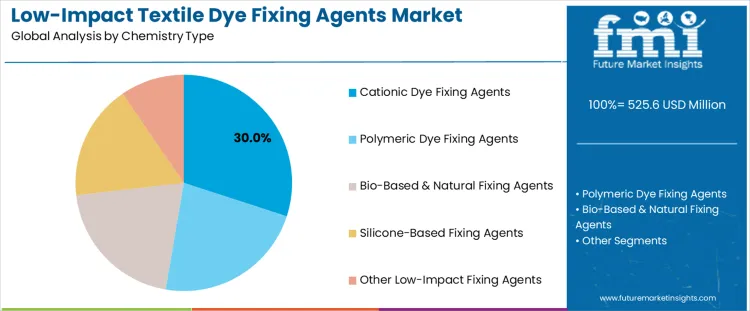
Cationic dye fixing agents are the leading chemistry type in the low-impact textile dye fixing agents market, accounting for 30% of the share. These agents are preferred for their ability to improve dye fixation on various textile fibers, especially cotton and cellulose-based materials. Cationic dye fixing agents work by forming a strong bond between the dye and the textile fibers, reducing the likelihood of color fading and ensuring that dyes remain vibrant and durable. The growing demand for eco-friendly and low-impact textile dyeing processes, combined with the need for higher quality and more sustainable textiles, is driving the growth of cationic dye fixing agents. As the textile industry moves toward more sustainable practices and regulations on chemical use tighten, cationic dye fixing agents, which often have a lower environmental impact compared to traditional alternatives, are expected to remain a dominant solution in the market.
What is Driving the Demand for Cotton & Cellulose-Based Textiles in the Low-Impact Textile Dye Fixing Agents Market?
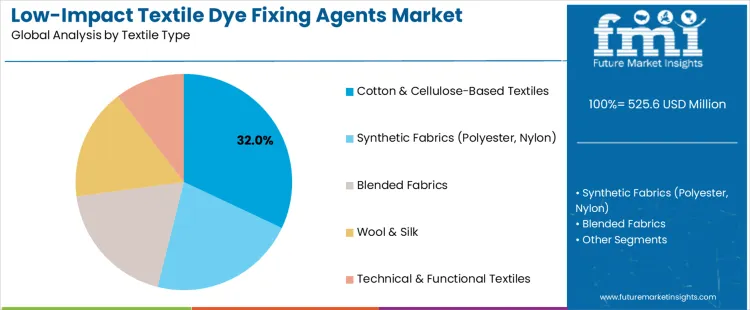
Cotton & cellulose-based textiles are the leading textile type in the low-impact textile dye fixing agents market, capturing 32% of the share. This growth is driven by the widespread use of cotton and cellulose-based fabrics in the textile industry, which are highly susceptible to dye fading and require effective dye fixation. These fabrics, commonly used in apparel, home textiles, and industrial applications, benefit greatly from low-impact dye fixing agents, ensuring that the colors remain rich and long-lasting. Additionally, the increasing consumer demand for sustainable and eco-friendly textiles has led to a growing preference for cellulose-based fabrics, which can be more easily treated with natural and biodegradable fixing agents. The emphasis on improving the environmental footprint of textile production, combined with the need for higher-quality and more durable textiles, is expected to continue driving the demand for dye fixing agents in cotton & cellulose-based textiles.
What are the Key Dynamics in the Global Low-Impact Textile Dye Fixing Agents Market?
The global low impact textile dye fixing agents market is expanding as textile manufacturers and brand owners seek chemistries that improve dye fixation while lowering environmental footprint. These agents enhance color fastness and reduce dye runoff during washing, supporting quality and sustainability targets. Growth is shaped by regulatory focus on wastewater standards, consumer demand for eco friendly apparel, and investment in sustainable process technologies. Use spans cotton, polyester, blends and performance fabrics where durable color and responsible manufacturing influence product selection and supply chain decisions worldwide.
What are the Key Drivers for the Global Low-Impact Textile Dye Fixing Agents Market?
Increasing environmental regulations that restrict pollutant discharge in textile effluent systems motivate adoption of low impact dye fixing agents that help reduce chemical loads in wastewater. Brands with sustainability commitments seek processing aids that maintain color quality while supporting water and energy reduction goals. Consumer preference for apparel with lower environmental impact drives interest in textiles processed with greener chemistries. Advances in polymer and bio based formulations deliver acceptable fixation performance with reduced toxicity and better biodegradability. Rising production of fashion and technical textiles fuels demand for agents that support consistent color durability across washes and climatic conditions.
What are the Restraints for the Global Low-Impact Textile Dye Fixing Agents Market?
A restraint is the challenge of balancing environmental performance with fixation efficacy, especially for high speed production where robust color retention is critical. Some low impact agents may require process adjustments, such as extended dwell time or pH control, which can affect line throughput and operational planning. Cost sensitivities in competitive apparel and textile sectors may limit uptake where premium chemistries raise processing expense without clear short term ROI. Variability in fabric types and dye classes complicates universal application of a single fixing system, requiring product development and validation. Differences in regional wastewater standards and enforcement mechanisms influence investment timing and strategy among manufacturers.
What are the Key Trends in the Global Low-Impact Textile Dye Fixing Agents Market?
A key trend is the development of bio derived and engineered polymer systems that deliver improved fixation with reduced chemical load and enhanced biodegradability. Suppliers are focusing on agents compatible with cold water and low temperature dyeing processes to reduce energy use in textile finishing. Growth of digital and precision dyeing technologies is encouraging integration of fixing agents that synergize with targeted application methods, reducing waste and variability. Collaboration between chemical developers, textile mills and brands is increasing to co create solutions that meet performance, compliance and sustainability goals. Transparency in supply chains and claims supported by third party certification influence acceptance among environmentally focused buyers and textile producers.
What is the Country-Wise Analysis of the Low-Impact Textile Dye Fixing Agents Market?
The low-impact textile dye fixing agents market is expected to grow steadily, driven by the increasing demand for environmentally friendly and sustainable textile products. These agents, which are used to improve the fixation of dyes to fabric while reducing environmental impact, are becoming more popular due to the growing focus on sustainability in the textile industry. The shift towards eco-friendly practices, combined with increasing consumer demand for responsibly produced clothing, is driving the market growth.
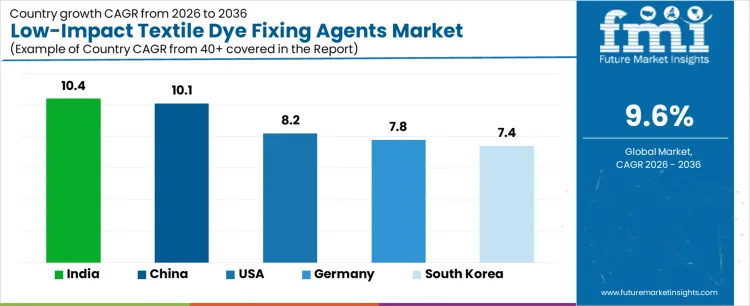
High-growth markets such as India and China are seeing strong demand due to their large textile manufacturing industries, expanding economies, and increasing focus on reducing the environmental footprint of textile production. Developed markets such as the United States, Germany, and South Korea are also experiencing steady growth, supported by stricter regulations on chemical usage and increasing awareness of sustainable production practices within the textile sector.
| Country | CAGR (2026-2036) |
|---|---|
| India | 10.4% |
| China | 10.1% |
| United States | 8.2% |
| Germany | 7.8% |
| South Korea | 7.4% |
What is the Growth Outlook for the Low-Impact Textile Dye Fixing Agents Market in India?
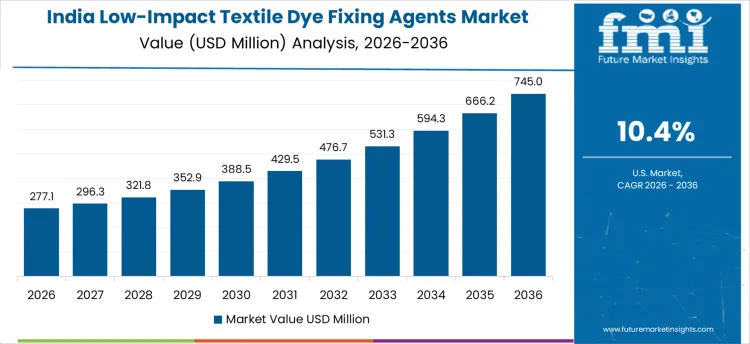
The low-impact textile dye fixing agents market in India is expected to grow at the highest rate, with a projected CAGR of 10.4%. India’s large textile industry, which is one of the largest in the world, is increasingly adopting sustainable practices to meet growing domestic and international demand for eco-friendly textiles. As the country continues to modernize its textile production processes and shift towards more sustainable production techniques, the demand for low-impact dye fixing agents is rising. Additionally, India’s focus on reducing environmental pollution and complying with international environmental standards is further driving the need for these products.
With the textile industry being a key economic sector in India, manufacturers are turning to low-impact textile dye fixing agents as part of their broader commitment to sustainable practices. The growing demand for responsibly produced clothing in domestic and global markets will continue to drive the growth of this market.
What is the Market Outlook for the Low-Impact Textile Dye Fixing Agents Market in China?
The low-impact textile dye fixing agents market in China is projected to grow steadily, with a projected CAGR of 10.1%. As one of the largest textile manufacturing countries in the world, China is undergoing a transformation in its textile production processes, with increasing pressure from both domestic regulations and international markets to reduce environmental impact. The Chinese textile industry is increasingly adopting eco-friendly practices, and the demand for low-impact dye fixing agents is rising as part of this shift. Government regulations that promote cleaner production processes and a focus on sustainable practices are contributing to market growth.
The growing demand for sustainable and environmentally responsible textile products, particularly in export markets, is further boosting the adoption of low-impact textile dye fixing agents in China. With the textile industry’s focus on meeting international sustainability standards, China’s market for these products is expected to see continued growth.
What is the Growth Forecast for the Low-Impact Textile Dye Fixing Agents Market in the United States?
The low-impact textile dye fixing agents market in the United States is expected to grow steadily, with a projected CAGR of 8.2%. In the USA, the growing demand for sustainable and eco-friendly textile products is driving the market for low-impact dye fixing agents. The increasing emphasis on reducing the environmental footprint of textile production, combined with stricter regulations on chemical usage in manufacturing processes, is contributing to the rise in demand for these products. The USA textile industry is undergoing a shift towards greener practices, and manufacturers are increasingly turning to low-impact textile dye fixing agents to meet sustainability goals. As consumers demand more eco-conscious products, particularly in the fashion and home textiles sectors, the market for low-impact dye fixing agents is expected to grow steadily. Moreover, the growing awareness of environmental issues and the desire for safer, more sustainable production processes will continue to drive market growth in the USA.
What is the Market Outlook for the Low-Impact Textile Dye Fixing Agents Market in Germany?
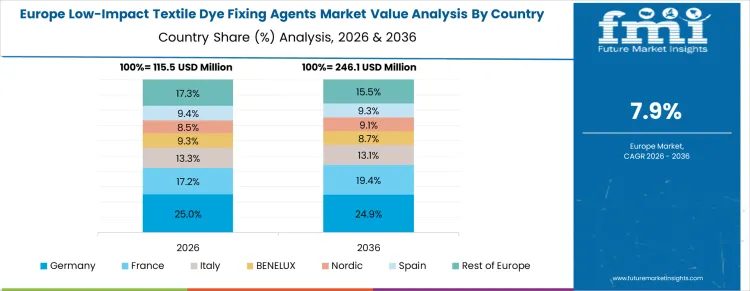
The low-impact textile dye fixing agents market in Germany is projected to grow at a steady pace, with a projected CAGR of 7.8%. Germany’s textile industry, which is known for its high standards of quality and environmental responsibility, is increasingly adopting sustainable practices. With increasing regulatory pressure on reducing the environmental impact of textile production, the demand for low-impact textile dye fixing agents is growing. German manufacturers are under increasing pressure to comply with environmental regulations and meet the sustainability expectations of consumers.
As part of this effort, the use of low-impact dye fixing agents is rising as manufacturers aim to reduce chemical waste and improve the environmental friendliness of their production processes. The growing trend towards eco-friendly fashion and textiles, combined with Germany’s commitment to sustainability, is expected to continue driving the demand for these products, making it an important market for low-impact textile dye fixing agents in Europe.
What are the Growth Prospects for the Low-Impact Textile Dye Fixing Agents Market in South Korea?
The low-impact textile dye fixing agents market in South Korea is expected to grow at a moderate pace, with a projected CAGR of 7.4%. South Korea’s textile industry, which is known for its innovation and high-quality production, is increasingly focusing on sustainability and eco-friendly production practices. The demand for low-impact dye fixing agents is rising as manufacturers aim to meet both domestic and international consumer demands for environmentally responsible textiles.
South Korea’s commitment to sustainability, coupled with its efforts to reduce the environmental impact of its textile industry, is driving the adoption of these agents. As the country continues to focus on reducing pollution, improving efficiency, and meeting global sustainability standards, the market for low-impact textile dye fixing agents is expected to experience steady growth. Additionally, increasing consumer awareness and demand for green products will further contribute to the market's expansion in South Korea.
What is the Competitive Landscape for the Low-Impact Textile Dye Fixing Agents Market?
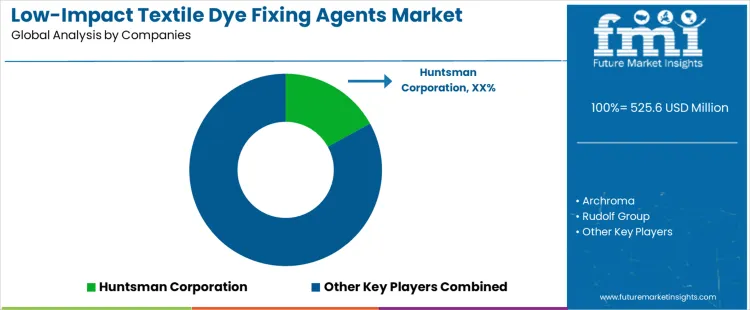
The low-impact textile dye fixing agents market is experiencing growth as industries increasingly prioritize sustainable and environmentally responsible solutions for textile production. Huntsman Corporation leads the market with its advanced low-impact textile dye fixing agents, offering high-performance products that enhance colorfastness and durability while minimizing environmental impact.
Their commitment to innovation and sustainability has positioned them as a dominant player in the market. Archroma, Rudolf Group, and DyStar are significant competitors, each providing specialized dye fixing agents that improve the stability and longevity of dyed textiles. Archroma focuses on environmentally friendly solutions that ensure excellent results while reducing the use of harmful chemicals, while Rudolf Group and DyStar offer a range of effective agents designed to meet the growing demand for sustainable textile processing.
Atul Ltd further strengthens the competitive landscape by offering cost-effective, high-quality solutions for dye fixation while promoting environmental sustainability. These companies compete by focusing on improving the effectiveness of dye fixation, reducing the environmental footprint of textile manufacturing, and developing sustainable solutions to meet increasing consumer and regulatory demands for eco-friendly textile products. The market is set to continue evolving, driven by manufacturers’ commitment to reducing environmental impacts and meeting the growing demand for sustainable textile production.
Key Players of the Low-Impact Textile Dye Fixing Agents Market
- Huntsman Corporation
- Archroma
- Rudolf Group
- DyStar
- Atul Ltd
Scope of the Report
| Items | Values |
|---|---|
| Quantitative Units (2026) | USD Million |
| Chemistry Type | Cationic Dye Fixing Agents, Polymeric Dye Fixing Agents, Bio-Based & Natural Fixing Agents, Silicone-Based Fixing Agents, Other Low-Impact Fixing Agents |
| Textile Type | Cotton & Cellulose-Based Textiles, Synthetic Fabrics (Polyester, Nylon), Blended Fabrics, Wool & Silk, Technical & Functional Textiles |
| Dye Type | Reactive Dyes, Direct Dyes, Acid Dyes, Disperse Dyes, Other Specialty Dyes |
| Companies | Huntsman Corporation, Archroma, Rudolf Group, DyStar, Atul Ltd |
| Regions Covered | North America, Latin America, Western Europe, Eastern Europe, South Asia and Pacific, East Asia, Middle East & Africa |
| Countries Covered | United States, Canada, Mexico, Brazil, Argentina, Germany, France, United Kingdom, Italy, Spain, Netherlands, China, India, Japan, South Korea, ANZ, GCC Countries, South Africa |
| Additional Attributes | Dollar sales by chemistry type, textile type, dye type, and region. Includes market trends in low-impact textile dye fixing agents, focusing on cationic, polymeric, bio-based, and silicone-based agents. Highlights the role of reactive, direct, and acid dyes in cotton, synthetic fabrics, and blended textiles. Focus on sustainability, cost-effectiveness, regulatory compliance, and market share of key companies in the textile and dye industries. |
Low-Impact Textile Dye Fixing Agents Market Segmentation
By Chemistry Type:
- Cationic Dye Fixing Agents
- Polymeric Dye Fixing Agents
- Bio-Based & Natural Fixing Agents
- Silicone-Based Fixing Agents
- Other Low-Impact Fixing Agents
By Textile Type:
- Cotton & Cellulose-Based Textiles
- Synthetic Fabrics (Polyester, Nylon)
- Blended Fabrics
- Wool & Silk
- Technical & Functional Textiles
By Dye Type:
- Reactive Dyes
- Direct Dyes
- Acid Dyes
- Disperse Dyes
- Other Specialty Dyes
By Region:
- Asia Pacific
- China
- Japan
- South Korea
- India
- Australia & New Zealand
- ASEAN
- Rest of Asia Pacific
- Europe
- Germany
- United Kingdom
- France
- Italy
- Spain
- Nordic
- BENELUX
- Rest of Europe
- North America
- United States
- Canada
- Mexico
- Latin America
- Brazil
- Chile
- Rest of Latin America
- Middle East & Africa
- Kingdom of Saudi Arabia
- Other GCC Countries
- Turkey
- South Africa
- Other African Union
- Rest of Middle East & Africa
Frequently Asked Questions
How big is the low-impact textile dye fixing agents market in 2026?
The global low-impact textile dye fixing agents market is estimated to be valued at USD 525.6 million in 2026.
What will be the size of low-impact textile dye fixing agents market in 2036?
The market size for the low-impact textile dye fixing agents market is projected to reach USD 1,314.5 million by 2036.
How much will be the low-impact textile dye fixing agents market growth between 2026 and 2036?
The low-impact textile dye fixing agents market is expected to grow at a 9.6% CAGR between 2026 and 2036.
What are the key chemistry types in the low-impact textile dye fixing agents market?
The key chemistry types in low-impact textile dye fixing agents market are cationic dye fixing agents, polymeric dye fixing agents, bio-based & natural fixing agents, silicone-based fixing agents and other low-impact fixing agents.
Which textile type segment to contribute significant share in the low-impact textile dye fixing agents market in 2026?
In terms of textile type, cotton & cellulose-based textiles segment to command 32.0% share in the low-impact textile dye fixing agents market in 2026.
Preview the report firsthand - request a free sample
Get SampleGet the brochure for pricing and purchase details.
Get PDFTable of Content
- Executive Summary
- Global Market Outlook
- Demand-side Trends
- Supply-side Trends
- Technology Roadmap Analysis
- Analysis and Recommendations
- Market Overview
- Market Coverage / Taxonomy
- Market Definition / Scope / Limitations
- Market Background
- Market Dynamics
- Drivers
- Restraints
- Opportunity
- Trends
- Scenario Forecast
- Demand in Optimistic Scenario
- Demand in Likely Scenario
- Demand in Conservative Scenario
- Opportunity Map Analysis
- Product Life Cycle Analysis
- Supply Chain Analysis
- Investment Feasibility Matrix
- Value Chain Analysis
- PESTLE and Porter’s Analysis
- Regulatory Landscape
- Regional Parent Market Outlook
- Production and Consumption Statistics
- Import and Export Statistics
- Market Dynamics
- Global Market Analysis 2021 to 2025 and Forecast, 2026 to 2036
- Historical Market Size Value (USD Million) Analysis, 2021 to 2025
- Current and Future Market Size Value (USD Million) Projections, 2026 to 2036
- Y-o-Y Growth Trend Analysis
- Absolute $ Opportunity Analysis
- Global Market Pricing Analysis 2021 to 2025 and Forecast 2026 to 2036
- Global Market Analysis 2021 to 2025 and Forecast 2026 to 2036, By Chemistry Type
- Introduction / Key Findings
- Historical Market Size Value (USD Million) Analysis By Chemistry Type , 2021 to 2025
- Current and Future Market Size Value (USD Million) Analysis and Forecast By Chemistry Type , 2026 to 2036
- Cationic Dye Fixing Agents
- Polymeric Dye Fixing Agents
- Bio-Based & Natural Fixing Agents
- Silicone-Based Fixing Agents
- Other Low-Impact Fixing Agents
- Cationic Dye Fixing Agents
- Y-o-Y Growth Trend Analysis By Chemistry Type , 2021 to 2025
- Absolute $ Opportunity Analysis By Chemistry Type , 2026 to 2036
- Global Market Analysis 2021 to 2025 and Forecast 2026 to 2036, By Textile Type
- Introduction / Key Findings
- Historical Market Size Value (USD Million) Analysis By Textile Type, 2021 to 2025
- Current and Future Market Size Value (USD Million) Analysis and Forecast By Textile Type, 2026 to 2036
- Cotton & Cellulose-Based Textiles
- Synthetic Fabrics (Polyester, Nylon)
- Blended Fabrics
- Wool & Silk
- Technical & Functional Textiles
- Cotton & Cellulose-Based Textiles
- Y-o-Y Growth Trend Analysis By Textile Type, 2021 to 2025
- Absolute $ Opportunity Analysis By Textile Type, 2026 to 2036
- Global Market Analysis 2021 to 2025 and Forecast 2026 to 2036, By Dye Type
- Introduction / Key Findings
- Historical Market Size Value (USD Million) Analysis By Dye Type, 2021 to 2025
- Current and Future Market Size Value (USD Million) Analysis and Forecast By Dye Type, 2026 to 2036
- Reactive Dyes
- Direct Dyes
- Acid Dyes
- Disperse Dyes
- Other Specialty Dyes
- Reactive Dyes
- Y-o-Y Growth Trend Analysis By Dye Type, 2021 to 2025
- Absolute $ Opportunity Analysis By Dye Type, 2026 to 2036
- Global Market Analysis 2021 to 2025 and Forecast 2026 to 2036, By Region
- Introduction
- Historical Market Size Value (USD Million) Analysis By Region, 2021 to 2025
- Current Market Size Value (USD Million) Analysis and Forecast By Region, 2026 to 2036
- North America
- Latin America
- Western Europe
- Eastern Europe
- East Asia
- South Asia and Pacific
- Middle East & Africa
- Market Attractiveness Analysis By Region
- North America Market Analysis 2021 to 2025 and Forecast 2026 to 2036, By Country
- Historical Market Size Value (USD Million) Trend Analysis By Market Taxonomy, 2021 to 2025
- Market Size Value (USD Million) Forecast By Market Taxonomy, 2026 to 2036
- By Country
- USA
- Canada
- Mexico
- By Chemistry Type
- By Textile Type
- By Dye Type
- By Country
- Market Attractiveness Analysis
- By Country
- By Chemistry Type
- By Textile Type
- By Dye Type
- Key Takeaways
- Latin America Market Analysis 2021 to 2025 and Forecast 2026 to 2036, By Country
- Historical Market Size Value (USD Million) Trend Analysis By Market Taxonomy, 2021 to 2025
- Market Size Value (USD Million) Forecast By Market Taxonomy, 2026 to 2036
- By Country
- Brazil
- Chile
- Rest of Latin America
- By Chemistry Type
- By Textile Type
- By Dye Type
- By Country
- Market Attractiveness Analysis
- By Country
- By Chemistry Type
- By Textile Type
- By Dye Type
- Key Takeaways
- Western Europe Market Analysis 2021 to 2025 and Forecast 2026 to 2036, By Country
- Historical Market Size Value (USD Million) Trend Analysis By Market Taxonomy, 2021 to 2025
- Market Size Value (USD Million) Forecast By Market Taxonomy, 2026 to 2036
- By Country
- Germany
- UK
- Italy
- Spain
- France
- Nordic
- BENELUX
- Rest of Western Europe
- By Chemistry Type
- By Textile Type
- By Dye Type
- By Country
- Market Attractiveness Analysis
- By Country
- By Chemistry Type
- By Textile Type
- By Dye Type
- Key Takeaways
- Eastern Europe Market Analysis 2021 to 2025 and Forecast 2026 to 2036, By Country
- Historical Market Size Value (USD Million) Trend Analysis By Market Taxonomy, 2021 to 2025
- Market Size Value (USD Million) Forecast By Market Taxonomy, 2026 to 2036
- By Country
- Russia
- Poland
- Hungary
- Balkan & Baltic
- Rest of Eastern Europe
- By Chemistry Type
- By Textile Type
- By Dye Type
- By Country
- Market Attractiveness Analysis
- By Country
- By Chemistry Type
- By Textile Type
- By Dye Type
- Key Takeaways
- East Asia Market Analysis 2021 to 2025 and Forecast 2026 to 2036, By Country
- Historical Market Size Value (USD Million) Trend Analysis By Market Taxonomy, 2021 to 2025
- Market Size Value (USD Million) Forecast By Market Taxonomy, 2026 to 2036
- By Country
- China
- Japan
- South Korea
- By Chemistry Type
- By Textile Type
- By Dye Type
- By Country
- Market Attractiveness Analysis
- By Country
- By Chemistry Type
- By Textile Type
- By Dye Type
- Key Takeaways
- South Asia and Pacific Market Analysis 2021 to 2025 and Forecast 2026 to 2036, By Country
- Historical Market Size Value (USD Million) Trend Analysis By Market Taxonomy, 2021 to 2025
- Market Size Value (USD Million) Forecast By Market Taxonomy, 2026 to 2036
- By Country
- India
- ASEAN
- Australia & New Zealand
- Rest of South Asia and Pacific
- By Chemistry Type
- By Textile Type
- By Dye Type
- By Country
- Market Attractiveness Analysis
- By Country
- By Chemistry Type
- By Textile Type
- By Dye Type
- Key Takeaways
- Middle East & Africa Market Analysis 2021 to 2025 and Forecast 2026 to 2036, By Country
- Historical Market Size Value (USD Million) Trend Analysis By Market Taxonomy, 2021 to 2025
- Market Size Value (USD Million) Forecast By Market Taxonomy, 2026 to 2036
- By Country
- Kingdom of Saudi Arabia
- Other GCC Countries
- Turkiye
- South Africa
- Other African Union
- Rest of Middle East & Africa
- By Chemistry Type
- By Textile Type
- By Dye Type
- By Country
- Market Attractiveness Analysis
- By Country
- By Chemistry Type
- By Textile Type
- By Dye Type
- Key Takeaways
- Key Countries Market Analysis
- USA
- Pricing Analysis
- Market Share Analysis, 2025
- By Chemistry Type
- By Textile Type
- By Dye Type
- Canada
- Pricing Analysis
- Market Share Analysis, 2025
- By Chemistry Type
- By Textile Type
- By Dye Type
- Mexico
- Pricing Analysis
- Market Share Analysis, 2025
- By Chemistry Type
- By Textile Type
- By Dye Type
- Brazil
- Pricing Analysis
- Market Share Analysis, 2025
- By Chemistry Type
- By Textile Type
- By Dye Type
- Chile
- Pricing Analysis
- Market Share Analysis, 2025
- By Chemistry Type
- By Textile Type
- By Dye Type
- Germany
- Pricing Analysis
- Market Share Analysis, 2025
- By Chemistry Type
- By Textile Type
- By Dye Type
- UK
- Pricing Analysis
- Market Share Analysis, 2025
- By Chemistry Type
- By Textile Type
- By Dye Type
- Italy
- Pricing Analysis
- Market Share Analysis, 2025
- By Chemistry Type
- By Textile Type
- By Dye Type
- Spain
- Pricing Analysis
- Market Share Analysis, 2025
- By Chemistry Type
- By Textile Type
- By Dye Type
- France
- Pricing Analysis
- Market Share Analysis, 2025
- By Chemistry Type
- By Textile Type
- By Dye Type
- India
- Pricing Analysis
- Market Share Analysis, 2025
- By Chemistry Type
- By Textile Type
- By Dye Type
- ASEAN
- Pricing Analysis
- Market Share Analysis, 2025
- By Chemistry Type
- By Textile Type
- By Dye Type
- Australia & New Zealand
- Pricing Analysis
- Market Share Analysis, 2025
- By Chemistry Type
- By Textile Type
- By Dye Type
- China
- Pricing Analysis
- Market Share Analysis, 2025
- By Chemistry Type
- By Textile Type
- By Dye Type
- Japan
- Pricing Analysis
- Market Share Analysis, 2025
- By Chemistry Type
- By Textile Type
- By Dye Type
- South Korea
- Pricing Analysis
- Market Share Analysis, 2025
- By Chemistry Type
- By Textile Type
- By Dye Type
- Russia
- Pricing Analysis
- Market Share Analysis, 2025
- By Chemistry Type
- By Textile Type
- By Dye Type
- Poland
- Pricing Analysis
- Market Share Analysis, 2025
- By Chemistry Type
- By Textile Type
- By Dye Type
- Hungary
- Pricing Analysis
- Market Share Analysis, 2025
- By Chemistry Type
- By Textile Type
- By Dye Type
- Kingdom of Saudi Arabia
- Pricing Analysis
- Market Share Analysis, 2025
- By Chemistry Type
- By Textile Type
- By Dye Type
- Turkiye
- Pricing Analysis
- Market Share Analysis, 2025
- By Chemistry Type
- By Textile Type
- By Dye Type
- South Africa
- Pricing Analysis
- Market Share Analysis, 2025
- By Chemistry Type
- By Textile Type
- By Dye Type
- USA
- Market Structure Analysis
- Competition Dashboard
- Competition Benchmarking
- Market Share Analysis of Top Players
- By Regional
- By Chemistry Type
- By Textile Type
- By Dye Type
- Competition Analysis
- Competition Deep Dive
- Huntsman Corporation
- Overview
- Product Portfolio
- Profitability by Market Segments (Product/Age /Sales Channel/Region)
- Sales Footprint
- Strategy Overview
- Marketing Strategy
- Product Strategy
- Channel Strategy
- Archroma
- Rudolf Group
- DyStar
- Atul Ltd
- Huntsman Corporation
- Competition Deep Dive
- Assumptions & Acronyms Used
- Research Methodology


