

- Industry Size (2026)
- USD 470.3 Mn
- Forecast (2036)
- USD 1123.6 Mn
- CAGR (2026 to 2036)
- 9.1%
Peroxide-Based Groundwater Remediation Chemicals Market Forecast and Outlook 2026 to 2036
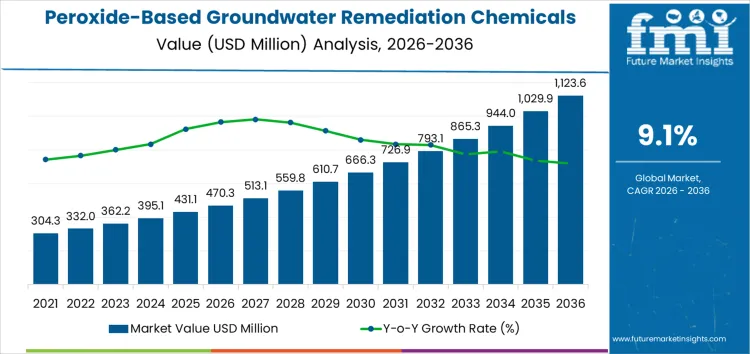
The peroxide-based groundwater remediation chemicals market is valued at USD 470.3 million in 2026 and is expected to reach USD 1,123.6 million by 2036, with a compound annual growth rate (CAGR) of 9.1%. These figures signal a growing confidence in peroxide-based solutions as reliable tools for addressing groundwater contamination. The steady market expansion reflects a shift toward long-term commitment by buyers, who prioritize regulatory compliance and environmental responsibility in their procurement decisions. The upward trend suggests that suppliers are increasingly seen as trusted partners, with stable demand from industries like water management and manufacturing. As regulations tighten, customers seek dependable, proven products that align with their sustainability goals. Supplier confidence in these chemicals will continue to strengthen, driving innovation and solidifying vendor relationships. Over time, buyers are likely to invest in long-term solutions rather than seeking alternatives, reinforcing the need for suppliers to demonstrate consistent performance and compliance over extended periods.
Quick Stats of the Peroxide-Based Groundwater Remediation Chemicals Market
- Peroxide-Based Groundwater Remediation Chemicals Market Value (2026): USD 470.3 million
- Peroxide-Based Groundwater Remediation Chemicals Market Forecast Value (2036): USD 1,123.6 million
- Peroxide-Based Groundwater Remediation Chemicals Market Global Forecast CAGR (2026 to 2036): 9.1%
- Peroxide-Based Groundwater Remediation Chemicals Market Leading Segment: Delivery Method (In-Situ Injection - Direct Push / Wells) 42%
- Key Growth Regions in Peroxide-Based Groundwater Remediation Chemicals Market: USA
- Top Players in Peroxide-Based Groundwater Remediation Chemicals Market: Carus Corporation, Peroxy Chem (Evonik), Solvay, Regenesis, EOS Remediation
What is the Growth Forecast for the Peroxide-Based Groundwater Remediation Chemicals Market through 2036?
The growth curve of the peroxide-based groundwater remediation chemicals market shows a gradual and predictable upward trajectory. The market’s growth curve is characterized by a consistent increase in value each year, with periods of more accelerated growth in the earlier years (2026-2031) followed by a slight deceleration in the later years (2031-2036).
In the first half of the forecast period (2026-2031), the market will experience more rapid growth, with an increase of about USD 90 million annually. The adoption of peroxide-based chemicals for groundwater remediation will rise as more industries and governments focus on meeting stringent water quality regulations and improving sustainability.
In the latter half of the period (2031-2036), the market will still show growth, but at a more stable pace. The increase from USD 1,029.7 million in 2034 to USD 1,123.6 million in 2036 represents steady expansion as the market matures, with further innovations in chemical formulations and broader adoption across global markets. The market growth curve is indicative of both an initial acceleration and a gradual stabilization as the technology becomes more established and widely used.
Peroxide-Based Groundwater Remediation Chemicals Market Key Takeaways
| Metric | Value |
|---|---|
| Industry Sales Value (2026) | USD 470.3 million |
| Industry Forecast Value (2036) | USD 1,123.6 million |
| Industry Forecast CAGR (2026 to 2036) | 9.1% |
What Is Driving the Demand for the Peroxide Based Groundwater Remediation Chemicals Market Globally?
The global demand for peroxide based groundwater remediation chemicals is driven by the need to treat organic contaminants in soil and groundwater quickly and effectively while meeting environmental safety standards. Peroxide based oxidants such as hydrogen peroxide and persulfate are widely used in in situ chemical oxidation to break down harmful compounds like petroleum hydrocarbons, chlorinated solvents, and industrial solvents into less toxic byproducts. Conventional remediation methods such as pump and treat often require long timeframes and high energy, but chemical oxidation with peroxide based reagents can accelerate contaminant breakdown without requiring excavation or extensive infrastructure. Regulatory agencies in many regions, including the United States, Europe, and Asia, encourage remediation approaches that demonstrate measurable contaminant reduction and reduced risk to receptors. Growth in site cleanup and brownfield redevelopment efforts adds to demand because developers and responsible parties seek reliable treatment technologies that can deliver proven performance within acceptable timelines. In addition, increased public awareness of contaminated groundwater risks supports investment in solutions that address both regulatory compliance and community health concerns.
Future demand for peroxide based groundwater remediation chemicals is expected to grow as technologies improve and site contamination challenges become more complex. Advances in delivery methods and formulation stability are enhancing the ability of peroxide based treatments to reach contaminants in low permeability soils and heterogeneous subsurface environments. Blended chemical systems that combine peroxide with catalysts or co oxidants are expanding the range of treatable compounds and improving overall reaction efficiency. Regulatory frameworks that emphasize risk based cleanup goals and performance metrics will continue to support adoption of peroxide based oxidation as part of integrated remediation strategies. Growth in industrial activity and aging infrastructure in emerging markets will also sustain demand for effective groundwater treatment solutions. As site owners focus on reducing long term liability, accelerating cleanup, and meeting environmental standards, peroxide based remediation chemicals offer a balance of speed, scalability, and environmental performance that is likely to drive market growth worldwide.
What are the Leading Segments in the Global Peroxide-Based Groundwater Remediation Chemicals Market?
The global peroxide-based groundwater remediation chemicals market is segmented by chemistry type and delivery method. Among chemistry types, hydrogen peroxide (H₂O₂) leads the market, capturing 36% of the share, followed by Fenton’s reagent & modified Fenton systems, activated persulfate & peroxydisulfate, percarbonate & peroxyhydrate agents, and other specialty peroxide-based oxidants. Hydrogen peroxide is favored for its strong oxidizing properties, which are effective in breaking down a wide range of contaminants in groundwater. On the delivery method side, in-situ injection (direct push/wells) dominates the market, holding 42% of the share, followed by in-situ recirculation systems, batch or pulsed dosing, ISCO-integrated treatment systems, and other delivery & remediation systems. In-situ injection is the most commonly used delivery method for introducing peroxide-based chemicals directly into the contaminated groundwater, offering efficient and targeted remediation.
What Drives the Growth of Hydrogen Peroxide (H₂O₂) in the Peroxide-Based Groundwater Remediation Chemicals Market?

Hydrogen peroxide (H₂O₂) is the leading chemistry type in the peroxide-based groundwater remediation chemicals market, holding 36% of the share. This growth is driven by the compound’s strong oxidizing properties, which make it effective in breaking down a wide variety of contaminants, including volatile organic compounds (VOCs), chlorinated solvents, and petroleum hydrocarbons. Hydrogen peroxide is highly versatile, can be used alone or in combination with other chemicals like Fenton’s reagent, and is biodegradable, making it an environmentally friendly option. As groundwater contamination continues to pose significant environmental challenges, hydrogen peroxide has become a go-to solution for in-situ chemical oxidation (ISCO) applications. Its ability to treat contaminants without introducing additional harmful byproducts further drives its demand. As industries and regulatory bodies prioritize groundwater protection and remediation, hydrogen peroxide’s effectiveness, low cost, and regulatory compliance make it a dominant choice in the market for environmental cleanup projects.
What is Driving the Demand for In-Situ Injection (Direct Push/Wells) in the Peroxide-Based Groundwater Remediation Chemicals Market?
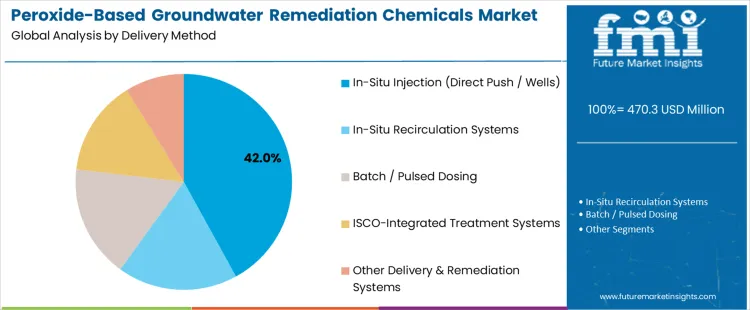
In-situ injection (direct push/wells) is the leading delivery method in the peroxide-based groundwater remediation chemicals market, capturing 42% of the share. This demand is driven by its ability to efficiently deliver peroxide-based chemicals directly to the contaminated groundwater at targeted locations, ensuring effective and localized treatment. The in-situ injection method allows for precise control over the volume and concentration of chemicals, minimizing waste and improving the remediation process. It is particularly well-suited for complex contamination sites where contaminants are spread over a large area or are deeply embedded in the groundwater. The increasing use of this method in groundwater remediation projects is also supported by its cost-effectiveness and efficiency in treating large-scale contamination. As the need for effective, minimally invasive remediation techniques grows, in-situ injection systems are expected to remain a dominant method, ensuring continued growth in the peroxide-based groundwater remediation chemicals market.
What are the Key Dynamics in the Global Peroxide Based Groundwater Remediation Chemicals Market?
The global peroxide based groundwater remediation chemicals market is growing as environmental professionals adopt oxidants such as hydrogen peroxide and sodium percarbonate to treat contaminated aquifers. These chemicals release reactive oxygen species that break down organic contaminants like petroleum hydrocarbons, chlorinated solvents and pesticides in situ without extensive excavation. Growth is supported by stricter regulatory requirements for groundwater quality, increased legacy pollution cleanup efforts, and demand for sustainable remediation approaches that reduce long term liability. Adoption spans industrial sites, military bases, brownfield redevelopment and municipal cleanup projects where efficient contaminant destruction is needed.
What are the Key Drivers for the Peroxide Based Groundwater Remediation Chemicals Market?
A major driver is increasing regulatory pressure to restore groundwater to safe quality levels, prompting use of chemical oxidants that can accelerate contaminant breakdown. Peroxide based chemicals are valued for their reactivity, versatility and ability to integrate into various remediation strategies such as in situ chemical oxidation. Growth in industrial activity and legacy contamination from refineries, manufacturing and waste disposal sites expands demand for effective groundwater treatment options. Advances in delivery methods and formulation technology improve contact with contaminants and overall efficiency. Focus on sustainable and lower impact cleanup methods that avoid excavation and relocation of soil and groundwater supports continued market uptake.
What are the Restraints for the Peroxide Based Groundwater Remediation Chemicals Market?
One restraint is the technical complexity of designing peroxide injection strategies that achieve effective distribution and reaction with target contaminants in heterogeneous subsurface environments. Site characteristics such as soil type, groundwater flow, pH and natural oxidant demand influence treatment performance and require detailed characterization before field application. Peroxide chemicals can decompose rapidly, which may reduce effectiveness if not managed properly. Cost concerns, including upfront investment in reagents, delivery systems and monitoring, can limit uptake on smaller or budget constrained projects. Regulatory reviews and approval processes for chemical use vary across regions, affecting project timelines and planning.
What are the Key Trends in the Peroxide Based Groundwater Remediation Chemicals Market?
A key trend is development of more stable, controlled release peroxide formulations that extend reactive life underground and improve contact with contaminants. Enhanced delivery techniques such as direct push injection, recirculation wells and sparging systems improve oxidation performance and reduce reagent loss to non target reactions. Integration of peroxide chemistry with other remediation methods such as bioremediation and surfactant mobilization supports comprehensive cleanup for mixed contaminant sites. Real time monitoring and data analytics enable optimization of treatment design and verification of contaminant reduction. Collaboration between remediation firms, researchers and regulators is increasing to standardize best practices and develop performance benchmarks that support broader adoption of peroxide based solutions.
What is the Country-Wise Analysis of the Peroxide-Based Groundwater Remediation Chemicals Market?
The peroxide-based groundwater remediation chemicals market is expected to grow steadily, driven by increasing demand for effective and environmentally friendly solutions for groundwater contamination. These chemicals, often used to break down hazardous pollutants such as chlorinated solvents, heavy metals, and petroleum hydrocarbons in groundwater, are becoming more popular due to their ability to treat contaminants without introducing harmful byproducts. High-growth markets like the United States, China, and India are seeing strong demand due to their rapidly expanding industrial sectors and increasing environmental concerns. Developed markets such as Germany and Canada are also experiencing steady growth, supported by stricter environmental regulations, a focus on sustainability, and the need for more efficient and cost-effective remediation technologies.
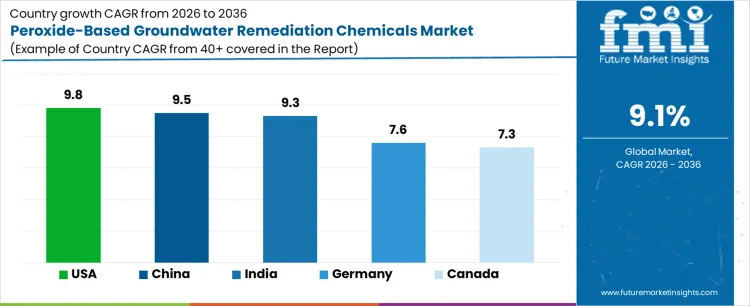
| Country | CAGR (2026-2036) |
|---|---|
| USA | 9.8% |
| China | 9.5% |
| India | 9.3% |
| Germany | 7.6% |
| Canada | 7.3% |
What is the Growth Outlook for the Peroxide-Based Groundwater Remediation Chemicals Market in the United States?
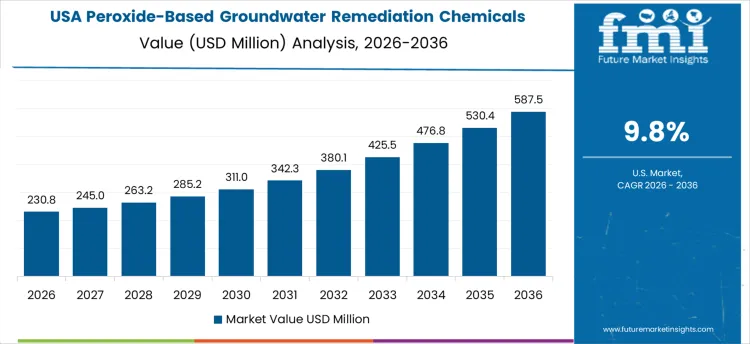
The peroxide-based groundwater remediation chemicals market in the United States is expected to grow at the highest rate, with a projected CAGR of 9.8%. The USA market is driven by increasing regulatory pressure and growing awareness of the need for sustainable environmental practices. The USA. Environmental Protection Agency (EPA) has set stringent regulations regarding groundwater contamination, especially in urban and industrial areas, which is pushing the demand for effective and eco-friendly remediation solutions like peroxide-based chemicals. The rising need to treat pollutants such as chlorinated solvents and heavy metals in contaminated water sources is further boosting market growth. Additionally, the USA government's continued investments in environmental infrastructure and cleanup projects are expected to support the growth of peroxide-based chemicals in groundwater remediation.
What is the Market Outlook for the Peroxide-Based Groundwater Remediation Chemicals Market in China?
The peroxide-based groundwater remediation chemicals market in China is projected to grow steadily, with a projected CAGR of 9.5%. China’s rapid industrialization, coupled with rising concerns over groundwater contamination, is driving the adoption of peroxide-based chemicals for environmental cleanup. With industries such as manufacturing, mining, and agriculture contributing to pollution, the need for effective, sustainable groundwater remediation solutions is growing. The Chinese government has implemented stricter environmental regulations to address water pollution, which is further driving the demand for these advanced chemical treatments. As China continues to prioritize environmental protection and adopt greener technologies, the market for peroxide-based groundwater remediation chemicals is expected to see steady growth in the coming years.
What is the Growth Forecast for the Peroxide-Based Groundwater Remediation Chemicals Market in India?
The peroxide-based groundwater remediation chemicals market in India is expected to grow steadily, with a projected CAGR of 9.3%. India’s industrial growth, increasing urbanization, and the rise of environmental awareness are key drivers of demand for effective groundwater treatment solutions. As the country faces significant challenges related to groundwater contamination from industrial waste, agricultural runoff, and inadequate sanitation, there is a growing need for eco-friendly and efficient remediation technologies. The government’s focus on environmental sustainability and improving water quality is expected to drive the adoption of peroxide-based chemicals in the coming years. With the growing need for sustainable solutions to treat contaminated groundwater, India’s market for peroxide-based chemicals is set to expand.
What is the Market Outlook for the Peroxide-Based Groundwater Remediation Chemicals Market in Germany?
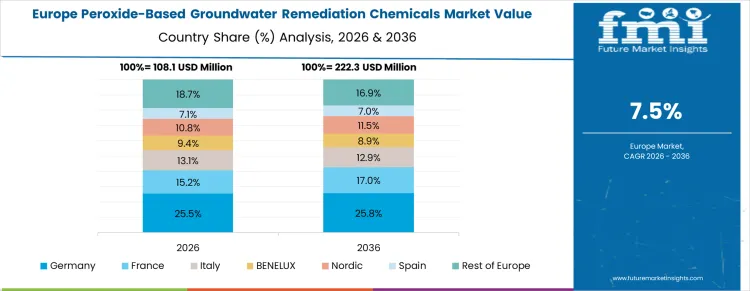
The peroxide-based groundwater remediation chemicals market in Germany is projected to grow at a steady pace, with a projected CAGR of 7.6%. Germany’s stringent environmental regulations, commitment to sustainability, and well-established industrial sector are contributing to the demand for effective groundwater remediation solutions. As groundwater contamination remains a concern due to industrial activities, Germany is increasingly adopting eco-friendly technologies such as peroxide-based chemicals to address this issue. The country’s regulatory frameworks and strong focus on reducing pollution will continue to drive the demand for these advanced treatment solutions. Additionally, Germany’s investment in environmental restoration and infrastructure development will further support the growth of the market.
What are the Growth Prospects for the Peroxide-Based Groundwater Remediation Chemicals Market in Canada?
The peroxide-based groundwater remediation chemicals market in Canada is expected to grow at a moderate pace, with a projected CAGR of 7.3%. Canada’s strong focus on environmental protection, coupled with increasing concerns about groundwater contamination, is driving the demand for advanced remediation solutions. The country’s industrial base, particularly in sectors such as oil and gas, mining, and manufacturing, contributes significantly to groundwater pollution, creating a growing need for efficient cleanup methods. Canada’s regulatory push for more sustainable practices, along with the increasing importance of environmental restoration, is expected to fuel the adoption of peroxide-based chemicals. The market will continue to grow as industries and municipalities adopt greener solutions to protect and restore contaminated groundwater resources.
What is the Competitive Landscape for the Peroxide-Based Groundwater Remediation Chemicals Market?
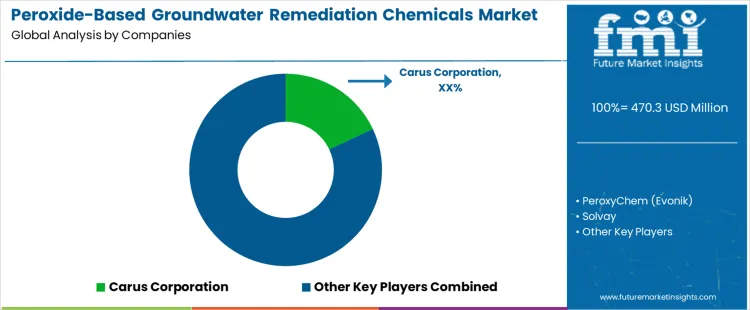
The peroxide-based groundwater remediation chemicals market is expanding as industries increasingly seek effective, sustainable solutions for cleaning up contaminated groundwater. Carus Corporation leads the market with its innovative peroxide-based chemicals, offering high-performance solutions that enhance the breakdown of contaminants in groundwater. Their strong focus on environmental responsibility, product efficacy, and regulatory compliance has positioned them as a dominant player. Peroxy Chem (Evonik), Solvay, and Regenesis are key competitors, each providing specialized peroxide-based solutions for groundwater remediation. Peroxy Chem (Evonik) focuses on delivering advanced oxidizing agents designed for effective contaminant removal, while Solvay and Regenesis offer eco-friendly, high-performance chemicals tailored to meet the specific needs of groundwater cleanup projects.
EOS Remediation further contributes to the competitive landscape with its peroxide-based chemicals, providing effective solutions for groundwater treatment. EOS Remediation specializes in environmentally responsible products that accelerate the natural degradation of contaminants. These companies compete by focusing on product innovation, sustainability, and their ability to meet the growing demand for effective, eco-friendly groundwater remediation solutions. As environmental concerns about groundwater contamination continue to rise, the market for peroxide-based remediation chemicals is expected to grow, driven by increasing regulatory pressures and the need for effective cleanup technologies.
Key Players of the Peroxide-Based Groundwater Remediation Chemicals Market
- Carus Corporation
- PeroxyChem (Evonik)
- Solvay
- Regenesis
- EOS Remediation
Scope of the Report
| Items | Values |
|---|---|
| Quantitative Units (2026) | USD Million |
| Chemistry Type | Hydrogen Peroxide (H₂O₂), Fenton’s Reagent & Modified Fenton Systems, Activated Persulfate & Peroxydisulfate, Percarbonate & Peroxyhydrate Agents, Other Specialty Peroxide-Based Oxidants |
| Application Type | Petroleum Hydrocarbon Contamination (BTEX, TPH), Chlorinated Solvents (TCE, PCE, VC), Industrial Organic Chemicals & Solvents, PFAS & Emerging Organic Contaminants, Mixed & Multi-Phase Contaminants |
| Delivery Method | In-Situ Injection (Direct Push / Wells), In-Situ Recirculation Systems, Batch / Pulsed Dosing, ISCO-Integrated Treatment Systems, Other Delivery & Remediation Systems |
| Companies | Carus Corporation, PeroxyChem (Evonik), Solvay, Regenesis, EOS Remediation |
| Regions Covered | North America, Latin America, Western Europe, Eastern Europe, South Asia and Pacific, East Asia, Middle East & Africa |
| Countries Covered | United States, Canada, Mexico, Brazil, Argentina, Germany, France, United Kingdom, Italy, Spain, Netherlands, China, India, Japan, South Korea, ANZ, GCC Countries, South Africa |
| Additional Attributes | Dollar by sales by chemistry type, application type, delivery method, and region. Includes market trends in peroxide-based groundwater remediation chemicals, performance in various contamination types, cost-effectiveness, sustainability practices, regulatory compliance, market share and competitive positioning of key companies, and the role of peroxide-based chemicals in enhancing groundwater treatment, improving oxidation processes, and supporting environmental remediation efforts across various industries. |
Peroxide-Based Groundwater Remediation Chemicals Market Segmentation
Chemistry Type:
- Hydrogen Peroxide (H₂O₂)
- Fenton’s Reagent & Modified Fenton Systems
- Activated Persulfate & Peroxydisulfate
- Percarbonate & Peroxyhydrate Agents
- Other Specialty Peroxide-Based Oxidants
Application Type:
- Petroleum Hydrocarbon Contamination (BTEX, TPH)
- Chlorinated Solvents (TCE, PCE, VC)
- Industrial Organic Chemicals & Solvents
- PFAS & Emerging Organic Contaminants
- Mixed & Multi-Phase Contaminants
Delivery Method:
- In-Situ Injection (Direct Push / Wells)
- In-Situ Recirculation Systems
- Batch / Pulsed Dosing
- ISCO-Integrated Treatment Systems
- Other Delivery & Remediation Systems
Region:
- Asia Pacific
- China
- Japan
- South Korea
- India
- Australia & New Zealand
- ASEAN
- Rest of Asia Pacific
- Europe
- Germany
- United Kingdom
- France
- Italy
- Spain
- Nordic
- BENELUX
- Rest of Europe
- North America
- United States
- Canada
- Mexico
- Latin America
- Brazil
- Chile
- Rest of Latin America
- Middle East & Africa
- Kingdom of Saudi Arabia
- Other GCC Countries
- Turkey
- South Africa
- Other African Union
- Rest of Middle East & Africa
Frequently Asked Questions
How big is the peroxide-based groundwater remediation chemicals market in 2026?
The global peroxide-based groundwater remediation chemicals market is estimated to be valued at USD 470.3 million in 2026.
What will be the size of peroxide-based groundwater remediation chemicals market in 2036?
The market size for the peroxide-based groundwater remediation chemicals market is projected to reach USD 1,123.6 million by 2036.
How much will be the peroxide-based groundwater remediation chemicals market growth between 2026 and 2036?
The peroxide-based groundwater remediation chemicals market is expected to grow at a 9.1% CAGR between 2026 and 2036.
What are the key product types in the peroxide-based groundwater remediation chemicals market?
The key product types in peroxide-based groundwater remediation chemicals market are hydrogen peroxide (H₂O₂), fenton’s reagent & modified fenton systems, activated persulfate & peroxydisulfate, percarbonate & peroxyhydrate agents and other specialty peroxide-based oxidants.
Which application type segment to contribute significant share in the peroxide-based groundwater remediation chemicals market in 2026?
In terms of application type, PETroleum hydrocarbon contamination (btex, tph) segment to command 34.0% share in the peroxide-based groundwater remediation chemicals market in 2026.
Preview the report firsthand - request a free sample
Get SampleGet the brochure for pricing and purchase details.
Get PDFTable of Content
- Executive Summary
- Global Market Outlook
- Demand-side Trends
- Supply-side Trends
- Technology Roadmap Analysis
- Analysis and Recommendations
- Market Overview
- Market Coverage / Taxonomy
- Market Definition / Scope / Limitations
- Market Background
- Market Dynamics
- Drivers
- Restraints
- Opportunity
- Trends
- Scenario Forecast
- Demand in Optimistic Scenario
- Demand in Likely Scenario
- Demand in Conservative Scenario
- Opportunity Map Analysis
- Product Life Cycle Analysis
- Supply Chain Analysis
- Investment Feasibility Matrix
- Value Chain Analysis
- PESTLE and Porter’s Analysis
- Regulatory Landscape
- Regional Parent Market Outlook
- Production and Consumption Statistics
- Import and Export Statistics
- Market Dynamics
- Global Market Analysis 2021 to 2025 and Forecast, 2026 to 2036
- Historical Market Size Value (USD Million) Analysis, 2021 to 2025
- Current and Future Market Size Value (USD Million) Projections, 2026 to 2036
- Y-o-Y Growth Trend Analysis
- Absolute $ Opportunity Analysis
- Global Market Pricing Analysis 2021 to 2025 and Forecast 2026 to 2036
- Global Market Analysis 2021 to 2025 and Forecast 2026 to 2036, By Chemistry Type
- Introduction / Key Findings
- Historical Market Size Value (USD Million) Analysis By Chemistry Type , 2021 to 2025
- Current and Future Market Size Value (USD Million) Analysis and Forecast By Chemistry Type , 2026 to 2036
- Hydrogen Peroxide (H₂O₂)
- Fenton’s Reagent & Modified Fenton Systems
- Activated Persulfate & Peroxydisulfate
- Percarbonate & Peroxyhydrate Agents
- Other Specialty Peroxide-Based Oxidants
- Hydrogen Peroxide (H₂O₂)
- Y-o-Y Growth Trend Analysis By Chemistry Type , 2021 to 2025
- Absolute $ Opportunity Analysis By Chemistry Type , 2026 to 2036
- Global Market Analysis 2021 to 2025 and Forecast 2026 to 2036, By Application Type
- Introduction / Key Findings
- Historical Market Size Value (USD Million) Analysis By Application Type, 2021 to 2025
- Current and Future Market Size Value (USD Million) Analysis and Forecast By Application Type, 2026 to 2036
- Petroleum Hydrocarbon Contamination (BTEX, TPH)
- Chlorinated Solvents (TCE, PCE, VC)
- Industrial Organic Chemicals & Solvents
- PFAS & Emerging Organic Contaminants
- Mixed & Multi-Phase Contaminants
- Petroleum Hydrocarbon Contamination (BTEX, TPH)
- Y-o-Y Growth Trend Analysis By Application Type, 2021 to 2025
- Absolute $ Opportunity Analysis By Application Type, 2026 to 2036
- Global Market Analysis 2021 to 2025 and Forecast 2026 to 2036, By Delivery Method
- Introduction / Key Findings
- Historical Market Size Value (USD Million) Analysis By Delivery Method, 2021 to 2025
- Current and Future Market Size Value (USD Million) Analysis and Forecast By Delivery Method, 2026 to 2036
- In-Situ Injection (Direct Push / Wells)
- In-Situ Recirculation Systems
- Batch / Pulsed Dosing
- ISCO-Integrated Treatment Systems
- Other Delivery & Remediation Systems
- In-Situ Injection (Direct Push / Wells)
- Y-o-Y Growth Trend Analysis By Delivery Method, 2021 to 2025
- Absolute $ Opportunity Analysis By Delivery Method, 2026 to 2036
- Global Market Analysis 2021 to 2025 and Forecast 2026 to 2036, By Region
- Introduction
- Historical Market Size Value (USD Million) Analysis By Region, 2021 to 2025
- Current Market Size Value (USD Million) Analysis and Forecast By Region, 2026 to 2036
- North America
- Latin America
- Western Europe
- Eastern Europe
- East Asia
- South Asia and Pacific
- Middle East & Africa
- Market Attractiveness Analysis By Region
- North America Market Analysis 2021 to 2025 and Forecast 2026 to 2036, By Country
- Historical Market Size Value (USD Million) Trend Analysis By Market Taxonomy, 2021 to 2025
- Market Size Value (USD Million) Forecast By Market Taxonomy, 2026 to 2036
- By Country
- USA
- Canada
- Mexico
- By Chemistry Type
- By Application Type
- By Delivery Method
- By Country
- Market Attractiveness Analysis
- By Country
- By Chemistry Type
- By Application Type
- By Delivery Method
- Key Takeaways
- Latin America Market Analysis 2021 to 2025 and Forecast 2026 to 2036, By Country
- Historical Market Size Value (USD Million) Trend Analysis By Market Taxonomy, 2021 to 2025
- Market Size Value (USD Million) Forecast By Market Taxonomy, 2026 to 2036
- By Country
- Brazil
- Chile
- Rest of Latin America
- By Chemistry Type
- By Application Type
- By Delivery Method
- By Country
- Market Attractiveness Analysis
- By Country
- By Chemistry Type
- By Application Type
- By Delivery Method
- Key Takeaways
- Western Europe Market Analysis 2021 to 2025 and Forecast 2026 to 2036, By Country
- Historical Market Size Value (USD Million) Trend Analysis By Market Taxonomy, 2021 to 2025
- Market Size Value (USD Million) Forecast By Market Taxonomy, 2026 to 2036
- By Country
- Germany
- UK
- Italy
- Spain
- France
- Nordic
- BENELUX
- Rest of Western Europe
- By Chemistry Type
- By Application Type
- By Delivery Method
- By Country
- Market Attractiveness Analysis
- By Country
- By Chemistry Type
- By Application Type
- By Delivery Method
- Key Takeaways
- Eastern Europe Market Analysis 2021 to 2025 and Forecast 2026 to 2036, By Country
- Historical Market Size Value (USD Million) Trend Analysis By Market Taxonomy, 2021 to 2025
- Market Size Value (USD Million) Forecast By Market Taxonomy, 2026 to 2036
- By Country
- Russia
- Poland
- Hungary
- Balkan & Baltic
- Rest of Eastern Europe
- By Chemistry Type
- By Application Type
- By Delivery Method
- By Country
- Market Attractiveness Analysis
- By Country
- By Chemistry Type
- By Application Type
- By Delivery Method
- Key Takeaways
- East Asia Market Analysis 2021 to 2025 and Forecast 2026 to 2036, By Country
- Historical Market Size Value (USD Million) Trend Analysis By Market Taxonomy, 2021 to 2025
- Market Size Value (USD Million) Forecast By Market Taxonomy, 2026 to 2036
- By Country
- China
- Japan
- South Korea
- By Chemistry Type
- By Application Type
- By Delivery Method
- By Country
- Market Attractiveness Analysis
- By Country
- By Chemistry Type
- By Application Type
- By Delivery Method
- Key Takeaways
- South Asia and Pacific Market Analysis 2021 to 2025 and Forecast 2026 to 2036, By Country
- Historical Market Size Value (USD Million) Trend Analysis By Market Taxonomy, 2021 to 2025
- Market Size Value (USD Million) Forecast By Market Taxonomy, 2026 to 2036
- By Country
- India
- ASEAN
- Australia & New Zealand
- Rest of South Asia and Pacific
- By Chemistry Type
- By Application Type
- By Delivery Method
- By Country
- Market Attractiveness Analysis
- By Country
- By Chemistry Type
- By Application Type
- By Delivery Method
- Key Takeaways
- Middle East & Africa Market Analysis 2021 to 2025 and Forecast 2026 to 2036, By Country
- Historical Market Size Value (USD Million) Trend Analysis By Market Taxonomy, 2021 to 2025
- Market Size Value (USD Million) Forecast By Market Taxonomy, 2026 to 2036
- By Country
- Kingdom of Saudi Arabia
- Other GCC Countries
- Turkiye
- South Africa
- Other African Union
- Rest of Middle East & Africa
- By Chemistry Type
- By Application Type
- By Delivery Method
- By Country
- Market Attractiveness Analysis
- By Country
- By Chemistry Type
- By Application Type
- By Delivery Method
- Key Takeaways
- Key Countries Market Analysis
- USA
- Pricing Analysis
- Market Share Analysis, 2025
- By Chemistry Type
- By Application Type
- By Delivery Method
- Canada
- Pricing Analysis
- Market Share Analysis, 2025
- By Chemistry Type
- By Application Type
- By Delivery Method
- Mexico
- Pricing Analysis
- Market Share Analysis, 2025
- By Chemistry Type
- By Application Type
- By Delivery Method
- Brazil
- Pricing Analysis
- Market Share Analysis, 2025
- By Chemistry Type
- By Application Type
- By Delivery Method
- Chile
- Pricing Analysis
- Market Share Analysis, 2025
- By Chemistry Type
- By Application Type
- By Delivery Method
- Germany
- Pricing Analysis
- Market Share Analysis, 2025
- By Chemistry Type
- By Application Type
- By Delivery Method
- UK
- Pricing Analysis
- Market Share Analysis, 2025
- By Chemistry Type
- By Application Type
- By Delivery Method
- Italy
- Pricing Analysis
- Market Share Analysis, 2025
- By Chemistry Type
- By Application Type
- By Delivery Method
- Spain
- Pricing Analysis
- Market Share Analysis, 2025
- By Chemistry Type
- By Application Type
- By Delivery Method
- France
- Pricing Analysis
- Market Share Analysis, 2025
- By Chemistry Type
- By Application Type
- By Delivery Method
- India
- Pricing Analysis
- Market Share Analysis, 2025
- By Chemistry Type
- By Application Type
- By Delivery Method
- ASEAN
- Pricing Analysis
- Market Share Analysis, 2025
- By Chemistry Type
- By Application Type
- By Delivery Method
- Australia & New Zealand
- Pricing Analysis
- Market Share Analysis, 2025
- By Chemistry Type
- By Application Type
- By Delivery Method
- China
- Pricing Analysis
- Market Share Analysis, 2025
- By Chemistry Type
- By Application Type
- By Delivery Method
- Japan
- Pricing Analysis
- Market Share Analysis, 2025
- By Chemistry Type
- By Application Type
- By Delivery Method
- South Korea
- Pricing Analysis
- Market Share Analysis, 2025
- By Chemistry Type
- By Application Type
- By Delivery Method
- Russia
- Pricing Analysis
- Market Share Analysis, 2025
- By Chemistry Type
- By Application Type
- By Delivery Method
- Poland
- Pricing Analysis
- Market Share Analysis, 2025
- By Chemistry Type
- By Application Type
- By Delivery Method
- Hungary
- Pricing Analysis
- Market Share Analysis, 2025
- By Chemistry Type
- By Application Type
- By Delivery Method
- Kingdom of Saudi Arabia
- Pricing Analysis
- Market Share Analysis, 2025
- By Chemistry Type
- By Application Type
- By Delivery Method
- Turkiye
- Pricing Analysis
- Market Share Analysis, 2025
- By Chemistry Type
- By Application Type
- By Delivery Method
- South Africa
- Pricing Analysis
- Market Share Analysis, 2025
- By Chemistry Type
- By Application Type
- By Delivery Method
- USA
- Market Structure Analysis
- Competition Dashboard
- Competition Benchmarking
- Market Share Analysis of Top Players
- By Regional
- By Chemistry Type
- By Application Type
- By Delivery Method
- Competition Analysis
- Competition Deep Dive
- Carus Corporation
- Overview
- Product Portfolio
- Profitability by Market Segments (Product/Age /Sales Channel/Region)
- Sales Footprint
- Strategy Overview
- Marketing Strategy
- Product Strategy
- Channel Strategy
- PeroxyChem (Evonik)
- Solvay
- Regenesis
- EOS Remediation
- Carus Corporation
- Competition Deep Dive
- Assumptions & Acronyms Used
- Research Methodology


