

- Industry Size (2026)
- USD 1.8 Bn
- Forecast (2036)
- USD 3.2 Bn
- CAGR (2026 to 2036)
- 6.0%
Cleaning Chemicals for Senior Care and Long-Term Care Facilities Market Forecast and Outlook 2026 to 2036
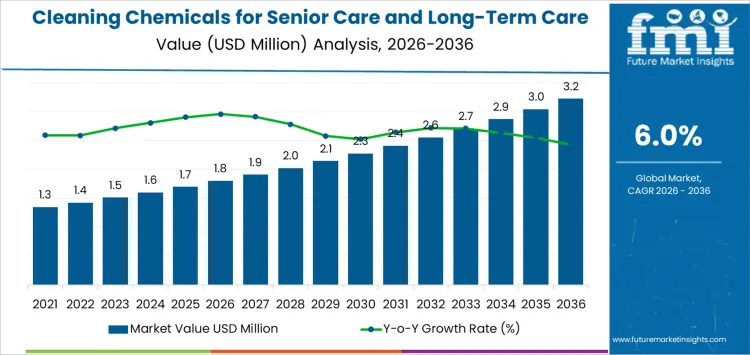
In 2026, the cleaning chemicals for senior care and long-term care facilities market is valued at USD 1.8 billion and is projected to reach USD 3.2 billion by 2036, reflecting a CAGR of 6.0%. Growth from USD 1.2 billion in 2020 is driven by continuous sanitation needs across nursing homes, assisted living centers, and rehabilitation facilities. Disinfectants and sanitizers account for the largest share as infection prevention remains central to daily operations. Hospital grade registered products dominate early adoption due to compliance requirements and resident vulnerability considerations.
From 2027 to 2031, market value increases from USD 1.9 billion to USD 2.4 billion, then advances toward USD 3.2 billion by 2036 through steady annual gains. Nursing homes remain the primary consumers, supported by structured cleaning protocols and routine inspections. Assisted living facilities maintain stable demand for restroom, bathing area, and surface cleaners. Direct facility contracts and janitorial distribution models anchor procurement, while group purchasing organizations support cost control. Long term growth reflects predictable care occupancy, regulatory oversight, and consistent hygiene standards rather than changes in cleaning frequency.
Quick Stats of the Cleaning Chemicals for Senior Care and Long-Term Care Facilities Market
- Cleaning Chemicals for Senior Care and Long-Term Care Facilities Market Value (2026): USD 1.8 billion
- Cleaning Chemicals for Senior Care and Long-Term Care Facilities Market Forecast Value (2036): USD 3.2 billion
- Cleaning Chemicals for Senior Care and Long-Term Care Facilities Market Forecast CAGR (2026–2036): 6.0%
- Leading Product Family in the Market: Disinfectants & Sanitizers (36%)
- Key Growth Regions: China, Brazil, USA, UK, Germany
- Top Players: Ecolab, Diversey, CloroxPro, Reckitt, SC Johnson Professional, 3M, Steris, Zep, Spartan Chemical, Betco
What is the Growth Forecast for the Cleaning Chemicals for Senior Care and Long-Term Care Facilities Market through 2036?
From 2026 to 2031, the cleaning chemicals for senior care and long-term care facilities market grows from USD 1.8 million to around USD 2.2 million, reflecting steady year-on-year increases tied to resident occupancy and daily care routines rather than episodic demand spikes. Consumption in this phase is shaped by continuous sanitation of resident rooms, common areas, dining spaces, and therapy zones. Annual gains remain incremental, driven by consistent care delivery schedules, staff-led cleaning protocols, and stable procurement by facility operators focused on reliability and continuity of supply.
Between 2031 and 2036, the market expands from roughly USD 2.2 million to USD 3.2 million, showing a clearer acceleration in year-on-year growth. Annual additions increase as facilities intensify cleaning frequency, expand specialized care units, and place greater emphasis on infection control across high-contact environments. Demand becomes less sensitive to occupancy changes and more influenced by care complexity, longer resident stays, and standardized hygiene programs across multi-facility operators. This shift results in larger yearly value gains as cleaning chemicals become more deeply embedded in long-term care operations and compliance-driven facility management practices.
Cleaning Chemicals for Senior Care and Long Term Care Facilities Market Key Takeaways
| Metric | Value |
|---|---|
| Market Value (2026) | USD 1.8 million |
| Forecast Value (2036) | USD 3.2 million |
| Forecast CAGR (2026-2036) | 6.0% |
How Are Resident Safety and Continuous Care Needs Shaping the Cleaning Chemicals for Senior Care and Long-Term Care Facilities Market from 2026 to 2036?
Senior care and long-term care facilities increased reliance on specialised cleaning chemicals to support continuous occupancy and vulnerable resident populations. Living quarters, dining areas, therapy rooms, and shared bathrooms required frequent cleaning without disrupting daily routines. Historical demand reflected strict infection control practices, regulatory inspections, and emphasis on preventing cross contamination. Facility managers selected products with gentle formulations suitable for repeated use around residents with respiratory sensitivity. Procurement focused on clear labelling, controlled dosing, and compatibility with medical furnishings, flooring, and assistive equipment.
From 2026 to 2036 demand is expected to grow with expansion of elderly care infrastructure and higher staffing turnover. Facilities adopt chemicals that simplify cleaning protocols while maintaining consistent hygiene standards. Growth aligns with increased use of contract cleaning services and centralised procurement across care networks. Suppliers develop low odour, low residue formulations that support rapid room servicing and common area maintenance. Buyers assess resident safety, staff usability, and compliance with healthcare regulations when selecting cleaning chemicals for long-term care environments.
What Is the Demand for the Cleaning Chemicals for Senior Care and Long-Term Care Facilities Market by Product Family and Infection Control Grade for 2026 to 2036?
From 2026 to 2036, the cleaning chemicals for senior care and long-term care facilities market is shaped by continuous occupancy, high-contact environments, and heightened sensitivity to infection prevention. Disinfectants and sanitizers account for 36% of product family demand as daily hygiene routines focus on reducing pathogen transmission among vulnerable populations. Hospital-grade registered disinfectants represent 44% of infection control grade usage because facilities prioritize products with validated efficacy and clear regulatory standing. Demand patterns reflect structured cleaning schedules, audit-driven compliance, and consistent replenishment aligned with resident care protocols and staff workflows.
Why do disinfectants and sanitizers account for 36% of demand in the cleaning chemicals for senior care and long-term care facilities market by product family from 2026 to 2036?
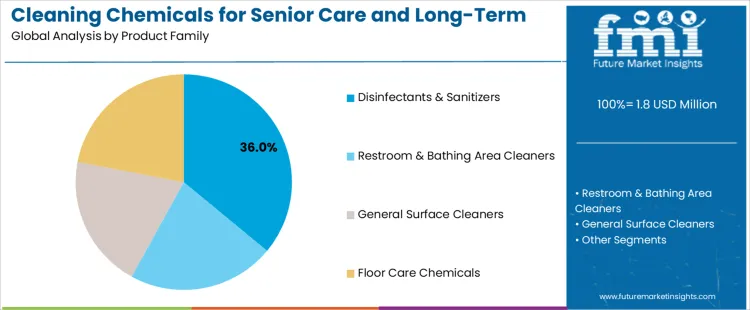
Disinfectants and sanitizers account for 36% of demand because senior care environments require frequent microbial control across resident rooms, shared equipment, and communal spaces. Consumption intensity remains high on bed rails, mobility aids, dining surfaces, nurse stations, and therapy areas where repeated contact occurs throughout the day. Usage stays steady as facilities follow regimented cleaning schedules tied to resident care routines rather than episodic events. Procurement decisions emphasize products with proven antimicrobial coverage that remain safe for repeated daily use. Buyers favor formulations that balance efficacy with surface compatibility and manageable odor profiles. Price sensitivity remains moderate since infection prevention outcomes influence liability exposure and resident wellbeing. Specification control focuses on contact time clarity, material safety, and consistency across multiple surface types. Demand continues from 2026 to 2036 as aging populations expand long-term care capacity and facilities maintain strict sanitation benchmarks. Repeat purchasing patterns remain predictable because disinfectants and sanitizers are consumed continuously across shifts and care units. Substitution pressure from milder cleaners remains limited where clinical hygiene requirements dictate routine disinfection as a core operational standard.
Why do hospital-grade registered disinfectants represent 44% of demand in the cleaning chemicals for senior care and long-term care facilities market by infection control grade from 2026 to 2036?
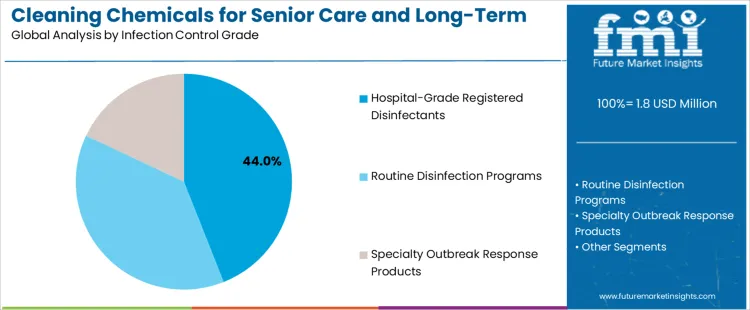
Hospital-grade registered disinfectants represent 44% of demand because senior care facilities align infection control practices with healthcare-level standards. Consumption is concentrated in resident rooms, treatment areas, isolation zones, and shared bathrooms where pathogen exposure risk requires validated control measures. Usage remains steady as these products form the backbone of routine disinfection programs rather than being reserved for outbreak response alone. Procurement favors disinfectants supported by regulatory registration, standardized efficacy claims, and compatibility with inspection requirements. Buyers prioritize consistency in performance across bacteria, viruses, and fungi relevant to long-term care settings. Price sensitivity stays moderate as compliance assurance and risk reduction outweigh per-unit cost considerations. Specification control emphasizes stability, defined dilution guidance, and surface safety under frequent application. Demand persists from 2026 to 2036 as regulatory scrutiny, audit frameworks, and resident safety expectations reinforce reliance on hospital-grade disinfectants. Repeat utilization remains consistent because these products are embedded into daily cleaning protocols and staff training programs across care facilities.
How Is Demand for Cleaning Chemicals in Senior Care and Long Term Care Facilities Shaped by Daily Care Routines?
Demand develops through continuous cleaning needs in resident rooms, shared living areas, therapy spaces, and dining rooms where hygiene supports routine care delivery. Facilities rely on surface cleaners compatible with frequent use around residents with limited mobility. Dining areas require products that manage food residue without lingering odor. Shared bathrooms need reliable sanitation during short turnover windows. Corridors and handrails receive repeated attention due to assisted movement throughout the day. These needs arise from care centered routines, resident safety considerations, and structured schedules rather than discretionary housekeeping upgrades.
What Care Management Practices Are Driving Demand for Cleaning Chemicals in Senior Care Facilities?
Drivers originate from operational standards set by care operators and local health authorities. Facilities adopt cleaning programs aligned with infection monitoring protocols and resident wellness plans. Staff favor chemicals that allow quick application during medication rounds and therapy transitions. Management teams standardize products across wards to simplify training and reduce handling errors. Increased use of shared equipment such as walkers and wheelchairs drives demand for compatible surface cleaners. These practices reflect localized care delivery models focused on consistency, staff efficiency, and resident protection.
What Practical Constraints Are Limiting Wider Adoption of Specialized Cleaning Chemicals in Long Term Care Settings?
Barriers relate to staffing levels, budget controls, and resident sensitivity. Facilities with limited staff prefer familiar products that fit established routines. Fixed operating budgets restrict adoption of higher cost formulations. Some residents react to strong odors, narrowing acceptable product options. Storage space limits stocking of multiple chemical types. Older buildings lack dosing systems needed for certain concentrates. Procurement cycles tied to public funding slow product changes. These constraints shape cautious adoption where simplicity, predictability, and resident comfort guide cleaning chemical selection.
What is the Growth Outlook for Cleaning Chemicals Used in Senior Care and Long Term Care Facilities Across Key Countries?
| Country | CAGR (%) |
|---|---|
| China | 7.0% |
| Brazil | 6.8% |
| USA | 5.7% |
| UK | 5.7% |
| Germany | 5.6% |
The demand for cleaning chemicals used in senior care and long term care facilities is expanding steadily as operators prioritize infection control and resident safety. China leads growth at 7.0%, supported by rapid expansion of elder care infrastructure, increased institutional capacity, and heightened hygiene standards. Brazil follows at 6.8%, driven by growth in private care facilities and stronger regulatory oversight of sanitation practices. The USA and UK each record 5.7%, reflecting aging populations, strict healthcare cleaning protocols, and recurring demand from nursing homes and assisted living centers. Germany at 5.6% shows stable growth linked to regulated care environments and standardized facility management. Overall expansion is supported by continuous usage cycles, compliance driven procurement, and rising emphasis on cleanliness in residential healthcare settings.
How Are Resident Safety and Hygiene Protocols Driving the Cleaning Chemicals for Senior Care and Long Term Care Facilities Market in the United States?
Cleaning chemicals for senior care and long term care facilities demand in the United States is growing at a CAGR of 5.70% from 2026 to 2036 as nursing homes, assisted living centers, and rehabilitation facilities maintain strict sanitation routines. Facility operators use specialized chemicals to clean resident rooms, medical areas, dining spaces, and common rooms. Care providers emphasize consistent hygiene to reduce infection risks among vulnerable populations. Facility management teams integrate cleaning schedules with daily care operations to ensure continuity. Growth reflects sustained investment in hygiene infrastructure across aging care facilities nationwide.
- Facility operators use cleaning chemicals to maintain resident rooms and shared areas.
- Care providers prioritize hygiene to reduce infection risks among residents.
- Management teams integrate sanitation routines with daily care operations.
What Is Supporting Adoption of the Cleaning Chemicals for Senior Care and Long Term Care Facilities Market in Germany?
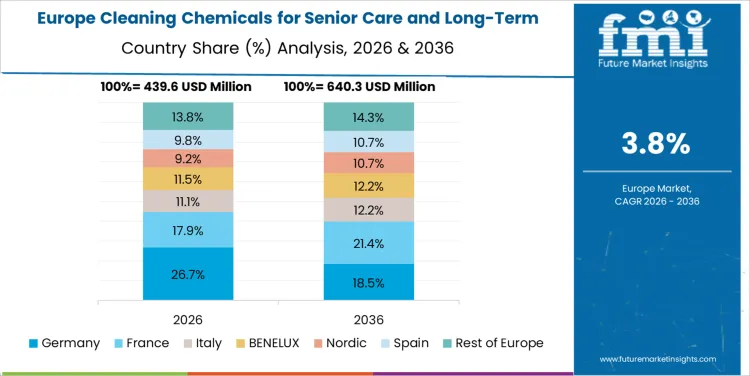
Cleaning chemicals for senior care and long term care facilities demand in Germany is expanding at a CAGR of 5.60% from 2026 to 2036 as elder care institutions follow regulated health and safety frameworks. Facilities apply certified cleaning chemicals across patient rooms, therapy spaces, and sanitation zones. Operations teams follow defined cleaning schedules aligned with healthcare oversight requirements. Procurement systems emphasize consistency and compliance across regional care networks. Growth reflects structured facility management and sustained public funding for elder care hygiene standards.
- Facilities apply certified chemicals across resident and therapy spaces.
- Operations teams follow defined cleaning schedules aligned with regulations.
- Procurement systems emphasize consistency across care networks.
Why Is the Cleaning Chemicals for Senior Care and Long Term Care Facilities Market Expanding Faster in China?
Cleaning chemicals for senior care and long term care facilities demand in China is increasing at a CAGR of 7.00% from 2026 to 2036 as aging demographics drive expansion of elder care infrastructure. Newly built facilities integrate professional cleaning programs during commissioning. Existing centers increase sanitation frequency to support higher resident density. Local service providers supply chemicals designed for healthcare environments. Growth reflects rapid development of long term care capacity and rising awareness of hygiene needs across senior care institutions.
- New facilities integrate professional cleaning programs at commissioning.
- Existing centers increase sanitation frequency due to resident density.
- Service providers supply chemicals designed for healthcare environments.
How Are Care Standards Influencing the Cleaning Chemicals for Senior Care and Long Term Care Facilities Market in the United Kingdom?
Cleaning chemicals for senior care and long term care facilities demand in the United Kingdom is growing at a CAGR of 5.70% from 2026 to 2036 as care homes maintain defined hygiene standards. Facilities apply approved chemicals across resident rooms, medical support areas, and communal spaces. Care staff coordinate cleaning activities with patient care schedules to maintain comfort. Oversight bodies support procurement aligned with care quality frameworks. Growth reflects ongoing emphasis on hygiene within regulated elder care services.
- Facilities apply approved chemicals across resident and medical areas.
- Care staff coordinate cleaning with patient care schedules.
- Oversight bodies support procurement aligned with care standards.
What Factors Are Supporting Growth of the Cleaning Chemicals for Senior Care and Long Term Care Facilities Market in Brazil?
Cleaning chemicals for senior care and long term care facilities demand in Brazil is expanding at a CAGR of 6.80% from 2026 to 2036 as public and private care facilities strengthen sanitation practices. Operators increase chemical use to manage shared spaces and resident accommodations. Service contractors support routine cleaning across care facilities. Public health initiatives encourage improved hygiene standards in elder care settings. Growth reflects rising institutional focus on resident safety and cleanliness across expanding long term care infrastructure.
- Operators increase chemical use to manage shared care spaces.
- Service contractors support routine cleaning across facilities.
- Public health initiatives encourage higher hygiene standards in elder care.
What Is Driving the Demand for Cleaning Chemicals for Senior Care and Long Term Care Facilities and Which Companies Shape Care Protocols?
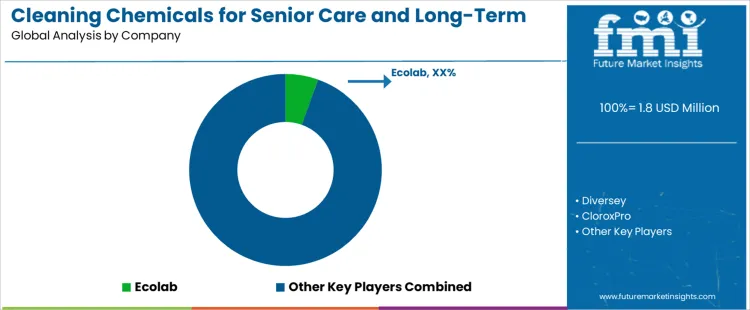
Cleaning chemical demand in senior care and long term care facilities is shaped by vulnerable resident populations, high contact surfaces, and strict infection prevention requirements. Facilities prioritize products that deliver reliable hygiene while remaining gentle for frequent daily use. Ecolab and Diversey support large care networks through structured cleaning and disinfection programs aligned with nursing workflows and regulatory guidance. CloroxPro contributes disinfectants used in resident rooms, common areas, and dining spaces. SC Johnson Professional and Reckitt supply surface cleaners and disinfectants designed for routine use with controlled fragrance and residue. Steris supports higher acuity environments through products used in treatment rooms and medical equipment areas. These suppliers influence protocol standardization across multi-site care providers.
Product selection focuses on efficacy against common pathogens, compatibility with medical surfaces, and safety for residents with respiratory sensitivity. 3M supports specialty surface care in therapy rooms and shared equipment. Zep, Spartan Chemical, and Betco serve contracted cleaning teams that manage daily sanitation across resident living spaces and back of house areas. Administrators favor products with clear usage instructions, simplified dosing, and strong documentation for audits. Usage extends to bathrooms, handrails, mobility aids, laundry areas, and dining facilities. Demand visibility tracks growth in assisted living capacity, regulatory oversight of infection control, and increased emphasis on consistent environmental hygiene to support resident wellbeing and staff confidence.
Key Players in the Cleaning Chemicals for Senior Care and Long Term Care Facilities Market
- Ecolab
- Diversey
- CloroxPro
- Reckitt
- SC Johnson Professional
- 3M
- Steris
- Zep
- Spartan Chemical
- Betco
Scope of the Report
| Items | Values |
|---|---|
| Quantitative Units (2026) | USD billion |
| Product Family | Disinfectants and Sanitizers; Restroom and Bathing Area Cleaners; General Surface Cleaners; Floor Care Chemicals |
| Infection Control Grade | Hospital Grade Registered Disinfectants; Routine Disinfection Programs; Specialty Outbreak Response Products |
| Facility Type | Nursing Homes; Assisted Living Facilities; Rehabilitation Facilities; Other Long Term Care Facilities |
| Supply Model | Direct Facility Contracts; Jan San Distribution; Group Purchasing Organizations; Other Supply Models |
| Regions Covered | Asia Pacific; Europe; North America; Latin America; Middle East and Africa |
| Countries Covered | China; Japan; South Korea; India; Australia and New Zealand; ASEAN; Germany; United Kingdom; France; Italy; Spain; Nordic; BENELUX; United States; Canada; Mexico; Brazil; Chile; Kingdom of Saudi Arabia; Turkey; South Africa; plus additional countries across Asia Pacific, Europe, Latin America, and Middle East and Africa |
| Key Companies Profiled | Ecolab; Diversey; CloroxPro; Reckitt; SC Johnson Professional; 3M; Steris; Zep; Spartan Chemical; Betco |
| Additional Attributes | Dollar by sales across product families and infection control grades; procurement patterns driven by regulatory compliance and resident safety requirements; variation in chemical usage between nursing homes, assisted living, and rehabilitation facilities; emphasis on hospital grade disinfectants for high contact and resident care areas; integration of cleaning protocols with daily care routines and staff workflows; compatibility requirements with medical furnishings, mobility aids, and shared equipment; standardization of cleaning chemicals across multi facility care networks |
Cleaning Chemicals for Senior Care and Long Term Care Facilities Market Segmentation
Product Family:
- Disinfectants & Sanitizers
- Restroom & Bathing Area Cleaners
- General Surface Cleaners
- Floor Care Chemicals
Infection Control Grade:
- Hospital-Grade Registered Disinfectants
- Routine Disinfection Programs
- Specialty Outbreak Response Products
Facility Type:
- Nursing Homes
- Assisted Living
- Rehabilitation Facilities
- Other Care Facilities
Supply Model:
- Direct Facility Contracts
- Jan-San Distribution
- Group Purchasing Organizations
- Other Models
Region
- Asia Pacific
- China
- Japan
- South Korea
- India
- Australia & New Zealand
- ASEAN
- Rest of Asia Pacific
- Europe
- Germany
- United Kingdom
- France
- Italy
- Spain
- Nordic
- BENELUX
- Rest of Europe
- North America
- United States
- Canada
- Mexico
- Latin America
- Brazil
- Chile
- Rest of Latin America
- Middle East & Africa
- Kingdom of Saudi Arabia
- Other GCC Countries
- Turkey
- South Africa
- Other African Union
- Rest of Middle East & Africa
Frequently Asked Questions
How big is the cleaning chemicals for senior care and long-term care facilities market in 2026?
The global cleaning chemicals for senior care and long-term care facilities market is estimated to be valued at USD 1.8 million in 2026.
What will be the size of cleaning chemicals for senior care and long-term care facilities market in 2036?
The market size for the cleaning chemicals for senior care and long-term care facilities market is projected to reach USD 3.2 million by 2036.
How much will be the cleaning chemicals for senior care and long-term care facilities market growth between 2026 and 2036?
The cleaning chemicals for senior care and long-term care facilities market is expected to grow at a 6.0% CAGR between 2026 and 2036.
What are the key product types in the cleaning chemicals for senior care and long-term care facilities market?
The key product types in cleaning chemicals for senior care and long-term care facilities market are disinfectants & sanitizers, restroom & bathing area cleaners, general surface cleaners and floor care chemicals.
Which infection control grade segment to contribute significant share in the cleaning chemicals for senior care and long-term care facilities market in 2026?
In terms of infection control grade, hospital-grade registered disinfectants segment to command 44.0% share in the cleaning chemicals for senior care and long-term care facilities market in 2026.
Preview the report firsthand - request a free sample
Get SampleGet the brochure for pricing and purchase details.
Get PDFTable of Content
- Executive Summary
- Global Market Outlook
- Demand-side Trends
- Supply-side Trends
- Technology Roadmap Analysis
- Analysis and Recommendations
- Market Overview
- Market Coverage / Taxonomy
- Market Definition / Scope / Limitations
- Market Background
- Market Dynamics
- Drivers
- Restraints
- Opportunity
- Trends
- Scenario Forecast
- Demand in Optimistic Scenario
- Demand in Likely Scenario
- Demand in Conservative Scenario
- Opportunity Map Analysis
- Product Life Cycle Analysis
- Supply Chain Analysis
- Investment Feasibility Matrix
- Value Chain Analysis
- PESTLE and Porter’s Analysis
- Regulatory Landscape
- Regional Parent Market Outlook
- Production and Consumption Statistics
- Import and Export Statistics
- Market Dynamics
- Global Market Analysis 2021 to 2025 and Forecast, 2026 to 2036
- Historical Market Size Value (USD Million) Analysis, 2021 to 2025
- Current and Future Market Size Value (USD Million) Projections, 2026 to 2036
- Y-o-Y Growth Trend Analysis
- Absolute $ Opportunity Analysis
- Global Market Pricing Analysis 2021 to 2025 and Forecast 2026 to 2036
- Global Market Analysis 2021 to 2025 and Forecast 2026 to 2036, By Product Family
- Introduction / Key Findings
- Historical Market Size Value (USD Million) Analysis By Product Family , 2021 to 2025
- Current and Future Market Size Value (USD Million) Analysis and Forecast By Product Family , 2026 to 2036
- Disinfectants & Sanitizers
- Restroom & Bathing Area Cleaners
- General Surface Cleaners
- Floor Care Chemicals
- Y-o-Y Growth Trend Analysis By Product Family , 2021 to 2025
- Absolute $ Opportunity Analysis By Product Family , 2026 to 2036
- Global Market Analysis 2021 to 2025 and Forecast 2026 to 2036, By Infection Control Grade
- Introduction / Key Findings
- Historical Market Size Value (USD Million) Analysis By Infection Control Grade, 2021 to 2025
- Current and Future Market Size Value (USD Million) Analysis and Forecast By Infection Control Grade, 2026 to 2036
- Hospital-Grade Registered Disinfectants
- Routine Disinfection Programs
- Specialty Outbreak Response Products
- Y-o-Y Growth Trend Analysis By Infection Control Grade, 2021 to 2025
- Absolute $ Opportunity Analysis By Infection Control Grade, 2026 to 2036
- Global Market Analysis 2021 to 2025 and Forecast 2026 to 2036, By Facility Type
- Introduction / Key Findings
- Historical Market Size Value (USD Million) Analysis By Facility Type, 2021 to 2025
- Current and Future Market Size Value (USD Million) Analysis and Forecast By Facility Type, 2026 to 2036
- Nursing Homes
- Assisted Living
- Rehabilitation Facilities
- Other Care Facilities
- Y-o-Y Growth Trend Analysis By Facility Type, 2021 to 2025
- Absolute $ Opportunity Analysis By Facility Type, 2026 to 2036
- Global Market Analysis 2021 to 2025 and Forecast 2026 to 2036, By Supply Model
- Introduction / Key Findings
- Historical Market Size Value (USD Million) Analysis By Supply Model, 2021 to 2025
- Current and Future Market Size Value (USD Million) Analysis and Forecast By Supply Model, 2026 to 2036
- Direct Facility Contracts
- Jan-San Distribution
- Group Purchasing Organizations
- Other Models
- Y-o-Y Growth Trend Analysis By Supply Model, 2021 to 2025
- Absolute $ Opportunity Analysis By Supply Model, 2026 to 2036
- Global Market Analysis 2021 to 2025 and Forecast 2026 to 2036, By Region
- Introduction
- Historical Market Size Value (USD Million) Analysis By Region, 2021 to 2025
- Current Market Size Value (USD Million) Analysis and Forecast By Region, 2026 to 2036
- North America
- Latin America
- Western Europe
- Eastern Europe
- East Asia
- South Asia and Pacific
- Middle East & Africa
- Market Attractiveness Analysis By Region
- North America Market Analysis 2021 to 2025 and Forecast 2026 to 2036, By Country
- Historical Market Size Value (USD Million) Trend Analysis By Market Taxonomy, 2021 to 2025
- Market Size Value (USD Million) Forecast By Market Taxonomy, 2026 to 2036
- By Country
- USA
- Canada
- Mexico
- By Product Family
- By Infection Control Grade
- By Facility Type
- By Supply Model
- By Country
- Market Attractiveness Analysis
- By Country
- By Product Family
- By Infection Control Grade
- By Facility Type
- By Supply Model
- Key Takeaways
- Latin America Market Analysis 2021 to 2025 and Forecast 2026 to 2036, By Country
- Historical Market Size Value (USD Million) Trend Analysis By Market Taxonomy, 2021 to 2025
- Market Size Value (USD Million) Forecast By Market Taxonomy, 2026 to 2036
- By Country
- Brazil
- Chile
- Rest of Latin America
- By Product Family
- By Infection Control Grade
- By Facility Type
- By Supply Model
- By Country
- Market Attractiveness Analysis
- By Country
- By Product Family
- By Infection Control Grade
- By Facility Type
- By Supply Model
- Key Takeaways
- Western Europe Market Analysis 2021 to 2025 and Forecast 2026 to 2036, By Country
- Historical Market Size Value (USD Million) Trend Analysis By Market Taxonomy, 2021 to 2025
- Market Size Value (USD Million) Forecast By Market Taxonomy, 2026 to 2036
- By Country
- Germany
- UK
- Italy
- Spain
- France
- Nordic
- BENELUX
- Rest of Western Europe
- By Product Family
- By Infection Control Grade
- By Facility Type
- By Supply Model
- By Country
- Market Attractiveness Analysis
- By Country
- By Product Family
- By Infection Control Grade
- By Facility Type
- By Supply Model
- Key Takeaways
- Eastern Europe Market Analysis 2021 to 2025 and Forecast 2026 to 2036, By Country
- Historical Market Size Value (USD Million) Trend Analysis By Market Taxonomy, 2021 to 2025
- Market Size Value (USD Million) Forecast By Market Taxonomy, 2026 to 2036
- By Country
- Russia
- Poland
- Hungary
- Balkan & Baltic
- Rest of Eastern Europe
- By Product Family
- By Infection Control Grade
- By Facility Type
- By Supply Model
- By Country
- Market Attractiveness Analysis
- By Country
- By Product Family
- By Infection Control Grade
- By Facility Type
- By Supply Model
- Key Takeaways
- East Asia Market Analysis 2021 to 2025 and Forecast 2026 to 2036, By Country
- Historical Market Size Value (USD Million) Trend Analysis By Market Taxonomy, 2021 to 2025
- Market Size Value (USD Million) Forecast By Market Taxonomy, 2026 to 2036
- By Country
- China
- Japan
- South Korea
- By Product Family
- By Infection Control Grade
- By Facility Type
- By Supply Model
- By Country
- Market Attractiveness Analysis
- By Country
- By Product Family
- By Infection Control Grade
- By Facility Type
- By Supply Model
- Key Takeaways
- South Asia and Pacific Market Analysis 2021 to 2025 and Forecast 2026 to 2036, By Country
- Historical Market Size Value (USD Million) Trend Analysis By Market Taxonomy, 2021 to 2025
- Market Size Value (USD Million) Forecast By Market Taxonomy, 2026 to 2036
- By Country
- India
- ASEAN
- Australia & New Zealand
- Rest of South Asia and Pacific
- By Product Family
- By Infection Control Grade
- By Facility Type
- By Supply Model
- By Country
- Market Attractiveness Analysis
- By Country
- By Product Family
- By Infection Control Grade
- By Facility Type
- By Supply Model
- Key Takeaways
- Middle East & Africa Market Analysis 2021 to 2025 and Forecast 2026 to 2036, By Country
- Historical Market Size Value (USD Million) Trend Analysis By Market Taxonomy, 2021 to 2025
- Market Size Value (USD Million) Forecast By Market Taxonomy, 2026 to 2036
- By Country
- Kingdom of Saudi Arabia
- Other GCC Countries
- Turkiye
- South Africa
- Other African Union
- Rest of Middle East & Africa
- By Product Family
- By Infection Control Grade
- By Facility Type
- By Supply Model
- By Country
- Market Attractiveness Analysis
- By Country
- By Product Family
- By Infection Control Grade
- By Facility Type
- By Supply Model
- Key Takeaways
- Key Countries Market Analysis
- USA
- Pricing Analysis
- Market Share Analysis, 2025
- By Product Family
- By Infection Control Grade
- By Facility Type
- By Supply Model
- Canada
- Pricing Analysis
- Market Share Analysis, 2025
- By Product Family
- By Infection Control Grade
- By Facility Type
- By Supply Model
- Mexico
- Pricing Analysis
- Market Share Analysis, 2025
- By Product Family
- By Infection Control Grade
- By Facility Type
- By Supply Model
- Brazil
- Pricing Analysis
- Market Share Analysis, 2025
- By Product Family
- By Infection Control Grade
- By Facility Type
- By Supply Model
- Chile
- Pricing Analysis
- Market Share Analysis, 2025
- By Product Family
- By Infection Control Grade
- By Facility Type
- By Supply Model
- Germany
- Pricing Analysis
- Market Share Analysis, 2025
- By Product Family
- By Infection Control Grade
- By Facility Type
- By Supply Model
- UK
- Pricing Analysis
- Market Share Analysis, 2025
- By Product Family
- By Infection Control Grade
- By Facility Type
- By Supply Model
- Italy
- Pricing Analysis
- Market Share Analysis, 2025
- By Product Family
- By Infection Control Grade
- By Facility Type
- By Supply Model
- Spain
- Pricing Analysis
- Market Share Analysis, 2025
- By Product Family
- By Infection Control Grade
- By Facility Type
- By Supply Model
- France
- Pricing Analysis
- Market Share Analysis, 2025
- By Product Family
- By Infection Control Grade
- By Facility Type
- By Supply Model
- India
- Pricing Analysis
- Market Share Analysis, 2025
- By Product Family
- By Infection Control Grade
- By Facility Type
- By Supply Model
- ASEAN
- Pricing Analysis
- Market Share Analysis, 2025
- By Product Family
- By Infection Control Grade
- By Facility Type
- By Supply Model
- Australia & New Zealand
- Pricing Analysis
- Market Share Analysis, 2025
- By Product Family
- By Infection Control Grade
- By Facility Type
- By Supply Model
- China
- Pricing Analysis
- Market Share Analysis, 2025
- By Product Family
- By Infection Control Grade
- By Facility Type
- By Supply Model
- Japan
- Pricing Analysis
- Market Share Analysis, 2025
- By Product Family
- By Infection Control Grade
- By Facility Type
- By Supply Model
- South Korea
- Pricing Analysis
- Market Share Analysis, 2025
- By Product Family
- By Infection Control Grade
- By Facility Type
- By Supply Model
- Russia
- Pricing Analysis
- Market Share Analysis, 2025
- By Product Family
- By Infection Control Grade
- By Facility Type
- By Supply Model
- Poland
- Pricing Analysis
- Market Share Analysis, 2025
- By Product Family
- By Infection Control Grade
- By Facility Type
- By Supply Model
- Hungary
- Pricing Analysis
- Market Share Analysis, 2025
- By Product Family
- By Infection Control Grade
- By Facility Type
- By Supply Model
- Kingdom of Saudi Arabia
- Pricing Analysis
- Market Share Analysis, 2025
- By Product Family
- By Infection Control Grade
- By Facility Type
- By Supply Model
- Turkiye
- Pricing Analysis
- Market Share Analysis, 2025
- By Product Family
- By Infection Control Grade
- By Facility Type
- By Supply Model
- South Africa
- Pricing Analysis
- Market Share Analysis, 2025
- By Product Family
- By Infection Control Grade
- By Facility Type
- By Supply Model
- USA
- Market Structure Analysis
- Competition Dashboard
- Competition Benchmarking
- Market Share Analysis of Top Players
- By Regional
- By Product Family
- By Infection Control Grade
- By Facility Type
- By Supply Model
- Competition Analysis
- Competition Deep Dive
- Ecolab
- Overview
- Product Portfolio
- Profitability by Market Segments (Product/Age /Sales Channel/Region)
- Sales Footprint
- Strategy Overview
- Marketing Strategy
- Product Strategy
- Channel Strategy
- Diversey
- CloroxPro
- Reckitt
- SC Johnson Professional
- 3M
- Steris
- Zep
- Spartan Chemical
- Betco
- Ecolab
- Competition Deep Dive
- Assumptions & Acronyms Used
- Research Methodology


