

- Industry Size (2026)
- USD 5.4 Bn
- Forecast (2036)
- USD 8.5 Bn
- CAGR (2026 to 2036)
- 4.6%
Air Care Chemicals Market Forecast and Outlook 2026 to 2036
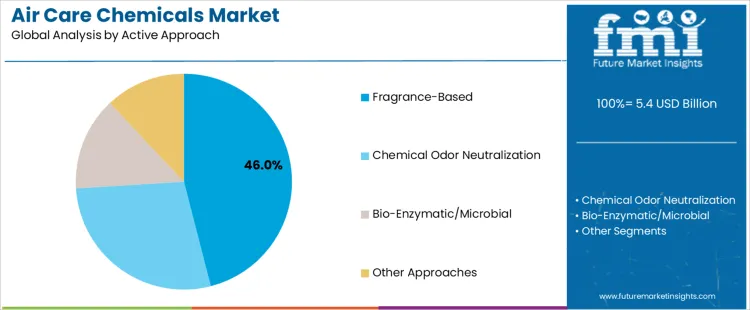
The global air care chemicals market is projected to grow from USD 5.4 billion in 2025 to USD 8.5 billion by 2035, advancing at a 4.6% CAGR. Air freshener formulations dominate the market, holding a 42% share due to their effectiveness in enhancing indoor air quality and providing pleasant fragrances across residential, commercial, and industrial settings. Odor neutralizers/absorbers, HVAC/indoor air treatment chemicals, and other specialized products also contribute significantly to the market. Among active approaches, fragrance-based solutions lead, followed by chemical odor neutralization and bio-enzymatic/microbial methods. The residential sector, with a 46% share, drives demand for air care chemicals, as consumers seek products to improve air quality and create pleasant home environments.
Quick Stats for Air Care Chemicals Market
- Air Care Chemicals Market Value (2025): USD 5.4 billion
- Air Care Chemicals Market Forecast Value (2035): USD 8.5 billion
- Air Care Chemicals Market Forecast CAGR: 4.6%
- Leading Product Type in Air Care Chemicals Market: Air Freshener Formulations
- Key Growth Regions in Air Care Chemicals Market: Asia Pacific and North America
- Top Players in Air Care Chemicals Market: Reckitt, Procter & Gamble, SC Johnson, Unilever, Henkel, Church & Dwight, Clorox, Kao Corporation, S.C. Johnson Professional, Ecolab
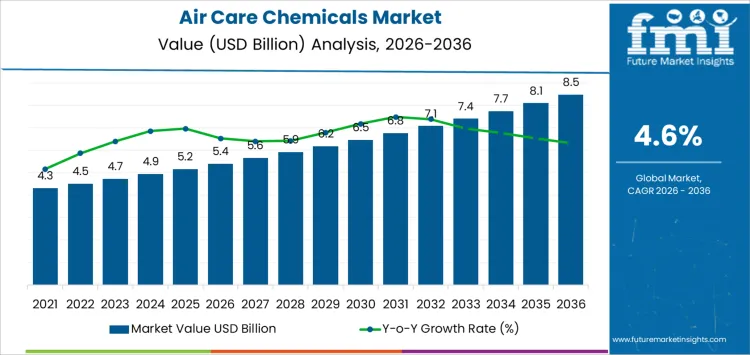
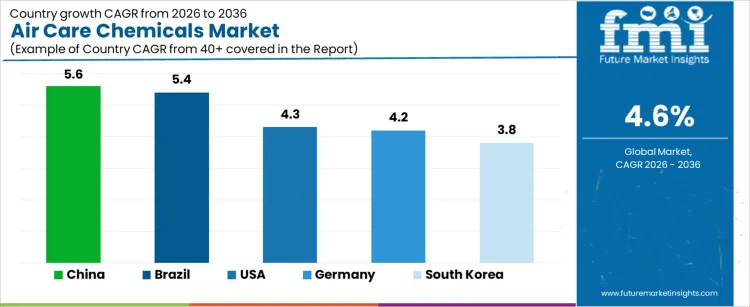
China leads with a 5.6% CAGR, fueled by rapid urbanization and growing awareness of air quality. Brazil follows closely at 5.4%, supported by rising demand in both residential and commercial sectors. The USA and Germany show steady growth at 4.3% and 4.2%, respectively, while South Korea’s market grows at 3.8%. As consumer preferences shift toward eco-friendly, non-toxic air care products, both residential and commercial sectors are expected to continue driving market expansion globally.
Air Care Chemicals Market Key Takeaways
| Metric | Value |
|---|---|
| Industry Value (2025) | USD 5.4 billion |
| Forecast Value (2035) | USD 8.5 billion |
| Forecast CAGR (2025–2035) | 4.6% |
How is the Global Air Care Chemicals Sector Taking Shape Across Household and Commercial Applications?
Global air care chemicals market is expanding due to the increasing demand for air fresheners, deodorants, and other scent-related products in both residential and commercial settings. Air care chemicals are used to enhance the ambiance of spaces by neutralizing odors and adding pleasant fragrances. Initially, the market was dominated by aerosol-based products, but over time, the development of alternative formats, such as plug-ins, gels, and diffusers, has expanded the range of available options. This evolution has been driven by consumer preferences for longer-lasting and more sustainable air care solutions, alongside a growing awareness of the potential health impacts of certain chemicals.
Looking forward, the market for air care chemicals will continue to grow, driven by the rising importance of indoor air quality, especially in high-traffic environments like offices, hotels, and healthcare facilities. Innovations in fragrance technologies and a shift toward eco-friendly, non-toxic ingredient will support this growth. As consumers seek more personalized and diverse scent experiences, manufacturers are likely to introduce more targeted products. Air care chemical market faces challenges such as regulatory pressures, the need for product differentiation, and the increasing competition from natural and organic alternatives. Manufacturers will need to focus on sustainability and performance while meeting evolving consumer preferences to remain competitive in this growing market.
What Is the Segment-Wise Analysis for the Global Air Care Chemicals Market?
Global air care chemicals market is driven by key product types and end-use sectors. Air freshener formulations lead the market with a 42% share, offering solutions for enhancing indoor air quality and providing pleasant scents. Other significant product types include odor neutralizers/absorbers, HVAC/indoor air treatment chemicals, and other specialized air care chemicals. In terms of end-use sectors, residential holds the largest share at 46%, driven by consumer demand for products that improve air quality and create a pleasant home environment. Commercial buildings, hospitality & foodservice, and other sectors also contribute to the demand for air care chemicals, as businesses and public spaces prioritize clean, fresh air for comfort and hygiene.
Why Do Air Freshener Formulations Lead the Global Air Care Chemicals Market?
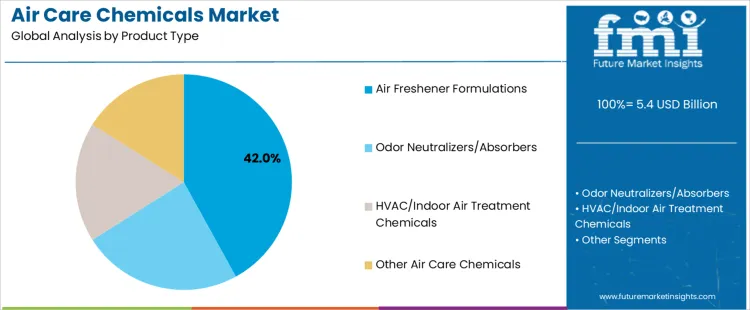
Air freshener formulations hold a 42% share of the global air care chemicals market due to their widespread use in homes, offices, and public spaces to create a pleasant atmosphere and mask unwanted odors. These formulations come in various forms, including sprays, gels, and plug-ins, providing flexibility for different consumer preferences. Air fresheners are particularly popular in residential settings, where consumers seek to enhance their living spaces with refreshing scents. Their ability to improve indoor air quality and quickly address unpleasant odors contributes to their dominance in the market. As demand for cleaner, fresher air grows, air fresheners remain the leading product in the air care chemicals sector.
Why Does the Residential Sector Hold the Largest Share in the Global Air Care Chemicals Market?
The residential sector holds the largest share at 46% of the global air care chemicals market due to the increasing demand for products that improve indoor air quality, provide a pleasant fragrance, and contribute to a comfortable living environment. Consumers are becoming more conscious of the air quality in their homes, leading to a rise in the use of air fresheners, odor neutralizers, and other air care solutions. Residential customers seek products that address specific needs, such as eliminating pet odors, refreshing the air in kitchens, or enhancing the atmosphere in living rooms. The focus on creating healthier, more pleasant spaces in homes continues to drive the growth of air care chemicals in the residential sector.
What is Shaping the Air Care Chemicals Market?
The air care chemicals market is driven by the increasing demand for products that improve indoor air quality and create pleasant environments. As consumers spend more time indoors, particularly in residential, commercial, and automotive spaces, there is a growing need for air fresheners, deodorizers, and odor neutralizers. Innovations in chemical formulations that offer long-lasting scents, eco-friendly solutions, and additional benefits like antimicrobial properties are contributing to market growth.
What Are the Key Drivers for the Air Care Chemicals Market?
Air care chemicals market is being driven by the increasing focus on improving indoor air quality and creating more comfortable living spaces. Rising awareness of the importance of clean air, especially in the wake of health concerns, is encouraging demand for air fresheners and odor control products. Innovations in fragrance formulations that offer longer-lasting and more pleasant scents are fueling growth. The growing preference for eco-friendly, non-toxic, and sustainable air care products is also contributing to the market's expansion as consumers and businesses prioritize environmentally responsible options.
What Are the Constraints Limiting the Adoption of Air Care Chemicals?
Adoption of air care chemicals is limited by concerns over the potential health risks associated with certain chemical ingredients. Some air fresheners and deodorizers contain volatile organic compounds (VOCs), which can irritate respiratory systems or trigger allergies. The higher cost of eco-friendly and non-toxic products may also limit widespread adoption, especially in price-sensitive markets. Growing competition from natural alternatives and DIY solutions may hinder the growth of conventional chemical-based air care products, as consumers seek safer and more affordable options.
What is the Growth Outlook for the Air Care Chemicals Market by Country?
| Country | CAGR (%) |
|---|---|
| USA | 4.3% |
| Germany | 4.2% |
| China | 5.6% |
| South Korea | 3.8% |
| Brazil | 5.4% |
The air care chemicals market is experiencing steady growth globally, with China leading at a 5.6% CAGR, driven by expanding urbanization and rising consumer awareness of air quality and fragrance solutions. Brazil follows with a 5.4% growth rate, supported by the increasing demand for air care products in both residential and commercial sectors. The USA and Germany show moderate growth rates at 4.3% and 4.2%, respectively, reflecting steady demand for air fresheners and air purifiers. South Korea’s market is growing at 3.8%, driven by consumer demand for both functional and aesthetic air care products.
Why is the Air Care Chemicals Market Growing in China?
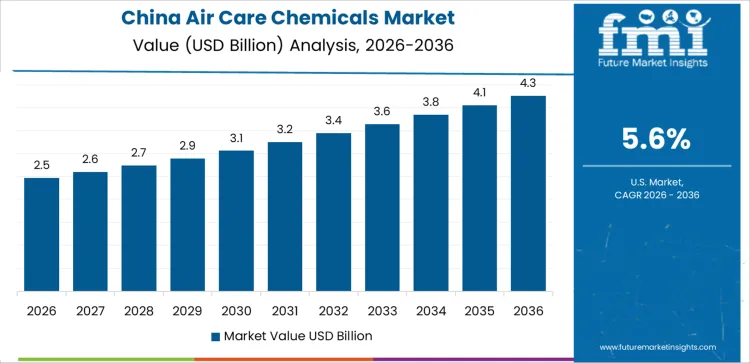
China’s air care chemicals market is growing at a 5.6% CAGR, primarily driven by rapid urbanization and increasing consumer awareness of air quality. As cities expand, air pollution and the need for air care products like air fresheners, purifiers, and deodorizing solutions are rising. The middle class in China is becoming more focused on creating pleasant and healthy living environments, leading to a greater demand for air care chemicals. As the country continues to develop its hospitality, retail, and commercial sectors, the need for air care products in these spaces is expanding. The growing awareness of indoor air quality, particularly following global health concerns, further accelerates the adoption of air care solutions. With increasing government initiatives on improving environmental quality, China’s market for air care chemicals is expected to continue its strong growth trajectory.
What is Contributing to the Growth of the Air Care Chemicals Market in Brazil?
Brazil’s air care chemicals market is growing at a 5.4% CAGR, driven by rising consumer demand for products that improve air quality and create pleasant indoor environments. As urbanization increases and more households adopt air care solutions, the demand for air fresheners, deodorizers, and air purifiers is expanding. The country’s growing middle class and their increasing focus on home comfort, combined with rising awareness of air pollution and its impact on health, are key factors propelling market growth. Commercial sector, including hotels, restaurants, and offices, requires air care products to maintain a fresh environment for customers and employees. As Brazil continues to prioritize health and well-being, the market for air care chemicals is expected to see sustained growth, driven by both residential and commercial demand.
How is the Air Care Chemicals Market Expanding in the USA?
The USA’s air care chemicals market is growing at a 4.3% CAGR, supported by steady demand across residential, commercial, and industrial sectors. In residential spaces, air fresheners and purifiers remain popular as consumers seek to improve indoor air quality and create pleasant environments. The commercial sector, particularly in retail, hospitality, and healthcare, is increasingly adopting air care products to enhance customer and employee experiences. Rise in consumer awareness of air pollution and its effects on health is contributing to the demand for air purifiers and fresheners. The growing interest in sustainable and natural air care chemicals is also driving market growth, as consumers opt for eco-friendly and non-toxic alternatives. With an increasing focus on clean, fresh indoor air, the USA’s air care chemicals market is expected to continue expanding steadily.
Why is the Air Care Chemicals Market Growing in South Korea?
South Korea’s air care chemicals market is growing at a 3.8% CAGR, driven by consumer demand for high-quality air care solutions in both residential and commercial spaces. As urbanization continues, South Koreans are increasingly investing in products that improve air quality and provide pleasant indoor environments. The demand for air fresheners, deodorizers, and air purifiers is rising, particularly in high-traffic areas such as offices, hotels, and public transportation hubs. South Korea’s growing focus on health and wellness, combined with rising awareness of air pollution, is fueling the adoption of air care chemicals. As consumers become more conscious of the importance of indoor air quality, the demand for effective air care products is expected to continue growing, albeit at a moderate pace, supported by both residential and commercial adoption.
What is Shaping the Air Care Chemicals Market Growth in Germany?
Germany’s air care chemicals market is growing at a 4.2% CAGR, supported by the demand for air fresheners and purifiers in both residential and commercial spaces. Germany has long placed a high emphasis on cleanliness and environmental sustainability, which is driving the demand for effective air care solutions. As consumers become more aware of indoor air quality and its impact on health, the adoption of air purifiers and fresheners has increased. In commercial sectors like hospitality, retail, and healthcare, air care products are becoming essential for maintaining a pleasant and fresh environment. Germany’s preference for eco-friendly and sustainable products is contributing to the demand for natural and non-toxic air care chemicals. With increasing awareness of environmental and health issues, Germany’s air care chemicals market is expected to continue its steady growth, supported by consumer demand for both functional and aesthetic air care solutions.
How Do Major Players Compete in the Air Care Chemicals Market?
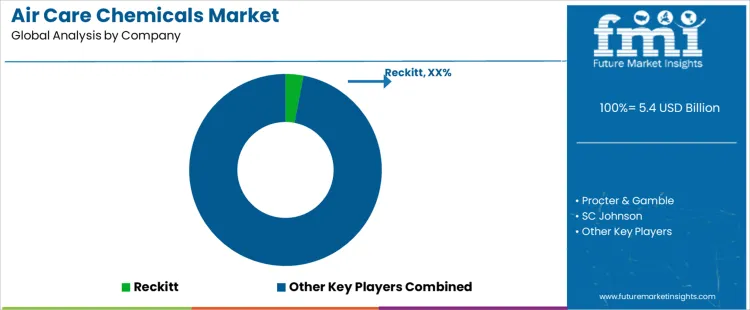
The air care chemicals market is highly competitive, with leading players like Reckitt, Procter & Gamble, and SC Johnson at the forefront. Reckitt, with its Lysol and Air Wick brands, leads by offering a broad range of air fresheners that target both residential and commercial applications. Their products focus on odor elimination and long-lasting freshness, with an increasing emphasis on sustainability and natural ingredients. Procter & Gamble competes strongly with its Febreze line, combining powerful air care technology with a variety of scents and formulations designed for different environments. Febreze products are marketed for both everyday use and specialty applications, like pet odors or smoke, ensuring versatility in the home.
SC Johnson and Unilever bring established brands, such as Glade and Renuzit, to the market, emphasizing their commitment to quality and affordability. SC Johnson Professional, focusing on commercial air care, delivers products designed to maintain a pleasant environment in high-traffic areas like offices, hotels, and restrooms. Unilever offers air care solutions under brands like Dove and their home care range, often positioning their products as eco-friendly alternatives with natural scents, catering to consumers increasingly concerned about the environmental impact of their purchases.
Henkel, Church & Dwight, and Clorox also bring strong competition with their diverse portfolios. Henkel’s brands, such as Purex and Bref, combine air care with cleaning, providing consumers with dual functionality. Church & Dwight focuses on affordable, effective air care products like Arm & Hammer, known for their odor-fighting technology. Clorox expands its market presence with Clorox Scentiva, which merges disinfecting power with air care, adding an extra layer of functionality. Kao Corporation, with its expertise in personal care and home products, leverages its reputation for quality to introduce air fresheners that blend fragrances with strong air-purifying properties.
Key Players in Air Care Chemicals Market
- Reckitt
- Procter & Gamble
- SC Johnson
- Unilever
- Henkel
- Church & Dwight
- Clorox
- Kao Corporation
- S.C. Johnson Professional
- Ecolab
Scope of Report
| Items | Values |
|---|---|
| Quantitative Units (2025) | USD billion |
| End Use Application | Residential, Commercial Buildings, Hospitality & Foodservice, Other Sectors |
| Product Type | Air Freshener Formulations, Odor Neutralizers/Absorbers, HVAC/Indoor Air Treatment Chemicals, Other Air Care Chemicals |
| Active Approach | Fragrance-Based, Chemical Odor Neutralization, Bio-Enzymatic/Microbial, Other Approaches |
| Product Form | Aerosol/Spray, Liquid/Continuous Release, Gel/Solid, Other Formats |
| End-Use Sector | Residential, Commercial Buildings, Hospitality & Foodservice, Other Sectors |
| Regions Covered | Asia Pacific, Europe, North America, Latin America, Middle East & Africa |
| Countries Covered | USA, China, Japan, South Korea, India, Australia & New Zealand, ASEAN, Germany, UK, France, Italy, Spain, Nordic, BENELUX, Brazil, Chile, Mexico, Saudi Arabia, Other GCC Countries, Turkey, South Africa, Other African Union, Rest of Regions |
| Key Companies Profiled | Reckitt, Procter & Gamble, SC Johnson, Unilever, Henkel, Church & Dwight, Clorox, Kao Corporation, S.C. Johnson Professional, Ecolab |
| Additional Attributes | Dollar sales by product type, active approach, and product form; regional CAGR and growth outlook; distribution channels including retail, DTC, e-commerce, and institutional buyers; innovation trends in fragrance-based and bio-enzymatic formulations; competitive positioning of global vs regional suppliers. |
Air Care Chemicals Market by Segments
Product Type:
- Air Freshener Formulations
- Odor Neutralizers/Absorbers
- HVAC/Indoor Air Treatment Chemicals
- Other Air Care Chemicals
Active Approach:
- Fragrance-Based
- Chemical Odor Neutralization
- Bio-Enzymatic/Microbial
- Other Approaches
End-Use Sector:
- Residential
- Commercial Buildings
- Hospitality & Foodservice
- Other Sectors
Delivery Format:
- Aerosol/Spray
- Liquid/Continuous Release
- Gel/Solid
- Other Formats
Region:
- Asia Pacific
- China
- Japan
- South Korea
- India
- Australia & New Zealand
- ASEAN
- Rest of Asia Pacific
- Europe
- Germany
- United Kingdom
- France
- Italy
- Spain
- Nordic
- BENELUX
- Rest of Europe
- North America
- United States
- Canada
- Mexico
- Latin America
- Brazil
- Chile
- Rest of Latin America
- Middle East & Africa
- Kingdom of Saudi Arabia
- Other GCC Countries
- Turkey
- South Africa
- Other African Union
- Rest of Middle East & Africa
Frequently Asked Questions
How big is the air care chemicals market in 2026?
The global air care chemicals market is estimated to be valued at USD 5.4 billion in 2026.
What will be the size of air care chemicals market in 2036?
The market size for the air care chemicals market is projected to reach USD 8.5 billion by 2036.
How much will be the air care chemicals market growth between 2026 and 2036?
The air care chemicals market is expected to grow at a 4.6% CAGR between 2026 and 2036.
What are the key product types in the air care chemicals market?
The key product types in air care chemicals market are air freshener formulations, odor neutralizers/absorbers, hvac/indoor air treatment chemicals and other air care chemicals.
Which active approach segment to contribute significant share in the air care chemicals market in 2026?
In terms of active approach, fragrance-based segment to command 46.0% share in the air care chemicals market in 2026.
Preview the report firsthand - request a free sample
Get SampleGet the brochure for pricing and purchase details.
Get PDFTable of Content
- Executive Summary
- Global Market Outlook
- Demand-side Trends
- Supply-side Trends
- Technology Roadmap Analysis
- Analysis and Recommendations
- Market Overview
- Market Coverage / Taxonomy
- Market Definition / Scope / Limitations
- Market Background
- Market Dynamics
- Drivers
- Restraints
- Opportunity
- Trends
- Scenario Forecast
- Demand in Optimistic Scenario
- Demand in Likely Scenario
- Demand in Conservative Scenario
- Opportunity Map Analysis
- Product Life Cycle Analysis
- Supply Chain Analysis
- Investment Feasibility Matrix
- Value Chain Analysis
- PESTLE and Porter’s Analysis
- Regulatory Landscape
- Regional Parent Market Outlook
- Production and Consumption Statistics
- Import and Export Statistics
- Market Dynamics
- Global Market Analysis 2021 to 2025 and Forecast, 2026 to 2036
- Historical Market Size Value (USD Million) Analysis, 2021 to 2025
- Current and Future Market Size Value (USD Million) Projections, 2026 to 2036
- Y-o-Y Growth Trend Analysis
- Absolute $ Opportunity Analysis
- Global Market Pricing Analysis 2021 to 2025 and Forecast 2026 to 2036
- Global Market Analysis 2021 to 2025 and Forecast 2026 to 2036, By Product Type
- Introduction / Key Findings
- Historical Market Size Value (USD Million) Analysis By Product Type , 2021 to 2025
- Current and Future Market Size Value (USD Million) Analysis and Forecast By Product Type , 2026 to 2036
- Air Freshener Formulations
- Odor Neutralizers/Absorbers
- HVAC/Indoor Air Treatment Chemicals
- Other Air Care Chemicals
- Y-o-Y Growth Trend Analysis By Product Type , 2021 to 2025
- Absolute $ Opportunity Analysis By Product Type , 2026 to 2036
- Global Market Analysis 2021 to 2025 and Forecast 2026 to 2036, By Active Approach
- Introduction / Key Findings
- Historical Market Size Value (USD Million) Analysis By Active Approach, 2021 to 2025
- Current and Future Market Size Value (USD Million) Analysis and Forecast By Active Approach, 2026 to 2036
- Fragrance-Based
- Chemical Odor Neutralization
- Bio-Enzymatic/Microbial
- Other Approaches
- Y-o-Y Growth Trend Analysis By Active Approach, 2021 to 2025
- Absolute $ Opportunity Analysis By Active Approach, 2026 to 2036
- Global Market Analysis 2021 to 2025 and Forecast 2026 to 2036, By End-Use Sector
- Introduction / Key Findings
- Historical Market Size Value (USD Million) Analysis By End-Use Sector, 2021 to 2025
- Current and Future Market Size Value (USD Million) Analysis and Forecast By End-Use Sector, 2026 to 2036
- Residential
- Commercial Buildings
- Hospitality & Foodservice
- Other Sectors
- Y-o-Y Growth Trend Analysis By End-Use Sector, 2021 to 2025
- Absolute $ Opportunity Analysis By End-Use Sector, 2026 to 2036
- Global Market Analysis 2021 to 2025 and Forecast 2026 to 2036, By Delivery Format
- Introduction / Key Findings
- Historical Market Size Value (USD Million) Analysis By Delivery Format, 2021 to 2025
- Current and Future Market Size Value (USD Million) Analysis and Forecast By Delivery Format, 2026 to 2036
- Aerosol/Spray
- Liquid/Continuous Release
- Gel/Solid
- Other Formats
- Y-o-Y Growth Trend Analysis By Delivery Format, 2021 to 2025
- Absolute $ Opportunity Analysis By Delivery Format, 2026 to 2036
- Global Market Analysis 2021 to 2025 and Forecast 2026 to 2036, By Region
- Introduction
- Historical Market Size Value (USD Million) Analysis By Region, 2021 to 2025
- Current Market Size Value (USD Million) Analysis and Forecast By Region, 2026 to 2036
- North America
- Latin America
- Western Europe
- Eastern Europe
- East Asia
- South Asia and Pacific
- Middle East & Africa
- Market Attractiveness Analysis By Region
- North America Market Analysis 2021 to 2025 and Forecast 2026 to 2036, By Country
- Historical Market Size Value (USD Million) Trend Analysis By Market Taxonomy, 2021 to 2025
- Market Size Value (USD Million) Forecast By Market Taxonomy, 2026 to 2036
- By Country
- USA
- Canada
- Mexico
- By Product Type
- By Active Approach
- By End-Use Sector
- By Delivery Format
- By Country
- Market Attractiveness Analysis
- By Country
- By Product Type
- By Active Approach
- By End-Use Sector
- By Delivery Format
- Key Takeaways
- Latin America Market Analysis 2021 to 2025 and Forecast 2026 to 2036, By Country
- Historical Market Size Value (USD Million) Trend Analysis By Market Taxonomy, 2021 to 2025
- Market Size Value (USD Million) Forecast By Market Taxonomy, 2026 to 2036
- By Country
- Brazil
- Chile
- Rest of Latin America
- By Product Type
- By Active Approach
- By End-Use Sector
- By Delivery Format
- By Country
- Market Attractiveness Analysis
- By Country
- By Product Type
- By Active Approach
- By End-Use Sector
- By Delivery Format
- Key Takeaways
- Western Europe Market Analysis 2021 to 2025 and Forecast 2026 to 2036, By Country
- Historical Market Size Value (USD Million) Trend Analysis By Market Taxonomy, 2021 to 2025
- Market Size Value (USD Million) Forecast By Market Taxonomy, 2026 to 2036
- By Country
- Germany
- UK
- Italy
- Spain
- France
- Nordic
- BENELUX
- Rest of Western Europe
- By Product Type
- By Active Approach
- By End-Use Sector
- By Delivery Format
- By Country
- Market Attractiveness Analysis
- By Country
- By Product Type
- By Active Approach
- By End-Use Sector
- By Delivery Format
- Key Takeaways
- Eastern Europe Market Analysis 2021 to 2025 and Forecast 2026 to 2036, By Country
- Historical Market Size Value (USD Million) Trend Analysis By Market Taxonomy, 2021 to 2025
- Market Size Value (USD Million) Forecast By Market Taxonomy, 2026 to 2036
- By Country
- Russia
- Poland
- Hungary
- Balkan & Baltic
- Rest of Eastern Europe
- By Product Type
- By Active Approach
- By End-Use Sector
- By Delivery Format
- By Country
- Market Attractiveness Analysis
- By Country
- By Product Type
- By Active Approach
- By End-Use Sector
- By Delivery Format
- Key Takeaways
- East Asia Market Analysis 2021 to 2025 and Forecast 2026 to 2036, By Country
- Historical Market Size Value (USD Million) Trend Analysis By Market Taxonomy, 2021 to 2025
- Market Size Value (USD Million) Forecast By Market Taxonomy, 2026 to 2036
- By Country
- China
- Japan
- South Korea
- By Product Type
- By Active Approach
- By End-Use Sector
- By Delivery Format
- By Country
- Market Attractiveness Analysis
- By Country
- By Product Type
- By Active Approach
- By End-Use Sector
- By Delivery Format
- Key Takeaways
- South Asia and Pacific Market Analysis 2021 to 2025 and Forecast 2026 to 2036, By Country
- Historical Market Size Value (USD Million) Trend Analysis By Market Taxonomy, 2021 to 2025
- Market Size Value (USD Million) Forecast By Market Taxonomy, 2026 to 2036
- By Country
- India
- ASEAN
- Australia & New Zealand
- Rest of South Asia and Pacific
- By Product Type
- By Active Approach
- By End-Use Sector
- By Delivery Format
- By Country
- Market Attractiveness Analysis
- By Country
- By Product Type
- By Active Approach
- By End-Use Sector
- By Delivery Format
- Key Takeaways
- Middle East & Africa Market Analysis 2021 to 2025 and Forecast 2026 to 2036, By Country
- Historical Market Size Value (USD Million) Trend Analysis By Market Taxonomy, 2021 to 2025
- Market Size Value (USD Million) Forecast By Market Taxonomy, 2026 to 2036
- By Country
- Kingdom of Saudi Arabia
- Other GCC Countries
- Turkiye
- South Africa
- Other African Union
- Rest of Middle East & Africa
- By Product Type
- By Active Approach
- By End-Use Sector
- By Delivery Format
- By Country
- Market Attractiveness Analysis
- By Country
- By Product Type
- By Active Approach
- By End-Use Sector
- By Delivery Format
- Key Takeaways
- Key Countries Market Analysis
- USA
- Pricing Analysis
- Market Share Analysis, 2025
- By Product Type
- By Active Approach
- By End-Use Sector
- By Delivery Format
- Canada
- Pricing Analysis
- Market Share Analysis, 2025
- By Product Type
- By Active Approach
- By End-Use Sector
- By Delivery Format
- Mexico
- Pricing Analysis
- Market Share Analysis, 2025
- By Product Type
- By Active Approach
- By End-Use Sector
- By Delivery Format
- Brazil
- Pricing Analysis
- Market Share Analysis, 2025
- By Product Type
- By Active Approach
- By End-Use Sector
- By Delivery Format
- Chile
- Pricing Analysis
- Market Share Analysis, 2025
- By Product Type
- By Active Approach
- By End-Use Sector
- By Delivery Format
- Germany
- Pricing Analysis
- Market Share Analysis, 2025
- By Product Type
- By Active Approach
- By End-Use Sector
- By Delivery Format
- UK
- Pricing Analysis
- Market Share Analysis, 2025
- By Product Type
- By Active Approach
- By End-Use Sector
- By Delivery Format
- Italy
- Pricing Analysis
- Market Share Analysis, 2025
- By Product Type
- By Active Approach
- By End-Use Sector
- By Delivery Format
- Spain
- Pricing Analysis
- Market Share Analysis, 2025
- By Product Type
- By Active Approach
- By End-Use Sector
- By Delivery Format
- France
- Pricing Analysis
- Market Share Analysis, 2025
- By Product Type
- By Active Approach
- By End-Use Sector
- By Delivery Format
- India
- Pricing Analysis
- Market Share Analysis, 2025
- By Product Type
- By Active Approach
- By End-Use Sector
- By Delivery Format
- ASEAN
- Pricing Analysis
- Market Share Analysis, 2025
- By Product Type
- By Active Approach
- By End-Use Sector
- By Delivery Format
- Australia & New Zealand
- Pricing Analysis
- Market Share Analysis, 2025
- By Product Type
- By Active Approach
- By End-Use Sector
- By Delivery Format
- China
- Pricing Analysis
- Market Share Analysis, 2025
- By Product Type
- By Active Approach
- By End-Use Sector
- By Delivery Format
- Japan
- Pricing Analysis
- Market Share Analysis, 2025
- By Product Type
- By Active Approach
- By End-Use Sector
- By Delivery Format
- South Korea
- Pricing Analysis
- Market Share Analysis, 2025
- By Product Type
- By Active Approach
- By End-Use Sector
- By Delivery Format
- Russia
- Pricing Analysis
- Market Share Analysis, 2025
- By Product Type
- By Active Approach
- By End-Use Sector
- By Delivery Format
- Poland
- Pricing Analysis
- Market Share Analysis, 2025
- By Product Type
- By Active Approach
- By End-Use Sector
- By Delivery Format
- Hungary
- Pricing Analysis
- Market Share Analysis, 2025
- By Product Type
- By Active Approach
- By End-Use Sector
- By Delivery Format
- Kingdom of Saudi Arabia
- Pricing Analysis
- Market Share Analysis, 2025
- By Product Type
- By Active Approach
- By End-Use Sector
- By Delivery Format
- Turkiye
- Pricing Analysis
- Market Share Analysis, 2025
- By Product Type
- By Active Approach
- By End-Use Sector
- By Delivery Format
- South Africa
- Pricing Analysis
- Market Share Analysis, 2025
- By Product Type
- By Active Approach
- By End-Use Sector
- By Delivery Format
- USA
- Market Structure Analysis
- Competition Dashboard
- Competition Benchmarking
- Market Share Analysis of Top Players
- By Regional
- By Product Type
- By Active Approach
- By End-Use Sector
- By Delivery Format
- Competition Analysis
- Competition Deep Dive
- Reckitt
- Overview
- Product Portfolio
- Profitability by Market Segments (Product/Age /Sales Channel/Region)
- Sales Footprint
- Strategy Overview
- Marketing Strategy
- Product Strategy
- Channel Strategy
- Procter & Gamble
- SC Johnson
- Unilever
- Henkel
- Church & Dwight
- Clorox
- Kao Corporation
- S.C. Johnson Professional
- Ecolab
- Reckitt
- Competition Deep Dive
- Assumptions & Acronyms Used
- Research Methodology


