

- Industry Size (2026)
- USD 1.7 Bn
- Forecast (2036)
- USD 4.0 Bn
- CAGR (2026 to 2036)
- 8.9%
Vegan Hair Care Silicone Alternatives Market Forecast and Outlook 2026 to 2036
The vegan hair care silicone alternatives market is valued at USD 1.7 billion in 2026 and is projected to reach USD 4.0 billion by 2036, reflecting a CAGR of 8.9%. Production concentration is observed among suppliers specializing in plant-based and biodegradable polymer formulations suitable for hair care applications. Regional control over ingredient sourcing, certification, and formulation expertise affects supply reliability. Volume stability is influenced by adoption across personal care brands, regulatory compliance, and consumer demand for sustainable products. Operators delivering validated, high-performance alternatives capture predictable revenue, while smaller producers face variability in raw material quality and limited leverage.
Revenue concentration is shaped by alignment with high-volume personal care brands and multi-product application compatibility. Adoption varies regionally depending on consumer awareness, regulatory frameworks, and natural ingredient availability. Margins favor operators providing certified, multi-formulation alternatives with technical support and formulation guidance. Fragmentation persists among regional or niche suppliers, whereas leading companies secure concentrated value through material quality control, portfolio breadth, and integration with brand product lines rather than output volume alone.
Quick Stats of the Vegan Hair Care Silicone Alternatives Market
- Vegan Hair Care Silicone Alternatives Market Value (2026): USD 1.7 billion
- Vegan Hair Care Silicone Alternatives Forecast Value (2036): USD 4.0 billion
- Vegan Hair Care Silicone Alternatives Forecast CAGR 2026 to 2036: 8.9%
- Leading Ingredient Type in Vegan Hair Care Silicone Alternatives Market: Plant-Based Oils & Esters (35.7% share)
- Leading Product Type in Vegan Hair Care Silicone Alternatives Market: Shampoos (32.9% share)
- Key Growth Regions in Vegan Hair Care Silicone Alternatives Market: India, China, USA, Germany, Japan
- Top Players in Vegan Hair Care Silicone Alternatives Market: Croda International, Evonik Industries, Solvay SA, Dow Inc., Ashland Global Specialty Chemicals
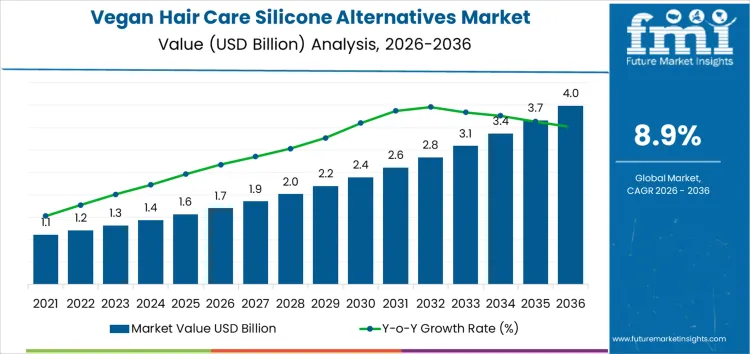
What is the Growth Forecast for Vegan Hair Care Silicone Alternatives Market through 2036?
Between 2026 and 2031, the vegan hair care silicone alternatives market is expected to grow steadily, driven by rising consumer awareness of clean, plant-based, and cruelty-free personal care products. Adoption of bio-based and naturally derived silicone substitutes is increasing across shampoos, conditioners, and styling products. Growth is supported by demand for sustainable and biodegradable ingredients, premium formulations, and formulations compatible with diverse hair types. Manufacturers are investing in ingredient innovation and formulation stability to ensure performance comparable to traditional silicones while meeting vegan and eco-conscious claims.
From 2031 to 2036, the market is anticipated to experience continued robust expansion, fueled by growing penetration in mass-market and premium hair care segments globally. Product innovation, including multi-functional plant-based alternatives that provide shine, manageability, and protection, drives adoption. Regulatory emphasis on environmentally friendly ingredients and consumer preference for transparent labeling support growth. Competitive advantage favors suppliers delivering validated, high-performance vegan alternatives, scalability in production, and alignment with sustainable beauty trends.
Vegan Hair Care Silicone Alternatives Market Key Takeaways
| Metric | Value |
|---|---|
| Market Value (2026) | USD 1.7 billion |
| Forecast Value (2036) | USD 4.0 billion |
| Forecast CAGR 2026 to 2036 | 8.90% |
What Is Driving Growth in the Vegan Hair Care Silicone Alternatives Market?
Vegan hair care silicone alternatives are increasingly adopted to deliver shine, smoothness, and manageability while avoiding animal-derived ingredients. Historically, conventional silicones provided performance benefits but raised ethical and environmental concerns. Modern alternatives use plant-based oils, esters, and bio-derived polymers to replicate conditioning, detangling, and protective functions in shampoos, conditioners, and styling products. Cosmetic brands, formulators, and personal care companies prioritize ingredient transparency, biodegradability, and compatibility with hair types. Early adoption focused on niche vegan and cruelty-free brands, while current demand spans mass-market hair care, professional salon products, and online retail, driven by ethical consumerism, sustainability trends, and regulatory support for clean labeling. Product efficacy, sensory feel, and formulation stability influence supplier selection.
Rising consumer awareness, ethical standards, and environmental sustainability are shaping market growth for silicone alternatives. Compared with traditional silicones, contemporary plant-based substitutes emphasize biodegradability, hair compatibility, and sensory performance while maintaining styling benefits. Cost structures depend on raw material sourcing, extraction processes, and formulation development, concentrating margins among suppliers providing reliable, scalable, and certified alternatives. Hair care brands adopt these solutions to meet vegan standards, satisfy ethical consumers, and enhance brand credibility. By 2036, vegan silicone alternatives are expected to become a mainstream choice in hair care formulations, supporting sustainability, ethical production, and high-performance hair conditioning across global markets.
What Factors Are Shaping the Demand for Vegan Hair Care Silicone Alternatives in Terms of Ingredient Type and Product Type?
The demand for vegan hair care silicone alternatives is segmented by ingredient type and product type. Ingredient types include plant-based oils and esters, natural waxes and butters, sugar and polysaccharide-based alternatives, bio-synthetic alternatives, and other formulations. Product types include shampoos, conditioners, styling products, hair masks, and treatments. Adoption is influenced by consumer preference for sustainable and cruelty-free formulations, regulatory compliance, and product performance. Uptake is driven by demand for hair smoothing, shine, and manageability without silicones. Ingredient and product selection depend on hair type, formulation compatibility, and desired sensory properties, ensuring effective hair care with eco-friendly components.
Why Are Plant-Based Oils and Esters Leading the Ingredient Type Segment in Vegan Hair Care Silicone Alternatives?
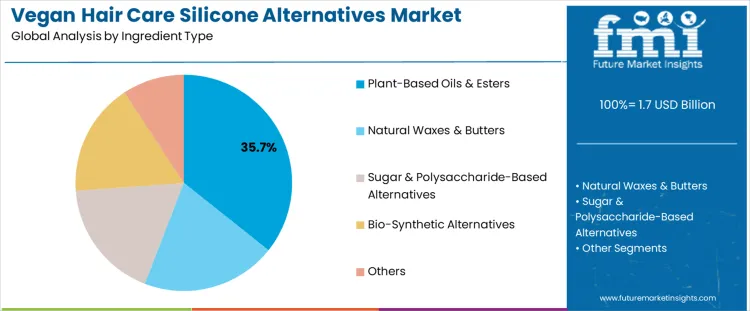
Plant-based oils and esters account for 35.7% of total ingredient type demand, making them the leading category. These ingredients provide hair conditioning, shine, and manageability without synthetic silicones. Adoption is reinforced by compatibility with shampoos, conditioners, and hair treatments, and consumer preference for natural, sustainable, and cruelty-free products. Manufacturers formulate plant-based oils to deliver lubrication, moisture retention, and thermal protection for styling applications. Product development includes evaluating oil stability, spreadability, and interaction with other ingredients. The segment leads because plant-based oils and esters combine functional performance, natural appeal, and sustainability in vegan hair care formulations.
Operational factors further support adoption. Ingredients must remain stable under heat, pH variations, and repeated product use while maintaining sensory quality. Compatibility with emulsifiers, thickeners, and preservatives ensures long-term stability. The segment leads because plant-based oils and esters provide predictable performance, hair conditioning benefits, and alignment with consumer sustainability expectations.
Why Are Shampoos Representing the Largest Product Type Segment in Vegan Hair Care Silicone Alternatives?
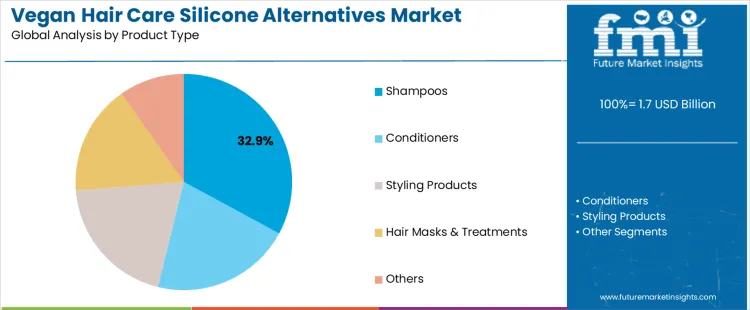
Shampoos account for 32.9% of total product type demand, making them the largest category. Adoption is driven by high consumption frequency and the need for daily hair cleansing while maintaining hair health. Formulators incorporate silicone alternatives to provide smoothness, manageability, and shine without residue. Manufacturers optimize shampoo viscosity, foaming, and conditioning properties to balance cleansing efficiency with hair protection. Quality control includes monitoring ingredient stability, product spreadability, and performance over repeated use.
Functional and operational considerations influence adoption. Shampoos must maintain uniform distribution of silicone alternatives, resist separation, and remain compatible with water hardness and surfactants. Formulations are tested for hair feel, shine, and manageability. Shampoos lead because they represent the largest daily-use hair care category, providing measurable performance, consumer satisfaction, and alignment with vegan and sustainable hair care trends.
How Are Silicone Alternatives Transforming Vegan Hair Care Products?
Vegan hair care silicone alternatives are increasingly used in shampoos, conditioners, and styling products to provide smoothness, shine, and manageability without animal-derived or non-biodegradable ingredients. Adoption is strongest in regions with high vegan awareness, demand for clean beauty, and sustainability-focused consumers. Ingredients are selected for hair conditioning efficacy, biodegradability, and scalp safety. Growth is driven by regulatory compliance, consumer demand for cruelty-free products, and environmental considerations. Investment focuses on ingredient performance, formulation stability, and compatibility with existing hair care systems. Brands prioritize alternatives that replicate silicone benefits while adhering to regional vegan and sustainability standards.
Why Are Consumer Preferences and Regional Regulations Driving Adoption?
Demand is influenced by trends toward vegan, cruelty-free, and environmentally responsible personal care. Brands adopt silicone alternatives to meet labeling requirements, reduce environmental impact, and satisfy consumer expectations. Ingredients offering conditioning, shine, and lightness gain preference. Adoption is concentrated in regions with established vegan markets and strong clean beauty awareness. Regulatory compliance, product efficacy, and brand reputation drive procurement decisions rather than cost. Suppliers providing verified, high-quality, and eco-friendly alternatives gain advantage among formulators and cosmetic brands.
What Factors Restrict Broader Use of Vegan Silicone Alternatives?
Higher costs, formulation complexity, and variability in performance limit widespread adoption. Alternative ingredients may require adjustments with surfactants, fragrances, or other conditioning agents. Stability under heat, pH, and storage conditions can be inconsistent. Certification, regulatory approvals, and compliance with cruelty-free standards add complexity. Smaller brands or regions with limited access to raw materials adopt more slowly. Early use is concentrated among premium hair care brands, multinational companies, and regions with consumer awareness and technical formulation support.
How Are Innovation and Industry Collaboration Shaping Market Growth?
Advances include plant-based polymers, natural esters, and biodegradable conditioning agents that replicate silicone performance. Collaboration between ingredient suppliers, cosmetic formulators, and certification bodies ensures efficacy validation, regulatory alignment, and formulation guidance. Pilot testing assesses hair conditioning, shine, and texture before large-scale deployment. Quality monitoring, traceability, and standardized processes maintain consistency. Focus is on performance, environmental impact, and consumer safety rather than cost or volume. Collaborative efforts enable broader adoption of vegan hair care silicone alternatives while supporting sustainable and high-performance hair care solutions.
What is the Demand for Vegan Hair Care Silicone Alternatives by Country?
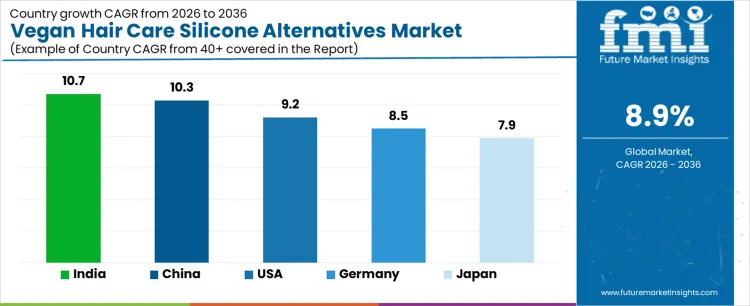
| Country | CAGR (%) |
|---|---|
| USA | 9.2% |
| China | 10.3% |
| India | 10.7% |
| Germany | 8.5% |
| Japan | 7.9% |
Demand for vegan hair care silicone alternatives is rising as consumers increasingly seek plant-based, eco-friendly, and cruelty-free hair care products. India leads with a 10.7% CAGR, driven by rapid growth in personal care consumption, rising awareness of vegan formulations, and expansion of domestic hair care brands. China follows at 10.3%, supported by large cosmetics manufacturing base, growing e-commerce penetration, and rising demand for sustainable hair care solutions. The USA grows at 9.2%, shaped by established clean beauty trends and adoption of vegan silicone alternatives in hair styling and treatment products. Germany records 8.5% growth, reflecting mature personal care markets and gradual shift toward plant-based alternatives. Japan shows 7.9% CAGR, influenced by moderate adoption of vegan hair care products and consumer preference for high-quality formulations.
How Is the United States Experiencing Growth in the Vegan Hair Care Silicone Alternatives Market?
United States is experiencing growth at a CAGR of 9.2%, supported by adoption of silicone alternatives in vegan hair care products to meet rising consumer demand for cruelty-free, plant-based formulations. Cosmetic manufacturers and suppliers are developing alternatives optimized for hair conditioning, texture enhancement, and environmental safety. Demand is concentrated in urban cosmetic production hubs, R&D centers, and retail-focused facilities. Investments focus on material innovation, product efficacy, and regulatory compliance rather than large-scale deployment. Growth reflects increasing consumer preference for sustainable personal care products, adoption of plant-based formulations, and industrial focus on innovative alternatives to traditional silicones.
- Vegan and plant-based products drive adoption.
- Alternatives provide conditioning and texture benefits.
- Cosmetic hubs and R&D centers concentrate demand.
- Material innovation and regulatory compliance guide investment.
How Is China Witnessing Rapid Growth With Sustainable Hair Care Initiatives?
China is witnessing growth at a CAGR of 10.3%, fueled by adoption of vegan silicone alternatives in hair care products to reduce environmental impact and meet rising demand for cruelty-free cosmetics. Manufacturers and suppliers are producing formulations optimized for hair smoothness, manageability, and eco-friendly properties. Demand is concentrated in major urban cosmetic production hubs, R&D centers, and retail markets. Investments prioritize material performance, product safety, and regulatory adherence rather than mass-scale production. Growth reflects government encouragement for sustainable cosmetics, increasing consumer awareness of ethical beauty, and industrial adoption of innovative plant-based alternatives.
- Sustainable hair care initiatives drive adoption.
- Formulations enhance hair manageability and texture.
- Urban production hubs and R&D centers concentrate demand.
- Material performance and regulatory adherence guide investment.
How Is India Experiencing Rapid Growth With Plant-Based Cosmetic Solutions?
India is experiencing growth at a CAGR of 10.7%, supported by adoption of silicone alternatives in vegan hair care products to meet consumer demand for ethical, environmentally friendly personal care. Cosmetic manufacturers and suppliers are deploying alternatives optimized for conditioning, shine enhancement, and hair texture improvement. Demand is concentrated in major cosmetic production hubs, R&D facilities, and urban retail networks. Investments focus on product efficacy, material innovation, and compliance with regulatory standards rather than large-scale rollout. Growth reflects rising consumer preference for vegan products, government initiatives supporting sustainable cosmetics, and industrial adoption of plant-based alternatives in hair care.
- Plant-based cosmetic solutions drive adoption.
- Alternatives enhance hair conditioning and texture.
- Cosmetic hubs and R&D facilities concentrate demand.
- Product efficacy and material innovation guide investment.
How Is Germany Witnessing Steady Growth With Ethical Beauty Products?
Germany is witnessing growth at a CAGR of 8.5%, supported by adoption of vegan silicone alternatives in hair care products to reduce environmental impact and align with sustainable beauty standards. Manufacturers and suppliers are producing alternatives optimized for hair conditioning, manageability, and product safety. Demand is concentrated in cosmetic production hubs, R&D centers, and retail networks. Investments prioritize material performance, regulatory compliance, and product effectiveness rather than large-scale production. Growth reflects strong consumer preference for ethical and sustainable cosmetics, industrial adoption of innovative ingredients, and integration of plant-based formulations in hair care lines.
- Ethical beauty initiatives drive adoption.
- Alternatives improve hair manageability and conditioning.
- Cosmetic hubs and R&D centers concentrate demand.
- Material performance and regulatory compliance guide investment.
How Is Japan Experiencing Moderate Growth With Plant-Based Hair Care Innovations?
Japan is experiencing growth at a CAGR of 7.9%, fueled by adoption of silicone alternatives in vegan hair care products to meet consumer demand for safe, eco-friendly formulations. Cosmetic manufacturers and suppliers are deploying plant-based alternatives optimized for hair conditioning, shine, and texture improvement. Demand is concentrated in urban cosmetic production hubs, R&D facilities, and retail channels. Investments focus on material performance, product efficacy, and regulatory adherence rather than mass-scale rollout. Growth reflects rising consumer preference for sustainable and vegan cosmetics, adoption of plant-based solutions, and industrial emphasis on eco-friendly hair care products.
- Plant-based hair care drives adoption.
- Alternatives optimize conditioning, texture, and shine.
- Urban cosmetic hubs and R&D centers concentrate demand.
- Material performance and regulatory adherence guide investment.
Who Competes in the Vegan Hair Care Silicone Alternatives Market and What Defines Their Capabilities?
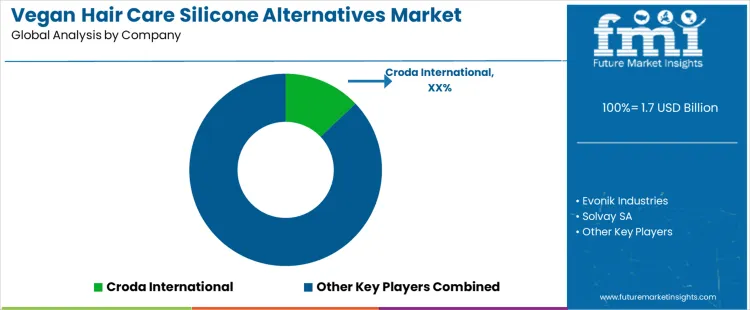
Competition in the vegan hair care silicone alternatives market is defined by formulation performance, hair conditioning efficacy, and compliance with vegan and cruelty-free standards. Croda International develops plant-based and bio-derived silicone alternatives engineered to provide smoothness, shine, and manageable texture in hair care formulations. Evonik Industries supplies functional polymers that mimic silicone benefits, including heat protection and detangling, while adhering to ethical ingredient sourcing. Solvay SA offers emollient and conditioning alternatives compatible with vegan formulations. Dow Inc.
focuses on silicone substitutes designed for stability, sensory performance, and compatibility with surfactants and conditioning agents. Ashland Global Specialty Chemicals provides bio-based polymers tailored for hair feel and gloss enhancement. Other market participants include regional producers and specialty formulators developing innovative, sustainable, and ethically sourced silicone alternatives. Adoption is influenced by hair performance, sensory properties, and compliance with vegan cosmetic certifications.
Differentiation in the vegan hair care silicone alternatives market emerges from molecular design, functional performance, and regulatory compliance. Croda International emphasizes emollient alternatives engineered for smoothness, shine, and spreadability in formulations across shampoos, conditioners, and styling products. Evonik Industries develops plant-derived polymers with heat protection, detangling properties, and long-lasting hair conditioning. Solvay SA focuses on emollient and conditioning chemistries that replicate silicone sensory effects without animal-derived components.
Dow Inc. provides silicone substitutes with robust stability and compatibility across a wide range of cosmetic formulations. Ashland Global Specialty Chemicals offers tailored bio-polymers enhancing hair gloss, elasticity, and combability. Other competitors supply innovative, ethically sourced, and sustainable alternatives optimized for vegan and cruelty-free labeling. Competitive differences arise from performance in hair conditioning, thermal stability, formulation compatibility, and adherence to vegan cosmetic standards.
Key Players in the Vegan Hair Care Silicone Alternatives Market
- Croda International
- Evonik Industries
- Solvay SA
- Dow Inc.
- Ashland Global Specialty Chemicals
- Others
Scope of the Report
| Items | Values |
|---|---|
| Quantitative Units (2026) | USD billion |
| Ingredient Type | Plant-Based Oils & Esters, Natural Waxes & Butters, Sugar & Polysaccharide-Based Alternatives, Bio-Synthetic Alternatives, Others |
| Product Type | Shampoos, Conditioners, Styling Products, Hair Masks & Treatments, Others |
| Distribution Channel | Online Retail, Supermarkets & Hypermarkets, Specialty Beauty Stores, Salons & Professional Channels, Others |
| Region | Asia Pacific, Europe, North America, Latin America, Middle East & Africa |
| Key Countries Covered | China, Japan, South Korea, India, Australia & New Zealand, Germany, United Kingdom, France, Italy, Spain, Nordic, BENELUX, United States, Canada, Mexico, Brazil, Chile, Kingdom of Saudi Arabia, Other GCC Countries, Turkey, South Africa, Other African Union |
| Key Companies Profiled | Croda International, Evonik Industries, Solvay SA, Dow Inc., Ashland Global Specialty Chemicals, Others |
| Additional Attributes | Dollar sales by ingredient type, product type, and distribution channel; regional CAGR, volume and value growth projections; adoption across shampoos, conditioners, styling products, and hair masks; high-performance plant-based and biodegradable alternatives; regulatory and vegan certification compliance; operational reliability and formulation compatibility in hair care products |
Vegan Hair Care Silicone Alternatives Market Segmentation
Ingredient Type:
- Plant-Based Oils & Esters
- Natural Waxes & Butters
- Sugar & Polysaccharide-Based Alternatives
- Bio-Synthetic Alternatives
- Others
Product Type:
- Shampoos
- Conditioners
- Styling Products
- Hair Masks & Treatments
- Others
Distribution Channel:
- Online Retail
- Supermarkets & Hypermarkets
- Specialty Beauty Stores
- Salons & Professional Channels
- Others
Region:
- Asia Pacific
- China
- Japan
- South Korea
- India
- Australia & New Zealand
- ASEAN
- Rest of Asia Pacific
- Europe
- Germany
- United Kingdom
- France
- Italy
- Spain
- Nordic
- BENELUX
- Rest of Europe
- North America
- United States
- Canada
- Mexico
- Latin America
- Brazil
- Chile
- Rest of Latin America
- Middle East & Africa
- Kingdom of Saudi Arabia
- Other GCC Countries
- Turkey
- South Africa
- Other African Union
- Rest of Middle East & Africa
Bibliography
- European Commission – Joint Research Centre (JRC). (2024). Sustainable cosmetic ingredients and alternatives to conventional silicones in personal care formulations. Publications Office of the European Union.
- Organisation for Economic Co‑operation and Development (OECD). (2024). Bio‑based chemicals, green formulation pathways, and sustainability frameworks in consumer products. OECD Environment, Health and Safety Programme.
- European Chemicals Agency (ECHA). (2024). Assessment of polymer substitutes, bio‑based esters, and ingredient safety under REACH for cosmetic use. European Chemicals Agency.
- International Organization for Standardization (ISO). (2024). Cosmetic ingredients — biodegradability, environmental performance, and formulation safety requirements. International Organization for Standardization.
- World Health Organization (WHO). (2024). Safety evaluation of cosmetic ingredients and exposure considerations for personal care products. World Health Organization.
Frequently Asked Questions
How big is the vegan hair care silicone alternatives market in 2026?
The global vegan hair care silicone alternatives market is estimated to be valued at USD 1.7 billion in 2026.
What will be the size of vegan hair care silicone alternatives market in 2036?
The market size for the vegan hair care silicone alternatives market is projected to reach USD 4.0 billion by 2036.
How much will be the vegan hair care silicone alternatives market growth between 2026 and 2036?
The vegan hair care silicone alternatives market is expected to grow at a 8.9% CAGR between 2026 and 2036.
What are the key product types in the vegan hair care silicone alternatives market?
The key product types in vegan hair care silicone alternatives market are plant‑based oils & esters, natural waxes & butters, sugar & polysaccharide‑based alternatives, bio‑synthetic alternatives and others.
Which product type segment to contribute significant share in the vegan hair care silicone alternatives market in 2026?
In terms of product type, shampoos segment to command 32.9% share in the vegan hair care silicone alternatives market in 2026.
Preview the report firsthand - request a free sample
Get SampleGet the brochure for pricing and purchase details.
Get PDFTable of Content
- Executive Summary
- Global Market Outlook
- Demand-side Trends
- Supply-side Trends
- Technology Roadmap Analysis
- Analysis and Recommendations
- Market Overview
- Market Coverage / Taxonomy
- Market Definition / Scope / Limitations
- Market Background
- Market Dynamics
- Drivers
- Restraints
- Opportunity
- Trends
- Scenario Forecast
- Demand in Optimistic Scenario
- Demand in Likely Scenario
- Demand in Conservative Scenario
- Opportunity Map Analysis
- Product Life Cycle Analysis
- Supply Chain Analysis
- Investment Feasibility Matrix
- Value Chain Analysis
- PESTLE and Porter’s Analysis
- Regulatory Landscape
- Regional Parent Market Outlook
- Production and Consumption Statistics
- Import and Export Statistics
- Market Dynamics
- Global Market Analysis 2021 to 2025 and Forecast, 2026 to 2036
- Historical Market Size Value (USD Million) Analysis, 2021 to 2025
- Current and Future Market Size Value (USD Million) Projections, 2026 to 2036
- Y-o-Y Growth Trend Analysis
- Absolute $ Opportunity Analysis
- Global Market Pricing Analysis 2021 to 2025 and Forecast 2026 to 2036
- Global Market Analysis 2021 to 2025 and Forecast 2026 to 2036, By Ingredient Type
- Introduction / Key Findings
- Historical Market Size Value (USD Million) Analysis By Ingredient Type , 2021 to 2025
- Current and Future Market Size Value (USD Million) Analysis and Forecast By Ingredient Type , 2026 to 2036
- Plant‑Based Oils & Esters
- Natural Waxes & Butters
- Sugar & Polysaccharide‑Based Alternatives
- Bio‑Synthetic Alternatives
- Others
- Plant‑Based Oils & Esters
- Y-o-Y Growth Trend Analysis By Ingredient Type , 2021 to 2025
- Absolute $ Opportunity Analysis By Ingredient Type , 2026 to 2036
- Global Market Analysis 2021 to 2025 and Forecast 2026 to 2036, By Product Type
- Introduction / Key Findings
- Historical Market Size Value (USD Million) Analysis By Product Type, 2021 to 2025
- Current and Future Market Size Value (USD Million) Analysis and Forecast By Product Type, 2026 to 2036
- Shampoos
- Conditioners
- Styling Products
- Hair Masks & Treatments
- Others
- Shampoos
- Y-o-Y Growth Trend Analysis By Product Type, 2021 to 2025
- Absolute $ Opportunity Analysis By Product Type, 2026 to 2036
- Global Market Analysis 2021 to 2025 and Forecast 2026 to 2036, By Distribution Channel
- Introduction / Key Findings
- Historical Market Size Value (USD Million) Analysis By Distribution Channel, 2021 to 2025
- Current and Future Market Size Value (USD Million) Analysis and Forecast By Distribution Channel, 2026 to 2036
- Online Retail
- Supermarkets & Hypermarkets
- Specialty Beauty Stores
- Salons & Professional Channels
- Others
- Online Retail
- Y-o-Y Growth Trend Analysis By Distribution Channel, 2021 to 2025
- Absolute $ Opportunity Analysis By Distribution Channel, 2026 to 2036
- Global Market Analysis 2021 to 2025 and Forecast 2026 to 2036, By Region
- Introduction
- Historical Market Size Value (USD Million) Analysis By Region, 2021 to 2025
- Current Market Size Value (USD Million) Analysis and Forecast By Region, 2026 to 2036
- North America
- Latin America
- Western Europe
- Eastern Europe
- East Asia
- South Asia and Pacific
- Middle East & Africa
- Market Attractiveness Analysis By Region
- North America Market Analysis 2021 to 2025 and Forecast 2026 to 2036, By Country
- Historical Market Size Value (USD Million) Trend Analysis By Market Taxonomy, 2021 to 2025
- Market Size Value (USD Million) Forecast By Market Taxonomy, 2026 to 2036
- By Country
- USA
- Canada
- Mexico
- By Ingredient Type
- By Product Type
- By Distribution Channel
- By Country
- Market Attractiveness Analysis
- By Country
- By Ingredient Type
- By Product Type
- By Distribution Channel
- Key Takeaways
- Latin America Market Analysis 2021 to 2025 and Forecast 2026 to 2036, By Country
- Historical Market Size Value (USD Million) Trend Analysis By Market Taxonomy, 2021 to 2025
- Market Size Value (USD Million) Forecast By Market Taxonomy, 2026 to 2036
- By Country
- Brazil
- Chile
- Rest of Latin America
- By Ingredient Type
- By Product Type
- By Distribution Channel
- By Country
- Market Attractiveness Analysis
- By Country
- By Ingredient Type
- By Product Type
- By Distribution Channel
- Key Takeaways
- Western Europe Market Analysis 2021 to 2025 and Forecast 2026 to 2036, By Country
- Historical Market Size Value (USD Million) Trend Analysis By Market Taxonomy, 2021 to 2025
- Market Size Value (USD Million) Forecast By Market Taxonomy, 2026 to 2036
- By Country
- Germany
- UK
- Italy
- Spain
- France
- Nordic
- BENELUX
- Rest of Western Europe
- By Ingredient Type
- By Product Type
- By Distribution Channel
- By Country
- Market Attractiveness Analysis
- By Country
- By Ingredient Type
- By Product Type
- By Distribution Channel
- Key Takeaways
- Eastern Europe Market Analysis 2021 to 2025 and Forecast 2026 to 2036, By Country
- Historical Market Size Value (USD Million) Trend Analysis By Market Taxonomy, 2021 to 2025
- Market Size Value (USD Million) Forecast By Market Taxonomy, 2026 to 2036
- By Country
- Russia
- Poland
- Hungary
- Balkan & Baltic
- Rest of Eastern Europe
- By Ingredient Type
- By Product Type
- By Distribution Channel
- By Country
- Market Attractiveness Analysis
- By Country
- By Ingredient Type
- By Product Type
- By Distribution Channel
- Key Takeaways
- East Asia Market Analysis 2021 to 2025 and Forecast 2026 to 2036, By Country
- Historical Market Size Value (USD Million) Trend Analysis By Market Taxonomy, 2021 to 2025
- Market Size Value (USD Million) Forecast By Market Taxonomy, 2026 to 2036
- By Country
- China
- Japan
- South Korea
- By Ingredient Type
- By Product Type
- By Distribution Channel
- By Country
- Market Attractiveness Analysis
- By Country
- By Ingredient Type
- By Product Type
- By Distribution Channel
- Key Takeaways
- South Asia and Pacific Market Analysis 2021 to 2025 and Forecast 2026 to 2036, By Country
- Historical Market Size Value (USD Million) Trend Analysis By Market Taxonomy, 2021 to 2025
- Market Size Value (USD Million) Forecast By Market Taxonomy, 2026 to 2036
- By Country
- India
- ASEAN
- Australia & New Zealand
- Rest of South Asia and Pacific
- By Ingredient Type
- By Product Type
- By Distribution Channel
- By Country
- Market Attractiveness Analysis
- By Country
- By Ingredient Type
- By Product Type
- By Distribution Channel
- Key Takeaways
- Middle East & Africa Market Analysis 2021 to 2025 and Forecast 2026 to 2036, By Country
- Historical Market Size Value (USD Million) Trend Analysis By Market Taxonomy, 2021 to 2025
- Market Size Value (USD Million) Forecast By Market Taxonomy, 2026 to 2036
- By Country
- Kingdom of Saudi Arabia
- Other GCC Countries
- Turkiye
- South Africa
- Other African Union
- Rest of Middle East & Africa
- By Ingredient Type
- By Product Type
- By Distribution Channel
- By Country
- Market Attractiveness Analysis
- By Country
- By Ingredient Type
- By Product Type
- By Distribution Channel
- Key Takeaways
- Key Countries Market Analysis
- USA
- Pricing Analysis
- Market Share Analysis, 2025
- By Ingredient Type
- By Product Type
- By Distribution Channel
- Canada
- Pricing Analysis
- Market Share Analysis, 2025
- By Ingredient Type
- By Product Type
- By Distribution Channel
- Mexico
- Pricing Analysis
- Market Share Analysis, 2025
- By Ingredient Type
- By Product Type
- By Distribution Channel
- Brazil
- Pricing Analysis
- Market Share Analysis, 2025
- By Ingredient Type
- By Product Type
- By Distribution Channel
- Chile
- Pricing Analysis
- Market Share Analysis, 2025
- By Ingredient Type
- By Product Type
- By Distribution Channel
- Germany
- Pricing Analysis
- Market Share Analysis, 2025
- By Ingredient Type
- By Product Type
- By Distribution Channel
- UK
- Pricing Analysis
- Market Share Analysis, 2025
- By Ingredient Type
- By Product Type
- By Distribution Channel
- Italy
- Pricing Analysis
- Market Share Analysis, 2025
- By Ingredient Type
- By Product Type
- By Distribution Channel
- Spain
- Pricing Analysis
- Market Share Analysis, 2025
- By Ingredient Type
- By Product Type
- By Distribution Channel
- France
- Pricing Analysis
- Market Share Analysis, 2025
- By Ingredient Type
- By Product Type
- By Distribution Channel
- India
- Pricing Analysis
- Market Share Analysis, 2025
- By Ingredient Type
- By Product Type
- By Distribution Channel
- ASEAN
- Pricing Analysis
- Market Share Analysis, 2025
- By Ingredient Type
- By Product Type
- By Distribution Channel
- Australia & New Zealand
- Pricing Analysis
- Market Share Analysis, 2025
- By Ingredient Type
- By Product Type
- By Distribution Channel
- China
- Pricing Analysis
- Market Share Analysis, 2025
- By Ingredient Type
- By Product Type
- By Distribution Channel
- Japan
- Pricing Analysis
- Market Share Analysis, 2025
- By Ingredient Type
- By Product Type
- By Distribution Channel
- South Korea
- Pricing Analysis
- Market Share Analysis, 2025
- By Ingredient Type
- By Product Type
- By Distribution Channel
- Russia
- Pricing Analysis
- Market Share Analysis, 2025
- By Ingredient Type
- By Product Type
- By Distribution Channel
- Poland
- Pricing Analysis
- Market Share Analysis, 2025
- By Ingredient Type
- By Product Type
- By Distribution Channel
- Hungary
- Pricing Analysis
- Market Share Analysis, 2025
- By Ingredient Type
- By Product Type
- By Distribution Channel
- Kingdom of Saudi Arabia
- Pricing Analysis
- Market Share Analysis, 2025
- By Ingredient Type
- By Product Type
- By Distribution Channel
- Turkiye
- Pricing Analysis
- Market Share Analysis, 2025
- By Ingredient Type
- By Product Type
- By Distribution Channel
- South Africa
- Pricing Analysis
- Market Share Analysis, 2025
- By Ingredient Type
- By Product Type
- By Distribution Channel
- USA
- Market Structure Analysis
- Competition Dashboard
- Competition Benchmarking
- Market Share Analysis of Top Players
- By Regional
- By Ingredient Type
- By Product Type
- By Distribution Channel
- Competition Analysis
- Competition Deep Dive
- Croda International
- Overview
- Product Portfolio
- Profitability by Market Segments (Product/Age /Sales Channel/Region)
- Sales Footprint
- Strategy Overview
- Marketing Strategy
- Product Strategy
- Channel Strategy
- Evonik Industries
- Solvay SA
- Dow Inc.
- Ashland Global Specialty Chemicals
- Others
- Croda International
- Competition Deep Dive
- Assumptions & Acronyms Used
- Research Methodology


