

- Industry Size (2026)
- USD 2.1 Bn
- Forecast (2036)
- USD 3.8 Bn
- CAGR (2026 to 2036)
- 6.1%
Hair Styling Additives Market Forecast and Outlook 2026 to 2036
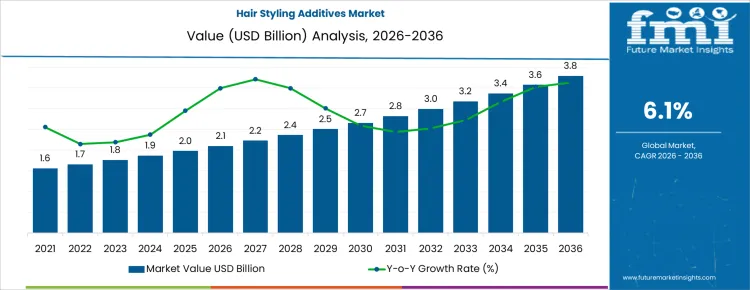
The hair styling additives market is expected to grow from USD 2.1 billion in 2026 to USD 3.8 billion by 2036, reflecting a compound annual growth rate (CAGR) of 6.1%. Hair styling additives are essential ingredients in products like gels, mousses, sprays, and creams that enhance the texture, hold, and appearance of hair. The increasing demand for versatile and high-performance hair styling products is driving the market, with consumers seeking solutions that provide longer-lasting results, while also being gentle on hair and scalp. Innovations in formulation, including the development of more sustainable, natural, and multifunctional ingredients, are expected to further fuel the growth of the market.
The market is also supported by the expanding global beauty and personal care industry, particularly the increasing focus on premium and professional hair care products. Rising consumer interest in DIY hair styling, combined with the growing awareness of the need for eco-friendly products, is likely to drive adoption in both developed and emerging markets. As the trend for personalized and high-performance hair care continues to grow, the demand for innovative hair styling additives is expected to increase significantly.
Quick Stats of the Hair Styling Additives Market
- Hair Styling Additives Market Value (2026): USD 2.1 billion
- Hair Styling Additives Market Forecast Value (2036): USD 3.8 billion
- Hair Styling Additives Market Global Forecast CAGR (2026-2036): 6.1%
- Hair Styling Additives Market Leading Segment: Hotel Chain Contracts 42%
- Key Growth Regions in Hair Styling Additives Market: United States and United Kingdom
- Top Players in Hair Styling Additives Market: Ashland, Ecolab, BASF, Dow, Lubrizol, Croda, Evonik, Clariant, Wacker Chemie, Nouryon, Kuraray
What is the Growth Forecast for the Hair Styling Additives Market through 2036?
The 5-year growth block analysis for the hair styling additives market shows consistent growth over the first part of the forecast period, with an acceleration in the later years. Starting at USD 2.1 billion in 2026, the market grows to USD 2.2 billion in 2027 and USD 2.3 billion in 2028. These early years reflect gradual growth as consumer demand for diverse hair styling solutions continues to rise. During this time, the focus is on increasing product functionality, with additives that improve hold, volume, and shine.
From 2028 to 2030, the market sees moderate growth, reaching USD 2.5 billion in 2029 and USD 2.6 billion in 2030, driven by increasing interest in natural and sustainable hair styling solutions. Between 2030 and 2035, the market experiences further expansion, reaching USD 2.8 billion in 2031, reflecting a shift towards more eco-conscious and performance-driven ingredients. By 2035, the market is expected to see stronger growth as consumers demand more versatile and longer-lasting solutions. The final value of USD 3.8 billion is anticipated by 2036, driven by a combination of growing market size, innovations in product formulations, and the expansion of consumer preferences toward high-quality, sustainable hair styling additives.
Hair Styling Additives Market Key Takeaways
| Metric | Value |
|---|---|
| Industry Sales Value (2026) | USD 2.1 billion |
| Industry Forecast Value (2036) | USD 3.8 billion |
| Industry Forecast CAGR (2026 to 2036) | 6.1% |
What Is Driving the Demand for the Hair Styling Additives Market Globally?
The global demand for hair styling additives is driven by sustained consumer interest in personal grooming, fashion trends, and multifunctional hair care products. Hair styling additives are specialty ingredients used in gels, sprays, mousses, waxes, creams, and pomades to deliver specific performance attributes such as hold, texture, shine, frizz control, curl definition, and humidity resistance. Rapid urbanization, rising disposable incomes, and expanding beauty and personal care consumption in emerging and mature markets alike have increased demand for styling products that enable consumers to achieve varied looks for work, social occasions, and lifestyle expression. Social media, influencer culture, and fashion trends further accelerate interest in novel styling formats, encouraging brands to innovate with advanced additive technologies that offer longlasting performance with a pleasant sensory profile. In addition, growing consumer awareness of hair health has helped elevate demand for styling additives that incorporate conditioning agents, heat protectants, and scalpfriendly ingredients, reinforcing the value of multifunctional formulations that balance style and care.
Future demand for hair styling additives is expected to grow as formulation science, sustainability trends, and consumer expectations evolve. Advances in polymer and fixative chemistry will yield additives that deliver stronger, longer hold with fewer residues and improved washout profiles, while bio-based and biodegradable options will appeal to environmentally conscious consumers. Specialty additives that target specific hair types such as curly, textured, or fine hairwill support market segmentation and personalization, as brands increasingly tailor products to diverse consumer needs. Digital and omnichannel retail growth will expand access to niche styling products, further stimulating demand for innovative additives that differentiate formulations. Regulatory attention on ingredient safety and transparency will influence additive selection and marketing, encouraging producers to adopt safer, well-characterized chemistries and clear labeling practices. As grooming and self expression remain important across demographic groups, the hair styling additives market is expected to expand steadily, driven by performance innovation, sustainability considerations, and cultural trends that celebrate individual style and confidence.
What are the Leading Segments in the Global Hair Styling Additives Market?
The global hair styling additives market is segmented into end product type and performance need. Among the end product types, gels hold the largest share, followed by sprays, creams/pomades, and mousses/foams. Gels are highly favored for their ability to provide structured, long-lasting hairstyles, which is a key driver of their market dominance. On the performance need side, the most significant demand comes from hotel chain contracts, which require reliable and long-lasting styling solutions. Other important performance needs include humidity resistance, strong hold, flexible hold, and shine/matte finish control. The growth of this market is influenced by increasing consumer demand for hairstyling products that deliver both functionality and performance, driven by factors such as lifestyle changes, product innovations, and specialized needs.
What Drives the Growth of Gels in the Hair Styling Additives Market?
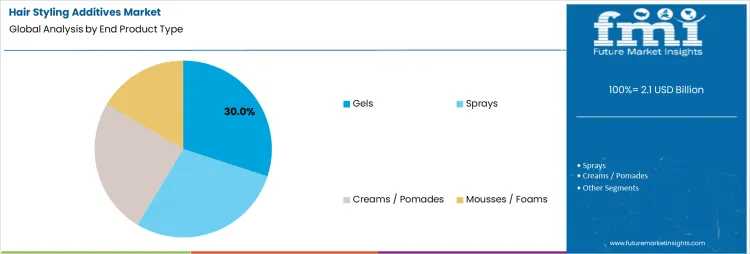
Gels are the leading end product type in the hair styling additives market, accounting for a significant share due to their ability to provide a strong and durable hold. Gels are widely used in a variety of styling applications, including creating structured hairstyles and offering long-lasting effects. Their popularity can be attributed to their versatility and effectiveness in delivering the desired styling results for different hair types, from fine to coarse textures. Gels are also favored for their ease of use, with consumers often preferring them for their ability to maintain hairstyles throughout the day without the need for frequent reapplication. In addition, the development of gel formulations that offer additional benefits such as conditioning, anti-frizz properties, and UV protection has further boosted their appeal in the market. With the increasing demand for products that cater to specific consumer needs, gels are also evolving to include more natural and skin-friendly ingredients, aligning with the growing preference for clean beauty products. Furthermore, gels are crucial in both the professional salon and consumer markets, with their ability to provide long-lasting results making them a staple in everyday hairstyling routines. As innovation in gel formulations continues, and consumer demand for high-performance, versatile styling solutions rises, gels are expected to remain a dominant force in the global hair styling additives market.
What is Driving the Demand for Hotel Chain Contracts in the Hair Styling Additives Market?
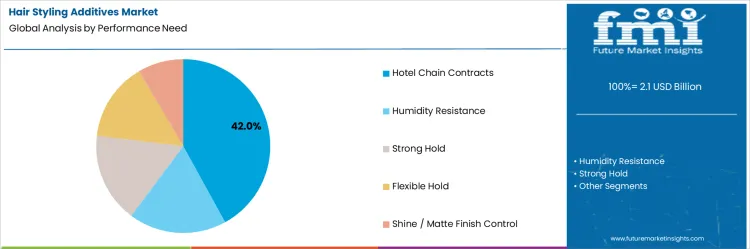
Hotel chain contracts represent a significant performance need within the hair styling additives market, driven by the demand for high-quality, long-lasting products that can withstand various environmental factors such as humidity. Hotel chains require reliable styling products for their guests, who often expect professional-grade products in the amenities provided. The growth of this segment is largely due to the increasing importance of premium, high-performance styling products in the hospitality industry, where brand reputation and customer satisfaction are crucial. Hotel chains typically demand products that offer versatility, ease of use, and the ability to cater to a wide range of hair types and styling preferences. Hair styling additives that offer features such as humidity resistance, strong hold, and a flexible hold are particularly important for these contracts, as they must perform well in diverse conditions. Additionally, hotel chains often seek products that provide a polished finish, with options like shine or matte control, to enhance the overall guest experience. As the global hospitality sector grows and the demand for premium amenities rises, hair styling additives that meet these criteria are expected to see continued demand. With the increasing number of boutique hotels and luxury resorts offering personalized experiences, the need for specialized hair styling products in hotel chain contracts is anticipated to grow, further driving the performance need for these products.
What are the Key Dynamics of the Global Hair Styling Additives Market?
The global hair styling additives market is growing as personal care brands develop products that deliver improved hold, texture, shine and manageability. Styling additives are functional ingredients added to gels, creams, sprays, mousses and pomades to influence hair set, frizz control, moisture balance and finish. Expansion is supported by rising demand for diverse styling options, influence of social media trends, and interest in multifunctional formulations that offer performance with conditioning benefits. Growth spans salons, retail and ecommerce channels as consumers seek solutions tailored to hair type, lifestyle and aesthetic preferences across regions.
What are the Key Drivers for the Global Hair Styling Additives Market?
One key driver is increasing consumer focus on personal appearance and trenddriven styling influenced by beauty, fashion and social platforms. Users seek products that support longlasting styles, humidity resistance and versatile finish effects. Premiumisation of hair care and styling segments encourages innovation in additives that provide advanced performance without compromising hair health or feel. Growth in product formats that blend styling with conditioning, UV protection or thermal defence supports broader adoption. Expansion of online beauty retail and directtoconsumer brands increases accessibility to specialty styling formulations. Demand rises as consumers experiment with diverse textures and looks, prompting brands to expand additive options.
What are the Restraints for the Global Hair Styling Additives Market?
One restraint is formulation complexity when integrating styling additives with conditioning agents and other actives, which may affect stability, feel and performance if not optimised. Highperformance additives may carry higher cost, influencing pricing and adoption by costsensitive brands or consumers. Regulatory oversight on certain synthetic polymers or aerosol propellants in some regions can limit ingredient selection or require reformulation. Consumer preference for mild and lessprocessed products may reduce interest in products perceived as heavy or damaging to hair with longterm use. Variability in hair types and styling preferences across markets requires tailored development, increasing R&D effort.
What is the Key Trends in the Global Hair Styling Additives Market?
A key trend is development of multifunctional additives that combine styling hold with conditioning, shine enhancement and environmental protection, supporting allinone formulations. Natural and biobased styling polymers and filmformers are gaining attention as consumers seek sustainable and milder alternatives. Additives that respond to humidity or thermal styling tools help products adapt performance to realworld conditions. Brands are emphasising clean labeling and lower alcohol or solvent content to appeal to healthoriented buyers. Increased use of predictive formulation tools and sensory profiling accelerates design of additive blends that meet specific consumer desires for texture, finish and longevity in styled hair.
What is the Country-Wise Analysis of the Hair Styling Additives Market?
The hair styling additives market is set to grow steadily, driven by increasing demand for high-performance and long-lasting styling products. Hair styling additives are used to enhance the effectiveness of styling products by providing benefits such as better hold, volume, texture, and humidity resistance. These additives are becoming essential in delivering high-quality products, especially in the personal care and beauty industry. As consumer awareness rises around multifunctional, sustainable, and eco-friendly hair care products, the market is witnessing growing adoption of these additives. High-growth regions like China are seeing significant demand, driven by a large and growing consumer base, expanding urbanization, and increasing interest in premium styling solutions. Developed markets such as the USA, UK, and Germany are witnessing steady growth, driven by the growing demand for high-quality, safe, and effective styling products that meet consumer expectations for performance, sustainability, and ingredient transparency.
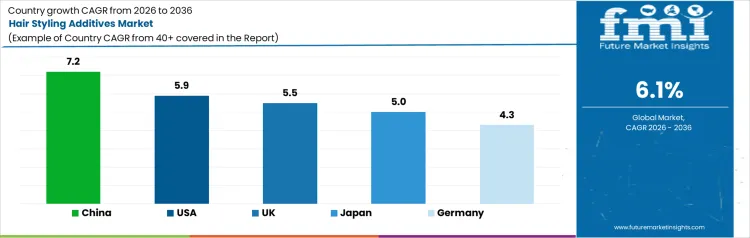
| Country | CAGR (2026 to 2036) |
|---|---|
| China | 7.2% |
| United States | 5.9% |
| United Kingdom | 5.5% |
| Japan | 5% |
| Germany | 4.3% |
What is the Growth Outlook for the Hair Styling Additives Market in China?
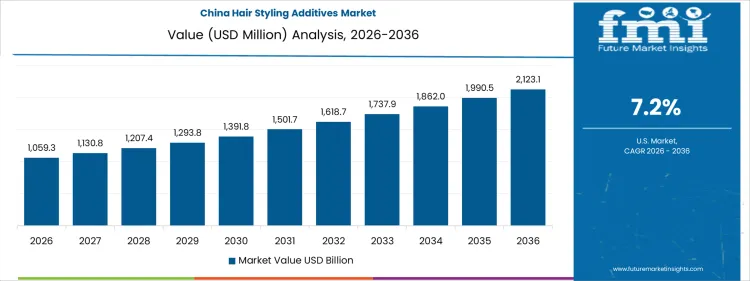
The hair styling additives market in China is expected to grow at the highest rate, with a projected CAGR of 7.2%. China’s rapidly expanding personal care and beauty industry, along with a growing middle class and rising demand for premium hair-care products, is driving the demand for innovative styling additives. Consumers in China are becoming more focused on long-lasting and high-performance products that offer better hold and texture. Additionally, China’s increasing e-commerce penetration and global access to high-quality products are boosting market growth. As the demand for multifunctional, sustainable, and eco-friendly hair styling solutions rises, China is positioned to lead the global market for hair styling additives, with substantial growth expected in the coming years.
What is the Market Outlook for the Hair Styling Additives Market in the United States?
The market for hair styling additives in the United States is expected to grow at a steady pace, with a projected CAGR of 5.9%. The U.S. remains one of the largest markets for personal care and beauty products, with strong consumer demand for high-performance styling solutions. U.S. consumers are increasingly looking for products that deliver effective results, including longer-lasting hold and enhanced texture. The rising demand for multifunctional and sustainable products is pushing the adoption of innovative hair styling additives. Manufacturers are focusing on formulating products that are safe, eco-friendly, and meet consumer preferences. With a focus on ingredient transparency and green formulations, the USA market is expected to experience steady growth, particularly with the increasing trend toward clean and sustainable beauty.
What is the Growth Forecast for the Hair Styling Additives Market in the United Kingdom?
The hair styling additives market in the United Kingdom is expected to grow at a steady pace, with a projected CAGR of 5.5%. The UK’s strong consumer demand for high-quality, eco-friendly personal care products is a key factor driving market growth. As consumers increasingly prioritize sustainability and performance, the demand for innovative styling additives that provide better hold, volume, and texture is rising. Additionally, the UK’s growing preference for natural and safe ingredients is pushing the adoption of mild, effective additives in hair-care formulations. The market is set to continue expanding as more consumers seek long-lasting and premium hair styling products. The UK’s commitment to sustainability and ingredient safety further supports the growth of the hair styling additives market.
What is the Market Outlook for the Hair Styling Additives Market in Japan?
The hair styling additives market in Japan is projected to grow steadily, with a projected CAGR of 5%. Japan’s strong beauty and personal care sector, known for its high standards and quality products, is experiencing increasing demand for hair styling products that deliver better results. Japanese consumers are increasingly seeking products that offer long-lasting hold, volume, and texture, driving the need for effective styling additives. Additionally, Japan’s focus on innovation and natural, eco-friendly formulations is influencing product development in the hair care industry. As consumers in Japan continue to prioritize performance and sustainability, the demand for advanced styling additives will continue to grow at a moderate pace, supporting market expansion.
What are the Growth Prospects for the Hair Styling Additives Market in Germany?
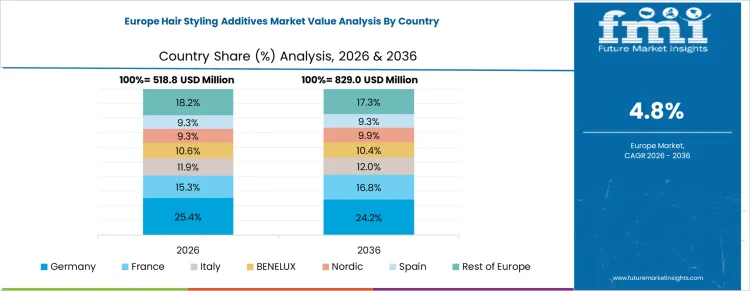
The hair styling additives market in Germany is expected to grow at a moderate pace, with a projected CAGR of 4.3%. Germany’s strong beauty and personal care sector, driven by a focus on sustainability and quality, is increasingly adopting styling additives that enhance product performance. Consumers are becoming more selective in their hair-care product choices, seeking options that offer effective styling, longevity, and eco-friendly formulations. Germany’s commitment to ingredient safety and environmental responsibility is further driving demand for mild, sustainable additives in hair-care products. The market is expected to continue growing as German consumers increasingly seek premium products that align with their values of performance, sustainability, and ingredient transparency.
What is the Competitive Landscape for the Hair Styling Additives Market?
The hair styling additives market is growing rapidly as consumers seek products that enhance performance and sustainability in hair styling formulations. Ashland leads the market with its high-performance styling additives, offering solutions that improve texture, hold, and shine while maintaining product safety. Their commitment to innovation and sustainability places them at the forefront of the market. Ecolab, BASF, and Dow are significant competitors, each offering specialized additives for hair styling products. Ecolab focuses on delivering sustainable and functional ingredients, while BASF and Dow provide a wide range of additives that enhance product performance, catering to the diverse needs of the industry.
Lubrizol, Croda, Evonik, Clariant, Wacker Chemie, Nouryon, and Kuraray contribute further to the competitive dynamics with their diverse portfolios. Lubrizol specializes in innovative additives that improve hair manageability, while Croda and Evonik emphasize sustainability, offering eco-friendly solutions that enhance styling effects. Clariant and Wacker Chemie focus on providing high-quality, functional additives that improve styling longevity. Nouryon and Kuraray offer specialized products for premium styling effects. These companies compete through innovation, sustainability, and the ability to meet the growing demand for high-performing, eco-conscious hair styling additives. Their strategies focus on delivering superior product quality, enhancing styling performance, and catering to the evolving consumer demand for eco-friendly solutions.
Key Players of the Hair Styling Additives Market
- Ashland
- Ecolab
- BASF
- Dow
- Lubrizol
- Croda
- Evonik
- Clariant
- Wacker Chemie
- Nouryon
- Kuraray
Scope of the Report
| Items | Values |
|---|---|
| Quantitative Units (2026) | USD Billion |
| Additive Function | Fixatives / Hold Polymers, Rheology / Thickening Agents, Conditioning & Slip Modifiers, Texture / Sensory Powders |
| Product Form | Resin / Polymer Solution, Emulsions / Dispersions, Powders, Blends / Pre-Systems |
| End Product Type | Gels, Sprays, Creams / Pomades, Mousses / Foams, Others |
| Performance Need | Hotel Chain Contracts, Humidity Resistance, Strong Hold, Flexible Hold, Shine / Matte Finish Control |
| Companies | Ashland, Ecolab, BASF, Dow, Lubrizol, Croda, Evonik, Clariant, Wacker Chemie, Nouryon, Kuraray |
| Regions Covered | North America, Latin America, Western Europe, Eastern Europe, South Asia and Pacific, East Asia, Middle East & Africa |
| Countries Covered | United States, Canada, Mexico, Brazil, Argentina, Germany, France, United Kingdom, Italy, Spain, Netherlands, China, India, Japan, South Korea, ANZ, GCC Countries, South Africa |
| Additional Attributes | Dollar by sales by additive function, product form, end product type, performance need, and region. Includes market trends in hair styling additives, focusing on fixatives, rheology agents, conditioning modifiers, and texture powders. Highlights the role of humidity resistance, strong hold, flexible hold, and shine/matte finish control in styling gels, creams, sprays, and mousses. Focus on cost-effectiveness, performance, regulatory compliance, and market share of key companies in the hair styling additives market. |
Hair Styling Additives Market Segmentation
Additive Function
- Fixatives / Hold Polymers
- Rheology / Thickening Agents
- Conditioning & Slip Modifiers
- Texture / Sensory Powders
Product Form
- Resin / Polymer Solution
- Emulsions / Dispersions
- Powders
- Blends / Pre-Systems
End Product Type
- Gels
- Sprays
- Creams / Pomades
- Mousses / Foams
Performance Need
- Hotel Chain Contracts
- Humidity Resistance
- Strong Hold
- Flexible Hold
- Shine / Matte Finish Control
Region
- Asia Pacific
- China
- Japan
- South Korea
- India
- Australia & New Zealand
- ASEAN
- Rest of Asia Pacific
- Europe
- Germany
- United Kingdom
- France
- Italy
- Spain
- Nordic
- BENELUX
- Rest of Europe
- North America
- United States
- Canada
- Mexico
- Latin America
- Brazil
- Chile
- Rest of Latin America
- Middle East & Africa
- Kingdom of Saudi Arabia
- Other GCC Countries
- Turkey
- South Africa
- Other African Union
- Rest of Middle East & Africa
Frequently Asked Questions
How big is the hair styling additives market in 2026?
The global hair styling additives market is estimated to be valued at USD 2.1 billion in 2026.
What will be the size of hair styling additives market in 2036?
The market size for the hair styling additives market is projected to reach USD 3.8 billion by 2036.
How much will be the hair styling additives market growth between 2026 and 2036?
The hair styling additives market is expected to grow at a 6.1% CAGR between 2026 and 2036.
What are the key product types in the hair styling additives market?
The key product types in hair styling additives market are fixatives / hold polymers, rheology / thickening agents, conditioning & slip modifiers and texture / sensory powders.
Which performance need segment to contribute significant share in the hair styling additives market in 2026?
In terms of product form, hotel chain contracts segment to command 42% share in the hair styling additives market in 2026.
Preview the report firsthand - request a free sample
Get SampleGet the brochure for pricing and purchase details.
Get PDFTable of Content
- Executive Summary
- Global Market Outlook
- Demand-side Trends
- Supply-side Trends
- Technology Roadmap Analysis
- Analysis and Recommendations
- Market Overview
- Market Coverage / Taxonomy
- Market Definition / Scope / Limitations
- Market Background
- Market Dynamics
- Drivers
- Restraints
- Opportunity
- Trends
- Scenario Forecast
- Demand in Optimistic Scenario
- Demand in Likely Scenario
- Demand in Conservative Scenario
- Opportunity Map Analysis
- Product Life Cycle Analysis
- Supply Chain Analysis
- Investment Feasibility Matrix
- Value Chain Analysis
- PESTLE and Porter’s Analysis
- Regulatory Landscape
- Regional Parent Market Outlook
- Production and Consumption Statistics
- Import and Export Statistics
- Market Dynamics
- Global Market Analysis 2021 to 2025 and Forecast, 2026 to 2036
- Historical Market Size Value (USD Million) Analysis, 2021 to 2025
- Current and Future Market Size Value (USD Million) Projections, 2026 to 2036
- Y-o-Y Growth Trend Analysis
- Absolute $ Opportunity Analysis
- Global Market Pricing Analysis 2021 to 2025 and Forecast 2026 to 2036
- Global Market Analysis 2021 to 2025 and Forecast 2026 to 2036, By Additive Function
- Introduction / Key Findings
- Historical Market Size Value (USD Million) Analysis By Additive Function , 2021 to 2025
- Current and Future Market Size Value (USD Million) Analysis and Forecast By Additive Function , 2026 to 2036
- Fixatives / Hold Polymers
- Rheology / Thickening Agents
- Conditioning & Slip Modifiers
- Texture / Sensory Powders
- Y-o-Y Growth Trend Analysis By Additive Function , 2021 to 2025
- Absolute $ Opportunity Analysis By Additive Function , 2026 to 2036
- Global Market Analysis 2021 to 2025 and Forecast 2026 to 2036, By Product Form
- Introduction / Key Findings
- Historical Market Size Value (USD Million) Analysis By Product Form, 2021 to 2025
- Current and Future Market Size Value (USD Million) Analysis and Forecast By Product Form, 2026 to 2036
- Resin / Polymer Solutions
- Emulsions / Dispersions
- Powders
- Blends / Pre-Systems
- Y-o-Y Growth Trend Analysis By Product Form, 2021 to 2025
- Absolute $ Opportunity Analysis By Product Form, 2026 to 2036
- Global Market Analysis 2021 to 2025 and Forecast 2026 to 2036, By End Product Type
- Introduction / Key Findings
- Historical Market Size Value (USD Million) Analysis By End Product Type, 2021 to 2025
- Current and Future Market Size Value (USD Million) Analysis and Forecast By End Product Type, 2026 to 2036
- Gels
- Sprays
- Creams / Pomades
- Mousses / Foams
- Y-o-Y Growth Trend Analysis By End Product Type, 2021 to 2025
- Absolute $ Opportunity Analysis By End Product Type, 2026 to 2036
- Global Market Analysis 2021 to 2025 and Forecast 2026 to 2036, By Performance Need
- Introduction / Key Findings
- Historical Market Size Value (USD Million) Analysis By Performance Need, 2021 to 2025
- Current and Future Market Size Value (USD Million) Analysis and Forecast By Performance Need, 2026 to 2036
- Hotel Chain Contracts
- Humidity Resistance
- Strong Hold
- Flexible Hold
- Shine / Matte Finish Control
- Y-o-Y Growth Trend Analysis By Performance Need, 2021 to 2025
- Absolute $ Opportunity Analysis By Performance Need, 2026 to 2036
- Global Market Analysis 2021 to 2025 and Forecast 2026 to 2036, By Region
- Introduction
- Historical Market Size Value (USD Million) Analysis By Region, 2021 to 2025
- Current Market Size Value (USD Million) Analysis and Forecast By Region, 2026 to 2036
- North America
- Latin America
- Western Europe
- Eastern Europe
- East Asia
- South Asia and Pacific
- Middle East & Africa
- Market Attractiveness Analysis By Region
- North America Market Analysis 2021 to 2025 and Forecast 2026 to 2036, By Country
- Historical Market Size Value (USD Million) Trend Analysis By Market Taxonomy, 2021 to 2025
- Market Size Value (USD Million) Forecast By Market Taxonomy, 2026 to 2036
- By Country
- USA
- Canada
- Mexico
- By Additive Function
- By Product Form
- By End Product Type
- By Performance Need
- By Country
- Market Attractiveness Analysis
- By Country
- By Additive Function
- By Product Form
- By End Product Type
- By Performance Need
- Key Takeaways
- Latin America Market Analysis 2021 to 2025 and Forecast 2026 to 2036, By Country
- Historical Market Size Value (USD Million) Trend Analysis By Market Taxonomy, 2021 to 2025
- Market Size Value (USD Million) Forecast By Market Taxonomy, 2026 to 2036
- By Country
- Brazil
- Chile
- Rest of Latin America
- By Additive Function
- By Product Form
- By End Product Type
- By Performance Need
- By Country
- Market Attractiveness Analysis
- By Country
- By Additive Function
- By Product Form
- By End Product Type
- By Performance Need
- Key Takeaways
- Western Europe Market Analysis 2021 to 2025 and Forecast 2026 to 2036, By Country
- Historical Market Size Value (USD Million) Trend Analysis By Market Taxonomy, 2021 to 2025
- Market Size Value (USD Million) Forecast By Market Taxonomy, 2026 to 2036
- By Country
- Germany
- UK
- Italy
- Spain
- France
- Nordic
- BENELUX
- Rest of Western Europe
- By Additive Function
- By Product Form
- By End Product Type
- By Performance Need
- By Country
- Market Attractiveness Analysis
- By Country
- By Additive Function
- By Product Form
- By End Product Type
- By Performance Need
- Key Takeaways
- Eastern Europe Market Analysis 2021 to 2025 and Forecast 2026 to 2036, By Country
- Historical Market Size Value (USD Million) Trend Analysis By Market Taxonomy, 2021 to 2025
- Market Size Value (USD Million) Forecast By Market Taxonomy, 2026 to 2036
- By Country
- Russia
- Poland
- Hungary
- Balkan & Baltic
- Rest of Eastern Europe
- By Additive Function
- By Product Form
- By End Product Type
- By Performance Need
- By Country
- Market Attractiveness Analysis
- By Country
- By Additive Function
- By Product Form
- By End Product Type
- By Performance Need
- Key Takeaways
- East Asia Market Analysis 2021 to 2025 and Forecast 2026 to 2036, By Country
- Historical Market Size Value (USD Million) Trend Analysis By Market Taxonomy, 2021 to 2025
- Market Size Value (USD Million) Forecast By Market Taxonomy, 2026 to 2036
- By Country
- China
- Japan
- South Korea
- By Additive Function
- By Product Form
- By End Product Type
- By Performance Need
- By Country
- Market Attractiveness Analysis
- By Country
- By Additive Function
- By Product Form
- By End Product Type
- By Performance Need
- Key Takeaways
- South Asia and Pacific Market Analysis 2021 to 2025 and Forecast 2026 to 2036, By Country
- Historical Market Size Value (USD Million) Trend Analysis By Market Taxonomy, 2021 to 2025
- Market Size Value (USD Million) Forecast By Market Taxonomy, 2026 to 2036
- By Country
- India
- ASEAN
- Australia & New Zealand
- Rest of South Asia and Pacific
- By Additive Function
- By Product Form
- By End Product Type
- By Performance Need
- By Country
- Market Attractiveness Analysis
- By Country
- By Additive Function
- By Product Form
- By End Product Type
- By Performance Need
- Key Takeaways
- Middle East & Africa Market Analysis 2021 to 2025 and Forecast 2026 to 2036, By Country
- Historical Market Size Value (USD Million) Trend Analysis By Market Taxonomy, 2021 to 2025
- Market Size Value (USD Million) Forecast By Market Taxonomy, 2026 to 2036
- By Country
- Kingdom of Saudi Arabia
- Other GCC Countries
- Turkiye
- South Africa
- Other African Union
- Rest of Middle East & Africa
- By Additive Function
- By Product Form
- By End Product Type
- By Performance Need
- By Country
- Market Attractiveness Analysis
- By Country
- By Additive Function
- By Product Form
- By End Product Type
- By Performance Need
- Key Takeaways
- Key Countries Market Analysis
- USA
- Pricing Analysis
- Market Share Analysis, 2025
- By Additive Function
- By Product Form
- By End Product Type
- By Performance Need
- Canada
- Pricing Analysis
- Market Share Analysis, 2025
- By Additive Function
- By Product Form
- By End Product Type
- By Performance Need
- Mexico
- Pricing Analysis
- Market Share Analysis, 2025
- By Additive Function
- By Product Form
- By End Product Type
- By Performance Need
- Brazil
- Pricing Analysis
- Market Share Analysis, 2025
- By Additive Function
- By Product Form
- By End Product Type
- By Performance Need
- Chile
- Pricing Analysis
- Market Share Analysis, 2025
- By Additive Function
- By Product Form
- By End Product Type
- By Performance Need
- Germany
- Pricing Analysis
- Market Share Analysis, 2025
- By Additive Function
- By Product Form
- By End Product Type
- By Performance Need
- UK
- Pricing Analysis
- Market Share Analysis, 2025
- By Additive Function
- By Product Form
- By End Product Type
- By Performance Need
- Italy
- Pricing Analysis
- Market Share Analysis, 2025
- By Additive Function
- By Product Form
- By End Product Type
- By Performance Need
- Spain
- Pricing Analysis
- Market Share Analysis, 2025
- By Additive Function
- By Product Form
- By End Product Type
- By Performance Need
- France
- Pricing Analysis
- Market Share Analysis, 2025
- By Additive Function
- By Product Form
- By End Product Type
- By Performance Need
- India
- Pricing Analysis
- Market Share Analysis, 2025
- By Additive Function
- By Product Form
- By End Product Type
- By Performance Need
- ASEAN
- Pricing Analysis
- Market Share Analysis, 2025
- By Additive Function
- By Product Form
- By End Product Type
- By Performance Need
- Australia & New Zealand
- Pricing Analysis
- Market Share Analysis, 2025
- By Additive Function
- By Product Form
- By End Product Type
- By Performance Need
- China
- Pricing Analysis
- Market Share Analysis, 2025
- By Additive Function
- By Product Form
- By End Product Type
- By Performance Need
- Japan
- Pricing Analysis
- Market Share Analysis, 2025
- By Additive Function
- By Product Form
- By End Product Type
- By Performance Need
- South Korea
- Pricing Analysis
- Market Share Analysis, 2025
- By Additive Function
- By Product Form
- By End Product Type
- By Performance Need
- Russia
- Pricing Analysis
- Market Share Analysis, 2025
- By Additive Function
- By Product Form
- By End Product Type
- By Performance Need
- Poland
- Pricing Analysis
- Market Share Analysis, 2025
- By Additive Function
- By Product Form
- By End Product Type
- By Performance Need
- Hungary
- Pricing Analysis
- Market Share Analysis, 2025
- By Additive Function
- By Product Form
- By End Product Type
- By Performance Need
- Kingdom of Saudi Arabia
- Pricing Analysis
- Market Share Analysis, 2025
- By Additive Function
- By Product Form
- By End Product Type
- By Performance Need
- Turkiye
- Pricing Analysis
- Market Share Analysis, 2025
- By Additive Function
- By Product Form
- By End Product Type
- By Performance Need
- South Africa
- Pricing Analysis
- Market Share Analysis, 2025
- By Additive Function
- By Product Form
- By End Product Type
- By Performance Need
- USA
- Market Structure Analysis
- Competition Dashboard
- Competition Benchmarking
- Market Share Analysis of Top Players
- By Regional
- By Additive Function
- By Product Form
- By End Product Type
- By Performance Need
- Competition Analysis
- Competition Deep Dive
- Ecolab
- Overview
- Product Portfolio
- Profitability by Market Segments (Product/Age /Sales Channel/Region)
- Sales Footprint
- Strategy Overview
- Marketing Strategy
- Product Strategy
- Channel Strategy
- BASF
- Dow
- Lubrizol
- Croda
- Evonik
- Clariant
- Wacker Chemie
- Nouryon
- Kuraray
- Ecolab
- Competition Deep Dive
- Assumptions & Acronyms Used
- Research Methodology


