

- Industry Size (2026)
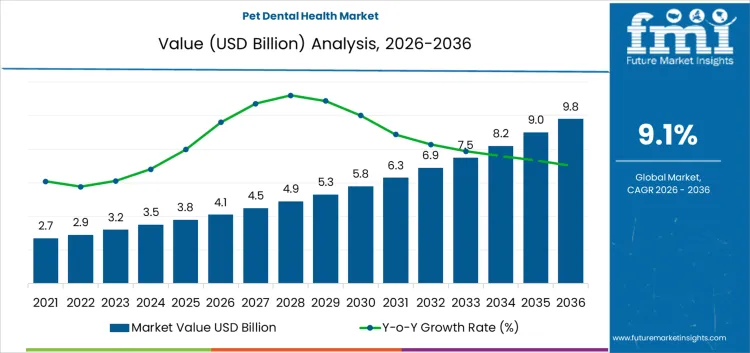
- USD 4.5 Bn
- Forecast (2036)
- USD 9.8 Bn
- CAGR (2026 to 2036)
- 9.10%
Pet Dental Health Market Forecast and Outlook 2026 to 2036
The pet dental health market is likely to reach USD 2.6 billion in 2026 and is projected to reach USD 5.5 billion by 2036, expanding at a CAGR of 7.8% over the forecast period. Competitive power in this market is anchored in brand credibility, veterinary endorsement, and control over formulation know-how rather than scale alone. Leading players defend pricing power through clinically supported claims, recognizable veterinary brands, and bundled product portfolios that span dental treats, oral hygiene products, and therapeutic diets. Entry barriers are reinforced by trust-based purchasing behavior, regulatory compliance for animal health products, and the need for sustained investment in professional education and distribution.
At the same time, fragmentation persists due to low manufacturing complexity for basic chews and gels, allowing regional and private-label brands to compete on price and accessibility. Market control therefore remains uneven, with premium segments consolidating around a few global brands while mass-market offerings remain crowded. Over time, consolidation is most likely in veterinarian-recommended and insurance-linked channels, where credibility and consistency outweigh cost competition.
Quick Stats for Pet Dental Health Market
- Pet Dental Health Market Value (2026): USD 4.5 Billion
- Pet Dental Health Market Forecast Value (2036): USD 9.8 Billion
- Pet Dental Health Market Forecast CAGR 2026 to 2036: 9.10%
- Leading Product Type in Pet Dental Health Market: Dental Treats & Chews
- Leading Application in Pet Dental Health Market: Plaque & Tartar Control
- Key Growth Regions in Pet Dental Health Market: Asia Pacific, Latin America, Middle East & Africa, North America
- Top Key Players in Pet Dental Health Market: Mars Petcare, Nestlé Purina, Hill’s Pet Nutrition (Colgate), Virbac, Ceva Santé Animale, Vetoquinol, Elanco, Boehringer Ingelheim Animal Health, Dechra, Zoetis
Pet Dental Health Market Key Takeaways
| Metric | Value |
|---|---|
| Industry Value (2026) | USD 4.5 Billion |
| Forecast Value (2036) | USD 9.8 Billion |
| Forecast CAGR 2026 to 2036 | 9.10% |
How Is the Global Pet Dental Health Market Advancing?
The global pet dental health market is advancing at a strong pace, driven by increasing awareness among pet owners regarding the importance of oral hygiene in companion animals. Dental health products and services are widely used to prevent and manage conditions such as plaque buildup, gingivitis, periodontal disease, and tooth decay, which are common among dogs and cats if left untreated.
A key driver supporting market growth is the growing trend of pet humanization and rising expenditure on preventive veterinary care. Pet owners are increasingly adopting regular dental care routines, including dental treats, chews, oral rinses, toothpastes, and professional veterinary dental services. Veterinary professionals are also emphasizing early dental intervention to prevent long-term health complications linked to poor oral health.
Ongoing advancements in product formulations and veterinary dental practices are further strengthening market expansion. Innovations in enzymatic dental products, long-lasting dental chews, and non-anesthetic cleaning solutions are improving effectiveness and ease of use. Expanding distribution through veterinary clinics, specialty pet stores, and e-commerce platforms is enhancing product accessibility. As preventive pet healthcare continues to gain importance, the pet dental health market is expected to maintain consistent growth over the forecast period.
What Is the Segment-Wise Overview of the Pet Dental Health Market?
The pet dental health market is driven by preventive oral care adoption and growing owner awareness of dental disease risks. Dental treats and chews lead with a 42% share, reflecting strong preference for easy-to-administer products that support daily plaque reduction while encouraging pet compliance. These products integrate oral care into routine feeding without added complexity. On the application side, plaque and tartar control accounts for 54% of demand, as managing buildup is central to preventing gum disease and tooth loss in pets. Veterinary guidance increasingly emphasizes routine plaque management, reinforcing demand for preventive solutions.
Why Do Dental Treats and Chews Lead the Pet Dental Health Market?
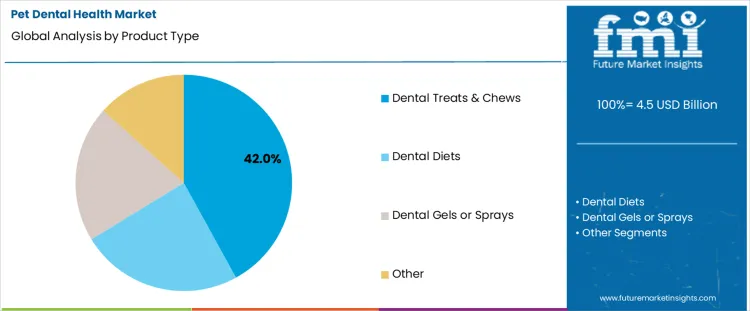
Dental treats and chews account for 42% of the pet dental health market due to their ease of use, high pet acceptance, and preventive oral care benefits. These products help mechanically reduce plaque and tartar buildup through chewing action, supporting daily dental maintenance without requiring complex routines. Pet owners prefer treats and chews because they combine oral care with reward-based feeding, improving compliance compared to gels or sprays. Many formulations also include functional ingredients that support gum health and breath control. Their availability across multiple price points and compatibility with routine feeding habits further strengthen adoption. As awareness of preventive pet dental care increases, dental treats and chews remain the most widely used and accessible solution for maintaining oral hygiene in companion animals.
Why Does Plaque and Tartar Control Dominate Applications in the Pet Dental Health Market?
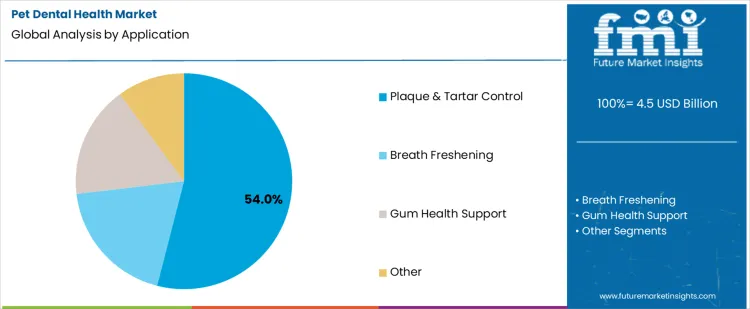
Plaque and tartar control represents 54% of total application demand, making it the dominant focus within the pet dental health market. Accumulation of plaque and tartar is the primary cause of dental disease in pets, leading to gum inflammation, tooth loss, and secondary health issues if untreated. Pet owners increasingly prioritize products that address these root causes rather than only cosmetic benefits such as breath freshening. Veterinary guidance also emphasizes routine plaque management as a foundation for long-term oral health. Products targeting plaque and tartar control are commonly integrated into daily feeding or care routines, ensuring consistent use. This strong focus on preventive dental maintenance continues to position plaque and tartar control as the leading application segment.
What Are the Key Dynamics for the Pet Dental Health Market?
The pet dental health market is driven by increasing awareness of oral health issues in companion animals and the recognition that dental conditions can impact overall well-being. Pet dental products and services include toothbrushes, toothpaste formulations, dental chews, oral rinses, professional cleaning services, and diagnostic tools used to prevent and treat periodontal disease, gingivitis, and tooth decay. Key market dynamics include rising pet ownership globally, greater spending on preventive care, and enhanced veterinary recommendations for regular dental maintenance. Advances in veterinary education on the link between oral and systemic health are encouraging routine dental checkups. Consumer preference for premium, pet-specific dental care products and proactive health maintenance strategies supports growth, as pet owners increasingly view dental care as an essential component of preventive wellness plans.
Why Is the Pet Dental Health Market Growing?
The pet dental health market is growing as pet owners become more knowledgeable about the consequences of untreated dental problems and the value of routine oral care. Rising disposable income and humanization of pets contribute to increased spending on preventive and therapeutic dental products and veterinary services. Veterinary clinics are promoting dental assessments during routine wellness visits, driving early detection and treatment of dental conditions. Product innovation, including enzymatic dental chews, oral care treats, and user-friendly home dental kits, enhances caregiver ability to maintain oral hygiene between professional visits. Digital platforms and social media are raising awareness about pet oral health, reinforcing demand for convenient and effective solutions. Growth in the number of veterinary dental specialists and broader availability of dental care services further support market expansion.
How Are the Key Drivers Shaping the Pet Dental Health Market?
Key drivers shaping the market pet dental health market include the increasing incidence of dental diseases in pets, particularly in aging dogs and cats, where periodontal disease is common. Veterinary recommendations for annual or biannual dental checkups are influencing pet owner behavior toward proactive oral care. Product innovation in dental hygiene chews and enzymatic formulations that reduce plaque and tartar buildup is making home care more accessible and effective. The expansion of pet insurance programs that include dental coverage encourages owners to seek professional dental treatments. Partnerships between pet product manufacturers and veterinary associations help promote best practices and evidence-based oral care solutions. As more caregivers seek comprehensive pet health plans, dental health products and services become integral to routine care regimens.
What Is the Growth Outlook for the Pet Dental Health Market by Country?
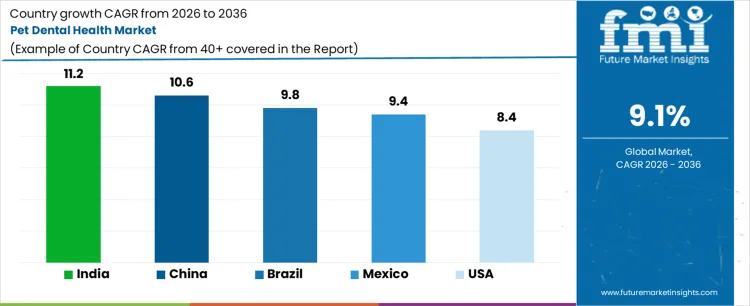
| Country | CAGR (%) |
|---|---|
| India | 11.2% |
| China | 10.6% |
| Brazil | 9.8% |
| Mexico | 9.4% |
| USA | 8.4% |
The pet dental health market is expanding across both emerging and developed regions as pet owners increasingly prioritize preventive animal care. India leads with an 11.2% CAGR, driven by rising pet ownership and improving awareness of oral hygiene. China follows at 10.6%, supported by strong pet humanization trends and digital retail expansion. Brazil (9.8%) and Mexico (9.4%) show steady growth, driven by expanding veterinary services and increasing education around pet wellness. The USA grows at 8.4%, reflecting a mature but resilient market supported by preventive care adoption and premium product availability.
What Is Driving the Growth of the Pet Dental Health Market in India?
The pet dental health market in India is growing at a CAGR of 11.2%, driven by rising pet ownership and increasing awareness of companion animal health. Urban households are increasingly treating pets as family members, leading to higher spending on preventive healthcare, including dental hygiene. Veterinarians are actively educating pet owners about risks associated with periodontal disease, bad breath, and tooth loss, which is boosting demand for dental chews, oral sprays, toothpastes, and professional cleaning services. Expansion of veterinary clinics and pet specialty stores is improving access to dental health products. Growth of e-commerce platforms is also enabling wider product availability and consumer education. In addition, rising disposable incomes and increasing adoption of dogs and cats in metropolitan areas support market growth. As preventive pet care awareness continues to improve, demand for pet dental health products in India is expected to grow rapidly.
How Is the Pet Dental Health Market Expanding in China?
The pet dental health market in China is expanding at a CAGR of 10.6%, supported by rapid growth in the companion animal population and rising spending on pet care. Urban pet owners are increasingly aware of dental diseases and their impact on overall pet health, encouraging adoption of oral care routines. Growth of premium pet food brands and functional dental treats is driving market expansion. Veterinary clinics in major cities are offering more dental check-ups and cleaning services, further supporting demand. China’s strong e-commerce ecosystem plays a key role in distributing dental health products and educating consumers through digital platforms. In addition, younger pet owners show high willingness to invest in preventive and wellness-focused pet products. As pet humanization trends continue and veterinary care standards improve, demand for pet dental health solutions in China is expected to remain strong.
What Is Supporting Growth of the Pet Dental Health Market in Brazil?
The pet dental health market in Brazil is growing at a CAGR of 9.8%, driven by a large pet population and increasing focus on animal wellness. Pet owners are becoming more aware of oral health issues such as plaque buildup and gum disease, encouraging preventive care adoption. Expansion of veterinary hospitals, grooming centers, and pet retail chains is improving access to dental health products and services. Dental chews and functional treats are particularly popular due to ease of use and affordability. Growth of private veterinary care and increasing recommendations for routine dental hygiene are supporting market development. In addition, improved distribution networks and availability of international pet care brands are strengthening product penetration. As Brazilian pet owners increasingly prioritize long-term health and comfort, demand for pet dental health products is expected to grow steadily.
How Is the Pet Dental Health Market Developing in Mexico?
The pet dental health market in Mexico is expanding at a CAGR of 9.4%, supported by growing pet adoption and gradual improvement in veterinary care access. Awareness of dental hygiene among pet owners is increasing, particularly in urban areas, where preventive pet healthcare is gaining traction. Veterinarians are increasingly recommending dental chews, oral gels, and regular cleanings to manage common oral health problems. Growth of pharmacy-led pet care sections and specialty pet stores is improving product accessibility. Affordability remains an important factor, supporting demand for cost-effective dental care solutions. In addition, rising exposure to global pet care trends through online platforms is influencing consumer behavior. As education around pet dental health improves, demand for oral care products and services in Mexico is expected to rise consistently.
How Is the Pet Dental Health Market Expanding in the USA?
The pet dental health market in the USA is growing at a CAGR of 8.4%, driven by high awareness of preventive veterinary care and strong spending on companion animal health. Routine dental check-ups and cleanings are widely recommended by veterinarians, supporting steady demand for professional services. The market benefits from a wide range of dental products, including enzymatic toothpastes, water additives, dental chews, and prescription diets. Strong presence of pet insurance and wellness plans further supports preventive dental care adoption. Technological advancements and premium product offerings are also influencing purchasing decisions. While the market is relatively mature, ongoing pet humanization and focus on longevity and quality of life continue to drive demand. As pet owners remain proactive about oral hygiene, the USA pet dental health market is expected to grow steadily.
How Are Companies Competing in the Pet Dental Health Market?
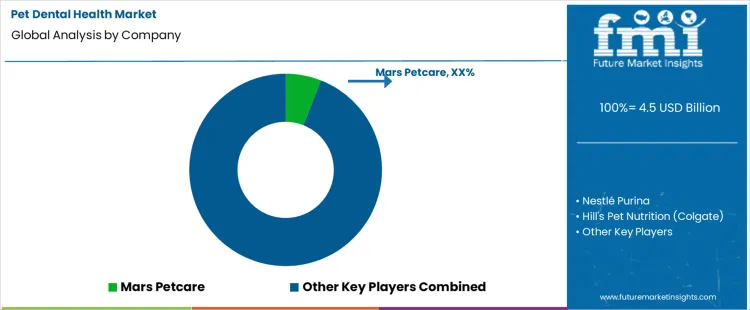
Competition in the pet dental health market is shaped by growing awareness of periodontal disease, rising pet humanization, and increased veterinary emphasis on preventive oral care. Companies compete on the clinical effectiveness of plaque and tartar control, ease of daily administration, palatability for pets, and credibility with veterinarians and pet owners. Product differentiation spans dental diets, chews, treats, enzymatic toothpastes, gels, sprays, and professional veterinary solutions. Education-driven positioning is also critical, as brands increasingly link oral health to broader outcomes such as longevity, cardiovascular health, and overall wellbeing in pets.
Mars Petcare, Nestlé Purina, and Hill’s Pet Nutrition (Colgate) lead competition through nutrition-led dental care strategies and strong consumer trust. Mars Petcare emphasizes dental chews and treats designed to provide mechanical abrasion that reduces plaque while fitting easily into daily feeding routines. Nestlé Purina differentiates through scientifically formulated dental diets and treats backed by nutritional research and long-standing relationships with veterinarians. Hill’s Pet Nutrition focuses on prescription and veterinary-recommended dental diets that actively manage tartar buildup, positioning food as a preventive dental intervention rather than a supplemental solution.
Virbac, Ceva Santé Animale, Vetoquinol, Elanco, Boehringer Ingelheim Animal Health, Dechra, and Zoetis compete through veterinary-grade dental products and professional care integration. Virbac is widely recognized for enzymatic toothpastes and chews commonly recommended in clinical practice. Ceva, Vetoquinol, and Dechra emphasize targeted oral hygiene products within broader companion animal portfolios. Elanco, Boehringer Ingelheim, and Zoetis leverage deep veterinary networks to promote dental health as part of routine preventive care. Across the market, competitive advantage depends on proven efficacy, veterinary endorsement, ease of use, and the ability to embed dental care into everyday pet health management.
Key Players in Pet Dental Health Market
- Mars Petcare
- Nestlé Purina
- Hill's Pet Nutrition (Colgate)
- Virbac
- Ceva Santé Animale
- Vetoquinol
- Elanco
- Boehringer Ingelheim Animal Health
- Dechra
- Zoetis
Scope of Report
| Attributes | Description |
|---|---|
| Quantitative Unit (2026) | USD Billion |
| Product Type | Dental Treats & Chews, Dental Diets, Dental Gels or Sprays, Other |
| Application | Plaque & Tartar Control, Breath Freshening, Gum Health Support, Other |
| Regions Covered | Asia Pacific, Europe, North America, Latin America, Middle East & Africa |
| Countries Covered | China, Japan, South Korea, India, Australia & New Zealand, ASEAN, Rest of Asia Pacific, Germany, United Kingdom, France, Italy, Spain, Nordic, BENELUX, Rest of Europe, United States, Canada, Mexico, Brazil, Chile, Rest of Latin America, Kingdom of Saudi Arabia, Other GCC Countries, Turkey, South Africa, Other African Union, Rest of Middle East & Africa |
| Key Companies Profiled | Mars Petcare, Nestlé Purina, Hill's Pet Nutrition (Colgate), Virbac, Ceva Santé Animale, Vetoquinol, Elanco, Boehringer Ingelheim Animal Health, Dechra, Zoetis |
| Additional Attributes | Dollar sales by product type and application; regional market size and forecast analysis; growth outlook across major regions; adoption trends for preventive pet dental care products; assessment of pet owner awareness, veterinary recommendation patterns, and demand dynamics across functional dental health applications. |
Pet Dental Health Market by Key Segments
Product Type
- Dental Treats & Chews
- Dental Diets
- Dental Gels or Sprays
- Other
Application
- Plaque & Tartar Control
- Breath Freshening
- Gum Health Support
- Other
Region
- Asia Pacific
- China
- Japan
- South Korea
- India
- Australia & New Zealand
- ASEAN
- Rest of Asia Pacific
- Europe
- Germany
- United Kingdom
- France
- Italy
- Spain
- Nordic
- BENELUX
- Rest of Europe
- North America
- United States
- Canada
- Mexico
- Latin America
- Brazil
- Chile
- Rest of Latin America
- Middle East & Africa
- Kingdom of Saudi Arabia
- Other GCC Countries
- Turkey
- South Africa
- Other African Union
- Rest of Middle East & Africa
Bibliography
- Mars Petcare. (2024). Oral care for pets: Dental treats, chews, and preventive health solutions. Mars Petcare.
- Nestlé Purina PetCare. (2024). Scientific approaches to pet dental health and nutrition-based oral care. Nestlé Purina PetCare.
- Hill’s Pet Nutrition. (2024). Prescription and veterinary-recommended dental diets for plaque and tartar control. Hill’s Pet Nutrition (Colgate-Palmolive).
- Ceva Santé Animale. (2024). Companion animal dental health products and preventive care strategies. Ceva Santé Animale.
- Elanco Animal Health. (2024). Preventive veterinary care and oral health solutions for companion animals. Elanco Animal Health.
Frequently Asked Questions
How big is the pet dental health market in 2026?
The global pet dental health market is estimated to be valued at USD 4.5 billion in 2026.
What will be the size of pet dental health market in 2036?
The market size for the pet dental health market is projected to reach USD 10.8 billion by 2036.
How much will be the pet dental health market growth between 2026 and 2036?
The pet dental health market is expected to grow at a 9.1% CAGR between 2026 and 2036.
What are the key product types in the pet dental health market?
The key product types in pet dental health market are dental treats & chews, dental diets, dental gels or sprays and other.
Which application segment to contribute significant share in the pet dental health market in 2026?
In terms of application, plaque & tartar control segment to command 54.0% share in the pet dental health market in 2026.
Preview the report firsthand - request a free sample
Get SampleGet the brochure for pricing and purchase details.
Get PDFTable of Content
- Executive Summary
- Global Market Outlook
- Demand-side Trends
- Supply-side Trends
- Technology Roadmap Analysis
- Analysis and Recommendations
- Market Overview
- Market Coverage / Taxonomy
- Market Definition / Scope / Limitations
- Market Background
- Market Dynamics
- Drivers
- Restraints
- Opportunity
- Trends
- Scenario Forecast
- Demand in Optimistic Scenario
- Demand in Likely Scenario
- Demand in Conservative Scenario
- Opportunity Map Analysis
- Product Life Cycle Analysis
- Supply Chain Analysis
- Investment Feasibility Matrix
- Value Chain Analysis
- PESTLE and Porter’s Analysis
- Regulatory Landscape
- Regional Parent Market Outlook
- Production and Consumption Statistics
- Import and Export Statistics
- Market Dynamics
- Global Market Analysis 2021 to 2025 and Forecast, 2026 to 2036
- Historical Market Size Value (USD Million) Analysis, 2021 to 2025
- Current and Future Market Size Value (USD Million) Projections, 2026 to 2036
- Y-o-Y Growth Trend Analysis
- Absolute $ Opportunity Analysis
- Global Market Pricing Analysis 2021 to 2025 and Forecast 2026 to 2036
- Global Market Analysis 2021 to 2025 and Forecast 2026 to 2036, By Product Type
- Introduction / Key Findings
- Historical Market Size Value (USD Million) Analysis By Product Type , 2021 to 2025
- Current and Future Market Size Value (USD Million) Analysis and Forecast By Product Type , 2026 to 2036
- Dental Treats & Chews
- Dental Diets
- Dental Gels or Sprays
- Other
- Dental Treats & Chews
- Y-o-Y Growth Trend Analysis By Product Type , 2021 to 2025
- Absolute $ Opportunity Analysis By Product Type , 2026 to 2036
- Global Market Analysis 2021 to 2025 and Forecast 2026 to 2036, By Application
- Introduction / Key Findings
- Historical Market Size Value (USD Million) Analysis By Application, 2021 to 2025
- Current and Future Market Size Value (USD Million) Analysis and Forecast By Application, 2026 to 2036
- Plaque & Tartar Control
- Breath Freshening
- Gum Health Support
- Other
- Plaque & Tartar Control
- Y-o-Y Growth Trend Analysis By Application, 2021 to 2025
- Absolute $ Opportunity Analysis By Application, 2026 to 2036
- Global Market Analysis 2021 to 2025 and Forecast 2026 to 2036, By Region
- Introduction
- Historical Market Size Value (USD Million) Analysis By Region, 2021 to 2025
- Current Market Size Value (USD Million) Analysis and Forecast By Region, 2026 to 2036
- North America
- Latin America
- Western Europe
- Eastern Europe
- East Asia
- South Asia and Pacific
- Middle East & Africa
- Market Attractiveness Analysis By Region
- North America Market Analysis 2021 to 2025 and Forecast 2026 to 2036, By Country
- Historical Market Size Value (USD Million) Trend Analysis By Market Taxonomy, 2021 to 2025
- Market Size Value (USD Million) Forecast By Market Taxonomy, 2026 to 2036
- By Country
- USA
- Canada
- Mexico
- By Product Type
- By Application
- By Country
- Market Attractiveness Analysis
- By Country
- By Product Type
- By Application
- Key Takeaways
- Latin America Market Analysis 2021 to 2025 and Forecast 2026 to 2036, By Country
- Historical Market Size Value (USD Million) Trend Analysis By Market Taxonomy, 2021 to 2025
- Market Size Value (USD Million) Forecast By Market Taxonomy, 2026 to 2036
- By Country
- Brazil
- Chile
- Rest of Latin America
- By Product Type
- By Application
- By Country
- Market Attractiveness Analysis
- By Country
- By Product Type
- By Application
- Key Takeaways
- Western Europe Market Analysis 2021 to 2025 and Forecast 2026 to 2036, By Country
- Historical Market Size Value (USD Million) Trend Analysis By Market Taxonomy, 2021 to 2025
- Market Size Value (USD Million) Forecast By Market Taxonomy, 2026 to 2036
- By Country
- Germany
- UK
- Italy
- Spain
- France
- Nordic
- BENELUX
- Rest of Western Europe
- By Product Type
- By Application
- By Country
- Market Attractiveness Analysis
- By Country
- By Product Type
- By Application
- Key Takeaways
- Eastern Europe Market Analysis 2021 to 2025 and Forecast 2026 to 2036, By Country
- Historical Market Size Value (USD Million) Trend Analysis By Market Taxonomy, 2021 to 2025
- Market Size Value (USD Million) Forecast By Market Taxonomy, 2026 to 2036
- By Country
- Russia
- Poland
- Hungary
- Balkan & Baltic
- Rest of Eastern Europe
- By Product Type
- By Application
- By Country
- Market Attractiveness Analysis
- By Country
- By Product Type
- By Application
- Key Takeaways
- East Asia Market Analysis 2021 to 2025 and Forecast 2026 to 2036, By Country
- Historical Market Size Value (USD Million) Trend Analysis By Market Taxonomy, 2021 to 2025
- Market Size Value (USD Million) Forecast By Market Taxonomy, 2026 to 2036
- By Country
- China
- Japan
- South Korea
- By Product Type
- By Application
- By Country
- Market Attractiveness Analysis
- By Country
- By Product Type
- By Application
- Key Takeaways
- South Asia and Pacific Market Analysis 2021 to 2025 and Forecast 2026 to 2036, By Country
- Historical Market Size Value (USD Million) Trend Analysis By Market Taxonomy, 2021 to 2025
- Market Size Value (USD Million) Forecast By Market Taxonomy, 2026 to 2036
- By Country
- India
- ASEAN
- Australia & New Zealand
- Rest of South Asia and Pacific
- By Product Type
- By Application
- By Country
- Market Attractiveness Analysis
- By Country
- By Product Type
- By Application
- Key Takeaways
- Middle East & Africa Market Analysis 2021 to 2025 and Forecast 2026 to 2036, By Country
- Historical Market Size Value (USD Million) Trend Analysis By Market Taxonomy, 2021 to 2025
- Market Size Value (USD Million) Forecast By Market Taxonomy, 2026 to 2036
- By Country
- Kingdom of Saudi Arabia
- Other GCC Countries
- Turkiye
- South Africa
- Other African Union
- Rest of Middle East & Africa
- By Product Type
- By Application
- By Country
- Market Attractiveness Analysis
- By Country
- By Product Type
- By Application
- Key Takeaways
- Key Countries Market Analysis
- USA
- Pricing Analysis
- Market Share Analysis, 2025
- By Product Type
- By Application
- Canada
- Pricing Analysis
- Market Share Analysis, 2025
- By Product Type
- By Application
- Mexico
- Pricing Analysis
- Market Share Analysis, 2025
- By Product Type
- By Application
- Brazil
- Pricing Analysis
- Market Share Analysis, 2025
- By Product Type
- By Application
- Chile
- Pricing Analysis
- Market Share Analysis, 2025
- By Product Type
- By Application
- Germany
- Pricing Analysis
- Market Share Analysis, 2025
- By Product Type
- By Application
- UK
- Pricing Analysis
- Market Share Analysis, 2025
- By Product Type
- By Application
- Italy
- Pricing Analysis
- Market Share Analysis, 2025
- By Product Type
- By Application
- Spain
- Pricing Analysis
- Market Share Analysis, 2025
- By Product Type
- By Application
- France
- Pricing Analysis
- Market Share Analysis, 2025
- By Product Type
- By Application
- India
- Pricing Analysis
- Market Share Analysis, 2025
- By Product Type
- By Application
- ASEAN
- Pricing Analysis
- Market Share Analysis, 2025
- By Product Type
- By Application
- Australia & New Zealand
- Pricing Analysis
- Market Share Analysis, 2025
- By Product Type
- By Application
- China
- Pricing Analysis
- Market Share Analysis, 2025
- By Product Type
- By Application
- Japan
- Pricing Analysis
- Market Share Analysis, 2025
- By Product Type
- By Application
- South Korea
- Pricing Analysis
- Market Share Analysis, 2025
- By Product Type
- By Application
- Russia
- Pricing Analysis
- Market Share Analysis, 2025
- By Product Type
- By Application
- Poland
- Pricing Analysis
- Market Share Analysis, 2025
- By Product Type
- By Application
- Hungary
- Pricing Analysis
- Market Share Analysis, 2025
- By Product Type
- By Application
- Kingdom of Saudi Arabia
- Pricing Analysis
- Market Share Analysis, 2025
- By Product Type
- By Application
- Turkiye
- Pricing Analysis
- Market Share Analysis, 2025
- By Product Type
- By Application
- South Africa
- Pricing Analysis
- Market Share Analysis, 2025
- By Product Type
- By Application
- USA
- Market Structure Analysis
- Competition Dashboard
- Competition Benchmarking
- Market Share Analysis of Top Players
- By Regional
- By Product Type
- By Application
- Competition Analysis
- Competition Deep Dive
- Mars Petcare
- Overview
- Product Portfolio
- Profitability by Market Segments (Product/Age /Sales Channel/Region)
- Sales Footprint
- Strategy Overview
- Marketing Strategy
- Product Strategy
- Channel Strategy
- Nestlé Purina
- Hill's Pet Nutrition (Colgate)
- Virbac
- Ceva Santé Animale
- Vetoquinol
- Elanco
- Boehringer Ingelheim Animal Health
- Dechra
- Zoetis
- Mars Petcare
- Competition Deep Dive
- Assumptions & Acronyms Used
- Research Methodology


