

- Industry Size (2025)
- USD 1.3 Bn
- Forecast (2035)
- USD 2.3 Bn
- CAGR (2025 to 2035)
- 5.9%
PFAS-Free Powder Coatings Market Forecast and Outlook 2026 to 2036
The global PFAS-free powder coatings market, valued at USD 1.3 billion in 2026, is projected to grow to USD 2.3 billion by 2036, with a CAGR of 5.90%. The market is driven by increasing demand for eco-friendly and durable coating solutions across industries like automotive, construction, and electronics.
Polyester powder coatings, which represent 32% of the resin type market share, are the leading choice due to their excellent chemical resistance, durability, and versatility. Thermosetting powder coatings, which dominate the technology segment with an 80% share, are preferred for their superior performance in high-temperature applications and long-lasting finishes. The growth is further supported by the trend toward sustainable coating alternatives in response to regulatory pressures and consumer demand.
Quick Stats for PFAS-Free Powder Coatings Market
- PFAS-Free Powder Coatings Market Value (2025): USD 1.3 billion
- PFAS-Free Powder Coatings Market Forecast Value (2035): USD 2.3 billion
- PFAS-Free Powder Coatings Market Global Forecast CAGR: 5.90%
- Leading Technology in PFAS-Free Powder Coatings Market: Thermosetting powder coatings (80%)
- Key Growth Regions in PFAS-Free Powder Coatings Market: China, India, USA, UK, Japan
- Top Players in PFAS-Free Powder Coatings Market: PPG Industries, Covestro, Clariant, Wyn Polymers, Shamrock Technologies, BYK, Evonik, Madsen Steel Wire, igus, Lehvoss Group
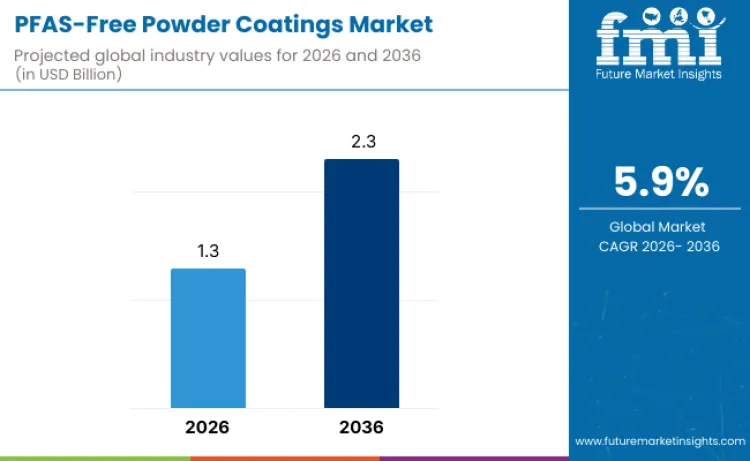
PFAS-Free Powder Coatings Market Key Takeaways
| Metric | Value |
|---|---|
| Industry Sales Value (2025) | USD 1.3 Billion |
| Industry Forecast Value (2035) | USD 2.3 Billion |
| Industry Forecast CAGR (2025-2035) | 5.9% |
What Is Driving the Demand for PFAS-Free Powder Coatings Globally?
The global demand for PFAS-free powder coatings is primarily driven by stricter regulatory controls on PFAS chemicals and increasing demand for safer, environmentally friendly surface finishing solutions. Powder coatings are widely used in industries such as automotive, appliances, construction, and consumer goods due to their durability, corrosion resistance, and aesthetic flexibility. Traditionally, certain powder coatings contained PFAS to enhance performance, but growing concerns about their persistence and potential health risks have led to regulatory restrictions on their use in key markets. As regulations tighten, manufacturers are seeking alternatives to PFAS-based formulations, driving the demand for PFAS-free powder coatings. Additionally, there is rising consumer and industry demand for products that meet sustainability goals, further encouraging the transition to safer, PFAS-free alternatives.
Future demand for PFAS-free powder coatings is expected to grow as industries increasingly adopt environmentally friendly practices and regulatory pressure continues to mount. Key sectors, including automotive, construction, and electronics, will continue to rely on powder coatings, which offer superior performance in terms of durability and appearance. As alternative chemistries for powder coatings are developed, their performance characteristics are expected to improve, making them more competitive with traditional PFAS-based solutions. The adoption of PFAS-free alternatives will depend on factors such as cost-effectiveness, technical performance, and supply chain readiness. Overall, the continued growth of powder coating applications and the increasing regulatory focus on safer chemicals will support the expansion of the PFAS-free powder coatings market.
What Are the Key Segments in global PFAS free powder coatings market?
The global PFAS‑free powder coatings market is segmented by resin type and technology. Polyester powder coatings hold 32% of the market share among resin types, reflecting broad use across industrial and architectural applications. In terms of technology, thermosetting powder coatings dominate with 80% of the market. Demand for PFAS‑free powder coatings has been supported by regulatory pressure on fluorochemicals and by growth in industries seeking safer, environmentally acceptable coating solutions.
Which resin type drives PFAS‑free powder coatings demand globally?

Polyester powder coatings are the leading resin type in the global PFAS‑free powder coatings market, accounting for 32% of the market share. Polyester resins are widely used because they offer a good balance of durability, weathering resistance, and ease of formulation without reliance on PFAS chemistries. These coatings are commonly applied in architectural, automotive, and general industrial sectors where corrosion resistance and long‑term performance are required. The preference for polyester resins reflects their ability to meet broad performance criteria while aligning with the shift toward PFAS‑free formulations. Other resin types such as epoxy, acrylic, and hybrid systems also contribute to the market, but polyester remains the most established, especially where outdoor exposure or high aesthetic standards are needed.
Which technology drives PFAS‑free powder coatings demand globally?
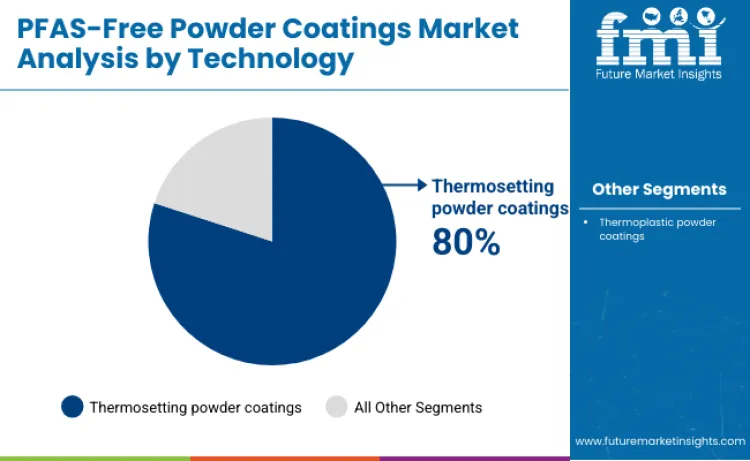
Thermosetting powder coatings are the dominant technology segment, representing 80% of the global PFAS‑free powder coatings market. Thermosetting technologies crosslink when cured, creating a durable, chemical‑resistant finish that is well suited for high‑performance applications. This characteristic makes thermosetting coatings preferable in sectors such as automotive, appliances, architectural metal, and industrial equipment, where durable finishes are critical. The strong share of thermosetting systems is also linked to their compatibility with PFAS‑free additive and resin technologies that aim to deliver performance comparable to legacy fluorochemical systems. While thermoplastic powder coatings are used in select applications that benefit from remelt or reshaping capabilities, the majority of PFAS‑free formulations adopt thermosetting chemistry due to its superior mechanical and chemical resistance attributes.
What are the Key Trends of the Global PFAS Free Powder Coatings Market?
The global PFAS‑free powder coatings market is expanding as industries shift toward safer, environmentally acceptable coating solutions. Powder coatings are widely used to provide protective and decorative finishes on metals and other substrates in automotive, appliance, architectural, industrial equipment, and consumer goods applications. Regulatory limitations on PFAS substances and increasing stakeholder focus on human health and ecological safety are accelerating the adoption of PFAS‑free formulations. Manufacturers are reformulating coating systems to exclude PFAS while maintaining performance characteristics such as corrosion resistance, durability, and aesthetic appeal. Market growth reflects the balance of performance, compliance, and sustainability considerations.
What are the Key Drivers for the Global PFAS‑Free Powder Coatings Market?
Regulatory emphasis on restricting PFAS substances in consumer products and industrial materials is a primary market driver, compelling formulators to adopt PFAS‑free alternatives that comply with safety standards. Increasing awareness among consumers and brands about chemical safety and environmental impact supports demand for coatings that avoid potentially harmful fluorinated substances. Growth in end‑use industries such as automotive, construction and appliances boosts overall powder coating consumption, creating opportunities for PFAS‑free variants. Corporate sustainability commitments and procurement policies favour materials with reduced health and ecological risk, encouraging suppliers to innovate and scale PFAS‑free powder coatings globally.
What are the Restraints for the Global PFAS‑Free Powder Coatings Market?
One restraint is the technical challenge of achieving equal or superior coating performance without PFAS chemistries that historically provided low surface energy and processing ease. Reformulation can require extensive research and validation to ensure PFAS‑free powder coatings meet durability, adhesion, chemical resistance, and finish quality expectations. Cost premiums associated with alternative raw materials and the development process may deter adoption in cost‑sensitive market segments. Variability in global regulatory timelines and enforcement levels can also reduce urgency in some regions, slowing broad conversion to PFAS‑free powder coatings and creating uneven market momentum.
What is the Global Demand Outlook for PFAS-Free Powder Coatings?
Demand for PFAS-free powder coatings is expected to grow across various countries, with China leading the market, projected to grow at a CAGR of 12%. India follows with a growth rate of 11%, while the USA is anticipated to grow at 9%. The UK is projected to grow at 8%, and Japan at 7%. Increasing regulatory pressure on the use of PFAS chemicals, along with a growing emphasis on sustainable and eco-friendly products across industries such as automotive, construction, and consumer goods, is driving the adoption of PFAS-free powder coatings globally. The transition to safer, non-toxic alternatives is fueling the growth of this market.
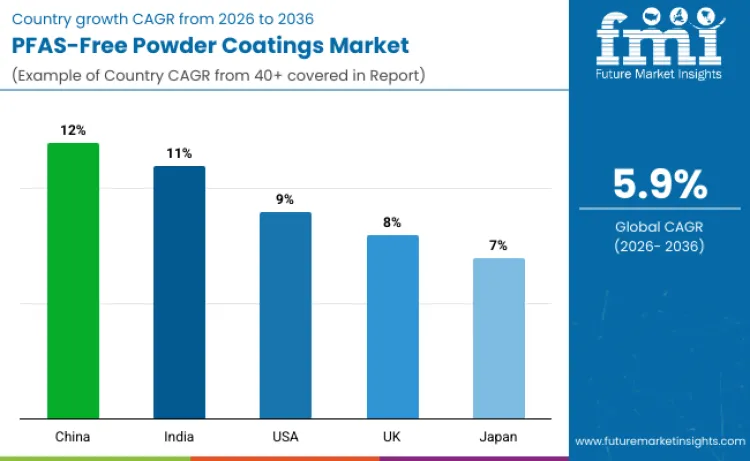
| Country | CAGR (2026-2036) |
|---|---|
| China | 12% |
| India | 11% |
| USA | 9% |
| UK | 8% |
| Japan | 7% |
What is Driving the Growth of PFAS-Free Powder Coatings in China?
China is projected to experience the highest growth in the PFAS-free powder coatings market, with a projected CAGR of 12%. The country’s growing industrial sectors, particularly in automotive, electronics, and construction, are key drivers of this demand. China’s push for environmental sustainability and stricter regulations on harmful chemicals are compelling manufacturers to adopt PFAS-free alternatives in coatings. As the country continues to focus on reducing its environmental impact and promoting eco-friendly technologies, PFAS-free powder coatings are increasingly preferred. Additionally, China’s growing consumer demand for safer, more sustainable products across industrial applications and consumer goods is further fueling market growth.
Why is the PFAS-Free Powder Coatings Market Expanding in India?
In India, the PFAS-free powder coatings market is projected to grow at a CAGR of 11%. India’s rapidly expanding manufacturing base, particularly in the automotive, construction, and consumer goods industries, is driving the demand for safer, non-toxic coatings. As the country adopts more stringent regulations around hazardous chemicals, the shift toward PFAS-free alternatives is accelerating. Additionally, rising consumer awareness about health and environmental risks associated with PFAS chemicals is encouraging manufacturers to embrace eco-friendly solutions. The growing demand for sustainable products and the increasing adoption of green technologies in India’s manufacturing sectors are expected to continue driving the growth of PFAS-free powder coatings in the country.
How is the PFAS-Free Powder Coatings Market Growing in the USA?
In the USA, the PFAS-free powder coatings market is projected to grow at a CAGR of 9%. The USA is one of the largest consumers of powder coatings, particularly in the automotive, construction, and electronics sectors. As the regulatory landscape becomes more stringent with regard to PFAS chemicals, there is a growing push for manufacturers to adopt safer alternatives in their coating applications. The rising consumer demand for sustainable and eco-friendly products is further driving the shift to PFAS-free powder coatings. Additionally, as industries in the USA prioritize environmental responsibility and comply with regulatory changes, the adoption of PFAS-free coatings is expected to continue rising.
What is Contributing to the Growth of PFAS-Free Powder Coatings in the UK?
In the UK, the demand for PFAS-free powder coatings is projected to grow at a CAGR of 8%. The UK’s strong commitment to sustainability and environmental responsibility is a significant driver of this growth. As part of the country’s broader environmental initiatives, there is increasing pressure to eliminate hazardous substances like PFAS from manufacturing processes. The demand for safer, non-toxic coatings is rising in the automotive, construction, and consumer goods industries as the UK pushes for green solutions. The government’s regulatory push and the growing focus on consumer safety are encouraging manufacturers to transition to PFAS-free powder coatings, contributing to steady market growth.
What is Influencing the Growth of PFAS-Free Powder Coatings in Japan?
In Japan, the demand for PFAS-free powder coatings is projected to grow at a CAGR of 7%. Japan’s focus on environmental protection and sustainability is driving the shift toward PFAS-free solutions in industrial applications. The country’s automotive, construction, and electronics sectors are increasingly adopting eco-friendly technologies, including PFAS-free coatings. Japan’s growing regulatory pressure to reduce the use of harmful chemicals and its commitment to promoting green technologies are accelerating the transition to PFAS-free alternatives. As the demand for safer and more sustainable products continues to rise, the market for PFAS-free powder coatings in Japan is expected to expand steadily.
What is the Competitive Landscape for the Global PFAS Free Powder Coatings Market?
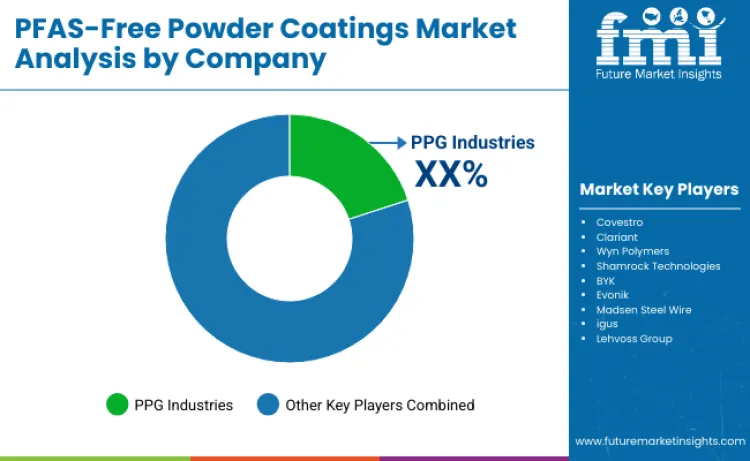
Global demand for PFAS‑free powder coatings has been rising as manufacturers across automotive, appliances, architectural, industrial and consumer goods sectors shift toward safer and more sustainable coating solutions. Traditional powder coatings sometimes relied on PFAS for slip, release or surface performance, but increasing environmental and regulatory pressure against PFAS chemicals has pushed formulators and end‑users to adopt alternatives that deliver durability, chemical resistance and aesthetics without PFAS. Growth in construction, automotive production and durable goods manufacturing supports steady uptake of PFAS‑free powder coatings worldwide. Sustainability commitments by major OEMs and brand owners further accelerate adoption, especially in regions with strict environmental standards and strong customer demand for traceable, eco‑friendly materials.
On the supply side several global chemical and coatings companies compete to serve this expanding market. PPG Industries is widely regarded as a leading player with extensive technical expertise and a broad PFAS‑free powder coatings portfolio. Other significant competitors include Covestro, Clariant, Wyn Polymers, Shamrock Technologies, BYK, Evonik, Madsen Steel Wire, igus, and Lehvoss Group. These firms provide raw materials, additives, processing aids and complete powder coatings systems designed to meet performance requirements without PFAS chemistries. Competition among suppliers focuses on formulation quality, surface performance (durability, adhesion, corrosion resistance), regulatory compliance, and ability to support diverse industrial applications. Companies that offer high‑performance, environmentally safe powder coating solutions with strong technical support and global distribution networks are best positioned to capture growth as demand for PFAS‑free options continues to expand.
Key Players
- PPG Industries
- Covestro
- Clariant
- Wyn Polymers
- Shamrock Technologies
- BYK
- Evonik
- Madsen Steel Wire
- igus
- Lehvoss Group
Scope of the Report
| Items | Values |
|---|---|
| Quantitative Units (2025) | USD Billion |
| Resin Type | Epoxy powder coatings, Polyester powder coatings, Epoxy-polyester hybrid powder coatings, Polyurethane powder coatings, Acrylic powder coatings, Other resin types |
| Technology | Thermosetting powder coatings, Thermoplastic powder coatings |
| Additive Type | Flow control additives, Degassing agents, Curing agents, Anti-cratering additives, Surface modifiers, Texture additives, Others |
| Application | Appliances, Automotive components, Architectural products, Furniture and fixtures, Industrial machinery, Electrical and electronics, Consumer goods |
| End-Use Industry | Manufacturing, Automotive, Construction, Consumer durables, Industrial equipment, Infrastructure |
| Sales Channel | Direct to OEMs, Distributors, E-commerce channels |
| Performance Grade | Standard grade, Premium grade, High performance grade |
| Companies | PPG Industries, Covestro, Clariant, Wyn Polymers, Shamrock Technologies, BYK, Evonik, Madsen Steel Wire, igus, Lehvoss Group |
| Regions Covered | North America, Latin America, Western Europe, Eastern Europe, South Asia and Pacific, East Asia, Middle East & Africa |
| Countries Covered | United States, Canada, Mexico, Brazil, Argentina, Germany, France, United Kingdom, Italy, Spain, Netherlands, China, India, Japan, South Korea, ANZ, GCC Countries, South Africa |
| Additional Attributes | Dollar by sales by resin type, technology, additive type, application, end-use industry, sales channel, performance grade, and region. Includes market trends towards PFAS-free alternatives in powder coatings, performance in various applications, impact of sustainability practices, regulatory compliance, market share and competitive positioning of key companies, cost-effectiveness, role of texture additives in enhancing aesthetic and functional properties, and the influence of market demand in automotive, consumer durables, and manufacturing sectors. |
Key Segments in the PFAS-Free Powder Coatings Market
Resin Type:
- Epoxy powder coatings
- Polyester powder coatings
- Epoxy‑polyester hybrid powder coatings
- Polyurethane powder coatings
- Acrylic powder coatings
- Other resin types
Technology:
- Thermosetting powder coatings
- Thermoplastic powder coatings
Additive Type:
- Flow control additives
- Degassing agents
- Curing agents
- Anti‑cratering additives
- Surface modifiers
- Texture additives
- Others
Application:
- Appliances
- Automotive components
- Architectural products
- Furniture and fixtures
- Industrial machinery
- Electrical and electronics
- Consumer goods
End Use Industry:
- Manufacturing
- Automotive
- Construction
- Consumer durables
- Industrial equipment
- Infrastructure
Sales Channel:
- Direct to OEMs
- Distributors
- E‑commerce channels
Performance Grade:
- Standard grade
- Premium grade
- High performance grade
Region:
- Asia Pacific
- China
- India
- Japan
- South Korea
- ASEAN
- Rest of Asia Pacific
- Europe
- Germany
- United Kingdom
- France
- Italy
- Spain
- Nordic
- BENELUX
- Rest of Europe
- North America
- United States
- Canada
- Mexico
- Latin America
- Brazil
- Chile
- Rest of Latin America
- Middle East & Africa
- Kingdom of Saudi Arabia
- Other GCC Countries
- Turkey
- South Africa
- Other African Union
- Rest of Middle East & Africa
Frequently Asked Questions
How big is the PFAS-Free Powder Coatings market?
The market is valued at USD 1.3 billion in 2025 and is expected to grow at a CAGR of 5.90%, reaching USD 2.3 billion by 2035.
What is the growth outlook for the PFAS-Free Powder Coatings market?
The market is projected to grow at a CAGR of 5.90% from 2025 to 2035.
Which region is expected to experience the fastest growth in the PFAS-Free Powder Coatings market?
China is expected to lead with a growth rate of 12%, driven by increasing demand for sustainable coatings in various industries.
What are the key applications of PFAS-Free Powder Coatings?
PFAS-Free Powder Coatings are commonly used in automotive, industrial, and architectural coatings due to their durability and environmental benefits.
Who is the major player in the PFAS-Free Powder Coatings market?
The leading player in the market is PPG Industries.
Preview the report firsthand - request a free sample
Get SampleGet the brochure for pricing and purchase details.
Get PDFTable of Content
- Executive Summary
- Market Overview
- Global Market Value, 2020-2025
- Global Market Forecast, 2026-2036
- Market Dynamics
- Drivers
- Restraints
- Opportunities
- Regulatory & Standards Landscape
- Technology & Material Innovation Outlook
- Market Segmentation Analysis
- By Resin Type
- Epoxy powder coatings
- Polyester powder coatings
- Epoxy-polyester hybrid powder coatings
- Polyurethane powder coatings
- Acrylic powder coatings
- Other resin types
- By Technology
- Thermosetting powder coatings
- Thermoplastic powder coatings
- By Additive Type
- Flow control additives
- Degassing agents
- Curing agents
- Anti-cratering additives
- Surface modifiers
- Texture additives
- Others
- By Application
- Appliances
- Automotive components
- Architectural products
- Furniture and fixtures
- Industrial machinery
- Electrical and electronics
- Consumer goods
- By End-Use Industry
- Manufacturing
- Automotive
- Construction
- Consumer durables
- Industrial equipment
- Infrastructure
- By Sales Channel
- Direct to OEMs
- Distributors
- E-commerce channels
- By Performance Grade
- Standard grade
- Premium grade
- High performance grade
- By Resin Type
- Regional Outlook
- North America
- Latin America
- Western Europe
- Eastern Europe
- South Asia & Pacific
- East Asia
- Middle East & Africa
- Country-Level Outlook
- United States
- Canada
- Mexico
- Brazil
- Argentina
- Germany
- France
- United Kingdom
- Italy
- Spain
- Netherlands
- China
- India
- Japan
- South Korea
- ANZ
- GCC Countries
- South Africa
- Competitive Landscape
- Market Structure Overview
- Company Positioning
- Strategic Initiatives
- Key Player Profiles
- Scope of the Report
- Research Methodology
- Assumptions & Acronyms
- Research Methodology


