

- Market Size (2026)
- USD 79.7 Mn
- Forecast (2036)
- USD 145.4 Mn
- CAGR (2026 to 2036)
- 6.2%
How big is the PFAS Free Textile Repellent Chemicals Market in 2026?
USD 79.7 million in 2026 and USD 145.4 million by 2036 at a 6.2% CAGR.
The PFAS Free Textile Repellent Chemicals Market is forecast to grow from USD 75.0 million in 2025 to USD 145.4 million by 2036 at 6.2% CAGR as textile mills replace fluorinated durable water repellent systems with documented non-PFAS alternatives. Textiles are forecast to represent 68.0% share in 2026 because apparel, workwear, home fabric, and technical fabrics form the largest qualification pool. Integrated specialty chemical suppliers are expected to secure 46.0% share in 2026, led by stronger formulation support, mill trial capability, and certification documentation.
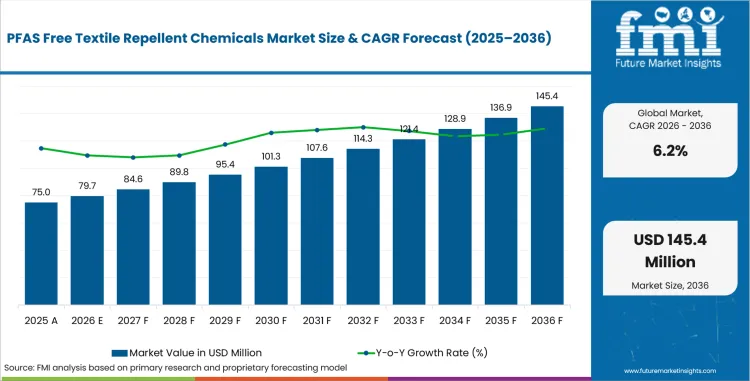
PFAS Free Textile Repellent Chemicals Market Overview: Size and Forecast
- 2026 Market Size: USD 79.7 million
- 2036 Market Size: USD 145.4 million
- Forecast CAGR: 6.2% from 2026 to 2036
- Leading Application: Textiles
- Textiles Share in 2026: 68.0%
- Leading Supplier Type: Integrated Specialty Chemical Suppliers
- Integrated Specialty Chemical Suppliers Share in 2026: 46.0%
- Fastest-growing Country: France
- France CAGR: 7.0% by 2036
Summary of the PFAS Free Textile Repellent Chemicals Market
- Demand and Growth Drivers
- Apparel brands are shifting toward non-PFAS repellents as product approvals require stronger chemical declarations.
- Textile mills are giving more attention to finishes that support water repellency without fluorinated substance risk.
- Technical fabric buyers are extending non-PFAS requirements into workwear, interiors, and coated textile programs.
- Product and Segment View
- Textiles are forecast to represent 68.0% share in 2026, led by apparel, workwear, home fabric, and technical fabric reformulation.
- Integrated specialty chemical suppliers are projected to hold 46.0% share in 2026, influenced by certification support and mill trial service.
- Coating is expected to secure 42.5% share in 2026, supported by surface-level repellency testing and wash durability checks.
- Geography and Competitive Outlook
- France is projected to record 7.0% CAGR by 2036, backed by national textile PFAS restrictions and early supplier qualification.
- India is expected to expand at 6.9% CAGR by 2036 through technical textile exports and buyer audit pressure.
- Archroma and Rudolf Group compete through branded fluorine-free repellent technologies and certification-facing support.
- Bolger & O’Hearn and CHT Group focus on durable water repellent performance and mill-facing formulation support.
- Analyst Opinion
- Nikhil Kaitwade, Principal Consultant for Chemicals and Materials at FMI, observes, “PFAS-free textile repellent chemicals are becoming a supplier qualification market rather than a simple substitution market. Buyers are asking whether the finish survives washing, meets fluorine screening, and works on polyester blends without damaging fabric hand feel. Suppliers treating documentation and mill trials as part of the product should gain stronger repeat orders.”
Quality and compliance control are now the main pressure points for PFAS-free textile repellent chemicals as buyers evaluate non-fluorinated finishing systems before approving fabrics. Textile Exchange reported in September 2025 that polyester accounted for 59.0% of global fiber production in 2024, showing why synthetic textile programs create a large finishing chemistry target. OEKO-TEX stated in January 2024 that total fluorine limits of 100 mg/kg apply across major certification systems, giving mills a measurable compliance benchmark. Archroma’s April 2026 PHOBOTEX CWR-SUP launch used 53.0% renewable feedstock, showing how suppliers are using PFAS-free chemistry to compete on sustainability evidence and fabric performance together.
The PFAS Free Textile Repellent Chemicals Market is expected to witness steady growth through 2036, driven by textile brands replacing fluorinated durable water repellent systems with documented non-PFAS chemistry. Market expansion is further supported by stricter buyer audits, fluorine screening, and mill-level demand for lower-risk textile finishing agents.
Which factors support expansion in the PFAS Free Textile Repellent Chemicals Market?
Finished repellent chemical revenue and textile qualification work support market value across regulated apparel and technical fabric channels.
- Market value is supported by PFAS-free repellent chemistry revenue before fabric converters and apparel brands add downstream value.
- Supplier pricing reflects polymer chemistry, certification support, and mill trial work before volume orders improve cost recovery.
- Revenue improves as brands convert restricted substance requirements into approved textile finishing recipes.
- Buyer trust rises as suppliers provide fluorine screening, wash durability evidence, and processing guidance for mills.
Why is the PFAS Free Textile Repellent Chemicals Market growing?
Textile brands are replacing fluorinated repellent systems as market access, certification, and reuse concerns become harder to satisfy with PFAS-containing finishes.
Growth outlook is becoming more structured as textile rules and certification systems turn PFAS-free claims into measurable approval requirements. The European Environment Agency stated in September 2024 that PFAS in textiles can create barriers to reuse and recycling, making finishing chemistry more visible in circular textile planning. California’s textile restriction from January 2025 and New York’s apparel restriction from January 2025 have made United States sourcing programs more cautious about fluorinated finishes. This supports wider testing of waterborne repellents, silicone systems, wax blends, and bio-based coating aids across textile finishing plants.
How is the PFAS Free Textile Repellent Chemicals Market segmented?
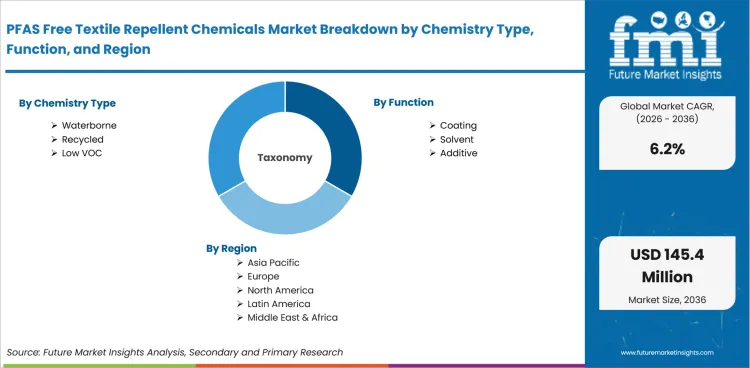
The PFAS Free Textile Repellent Chemicals Market is segmented by chemistry type, function, application, end-use industry, and supplier type.
- Waterborne chemistry is projected to secure 38.0% share in 2026, led by mills preferring aqueous finishing baths and lower solvent handling pressure.
- Coating is anticipated to hold 42.5% share in 2026 since buyers judge repellency through fabric surface behavior and wash testing.
- Textiles are expected to capture 68.0% share in 2026 due to apparel, home fabric, workwear, and technical textile reformulation.
- Automotive is forecast to represent 31.0% share in 2026, guided by stain resistance needs across seat fabrics, headliners, and interior trims.
- Integrated specialty chemical suppliers are projected to account for 46.0% share in 2026, reflected by stronger test support and application service.
Why does waterborne chemistry lead the PFAS Free Textile Repellent Chemicals Market?
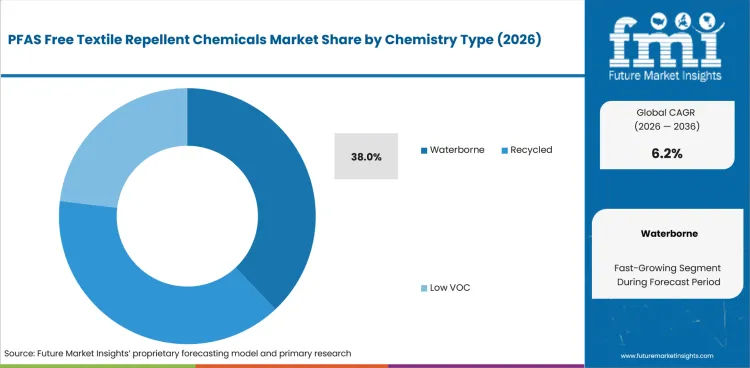
- Waterborne chemistry is projected to account for 38.0% share in 2026, influenced by familiar mill handling and lower solvent management concerns.
- Bio-based chemistry gains selective trial as brands request lower-impact finishing systems with stronger sustainability positioning.
Which function leads the PFAS Free Textile Repellent Chemicals Market?
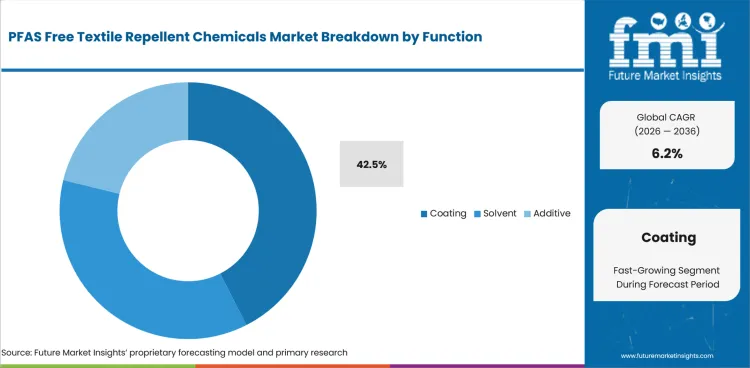
- Coating is expected to hold 42.5% share in 2026 through fabric surface testing, visible water beading, and spray-rating approval.
- Binder systems gain importance as mills adjust non-PFAS formulations for better durability after repeated laundering.
Which application leads the PFAS Free Textile Repellent Chemicals Market?
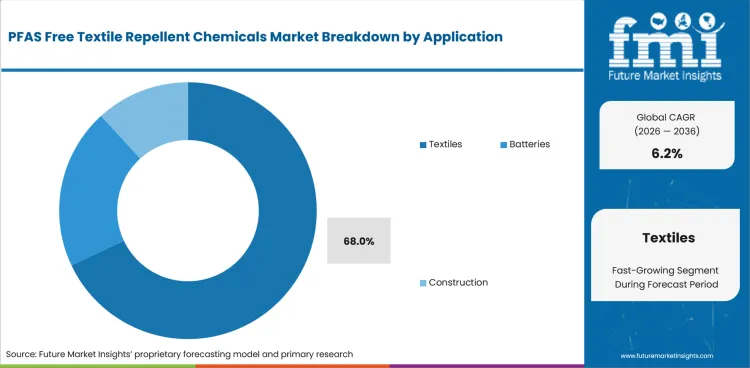
- Textiles are forecast to secure 68.0% share in 2026, led by apparel and technical fabric buyers replacing fluorinated DWR systems.
- Water treatment and construction applications stay smaller as textile finishing remains the main route for repellent chemistry demand.
Which end-use industry leads the PFAS Free Textile Repellent Chemicals Market?
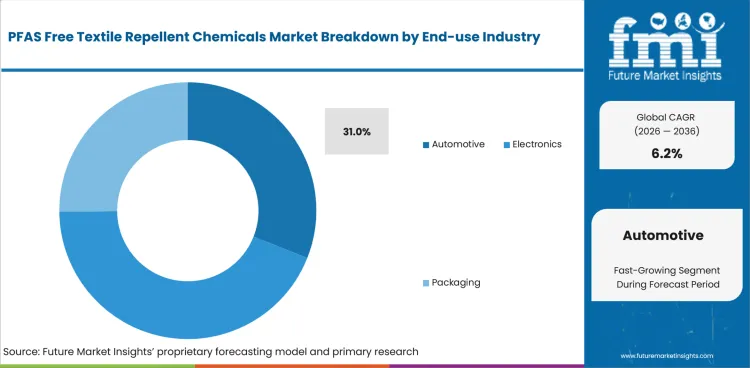
- Automotive is projected to account for 31.0% share in 2026, shaped by cabin fabric, trim, and upholstery demand for stain control.
- Industrial manufacturing creates added demand when protective textiles and coated substrates need non-fluorinated surface protection.
Which supplier type leads the PFAS Free Textile Repellent Chemicals Market?
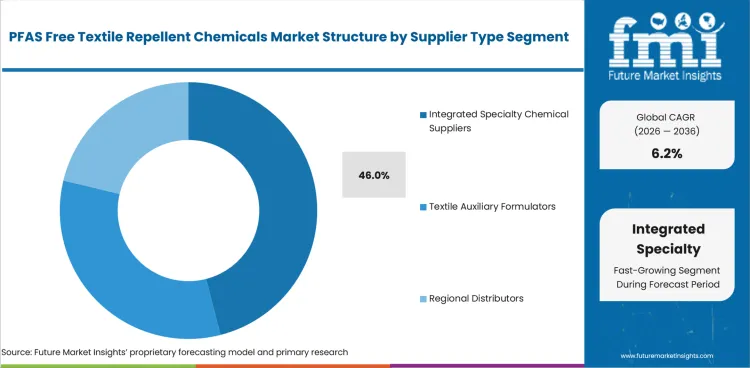
- Integrated specialty chemical suppliers are expected to represent 46.0% share in 2026, supported by formulation depth and certification-facing documentation.
- Regional textile auxiliary suppliers compete when mills need faster sampling, local troubleshooting, and smaller trial batches.
What are the drivers, restraints, and opportunities in the PFAS Free Textile Repellent Chemicals Market?
Compliance-led substitution supports demand while wash durability gaps limit faster conversion across performance textiles.
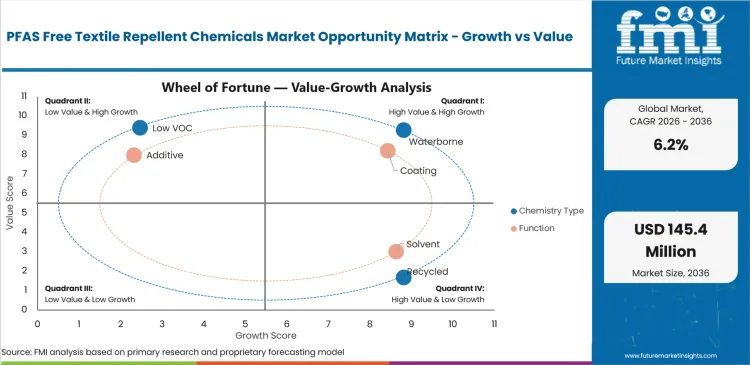
- Driver: Textile restrictions are pushing mills and brands to approve non-PFAS repellent chemistry before commercial orders.
- Restraint: Performance loss after laundering and abrasion can delay replacement of fluorinated durable water repellent systems.
- Opportunity: Waterborne and bio-based systems can gain share when suppliers prove durability and lower fluorine risk together.
PFAS-Free Textile Finishing Demand Outlook
Demand outlook is moving toward documented fluorine-free textile finishing systems that support compliance and performance at the same time. Textile Exchange reported global fiber production reached 132.0 million tonnes in 2024, showing the scale of finishing decisions facing apparel and technical fabric suppliers. This creates stronger demand for repellents that can work across polyester, cotton blends, nylon, workwear fabrics, and coated textiles. Suppliers with lab data and mill support can convert buyer pressure into repeat orders.
Wash Durability and Qualification Barrier Analysis
Performance remains the main restraint because buyers want PFAS-free repellents to survive laundering, abrasion, and normal garment wear. OEKO-TEX stated that total fluorine testing moved to a 100 mg/kg limit from January 2024, which makes weak formulation control harder to hide in certified textile supply chains. Mills therefore need added testing, recipe adjustment, and curing guidance before replacing fluorinated systems. This can slow early approval, especially in outerwear, uniforms, and stain-resistant textile programs.
Waterborne and Bio-based Chemistry Opportunity Analysis
Opportunity is strongest for suppliers that can combine waterborne processing with credible durability evidence. The European Environment Agency reported in September 2024 that feasible alternatives already exist for many non-essential PFAS uses in textiles, which strengthens the case for faster substitution. Bio-based polymers, silicone blends, wax systems, and acrylic binders can gain broader trial when they fit existing padding and drying equipment. Suppliers that adapt formulas across fabrics should gain stronger buyer confidence.
Who are the leading companies in the PFAS Free Textile Repellent Chemicals Market?
Archroma, Rudolf Group, CHT Group, HeiQ, Bolger & O’Hearn, and Pulcra Chemicals.
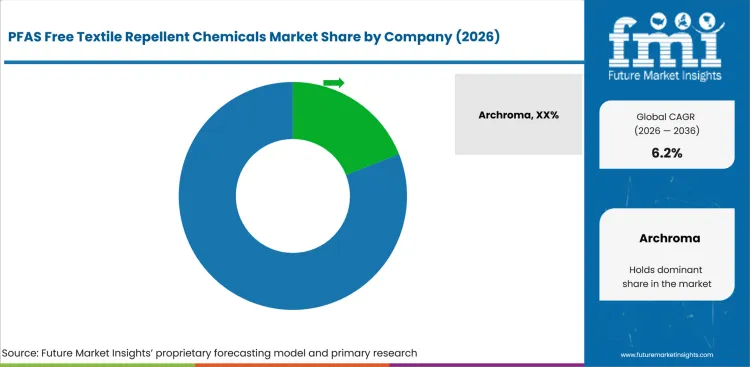
- Established specialty chemical suppliers hold an advantage through textile finishing expertise and certification support.
- Specialist formulators gain mill access by offering durable water repellent systems with stronger wash performance evidence.
- Regional suppliers gain better acceptance in countries where mills need fast sampling and local troubleshooting.
- Retail-ready documentation supports adoption through clearer PFAS status, fluorine screening, and fabric performance claims.
Textile chemical suppliers compete by combining formulation depth with application guidance. Archroma and Rudolf Group hold stronger visibility through branded fluorine-free repellent systems and international textile finishing relationships. CHT Group, Pulcra Chemicals, and HeiQ compete through performance textile portfolios and buyer-facing sustainability positioning. Bolger & O’Hearn stands out in the United States through PFAS-free durable water repellent products.
Technical service has become a competitive separator as mills test non-PFAS chemistry across polyester, cotton blends, nylon, and coated fabric programs. Suppliers need to help buyers manage curing conditions, hand feel, water beading, and repeat wash performance. Companies with reliable lab data and field support should gain stronger retention after approval.
Smaller and regional players can win through localized service and fast recipe adjustment. India, China, and South Korea create strong opportunities for distributors that can support export-facing mills. France and the United States reward suppliers with stronger compliance files, while Germany and Japan favor proven technical documentation. Firms relying only on generic PFAS-free claims are expected to face weaker acceptance.
How do top PFAS Free Textile Repellent Chemicals companies compare?
Archroma and Rudolf Group score strongest on branded textile chemistry while Bolger & O’Hearn stands out in United States durable water repellent specialization.
| Company | Relevance to Market Title | PFAS-Free Portfolio Depth | Textile Finishing Support | Certification Alignment | Channel Reach | Geographic Footprint |
|---|---|---|---|---|---|---|
| Archroma | Very High | Very Strong | Very Strong | Very Strong | Very Strong | Global |
| Rudolf Group | Very High | Very Strong | Strong | Very Strong | Strong | Global |
| CHT Group | High | Strong | Strong | Strong | Strong | Global |
| HeiQ | High | Strong | Moderate to Strong | Strong | Strong | Global |
| Bolger & O’Hearn | High | Strong | Strong | Moderate to Strong | Moderate | United States |
| Pulcra Chemicals | High | Moderate to Strong | Strong | Strong | Strong | Global |
| Sarex Chemicals | Moderate to High | Moderate | Strong | Moderate | Moderate | India |
| Rossari Biotech | Moderate | Moderate | Moderate | Moderate | Strong | India and Asia |
| Fineotex Chemical | Moderate | Moderate | Moderate | Moderate | Moderate | India and Asia |
| Regional Textile Auxiliary Distributors | Moderate | Low to Moderate | Strong Locally | Moderate | Moderate | Regional |
Source: Future Market Insights competitive analysis, 2026.
Who are the key players in the PFAS Free Textile Repellent Chemicals Market?
Archroma, Rudolf Group, CHT Group, HeiQ, Bolger & O’Hearn, and Pulcra Chemicals are listed with Sarex Chemicals and regional suppliers among other participants.
Key global companies leading the PFAS Free Textile Repellent Chemicals Market include:
- Archroma
- Rudolf Group
- CHT Group
- HeiQ
- Bolger & O’Hearn Specialty Chemicals
- Pulcra Chemicals
- Sarex Chemicals
- Rossari Biotech
- Fineotex Chemical
- Regional textile auxiliary distributors
Key Developments in PFAS Free Textile Repellent Chemicals Market
- In April 2026, Archroma showcased PHOBOTEX CWR-SUP at China Interdye 2026, positioning a non-PFAS repellent system with 53.0% renewable feedstock for textile applications.
- In April 2024, Archroma introduced PHOBOTEX NTR-50 LIQ, a plant-based non-PFAS durable water repellent chemistry for textiles and nonwovens.
- In March 2024, Bolger & O’Hearn launched Shell-Tech Free M325 SC1, a fluorine-free durable water repellent product for textile applications.
Key Players in the PFAS Free Textile Repellent Chemicals Market
Global Specialty Chemical Leaders
- Archroma
- Rudolf Group
- CHT Group
- HeiQ
- Pulcra Chemicals
Specialist Formulators
- Bolger & O’Hearn Specialty Chemicals
- Sarex Chemicals
- Fineotex Chemical
- Rossari Biotech
Regional Channel Players
- Textile auxiliary distributors
- Local finishing chemical formulators
- Certified textile testing partners
- Brand-led mill trial partners
Which countries are growing fastest in the PFAS Free Textile Repellent Chemicals Market?
United States 6.4% CAGR, United Kingdom 5.7% CAGR, Germany 6.6% CAGR, France 7.0% CAGR, Japan 5.9% CAGR, China 6.8% CAGR, South Korea 5.8% CAGR, and India 6.9% CAGR through 2036.
.webp "Top Country Growth Comparison Pfas Free Textile Repellent Chemicals Market Cagr (2026 2036)")
| Country | CAGR |
|---|---|
| United States | 6.4% |
| United Kingdom | 5.7% |
| Germany | 6.6% |
| France | 7.0% |
| Japan | 5.9% |
| China | 6.8% |
| South Korea | 5.8% |
| India | 6.9% |
Source: Future Market Insights, 2026.
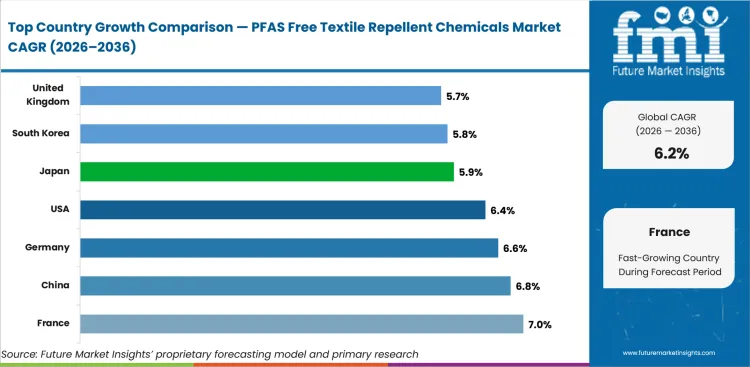
How do country-level CAGRs compare in the PFAS Free Textile Repellent Chemicals Market?
France leads country growth while the United Kingdom records the most cautious expansion outlook among profiled markets.
- The United States is expected to expand at 6.4% CAGR from 2026 to 2036 due to state-level textile restrictions.
- The United Kingdom is estimated to rise at 5.7% CAGR by 2036 with retailer sourcing pressure shaping imported textile compliance.
- Germany is projected to post 6.6% CAGR by 2036 as technical textile qualification and certification culture support adoption.
- France is forecast to record 7.0% CAGR by 2036 as national PFAS restrictions create early qualification demand.
- Japan is expected to advance at 5.9% CAGR over the forecast period as quality-focused buyers test lower-risk surface protection.
- China is projected to grow at 6.8% CAGR through 2036 as export mills respond to European and North American buyer rules.
- South Korea is forecast to grow at 5.8% CAGR through 2036 as fashion and technical textile suppliers review non-PFAS finishes.
- India is anticipated to rise at 6.9% CAGR by 2036 as technical textile exports and buyer audits support mill substitution.
How fast is the PFAS Free Textile Repellent Chemicals Market growing in the United States?
A 6.4% CAGR through 2036 reflects state textile PFAS rules and national brand compliance pressure.
Country Market Snapshot Table
| Parameter | Value |
|---|---|
| Market Size in 2025 (Value) | USD 15.1 million |
| Market Size in 2026 (Value) | USD 16.1 million |
| Market Forecast in 2036 (Value) | USD 29.9 million |
| CAGR (2026 to 2036) | 6.4% |
| Years Considered | 2021 to 2036 |
| Base Year | 2025 |
| Forecast Period | 2026 to 2036 |
| Units Considered | Value (USD million) |
| Leading Sub-Region | California and Northeast apparel compliance corridors |
United States PFAS Free Textile Repellent Chemicals Market Outlook
United States demand is shaped by state-level restrictions and national brand sourcing behavior. Apparel suppliers are expected to prefer one compliant finishing platform instead of separate formulas for different states.
Outdoor apparel, uniforms, upholstery, and technical fabrics create the clearest early demand. Suppliers with local technical support and strong compliance language should gain better mill access.
Key Growth Drivers
- California textile rules create a direct approval trigger as covered textile articles face a 100 ppm total organic fluorine limit before the stricter 50 ppm threshold.
- New York review is widening replacement work because 5 textile-related product groups are covered in the state’s PFAS phaseout language.
- National apparel brands need PFAS-free water repellency that can support retailer audits across outdoor wear and uniform programs.
- Local application support helps mills compare curing guidance, bath stability, and wash durability before replacing legacy fluorinated finishes.
Key Restraints
- Certification screening can raise qualification cost because OEKO-TEX applies a 100 mg/kg total fluorine limit across major systems.
- State-by-state rule differences add legal review work before brands approve a single repellent recipe for national sales.
- Oil repellency performance can lag fluorinated systems in upholstery and stain-resistant apparel applications.
What makes United States unique
United States is unique due to state rules that reshape national apparel sourcing before a uniform federal textile PFAS framework is established.
Key Companies
- Bolger & O’Hearn Specialty Chemicals
- Archroma USA
- CHT USA
- Rudolf USA
- HeiQ distribution partners
- Textile auxiliary distributors
- Outdoor apparel testing partners
Sales & Marketing Channels
- Direct mill sales
- Brand compliance team approvals
- Outdoor apparel supply chains
- Uniform fabric converters
- Testing laboratory referrals
- Specialty chemical distributors
Country Segment Breakdown Table
| Segment | Sub-Segments |
|---|---|
| By Chemistry Type | Bio-based, Recycled, Low VOC, Halogen Free, Waterborne |
| By Function | Solvent, Additive, Binder, Coating, Process Aid |
| By Application | Textiles, Batteries, Construction, Personal Care, Water Treatment |
| By End-use Industry | Automotive, Electronics, Packaging, Agriculture, Industrial Manufacturing |
| By Supplier Type | Integrated Specialty Chemical Suppliers, Textile Auxiliary Formulators, Regional Distributors, Brand-Led Trial Partners |
| Key Sub-Regions Covered, Apparel and Technical Textile Networks | California, Northeast, Southeast, Midwest, Texas, Pacific Northwest |
Frequently Asked Questions
How fast is United States PFAS Free Textile Repellent Chemicals Market growing?
Sales in the United States are expected to rise at 6.4% CAGR from 2026 to 2036, guided by state-level textile rules.
Who leads United States PFAS Free Textile Repellent Chemicals Market?
Bolger & O’Hearn, Archroma USA, CHT USA, Rudolf USA, and distributor partners compete through mill-facing support.
What is driving adoption in United States PFAS Free Textile Repellent Chemicals Market?
State apparel restrictions and retailer compliance programs are moving textile suppliers toward PFAS-free repellent chemistry.
What is the PFAS Free Textile Repellent Chemicals Market outlook in the United Kingdom?
A 5.7% CAGR through 2036 is supported by retailer sourcing pressure and circular textile concerns.
Country Market Snapshot Table
| Parameter | Value |
|---|---|
| Market Size in 2025 (Value) | USD 5.6 million |
| Market Size in 2026 (Value) | USD 5.9 million |
| Market Forecast in 2036 (Value) | USD 10.2 million |
| CAGR (2026 to 2036) | 5.7% |
| Years Considered | 2021 to 2036 |
| Base Year | 2025 |
| Forecast Period | 2026 to 2036 |
| Units Considered | Value (USD million) |
| Leading Sub-Region | London and national retail sourcing corridors |
United Kingdom PFAS Free Textile Repellent Chemicals Market Outlook
United Kingdom demand is shaped more by retail sourcing rules than domestic finishing volume. Many textile finishing decisions happen overseas, but UK retailers influence chemistry choices through restricted substance lists.
Circular textile planning is also increasing scrutiny of persistent finishing chemicals. PFAS-free repellents gain value when they support reuse, recycling, and lower contamination risk.
Key Growth Drivers
- The UK PFAS Plan published in February 2026 sets actions across 3 main areas, supporting safer substitution planning.
- WRAP reported about 1.45 million tonnes of used textiles generated in the UK in 2022, making end-of-life chemistry more visible.
- Retail restricted substance lists are pushing overseas suppliers toward non-PFAS finishing for imported garments.
- Outdoor apparel and workwear brands need compliant repellents for rainwear, uniforms, and performance clothing.
Key Restraints
- WRAP reported 421,600 tonnes of used textiles were exported from the UK in 2022, increasing scrutiny around persistent chemistry in circular flows.
- Domestic textile finishing capacity is smaller than major Asian production hubs, limiting direct local chemical volume.
- UK buyers depend on supplier declarations from imported garment supply chains, making verification slower.
What makes United Kingdom unique
United Kingdom is unique because retailer sourcing power shapes chemistry use even when textile finishing occurs outside the country.
Key Companies
- Archroma UK partners
- CHT UK distributors
- Rudolf UK partners
- HeiQ UK channels
- Pulcra Chemicals UK partners
- Textile testing laboratories
- Workwear fabric converters
Sales & Marketing Channels
- Retail sourcing offices
- Importer compliance teams
- Laboratory testing networks
- Outdoor apparel distributors
- Workwear fabric converters
- Chemical distribution partners
Country Segment Breakdown Table
| Segment | Sub-Segments |
|---|---|
| By Chemistry Type | Bio-based, Recycled, Low VOC, Halogen Free, Waterborne |
| By Function | Solvent, Additive, Binder, Coating, Process Aid |
| By Application | Textiles, Batteries, Construction, Personal Care, Water Treatment |
| By End-use Industry | Automotive, Electronics, Packaging, Agriculture, Industrial Manufacturing |
| By Supplier Type | Integrated Specialty Chemical Suppliers, Textile Auxiliary Formulators, Regional Distributors, Brand-Led Trial Partners |
| Key Sub-Regions Covered, Retail Sourcing Corridors | London, Manchester, Leeds, Birmingham, Glasgow, Bristol |
Frequently Asked Questions
How fast is United Kingdom PFAS Free Textile Repellent Chemicals Market growing?
Industry in the United Kingdom is projected to increase at 5.7% CAGR from 2026 to 2036 through retailer-led substitution.
Who leads United Kingdom PFAS Free Textile Repellent Chemicals Market?
Archroma partners, CHT distributors, Rudolf partners, HeiQ channels, and testing networks compete through retailer-facing support.
What is driving adoption in United Kingdom PFAS Free Textile Repellent Chemicals Market?
Retail restricted substance lists and circular textile concerns are moving UK-facing supply chains toward PFAS-free textile repellents.
How is the PFAS Free Textile Repellent Chemicals Market performing in Germany?
A 6.6% CAGR through 2036 reflects technical textile qualification and strict certification behavior.
Country Market Snapshot Table
| Parameter | Value |
|---|---|
| Market Size in 2025 (Value) | USD 7.6 million |
| Market Size in 2026 (Value) | USD 8.1 million |
| Market Forecast in 2036 (Value) | USD 15.4 million |
| CAGR (2026 to 2036) | 6.6% |
| Years Considered | 2021 to 2036 |
| Base Year | 2025 |
| Forecast Period | 2026 to 2036 |
| Units Considered | Value (USD million) |
| Leading Sub-Region | Bavaria and North Rhine-Westphalia technical textile corridors |
Germany PFAS Free Textile Repellent Chemicals Market Outlook
Germany demand is driven by technical textiles, workwear, automotive fabrics, and certification-led buyer behavior. Mills usually request data packages before switching established finishing chemistry.
Local supplier strength supports adoption when fabric-specific guidance is needed. Non-PFAS repellents gain attention when they satisfy durability, low odor, abrasion, and fluorine control requirements.
Key Growth Drivers
- Germany’s textile machinery base supports advanced finishing because VDMA Textile Machinery represents around 140 manufacturers.
- VDMA members represent about 90.0% of German textile machinery industry volume, strengthening technical support around finishing equipment.
- German mills often prefer suppliers with OEKO-TEX, bluesign, and ZDHC alignment before approving larger chemical orders.
- Workwear and automotive fabric users need non-PFAS repellency that can satisfy abrasion, odor, and durability expectations.
Key Restraints
- German environmental review noted PFAS findings across textile-related materials in the 0.04 mg/kg to 5 mg/kg range, increasing recycling caution.
- Technical fabric buyers require longer validation cycles than fashion apparel buyers because performance standards are stricter.
- Higher energy and chemical costs can reduce willingness among smaller mills to fund repeated reformulation trials.
What makes Germany unique
Germany is unique because technical textile qualification and certification discipline shape how mills approve PFAS-free repellent chemistry.
Key Companies
- Rudolf Group
- CHT Group
- Archroma Germany
- Pulcra Chemicals
- HeiQ distribution partners
- German textile auxiliary distributors
- Technical fabric testing laboratories
Sales & Marketing Channels
- Direct mill technical sales
- Technical textile converters
- Automotive fabric suppliers
- Certification-driven brand approvals
- Workwear fabric distributors
- Testing laboratory referrals
Country Segment Breakdown Table
| Segment | Sub-Segments |
|---|---|
| By Chemistry Type | Bio-based, Recycled, Low VOC, Halogen Free, Waterborne |
| By Function | Solvent, Additive, Binder, Coating, Process Aid |
| By Application | Textiles, Batteries, Construction, Personal Care, Water Treatment |
| By End-use Industry | Automotive, Electronics, Packaging, Agriculture, Industrial Manufacturing |
| By Supplier Type | Integrated Specialty Chemical Suppliers, Textile Auxiliary Formulators, Regional Distributors, Brand-Led Trial Partners |
| Key Sub-Regions Covered, Technical Textile Clusters | Bavaria, North Rhine-Westphalia, Baden-Württemberg, Saxony, Hesse, Lower Saxony |
Frequently Asked Questions
How fast is Germany PFAS Free Textile Repellent Chemicals Market growing?
Germany is expected to grow at 6.6% CAGR from 2026 to 2036 through technical textile qualification.
Who leads Germany PFAS Free Textile Repellent Chemicals Market?
Rudolf Group, CHT Group, Archroma Germany, Pulcra Chemicals, and distributor partners compete through technical support.
What is driving adoption in Germany PFAS Free Textile Repellent Chemicals Market?
Technical textile buyers and certification-led procurement are moving German mills toward documented non-PFAS repellent systems.
What is driving PFAS Free Textile Repellent Chemicals growth in France?
A 7.0% CAGR through 2036 is supported by national textile PFAS restrictions and early brand qualification work.
Country Market Snapshot Table
| Parameter | Value |
|---|---|
| Market Size in 2025 (Value) | USD 6.7 million |
| Market Size in 2026 (Value) | USD 7.2 million |
| Market Forecast in 2036 (Value) | USD 14.2 million |
| CAGR (2026 to 2036) | 7.0% |
| Years Considered | 2021 to 2036 |
| Base Year | 2025 |
| Forecast Period | 2026 to 2036 |
| Units Considered | Value (USD million) |
| Leading Sub-Region | Paris, Lyon, and northern textile compliance corridors |
France PFAS Free Textile Repellent Chemicals Market Outlook
France demand is shaped by national PFAS restrictions and strong apparel brand sensitivity. Clothing and footwear suppliers are expected to ask mills for non-PFAS declarations before broad commercial rollout.
Supplier selection will depend on documentation, fabric hand feel, and wash durability. French buyers are likely to favor products that lower fluorine risk without changing textile appearance.
Key Growth Drivers
- France passed Law No. 2025-188 in February 2025, creating a direct substitution signal for textile and footwear supply chains.
- France’s implementing decree allows exemptions for clothing and footwear with at least 20.0% post-consumer recycled material, increasing documentation needs.
- French fashion brands need compliant water repellency that protects fabric appearance while avoiding fluorinated substance risk.
- Retail due diligence raises demand for certified non-PFAS finishing chemistry that can support lab testing and supplier declarations.
Key Restraints
- France’s decree sets compliance limits of 25 ppb for targeted PFAS and 50 ppm for PFASs including polymers, increasing test burden for mills.
- Luxury fabrics require careful finish selection because water repellency must not alter drape, softness, or appearance during brand approval.
- Technical textile exemptions can delay conversion in specialized uses where performance and safety requirements remain harder to replace.
What makes France unique
France is unique due to national textile PFAS restrictions that create one of the clearest demand triggers in Europe.
Key Companies
- Archroma France SAS
- CHT France SAS
- Rudolf France
- Pulcra Chemicals France
- HeiQ distributor partners
- Textile auxiliary distributors
- Certified textile testing partners
Sales & Marketing Channels
- Brand compliance departments
- Textile testing laboratories
- Fashion sourcing offices
- Technical fabric converters
- Distributor-led mill trials
- Direct chemical supplier teams
Country Segment Breakdown Table
| Segment | Sub-Segments |
|---|---|
| By Chemistry Type | Bio-based, Recycled, Low VOC, Halogen Free, Waterborne |
| By Function | Solvent, Additive, Binder, Coating, Process Aid |
| By Application | Textiles, Batteries, Construction, Personal Care, Water Treatment |
| By End-use Industry | Automotive, Electronics, Packaging, Agriculture, Industrial Manufacturing |
| By Supplier Type | Integrated Specialty Chemical Suppliers, Textile Auxiliary Formulators, Regional Distributors, Brand-Led Trial Partners |
| Key Sub-Regions Covered, Textile Compliance Corridors | Paris, Lyon, Lille, Nantes, Toulouse, Alsace textile clusters |
Frequently Asked Questions
How fast is France PFAS Free Textile Repellent Chemicals Market growing?
Sales in France are ready to scale at 7.0% CAGR from 2026 to 2036, guided by national PFAS restrictions.
Who leads France PFAS Free Textile Repellent Chemicals Market?
Archroma, CHT, Rudolf, Pulcra Chemicals, and specialist textile auxiliary distributors compete through compliance-led mill support.
What is driving adoption in France PFAS Free Textile Repellent Chemicals Market?
National restrictions and fashion brand due diligence are moving textile mills toward certified non-PFAS repellent systems.
What is the PFAS Free Textile Repellent Chemicals Market forecast for Japan?
A 5.9% CAGR through 2036 reflects import documentation, automotive textiles, and quality-led approval behavior.
Country Market Snapshot Table
| Parameter | Value |
|---|---|
| Market Size in 2025 (Value) | USD 4.5 million |
| Market Size in 2026 (Value) | USD 4.8 million |
| Market Forecast in 2036 (Value) | USD 8.5 million |
| CAGR (2026 to 2036) | 5.9% |
| Years Considered | 2021 to 2036 |
| Base Year | 2025 |
| Forecast Period | 2026 to 2036 |
| Units Considered | Value (USD million) |
| Leading Sub-Region | Tokyo, Osaka, and Aichi technical textile corridors |
Japan PFAS Free Textile Repellent Chemicals Market Outlook
Japan demand is influenced by strict quality expectations and imported apparel supply chains. Buyers often guide overseas mills through specifications and supplier documentation.
Adoption is expected to remain steady rather than abrupt. Suppliers must prove consistency, low defect risk, and fabric performance before larger orders are placed.
Key Growth Drivers
- Import documentation is important because Japan imported USD 30,873 million in textile and apparel products from the world in 2024.
- Automotive textile opportunities remain relevant because auto manufacturing represented 13.9% of Japan’s manufacturing GDP in 2024.
- Outdoor apparel and uniform buyers require water repellency that fits strict quality expectations and low-defect sourcing behavior.
- Trading houses and brand sourcing teams can influence overseas mills before finished textile products reach Japanese retail channels.
Key Restraints
- New passenger vehicle sales declined 7.5% in 2024, which can temper near-term automotive interior textile qualification activity.
- Conservative approval cycles can slow replacement of known fluorinated systems in high-specification fabric programs.
- Limited public textile-specific PFAS rule clarity reduces urgency compared with France and some United States state markets.
What makes Japan unique
Japan is unique because high product-quality expectations make reliability and defect control stronger selling points than low price.
Key Companies
- Archroma Japan
- CHT Japan
- Rudolf Japan partners
- DIC Corporation specialty materials channels
- Toray-linked textile supply partners
- Japanese textile auxiliary distributors
- Automotive textile testing partners
Sales & Marketing Channels
- Trading house sourcing channels
- Automotive textile supplier approvals
- Brand quality assurance teams
- Textile testing laboratories
- Specialist chemical distributors
- Overseas mill qualification programs
Country Segment Breakdown Table
| Segment | Sub-Segments |
|---|---|
| By Chemistry Type | Bio-based, Recycled, Low VOC, Halogen Free, Waterborne |
| By Function | Solvent, Additive, Binder, Coating, Process Aid |
| By Application | Textiles, Batteries, Construction, Personal Care, Water Treatment |
| By End-use Industry | Automotive, Electronics, Packaging, Agriculture, Industrial Manufacturing |
| By Supplier Type | Integrated Specialty Chemical Suppliers, Textile Auxiliary Formulators, Regional Distributors, Brand-Led Trial Partners |
| Key Sub-Regions Covered, Quality-led Textile Corridors | Tokyo, Osaka, Aichi, Hyogo, Shizuoka, Fukuoka |
Frequently Asked Questions
How fast is Japan PFAS Free Textile Repellent Chemicals Market growing?
Sector in Japan is projected at 5.9% CAGR from 2026 to 2036 as quality-led textile qualification expands.
Who leads Japan PFAS Free Textile Repellent Chemicals Market?
Archroma Japan, CHT Japan, Rudolf partners, and specialist chemical distributors compete through quality-focused service.
What is driving adoption in Japan PFAS Free Textile Repellent Chemicals Market?
Import documentation and automotive fabric quality standards are moving buyers toward reliable PFAS-free textile repellents.
What is the PFAS Free Textile Repellent Chemicals Market outlook in China?
A 6.8% CAGR through 2036 reflects export mill compliance and large-scale textile finishing activity.
Country Market Snapshot Table
| Parameter | Value |
|---|---|
| Market Size in 2025 (Value) | USD 10.8 million |
| Market Size in 2026 (Value) | USD 11.5 million |
| Market Forecast in 2036 (Value) | USD 22.2 million |
| CAGR (2026 to 2036) | 6.8% |
| Years Considered | 2021 to 2036 |
| Base Year | 2025 |
| Forecast Period | 2026 to 2036 |
| Units Considered | Value (USD million) |
| Leading Sub-Region | Zhejiang, Jiangsu, Guangdong, and Shandong textile clusters |
China PFAS Free Textile Repellent Chemicals Market Outlook
China demand is shaped by export mills serving European and North American apparel brands. Restricted substance lists push finishing plants to test non-PFAS chemistry before large purchase orders.
Supplier activity is supported by trade fairs, mill technical teams, and broad textile auxiliary distribution. Adoption depends on balancing price, performance, and batch reliability.
Key Growth Drivers
- China’s cumulative textile and apparel exports reached USD 176.0 billion during the first 7 months of 2024, supporting large finishing chemistry exposure.
- Textile exports increased 3.3% during the same period, showing continued shipment activity for mill-applied finishes.
- Large apparel and home textile production gives suppliers a broad testing base across fabric blends and coated textile substrates.
- Trade fair channels help finishing mills compare non-PFAS chemistry, arrange trials, and evaluate process support before bulk adoption.
Key Restraints
- Apparel exports declined 0.9% during the first 7 months of 2024, adding pressure on mills to control reformulation spending.
- High-volume apparel buyers can resist premium repellent chemistry when finish add-on rates raise unit cost.
- Smaller mills may lack internal testing capacity for repeated fluorine screening, wash testing, and buyer-specific documentation.
What makes China unique
China is unique because export mills convert foreign regulation into high-volume textile chemistry trials for global apparel supply chains.
Key Companies
- Archroma China
- Rudolf Group China
- CHT China
- Transfar Chemicals
- Zhejiang textile auxiliary suppliers
- Guangdong finishing chemical distributors
- Local non-PFAS coating formulators
Sales & Marketing Channels
- Trade fair demonstrations
- Direct mill technical sales
- Export garment supply chains
- Textile chemical distributors
- Brand sourcing offices
- Fabric converter trials
Country Segment Breakdown Table
| Segment | Sub-Segments |
|---|---|
| By Chemistry Type | Bio-based, Recycled, Low VOC, Halogen Free, Waterborne |
| By Function | Solvent, Additive, Binder, Coating, Process Aid |
| By Application | Textiles, Batteries, Construction, Personal Care, Water Treatment |
| By End-use Industry | Automotive, Electronics, Packaging, Agriculture, Industrial Manufacturing |
| By Supplier Type | Integrated Specialty Chemical Suppliers, Textile Auxiliary Formulators, Regional Distributors, Brand-Led Trial Partners |
| Key Sub-Regions Covered, Textile Export Clusters | Zhejiang, Jiangsu, Guangdong, Shandong, Fujian, Shanghai |
Frequently Asked Questions
How fast is China PFAS Free Textile Repellent Chemicals Market growing?
China demand is projected to grow at 6.8% CAGR from 2026 to 2036 through export-led textile reformulation.
Who leads China PFAS Free Textile Repellent Chemicals Market?
Archroma China, Rudolf Group China, CHT China, Transfar Chemicals, and regional suppliers compete through mill trials.
What is driving adoption in China PFAS Free Textile Repellent Chemicals Market?
Export brand requirements and high-volume finishing capacity are moving Chinese mills toward non-PFAS repellent chemistry.
How is the PFAS Free Textile Repellent Chemicals Market developing in South Korea?
A 5.8% CAGR through 2036 is supported by fashion manufacturing, technical textiles, and export-oriented supplier behavior.
Country Market Snapshot Table
| Parameter | Value |
|---|---|
| Market Size in 2025 (Value) | USD 4.1 million |
| Market Size in 2026 (Value) | USD 4.3 million |
| Market Forecast in 2036 (Value) | USD 7.6 million |
| CAGR (2026 to 2036) | 5.8% |
| Years Considered | 2021 to 2036 |
| Base Year | 2025 |
| Forecast Period | 2026 to 2036 |
| Units Considered | Value (USD million) |
| Leading Sub-Region | Seoul, Daegu, Busan, and Gyeonggi textile corridors |
South Korea PFAS Free Textile Repellent Chemicals Market Outlook
South Korea demand is supported by fashion manufacturing, technical textile activity, and export-linked buyer requirements. Local suppliers must connect non-PFAS chemistry with performance claims that work on synthetic and blended fabrics.
Adoption is expected to build through specialty fabrics, outdoor apparel, and electronics-adjacent textiles. Suppliers with local technical service can support mills facing buyer audits and product quality expectations.
Key Growth Drivers
- South Korea’s textile and fashion industry includes about 60,000 companies, creating a broad base for finishing chemistry adoption.
- The industry generates about KRW 44.0 trillion in production value, supporting meaningful demand for textile auxiliaries and performance finishes.
- Export-oriented suppliers are reviewing non-PFAS chemistry as global brands tighten restricted substance requirements.
- Outdoor apparel and technical fabric programs need reliable repellency on synthetic blends used in performance textiles.
Key Restraints
- The industry employs over 260,000 workers, making cost and process disruption important concerns during reformulation.
- Fragmented manufacturing can slow uniform adoption when smaller firms lack testing budgets and compliance staff.
- Supplier qualification may take longer when mills must validate both water repellency and restricted substance documentation.
What makes South Korea unique
South Korea is unique because compact fashion and technical textile networks can move quickly once buyer approval standards are clear.
Key Companies
- Archroma Korea
- CHT Korea
- Rudolf Korea partners
- Kolon Industries textile channels
- Hyosung-linked textile partners
- Local textile auxiliary distributors
- Technical textile testing partners
Sales & Marketing Channels
- Direct mill sales
- Fashion textile converters
- Outdoor apparel suppliers
- Export compliance teams
- Specialty chemical distributors
- Testing laboratory networks
Country Segment Breakdown Table
| Segment | Sub-Segments |
|---|---|
| By Chemistry Type | Bio-based, Recycled, Low VOC, Halogen Free, Waterborne |
| By Function | Solvent, Additive, Binder, Coating, Process Aid |
| By Application | Textiles, Batteries, Construction, Personal Care, Water Treatment |
| By End-use Industry | Automotive, Electronics, Packaging, Agriculture, Industrial Manufacturing |
| By Supplier Type | Integrated Specialty Chemical Suppliers, Textile Auxiliary Formulators, Regional Distributors, Brand-Led Trial Partners |
| Key Sub-Regions Covered, Fashion and Technical Textile Corridors | Seoul, Daegu, Busan, Gyeonggi, Incheon, Ulsan |
Frequently Asked Questions
How fast is South Korea PFAS Free Textile Repellent Chemicals Market growing?
South Korea is projected to grow at 5.8% CAGR from 2026 to 2036 through technical textile and export-facing demand.
Who leads South Korea PFAS Free Textile Repellent Chemicals Market?
Archroma Korea, CHT Korea, Rudolf partners, Kolon-linked channels, and local distributors compete through performance support.
What is driving adoption in South Korea PFAS Free Textile Repellent Chemicals Market?
Fashion manufacturing, outdoor apparel, and export buyer requirements are moving mills toward PFAS-free repellent systems.
What is the PFAS Free Textile Repellent Chemicals Market forecast for India?
A 6.9% CAGR through 2036 is supported by technical textile exports, buyer audits, and mill qualification activity.
Country Market Snapshot Table
| Parameter | Value |
|---|---|
| Market Size in 2025 (Value) | USD 5.4 million |
| Market Size in 2026 (Value) | USD 5.8 million |
| Market Forecast in 2036 (Value) | USD 11.3 million |
| CAGR (2026 to 2036) | 6.9% |
| Years Considered | 2021 to 2036 |
| Base Year | 2025 |
| Forecast Period | 2026 to 2036 |
| Units Considered | Value (USD million) |
| Leading Sub-Region | Gujarat, Tamil Nadu, Maharashtra, and NCR textile corridors |
India PFAS Free Textile Repellent Chemicals Market Outlook
India demand is supported by export-oriented textile production and growing technical textile capability. Mills serving global apparel, workwear, and automotive fabric buyers are expected to test non-PFAS repellents more actively.
Adoption will depend on cost, finishing-line compatibility, and buyer audit pressure. Domestic suppliers with application support can gain ground where mills need faster trials and localized service.
Key Growth Drivers
- India’s technical textile exports stood at INR 24,732.68 crore in FY 2024-25, supporting demand for performance finishing systems.
- Technical textile exports grew 15.53% over the previous year, strengthening the case for export-ready chemical qualification.
- Mill buyers are testing waterborne systems to meet overseas brand requirements without adding solvent-heavy process changes.
- Domestic textile auxiliary suppliers can support quicker sample approvals through local inventory and line-level troubleshooting.
Key Restraints
- India exported USD 354 million in textile and apparel products to Japan in 2024, showing opportunity but also strict buyer compliance pressure.
- Price-sensitive apparel production can slow adoption when non-PFAS systems need higher add-on levels or added curing support.
- Small and mid-sized mills may delay full conversion when testing budgets and lab access remain limited.
What makes India unique
India is unique because export-facing mills can convert overseas buyer compliance rules into local demand for non-PFAS finishing chemistry.
Key Companies
- Sarex Chemicals
- Rossari Biotech
- Fineotex Chemical
- Archroma India
- Pulcra Chemicals India
- Rudolf Atul Chemicals
- Textile auxiliary distributors
Sales & Marketing Channels
- Direct mill sales
- Export garment manufacturers
- Technical textile converters
- Chemical distributors
- Brand audit channels
- Testing laboratory referrals
Country Segment Breakdown Table
| Segment | Sub-Segments |
|---|---|
| By Chemistry Type | Bio-based, Recycled, Low VOC, Halogen Free, Waterborne |
| By Function | Solvent, Additive, Binder, Coating, Process Aid |
| By Application | Textiles, Batteries, Construction, Personal Care, Water Treatment |
| By End-use Industry | Automotive, Electronics, Packaging, Agriculture, Industrial Manufacturing |
| By Supplier Type | Integrated Specialty Chemical Suppliers, Textile Auxiliary Formulators, Regional Distributors, Brand-Led Trial Partners |
| Key Sub-Regions Covered, Export Textile Corridors | Gujarat, Tamil Nadu, Maharashtra, Delhi NCR, Karnataka, Rajasthan |
Frequently Asked Questions
How fast is India PFAS Free Textile Repellent Chemicals Market growing?
Demand in India is expected to rise at 6.9% CAGR from 2026 to 2036 with export textile compliance.
Who leads India PFAS Free Textile Repellent Chemicals Market?
Sarex Chemicals, Rossari Biotech, Fineotex Chemical, Archroma India, and Pulcra Chemicals compete through mill-facing channels.
What is driving adoption in India PFAS Free Textile Repellent Chemicals Market?
Technical textile exports and overseas buyer audits are moving Indian mills toward non-PFAS water repellent systems.
PFAS Free Textile Repellent Chemicals Market - Scope & Definition
| Attribute | Detail |
|---|---|
| Market Definition | Non-fluorinated chemicals used to give textiles water, stain, or soil repellency without intentionally added PFAS |
| Functions Covered | Solvent support, additive performance, binder durability, coating repellency, process aid compatibility |
| Applications Covered | Textiles, batteries, construction, personal care, and water treatment where non-PFAS surface protection is relevant |
| End-Use Industries | Automotive, electronics, packaging, agriculture, and industrial manufacturing |
| Chemistries Covered | Bio-based, recycled, low VOC, halogen free, and waterborne systems |
| Inclusions | PFAS-free repellent chemistry sold for textile finishing, including waterborne repellents, silicone systems, wax blends, dendrimer finishes, binders, additives, and surface coatings |
| Exclusions | Fluorinated C6 and C8 repellents, ePTFE membranes, finished apparel revenue, fabric sales, dyes, softeners, antimicrobial finishes, and flame retardants sold without repellent function |
PFAS Free Textile Repellent Chemicals Market - Research Methodology
| Method | Description |
|---|---|
| Primary Research | FMI analysts reviewed buying criteria from textile mills, apparel sourcing teams, chemical formulators, testing labs, and distributor channels across key markets. |
| Desk Research | Desk work reviewed chemical restriction rules, textile certification criteria, supplier product data, technical textile use cases, and official country-level textile signals. |
| Market Sizing & Forecasting | The model combined repellent chemical volumes, average selling prices, textile finishing intensity, supplier portfolios, and country-level regulatory timing. |
| Data Validation | Forecasts were checked against supplier activity, country textile output signals, compliance rules, and brand qualification cycles to avoid double counting. |
PFAS Free Textile Repellent Chemicals Market - Report Scope
| Parameter | Details |
|---|---|
| Market size by 2036 | USD 145.4 million |
| Growth rate | 6.2% CAGR from 2026 to 2036 |
| Forecast period | 2026 to 2036 |
| Base year value (2025) | USD 75.0 million |
| By chemistry type | Bio-based, recycled, low VOC, halogen free, waterborne |
| By function | Solvent, additive, binder, coating, process aid |
| By application | Textiles, batteries, construction, personal care, water treatment |
| By end-use industry | Automotive, electronics, packaging, agriculture, industrial manufacturing |
| By supplier type | Integrated specialty chemical suppliers, textile auxiliary formulators, regional distributors, brand-led trial partners |
| Regions covered | North America, Europe, East Asia, South Asia, Latin America |
| Countries covered | United States, United Kingdom, Germany, France, Japan, China, South Korea, India |
| Key companies profiled | Archroma, Rudolf Group, CHT Group, HeiQ, Bolger & O’Hearn, Pulcra Chemicals, Sarex Chemicals |
| Approach | Bottom-up textile finishing approach using eligible repellent chemistry revenue, supplier portfolios, regulatory timing, and country-level adoption |
Source: Future Market Insights, 2026.
PFAS Free Textile Repellent Chemicals Market Breakdown by Chemistry Type, Function, Application, End-use Industry, Supplier Type, and Region
PFAS Free Textile Repellent Chemicals Market Segmented by Chemistry Type
- Bio-based
- Recycled
- Low VOC
- Halogen free
- Waterborne
PFAS Free Textile Repellent Chemicals Market Segmented by Function
- Solvent
- Additive
- Binder
- Coating
- Process aid
PFAS Free Textile Repellent Chemicals Market Segmented by Application
- Textiles
- Batteries
- Construction
- Personal care
- Water treatment
PFAS Free Textile Repellent Chemicals Market Segmented by End-use Industry
- Automotive
- Electronics
- Packaging
- Agriculture
- Industrial manufacturing
PFAS Free Textile Repellent Chemicals Market Segmented by Supplier Type
- Integrated Specialty Chemical Suppliers
- Textile Auxiliary Formulators
- Regional Distributors
- Brand-Led Trial Partners
PFAS Free Textile Repellent Chemicals Market by Region
- North America
- Latin America
- Europe
- East Asia
- South Asia
Research Sources and Bibliography
- Archroma. (2024, April). Archroma introduces PHOBOTEX NTR-50 LIQ, a plant-based durable water repellent.
- Archroma. (2026, April). Archroma showcases sustainable textile innovations at China Interdye 2026.
- Bolger & O’Hearn Specialty Chemicals. (2024, March). Bolger & O’Hearn introduces Shell-Tech Free M325 SC1 fluorine-free durable water repellent.
- California Legislative Information. (2022, September 29). AB-1817 product safety: textile articles: perfluoroalkyl and polyfluoroalkyl substances.
- European Chemicals Agency. (2025, August). Updated PFAS restriction proposal submitted to ECHA.
- European Environment Agency. (2024, September). PFAS in textiles in Europe’s circular economy.
- Federal Environment Agency of Germany. (2024, August). PFAS in textile waste and recycling-related material streams.
- Government of the United Kingdom. (2026, February). PFAS plan: Building a safer future together.
- Invest Korea. (2024, August). Korea textile and fashion industry overview.
- Japan External Trade Organization. (2025, November). Japan automotive industry country commercial guide.
- Legifrance. (2025, February). Law No. 2025-188 on protection against PFAS risks.
- Legifrance. (2025, December). Decree No. 2025-1376 on conditions for textile and footwear PFAS provisions.
- Ministry of Commerce and Industry, Government of India. (2025, August). India-Japan textile trade and investment collaboration.
- Ministry of Textiles, Government of India. (2025, July). Firefighting suits under the National Technical Textiles Mission.
- New York State Senate. (2025, January). Senate Bill S187A: Prohibiting the sale of products containing PFAS.
- OEKO-TEX. (2024, January). OEKO-TEX new regulations 2024.
- Textile Exchange. (2025, September). Materials Market Report 2025.
- United States Department of Agriculture Foreign Agricultural Service. (2024, September). China cotton and products update.
- VDMA Textile Machinery Association. (2025, May). Textile Machinery Association profile.
- WRAP. (2024, March). Textiles Market Situation Report 2024.
This bibliography is provided for reader reference and is not exhaustive. The full report contains the complete reference list and detailed citations.
This Report Answers
- Market size estimates for 2026 and forecasts through 2036 for the PFAS Free Textile Repellent Chemicals Market.
- Insights across regional and country-level markets for non-PFAS textile repellent chemistry.
- Analysis of demand drivers, regulatory substitution, certification pressure, and mill adoption patterns.
- Evaluation of chemistry type, function, application, end-use industry, supplier type, and regional dynamics.
- Assessment of country-level drivers and restraints across the United States, United Kingdom, Germany, France, Japan, China, South Korea, and India.
- Identification of opportunities across waterborne chemistry, bio-based systems, coatings, binders, and technical textile applications.
- Review of supplier competition, application support, mill service models, and certification-led product positioning.
- Evaluation of verified company developments from 2024 onward in non-PFAS textile repellent chemistry.
- Clarification of inclusions, exclusions, and product boundaries within PFAS-free textile repellent chemicals.
- Delivery of market data, forecasts, and supporting analysis for strategic planning.
Frequently Asked Questions
What is the PFAS Free Textile Repellent Chemicals Market size in 2026?
The PFAS Free Textile Repellent Chemicals Market size is anticipated to reach USD 79.7 million in 2026.
What is the PFAS Free Textile Repellent Chemicals Market forecast for 2036?
The PFAS Free Textile Repellent Chemicals Market is predicted to reach USD 145.4 million by 2036 as textile buyers replace fluorinated repellent systems.
What is the PFAS Free Textile Repellent Chemicals Market CAGR?
The PFAS Free Textile Repellent Chemicals Market is projected to expand at 6.2% CAGR from 2026 to 2036.
What segment leads the PFAS Free Textile Repellent Chemicals Market?
Textiles are likely to capture 68.0% share in 2026 due to apparel, workwear, home fabric, and technical textile reformulation.
What country grows fastest in the PFAS Free Textile Repellent Chemicals Market?
France is set to record 7.0% CAGR by 2036, driven by national textile PFAS restrictions and early supplier qualification.
Preview the report firsthand - request a free sample
Get SampleGet the brochure for pricing and purchase details.
Get PDFTable of Content
- Executive Summary
- Global Market Outlook
- Demand to side Trends
- Supply to side Trends
- Technology Roadmap Analysis
- Analysis and Recommendations
- Market Overview
- Market Coverage / Taxonomy
- Market Definition / Scope / Limitations
- Research Methodology
- Chapter Orientation
- Analytical Lens and Working Hypotheses
- Market Structure, Signals, and Trend Drivers
- Benchmarking and Cross-market Comparability
- Market Sizing, Forecasting, and Opportunity Mapping
- Research Design and Evidence Framework
- Desk Research Programme (Secondary Evidence)
- Company Annual and Sustainability Reports
- Peer-reviewed Journals and Academic Literature
- Corporate Websites, Product Literature, and Technical Notes
- Earnings Decks and Investor Briefings
- Statutory Filings and Regulatory Disclosures
- Technical White Papers and Standards Notes
- Trade Journals, Industry Magazines, and Analyst Briefs
- Conference Proceedings, Webinars, and Seminar Materials
- Government Statistics Portals and Public Data Releases
- Press Releases and Reputable Media Coverage
- Specialist Newsletters and Curated Briefings
- Sector Databases and Reference Repositories
- FMI Internal Proprietary Databases and Historical Market Datasets
- Subscription Datasets and Paid Sources
- Social Channels, Communities, and Digital Listening Inputs
- Additional Desk Sources
- Expert Input and Fieldwork (Primary Evidence)
- Primary Modes
- Qualitative Interviews and Expert Elicitation
- Quantitative Surveys and Structured Data Capture
- Blended Approach
- Why Primary Evidence is Used
- Field Techniques
- Interviews
- Surveys
- Focus Groups
- Observational and In-context Research
- Social and Community Interactions
- Stakeholder Universe Engaged
- C-suite Leaders
- Board Members
- Presidents and Vice Presidents
- R&D and Innovation Heads
- Technical Specialists
- Domain Subject-matter Experts
- Scientists
- Physicians and Other Healthcare Professionals
- Governance, Ethics, and Data Stewardship
- Research Ethics
- Data Integrity and Handling
- Primary Modes
- Tooling, Models, and Reference Databases
- Desk Research Programme (Secondary Evidence)
- Data Engineering and Model Build
- Data Acquisition and Ingestion
- Cleaning, Normalisation, and Verification
- Synthesis, Triangulation, and Analysis
- Quality Assurance and Audit Trail
- Market Background
- Market Dynamics
- Drivers
- Restraints
- Opportunity
- Trends
- Scenario Forecast
- Demand in Optimistic Scenario
- Demand in Likely Scenario
- Demand in Conservative Scenario
- Opportunity Map Analysis
- Product Life Cycle Analysis
- Supply Chain Analysis
- Investment Feasibility Matrix
- Value Chain Analysis
- PESTLE and Porter’s Analysis
- Regulatory Landscape
- Regional Parent Market Outlook
- Production and Consumption Statistics
- Import and Export Statistics
- Market Dynamics
- Global Market Analysis 2021 to 2025 and Forecast, 2026 to 2036
- Historical Market Size Value (USD Million) Analysis, 2021 to 2025
- Current and Future Market Size Value (USD Million) Projections, 2026 to 2036
- Y to o to Y Growth Trend Analysis
- Absolute $ Opportunity Analysis
- Global Market Pricing Analysis 2021 to 2025 and Forecast 2026 to 2036
- Global Market Analysis 2021 to 2025 and Forecast 2026 to 2036, By Chemistry Type
- Introduction / Key Findings
- Historical Market Size Value (USD Million) Analysis By Chemistry Type , 2021 to 2025
- Current and Future Market Size Value (USD Million) Analysis and Forecast By Chemistry Type , 2026 to 2036
- Waterborne
- Recycled
- Low VOC
- Waterborne
- Y to o to Y Growth Trend Analysis By Chemistry Type , 2021 to 2025
- Absolute $ Opportunity Analysis By Chemistry Type , 2026 to 2036
- Global Market Analysis 2021 to 2025 and Forecast 2026 to 2036, By Function
- Introduction / Key Findings
- Historical Market Size Value (USD Million) Analysis By Function, 2021 to 2025
- Current and Future Market Size Value (USD Million) Analysis and Forecast By Function, 2026 to 2036
- Coating
- Solvent
- Additive
- Coating
- Y to o to Y Growth Trend Analysis By Function, 2021 to 2025
- Absolute $ Opportunity Analysis By Function, 2026 to 2036
- Global Market Analysis 2021 to 2025 and Forecast 2026 to 2036, By Application
- Introduction / Key Findings
- Historical Market Size Value (USD Million) Analysis By Application, 2021 to 2025
- Current and Future Market Size Value (USD Million) Analysis and Forecast By Application, 2026 to 2036
- Textiles
- Batteries
- Construction
- Textiles
- Y to o to Y Growth Trend Analysis By Application, 2021 to 2025
- Absolute $ Opportunity Analysis By Application, 2026 to 2036
- Global Market Analysis 2021 to 2025 and Forecast 2026 to 2036, By End-use Industry
- Introduction / Key Findings
- Historical Market Size Value (USD Million) Analysis By End-use Industry, 2021 to 2025
- Current and Future Market Size Value (USD Million) Analysis and Forecast By End-use Industry, 2026 to 2036
- Automotive
- Electronics
- Packaging
- Automotive
- Y to o to Y Growth Trend Analysis By End-use Industry, 2021 to 2025
- Absolute $ Opportunity Analysis By End-use Industry, 2026 to 2036
- Global Market Analysis 2021 to 2025 and Forecast 2026 to 2036, By Supplier Type
- Introduction / Key Findings
- Historical Market Size Value (USD Million) Analysis By Supplier Type, 2021 to 2025
- Current and Future Market Size Value (USD Million) Analysis and Forecast By Supplier Type, 2026 to 2036
- Integrated Specialty Chemical Suppliers
- Textile Auxiliary Formulators
- Regional Distributors
- Integrated Specialty Chemical Suppliers
- Y to o to Y Growth Trend Analysis By Supplier Type, 2021 to 2025
- Absolute $ Opportunity Analysis By Supplier Type, 2026 to 2036
- Global Market Analysis 2021 to 2025 and Forecast 2026 to 2036, By Region
- Introduction
- Historical Market Size Value (USD Million) Analysis By Region, 2021 to 2025
- Current Market Size Value (USD Million) Analysis and Forecast By Region, 2026 to 2036
- North America
- Latin America
- Western Europe
- Eastern Europe
- East Asia
- South Asia and Pacific
- Middle East & Africa
- Market Attractiveness Analysis By Region
- North America Market Analysis 2021 to 2025 and Forecast 2026 to 2036, By Country
- Historical Market Size Value (USD Million) Trend Analysis By Market Taxonomy, 2021 to 2025
- Market Size Value (USD Million) Forecast By Market Taxonomy, 2026 to 2036
- By Country
- USA
- Canada
- Mexico
- By Chemistry Type
- By Function
- By Application
- By End-use Industry
- By Supplier Type
- By Country
- Market Attractiveness Analysis
- By Country
- By Chemistry Type
- By Function
- By Application
- By End-use Industry
- By Supplier Type
- Key Takeaways
- Latin America Market Analysis 2021 to 2025 and Forecast 2026 to 2036, By Country
- Historical Market Size Value (USD Million) Trend Analysis By Market Taxonomy, 2021 to 2025
- Market Size Value (USD Million) Forecast By Market Taxonomy, 2026 to 2036
- By Country
- Brazil
- Chile
- Rest of Latin America
- By Chemistry Type
- By Function
- By Application
- By End-use Industry
- By Supplier Type
- By Country
- Market Attractiveness Analysis
- By Country
- By Chemistry Type
- By Function
- By Application
- By End-use Industry
- By Supplier Type
- Key Takeaways
- Western Europe Market Analysis 2021 to 2025 and Forecast 2026 to 2036, By Country
- Historical Market Size Value (USD Million) Trend Analysis By Market Taxonomy, 2021 to 2025
- Market Size Value (USD Million) Forecast By Market Taxonomy, 2026 to 2036
- By Country
- Germany
- UK
- Italy
- Spain
- France
- Nordic
- BENELUX
- Rest of Western Europe
- By Chemistry Type
- By Function
- By Application
- By End-use Industry
- By Supplier Type
- By Country
- Market Attractiveness Analysis
- By Country
- By Chemistry Type
- By Function
- By Application
- By End-use Industry
- By Supplier Type
- Key Takeaways
- Eastern Europe Market Analysis 2021 to 2025 and Forecast 2026 to 2036, By Country
- Historical Market Size Value (USD Million) Trend Analysis By Market Taxonomy, 2021 to 2025
- Market Size Value (USD Million) Forecast By Market Taxonomy, 2026 to 2036
- By Country
- Russia
- Poland
- Hungary
- Balkan & Baltic
- Rest of Eastern Europe
- By Chemistry Type
- By Function
- By Application
- By End-use Industry
- By Supplier Type
- By Country
- Market Attractiveness Analysis
- By Country
- By Chemistry Type
- By Function
- By Application
- By End-use Industry
- By Supplier Type
- Key Takeaways
- East Asia Market Analysis 2021 to 2025 and Forecast 2026 to 2036, By Country
- Historical Market Size Value (USD Million) Trend Analysis By Market Taxonomy, 2021 to 2025
- Market Size Value (USD Million) Forecast By Market Taxonomy, 2026 to 2036
- By Country
- China
- Japan
- South Korea
- By Chemistry Type
- By Function
- By Application
- By End-use Industry
- By Supplier Type
- By Country
- Market Attractiveness Analysis
- By Country
- By Chemistry Type
- By Function
- By Application
- By End-use Industry
- By Supplier Type
- Key Takeaways
- South Asia and Pacific Market Analysis 2021 to 2025 and Forecast 2026 to 2036, By Country
- Historical Market Size Value (USD Million) Trend Analysis By Market Taxonomy, 2021 to 2025
- Market Size Value (USD Million) Forecast By Market Taxonomy, 2026 to 2036
- By Country
- India
- ASEAN
- Australia & New Zealand
- Rest of South Asia and Pacific
- By Chemistry Type
- By Function
- By Application
- By End-use Industry
- By Supplier Type
- By Country
- Market Attractiveness Analysis
- By Country
- By Chemistry Type
- By Function
- By Application
- By End-use Industry
- By Supplier Type
- Key Takeaways
- Middle East & Africa Market Analysis 2021 to 2025 and Forecast 2026 to 2036, By Country
- Historical Market Size Value (USD Million) Trend Analysis By Market Taxonomy, 2021 to 2025
- Market Size Value (USD Million) Forecast By Market Taxonomy, 2026 to 2036
- By Country
- Kingdom of Saudi Arabia
- Other GCC Countries
- Turkiye
- South Africa
- Other African Union
- Rest of Middle East & Africa
- By Chemistry Type
- By Function
- By Application
- By End-use Industry
- By Supplier Type
- By Country
- Market Attractiveness Analysis
- By Country
- By Chemistry Type
- By Function
- By Application
- By End-use Industry
- By Supplier Type
- Key Takeaways
- Key Countries Market Analysis
- USA
- Pricing Analysis
- Market Share Analysis, 2025
- By Chemistry Type
- By Function
- By Application
- By End-use Industry
- By Supplier Type
- Canada
- Pricing Analysis
- Market Share Analysis, 2025
- By Chemistry Type
- By Function
- By Application
- By End-use Industry
- By Supplier Type
- Mexico
- Pricing Analysis
- Market Share Analysis, 2025
- By Chemistry Type
- By Function
- By Application
- By End-use Industry
- By Supplier Type
- Brazil
- Pricing Analysis
- Market Share Analysis, 2025
- By Chemistry Type
- By Function
- By Application
- By End-use Industry
- By Supplier Type
- Chile
- Pricing Analysis
- Market Share Analysis, 2025
- By Chemistry Type
- By Function
- By Application
- By End-use Industry
- By Supplier Type
- Germany
- Pricing Analysis
- Market Share Analysis, 2025
- By Chemistry Type
- By Function
- By Application
- By End-use Industry
- By Supplier Type
- UK
- Pricing Analysis
- Market Share Analysis, 2025
- By Chemistry Type
- By Function
- By Application
- By End-use Industry
- By Supplier Type
- Italy
- Pricing Analysis
- Market Share Analysis, 2025
- By Chemistry Type
- By Function
- By Application
- By End-use Industry
- By Supplier Type
- Spain
- Pricing Analysis
- Market Share Analysis, 2025
- By Chemistry Type
- By Function
- By Application
- By End-use Industry
- By Supplier Type
- France
- Pricing Analysis
- Market Share Analysis, 2025
- By Chemistry Type
- By Function
- By Application
- By End-use Industry
- By Supplier Type
- India
- Pricing Analysis
- Market Share Analysis, 2025
- By Chemistry Type
- By Function
- By Application
- By End-use Industry
- By Supplier Type
- ASEAN
- Pricing Analysis
- Market Share Analysis, 2025
- By Chemistry Type
- By Function
- By Application
- By End-use Industry
- By Supplier Type
- Australia & New Zealand
- Pricing Analysis
- Market Share Analysis, 2025
- By Chemistry Type
- By Function
- By Application
- By End-use Industry
- By Supplier Type
- China
- Pricing Analysis
- Market Share Analysis, 2025
- By Chemistry Type
- By Function
- By Application
- By End-use Industry
- By Supplier Type
- Japan
- Pricing Analysis
- Market Share Analysis, 2025
- By Chemistry Type
- By Function
- By Application
- By End-use Industry
- By Supplier Type
- South Korea
- Pricing Analysis
- Market Share Analysis, 2025
- By Chemistry Type
- By Function
- By Application
- By End-use Industry
- By Supplier Type
- Russia
- Pricing Analysis
- Market Share Analysis, 2025
- By Chemistry Type
- By Function
- By Application
- By End-use Industry
- By Supplier Type
- Poland
- Pricing Analysis
- Market Share Analysis, 2025
- By Chemistry Type
- By Function
- By Application
- By End-use Industry
- By Supplier Type
- Hungary
- Pricing Analysis
- Market Share Analysis, 2025
- By Chemistry Type
- By Function
- By Application
- By End-use Industry
- By Supplier Type
- Kingdom of Saudi Arabia
- Pricing Analysis
- Market Share Analysis, 2025
- By Chemistry Type
- By Function
- By Application
- By End-use Industry
- By Supplier Type
- Turkiye
- Pricing Analysis
- Market Share Analysis, 2025
- By Chemistry Type
- By Function
- By Application
- By End-use Industry
- By Supplier Type
- South Africa
- Pricing Analysis
- Market Share Analysis, 2025
- By Chemistry Type
- By Function
- By Application
- By End-use Industry
- By Supplier Type
- USA
- Market Structure Analysis
- Competition Dashboard
- Competition Benchmarking
- Market Share Analysis of Top Players
- By Regional
- By Chemistry Type
- By Function
- By Application
- By End-use Industry
- By Supplier Type
- Competition Analysis
- Competition Deep Dive
- Archroma
- Overview
- Product Portfolio
- Profitability by Market Segments (Product/Age /Sales Channel/Region)
- Sales Footprint
- Strategy Overview
- Marketing Strategy
- Product Strategy
- Channel Strategy
- Rudolf Group
- CHT Group
- HeiQ
- Bolger & O’Hearn Specialty Chemicals
- Pulcra Chemicals
- Sarex Chemicals
- Archroma
- Competition Deep Dive
- Assumptions & Acronyms Used


