

- Industry Size (2026)
- USD 280 Mn
- Forecast (2036)
- USD 615.8 Mn
- CAGR (2026 to 2036)
- 8.2%
Plant-Derived Anthocyanin Pigment Systems for Lip and Cheek Tints Market Forecast and Outlook 2026 to 2036
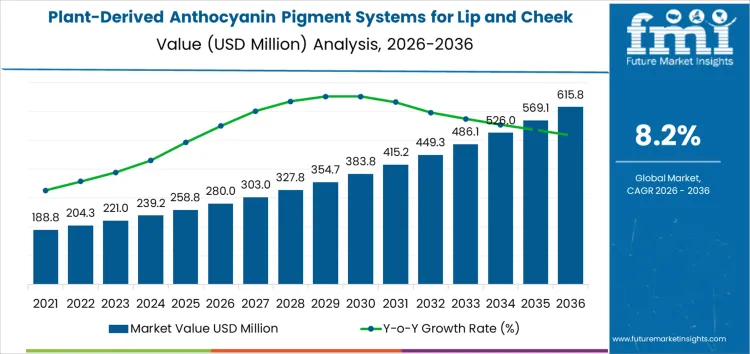
The plant-derived anthocyanin pigment systems for lip and cheek tints market is valued at USD 280 million in 2026 and is projected to reach USD 615.8 million by 2036, growing at a compound annual growth rate (CAGR) of 8.2%. Cost structures will significantly influence market dynamics, as suppliers must balance the higher production costs associated with plant-based pigments against the demand for sustainable and natural ingredients. Pricing control will be central to maintaining profitability, especially for vendors that manage to secure premium pricing by positioning their products as eco-friendly alternatives. Margin concentration is expected to rise as larger players with economies of scale dominate, allowing them to capture the majority of the market value. Smaller entrants may struggle with cost competitiveness and brand recognition, limiting their ability to compete on price alone. The value capture in this market will increasingly depend on the ability to combine quality, sustainability, and strategic pricing rather than simply selling volume.
Quick Stats of the Plant-Derived Anthocyanin Pigment Systems for Lip and Cheek Tints Market
- Plant-Derived Anthocyanin Pigment Systems for Lip and Cheek Tints Market Value (2026): USD 280 million
- Plant-Derived Anthocyanin Pigment Systems for Lip and Cheek Tints Market Forecast Value (2036): USD 615.8 million
- Plant-Derived Anthocyanin Pigment Systems for Lip and Cheek Tints Market Global Forecast CAGR (2026-2036): 8.2%
- Plant-Derived Anthocyanin Pigment Systems for Lip and Cheek Tints Market Leading Segment: Application (Lip Tints) 47%
- Key Growth Regions in Plant-Derived Anthocyanin Pigment Systems for Lip and Cheek Tints Market: USA
- Top Players in Plant-Derived Anthocyanin Pigment Systems for Lip and Cheek Tints Market: Givaudan, Symrise, Chr. Hansen, DDW The Color House, Naturex (Glanbia)
What is the Growth Forecast for the Plant-Derived Anthocyanin Pigment Systems for Lip and Cheek Tints Market through 2036?
The absolute dollar opportunity for the plant-derived anthocyanin pigment systems for lip and cheek tints market represents the total increase in market value over the forecast period. Starting at USD 280 million in 2026, the market is expected to reach USD 615.8 million by 2036, representing a growth of USD 330 million over the 10-year period. This absolute dollar opportunity is driven by the growing consumer demand for natural and plant-based cosmetic products, especially in the clean beauty space.
The largest portion of this opportunity will be realized as the market grows from USD 280 million in 2026 to USD 384 million in 2030, adding USD 104 million to the market value during the first half of the forecast period. The second half of the forecast (2031–2036) will see the market continue to expand, with the total increase from 2030 to 2036 being USD 226 million, from USD 384 million to USD 615.8 million. This growth is driven by increasing consumer preference for sustainable and eco-friendly beauty products, as well as continuous improvements in anthocyanin pigment formulations that provide enhanced color performance in lip and cheek tints.
Plant-Derived Anthocyanin Pigment Systems for Lip and Cheek Tints Market Key Takeaways
| Metric | Value |
|---|---|
| Industry Sales Value (2026) | USD 280 million |
| Industry Forecast Value (2036) | USD 615.8 million |
| Industry Forecast CAGR (2026-2036) | 8.2% |
What Is Driving the Demand for the Plant Derived Anthocyanin Pigment Systems for Lip and Cheek Tints Market Globally?
The global demand for plant derived anthocyanin pigment systems for lip and cheek tints is driven by rising consumer preference for clean, natural, and sustainable beauty products. Anthocyanins are natural pigments found in fruits, flowers, and vegetables that provide red, purple, and blue hues without synthetic colorants. Consumers are increasingly scrutinizing cosmetic ingredient lists, seeking products that avoid artificial dyes and prioritize plant based alternatives.
Regulatory trends in Europe, North America, and Asia which restrict certain synthetic color additives further encourage formulators to adopt natural pigment systems. Lip and cheek tints formulated with anthocyanin pigments respond to these preferences and regulatory pressures while offering gentle performance for sensitive skin. In addition, the rise of minimalist and wellness oriented beauty trends is amplifying demand for transparent labeling and ingredient sourcing. Social media, beauty influencers, and sustainability certifications are reinforcing visibility for products that combine aesthetic appeal with natural origin, helping drive broader market adoption.
Future demand for plant derived anthocyanin pigment systems for lip and cheek tints is expected to grow as formulation science and market dynamics continue to evolve. Advances in extraction and stabilization technologies will improve pigment consistency, shade range, and processing compatibility with diverse cosmetic bases. As brands expand global distribution through retail and online channels, more consumers will gain exposure to natural tint products that balance performance with perceived health benefits.
Growth of clean beauty and eco certified product segments will reinforce uptake as consumers increasingly prefer plant based tints that align with environmental and ethical values. Regulatory frameworks that favor natural or non toxic colorants are likely to broaden acceptance in markets where synthetic alternatives face scrutiny. Consumer education on natural pigment attributes and the influence of digital beauty platforms will support sustained interest in anthocyanin based tint systems. As beauty brands integrate plant derived colorants into broader portfolio strategies, demand is expected to expand steadily in global lip and cheek tint categories.
What are the Leading Segments in the Global Plant-Derived Anthocyanin Pigment Systems for Lip and Cheek Tints Market?
The global plant-derived anthocyanin pigment systems for lip and cheek tints market is segmented by material type and application. Among material types, anthocyanin extracts lead the market, capturing 38% of the share, followed by beetroot-derived pigments, berry-derived pigments, and other plant sources. Anthocyanin extracts, known for their vibrant color range and natural origin, are increasingly used in cosmetics for their eco-friendly and skin-safe properties. On the application side, lip tints dominate the market, holding 47% of the share, followed by cheek tints and multifunctional color cosmetics. Lip tints are the largest segment due to their widespread popularity and the increasing demand for long-lasting, natural makeup products.
What Drives the Growth of Anthocyanin Extracts in the Plant-Derived Anthocyanin Pigment Systems for Lip and Cheek Tints Market?
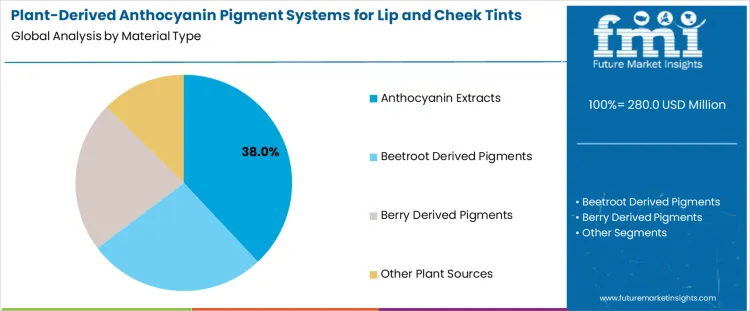
Anthocyanin extracts are the leading material type in the plant-derived anthocyanin pigment systems for lip and cheek tints market, holding 38% of the share. These pigments, derived from a variety of plant sources such as fruits and vegetables, are highly valued for their vibrant, rich colors, which make them ideal for cosmetic applications. Anthocyanins are natural, non-toxic, and biodegradable, making them a preferred choice for eco-conscious consumers seeking safe and sustainable beauty products. The growing consumer demand for clean beauty products, coupled with the desire for natural and plant-based ingredients, is driving the adoption of anthocyanin extracts in cosmetics. Additionally, the increasing focus on cruelty-free and organic formulations further supports the demand for these plant-derived pigments. As the cosmetics industry continues to prioritize sustainability and health-conscious formulations, anthocyanin extracts are expected to maintain their dominant position in the market for lip and cheek tints.
What is Driving the Demand for Lip Tints in the Plant-Derived Anthocyanin Pigment Systems for Lip and Cheek Tints Market?
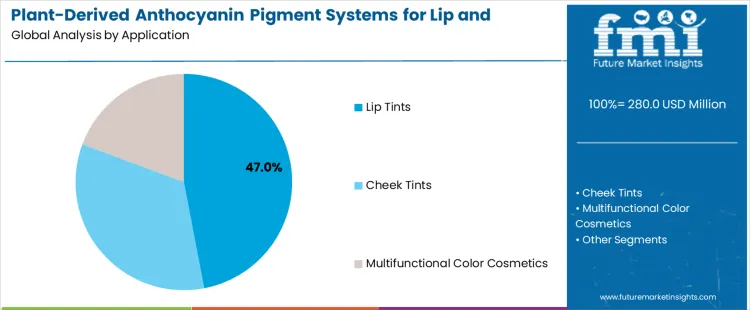
Lip tints are the leading application type in the plant-derived anthocyanin pigment systems for lip and cheek tints market, capturing 47% of the share. This demand is primarily driven by the growing popularity of long-lasting, lightweight, and natural-looking lip products. Lip tints are favored for their ability to provide vibrant color while maintaining a natural finish, and they are often sought after for their longevity compared to traditional lipsticks. The increasing consumer preference for clean beauty products, especially those containing plant-based and sustainable ingredients, has fueled the demand for plant-derived anthocyanin pigment systems in lip tints. Additionally, as consumers continue to seek multifunctional and eco-friendly beauty products, lip tints made with anthocyanin pigments offer the perfect solution by combining effective color payoff with natural, safe ingredients. As the clean beauty movement continues to grow, lip tints are expected to remain the dominant application for plant-derived anthocyanin pigments in the cosmetics market.
What are the Key Dynamics in the Global Plant Derived Anthocyanin Pigment Systems for Lip and Cheek Tints Market?
The global plant derived anthocyanin pigment systems for lip and cheek tints market is growing as cosmetic brands and consumers embrace natural, bio based colorants that can deliver vibrant hues while aligning with clean beauty and sustainability values. Anthocyanins are naturally occurring pigments found in berries, flowers and other plants that provide red, purple and pink shades ideal for lip and cheek tints. Market expansion reflects rising demand for products that combine sensory appeal with perceived safety and reduced reliance on synthetic dyes. Adoption spans premium beauty, natural cosmetics and mainstream segments where ingredient transparency and eco friendly positioning influence purchase decisions.
What are the Key Drivers for the Plant Derived Anthocyanin Pigment Systems for Lip and Cheek Tints Market?
Consumer preference for clean, plant based cosmetics with naturally derived ingredients is a key driver supporting growth of anthocyanin pigment systems. Beauty shoppers increasingly seek products formulated without synthetic colorants and harsh chemicals, favoring botanical pigments that resonate with wellness and lifestyle trends. Regulatory scrutiny of certain artificial dyes in cosmetics encourages brands to explore natural alternatives that meet safety guidelines and label claims. Social media influence and demand for products that combine performance with sustainable sourcing further elevate interest. Technological advances in extraction and stabilization techniques improve color intensity and shelf life, easing formulation challenges.
What are the Restraints for the Plant Derived Anthocyanin Pigment Systems for Lip and Cheek Tints Market?
One restraint is the inherent variability in color strength, hue and stability of plant derived anthocyanins compared with well established synthetic pigments, which may require extensive formulation optimization. Anthocyanins can be sensitive to pH, light and temperature, challenging manufacturers to ensure consistent shade replication and long product shelf life. Higher cost of sourcing, processing and stabilizing botanical pigments relative to synthetic alternatives can affect pricing in value oriented product lines. Regulatory definitions of “natural” vary across regions, complicating claims and marketing, and limited consumer awareness about the functional benefits of anthocyanin pigments may slow adoption without clear education and performance evidence.
What are the Key Trends in the Plant Derived Anthocyanin Pigment Systems for Lip and Cheek Tints Market?
A key trend is the development of enhanced stabilization technologies that protect anthocyanin pigments against degradation, enabling vibrant, long lasting color performance in lip and cheek tint formulations. Cosmetic chemists are using encapsulation, co pigmentation and pH buffering strategies to improve pigment resilience in diverse product matrices. Collaboration between pigment suppliers and beauty brands accelerates creation of shade libraries tailored to consumer preferences and seasonal trends. Transparent storytelling about plant origins, sustainable harvesting and eco certifications supports brand differentiation and consumer trust. Expansion of personalized beauty and small batch artisanal color cosmetics also drives demand for unique, plant sourced tints with clean ingredient lists.
What is the Country-Wise Analysis of the Plant-Derived Anthocyanin Pigment Systems for Lip and Cheek Tints Market?
The plant-derived anthocyanin pigment systems for lip and cheek tints market is expected to grow steadily, driven by the increasing demand for natural, clean beauty products that are free from synthetic dyes and chemicals. Anthocyanins, naturally occurring pigments found in fruits, vegetables, and plants, offer a sustainable and eco-friendly alternative to synthetic colorants in cosmetics. The growing consumer preference for plant-based ingredients, combined with the rise of the clean beauty movement, is driving the demand for these natural pigment systems in products like lip and cheek tints.
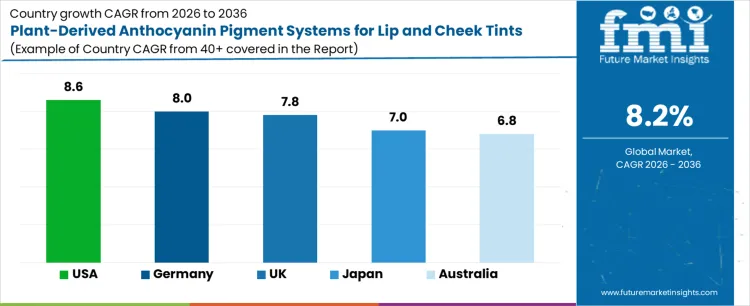
Developed markets such as the USA, Germany, and the UK are seeing strong demand for plant-derived colorants, as consumers become more conscious of the ingredients in their beauty products. Emerging markets like Japan and Australia are also witnessing steady growth as consumer awareness of sustainability and natural beauty products increases. The shift toward more eco-friendly and health-conscious beauty solutions is expected to continue driving the growth of this market globally.
| Country | CAGR (2026-2036) |
|---|---|
| USA | 8.6% |
| Germany | 8% |
| UK | 7.8% |
| Japan | 7% |
| Australia | 6.8% |
What is the Growth Outlook for the Plant-Derived Anthocyanin Pigment Systems for Lip and Cheek Tints Market in the USA?
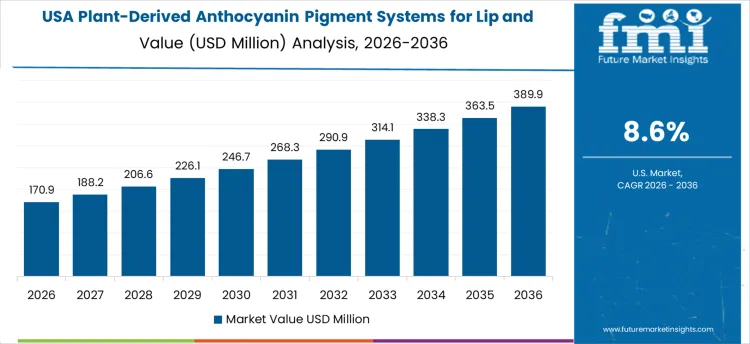
The plant-derived anthocyanin pigment systems for lip and cheek tints market in the USA is expected to grow steadily, with a projected CAGR of 8.6% from 2026 to 2036. The U.S. market for clean beauty products, including natural cosmetics, is expanding rapidly as consumers demand safer, eco-friendly, and sustainable alternatives to traditional synthetic beauty products. The growing preference for plant-based ingredients in cosmetics is a key driver of this trend, with anthocyanin-based pigments offering a natural, non-toxic solution for colorants in lip and cheek tints.
As consumers become more aware of the potential health risks associated with synthetic chemicals in beauty products, the demand for plant-derived pigments is expected to rise significantly. The U.S. beauty industry is highly innovative, and brands are increasingly adopting natural and organic formulations to cater to this rising demand. With the shift toward clean and sustainable beauty solutions, the market for plant-derived anthocyanin pigments is expected to continue expanding at a healthy rate.
What is the Market Outlook for the Plant-Derived Anthocyanin Pigment Systems for Lip and Cheek Tints Market in Germany?
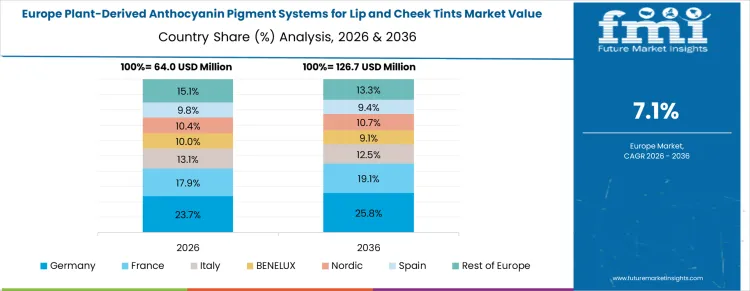
Germany is projected to experience steady growth in the plant-derived anthocyanin pigment systems for lip and cheek tints market, with a projected CAGR of 8% from 2026 to 2036. Germany’s beauty industry has long been known for its commitment to sustainability and natural ingredients. With increasing consumer awareness about the harmful effects of synthetic chemicals in cosmetics, German consumers are increasingly opting for products that are free from artificial additives and harmful ingredients.
As part of its broader environmental focus, Germany has adopted strict regulations for cosmetics, pushing brands to offer cleaner, more eco-friendly alternatives. Plant-derived pigments, such as anthocyanins, are gaining popularity due to their natural origin, non-toxicity, and vibrant color options. The growing trend of clean beauty and sustainability in Germany’s cosmetic market is expected to continue driving demand for anthocyanin-based colorants in lip and cheek tints. As the market for organic and eco-friendly beauty products expands, Germany will remain a key player in the adoption of plant-derived pigment systems.
What is the Growth Forecast for the Plant-Derived Anthocyanin Pigment Systems for Lip and Cheek Tints Market in the UK?
The plant-derived anthocyanin pigment systems for lip and cheek tints market in the UK is projected to grow steadily, with a projected CAGR of 7.8% from 2026 to 2036. In the UK, consumer preferences are shifting toward cleaner, more natural beauty products as part of a broader focus on sustainability and health-conscious living. The UK beauty market has seen a rise in demand for plant-based ingredients, and anthocyanin pigments, which offer natural colorants for cosmetics, are becoming increasingly popular.
The UK government has been actively regulating cosmetics to ensure consumer safety, further driving the demand for non-toxic and sustainable alternatives to synthetic colorants. With increasing consumer education on the benefits of natural ingredients and the environmental impact of synthetic chemicals, plant-derived anthocyanin pigments are expected to see higher adoption rates. The continued shift toward clean beauty products in the UK will contribute to the steady growth of the market for bio-based colorants in cosmetics.
What is the Market Outlook for the Plant-Derived Anthocyanin Pigment Systems for Lip and Cheek Tints Market in Japan?
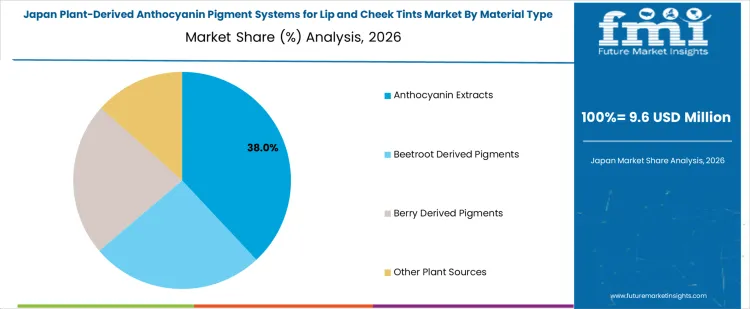
Japan is expected to experience steady growth in the plant-derived anthocyanin pigment systems for lip and cheek tints market, with a projected CAGR of 7% from 2026 to 2036. Japanese consumers are known for their preference for high-quality, safe, and natural beauty products. As awareness about the environmental and health risks of synthetic ingredients increases, the demand for plant-based alternatives, particularly in cosmetics, is also rising. Anthocyanin pigments, derived from fruits like berries, are gaining popularity in Japan due to their natural colorant properties and skin-friendly benefits.
Japan’s stringent regulatory standards for cosmetics ensure that only safe and non-toxic ingredients are used, pushing the demand for plant-based alternatives. The country’s growing clean beauty movement, coupled with a rising trend for natural ingredients, is expected to contribute to the steady growth of the market for plant-derived anthocyanin pigments in cosmetic products.
What are the Growth Prospects for the Plant-Derived Anthocyanin Pigment Systems for Lip and Cheek Tints Market in Australia?
Australia is projected to see steady growth in the plant-derived anthocyanin pigment systems for lip and cheek tints market, with a projected CAGR of 6.8% from 2026 to 2036. The Australian cosmetics market is increasingly shifting toward clean beauty products, driven by consumer demand for sustainable, non-toxic, and eco-friendly ingredients. With growing concerns about synthetic chemicals in cosmetics, Australian consumers are seeking natural alternatives, and plant-based pigments such as anthocyanins are gaining popularity. The Australian government’s emphasis on sustainability and environmental protection is also influencing the beauty industry’s shift toward greener formulations. The demand for plant-derived colorants, including anthocyanin-based pigments, is expected to rise as consumers increasingly prefer products that align with their values of health, safety, and sustainability. With the ongoing focus on clean beauty and environmental responsibility, the market for plant-derived anthocyanin pigments in Australia is expected to grow steadily in the coming years.
What is the Competitive Landscape for the Plant-Derived Anthocyanin Pigment Systems for Lip and Cheek Tints Market?
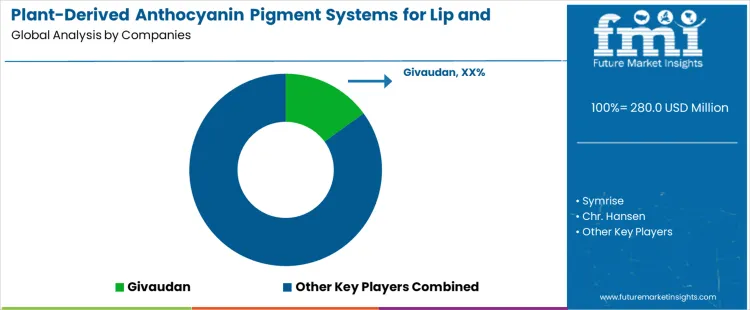
The plant-derived anthocyanin pigment systems for lip and cheek tints market is expanding rapidly as consumers and manufacturers increasingly seek natural, sustainable alternatives to synthetic colorants in the cosmetics industry. Givaudan leads the market with its innovative plant-derived anthocyanin pigment systems, offering high-performance, vibrant, and eco-friendly solutions for lip and cheek tints. Their focus on sustainability, product innovation, and regulatory compliance has positioned them as a dominant player in this sector. Symrise, Chr. Hansen, and DDW The Color House are key competitors, each providing specialized anthocyanin pigment systems that cater to the growing demand for natural colorants in cosmetic products. Symrise focuses on offering clean, plant-based pigments that meet consumer preferences for sustainable beauty, while Chr. Hansen delivers natural color solutions derived from plant sources to enhance cosmetic formulations. DDW The Color House specializes in creating high-quality, plant-based colorants for the cosmetic industry.
Naturex (Glanbia) further strengthens the competitive landscape by offering plant-derived anthocyanin pigment systems for cosmetics. Naturex emphasizes natural, sustainable color solutions for beauty products, catering to the increasing demand for eco-conscious ingredients in cosmetic formulations. These companies compete by focusing on product innovation, sustainability, and the ability to meet the growing demand for safe, natural, and effective plant-derived colorants. As the clean beauty movement continues to gain momentum, the market for plant-derived anthocyanin pigments for lip and cheek tints is expected to continue expanding, driving further competition and innovation in the sector.
Key Players of the Plant-Derived Anthocyanin Pigment Systems for Lip and Cheek Tints Market
- Givaudan
- Symrise
- Chr. Hansen
- DDW The Color House
- Naturex (Glanbia)
Scope of the Report
| Items | Values |
|---|---|
| Quantitative Units (2026) | USD Million |
| Material Type | Anthocyanin Extracts, Beetroot Derived Pigments, Berry Derived Pigments, Other Plant Sources |
| Application | Lip Tints, Cheek Tints, Multifunctional Color Cosmetics |
| Companies | Givaudan, Symrise, Chr. Hansen, DDW The Color House, Naturex (Glanbia) |
| Regions Covered | North America, Latin America, Western Europe, Eastern Europe, South Asia and Pacific, East Asia, Middle East & Africa |
| Countries Covered | United States, Canada, Mexico, Brazil, Argentina, Germany, France, United Kingdom, Italy, Spain, Netherlands, China, India, Japan, South Korea, ANZ, GCC Countries, South Africa |
| Additional Attributes | Dollar by sales by material type, application, and region. Includes market trends in plant derived anthocyanin pigment adoption for lip and cheek tint products, performance in cosmetic formulations, cost considerations, environmental and safety evaluation of plant derived pigments, consumer preferences for natural color cosmetics, regulatory and compliance dynamics affecting ingredient use, market share and competitive positioning of key companies, innovations in anthocyanin pigment systems, and impact on product aesthetics and functionality. |
Plant-Derived Anthocyanin Pigment Systems for Lip and Cheek Tints Market Segmentation
Material Type:
- Anthocyanin Extracts
- Beetroot Derived Pigments
- Berry Derived Pigments
- Other Plant Sources
Application:
- Lip Tints
- Cheek Tints
- Multifunctional Color Cosmetics
Region:
- Asia Pacific
- China
- Japan
- South Korea
- India
- Australia & New Zealand
- ASEAN
- Rest of Asia Pacific
- Europe
- Germany
- United Kingdom
- France
- Italy
- Spain
- Nordic
- BENELUX
- Rest of Europe
- North America
- United States
- Canada
- Mexico
- Latin America
- Brazil
- Chile
- Rest of Latin America
- Middle East & Africa
- Kingdom of Saudi Arabia
- Other GCC Countries
- Turkey
- South Africa
- Other African Union
- Rest of Middle East & Africa
Frequently Asked Questions
How big is the plant-derived anthocyanin pigment systems for lip and cheek tints market in 2026?
The global plant-derived anthocyanin pigment systems for lip and cheek tints market is estimated to be valued at USD 280.0 million in 2026.
What will be the size of plant-derived anthocyanin pigment systems for lip and cheek tints market in 2036?
The market size for the plant-derived anthocyanin pigment systems for lip and cheek tints market is projected to reach USD 615.8 million by 2036.
How much will be the plant-derived anthocyanin pigment systems for lip and cheek tints market growth between 2026 and 2036?
The plant-derived anthocyanin pigment systems for lip and cheek tints market is expected to grow at a 8.2% CAGR between 2026 and 2036.
What are the key product types in the plant-derived anthocyanin pigment systems for lip and cheek tints market?
The key product types in plant-derived anthocyanin pigment systems for lip and cheek tints market are anthocyanin extracts, beetroot derived pigments, berry derived pigments and other plant sources.
Which application segment to contribute significant share in the plant-derived anthocyanin pigment systems for lip and cheek tints market in 2026?
In terms of application, lip tints segment to command 47.0% share in the plant-derived anthocyanin pigment systems for lip and cheek tints market in 2026.
Preview the report firsthand - request a free sample
Get SampleGet the brochure for pricing and purchase details.
Get PDFTable of Content
- Executive Summary
- Global Market Outlook
- Demand-side Trends
- Supply-side Trends
- Technology Roadmap Analysis
- Analysis and Recommendations
- Market Overview
- Market Coverage / Taxonomy
- Market Definition / Scope / Limitations
- Market Background
- Market Dynamics
- Drivers
- Restraints
- Opportunity
- Trends
- Scenario Forecast
- Demand in Optimistic Scenario
- Demand in Likely Scenario
- Demand in Conservative Scenario
- Opportunity Map Analysis
- Product Life Cycle Analysis
- Supply Chain Analysis
- Investment Feasibility Matrix
- Value Chain Analysis
- PESTLE and Porter’s Analysis
- Regulatory Landscape
- Regional Parent Market Outlook
- Production and Consumption Statistics
- Import and Export Statistics
- Market Dynamics
- Global Market Analysis 2021 to 2025 and Forecast, 2026 to 2036
- Historical Market Size Value (USD Million) Analysis, 2021 to 2025
- Current and Future Market Size Value (USD Million) Projections, 2026 to 2036
- Y-o-Y Growth Trend Analysis
- Absolute $ Opportunity Analysis
- Global Market Pricing Analysis 2021 to 2025 and Forecast 2026 to 2036
- Global Market Analysis 2021 to 2025 and Forecast 2026 to 2036, By Material Type
- Introduction / Key Findings
- Historical Market Size Value (USD Million) Analysis By Material Type , 2021 to 2025
- Current and Future Market Size Value (USD Million) Analysis and Forecast By Material Type , 2026 to 2036
- Anthocyanin Extracts
- Beetroot Derived Pigments
- Berry Derived Pigments
- Other Plant Sources
- Anthocyanin Extracts
- Y-o-Y Growth Trend Analysis By Material Type , 2021 to 2025
- Absolute $ Opportunity Analysis By Material Type , 2026 to 2036
- Global Market Analysis 2021 to 2025 and Forecast 2026 to 2036, By Application
- Introduction / Key Findings
- Historical Market Size Value (USD Million) Analysis By Application, 2021 to 2025
- Current and Future Market Size Value (USD Million) Analysis and Forecast By Application, 2026 to 2036
- Lip Tints
- Cheek Tints
- Multifunctional Color Cosmetics
- Lip Tints
- Y-o-Y Growth Trend Analysis By Application, 2021 to 2025
- Absolute $ Opportunity Analysis By Application, 2026 to 2036
- Global Market Analysis 2021 to 2025 and Forecast 2026 to 2036, By Region
- Introduction
- Historical Market Size Value (USD Million) Analysis By Region, 2021 to 2025
- Current Market Size Value (USD Million) Analysis and Forecast By Region, 2026 to 2036
- North America
- Latin America
- Western Europe
- Eastern Europe
- East Asia
- South Asia and Pacific
- Middle East & Africa
- Market Attractiveness Analysis By Region
- North America Market Analysis 2021 to 2025 and Forecast 2026 to 2036, By Country
- Historical Market Size Value (USD Million) Trend Analysis By Market Taxonomy, 2021 to 2025
- Market Size Value (USD Million) Forecast By Market Taxonomy, 2026 to 2036
- By Country
- USA
- Canada
- Mexico
- By Material Type
- By Application
- By Country
- Market Attractiveness Analysis
- By Country
- By Material Type
- By Application
- Key Takeaways
- Latin America Market Analysis 2021 to 2025 and Forecast 2026 to 2036, By Country
- Historical Market Size Value (USD Million) Trend Analysis By Market Taxonomy, 2021 to 2025
- Market Size Value (USD Million) Forecast By Market Taxonomy, 2026 to 2036
- By Country
- Brazil
- Chile
- Rest of Latin America
- By Material Type
- By Application
- By Country
- Market Attractiveness Analysis
- By Country
- By Material Type
- By Application
- Key Takeaways
- Western Europe Market Analysis 2021 to 2025 and Forecast 2026 to 2036, By Country
- Historical Market Size Value (USD Million) Trend Analysis By Market Taxonomy, 2021 to 2025
- Market Size Value (USD Million) Forecast By Market Taxonomy, 2026 to 2036
- By Country
- Germany
- UK
- Italy
- Spain
- France
- Nordic
- BENELUX
- Rest of Western Europe
- By Material Type
- By Application
- By Country
- Market Attractiveness Analysis
- By Country
- By Material Type
- By Application
- Key Takeaways
- Eastern Europe Market Analysis 2021 to 2025 and Forecast 2026 to 2036, By Country
- Historical Market Size Value (USD Million) Trend Analysis By Market Taxonomy, 2021 to 2025
- Market Size Value (USD Million) Forecast By Market Taxonomy, 2026 to 2036
- By Country
- Russia
- Poland
- Hungary
- Balkan & Baltic
- Rest of Eastern Europe
- By Material Type
- By Application
- By Country
- Market Attractiveness Analysis
- By Country
- By Material Type
- By Application
- Key Takeaways
- East Asia Market Analysis 2021 to 2025 and Forecast 2026 to 2036, By Country
- Historical Market Size Value (USD Million) Trend Analysis By Market Taxonomy, 2021 to 2025
- Market Size Value (USD Million) Forecast By Market Taxonomy, 2026 to 2036
- By Country
- China
- Japan
- South Korea
- By Material Type
- By Application
- By Country
- Market Attractiveness Analysis
- By Country
- By Material Type
- By Application
- Key Takeaways
- South Asia and Pacific Market Analysis 2021 to 2025 and Forecast 2026 to 2036, By Country
- Historical Market Size Value (USD Million) Trend Analysis By Market Taxonomy, 2021 to 2025
- Market Size Value (USD Million) Forecast By Market Taxonomy, 2026 to 2036
- By Country
- India
- ASEAN
- Australia & New Zealand
- Rest of South Asia and Pacific
- By Material Type
- By Application
- By Country
- Market Attractiveness Analysis
- By Country
- By Material Type
- By Application
- Key Takeaways
- Middle East & Africa Market Analysis 2021 to 2025 and Forecast 2026 to 2036, By Country
- Historical Market Size Value (USD Million) Trend Analysis By Market Taxonomy, 2021 to 2025
- Market Size Value (USD Million) Forecast By Market Taxonomy, 2026 to 2036
- By Country
- Kingdom of Saudi Arabia
- Other GCC Countries
- Turkiye
- South Africa
- Other African Union
- Rest of Middle East & Africa
- By Material Type
- By Application
- By Country
- Market Attractiveness Analysis
- By Country
- By Material Type
- By Application
- Key Takeaways
- Key Countries Market Analysis
- USA
- Pricing Analysis
- Market Share Analysis, 2025
- By Material Type
- By Application
- Canada
- Pricing Analysis
- Market Share Analysis, 2025
- By Material Type
- By Application
- Mexico
- Pricing Analysis
- Market Share Analysis, 2025
- By Material Type
- By Application
- Brazil
- Pricing Analysis
- Market Share Analysis, 2025
- By Material Type
- By Application
- Chile
- Pricing Analysis
- Market Share Analysis, 2025
- By Material Type
- By Application
- Germany
- Pricing Analysis
- Market Share Analysis, 2025
- By Material Type
- By Application
- UK
- Pricing Analysis
- Market Share Analysis, 2025
- By Material Type
- By Application
- Italy
- Pricing Analysis
- Market Share Analysis, 2025
- By Material Type
- By Application
- Spain
- Pricing Analysis
- Market Share Analysis, 2025
- By Material Type
- By Application
- France
- Pricing Analysis
- Market Share Analysis, 2025
- By Material Type
- By Application
- India
- Pricing Analysis
- Market Share Analysis, 2025
- By Material Type
- By Application
- ASEAN
- Pricing Analysis
- Market Share Analysis, 2025
- By Material Type
- By Application
- Australia & New Zealand
- Pricing Analysis
- Market Share Analysis, 2025
- By Material Type
- By Application
- China
- Pricing Analysis
- Market Share Analysis, 2025
- By Material Type
- By Application
- Japan
- Pricing Analysis
- Market Share Analysis, 2025
- By Material Type
- By Application
- South Korea
- Pricing Analysis
- Market Share Analysis, 2025
- By Material Type
- By Application
- Russia
- Pricing Analysis
- Market Share Analysis, 2025
- By Material Type
- By Application
- Poland
- Pricing Analysis
- Market Share Analysis, 2025
- By Material Type
- By Application
- Hungary
- Pricing Analysis
- Market Share Analysis, 2025
- By Material Type
- By Application
- Kingdom of Saudi Arabia
- Pricing Analysis
- Market Share Analysis, 2025
- By Material Type
- By Application
- Turkiye
- Pricing Analysis
- Market Share Analysis, 2025
- By Material Type
- By Application
- South Africa
- Pricing Analysis
- Market Share Analysis, 2025
- By Material Type
- By Application
- USA
- Market Structure Analysis
- Competition Dashboard
- Competition Benchmarking
- Market Share Analysis of Top Players
- By Regional
- By Material Type
- By Application
- Competition Analysis
- Competition Deep Dive
- Givaudan
- Overview
- Product Portfolio
- Profitability by Market Segments (Product/Age /Sales Channel/Region)
- Sales Footprint
- Strategy Overview
- Marketing Strategy
- Product Strategy
- Channel Strategy
- Symrise
- Chr. Hansen
- DDW The Color House
- Naturex (Glanbia)
- Givaudan
- Competition Deep Dive
- Assumptions & Acronyms Used
- Research Methodology


