

- Industry Size (2026)
- USD 210 Mn
- Forecast (2036)
- USD 445 Mn
- CAGR (2026 to 2036)
- 7.8%
PFAS-Free Pearlescent Pigment Systems for Eye and Lip Makeup Market Forecast and Outlook 2026 to 2036
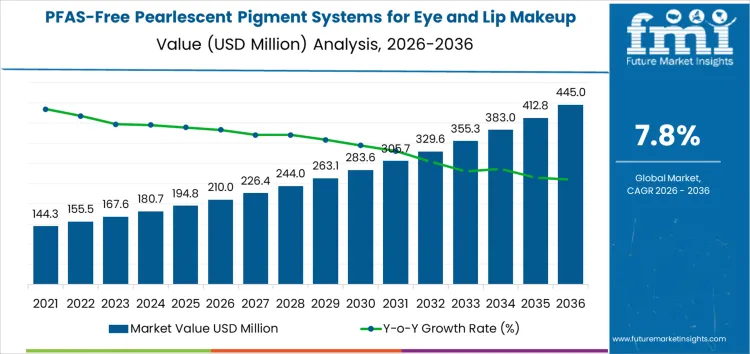
The PFAS-free pearlescent pigment systems for eye and lip makeup market is projected to grow from USD 210 million in 2026 to USD 445 million by 2036, reflecting a compound annual growth rate (CAGR) of 7.8%. While the market presents significant growth potential, challenges remain. Execution risk is heightened by the complexity of developing high-performance, PFAS-free alternatives that meet both cosmetic and regulatory standards.
Adoption friction may be experienced as beauty brands and manufacturers face the logistical and formulation hurdles of transitioning from traditional pigment systems to more sustainable options. Economic sensitivity adds another layer of complexity, with consumer-facing companies under pressure to balance product innovation with cost control. This sensitivity can affect the speed at which PFAS-free pigments are adopted, as price points and production scalability remain critical factors. Over time, as technical challenges are addressed, growth is expected to accelerate, but careful management of these constraints will be key to ensuring sustained market expansion.
Quick Stats of the PFAS-Free Pearlescent Pigment Systems for Eye and Lip Makeup Market
- PFAS-Free Pearlescent Pigment Systems for Eye and Lip Makeup Market Value (2026): USD 210 million
- PFAS-Free Pearlescent Pigment Systems for Eye and Lip Makeup Market Forecast Value (2036): USD 445 million
- PFAS-Free Pearlescent Pigment Systems for Eye and Lip Makeup Market Global Forecast CAGR (2026-2036): 7.8%
- PFAS-Free Pearlescent Pigment Systems for Eye and Lip Makeup Market Leading Segment: Application Type (Eye Makeup) 48%
- Key Growth Regions in PFAS-Free Pearlescent Pigment Systems for Eye and Lip Makeup Market: USA
- Top Players in PFAS-Free Pearlescent Pigment Systems for Eye and Lip Makeup Market: Sun Chemical Colors & Effects, Merck KGaA, Sensient Cosmetic Technologies, BASF SE, Kobo Products Inc., ColorTone Cosmetics, Clean Beauty Pigment Co.
What is the Growth Forecast for the PFAS-Free Pearlescent Pigment Systems for Eye and Lip Makeup Market through 2036?
The peak-to-trough analysis for the PFAS-free pearlescent pigment systems for eye and lip makeup market demonstrates a gradual but consistent growth pattern over the forecast period. The market begins at USD 210 million in 2026, marking the trough as the market is still in its early stages of adoption. At this point, PFAS-free alternatives are still emerging within the industry, and consumer awareness regarding the potential risks associated with PFAS in cosmetics is growing. During these early years, the market faces relatively slower adoption as companies transition to safer alternatives, and the production of PFAS-free pearlescent pigments is still scaling up to meet demand. The market will experience gradual increases over the first few years, rising to USD 263 million by 2029, fueled by increasing regulatory pressure, consumer demand for eco-friendly beauty products, and more formulations entering the market.
By 2036, the market will reach its peak value of USD 445 million, reflecting a more stable phase in the market’s development. This growth is driven by broader adoption and the establishment of PFAS-free pearlescent pigments as a standard within the cosmetics industry. The acceleration phase between the trough in 2026 and peak in 2036 will be marked by consistent growth, especially from 2029 to 2034, as more companies integrate PFAS-free alternatives into their product lines and consumers demand safer, cleaner beauty products. The maturity of the market will lead to stabilization, but the overall increase in adoption and market value will drive a steady upward trajectory.
PFAS-Free Pearlescent Pigment Systems for Eye and Lip Makeup Market Key Takeaways
| Metric | Value |
|---|---|
| Industry Sales Value (2026) | USD 210 million |
| Industry Forecast Value (2036) | USD 445 million |
| Industry Forecast CAGR (2026-2036) | 7.8% |
What Is Driving the Demand for PFAS Free Pearlescent Pigment Systems for Eye and Lip Makeup?
Historical demand for pearlescent pigment systems in eye and lip makeup was shaped by broader growth in the global pearlescent pigment market, which includes use of coated mica and synthetic effect pigments in eyeshadows, lipsticks, and other color cosmetics that require luminous, shimmering finishes. Pearlescent pigments were widely used because they provided visual effects that were valued in decorative cosmetics and personal care products across multiple regions. Growth in the overall pearlescent pigment market reflected expanding cosmetic pigment use and rising demand for premium visual effects in makeup applications.
At the same time, concerns about per and polyfluoroalkyl substances in cosmetic formulations began to influence industry thinking, driven by safety and regulatory scrutiny of PFAS in makeup and personal care product ingredients. PFAS were historically used for performance attributes such as water resistance and smooth application in long wear makeup, including eyeshadows and lip products, as well as for their color retention properties. These factors shaped early market dynamics for pearlescent pigment systems that indirectly intersected with emerging safety considerations around PFAS in cosmetics.
Future demand for PFAS free pearlescent pigment systems for eye and lip makeup will be shaped by regulatory and consumer shifts away from fluorinated chemicals and toward alternatives that meet safety and compliance requirements. Regulatory measures in jurisdictions such as the European Union and several US states have targeted PFAS restrictions in cosmetics, prompting reformulation of products to eliminate intentionally added PFAS.
Consumer concern about potential health effects associated with PFAS exposure, including persistence in the environment and possible bioaccumulation, is contributing to demand for PFAS free cosmetic ingredients and finished products. Market growth factors include adoption of non fluorinated pearlescent pigment systems that deliver similar aesthetic effects without PFAS, and increasing transparency in ingredient disclosure and testing. Technical challenges such as formulation performance and achieving desired visual effects without PFAS may influence adoption, but industry attention to alternatives and safety driven reformulation is likely to support broader use of PFAS free pearlescent pigment systems in eye and lip makeup.
What are the Leading Segments in the Global PFAS-Free Pearlescent Pigment Systems for Eye and Lip Makeup Market?
The global PFAS-free pearlescent pigment systems for eye and lip makeup market is segmented by application type and end use. Among application types, eye makeup leads the market, capturing 48% of the share, followed by lip makeup and other decorative cosmetics. Eye makeup dominates due to the high demand for eye products such as eyeshadows, eyeliners, and mascaras, which often require pearlescent pigments for their shimmering effects. On the end-use side, luxury beauty brands dominate the market, holding 38% of the share, followed by mass market clean cosmetics, professional makeup lines, and online or direct-to-consumer sales. Luxury beauty brands are the largest segment, driven by the growing demand for high-quality, sustainable products in the premium cosmetics market.
What Drives the Growth of Eye Makeup in the PFAS-Free Pearlescent Pigment Systems for Eye and Lip Makeup Market?
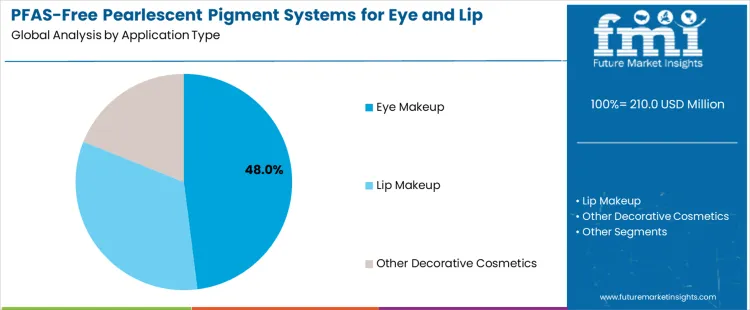
Eye makeup is the leading application type in the PFAS-free pearlescent pigment systems for eye and lip makeup market, holding 48% of the share. This demand is primarily driven by the increasing popularity of eye makeup products, such as eyeshadows, eyeliners, and mascaras, that offer vibrant, shimmering, and multi-dimensional finishes. Consumers are increasingly seeking clean beauty alternatives, and the removal of harmful ingredients like PFAS (per- and polyfluoroalkyl substances) from cosmetic formulations is a key factor influencing purchasing decisions.
PFAS-free pearlescent pigments provide a sustainable option that delivers the desired pearlescent effect while aligning with the growing trend of eco-friendly, non-toxic beauty products. As the demand for safe, effective, and environmentally conscious makeup products continues to rise, eye makeup products formulated with PFAS-free pearlescent pigments are expected to maintain their dominant position in the market.
What is Driving the Demand for Luxury Beauty Brands in the PFAS-Free Pearlescent Pigment Systems for Eye and Lip Makeup Market?
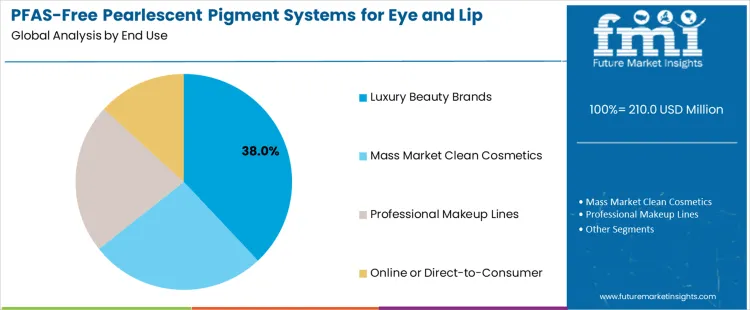
Luxury beauty brands are the leading end-use sector in the PFAS-free pearlescent pigment systems for eye and lip makeup market, capturing 38% of the share. This demand is driven by the growing consumer preference for high-end cosmetics that not only offer superior performance but also meet increasing sustainability and safety standards. Luxury beauty brands are at the forefront of innovation, often leading the way in formulating products that are both luxurious and environmentally friendly.
The shift toward clean beauty, combined with the premiumization of makeup products, has made PFAS-free formulations a priority for luxury beauty brands. These brands are increasingly turning to PFAS-free pearlescent pigment systems to provide their consumers with high-quality, safe, and eco-friendly products that align with their values. As the clean beauty movement continues to grow, the demand for PFAS-free pearlescent pigments in luxury beauty products is expected to increase, securing the sector's dominance in the market.
What are the Key Dynamics in the Global PFAS Free Pearlescent Pigment Systems for Eye and Lip Makeup Market?
The global PFAS free pearlescent pigment systems for eye and lip makeup market is expanding as cosmetic brands reformulate shimmer and glow effects without using per and polyfluoroalkyl substances (PFAS). These pigment systems deliver pearlescent shine, luminosity and color depth in eyeshadows, lip glosses and cream makeup while avoiding PFAS chemistries that raise health and environmental concerns. Growth is driven by rising consumer demand for safer, cleaner beauty products, regulatory scrutiny on persistent fluorinated substances, and innovation in bio based and mineral derived pearlescent materials. Adoption spans mass, prestige and indie brands responding to sustainability priorities and clean beauty positioning.
What are the Key Drivers for the PFAS Free Pearlescent Pigment Systems for Eye and Lip Makeup Market?
Heightened awareness of potential health and environmental issues associated with PFAS is motivating brands to eliminate or reduce these substances in cosmetic formulations. Consumers increasingly seek products with transparent ingredient lists and clean label credentials that align with wellness and eco friendly values. Regulatory actions and draft restrictions on PFAS in personal care products in multiple regions support reformulation initiatives. Advances in pearlescent pigment technology, including coated mica blends, synthetic fluorphlogopite alternatives and plant based shimmering particles, help deliver high impact visual effects without PFAS. Social media and influencer trends that highlight clean, radiant makeup looks further encourage adoption of PFAS free systems.
What are the Restraints for the PFAS Free Pearlescent Pigment Systems for Eye and Lip Makeup Market?
A restraint is the challenge of matching the unique optical performance and slip properties traditionally achieved with PFAS containing pearlescent systems. Some PFAS free alternatives may require specialized coatings or formulation adjustments to achieve comparable smoothness, spreadability and light reflection, adding development time and cost. Higher raw material costs for advanced PFAS free pigments can influence pricing in mainstream segments. Consumer skepticism about performance parity without clear demonstration can slow adoption. Variability in regional regulatory definitions and allowable claims regarding PFAS content complicates global marketing and compliance strategies.
What are the Key Trends in the PFAS Free Pearlescent Pigment Systems for Eye and Lip Makeup Market?
A key trend is innovation in high performance, PFAS free pearlescent pigments that combine durability, shimmer intensity and skin comfort. Ingredient developers are focusing on coated and engineered particles such as titanium dioxide coated micas, synthetic mica and biodegradable alternatives that enhance reflectivity while supporting formulation stability. Integration of multifunctional pigments that offer both visual effect and skin beneficial properties—such as light diffusion, antioxidant delivery or hydration support—is gaining traction. Brands are emphasizing clean beauty credentials, third party certification and transparent sourcing to build consumer trust. Digital tools for shade matching and virtual try on support consumer engagement with PFAS free shimmer products across diverse skin tones.
What is the Country-Wise Analysis of the PFAS-Free Pearlescent Pigment Systems for Eye and Lip Makeup Market?
The PFAS-free pearlescent pigment systems for eye and lip makeup market is experiencing growth, driven by the increasing demand for safer, eco-friendly beauty products. Per- and polyfluoroalkyl substances (PFAS), which have been used in cosmetics for their water- and smudge-proof properties, have raised concerns due to their potential health and environmental risks. As consumers become more aware of these risks, they are seeking products that do not contain harmful chemicals like PFAS.
This has led to an increase in the demand for PFAS-free alternatives, particularly in eye and lip makeup products such as eyeliners, eyeshadows, and lipsticks. Developed markets like the USA, Germany, and the UK are seeing strong demand for these safer alternatives, driven by consumer preference for clean, sustainable beauty products. Emerging markets like Japan and Australia are also witnessing steady growth, fueled by the global clean beauty movement and increasing consumer awareness of cosmetic ingredient safety. The market for PFAS-free pearlescent pigments is expected to continue growing as the demand for non-toxic, eco-conscious beauty solutions rises.
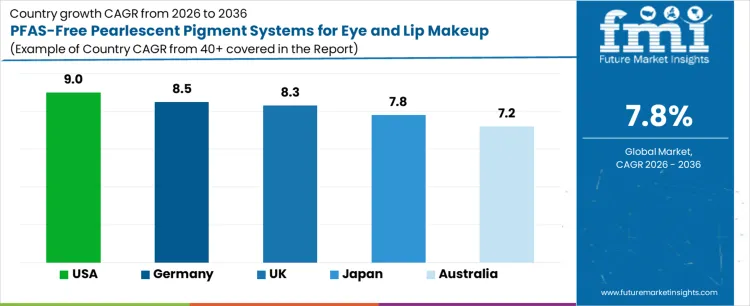
| Country | CAGR (2026-2036) |
|---|---|
| USA | 9% |
| Germany | 8.5% |
| UK | 8.3% |
| Japan | 7.8% |
| Australia | 7.2% |
What is the Growth Outlook for the PFAS-Free Pearlescent Pigment Systems for Eye and Lip Makeup Market in the USA?
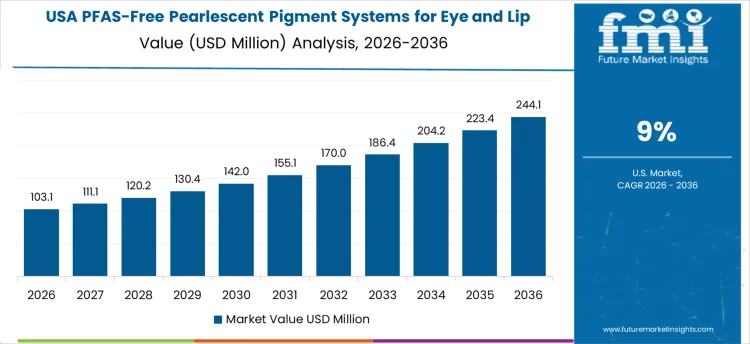
The PFAS-free pearlescent pigment systems for eye and lip makeup market in the USA is projected to grow steadily, with a projected CAGR of 9% from 2026 to 2036. The U.S. beauty market has seen a significant shift toward clean beauty products, with consumers becoming increasingly aware of the potential health risks of PFAS and other harmful chemicals in cosmetics. As part of the clean beauty movement, there is growing demand for makeup products that offer performance and safety, without the inclusion of potentially harmful substances like PFAS. The U.S. regulatory environment is also pushing for more transparency and stricter regulations on cosmetic ingredients, encouraging the development of safer alternatives. This, coupled with the rising consumer demand for eco-friendly and non-toxic beauty products, is expected to drive the growth of PFAS-free pearlescent pigments in eye and lip makeup formulations. As brands innovate to meet the demand for safer cosmetics, the U.S. market is set to lead the global growth in this segment.
What is the Market Outlook for the PFAS-Free Pearlescent Pigment Systems for Eye and Lip Makeup Market in Germany?
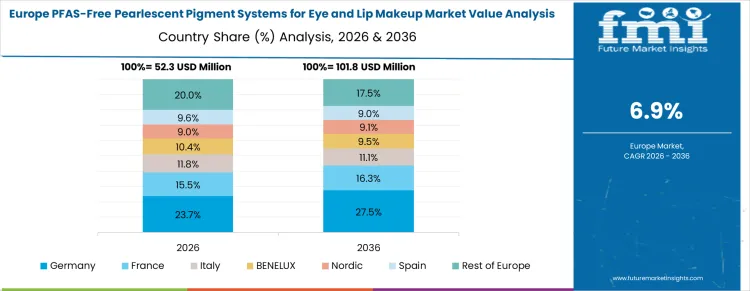
Germany is expected to experience steady growth in the PFAS-free pearlescent pigment systems for eye and lip makeup market, with a projected CAGR of 8.5% from 2026 to 2036. Germany’s beauty market is increasingly driven by the demand for clean, sustainable, and safe beauty products. As concerns about PFAS and other synthetic chemicals grow, German consumers are increasingly opting for products that are free from harmful substances. Germany has strong environmental regulations and is home to a growing clean beauty movement, which is contributing to the rising demand for PFAS-free alternatives in cosmetics. German beauty consumers are particularly focused on product safety, and as the market continues to emphasize transparency and sustainability, the demand for PFAS-free pearlescent pigments in eye and lip makeup products is expected to grow. Additionally, German consumers are more likely to support brands that align with their values of environmental responsibility and safety, further driving the market's growth in the country.
What is the Growth Forecast for the PFAS-Free Pearlescent Pigment Systems for Eye and Lip Makeup Market in the UK?
The PFAS-free pearlescent pigment systems for eye and lip makeup market in the UK is projected to grow steadily, with a projected CAGR of 8.3% from 2026 to 2036. The UK’s clean beauty movement is gaining significant traction, as consumers demand products that are not only effective but also free from harmful chemicals such as PFAS. This growing consumer awareness, combined with increasing regulatory scrutiny on the use of PFAS in cosmetics, is contributing to the market’s expansion. UK beauty brands are responding to these trends by innovating and developing PFAS-free alternatives in their makeup products. With the rising popularity of non-toxic, environmentally friendly beauty products, the UK market for PFAS-free pearlescent pigments is expected to continue to grow. The UK’s strong regulatory framework and the demand for transparency in cosmetics are further supporting the transition to cleaner, safer beauty formulations, which will drive the adoption of these PFAS-free alternatives in eye and lip makeup.
What is the Market Outlook for the PFAS-Free Pearlescent Pigment Systems for Eye and Lip Makeup Market in Japan?
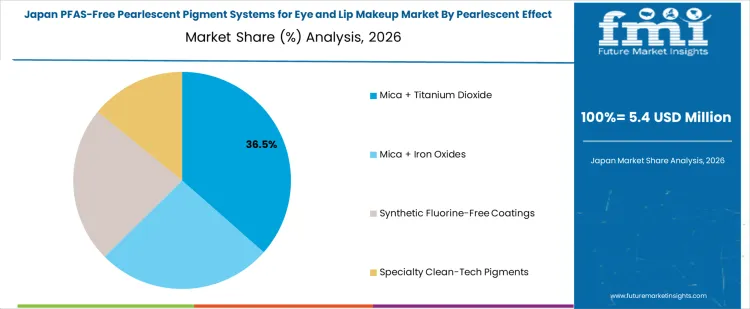
Japan is expected to experience steady growth in the PFAS-free pearlescent pigment systems for eye and lip makeup market, with a projected CAGR of 7.8% from 2026 to 2036. Japanese consumers are becoming increasingly conscious of the ingredients in their beauty products, particularly regarding the safety of synthetic chemicals. As the global clean beauty trend continues to influence Japan, there is growing demand for products that do not contain harmful substances like PFAS. The Japanese beauty industry, which has long been focused on high-quality, safe ingredients, is adapting to this shift by adopting more sustainable and safer alternatives, including PFAS-free pearlescent pigments. Japanese consumers are also drawn to products that align with their values of purity and environmental sustainability, making the market for PFAS-free beauty products increasingly important. As awareness of the harmful effects of PFAS and the demand for eco-friendly cosmetics rise, Japan’s market for PFAS-free pearlescent pigments in eye and lip makeup is expected to expand steadily.
What are the Growth Prospects for the PFAS-Free Pearlescent Pigment Systems for Eye and Lip Makeup Market in Australia?
Australia is projected to experience steady growth in the PFAS-free pearlescent pigment systems for eye and lip makeup market, with a projected CAGR of 7.2% from 2026 to 2036. Australian consumers are becoming increasingly aware of the environmental impact of synthetic ingredients in cosmetics and are actively seeking safer, more sustainable beauty products. The demand for PFAS-free alternatives in makeup products, especially in products like eye shadows, eyeliners, and lipsticks, is rising as part of the broader clean beauty movement in the country. The Australian beauty market is influenced by global trends toward sustainability and ingredient transparency, and the regulatory environment is encouraging the shift toward non-toxic formulations. As more beauty brands in Australia adopt PFAS-free pearlescent pigments to meet these growing demands, the market for safer, environmentally friendly makeup products is expected to grow steadily. With the rising popularity of sustainable beauty products and increasing consumer demand for clean, effective solutions, the Australian market is poised for continued expansion in this segment.
What is the Competitive Landscape for the PFAS-Free Pearlescent Pigment Systems for Eye and Lip Makeup Market?
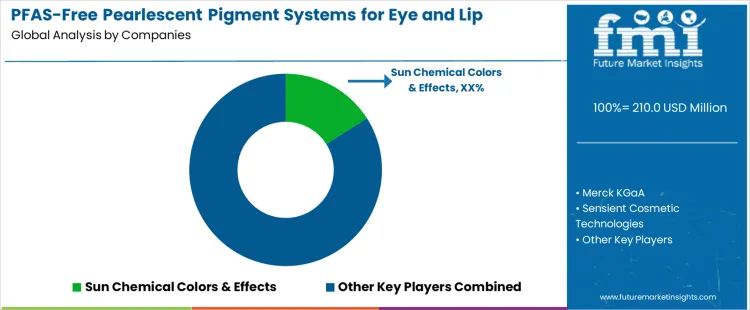
The PFAS-free pearlescent pigment systems for eye and lip makeup market is growing as consumers and the cosmetics industry prioritize clean beauty and sustainability, demanding ingredients that are free from harmful substances like PFAS (per- and polyfluoroalkyl substances). Sun Chemical Colors & Effects leads the market with its innovative PFAS-free pearlescent pigment systems, offering high-quality, sustainable colorants that provide shimmering effects for eye and lip makeup products while adhering to safety and environmental standards. Their strong focus on innovation, performance, and regulatory compliance has positioned them as a dominant player. Merck KGaA, Sensient Cosmetic Technologies, and BASF SE are significant competitors, each providing specialized pearlescent pigment solutions that cater to the clean beauty trend. Merck KGaA focuses on offering sustainable and vibrant pigments that deliver superior effects, while Sensient Cosmetic Technologies and BASF SE focus on eco-friendly formulations for shimmering eye and lip products.
Kobo Products Inc., ColorTone Cosmetics, and Clean Beauty Pigment Co. further contribute to the competitive landscape by offering their own PFAS-free pearlescent pigment systems. Kobo Products Inc. specializes in natural, sustainable pigments that deliver high-quality cosmetic effects, while ColorTone Cosmetics and Clean Beauty Pigment Co. focus on providing clean, eco-friendly colorants that meet growing consumer demands for non-toxic beauty products. These companies compete by focusing on innovation, sustainability, and the ability to meet the rising demand for PFAS-free, safe, and effective pearlescent pigments. As the clean beauty movement gains momentum, the market for PFAS-free pearlescent pigment systems is expected to continue growing, fostering further competition and innovation in the sector.
Key Players of the PFAS-Free Pearlescent Pigment Systems for Eye and Lip Makeup Market
- Sun Chemical Colors & Effects
- Merck KGaA
- Sensient Cosmetic Technologies
- BASF SE
- Kobo Products Inc.
- ColorTone Cosmetics
- Clean Beauty Pigment Co.
Scope of the Report
| Items | Values |
|---|---|
| Quantitative Units (2026) | USD million |
| Pearlescent Effect Type | Mica + Titanium Dioxide, Mica + Iron Oxides, Synthetic Fluorine Free Coatings, Specialty Clean Tech Pigments |
| Application Type | Eye Makeup, Lip Makeup, Other Decorative Cosmetics |
| End Use | Luxury Beauty Brands, Mass Market Clean Cosmetics, Professional Makeup Lines, Online or Direct to Consumer |
| Companies | Sun Chemical Colors & Effects, Merck KGaA, Sensient Cosmetic Technologies, BASF SE, Kobo Products Inc., ColorTone Cosmetics, Clean Beauty Pigment Co. |
| Regions Covered | North America, Latin America, Western Europe, Eastern Europe, South Asia and Pacific, East Asia, Middle East & Africa |
| Countries Covered | United States, Canada, Mexico, Brazil, Argentina, Germany, France, United Kingdom, Italy, Spain, Netherlands, China, India, Japan, South Korea, ANZ, GCC Countries, South Africa |
| Additional Attributes | Dollar by sales by pearlescent effect type, application type, end use, and region. Includes analysis of market trends in PFAS free pearlescent pigment systems for eye and lip makeup, performance in decorative cosmetic formulations, formulation cost factors, regulatory and safety considerations related to PFAS free ingredients, consumer demand for clean beauty pigments, market share and competitive positioning of key companies, innovations in fluorine free pearlescent pigment technologies, and impact on product aesthetics, wear, and user experience. |
PFAS-Free Pearlescent Pigment Systems for Eye and Lip Makeup Market Segmentation
Pearlescent Effect Type:
- Mica + Titanium Dioxide
- Mica + Iron Oxides
- Synthetic Fluorine-Free Coatings
- Specialty Clean-Tech Pigments
Application Type:
- Eye Makeup
- Lip Makeup
- Other Decorative Cosmetics
End Use:
- Luxury Beauty Brands
- Mass Market Clean Cosmetics
- Professional Makeup Lines
- Online or Direct-to-Consumer
Region:
- Asia Pacific
- China
- Japan
- South Korea
- India
- Australia & New Zealand
- ASEAN
- Rest of Asia Pacific
- Europe
- Germany
- United Kingdom
- France
- Italy
- Spain
- Nordic
- BENELUX
- Rest of Europe
- North America
- United States
- Canada
- Mexico
- Latin America
- Brazil
- Chile
- Rest of Latin America
- Middle East & Africa
- Kingdom of Saudi Arabia
- Other GCC Countries
- Turkey
- South Africa
- Other African Union
- Rest of Middle East & Africa
Frequently Asked Questions
How big is the pfas-free pearlescent pigment systems for eye and lip makeup market in 2026?
The global pfas-free pearlescent pigment systems for eye and lip makeup market is estimated to be valued at USD 210.0 million in 2026.
What will be the size of pfas-free pearlescent pigment systems for eye and lip makeup market in 2036?
The market size for the pfas-free pearlescent pigment systems for eye and lip makeup market is projected to reach USD 445.0 million by 2036.
How much will be the pfas-free pearlescent pigment systems for eye and lip makeup market growth between 2026 and 2036?
The pfas-free pearlescent pigment systems for eye and lip makeup market is expected to grow at a 7.8% CAGR between 2026 and 2036.
What are the key product types in the pfas-free pearlescent pigment systems for eye and lip makeup market?
The key product types in pfas-free pearlescent pigment systems for eye and lip makeup market are mica + titanium dioxide, mica + iron oxides, synthetic fluorine‑free coatings and specialty clean‑tech pigments.
Which application type segment to contribute significant share in the pfas-free pearlescent pigment systems for eye and lip makeup market in 2026?
In terms of application type, eye makeup segment to command 48.0% share in the pfas-free pearlescent pigment systems for eye and lip makeup market in 2026.
Preview the report firsthand - request a free sample
Get SampleGet the brochure for pricing and purchase details.
Get PDFTable of Content
- Executive Summary
- Global Market Outlook
- Demand-side Trends
- Supply-side Trends
- Technology Roadmap Analysis
- Analysis and Recommendations
- Market Overview
- Market Coverage / Taxonomy
- Market Definition / Scope / Limitations
- Market Background
- Market Dynamics
- Drivers
- Restraints
- Opportunity
- Trends
- Scenario Forecast
- Demand in Optimistic Scenario
- Demand in Likely Scenario
- Demand in Conservative Scenario
- Opportunity Map Analysis
- Product Life Cycle Analysis
- Supply Chain Analysis
- Investment Feasibility Matrix
- Value Chain Analysis
- PESTLE and Porter’s Analysis
- Regulatory Landscape
- Regional Parent Market Outlook
- Production and Consumption Statistics
- Import and Export Statistics
- Market Dynamics
- Global Market Analysis 2021 to 2025 and Forecast, 2026 to 2036
- Historical Market Size Value (USD Million) Analysis, 2021 to 2025
- Current and Future Market Size Value (USD Million) Projections, 2026 to 2036
- Y-o-Y Growth Trend Analysis
- Absolute $ Opportunity Analysis
- Global Market Pricing Analysis 2021 to 2025 and Forecast 2026 to 2036
- Global Market Analysis 2021 to 2025 and Forecast 2026 to 2036, By Pearlescent Effect Type
- Introduction / Key Findings
- Historical Market Size Value (USD Million) Analysis By Pearlescent Effect Type , 2021 to 2025
- Current and Future Market Size Value (USD Million) Analysis and Forecast By Pearlescent Effect Type , 2026 to 2036
- Mica + Titanium Dioxide
- Mica + Iron Oxides
- Synthetic Fluorine‑Free Coatings
- Specialty Clean‑Tech Pigments
- Mica + Titanium Dioxide
- Y-o-Y Growth Trend Analysis By Pearlescent Effect Type , 2021 to 2025
- Absolute $ Opportunity Analysis By Pearlescent Effect Type , 2026 to 2036
- Global Market Analysis 2021 to 2025 and Forecast 2026 to 2036, By Application Type
- Introduction / Key Findings
- Historical Market Size Value (USD Million) Analysis By Application Type, 2021 to 2025
- Current and Future Market Size Value (USD Million) Analysis and Forecast By Application Type, 2026 to 2036
- Eye Makeup
- Lip Makeup
- Other Decorative Cosmetics
- Eye Makeup
- Y-o-Y Growth Trend Analysis By Application Type, 2021 to 2025
- Absolute $ Opportunity Analysis By Application Type, 2026 to 2036
- Global Market Analysis 2021 to 2025 and Forecast 2026 to 2036, By End Use
- Introduction / Key Findings
- Historical Market Size Value (USD Million) Analysis By End Use, 2021 to 2025
- Current and Future Market Size Value (USD Million) Analysis and Forecast By End Use, 2026 to 2036
- Luxury Beauty Brands
- Mass Market Clean Cosmetics
- Professional Makeup Lines
- Online or Direct‑to‑Consumer
- Luxury Beauty Brands
- Y-o-Y Growth Trend Analysis By End Use, 2021 to 2025
- Absolute $ Opportunity Analysis By End Use, 2026 to 2036
- Global Market Analysis 2021 to 2025 and Forecast 2026 to 2036, By Region
- Introduction
- Historical Market Size Value (USD Million) Analysis By Region, 2021 to 2025
- Current Market Size Value (USD Million) Analysis and Forecast By Region, 2026 to 2036
- North America
- Latin America
- Western Europe
- Eastern Europe
- East Asia
- South Asia and Pacific
- Middle East & Africa
- Market Attractiveness Analysis By Region
- North America Market Analysis 2021 to 2025 and Forecast 2026 to 2036, By Country
- Historical Market Size Value (USD Million) Trend Analysis By Market Taxonomy, 2021 to 2025
- Market Size Value (USD Million) Forecast By Market Taxonomy, 2026 to 2036
- By Country
- USA
- Canada
- Mexico
- By Pearlescent Effect Type
- By Application Type
- By End Use
- By Country
- Market Attractiveness Analysis
- By Country
- By Pearlescent Effect Type
- By Application Type
- By End Use
- Key Takeaways
- Latin America Market Analysis 2021 to 2025 and Forecast 2026 to 2036, By Country
- Historical Market Size Value (USD Million) Trend Analysis By Market Taxonomy, 2021 to 2025
- Market Size Value (USD Million) Forecast By Market Taxonomy, 2026 to 2036
- By Country
- Brazil
- Chile
- Rest of Latin America
- By Pearlescent Effect Type
- By Application Type
- By End Use
- By Country
- Market Attractiveness Analysis
- By Country
- By Pearlescent Effect Type
- By Application Type
- By End Use
- Key Takeaways
- Western Europe Market Analysis 2021 to 2025 and Forecast 2026 to 2036, By Country
- Historical Market Size Value (USD Million) Trend Analysis By Market Taxonomy, 2021 to 2025
- Market Size Value (USD Million) Forecast By Market Taxonomy, 2026 to 2036
- By Country
- Germany
- UK
- Italy
- Spain
- France
- Nordic
- BENELUX
- Rest of Western Europe
- By Pearlescent Effect Type
- By Application Type
- By End Use
- By Country
- Market Attractiveness Analysis
- By Country
- By Pearlescent Effect Type
- By Application Type
- By End Use
- Key Takeaways
- Eastern Europe Market Analysis 2021 to 2025 and Forecast 2026 to 2036, By Country
- Historical Market Size Value (USD Million) Trend Analysis By Market Taxonomy, 2021 to 2025
- Market Size Value (USD Million) Forecast By Market Taxonomy, 2026 to 2036
- By Country
- Russia
- Poland
- Hungary
- Balkan & Baltic
- Rest of Eastern Europe
- By Pearlescent Effect Type
- By Application Type
- By End Use
- By Country
- Market Attractiveness Analysis
- By Country
- By Pearlescent Effect Type
- By Application Type
- By End Use
- Key Takeaways
- East Asia Market Analysis 2021 to 2025 and Forecast 2026 to 2036, By Country
- Historical Market Size Value (USD Million) Trend Analysis By Market Taxonomy, 2021 to 2025
- Market Size Value (USD Million) Forecast By Market Taxonomy, 2026 to 2036
- By Country
- China
- Japan
- South Korea
- By Pearlescent Effect Type
- By Application Type
- By End Use
- By Country
- Market Attractiveness Analysis
- By Country
- By Pearlescent Effect Type
- By Application Type
- By End Use
- Key Takeaways
- South Asia and Pacific Market Analysis 2021 to 2025 and Forecast 2026 to 2036, By Country
- Historical Market Size Value (USD Million) Trend Analysis By Market Taxonomy, 2021 to 2025
- Market Size Value (USD Million) Forecast By Market Taxonomy, 2026 to 2036
- By Country
- India
- ASEAN
- Australia & New Zealand
- Rest of South Asia and Pacific
- By Pearlescent Effect Type
- By Application Type
- By End Use
- By Country
- Market Attractiveness Analysis
- By Country
- By Pearlescent Effect Type
- By Application Type
- By End Use
- Key Takeaways
- Middle East & Africa Market Analysis 2021 to 2025 and Forecast 2026 to 2036, By Country
- Historical Market Size Value (USD Million) Trend Analysis By Market Taxonomy, 2021 to 2025
- Market Size Value (USD Million) Forecast By Market Taxonomy, 2026 to 2036
- By Country
- Kingdom of Saudi Arabia
- Other GCC Countries
- Turkiye
- South Africa
- Other African Union
- Rest of Middle East & Africa
- By Pearlescent Effect Type
- By Application Type
- By End Use
- By Country
- Market Attractiveness Analysis
- By Country
- By Pearlescent Effect Type
- By Application Type
- By End Use
- Key Takeaways
- Key Countries Market Analysis
- USA
- Pricing Analysis
- Market Share Analysis, 2025
- By Pearlescent Effect Type
- By Application Type
- By End Use
- Canada
- Pricing Analysis
- Market Share Analysis, 2025
- By Pearlescent Effect Type
- By Application Type
- By End Use
- Mexico
- Pricing Analysis
- Market Share Analysis, 2025
- By Pearlescent Effect Type
- By Application Type
- By End Use
- Brazil
- Pricing Analysis
- Market Share Analysis, 2025
- By Pearlescent Effect Type
- By Application Type
- By End Use
- Chile
- Pricing Analysis
- Market Share Analysis, 2025
- By Pearlescent Effect Type
- By Application Type
- By End Use
- Germany
- Pricing Analysis
- Market Share Analysis, 2025
- By Pearlescent Effect Type
- By Application Type
- By End Use
- UK
- Pricing Analysis
- Market Share Analysis, 2025
- By Pearlescent Effect Type
- By Application Type
- By End Use
- Italy
- Pricing Analysis
- Market Share Analysis, 2025
- By Pearlescent Effect Type
- By Application Type
- By End Use
- Spain
- Pricing Analysis
- Market Share Analysis, 2025
- By Pearlescent Effect Type
- By Application Type
- By End Use
- France
- Pricing Analysis
- Market Share Analysis, 2025
- By Pearlescent Effect Type
- By Application Type
- By End Use
- India
- Pricing Analysis
- Market Share Analysis, 2025
- By Pearlescent Effect Type
- By Application Type
- By End Use
- ASEAN
- Pricing Analysis
- Market Share Analysis, 2025
- By Pearlescent Effect Type
- By Application Type
- By End Use
- Australia & New Zealand
- Pricing Analysis
- Market Share Analysis, 2025
- By Pearlescent Effect Type
- By Application Type
- By End Use
- China
- Pricing Analysis
- Market Share Analysis, 2025
- By Pearlescent Effect Type
- By Application Type
- By End Use
- Japan
- Pricing Analysis
- Market Share Analysis, 2025
- By Pearlescent Effect Type
- By Application Type
- By End Use
- South Korea
- Pricing Analysis
- Market Share Analysis, 2025
- By Pearlescent Effect Type
- By Application Type
- By End Use
- Russia
- Pricing Analysis
- Market Share Analysis, 2025
- By Pearlescent Effect Type
- By Application Type
- By End Use
- Poland
- Pricing Analysis
- Market Share Analysis, 2025
- By Pearlescent Effect Type
- By Application Type
- By End Use
- Hungary
- Pricing Analysis
- Market Share Analysis, 2025
- By Pearlescent Effect Type
- By Application Type
- By End Use
- Kingdom of Saudi Arabia
- Pricing Analysis
- Market Share Analysis, 2025
- By Pearlescent Effect Type
- By Application Type
- By End Use
- Turkiye
- Pricing Analysis
- Market Share Analysis, 2025
- By Pearlescent Effect Type
- By Application Type
- By End Use
- South Africa
- Pricing Analysis
- Market Share Analysis, 2025
- By Pearlescent Effect Type
- By Application Type
- By End Use
- USA
- Market Structure Analysis
- Competition Dashboard
- Competition Benchmarking
- Market Share Analysis of Top Players
- By Regional
- By Pearlescent Effect Type
- By Application Type
- By End Use
- Competition Analysis
- Competition Deep Dive
- Sun Chemical Colors & Effects
- Overview
- Product Portfolio
- Profitability by Market Segments (Product/Age /Sales Channel/Region)
- Sales Footprint
- Strategy Overview
- Marketing Strategy
- Product Strategy
- Channel Strategy
- Merck KGaA
- Sensient Cosmetic Technologies
- BASF SE
- Kobo Products Inc.
- ColorTone Cosmetics
- Clean Beauty Pigment Co.
- Sun Chemical Colors & Effects
- Competition Deep Dive
- Assumptions & Acronyms Used
- Research Methodology


