

- Industry Size (2026)
- USD 165 Mn
- Forecast (2036)
- USD 362.9 Mn
- CAGR (2026 to 2036)
- 8.2%
pH-Responsive Color-Changing Pigment Systems for Personalized Makeup Market Forecast and Outlook 2026 to 2036
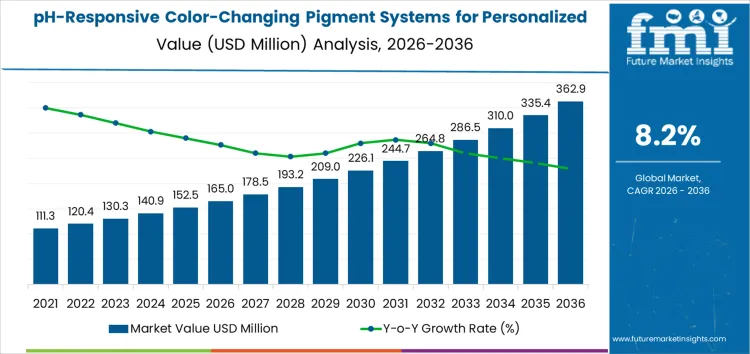
The pH-responsive color-changing pigment systems for personalized makeup market is projected to grow from USD 165 million in 2026 to USD 362.9 million by 2036, reflecting a compound annual growth rate (CAGR) of 8.2%. This market is becoming increasingly relevant as consumer demand shifts toward personalized, customizable beauty solutions. Buyers are looking for products that not only offer uniqueness but also align with sustainability trends, as more consumers seek eco-friendly, innovative alternatives in cosmetics. Decision-makers in the beauty industry will need to balance cost efficiency with the growing need for differentiation in an increasingly crowded market.
As personalized beauty products gain traction, suppliers who can deliver reliable, high-quality pigment systems will capture the value. The focus will be on scalability and consistency, ensuring that these advanced pigments can be integrated into production lines without compromising performance or cost. In this evolving space, the commercial impact will be shaped by a careful balance between innovation, production capabilities, and market readiness.
Quick Stats of the pH-Responsive Color-Changing Pigment Systems for Personalized Makeup Market
- pH-Responsive Color-Changing Pigment Systems for Personalized Makeup Market Value (2026): USD 165 million
- pH-Responsive Color-Changing Pigment Systems for Personalized Makeup Market Forecast Value (2036): USD 362.9 million
- pH-Responsive Color-Changing Pigment Systems for Personalized Makeup Market Global Forecast CAGR (2026-2036): 8.2%
- pH-Responsive Color-Changing Pigment Systems for Personalized Makeup Market Leading Segment: Application Type (Lip Products) 52%
- Key Growth Regions in pH-Responsive Color-Changing Pigment Systems for Personalized Makeup Market: USA
- Top Players in pH-Responsive Color-Changing Pigment Systems for Personalized Makeup Market: Sensient Cosmetic Technologies, Merck KGaA, BASF SE, Sun Chemical Corporation, Kobo Products Inc., Chromatic Technologies Inc., Clean Interactive Pigments Co.
What is the Growth Forecast for the pH-Responsive Color-Changing Pigment Systems for Personalized Makeup Market through 2036?
The saturation point analysis for the pH-responsive color-changing pigment systems for personalized makeup market reveals key stages of acceleration and stabilization in market growth. Initially, from 2026 to 2031, the market will experience steady acceleration as consumer interest in personalized beauty products rises. Starting at USD 165 million in 2026, the market will increase to USD 249 million by 2031. This early growth phase will be fueled by the novelty of pH-responsive pigments, which offer a unique, customizable makeup experience. As more beauty brands incorporate these pigments into their products, demand will grow steadily, driving the market's acceleration.
After 2031, the market will begin to approach its saturation point. As pH-responsive pigments become more mainstream and widely adopted across various beauty products, the growth rate will stabilize. From USD 249 million in 2031 to USD 362.9 million by 2036, the market will continue to expand, but at a slower, more predictable pace. The saturation point is reached as the technology becomes standard in the beauty industry, and consumer adoption levels off. While growth will still occur, it will be driven by incremental innovations and continuous product development rather than the rapid expansion seen in earlier years. This pattern is typical of a maturing market where the initial novelty has worn off and the technology becomes integrated into the mainstream beauty market.
pH-Responsive Color-Changing Pigment Systems for Personalized Makeup Market Key Takeaways
| Metric | Value |
|---|---|
| Industry Sales Value (2026) | USD 165 million |
| Industry Forecast Value (2036) | USD 362.9 million |
| Industry Forecast CAGR (2026-2036) | 8.2% |
What Is Driving the Demand for pH Responsive Color Changing Pigment Systems for Personalized Makeup?
Historical demand for color changing pigments in personalized makeup has been shaped by broader growth in the cosmetic pigments market and interest in interactive beauty products that adjust appearance in response to wearer conditions. Cosmetic pigments are widely used in foundations, lip products, and eye makeup, supporting expanding makeup use globally through the early 2020s. Growth of special effect and smart pigments that respond to stimuli such as pH, temperature, or light contributed to early exploration of dynamic color systems in decorative cosmetics, including products that shift shade after application to match skin chemistry.
pH responsive pigments react to acidity levels on the skin, with technology using encapsulated or coated colorants that change visible color when exposed to different pH conditions. These pigment systems attracted interest as part of formulation innovation aimed at creating personalized makeup experiences where the final shade appears unique to the user’s skin environment. Historical emphasis on broader cosmetic pigment innovation provided context for this niche effect pigment development.
Future demand for pH responsive color changing pigment systems for personalized makeup is expected to be influenced by ongoing innovation in smart pigment technologies and evolving consumer interest in interactive and adaptive beauty products. Key growth factors include development of pigments that respond predictably to skin pH to deliver individualized color outcomes, rising consumer interest in products with perceived personalization features, and formulation advances that integrate responsive pigments into foundations, lip tints, and cheek products.
Broader market growth for cosmetic pigments is supported by rising demand for new and differentiated color effects across makeup categories. Regulatory and safety considerations related to pigment ingredients and skin compatibility may influence formulation choices and market pace. Technical challenges related to maintaining stable color change performance and consistent product quality over varied skin pH levels may influence adoption patterns. Continued refinement of pH responsive pigment chemistries and integration into mass market products could shape future uptake in the personalized makeup segment.
What are the Leading Segments in the Global pH-Responsive Color-Changing Pigment Systems for Personalized Makeup Market?
The global pH-responsive color-changing pigment systems for personalized makeup market is segmented by application type and end use. Among application types, lip products lead the market, capturing 52% of the share, followed by cheek tints, foundation & BB/CC creams, and hybrid personalized makeup. Lip products dominate due to their widespread use and the increasing demand for customizable, interactive beauty products. On the end-use side, daily wear personalized makeup is the leading segment, holding 49% of the share, followed by professional makeup artists, trend/influencer market, and luxury interactive cosmetics. Daily wear personalized makeup is the largest segment due to the growing desire for makeup that adjusts to individual skin tones and personal preferences.
What Drives the Growth of Lip Products in the pH-Responsive Color-Changing Pigment Systems for Personalized Makeup Market?
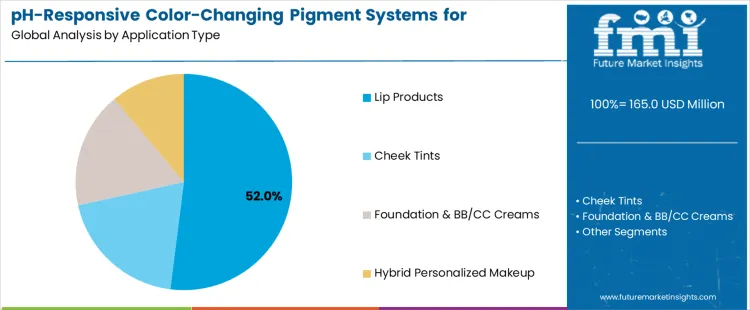
Lip products are the leading application type in the pH-responsive color-changing pigment systems for personalized makeup market, capturing 52% of the share. This growth is primarily driven by the increasing demand for personalized, long-lasting lip products that react to the wearer’s natural pH level, providing a unique and customizable color experience. pH-responsive pigments are particularly well-suited for lip products, where consumers seek makeup that adapts to their skin’s natural chemistry, offering a personalized, flattering shade that changes subtly throughout the day.
The popularity of interactive beauty products, combined with the rise of clean and customizable makeup, is fueling the demand for pH-responsive lip products. As consumers continue to seek more personalized and innovative beauty solutions, lip products with pH-responsive pigments are expected to remain a dominant segment in the market.
What is Driving the Demand for Daily Wear Personalized Makeup in the pH-Responsive Color-Changing Pigment Systems for Personalized Makeup Market?
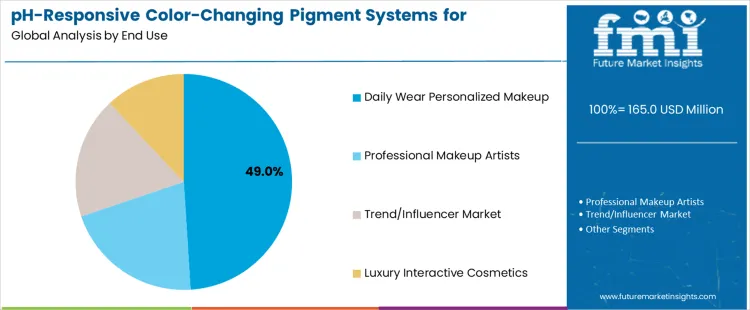
Daily wear personalized makeup is the leading end-use sector in the pH-responsive color-changing pigment systems for personalized makeup market, capturing 49% of the share. This demand is driven by the growing consumer preference for makeup products that adjust to individual needs, particularly in everyday, wearable products. As people increasingly seek makeup that complements their unique skin tones and provides a more personalized finish, pH-responsive makeup products that react to the skin’s pH level have gained popularity.
These products offer consumers the ability to achieve a naturally flattering color that adapts to their skin’s natural undertones. The emphasis on multifunctional, adaptable beauty products in the clean beauty space further boosts the demand for pH-responsive color-changing makeup. With the increasing focus on daily wear products that are personalized and easy to use, this segment is expected to continue driving growth in the market.
What are the Key Dynamics in the Global pH Responsive Color Changing Pigment Systems for Personalized Makeup Market?
The global pH responsive color changing pigment systems for personalized makeup market is expanding as consumers seek makeup that adapts uniquely to individual skin chemistry. These smart pigment systems alter hue when they interact with skin’s natural pH, enabling customized color effects in lipsticks, blushes and tints. Growth is supported by rising demand for experiential and personalized beauty products, digital beauty discovery, and innovations that blur lines between cosmetics and interactive technology. Adoption spans premium, mass and indie beauty brands aiming to differentiate offerings with dynamic, consumer centric experiences that enhance engagement and repeat purchase globally.
What are the Key Drivers for the pH Responsive Color Changing Pigment Systems for Personalized Makeup Market?
A key driver is consumer appetite for customization and unique beauty experiences that reflect personal skin characteristics. pH responsive pigments deliver a sense of individuality, producing subtle variations in color that appeal to users seeking products tailored to their natural complexion and chemistry. Social media and influencer trends that spotlight novel and interactive makeup drive trial and visibility. Advances in cosmetic science enable cosmetically acceptable pH responsive materials that deliver consistent, safe performance. Growth in online beauty retail and virtual try on tools supports discovery and selection of personalized color products.
What are the Restraints for the pH Responsive Color Changing Pigment Systems for Personalized Makeup Market?
A restraint is the complexity of formulating stable, predictable pigment systems that respond reliably to skin pH without affecting product texture, wear time or skin feel. Ensuring consistent performance across diverse skin types and environmental conditions requires meticulous formulation expertise and testing, which can extend development timelines and costs. Higher raw material and innovation investment may translate to premium pricing, limiting accessibility in value oriented segments. Some consumers may be skeptical about the meaningfulness of color change if the effect is subtle or inconsistent. Regulatory variations in labeling claims for dynamic color technologies influence how products can be marketed in different regions.
What are the Key Trends in the pH Responsive Color Changing Pigment Systems for Personalized Makeup Market?
A key trend is integration of pH responsive pigments with multifunctional benefits such as hydration, skin conditioning and UV protection, creating hybrid makeup skincare solutions. Cosmetic chemists are using encapsulation and microstructure engineering to enhance responsiveness and longevity without sacrificing sensory attributes. Brands are leveraging digital beauty tools, augmented reality shade matching and interactive packaging to educate consumers and simulate color changes before purchase. Transparency in ingredient sourcing and safety data supports trust in smart pigment technology. Collaboration between pigment innovators and makeup brands accelerates rollout of personalized collections that cater to evolving consumer expectations for adaptive and expressive beauty.
What is the Country-Wise Analysis of the pH-Responsive Color-Changing Pigment Systems for Personalized Makeup Market?
The pH-responsive color-changing pigment systems for personalized makeup are gaining popularity, driven by the growing consumer demand for customized and innovative beauty solutions. These pigments adjust their color in response to the pH levels of the skin, providing a personalized experience for makeup users. This technology offers dynamic color shifts that enhance the uniqueness and adaptability of makeup products like lipsticks, blushes, and foundations. As consumers increasingly seek products that cater to their individual needs, the demand for pH-responsive pigments is on the rise.
Developed markets such as the USA, South Korea, and Germany are experiencing strong growth, driven by their focus on innovation and consumer interest in multifunctional, personalized beauty products. Emerging markets like the UK and Japan are also seeing steady growth, fueled by the rising demand for customized and high-tech beauty products. The market for pH-responsive color-changing pigment systems is expected to expand further as beauty brands continue to innovate and meet the demand for personalized, interactive makeup solutions.
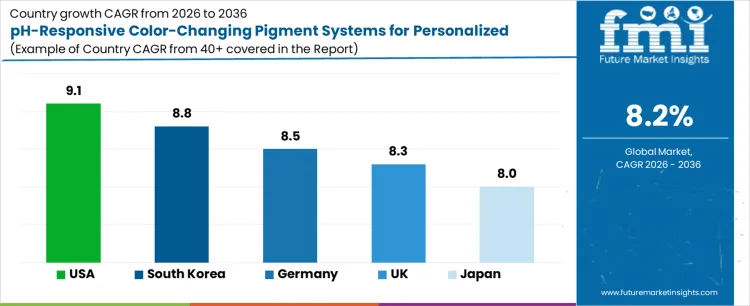
| Country | CAGR (2026-2036) |
|---|---|
| USA | 9.1% |
| South Korea | 8.8% |
| Germany | 8.5% |
| UK | 8.3% |
| Japan | 8% |
What is the Growth Outlook for the pH-Responsive Color-Changing Pigment Systems for Personalized Makeup Market in the USA?
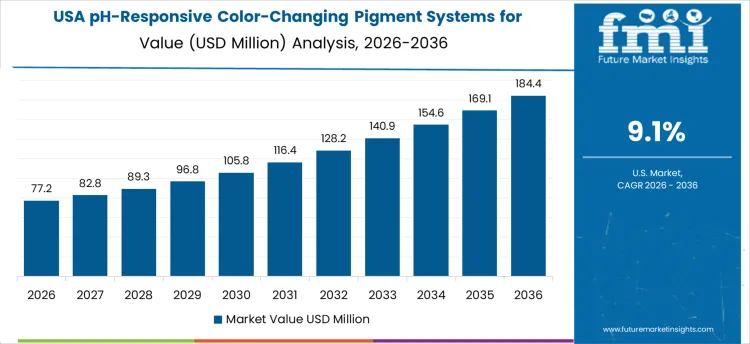
The pH-responsive color-changing pigment systems for personalized makeup market in the USA is projected to grow steadily, with a projected CAGR of 9.1% from 2026 to 2036. The U.S. beauty market is highly innovative and consumer-driven, with an increasing demand for personalized, high-performance products that offer unique, customizable features. As part of the broader trend toward personalized beauty, pH-responsive color-changing pigments, which adjust based on individual skin chemistry, are gaining traction. U.S. consumers are more interested than ever in beauty products that adapt to their needs and enhance their experience.
As brands in the U.S. continue to innovate and offer multifunctional products that combine personalization and performance, the demand for pH-responsive pigments in makeup is expected to increase. Additionally, growing awareness of ingredient transparency and the desire for more interactive beauty experiences are further driving this market. As the clean beauty movement and consumer interest in custom, adaptive products continue to grow, the U.S. market for pH-responsive pigment systems is expected to expand significantly.
What is the Market Outlook for the pH-Responsive Color-Changing Pigment Systems for Personalized Makeup Market in South Korea?
South Korea is expected to see strong growth in the pH-responsive color-changing pigment systems for personalized makeup market, with a projected CAGR of 8.8% from 2026 to 2036. South Korea is known for its advanced beauty industry, where innovation and personalization are key drivers of growth. The demand for products that offer customization and adaptability is rising, and pH-responsive pigments, which change color based on the skin’s pH, provide a unique and interactive beauty experience.
As South Korean consumers continue to prioritize quality, functionality, and personalization in their beauty products, the market for pH-responsive color-changing makeup is expected to expand. The beauty market in South Korea is also heavily influenced by technology, and the trend for high-tech, multifunctional beauty solutions is expected to drive further growth. With a strong focus on skincare and personalization, South Korea is expected to remain a key player in the global market for pH-responsive pigment systems in makeup.
What is the Growth Forecast for the pH-Responsive Color-Changing Pigment Systems for Personalized Makeup Market in Germany?
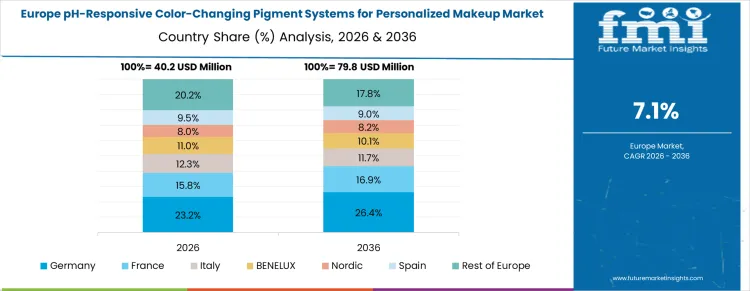
The pH-responsive color-changing pigment systems for personalized makeup market in Germany is projected to grow steadily, with a projected CAGR of 8.5% from 2026 to 2036. Germany is a key player in the European beauty market, with consumers becoming increasingly interested in products that combine innovation with sustainability. The growing demand for personalized and multifunctional beauty products is driving the adoption of pH-responsive color-changing pigments, which allow consumers to experience dynamic color shifts tailored to their skin’s pH.
As sustainability continues to be a major concern in the German beauty industry, consumers are seeking natural and eco-friendly products that also offer enhanced functionality. The rise in consumer interest for unique beauty experiences, along with Germany’s focus on quality and regulatory standards, is expected to contribute to the steady growth of this market. With the increasing emphasis on clean beauty and the personalization of products, Germany’s market for pH-responsive pigments is set for continued expansion.
What is the Market Outlook for the pH-Responsive Color-Changing Pigment Systems for Personalized Makeup Market in the UK?
The pH-responsive color-changing pigment systems for personalized makeup market in the UK is expected to grow steadily, with a projected CAGR of 8.3% from 2026 to 2036. The UK is home to a dynamic beauty market where consumers are increasingly looking for products that provide both personalization and high performance. The demand for pH-responsive pigments, which adapt to individual skin chemistry and offer unique, personalized color results, is rising. UK consumers are becoming more conscious of the products they use, seeking beauty solutions that combine innovation with safety and sustainability.
As the clean beauty movement continues to grow in the UK, there is a strong demand for products that are both effective and environmentally friendly. Beauty brands in the UK are responding by offering high-tech, multifunctional makeup solutions that cater to individual preferences. The demand for personalized and adaptable beauty products is expected to drive the growth of the pH-responsive color-changing pigment systems market in the UK in the coming years.
What are the Growth Prospects for the pH-Responsive Color-Changing Pigment Systems for Personalized Makeup Market in Japan?
Japan is projected to experience steady growth in the pH-responsive color-changing pigment systems for personalized makeup market, with a projected CAGR of 8% from 2026 to 2036. Japan’s beauty market is known for its focus on skincare, precision, and high-quality products. As Japanese consumers become more interested in personalized beauty experiences, the demand for pH-responsive makeup products is increasing. These pigments, which change color based on individual skin pH, allow consumers to enjoy a customized and interactive makeup experience.
Japan’s beauty industry is also influenced by global trends toward clean beauty and sustainability, making eco-friendly and natural ingredients highly attractive to consumers. As the market for personalized and multifunctional beauty products continues to grow, Japan is expected to see steady demand for pH-responsive pigment systems in makeup. This trend is expected to be supported by ongoing consumer interest in innovative, high-performance beauty solutions that are both personalized and safe.
What is the Competitive Landscape for the pH-Responsive Color-Changing Pigment Systems for Personalized Makeup Market?
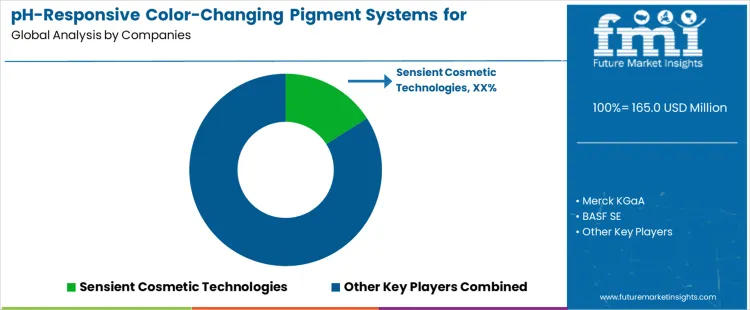
The pH-responsive color-changing pigment systems for personalized makeup market is rapidly growing as consumers seek innovative, customizable cosmetic products that adapt to individual skin tones and pH levels, offering a more personalized beauty experience. Sensient Cosmetic Technologies leads the market with its advanced pH-responsive color-changing pigment systems, offering high-performance, vibrant pigments that change color based on the pH of the skin, providing a dynamic, customizable makeup experience. Their focus on product innovation, personalization, and sustainability has positioned them as a dominant player in this sector. Merck KGaA, BASF SE, and Sun Chemical Corporation are significant competitors, each providing specialized pH-responsive pigments designed to deliver long-lasting color changes based on skin pH. Merck KGaA emphasizes innovative color-changing technologies that respond to skin’s natural pH, while BASF SE and Sun Chemical Corporation offer advanced formulations for personalized, pH-sensitive cosmetics.
Kobo Products Inc., Chromatic Technologies Inc., and Clean Interactive Pigments Co. further strengthen the competitive landscape by offering their own pH-responsive pigment systems for personalized makeup applications. Kobo Products Inc. specializes in providing high-performance pigments that react to skin pH, while Chromatic Technologies Inc. focuses on developing interactive, dynamic pigments for a unique, personalized cosmetic experience. Clean Interactive Pigments Co. offers eco-friendly, responsive pigments that adapt to pH levels, enhancing product personalization. These companies compete by focusing on product innovation, skin compatibility, and their ability to meet the growing demand for customizable, pH-responsive beauty products. As the demand for personalized beauty continues to rise, the market for pH-responsive color-changing pigments is expected to grow, driving further innovation and competition in the sector.
Key Players of the pH-Responsive Color-Changing Pigment Systems for Personalized Makeup Market
- Sensient Cosmetic Technologies
- Merck KGaA
- BASF SE
- Sun Chemical Corporation
- Kobo Products Inc.
- Chromatic Technologies Inc.
- Clean Interactive Pigments Co.
Scope of the Report
| Items | Values |
|---|---|
| Quantitative Units (2026) | USD Million |
| Response Mechanism | pH Responsive Dye Systems, pH Microencapsulated Color Pigments, Hybrid pH/Thermochromic Pigments, Other Smart Pigment Technologies |
| Application Type | Lip Products, Cheek Tints, Foundation & BB/CC Creams, Hybrid Personalized Makeup |
| End Use | Daily Wear Personalized Makeup, Professional Makeup Artists, Trend/Influencer Market, Luxury Interactive Cosmetics |
| Companies | Sensient Cosmetic Technologies, Merck KGaA, BASF SE, Sun Chemical Corporation, Kobo Products Inc., Chromatic Technologies Inc., Clean Interactive Pigments Co. |
| Regions Covered | North America, Latin America, Western Europe, Eastern Europe, South Asia and Pacific, East Asia, Middle East & Africa |
| Countries Covered | United States, Canada, Mexico, Brazil, Argentina, Germany, France, United Kingdom, Italy, Spain, Netherlands, China, India, Japan, South Korea, ANZ, GCC Countries, South Africa |
| Additional Attributes | Dollar by sales by response mechanism, application type, end use, and region. Includes analysis of market trends in pH responsive color changing pigment systems for personalized makeup, performance in personalized and adaptive cosmetic formulations, formulation cost and functional factors, regulatory and safety considerations for smart pigment technologies, consumer demand for interactive and customized beauty products, market share and competitive positioning of key companies, innovations in pH responsive pigment systems, and assessment of impact on user engagement, product performance, and aesthetic personalization. |
pH-Responsive Color-Changing Pigment Systems for Personalized Makeup Market Segmentation
Response Mechanism:
- pH-Responsive Dye Systems
- pH-Microencapsulated Color Pigments
- Hybrid pH/Thermochromic Pigments
- Other Smart Pigment Technologies
Application Type:
- Lip Products
- Cheek Tints
- Foundation & BB/CC Creams
- Hybrid Personalized Makeup
End Use:
- Daily Wear Personalized Makeup
- Professional Makeup Artists
- Trend/Influencer Market
- Luxury Interactive Cosmetics
Region:
- Asia Pacific
- China
- Japan
- South Korea
- India
- Australia & New Zealand
- ASEAN
- Rest of Asia Pacific
- Europe
- Germany
- United Kingdom
- France
- Italy
- Spain
- Nordic
- BENELUX
- Rest of Europe
- North America
- United States
- Canada
- Mexico
- Latin America
- Brazil
- Chile
- Rest of Latin America
- Middle East & Africa
- Kingdom of Saudi Arabia
- Other GCC Countries
- Turkey
- South Africa
- Other African Union
- Rest of Middle East & Africa
Frequently Asked Questions
How big is the ph-responsive color-changing pigment systems for personalized makeup market in 2026?
The global ph-responsive color-changing pigment systems for personalized makeup market is estimated to be valued at USD 165.0 million in 2026.
What will be the size of ph-responsive color-changing pigment systems for personalized makeup market in 2036?
The market size for the ph-responsive color-changing pigment systems for personalized makeup market is projected to reach USD 362.9 million by 2036.
How much will be the ph-responsive color-changing pigment systems for personalized makeup market growth between 2026 and 2036?
The ph-responsive color-changing pigment systems for personalized makeup market is expected to grow at a 8.2% CAGR between 2026 and 2036.
What are the key product types in the ph-responsive color-changing pigment systems for personalized makeup market?
The key product types in ph-responsive color-changing pigment systems for personalized makeup market are ph‑responsive dye systems, ph‑microencapsulated color pigments, hybrid ph/thermochromic pigments and other smart pigment technologies.
Which application type segment to contribute significant share in the ph-responsive color-changing pigment systems for personalized makeup market in 2026?
In terms of application type, lip products segment to command 52.0% share in the ph-responsive color-changing pigment systems for personalized makeup market in 2026.
Preview the report firsthand - request a free sample
Get SampleGet the brochure for pricing and purchase details.
Get PDFTable of Content
- Executive Summary
- Global Market Outlook
- Demand-side Trends
- Supply-side Trends
- Technology Roadmap Analysis
- Analysis and Recommendations
- Market Overview
- Market Coverage / Taxonomy
- Market Definition / Scope / Limitations
- Market Background
- Market Dynamics
- Drivers
- Restraints
- Opportunity
- Trends
- Scenario Forecast
- Demand in Optimistic Scenario
- Demand in Likely Scenario
- Demand in Conservative Scenario
- Opportunity Map Analysis
- Product Life Cycle Analysis
- Supply Chain Analysis
- Investment Feasibility Matrix
- Value Chain Analysis
- PESTLE and Porter’s Analysis
- Regulatory Landscape
- Regional Parent Market Outlook
- Production and Consumption Statistics
- Import and Export Statistics
- Market Dynamics
- Global Market Analysis 2021 to 2025 and Forecast, 2026 to 2036
- Historical Market Size Value (USD Million) Analysis, 2021 to 2025
- Current and Future Market Size Value (USD Million) Projections, 2026 to 2036
- Y-o-Y Growth Trend Analysis
- Absolute $ Opportunity Analysis
- Global Market Pricing Analysis 2021 to 2025 and Forecast 2026 to 2036
- Global Market Analysis 2021 to 2025 and Forecast 2026 to 2036, By Response Mechanism
- Introduction / Key Findings
- Historical Market Size Value (USD Million) Analysis By Response Mechanism , 2021 to 2025
- Current and Future Market Size Value (USD Million) Analysis and Forecast By Response Mechanism , 2026 to 2036
- pH‑Responsive Dye Systems
- pH‑Microencapsulated Color Pigments
- Hybrid pH/Thermochromic Pigments
- Other Smart Pigment Technologies
- pH‑Responsive Dye Systems
- Y-o-Y Growth Trend Analysis By Response Mechanism , 2021 to 2025
- Absolute $ Opportunity Analysis By Response Mechanism , 2026 to 2036
- Global Market Analysis 2021 to 2025 and Forecast 2026 to 2036, By Application Type
- Introduction / Key Findings
- Historical Market Size Value (USD Million) Analysis By Application Type, 2021 to 2025
- Current and Future Market Size Value (USD Million) Analysis and Forecast By Application Type, 2026 to 2036
- Lip Products
- Cheek Tints
- Foundation & BB/CC Creams
- Hybrid Personalized Makeup
- Lip Products
- Y-o-Y Growth Trend Analysis By Application Type, 2021 to 2025
- Absolute $ Opportunity Analysis By Application Type, 2026 to 2036
- Global Market Analysis 2021 to 2025 and Forecast 2026 to 2036, By End Use
- Introduction / Key Findings
- Historical Market Size Value (USD Million) Analysis By End Use, 2021 to 2025
- Current and Future Market Size Value (USD Million) Analysis and Forecast By End Use, 2026 to 2036
- Daily Wear Personalized Makeup
- Professional Makeup Artists
- Trend/Influencer Market
- Luxury Interactive Cosmetics
- Daily Wear Personalized Makeup
- Y-o-Y Growth Trend Analysis By End Use, 2021 to 2025
- Absolute $ Opportunity Analysis By End Use, 2026 to 2036
- Global Market Analysis 2021 to 2025 and Forecast 2026 to 2036, By Region
- Introduction
- Historical Market Size Value (USD Million) Analysis By Region, 2021 to 2025
- Current Market Size Value (USD Million) Analysis and Forecast By Region, 2026 to 2036
- North America
- Latin America
- Western Europe
- Eastern Europe
- East Asia
- South Asia and Pacific
- Middle East & Africa
- Market Attractiveness Analysis By Region
- North America Market Analysis 2021 to 2025 and Forecast 2026 to 2036, By Country
- Historical Market Size Value (USD Million) Trend Analysis By Market Taxonomy, 2021 to 2025
- Market Size Value (USD Million) Forecast By Market Taxonomy, 2026 to 2036
- By Country
- USA
- Canada
- Mexico
- By Response Mechanism
- By Application Type
- By End Use
- By Country
- Market Attractiveness Analysis
- By Country
- By Response Mechanism
- By Application Type
- By End Use
- Key Takeaways
- Latin America Market Analysis 2021 to 2025 and Forecast 2026 to 2036, By Country
- Historical Market Size Value (USD Million) Trend Analysis By Market Taxonomy, 2021 to 2025
- Market Size Value (USD Million) Forecast By Market Taxonomy, 2026 to 2036
- By Country
- Brazil
- Chile
- Rest of Latin America
- By Response Mechanism
- By Application Type
- By End Use
- By Country
- Market Attractiveness Analysis
- By Country
- By Response Mechanism
- By Application Type
- By End Use
- Key Takeaways
- Western Europe Market Analysis 2021 to 2025 and Forecast 2026 to 2036, By Country
- Historical Market Size Value (USD Million) Trend Analysis By Market Taxonomy, 2021 to 2025
- Market Size Value (USD Million) Forecast By Market Taxonomy, 2026 to 2036
- By Country
- Germany
- UK
- Italy
- Spain
- France
- Nordic
- BENELUX
- Rest of Western Europe
- By Response Mechanism
- By Application Type
- By End Use
- By Country
- Market Attractiveness Analysis
- By Country
- By Response Mechanism
- By Application Type
- By End Use
- Key Takeaways
- Eastern Europe Market Analysis 2021 to 2025 and Forecast 2026 to 2036, By Country
- Historical Market Size Value (USD Million) Trend Analysis By Market Taxonomy, 2021 to 2025
- Market Size Value (USD Million) Forecast By Market Taxonomy, 2026 to 2036
- By Country
- Russia
- Poland
- Hungary
- Balkan & Baltic
- Rest of Eastern Europe
- By Response Mechanism
- By Application Type
- By End Use
- By Country
- Market Attractiveness Analysis
- By Country
- By Response Mechanism
- By Application Type
- By End Use
- Key Takeaways
- East Asia Market Analysis 2021 to 2025 and Forecast 2026 to 2036, By Country
- Historical Market Size Value (USD Million) Trend Analysis By Market Taxonomy, 2021 to 2025
- Market Size Value (USD Million) Forecast By Market Taxonomy, 2026 to 2036
- By Country
- China
- Japan
- South Korea
- By Response Mechanism
- By Application Type
- By End Use
- By Country
- Market Attractiveness Analysis
- By Country
- By Response Mechanism
- By Application Type
- By End Use
- Key Takeaways
- South Asia and Pacific Market Analysis 2021 to 2025 and Forecast 2026 to 2036, By Country
- Historical Market Size Value (USD Million) Trend Analysis By Market Taxonomy, 2021 to 2025
- Market Size Value (USD Million) Forecast By Market Taxonomy, 2026 to 2036
- By Country
- India
- ASEAN
- Australia & New Zealand
- Rest of South Asia and Pacific
- By Response Mechanism
- By Application Type
- By End Use
- By Country
- Market Attractiveness Analysis
- By Country
- By Response Mechanism
- By Application Type
- By End Use
- Key Takeaways
- Middle East & Africa Market Analysis 2021 to 2025 and Forecast 2026 to 2036, By Country
- Historical Market Size Value (USD Million) Trend Analysis By Market Taxonomy, 2021 to 2025
- Market Size Value (USD Million) Forecast By Market Taxonomy, 2026 to 2036
- By Country
- Kingdom of Saudi Arabia
- Other GCC Countries
- Turkiye
- South Africa
- Other African Union
- Rest of Middle East & Africa
- By Response Mechanism
- By Application Type
- By End Use
- By Country
- Market Attractiveness Analysis
- By Country
- By Response Mechanism
- By Application Type
- By End Use
- Key Takeaways
- Key Countries Market Analysis
- USA
- Pricing Analysis
- Market Share Analysis, 2025
- By Response Mechanism
- By Application Type
- By End Use
- Canada
- Pricing Analysis
- Market Share Analysis, 2025
- By Response Mechanism
- By Application Type
- By End Use
- Mexico
- Pricing Analysis
- Market Share Analysis, 2025
- By Response Mechanism
- By Application Type
- By End Use
- Brazil
- Pricing Analysis
- Market Share Analysis, 2025
- By Response Mechanism
- By Application Type
- By End Use
- Chile
- Pricing Analysis
- Market Share Analysis, 2025
- By Response Mechanism
- By Application Type
- By End Use
- Germany
- Pricing Analysis
- Market Share Analysis, 2025
- By Response Mechanism
- By Application Type
- By End Use
- UK
- Pricing Analysis
- Market Share Analysis, 2025
- By Response Mechanism
- By Application Type
- By End Use
- Italy
- Pricing Analysis
- Market Share Analysis, 2025
- By Response Mechanism
- By Application Type
- By End Use
- Spain
- Pricing Analysis
- Market Share Analysis, 2025
- By Response Mechanism
- By Application Type
- By End Use
- France
- Pricing Analysis
- Market Share Analysis, 2025
- By Response Mechanism
- By Application Type
- By End Use
- India
- Pricing Analysis
- Market Share Analysis, 2025
- By Response Mechanism
- By Application Type
- By End Use
- ASEAN
- Pricing Analysis
- Market Share Analysis, 2025
- By Response Mechanism
- By Application Type
- By End Use
- Australia & New Zealand
- Pricing Analysis
- Market Share Analysis, 2025
- By Response Mechanism
- By Application Type
- By End Use
- China
- Pricing Analysis
- Market Share Analysis, 2025
- By Response Mechanism
- By Application Type
- By End Use
- Japan
- Pricing Analysis
- Market Share Analysis, 2025
- By Response Mechanism
- By Application Type
- By End Use
- South Korea
- Pricing Analysis
- Market Share Analysis, 2025
- By Response Mechanism
- By Application Type
- By End Use
- Russia
- Pricing Analysis
- Market Share Analysis, 2025
- By Response Mechanism
- By Application Type
- By End Use
- Poland
- Pricing Analysis
- Market Share Analysis, 2025
- By Response Mechanism
- By Application Type
- By End Use
- Hungary
- Pricing Analysis
- Market Share Analysis, 2025
- By Response Mechanism
- By Application Type
- By End Use
- Kingdom of Saudi Arabia
- Pricing Analysis
- Market Share Analysis, 2025
- By Response Mechanism
- By Application Type
- By End Use
- Turkiye
- Pricing Analysis
- Market Share Analysis, 2025
- By Response Mechanism
- By Application Type
- By End Use
- South Africa
- Pricing Analysis
- Market Share Analysis, 2025
- By Response Mechanism
- By Application Type
- By End Use
- USA
- Market Structure Analysis
- Competition Dashboard
- Competition Benchmarking
- Market Share Analysis of Top Players
- By Regional
- By Response Mechanism
- By Application Type
- By End Use
- Competition Analysis
- Competition Deep Dive
- Sensient Cosmetic Technologies
- Overview
- Product Portfolio
- Profitability by Market Segments (Product/Age /Sales Channel/Region)
- Sales Footprint
- Strategy Overview
- Marketing Strategy
- Product Strategy
- Channel Strategy
- Merck KGaA
- BASF SE
- Sun Chemical Corporation
- Kobo Products Inc.
- Chromatic Technologies Inc.
- Clean Interactive Pigments Co.
- Sensient Cosmetic Technologies
- Competition Deep Dive
- Assumptions & Acronyms Used
- Research Methodology


