

- Industry Size (2026)
- USD 320 Mn
- Forecast (2036)
- USD 716.9 Mn
- CAGR (2026 to 2036)
- 8.4%
Holographic and Multichrome Effect Pigment Systems for Eye Makeup Market Forecast and Outlook 2026 to 2036
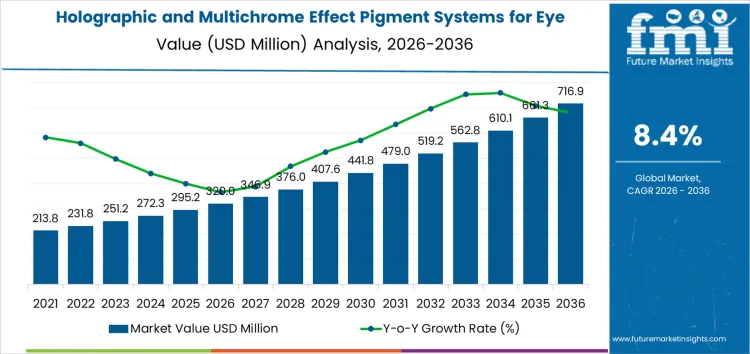
The holographic and multichrome effect pigment systems for eye makeup market is projected to grow from USD 320 million in 2026 to USD 716.9 million by 2036, reflecting a compound annual growth rate (CAGR) of 8.4%. Regionally, the market will see concentrated demand in North America, Europe, and parts of Asia-Pacific, where fashion-forward trends and high disposable income fuel rapid adoption. However, adoption patterns will be uneven, with emerging markets adopting these innovative pigments more slowly due to cost constraints and less established beauty trends.
Geographic cost advantages will play a significant role, particularly in regions with lower production costs, such as parts of Asia, where pigment manufacturing can be scaled efficiently. Despite the potential for cost-effective production, these regions must still meet the performance and quality standards required by developed markets. As the global demand for bold, creative eye makeup grows, suppliers must adapt to regional nuances while maintaining consistency in product quality, scalability, and pricing to capture value across diverse markets.
Quick Stats of the Holographic and Multichrome Effect Pigment Systems for Eye Makeup Market
- Holographic and Multichrome Effect Pigment Systems for Eye Makeup Market Value (2026): USD 320 million
- Holographic and Multichrome Effect Pigment Systems for Eye Makeup Market Forecast Value (2036): USD 716.9 million
- Holographic and Multichrome Effect Pigment Systems for Eye Makeup Market Global Forecast CAGR (2026 to 2036): 8.4%
- Holographic and Multichrome Effect Pigment Systems for Eye Makeup Market Leading Segment: Application Type (Eye Shadow) 47%
- Key Growth Regions in Holographic and Multichrome Effect Pigment Systems for Eye Makeup Market: USA
- Top Players in Holographic and Multichrome Effect Pigment Systems for Eye Makeup Market: Merck KGaA, Sensient Cosmetic Technologies, Sun Chemical Colors & Effects, Kobo Products Inc., Venator Materials PLC, ECKART GmbH, Schlenk Metallic Pigments GmbH
What is the Growth Forecast for the Holographic and Multichrome Effect Pigment Systems for Eye Makeup Market through 2036?
The inflection point mapping for the holographic and multichrome effect pigment systems for eye makeup market indicates significant phases of accelerated growth followed by more stable expansion. In the early years (2026–2029), the market will experience initial growth as the demand for unique and innovative makeup products increases. Starting at USD 320 million in 2026, the market will gradually rise to USD 443 million by 2030. The first inflection point occurs around 2029 when the demand for holographic and multichrome pigments accelerates.
This growth surge is driven by the rising consumer interest in bold, eye-catching makeup that shifts in color and appearance. During this phase, beauty brands will introduce more products featuring these pigments, spurring adoption in the cosmetics market.
From 2029 to 2033, the market will enter a phase of rapid acceleration. The market value will increase from USD 443 million in 2029 to USD 572 million in 2033, marking the second inflection point. During this period, multichrome and holographic pigments will become more mainstream, with an increasing number of brands integrating them into both high-end and mass-market products.
This stage will be marked by broadening consumer adoption and heightened market competition. By 2033, the demand for these pigments will be well-established in the industry, and growth will continue but at a more stable, predictable rate, reflecting a shift toward mature market conditions.
Holographic and Multichrome Effect Pigment Systems for Eye Makeup Market Key Takeaways
| Metric | Value |
|---|---|
| Industry Sales Value (2026) | USD 320 million |
| Industry Forecast Value (2036) | USD 716.9 million |
| Industry Forecast CAGR (2026 to 2036) | 8.4% |
What Is Driving the Demand for Holographic and Multichrome Effect Pigment Systems for Eye Makeup?
Historical demand for effect pigment systems in eye makeup has been shaped by broader growth in the cosmetic pigments market and rising interest in special effect finishes such as shimmer, metallic, pearlescent, and holographic effects. The global cosmetic pigments market has expanded due to rising use of pigments in decorative products including shadows, liners, and other eye cosmetics, supported by product innovation and expanding makeup use across regions.
Special effect pigments that shift color or create iridescent appearances gained attention as cosmetic formulators sought visual diversity and novel finishes that differentiated products on shelf and in applications. Holographic and multichrome pigments, which create dynamic color shifts with light and movement, became notable within effect pigment segments.
These pigments provided formulations with aesthetic complexity beyond conventional flat colors, aligning with consumer demand for vibrant, expressive eye makeup looks. Broader eye makeup market growth, growing demand for innovative visual effects, and formulation advances in cosmetic pigments contributed to early adoption of effect pigment technologies.
Future demand for holographic and multichrome effect pigment systems for eye makeup is expected to be influenced by continued growth in the eye makeup segment and evolving consumer preferences for creative and expressive cosmetic products. The eye makeup market is projected to expand through the next decade as consumers experiment with products offering varied finishes, color depth, and dynamic effects, fostering demand for pigments that provide multi‑tone, light‑shifting appearances.
Growth in digital and social media channels has encouraged trends that emphasize artistic and distinctive makeup styles, potentially increasing interest in advanced effect pigments. Technological development in pigment manufacturing that enhances stability, dispersion, and effect intensity may support broader use of holographic and multichrome pigments in eye formulations.
Challenges for adoption could include technical complexity of integrating high‑performance effect pigments with acceptable wear, skin safety, and formulation stability. Continued evolution of cosmetic pigment technology and eye makeup product diversification may drive uptake of these advanced visual pigment systems.
What are the Leading Segments in the Global Holographic and Multichrome Effect Pigment Systems for Eye Makeup Market?
The global holographic and multichrome effect pigment systems for eye makeup market is segmented by pigment type and application type. Among pigment types, holographic multilayer pigments lead the market, capturing 42% of the share, followed by flop multichrome effect pigments, interference pearlescent pigments, and specialty coated effect pigments.
Holographic multilayer pigments are highly sought after for their ability to create dynamic, light-reflective effects that are particularly popular in eye makeup products. On the application side, eye shadow dominates the market, holding 47% of the share, followed by eyeliner, mascara with effect pigments, and hybrid eye makeup products. Eye shadow is the largest segment due to the increasing demand for bold, multi-dimensional eye looks enhanced by holographic and multichrome pigments.
What Drives the Growth of Holographic Multilayer Pigments in the Holographic and Multichrome Effect Pigment Systems for Eye Makeup Market?
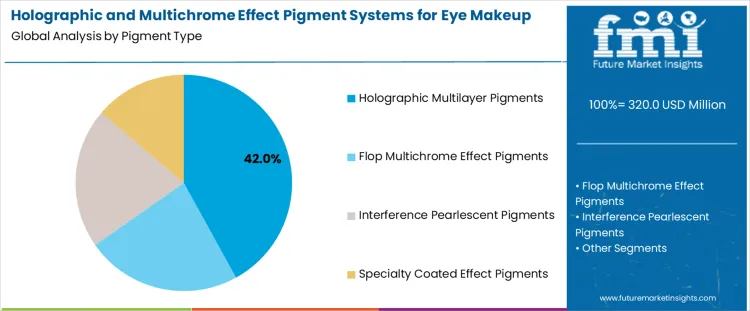
Holographic multilayer pigments are the leading pigment type in the holographic and multichrome effect pigment systems for eye makeup market, holding 42% of the share. These pigments are prized for their ability to reflect and refract light in multiple colors, creating a striking, multidimensional effect that is particularly popular in eye makeup products. Holographic multilayer pigments offer a unique aesthetic that enhances the wearer's eyes with vibrant, shifting colors that change with the light, making them a favorite for eye shadows and eyeliners.
The growing consumer desire for bold and innovative eye makeup looks, along with the increasing trend toward high-impact beauty products, is driving the adoption of holographic pigments. As the market for visually dynamic and artistic makeup grows, holographic multilayer pigments are expected to remain a dominant choice, offering consumers exciting, light-reactive effects in their eye makeup products.
What is Driving the Demand for Eye Shadow in the Holographic and Multichrome Effect Pigment Systems for Eye Makeup Market?
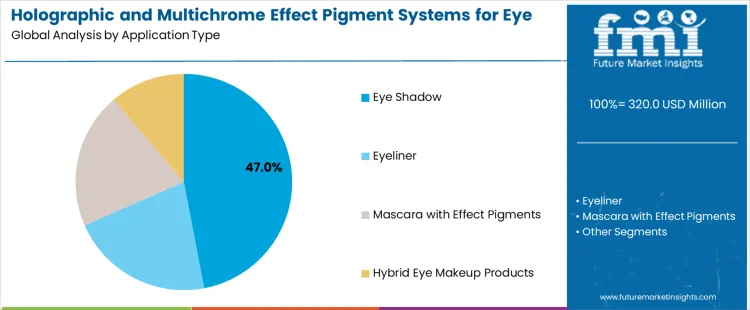
Eye shadow is the leading application type in the holographic and multichrome effect pigment systems for eye makeup market, capturing 47% of the share. This demand is driven by the increasing popularity of eye makeup products that create bold, expressive looks. Eye shadow formulations that incorporate holographic and multichrome effect pigments allow consumers to achieve a high-impact, dimensional look, which is especially popular in special occasions, festivals, and influencer-driven beauty trends.
The versatility of eye shadow in offering a variety of colors and textures, combined with the ability of holographic and multichrome pigments to enhance these products, is a key factor in driving growth in this segment. As consumers continue to seek makeup that allows them to experiment with unique, eye-catching looks, eye shadow products formulated with effect pigments will remain the dominant application in the market, fueling their demand.
What are the Key Dynamics in the Global Holographic and Multichrome Effect Pigment Systems for Eye Makeup Market?
The global holographic and multichrome effect pigment systems for eye makeup market is expanding as beauty brands and consumers seek visually striking, high impact color effects that shift with light and movement. These pigments create dynamic shimmer and color transitions in eyeshadows, liners and cream formulas that enhance creative expression and visual depth. Growth reflects increased demand for bold eye makeup trends inspired by digital media, festival culture and social platforms. Adoption spans premium, mass and indie beauty segments where innovation, standout aesthetics and product differentiation influence formulation strategies and consumer buying behavior.
What are the Key Drivers for the Holographic and Multichrome Effect Pigment Systems for Eye Makeup Market?
Rising consumer interest in experiential and statement makeup is a primary driver for holographic and multichrome pigment systems. Eye makeup that delivers vibrant shifts and multidimensional color appeals to trend savvy consumers and digital content creators. Social media and influencer culture elevate dynamic makeup looks, inspiring trial and repeat engagement. Advances in pigment technology enhance light reflectivity, particle uniformity and blendability, enabling brands to achieve complex effects with wear comfort. Expansion of product portfolios that emphasize creative expression and premium finishes supports market growth across diverse demographics and geographic regions.
What are the Restraints for the Holographic and Multichrome Effect Pigment Systems for Eye Makeup Market?
One restraint is the technical complexity of formulating stable, high performance effect pigments that meet safety, regulatory and sensory expectations. Some holographic and multichrome materials require careful control of particle size and coating to avoid gritty feel, creasing or fallout, which increases formulation development time and cost. Higher raw material costs for advanced effect pigments can influence pricing and limit adoption in value oriented products. Consumer skepticism about wear longevity or transfer resistance may slow uptake without clear performance communication. Regulatory variability for color additives across regions further complicates global product launches and compliance.
What are the Key Trends in the Holographic and Multichrome Effect Pigment Systems for Eye Makeup Market?
A key trend is innovation in engineered pigment particles that offer enhanced optical performance, smoother application and compatibility with natural and clean beauty formulations. Manufacturers are developing coated effect pigments and hybrid systems that maintain dazzling visual effects while improving wearability and skin comfort. Brands are integrating holographic and multichrome pigments into multifunctional products that combine eye makeup with skincare benefits such as hydration or antioxidant support. Digital beauty tools that enable virtual try on and AR effects help consumers preview dynamic colors, increasing confidence and purchase intent. Storytelling around bold, expressive makeup and limited edition collections continues to drive interest and differentiation.
What is the Country-Wise Analysis of the Holographic and Multichrome Effect Pigment Systems for Eye Makeup Market?
The holographic and multichrome effect pigment systems for eye makeup market is seeing a significant rise, driven by the increasing consumer interest in bold, dynamic makeup products that create unique, color-shifting effects. These pigments, which offer vibrant, multi-dimensional color changes depending on the angle of light, are becoming highly popular in eye makeup products like eyeshadows and eyeliners. Consumers are seeking makeup products that not only enhance their beauty but also provide fun, customizable experiences.
Developed markets like the USA, South Korea, and Japan are seeing strong demand for these innovative products, driven by their interest in high-performance and unique cosmetic solutions. Emerging markets like China and Germany are also experiencing steady growth, as beauty consumers seek new ways to express creativity and individuality in their makeup. The market for holographic and multichrome pigments is expected to expand further as beauty brands continue to innovate and consumers increasingly demand cutting-edge, customizable beauty products.
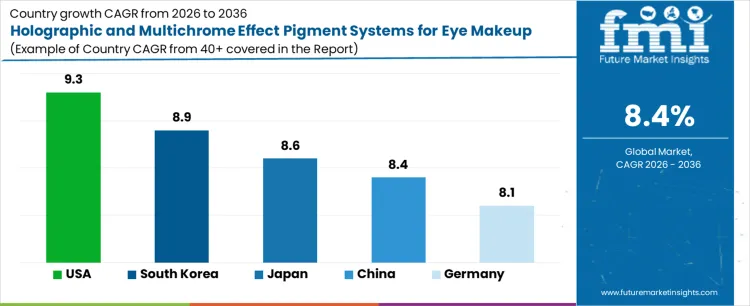
| Country | CAGR (2026-2036) |
|---|---|
| USA | 9.3% |
| South Korea | 8.9% |
| Japan | 8.6% |
| China | 8.4% |
| Germany | 8.1% |
What is the Growth Outlook for the Holographic and Multichrome Effect Pigment Systems for Eye Makeup Market in the USA?
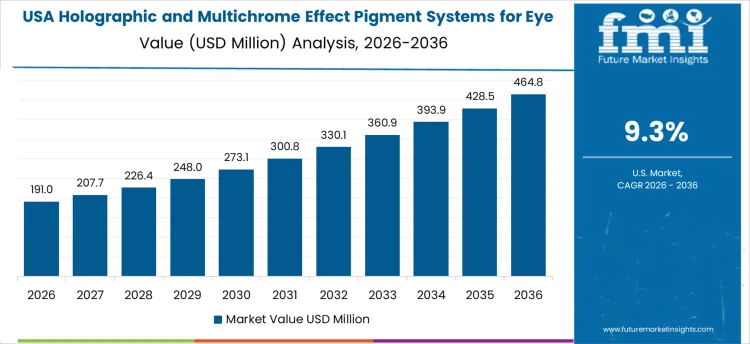
The holographic and multichrome effect pigment systems for eye makeup market in the USA is expected to grow steadily, with a projected CAGR of 9.3% from 2026 to 2036. The USA beauty market is known for its constant innovation and consumer-driven trends, and there is an increasing demand for eye makeup products that offer high-impact, customizable color effects. The popularity of holographic and multichrome pigments, which provide unique and dynamic color shifts, is growing as USA consumers seek more creative, versatile, and attention-grabbing makeup options.
The rise of influencer-driven beauty trends and the growing interest in special effects makeup are further driving demand for these innovative pigments. USA beauty brands are increasingly incorporating holographic and multichrome pigments into their eye makeup products to meet consumer demand for high-performance, creative solutions. As the market continues to embrace these trend-driven, high-tech cosmetic products, the USA market is poised for continued growth.
What is the Market Outlook for the Holographic and Multichrome Effect Pigment Systems for Eye Makeup Market in South Korea?
South Korea is projected to experience strong growth in the holographic and multichrome effect pigment systems for eye makeup market, with a projected CAGR of 8.9% from 2026 to 2036. South Korea is a global leader in beauty innovation, with consumers constantly seeking the latest trends in high-performance cosmetics. The demand for eye makeup products that provide unique, multi-dimensional color effects is rising as consumers seek products that offer more than just basic color.
Holographic and multichrome pigments are gaining popularity due to their ability to create striking, customizable eye looks that cater to South Korea's beauty culture, which embraces creativity and self-expression. The country’s beauty industry, known for its quick adaptation to new trends, is increasingly incorporating these advanced pigment systems into their product lines. As consumer interest in dynamic and innovative makeup solutions continues to grow, the market for holographic and multichrome pigments is expected to thrive in South Korea.
What is the Growth Forecast for the Holographic and Multichrome Effect Pigment Systems for Eye Makeup Market in Japan?
The holographic and multichrome effect pigment systems for eye makeup market in Japan is expected to grow steadily, with a projected CAGR of 8.6% from 2026 to 2036. Japan’s beauty market has long been focused on quality, performance, and precision, and consumers are increasingly drawn to products that offer unique effects, such as the color-shifting properties of holographic and multichrome pigments. As Japanese consumers become more experimental with their beauty routines, the demand for eye makeup products that offer dynamic, personalized color effects is rising.
The popularity of innovative makeup looks, driven by K-beauty trends and global beauty influencers, is further contributing to the demand for these advanced pigment systems. Japan’s strong appreciation for artistic and creative beauty solutions, combined with a focus on high-quality ingredients and formulations, is expected to drive steady market growth. As the market for innovative, high-performance beauty products continues to grow, Japan is expected to be a significant player in the holographic and multichrome pigment market.
What is the Market Outlook for the Holographic and Multichrome Effect Pigment Systems for Eye Makeup Market in China?
The holographic and multichrome effect pigment systems for eye makeup market in China is projected to grow steadily, with a projected CAGR of 8.4% from 2026 to 2036. China’s beauty market, one of the largest in the world, is rapidly adopting new trends, with consumers increasingly interested in makeup products that offer unique effects and high customization. Holographic and multichrome pigments are gaining popularity due to their ability to create eye-catching, multi-dimensional looks, and consumers are becoming more willing to experiment with creative and bold makeup.
As Chinese consumers embrace the global beauty trend toward innovation and creativity, the demand for these advanced pigment systems is expected to increase. Additionally, with growing consumer awareness of ingredient transparency and product performance, brands are adopting these pigments to meet the rising demand for high-quality, long-lasting makeup solutions. As the beauty market in China continues to expand and diversify, the adoption of holographic and multichrome pigments is expected to drive steady growth.
What are the Growth Prospects for the Holographic and Multichrome Effect Pigment Systems for Eye Makeup Market in Germany?
Germany is expected to see steady growth in the holographic and multichrome effect pigment systems for eye makeup market, with a projected CAGR of 8.1% from 2026 to 2036. Germany is known for its high standards in quality and sustainability, and consumers are increasingly interested in makeup products that not only offer vibrant and unique effects but also adhere to eco-friendly and clean beauty standards. The growing demand for products that offer both performance and creativity is driving the market for holographic and multichrome pigments in the country.
German consumers, who are known for their focus on innovation and quality, are embracing these cutting-edge pigments to create more personalized and bold eye makeup looks. The trend toward multifunctional beauty products and the increasing desire for creative, customizable makeup are expected to fuel the steady growth of the market for holographic and multichrome pigments in Germany, as beauty brands continue to innovate and cater to consumer demands.
What is the Competitive Landscape for the Holographic and Multichrome Effect Pigment Systems for Eye Makeup Market?
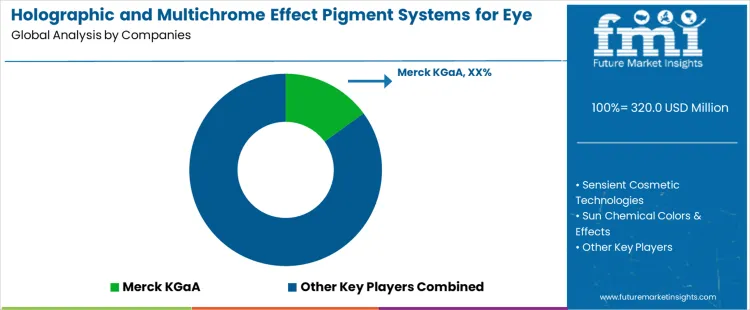
The holographic and multichrome effect pigment systems for eye makeup market is experiencing rapid growth as consumers increasingly seek unique, high-performance cosmetics that offer dynamic, light-reflecting effects. Merck KGaA leads the market with its innovative holographic and multichrome pigment systems, offering eye makeup pigments that shift in color depending on the angle of light, providing a striking, customizable effect. Their commitment to cutting-edge technology, product innovation, and sustainability has positioned them as a dominant player in the market.
Sensient Cosmetic Technologies, Sun Chemical Colors & Effects, and Kobo Products Inc. are key competitors, each offering specialized pigments designed to provide bold, multidimensional effects for eye makeup. Sensient Cosmetic Technologies focuses on creating vibrant, long-lasting holographic pigments, while Sun Chemical Colors & Effects and Kobo Products Inc. offer multichrome pigments that deliver unique, high-quality effects.
Venator Materials PLC, ECKART GmbH, and Schlenk Metallic Pigments GmbH further contribute to the competitive landscape by offering advanced holographic and multichrome pigment systems. Venator Materials PLC provides a range of color-shifting pigments that add depth and dimension to eye makeup products, while ECKART GmbH and Schlenk Metallic Pigments GmbH specialize in metallic and effect pigments that deliver a holographic, light-reactive finish.
These companies compete by focusing on product innovation, color intensity, and the ability to meet the growing consumer demand for eye makeup that offers dazzling, multidimensional effects. As the demand for unique, eye-catching cosmetics continues to rise, the market for holographic and multichrome effect pigments is expected to expand, driving further innovation and competition in the sector.
Key Players of the Holographic and Multichrome Effect Pigment Systems for Eye Makeup Market
- Merck KGaA
- Sensient Cosmetic Technologies
- Sun Chemical Colors & Effects
- Kobo Products Inc.
- Venator Materials PLC
- ECKART GmbH
- Schlenk Metallic Pigments GmbH
Scope of the Report
| Items | Values |
|---|---|
| Quantitative Units (2026) | USD Million |
| Pigment Type | Holographic Multilayer Pigments, Flop Multichrome Effect Pigments, Interference Pearlescent Pigments, Specialty Coated Effect Pigments |
| Application Type | Eye Shadow, Eyeliner, Mascara with Effect Pigments, Hybrid Eye Makeup Products |
| End Use | Premium & Luxury Brands, Mass Market Eye Makeup, Professional Makeup Artists, Online or Direct to Consumer Niche Products |
| Companies | Merck KGaA, Sensient Cosmetic Technologies, Sun Chemical Colors & Effects, Kobo Products Inc., Venator Materials PLC, ECKART GmbH, Schlenk Metallic Pigments GmbH |
| Regions Covered | North America, Latin America, Western Europe, Eastern Europe, South Asia and Pacific, East Asia, Middle East & Africa |
| Countries Covered | United States, Canada, Mexico, Brazil, Argentina, Germany, France, United Kingdom, Italy, Spain, Netherlands, China, India, Japan, South Korea, ANZ, GCC Countries, South Africa |
| Additional Attributes | Dollar by sales by pigment type, application type, end use, and region. Includes analysis of market trends in holographic and multichrome effect pigment systems for eye makeup, performance in decorative cosmetic formulations, formulation cost and performance factors, regulatory and safety considerations, consumer demand for effect pigments in eye products, market share and competitive positioning of key companies, innovations in effect pigment technologies, and evaluation of impact on product aesthetics, depth, and visual appeal. |
Holographic and Multichrome Effect Pigment Systems for Eye Makeup Market Segmentation
By Pigment Type:
- Holographic Multilayer Pigments
- Flop Multichrome Effect Pigments
- Interference Pearlescent Pigments
- Specialty Coated Effect Pigments
By Application Type:
- Eye Shadow
- Eyeliner
- Mascara with Effect Pigments
- Hybrid Eye Makeup Products
By End Use:
- Premium & Luxury Brands
- Mass Market Eye Makeup
- Professional Makeup Artists
- Online or Direct-to-Consumer Niche Products
By Region:
- Asia Pacific
- China
- Japan
- South Korea
- India
- Australia & New Zealand
- ASEAN
- Rest of Asia Pacific
- Europe
- Germany
- United Kingdom
- France
- Italy
- Spain
- Nordic
- BENELUX
- Rest of Europe
- North America
- United States
- Canada
- Mexico
- Latin America
- Brazil
- Chile
- Rest of Latin America
- Middle East & Africa
- Kingdom of Saudi Arabia
- Other GCC Countries
- Turkey
- South Africa
- Other African Union
- Rest of Middle East & Africa
Frequently Asked Questions
How big is the holographic and multichrome effect pigment systems for eye makeup market in 2026?
The global holographic and multichrome effect pigment systems for eye makeup market is estimated to be valued at USD 320.0 million in 2026.
What will be the size of holographic and multichrome effect pigment systems for eye makeup market in 2036?
The market size for the holographic and multichrome effect pigment systems for eye makeup market is projected to reach USD 716.9 million by 2036.
How much will be the holographic and multichrome effect pigment systems for eye makeup market growth between 2026 and 2036?
The holographic and multichrome effect pigment systems for eye makeup market is expected to grow at a 8.4% CAGR between 2026 and 2036.
What are the key product types in the holographic and multichrome effect pigment systems for eye makeup market?
The key product types in holographic and multichrome effect pigment systems for eye makeup market are holographic multilayer pigments, flop multichrome effect pigments, interference pearlescent pigments and specialty coated effect pigments.
Which application type segment to contribute significant share in the holographic and multichrome effect pigment systems for eye makeup market in 2026?
In terms of application type, eye shadow segment to command 47.0% share in the holographic and multichrome effect pigment systems for eye makeup market in 2026.
Preview the report firsthand - request a free sample
Get SampleGet the brochure for pricing and purchase details.
Get PDFTable of Content
- Executive Summary
- Global Market Outlook
- Demand-side Trends
- Supply-side Trends
- Technology Roadmap Analysis
- Analysis and Recommendations
- Market Overview
- Market Coverage / Taxonomy
- Market Definition / Scope / Limitations
- Market Background
- Market Dynamics
- Drivers
- Restraints
- Opportunity
- Trends
- Scenario Forecast
- Demand in Optimistic Scenario
- Demand in Likely Scenario
- Demand in Conservative Scenario
- Opportunity Map Analysis
- Product Life Cycle Analysis
- Supply Chain Analysis
- Investment Feasibility Matrix
- Value Chain Analysis
- PESTLE and Porter’s Analysis
- Regulatory Landscape
- Regional Parent Market Outlook
- Production and Consumption Statistics
- Import and Export Statistics
- Market Dynamics
- Global Market Analysis 2021 to 2025 and Forecast, 2026 to 2036
- Historical Market Size Value (USD Million) Analysis, 2021 to 2025
- Current and Future Market Size Value (USD Million) Projections, 2026 to 2036
- Y-o-Y Growth Trend Analysis
- Absolute $ Opportunity Analysis
- Global Market Pricing Analysis 2021 to 2025 and Forecast 2026 to 2036
- Global Market Analysis 2021 to 2025 and Forecast 2026 to 2036, By Pigment Type
- Introduction / Key Findings
- Historical Market Size Value (USD Million) Analysis By Pigment Type , 2021 to 2025
- Current and Future Market Size Value (USD Million) Analysis and Forecast By Pigment Type , 2026 to 2036
- Holographic Multilayer Pigments
- Flop Multichrome Effect Pigments
- Interference Pearlescent Pigments
- Specialty Coated Effect Pigments
- Holographic Multilayer Pigments
- Y-o-Y Growth Trend Analysis By Pigment Type , 2021 to 2025
- Absolute $ Opportunity Analysis By Pigment Type , 2026 to 2036
- Global Market Analysis 2021 to 2025 and Forecast 2026 to 2036, By Application Type
- Introduction / Key Findings
- Historical Market Size Value (USD Million) Analysis By Application Type, 2021 to 2025
- Current and Future Market Size Value (USD Million) Analysis and Forecast By Application Type, 2026 to 2036
- Eye Shadow
- Eyeliner
- Mascara with Effect Pigments
- Hybrid Eye Makeup Products
- Eye Shadow
- Y-o-Y Growth Trend Analysis By Application Type, 2021 to 2025
- Absolute $ Opportunity Analysis By Application Type, 2026 to 2036
- Global Market Analysis 2021 to 2025 and Forecast 2026 to 2036, By End Use
- Introduction / Key Findings
- Historical Market Size Value (USD Million) Analysis By End Use, 2021 to 2025
- Current and Future Market Size Value (USD Million) Analysis and Forecast By End Use, 2026 to 2036
- Premium & Luxury Brands
- Mass Market Eye Makeup
- Professional Makeup Artists
- Online or Direct‑to‑Consumer Niche Products
- Premium & Luxury Brands
- Y-o-Y Growth Trend Analysis By End Use, 2021 to 2025
- Absolute $ Opportunity Analysis By End Use, 2026 to 2036
- Global Market Analysis 2021 to 2025 and Forecast 2026 to 2036, By Region
- Introduction
- Historical Market Size Value (USD Million) Analysis By Region, 2021 to 2025
- Current Market Size Value (USD Million) Analysis and Forecast By Region, 2026 to 2036
- North America
- Latin America
- Western Europe
- Eastern Europe
- East Asia
- South Asia and Pacific
- Middle East & Africa
- Market Attractiveness Analysis By Region
- North America Market Analysis 2021 to 2025 and Forecast 2026 to 2036, By Country
- Historical Market Size Value (USD Million) Trend Analysis By Market Taxonomy, 2021 to 2025
- Market Size Value (USD Million) Forecast By Market Taxonomy, 2026 to 2036
- By Country
- USA
- Canada
- Mexico
- By Pigment Type
- By Application Type
- By End Use
- By Country
- Market Attractiveness Analysis
- By Country
- By Pigment Type
- By Application Type
- By End Use
- Key Takeaways
- Latin America Market Analysis 2021 to 2025 and Forecast 2026 to 2036, By Country
- Historical Market Size Value (USD Million) Trend Analysis By Market Taxonomy, 2021 to 2025
- Market Size Value (USD Million) Forecast By Market Taxonomy, 2026 to 2036
- By Country
- Brazil
- Chile
- Rest of Latin America
- By Pigment Type
- By Application Type
- By End Use
- By Country
- Market Attractiveness Analysis
- By Country
- By Pigment Type
- By Application Type
- By End Use
- Key Takeaways
- Western Europe Market Analysis 2021 to 2025 and Forecast 2026 to 2036, By Country
- Historical Market Size Value (USD Million) Trend Analysis By Market Taxonomy, 2021 to 2025
- Market Size Value (USD Million) Forecast By Market Taxonomy, 2026 to 2036
- By Country
- Germany
- UK
- Italy
- Spain
- France
- Nordic
- BENELUX
- Rest of Western Europe
- By Pigment Type
- By Application Type
- By End Use
- By Country
- Market Attractiveness Analysis
- By Country
- By Pigment Type
- By Application Type
- By End Use
- Key Takeaways
- Eastern Europe Market Analysis 2021 to 2025 and Forecast 2026 to 2036, By Country
- Historical Market Size Value (USD Million) Trend Analysis By Market Taxonomy, 2021 to 2025
- Market Size Value (USD Million) Forecast By Market Taxonomy, 2026 to 2036
- By Country
- Russia
- Poland
- Hungary
- Balkan & Baltic
- Rest of Eastern Europe
- By Pigment Type
- By Application Type
- By End Use
- By Country
- Market Attractiveness Analysis
- By Country
- By Pigment Type
- By Application Type
- By End Use
- Key Takeaways
- East Asia Market Analysis 2021 to 2025 and Forecast 2026 to 2036, By Country
- Historical Market Size Value (USD Million) Trend Analysis By Market Taxonomy, 2021 to 2025
- Market Size Value (USD Million) Forecast By Market Taxonomy, 2026 to 2036
- By Country
- China
- Japan
- South Korea
- By Pigment Type
- By Application Type
- By End Use
- By Country
- Market Attractiveness Analysis
- By Country
- By Pigment Type
- By Application Type
- By End Use
- Key Takeaways
- South Asia and Pacific Market Analysis 2021 to 2025 and Forecast 2026 to 2036, By Country
- Historical Market Size Value (USD Million) Trend Analysis By Market Taxonomy, 2021 to 2025
- Market Size Value (USD Million) Forecast By Market Taxonomy, 2026 to 2036
- By Country
- India
- ASEAN
- Australia & New Zealand
- Rest of South Asia and Pacific
- By Pigment Type
- By Application Type
- By End Use
- By Country
- Market Attractiveness Analysis
- By Country
- By Pigment Type
- By Application Type
- By End Use
- Key Takeaways
- Middle East & Africa Market Analysis 2021 to 2025 and Forecast 2026 to 2036, By Country
- Historical Market Size Value (USD Million) Trend Analysis By Market Taxonomy, 2021 to 2025
- Market Size Value (USD Million) Forecast By Market Taxonomy, 2026 to 2036
- By Country
- Kingdom of Saudi Arabia
- Other GCC Countries
- Turkiye
- South Africa
- Other African Union
- Rest of Middle East & Africa
- By Pigment Type
- By Application Type
- By End Use
- By Country
- Market Attractiveness Analysis
- By Country
- By Pigment Type
- By Application Type
- By End Use
- Key Takeaways
- Key Countries Market Analysis
- USA
- Pricing Analysis
- Market Share Analysis, 2025
- By Pigment Type
- By Application Type
- By End Use
- Canada
- Pricing Analysis
- Market Share Analysis, 2025
- By Pigment Type
- By Application Type
- By End Use
- Mexico
- Pricing Analysis
- Market Share Analysis, 2025
- By Pigment Type
- By Application Type
- By End Use
- Brazil
- Pricing Analysis
- Market Share Analysis, 2025
- By Pigment Type
- By Application Type
- By End Use
- Chile
- Pricing Analysis
- Market Share Analysis, 2025
- By Pigment Type
- By Application Type
- By End Use
- Germany
- Pricing Analysis
- Market Share Analysis, 2025
- By Pigment Type
- By Application Type
- By End Use
- UK
- Pricing Analysis
- Market Share Analysis, 2025
- By Pigment Type
- By Application Type
- By End Use
- Italy
- Pricing Analysis
- Market Share Analysis, 2025
- By Pigment Type
- By Application Type
- By End Use
- Spain
- Pricing Analysis
- Market Share Analysis, 2025
- By Pigment Type
- By Application Type
- By End Use
- France
- Pricing Analysis
- Market Share Analysis, 2025
- By Pigment Type
- By Application Type
- By End Use
- India
- Pricing Analysis
- Market Share Analysis, 2025
- By Pigment Type
- By Application Type
- By End Use
- ASEAN
- Pricing Analysis
- Market Share Analysis, 2025
- By Pigment Type
- By Application Type
- By End Use
- Australia & New Zealand
- Pricing Analysis
- Market Share Analysis, 2025
- By Pigment Type
- By Application Type
- By End Use
- China
- Pricing Analysis
- Market Share Analysis, 2025
- By Pigment Type
- By Application Type
- By End Use
- Japan
- Pricing Analysis
- Market Share Analysis, 2025
- By Pigment Type
- By Application Type
- By End Use
- South Korea
- Pricing Analysis
- Market Share Analysis, 2025
- By Pigment Type
- By Application Type
- By End Use
- Russia
- Pricing Analysis
- Market Share Analysis, 2025
- By Pigment Type
- By Application Type
- By End Use
- Poland
- Pricing Analysis
- Market Share Analysis, 2025
- By Pigment Type
- By Application Type
- By End Use
- Hungary
- Pricing Analysis
- Market Share Analysis, 2025
- By Pigment Type
- By Application Type
- By End Use
- Kingdom of Saudi Arabia
- Pricing Analysis
- Market Share Analysis, 2025
- By Pigment Type
- By Application Type
- By End Use
- Turkiye
- Pricing Analysis
- Market Share Analysis, 2025
- By Pigment Type
- By Application Type
- By End Use
- South Africa
- Pricing Analysis
- Market Share Analysis, 2025
- By Pigment Type
- By Application Type
- By End Use
- USA
- Market Structure Analysis
- Competition Dashboard
- Competition Benchmarking
- Market Share Analysis of Top Players
- By Regional
- By Pigment Type
- By Application Type
- By End Use
- Competition Analysis
- Competition Deep Dive
- Merck KGaA
- Overview
- Product Portfolio
- Profitability by Market Segments (Product/Age /Sales Channel/Region)
- Sales Footprint
- Strategy Overview
- Marketing Strategy
- Product Strategy
- Channel Strategy
- Sensient Cosmetic Technologies
- Sun Chemical Colors & Effects
- Kobo Products Inc.
- Venator Materials PLC
- ECKART GmbH
- Schlenk Metallic Pigments GmbH
- Merck KGaA
- Competition Deep Dive
- Assumptions & Acronyms Used
- Research Methodology


