


Temperature-Responsive Color-Changing Pigments for Lip and Cheek Products Market
Temperature-Responsive Color-Changing Pigments for Lip and Cheek Products Market Size and Share Forecast Outlook 2026 to 2036
Historical Data Covered: 2015 to 2023 | Base Year: 2024 | Estimated Year: 2025 | Forecast Period: 2026 to 2035
Temperature-Responsive Color-Changing Pigments for Lip and Cheek Products Market Forecast and Outlook 2026 to 2036
The temperature-responsive color-changing pigments for lip and cheek products market is valued at USD 140 million in 2026 and is expected to reach USD 302 million by 2036, growing at a compound annual growth rate (CAGR) of 7.5%. Procurement priorities will be shaped by the need for innovative, high-performance ingredients that meet both consumer demand and regulatory standards. Risk aversion will drive buyers to favor established suppliers who can guarantee product stability, performance, and scalability.
Vendor lock-in will likely increase as long-term supplier relationships are built around proven technologies that align with brand positioning. Switching costs will be significant, as changes in pigment formulations often require costly reformulation, certification, and market revalidation. As a result, buyers may be less inclined to switch suppliers unless substantial advantages in price or innovation are presented. These factors will contribute to a more stable market, where value is captured by vendors who can balance consistency, cost-efficiency, and product differentiation.
Quick Stats of the Temperature-Responsive Color-Changing Pigments for Lip and Cheek Products Market
- Temperature-Responsive Color-Changing Pigments for Lip and Cheek Products Market Value (2026): USD 140 million
- Temperature-Responsive Color-Changing Pigments for Lip and Cheek Products Market Forecast Value (2036): USD 302 million
- Temperature-Responsive Color-Changing Pigments for Lip and Cheek Products Market Global Forecast CAGR (2026 to 2036): 7.5%
- Temperature-Responsive Color-Changing Pigments for Lip and Cheek Products Market Leading Segment: Application Type (Lip Products) 54%
- Key Growth Regions in Temperature-Responsive Color-Changing Pigments for Lip and Cheek Products Market: USA
- Top Players in Temperature-Responsive Color-Changing Pigments for Lip and Cheek Products Market: Sensient Cosmetic Technologies, Merck KGaA, BASF SE, Sun Chemical Corporation, Kobo Products Inc., Chromatic Technologies Inc., Hali Pigment Co. Ltd.
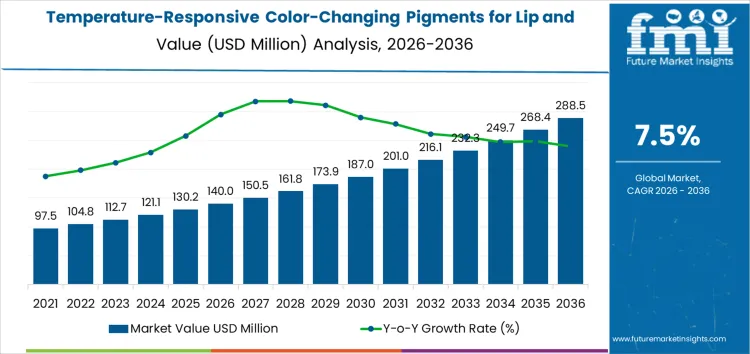
What is the Growth Forecast for the Temperature-Responsive Color-Changing Pigments for Lip and Cheek Products Market through 2036?
The growth momentum analysis for the temperature-responsive color-changing pigments for lip and cheek products market shows a steady acceleration in the initial years, followed by a more stable growth phase as the market matures. In the early years (2026 to 2031), the market is expected to experience noticeable acceleration, with the value increasing from USD 140 million in 2026 to USD 203 million in 2031. This growth of USD 63 million over five years reflects heightened consumer interest in innovative, multifunctional beauty products. Temperature-responsive pigments, offering dynamic color changes based on skin temperature, provide a unique appeal to consumers seeking interactive beauty experiences. As the demand for personalized beauty products continues to rise, the market will witness a surge in adoption, particularly in lip and cheek cosmetics, driven by brands capitalizing on this trend to offer more engaging, responsive products.
From 2031 to 2036, the market will continue to expand but at a more moderate pace as the technology matures and becomes more widely adopted across the industry. By 2036, the market value is projected to reach USD 302 million. During this phase, the initial acceleration will slow as the novelty of temperature-responsive pigments stabilizes and the market shifts from rapid growth to sustained, steady expansion. Consumer interest will still drive growth, but at a more predictable rate, with gradual increases in market value each year. The market will transition to a more mature phase, with broader product integration and stable innovation
Temperature-Responsive Color-Changing Pigments for Lip and Cheek Products Market Key Takeaways
| Metric | Value |
|---|---|
| Industry Sales Value (2026) | USD 140 million |
| Industry Forecast Value (2036) | USD 302 million |
| Industry Forecast CAGR (2026 to 2036) | 7.5% |
What Is Driving the Demand for Temperature-Responsive Color-Changing Pigments for Lip and Cheek Products?
Historical demand for temperature-responsive color-changing pigments in lip and cheek products was shaped by broader growth in the cosmetic pigments market and technical innovation in specialty effect pigments. Pigments that respond to environmental stimuli such as temperature have been developed as part of advances in so-called smart pigments that change color in reaction to factors such as heat or skin chemistry. These smart colorants drew interest from cosmetic formulators seeking unique visual effects and interactive makeup experiences.
The underlying thermochromic pigment segment, which covers materials that change color with temperature, experienced market expansion driven by applications in packaging, textiles, and novelty printing, and emerging use cases in cosmetics as effect pigments with dynamic color change features. Broader cosmetic pigment market growth reflected rising global demand for color cosmetic products and special visual effects in makeup formulations, including lip and cheek colorants with improved performance attributes. These historical trends supported early exploration of temperature-responsive pigment systems in decorative cosmetics.
Future demand for temperature-responsive color-changing pigments in lip and cheek products is expected to reflect continued interest in product differentiation and interactive makeup formats that respond to wearer conditions. Growth factors include ongoing innovation in smart pigment technologies that adjust visible color with temperature changes, evolving consumer interest in dynamic beauty products, and expanding inclusion of such pigments in formulations designed for personalized visual effects.
The broader thermochromic pigments market is projected to grow over coming years at a moderate pace, reflecting wider industrial use and improving material stability. This trend suggests potential extended use of responsive pigments in cosmetics where visual change with skin or ambient temperature is desired. Growth may also be influenced by formulation requirements that balance effect pigment performance with acceptable safety and regulatory compliance in lip and cheek applications. Technical challenges such as integration of temperature-responsive systems without compromising texture or wear performance may influence adoption, while continued development of stable, safe, and repeatable color-changing systems could support broader market uptake.
What are the Leading Segments in the Global Temperature-Responsive Color-Changing Pigments for Lip and Cheek Products Market?
The global temperature-responsive color-changing pigments for lip and cheek products market is segmented by temperature-response mechanism and application type. Among temperature-response mechanisms, thermochromic dye systems lead the market, capturing 48% of the share, followed by pH/body-heat responsive microcapsules and hybrid smart pigment blends. Thermochromic dyes are favored for their ability to change color in response to temperature changes, providing a dynamic, customizable makeup effect. On the application side, lip products dominate the market, holding 54% of the share, followed by cheek tint/blush and hybrid lip & cheek systems. Lip products are the largest application due to the growing popularity of innovative color-changing formulations that respond to body heat or external temperatures.
What Drives the Growth of Thermochromic Dye Systems in the Temperature-Responsive Color-Changing Pigments for Lip and Cheek Products Market?
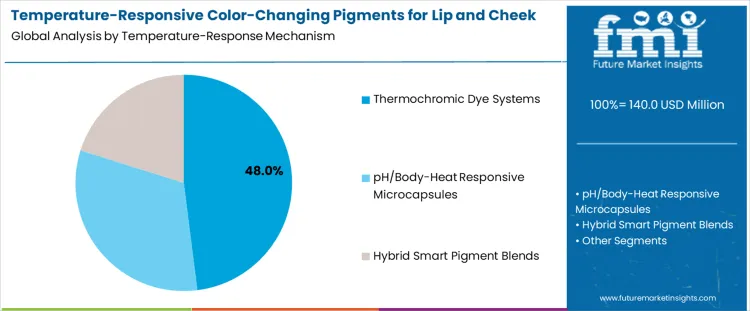
Thermochromic dye systems are the leading temperature-response mechanism in the temperature-responsive color-changing pigments for lip and cheek products market, holding 48% of the share. These dyes are particularly popular in cosmetics because of their unique ability to change color based on temperature shifts, which adds a fun and customizable element to makeup. Thermochromic pigments are highly effective in lip products, where body heat or external temperatures can cause the color to shift, offering a dynamic look throughout the day. As consumers continue to seek innovative, multifunctional beauty products, the demand for thermochromic dye systems is expected to grow. Additionally, the increasing interest in personalized beauty experiences, along with the rising trend of makeup that reacts to the body’s natural processes, is driving the adoption of thermochromic systems. As the market for interactive and playful cosmetic products continues to expand, thermochromic dye systems are set to remain a dominant technology in the color-changing pigments market.
What is Driving the Demand for Lip Products in the Temperature-Responsive Color-Changing Pigments for Lip and Cheek Products Market?
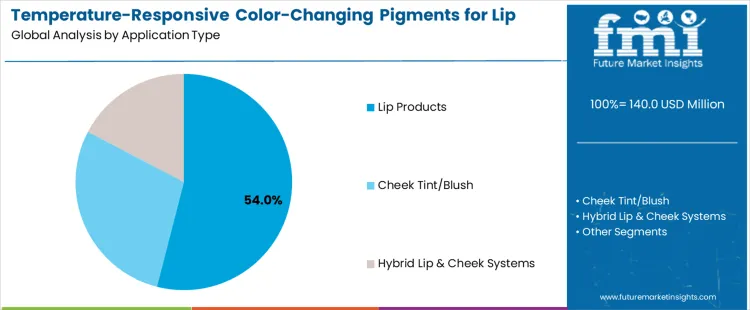
Lip products are the leading application type in the temperature-responsive color-changing pigments for lip and cheek products market, capturing 54% of the share. This demand is primarily driven by the popularity of innovative lip products that offer dynamic, customizable color effects. Lip products, such as lipsticks, balms, and glosses, are highly sought after for their ability to adjust to individual preferences, particularly with temperature-responsive color-changing pigments that react to body heat or environmental factors. These products provide a unique, interactive experience, offering consumers the ability to change their lip color throughout the day based on their environment or body temperature. The growing trend for playful and customizable beauty products, along with the demand for multifunctional makeup, has fueled the adoption of temperature-responsive color-changing pigments in lip products. As consumers seek more innovative and personalized beauty solutions, lip products formulated with these pigments are expected to continue to dominate the market.
What are the Key Dynamics in the Global Temperature-Responsive Color-Changing Pigments for Lip and Cheek Products Market?
The global temperature-responsive color-changing pigments for lip and cheek products market is expanding as beauty brands explore interactive makeup that responds to skin warmth or environmental heat with visible hue shifts. These pigments support personalization and sensory appeal in products such as tint sticks, balms and cream formulas that adjust shade during wear. Growth reflects rising consumer interest in innovative cosmetics, experiential beauty trends and social media-driven product discovery. Adoption spans prestige, indie and mass beauty segments where novel color effects and daily customization influence purchasing decisions and brand differentiation globally.
What are the Key Drivers for the Temperature-Responsive Color-Changing Pigments for Lip and Cheek Products Market?
Rising demand for personalized, experience-led beauty products is a major driver that encourages use of temperature-responsive pigments that evolve with wear. Consumers seek formulas that create unique color experiences and adapt to individual physiology or environment, delivering both fun and functional appeal. Social media and digital content amplify interest in transformative makeup, inspiring experimentation. Advances in safe and skin-compatible chromatic materials enhance performance and broaden application potential. Expansion of e-commerce and beauty tech tools supports discovery and trial of interactive products that align with lifestyle and expression trends.
What are the Restraints for the Temperature-Responsive Color-Changing Pigments for Lip and Cheek Products Market?
Technical complexity of integrating reliable temperature sensitivity into cosmetic formulations is a restraint. Color-changing systems must respond consistently without compromising texture, wear time or safety, requiring precise material science and formulation expertise. Higher ingredient and development costs for responsive pigment systems can affect pricing and acceptance in value-oriented segments. Consumer skepticism about performance or mismatch with expected shade outcomes can reduce repeat purchase if communication about effect and usage is unclear. Regulatory variability in claims about dynamic color changes across regions also influences product positioning and marketing strategies.
What are the Key Trends in the Temperature-Responsive Color-Changing Pigments for Lip and Cheek Products Market?
A key trend is the development of multifunctional pigment systems that combine temperature responsiveness with hydration, antioxidant support or SPF properties, enhancing both visual effect and skin wellness. Brands are leveraging microencapsulation and particle engineering to improve stability, responsiveness and feel in wearable formulas. Collaboration with digital beauty platforms and augmented reality shade try-on tools helps consumers preview color-changing effects and personalize products before purchase. Emphasis on clean and skin-friendly ingredient lists supports integration of temperature-responsive pigments into natural and inclusive beauty lines. Growth of limited-edition and seasonal collections drives interest and repeat engagement with interactive makeup experiences.
What is the Country-Wise Analysis of the Temperature-Responsive Color-Changing Pigments for Lip and Cheek Products Market?
The temperature-responsive color-changing pigments for lip and cheek products market is gaining significant traction, driven by increasing consumer interest in innovative beauty products that offer dynamic, personalized effects. These color-changing pigments adjust in response to temperature variations, providing unique and custom color shifts for lip and cheek products, adding a fun, versatile element to beauty routines. The growing demand for multifunctional beauty products that offer both performance and novelty is driving the market for temperature-responsive color-changing pigments.
Developed markets such as the USA, South Korea, and Germany are seeing strong demand, driven by a focus on innovative beauty solutions and consumer interest in customizable, high-tech makeup. Emerging markets like the UK and Japan are also witnessing steady growth, fueled by a rising demand for unique, performance-enhancing products. As beauty brands continue to innovate and consumers seek personalized, interactive beauty experiences, the market for temperature-responsive pigments is expected to expand globally.
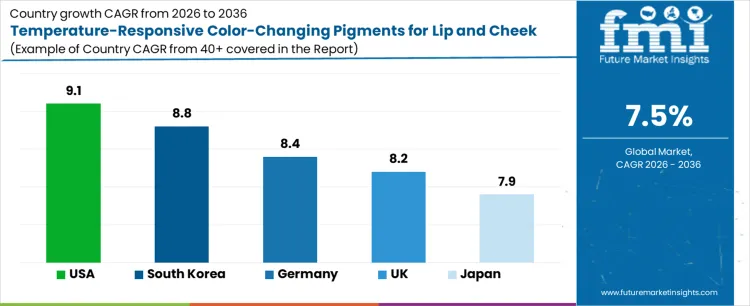
| Country | CAGR (2026-2036) |
|---|---|
| USA | 9.1% |
| South Korea | 8.8% |
| Germany | 8.4% |
| UK | 8.2% |
| Japan | 7.9% |
What is the Growth Outlook for the Temperature-Responsive Color-Changing Pigments for Lip and Cheek Products Market in the USA?
The temperature-responsive color-changing pigments for lip and cheek products market in the USA is projected to grow steadily, with a projected CAGR of 9.1% from 2026 to 2036. The USA beauty market is a leader in innovation, with consumers increasingly seeking unique and customizable beauty experiences. Temperature-responsive pigments, which change color based on temperature, are gaining popularity as consumers seek more personalized and interactive makeup options. USA consumers are becoming more adventurous in their beauty routines, driven by the desire for products that offer both performance and novelty. As part of the clean beauty movement, USA brands are also focused on developing products that are not only innovative but also safe and eco-friendly. The growing interest in multifunctional, high-tech beauty products that cater to individual preferences is expected to drive the market for temperature-responsive pigments. With rising consumer demand for personalized beauty experiences and continuous innovation in the beauty sector, the USA market for these pigments is expected to expand significantly.
What is the Market Outlook for the Temperature-Responsive Color-Changing Pigments for Lip and Cheek Products Market in South Korea?
South Korea is expected to experience strong growth in the temperature-responsive color-changing pigments for lip and cheek products market, with a projected CAGR of 8.8% from 2026 to 2036. South Korea is known for its innovative beauty industry, with consumers continuously seeking cutting-edge products that offer novel and functional benefits. The demand for temperature-responsive pigments is rising as consumers increasingly look for makeup products that provide a customizable and interactive experience. South Korean beauty brands are quick to adopt new technologies and trends, and as consumers become more focused on personalization in their beauty routines, products that change color with temperature are gaining popularity. Additionally, the rising interest in multifunctional makeup products that provide both aesthetic appeal and enhanced performance is further driving the adoption of temperature-responsive pigments. As the demand for innovative, high-performance beauty products continues to grow, South Korea is expected to remain a key market for these novel pigments.
What is the Growth Forecast for the Temperature-Responsive Color-Changing Pigments for Lip and Cheek Products Market in Germany?
Germany is projected to experience steady growth in the temperature-responsive color-changing pigments for lip and cheek products market, with a projected CAGR of 8.4% from 2026 to 2036. Germany’s beauty market is heavily influenced by trends in innovation and sustainability, with consumers seeking beauty products that combine advanced technology with ethical and eco-friendly production methods. Temperature-responsive color-changing pigments are gaining popularity as part of the growing demand for multifunctional, personalized beauty products. German consumers, who are known for their focus on product quality and sustainability, are increasingly seeking makeup products that not only perform well but also provide a unique and interactive experience. As the market continues to embrace new technologies in beauty, the demand for temperature-responsive pigments is expected to rise steadily. Germany’s strong regulatory environment and focus on sustainability will also play a significant role in shaping the market for these pigments.
What is the Market Outlook for the Temperature-Responsive Color-Changing Pigments for Lip and Cheek Products Market in the UK?
The temperature-responsive color-changing pigments for lip and cheek products market in the UK is expected to grow steadily, with a projected CAGR of 8.2% from 2026 to 2036. The UK market is seeing an increasing demand for innovative beauty products that offer unique, customizable effects, driven by the growing popularity of high-tech, multifunctional makeup solutions. Consumers are becoming more focused on products that allow them to express their individual style and preferences, making temperature-responsive color-changing pigments an attractive option for UK beauty brands. The UK beauty market is also influenced by the rising interest in clean beauty and sustainable formulations, with consumers seeking products that are both functional and safe. As brands continue to innovate and offer more interactive, personalized beauty experiences, the UK market for temperature-responsive pigments is expected to grow steadily. The demand for new and engaging beauty products that cater to diverse consumer needs will contribute to the market’s continued expansion.
What are the Growth Prospects for the Temperature-Responsive Color-Changing Pigments for Lip and Cheek Products Market in Japan?
Japan is projected to experience steady growth in the temperature-responsive color-changing pigments for lip and cheek products market, with a projected CAGR of 7.9% from 2026 to 2036. Japan’s beauty market is known for its high standards of quality and innovation, with consumers seeking products that provide both functionality and novelty. The demand for interactive and personalized beauty products is rising, with Japanese consumers increasingly looking for makeup that offers unique, customizable effects. Temperature-responsive pigments, which change color based on the user’s body temperature, are gaining popularity as part of this trend. Additionally, Japan’s focus on multifunctional beauty products that combine performance with aesthetic appeal is supporting the growth of this market. As consumers continue to seek products that align with their desire for personalization and advanced technology, the market for temperature-responsive color-changing pigments in Japan is expected to grow steadily. The continuous evolution of beauty trends and consumer preferences for unique, high-tech solutions will further fuel this market's expansion.
What is the Competitive Landscape for the Temperature-Responsive Color-Changing Pigments for Lip and Cheek Products Market?
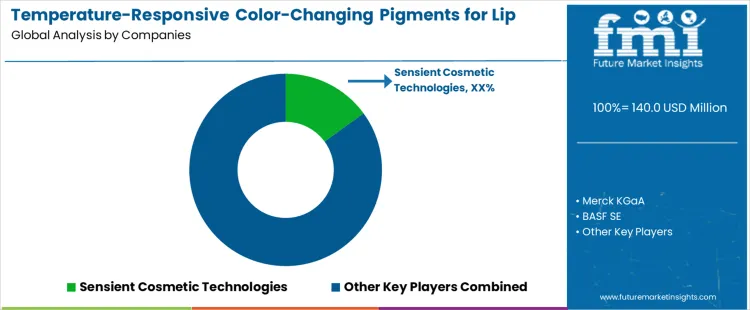
The temperature-responsive color-changing pigments for lip and cheek products market is expanding rapidly as consumers seek innovative, dynamic cosmetic solutions that offer unique, customizable color experiences. Sensient Cosmetic Technologies leads the market with its cutting-edge temperature-responsive color-changing pigments, offering products that react to temperature changes, providing an engaging and personalized color effect for lip and cheek cosmetics. Their focus on product innovation, performance, and sustainability has positioned them as a dominant player in this sector. Merck KGaA, BASF SE, and Sun Chemical Corporation are key competitors, each offering specialized temperature-responsive pigments designed for a wide range of cosmetic applications. Merck KGaA focuses on creating color-changing pigments with high vibrancy and performance, while BASF SE and Sun Chemical Corporation provide advanced formulations that ensure a high-quality color experience with temperature-sensitive reactions.
Kobo Products Inc., Chromatic Technologies Inc., and Hali Pigment Co. Ltd. further strengthen the competitive landscape by offering their own temperature-responsive color-changing pigments. Kobo Products Inc. specializes in high-performance pigments that deliver unique color effects for cosmetic products, while Chromatic Technologies Inc. focuses on providing innovative, temperature-sensitive pigments for dynamic color applications. Hali Pigment Co. Ltd. offers a range of color-changing pigments designed for cosmetic formulations that react to temperature changes. These companies compete by focusing on product innovation, dynamic color experiences, and their ability to meet the growing demand for creative and customizable beauty products. As the trend for interactive and personalized cosmetics continues to rise, the market for temperature-responsive color-changing pigments is expected to expand, driving further competition and innovation in the sector.
Key Players of the Temperature-Responsive Color-Changing Pigments for Lip and Cheek Products Market
- Sensient Cosmetic Technologies
- Merck KGaA
- BASF SE
- Sun Chemical Corporation
- Kobo Products Inc.
- Chromatic Technologies Inc.
- Hali Pigment Co. Ltd.
Scope of the Report
| Items | Values |
|---|---|
| Quantitative Units (2026) | USD Million |
| Temperature-Response Mechanism | Thermochromic Dye Systems, pH/Body-Heat Responsive Microcapsules, Hybrid Smart Pigment Blends |
| Application Type | Lip Products, Cheek Tint/Blush, Hybrid Lip & Cheek Systems |
| End Use Segment | Consumer Hybrid Beauty Products, Professional Makeup/Glam, Influencer/Trend-Driven Products, Specialty Retail/Wearable Tech |
| Companies | Sensient Cosmetic Technologies, Merck KGaA, BASF SE, Sun Chemical Corporation, Kobo Products Inc., Chromatic Technologies Inc., Hali Pigment Co. Ltd. |
| Regions Covered | North America, Latin America, Western Europe, Eastern Europe, South Asia and Pacific, East Asia, Middle East & Africa |
| Countries Covered | United States, Canada, Mexico, Brazil, Argentina, Germany, France, United Kingdom, Italy, Spain, Netherlands, China, India, Japan, South Korea, ANZ, GCC Countries, South Africa |
| Additional Attributes | Dollar by sales by temperature-response mechanism, application type, end use segment, and region. Includes analysis of market trends in temperature-responsive color-changing pigments for lip and cheek products, performance in hybrid and interactive formulations, formulation cost and durability factors, regulatory and safety considerations for smart pigment systems, consumer demand driven by trend and influencer culture, market share and competitive positioning of key companies, innovations in adaptive pigment technologies, and assessment of impact on product appeal, consumer engagement, and wearable tech integration. |
Temperature-Responsive Color-Changing Pigments for Lip and Cheek Products Market Segmentation
Temperature-Response Mechanism
- Thermochromic Dye Systems
- pH/Body-Heat Responsive Microcapsules
- Hybrid Smart Pigment Blends
Application Type
- Lip Products
- Cheek Tint/Blush
- Hybrid Lip & Cheek Systems
End Use Segment
- Consumer Hybrid Beauty Products
- Professional Makeup/Glam
- Influencer/Trend-Driven Products
- Specialty Retail/Wearable Tech
Region
- Asia Pacific
- China
- Japan
- South Korea
- India
- Australia & New Zealand
- ASEAN
- Rest of Asia Pacific
- Europe
- Germany
- United Kingdom
- France
- Italy
- Spain
- Nordic
- BENELUX
- Rest of Europe
- North America
- United States
- Canada
- Mexico
- Latin America
- Brazil
- Chile
- Rest of Latin America
- Middle East & Africa
- Kingdom of Saudi Arabia
- Other GCC Countries
- Turkey
- South Africa
- Other African Union
- Rest of Middle East & Africa
Frequently Asked Questions
How big is the temperature-responsive color-changing pigments for lip and cheek products market in 2026?
The global temperature-responsive color-changing pigments for lip and cheek products market is estimated to be valued at USD 140.0 million in 2026.
What will be the size of temperature-responsive color-changing pigments for lip and cheek products market in 2036?
The market size for the temperature-responsive color-changing pigments for lip and cheek products market is projected to reach USD 288.5 million by 2036.
How much will be the temperature-responsive color-changing pigments for lip and cheek products market growth between 2026 and 2036?
The temperature-responsive color-changing pigments for lip and cheek products market is expected to grow at a 7.5% CAGR between 2026 and 2036.
What are the key product types in the temperature-responsive color-changing pigments for lip and cheek products market?
The key product types in temperature-responsive color-changing pigments for lip and cheek products market are thermochromic dye systems, ph/body‑heat responsive microcapsules and hybrid smart pigment blends.
Which application type segment to contribute significant share in the temperature-responsive color-changing pigments for lip and cheek products market in 2026?
In terms of application type, lip products segment to command 54.0% share in the temperature-responsive color-changing pigments for lip and cheek products market in 2026.
Table of Content
- Executive Summary
- Global Market Outlook
- Demand to side Trends
- Supply to side Trends
- Technology Roadmap Analysis
- Analysis and Recommendations
- Market Overview
- Market Coverage / Taxonomy
- Market Definition / Scope / Limitations
- Market Background
- Market Dynamics
- Drivers
- Restraints
- Opportunity
- Trends
- Scenario Forecast
- Demand in Optimistic Scenario
- Demand in Likely Scenario
- Demand in Conservative Scenario
- Opportunity Map Analysis
- Product Life Cycle Analysis
- Supply Chain Analysis
- Investment Feasibility Matrix
- Value Chain Analysis
- PESTLE and Porter’s Analysis
- Regulatory Landscape
- Regional Parent Market Outlook
- Production and Consumption Statistics
- Import and Export Statistics
- Market Dynamics
- Global Market Analysis 2021 to 2025 and Forecast, 2026 to 2036
- Historical Market Size Value (USD Million) Analysis, 2021 to 2025
- Current and Future Market Size Value (USD Million) Projections, 2026 to 2036
- Y to o to Y Growth Trend Analysis
- Absolute $ Opportunity Analysis
- Global Market Pricing Analysis 2021 to 2025 and Forecast 2026 to 2036
- Global Market Analysis 2021 to 2025 and Forecast 2026 to 2036, By Temperature‑Response Mechanism
- Introduction / Key Findings
- Historical Market Size Value (USD Million) Analysis By Temperature‑Response Mechanism , 2021 to 2025
- Current and Future Market Size Value (USD Million) Analysis and Forecast By Temperature‑Response Mechanism , 2026 to 2036
- Thermochromic Dye Systems
- pH/Body‑Heat Responsive Microcapsules
- Hybrid Smart Pigment Blends
- Thermochromic Dye Systems
- Y to o to Y Growth Trend Analysis By Temperature‑Response Mechanism , 2021 to 2025
- Absolute $ Opportunity Analysis By Temperature‑Response Mechanism , 2026 to 2036
- Global Market Analysis 2021 to 2025 and Forecast 2026 to 2036, By Application Type
- Introduction / Key Findings
- Historical Market Size Value (USD Million) Analysis By Application Type, 2021 to 2025
- Current and Future Market Size Value (USD Million) Analysis and Forecast By Application Type, 2026 to 2036
- Lip Products
- Cheek Tint/Blush
- Hybrid Lip & Cheek Systems
- Lip Products
- Y to o to Y Growth Trend Analysis By Application Type, 2021 to 2025
- Absolute $ Opportunity Analysis By Application Type, 2026 to 2036
- Global Market Analysis 2021 to 2025 and Forecast 2026 to 2036, By End Use Segment
- Introduction / Key Findings
- Historical Market Size Value (USD Million) Analysis By End Use Segment, 2021 to 2025
- Current and Future Market Size Value (USD Million) Analysis and Forecast By End Use Segment, 2026 to 2036
- Consumer Hybrid Beauty Products
- Professional Makeup/Glam
- Influencer/Trend‑Driven Products
- Specialty Retail/Wearable Tech
- Consumer Hybrid Beauty Products
- Y to o to Y Growth Trend Analysis By End Use Segment, 2021 to 2025
- Absolute $ Opportunity Analysis By End Use Segment, 2026 to 2036
- Global Market Analysis 2021 to 2025 and Forecast 2026 to 2036, By Region
- Introduction
- Historical Market Size Value (USD Million) Analysis By Region, 2021 to 2025
- Current Market Size Value (USD Million) Analysis and Forecast By Region, 2026 to 2036
- North America
- Latin America
- Western Europe
- Eastern Europe
- East Asia
- South Asia and Pacific
- Middle East & Africa
- Market Attractiveness Analysis By Region
- North America Market Analysis 2021 to 2025 and Forecast 2026 to 2036, By Country
- Historical Market Size Value (USD Million) Trend Analysis By Market Taxonomy, 2021 to 2025
- Market Size Value (USD Million) Forecast By Market Taxonomy, 2026 to 2036
- By Country
- USA
- Canada
- Mexico
- By Temperature‑Response Mechanism
- By Application Type
- By End Use Segment
- By Country
- Market Attractiveness Analysis
- By Country
- By Temperature‑Response Mechanism
- By Application Type
- By End Use Segment
- Key Takeaways
- Latin America Market Analysis 2021 to 2025 and Forecast 2026 to 2036, By Country
- Historical Market Size Value (USD Million) Trend Analysis By Market Taxonomy, 2021 to 2025
- Market Size Value (USD Million) Forecast By Market Taxonomy, 2026 to 2036
- By Country
- Brazil
- Chile
- Rest of Latin America
- By Temperature‑Response Mechanism
- By Application Type
- By End Use Segment
- By Country
- Market Attractiveness Analysis
- By Country
- By Temperature‑Response Mechanism
- By Application Type
- By End Use Segment
- Key Takeaways
- Western Europe Market Analysis 2021 to 2025 and Forecast 2026 to 2036, By Country
- Historical Market Size Value (USD Million) Trend Analysis By Market Taxonomy, 2021 to 2025
- Market Size Value (USD Million) Forecast By Market Taxonomy, 2026 to 2036
- By Country
- Germany
- UK
- Italy
- Spain
- France
- Nordic
- BENELUX
- Rest of Western Europe
- By Temperature‑Response Mechanism
- By Application Type
- By End Use Segment
- By Country
- Market Attractiveness Analysis
- By Country
- By Temperature‑Response Mechanism
- By Application Type
- By End Use Segment
- Key Takeaways
- Eastern Europe Market Analysis 2021 to 2025 and Forecast 2026 to 2036, By Country
- Historical Market Size Value (USD Million) Trend Analysis By Market Taxonomy, 2021 to 2025
- Market Size Value (USD Million) Forecast By Market Taxonomy, 2026 to 2036
- By Country
- Russia
- Poland
- Hungary
- Balkan & Baltic
- Rest of Eastern Europe
- By Temperature‑Response Mechanism
- By Application Type
- By End Use Segment
- By Country
- Market Attractiveness Analysis
- By Country
- By Temperature‑Response Mechanism
- By Application Type
- By End Use Segment
- Key Takeaways
- East Asia Market Analysis 2021 to 2025 and Forecast 2026 to 2036, By Country
- Historical Market Size Value (USD Million) Trend Analysis By Market Taxonomy, 2021 to 2025
- Market Size Value (USD Million) Forecast By Market Taxonomy, 2026 to 2036
- By Country
- China
- Japan
- South Korea
- By Temperature‑Response Mechanism
- By Application Type
- By End Use Segment
- By Country
- Market Attractiveness Analysis
- By Country
- By Temperature‑Response Mechanism
- By Application Type
- By End Use Segment
- Key Takeaways
- South Asia and Pacific Market Analysis 2021 to 2025 and Forecast 2026 to 2036, By Country
- Historical Market Size Value (USD Million) Trend Analysis By Market Taxonomy, 2021 to 2025
- Market Size Value (USD Million) Forecast By Market Taxonomy, 2026 to 2036
- By Country
- India
- ASEAN
- Australia & New Zealand
- Rest of South Asia and Pacific
- By Temperature‑Response Mechanism
- By Application Type
- By End Use Segment
- By Country
- Market Attractiveness Analysis
- By Country
- By Temperature‑Response Mechanism
- By Application Type
- By End Use Segment
- Key Takeaways
- Middle East & Africa Market Analysis 2021 to 2025 and Forecast 2026 to 2036, By Country
- Historical Market Size Value (USD Million) Trend Analysis By Market Taxonomy, 2021 to 2025
- Market Size Value (USD Million) Forecast By Market Taxonomy, 2026 to 2036
- By Country
- Kingdom of Saudi Arabia
- Other GCC Countries
- Turkiye
- South Africa
- Other African Union
- Rest of Middle East & Africa
- By Temperature‑Response Mechanism
- By Application Type
- By End Use Segment
- By Country
- Market Attractiveness Analysis
- By Country
- By Temperature‑Response Mechanism
- By Application Type
- By End Use Segment
- Key Takeaways
- Key Countries Market Analysis
- USA
- Pricing Analysis
- Market Share Analysis, 2025
- By Temperature‑Response Mechanism
- By Application Type
- By End Use Segment
- Canada
- Pricing Analysis
- Market Share Analysis, 2025
- By Temperature‑Response Mechanism
- By Application Type
- By End Use Segment
- Mexico
- Pricing Analysis
- Market Share Analysis, 2025
- By Temperature‑Response Mechanism
- By Application Type
- By End Use Segment
- Brazil
- Pricing Analysis
- Market Share Analysis, 2025
- By Temperature‑Response Mechanism
- By Application Type
- By End Use Segment
- Chile
- Pricing Analysis
- Market Share Analysis, 2025
- By Temperature‑Response Mechanism
- By Application Type
- By End Use Segment
- Germany
- Pricing Analysis
- Market Share Analysis, 2025
- By Temperature‑Response Mechanism
- By Application Type
- By End Use Segment
- UK
- Pricing Analysis
- Market Share Analysis, 2025
- By Temperature‑Response Mechanism
- By Application Type
- By End Use Segment
- Italy
- Pricing Analysis
- Market Share Analysis, 2025
- By Temperature‑Response Mechanism
- By Application Type
- By End Use Segment
- Spain
- Pricing Analysis
- Market Share Analysis, 2025
- By Temperature‑Response Mechanism
- By Application Type
- By End Use Segment
- France
- Pricing Analysis
- Market Share Analysis, 2025
- By Temperature‑Response Mechanism
- By Application Type
- By End Use Segment
- India
- Pricing Analysis
- Market Share Analysis, 2025
- By Temperature‑Response Mechanism
- By Application Type
- By End Use Segment
- ASEAN
- Pricing Analysis
- Market Share Analysis, 2025
- By Temperature‑Response Mechanism
- By Application Type
- By End Use Segment
- Australia & New Zealand
- Pricing Analysis
- Market Share Analysis, 2025
- By Temperature‑Response Mechanism
- By Application Type
- By End Use Segment
- China
- Pricing Analysis
- Market Share Analysis, 2025
- By Temperature‑Response Mechanism
- By Application Type
- By End Use Segment
- Japan
- Pricing Analysis
- Market Share Analysis, 2025
- By Temperature‑Response Mechanism
- By Application Type
- By End Use Segment
- South Korea
- Pricing Analysis
- Market Share Analysis, 2025
- By Temperature‑Response Mechanism
- By Application Type
- By End Use Segment
- Russia
- Pricing Analysis
- Market Share Analysis, 2025
- By Temperature‑Response Mechanism
- By Application Type
- By End Use Segment
- Poland
- Pricing Analysis
- Market Share Analysis, 2025
- By Temperature‑Response Mechanism
- By Application Type
- By End Use Segment
- Hungary
- Pricing Analysis
- Market Share Analysis, 2025
- By Temperature‑Response Mechanism
- By Application Type
- By End Use Segment
- Kingdom of Saudi Arabia
- Pricing Analysis
- Market Share Analysis, 2025
- By Temperature‑Response Mechanism
- By Application Type
- By End Use Segment
- Turkiye
- Pricing Analysis
- Market Share Analysis, 2025
- By Temperature‑Response Mechanism
- By Application Type
- By End Use Segment
- South Africa
- Pricing Analysis
- Market Share Analysis, 2025
- By Temperature‑Response Mechanism
- By Application Type
- By End Use Segment
- USA
- Market Structure Analysis
- Competition Dashboard
- Competition Benchmarking
- Market Share Analysis of Top Players
- By Regional
- By Temperature‑Response Mechanism
- By Application Type
- By End Use Segment
- Competition Analysis
- Competition Deep Dive
- Sensient Cosmetic Technologies
- Overview
- Product Portfolio
- Profitability by Market Segments (Product/Age /Sales Channel/Region)
- Sales Footprint
- Strategy Overview
- Marketing Strategy
- Product Strategy
- Channel Strategy
- Merck KGaA
- BASF SE
- Sun Chemical Corporation
- Kobo Products Inc.
- Chromatic Technologies Inc.
- Hali Pigment Co. Ltd.
- Sensient Cosmetic Technologies
- Competition Deep Dive
- Assumptions & Acronyms Used
- Research Methodology
List of Tables
- Table 1: Global Market Value (USD Million) Forecast by Region, 2021 to 2036
- Table 2: Global Market Value (USD Million) Forecast by Temperature‑Response Mechanism , 2021 to 2036
- Table 3: Global Market Value (USD Million) Forecast by Application Type, 2021 to 2036
- Table 4: Global Market Value (USD Million) Forecast by End Use Segment, 2021 to 2036
- Table 5: North America Market Value (USD Million) Forecast by Country, 2021 to 2036
- Table 6: North America Market Value (USD Million) Forecast by Temperature‑Response Mechanism , 2021 to 2036
- Table 7: North America Market Value (USD Million) Forecast by Application Type, 2021 to 2036
- Table 8: North America Market Value (USD Million) Forecast by End Use Segment, 2021 to 2036
- Table 9: Latin America Market Value (USD Million) Forecast by Country, 2021 to 2036
- Table 10: Latin America Market Value (USD Million) Forecast by Temperature‑Response Mechanism , 2021 to 2036
- Table 11: Latin America Market Value (USD Million) Forecast by Application Type, 2021 to 2036
- Table 12: Latin America Market Value (USD Million) Forecast by End Use Segment, 2021 to 2036
- Table 13: Western Europe Market Value (USD Million) Forecast by Country, 2021 to 2036
- Table 14: Western Europe Market Value (USD Million) Forecast by Temperature‑Response Mechanism , 2021 to 2036
- Table 15: Western Europe Market Value (USD Million) Forecast by Application Type, 2021 to 2036
- Table 16: Western Europe Market Value (USD Million) Forecast by End Use Segment, 2021 to 2036
- Table 17: Eastern Europe Market Value (USD Million) Forecast by Country, 2021 to 2036
- Table 18: Eastern Europe Market Value (USD Million) Forecast by Temperature‑Response Mechanism , 2021 to 2036
- Table 19: Eastern Europe Market Value (USD Million) Forecast by Application Type, 2021 to 2036
- Table 20: Eastern Europe Market Value (USD Million) Forecast by End Use Segment, 2021 to 2036
- Table 21: East Asia Market Value (USD Million) Forecast by Country, 2021 to 2036
- Table 22: East Asia Market Value (USD Million) Forecast by Temperature‑Response Mechanism , 2021 to 2036
- Table 23: East Asia Market Value (USD Million) Forecast by Application Type, 2021 to 2036
- Table 24: East Asia Market Value (USD Million) Forecast by End Use Segment, 2021 to 2036
- Table 25: South Asia and Pacific Market Value (USD Million) Forecast by Country, 2021 to 2036
- Table 26: South Asia and Pacific Market Value (USD Million) Forecast by Temperature‑Response Mechanism , 2021 to 2036
- Table 27: South Asia and Pacific Market Value (USD Million) Forecast by Application Type, 2021 to 2036
- Table 28: South Asia and Pacific Market Value (USD Million) Forecast by End Use Segment, 2021 to 2036
- Table 29: Middle East & Africa Market Value (USD Million) Forecast by Country, 2021 to 2036
- Table 30: Middle East & Africa Market Value (USD Million) Forecast by Temperature‑Response Mechanism , 2021 to 2036
- Table 31: Middle East & Africa Market Value (USD Million) Forecast by Application Type, 2021 to 2036
- Table 32: Middle East & Africa Market Value (USD Million) Forecast by End Use Segment, 2021 to 2036
List of Figures
- Figure 1: Global Market Pricing Analysis
- Figure 2: Global Market Value (USD Million) Forecast 2021-2036
- Figure 3: Global Market Value Share and BPS Analysis by Temperature‑Response Mechanism , 2026 and 2036
- Figure 4: Global Market Y-o-Y Growth Comparison by Temperature‑Response Mechanism , 2026-2036
- Figure 5: Global Market Attractiveness Analysis by Temperature‑Response Mechanism
- Figure 6: Global Market Value Share and BPS Analysis by Application Type, 2026 and 2036
- Figure 7: Global Market Y-o-Y Growth Comparison by Application Type, 2026-2036
- Figure 8: Global Market Attractiveness Analysis by Application Type
- Figure 9: Global Market Value Share and BPS Analysis by End Use Segment, 2026 and 2036
- Figure 10: Global Market Y-o-Y Growth Comparison by End Use Segment, 2026-2036
- Figure 11: Global Market Attractiveness Analysis by End Use Segment
- Figure 12: Global Market Value (USD Million) Share and BPS Analysis by Region, 2026 and 2036
- Figure 13: Global Market Y-o-Y Growth Comparison by Region, 2026-2036
- Figure 14: Global Market Attractiveness Analysis by Region
- Figure 15: North America Market Incremental Dollar Opportunity, 2026-2036
- Figure 16: Latin America Market Incremental Dollar Opportunity, 2026-2036
- Figure 17: Western Europe Market Incremental Dollar Opportunity, 2026-2036
- Figure 18: Eastern Europe Market Incremental Dollar Opportunity, 2026-2036
- Figure 19: East Asia Market Incremental Dollar Opportunity, 2026-2036
- Figure 20: South Asia and Pacific Market Incremental Dollar Opportunity, 2026-2036
- Figure 21: Middle East & Africa Market Incremental Dollar Opportunity, 2026-2036
- Figure 22: North America Market Value Share and BPS Analysis by Country, 2026 and 2036
- Figure 23: North America Market Value Share and BPS Analysis by Temperature‑Response Mechanism , 2026 and 2036
- Figure 24: North America Market Y-o-Y Growth Comparison by Temperature‑Response Mechanism , 2026-2036
- Figure 25: North America Market Attractiveness Analysis by Temperature‑Response Mechanism
- Figure 26: North America Market Value Share and BPS Analysis by Application Type, 2026 and 2036
- Figure 27: North America Market Y-o-Y Growth Comparison by Application Type, 2026-2036
- Figure 28: North America Market Attractiveness Analysis by Application Type
- Figure 29: North America Market Value Share and BPS Analysis by End Use Segment, 2026 and 2036
- Figure 30: North America Market Y-o-Y Growth Comparison by End Use Segment, 2026-2036
- Figure 31: North America Market Attractiveness Analysis by End Use Segment
- Figure 32: Latin America Market Value Share and BPS Analysis by Country, 2026 and 2036
- Figure 33: Latin America Market Value Share and BPS Analysis by Temperature‑Response Mechanism , 2026 and 2036
- Figure 34: Latin America Market Y-o-Y Growth Comparison by Temperature‑Response Mechanism , 2026-2036
- Figure 35: Latin America Market Attractiveness Analysis by Temperature‑Response Mechanism
- Figure 36: Latin America Market Value Share and BPS Analysis by Application Type, 2026 and 2036
- Figure 37: Latin America Market Y-o-Y Growth Comparison by Application Type, 2026-2036
- Figure 38: Latin America Market Attractiveness Analysis by Application Type
- Figure 39: Latin America Market Value Share and BPS Analysis by End Use Segment, 2026 and 2036
- Figure 40: Latin America Market Y-o-Y Growth Comparison by End Use Segment, 2026-2036
- Figure 41: Latin America Market Attractiveness Analysis by End Use Segment
- Figure 42: Western Europe Market Value Share and BPS Analysis by Country, 2026 and 2036
- Figure 43: Western Europe Market Value Share and BPS Analysis by Temperature‑Response Mechanism , 2026 and 2036
- Figure 44: Western Europe Market Y-o-Y Growth Comparison by Temperature‑Response Mechanism , 2026-2036
- Figure 45: Western Europe Market Attractiveness Analysis by Temperature‑Response Mechanism
- Figure 46: Western Europe Market Value Share and BPS Analysis by Application Type, 2026 and 2036
- Figure 47: Western Europe Market Y-o-Y Growth Comparison by Application Type, 2026-2036
- Figure 48: Western Europe Market Attractiveness Analysis by Application Type
- Figure 49: Western Europe Market Value Share and BPS Analysis by End Use Segment, 2026 and 2036
- Figure 50: Western Europe Market Y-o-Y Growth Comparison by End Use Segment, 2026-2036
- Figure 51: Western Europe Market Attractiveness Analysis by End Use Segment
- Figure 52: Eastern Europe Market Value Share and BPS Analysis by Country, 2026 and 2036
- Figure 53: Eastern Europe Market Value Share and BPS Analysis by Temperature‑Response Mechanism , 2026 and 2036
- Figure 54: Eastern Europe Market Y-o-Y Growth Comparison by Temperature‑Response Mechanism , 2026-2036
- Figure 55: Eastern Europe Market Attractiveness Analysis by Temperature‑Response Mechanism
- Figure 56: Eastern Europe Market Value Share and BPS Analysis by Application Type, 2026 and 2036
- Figure 57: Eastern Europe Market Y-o-Y Growth Comparison by Application Type, 2026-2036
- Figure 58: Eastern Europe Market Attractiveness Analysis by Application Type
- Figure 59: Eastern Europe Market Value Share and BPS Analysis by End Use Segment, 2026 and 2036
- Figure 60: Eastern Europe Market Y-o-Y Growth Comparison by End Use Segment, 2026-2036
- Figure 61: Eastern Europe Market Attractiveness Analysis by End Use Segment
- Figure 62: East Asia Market Value Share and BPS Analysis by Country, 2026 and 2036
- Figure 63: East Asia Market Value Share and BPS Analysis by Temperature‑Response Mechanism , 2026 and 2036
- Figure 64: East Asia Market Y-o-Y Growth Comparison by Temperature‑Response Mechanism , 2026-2036
- Figure 65: East Asia Market Attractiveness Analysis by Temperature‑Response Mechanism
- Figure 66: East Asia Market Value Share and BPS Analysis by Application Type, 2026 and 2036
- Figure 67: East Asia Market Y-o-Y Growth Comparison by Application Type, 2026-2036
- Figure 68: East Asia Market Attractiveness Analysis by Application Type
- Figure 69: East Asia Market Value Share and BPS Analysis by End Use Segment, 2026 and 2036
- Figure 70: East Asia Market Y-o-Y Growth Comparison by End Use Segment, 2026-2036
- Figure 71: East Asia Market Attractiveness Analysis by End Use Segment
- Figure 72: South Asia and Pacific Market Value Share and BPS Analysis by Country, 2026 and 2036
- Figure 73: South Asia and Pacific Market Value Share and BPS Analysis by Temperature‑Response Mechanism , 2026 and 2036
- Figure 74: South Asia and Pacific Market Y-o-Y Growth Comparison by Temperature‑Response Mechanism , 2026-2036
- Figure 75: South Asia and Pacific Market Attractiveness Analysis by Temperature‑Response Mechanism
- Figure 76: South Asia and Pacific Market Value Share and BPS Analysis by Application Type, 2026 and 2036
- Figure 77: South Asia and Pacific Market Y-o-Y Growth Comparison by Application Type, 2026-2036
- Figure 78: South Asia and Pacific Market Attractiveness Analysis by Application Type
- Figure 79: South Asia and Pacific Market Value Share and BPS Analysis by End Use Segment, 2026 and 2036
- Figure 80: South Asia and Pacific Market Y-o-Y Growth Comparison by End Use Segment, 2026-2036
- Figure 81: South Asia and Pacific Market Attractiveness Analysis by End Use Segment
- Figure 82: Middle East & Africa Market Value Share and BPS Analysis by Country, 2026 and 2036
- Figure 83: Middle East & Africa Market Value Share and BPS Analysis by Temperature‑Response Mechanism , 2026 and 2036
- Figure 84: Middle East & Africa Market Y-o-Y Growth Comparison by Temperature‑Response Mechanism , 2026-2036
- Figure 85: Middle East & Africa Market Attractiveness Analysis by Temperature‑Response Mechanism
- Figure 86: Middle East & Africa Market Value Share and BPS Analysis by Application Type, 2026 and 2036
- Figure 87: Middle East & Africa Market Y-o-Y Growth Comparison by Application Type, 2026-2036
- Figure 88: Middle East & Africa Market Attractiveness Analysis by Application Type
- Figure 89: Middle East & Africa Market Value Share and BPS Analysis by End Use Segment, 2026 and 2036
- Figure 90: Middle East & Africa Market Y-o-Y Growth Comparison by End Use Segment, 2026-2036
- Figure 91: Middle East & Africa Market Attractiveness Analysis by End Use Segment
- Figure 92: Global Market - Tier Structure Analysis
- Figure 93: Global Market - Company Share Analysis


