

- Industry Size (2026)
- USD 1.6 Bn
- Forecast (2036)
- USD 3.3 Bn
- CAGR (2026 to 2036)
- 7.5%
Post-Industrial Recyclate Flexible Packaging Market Forecast and Outlook 2026 to 2036
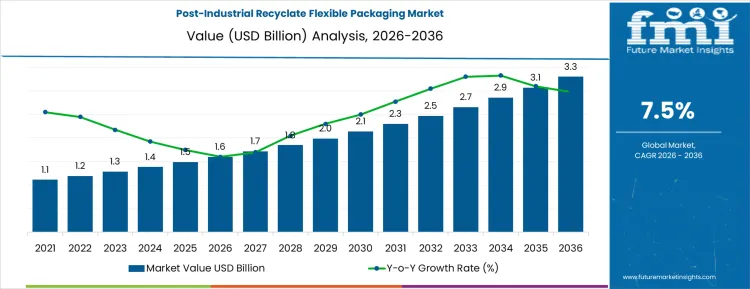
The post-industrial recyclate flexible packaging market is valued at USD 1.6 billion in 2026 and is projected to reach USD 3.3 billion by 2036, reflecting a CAGR of 7.5%. Early growth from 2026 to 2031, rising from approximately USD 1.1 billion to USD 2.2 billion, is driven by adoption in food, beverage, and consumer goods packaging. The use of PIR materials enables converters and brands to maintain performance while meeting sustainability and recycled-content targets, supporting repeat procurement and expanding structural market value.
From 2031 to 2036, the market accelerates from roughly USD 2.4 billion to USD 3.3 billion. Broader industrial adoption, innovations in integrating post-industrial recyclates, and standardization of packaging lines further reinforce growth. Operational efficiencies, regulatory incentives for recycled-content usage, and increasing brand focus on circular economy principles strengthen value accumulation. The market trajectory indicates sustained structural growth, reflecting both rising demand for recycled flexible packaging and alignment with environmental and industry regulations over the forecast period.
Quick Stats of the Post-Industrial Recyclate Flexible Packaging Market
- Post-Industrial Recyclate Flexible Packaging Market Value (2026): USD 1.6 billion
- Post-Industrial Recyclate Flexible Packaging Market Forecast Value (2036): USD 3.3 billion
- Post-Industrial Recyclate Flexible Packaging Market Forecast CAGR (2026 to 2036): 7.5%
- Leading Packaging Format in PIR Flexible Packaging Market: PIR-based Laminated Pouches (45%)
- Key Growth Regions in PIR Flexible Packaging Market: India, China, Brazil, USA, Germany, Japan
- Top Players in PIR Flexible Packaging Market: Amcor, Berry Global, Sealed Air, Mondi, Huhtamaki, GreenPak, Hengli
What is the Growth Forecast for the Post-Industrial Recyclate Flexible Packaging Market through 2036?
From 2026 to 2031, the post-industrial recyclate flexible packaging market grows from USD 1.6 billion to approximately USD 2.2 billion, reflecting an early adoption phase driven by pilot integration of recycled content into food, beverage, and consumer goods packaging. Growth in this period is shaped by selective deployment where regulatory pressure, sustainability goals, and brand differentiation motivate conversion from virgin materials. Annual value additions increase steadily as converters optimize material properties, ensure barrier performance, and align processing compatibility with high-speed production lines, allowing measured scaling across targeted SKUs.
Between 2031 and 2036, the market expands from roughly USD 2.2 billion to USD 3.3 billion, indicating a stronger acceleration in absolute value creation. This phase reflects broader adoption across mass-market flexible packaging, private-label programs, and multi-SKU portfolios. Growth is reinforced by higher per-unit usage, repeat procurement, and integration into automated packaging systems. Earlier growth relied on selective pilot adoption, while later expansion is driven by portfolio-wide deployment, standardization of recyclate inclusion, and structural embedding of PIR materials into global flexible packaging supply chains.
Post Industrial Recyclate Flexible Packaging Market Key Takeaways
| Metric | Value |
|---|---|
| Market Value (2026) | USD 1.6 billion |
| Forecast Value (2036) | USD 3.3 billion |
| Forecast CAGR (2026 to 2036) | 7.5% |
What Is Driving the Demand for the Post-Industrial Recyclate Flexible Packaging Market?
Demand for post-industrial recyclate (PIR) flexible packaging developed historically from early circular material use within industrial processing environments. Manufacturers generated substantial quantities of off-cut, trimmings, and production scrap during film, pouch, and bag fabrication. Rather than disposing of this material, converters and packaging producers began reclaiming PIR streams and reprocessing them into new flexible packaging feedstock. This practice reduced raw material costs and diverted waste from incineration or landfills long before widespread regulatory sustainability mandates emerged.
Adoption remained concentrated where industrial recycling infrastructure existed and quality control processes could manage material consistency in downstream packaging products. Future demand for PIR flexible packaging is expected to diverge from historical drivers by aligning with regulatory obligations and circular economy expectations that extend beyond internal waste avoidance. Environmental policy frameworks increasingly require recycled content targets and demonstrate performance in end-of-life management for packaging products.
PIR materials are attractive because they offer controlled quality and predictable supply compared with post-consumer recyclate streams, supporting compliance with recycled content thresholds and design-for-recycling standards. Advances in sorting, compounding, and stabilization technologies will improve PIR resin performance for use in barrier films, multilayer structures, and custom flexible formats. Demand will be shaped by compliance planning, cost advantages tied to recycled content incentives, and integration with broader sustainability strategies within packaging portfolios.
What Factors Are Affecting the Demand for Post Industrial Recyclate Flexible Packaging Market in Terms of End Use Application and Packaging Format and Type?
Demand for postindustrial recyclate flexible packaging is segmented by end use application and packaging format and type across food, consumer goods, and distribution channels. Snacks, confectionery, and food applications account for about 40% of total demand, making this the leading end use segment. Pet food and personal care, e commerce and FMCG, and household and value FMCG applications represent additional demand areas without disclosed share splits. These segments differ in barrier requirements, appearance tolerance, and volume consistency. Use of PIR content is driven by internal waste recovery and material availability rather than consumer facing claims. Packaging format and type determine feasibility and performance. Together, these segments explain demand formation shaped by material reuse economics, processing compatibility, and application specific performance thresholds rather than discretionary material switching.
What Drives Demand by End Use Application in the Post Industrial Recyclate Flexible Packaging Market?
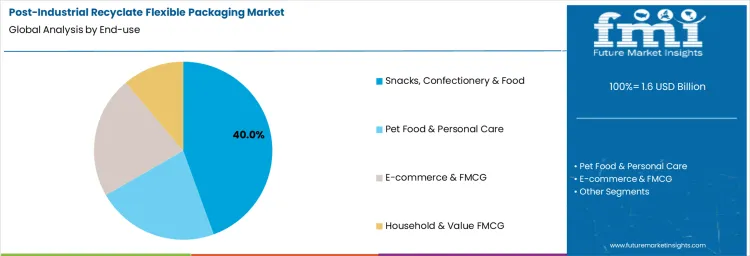
Snacks, confectionery, and food applications lead demand with a 40% share due to high packaging volumes and consistent production scrap availability. These producers can integrate PIR content while maintaining predictable material quality. Pet food and personal care applications adopt selectively where visual uniformity requirements are moderate. E commerce and FMCG applications use PIR films in secondary and transit packaging where barrier demands are lower. Household and value FMCG products adopt small format PIR pouches to manage cost pressure. Adoption intensity aligns with tolerance for color variation and thickness fluctuation. End use demand therefore reflects processing control and material consistency rather than premium positioning or branding sensitivity across product categories.
Application driven demand remains stable because PIR supply is tied to internal manufacturing loops. Food producers integrate PIR usage into long term material planning. Pet food and personal care brands adjust gradually to manage quality control. E commerce applications rely on PIR where performance risk is limited. Value FMCG producers adopt to reduce material input costs. These patterns limit short term volatility. End use segmentation highlights dependence on internal recyclate availability and processing stability. Demand therefore aligns with production scale and material reuse feasibility rather than rapid shifts in packaging preferences across consumer markets.
How Does Packaging Format and Type Shape Demand for Post Industrial Recyclate Flexible Packaging Market?
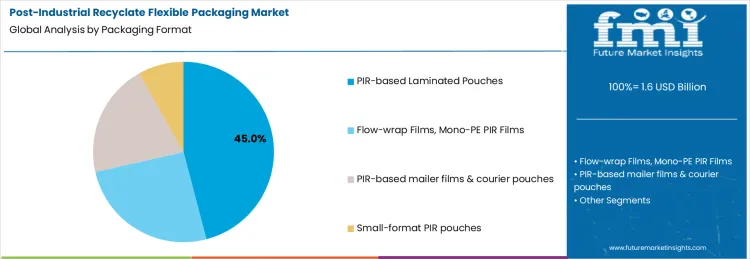
PIR based laminated pouches account for about 45% of total demand, making them the leading packaging format. Their dominance reflects suitability for incorporating PIR layers within multi-layer structures. Flow wrap films and mono PE PIR films are used where film clarity and sealing performance are acceptable. PIR based mailer films and courier pouches serve e commerce distribution with lower barrier requirements. Small format PIR pouches are applied in household and value FMCG categories. Packaging format selection depends on barrier needs, film thickness control, and machinability. Demand follows operational compatibility with PIR material rather than pursuit of new packaging geometries.
PIR laminated pouches maintain leadership due to flexibility in layer design and performance management. Flow wrap formats remain relevant for high speed lines. Mono PE PIR films support simplified material structures. Mailer films adopt PIR where durability outweighs appearance. Small pouches enable controlled PIR use in cost sensitive products. Producers favor formats that limit process disruption and scrap risk. Major format shifts are avoided due to qualification costs. Packaging format and type therefore stabilize demand by reinforcing established flexible structures capable of absorbing PIR content without compromising production efficiency.
How Is Post Industrial Recyclate Flexible Packaging Being Applied Across Food and Consumer Goods?
Use appears in packaging operations where recycled content is incorporated to meet sustainability targets while maintaining functional performance. Snack producers adopt PIR films for pouches and bags that retain barrier properties for freshness. Personal care and household product manufacturers apply recycled flexible films for sachets, refill pouches, and multipacks. Confectionery and bakery brands use PIR materials to reduce virgin polymer usage without altering automated filling lines. These applications reflect operational priorities centered on material circularity, process compatibility, and regulatory alignment rather than aesthetic differentiation.
What Operational and Material Conditions Support Adoption of PIR Flexible Packaging?
Selection aligns with production lines requiring consistent film quality and dimensional stability. Packaging engineers favor recycled films that maintain seal integrity, tensile strength, and printability. Automated filling and sealing systems benefit from uniform film thickness and smooth surfaces. Logistics teams appreciate lightweight, stackable packaging that reduces shipping costs while complying with sustainability mandates. Brands adopt PIR films to meet corporate circular economy commitments and regional recycled content regulations. These conditions arise from efficiency, process reliability, and environmental performance objectives in structured packaging workflows.
Which Practical Considerations Limit Wider Use of PIR Flexible Packaging?
Barrier properties may be lower than virgin multi-layer laminates, affecting shelf life for sensitive products. Cost can vary based on recycled resin availability and processing complexity. Color, clarity, and print quality may differ from virgin films, affecting branding and aesthetics. Compatibility with sealing and forming equipment requires validation. Consumer perception and regulatory reporting requirements influence adoption. These factors lead to selective deployment where sustainability targets, functional performance, and production feasibility outweigh cost and cosmetic constraints.
What is the Demand for Post Industrial Recyclate Flexible Packaging by Country?
| Country | CAGR (%) |
|---|---|
| USA | 6.9% |
| Germany | 6.5% |
| China | 10.2% |
| India | 11.5% |
| Brazil | 8.0% |
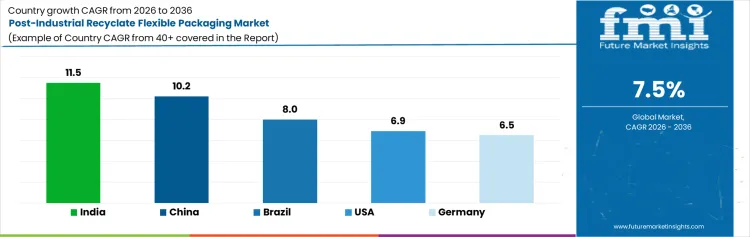
The demand for postindustrial recyclate (PIR) flexible packaging varies across countries, driven by recycling initiatives, sustainable packaging adoption, and regulatory frameworks. India leads with an 11.5% CAGR, supported by expanding FMCG and packaged food sectors adopting recyclable materials. China follows at 10.2%, driven by large scale manufacturing and increasing integration of recycled content in flexible packaging. Brazil records 8.0%, shaped by growing awareness of circular packaging and organized retail expansion. The USA grows at 6.9%, reflecting adoption in food, beverage, and consumer goods packaging. Germany posts 6.5%, supported by regulatory compliance and established recycling infrastructure, while steady demand persists across mature European packaging markets.
How Is Post-Industrial Recyclate Adoption Driving Growth in the United States?
In the United States, revenue from the Post-Industrial Recyclate Flexible Packaging Market is expanding at a CAGR of 6.90% through 2036, driven by adoption of recycled content in flexible films for food, beverage, and personal care packaging. Manufacturers are integrating PIR-based materials to reduce virgin plastic use, meet sustainability targets, and comply with environmental guidelines. Demand is concentrated in retail, e-commerce, and industrial distribution channels. Domestic suppliers provide high-quality PIR films compatible with existing printing, sealing, and filling lines. Regulatory incentives, consumer sustainability awareness, and recurring packaging production cycles are sustaining predictable procurement nationwide.
- Food, beverage, and personal care producers adopt PIR flexible films to reduce virgin plastic usage
- Films are compatible with existing printing, sealing, and filling lines
- Domestic suppliers provide high-quality recycled-content films
- Recurring packaging production cycles sustain predictable procurement
How Do Regulatory and Sustainability Standards Shape Demand in Germany?
Germany continues to record steady growth in the Post-Industrial Recyclate Flexible Packaging Market at a CAGR of 6.50% through 2036, supported by stringent sustainability regulations and recycling mandates. Manufacturers are incorporating PIR films for food, beverage, and personal care packaging to comply with environmental standards. Demand is concentrated in retail and industrial production segments. Domestic suppliers provide standardized PIR materials with consistent performance and barrier properties. Compliance-driven procurement practices and stable production volumes are sustaining measured adoption across packaging operations nationwide.
- Sustainability regulations and recycling mandates drive PIR flexible film adoption
- Food, beverage, and personal care products anchor demand
- Domestic suppliers provide standardized PIR materials with reliable performance
- Compliance-driven procurement sustains steady adoption levels
How Is Industrial and Retail Packaging Expansion Accelerating Adoption in China?
In China, revenue from the Post-Industrial Recyclate Flexible Packaging Market is growing at a CAGR of 10.20% through 2036, driven by expansion of industrial packaging and modern retail distribution networks. Manufacturers are adopting PIR flexible films for snacks, beverages, and ready-to-eat foods to improve recyclability and reduce virgin plastic use. Demand is strong across e-commerce, urban retail, and industrial channels. Domestic suppliers are scaling production of PIR films with consistent quality and barrier properties. High production volumes and structured procurement practices are sustaining rapid adoption nationwide.
- Industrial and retail packaging growth drives PIR flexible film adoption
- Snacks, beverages, and ready-to-eat foods are primary applications
- Domestic suppliers scale production of high-quality PIR films
- High production volumes sustain consistent adoption
How Is Organized Food and Beverage Manufacturing Supporting Growth in India?
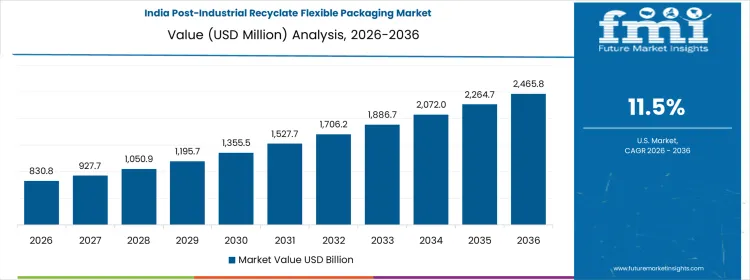
India is witnessing strong expansion in the Post-Industrial Recyclate Flexible Packaging Market at a CAGR of 11.50% through 2036, supported by growth in organized food, beverage, and personal care manufacturing. Manufacturers are integrating PIR-based flexible films to reduce virgin plastic usage, comply with environmental regulations, and improve sustainability performance. Demand is rising across urban retail, e-commerce, and institutional supply channels. Domestic suppliers are providing cost-aligned PIR films suitable for high-volume production. Expanding retail networks and organized manufacturing are sustaining robust procurement nationwide.
- Organized food, beverage, and personal care manufacturing increases demand for PIR flexible films
- Urban retail and e-commerce channels drive high-volume adoption
- Domestic suppliers provide cost-aligned, high-quality PIR films
- Retail expansion and organized production sustain procurement growth
How Are Consumer Goods Shipments Supporting Adoption in Brazil?
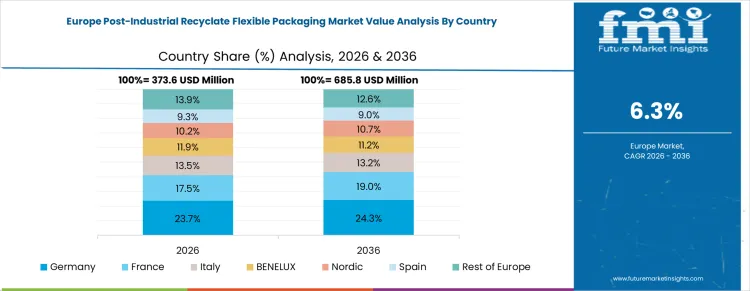
Brazil is seeing steady growth in the Post-Industrial Recyclate Flexible Packaging Market at a CAGR of 8.00% through 2036, supported by increasing distribution of food, beverage, and personal care products. Manufacturers are adopting PIR-based flexible films to reduce virgin plastic use, improve recyclability, and comply with sustainability initiatives. Demand is concentrated in retail and industrial packaging hubs. Domestic suppliers are scaling production of PIR films with consistent barrier and printing performance. Growth in retail and distribution networks is sustaining recurring procurement across packaging operations nationwide.
- Food, beverage, and personal care products drive PIR flexible film adoption
- PIR materials improve recyclability and reduce virgin plastic usage
- Domestic suppliers scale production of high-quality PIR films
- Retail and industrial distribution growth sustain recurring procurement
How Does Mature Packaging Demand Influence Stability in Japan?
Japan is maintaining measured growth in the Post-Industrial Recyclate Flexible Packaging Market at a CAGR of 5.00% through 2036, supported by mature packaging markets and selective adoption of PIR-based films. Manufacturers apply recycled-content films for beverages, personal care, and specialty food products. Demand remains focused on material consistency, barrier performance, and regulatory compliance. Domestic suppliers emphasize precise film extrusion and quality control. Stable consumption patterns and replacement-driven packaging cycles are sustaining predictable procurement across established packaging operations nationwide.
- Mature packaging markets favor selective adoption of PIR flexible films
- Beverages, personal care, and specialty foods anchor baseline demand
- Domestic suppliers ensure precise film extrusion and consistent quality
- Replacement-driven packaging cycles sustain procurement continuity
Which Companies Are Shaping Competition in The Post Industrial Recyclate Flexible Packaging Market Across Food and Consumer Packaging Applications?
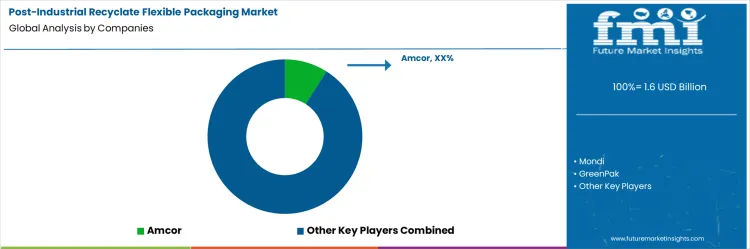
Competition in the Post Industrial Recyclate Flexible Packaging Market is led by packaging producers integrating recovered production scrap into flexible structures. Amcor, Berry Global, and Sealed Air influence adoption through controlled use of postindustrial recyclate in films and laminates supplied to food and consumer goods customers. Mondi and Huhtamaki contribute through flexible packaging portfolios adapted to incorporate internally sourced recyclate while maintaining functional performance. These companies compete on material consistency, process control, and the ability to certify recyclate origin within regulated supply chains. Customer adoption is shaped by assurance of material quality, compatibility with existing filling equipment, and predictable supply rather than design differentiation.
Regional producers and material focused suppliers add competitive diversity. GreenPak participates through flexible packaging formats using locally sourced post industrial recyclate for regional food and industrial customers. Hengli supports the market through polymer production and recyclate processing capabilities aligned with flexible packaging applications. Local converters play an important role by adjusting film structures and thickness to balance performance requirements with recyclate inclusion targets. Competitive positioning reflects access to clean scrap streams, extrusion expertise, and quality control systems. Entry barriers are defined by process stability, certification requirements, and customer validation timelines rather than scale alone or brand recognition.
Key Players in the Post-Industrial Recyclate Flexible Packaging Market
- Amcor
- Berry Global
- Sealed Air
- Mondi,
- Huhtamaki
- GreenPak
- Hengli
Scope of the Report
| Items | Values |
|---|---|
| Quantitative Units (2026) | USD billion |
| End-use / Application | Snacks, Confectionery & Food; Pet Food & Personal Care; E-commerce & FMCG; Household & Value FMCG |
| Packaging Format / Type | PIR-based Laminated Pouches; Flow-wrap Films, Mono-PE PIR Films; PIR-based Mailer Films & Courier Pouches; Small-format PIR Pouches |
| Material | PIR-PE, PIR-PP; PIR Mono-PE Structures; PIR-PE Blends; PIR-PE |
| Technology | Advanced re-melt filtration & PIR-optimised extrusion; Solvent-free PIR compatibilisation; High-speed PIR reprocessing; Low-cost PIR extrusion systems |
| Region | Asia Pacific; Europe; North America; Latin America; Middle East & Africa |
| Countries Covered | China; Japan; South Korea; India; Australia & New Zealand; ASEAN; Germany; United Kingdom; France; Italy; Spain; Nordic; BENELUX; United States; Canada; Mexico; Brazil; Chile; Kingdom of Saudi Arabia; Other GCC Countries; Turkey; South Africa; Other African Union; Rest of Asia Pacific; Rest of Europe; Rest of Latin America; Rest of Middle East & Africa |
| Key Companies Profiled | Amcor; Berry Global; Sealed Air; Mondi; Huhtamaki; GreenPak; Hengli |
| Additional Attributes | Dollar by sales across end-use applications, packaging formats, materials, and technologies; PIR laminated pouches lead due to integration flexibility within multi-layer structures; Flow-wrap films and mono PE PIR films remain relevant for high-speed lines; Small-format PIR pouches support value segment adoption; Operational compatibility and process stability drive adoption more than branding or aesthetic considerations; Repeat procurement, material standardization, and regulatory alignment reinforce structural growth; Domestic and regional suppliers ensure consistent recyclate quality and availability; Growth supported by advanced re-melt filtration, extrusion optimization, and solvent-free compatibilisation technologies; PIR adoption aligns with corporate circular economy commitments, packaging efficiency, and compliance with recycled content mandates. |
Post-Industrial Recyclate Flexible Packaging Market Segmentation
End-use / Application:
- Snacks, Confectionery & Food
- Pet Food & Personal Care
- E-commerce & FMCG
- Household & Value FMCG
Packaging Format / Type:
- PIR-based Laminated Pouches
- Flow-wrap Films, Mono-PE PIR Films
- PIR-based mailer films & courier pouches
- Small-format PIR pouches
Material:
- PIR-PE, PIR-PP
- PIR Mono-PE Structures
- PIR-PE blends
- PIR-PE
Technology:
- Advanced re-melt filtration & PIR-optimised extrusion
- Solvent-free PIR compatibilisation
- High-speed PIR reprocessing
- Low-cost PIR extrusion systems
Region
- Asia Pacific
- China
- Japan
- South Korea
- India
- Australia & New Zealand
- ASEAN
- Rest of Asia Pacific
- Europe
- Germany
- United Kingdom
- France
- Italy
- Spain
- Nordic
- BENELUX
- Rest of Europe
- North America
- United States
- Canada
- Mexico
- Latin America
- Brazil
- Chile
- Rest of Latin America
- Middle East & Africa
- Kingdom of Saudi Arabia
- Other GCC Countries
- Turkey
- South Africa
- Other African Union
- Rest of Middle East & Africa
Bibliography
- International Organization for Standardization. (2023). Plastics - Determination of recycled content, testing methods, and food contact compliance. ISO Standards Publications.
- American Society for Testing and Materials. (2023). ASTM standards for recycled plastics and flexible packaging performance evaluation. ASTM Standards and Technical Papers.
- Association of Plastic Recyclers. (2023). Guidelines for post-industrial recyclate use in flexible packaging and material specification. APR Technical Publications.
- USA Food and Drug Administration. (2023). Regulatory guidance for recycled materials in food contact applications including flexible packaging. FDA Regulatory Publications.
Frequently Asked Questions
How big is the post-industrial recyclate flexible packaging market in 2026?
The global post-industrial recyclate flexible packaging market is estimated to be valued at USD 1.6 billion in 2026.
What will be the size of post-industrial recyclate flexible packaging market in 2036?
The market size for the post-industrial recyclate flexible packaging market is projected to reach USD 3.3 billion by 2036.
How much will be the post-industrial recyclate flexible packaging market growth between 2026 and 2036?
The post-industrial recyclate flexible packaging market is expected to grow at a 7.5% CAGR between 2026 and 2036.
What are the key product types in the post-industrial recyclate flexible packaging market?
The key product types in post-industrial recyclate flexible packaging market are snacks, confectionery & food, pet food & personal care, e-commerce & FMCG and household & value fmcg.
Which packaging format segment to contribute significant share in the post-industrial recyclate flexible packaging market in 2026?
In terms of packaging format, pir-based laminated pouches segment to command 45.0% share in the post-industrial recyclate flexible packaging market in 2026.
Preview the report firsthand - request a free sample
Get SampleGet the brochure for pricing and purchase details.
Get PDFTable of Content
- Executive Summary
- Global Market Outlook
- Demand-side Trends
- Supply-side Trends
- Technology Roadmap Analysis
- Analysis and Recommendations
- Market Overview
- Market Coverage / Taxonomy
- Market Definition / Scope / Limitations
- Market Background
- Market Dynamics
- Drivers
- Restraints
- Opportunity
- Trends
- Scenario Forecast
- Demand in Optimistic Scenario
- Demand in Likely Scenario
- Demand in Conservative Scenario
- Opportunity Map Analysis
- Product Life Cycle Analysis
- Supply Chain Analysis
- Investment Feasibility Matrix
- Value Chain Analysis
- PESTLE and Porter’s Analysis
- Regulatory Landscape
- Regional Parent Market Outlook
- Production and Consumption Statistics
- Import and Export Statistics
- Market Dynamics
- Global Market Analysis 2021 to 2025 and Forecast, 2026 to 2036
- Historical Market Size Value (USD Million) Analysis, 2021 to 2025
- Current and Future Market Size Value (USD Million) Projections, 2026 to 2036
- Y-o-Y Growth Trend Analysis
- Absolute $ Opportunity Analysis
- Global Market Pricing Analysis 2021 to 2025 and Forecast 2026 to 2036
- Global Market Analysis 2021 to 2025 and Forecast 2026 to 2036, By End-use
- Introduction / Key Findings
- Historical Market Size Value (USD Million) Analysis By End-use , 2021 to 2025
- Current and Future Market Size Value (USD Million) Analysis and Forecast By End-use , 2026 to 2036
- Snacks, Confectionery & Food
- Pet Food & Personal Care
- E-commerce & FMCG
- Household & Value FMCG
- Y-o-Y Growth Trend Analysis By End-use , 2021 to 2025
- Absolute $ Opportunity Analysis By End-use , 2026 to 2036
- Global Market Analysis 2021 to 2025 and Forecast 2026 to 2036, By Packaging Format
- Introduction / Key Findings
- Historical Market Size Value (USD Million) Analysis By Packaging Format, 2021 to 2025
- Current and Future Market Size Value (USD Million) Analysis and Forecast By Packaging Format, 2026 to 2036
- PIR-based Laminated Pouches
- Flow-wrap Films, Mono-PE PIR Films
- PIR-based mailer films & courier pouches
- Small-format PIR pouches
- Y-o-Y Growth Trend Analysis By Packaging Format, 2021 to 2025
- Absolute $ Opportunity Analysis By Packaging Format, 2026 to 2036
- Global Market Analysis 2021 to 2025 and Forecast 2026 to 2036, By Material
- Introduction / Key Findings
- Historical Market Size Value (USD Million) Analysis By Material, 2021 to 2025
- Current and Future Market Size Value (USD Million) Analysis and Forecast By Material, 2026 to 2036
- PIR-PE, PIR-PP
- PIR Mono-PE Structures
- PIR-PE blends
- PIR-PE
- Y-o-Y Growth Trend Analysis By Material, 2021 to 2025
- Absolute $ Opportunity Analysis By Material, 2026 to 2036
- Global Market Analysis 2021 to 2025 and Forecast 2026 to 2036, By Technology
- Introduction / Key Findings
- Historical Market Size Value (USD Million) Analysis By Technology, 2021 to 2025
- Current and Future Market Size Value (USD Million) Analysis and Forecast By Technology, 2026 to 2036
- Advanced re-melt filtration & PIR-optimised extrusion
- Solvent-free PIR compatibilisation
- High-speed PIR reprocessing
- Low-cost PIR extrusion systems
- Y-o-Y Growth Trend Analysis By Technology, 2021 to 2025
- Absolute $ Opportunity Analysis By Technology, 2026 to 2036
- Global Market Analysis 2021 to 2025 and Forecast 2026 to 2036, By Region
- Introduction
- Historical Market Size Value (USD Million) Analysis By Region, 2021 to 2025
- Current Market Size Value (USD Million) Analysis and Forecast By Region, 2026 to 2036
- North America
- Latin America
- Western Europe
- Eastern Europe
- East Asia
- South Asia and Pacific
- Middle East & Africa
- Market Attractiveness Analysis By Region
- North America Market Analysis 2021 to 2025 and Forecast 2026 to 2036, By Country
- Historical Market Size Value (USD Million) Trend Analysis By Market Taxonomy, 2021 to 2025
- Market Size Value (USD Million) Forecast By Market Taxonomy, 2026 to 2036
- By Country
- USA
- Canada
- Mexico
- By End-use
- By Packaging Format
- By Material
- By Technology
- By Country
- Market Attractiveness Analysis
- By Country
- By End-use
- By Packaging Format
- By Material
- By Technology
- Key Takeaways
- Latin America Market Analysis 2021 to 2025 and Forecast 2026 to 2036, By Country
- Historical Market Size Value (USD Million) Trend Analysis By Market Taxonomy, 2021 to 2025
- Market Size Value (USD Million) Forecast By Market Taxonomy, 2026 to 2036
- By Country
- Brazil
- Chile
- Rest of Latin America
- By End-use
- By Packaging Format
- By Material
- By Technology
- By Country
- Market Attractiveness Analysis
- By Country
- By End-use
- By Packaging Format
- By Material
- By Technology
- Key Takeaways
- Western Europe Market Analysis 2021 to 2025 and Forecast 2026 to 2036, By Country
- Historical Market Size Value (USD Million) Trend Analysis By Market Taxonomy, 2021 to 2025
- Market Size Value (USD Million) Forecast By Market Taxonomy, 2026 to 2036
- By Country
- Germany
- UK
- Italy
- Spain
- France
- Nordic
- BENELUX
- Rest of Western Europe
- By End-use
- By Packaging Format
- By Material
- By Technology
- By Country
- Market Attractiveness Analysis
- By Country
- By End-use
- By Packaging Format
- By Material
- By Technology
- Key Takeaways
- Eastern Europe Market Analysis 2021 to 2025 and Forecast 2026 to 2036, By Country
- Historical Market Size Value (USD Million) Trend Analysis By Market Taxonomy, 2021 to 2025
- Market Size Value (USD Million) Forecast By Market Taxonomy, 2026 to 2036
- By Country
- Russia
- Poland
- Hungary
- Balkan & Baltic
- Rest of Eastern Europe
- By End-use
- By Packaging Format
- By Material
- By Technology
- By Country
- Market Attractiveness Analysis
- By Country
- By End-use
- By Packaging Format
- By Material
- By Technology
- Key Takeaways
- East Asia Market Analysis 2021 to 2025 and Forecast 2026 to 2036, By Country
- Historical Market Size Value (USD Million) Trend Analysis By Market Taxonomy, 2021 to 2025
- Market Size Value (USD Million) Forecast By Market Taxonomy, 2026 to 2036
- By Country
- China
- Japan
- South Korea
- By End-use
- By Packaging Format
- By Material
- By Technology
- By Country
- Market Attractiveness Analysis
- By Country
- By End-use
- By Packaging Format
- By Material
- By Technology
- Key Takeaways
- South Asia and Pacific Market Analysis 2021 to 2025 and Forecast 2026 to 2036, By Country
- Historical Market Size Value (USD Million) Trend Analysis By Market Taxonomy, 2021 to 2025
- Market Size Value (USD Million) Forecast By Market Taxonomy, 2026 to 2036
- By Country
- India
- ASEAN
- Australia & New Zealand
- Rest of South Asia and Pacific
- By End-use
- By Packaging Format
- By Material
- By Technology
- By Country
- Market Attractiveness Analysis
- By Country
- By End-use
- By Packaging Format
- By Material
- By Technology
- Key Takeaways
- Middle East & Africa Market Analysis 2021 to 2025 and Forecast 2026 to 2036, By Country
- Historical Market Size Value (USD Million) Trend Analysis By Market Taxonomy, 2021 to 2025
- Market Size Value (USD Million) Forecast By Market Taxonomy, 2026 to 2036
- By Country
- Kingdom of Saudi Arabia
- Other GCC Countries
- Turkiye
- South Africa
- Other African Union
- Rest of Middle East & Africa
- By End-use
- By Packaging Format
- By Material
- By Technology
- By Country
- Market Attractiveness Analysis
- By Country
- By End-use
- By Packaging Format
- By Material
- By Technology
- Key Takeaways
- Key Countries Market Analysis
- USA
- Pricing Analysis
- Market Share Analysis, 2025
- By End-use
- By Packaging Format
- By Material
- By Technology
- Canada
- Pricing Analysis
- Market Share Analysis, 2025
- By End-use
- By Packaging Format
- By Material
- By Technology
- Mexico
- Pricing Analysis
- Market Share Analysis, 2025
- By End-use
- By Packaging Format
- By Material
- By Technology
- Brazil
- Pricing Analysis
- Market Share Analysis, 2025
- By End-use
- By Packaging Format
- By Material
- By Technology
- Chile
- Pricing Analysis
- Market Share Analysis, 2025
- By End-use
- By Packaging Format
- By Material
- By Technology
- Germany
- Pricing Analysis
- Market Share Analysis, 2025
- By End-use
- By Packaging Format
- By Material
- By Technology
- UK
- Pricing Analysis
- Market Share Analysis, 2025
- By End-use
- By Packaging Format
- By Material
- By Technology
- Italy
- Pricing Analysis
- Market Share Analysis, 2025
- By End-use
- By Packaging Format
- By Material
- By Technology
- Spain
- Pricing Analysis
- Market Share Analysis, 2025
- By End-use
- By Packaging Format
- By Material
- By Technology
- France
- Pricing Analysis
- Market Share Analysis, 2025
- By End-use
- By Packaging Format
- By Material
- By Technology
- India
- Pricing Analysis
- Market Share Analysis, 2025
- By End-use
- By Packaging Format
- By Material
- By Technology
- ASEAN
- Pricing Analysis
- Market Share Analysis, 2025
- By End-use
- By Packaging Format
- By Material
- By Technology
- Australia & New Zealand
- Pricing Analysis
- Market Share Analysis, 2025
- By End-use
- By Packaging Format
- By Material
- By Technology
- China
- Pricing Analysis
- Market Share Analysis, 2025
- By End-use
- By Packaging Format
- By Material
- By Technology
- Japan
- Pricing Analysis
- Market Share Analysis, 2025
- By End-use
- By Packaging Format
- By Material
- By Technology
- South Korea
- Pricing Analysis
- Market Share Analysis, 2025
- By End-use
- By Packaging Format
- By Material
- By Technology
- Russia
- Pricing Analysis
- Market Share Analysis, 2025
- By End-use
- By Packaging Format
- By Material
- By Technology
- Poland
- Pricing Analysis
- Market Share Analysis, 2025
- By End-use
- By Packaging Format
- By Material
- By Technology
- Hungary
- Pricing Analysis
- Market Share Analysis, 2025
- By End-use
- By Packaging Format
- By Material
- By Technology
- Kingdom of Saudi Arabia
- Pricing Analysis
- Market Share Analysis, 2025
- By End-use
- By Packaging Format
- By Material
- By Technology
- Turkiye
- Pricing Analysis
- Market Share Analysis, 2025
- By End-use
- By Packaging Format
- By Material
- By Technology
- South Africa
- Pricing Analysis
- Market Share Analysis, 2025
- By End-use
- By Packaging Format
- By Material
- By Technology
- USA
- Market Structure Analysis
- Competition Dashboard
- Competition Benchmarking
- Market Share Analysis of Top Players
- By Regional
- By End-use
- By Packaging Format
- By Material
- By Technology
- Competition Analysis
- Competition Deep Dive
- Amcor
- Overview
- Product Portfolio
- Profitability by Market Segments (Product/Age /Sales Channel/Region)
- Sales Footprint
- Strategy Overview
- Marketing Strategy
- Product Strategy
- Channel Strategy
- Mondi
- GreenPak
- Berry Global
- Sealed Air
- Huhtamaki
- Hengli
- Amcor
- Competition Deep Dive
- Assumptions & Acronyms Used
- Research Methodology


