

- Industry Size (2026)
- USD 492.6 Mn
- Forecast (2036)
- USD 1356.1 Mn
- CAGR (2026 to 2036)
- 10.7%
Protein-matrix Lining Market Size, Market Forecast and Outlook By FMI
In 2026, the protein-matrix lining market is valued at USD 492.6 million and is projected to reach USD 1,356.1 million by 2036, reflecting a CAGR of 10.7%. Between 2026 and 2031, the market exhibits clear acceleration as annual absolute additions expand from roughly USD 52 million to more than USD 73 million. This phase is driven by rapid qualification of protein-based linings in food contact and specialty packaging uses. Adoption widens as manufacturers move from pilot volumes to commercial-scale production, lifting growth intensity through consistent yeAR-on-year expansion and increasing order sizes across multiple end-use categories within regulated commercial supply chains.
Summary of Protein-matrix Lining Market
- Market Snapshot
- The Protein-matrix Lining Market is valued at USD 492.6 million in 2026.
- The Protein-matrix Lining Market is projected to reach USD 1,356.1 million by 2036 at a CAGR of 10.7%.
- The market expands by an absolute value of USD 863.5 million between 2026 and 2036.
- Demand and Growth Drivers
- Demand is driven by increasing use of protein-based linings in food packaging, biomedical containment, and specialty industrial applications.
- Growth is supported by improved processing methods that enhance scalability and consistency of protein-based materials.
- Adoption increases due to demand for controlled barrier performance, antimicrobial activity, and surface interaction in regulated applications.
- Product and Segment View
- Active food packaging accounts for 35% of total end-use demand due to antimicrobial and barrier functionality.
- Laminated liners hold 40% share in packaging formats as they stabilize protein-matrix layers in multi-layer structures.
- Protein-matrix linings are primarily used in applications requiring controlled moisture interaction, adhesion, and release behavior.
- Geography and Competitive Outlook
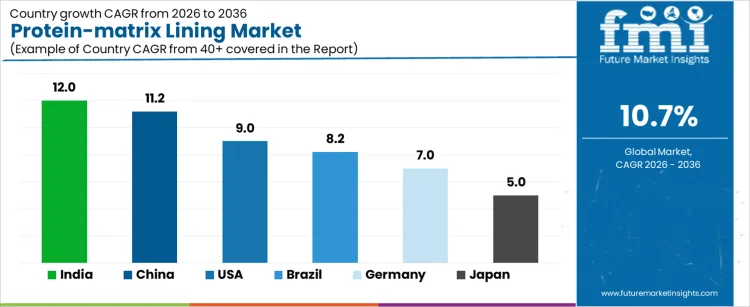
- India leads growth with a CAGR of 12.0%, followed by China at 11.2% and the USA at 9.0%.
- Germany and Japan grow at 7.0% and 5.0% respectively, reflecting mature and regulated packaging markets.
- Key companies operating in the market include BASF, Thermo Fisher Scientific Inc., and Merck KGaA.
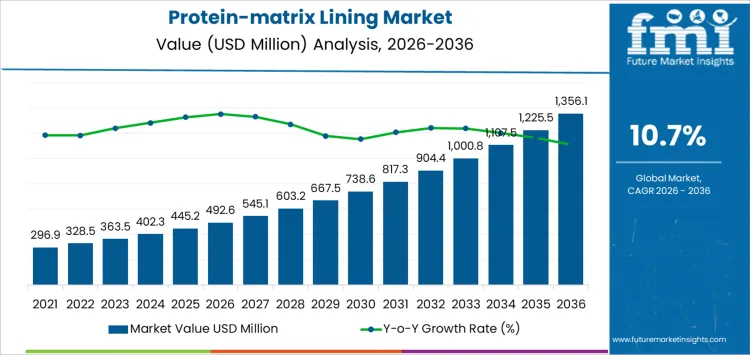
After 2031, the growth curve transitions into a moderated acceleration profile, indicating early signs of deceleration in momentum growth rates. From 2031 to 2036, the market expands from approximately USD 819.0 million to USD 1,356.1 million, with absolute yearly gains continuing to rise but at a steadier pace. This pattern reflects maturation in early adopter segments and broader normalization of protein-matrix linings. Growth remains structurally strong, supported by repeat procurement and capacity scaling, though relative acceleration eases as penetration deepens across established applications rather than sudden contraction or saturation dynamics emerging within global packaging value chains over time horizons measured.
What is the Growth Forecast for the Protein-matrix Lining Market through 2036?
From 2026 to 2031, the protein-matrix lining market increases from USD 492.6 million to about USD 739.8 million, generating an absolute gain of roughly USD 247.2 million in the first half of the forecast period. The yearly absolute additions compound progressively, starting at lower increments and expanding each year as adoption widens. Growth in this phase is driven by increasing use in food packaging, biomedical containment, and specialty industrial linings where bio-derived barrier performance is critical. Absolute value gains remain controlled but consistently rising, reflecting improving material reliability, broader qualification across applications, and expanding production capacity rather than sudden demand surges.
Between 2031 and 2036, the market grows from approximately USD 739.8 million to USD 1,356.1 million, adding a much larger absolute value of about USD 616.3 million. Annual absolute gains in this phase are significantly higher than in the earlier period, compounding as the market scales across mass-volume applications. Growth is driven by deeper integration into standardized packaging systems, wider industrial acceptance, and repeat procurement at scale. While early growth built momentum gradually, the later phase demonstrates compounding absolute expansion as protein-matrix linings transition from selective use to embedded material solutions across multiple end-use sectors.
Protein Matrix Lining Market Key Takeaways
| Metric | Value |
|---|---|
| Market Value (2026) | USD 492.6 million |
| Forecast Value (2036) | USD 1,356.1 million |
| Forecast CAGR (2026–2036) | 10.7% |
How Are Functional Surface Engineering Needs Driving the Protein-Matrix Lining Market from 2026 to 2036?
Protein-matrix linings gained attention as manufacturers explored bio-derived surface treatments that provide controlled barrier and binding properties. Food packaging, biomedical devices, and specialty industrial applications used protein-based matrices to create coatings with tailored permeability, adhesion, or release behavior. Historical demand reflected research-led adoption in applications where synthetic polymers presented compatibility or disposal challenges. Developers focused on proteins sourced from dairy, soy, or plant residues that could be structured into stable films. Early use concentrated on niche applications requiring precise interaction with moisture, oils, or biological materials rather than large-scale volume deployment.
From 2026 to 2036 demand is expected to expand as processing methods improve consistency and scalability of protein-based linings. Growth aligns with development of hybrid materials combining protein matrices with thin functional layers to enhance durability. Packaging and medical product developers explore these linings for selective barrier performance and controlled surface response. Manufacturers work to improve resistance to temperature variation and mechanical stress. Buyers assess functional stability, regulatory acceptance, and integration into existing coating or forming lines. Demand reflects continued experimentation, pilot commercialization, and gradual adoption across specialized applications where bio-based surface performance offers measurable technical advantages.
What Is the Demand for the Protein-matrix Lining Market by End Use and Packaging Format from 2026 to 2036?
From 2026 to 2036, the protein-matrix lining market develops as packaging moves toward functional, bio-derived barrier layers with active performance roles. Active food packaging with antimicrobial function accounts for 35% of end-use demand as producers seek liners that inhibit microbial growth while remaining food-contact safe. Laminated liners represent 40% of packaging format share because they allow protein-matrix layers to be stabilized within multi-layer structures. Demand reflects interest in linings that provide protection, controlled interaction with contents, and compatibility with existing packaging formats rather than acting as standalone materials.
Why does active food packaging account for 35% of demand in the protein-matrix lining market by end use from 2026 to 2036?
Active food packaging accounts for 35% of demand because protein-matrix linings can deliver antimicrobial and barrier functions directly at the package interface. Consumption intensity remains high in fresh foods, ready meals, and high-moisture snacks where microbial control influences shelf life. Usage stays steady as these linings interact with surface moisture to limit bacterial growth without migrating into food. Procurement decisions emphasize food-contact compliance, consistent activity levels, and stability during storage. Buyers favor linings that integrate into existing films or paper structures without altering packaging operations. Price sensitivity remains moderate since active linings reduce spoilage losses. Specification control focuses on protein source consistency, activation behavior, and coating uniformity. Demand remains firm through 2036 as food brands adopt functional linings to extend shelf life while reducing reliance on synthetic preservatives. Active packaging applications continue expanding where shelf-life extension supports distribution efficiency. Usage patterns remain predictable due to recurring production cycles in fresh and chilled foods.
Why do laminated liners represent 40% of demand in the protein-matrix lining market by packaging format from 2026 to 2036?
Laminated liners represent 40% of demand because protein-matrix materials require structural support and protection from environmental stress. Consumption is strong in pouches, sachets, and lidded trays where liners must maintain integrity during sealing and handling. Usage remains steady as lamination shields protein layers from abrasion and moisture imbalance. Procurement favors laminated constructions that ensure uniform performance across large surface areas. Buyers prioritize compatibility with heat sealing, adhesive bonding, and printing processes. Price sensitivity stays moderate since lamination improves functional reliability. Specification control emphasizes layer adhesion, thickness control, and interaction with adjacent materials. Demand persists through 2036 as laminated liners remain the most practical way to deploy protein-matrix technology at scale. Laminated formats support integration into existing packaging lines. Their structural stability reinforces continued preference for this deployment method across food and medical barrier applications.
How Are Protein Matrix Linings Being Incorporated Into Packaging and Containment Applications?
Use emerges in applications where internal surface interaction affects product stability or release behavior. Food processors apply protein matrix linings inside containers to manage moisture migration in dry mixes. Nutritional supplement brands test them in sachets to reduce ingredient adhesion during dispensing. Agricultural suppliers use linings in seed packaging to limit dusting and clumping. Specialty chemical firms evaluate them for short term containment of hygroscopic powders. These uses reflect functional lining roles tied to contact control, flow behavior, and material interaction rather than structural packaging support.
What Functional Conditions Support Adoption of Protein Matrix Linings?
Selection aligns with environments that require controlled surface behavior without synthetic coatings. Manufacturers value protein based matrices for their film forming ability and compatibility with dry contents. Packaging developers use them to adjust friction and reduce residue inside flexible packs. Filling operations benefit from smoother discharge during portioning. Research teams select protein matrices where temporary lining performance is sufficient without long term barrier demands. These conditions arise from formulation handling needs, process efficiency goals, and surface interaction management within defined storage periods.
Which Practical Considerations Shape Limits on Wider Use of Protein Matrix Linings?
Performance depends on humidity exposure and storage duration. Extended moisture contact can alter lining integrity. Cost and availability vary with protein source and processing scale. Compatibility differs across product chemistries, limiting universal application. Regulatory review applies in food and pharmaceutical uses. Shelf life of lined materials requires careful validation. Production integration may need additional coating steps. These considerations result in targeted use where handling benefits outweigh sensitivity, cost, and processing constraints.
What is the Demand for Protein Matrix Lining by Country?
| Country | CAGR (%) |
|---|---|
| USA | 9.0% |
| Germany | 7.0% |
| China | 11.2% |
| India | 12.0% |
| Brazil | 8.2% |
| Japan | 5.0% |
The demand for protein matrix lining varies across countries due to differences in food packaging applications, processing volumes, and material adoption. India leads with a 12.0% CAGR, supported by expanding processed food production and use of edible and functional linings in packaging. China follows at 11.2%, driven by large scale food manufacturing and adoption of advanced barrier linings. The USA grows at 9.0%, reflecting use across confectionery, bakery, and specialty food packaging. Brazil records 8.2%, supported by growth in processed food exports. Germany posts 7.0%, shaped by established food packaging practices, while Japan grows at 5.0%, reflecting mature consumption patterns and steady adoption levels.
How Is Functional Packaging Material Adoption Supporting Growth in the United States?
In the United States, revenue from the Protein Matrix Lining Market is expanding at a CAGR of 9% through 2035, driven by adoption of bio derived lining materials across food, pharmaceutical, and specialty packaging applications. Manufacturers are using protein matrix linings to improve barrier performance, coating uniformity, and compatibility with paper based substrates. Demand is concentrated in food contact packaging, portion packs, and protective linings requiring controlled moisture and grease resistance. Domestic material suppliers are scaling formulation capabilities to meet commercial production needs. Stable packaged food output, established regulatory pathways, and recurring liner replacement cycles are sustaining consistent procurement across end users nationwide.
- Food packaging manufacturers are adopting protein matrix linings to improve barrier performance on paper and fiber substrates
- Compatibility with existing coating and converting equipment supports adoption without process disruption
- Domestic suppliers are expanding formulation capacity to meet steady commercial demand
How Do Material Performance Standards Shape Demand in Germany?
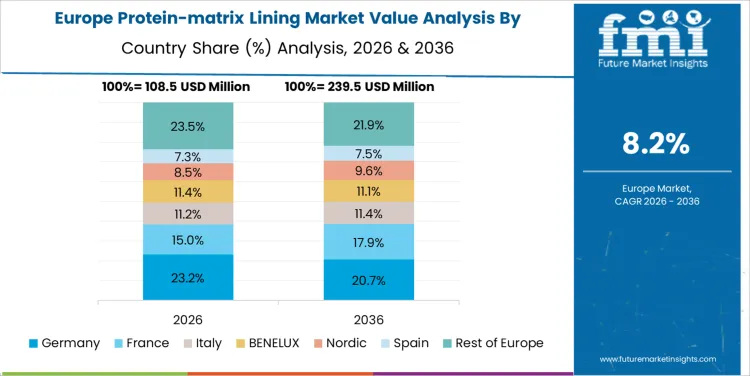
Germany continues to record steady growth in the Protein Matrix Lining Market at a CAGR of 7% through 2035, supported by structured material performance standards and regulated packaging practices. Producers are integrating protein matrix linings to enhance functional coatings used in food and pharmaceutical packaging. Demand remains focused on portioned food packs, sachets, and specialty wraps requiring consistent surface performance. Technical expertise in material formulation supports controlled application and repeatability. Stable manufacturing output and compliance driven procurement practices are sustaining measured adoption across domestic packaging operations nationwide.
- Material performance standards encourage use of functional bio based linings
- Portion packaging and pharmaceutical wraps remain core application areas
- Formulation expertise supports consistent coating behavior and reliability
How Is Processed Food Expansion Accelerating Adoption in China?
In China, revenue from the Protein Matrix Lining Market is growing at a CAGR of 11.2% through 2035, driven by expansion of processed food manufacturing and paper based packaging production. Producers are adopting protein matrix linings to improve moisture resistance and product protection in high volume food packaging. Demand is strong across snacks, ready meals, and dry food applications distributed through modern retail channels. Domestic manufacturers are scaling protein based coating production using integrated supply chains. High output volumes and structured procurement practices are sustaining rapid adoption across major packaging hubs nationwide.
- Processed food production growth is increasing demand for functional linings
- Paper based packaging formats drive need for moisture and grease resistance
- Domestic production expansion improves availability at commercial scale
How Is Organized Packaging Manufacturing Supporting Growth in India?
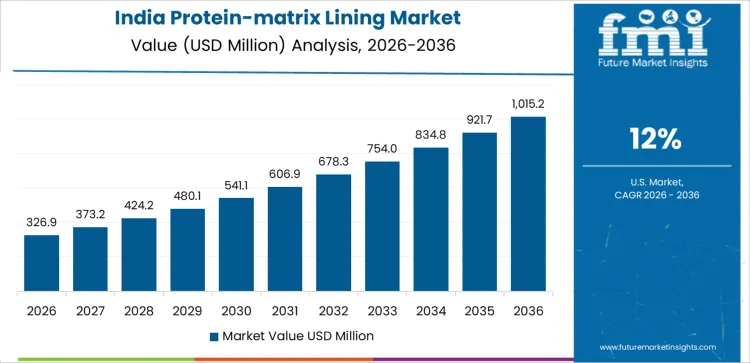
India is witnessing strong expansion in the Protein Matrix Lining Market at a CAGR of 12% through 2035, supported by growth in organized packaging manufacturing and rising use of bio derived materials. Converters are adopting protein matrix linings to improve coating performance in food contact and consumer packaging. Demand is rising across snack packaging, sachets, and institutional food supplies. Domestic suppliers are developing cost aligned formulations suited to high volume production. Expanding packaged food distribution and manufacturing capacity are sustaining robust procurement across packaging producers nationwide.
- Organized packaging manufacturing is increasing demand for functional linings
- Food contact applications drive early adoption across converters
- Domestic suppliers improve cost alignment for high volume usage
How Are Consumer Goods Packaging Needs Supporting Adoption in Brazil?
Brazil is seeing steady growth in the Protein Matrix Lining Market at a CAGR of 8.2% through 2035, supported by expansion of consumer goods and food packaging production. Manufacturers are using protein matrix linings to enhance coating functionality and material performance. Demand is concentrated in dry food packaging, portion packs, and paper based containers. Imports supply some specialized formulation inputs, while local producers expand blending and application capacity. Growth in packaged food availability and retail distribution is sustaining recurring procurement across packaging operations nationwide.
- Consumer goods packaging growth supports adoption of functional linings
- Dry food and portion packaging drive material usage
- Imports complement local supply for specialized formulation components
How Does Mature Packaging Demand Influence Stability in Japan?
Japan is maintaining measured growth in the Protein Matrix Lining Market at a CAGR of 5% through 2035, supported by mature packaging demand and emphasis on coating consistency. Packaging users apply protein matrix linings selectively for food contact and specialty applications requiring uniform performance. Demand remains focused on quality reliability, surface control, and process compatibility. Domestic suppliers emphasize formulation precision and batch consistency. Stable production volumes and replacement driven purchasing are sustaining predictable procurement across established packaging operations nationwide.
- Mature packaging markets favor selective adoption based on performance reliability
- Food contact applications anchor baseline lining demand
- Domestic suppliers ensure formulation precision and consistency
What Is Driving the Demand for Protein Matrix Lining and Which Organizations Shape Research and Early Adoption?
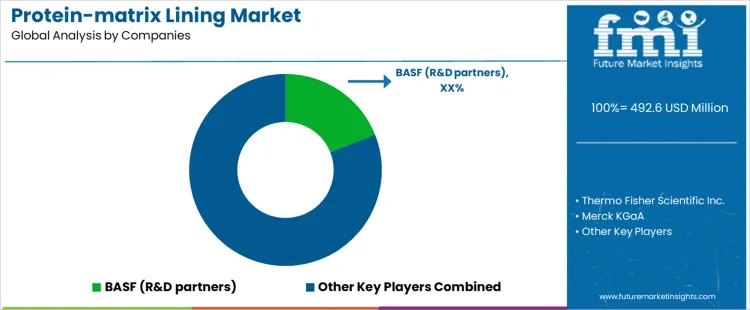
Protein matrix lining demand is emerging from pharmaceutical, biomedical, and specialty packaging research where controlled interaction with sensitive compounds is required. These linings are explored for stabilizing biologics, enzymes, and active ingredients that degrade when exposed to conventional surfaces. Research institutes and pilot scale manufacturers evaluate protein based matrices for their binding behavior, biocompatibility, and tunable degradation profiles. BASF contributes through research partnerships focused on formulation science, surface chemistry, and scalable material development rather than commercial supply. Thermo Fisher Scientific Inc supports adoption through laboratory materials, analytical tools, and custom development services used in early validation studies. Merck KGaA participates through life science materials and reagents that support protein matrix characterization and performance testing.
Material selection is governed by protein stability, interaction predictability, sterilization tolerance, and reproducibility across batches. Developers focus on lining behavior under temperature variation, moisture exposure, and prolonged storage. Regulatory alignment remains central, particularly for pharmaceutical and diagnostic applications where surface contact influences product safety. Buyers emphasize traceability of raw materials and documented performance data during trials. Usage remains concentrated in R&D environments, pilot packaging, and specialty containment systems rather than mass production. Demand visibility reflects growth in biologics development, interest in bio derived functional materials, and continued collaboration between material science providers and life science researchers exploring alternatives to synthetic lining systems.
Key Players in the Protein Matrix Lining Market
- BASF (R&D partners)
- Thermo Fisher Scientific Inc.
- Merck KGaA
Scope of the Report
| Items | Values |
|---|---|
| Quantitative Units (2026) | USD million |
| End Use Application | Active Food Packaging antimicrobial; Pharma and Medical Barriers; Snack Coatings and Edible Liners; Functional Foods; Animal Feed Sachets; Other Applications |
| Packaging Format Type | Laminated Liners; Sachet Liners; Pouch Linings; Tubes and Liners; Other Formats |
| Material | Protein-derived Films from soy and pea; Milk-protein and casein blends; Pea-protein films; Lentil and soy blends; Other Protein-based Materials |
| Technology | Cross-linked Protein Films; Enzymatic Crosslinking; Casting and Coating; Bio-based Stabilization |
| Regions Covered | Asia Pacific; Europe; North America; Latin America; Middle East & Africa |
| Countries Covered | China; Japan; South Korea; India; Australia & New Zealand; ASEAN; Germany; United Kingdom; France; Italy; Spain; Nordic; BENELUX; United States; Canada; Mexico; Brazil; Chile; Kingdom of Saudi Arabia; Turkey; South Africa; plus additional countries across Asia Pacific, Europe, Latin America, and Middle East & Africa |
| Key Companies Profiled | BASF; Thermo Fisher Scientific Inc.; Merck KGaA |
| Additional Attributes | Dollar by sales across end use applications and lining formats; adoption of protein matrix linings for functional surface engineering in food and medical packaging; role of laminated liner structures in stabilizing protein based barrier layers; importance of controlled permeability, antimicrobial behavior, and surface interaction in active packaging; integration of protein matrix linings into existing coating and converting lines; regulatory considerations for food contact and pharmaceutical applications; influence of humidity sensitivity, storage duration, and protein source consistency on lining performance; use of protein based linings in food packaging, biomedical containment, and specialty industrial applications |
Protein Matrix Lining Market Segmentation
End-use / Application
- Active Food Packaging (antimicrobial)
- Pharma/Medical barriers
- Snack Coatings / Edible liners
- Functional Foods
- Animal feed sachets
- Others
Packaging Format / Type
- Laminated Liners
- Sachet Liners
- Pouch Linings
- Tubes/liners
- Others
Material
- Protein-derived Films (soy/pea)
- Milk-protein & casein blends
- Pea-protein films
- Lentil/soy blends
- Others
Technology
- Cross-linked Protein Films
- Enzymatic Crosslinking
- Casting & Coating
- Bio-based Stabilization
Region
- Asia Pacific
- China
- Japan
- South Korea
- India
- Australia & New Zealand
- ASEAN
- Rest of Asia Pacific
- Europe
- Germany
- United Kingdom
- France
- Italy
- Spain
- Nordic
- BENELUX
- Rest of Europe
- North America
- United States
- Canada
- Mexico
- Latin America
- Brazil
- Chile
- Rest of Latin America
- Middle East & Africa
- Kingdom of Saudi Arabia
- Other GCC Countries
- Turkey
- South Africa
- Other African Union
- Rest of Middle East & Africa
Bibliography
- Food and Agriculture Organization of the United Nations. (2023). Protein based materials and functional biopolymer applications in food systems. FAO Technical Publications.
- Institute of Food Technologists. (2023). Protein matrix structures and barrier functionality in food contact applications. IFT Scientific and Technical Resources.
- European Food Safety Authority. (2023). Safety assessment considerations for protein based food contact layers. EFSA Scientific Opinions.
- American Oil Chemists Society. (2023). Protein lipid interactions and matrix formation in functional material design. AOCS Technical Publications.
Frequently Asked Questions
How big is the protein-matrix lining market in 2026?
The global protein-matrix lining market is estimated to be valued at USD 492.6 million in 2026.
What will be the size of protein-matrix lining market in 2036?
The market size for the protein-matrix lining market is projected to reach USD 1,356.1 million by 2036.
How much will be the protein-matrix lining market growth between 2026 and 2036?
The protein-matrix lining market is expected to grow at a 10.7% CAGR between 2026 and 2036.
What are the key product types in the protein-matrix lining market?
The key product types in protein-matrix lining market are active food packaging (antimicrobial), pharma/medical barriers, snack coatings / edible liners, functional foods, animal feed sachets and others.
Which packaging format / type segment to contribute significant share in the protein-matrix lining market in 2026?
In terms of packaging format / type, laminated liners segment to command 40.0% share in the protein-matrix lining market in 2026.
Preview the report firsthand - request a free sample
Get SampleGet the brochure for pricing and purchase details.
Get PDFTable of Content
- Executive Summary
- Global Market Outlook
- Demand-side Trends
- Supply-side Trends
- Technology Roadmap Analysis
- Analysis and Recommendations
- Market Overview
- Market Coverage / Taxonomy
- Market Definition / Scope / Limitations
- Market Background
- Market Dynamics
- Drivers
- Restraints
- Opportunity
- Trends
- Scenario Forecast
- Demand in Optimistic Scenario
- Demand in Likely Scenario
- Demand in Conservative Scenario
- Opportunity Map Analysis
- Product Life Cycle Analysis
- Supply Chain Analysis
- Investment Feasibility Matrix
- Value Chain Analysis
- PESTLE and Porter’s Analysis
- Regulatory Landscape
- Regional Parent Market Outlook
- Production and Consumption Statistics
- Import and Export Statistics
- Market Dynamics
- Global Market Analysis 2021 to 2025 and Forecast, 2026 to 2036
- Historical Market Size Value (USD Million) Analysis, 2021 to 2025
- Current and Future Market Size Value (USD Million) Projections, 2026 to 2036
- Y-o-Y Growth Trend Analysis
- Absolute $ Opportunity Analysis
- Global Market Pricing Analysis 2021 to 2025 and Forecast 2026 to 2036
- Global Market Analysis 2021 to 2025 and Forecast 2026 to 2036, By End-use / Application
- Introduction / Key Findings
- Historical Market Size Value (USD Million) Analysis By End-use / Application , 2021 to 2025
- Current and Future Market Size Value (USD Million) Analysis and Forecast By End-use / Application , 2026 to 2036
- Active Food Packaging (antimicrobial)
- Pharma/Medical barriers
- Snack Coatings / Edible liners
- Functional Foods
- Animal feed sachets
- Others
- Y-o-Y Growth Trend Analysis By End-use / Application , 2021 to 2025
- Absolute $ Opportunity Analysis By End-use / Application , 2026 to 2036
- Global Market Analysis 2021 to 2025 and Forecast 2026 to 2036, By Packaging Format / Type
- Introduction / Key Findings
- Historical Market Size Value (USD Million) Analysis By Packaging Format / Type, 2021 to 2025
- Current and Future Market Size Value (USD Million) Analysis and Forecast By Packaging Format / Type, 2026 to 2036
- Laminated Liners
- Sachet Liners
- Pouch Linings
- Tubes/liners
- Y-o-Y Growth Trend Analysis By Packaging Format / Type, 2021 to 2025
- Absolute $ Opportunity Analysis By Packaging Format / Type, 2026 to 2036
- Global Market Analysis 2021 to 2025 and Forecast 2026 to 2036, By Material
- Introduction / Key Findings
- Historical Market Size Value (USD Million) Analysis By Material, 2021 to 2025
- Current and Future Market Size Value (USD Million) Analysis and Forecast By Material, 2026 to 2036
- Protein-derived Films (soy/pea)
- Milk-protein & casein blends
- Pea-protein films
- Lentil/soy blends
- Y-o-Y Growth Trend Analysis By Material, 2021 to 2025
- Absolute $ Opportunity Analysis By Material, 2026 to 2036
- Global Market Analysis 2021 to 2025 and Forecast 2026 to 2036, By Technology
- Introduction / Key Findings
- Historical Market Size Value (USD Million) Analysis By Technology, 2021 to 2025
- Current and Future Market Size Value (USD Million) Analysis and Forecast By Technology, 2026 to 2036
- Cross-linked Protein Films
- Enzymatic Crosslinking
- Casting & Coating
- Bio-based Stabilization
- Y-o-Y Growth Trend Analysis By Technology, 2021 to 2025
- Absolute $ Opportunity Analysis By Technology, 2026 to 2036
- Global Market Analysis 2021 to 2025 and Forecast 2026 to 2036, By Region
- Introduction
- Historical Market Size Value (USD Million) Analysis By Region, 2021 to 2025
- Current Market Size Value (USD Million) Analysis and Forecast By Region, 2026 to 2036
- North America
- Latin America
- Western Europe
- Eastern Europe
- East Asia
- South Asia and Pacific
- Middle East & Africa
- Market Attractiveness Analysis By Region
- North America Market Analysis 2021 to 2025 and Forecast 2026 to 2036, By Country
- Historical Market Size Value (USD Million) Trend Analysis By Market Taxonomy, 2021 to 2025
- Market Size Value (USD Million) Forecast By Market Taxonomy, 2026 to 2036
- By Country
- USA
- Canada
- Mexico
- By End-use / Application
- By Packaging Format / Type
- By Material
- By Technology
- By Country
- Market Attractiveness Analysis
- By Country
- By End-use / Application
- By Packaging Format / Type
- By Material
- By Technology
- Key Takeaways
- Latin America Market Analysis 2021 to 2025 and Forecast 2026 to 2036, By Country
- Historical Market Size Value (USD Million) Trend Analysis By Market Taxonomy, 2021 to 2025
- Market Size Value (USD Million) Forecast By Market Taxonomy, 2026 to 2036
- By Country
- Brazil
- Chile
- Rest of Latin America
- By End-use / Application
- By Packaging Format / Type
- By Material
- By Technology
- By Country
- Market Attractiveness Analysis
- By Country
- By End-use / Application
- By Packaging Format / Type
- By Material
- By Technology
- Key Takeaways
- Western Europe Market Analysis 2021 to 2025 and Forecast 2026 to 2036, By Country
- Historical Market Size Value (USD Million) Trend Analysis By Market Taxonomy, 2021 to 2025
- Market Size Value (USD Million) Forecast By Market Taxonomy, 2026 to 2036
- By Country
- Germany
- UK
- Italy
- Spain
- France
- Nordic
- BENELUX
- Rest of Western Europe
- By End-use / Application
- By Packaging Format / Type
- By Material
- By Technology
- By Country
- Market Attractiveness Analysis
- By Country
- By End-use / Application
- By Packaging Format / Type
- By Material
- By Technology
- Key Takeaways
- Eastern Europe Market Analysis 2021 to 2025 and Forecast 2026 to 2036, By Country
- Historical Market Size Value (USD Million) Trend Analysis By Market Taxonomy, 2021 to 2025
- Market Size Value (USD Million) Forecast By Market Taxonomy, 2026 to 2036
- By Country
- Russia
- Poland
- Hungary
- Balkan & Baltic
- Rest of Eastern Europe
- By End-use / Application
- By Packaging Format / Type
- By Material
- By Technology
- By Country
- Market Attractiveness Analysis
- By Country
- By End-use / Application
- By Packaging Format / Type
- By Material
- By Technology
- Key Takeaways
- East Asia Market Analysis 2021 to 2025 and Forecast 2026 to 2036, By Country
- Historical Market Size Value (USD Million) Trend Analysis By Market Taxonomy, 2021 to 2025
- Market Size Value (USD Million) Forecast By Market Taxonomy, 2026 to 2036
- By Country
- China
- Japan
- South Korea
- By End-use / Application
- By Packaging Format / Type
- By Material
- By Technology
- By Country
- Market Attractiveness Analysis
- By Country
- By End-use / Application
- By Packaging Format / Type
- By Material
- By Technology
- Key Takeaways
- South Asia and Pacific Market Analysis 2021 to 2025 and Forecast 2026 to 2036, By Country
- Historical Market Size Value (USD Million) Trend Analysis By Market Taxonomy, 2021 to 2025
- Market Size Value (USD Million) Forecast By Market Taxonomy, 2026 to 2036
- By Country
- India
- ASEAN
- Australia & New Zealand
- Rest of South Asia and Pacific
- By End-use / Application
- By Packaging Format / Type
- By Material
- By Technology
- By Country
- Market Attractiveness Analysis
- By Country
- By End-use / Application
- By Packaging Format / Type
- By Material
- By Technology
- Key Takeaways
- Middle East & Africa Market Analysis 2021 to 2025 and Forecast 2026 to 2036, By Country
- Historical Market Size Value (USD Million) Trend Analysis By Market Taxonomy, 2021 to 2025
- Market Size Value (USD Million) Forecast By Market Taxonomy, 2026 to 2036
- By Country
- Kingdom of Saudi Arabia
- Other GCC Countries
- Turkiye
- South Africa
- Other African Union
- Rest of Middle East & Africa
- By End-use / Application
- By Packaging Format / Type
- By Material
- By Technology
- By Country
- Market Attractiveness Analysis
- By Country
- By End-use / Application
- By Packaging Format / Type
- By Material
- By Technology
- Key Takeaways
- Key Countries Market Analysis
- USA
- Pricing Analysis
- Market Share Analysis, 2025
- By End-use / Application
- By Packaging Format / Type
- By Material
- By Technology
- Canada
- Pricing Analysis
- Market Share Analysis, 2025
- By End-use / Application
- By Packaging Format / Type
- By Material
- By Technology
- Mexico
- Pricing Analysis
- Market Share Analysis, 2025
- By End-use / Application
- By Packaging Format / Type
- By Material
- By Technology
- Brazil
- Pricing Analysis
- Market Share Analysis, 2025
- By End-use / Application
- By Packaging Format / Type
- By Material
- By Technology
- Chile
- Pricing Analysis
- Market Share Analysis, 2025
- By End-use / Application
- By Packaging Format / Type
- By Material
- By Technology
- Germany
- Pricing Analysis
- Market Share Analysis, 2025
- By End-use / Application
- By Packaging Format / Type
- By Material
- By Technology
- UK
- Pricing Analysis
- Market Share Analysis, 2025
- By End-use / Application
- By Packaging Format / Type
- By Material
- By Technology
- Italy
- Pricing Analysis
- Market Share Analysis, 2025
- By End-use / Application
- By Packaging Format / Type
- By Material
- By Technology
- Spain
- Pricing Analysis
- Market Share Analysis, 2025
- By End-use / Application
- By Packaging Format / Type
- By Material
- By Technology
- France
- Pricing Analysis
- Market Share Analysis, 2025
- By End-use / Application
- By Packaging Format / Type
- By Material
- By Technology
- India
- Pricing Analysis
- Market Share Analysis, 2025
- By End-use / Application
- By Packaging Format / Type
- By Material
- By Technology
- ASEAN
- Pricing Analysis
- Market Share Analysis, 2025
- By End-use / Application
- By Packaging Format / Type
- By Material
- By Technology
- Australia & New Zealand
- Pricing Analysis
- Market Share Analysis, 2025
- By End-use / Application
- By Packaging Format / Type
- By Material
- By Technology
- China
- Pricing Analysis
- Market Share Analysis, 2025
- By End-use / Application
- By Packaging Format / Type
- By Material
- By Technology
- Japan
- Pricing Analysis
- Market Share Analysis, 2025
- By End-use / Application
- By Packaging Format / Type
- By Material
- By Technology
- South Korea
- Pricing Analysis
- Market Share Analysis, 2025
- By End-use / Application
- By Packaging Format / Type
- By Material
- By Technology
- Russia
- Pricing Analysis
- Market Share Analysis, 2025
- By End-use / Application
- By Packaging Format / Type
- By Material
- By Technology
- Poland
- Pricing Analysis
- Market Share Analysis, 2025
- By End-use / Application
- By Packaging Format / Type
- By Material
- By Technology
- Hungary
- Pricing Analysis
- Market Share Analysis, 2025
- By End-use / Application
- By Packaging Format / Type
- By Material
- By Technology
- Kingdom of Saudi Arabia
- Pricing Analysis
- Market Share Analysis, 2025
- By End-use / Application
- By Packaging Format / Type
- By Material
- By Technology
- Turkiye
- Pricing Analysis
- Market Share Analysis, 2025
- By End-use / Application
- By Packaging Format / Type
- By Material
- By Technology
- South Africa
- Pricing Analysis
- Market Share Analysis, 2025
- By End-use / Application
- By Packaging Format / Type
- By Material
- By Technology
- USA
- Market Structure Analysis
- Competition Dashboard
- Competition Benchmarking
- Market Share Analysis of Top Players
- By Regional
- By End-use / Application
- By Packaging Format / Type
- By Material
- By Technology
- Competition Analysis
- Competition Deep Dive
- BASF (R&D partners)
- Overview
- Product Portfolio
- Profitability by Market Segments (Product/Age /Sales Channel/Region)
- Sales Footprint
- Strategy Overview
- Marketing Strategy
- Product Strategy
- Channel Strategy
- Thermo Fisher Scientific Inc.
- Merck KGaA
- BASF (R&D partners)
- Competition Deep Dive
- Assumptions & Acronyms Used
- Research Methodology


