

- Industry Size (2026)
- USD 1343.3 Mn
- Forecast (2036)
- USD 2768.6 Mn
- CAGR (2026 to 2036)
- 7.50%
Demand for Radiosurgery Planning System Market Forecast and Outlook 2026 to 2036
The radiosurgery planning system market is expected to grow from USD 1,343.3 million in 2026 to USD 2,768.6 million by 2036, reflecting a compound annual growth rate (CAGR) of 7.5%. Radiosurgery planning systems are integral to non-invasive radiosurgery techniques, such as Gamma Knife and CyberKnife, which are used to treat tumors and other medical conditions by delivering targeted radiation. These systems help in accurately planning the delivery of radiation, minimizing damage to surrounding healthy tissue. The growth of this market is driven by the increasing adoption of radiosurgery techniques, advancements in technology, and the rising incidence of cancers and neurological disorders that require precise, non-invasive treatment options.
The demand for radiosurgery planning systems is also influenced by the growing preference for minimally invasive treatments, the need for personalized treatment plans, and the increasing availability of advanced imaging technologies. These systems play a crucial role in improving the accuracy of radiosurgery, enhancing patient outcomes, and reducing recovery times, further supporting the market’s expansion.
Quick Stats for Radiosurgery Planning System Market
- Radiosurgery Planning System Market Value (2026): USD 1,343.3 million
- Radiosurgery Planning System Market Forecast Value (2036): USD 2,768.6 million
- Radiosurgery Planning System Market Global Forecast CAGR (2026-2036): 7.50%
- Top Modality Compatibility by Share in Radiosurgery Planning System Market: Linac-Based Radiosurgery Planning (44%)
- Key Growth Regions in Radiosurgery Planning System Market: China, USA, UK, Germany, Japan
- Top Players in Radiosurgery Planning System Market: Varian (Siemens Healthineers), Elekta, Accuray, Brainlab, RaySearch Laboratories, MIM Software, Mirada Medical, Philips, GE HealthCare, Canon Medical Systems
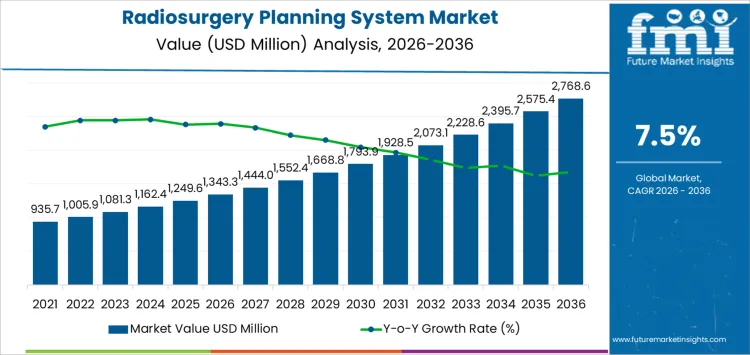
What is the Growth Forecast for the Radiosurgery Planning System Market through 2036?
The growth momentum analysis for the radiosurgery planning system market shows consistent and steady growth over the forecast period, with increasing acceleration as the technology becomes more widely adopted. Starting at USD 1,343.3 million in 2026, the market grows to USD 1,442.4 million in 2027 and USD 1,547.7 million in 2028. These early years reflect the gradual but steady adoption of radiosurgery planning systems as healthcare providers continue to integrate these technologies into their treatment protocols.
From 2028 to 2030, the market continues to grow, reaching USD 1,660.1 million in 2029 and USD 1,780.6 million in 2030. The momentum picks up as the clinical effectiveness of radiosurgery planning systems becomes more established, and more hospitals and treatment centers implement these systems. Between 2030 and 2035, the market experiences a more significant acceleration, reaching USD 1,909.1 million in 2031, USD 2,046.7 million in 2032, and USD 2,193.4 million in 2033.
By 2035, the market is projected to reach USD 2,576 million, with the final market value of USD 2,768.6 million expected by 2036. The growth momentum analysis indicates a strong upward trajectory, with both volume and technology adoption accelerating in the middle and later years of the forecast period. The increasing use of advanced radiosurgery technologies, combined with the growing demand for precision treatment in oncology and neurology, will continue to drive substantial growth in the radiosurgery planning system market.
Radiosurgery Planning System Market Key Takeaways
| Metric | Value |
|---|---|
| Industry Sales Value (2026) | USD 1,343.3 million |
| Industry Forecast Value (2036) | USD 2,768.6 million |
| Industry Forecast CAGR (2026-2036) | 7.5% |
What Is Driving the Demand for the Radiosurgery Planning System Market Globally?
The global demand for radiosurgery planning systems is driven by increasing incidence of neurological and oncological conditions that benefit from precise, non invasive radiation treatment. Conditions such as brain tumors, arteriovenous malformations, trigeminal neuralgia, and certain spinal and metastatic lesions are being treated increasingly with stereotactic radiosurgery (SRS) and stereotactic body radiotherapy (SBRT), which require highly accurate planning to target abnormal tissue while sparing healthy structures. Radiosurgery planning systems enable clinicians to simulate dose distribution, assess multiple beam angles, and optimise treatment paths using imaging data from CT, MRI, or PET. As imaging quality improves and therapeutic expectations rise, planners that integrate multi modality images and advanced dose calculation algorithms become essential tools in radiation oncology. Healthcare providers are adopting these systems to improve treatment precision, reduce procedure times, and enhance clinical outcomes. The growing availability of advanced radiosurgery platforms, including linac based, Gamma Knife, and robotic systems, further drives demand for compatible planning software that supports each technology’s requirements.
Future demand for radiosurgery planning systems is expected to grow as radiosurgery becomes standard of care for more indications and as clinicians seek tools that reduce planning complexity and improve reproducibility. Advances in artificial intelligence and machine learning are enhancing automated contouring, plan optimisation, and outcome prediction, making planning more efficient and consistent across cases. Integration with adaptive radiotherapy and real time imaging could expand utility beyond traditional radiosurgery into broader precision radiotherapy workflows. Expansion of cancer care infrastructure in emerging markets will raise demand as clinics adopt advanced treatment modalities. Regulatory support for software validation and reimbursement frameworks that recognise the value of precise planning in improving patient outcomes will influence uptake. As treatment protocols evolve and evidence accumulates on long term benefits of radiosurgery, demand for sophisticated planning systems that support safe, effective, and personalised treatment will continue to expand across global healthcare settings.
What Are the Key Segments in Radiosurgery Planning System Market?
The radiosurgery planning system market is segmented by modality compatibility and software module. Linac-based radiosurgery planning leads the modality compatibility segment with 44% of the market share, reflecting its widespread use in radiation therapy. Dose calculation & optimization dominates the software module segment with 34%, driven by the need for precise treatment planning in radiosurgery. The market is growing as the demand for highly accurate, non-invasive radiosurgery techniques increases, driven by technological advancements in cancer treatment and other medical conditions requiring targeted radiation.
Which Modality Compatibility Drives Radiosurgery Planning System Market Demand Globally?
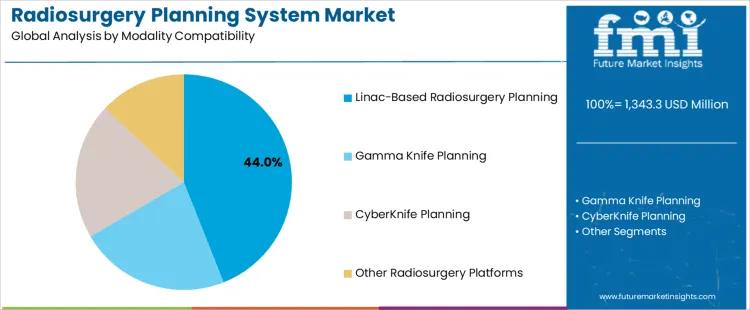
Linac-based radiosurgery planning accounts for 44% of the market share. Linear accelerators (Linac) are widely used in radiosurgery due to their ability to deliver high-energy X-rays to tumors with pinpoint accuracy. Linac-based radiosurgery planning systems are essential for customizing radiation treatment to target tumors while minimizing damage to surrounding healthy tissues. These systems allow for precise planning, ensuring that radiation is delivered effectively and safely. The adoption of Linac-based radiosurgery has grown significantly as cancer treatment protocols evolve, and the technology becomes more accessible. With continued advancements in Linac technology, including the integration of imaging and treatment planning systems, Linac-based radiosurgery planning remains a dominant modality in the market, supporting both conventional and advanced radiation therapy techniques.
Which Software Module Drives Radiosurgery Planning System Market Demand Globally?
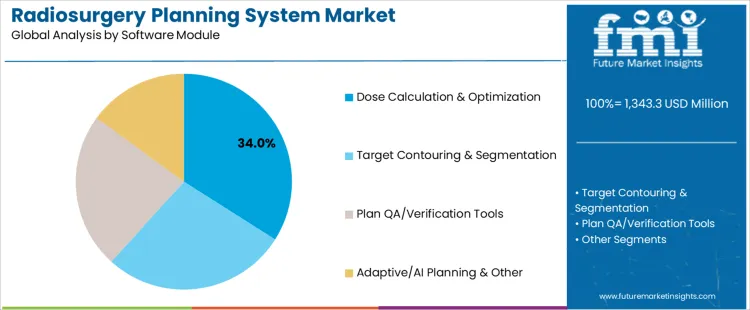
Dose calculation & optimization leads the software module segment with 34% of the market share. Dose calculation and optimization tools are crucial in ensuring that the correct amount of radiation is delivered to the tumor while minimizing exposure to healthy tissues. These tools help optimize radiation distribution, making treatment more effective and reducing side effects. The increasing complexity of radiosurgery treatments, which often involve multiple treatment sites or concurrent therapies, drives the need for advanced dose calculation and optimization capabilities. These software tools allow for precise control over radiation dosage, enhancing treatment accuracy and improving patient outcomes. As radiosurgery techniques evolve and more patients seek targeted, non-invasive treatment options, the demand for advanced dose calculation and optimization tools will continue to grow, making them a key driver in the radiosurgery planning system market.
What is the Key Dynamics of the Global Radiosurgery Planning System Market?
The global radiosurgery planning system market is expanding as demand rises for precision treatment planning in radiosurgery and stereotactic radiotherapy. These systems enable clinicians to map tumor targets, calculate optimal radiation doses and verify delivery for conditions such as brain lesions, spinal tumors and functional disorders. Growth reflects increasing incidence of cancer, investment in advanced radiation therapy technologies and preference for non invasive treatment options. Adoption occurs in cancer centres, hospitals and specialised clinics. Integration with diagnostic imaging and workflow tools supports improved clinical decision support and procedural efficiency worldwide.
What are the Key Drivers for the Global Radiosurgery Planning System Market?
One driver is the rising global burden of cancer and the growing need for precise, targeted treatment solutions that reduce exposure of healthy tissue. Healthcare providers are investing in radiosurgery planning systems that combine advanced imaging, dose calculation and 3D visualisation to support patient specific treatment strategies. Technological innovation in software and algorithm development enhances planning speed and accuracy. Expansion of radiotherapy infrastructure in hospitals and cancer treatment centres increases usage. Demand for improved patient outcomes motivates clinicians and administrators to adopt tools that support refined planning and integration with treatment delivery platforms.
What are the Restraints for the Global Radiosurgery Planning System Market?
One restraint is the high cost of acquiring and maintaining advanced planning systems, which may limit adoption among smaller facilities with constrained budgets. Integration with existing hospital information systems and radiotherapy delivery equipment can require technical expertise and additional investment. Differences in reimbursement policies for radiosurgery procedures across regions can influence purchasing decisions. Some providers may delay adoption until clinical workflows and evidence supporting incremental benefit are established locally. Requirement for staff training and validation of new planning protocols adds to implementation complexity.
What is the Key Trends in the Global Radiosurgery Planning System Market?
A key trend is integration of artificial intelligence and machine learning into planning tools that improve automated segmentation of targets and normal structures, supporting more consistent planning quality. Developers are focusing on user interfaces that streamline planning steps and reduce time from image acquisition to treatment readiness. Cloud based and networked solutions are emerging to support collaboration and remote review among multidisciplinary teams. There is increased focus on interoperability with diagnostic imaging, treatment delivery and quality assurance systems to create cohesive clinical workflows. Growth of evidence supporting clinical value encourages broader adoption of advanced planning tools in radiosurgery practices.
What is the Country-Wise Outlook for the Radiosurgery Planning System Market?
The Radiosurgery Planning System market is growing due to the increasing adoption of non-invasive treatments for tumors and other conditions that require precise targeting. Radiosurgery, often used for brain tumors and other critical areas, offers high precision in delivering radiation to the targeted site while minimizing damage to surrounding tissues. Countries like China, the USA, and the UK are leading the market due to advancements in healthcare infrastructure, rising cancer incidences, and the growing demand for advanced therapeutic tools. In developed markets like Germany and Japan, the adoption of radiosurgery planning systems is supported by well-established healthcare systems and a focus on improving patient outcomes. As demand for precision medicine and non-invasive treatments rises, the radiosurgery planning system market is expected to expand across these regions.
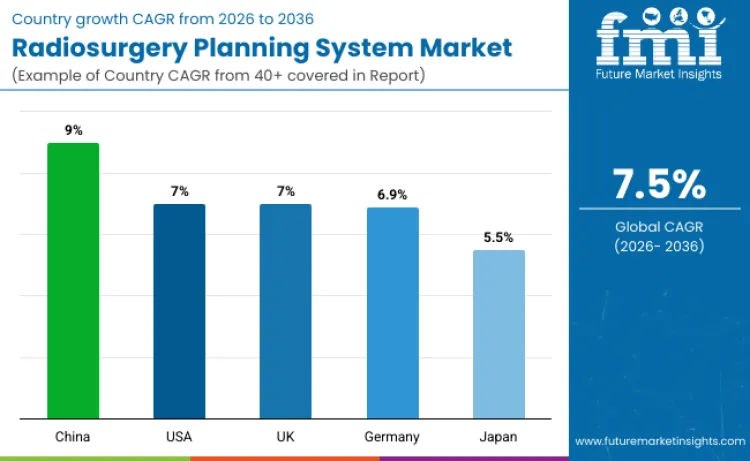
| Country | CAGR (2026-2036) |
|---|---|
| China | 9% |
| USA | 7% |
| UK | 7% |
| Germany | 6.9% |
| Japan | 5.5% |
What is Driving the Growth of the Radiosurgery Planning System Market in China?
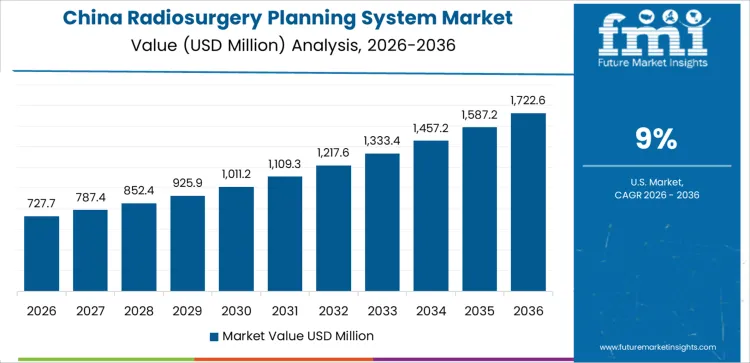
China’s Radiosurgery Planning System market is projected to grow at a CAGR of 9%. The increasing prevalence of cancer, particularly brain tumors, and advancements in radiation therapy are driving the demand for radiosurgery planning systems. As China’s healthcare infrastructure continues to expand, there is growing demand for non-invasive treatment options that deliver precise radiation. The government’s focus on modernizing healthcare facilities and improving access to advanced medical technologies is contributing to the growth of this market. With a large patient population and a growing need for effective cancer treatments, China’s market for radiosurgery planning systems is expected to expand significantly in the coming years.
What is Contributing to the Growth of the Radiosurgery Planning System Market in the USA?
The USA’s Radiosurgery Planning System market is expected to grow at a CAGR of 7%. The increasing prevalence of brain tumors, coupled with the demand for non-invasive treatment options, is driving the adoption of radiosurgery planning systems. As the USA’s healthcare system continues to embrace advanced radiation therapies, the demand for more precise and effective treatment tools increases. Radiosurgery planning systems play a crucial role in delivering accurate radiation doses to target sites while minimizing damage to healthy tissues. The growing focus on personalized medicine, along with investments in healthcare infrastructure, is expected to support the continued expansion of the radiosurgery planning system market in the USA.
What is Driving the Radiosurgery Planning System Market Growth in the UK?
The UK’s Radiosurgery Planning System market is projected to grow at a CAGR of 7%. Rising cancer rates, particularly brain tumors, and the increasing demand for non-invasive treatment methods are fueling the market for radiosurgery planning systems in the UK. The UK’s healthcare system is increasingly adopting advanced radiotherapy technologies, such as radiosurgery, to improve the accuracy and effectiveness of treatment. Radiosurgery planning systems are crucial in ensuring precise targeting of radiation, which reduces side effects and improves patient outcomes. With the growing focus on improving cancer care and the integration of digital health technologies, the demand for radiosurgery planning systems in the UK is expected to rise steadily.
What is Influencing the Growth of the Radiosurgery Planning System Market in Germany?
Germany’s Radiosurgery Planning System market is expected to grow at a CAGR of 6.9%. The country’s well-established healthcare infrastructure and its focus on advancing medical technologies are driving the demand for radiosurgery planning systems. With the increasing incidence of brain tumors and the rising preference for non-invasive treatments, radiosurgery planning systems are becoming essential tools in ensuring the success of radiation therapy. Germany’s strong emphasis on improving treatment precision and patient outcomes, combined with its investment in cutting-edge healthcare technologies, is contributing to the market’s growth. As the demand for personalized and precise cancer treatments continues to rise, Germany’s market for radiosurgery planning systems is expected to expand.
What is Contributing to the Growth of the Radiosurgery Planning System Market in Japan?
Japan’s Radiosurgery Planning System market is projected to grow at a CAGR of 5.5%. The country’s aging population, along with increasing cancer rates, particularly brain tumors, is driving the demand for advanced cancer treatment technologies like radiosurgery. Radiosurgery planning systems are becoming increasingly popular in Japan due to their ability to deliver precise, non-invasive treatment for tumors while minimizing damage to healthy tissues. Japan’s advanced healthcare system, combined with its commitment to improving patient outcomes and investing in medical technology, is supporting the adoption of these systems. As the demand for more accurate and effective cancer treatments grows, the radiosurgery planning system market in Japan is expected to expand.
What is the Competitive Landscape for the Radiosurgery Planning System Market?
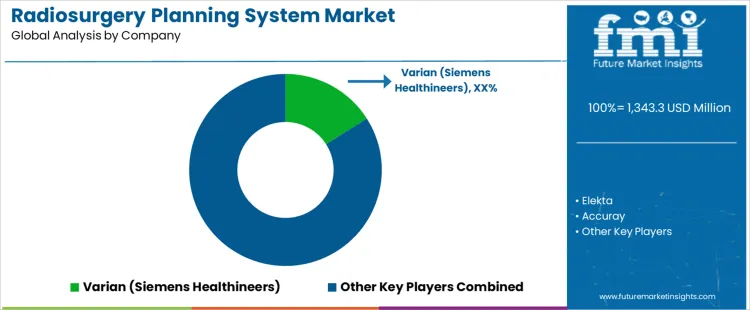
The Radiosurgery Planning System Market is highly competitive, with key players focusing on delivering advanced technologies to improve treatment precision and outcomes in radiosurgery. Varian (Siemens Healthineers) leads the market, offering cutting-edge solutions for radiation oncology and radiosurgery planning. Their advanced software integrates seamlessly with their radiation therapy systems, providing high precision and personalization in treatment planning. Elekta, Accuray, and Brainlab are significant competitors, each specializing in radiation therapy and radiosurgery planning tools that incorporate advanced imaging and treatment technologies. Elekta is known for its sophisticated planning systems, while Accuray offers highly precise, adaptive treatment planning with its CyberKnife system. Brainlab provides innovative software solutions designed for optimized radiosurgery planning and efficient clinical workflows.
Other key players, such as RaySearch Laboratories, MIM Software, and Mirada Medical, also contribute significantly to the market. RaySearch Laboratories focuses on software for radiation therapy planning and delivery, ensuring accurate treatment for complex cases. MIM Software offers advanced solutions for image fusion and treatment planning, improving the precision and efficiency of radiosurgery. Mirada Medical specializes in imaging software for treatment planning, helping clinicians visualize and plan treatments more effectively. Companies like Philips, GE HealthCare, and Canon Medical Systems offer integrated solutions for radiosurgery planning, combining advanced imaging technologies with planning software. These companies compete by offering technological innovation, enhanced precision, and the ability to improve treatment outcomes for patients undergoing radiosurgery.
Key Players of the Radiosurgery Planning System Market
- Varian (Siemens Healthineers)
- Elekta
- Accuray
- Brainlab
- RaySearch Laboratories
- MIM Software
- Mirada Medical
- Philips
- GE HealthCare
- Canon Medical Systems
Scope of the Report
| Items | Values |
|---|---|
| Quantitative Units (2026) | USD Million |
| Modality Compatibility | Linac-Based Radiosurgery Planning, Gamma Knife Planning, CyberKnife Planning, Other Radiosurgery Platforms |
| Software Module | Dose Calculation & Optimization, Target Contouring & Segmentation, Plan QA/Verification Tools, Adaptive/AI Planning & Other |
| End User | Cancer Hospitals & Comprehensive Centers, General Hospitals with Radiosurgery, Research/Academic Centers |
| Purchase Model | Perpetual License, Subscription / Term License, Managed Service / Cloud |
| Companies | Varian (Siemens Healthineers), Elekta, Accuray, Brainlab, RaySearch Laboratories, MIM Software, Mirada Medical, Philips, GE HealthCare, Canon Medical Systems |
| Regions Covered | North America, Latin America, Western Europe, Eastern Europe, South Asia and Pacific, East Asia, Middle East & Africa |
| Countries Covered | United States, Canada, Mexico, Brazil, Argentina, Germany, France, United Kingdom, Italy, Spain, Netherlands, China, India, Japan, South Korea, ANZ, GCC Countries, South Africa |
| Additional Attributes | Dollar by sales by modality compatibility, software module, end-user, purchase model, and region. Includes market trends in radiosurgery planning systems, focusing on Linac, Gamma Knife, and CyberKnife technologies. Highlights the role of dose calculation, target segmentation, plan verification, and adaptive/AI planning in improving treatment accuracy and efficiency. Focus on cost-effectiveness, regulatory compliance, market share, and competitive positioning of key companies in the radiosurgery planning space. |
Radiosurgery Planning System Market Segmentation
Modality Compatibility
- Linac-Based Radiosurgery Planning
- Gamma Knife Planning
- CyberKnife Planning
- Other Radiosurgery Platforms
Software Module
- Dose Calculation & Optimization
- Target Contouring & Segmentation
- Plan QA/Verification Tools
- Adaptive/AI Planning & Other
End User
- Cancer Hospitals & Comprehensive Centers
- General Hospitals with Radiosurgery
- Research/Academic Centers
- Other Users
Purchase Model
- Perpetual License
- Subscription / Term License
- Managed Service / Cloud
Region
- Asia Pacific
- China
- Japan
- South Korea
- India
- Australia & New Zealand
- ASEAN
- Rest of Asia Pacific
- Europe
- Germany
- United Kingdom
- France
- Italy
- Spain
- Nordic
- BENELUX
- Rest of Europe
- North America
- United States
- Canada
- Mexico
- Latin America
- Brazil
- Chile
- Rest of Latin America
- Middle East & Africa
- Kingdom of Saudi Arabia
- Other GCC Countries
- Turkey
- South Africa
- Other African Union
- Rest of Middle East & Africa
Frequently Asked Questions
How big is the radiosurgery planning system market in 2026?
The global radiosurgery planning system market is estimated to be valued at USD 1,343.3 million in 2026.
What will be the size of radiosurgery planning system market in 2036?
The market size for the radiosurgery planning system market is projected to reach USD 2,768.6 million by 2036.
How much will be the radiosurgery planning system market growth between 2026 and 2036?
The radiosurgery planning system market is expected to grow at a 7.5% CAGR between 2026 and 2036.
What are the key product types in the radiosurgery planning system market?
The key product types in radiosurgery planning system market are linac-based radiosurgery planning, gamma knife planning, cyberknife planning and other radiosurgery platforms.
Which software module segment to contribute significant share in the radiosurgery planning system market in 2026?
In terms of software module, dose calculation & optimization segment to command 34.0% share in the radiosurgery planning system market in 2026.
Preview the report firsthand - request a free sample
Get SampleGet the brochure for pricing and purchase details.
Get PDFTable of Content
- Executive Summary
- Global Market Outlook
- Demand-side Trends
- Supply-side Trends
- Technology Roadmap Analysis
- Analysis and Recommendations
- Market Overview
- Market Coverage / Taxonomy
- Market Definition / Scope / Limitations
- Market Background
- Market Dynamics
- Drivers
- Restraints
- Opportunity
- Trends
- Scenario Forecast
- Demand in Optimistic Scenario
- Demand in Likely Scenario
- Demand in Conservative Scenario
- Opportunity Map Analysis
- Product Life Cycle Analysis
- Supply Chain Analysis
- Investment Feasibility Matrix
- Value Chain Analysis
- PESTLE and Porter’s Analysis
- Regulatory Landscape
- Regional Parent Market Outlook
- Production and Consumption Statistics
- Import and Export Statistics
- Market Dynamics
- Global Market Analysis 2021 to 2025 and Forecast, 2026 to 2036
- Historical Market Size Value (USD Million) Analysis, 2021 to 2025
- Current and Future Market Size Value (USD Million) Projections, 2026 to 2036
- Y-o-Y Growth Trend Analysis
- Absolute $ Opportunity Analysis
- Global Market Pricing Analysis 2021 to 2025 and Forecast 2026 to 2036
- Global Market Analysis 2021 to 2025 and Forecast 2026 to 2036, By Modality Compatibility
- Introduction / Key Findings
- Historical Market Size Value (USD Million) Analysis By Modality Compatibility , 2021 to 2025
- Current and Future Market Size Value (USD Million) Analysis and Forecast By Modality Compatibility , 2026 to 2036
- Linac-Based Radiosurgery Planning
- Gamma Knife Planning
- CyberKnife Planning
- Other Radiosurgery Platforms
- Y-o-Y Growth Trend Analysis By Modality Compatibility , 2021 to 2025
- Absolute $ Opportunity Analysis By Modality Compatibility , 2026 to 2036
- Global Market Analysis 2021 to 2025 and Forecast 2026 to 2036, By Software Module
- Introduction / Key Findings
- Historical Market Size Value (USD Million) Analysis By Software Module, 2021 to 2025
- Current and Future Market Size Value (USD Million) Analysis and Forecast By Software Module, 2026 to 2036
- Dose Calculation & Optimization
- Target Contouring & Segmentation
- Plan QA/Verification Tools
- Adaptive/AI Planning & Other
- Y-o-Y Growth Trend Analysis By Software Module, 2021 to 2025
- Absolute $ Opportunity Analysis By Software Module, 2026 to 2036
- Global Market Analysis 2021 to 2025 and Forecast 2026 to 2036, By End User
- Introduction / Key Findings
- Historical Market Size Value (USD Million) Analysis By End User, 2021 to 2025
- Current and Future Market Size Value (USD Million) Analysis and Forecast By End User, 2026 to 2036
- Cancer Hospitals & Comprehensive Centers
- General Hospitals with Radiosurgery
- Research/Academic Centers
- Y-o-Y Growth Trend Analysis By End User, 2021 to 2025
- Absolute $ Opportunity Analysis By End User, 2026 to 2036
- Global Market Analysis 2021 to 2025 and Forecast 2026 to 2036, By Purchase Model
- Introduction / Key Findings
- Historical Market Size Value (USD Million) Analysis By Purchase Model, 2021 to 2025
- Current and Future Market Size Value (USD Million) Analysis and Forecast By Purchase Model, 2026 to 2036
- Perpetual License
- Subscription / Term License
- Managed Service / Cloud
- Y-o-Y Growth Trend Analysis By Purchase Model, 2021 to 2025
- Absolute $ Opportunity Analysis By Purchase Model, 2026 to 2036
- Global Market Analysis 2021 to 2025 and Forecast 2026 to 2036, By Region
- Introduction
- Historical Market Size Value (USD Million) Analysis By Region, 2021 to 2025
- Current Market Size Value (USD Million) Analysis and Forecast By Region, 2026 to 2036
- North America
- Latin America
- Western Europe
- Eastern Europe
- East Asia
- South Asia and Pacific
- Middle East & Africa
- Market Attractiveness Analysis By Region
- North America Market Analysis 2021 to 2025 and Forecast 2026 to 2036, By Country
- Historical Market Size Value (USD Million) Trend Analysis By Market Taxonomy, 2021 to 2025
- Market Size Value (USD Million) Forecast By Market Taxonomy, 2026 to 2036
- By Country
- USA
- Canada
- Mexico
- By Modality Compatibility
- By Software Module
- By End User
- By Purchase Model
- By Country
- Market Attractiveness Analysis
- By Country
- By Modality Compatibility
- By Software Module
- By End User
- By Purchase Model
- Key Takeaways
- Latin America Market Analysis 2021 to 2025 and Forecast 2026 to 2036, By Country
- Historical Market Size Value (USD Million) Trend Analysis By Market Taxonomy, 2021 to 2025
- Market Size Value (USD Million) Forecast By Market Taxonomy, 2026 to 2036
- By Country
- Brazil
- Chile
- Rest of Latin America
- By Modality Compatibility
- By Software Module
- By End User
- By Purchase Model
- By Country
- Market Attractiveness Analysis
- By Country
- By Modality Compatibility
- By Software Module
- By End User
- By Purchase Model
- Key Takeaways
- Western Europe Market Analysis 2021 to 2025 and Forecast 2026 to 2036, By Country
- Historical Market Size Value (USD Million) Trend Analysis By Market Taxonomy, 2021 to 2025
- Market Size Value (USD Million) Forecast By Market Taxonomy, 2026 to 2036
- By Country
- Germany
- UK
- Italy
- Spain
- France
- Nordic
- BENELUX
- Rest of Western Europe
- By Modality Compatibility
- By Software Module
- By End User
- By Purchase Model
- By Country
- Market Attractiveness Analysis
- By Country
- By Modality Compatibility
- By Software Module
- By End User
- By Purchase Model
- Key Takeaways
- Eastern Europe Market Analysis 2021 to 2025 and Forecast 2026 to 2036, By Country
- Historical Market Size Value (USD Million) Trend Analysis By Market Taxonomy, 2021 to 2025
- Market Size Value (USD Million) Forecast By Market Taxonomy, 2026 to 2036
- By Country
- Russia
- Poland
- Hungary
- Balkan & Baltic
- Rest of Eastern Europe
- By Modality Compatibility
- By Software Module
- By End User
- By Purchase Model
- By Country
- Market Attractiveness Analysis
- By Country
- By Modality Compatibility
- By Software Module
- By End User
- By Purchase Model
- Key Takeaways
- East Asia Market Analysis 2021 to 2025 and Forecast 2026 to 2036, By Country
- Historical Market Size Value (USD Million) Trend Analysis By Market Taxonomy, 2021 to 2025
- Market Size Value (USD Million) Forecast By Market Taxonomy, 2026 to 2036
- By Country
- China
- Japan
- South Korea
- By Modality Compatibility
- By Software Module
- By End User
- By Purchase Model
- By Country
- Market Attractiveness Analysis
- By Country
- By Modality Compatibility
- By Software Module
- By End User
- By Purchase Model
- Key Takeaways
- South Asia and Pacific Market Analysis 2021 to 2025 and Forecast 2026 to 2036, By Country
- Historical Market Size Value (USD Million) Trend Analysis By Market Taxonomy, 2021 to 2025
- Market Size Value (USD Million) Forecast By Market Taxonomy, 2026 to 2036
- By Country
- India
- ASEAN
- Australia & New Zealand
- Rest of South Asia and Pacific
- By Modality Compatibility
- By Software Module
- By End User
- By Purchase Model
- By Country
- Market Attractiveness Analysis
- By Country
- By Modality Compatibility
- By Software Module
- By End User
- By Purchase Model
- Key Takeaways
- Middle East & Africa Market Analysis 2021 to 2025 and Forecast 2026 to 2036, By Country
- Historical Market Size Value (USD Million) Trend Analysis By Market Taxonomy, 2021 to 2025
- Market Size Value (USD Million) Forecast By Market Taxonomy, 2026 to 2036
- By Country
- Kingdom of Saudi Arabia
- Other GCC Countries
- Turkiye
- South Africa
- Other African Union
- Rest of Middle East & Africa
- By Modality Compatibility
- By Software Module
- By End User
- By Purchase Model
- By Country
- Market Attractiveness Analysis
- By Country
- By Modality Compatibility
- By Software Module
- By End User
- By Purchase Model
- Key Takeaways
- Key Countries Market Analysis
- USA
- Pricing Analysis
- Market Share Analysis, 2025
- By Modality Compatibility
- By Software Module
- By End User
- By Purchase Model
- Canada
- Pricing Analysis
- Market Share Analysis, 2025
- By Modality Compatibility
- By Software Module
- By End User
- By Purchase Model
- Mexico
- Pricing Analysis
- Market Share Analysis, 2025
- By Modality Compatibility
- By Software Module
- By End User
- By Purchase Model
- Brazil
- Pricing Analysis
- Market Share Analysis, 2025
- By Modality Compatibility
- By Software Module
- By End User
- By Purchase Model
- Chile
- Pricing Analysis
- Market Share Analysis, 2025
- By Modality Compatibility
- By Software Module
- By End User
- By Purchase Model
- Germany
- Pricing Analysis
- Market Share Analysis, 2025
- By Modality Compatibility
- By Software Module
- By End User
- By Purchase Model
- UK
- Pricing Analysis
- Market Share Analysis, 2025
- By Modality Compatibility
- By Software Module
- By End User
- By Purchase Model
- Italy
- Pricing Analysis
- Market Share Analysis, 2025
- By Modality Compatibility
- By Software Module
- By End User
- By Purchase Model
- Spain
- Pricing Analysis
- Market Share Analysis, 2025
- By Modality Compatibility
- By Software Module
- By End User
- By Purchase Model
- France
- Pricing Analysis
- Market Share Analysis, 2025
- By Modality Compatibility
- By Software Module
- By End User
- By Purchase Model
- India
- Pricing Analysis
- Market Share Analysis, 2025
- By Modality Compatibility
- By Software Module
- By End User
- By Purchase Model
- ASEAN
- Pricing Analysis
- Market Share Analysis, 2025
- By Modality Compatibility
- By Software Module
- By End User
- By Purchase Model
- Australia & New Zealand
- Pricing Analysis
- Market Share Analysis, 2025
- By Modality Compatibility
- By Software Module
- By End User
- By Purchase Model
- China
- Pricing Analysis
- Market Share Analysis, 2025
- By Modality Compatibility
- By Software Module
- By End User
- By Purchase Model
- Japan
- Pricing Analysis
- Market Share Analysis, 2025
- By Modality Compatibility
- By Software Module
- By End User
- By Purchase Model
- South Korea
- Pricing Analysis
- Market Share Analysis, 2025
- By Modality Compatibility
- By Software Module
- By End User
- By Purchase Model
- Russia
- Pricing Analysis
- Market Share Analysis, 2025
- By Modality Compatibility
- By Software Module
- By End User
- By Purchase Model
- Poland
- Pricing Analysis
- Market Share Analysis, 2025
- By Modality Compatibility
- By Software Module
- By End User
- By Purchase Model
- Hungary
- Pricing Analysis
- Market Share Analysis, 2025
- By Modality Compatibility
- By Software Module
- By End User
- By Purchase Model
- Kingdom of Saudi Arabia
- Pricing Analysis
- Market Share Analysis, 2025
- By Modality Compatibility
- By Software Module
- By End User
- By Purchase Model
- Turkiye
- Pricing Analysis
- Market Share Analysis, 2025
- By Modality Compatibility
- By Software Module
- By End User
- By Purchase Model
- South Africa
- Pricing Analysis
- Market Share Analysis, 2025
- By Modality Compatibility
- By Software Module
- By End User
- By Purchase Model
- USA
- Market Structure Analysis
- Competition Dashboard
- Competition Benchmarking
- Market Share Analysis of Top Players
- By Regional
- By Modality Compatibility
- By Software Module
- By End User
- By Purchase Model
- Competition Analysis
- Competition Deep Dive
- Varian (Siemens Healthineers)
- Overview
- Product Portfolio
- Profitability by Market Segments (Product/Age /Sales Channel/Region)
- Sales Footprint
- Strategy Overview
- Marketing Strategy
- Product Strategy
- Channel Strategy
- Elekta
- Accuray
- Brainlab
- RaySearch Laboratories
- MIM Software
- Mirada Medical
- Philips
- GE HealthCare
- Canon Medical Systems
- Varian (Siemens Healthineers)
- Competition Deep Dive
- Assumptions & Acronyms Used
- Research Methodology


