

- Market Size (2026)
- USD 1014.0 Mn
- Forecast (2036)
- USD 2230.0 Mn
- CAGR (2026 to 2036)
- 8.2%
How big is diabetes meal planning digital health apps market size?
USD 1,014.0 million in 2026 and USD 2,230.0 million by 2036 at an 8.2% CAGR.
Demand for diabetes meal planning digital health apps is projected to expand at 8.2% CAGR between 2026 and 2036, increasing valuation from USD 1,014.0 million in 2026 to USD 2,230.0 million by 2036. People living with diabetes need continuous nutrition guidance extending beyond their scheduled doctor visits. Mobile health apps bridge the daily gap by turning daily food choices into organized electronic records for patients to maintain self-management and easily share with their clinicians. Continuous glucose monitoring systems enhance such support by providing real-time feedback that directly connects a person's blood sugar levels to their meals and physical activity.
Around the world, healthcare systems focus on distinct regional priorities led by adopting such digital health tools. Programs in the United States and Germany prioritize proven clinical evidence and secure data sharing. Initiatives in China and India emphasize widespread mobile accessibility and multilingual onboarding for new users. Updated medical standards are also driving this technological shift. In December 2025, the American Diabetes Association reported stating its 2026 standards of care expanded official guidance on both glucose monitoring technology and nutrition. Such combined recommendations increase the demand for smart software aligning daily dietary decisions with medication management and connected health devices.
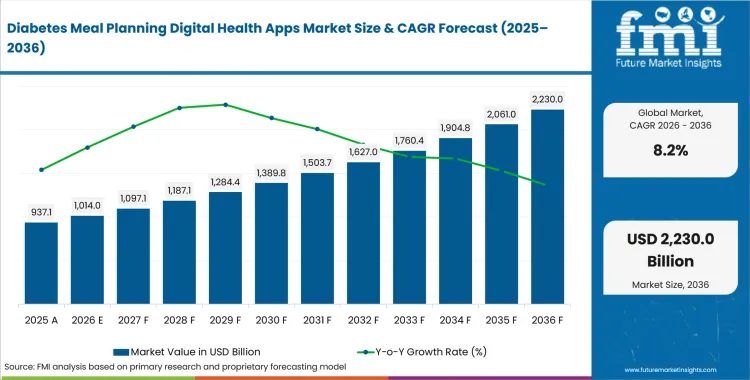
Key Takeaways for the Diabetes Meal Planning Digital Health Apps Market
- Demand for diabetes meal planning digital health apps is driven by recurring food decisions requiring personalized guidance between clinical visits.
- Software is likely to account for 64.0% share of product type in 2026, enabled by rapid configuration across connected devices and care programs.
- Monitoring is predicted to lead application with 46.0% share in 2026, backed by meal-linked glucose interpretation and recurring self-management feedback.
- Fragmented reimbursement and uneven privacy review represent principal barriers affecting national rollout and payer approval.
- Competition focuses on Glooko, Roche Diagnostics, Omada Health, January AI, Virta Health, Noom, Welldoc, and Medtronic, with providers differentiating depending on clinical evidence and connected meal support.
Analyst Perspective
“Diabetes meal-planning applications are moving beyond food logging toward continuous decision support built around glucose response and personal eating patterns. Commercial adoption rests on platforms being able to translate complex health data into guidance for patients to understand and trust gained by clinicians. Suppliers need dependable device connections and adaptable nutrition models suited to different care settings. Long-term value develops depending on sustained engagement and consistent support across treatment adjustment and everyday self-management.”
- Anurag Sharma, Principal Analyst for Healthcare at Future Market Insights
How is Diabetes Meal Planning Digital Health Apps Market segmented?
The diabetes meal planning digital health apps industry is segmented by product type, care setting, application, and end user.
The diabetes meal planning digital health apps market is segmented by product type, care setting, application, and end user. product type coverage includes software, wearable, diagnostic kit, consumable, and device accessory. Care setting analysis covers hospital, home care, ambulatory center, retail clinic, and decentralized trial site. Application coverage includes monitoring, diagnosis, workflow automation, therapy support, and infection control. End user analysis spans hospitals, payers, diagnostic labs, medtech firms, and patients. Geographic assessment is presented separately across North America, Europe, East Asia, South Asia and Pacific, Latin America, and Middle East and Africa.
Why does software lead product type?
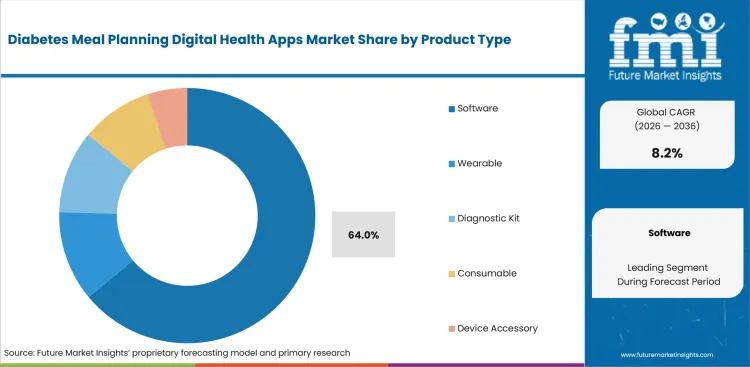
Roche reported in July 2024 Accu-Chek SmartGuide Predict forecasts hypoglycemia risk within 30 minutes, demonstrating software value beyond passive data display. Predictive interpretation helps users adjust meals or therapy discussions using timely evidence. Wearable healthcare devices supply recurring measurements supporting such app-based guidance. Software connects food records with glucose measurements and personalized coaching inside one interface. Updates reach distributed users without replacing sensors or clinical equipment.
- Software is projected to represent 64.0% share in 2026, backed by flexible deployment across consumer and clinical programs. Subscription updates allow suppliers to refine food databases and device connections without replacing physical equipment.
- Diagnostic kit and device accessory offerings provide essential inputs for meal-planning software across different care pathways. Hardware value improves as connected applications translate measurements into practical nutrition guidance and shareable records.
Why does hospital remain central to care setting?
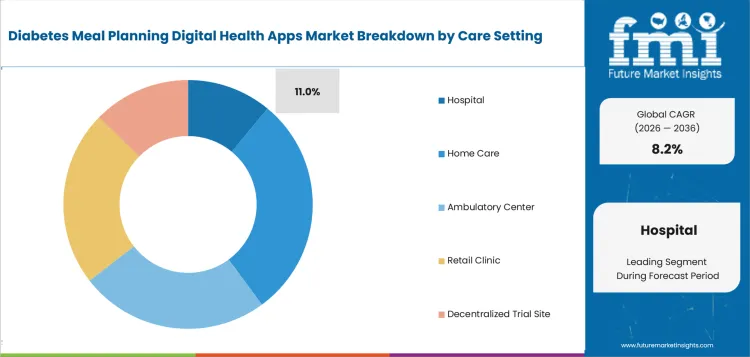
Hospital use begins during medication adjustment and inpatient glycemic management. Clinical teams require controlled records linking meals with glucose response and treatment instructions. American Diabetes Association released its 2025 Standards of Care in December 2024, expanding technology and weight-loss medication guidance. Structured guidance supports app recommendations during discharge and subsequent follow-up. Telehealth and telemedicine extend hospital-originated meal plans into home-based coaching.
- Based on care setting, hospital is anticipated to account for 11.0% share in 2026 due to its role during acute treatment and discharge planning. Clinical review favors applications supporting secure record exchange and documented changes to nutrition instructions.
- Ambulatory center and decentralized trial site settings expand access beyond inpatient workflows. Different settings favor simplified onboarding and configurable meal guidance matched with local care responsibilities.
Why does monitoring dominate application demand?
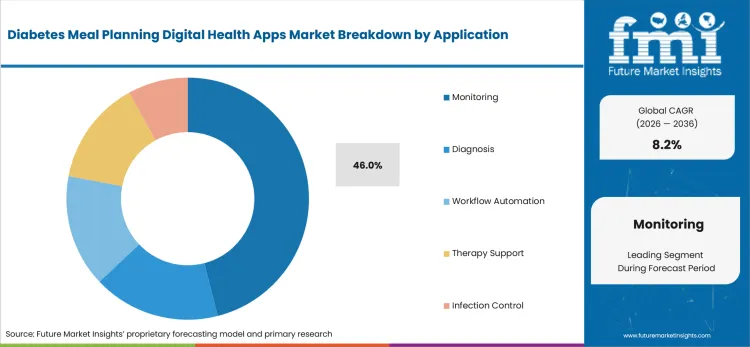
Monitoring connects meal records with measurable glucose changes across daily routines. Immediate feedback helps users identify food portions or combinations associated with recurring glucose responses. Food and Drug Administration cleared its first nonprescription continuous glucose monitor in March 2024 for adults aged 18 years and older who do not use insulin. Consumer access expands demand for applications interpreting sensor readings through exercise and medication context. glucose monitoring device data creates primary inputs for meal-related analysis.
- Monitoring is expected to hold 46.0% share of application in 2026, underpinned by recurring glucose review and direct comparison against recorded meals. Frequent feedback strengthens retention by helping users connect dietary actions with measurable responses.
- Workflow automation and infection control address narrower clinical or administrative requirements. Combined use grows as providers connect screening results and treatment instructions inside coordinated patient workflows.
What buyer need keeps payers central to end user?
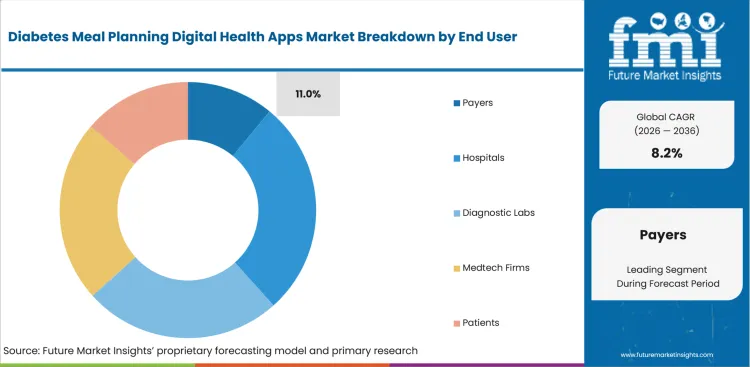
Centers for Medicare and Medicaid Services reported in February 2026 payers representing 165 million Americans pledged alignment with outcome-based ACCESS payment principles. Such alignment supports evaluated technology services linked with nutrition coaching and measurable health outcomes. Digital therapeutics provide adjacent evidence standards for payer-funded software interventions. Payers evaluate applications depending on enrollment durability and care-cost implications. Integration with chronic-care programs covering diabetes and cardiovascular risk raises meal-support value.
- By end user, payers are likely to account for 11.0% share in 2026 since being influenced by coverage decisions affecting program scale and member access. Buyers review engagement patterns and integration costs prior to extending benefits across eligible populations.
- Diagnostic labs and medtech firms influence different purchase routes across clinical and consumer channels. Supplier success requires distinct evidence packages matching institutional review and individual usability expectations.
What are drivers, restraints, and opportunities in Diabetes Meal Planning Digital Health Apps Market?
Diagnosed populations support recurring meal-guidance demand. Privacy risk slows institutional approval, and medication-linked nutrition support creates expansion potential.
- Driver: People managing diabetes need meal guidance between scheduled consultations. Connected glucose tools reveal how specific foods affect daily readings, increasing demand for timely nutrition support.
- Restraint: Cybersecurity reviews slow approval across payer and provider programs. Uneven reimbursement rules require separate evidence packages for each national rollout.
- Opportunity: Medication programs generate demand for nutrition support across obesity and cardiometabolic care. Personalized meal guidance helps users manage appetite changes and maintain suitable nutrient intake.
Meal guidance addresses recurring decisions beyond continuous clinical coverage. International Diabetes Federation recorded 589 million adults aged 20 to 79 living with diabetes during 2024 in its 2025 atlas, confirming extensive need for sustained self-management support. Apps help users interpret glucose response and prepare structured information for care discussions. Clinical value rises as guidance reflects medication use and approved nutrition plans.
Privacy exposure restricts adoption across health plans and employer programs. United States Department of Health and Human Services reported in April 2026 four ransomware investigations involved more than 427,000 individuals, raising security scrutiny for connected health records. Buyers examine identity management and breach-response procedures during supplier assessment. Weak safeguards delay approvals despite nutrition features meeting functional requirements.
Medication-supported care creates expansion potential beyond conventional food logging. KFF reported in May 2024 for 43.0% of surveyed adults diagnosed with diabetes had used a GLP-1 medicine, creating demand for meal guidance addressing appetite changes and nutritional adequacy. Weight management programs increasingly intersect with diabetes support through shared nutrition and behavior workflows. Suppliers connecting medication context with meal plans support employer and consumer channels through one coordinated experience.
What country CAGRs are profiled in Diabetes Meal Planning Digital Health Apps Market?
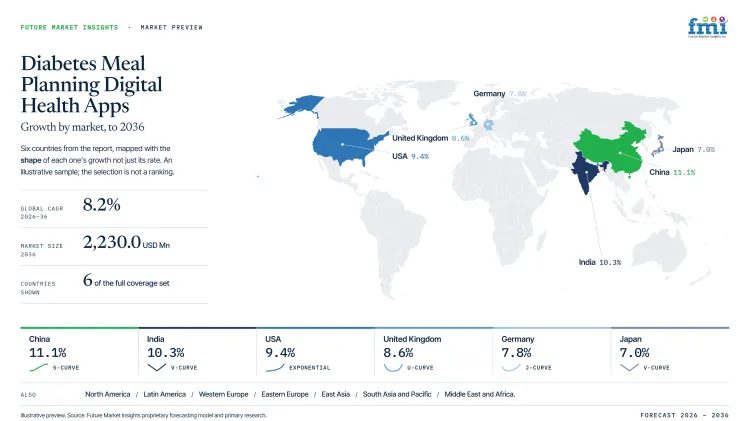
| Country | CAGR |
|---|---|
| China | 11.1% |
| India | 10.3% |
| USA | 9.4% |
| United Kingdom | 8.6% |
| Germany | 7.8% |
| Japan | 7.0% |
Source: Future Market Insights analysis, 2026.
How do country-level CAGRs compare in Diabetes Meal Planning Digital Health Apps Market?
Country comparison shows a gradual step-down across profiled national markets. China occupies upper forecast position, followed by India. United States forms middle position across disclosed range. United Kingdom and Germany follow under evidence-led reimbursement systems. Japan completes comparison through service-intensive clinical adoption. A 4.1 percentage-point spread separates China from Japan, illustrating different stages of connected-care access and payment development.
- China leads disclosed comparison through extensive smartphone access and domestic connected-health infrastructure.
- India follows China as public health-record infrastructure supports app onboarding across varied care settings.
- United States occupies middle rate based on established device access and employer-sponsored chronic-care programs.
- United Kingdom and Germany form a subsequent forecast band under structured evidence and reimbursement review.
- Japan completes profiled comparison depending on local service expectations and clinician-guided technology adoption.
Similar CAGRs are likely to reflect different entry requirements across reimbursement evidence and device compatibility. Full report coverage includes North America, Latin America, Western Europe, Eastern Europe, East Asia, South Asia and Pacific, and Middle East and Africa.
Country-wise Analysis
- Sector in China is projected to record 11.1% CAGR from 2026 to 2036, aided by extensive smartphone access and domestic app-registration requirements. State Council of China reported 80.1% internet penetration at end-2025 in February 2026, promoting app delivery across urban and rural care channels. Local data-residency controls favor providers offering Chinese-language coaching and documented device connections.
- National health-record infrastructure supports app onboarding across public and private care routes. Demand in India is estimated to scale at 10.3% CAGR between 2026 and 2036, backed by mobile access and expanding consent-based record exchange. Ministry of Health and Family Welfare reported more than 90 crore ABHA accounts in May 2026, creating an extensive identity base for connected care services. Regional language support and simple enrollment remain important for sustained meal-guidance use.
- Nonprescription glucose sensing expands direct consumer entry beyond conventional prescription channels. Centers for Disease Control and Prevention reported 40.1 million United States residents living with diagnosed or undiagnosed diabetes in January 2026, sustaining clinical-grade and consumer app demand. Secure nutrition guidance needs clear consent controls and clinician escalation across care programs. Adoption in the United States is anticipated to increase at 9.4% CAGR during the assessment period, guided by connected-device access and employer benefit programs.
- Sales in the United Kingdom are expected to grow at 8.6% CAGR by 2036, influenced by national evidence review and coordinated care pathways. Diabetes UK reported 4.6 million diagnosed people in February 2025, propelling demand for scalable meal education and self-management support. National rollout rewards suppliers offering clear clinical evidence and integration with established care records.
- Statutory insurance review and strict privacy expectations influence supplier qualification across Germany. World Health Organization Regional Office for Europe reported in November 2024 that Germany’s surveillance system collects primary data across 40 diabetes indicators and indicator groups. This structured framework supports meal-planning applications requiring documented clinical integration and accountable payer review across provider networks. The market in Germany is forecast to expand at 7.8% CAGR during the study period, grounded in documented care needs and structured software assessment.
- Japan favors applications providing dependable local service and accessible interfaces for older users. Statistics Bureau of Japan reported people aged 65 years and older represented 29.3% of population as of October 2024 in its April 2025 release, increasing demand for simple guidance and caregiver participation. Clinical nutrition considerations strengthen meal-planning needs across aging populations and chronic-care programs. Industry in Japan is predicted to rise at 7.0% CAGR over 2026 to 2036, shaped by service-intensive adoption and local evidence expectations.
Who are notable companies in Diabetes Meal Planning Digital Health Apps Market?
Glooko, Roche Diagnostics, Omada Health, January AI, Virta Health, Noom, Welldoc, and Medtronic are the prominent companies contributing to this market.
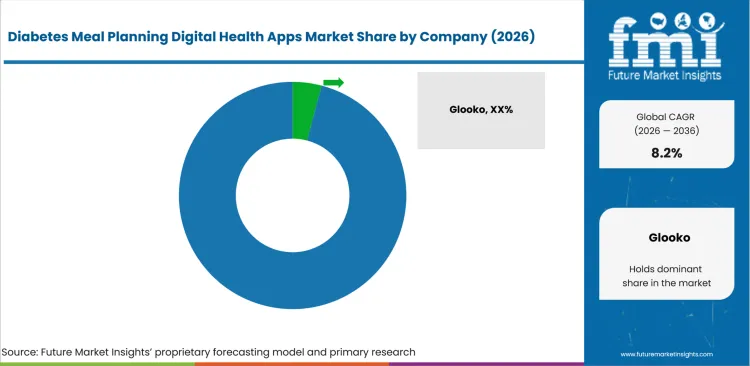
Competition combines clinical software providers with device manufacturers and behavior-change platforms serving different care channels. Clinical platform companies compete based on evidence quality and dependable connections across glucose meters and care records. Device manufacturers compete led by installed user bases and established relationships with healthcare providers. Coaching platforms compete due to payer contracts and sustained member participation across diabetes and metabolic health programs. Digital therapeutics market analysis provides a useful comparison for clinical validation and reimbursement requirements across software-supported care. Commercial success rests on consistent meal guidance since weak engagement reduces value across connected monitoring and coaching programs.
- Glooko and Welldoc compete based on clinical integration and secure care-team access. Health systems examine device compatibility and evidence quality during enterprise platform review.
- Roche Diagnostics and Medtronic compete depending on connected glucose and insulin portfolios using established clinical channels. Application value requires reliable synchronization between measurements and treatment instructions.
- Omada Health and Noom compete led by payer and coaching programs covering diabetes and metabolic health. Buyers compare member engagement and service intensity across contracted populations.
- January AI competes driven by consumer-focused food logging and predicted glucose response. Users assess nutrition-database quality and transparency of personalized recommendations.
Competitive Benchmarking: Diabetes Meal Planning Digital Health Apps Market
| Company | Clinical Evidence and Outcomes | Care Team and Device Integration | Payer and Reimbursement Support | Service Reach |
|---|---|---|---|---|
| Glooko | High | High | Medium | Global |
| Roche Diagnostics | Medium | High | High | Global |
| Omada Health | Medium | Medium | High | North America |
| January AI | Low | Low | Low | North America |
| Virta Health | High | Medium | Medium | North America |
| Noom | Medium | Low | Medium | Global |
| Welldoc | High | High | High | North America and selected international programs |
| Medtronic | Medium | High | High | Global |
Source: Future Market Insights competitive analysis, 2026.
Key Developments in Diabetes Meal Planning Digital Health Apps Market
- In July 2025, January AI added direct continuous glucose monitor connectivity to its application. Connected readings improved meal-response predictions and strengthened personalized nutrition guidance for users managing diabetes or metabolic risk.
- In April 2026, Welldoc announced its selection for the ACCESS Model and inclusion in the Medicare App Library. Access to approximately 68 million Medicare beneficiaries expanded payer-supported cardiometabolic guidance across diabetes, nutrition, and connected self-management.
- In May 2026, Omada Health joined Lilly Employer Connect as an independent program administrator. Evidence from more than 3,000 GLP-1 patients informed service design and strengthened employer access to medication management with continuing lifestyle support.
Key Players in Diabetes Meal Planning Digital Health Apps Market
Clinical Diabetes and Glycemic Management Platforms
- Glooko
- Welldoc
- Virta Health
Behavior Change and Nutrition Coaching Platforms
- Omada Health
- Noom
- January AI
Device-Connected Diabetes Platforms
- Roche Diagnostics
- Medtronic
Diabetes Meal Planning Digital Health Apps Market Report Scope
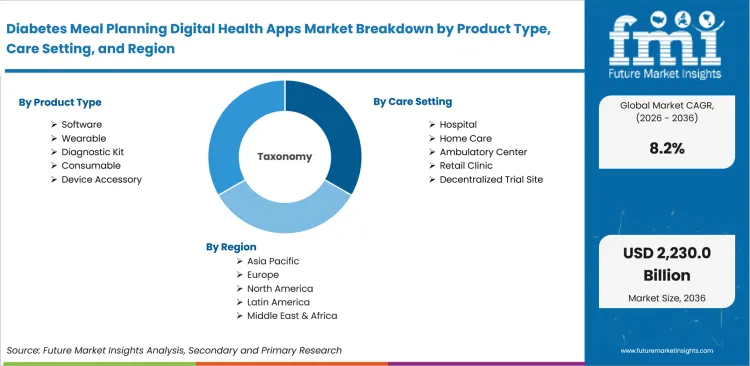
| Coverage field | Report scope |
|---|---|
| Market breakdown | Diabetes meal planning digital health apps market breakdown by product type, care setting, application, and end user. |
| Quantitative Units | Revenue in USD Million, CAGR in % |
| Market Definition | Diabetes meal planning digital health apps provide software-based meal planning, food logging, nutrition coaching, and glucose-response interpretation for people managing diabetes or related metabolic risks. Coverage includes independent applications and connected tools supporting clinical, payer, employer, and consumer care. Generic recipe applications without diabetes-specific guidance are excluded. |
| Regions Covered | North America, Latin America, Western Europe, Eastern Europe, East Asia, South Asia and Pacific, Middle East and Africa. |
| Countries Covered | China, India, USA, United Kingdom, Germany, Japan, and more than 30 additional countries. |
| Key Companies Profiled | Glooko, Roche Diagnostics, Omada Health, January AI, Virta Health, Noom, Welldoc, and Medtronic. |
| Forecast Period | 2026 to 2036 |
| Approach | Hybrid bottom-up and top-down methodology uses Product Type shares, Application shares, country CAGRs, company activity, and buyer adoption evidence. |
Source: Future Market Insights analysis, 2026.
Diabetes Meal Planning Digital Health Apps Market - Research Methodology
| Method | Approach |
|---|---|
| Primary Research | FMI analysts gathered input from manufacturers, service providers, technology developers, distributors, end users, procurement teams, and subject-matter experts. Interviews examined purchasing decisions, product or service evaluation, adoption barriers, approval requirements, pricing considerations, and expectations for technical or commercial support. Respondents were also asked what evidence is required before a trial, pilot, or initial order develops into regular purchasing. |
| Desk Research | Desk research covered government statistics, regulatory publications, trade data, industry associations, technical literature, standards, company filings, product information, and official corporate announcements. Sources were reviewed for relevance, publication date, geographic coverage, and consistency with the defined market scope. Claims relating to performance, applications, approvals, capacity, investment, and commercial activity were retained only when supported by credible public evidence. |
| Market Sizing and Forecasting | The market model combined the baseline value with historical performance, segment structure, pricing and volume indicators, adoption levels, company participation, and country-level demand conditions. Forecast assumptions considered economic activity, investment trends, regulatory developments, technology adoption, purchasing cycles, supply availability, and barriers to wider market use. Segment and regional estimates were reconciled before the final market total was calculated. |
| Data Validation | Estimates were checked against multiple independent indicators, including public data, company activity, trade patterns, industry developments, and findings from primary interviews. Validation also tested whether products, services, applications, and company revenues fell within the defined market boundaries. Adjacent categories, unsupported claims, overlapping revenues, and activities without direct market relevance were excluded to reduce double counting and maintain consistency across segments and countries. |
Source: Future Market Insights analysis, 2026.
Diabetes Meal Planning Digital Health Apps Market by Segments
Diabetes Meal Planning Digital Health Apps Market segmented by Product Type:
- Software
- Wearable
- Diagnostic Kit
- Consumable
- Device Accessory
Diabetes Meal Planning Digital Health Apps Market segmented by Care Setting:
- Hospital
- Home Care
- Ambulatory Center
- Retail Clinic
- Decentralized Trial Site
Diabetes Meal Planning Digital Health Apps Market segmented by Application:
- Monitoring
- Diagnosis
- Workflow Automation
- Therapy Support
- Infection Control
Diabetes Meal Planning Digital Health Apps Market segmented by End User:
- Hospitals
- Payers
- Diagnostic Labs
- Medtech Firms
- Patients
Diabetes Meal Planning Digital Health Apps Market by Region:
- North America
- United States
- Canada
- Mexico
- Latin America
- Brazil
- Chile
- Rest of Latin America
- Western Europe
- Germany
- UK
- Italy
- Spain
- France
- Nordic
- BENELUX
- Rest of Western Europe
- Eastern Europe
- Russia
- Poland
- Hungary
- Balkan and Baltic
- Rest of Eastern Europe
- East Asia
- China
- Japan
- South Korea
- South Asia and Pacific
- India
- ASEAN
- Australia and New Zealand
- Rest of South Asia and Pacific
- Middle East and Africa
- Kingdom of Saudi Arabia
- Other GCC Countries
- Turkiye
- South Africa
- Other African Union
- Rest of Middle East and Africa
Research Sources and Bibliography
- American Diabetes Association. (2025, December 8). The American Diabetes Association releases “Standards of Care in Diabetes-2026.”
- Roche. (2024, July 9). Roche receives CE Mark for its AI-enabled continuous glucose monitoring solution offering critical predictions to people living with diabetes.
- American Diabetes Association. (2024, December 9). The American Diabetes Association releases Standards of Care in Diabetes-2025.
- USA Food and Drug Administration. (2024, March 5). FDA clears first over-the-counter continuous glucose monitor.
- Centers for Medicare & Medicaid Services. (2026, February 12). Innovation Insight: Major health plans join ACCESS payer pledge.
- International Diabetes Federation. (2025). IDF Diabetes Atlas, 11th edition.
- USA Department of Health and Human Services. (2026, April 23). HHS’ Office for Civil Rights settles four HIPAA Security Rule ransomware investigations.
- Montero, A., Sparks, G., Presiado, M., & Hamel, L. (2024, May 10). KFF Health Tracking Poll May 2024: The public’s use and views of GLP-1 drugs.
- State Council of the People’s Republic of China. (2026, February 5). China’s internet user base hits 1.125 billion as AI adoption surges.
- Ministry of Health and Family Welfare. (2026, May 30). Ayushman Bharat Digital Mission crosses landmark milestone of 90 crore ABHA accounts.
- Centers for Disease Control and Prevention. (2026, January 21). National Diabetes Statistics Report.
- Diabetes UK. (2025, February 6). One in five adults now live with diabetes or prediabetes in the UK.
- World Health Organization Regional Office for Europe. (2024, November 14). Measuring the global diabetes targets in the WHO European Region: Germany case study.
- Statistics Bureau of Japan. (2025, April 14). Current Population Estimates as of October 1, 2024.
- January AI. (2025, July 22). New in January: Connect your own CGM for smarter, more personalized predictions.
- Welldoc. (2026, April 21). Welldoc brings AI-powered cardiometabolic care to 68 million Medicare beneficiaries through the ACCESS Model and Medicare App Library.
- Omada Health, Inc. (2026, May 7). Omada Health joins Lilly Employer Connect, expanding its access pathways for GLP-1 care as patients seek more lifestyle support.
This bibliography entries provide reader reference and are not exhaustive. The full report coverage contains supporting documentation and detailed source checks.
This Report Answers
- How large is diabetes meal planning digital health apps market in 2026 and 2036?
- How do product type and application segments influence demand across care programs?
- Why does software lead product type demand across connected diabetes support?
- How does monitoring translate food records into practical glucose-response guidance?
- How do care setting and end user differences influence supplier qualification?
- Why do country CAGRs vary across China, India, USA, United Kingdom, Germany, and Japan?
- How do reimbursement and evidence requirements affect national rollout?
- What company capabilities improve clinical integration and sustained member engagement?
- How do GLP-1 care programs expand meal-planning requirements across metabolic health?
- How are forecasts validated through bottom-up and top-down assessment using independent indicators?
Frequently Asked Questions
What supports demand in diabetes meal planning digital health apps market?
Demand is estimated to receive support from recurring food decisions requiring guidance between clinical visits. Buyers are expected to favor applications connecting meal records with glucose response and approved care plans.
Who are key players in diabetes meal planning digital health apps market?
Key companies are anticipated to include Glooko, Roche Diagnostics, Omada Health, January AI, Virta Health, Noom, Welldoc, and Medtronic. Competition is likely to reflect clinical evidence and payer access.
What restraint affects diabetes meal planning digital health apps market?
Privacy review and fragmented reimbursement restrain rollout across provider and employer programs. Commercial confidence weakens if security controls or clinical evidence fail buyer assessment.
Why do executives track diabetes meal planning digital health apps market?
Executives are expected to track adoption as diabetes care expands beyond periodic appointments. Platform ownership creates data-security and member-engagement duties across several business functions.
What business problem does diabetes meal planning digital health apps market address?
Diabetes meal-planning applications connect glucose information with daily food decisions and structured coaching. Software assistance helps users interpret meal response and share organized records with care teams.
What do care teams evaluate prior to selecting companies?
Care teams are likely to evaluate device compatibility and escalation workflows. Meal guidance quality and record accuracy are expected to influence final supplier approval.
What limits return on investment for purchasing teams?
Return weakens with enrollment decline or integrations requiring extensive manual support. Food logging generates limited value without measurable outcomes and continuing member participation.
How do companies build long-term customer confidence?
Companies build confidence based on repeatable recommendations and dependable service. Updated nutrition content and documented clinical review support recurring use across approved programs.
Preview the report firsthand - request a free sample
Get SampleGet the brochure for pricing and purchase details.
Get PDFTable of Content
- Key Takeaways
- Market Size and CAGR
- Top Growth Driver
- Fastest Growing Segment
- Leading Region
- Key Companies
- Emerging Opportunities
- Executive Summary
- Global Market Outlook
- Demand-side Trends
- Supply-side Trends
- Technology Roadmap Analysis
- Analysis and Recommendations
- Analyst Perspective (What is happening? Why now? What should investors know?)
- Key Questions Answered
- How large is the market?
- What is the CAGR?
- What are key trends?
- Which region dominates?
- Who are the leaders?
- Market Overview
- Market Coverage / Taxonomy
- Market Definition / Scope / Limitations
- Research Methodology
- Chapter Orientation
- Analytical Lens and Working Hypotheses
- Market Structure, Signals, and Trend Drivers
- Benchmarking and Cross-market Comparability
- Market Sizing, Forecasting, and Opportunity Mapping
- Research Design and Evidence Framework
- Desk Research Programme (Secondary Evidence)
- Expert Input and Fieldwork (Primary Evidence)
- Tooling, Models, and Reference Databases
- Data Engineering and Model Build
- Quality Assurance and Audit Trail
- Market Background
- Market Dynamics (Drivers, Restraints, Opportunity, Trends)
- Scenario Forecast (Optimistic, Likely, Conservative)
- Impact Analysis
- AI Impact
- Sustainability Impact
- Regulatory Impact
- Technology Impact
- Consumer / Buyer Analysis
- Purchase Drivers
- Adoption Barriers
- Buyer Journey
- Opportunity Map Analysis
- Product Life Cycle Analysis
- Supply Chain Analysis
- Investment Feasibility Matrix
- Value Chain Analysis
- PESTLE and Porter's Analysis
- Regulatory Landscape
- Regional Parent Market Outlook
- Production and Consumption Statistics
- Import and Export Statistics
- Global Market Analysis and Forecast, 2021 to 2036
- Historical Market Size Value (USD Billion) Analysis, 2021 to 2025
- Current and Future Market Size Value (USD Billion) Projections, 2026 to 2036
- Y-o-Y Growth Trend Analysis
- Absolute $ Opportunity Analysis
- Global Market Pricing Analysis, 2021 to 2036
- Global Market Analysis and Forecast, By Product Type, 2021 to 2036
- Introduction / Key Findings
- Historical Market Size Value (USD Billion) Analysis By Product Type, 2021 to 2025
- Current and Future Market Size Value (USD Billion) Analysis and Forecast By Product Type, 2026 to 2036
- Software
- Wearable
- Diagnostic Kit
- Consumable
- Device Accessory
- Software
- Y-o-Y Growth Trend Analysis By Product Type, 2021 to 2025
- Absolute $ Opportunity Analysis By Product Type, 2026 to 2036
- Global Market Analysis and Forecast, By Care Setting, 2021 to 2036
- Introduction / Key Findings
- Historical Market Size Value (USD Billion) Analysis By Care Setting, 2021 to 2025
- Current and Future Market Size Value (USD Billion) Analysis and Forecast By Care Setting, 2026 to 2036
- Hospital
- Home Care
- Ambulatory Center
- Retail Clinic
- Decentralized Trial Site
- Hospital
- Y-o-Y Growth Trend Analysis By Care Setting, 2021 to 2025
- Absolute $ Opportunity Analysis By Care Setting, 2026 to 2036
- Global Market Analysis and Forecast, By Application, 2021 to 2036
- Introduction / Key Findings
- Historical Market Size Value (USD Billion) Analysis By Application, 2021 to 2025
- Current and Future Market Size Value (USD Billion) Analysis and Forecast By Application, 2026 to 2036
- Monitoring
- Diagnosis
- Workflow Automation
- Therapy Support
- Infection Control
- Monitoring
- Y-o-Y Growth Trend Analysis By Application, 2021 to 2025
- Absolute $ Opportunity Analysis By Application, 2026 to 2036
- Global Market Analysis and Forecast, By End User, 2021 to 2036
- Introduction / Key Findings
- Historical Market Size Value (USD Billion) Analysis By End User, 2021 to 2025
- Current and Future Market Size Value (USD Billion) Analysis and Forecast By End User, 2026 to 2036
- Payers
- Hospitals
- Diagnostic Labs
- Medtech Firms
- Patients
- Payers
- Y-o-Y Growth Trend Analysis By End User, 2021 to 2025
- Absolute $ Opportunity Analysis By End User, 2026 to 2036
- Global Market Analysis and Forecast, By Region, 2021 to 2036
- Introduction
- Historical Market Size Value (USD Billion) Analysis By Region, 2021 to 2025
- Current Market Size Value (USD Billion) Analysis and Forecast By Region, 2026 to 2036
- North America
- Latin America
- Western Europe
- Eastern Europe
- East Asia
- South Asia and Pacific
- Middle East & Africa
- Market Attractiveness Analysis By Region
- North America Market Analysis and Forecast, By Country, 2021 to 2036
- Historical Market Size Value (USD Billion) Trend Analysis By Market Taxonomy, 2021 to 2025
- Market Size Value (USD Billion) Forecast By Market Taxonomy, 2026 to 2036
- By Country
- USA
- Canada
- By Product Type
- By Care Setting
- By Application
- By End User
- By Country
- Market Attractiveness Analysis
- By Country
- By Product Type
- By Care Setting
- By Application
- By End User
- Key Takeaways
- Latin America Market Analysis and Forecast, By Country
- Historical Market Size Value (USD Billion) Trend Analysis By Market Taxonomy, 2021 to 2025
- Market Size Value (USD Billion) Forecast By Market Taxonomy, 2026 to 2036
- By Country
- Brazil
- Mexico
- Chile
- Rest of Latin America
- By Product Type
- By Care Setting
- By Application
- By End User
- By Country
- Market Attractiveness Analysis
- By Country
- By Product Type
- By Care Setting
- By Application
- By End User
- Key Takeaways
- Western Europe Market Analysis and Forecast, By Country
- Historical Market Size Value (USD Billion) Trend Analysis By Market Taxonomy, 2021 to 2025
- Market Size Value (USD Billion) Forecast By Market Taxonomy, 2026 to 2036
- By Country
- Germany
- UK
- Italy
- Spain
- France
- Nordic
- BENELUX
- Rest of Western Europe
- By Product Type
- By Care Setting
- By Application
- By End User
- By Country
- Market Attractiveness Analysis
- By Country
- By Product Type
- By Care Setting
- By Application
- By End User
- Key Takeaways
- Eastern Europe Market Analysis and Forecast, By Country
- Historical Market Size Value (USD Billion) Trend Analysis By Market Taxonomy, 2021 to 2025
- Market Size Value (USD Billion) Forecast By Market Taxonomy, 2026 to 2036
- By Country
- Russia
- Poland
- Hungary
- Balkan & Baltic
- Rest of Eastern Europe
- By Product Type
- By Care Setting
- By Application
- By End User
- By Country
- Market Attractiveness Analysis
- By Country
- By Product Type
- By Care Setting
- By Application
- By End User
- Key Takeaways
- East Asia Market Analysis and Forecast, By Country
- Historical Market Size Value (USD Billion) Trend Analysis By Market Taxonomy, 2021 to 2025
- Market Size Value (USD Billion) Forecast By Market Taxonomy, 2026 to 2036
- By Country
- China
- Japan
- South Korea
- By Product Type
- By Care Setting
- By Application
- By End User
- By Country
- Market Attractiveness Analysis
- By Country
- By Product Type
- By Care Setting
- By Application
- By End User
- Key Takeaways
- South Asia and Pacific Market Analysis and Forecast, By Country
- Historical Market Size Value (USD Billion) Trend Analysis By Market Taxonomy, 2021 to 2025
- Market Size Value (USD Billion) Forecast By Market Taxonomy, 2026 to 2036
- By Country
- India
- ASEAN
- Australia & New Zealand
- Rest of South Asia and Pacific
- By Product Type
- By Care Setting
- By Application
- By End User
- By Country
- Market Attractiveness Analysis
- By Country
- By Product Type
- By Care Setting
- By Application
- By End User
- Key Takeaways
- Middle East & Africa Market Analysis and Forecast, By Country
- Historical Market Size Value (USD Billion) Trend Analysis By Market Taxonomy, 2021 to 2025
- Market Size Value (USD Billion) Forecast By Market Taxonomy, 2026 to 2036
- By Country
- Kingdom of Saudi Arabia
- Other GCC Countries
- Türkiye
- South Africa
- Other African Union
- Rest of Middle East & Africa
- By Product Type
- By Care Setting
- By Application
- By End User
- By Country
- Market Attractiveness Analysis
- By Country
- By Product Type
- By Care Setting
- By Application
- By End User
- Key Takeaways
- Key Countries Market Analysis
- USA
- Pricing Analysis
- Market Share Analysis, 2025
- By Product Type
- By Care Setting
- By Application
- By End User
- Canada
- Pricing Analysis
- Market Share Analysis, 2025
- By Product Type
- By Care Setting
- By Application
- By End User
- Mexico
- Pricing Analysis
- Market Share Analysis, 2025
- By Product Type
- By Care Setting
- By Application
- By End User
- Brazil
- Pricing Analysis
- Market Share Analysis, 2025
- By Product Type
- By Care Setting
- By Application
- By End User
- Chile
- Pricing Analysis
- Market Share Analysis, 2025
- By Product Type
- By Care Setting
- By Application
- By End User
- Germany
- Pricing Analysis
- Market Share Analysis, 2025
- By Product Type
- By Care Setting
- By Application
- By End User
- UK
- Pricing Analysis
- Market Share Analysis, 2025
- By Product Type
- By Care Setting
- By Application
- By End User
- Italy
- Pricing Analysis
- Market Share Analysis, 2025
- By Product Type
- By Care Setting
- By Application
- By End User
- Spain
- Pricing Analysis
- Market Share Analysis, 2025
- By Product Type
- By Care Setting
- By Application
- By End User
- France
- Pricing Analysis
- Market Share Analysis, 2025
- By Product Type
- By Care Setting
- By Application
- By End User
- India
- Pricing Analysis
- Market Share Analysis, 2025
- By Product Type
- By Care Setting
- By Application
- By End User
- ASEAN
- Pricing Analysis
- Market Share Analysis, 2025
- By Product Type
- By Care Setting
- By Application
- By End User
- Australia & New Zealand
- Pricing Analysis
- Market Share Analysis, 2025
- By Product Type
- By Care Setting
- By Application
- By End User
- China
- Pricing Analysis
- Market Share Analysis, 2025
- By Product Type
- By Care Setting
- By Application
- By End User
- Japan
- Pricing Analysis
- Market Share Analysis, 2025
- By Product Type
- By Care Setting
- By Application
- By End User
- South Korea
- Pricing Analysis
- Market Share Analysis, 2025
- By Product Type
- By Care Setting
- By Application
- By End User
- Russia
- Pricing Analysis
- Market Share Analysis, 2025
- By Product Type
- By Care Setting
- By Application
- By End User
- Poland
- Pricing Analysis
- Market Share Analysis, 2025
- By Product Type
- By Care Setting
- By Application
- By End User
- Hungary
- Pricing Analysis
- Market Share Analysis, 2025
- By Product Type
- By Care Setting
- By Application
- By End User
- Kingdom of Saudi Arabia
- Pricing Analysis
- Market Share Analysis, 2025
- By Product Type
- By Care Setting
- By Application
- By End User
- Türkiye
- Pricing Analysis
- Market Share Analysis, 2025
- By Product Type
- By Care Setting
- By Application
- By End User
- South Africa
- Pricing Analysis
- Market Share Analysis, 2025
- By Product Type
- By Care Setting
- By Application
- By End User
- USA
- Market Structure Analysis
- Competition Dashboard
- Competition Benchmarking
- Market Share Analysis of Top Players
- By Regional
- By Product Type
- By Care Setting
- By Application
- By End User
- Emerging Startups
- Innovation Benchmarking
- Competition Analysis
- Competition Deep Dive
- Glooko
- Overview
- Product Portfolio
- Profitability by Market Segments
- Sales Footprint
- Strategy Overview
- Marketing Strategy
- Product Strategy
- Channel Strategy
- Roche
- Omada Health
- January AI
- Virta Health
- Noom
- Welldoc
- Medtronic
- Glooko
- Case Studies
- Success Stories
- Recent Developments
- Competition Deep Dive
- Assumptions & Acronyms Used


