

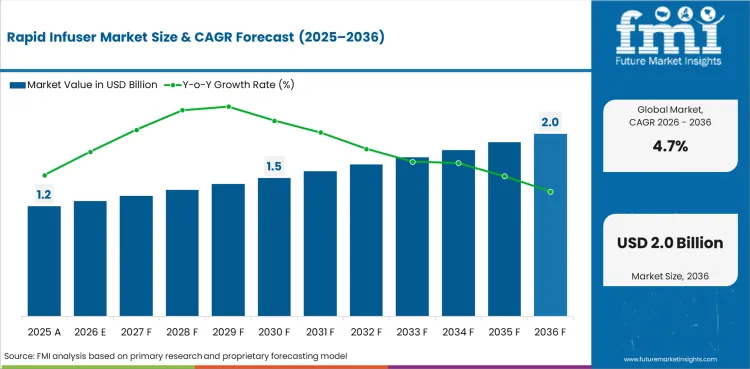
- Market Size (2026)
- USD 1.2 Bn
- Forecast (2036)
- USD 1.9 Bn
- CAGR (2026 to 2036)
- 4.7%
Rapid Infuser Market Size, Market Forecast and Outlook By FMI
Summary of the Rapid Infuser Market
- Demand and Growth Drivers
- Trauma response protocols support repeat demand for warmed blood and fluid delivery in severe blood-loss care.
- Operating-room warming discipline supports system use in major surgery because rapid volume replacement must stay thermally controlled.
- Portable warming use in ambulance and field care supports new placement outside fixed hospital departments.
- Product and Segment View
- Trolley mounted devices are witnessing demand due to high-acuity care centers on larger systems with strong flow control and warming stability.
- Reusable systems lead the industry as hospitals keep capital units active for years and replenish attached sets through routine use.
- Hospitals stay ahead in end-user demand as major transfusion events and intensive resuscitation center on inpatient acute-care teams.
- Geography and Competitive Outlook
- India and China show the strongest country growth outlook because tertiary care expansion is lifting trauma and surgical readiness.
- France and the United Kingdom post steadier expansion because warmed transfusion practice is already established in hospital care.
- Competition centers on high-flow warming performance and service continuity. Portable response platforms support a second growth path.
- Analyst Opinion
- Sabyasachi Ghosh, Principal Analyst for Healthcare at FMI, opines, “Supplier selection in rapid infusers is shaped by warming stability at demanding flow levels and by ease of deployment across trauma surgery transport and field response.”
- Rapid Infuser Market Value Analysis
- Trauma rooms and operating suites keep consistent annual equipment spending because delayed warmed transfusion can slow urgent care response.
- Reusable platforms keep a large share of revenue as installed hardware stays in service and set replacement supports yearly spending.
- Portable units add a smaller placement channel because ambulance teams and military medicine need compact warmed infusion support.
- Capital review cycles limit faster expansion because hospitals test service access and system uptime before approving replacement.
Key Takeaways
| Metric | Value |
|---|---|
| Market Size (2025) | USD 1.1 Billion |
| Market Size (2036) | USD 1.9 Billion |
| CAGR (2026–2036) | 4.7% |
| Incremental Opportunity (2026–2036) | USD 0.7 Billion |
| Leading Usability (2026) | Reusable Systems |
| Reusable Systems Share (2026) | 72.1% |
| Fastest-Growing Country | India |
| India CAGR | 7.1% |
| 2nd Fastest-Growing Country | China |
| China CAGR | 6.8% |
Rapid Infuser Market Definition
Rapid infusers are blood and fluid warming systems used to deliver blood products and intravenous fluids quickly during trauma surgery, emergency resuscitation, transport, and related acute-care treatment.
Rapid Infuser Market Inclusions
This study covers global and regional revenue sizing and the forecast from 2026 to 2036. Product blocks include trolley mounted devices, handheld devices, and accessories. Usability blocks include reusable and single use systems. End-user coverage includes hospitals, ASCs, specialty clinics, emergency medical services, and military services.
Rapid Infuser Market Exclusions
This study does not include standard infusion, pumps, routine patient, warming blankets, low-flow warmers, outside rapid resuscitation use, blood-bank storage equipment, vascular access consumables sold on a stand-alone basis, or unrelated transfusion monitoring tools.
Rapid Infuser Market Research Methodology
- Primary Research: Interviews with trauma physicians anesthesiologists emergency care teams military medicine contacts distributors and hospital sourcing teams were used to test purchase criteria and replacement behavior.
- Desk Research: Regulatory product materials and company catalogs were reviewed. Peer-reviewed transfusion literature and perioperative warming studies were reviewed to assess device positioning and use across acute-care settings.
- Market Sizing and Forecasting: The model linked capital equipment placement with disposables demand, and end-user throughput to derive revenue by segment and geography.
- Data Validation: Forecasts were checked against installed-base behavior and country growth patterns to confirm internal consistency across the market model.
Why is the Rapid Infuser Market Growing?
- Hemorrhage protocols are leading as emergency teams need fast warmed transfusion in life-threatening blood-loss events.
- Perioperative warming standards are anticipated to propel industry growth as severe fluid loss during surgery must be corrected without cold infusion shock.
- Portable response use supports new placement as ambulance and field teams need warmed fluid support before hospital arrival.
- Replacement demand promotes industry outlook because installed systems keep service contracts and recurring set use active after placement.
Hospital trauma pathways keep rapid infusers active because blood loss treatment must move quickly and fluid temperature must stay controlled. Acute-care departments favor systems that can deliver dependable flow without long setup time. Recurring use in surgery and emergency response protects demand even in mature hospital networks.
Portable warming support adds a second expansion lane in ambulance services and defense medicine. Small response teams need lighter equipment that can travel easily and start quickly under pressure. That use case does not replace larger hospital systems. It does support more placements outside fixed operating and critical-care rooms.
Market Segmentation Analysis
- Trolley mounted devices are expected to represent 67.5% in 2026 because the highest-flow cases center on trauma bays and operating suites.
- Reusable systems are projected to contribute 72.1% in 2026 as hospitals favor long-service hardware with recurring set purchases.
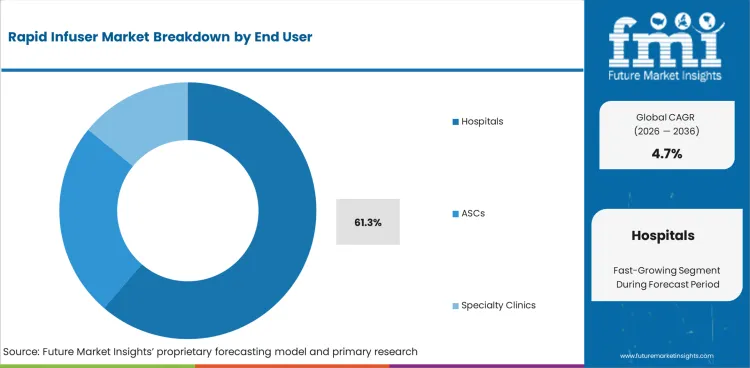
- Hospitals are anticipated to account for 61.3% share in 2026 as severe transfusion events center on acute-care inpatient treatment.
The market is segmented by product and includes trolley mounted devices handheld devices and accessories, with trolley mounted devices leading because acute-care teams need stable high-flow warming support. It is further segmented by usability and end user and covers reusable and single use systems along with hospitals ASCs specialty clinics emergency medical services and military services, with reusable systems and hospitals leading because repeat emergency care favors durable installed hardware in inpatient settings. The market is also segmented by device platform and includes fixed acute-care systems and portable response systems, with fixed systems ahead because most placements stay inside trauma rooms and operating suites. Supplier structure is mapped through supplier concentration and supplier tier.
Rapid Infuser Market Analysis by Product
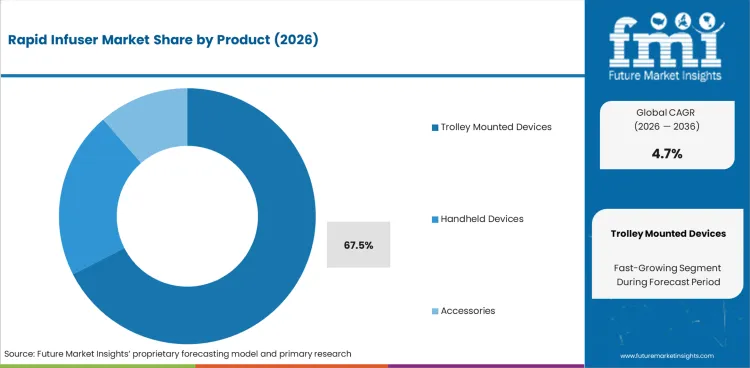
- Trolley mounted devices are expected to account for 67.5% share of product demand in 2026 because trauma rooms and operating suites need steady high-flow delivery with dependable warming control.
- Large hospital teams prefer mounted systems for severe blood-loss events because these units can stay ready near critical-care pathways and support repeated use across transfusion-heavy cases.
Insights into the Handheld Devices Segment
- Handheld devices keep a smaller base. They attract interest in transport care and field response because crews need compact hardware that can move quickly between locations.
- Demand is strongest in ambulance use and military response because rapid setup and low carrying burden support treatment before full hospital handover.
Rapid Infuser Market Analysis by Device Platform
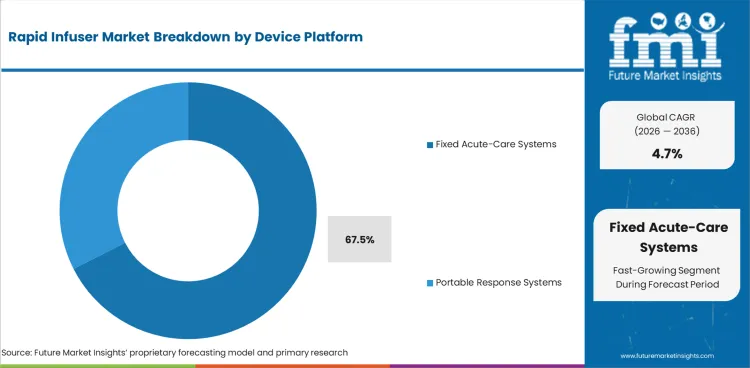
- Fixed acute-care systems are anticipated to represent 67.5% share of device platform demand in 2026 because the installed base stays inside hospital trauma and surgical departments.
- These platforms support repeated urgent use and easier staff readiness because larger teams can keep accessories and training close to the point of care.
Insights into the Portable Response Systems Segment
- Portable response systems expand from a smaller base because ambulance teams and military units need warmed infusion support before full hospital access.
- Transport care supports real growth potential. The unit base stays lower because severe sustained transfusion shifts into fixed hospital departments.
Rapid Infuser Market analysis by Usability
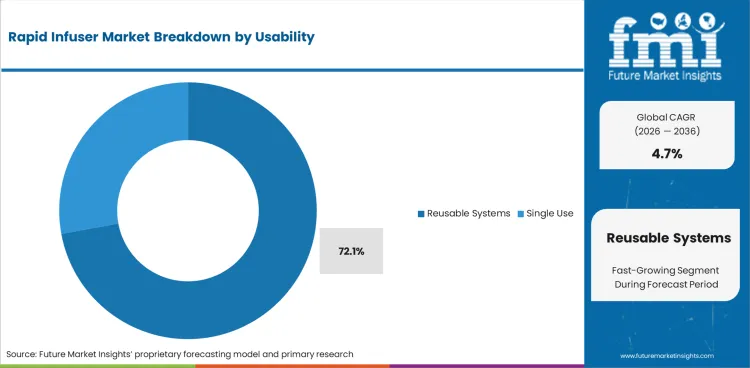
- Reusable systems are estimated to capture 72.1% share in 2026 as hospitals standardize around durable hardware that can stay active through repeated acute-care cycles.
- Clinical teams value long-service equipment because training stays consistent and attached set replacement supports repeat use without replacing the full platform.
Insights into the Single Use segment
- Single use systems attract attention in infection-sensitive care because teams can reduce turnaround work after emergency use.
- Adoption rises in selected trauma and transport cases as major centers already operate reusable hardware with established reprocessing routines.
Rapid Infuser Market analysis by End User
- Hospitals are expected to represent 61.3% share of end-user demand in 2026 because major transfusion events and warmed resuscitation protocols center on inpatient emergency and surgical care.
- Large hospitals see repeated acute blood-loss cases through trauma cardiovascular surgery obstetrics and critical-care treatment. That case mix keeps rapid infuser use highest in this block.
Insights into the Emergency Medical Services segment
- Emergency medical services keep a smaller share of demand because prehospital teams need compact rapid warming support during transfer.
- Uptake rises in advanced ambulance networks and critical transport asbecause the most sustained transfusion work shifts to inpatient teams.
Rapid Infuser Market analysis by Supplier Concentration
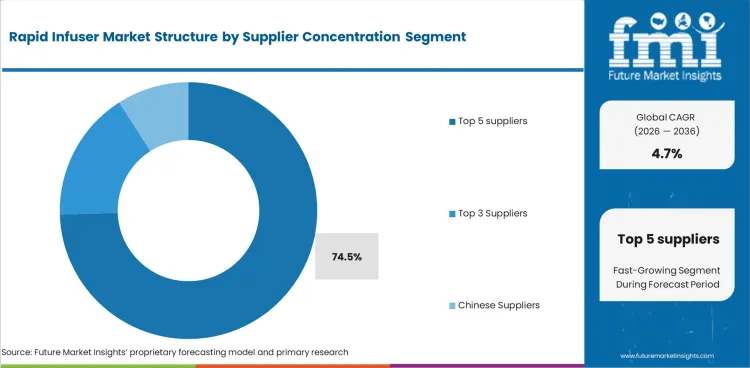
- Top 5 suppliers are estimated to account for 74.5% share of supplier concentration in the working structure used for this output because acute-care departments tend to stay with established names after validation and training.
- Service continuity and accessory supply help these companies defend placement once a hospital standardizes around a system.
Insights into the Top 3 Suppliers segment
- Top 3 suppliers are estimated at 52.9% share of supplier concentration in the same working structure because a limited set of brands hold the strongest recognition in acute-care transfusion support.
- Their advantage is not volume alone. It comes from long hospital relationships and dependable service access during urgent use.
Rapid Infuser Market analysis by Supplier Tier
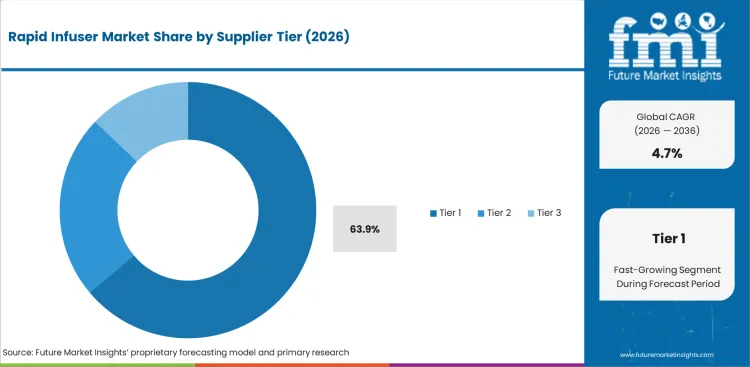
- Tier 1 suppliers are anticipated to hold 63.9% share of supplier tier revenue in the working structure used here because multinational device groups keep the widest installed base and service depth.
- Large hospital systems often favor these names during capital review because service reach and training support can be checked across many sites.
Insights into the Tier 2 Suppliers segment
- Tier 2 suppliers keep a meaningful role because they can compete in focused hospital accounts and price-sensitive tenders.
- The adoption is strongest in settings that want solid warming performance without paying for the widest service network or the most recognized brand portfolio.
Rapid Infuser Market Drivers Restraints and Opportunities
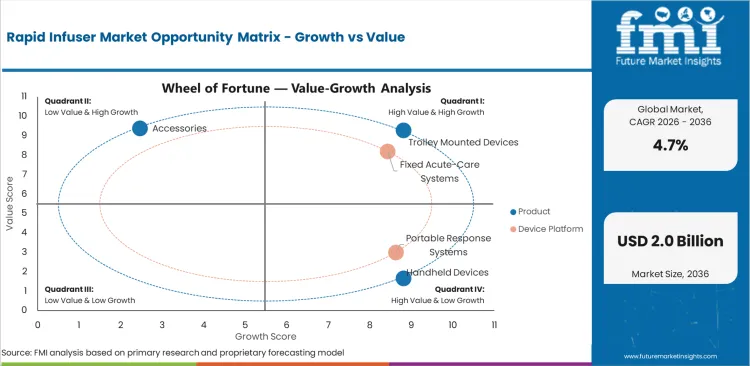
- Trauma readiness and perioperative warming support demand across hospital acute-care teams.
- Capital review cycles slow faster placement because systems need training service review and installed-base comparison before approval.
- Portable response use supports new placements in ambulance fleets defense medicine and inter-facility transfer care.
Capital Review Discipline
Capital review stays strict in this field because hospitals compare uptime service access training burden and set supply before changing hardware. That process slows adoption even in centers that accept the clinical need for rapid warmed transfusion support.
Portable Response Expansion
Ambulance services military medicine and inter-facility transfer care support the cleanest expansion lane because small teams need portable units that start quickly under pressure. Suppliers with lighter hardware and dependable warming support can gain more placements through this path.
Regional Market Analysis
.webp "Top Country Growth Comparison Rapid Infuser Market Cagr (2026 2036)")
| Country | CAGR |
|---|---|
| United States | 3.8% |
| Brazil | 5.1% |
| Germany | 4.0% |
| France | 4.7% |
| United Kingdom | 4.5% |
| China | 6.8% |
| India | 7.1% |
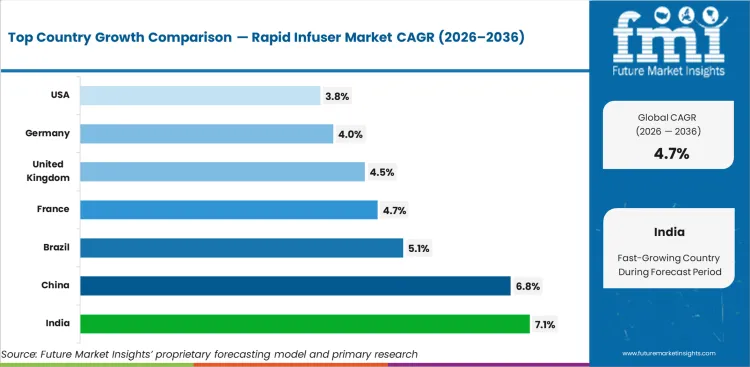
Source: Future Market Insights analysis based on the supplied market model and covered country narratives.
Analysis Of Rapid Infuser Market by Key Countries
- India is expected to record the fastest growth at 7.1% CAGR through 2036 because tertiary care expansion is lifting trauma readiness and surgery volume in major hospital systems.
- China follows at 6.8% CAGR through 2036 because hospital capacity expansion is increasing procedure intensity in acute-care institutions.
- Brazil is projected to post 5.1% CAGR through 2036 because larger care centers are strengthening blood-loss management and warming-enabled infusion workflows.
Country differences reflect trauma-care depth and surgery intensity across hospital systems. India and China stay above the global pace because high-acuity care access is expanding faster in large healthcare networks. France and the United Kingdom hold a middle position because warmed transfusion practice already has a stable place in hospital treatment. Germany and the United States grow at a slower pace because capital review is tighter in mature acute-care settings.
Demand outlook for Rapid Infusers in the United States
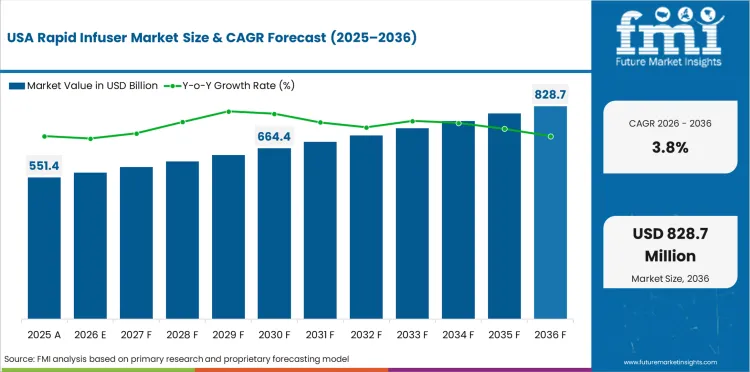
Demand for rapid infusers in the United States is expected to rise at 3.8% CAGR through 2036 because hospitals already use warming-enabled transfusion support in trauma and major surgery. Replacement activity supports revenue and new account wins in this country.
- Large hospitals continue using rapid infusers in trauma and perioperative care.
- Installed systems support recurring demand for accessories and service support.
- Structured capital approval keeps new platform wins on a measured path.
Future outlook for Rapid Infusers in Brazil
The rapid infuser market in Brazil is estimated to expand at 5.1% CAGR through 2036 as larger care centers are increasing focus on blood-loss management and warming-enabled infusion use.
- Larger hospitals are investing more in emergency and surgical capability.
- Blood-loss management is receiving greater institutional focus.
- Warming-enabled infusion use is moving gradually into bigger care centers.
Opportunity analysis of Rapid Infusers in Germany
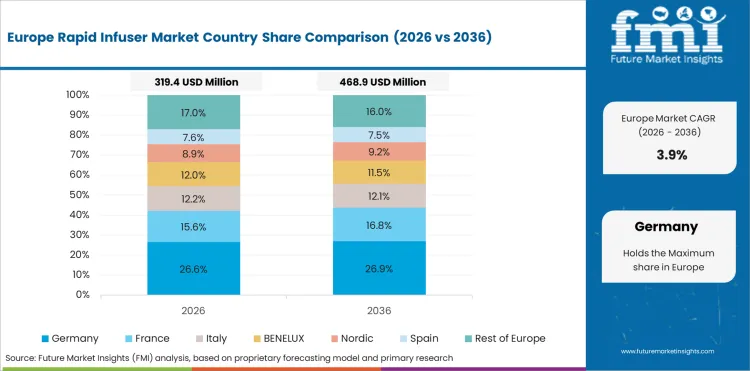
Rapid infusers industry in Germany is projected to rise at 4.0% CAGR through 2036 because acute-care delivery is structured and use of warming-enabled transfusion equipment is already established. Spending in Germany is shaped by disciplined replacement and first-time adoption.
- Acute-care delivery follows structured hospital treatment pathways.
- Warming-enabled transfusion equipment already has a stable place in use.
- Mature procurement practice keeps expansion controlled.
Future outlook for Rapid Infusers in France
Rapid infusers demand in France is expected to grow at 4.7% CAGR through 2036 because hospitals continue using blood and fluid warming across surgical and critical-care treatment.
- Hospitals continue using warming systems in surgery.
- Critical-care teams support recurring equipment demand.
- Replacement need adds support to yearly revenue flow.
In-depth analysis of Rapid Infusers in the United Kingdom
Sales of rapid infusers in the United Kingdom is expected to grow at 4.5% CAGR through 2036 because perioperative warming discipline and reliable transfusion support needs keep hospital use active.
- Hospital standardization supports repeat use of validated systems.
- Perioperative warming discipline keeps equipment need present.
- Emergency and surgical departments continue relying on transfusion support tools.
Sales analysis of Rapid Infusers in China
The rapid infuser market in China is estimated to expand at 6.8% CAGR through 2036 because hospital capacity is increasing and procedure intensity is rising in major acute-care institutions.
- Hospital capacity is expanding in major care institutions.
- Procedure intensity is increasing in acute-care settings.
- Advanced warming-enabled transfusion workflows are gaining wider use.
In-depth analysis of Rapid Infusers in India
Tertiary care expansion is strengthening rapid infuser demand in India. The market in India is expected to grow at 7.1% CAGR through 2036 because trauma readiness and surgery intensity are increasing across major hospital systems.
- Major hospital systems are expanding trauma readiness.
- Surgery intensity is increasing across tertiary care centers.
- High-acuity care access is improving across a larger treatment base.
Competitive positioning and strategic view
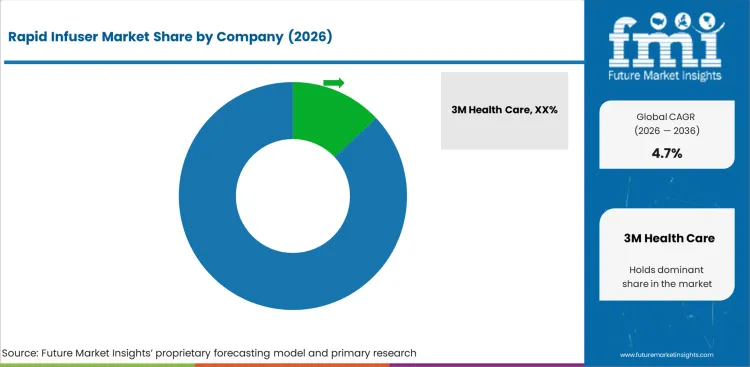
- Competition is moderately concentrated among acute-care device suppliers with service depth and dependable set availability.
- Leading suppliers hold an advantage because validated hospital placement slows switching after training and protocol approval.
- Smaller specialists can win in portable response use or tighter budgets if warming performance stays dependable.
Acute-care departments compare suppliers on warming accuracy response speed and service continuity. Belmont Medical Technologies and ICU Medical keep strong recognition because hospital teams need dependable performance in trauma and surgical use. 3M Health Care remains visible in hospital accounts for the same reason. Portable response hardware adds another angle to competition because ambulance and field teams want lighter systems with quick start capability.
Installed bases create a real advantage for larger suppliers. Hospital teams learn one platform and tend to stay with it if service visits are dependable and accessory supply is steady. That pattern protects recurring set demand after the first equipment sale. Infusion pumps show a similar service-led pattern in hospital device purchasing. Portable response use leaves room for focused suppliers that can keep hardware light and simple. Ambulance teams and military medicine do not want large installed units during transfer care. Smaller specialists can gain here if they offer fast setup and stable warming performance.
Key companies in the Rapid Infuser Market
Competition in rapid infusers centers on hospital acute-care credibility and on portable response capability.
- Major Acute-Care Suppliers: Includes 3M Health Care, Belmont Medical Technologies, and ICU Medical. These companies hold the strongest position in large hospital accounts because they have recognized warming platforms and the service depth needed for high-acuity use.
- Portable and Focused Resuscitation Participants: Include 410 Medical Vyai Medical and Eitan Medical Technologies. Their strength is strongest in quick-response use and in more compact deployment formats that support transport or field treatment.
- Device and Support Participants: Include Smiths Medical, Teleflex, Biegler GmbH, and ZOLL Medical Corporation. These names help round out supply options across hospital systems that compare warming performance account support and accessory availability.
Competitive benchmarking: Rapid Infuser Market
| Company | Acute-care strength | Portable response strength | Service continuity | Geographic reach |
|---|---|---|---|---|
| Belmont Medical Technologies | High | Medium | High | Medium |
| ICU Medical | High | Medium | High | High |
| 3M Health Care | High | Low | High | High |
| 410 Medical | Medium | High | Medium | Medium |
| Smiths Medical | Medium | Medium | Medium | High |
Source: Future Market Insights analysis based on the supplied rapid infuser file and covered company positions.
Key Developments in the Rapid Infuser Market
- In March 2025, 410 Medical raised USD 14 million in Series B funding to extend access to the LifeFlow resuscitation platform.
- In February 2026, Belmont Medical Technologies appointed Brian Larkin as chief executive officer for the company behind the Belmont Rapid Infuser RI-2 line.
Key players in the Rapid Infuser Market
Major Global Players
- 3M Health Care
- Belmont Medical Technologies
- ICU Medical
- Smiths Medical
- Teleflex Inc.
- ZOLL Medical Corporation
Portable and focused response participants
- 410 Medical
- Vyai Medical
- Eitan Medical Technologies Inc.
- Biegler GmbH
Report Scope and Coverage
| Metric | Value |
|---|---|
| Quantitative Units | USD 1.2 billion in 2025 to USD 1.9 billion in 2036 at 4.7% CAGR. |
| Market Definition | Blood and fluid warming systems used for rapid transfusion and fluid delivery in trauma surgery emergency resuscitation transport and related acute-care treatment. |
| Product Segmentation | Trolley Mounted Devices Handheld Devices Accessories |
| Device Platform Segmentation | Fixed Acute-Care Systems Portable Response Systems |
| Usability Segmentation | Reusable Single Use |
| End User Segmentation | Hospitals ASCs Specialty Clinics Emergency Medical Services Military Services |
| Supplier Concentration | Top 3 Suppliers Top 5 Suppliers Chinese Suppliers Emerging and Regional Players |
| Supplier Tier | Tier 1 Suppliers Tier 2 Suppliers Tier 3 Suppliers |
| Regions Covered | North America Latin America East Asia South Asia and Pacific Western Europe Eastern Europe Middle East and Africa |
| Countries Covered | United States Brazil India China Japan Germany France United Kingdom and 40 plus countries |
| Key Companies Profiled | 3M Health Care Belmont Medical Technologies ICU Medical Vyai Medical Eitan Medical Technologies 410 Medical Smiths Medical Biegler GmbH Teleflex Inc. ZOLL Medical Corporation |
| Forecast Period | 2026 to 2036 |
| Approach | Source-model valuation converted to rounded billion values with added device platform end-user and supplier structure normalization for this output. |
Source: Future Market Insights analysis based on the supplied rapid infuser file and covered company positions.
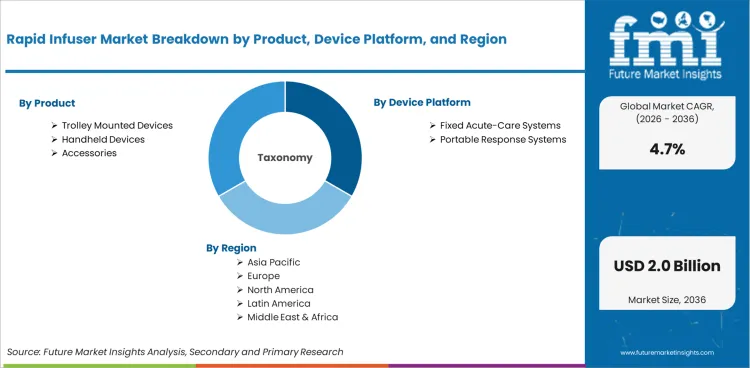
Rapid Infuser Market breakdown by Product, Device Platform, Usability, End User, Supplier Concentration, Supplier Tier, and Region
Rapid Infuser Market Segmented by Product
- Trolley Mounted Devices
- Handheld Devices
- Accessories
Rapid Infuser Market Segmented by Device Platform
- Fixed Acute-Care Systems
- Portable Response Systems
Rapid Infuser Market Segmented by Usability
- Reusable
- Single Use
Rapid Infuser Market Segmented by End User
- Hospitals
- ASCs
- Specialty Clinics
- Emergency Medical Services
- Military Services
Rapid Infuser Market Segmented by Supplier Concentration
- Top 3 Suppliers
- Top 5 Suppliers
- Chinese Suppliers
- Emerging and Regional Players
Rapid Infuser Market Segmented by Supplier Tier
- Tier 1 Suppliers
- Tier 2 Suppliers
- Tier 3 Suppliers
Rapid Infuser Market by Region
- North America
- United States
- Canada
- Mexico
- Latin America
- Brazil
- Argentina
- Rest of Latin America
- East Asia
- China
- Japan
- South Korea
- South Asia and Pacific
- India
- ASEAN Countries
- Australia and New Zealand
- Rest of South Asia
- Western Europe
- Germany
- United Kingdom
- France
- Italy
- Spain
- BENELUX
- Nordic Countries
- Rest of Western Europe
- Eastern Europe
- Russia
- Hungary
- Poland
- Rest of Eastern Europe
- Middle East and Africa
- Saudi Arabia
- Türkiye
- South Africa
- Other African Union
- Rest of Middle East and Africa
Research Sources and Bibliography
- 410 Medical, Inc. (2025, March 17). 410 Medical secures $14 million series B financing to expand access to life-saving resuscitation technologies.
- Eichinger, M., Pichler, A., Eichlseder, M., Oehner, S., Schreiber, N., Essber, H., West, D., Heuschneider, L., Zoidl, P., & Wagner, T. (2025). Analysis of four rapid infusion systems for heating fluids at high flow rates: An in vitro study. British Journal of Anaesthesia, 135(3), 805-807.
- Marinho, D. S., Brunetta, D. M., Carlos, L. M. de B., Carvalho, L. E. M., & Miranda, J. S. (2025). A comprehensive review of massive transfusion and major hemorrhage protocols: Origins, core principles and practical implementation. Brazilian Journal of Anesthesiology, 75(2), Article 844583.
- Becker, E. R., Chae, R. C., Price, A. D., Wattley, L. J., Schuster, R. M., Goodman, M. D., & Pritts, T. A. (2025). Under pressure: Rapid infusion of stored whole blood alters coagulation parameters. Journal of Surgical Research, 315, 381-389.
- Belmont Medical Technologies. (2026, February 12). Belmont Medical Technologies appoints Brian Larkin as chief executive officer.
- Belmont Medical Technologies. (2024, October 1). Belmont awarded patient warming - blood and fluid agreement with Premier Inc.
- U.S. Food and Drug Administration. (2024, December 23). 510(k) premarket notification K242735: Belmont Rapid Infuser, RI-2.
- Gorski, L. A. (2024). Update: The 2024 infusion therapy standards of practice. Home Healthcare Now, 42(4), 198-205.
- Seo, D., Kwon, J., Heo, I., Kim, Y., Kim, J. H., Kim, T., Cho, H., & Jung, K. (2025). Toward standardized massive transfusion protocols: A multicenter evaluation of practice variability within a national trauma system. Healthcare, 13(15), Article 1848.
The bibliography is provided for reader reference.
This Report Answers
- What size is the rapid infuser market in 2026 and how large can it become by 2036?
- How fast is rapid infuser demand expected to expand from 2026 through 2036 under the rounded billion format used here?
- Which product and usability segments lead rapid infuser demand in 2026?
- Which end-user block leads rapid infuser demand and why does hospital acute-care use stay dominant?
- What keeps reusable systems ahead in rapid infuser demand during the forecast period?
- Which countries post the fastest rapid infuser growth through 2036?
- How does portable response use change the longer-term outlook for rapid infuser demand?
- Which suppliers hold the clearest concentration advantage in rapid infusers during the forecast period?
Frequently Asked Questions
How large is the rapid infuser market in 2026?
The rapid infuser market is expected to reach USD 1.2 billion in 2026 under the rounded billion format used for this report.
How large can the rapid infuser market become by 2036?
The rapid infuser market is projected to reach USD 1.9 billion by 2036 as hospital replacement demand and portable use support expansion.
What growth rate is expected in the rapid infuser market through 2036?
The rapid infuser market is projected to expand at 4.7% CAGR from 2026 to 2036 under the rounded billion path used here.
Which product segment leads the rapid infuser market by 2026?
Trolley mounted devices are expected to lead product demand with 67.5% share in 2026 because high-flow hospital resuscitation drives placement.
Which usability segment leads the rapid infuser market by 2026?
Reusable systems are expected to lead usability demand with 72.1% share in 2026 because hospitals keep durable hardware in service.
Which end-user block leads the rapid infuser market by 2026?
Hospitals are modeled to lead end-user demand with 61.3% share in 2026 because major transfusion events center on inpatient acute-care teams.
Which country records the fastest growth in the rapid infuser market?
India is expected to record the fastest rapid infuser growth at 7.1% CAGR through 2036 because tertiary care capacity is expanding.
Preview the report firsthand - request a free sample
Get SampleGet the brochure for pricing and purchase details.
Get PDFTable of Content
- Key Takeaways
- Market Size and CAGR
- Top Growth Driver
- Fastest Growing Segment
- Leading Region
- Key Companies
- Emerging Opportunities
- Executive Summary
- Global Market Outlook
- Demand-side Trends
- Supply-side Trends
- Technology Roadmap Analysis
- Analysis and Recommendations
- Analyst Perspective (What is happening? Why now? What should investors know?)
- Key Questions Answered
- How large is the market?
- What is the CAGR?
- What are key trends?
- Which region dominates?
- Who are the leaders?
- Market Overview
- Market Coverage / Taxonomy
- Market Definition / Scope / Limitations
- Research Methodology
- Chapter Orientation
- Analytical Lens and Working Hypotheses
- Market Structure, Signals, and Trend Drivers
- Benchmarking and Cross-market Comparability
- Market Sizing, Forecasting, and Opportunity Mapping
- Research Design and Evidence Framework
- Desk Research Programme (Secondary Evidence)
- Expert Input and Fieldwork (Primary Evidence)
- Tooling, Models, and Reference Databases
- Data Engineering and Model Build
- Quality Assurance and Audit Trail
- Market Background
- Market Dynamics (Drivers, Restraints, Opportunity, Trends)
- Scenario Forecast (Optimistic, Likely, Conservative)
- Impact Analysis
- AI Impact
- Sustainability Impact
- Regulatory Impact
- Technology Impact
- Consumer / Buyer Analysis
- Purchase Drivers
- Adoption Barriers
- Buyer Journey
- Opportunity Map Analysis
- Product Life Cycle Analysis
- Supply Chain Analysis
- Investment Feasibility Matrix
- Value Chain Analysis
- PESTLE and Porter's Analysis
- Regulatory Landscape
- Regional Parent Market Outlook
- Production and Consumption Statistics
- Import and Export Statistics
- Global Market Analysis and Forecast, 2021 to 2036
- Historical Market Size Value (USD Billion) Analysis, 2021 to 2025
- Current and Future Market Size Value (USD Billion) Projections, 2026 to 2036
- Y-o-Y Growth Trend Analysis
- Absolute $ Opportunity Analysis
- Global Market Pricing Analysis, 2021 to 2036
- Global Market Analysis and Forecast, By Product, 2021 to 2036
- Introduction / Key Findings
- Historical Market Size Value (USD Billion) Analysis By Product, 2021 to 2025
- Current and Future Market Size Value (USD Billion) Analysis and Forecast By Product, 2026 to 2036
- Trolley Mounted Devices
- Handheld Devices
- Accessories
- Trolley Mounted Devices
- Y-o-Y Growth Trend Analysis By Product, 2021 to 2025
- Absolute $ Opportunity Analysis By Product, 2026 to 2036
- Global Market Analysis and Forecast, By Device Platform, 2021 to 2036
- Introduction / Key Findings
- Historical Market Size Value (USD Billion) Analysis By Device Platform, 2021 to 2025
- Current and Future Market Size Value (USD Billion) Analysis and Forecast By Device Platform, 2026 to 2036
- Fixed Acute-Care Systems
- Portable Response Systems
- Fixed Acute-Care Systems
- Y-o-Y Growth Trend Analysis By Device Platform, 2021 to 2025
- Absolute $ Opportunity Analysis By Device Platform, 2026 to 2036
- Global Market Analysis and Forecast, By Usability, 2021 to 2036
- Introduction / Key Findings
- Historical Market Size Value (USD Billion) Analysis By Usability, 2021 to 2025
- Current and Future Market Size Value (USD Billion) Analysis and Forecast By Usability, 2026 to 2036
- Reusable
- Single Use
- Reusable
- Y-o-Y Growth Trend Analysis By Usability, 2021 to 2025
- Absolute $ Opportunity Analysis By Usability, 2026 to 2036
- Global Market Analysis and Forecast, By End User, 2021 to 2036
- Introduction / Key Findings
- Historical Market Size Value (USD Billion) Analysis By End User, 2021 to 2025
- Current and Future Market Size Value (USD Billion) Analysis and Forecast By End User, 2026 to 2036
- Hospitals
- ASCs
- Specialty Clinics
- Emergency Medical Services
- Military Services
- Hospitals
- Y-o-Y Growth Trend Analysis By End User, 2021 to 2025
- Absolute $ Opportunity Analysis By End User, 2026 to 2036
- Global Market Analysis and Forecast, By Supplier Concentration, 2021 to 2036
- Introduction / Key Findings
- Historical Market Size Value (USD Billion) Analysis By Supplier Concentration, 2021 to 2025
- Current and Future Market Size Value (USD Billion) Analysis and Forecast By Supplier Concentration, 2026 to 2036
- Top 5 Suppliers
- Top 3 Suppliers
- Chinese Suppliers
- Emerging and Regional Players
- Top 5 Suppliers
- Y-o-Y Growth Trend Analysis By Supplier Concentration, 2021 to 2025
- Absolute $ Opportunity Analysis By Supplier Concentration, 2026 to 2036
- Global Market Analysis and Forecast, By Supplier Tier
- Introduction / Key Findings
- Historical Market Size Value (USD Billion) Analysis By Supplier Tier, 2021 to 2025
- Current and Future Market Size Value (USD Billion) Analysis and Forecast By Supplier Tier, 2026 to 2036
- Tier 1 Suppliers
- Tier 2 Suppliers
- Tier 3 Suppliers
- Tier 1 Suppliers
- Y-o-Y Growth Trend Analysis By Supplier Tier, 2021 to 2025
- Absolute $ Opportunity Analysis By Supplier Tier, 2026 to 2036
- Global Market Analysis and Forecast, By Region, 2021 to 2036
- Introduction
- Historical Market Size Value (USD Billion) Analysis By Region, 2021 to 2025
- Current Market Size Value (USD Billion) Analysis and Forecast By Region, 2026 to 2036
- North America
- Latin America
- Western Europe
- Eastern Europe
- East Asia
- South Asia and Pacific
- Middle East & Africa
- Market Attractiveness Analysis By Region
- North America Market Analysis and Forecast, By Country, 2021 to 2036
- Historical Market Size Value (USD Billion) Trend Analysis By Market Taxonomy, 2021 to 2025
- Market Size Value (USD Billion) Forecast By Market Taxonomy, 2026 to 2036
- By Country
- USA
- Canada
- By Product
- By Device Platform
- By Usability
- By End User
- By Supplier Concentration
- By Supplier Tier
- By Country
- Market Attractiveness Analysis
- By Country
- By Product
- By Device Platform
- By Usability
- By End User
- By Supplier Concentration
- By Supplier Tier
- Key Takeaways
- Latin America Market Analysis and Forecast, By Country
- Historical Market Size Value (USD Billion) Trend Analysis By Market Taxonomy, 2021 to 2025
- Market Size Value (USD Billion) Forecast By Market Taxonomy, 2026 to 2036
- By Country
- Brazil
- Mexico
- Chile
- Rest of Latin America
- By Product
- By Device Platform
- By Usability
- By End User
- By Supplier Concentration
- By Supplier Tier
- By Country
- Market Attractiveness Analysis
- By Country
- By Product
- By Device Platform
- By Usability
- By End User
- By Supplier Concentration
- By Supplier Tier
- Key Takeaways
- Western Europe Market Analysis and Forecast, By Country
- Historical Market Size Value (USD Billion) Trend Analysis By Market Taxonomy, 2021 to 2025
- Market Size Value (USD Billion) Forecast By Market Taxonomy, 2026 to 2036
- By Country
- Germany
- UK
- Italy
- Spain
- France
- Nordic
- BENELUX
- Rest of Western Europe
- By Product
- By Device Platform
- By Usability
- By End User
- By Supplier Concentration
- By Supplier Tier
- By Country
- Market Attractiveness Analysis
- By Country
- By Product
- By Device Platform
- By Usability
- By End User
- By Supplier Concentration
- By Supplier Tier
- Key Takeaways
- Eastern Europe Market Analysis and Forecast, By Country
- Historical Market Size Value (USD Billion) Trend Analysis By Market Taxonomy, 2021 to 2025
- Market Size Value (USD Billion) Forecast By Market Taxonomy, 2026 to 2036
- By Country
- Russia
- Poland
- Hungary
- Balkan & Baltic
- Rest of Eastern Europe
- By Product
- By Device Platform
- By Usability
- By End User
- By Supplier Concentration
- By Supplier Tier
- By Country
- Market Attractiveness Analysis
- By Country
- By Product
- By Device Platform
- By Usability
- By End User
- By Supplier Concentration
- By Supplier Tier
- Key Takeaways
- East Asia Market Analysis and Forecast, By Country
- Historical Market Size Value (USD Billion) Trend Analysis By Market Taxonomy, 2021 to 2025
- Market Size Value (USD Billion) Forecast By Market Taxonomy, 2026 to 2036
- By Country
- China
- Japan
- South Korea
- By Product
- By Device Platform
- By Usability
- By End User
- By Supplier Concentration
- By Supplier Tier
- By Country
- Market Attractiveness Analysis
- By Country
- By Product
- By Device Platform
- By Usability
- By End User
- By Supplier Concentration
- By Supplier Tier
- Key Takeaways
- South Asia and Pacific Market Analysis and Forecast, By Country
- Historical Market Size Value (USD Billion) Trend Analysis By Market Taxonomy, 2021 to 2025
- Market Size Value (USD Billion) Forecast By Market Taxonomy, 2026 to 2036
- By Country
- India
- ASEAN
- Australia & New Zealand
- Rest of South Asia and Pacific
- By Product
- By Device Platform
- By Usability
- By End User
- By Supplier Concentration
- By Supplier Tier
- By Country
- Market Attractiveness Analysis
- By Country
- By Product
- By Device Platform
- By Usability
- By End User
- By Supplier Concentration
- By Supplier Tier
- Key Takeaways
- Middle East & Africa Market Analysis and Forecast, By Country
- Historical Market Size Value (USD Billion) Trend Analysis By Market Taxonomy, 2021 to 2025
- Market Size Value (USD Billion) Forecast By Market Taxonomy, 2026 to 2036
- By Country
- Kingdom of Saudi Arabia
- Other GCC Countries
- Türkiye
- South Africa
- Other African Union
- Rest of Middle East & Africa
- By Product
- By Device Platform
- By Usability
- By End User
- By Supplier Concentration
- By Supplier Tier
- By Country
- Market Attractiveness Analysis
- By Country
- By Product
- By Device Platform
- By Usability
- By End User
- By Supplier Concentration
- By Supplier Tier
- Key Takeaways
- Key Countries Market Analysis
- USA
- Pricing Analysis
- Market Share Analysis, 2025
- By Product
- By Device Platform
- By Usability
- By End User
- By Supplier Concentration
- By Supplier Tier
- Canada
- Pricing Analysis
- Market Share Analysis, 2025
- By Product
- By Device Platform
- By Usability
- By End User
- By Supplier Concentration
- By Supplier Tier
- Mexico
- Pricing Analysis
- Market Share Analysis, 2025
- By Product
- By Device Platform
- By Usability
- By End User
- By Supplier Concentration
- By Supplier Tier
- Brazil
- Pricing Analysis
- Market Share Analysis, 2025
- By Product
- By Device Platform
- By Usability
- By End User
- By Supplier Concentration
- By Supplier Tier
- Chile
- Pricing Analysis
- Market Share Analysis, 2025
- By Product
- By Device Platform
- By Usability
- By End User
- By Supplier Concentration
- By Supplier Tier
- Germany
- Pricing Analysis
- Market Share Analysis, 2025
- By Product
- By Device Platform
- By Usability
- By End User
- By Supplier Concentration
- By Supplier Tier
- UK
- Pricing Analysis
- Market Share Analysis, 2025
- By Product
- By Device Platform
- By Usability
- By End User
- By Supplier Concentration
- By Supplier Tier
- Italy
- Pricing Analysis
- Market Share Analysis, 2025
- By Product
- By Device Platform
- By Usability
- By End User
- By Supplier Concentration
- By Supplier Tier
- Spain
- Pricing Analysis
- Market Share Analysis, 2025
- By Product
- By Device Platform
- By Usability
- By End User
- By Supplier Concentration
- By Supplier Tier
- France
- Pricing Analysis
- Market Share Analysis, 2025
- By Product
- By Device Platform
- By Usability
- By End User
- By Supplier Concentration
- By Supplier Tier
- India
- Pricing Analysis
- Market Share Analysis, 2025
- By Product
- By Device Platform
- By Usability
- By End User
- By Supplier Concentration
- By Supplier Tier
- ASEAN
- Pricing Analysis
- Market Share Analysis, 2025
- By Product
- By Device Platform
- By Usability
- By End User
- By Supplier Concentration
- By Supplier Tier
- Australia & New Zealand
- Pricing Analysis
- Market Share Analysis, 2025
- By Product
- By Device Platform
- By Usability
- By End User
- By Supplier Concentration
- By Supplier Tier
- China
- Pricing Analysis
- Market Share Analysis, 2025
- By Product
- By Device Platform
- By Usability
- By End User
- By Supplier Concentration
- By Supplier Tier
- Japan
- Pricing Analysis
- Market Share Analysis, 2025
- By Product
- By Device Platform
- By Usability
- By End User
- By Supplier Concentration
- By Supplier Tier
- South Korea
- Pricing Analysis
- Market Share Analysis, 2025
- By Product
- By Device Platform
- By Usability
- By End User
- By Supplier Concentration
- By Supplier Tier
- Russia
- Pricing Analysis
- Market Share Analysis, 2025
- By Product
- By Device Platform
- By Usability
- By End User
- By Supplier Concentration
- By Supplier Tier
- Poland
- Pricing Analysis
- Market Share Analysis, 2025
- By Product
- By Device Platform
- By Usability
- By End User
- By Supplier Concentration
- By Supplier Tier
- Hungary
- Pricing Analysis
- Market Share Analysis, 2025
- By Product
- By Device Platform
- By Usability
- By End User
- By Supplier Concentration
- By Supplier Tier
- Kingdom of Saudi Arabia
- Pricing Analysis
- Market Share Analysis, 2025
- By Product
- By Device Platform
- By Usability
- By End User
- By Supplier Concentration
- By Supplier Tier
- Türkiye
- Pricing Analysis
- Market Share Analysis, 2025
- By Product
- By Device Platform
- By Usability
- By End User
- By Supplier Concentration
- By Supplier Tier
- South Africa
- Pricing Analysis
- Market Share Analysis, 2025
- By Product
- By Device Platform
- By Usability
- By End User
- By Supplier Concentration
- By Supplier Tier
- USA
- Market Structure Analysis
- Competition Dashboard
- Competition Benchmarking
- Market Share Analysis of Top Players
- By Regional
- By Product
- By Device Platform
- By Usability
- By End User
- By Supplier Concentration
- By Supplier Tier
- Emerging Startups
- Innovation Benchmarking
- Competition Analysis
- Competition Deep Dive
- 3M Health Care
- Overview
- Product Portfolio
- Profitability by Market Segments
- Sales Footprint
- Strategy Overview
- Marketing Strategy
- Product Strategy
- Channel Strategy
- Belmont Medical Technologies
- ICU Medical
- Vyai Medical
- Eitan Medical Technologies
- 410 Medical
- Smiths Medical
- Biegler GmbH
- Teleflex Inc.
- ZOLL Medical Corporation
- 3M Health Care
- Case Studies
- Success Stories
- Recent Developments
- Competition Deep Dive
- Assumptions & Acronyms Used


