

- Market Size (2026)
- USD 632.8 Mn
- Forecast (2036)
- USD 1444.0 Mn
- CAGR (2026 to 2036)
- 8.6%
How big is Rare Cardiovascular Disease Therapeutics Market size?
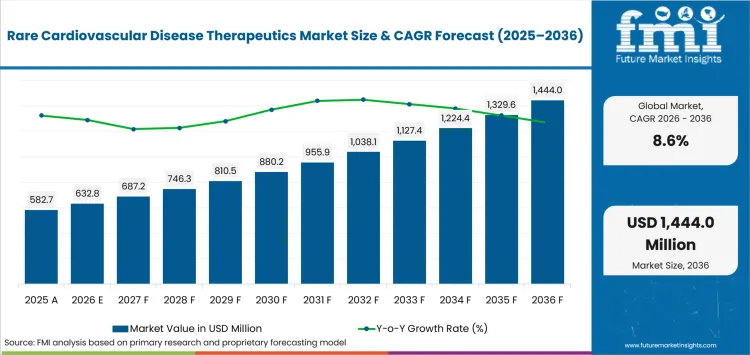
USD 632.8 million in 2026 and USD 1444.0 million by 2036 at an 8.6% CAGR.
Sales in rare cardiovascular disease therapeutics are estimated to rise at 8.6% CAGR through 2036, increasing valuation from USD 632.8 million in 2026 to USD 1444.0 million by 2036. In June 2026, Bristol Myers Squibb reported for more than 4,500 healthcare providers having prescribed Camzyos to almost 25,000 patients across the United States. This widespread prescribing shows that physicians are becoming much more comfortable with specialized cardiac myosin inhibition treatments and routine heart monitoring. Commercial growth is expected to strongly favor therapies providing practical education for specialists and deliver proven disease-specific clinical results.
International healthcare systems focus on distinct priorities on adopting such treatments. Specialists in Germany and Japan favor structured clinical evidence and carefully monitored dose adjustments. Care networks in the United Kingdom and the United States emphasize approved therapy choices and steady insurance reimbursement. Innovative medications are also gaining strong early acceptance among patients who need long-term care. In January 2026, BridgeBio reported 6,629 unique Attruby prescriptions written by 1,632 prescribers by the end of 2025. This active participation from doctors demonstrates prompt commercial adoption for chronic heart conditions requiring sustained treatment.
Key Takeaways of Rare Cardiovascular Disease Therapeutics Market
- Demand for rare cardiovascular disease therapeutics is driven by cardiologists connecting molecular diagnosis with disease-specific treatment and monitored follow-up, with commercial decisions reflecting outcome evidence and specialist confidence across inherited and inflammatory cardiac conditions.
- By end user, hospitals are expected to account for the leading share at 49.6% in 2026, led by concentrated cardiology expertise and treatment-surveillance capacity supporting imaging oversight and specialist pharmacy management across rare cardiac conditions.
- Gene therapy is projected to capture 44.5% share in 2026, influenced by mutation-directed development across inherited cardiomyopathies and the role of genetic testing in supporting patient identification across myocardial disorders requiring targeted intervention.
- Hypertrophic cardiomyopathy is anticipated to represent 43.0% share in 2026, guided by approved myosin inhibitors and active genetic programs that assess medicines capable of modifying hypercontractility across defined disease phenotypes with measurable clinical endpoints.
- Germany, Japan, and the United Kingdom record CAGRs of 9.9%, 8.4%, and 7.8% respectively through 2036, shaped by structured registry activity alongside specialist treatment pathways, recent rare cardiovascular approvals with disciplined regulatory review, and centralized medicine assessment with defined prescribing routes.
- Competition centers on approved therapy breadth and disease-specific clinical programs, with Bristol Myers Squibb and Cytokinetics competing through cardiac myosin inhibitor portfolios for obstructive hypertrophic cardiomyopathy, BridgeBio Pharma and Bayer participating through transthyretin-directed medicines, and Tenaya Therapeutics and Cardiol Therapeutics extending competition through clinical-stage genetic and inflammatory programs.
Analyst Perspective
"The rare cardiovascular disease therapeutics market is shaped by the ability to match targeted interventions with well-defined patient populations and measurable clinical outcomes. Adoption will depend on diagnostic precision, durable efficacy evidence, and practical monitoring approaches across specialized care pathways. Companies that strengthen specialist engagement, clinical validation, and treatment support will be better positioned to expand access across rare cardiac disease networks."
- Anurag Sharma, Principal Consultant for Healthcare at Future Market Insights
Source: Future Market Insights summary analysis, 2026.
How is Rare Cardiovascular Disease Therapeutics Market segmented?
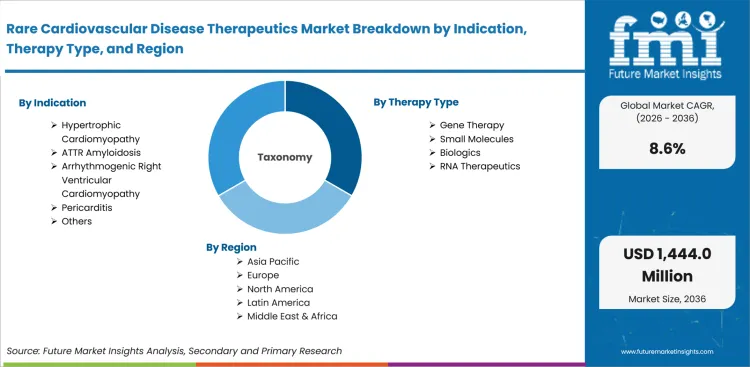
The rare cardiovascular disease therapeutics industry is segmented by indication, therapy type, stage, end user, and region.
The rare cardiovascular disease therapeutics sector is segmented by indication, therapy type, stage, end user, and region. Indication coverage includes hypertrophic cardiomyopathy and ATTR amyloidosis together with arrhythmogenic right ventricular cardiomyopathy, pericarditis, and other uncommon cardiovascular disorders. Therapy type analysis compares gene therapy with small molecules, biologics, and RNA therapeutics across disease-specific treatment pathways. Stage analysis separates marketed products from Phase III, Phase II, and preclinical programs across one development and commercialisation sequence. End-user groups cover hospitals and specialty clinics together with research institutes supporting diagnosis, treatment initiation, clinical monitoring, and therapy development. Regional analysis shows how specialist access, regulatory review, and reimbursement structures influence adoption across countries with different rare cardiovascular care networks.
Why does hypertrophic cardiomyopathy shape indication demand?
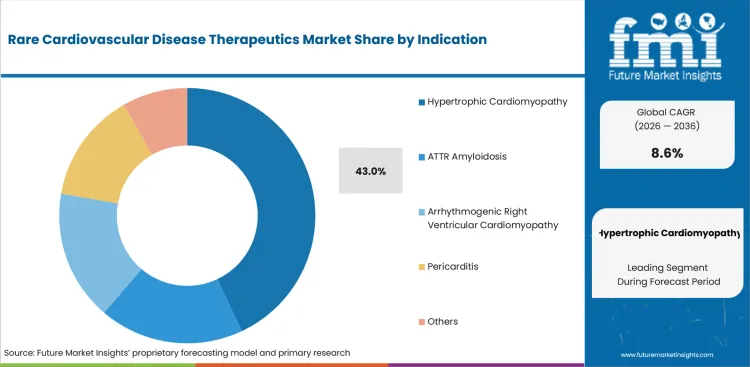
Tenaya Therapeutics reported in March 2025 interim TN-201 findings from the first 3 MyPEAK-1 participants diagnosed with MYBPC3-associated hypertrophic cardiomyopathy. Cardiac biopsy findings recorded vector presence and transgene expression, providing early proof of mutation-directed activity inside myocardial tissue. Cardiac myosin inhibition addresses excessive contractility through controlled pharmacological modulation under specialist supervision. Separate therapeutic routes sustain development interest by addressing inherited protein deficiency and abnormal sarcomere activity.
- By indication, hypertrophic cardiomyopathy is anticipated to garner 43.0% share in 2026 as it reflects a clearly defined diagnostic pathway across cardiology services. Echocardiographic findings and symptom classification help clinicians identify suitable patients for disease-specific medicine.
- ATTR amyloidosis needs protein stabilization or gene silencing to slow transthyretin deposition. Restrictive cardiomyopathy treatment assessment clarifies infiltrative disease pathways apart from rhythm disorders and inflammatory recurrence.
Why does gene therapy shape therapy type demand?
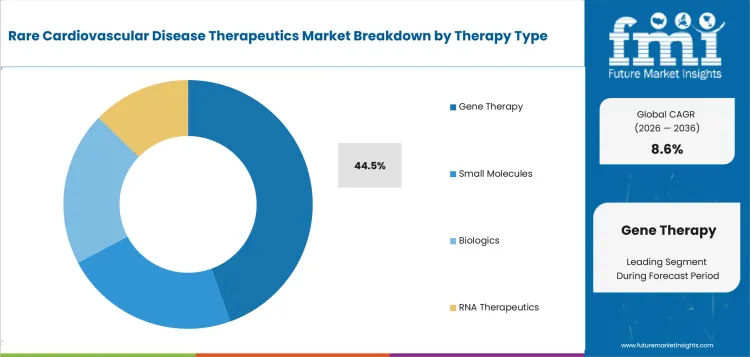
Rare disease gene therapy programs seek restoration of missing cardiac proteins within genetically defined patient groups. Lexeo Therapeutics reported in January 2026 dosing of 10 participants during a Phase I/II study of LX2020 for PKP2-associated arrhythmogenic cardiomyopathy. Clinical assessment examines myocardial transduction and protein expression across escalating dose cohorts. Long follow-up determines whether early biological activity produces durable cardiac benefit.
- Based on therapy type, gene therapy is projected to secure 44.5% share in 2026 owing to development value assigned to treatment models intended for durable benefit. Commercial readiness requires reproducible manufacturing and coordinated referral into qualified treatment centres.
- Small molecules support oral treatment across HCM and ATTR-CM, allowing dose adjustment during regular specialist review. Biologics and RNA therapeutics expand therapeutic choice for inflammatory or protein-mediated disease requiring repeated administration.
Why do marketed therapies shape stage demand?
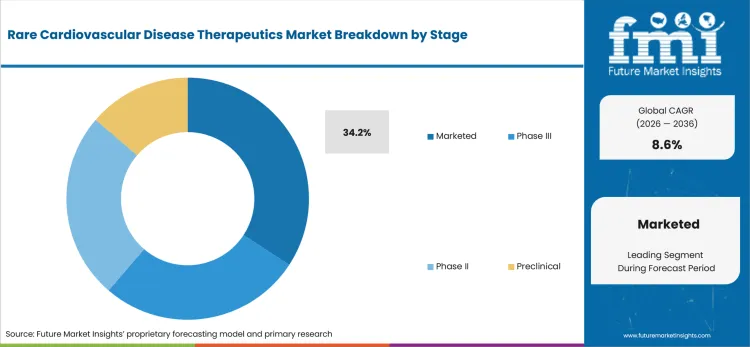
Marketed products provide prescribing access through approved indications and established safety instructions. Regulatory documentation defines eligible patients and required surveillance during treatment initiation. United States Food and Drug Administration reported in November 2024 clinical evidence from 611 participants supporting Attruby approval for ATTR-CM. Recorded trial evidence enables consistent evaluation by physicians and reimbursement reviewers.
- In 2026, marketed therapies are forecast to represent 34.2% share in 2026 being driven by routine availability across specialist treatment centres. Hospital pharmacies can plan acquisition and replenishment around established administration schedules.
- Phase III programs approach regulatory submission through confirmatory evidence from defined patient groups. Phase II and preclinical assets remain earlier in development, leaving commercial timing exposed to recruitment quality and endpoint performance.
Why do hospitals lead end-user demand?
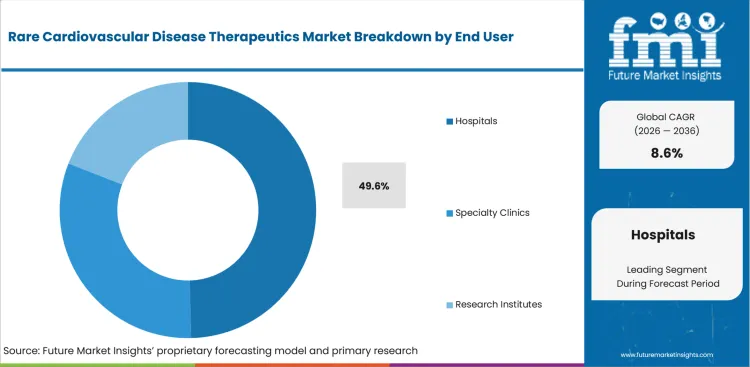
Rare cardiovascular therapy initiation often requires advanced imaging and specialist pharmacy oversight. Academic hospitals connect genetic assessment with cardiac biomarker diagnostic test kits during complex case review. Regional referral hospitals maintain follow-up services for patients receiving medicines with structured surveillance requirements. Cardiol Therapeutics reported in April 2026 planned activation of up to 25 clinical centres for the MAVERIC Phase III recurrent pericarditis program, reinforcing hospital-based delivery for complex late-stage research.
- Hospitals are expected to secure 49.6% share in 2026, reflecting their control over complex treatment authorization and multidisciplinary review. Dedicated care teams coordinate reimbursement records and discharge planning for continued therapy.
- Specialty clinics manage stable follow-up under protocols established by cardiology centres. Research institutes examine genetic targets and disease-specific endpoints, supplying evidence for future therapeutic programs.
What are drivers, restraints, and opportunities in Rare Cardiovascular Disease Therapeutics Market?
Disease-specific medicine approvals and improved molecular classification support treatment selection across uncommon cardiac conditions. Adoption slows under restricted reimbursement or evidence gaps involving defined patient phenotypes.
- Driver: Cardiologists need therapies addressing disease mechanisms across ATTR-CM and obstructive HCM. Diagnostic precision helps specialists match patients with medicines supported by suitable labels and outcome evidence.
- Restraint: Small patient populations complicate recruitment and subgroup assessment across clinical programs. Long follow-up periods increase development cost and delay confirmation of durable treatment benefit.
- Opportunity: Preventive studies and mutation-directed programs extend intervention toward presymptomatic carriers and inherited disease causes. Integrated genetic counselling and specialist follow-up may support earlier treatment decisions.
Fontana and colleagues reported in August 2024 randomization of 655 patients in HELIOS-B for transthyretin amyloidosis with cardiomyopathy. Vutrisiran reduced death risk and recurrent cardiovascular events against placebo, supporting RNA interference as a disease-modifying route. Outcome evidence strengthens physician comparison across stabilizers and gene-silencing medicines.
Commercial adoption benefits from results covering survival and patient-reported health status.
Desai and colleagues reported in August 2025 randomization of 580 participants in ODYSSEY-HCM for symptomatic nonobstructive hypertrophic cardiomyopathy. Mavacamten failed to produce statistically superior primary outcomes against placebo, exposing phenotype-specific development risk. Negative findings increase pressure for precise indication selection and defensible endpoint choice. Program investment may shift toward populations supported by clearer obstruction-related mechanisms or stronger early evidence.
Successful results are likely to extend addressable populations beyond symptomatic cardiomyopathy treatment. Long follow-up and genetic counselling remain essential for preventive program credibility. BridgeBio announced in May 2025 planned enrolment of approximately 600 asymptomatic pathogenic TTR-variant carriers in ACT-EARLY. Prevention research moves therapeutic intervention closer to genetic identification and prior to clinically apparent ATTR disease. Cell and gene therapy clinical trial services support recruitment and long-duration follow-up across inherited disease programs.
How are country CAGRs aligned in Rare Cardiovascular Disease Therapeutics Market?
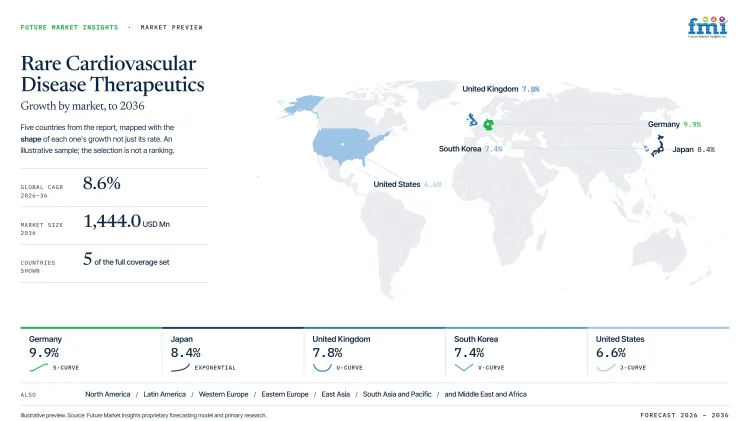
| Country or Market | CAGR |
|---|---|
| Germany | 9.9% |
| Japan | 8.4% |
| United Kingdom | 7.8% |
| South Korea | 7.4% |
| United States | 6.6% |
Source: Future Market Insights country analysis, 2026.
How do country-level CAGRs compare in Rare Cardiovascular Disease Therapeutics Market?
The country comparison shows a gradual step-down in growth across the markets covered. Germany and Japan occupy the upper end of the range, followed by the United Kingdom and South Korea as a closely grouped second tier. The United States remains at the lower end of the comparison. The 3.3-point spread shows a favourable growth outlook across all five markets, with relative positions reflecting different levels of market momentum. Country rates represent the disclosed comparison, and unprofiled national markets may record different growth levels.
- Germany and Japan lead the comparison and establish Europe and East Asia as the principal growth clusters among the markets shown.
- The United Kingdom and South Korea follow closely, indicating a limited gap from the leading group.
- The United States completes the comparison and maintains a positive forecast despite its lower position within the profiled set.
- The pattern resembles a gradual downward slope instead of a sharp separation between faster-growing and slower-growing markets.
Markets carrying similar CAGRs may present different entry conditions driven by regulatory pathways and rare cardiovascular treatment readiness. The full report provides country-level analysis across North America, Latin America, Europe, East Asia, South Asia and Pacific, and the Middle East and Africa.
Country-wise Analysis
- Industry in Germany is projected to rise at 9.9% CAGR during the study period, influenced by cardiomyopathy referral centres and structured myosin-inhibitor monitoring. German REDUCE-Registry investigators reported in November 2025 enrolment of 200 obstructive HCM patients across seven referral centres, providing local evidence on treatment selection and follow-up. Registry findings help treatment centres refine dose reviews across established referral pathways.
- Pharmaceuticals and Medical Devices Agency records dated March 2025 listed 2 rare cardiovascular approvals covering Camzyos and Beyonttra, expanding treatment choice across HCM and ATTR-CM. Demand in Japan is predicted to progress at 8.4% CAGR by 2036, reflecting measured adoption and disciplined post-approval surveillance. Local prescribing decisions favour products supported by clear monitoring instructions and orderly specialist follow-up.
- Sector in the United Kingdom is anticipated to scale at 7.8% CAGR between 2026 and 2036, guided by defined prescribing routes and specialist reimbursement review. Medicines and Healthcare products Regulatory Agency estimated in April 2025 around 600 United Kingdom residents with wild-type ATTR-CM, highlighting focused treatment planning for a defined diagnosed population. Central assessment supports consistent treatment entry across specialist cardiology services.
- Korean Circulation Journal published in March 2025 a prospective study involving 46 mavacamten-treated patients across seven tertiary hospitals, providing local evidence for obstructive HCM management. The market in South Korea is forecast to grow at 7.4% CAGR during the assessment period, backed by tertiary-care expertise and measured treatment evaluation. Tertiary networks shorten the learning period for newly introduced cardiac medicines.
- Demand in the United States is likely to record 6.6% CAGR from 2026 to 2036, helped by expansion from an established specialist and payer base. United States Food and Drug Administration reported 94 domestic participants within a registration-supporting Myqorzo trial, providing locally grounded evidence for symptomatic obstructive HCM treatment. Payer scrutiny directs manufacturers toward evidence covering functional improvement and surveillance burden.
Who are notable companies in Rare Cardiovascular Disease Therapeutics Market?
Bristol Myers Squibb, Cytokinetics, Pfizer, Alnylam Pharmaceuticals, BridgeBio Pharma, Bayer, Tenaya Therapeutics, Lexeo Therapeutics, and Cardiol Therapeutics are the notable companies contributing to this market.
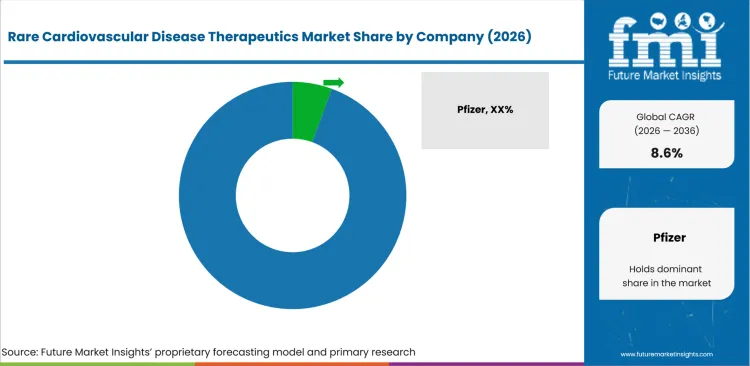
Competition in rare cardiovascular disease therapeutics is expected to focuses on phenotype-specific evidence and treatment support. Specialist teams are likely to compare clinical benefit and surveillance burden prior to medicine selection. Approved-product companies are anticipated to receive attention through established labels and physician education. Clinical-stage developers are projected to gain review due to evidence addressing inherited disease causes or recurring inflammation.
- Bristol Myers Squibb and Cytokinetics are expected to compete based on cardiac myosin inhibitors for symptomatic obstructive hypertrophic cardiomyopathy. Cardiomyopathy centres are likely to assess dose guidance and ventricular-function monitoring across complete treatment pathways.
- Pfizer and Alnylam Pharmaceuticals are projected to compete led by transthyretin cardiomyopathy. BridgeBio Pharma and Bayer expand stabilizer competition in selected territories. Specialist services are expected to compare mechanism and administration frequency. Clinical outcomes and medicine access complete product evaluation.
- Tenaya Therapeutics and Lexeo Therapeutics are anticipated to support genetic cardiomyopathy evaluation through mutation-directed clinical programs. Trial progress is expected to influence specialist review depending on inherited myocardial disorders.
- Cardiol Therapeutics is likely to receive clinical attention through its recurrent pericarditis program. Phase III progress is anticipated to influence future review extending to inflammatory cardiovascular services.
Competitive Benchmarking: Rare Cardiovascular Disease Therapeutics Market
| Company | Portfolio Depth | Clinical Match | Treatment Support | Geographic Reach |
|---|---|---|---|---|
| Bristol Myers Squibb | High | High | High | International markets |
| Cytokinetics, Incorporated | Focused | High | High | United States with selected international markets |
| Pfizer Inc. | High | High | High | International markets |
| Alnylam Pharmaceuticals, Inc. | High | High | High | United States and European markets |
| BridgeBio Pharma, Inc. | Focused | High | High | United States and selected international markets |
| Bayer AG | High | High | High | European and selected international markets |
| Tenaya Therapeutics, Inc. | Focused | Medium | Medium | United States development sites |
| Lexeo Therapeutics, Inc. | Focused | Medium | Medium | United States development sites |
| Cardiol Therapeutics Inc. | Focused | Medium | Medium | United States and selected study markets |
Source: Future Market Insights competitive analysis, 2026.
Key Developments in Rare Cardiovascular Disease Therapeutics Market
- In February 2025, Bayer announced European Commission marketing authorisation for Beyonttra in adult wild-type or variant ATTR-CM. Approval expanded acoramidis availability across European specialist services and increased transthyretin-stabiliser competition.
- In March 2025, Alnylam Pharmaceuticals announced United States approval of Amvuttra for adult ATTR-CM. Expanded indication coverage introduced an RNA interference option intended to reduce cardiovascular death and recurring acute-care events.
- In December 2025, Cytokinetics announced United States approval of Myqorzo for adults with symptomatic obstructive HCM. Approval added another cardiac myosin inhibitor and expanded physician choice across monitored HCM treatment pathways.
Key Players in Rare Cardiovascular Disease Therapeutics Market
Approved HCM Therapy Companies
- Bristol Myers Squibb
- Cytokinetics, Incorporated
Approved ATTR-CM Therapy Companies
- Pfizer Inc.
- Alnylam Pharmaceuticals, Inc.
- BridgeBio Pharma, Inc.
- Bayer AG
Genetic Cardiomyopathy Developers
- Tenaya Therapeutics, Inc.
- Lexeo Therapeutics, Inc.
Inflammatory Cardiovascular Therapy Developer
- Cardiol Therapeutics Inc.
Rare Cardiovascular Disease Therapeutics Market Report Scope
| Coverage Field | Report Scope |
|---|---|
| Market Breakdown | Rare cardiovascular disease therapeutics breakdown by indication, therapy type, stage, end user, and region |
| Market Definition | Medicines and clinical-stage therapies directed at uncommon inherited, protein-mediated, and inflammatory cardiovascular diseases |
| Regions Covered | North America, Latin America, Western Europe, Eastern Europe, East Asia, South Asia and Pacific, and Middle East and Africa |
| Countries Covered | United States, United Kingdom, Germany, Japan, South Korea, and additional national markets |
| Key Companies Profiled | Bristol Myers Squibb, Cytokinetics, Pfizer, Alnylam Pharmaceuticals, BridgeBio Pharma, Bayer, Tenaya Therapeutics, Lexeo Therapeutics, and Cardiol Therapeutics |
| Forecast Period | 2026 to 2036 |
| Approach | Hybrid bottom-up and top-down assessment using preserved market values, segment shares, country CAGRs, clinical evidence, regulatory status, and company participation |
Source: Future Market Insights report analysis, 2026.
Rare Cardiovascular Disease Therapeutics Market - Research Methodology
| Method | Approach |
|---|---|
| Primary Research |
FMI analysts gathered input from manufacturers, service providers, technology developers, distributors, end users, sourcing teams, and subject-matter experts. Interviews examined purchasing decisions, product or service evaluation, adoption barriers, approval requirements, pricing considerations, and expectations for technical or commercial support. Respondents were also asked what evidence is required before a trial, pilot, or initial order develops into regular purchasing. |
| Desk Research | Desk research covered government statistics, regulatory publications, trade data, industry associations, technical literature, standards, company filings, product information, and official corporate announcements. Sources were reviewed for relevance, publication date, geographic coverage, and consistency with the defined market scope. Claims relating to performance, applications, approvals, capacity, investment, and commercial activity were retained only when supported by credible public evidence. |
| Market Sizing and Forecasting | The market model combined the baseline value with historical performance, segment structure, pricing and volume indicators, adoption levels, company participation, and country-level demand conditions. Forecast assumptions considered economic activity, investment trends, regulatory developments, technology adoption, purchasing cycles, supply availability, and barriers to wider market use. Segment and regional estimates were reconciled before the final market total was calculated. |
| Data Validation | Estimates were checked against multiple independent indicators, including public data, company activity, trade patterns, industry developments, and findings from primary interviews. Validation also tested whether products, services, applications, and company revenues fell within the defined market boundaries. Adjacent categories, unsupported claims, overlapping revenues, and activities without direct market relevance were excluded to reduce double counting and maintain consistency across segments and countries. |
Source: Future Market Insights research analysis, 2026.
Rare Cardiovascular Disease Therapeutics Market by Segments
Rare Cardiovascular Disease Therapeutics Market Segmented by Indication
- Hypertrophic Cardiomyopathy (43.0% share in 2026)
- ATTR Amyloidosis
- Arrhythmogenic Right Ventricular Cardiomyopathy
- Pericarditis
- Others
Rare Cardiovascular Disease Therapeutics Market Segmented by Therapy Type
- Gene Therapy (44.5% share in 2026)
- Small Molecules
- Biologics
- RNA Therapeutics
Rare Cardiovascular Disease Therapeutics Market Segmented by Stage
- Marketed (34.2% share in 2026)
- Phase III
- Phase II
- Preclinical
Rare Cardiovascular Disease Therapeutics Market Segmented by End User
- Hospitals (49.6% share in 2026)
- Specialty Clinics
- Research Institutes
Rare Cardiovascular Disease Therapeutics Market Segmented by Region
- North America
- United States
- Canada
- Latin America
- Brazil
- Mexico
- Argentina
- Chile
- Western Europe
- Germany
- France
- United Kingdom
- Italy
- Spain
- Benelux
- Nordics
- Eastern Europe
- Poland
- Czech Republic
- Romania
- Hungary
- East Asia
- China
- Japan
- South Korea
- South Asia and Pacific
- India
- ASEAN
- Australia and New Zealand
- Middle East and Africa
- GCC Countries
- South Africa
- Türkiye
- Israel
Research Sources and Bibliography
- Alnylam Pharmaceuticals, Inc. (2025, March 20). Alnylam announces FDA approval of AMVUTTRA® (vutrisiran), the first RNAi therapeutic to reduce cardiovascular death, hospitalizations and urgent heart failure visits in adults with ATTR amyloidosis with cardiomyopathy (ATTR-CM).
- Asmuss, B., Baldus, S., Pfister, R., et al. (2025, November 5). Real-world insights into treatment modalities and emerging myosin inhibitor therapy for hypertrophic obstructive cardiomyopathy: Early findings from the German REDUCE-Registry. European Heart Journal, 46(Supplement 1), ehaf784.2627.
- Bayer AG. (2025, February 11). Heart drug Beyonttra™ (acoramidis) approved in EU for treatment of transthyretin amyloidosis in adults with cardiomyopathy.
- BridgeBio Pharma, Inc. (2025, May 13). First participant dosed with acoramidis in ACT-EARLY, the first ever ATTR primary prevention study.
- BridgeBio Pharma, Inc. (2026, January 12). BridgeBio announces commercial progress, program updates, and 2026 milestones at the 44th Annual J.P. Morgan Healthcare Conference.
- Bristol Myers Squibb. (2026, June 1). USA Food and Drug Administration accepts for priority review Bristol Myers Squibb’s supplemental new drug application for Camzyos (mavacamten) to treat adolescents with symptomatic obstructive hypertrophic cardiomyopathy (oHCM).
- Cardiol Therapeutics Inc. (2026, April 28). Cardiol Therapeutics expands USA MAVERIC Phase III trial network to address growing interest in the pivotal program.
- Cytokinetics, Incorporated. (2025, December 19). Cytokinetics announces FDA approval of MYQORZO™ (aficamten) for the treatment of adults with symptomatic obstructive hypertrophic cardiomyopathy to improve functional capacity and symptoms.
- Desai, M. Y., Owens, A. T., Abraham, T., Olivotto, I., Garcia-Pavia, P., Lopes, R. D., Elliott, P., et al. (2025, August 30). Mavacamten in symptomatic nonobstructive hypertrophic cardiomyopathy. New England Journal of Medicine, 393(10), 961-972.
- Fontana, M., Berk, J. L., Gillmore, J. D., Witteles, R. M., Grogan, M., Drachman, B., Damy, T., et al. (2024, August 30). Vutrisiran in patients with transthyretin amyloidosis with cardiomyopathy. New England Journal of Medicine, 392(1), 33-44.
- Lexeo Therapeutics, Inc. (2026, January 12). Lexeo Therapeutics announces positive interim Phase I/II data for LX2020 for the treatment of PKP2-associated arrhythmogenic cardiomyopathy.
- Lim, J., Cho, J. Y., Kwak, S., Park, C. S., Park, J., Choi, H. M., Cho, G. Y., et al. (2025, March 19). Real-world experience of mavacamten for patients with obstructive hypertrophic cardiomyopathy in South Korea: A prospective multi-center observational study. Korean Circulation Journal, 55(4), 339-354.
- Medicines and Healthcare products Regulatory Agency. (2025, April 25). Acoramidis approved to treat wild-type or variant transthyretin amyloidosis in adults with cardiomyopathy.
- Pharmaceuticals and Medical Devices Agency. (2025, March). Review reports: Drugs.
- Tenaya Therapeutics, Inc. (2025, March 31). Tenaya Therapeutics announces late breaker presentation of new data from MyPEAK™-1 Phase 1b/2 clinical trial of TN-201 at American College of Cardiology annual meeting.
- United States Food and Drug Administration. (2024, November 22). Drug trials snapshot: ATTRUBY.
- United States Food and Drug Administration. (2025, December 19). Drug trials snapshots: MYQORZO.
This Report Answers
- What segments influence rare cardiovascular disease therapeutic demand?
- How do cardiologists evaluate disease-specific medicines prior to routine prescribing?
- How do country growth rates differ across profiled national markets?
- What companies compete through approved products and active clinical programs?
- How are forecasts validated through clinical, regulatory, and commercial evidence?
- What evidence do hospital teams examine prior to treatment adoption?
- How do genetic diagnosis and molecular classification influence therapy selection?
- What limits commercial returns across small patient populations?
- How does specialist monitoring influence sustained medicine use?
- What company capabilities support long-term clinical confidence?
Frequently Asked Questions
How big is the Rare Cardiovascular Disease Therapeutics Market in 2026?
The rare cardiovascular disease therapeutics market is valued at USD 632.8 million in 2026 and is forecast to reach USD 1444.0 million by 2036. Growth reflects increasing adoption of disease-specific medicines, genetic diagnosis, specialist-led treatment pathways, and advanced therapies for uncommon cardiovascular conditions.
What is the CAGR of the Rare Cardiovascular Disease Therapeutics Market from 2026 to 2036?
The rare cardiovascular disease therapeutics market is projected to grow at a CAGR of 8.6% between 2026 and 2036, supported by advances in targeted therapies, improved molecular classification, clinical evidence generation, and expanded treatment access for rare cardiac disorders.
Which indication leads the Rare Cardiovascular Disease Therapeutics Market?
Hypertrophic cardiomyopathy accounts for 43.0% of the rare cardiovascular disease therapeutics market by indication in 2026, reflecting strong demand for disease-specific treatments, cardiac myosin inhibitors, and genetic programs focused on inherited myocardial disorders.
Who are the leading companies in the Rare Cardiovascular Disease Therapeutics Market?
Leading companies in the rare cardiovascular disease therapeutics market include Bristol Myers Squibb, Cytokinetics, Incorporated, Pfizer Inc., Alnylam Pharmaceuticals, Inc., BridgeBio Pharma, Inc., Bayer AG, Tenaya Therapeutics, Inc., Lexeo Therapeutics, Inc., and Cardiol Therapeutics Inc., competing across cardiac myosin inhibitors, transthyretin-directed therapies, gene therapy programs, and inflammatory cardiovascular treatments.
Preview the report firsthand - request a free sample
Get SampleGet the brochure for pricing and purchase details.
Get PDFTable of Content
- Key Takeaways
- Market Size and CAGR
- Top Growth Driver
- Fastest Growing Segment
- Leading Region
- Key Companies
- Emerging Opportunities
- Executive Summary
- Global Market Outlook
- Demand-side Trends
- Supply-side Trends
- Technology Roadmap Analysis
- Analysis and Recommendations
- Analyst Perspective (What is happening? Why now? What should investors know?)
- Key Questions Answered
- How large is the market?
- What is the CAGR?
- What are key trends?
- Which region dominates?
- Who are the leaders?
- Market Overview
- Market Coverage / Taxonomy
- Market Definition / Scope / Limitations
- Research Methodology
- Chapter Orientation
- Analytical Lens and Working Hypotheses
- Market Structure, Signals, and Trend Drivers
- Benchmarking and Cross-market Comparability
- Market Sizing, Forecasting, and Opportunity Mapping
- Research Design and Evidence Framework
- Desk Research Programme (Secondary Evidence)
- Expert Input and Fieldwork (Primary Evidence)
- Tooling, Models, and Reference Databases
- Data Engineering and Model Build
- Quality Assurance and Audit Trail
- Market Background
- Market Dynamics (Drivers, Restraints, Opportunity, Trends)
- Scenario Forecast (Optimistic, Likely, Conservative)
- Impact Analysis
- AI Impact
- Sustainability Impact
- Regulatory Impact
- Technology Impact
- Consumer / Buyer Analysis
- Purchase Drivers
- Adoption Barriers
- Buyer Journey
- Opportunity Map Analysis
- Product Life Cycle Analysis
- Supply Chain Analysis
- Investment Feasibility Matrix
- Value Chain Analysis
- PESTLE and Porter's Analysis
- Regulatory Landscape
- Regional Parent Market Outlook
- Production and Consumption Statistics
- Import and Export Statistics
- Global Market Analysis and Forecast, 2021 to 2036
- Historical Market Size Value (USD Million) Analysis, 2021 to 2025
- Current and Future Market Size Value (USD Million) Projections, 2026 to 2036
- Y-o-Y Growth Trend Analysis
- Absolute $ Opportunity Analysis
- Global Market Pricing Analysis, 2021 to 2036
- Global Market Analysis and Forecast, By Indication, 2021 to 2036
- Introduction / Key Findings
- Historical Market Size Value (USD Million) Analysis By Indication, 2021 to 2025
- Current and Future Market Size Value (USD Million) Analysis and Forecast By Indication, 2026 to 2036
- Hypertrophic Cardiomyopathy
- ATTR Amyloidosis
- Arrhythmogenic Right Ventricular Cardiomyopathy
- Pericarditis
- Others
- Hypertrophic Cardiomyopathy
- Y-o-Y Growth Trend Analysis By Indication, 2021 to 2025
- Absolute $ Opportunity Analysis By Indication, 2026 to 2036
- Global Market Analysis and Forecast, By Therapy Type, 2021 to 2036
- Introduction / Key Findings
- Historical Market Size Value (USD Million) Analysis By Therapy Type, 2021 to 2025
- Current and Future Market Size Value (USD Million) Analysis and Forecast By Therapy Type, 2026 to 2036
- Gene Therapy
- Small Molecules
- Biologics
- RNA Therapeutics
- Gene Therapy
- Y-o-Y Growth Trend Analysis By Therapy Type, 2021 to 2025
- Absolute $ Opportunity Analysis By Therapy Type, 2026 to 2036
- Global Market Analysis and Forecast, By Stage, 2021 to 2036
- Introduction / Key Findings
- Historical Market Size Value (USD Million) Analysis By Stage, 2021 to 2025
- Current and Future Market Size Value (USD Million) Analysis and Forecast By Stage, 2026 to 2036
- Marketed
- Phase III
- Phase II
- Preclinical
- Marketed
- Y-o-Y Growth Trend Analysis By Stage, 2021 to 2025
- Absolute $ Opportunity Analysis By Stage, 2026 to 2036
- Global Market Analysis and Forecast, By End User, 2021 to 2036
- Introduction / Key Findings
- Historical Market Size Value (USD Million) Analysis By End User, 2021 to 2025
- Current and Future Market Size Value (USD Million) Analysis and Forecast By End User, 2026 to 2036
- Hospitals
- Specialty Clinics
- Research Institutes
- Hospitals
- Y-o-Y Growth Trend Analysis By End User, 2021 to 2025
- Absolute $ Opportunity Analysis By End User, 2026 to 2036
- Global Market Analysis and Forecast, By Region, 2021 to 2036
- Introduction
- Historical Market Size Value (USD Million) Analysis By Region, 2021 to 2025
- Current Market Size Value (USD Million) Analysis and Forecast By Region, 2026 to 2036
- North America
- Latin America
- Western Europe
- Eastern Europe
- East Asia
- South Asia and Pacific
- Middle East & Africa
- Market Attractiveness Analysis By Region
- North America Market Analysis and Forecast, By Country, 2021 to 2036
- Historical Market Size Value (USD Million) Trend Analysis By Market Taxonomy, 2021 to 2025
- Market Size Value (USD Million) Forecast By Market Taxonomy, 2026 to 2036
- By Country
- USA
- Canada
- By Indication
- By Therapy Type
- By Stage
- By End User
- By Country
- Market Attractiveness Analysis
- By Country
- By Indication
- By Therapy Type
- By Stage
- By End User
- Key Takeaways
- Latin America Market Analysis and Forecast, By Country
- Historical Market Size Value (USD Million) Trend Analysis By Market Taxonomy, 2021 to 2025
- Market Size Value (USD Million) Forecast By Market Taxonomy, 2026 to 2036
- By Country
- Brazil
- Mexico
- Chile
- Rest of Latin America
- By Indication
- By Therapy Type
- By Stage
- By End User
- By Country
- Market Attractiveness Analysis
- By Country
- By Indication
- By Therapy Type
- By Stage
- By End User
- Key Takeaways
- Western Europe Market Analysis and Forecast, By Country
- Historical Market Size Value (USD Million) Trend Analysis By Market Taxonomy, 2021 to 2025
- Market Size Value (USD Million) Forecast By Market Taxonomy, 2026 to 2036
- By Country
- Germany
- UK
- Italy
- Spain
- France
- Nordic
- BENELUX
- Rest of Western Europe
- By Indication
- By Therapy Type
- By Stage
- By End User
- By Country
- Market Attractiveness Analysis
- By Country
- By Indication
- By Therapy Type
- By Stage
- By End User
- Key Takeaways
- Eastern Europe Market Analysis and Forecast, By Country
- Historical Market Size Value (USD Million) Trend Analysis By Market Taxonomy, 2021 to 2025
- Market Size Value (USD Million) Forecast By Market Taxonomy, 2026 to 2036
- By Country
- Russia
- Poland
- Hungary
- Balkan & Baltic
- Rest of Eastern Europe
- By Indication
- By Therapy Type
- By Stage
- By End User
- By Country
- Market Attractiveness Analysis
- By Country
- By Indication
- By Therapy Type
- By Stage
- By End User
- Key Takeaways
- East Asia Market Analysis and Forecast, By Country
- Historical Market Size Value (USD Million) Trend Analysis By Market Taxonomy, 2021 to 2025
- Market Size Value (USD Million) Forecast By Market Taxonomy, 2026 to 2036
- By Country
- China
- Japan
- South Korea
- By Indication
- By Therapy Type
- By Stage
- By End User
- By Country
- Market Attractiveness Analysis
- By Country
- By Indication
- By Therapy Type
- By Stage
- By End User
- Key Takeaways
- South Asia and Pacific Market Analysis and Forecast, By Country
- Historical Market Size Value (USD Million) Trend Analysis By Market Taxonomy, 2021 to 2025
- Market Size Value (USD Million) Forecast By Market Taxonomy, 2026 to 2036
- By Country
- India
- ASEAN
- Australia & New Zealand
- Rest of South Asia and Pacific
- By Indication
- By Therapy Type
- By Stage
- By End User
- By Country
- Market Attractiveness Analysis
- By Country
- By Indication
- By Therapy Type
- By Stage
- By End User
- Key Takeaways
- Middle East & Africa Market Analysis and Forecast, By Country
- Historical Market Size Value (USD Million) Trend Analysis By Market Taxonomy, 2021 to 2025
- Market Size Value (USD Million) Forecast By Market Taxonomy, 2026 to 2036
- By Country
- Kingdom of Saudi Arabia
- Other GCC Countries
- Türkiye
- South Africa
- Other African Union
- Rest of Middle East & Africa
- By Indication
- By Therapy Type
- By Stage
- By End User
- By Country
- Market Attractiveness Analysis
- By Country
- By Indication
- By Therapy Type
- By Stage
- By End User
- Key Takeaways
- Key Countries Market Analysis
- USA
- Pricing Analysis
- Market Share Analysis, 2025
- By Indication
- By Therapy Type
- By Stage
- By End User
- Canada
- Pricing Analysis
- Market Share Analysis, 2025
- By Indication
- By Therapy Type
- By Stage
- By End User
- Mexico
- Pricing Analysis
- Market Share Analysis, 2025
- By Indication
- By Therapy Type
- By Stage
- By End User
- Brazil
- Pricing Analysis
- Market Share Analysis, 2025
- By Indication
- By Therapy Type
- By Stage
- By End User
- Chile
- Pricing Analysis
- Market Share Analysis, 2025
- By Indication
- By Therapy Type
- By Stage
- By End User
- Germany
- Pricing Analysis
- Market Share Analysis, 2025
- By Indication
- By Therapy Type
- By Stage
- By End User
- UK
- Pricing Analysis
- Market Share Analysis, 2025
- By Indication
- By Therapy Type
- By Stage
- By End User
- Italy
- Pricing Analysis
- Market Share Analysis, 2025
- By Indication
- By Therapy Type
- By Stage
- By End User
- Spain
- Pricing Analysis
- Market Share Analysis, 2025
- By Indication
- By Therapy Type
- By Stage
- By End User
- France
- Pricing Analysis
- Market Share Analysis, 2025
- By Indication
- By Therapy Type
- By Stage
- By End User
- India
- Pricing Analysis
- Market Share Analysis, 2025
- By Indication
- By Therapy Type
- By Stage
- By End User
- ASEAN
- Pricing Analysis
- Market Share Analysis, 2025
- By Indication
- By Therapy Type
- By Stage
- By End User
- Australia & New Zealand
- Pricing Analysis
- Market Share Analysis, 2025
- By Indication
- By Therapy Type
- By Stage
- By End User
- China
- Pricing Analysis
- Market Share Analysis, 2025
- By Indication
- By Therapy Type
- By Stage
- By End User
- Japan
- Pricing Analysis
- Market Share Analysis, 2025
- By Indication
- By Therapy Type
- By Stage
- By End User
- South Korea
- Pricing Analysis
- Market Share Analysis, 2025
- By Indication
- By Therapy Type
- By Stage
- By End User
- Russia
- Pricing Analysis
- Market Share Analysis, 2025
- By Indication
- By Therapy Type
- By Stage
- By End User
- Poland
- Pricing Analysis
- Market Share Analysis, 2025
- By Indication
- By Therapy Type
- By Stage
- By End User
- Hungary
- Pricing Analysis
- Market Share Analysis, 2025
- By Indication
- By Therapy Type
- By Stage
- By End User
- Kingdom of Saudi Arabia
- Pricing Analysis
- Market Share Analysis, 2025
- By Indication
- By Therapy Type
- By Stage
- By End User
- Türkiye
- Pricing Analysis
- Market Share Analysis, 2025
- By Indication
- By Therapy Type
- By Stage
- By End User
- South Africa
- Pricing Analysis
- Market Share Analysis, 2025
- By Indication
- By Therapy Type
- By Stage
- By End User
- USA
- Market Structure Analysis
- Competition Dashboard
- Competition Benchmarking
- Market Share Analysis of Top Players
- By Regional
- By Indication
- By Therapy Type
- By Stage
- By End User
- Emerging Startups
- Innovation Benchmarking
- Competition Analysis
- Competition Deep Dive
- Pfizer
- Overview
- Product Portfolio
- Profitability by Market Segments
- Sales Footprint
- Strategy Overview
- Marketing Strategy
- Product Strategy
- Channel Strategy
- Novartis
- Bristol Myers Squibb
- AstraZeneca
- Tenaya Therapeutics
- Cardiol Therapeutics
- MyoKardia (BMS)
- BridgeBio
- Pfizer
- Case Studies
- Success Stories
- Recent Developments
- Competition Deep Dive
- Assumptions & Acronyms Used


