

- Industry Size (2026)
- USD 860 Mn
- Forecast (2036)
- USD 2971.4 Mn
- CAGR (2026 to 2036)
- 13.2%
Reusable E-Commerce Parcel Box and Crate Pooling Systems Market Forecast and Outlook 2026 to 2036
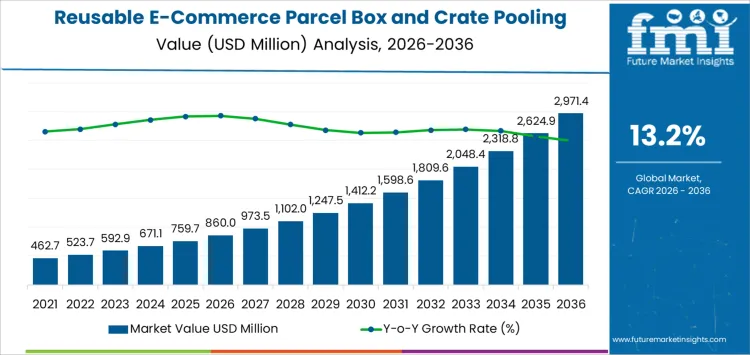
The market for reusable e-commerce parcel box and crate pooling systems is expected to grow from USD 860 million in 2026 to USD 2,971.4 million by 2036, reflecting a compound annual growth rate (CAGR) of 13.2%. As e-commerce continues to expand globally, the demand for efficient, sustainable, and cost-effective packaging solutions is growing. Reusable parcel boxes and crate pooling systems are gaining traction due to their environmental benefits, cost savings over time, and efficiency in managing returnable packaging. These systems help reduce packaging waste and are aligned with the global push toward sustainability, making them increasingly attractive to both businesses and consumers.
Quick Stats for Reusable E-Commerce Parcel Box and Crate Pooling Systems Market
- Reusable E-Commerce Parcel Box and Crate Pooling Systems Market Value (2026): USD 860 million
- Reusable E-Commerce Parcel Box and Crate Pooling Systems Market Forecast Value (2036): USD 2,971.4 million
- Reusable E-Commerce Parcel Box and Crate Pooling Systems Market Global Forecast CAGR (2026–2036): 13.2%
- Top End User by Share in Reusable E-Commerce Parcel Box and Crate Pooling Systems Market: E-Commerce Retailers (52%)
- Key Growth Regions in Reusable E-Commerce Parcel Box and Crate Pooling Systems Market: India, China, USA, Brazil, Germany
- Top Players in Reusable E-Commerce Parcel Box and Crate Pooling Systems Market: LOLA&LOLA (HUBBOX), Packsize (ePac), Ecube Labs, Returnity (Returnity Solutions Inc.), RePack
The market’s growth is also driven by the rising awareness of the environmental impact of single-use packaging and the regulatory pressures to reduce waste. E-commerce businesses, logistics companies, and retailers are adopting these systems to meet sustainability goals while improving their supply chain efficiency. As the technology and infrastructure around these systems continue to improve, the adoption of reusable parcel box and crate pooling systems is expected to increase rapidly, further driving market expansion in the coming years.
What is the Growth Forecast for the Reusable E-Commerce Parcel Box and Crate Pooling Systems Market through 2036?
The compound annual growth rate (CAGR) analysis for the reusable e-commerce parcel box and crate pooling systems market shows a steady and significant increase in demand throughout the forecast period. Starting at USD 860 million in 2026, the market grows to USD 975.24 million in 2027, USD 1,105.48 million in 2028, and USD 1,251.18 million in 2029, reflecting growing adoption as businesses seek more sustainable and cost-effective packaging solutions.
From 2029 to 2030, the market continues its upward trajectory, reaching USD 1,413.73 million in 2030, driven by further penetration of reusable systems across e-commerce and logistics sectors. The pace of growth accelerates in the following years, with the market reaching USD 1,594.70 million in 2031, USD 1,795.87 million in 2032, and USD 2,019.31 million in 2033. By 2036, the market is projected to reach USD 2,971.4 million, reflecting robust growth in the adoption of reusable parcel box and crate pooling systems across industries. The CAGR analysis highlights consistent and strong growth, fueled by sustainability trends and the growing demand for efficient, returnable packaging solutions in the e-commerce sector.
Reusable E-Commerce Parcel Box and Crate Pooling Systems Market Key Takeaways
| Metric | Value |
|---|---|
| Industry Sales Value (2026) | USD 860 million |
| Industry Forecast Value (2036) | USD 2,971.4 million |
| Industry Forecast CAGR (2026-2036) | 13.2% |
What Is Driving the Demand for Reusable E Commerce Parcel Box and Crate Pooling Systems Globally?
The global demand for reusable e commerce parcel box and crate pooling systems is driven by the rapid growth of online shopping and rising focus on reducing packaging waste and logistics cost. As e commerce volumes expand, traditional single use cardboard boxes and packaging contribute to higher waste streams and handling inefficiencies. Retailers, carriers, and logistics providers are exploring reusable parcel boxes and crate pooling systems that circulate durable containers through supply chains, enabling multiple shipments without repeated disposal. These systems offer benefits in lower long term packaging expenditure and reduced environmental footprint compared with single use alternatives, which appeals to companies facing regulatory pressure on packaging waste and consumer preference for sustainable practices. Pooling systems, where reusable boxes and crates are shared across networks and returned for reuse, support circularity while improving operational consistency and load handling in warehouses, sortation centres, and last mile delivery.
Future demand for reusable e commerce parcel box and crate pooling systems is expected to grow as e commerce penetration continues and sustainability commitments strengthen across retail and logistics sectors. Increasing regulatory requirements on packaging reduction, waste diversion, and recycled content will reinforce interest in reusable solutions. Investment in logistics infrastructure that supports reverse logistics and container tracking will enhance the feasibility of pooling networks at scale. Technology such as RFID and cloud based tracking can improve visibility and utilisation of pooled containers, lowering loss and inefficiency. As major retailers and carriers adopt reusable systems to meet corporate environmental goals, market uptake will expand beyond early adopters into broader logistics operations. Cost competitiveness, ease of integration with existing supply chains, and demonstrated total cost of ownership advantages will shape future growth. Demand will be sustained by the dual need to manage e commerce growth and reduce packaging waste footprint in global supply chains.
What Are the Key Segments in Reusable E-Commerce Parcel Box and Crate Pooling Systems Market?
The reusable e-commerce parcel box and crate pooling systems market is segmented by system type and end user. Reusable parcel boxes lead the system type segment with 44% of the market share, offering durable and sustainable solutions for e-commerce logistics. E-commerce retailers dominate the end-user segment with 52%, driven by the increasing demand for efficient, eco-friendly packaging solutions in the retail sector. The market is expanding as businesses look to reduce their carbon footprint and improve operational efficiency through reusable packaging systems.
Which System Type Drives Reusable E-Commerce Parcel Box and Crate Pooling Systems Market Demand Globally?
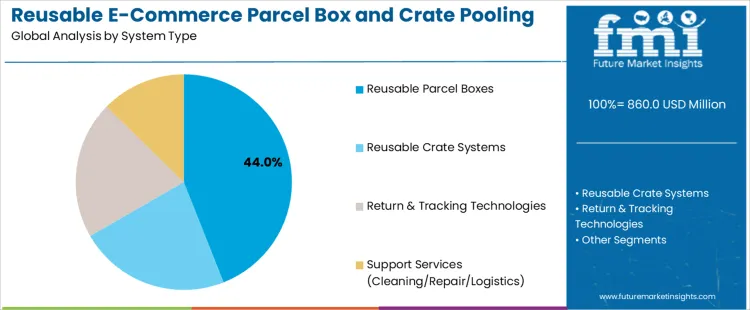
Reusable parcel boxes account for 44% of the market share. These boxes are designed to be used multiple times, reducing the need for single-use cardboard packaging in e-commerce logistics. Reusable parcel boxes are particularly favored for their durability and ability to withstand repeated handling and shipping processes. They help businesses reduce waste, lower packaging costs, and improve operational efficiency, which are critical for companies focused on sustainability and cost reduction. The rising awareness of environmental issues, coupled with growing regulatory pressures to reduce packaging waste, is driving the adoption of reusable parcel boxes in the e-commerce industry. These boxes also offer the added benefit of being easily returnable, providing an efficient way to manage reverse logistics and reduce packaging material consumption over time.
Which End User Drives Reusable E-Commerce Parcel Box and Crate Pooling Systems Market Demand Globally?
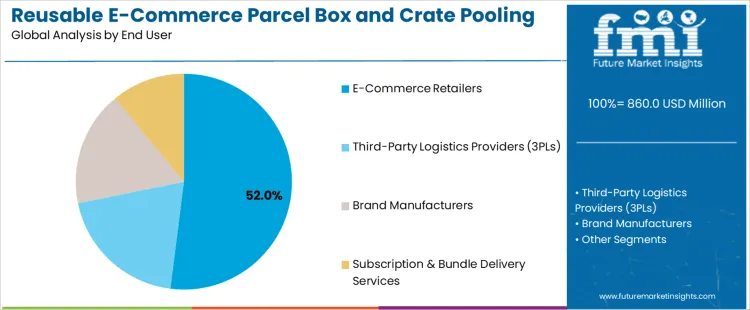
E-commerce retailers lead the end-user segment with 52% of the market share. E-commerce retailers are increasingly adopting reusable parcel boxes and crate pooling systems to enhance the sustainability of their logistics operations. These solutions are particularly attractive for retailers looking to minimize the environmental impact of packaging waste, which is a growing concern among consumers and regulators. By using reusable packaging, e-commerce companies can improve their brand image, reduce waste, and meet sustainability goals. In addition, reusable systems help reduce long-term operational costs by cutting down on the need for single-use packaging materials. The rise in consumer demand for eco-friendly packaging and the growing focus on reducing logistics costs are major drivers of adoption among e-commerce retailers. While other end users, such as third-party logistics providers (3PLs), brand manufacturers, and subscription & bundle delivery services, also contribute to market growth, e-commerce retailers remain the dominant segment due to their scale and focus on operational efficiency and sustainability.
What are the Key Dynamics of the Global Reusable E Commerce Parcel Box and Crate Pooling Systems Market?
The global reusable e commerce parcel box and crate pooling systems market is growing as online retail volumes expand and logistics providers seek ways to reduce packaging waste, lower costs and improve sustainability. Reusable parcel boxes and crates are circulated through pooling networks to replace single use packaging in last mile delivery, returns handling and warehouse storage. Adoption is supported by corporate environmental commitments and regulatory focus on waste reduction across regions. Logistics companies, brands and third party pooling operators are collaborating to scale systems that deliver reliable reuse lifecycles and operational efficiencies for global e commerce supply chains.
What are the Key Drivers for the Global Reusable E Commerce Parcel Box and Crate Pooling Systems Market?
Drivers include rising e commerce sales and the need to manage volumes of packaging waste created by single use cardboard and plastic. Retailers and carriers are prioritizing reuse models that reduce material costs and environmental footprint. Corporate sustainability goals and regulatory frameworks that encourage circular packaging solutions motivate investment in pooling networks. Advancements in tracking technology and digital platforms make asset management of reusable boxes and crates more efficient and reliable. Growing consumer preference for lower impact delivery options supports adoption, while partnerships among brands, carriers and pooling operators facilitate broader implementation across regions.
What are the Restraints for the Global Reusable E Commerce Parcel Box and Crate Pooling Systems Market?
One restraint is the initial cost and complexity of establishing pooling infrastructure, including collection points, storage hubs and reverse logistics flows that support reuse cycles. Logistics providers must manage additional handling steps and transportation to collect, clean and redistribute reusable assets. Variability in return rates and customer compliance with reverse flows can reduce system efficiency. Standardization of box and crate sizes is challenging across diverse product dimensions and retailer requirements, which can complicate interoperability. Some markets lack supportive policy frameworks or incentives to accelerate reuse models, limiting uptake compared to conventional packaging.
What is the Key Trends in the Global Reusable E Commerce Parcel Box and Crate Pooling Systems Market?
A key trend is integration of digital tracking and IoT sensors that enable real time visibility of reusable assets, supporting optimization of inventory levels and flow patterns. Platforms that link multiple stakeholders such as retailers, carriers and pooling operators are enabling scalable reuse ecosystems that reduce idle time and improve utilization. Service models that bundle pooling with returns management and warehousing are gaining interest. Circular supply chain strategies and material reduction commitments from major brands are driving broader adoption. Standardized pooling protocols and collaboration across industries are being developed to support wider, long term use of reusable parcel boxes and crates for e commerce operations.
What is the Country-Wise Outlook for Reusable E-Commerce Parcel Box and Crate Pooling Systems?
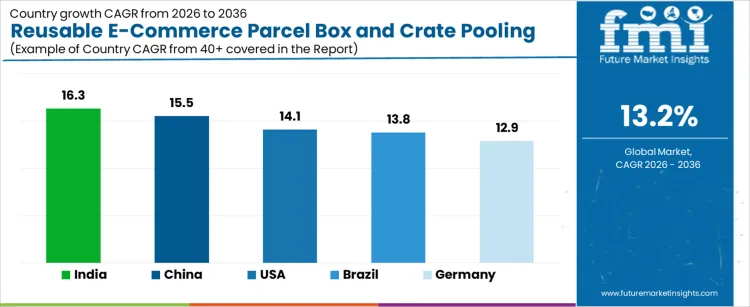
The Reusable E-Commerce Parcel Box and Crate Pooling Systems market is experiencing significant growth across multiple regions, driven by the expanding e-commerce industry and the increasing demand for more sustainable and cost-effective logistics solutions. The rapid growth of online retail is leading to a higher demand for packaging that can be reused, reducing waste and improving overall efficiency. Countries such as India, China, the USA, Brazil, and Germany are all witnessing substantial growth in this market, driven by the adoption of eco-friendly packaging solutions. Reusable parcel boxes and crate pooling systems offer several benefits, such as reduced packaging waste, improved operational efficiency, and lower logistics costs. As the global focus on sustainability increases, the market for these innovative systems is expected to continue expanding across these regions in the coming years.
| Country | CAGR (2026–2036) |
|---|---|
| India | 16.3% |
| China | 15.5% |
| USA | 14.1% |
| Brazil | 13.8% |
| Germany | 12.9% |
What is Driving the Growth of Reusable E-Commerce Parcel Box and Crate Pooling Systems in India?
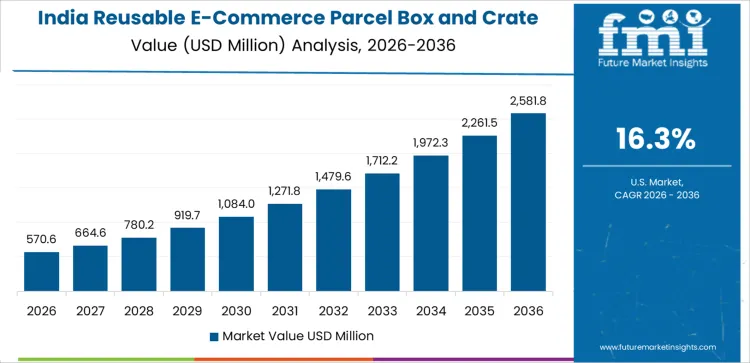
India’s Reusable E-Commerce Parcel Box and Crate Pooling Systems market is projected to grow at a CAGR of 16.3%. This growth is primarily driven by the rapid expansion of the e-commerce sector, which is increasingly focusing on adopting sustainable and cost-effective logistics solutions. As e-commerce platforms grow, the demand for packaging that reduces waste and is reusable has increased significantly. India is also seeing a shift toward more environmentally responsible business practices, with both consumers and companies pushing for sustainable alternatives to traditional packaging. With a rising emphasis on reducing plastic waste and improving the overall environmental impact of logistics operations, reusable parcel boxes and crate pooling systems are becoming more widely adopted in India’s rapidly growing e-commerce sector. The growing awareness of the environmental impact of packaging, along with government incentives supporting sustainable business practices, further contributes to the market's strong growth in India.
What is Contributing to the Growth of Reusable E-Commerce Parcel Box and Crate Pooling Systems in China?
China’s Reusable E-Commerce Parcel Box and Crate Pooling Systems market is expected to grow at a CAGR of 15.5%. As one of the world’s largest e-commerce markets, China’s rapid adoption of online retail has spurred the demand for more efficient and sustainable packaging solutions. The need to reduce packaging waste and the increasing focus on environmental sustainability are key drivers of this market. Reusable parcel boxes and crate pooling systems offer significant advantages, including reducing the environmental footprint and lowering packaging costs. As China continues to prioritize sustainability and eco-friendly initiatives across various industries, the demand for reusable packaging solutions in e-commerce logistics is expected to grow steadily. China’s emphasis on waste reduction and improving logistics efficiency further supports the widespread adoption of these systems, making them an essential part of the country’s evolving e-commerce infrastructure.
What is Driving the Reusable E-Commerce Parcel Box and Crate Pooling Systems Market Growth in the USA?
The USA’s Reusable E-Commerce Parcel Box and Crate Pooling Systems market is projected to grow at a CAGR of 14.1%. The increasing focus on sustainability and the growing environmental consciousness of consumers are driving the adoption of reusable packaging solutions in the e-commerce sector. As e-commerce continues to expand in the USA, companies are seeking innovative ways to reduce packaging waste and improve efficiency in their logistics operations. Reusable parcel boxes and crate pooling systems are becoming essential tools for meeting these demands, offering both environmental and cost-saving benefits. The growing pressure from regulatory bodies to reduce the environmental impact of logistics operations and packaging materials further accelerates the adoption of these systems. As the demand for greener solutions grows, the market for reusable e-commerce parcel box and crate pooling systems in the USA is expected to experience steady growth, driven by the need for more sustainable, efficient, and cost-effective logistics solutions.
What is Influencing the Growth of Reusable E-Commerce Parcel Box and Crate Pooling Systems in Brazil?
Brazil’s Reusable E-Commerce Parcel Box and Crate Pooling Systems market is projected to grow at a CAGR of 13.8%. The rapid growth of the e-commerce sector in Brazil, combined with increasing awareness of environmental issues, is driving the demand for more sustainable packaging solutions. Reusable parcel boxes and crate pooling systems offer an eco-friendly alternative to traditional packaging methods, which are often wasteful and contribute to environmental pollution. As Brazil continues to expand its e-commerce infrastructure, the adoption of reusable packaging solutions is becoming a priority for companies looking to optimize their supply chains and reduce costs. The Brazilian government’s focus on promoting sustainability and the global push for reducing plastic waste further contributes to the growing adoption of reusable packaging systems. With the rising demand for environmentally responsible practices in e-commerce, the market for these systems is expected to experience steady growth in Brazil.
What is Contributing to the Growth of Reusable E-Commerce Parcel Box and Crate Pooling Systems in Germany?
Germany’s Reusable E-Commerce Parcel Box and Crate Pooling Systems market is expected to grow at a CAGR of 12.9%. Known for its strong focus on sustainability and environmental responsibility, Germany is increasingly adopting eco-friendly logistics solutions across various industries, including e-commerce. The demand for reusable packaging solutions is growing as companies strive to reduce waste and improve the sustainability of their operations. Reusable parcel boxes and crate pooling systems provide a practical and cost-effective solution to the packaging challenges faced by the e-commerce sector. As Germany’s e-commerce industry continues to grow, the adoption of these systems is expected to increase, driven by both consumer demand for greener products and government regulations promoting sustainability. With a strong emphasis on reducing the environmental impact of packaging materials, Germany’s market for reusable parcel boxes and crate pooling systems is projected to continue expanding, contributing to the global trend of more sustainable e-commerce logistics solutions.
What is the Competitive Landscape for the Reusable E Commerce Parcel Box and Crate Pooling Systems Market?
Demand for reusable e commerce parcel box and crate pooling systems is increasing as online retail continues to grow and companies seek sustainable packaging and logistics solutions. Traditional single use cardboard and corrugated packaging contributes significant waste, and rising consumer and regulatory pressure for circular economy practices pushes e commerce retailers and logistics providers to adopt reuse models. Reusable parcel boxes and crate pooling systems help reduce waste, lower long term packaging costs, improve package durability and support environmental, social and governance commitments. The shift toward greener logistics is driven by sustainability targets, extended producer responsibility regulations, and consumer preference for brands that minimise packaging waste. Growth in high volume markets such as fashion, electronics and consumer goods also supports wider adoption of pooled container systems that can be returned, cleaned and reused many times across delivery cycles.
On the supply side, several specialist and technology driven companies compete to provide reusable parcel box and crate pooling systems. LOLA&LOLA (HUBBOX) is recognised as a leading player with a networked platform that integrates reusable boxes with return logistics. Other competitors include Packsize (ePac), Ecube Labs, Returnity (Returnity Solutions Inc.) and RePack, each offering unique approaches to reusable packaging and pooling. Packsize focuses on right sized and sustainable packaging solutions, Ecube Labs integrates smart tracking and IoT to optimise returns and utilisation, Returnity provides reusable bags and crates for retail and logistics, and RePack specialises in reusable mailer returns for smaller goods. Competition among these firms centres on system scalability, integration with existing e commerce and logistics workflows, ease of returns for consumers, cost efficiency over multiple cycles and environmental impact metrics. Providers that combine strong platform technology, convenient return networks, robust containers and clear sustainability benefits are best positioned to capture growth as retailers and carriers accelerate adoption of reusable parcel systems worldwide.
Key Players of the Reusable E-Commerce Parcel Box and Crate Pooling Systems Market
- LOLA&LOLA (HUBBOX)
- Packsize (ePac)
- Ecube Labs
- Returnity (Returnity Solutions Inc.)
- RePack
Scope of the Report
| Items | Values |
|---|---|
| Quantitative Units (2026) | USD Million |
| System Type | Reusable Parcel Boxes, Reusable Crate Systems, Return & Tracking Technologies, Support Services (Cleaning/Repair/Logistics) |
| End User | E-Commerce Retailers, Third-Party Logistics Providers (3PLs), Brand Manufacturers, Subscription & Bundle Delivery Services |
| Companies | LOLA&LOLA (HUBBOX), Packsize (ePac), Ecube Labs, Returnity (Returnity Solutions Inc.), RePack |
| Regions Covered | North America, Latin America, Western Europe, Eastern Europe, South Asia and Pacific, East Asia, Middle East & Africa |
| Countries Covered | United States, Canada, Mexico, Brazil, Argentina, Germany, France, United Kingdom, Italy, Spain, Netherlands, China, India, Japan, South Korea, ANZ, GCC Countries, South Africa |
| Additional Attributes | Dollar by sales by system type, end-user, and region. Includes market trends in reusable parcel boxes and crate systems, performance in various e-commerce and logistics applications, demand for return and tracking technologies, cost-effectiveness, sustainability practices, regulatory compliance, market share and competitive positioning of key companies, and the role of pooling systems in enhancing logistics efficiency, reducing waste, and improving sustainability in the e-commerce and delivery industries. |
Key Segments in the Reusable E-Commerce Parcel Box and Crate Pooling Systems Market
System Type:
- Reusable Parcel Boxes
- Reusable Crate Systems
- Return & Tracking Technologies
- Support Services (Cleaning/Repair/Logistics)
End User:
- E Commerce Retailers
- Third Party Logistics Providers (3PLs)
- Brand Manufacturers
- Subscription & Bundle Delivery Services
Region:
- Asia Pacific
- China
- India
- Japan
- South Korea
- ASEAN
- Rest of Asia Pacific
- Europe
- Germany
- United Kingdom
- France
- Italy
- Spain
- Nordic
- BENELUX
- Rest of Europe
- North America
- United States
- Canada
- Mexico
- Latin America
- Brazil
- Chile
- Rest of Latin America
- Middle East & Africa
- Kingdom of Saudi Arabia
- Other GCC Countries
- Turkey
- South Africa
- Other African Union
- Rest of Middle East & Africa
Frequently Asked Questions
How big is the reusable e-commerce parcel box and crate pooling systems market in 2026?
The global reusable e-commerce parcel box and crate pooling systems market is estimated to be valued at USD 860.0 million in 2026.
What will be the size of reusable e-commerce parcel box and crate pooling systems market in 2036?
The market size for the reusable e-commerce parcel box and crate pooling systems market is projected to reach USD 2,971.4 million by 2036.
How much will be the reusable e-commerce parcel box and crate pooling systems market growth between 2026 and 2036?
The reusable e-commerce parcel box and crate pooling systems market is expected to grow at a 13.2% CAGR between 2026 and 2036.
What are the key product types in the reusable e-commerce parcel box and crate pooling systems market?
The key product types in reusable e-commerce parcel box and crate pooling systems market are reusable parcel boxes, reusable crate systems, return & tracking technologies and support services (cleaning/repair/logistics).
Which end user segment to contribute significant share in the reusable e-commerce parcel box and crate pooling systems market in 2026?
In terms of end user, e‑commerce retailers segment to command 52.0% share in the reusable e-commerce parcel box and crate pooling systems market in 2026.
Preview the report firsthand - request a free sample
Get SampleGet the brochure for pricing and purchase details.
Get PDFTable of Content
- Executive Summary
- Global Market Outlook
- Demand-side Trends
- Supply-side Trends
- Technology Roadmap Analysis
- Analysis and Recommendations
- Market Overview
- Market Coverage / Taxonomy
- Market Definition / Scope / Limitations
- Market Background
- Market Dynamics
- Drivers
- Restraints
- Opportunity
- Trends
- Scenario Forecast
- Demand in Optimistic Scenario
- Demand in Likely Scenario
- Demand in Conservative Scenario
- Opportunity Map Analysis
- Product Life Cycle Analysis
- Supply Chain Analysis
- Investment Feasibility Matrix
- Value Chain Analysis
- PESTLE and Porter’s Analysis
- Regulatory Landscape
- Regional Parent Market Outlook
- Production and Consumption Statistics
- Import and Export Statistics
- Market Dynamics
- Global Market Analysis 2021 to 2025 and Forecast, 2026 to 2036
- Historical Market Size Value (USD Million) Analysis, 2021 to 2025
- Current and Future Market Size Value (USD Million) Projections, 2026 to 2036
- Y-o-Y Growth Trend Analysis
- Absolute $ Opportunity Analysis
- Global Market Pricing Analysis 2021 to 2025 and Forecast 2026 to 2036
- Global Market Analysis 2021 to 2025 and Forecast 2026 to 2036, By System Type
- Introduction / Key Findings
- Historical Market Size Value (USD Million) Analysis By System Type , 2021 to 2025
- Current and Future Market Size Value (USD Million) Analysis and Forecast By System Type , 2026 to 2036
- Reusable Parcel Boxes
- Reusable Crate Systems
- Return & Tracking Technologies
- Support Services (Cleaning/Repair/Logistics)
- Y-o-Y Growth Trend Analysis By System Type , 2021 to 2025
- Absolute $ Opportunity Analysis By System Type , 2026 to 2036
- Global Market Analysis 2021 to 2025 and Forecast 2026 to 2036, By End User
- Introduction / Key Findings
- Historical Market Size Value (USD Million) Analysis By End User, 2021 to 2025
- Current and Future Market Size Value (USD Million) Analysis and Forecast By End User, 2026 to 2036
- E‑Commerce Retailers
- Third‑Party Logistics Providers (3PLs)
- Brand Manufacturers
- Subscription & Bundle Delivery Services
- Y-o-Y Growth Trend Analysis By End User, 2021 to 2025
- Absolute $ Opportunity Analysis By End User, 2026 to 2036
- Global Market Analysis 2021 to 2025 and Forecast 2026 to 2036, By Region
- Introduction
- Historical Market Size Value (USD Million) Analysis By Region, 2021 to 2025
- Current Market Size Value (USD Million) Analysis and Forecast By Region, 2026 to 2036
- North America
- Latin America
- Western Europe
- Eastern Europe
- East Asia
- South Asia and Pacific
- Middle East & Africa
- Market Attractiveness Analysis By Region
- North America Market Analysis 2021 to 2025 and Forecast 2026 to 2036, By Country
- Historical Market Size Value (USD Million) Trend Analysis By Market Taxonomy, 2021 to 2025
- Market Size Value (USD Million) Forecast By Market Taxonomy, 2026 to 2036
- By Country
- USA
- Canada
- Mexico
- By System Type
- By End User
- By Country
- Market Attractiveness Analysis
- By Country
- By System Type
- By End User
- Key Takeaways
- Latin America Market Analysis 2021 to 2025 and Forecast 2026 to 2036, By Country
- Historical Market Size Value (USD Million) Trend Analysis By Market Taxonomy, 2021 to 2025
- Market Size Value (USD Million) Forecast By Market Taxonomy, 2026 to 2036
- By Country
- Brazil
- Chile
- Rest of Latin America
- By System Type
- By End User
- By Country
- Market Attractiveness Analysis
- By Country
- By System Type
- By End User
- Key Takeaways
- Western Europe Market Analysis 2021 to 2025 and Forecast 2026 to 2036, By Country
- Historical Market Size Value (USD Million) Trend Analysis By Market Taxonomy, 2021 to 2025
- Market Size Value (USD Million) Forecast By Market Taxonomy, 2026 to 2036
- By Country
- Germany
- UK
- Italy
- Spain
- France
- Nordic
- BENELUX
- Rest of Western Europe
- By System Type
- By End User
- By Country
- Market Attractiveness Analysis
- By Country
- By System Type
- By End User
- Key Takeaways
- Eastern Europe Market Analysis 2021 to 2025 and Forecast 2026 to 2036, By Country
- Historical Market Size Value (USD Million) Trend Analysis By Market Taxonomy, 2021 to 2025
- Market Size Value (USD Million) Forecast By Market Taxonomy, 2026 to 2036
- By Country
- Russia
- Poland
- Hungary
- Balkan & Baltic
- Rest of Eastern Europe
- By System Type
- By End User
- By Country
- Market Attractiveness Analysis
- By Country
- By System Type
- By End User
- Key Takeaways
- East Asia Market Analysis 2021 to 2025 and Forecast 2026 to 2036, By Country
- Historical Market Size Value (USD Million) Trend Analysis By Market Taxonomy, 2021 to 2025
- Market Size Value (USD Million) Forecast By Market Taxonomy, 2026 to 2036
- By Country
- China
- Japan
- South Korea
- By System Type
- By End User
- By Country
- Market Attractiveness Analysis
- By Country
- By System Type
- By End User
- Key Takeaways
- South Asia and Pacific Market Analysis 2021 to 2025 and Forecast 2026 to 2036, By Country
- Historical Market Size Value (USD Million) Trend Analysis By Market Taxonomy, 2021 to 2025
- Market Size Value (USD Million) Forecast By Market Taxonomy, 2026 to 2036
- By Country
- India
- ASEAN
- Australia & New Zealand
- Rest of South Asia and Pacific
- By System Type
- By End User
- By Country
- Market Attractiveness Analysis
- By Country
- By System Type
- By End User
- Key Takeaways
- Middle East & Africa Market Analysis 2021 to 2025 and Forecast 2026 to 2036, By Country
- Historical Market Size Value (USD Million) Trend Analysis By Market Taxonomy, 2021 to 2025
- Market Size Value (USD Million) Forecast By Market Taxonomy, 2026 to 2036
- By Country
- Kingdom of Saudi Arabia
- Other GCC Countries
- Turkiye
- South Africa
- Other African Union
- Rest of Middle East & Africa
- By System Type
- By End User
- By Country
- Market Attractiveness Analysis
- By Country
- By System Type
- By End User
- Key Takeaways
- Key Countries Market Analysis
- USA
- Pricing Analysis
- Market Share Analysis, 2025
- By System Type
- By End User
- Canada
- Pricing Analysis
- Market Share Analysis, 2025
- By System Type
- By End User
- Mexico
- Pricing Analysis
- Market Share Analysis, 2025
- By System Type
- By End User
- Brazil
- Pricing Analysis
- Market Share Analysis, 2025
- By System Type
- By End User
- Chile
- Pricing Analysis
- Market Share Analysis, 2025
- By System Type
- By End User
- Germany
- Pricing Analysis
- Market Share Analysis, 2025
- By System Type
- By End User
- UK
- Pricing Analysis
- Market Share Analysis, 2025
- By System Type
- By End User
- Italy
- Pricing Analysis
- Market Share Analysis, 2025
- By System Type
- By End User
- Spain
- Pricing Analysis
- Market Share Analysis, 2025
- By System Type
- By End User
- France
- Pricing Analysis
- Market Share Analysis, 2025
- By System Type
- By End User
- India
- Pricing Analysis
- Market Share Analysis, 2025
- By System Type
- By End User
- ASEAN
- Pricing Analysis
- Market Share Analysis, 2025
- By System Type
- By End User
- Australia & New Zealand
- Pricing Analysis
- Market Share Analysis, 2025
- By System Type
- By End User
- China
- Pricing Analysis
- Market Share Analysis, 2025
- By System Type
- By End User
- Japan
- Pricing Analysis
- Market Share Analysis, 2025
- By System Type
- By End User
- South Korea
- Pricing Analysis
- Market Share Analysis, 2025
- By System Type
- By End User
- Russia
- Pricing Analysis
- Market Share Analysis, 2025
- By System Type
- By End User
- Poland
- Pricing Analysis
- Market Share Analysis, 2025
- By System Type
- By End User
- Hungary
- Pricing Analysis
- Market Share Analysis, 2025
- By System Type
- By End User
- Kingdom of Saudi Arabia
- Pricing Analysis
- Market Share Analysis, 2025
- By System Type
- By End User
- Turkiye
- Pricing Analysis
- Market Share Analysis, 2025
- By System Type
- By End User
- South Africa
- Pricing Analysis
- Market Share Analysis, 2025
- By System Type
- By End User
- USA
- Market Structure Analysis
- Competition Dashboard
- Competition Benchmarking
- Market Share Analysis of Top Players
- By Regional
- By System Type
- By End User
- Competition Analysis
- Competition Deep Dive
- LOLA&LOLA (HUBBOX)
- Overview
- Product Portfolio
- Profitability by Market Segments (Product/Age /Sales Channel/Region)
- Sales Footprint
- Strategy Overview
- Marketing Strategy
- Product Strategy
- Channel Strategy
- Packsize (ePac)
- Ecube Labs
- Returnity (Returnity Solutions Inc.)
- RePack
- LOLA&LOLA (HUBBOX)
- Competition Deep Dive
- Assumptions & Acronyms Used
- Research Methodology


