

- Industry Size (2026):
- USD 2.8 Bn
- Forecast (2036):
- USD 8.0 Bn
- CAGR (2026 to 2036)
- 11%
Separator Coating Materials for Next-Generation Lithium-Ion Cells Market Forecast and Outlook 2026 to 2036
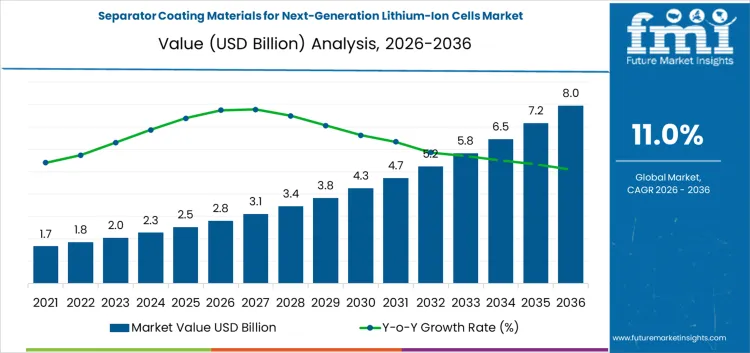
The global separator coating materials for next-generation lithium-ion cells market is projected to reach USD 2.8 billion in 2026 and grow to USD 8.0 billion by 2036, with a CAGR of 11%. This market’s growth is driven by increasing demand for advanced separator materials to improve battery safety, performance, and efficiency in electric vehicles (EVs), consumer electronics, and energy storage systems. As the industry evolves, procurement decisions are increasingly influenced by performance expectations, particularly for fast-charging and high-energy-density batteries.
Quick Stats for Separator Coating Materials for Next-Generation Lithium-Ion Cells Market
- Separator Coating Materials for Next-Generation Lithium-Ion Cells Market Value (2026): USD 2.8 Billion
- Separator Coating Materials for Next-Generation Lithium-Ion Cells Market Forecast Value (2036): USD 8.0 Billion
- Separator Coating Materials for Next-Generation Lithium-Ion Cells Market Forecast CAGR (2026–2036): 11%
- Leading Coating Type in Separator Coating Materials Market: Ceramic-Based Coating
- Leading Application in Separator Coating Materials Market: Electric Vehicle (EV) Batteries
- Key Growth Regions in Separator Coating Materials Market: Asia Pacific, North America
- Top Key Players in Separator Coating Materials Market: SEMCORP Group, Celgard, ENTEK, Sepion Technologies, ZIMT
Procurement priorities in this market are often shaped by a focus on material reliability, performance under high charge/discharge conditions, and compliance with safety regulations. Buyer risk aversion plays a significant role, as manufacturers prefer to source from well-established suppliers with proven track records. Vendor lock-in and high switching costs, particularly for customized materials or those with proprietary formulations, can limit flexibility in the procurement process. Consequently, securing long-term relationships with suppliers is key for manufacturers looking to meet the growing demands of the lithium-ion cell market.
Separator Coating Materials for Next-Generation Lithium-Ion Cells Market Key Takeaways
| Metric | Value |
|---|---|
| Industry Value (2026) | USD 2.8 Billion |
| Forecast Value (2036) | USD 8.0 Billion |
| Forecast CAGR (2026–2036) | 11% |
How is the Global Separator Coating Materials for Next-Generation Lithium-Ion Cells Market Advancing?
The global separator coating materials for next-generation lithium-ion cells market is expanding rapidly, driven by the increasing demand for advanced energy storage solutions in electric vehicles (EVs), consumer electronics, and renewable energy storage systems. Separator coatings play a vital role in enhancing the performance and safety of lithium-ion batteries by improving thermal stability, reducing the risk of short circuits, and enabling faster charging. As the need for higher energy densities, longer battery life, and faster charging times increases, the demand for advanced separator coating materials is also growing.
The market is primarily driven by the shift towards electric mobility and the rising adoption of renewable energy systems, where efficient and safe energy storage solutions are crucial. Lithium-ion batteries, particularly those used in EVs and grid storage, require advanced separator materials that can withstand high temperatures and provide enhanced stability during high-power operations. Separator coatings improve these properties by enhancing the mechanical strength and conductivity of the separator, which is essential for next-generation lithium-ion cells.
Ongoing advancements in coating technologies, such as the development of high-performance, durable, and cost-effective materials, are expected to further propel market growth. With increasing demand for electric vehicles, coupled with advancements in battery technology, the separator coating materials market for next-generation lithium-ion cells is set to continue its growth trajectory over the coming years.
What is the Segment-Wise Analysis for the Separator Coating Materials for Next-Generation Lithium-Ion Cells Market?
The Separator Coating Materials for Next-Generation Lithium-Ion Cells Market is segmented by coating type and application. Ceramic-based coating leads the market with a 35% share, followed by polymer-based coating, hybrid coating, and others. These coatings enhance the performance and thermal stability of lithium-ion batteries. In terms of application, electric vehicle (EV) batteries hold the largest share at 55%, followed by consumer electronics batteries, energy storage systems (ESS), industrial & commercial batteries, and medical device batteries.
Why Does Ceramic-Based Coating Lead the Separator Coating Materials Market?
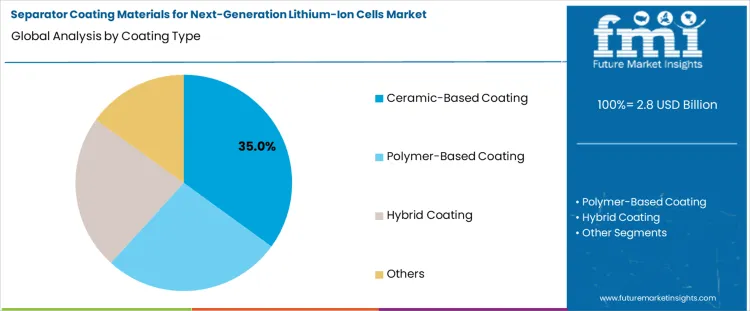
Ceramic-based coating accounts for 35% of the separator coating materials market share due to its exceptional thermal stability, high ionic conductivity, and enhanced mechanical strength. These properties help prevent separator shrinkage, reduce short-circuit risks, and improve overall battery safety during high-temperature conditions or rapid charging cycles. Ceramic coatings are especially favored in high-energy-density applications, such as electric vehicle (EV) batteries and energy storage systems (ESS), where performance and safety are critical. As industries focus on developing next-generation lithium-ion cells with better performance, longer life cycles, and enhanced safety, ceramic-based coatings are expected to maintain their dominance in the market, ensuring optimal battery performance.
How Does the Electric Vehicle (EV) Battery Sector Contribute to the Separator Coating Materials Market?
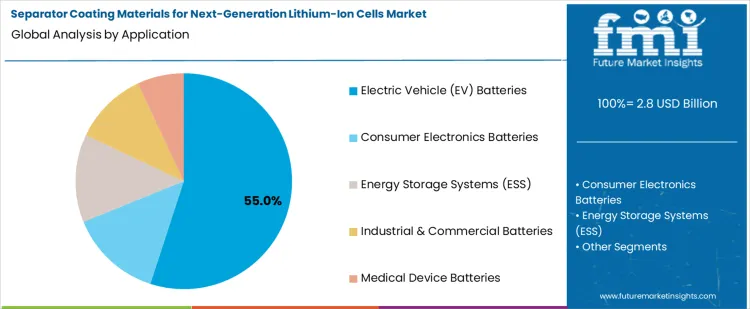
The electric vehicle (EV) batteries sector represents 55% of the application segment in the separator coating materials market, driven by the rising demand for high-performance, fast-charging batteries. EV batteries require advanced separator technologies that support higher energy densities, prolonged lifecycles, and enhanced safety during rapid charging. Ceramic-based coatings play a crucial role in improving the thermal stability and overall performance of EV batteries under demanding conditions. As the global adoption of electric vehicles continues to grow, the need for high-quality separators with superior thermal and mechanical properties is essential, further fueling growth in this market and solidifying the EV sector’s significant contribution.
What Are the Key Dynamics for the Separator Coating Materials for Next‑Generation Lithium‑Ion Cells Market?
The separator coating materials for next‑generation lithium‑ion cells market is shaped by the accelerating demand for safer, higher‑performance lithium‑ion batteries in electric vehicles (EVs), consumer electronics, and energy storage systems. Separator coatings enhance thermal stability, mechanical strength, and electrolyte wettability, addressing key safety and performance challenges in high‑energy battery cells. As manufacturers push toward higher charge rates, greater energy density, and longer cycle life, advanced coating materials like inorganic oxides, ceramic composites, and functional polymers become essential.
How Are the Key Drivers Shaping the Separator Coating Materials for Next‑Generation Lithium‑Ion Cells Market?
Growth in the Separator Coating Materials for Next‑Generation Lithium‑Ion Cells Market is driven by rapid electrification and intense focus on performance improvements in lithium‑ion battery technologies. EV and portable electronics manufacturers prioritize enhanced safety and longevity, prompting adoption of coated separators that offer superior thermal resistance and dimensional stability. Advances in materials science such as ceramic, alumina, silica, and functional polymer coatings improve electrolyte interaction, reduce dendrite growth, and enhance cycle stability. Investment in R&D, combined with strategic collaborations between battery producers and specialty materials firms, accelerates development of tailored coating solutions that meet specific application requirements for next‑generation cells.
Why Are There Restraints Impacting the Separator Coating Materials for Next‑Generation Lithium‑Ion Cells Market?
The separator coating materials for next‑generation lithium‑ion cells market faces several restraints. High production and material costs for advanced coating formulations especially those involving ceramic particles or engineered composite layers can increase overall cell manufacturing expenses, slowing adoption by cost‑sensitive manufacturers. Complex coating processes requiring precision control over thickness and uniformity add manufacturing challenges and capital investment needs. Supply chain volatility for specialty raw materials and reliance on specific feedstocks may impact pricing and availability. Evolving safety standards and lengthy qualification cycles for new coating materials can delay commercialization in some regions, complicating market entry and scaling efforts.
What is the Growth Outlook for the Separator Coating Materials for Next-Generation Lithium-Ion Cells Market by Country?
| Country | CAGR (%) |
|---|---|
| China | 13.5% |
| USA | 12.4% |
| South Korea | 11.8% |
| Japan | 11.2% |
| Germany | 10.7% |
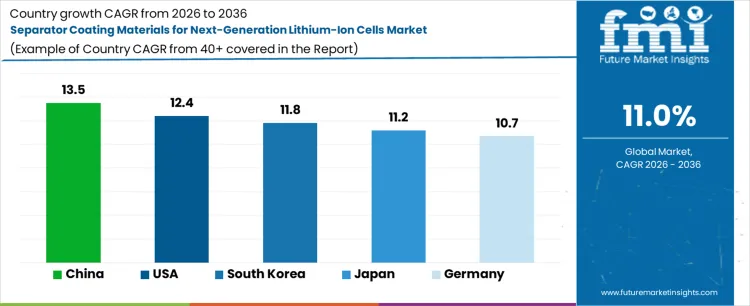
The separator coating materials for next-generation lithium-ion cells market is growing significantly across key regions, with China leading at 13.5%, driven by its dominant role in the global electric vehicle (EV) market and battery production. As the demand for high-performance lithium-ion batteries grows, especially for fast-charging EVs, the need for advanced separator coating materials is increasing. The USA follows at 12.4%, supported by the rapid development of EV infrastructure and renewable energy storage solutions. South Korea grows at 11.8%, driven by technological advancements in battery design and the rising demand for high-efficiency energy storage systems. Japan’s market grows at 11.2%, fueled by the increasing adoption of electric mobility and renewable energy projects. Germany grows at 10.7%, with a strong emphasis on sustainability and advancements in battery technologies.
What is Driving the Growth of the Separator Coating Materials for Next-Generation Lithium-Ion Cells Market in China?
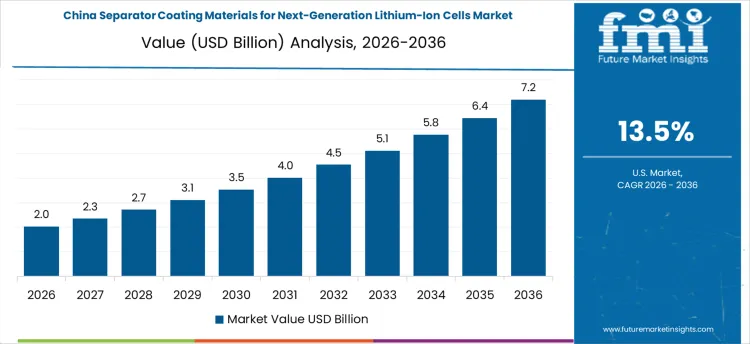
China’s separator coating materials for next-generation lithium-ion cells market is growing at 13.5%, driven by the country’s leadership in electric vehicle (EV) production and battery manufacturing. As China aims to become a global leader in clean energy, there is a significant rise in demand for advanced lithium-ion batteries, particularly for EVs and energy storage systems. The Chinese government’s strong push for EV adoption and renewable energy solutions is driving investments in battery technologies. As the need for high-performance and fast-charging batteries grows, the demand for advanced separator coating materials, which improve battery efficiency and safety, is also increasing. With China’s dominance in the global EV and battery market, the separator coating materials market is expected to continue its rapid growth in the coming years.
What is Contributing to the Growth of the Separator Coating Materials for Next-Generation Lithium-Ion Cells Market in the USA?
The separator coating materials for next-generation lithium-ion cells market in the USA is growing at 12.4%, driven by the rapid development of electric vehicle (EV) infrastructure and increasing investments in clean energy technologies. As the adoption of EVs accelerates in the USA, there is a growing need for advanced lithium-ion batteries, which require high-quality separator materials for optimal performance and safety. The country’s push for renewable energy and sustainable transportation, along with government incentives for clean energy solutions, is boosting demand for these materials. The growing demand for energy storage systems to support the grid and renewable energy sources further fuels the market. With advancements in battery technology and increasing interest in energy-efficient solutions, the USA’s market for separator coating materials is expected to expand rapidly.
How is the Separator Coating Materials for Next-Generation Lithium-Ion Cells Market Expanding in South Korea?
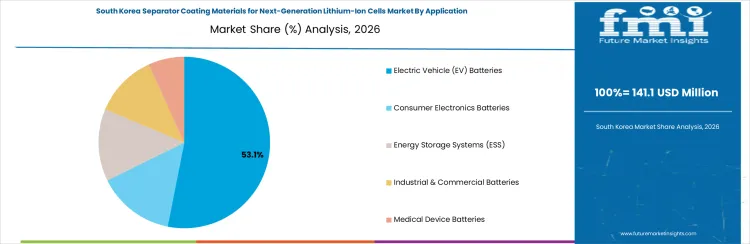
South Korea’s separator coating materials for next-generation lithium-ion cells market is growing at 11.8%, driven by the country’s strong position in the global battery manufacturing industry, particularly for electric vehicles (EVs) and energy storage systems. As a key player in battery technology, South Korea is investing heavily in next-generation lithium-ion cells, which require high-performance separator coatings to meet the growing demand for fast-charging and long-lasting batteries. The country’s automotive and electronics industries, which are increasingly adopting electric mobility and energy storage solutions, are significant drivers of market growth. South Korea’s focus on innovation in battery technology and sustainable energy solutions further supports the adoption of advanced separator materials. As South Korea leads in battery production and EV development, its demand for separator coating materials is set to continue growing.
What is Driving the Growth of the Separator Coating Materials for Next-Generation Lithium-Ion Cells Market in Japan?
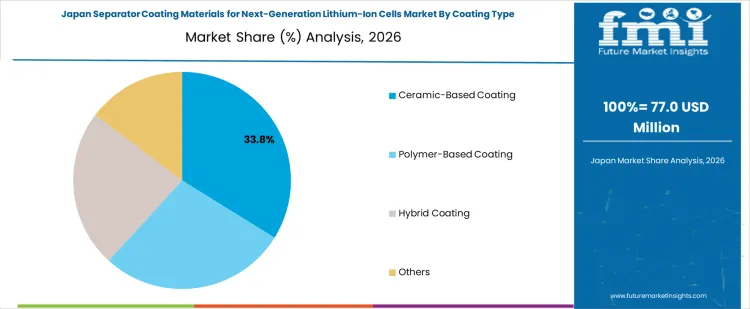
Japan’s separator coating materials for next-generation lithium-ion cells market is growing at 11.2%, supported by the country’s focus on electric mobility and energy storage solutions. As Japan pushes for increased EV adoption and renewable energy storage, there is a growing demand for high-performance batteries that require advanced separator materials. Japan’s automotive industry, particularly in EVs and hybrid vehicles, is a major contributor to market growth. Japan’s investments in research and development for next-generation battery technologies, including improvements in fast-charging capabilities and battery lifespan, are driving the demand for high-quality separator coatings. The country’s commitment to sustainability and innovation, combined with the rise of smart cities and clean energy solutions, is expected to continue fueling the growth of Japan’s separator coating materials market.
What is Contributing to the Growth of the Separator Coating Materials for Next-Generation Lithium-Ion Cells Market in Germany?
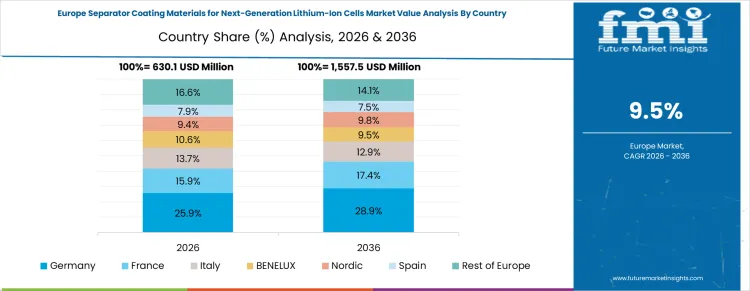
Germany’s separator coating materials for next-generation lithium-ion cells market is growing at 10.7%, driven by the country’s strong focus on sustainable energy and electric mobility. As Germany continues to lead Europe in EV adoption and renewable energy initiatives, the demand for high-performance lithium-ion batteries is increasing, which in turn drives the need for advanced separator coating materials. The country’s automotive sector, particularly in electric and hybrid vehicles, is a key driver of market growth, as high-performance batteries with better energy density and safety are required. Germany’s commitment to reducing carbon emissions and achieving net-zero targets by 2050 has led to significant investments in battery technologies, including next-generation lithium-ion cells. With advancements in battery performance and growing support for clean energy, Germany’s market for separator coating materials is expected to continue expanding.
How Are Companies Competing in the Separator Coating Materials for Next-Generation Lithium-Ion Cells Market?
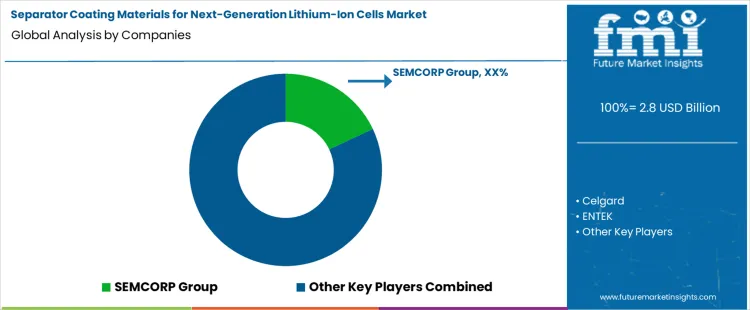
Competition in the separator coating materials for next generation lithium ion cells market is driven by enhanced safety attributes, thermal stability, ion transport efficiency, and compatibility with high energy chemistries. SEMCORP Group positions itself with advanced coated separators that balance uniform coating distribution, dimensional stability, and electrolyte wettability, with product materials highlighting improved thermal resistance and cycle life for EV and grid storage applications. Celgard competes through a broad array of microporous films and tailored coating options that provide mechanical strength and consistent ion flow, with collateral emphasizing proven performance in high demand battery systems.
ENTEK differentiates with high precision ceramic coated separators that enhance shutdown features and thermal tolerance, often marketed for applications where safety under abuse conditions is critical. Sepion Technologies focuses on block copolymer and advanced polymer coatings designed to improve interfacial stability and dendrite suppression, with documentation stressing enhanced lifespan and performance at high charge rates. ZIMT and Huiqiang New Energy bring regionally tailored coating solutions that balance cost effectiveness and performance consistency, with product literature highlighting custom formulation support for diverse cell formats.
Horizon and Pulead compete with innovative hybrid coating materials that combine ceramic and polymer benefits, marketed for improved mechanical robustness and electrolyte interaction. Their brochures underscore precision coating control and integration with existing cell manufacturing processes. Across vendors, product materials are crafted to emphasize safety enhancement, performance under high charge/discharge conditions, material reliability, and fit with next generation lithium ion chemistries, helping cell makers achieve better energy density and operational stability.
Key Players in Separator Coating Materials for Next-Generation Lithium-Ion Cells Market
- SEMCORP Group
- Celgard
- ENTEK
- Sepion Technologies
- ZIMT
- Huiqiang New Energy
- Horizon
- Pulead
Scope of Report
| Items | Values |
|---|---|
| Quantitative Unit (2026) | USD billion |
| Coating Type | Ceramic-Based Coating, Polymer-Based Coating, Hybrid Coating, Others |
| Application | Electric Vehicle (EV) Batteries, Consumer Electronics Batteries, Energy Storage Systems (ESS), Industrial & Commercial Batteries, Medical Device Batteries |
| Regions Covered | Asia Pacific, Europe, North America, Latin America, Middle East & Africa |
| Countries Covered | USA, China, Japan, South Korea, India, Australia & New Zealand, ASEAN, Germany, UK, France, Italy, Spain, Nordic, BENELUX, Brazil, Chile, Mexico, Saudi Arabia, Other GCC Countries, Turkey, South Africa, Other African Union |
| Key Companies Profiled | SEMCORP Group, Celgard, ENTEK, Sepion Technologies, ZIMT, Huiqiang New Energy, Horizon, Pulead |
| Additional Attributes | Dollar sales segmented by coating type, application, and region. Regional CAGR and growth outlook with market trends and forecasts for various segments and regions. |
Separator Coating Materials for Next-Generation Lithium-Ion Cells Market by Key Segments
Coating Type:
- Ceramic‑Based Coating
- Polymer‑Based Coating
- Hybrid Coating
- Others
Application:
- Electric Vehicle (EV) Batteries
- Consumer Electronics Batteries
- Energy Storage Systems (ESS)
- Industrial & Commercial Batteries
- Medical Device Batteries
Region:
- Asia Pacific
- China
- Japan
- South Korea
- India
- Australia & New Zealand
- ASEAN
- Rest of Asia Pacific
- Europe
- Germany
- United Kingdom
- France
- Italy
- Spain
- Nordic
- BENELUX
- Rest of Europe
- North America
- United States
- Canada
- Mexico
- Latin America
- Brazil
- Chile
- Rest of Latin America
- Middle East & Africa
- Kingdom of Saudi Arabia
- Other GCC Countries
- Turkey
- South Africa
- Other African Union
- Rest of Middle East & Africa
Frequently Asked Questions
How big is the separator coating materials for next-generation lithium-ion cells market in 2026?
The global separator coating materials for next-generation lithium-ion cells market is estimated to be valued at USD 2.8 billion in 2026.
What will be the size of separator coating materials for next-generation lithium-ion cells market in 2036?
The market size for the separator coating materials for next-generation lithium-ion cells market is projected to reach USD 8.0 billion by 2036.
How much will be the separator coating materials for next-generation lithium-ion cells market growth between 2026 and 2036?
The separator coating materials for next-generation lithium-ion cells market is expected to grow at a 11.0% CAGR between 2026 and 2036.
What are the key coating types in the separator coating materials for next-generation lithium-ion cells market?
The key coating types in separator coating materials for next-generation lithium-ion cells market are ceramic‑based coating, polymer‑based coating, hybrid coating and others.
Which application segment will contribute significant share in the separator coating materials for next-generation lithium-ion cells market in 2026?
In terms of application, electric vehicle (ev) batteries segment to command 55.0% share in the separator coating materials for next-generation lithium-ion cells market in 2026.
Preview the report firsthand - request a free sample
Get SampleGet the brochure for pricing and purchase details.
Get PDFTable of Content
- Executive Summary
- Global Market Outlook
- Demand-side Trends
- Supply-side Trends
- Technology Roadmap Analysis
- Analysis and Recommendations
- Market Overview
- Market Coverage / Taxonomy
- Market Definition / Scope / Limitations
- Market Background
- Market Dynamics
- Drivers
- Restraints
- Opportunity
- Trends
- Scenario Forecast
- Demand in Optimistic Scenario
- Demand in Likely Scenario
- Demand in Conservative Scenario
- Opportunity Map Analysis
- Product Life Cycle Analysis
- Supply Chain Analysis
- Investment Feasibility Matrix
- Value Chain Analysis
- PESTLE and Porter’s Analysis
- Regulatory Landscape
- Regional Parent Market Outlook
- Production and Consumption Statistics
- Import and Export Statistics
- Market Dynamics
- Global Market Analysis 2021 to 2025 and Forecast, 2026 to 2036
- Historical Market Size Value (USD Million) Analysis, 2021 to 2025
- Current and Future Market Size Value (USD Million) Projections, 2026 to 2036
- Y-o-Y Growth Trend Analysis
- Absolute $ Opportunity Analysis
- Global Market Pricing Analysis 2021 to 2025 and Forecast 2026 to 2036
- Global Market Analysis 2021 to 2025 and Forecast 2026 to 2036, By Coating Type
- Introduction / Key Findings
- Historical Market Size Value (USD Million) Analysis By Coating Type , 2021 to 2025
- Current and Future Market Size Value (USD Million) Analysis and Forecast By Coating Type , 2026 to 2036
- Ceramic‑Based Coating
- Polymer‑Based Coating
- Hybrid Coating
- Others
- Ceramic‑Based Coating
- Y-o-Y Growth Trend Analysis By Coating Type , 2021 to 2025
- Absolute $ Opportunity Analysis By Coating Type , 2026 to 2036
- Global Market Analysis 2021 to 2025 and Forecast 2026 to 2036, By Application
- Introduction / Key Findings
- Historical Market Size Value (USD Million) Analysis By Application, 2021 to 2025
- Current and Future Market Size Value (USD Million) Analysis and Forecast By Application, 2026 to 2036
- Electric Vehicle (EV) Batteries
- Consumer Electronics Batteries
- Energy Storage Systems (ESS)
- Industrial & Commercial Batteries
- Medical Device Batteries
- Electric Vehicle (EV) Batteries
- Y-o-Y Growth Trend Analysis By Application, 2021 to 2025
- Absolute $ Opportunity Analysis By Application, 2026 to 2036
- Global Market Analysis 2021 to 2025 and Forecast 2026 to 2036, By Region
- Introduction
- Historical Market Size Value (USD Million) Analysis By Region, 2021 to 2025
- Current Market Size Value (USD Million) Analysis and Forecast By Region, 2026 to 2036
- North America
- Latin America
- Western Europe
- Eastern Europe
- East Asia
- South Asia and Pacific
- Middle East & Africa
- Market Attractiveness Analysis By Region
- North America Market Analysis 2021 to 2025 and Forecast 2026 to 2036, By Country
- Historical Market Size Value (USD Million) Trend Analysis By Market Taxonomy, 2021 to 2025
- Market Size Value (USD Million) Forecast By Market Taxonomy, 2026 to 2036
- By Country
- USA
- Canada
- Mexico
- By Coating Type
- By Application
- By Country
- Market Attractiveness Analysis
- By Country
- By Coating Type
- By Application
- Key Takeaways
- Latin America Market Analysis 2021 to 2025 and Forecast 2026 to 2036, By Country
- Historical Market Size Value (USD Million) Trend Analysis By Market Taxonomy, 2021 to 2025
- Market Size Value (USD Million) Forecast By Market Taxonomy, 2026 to 2036
- By Country
- Brazil
- Chile
- Rest of Latin America
- By Coating Type
- By Application
- By Country
- Market Attractiveness Analysis
- By Country
- By Coating Type
- By Application
- Key Takeaways
- Western Europe Market Analysis 2021 to 2025 and Forecast 2026 to 2036, By Country
- Historical Market Size Value (USD Million) Trend Analysis By Market Taxonomy, 2021 to 2025
- Market Size Value (USD Million) Forecast By Market Taxonomy, 2026 to 2036
- By Country
- Germany
- UK
- Italy
- Spain
- France
- Nordic
- BENELUX
- Rest of Western Europe
- By Coating Type
- By Application
- By Country
- Market Attractiveness Analysis
- By Country
- By Coating Type
- By Application
- Key Takeaways
- Eastern Europe Market Analysis 2021 to 2025 and Forecast 2026 to 2036, By Country
- Historical Market Size Value (USD Million) Trend Analysis By Market Taxonomy, 2021 to 2025
- Market Size Value (USD Million) Forecast By Market Taxonomy, 2026 to 2036
- By Country
- Russia
- Poland
- Hungary
- Balkan & Baltic
- Rest of Eastern Europe
- By Coating Type
- By Application
- By Country
- Market Attractiveness Analysis
- By Country
- By Coating Type
- By Application
- Key Takeaways
- East Asia Market Analysis 2021 to 2025 and Forecast 2026 to 2036, By Country
- Historical Market Size Value (USD Million) Trend Analysis By Market Taxonomy, 2021 to 2025
- Market Size Value (USD Million) Forecast By Market Taxonomy, 2026 to 2036
- By Country
- China
- Japan
- South Korea
- By Coating Type
- By Application
- By Country
- Market Attractiveness Analysis
- By Country
- By Coating Type
- By Application
- Key Takeaways
- South Asia and Pacific Market Analysis 2021 to 2025 and Forecast 2026 to 2036, By Country
- Historical Market Size Value (USD Million) Trend Analysis By Market Taxonomy, 2021 to 2025
- Market Size Value (USD Million) Forecast By Market Taxonomy, 2026 to 2036
- By Country
- India
- ASEAN
- Australia & New Zealand
- Rest of South Asia and Pacific
- By Coating Type
- By Application
- By Country
- Market Attractiveness Analysis
- By Country
- By Coating Type
- By Application
- Key Takeaways
- Middle East & Africa Market Analysis 2021 to 2025 and Forecast 2026 to 2036, By Country
- Historical Market Size Value (USD Million) Trend Analysis By Market Taxonomy, 2021 to 2025
- Market Size Value (USD Million) Forecast By Market Taxonomy, 2026 to 2036
- By Country
- Kingdom of Saudi Arabia
- Other GCC Countries
- Turkiye
- South Africa
- Other African Union
- Rest of Middle East & Africa
- By Coating Type
- By Application
- By Country
- Market Attractiveness Analysis
- By Country
- By Coating Type
- By Application
- Key Takeaways
- Key Countries Market Analysis
- USA
- Pricing Analysis
- Market Share Analysis, 2025
- By Coating Type
- By Application
- Canada
- Pricing Analysis
- Market Share Analysis, 2025
- By Coating Type
- By Application
- Mexico
- Pricing Analysis
- Market Share Analysis, 2025
- By Coating Type
- By Application
- Brazil
- Pricing Analysis
- Market Share Analysis, 2025
- By Coating Type
- By Application
- Chile
- Pricing Analysis
- Market Share Analysis, 2025
- By Coating Type
- By Application
- Germany
- Pricing Analysis
- Market Share Analysis, 2025
- By Coating Type
- By Application
- UK
- Pricing Analysis
- Market Share Analysis, 2025
- By Coating Type
- By Application
- Italy
- Pricing Analysis
- Market Share Analysis, 2025
- By Coating Type
- By Application
- Spain
- Pricing Analysis
- Market Share Analysis, 2025
- By Coating Type
- By Application
- France
- Pricing Analysis
- Market Share Analysis, 2025
- By Coating Type
- By Application
- India
- Pricing Analysis
- Market Share Analysis, 2025
- By Coating Type
- By Application
- ASEAN
- Pricing Analysis
- Market Share Analysis, 2025
- By Coating Type
- By Application
- Australia & New Zealand
- Pricing Analysis
- Market Share Analysis, 2025
- By Coating Type
- By Application
- China
- Pricing Analysis
- Market Share Analysis, 2025
- By Coating Type
- By Application
- Japan
- Pricing Analysis
- Market Share Analysis, 2025
- By Coating Type
- By Application
- South Korea
- Pricing Analysis
- Market Share Analysis, 2025
- By Coating Type
- By Application
- Russia
- Pricing Analysis
- Market Share Analysis, 2025
- By Coating Type
- By Application
- Poland
- Pricing Analysis
- Market Share Analysis, 2025
- By Coating Type
- By Application
- Hungary
- Pricing Analysis
- Market Share Analysis, 2025
- By Coating Type
- By Application
- Kingdom of Saudi Arabia
- Pricing Analysis
- Market Share Analysis, 2025
- By Coating Type
- By Application
- Turkiye
- Pricing Analysis
- Market Share Analysis, 2025
- By Coating Type
- By Application
- South Africa
- Pricing Analysis
- Market Share Analysis, 2025
- By Coating Type
- By Application
- USA
- Market Structure Analysis
- Competition Dashboard
- Competition Benchmarking
- Market Share Analysis of Top Players
- By Regional
- By Coating Type
- By Application
- Competition Analysis
- Competition Deep Dive
- SEMCORP Group
- Overview
- Product Portfolio
- Profitability by Market Segments (Product/Age /Sales Channel/Region)
- Sales Footprint
- Strategy Overview
- Marketing Strategy
- Product Strategy
- Channel Strategy
- Celgard
- ENTEK
- Sepion Technologies
- ZIMT
- Huiqiang New Energy
- Horizon
- Pulead
- SEMCORP Group
- Competition Deep Dive
- Assumptions & Acronyms Used
- Research Methodology


