

- Industry Size (2026):
- USD 6.2 Bn
- Forecast (2036):
- USD 17 Bn
- CAGR (2026 to 2036)
- 10.60%
Separator Material Platforms for Global EV and ESS OEMs Market Forecast and Outlook 2026 to 2036
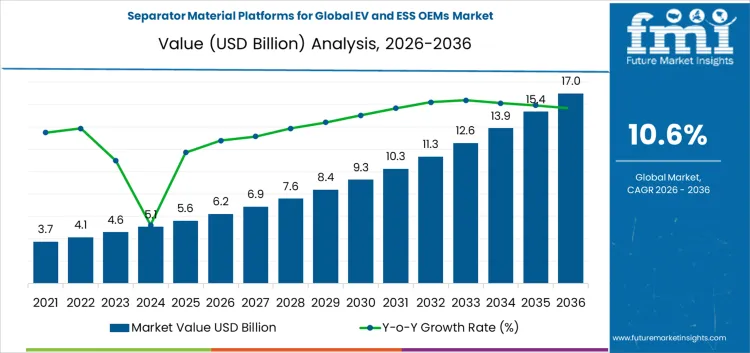
The global separator material platforms for EV and ESS OEMs market is valued at USD 6.2 billion in 2026 and is projected to reach USD 17 billion by 2036, growing at a CAGR of 10.60%. This market is shaped by the increasing reliance on high-performance separators in electric vehicles (EVs) and energy storage systems (ESS). As manufacturers prioritize safety, energy density, and fast-charging capabilities, separator material solutions must align with these evolving needs, particularly in high-demand applications such as EV batteries.
Quick Stats for Separator Material Platforms for Global EV and ESS OEMs Market
- Separator Material Platforms for Global EV and ESS OEMs Market Value (2026): USD 6.2 Billion
- Separator Material Platforms for Global EV and ESS OEMs Market Forecast Value (2036): USD 17 Billion
- Separator Material Platforms for Global EV and ESS OEMs Market Forecast CAGR (2026-2036): 10.60%
- Leading Separator Type in Separator Material Platforms for Global EV and ESS OEMs Market: Polyolefin-Based Separators
- Key Growth Regions in Separator Material Platforms for Global EV and ESS OEMs Market: Asia Pacific, North America
- Top Key Players in Separator Material Platforms for Global EV and ESS OEMs Market: Asahi Kasei Corporation, Toray Industries, Inc., SK Innovation Co., Ltd., Sumitomo Chemical Co., Ltd., ENTEK International LLC
Application concentration, particularly in EV batteries, represents 55% of the market, which anchors growth and defines its trajectory. However, the dependency on end-use sectors such as ESS and consumer electronics introduces both stability and risk, depending on fluctuations in these industries' demand cycles. EV adoption boosts market demand, but its concentration in a few key sectors necessitates careful risk management. Volume stability, driven by consistent automotive and energy storage growth, enhances long-term forecasts. The evolving balance between application-specific requirements and broader sector dependencies will play a crucial role in shaping the market’s sustainability.
Separator Material Platforms for Global EV and ESS OEMs Market Key Takeaways
| Metric | Value |
|---|---|
| Industry Value (2026) | USD 6.2 Billion |
| Forecast Value (2036) | USD 17 Billion |
| Forecast CAGR (2026-2036) | 10.60% |
How is the Global Separator Material Platforms for Global EV and ESS OEMs Market Advancing?
The global separator material platforms for electric vehicle (EV) and energy storage systems (ESS) original equipment manufacturers (OEMs) market is witnessing significant growth, driven by the expanding adoption of electric vehicles and the growing demand for energy storage solutions. Separator materials are a crucial component of lithium-ion batteries, ensuring safe and efficient ion flow, preventing short circuits, and contributing to the overall performance and safety of high-voltage battery systems used in EVs and ESS applications. With the shift towards clean energy and electric mobility, the market for high-performance separator materials is growing rapidly.
The growth of this market is primarily driven by the increasing demand for advanced batteries in electric vehicles, coupled with the rising need for large-scale energy storage systems to support renewable energy initiatives. As manufacturers focus on enhancing battery energy density, charging speed, and longevity, the role of separator materials becomes critical. Innovations in separator materials, such as improved polymer solutions and composite structures, are enabling the production of safer and more efficient batteries that meet the stringent requirements of EVs and ESS.
Technological advancements in separator materials, such as the development of new, high-performance materials that can withstand higher voltages and temperatures, are expected to propel market growth. As the electric vehicle market continues to expand and the demand for energy storage solutions grows, the separator material platforms market for global EV and ESS OEMs is set for sustained growth, helping OEMs meet the evolving needs of the green energy and automotive industries.
What is the Segment-Wise Analysis for the Separator Material Platforms for Global EV and ESS OEMs Market?
The separator material platforms for global EV and ESS OEMS market is segmented by separator type and application. Polyolefin-based separators lead the market with a 40% share, followed by ceramic-coated separators, non-woven separators, composite polymers, and specialty polymers. These separators are essential in ensuring battery performance, safety, and longevity. In terms of application, electric vehicle (EV) batteries dominate the market with 55% share, followed by energy storage systems (ESS), consumer electronics batteries, industrial batteries, and portable tools & other.
Why Do Polyolefin-Based Separators Lead the Market?
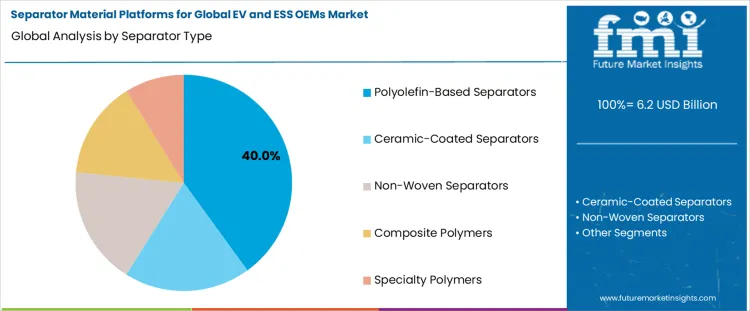
Polyolefin-based separators account for 40% of the market share due to their excellent thermal stability, high mechanical strength, and cost-effectiveness in battery applications. These separators offer improved ionic conductivity and ensure reliable performance at high voltages and temperatures, making them ideal for use in electric vehicle (EV) batteries and energy storage systems (ESS). Polyolefin-based separators also have a robust safety profile, reducing the risk of short circuits and improving the overall safety of batteries. As the demand for high-performance, long-lasting, and safe batteries increases, polyolefin-based separators continue to lead the market, especially in the rapidly growing EV and ESS sectors.
How Does the Electric Vehicle (EV) Battery Sector Contribute to the Separator Material Platforms Market?
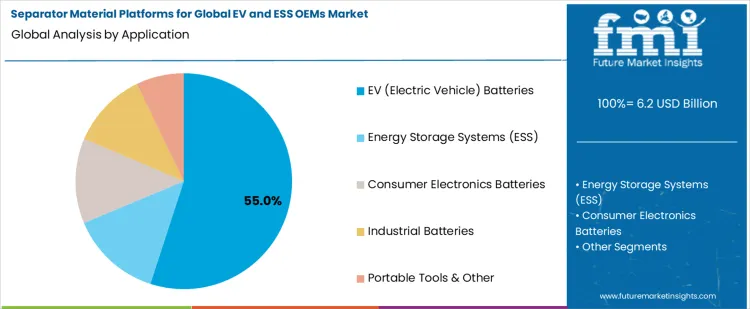
The electric vehicle (EV) batteries sector represents 55% of the application segment in the separator material platforms market, driven by the increasing adoption of electric vehicles globally. EV batteries require advanced separators to ensure safety, thermal stability, and high energy density for optimal performance. Separator materials such as polyolefin-based separators and ceramic-coated separators play a crucial role in maintaining the structural integrity of the battery, enhancing charge-discharge cycles, and preventing short circuits. As the automotive industry shifts toward cleaner energy solutions and the demand for EVs grows, the EV battery sector remains a key driver of innovation and growth in the separator material platforms market.
What Are the Key Dynamics for the Separator Material Platforms for Global EV and ESS OEMs Market?
The separator material platforms for global EV and ESS OEMs market is driven by the growing demand for high‑performance separators in electric vehicles (EVs) and energy storage systems (ESS). As battery manufacturers strive for higher energy density, faster charging speeds, and longer lifecycles, separators are essential for ensuring safety, preventing short circuits, and maintaining stability. Innovations in separator materials, such as ceramic coatings and high‑conductivity polymers, are critical to meeting these demands. Regulatory safety standards and collaborations between OEMs and material suppliers are further pushing advancements in separator technology to enhance battery performance and operational safety.
How Are the Key Drivers Shaping the Separator Material Platforms for Global EV and ESS OEMs Market?
Growth in the separator material platforms for global EV and ESS OEMs market is largely driven by the rising adoption of electric vehicles and large‑scale energy storage systems, which require advanced separators for high‑voltage, high‑capacity battery packs. Manufacturers are seeking separators that offer enhanced thermal stability, mechanical strength, and ion conductivity to support faster charging and improved battery life. Increased investments in electric mobility infrastructure, coupled with regulatory requirements for better battery safety, drive the demand for cutting‑edge separator material platforms that ensure the efficiency and reliability of next‑generation EV and ESS batteries.
Why Are There Restraints Impacting the Separator Material Platforms for Global EV and ESS OEMs Market?
The separator material platforms for global EV and ESS OEMs market faces restraints related to the high cost and complexity of advanced separator materials. The development and production of separators with superior thermal and mechanical properties, particularly those incorporating ceramic coatings or nano‑materials, significantly increase production costs. Supply chain challenges for specialized raw materials and inconsistencies in global safety and performance regulations also complicate large‑scale adoption. As the industry pushes for higher energy densities, challenges related to material durability and long‑term performance under extreme conditions hinder faster market penetration for some separator solutions.
What is the Growth Outlook for the Separator Material Platforms for Global EV and ESS OEMs Market by Country?
| Country | CAGR (%) |
|---|---|
| China | 12.5% |
| USA | 11.2% |
| Germany | 10.8% |
| Japan | 10.5% |
| South Korea | 10.3% |
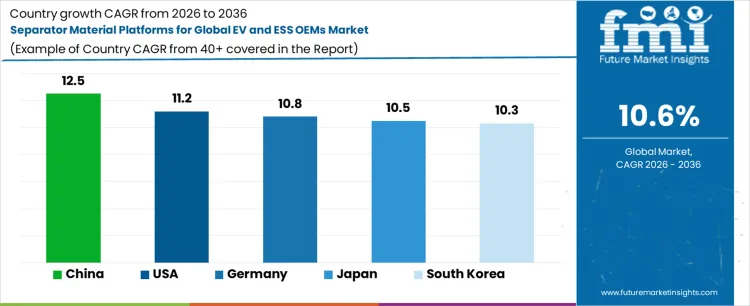
The separator material platforms for global EV and ESS OEMs market is witnessing significant growth across key regions, with China leading at 12.5%, driven by its strong position in electric vehicle (EV) and energy storage system (ESS) production. The demand for high-performance separator materials, critical for battery efficiency and safety, is rising in response to the rapid growth of the EV market and renewable energy adoption in China. The USA follows at 11.2%, with strong growth fueled by increasing EV sales, ESS deployments, and government incentives for clean energy solutions. Germany’s market grows at 10.8%, driven by its leadership in EV manufacturing and focus on sustainable energy. Japan follows with a 10.5% growth rate, supported by its technological advancements in battery technologies. South Korea’s market grows at 10.3%, with major automotive and battery manufacturers focusing on high-performance separator materials.
What is Driving the Growth of the Separator Material Platforms for Global EV and ESS OEMs Market in China?
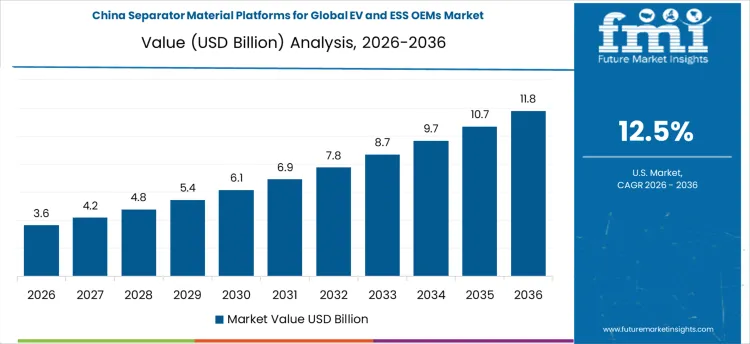
China’s separator material platforms for global EV and ESS OEMs market is growing at 12.5%, driven by the country’s strong presence in electric vehicle (EV) manufacturing and energy storage systems (ESS). As one of the largest EV markets in the world, China is seeing a rise in demand for high-performance separator materials that ensure battery efficiency, stability, and safety. The government’s support for EV adoption and renewable energy solutions, along with advancements in battery technology, further drives market growth. China’s role in global battery manufacturing and increasing infrastructure for fast-charging stations is also a contributing factor. As the EV industry continues to expand, the demand for specialized separator materials will increase, ensuring the continued growth of the market in China.
What is Contributing to the Growth of the Separator Material Platforms for Global EV and ESS OEMs Market in the USA?
The separator material platforms for global EV and ESS OEMs market in the USA is growing at 11.2%, supported by the increasing demand for electric vehicles (EVs) and energy storage solutions. The USA has made significant investments in EV infrastructure, including charging stations and renewable energy systems, driving the need for efficient and high-performance battery materials. Separator materials are critical to enhancing battery safety, longevity, and fast-charging capabilities, fueling demand in the automotive and energy storage industries. The USA's focus on achieving carbon neutrality and reducing emissions further boosts the adoption of EVs, which directly impacts the separator material market. As both public and private sectors invest in clean energy and EV development, the market for separator materials is expected to continue its steady growth.
How is the Separator Material Platforms for Global EV and ESS OEMs Market Expanding in Germany?
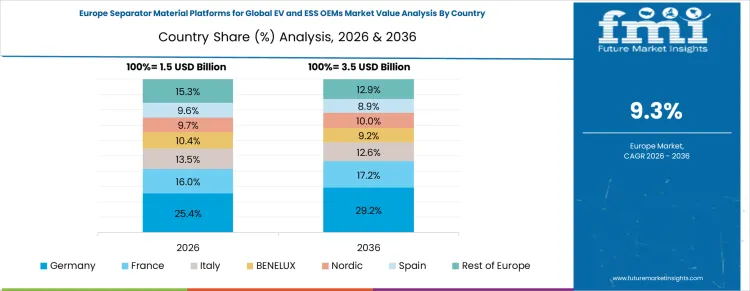
Germany’s separator material platforms for global EV and ESS OEMs market is growing at 10.8%, driven by the country’s leadership in the automotive industry and its commitment to sustainability. Germany has been at the forefront of the electric vehicle (EV) revolution, with major automakers investing heavily in EV technology and energy storage solutions. The demand for high-performance separator materials, essential for efficient and safe batteries, is rising as Germany continues to push for more sustainable energy solutions. The country’s focus on renewable energy and smart grid integration, combined with stringent environmental regulations, is accelerating the adoption of EVs and ESS. As technological advancements continue in battery design, Germany’s market for separator materials will continue to expand, fueled by growing demand in both the automotive and energy sectors.
What is Driving the Growth of the Separator Material Platforms for Global EV and ESS OEMs Market in Japan?
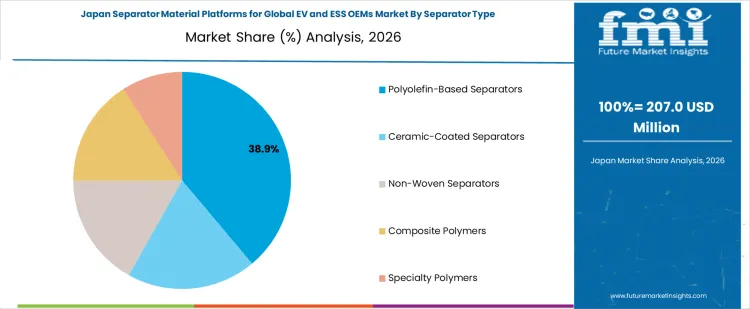
Japan’s separator material platforms for global EV and ESS OEMs market is growing at 10.5%, fueled by the country’s technological advancements in electric vehicle (EV) manufacturing and energy storage systems. Japan has been a key player in the EV and battery industries, with a strong focus on improving battery performance, efficiency, and safety. The growing adoption of EVs, along with the expansion of renewable energy sources, is increasing the demand for high-quality separator materials. Japan’s commitment to reducing carbon emissions and advancing clean energy technologies supports the need for efficient battery solutions. The rise of smart city initiatives and energy storage systems, in addition to EV developments, is driving the demand for separator materials in Japan. As the country continues to lead in innovation, the separator material market is expected to see sustained growth.
What is Contributing to the Growth of the Separator Material Platforms for Global EV and ESS OEMs Market in South Korea?
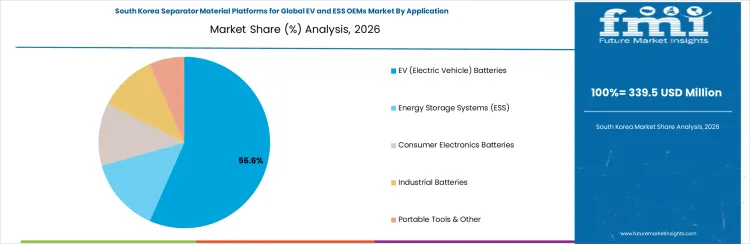
South Korea’s separator material platforms for global EV and ESS OEMs market is growing at 10.3%, driven by the country’s position as a leader in the global battery industry, particularly in the electric vehicle (EV) and energy storage sectors. With major players like LG Chem and Samsung SDI at the forefront of battery development, South Korea is seeing increased demand for high-performance separator materials used in EV batteries and energy storage systems. The country’s strong push for clean energy, along with its focus on expanding EV adoption and renewable energy storage solutions, further drives market growth. As South Korea continues to invest in sustainable technologies and innovations in battery manufacturing, the demand for advanced separator materials will continue to grow, supporting the expansion of the market in the coming years.
How Are Companies Competing in the Separator Material Platforms for Global EV and ESS OEMs Market?
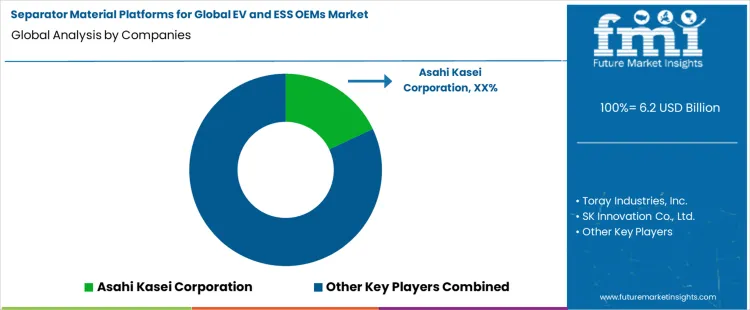
Competition in the separator material platforms for global EV and ESS OEMs market is anchored in material performance under high voltage, thermal and mechanical integrity, ion transport efficiency, and production scalability. Asahi Kasei Corporation positions itself with advanced separator platforms that deliver excellent heat resistance, uniform pore structures, and strong mechanical properties, with product materials highlighting consistent performance in high energy EV and ESS cells. Toray Industries, Inc. competes by offering reinforced polymer membranes and engineered structures that support long cycle life and robust electrochemical behavior, marketed for tight quality control and broad application fit.
SK Innovation Co., Ltd. differentiates through innovative polymer blends and coating techniques tailored for next generation batteries, with collateral focusing on reduced dimensional change and high voltage tolerance. Sumitomo Chemical Co., Ltd. brings customized separator solutions that balance mechanical strength and electrolyte interaction, with documentation that emphasizes compatibility with existing cell manufacturing processes and performance consistency. These platforms appeal to OEMs seeking materials that support both high performance and reliable throughput.
ENTEK International LLC and Celgard LLC offer specialized separator films with precise control over pore distribution and thermal behavior, often marketed for their industrial scale up readiness and dependable ion flow characteristics in EV and ESS applications. W Scope Corporation adds value with precision designed polymer systems that enhance electrochemical stability and abuse tolerance, and its brochures stress high voltage performance and strong mechanical attributes. Across vendors, product materials underscore performance under demanding conditions, production scalability, and ease of integration into evolving battery architectures as key competitive differentiators for global OEMs.
Key Players in Separator Material Platforms for Global EV and ESS OEMs Market
- Asahi Kasei Corporation
- Toray Industries, Inc.
- SK Innovation Co., Ltd.
- Sumitomo Chemical Co., Ltd.
- ENTEK International LLC
- Celgard LLC
- W‑Scope Corporation
Scope of Report
| Items | Values |
|---|---|
| Quantitative Unit (2026) | USD billion |
| Separator Type | Polyolefin-Based Separators, Ceramic-Coated Separators, Non-Woven Separators, Composite Polymers, Specialty Polymers |
| Application | EV (Electric Vehicle) Batteries, Energy Storage Systems (ESS), Consumer Electronics Batteries, Industrial Batteries, Portable Tools & Other |
| Regions Covered | Asia Pacific, Europe, North America, Latin America, Middle East & Africa |
| Countries Covered | USA, China, Japan, South Korea, India, Australia & New Zealand, ASEAN, Germany, UK, France, Italy, Spain, Nordic, BENELUX, Brazil, Chile, Mexico, Saudi Arabia, Other GCC Countries, Turkey, South Africa, Other African Union |
| Key Companies Profiled | Asahi Kasei Corporation, Toray Industries, Inc., SK Innovation Co., Ltd., Sumitomo Chemical Co., Ltd., ENTEK International LLC, Celgard LLC, W-Scope Corporation |
| Additional Attributes | Dollar sales segmented by separator type, application, and region. Regional CAGR and growth outlook for each segment and region with market trends and forecasts. |
Separator Material Platforms for Global EV and ESS OEMs Market by Key Segments
Separator Type:
- Polyolefin-Based Separators
- Ceramic-Coated Separators
- Non-Woven Separators
- Composite Polymers
- Specialty Polymers
Application:
- EV (Electric Vehicle) Batteries
- Energy Storage Systems (ESS)
- Consumer Electronics Batteries
- Industrial Batteries
- Portable Tools & Other
Region:
- Asia Pacific
- China
- Japan
- South Korea
- India
- Australia & New Zealand
- ASEAN
- Rest of Asia Pacific
- Europe
- Germany
- United Kingdom
- France
- Italy
- Spain
- Nordic
- BENELUX
- Rest of Europe
- North America
- United States
- Canada
- Mexico
- Latin America
- Brazil
- Chile
- Rest of Latin America
- Middle East & Africa
- Kingdom of Saudi Arabia
- Other GCC Countries
- Turkey
- South Africa
- Other African Union
- Rest of Middle East & Africa
Frequently Asked Questions
How big is the separator material platforms for global EV and ESS OEMs market in 2026?
The global separator material platforms for global EV and ESS OEMs market is estimated to be valued at USD 6.2 billion in 2026.
What will be the size of separator material platforms for global EV and ESS OEMs market in 2036?
The market size for the separator material platforms for global EV and ESS OEMs market is projected to reach USD 17.0 billion by 2036.
How much will be the separator material platforms for global EV and ESS OEMs market growth between 2026 and 2036?
The separator material platforms for global EV and ESS OEMs market is expected to grow at a 10.6% CAGR between 2026 and 2036.
What are the key separator types in the separator material platforms for global EV and ESS OEMs market?
The key separator types in separator material platforms for global EV and ESS OEM market are polyolefin-based separators, ceramic-coated separators, non-woven separators, composite polymers and specialty polymers.
Which application segment to contribute significant share in the separator material platforms for global EV and ESS OEMs market in 2026?
In terms of application, EV (electric vehicle) batteries segment to command 55.0% share in the separator material platforms for global EV and ESS OEMs market in 2026.
Preview the report firsthand - request a free sample
Get SampleGet the brochure for pricing and purchase details.
Get PDFTable of Content
- Executive Summary
- Global Market Outlook
- Demand-side Trends
- Supply-side Trends
- Technology Roadmap Analysis
- Analysis and Recommendations
- Market Overview
- Market Coverage / Taxonomy
- Market Definition / Scope / Limitations
- Market Background
- Market Dynamics
- Drivers
- Restraints
- Opportunity
- Trends
- Scenario Forecast
- Demand in Optimistic Scenario
- Demand in Likely Scenario
- Demand in Conservative Scenario
- Opportunity Map Analysis
- Product Life Cycle Analysis
- Supply Chain Analysis
- Investment Feasibility Matrix
- Value Chain Analysis
- PESTLE and Porter’s Analysis
- Regulatory Landscape
- Regional Parent Market Outlook
- Production and Consumption Statistics
- Import and Export Statistics
- Market Dynamics
- Global Market Analysis 2021 to 2025 and Forecast, 2026 to 2036
- Historical Market Size Value (USD Million) Analysis, 2021 to 2025
- Current and Future Market Size Value (USD Million) Projections, 2026 to 2036
- Y-o-Y Growth Trend Analysis
- Absolute $ Opportunity Analysis
- Global Market Pricing Analysis 2021 to 2025 and Forecast 2026 to 2036
- Global Market Analysis 2021 to 2025 and Forecast 2026 to 2036, By Separator Type
- Introduction / Key Findings
- Historical Market Size Value (USD Million) Analysis By Separator Type , 2021 to 2025
- Current and Future Market Size Value (USD Million) Analysis and Forecast By Separator Type , 2026 to 2036
- Polyolefin-Based Separators
- Ceramic-Coated Separators
- Non-Woven Separators
- Composite Polymers
- Specialty Polymers
- Polyolefin-Based Separators
- Y-o-Y Growth Trend Analysis By Separator Type , 2021 to 2025
- Absolute $ Opportunity Analysis By Separator Type , 2026 to 2036
- Global Market Analysis 2021 to 2025 and Forecast 2026 to 2036, By Application
- Introduction / Key Findings
- Historical Market Size Value (USD Million) Analysis By Application, 2021 to 2025
- Current and Future Market Size Value (USD Million) Analysis and Forecast By Application, 2026 to 2036
- EV (Electric Vehicle) Batteries
- Energy Storage Systems (ESS)
- Consumer Electronics Batteries
- Industrial Batteries
- Portable Tools & Other
- EV (Electric Vehicle) Batteries
- Y-o-Y Growth Trend Analysis By Application, 2021 to 2025
- Absolute $ Opportunity Analysis By Application, 2026 to 2036
- Global Market Analysis 2021 to 2025 and Forecast 2026 to 2036, By Region
- Introduction
- Historical Market Size Value (USD Million) Analysis By Region, 2021 to 2025
- Current Market Size Value (USD Million) Analysis and Forecast By Region, 2026 to 2036
- North America
- Latin America
- Western Europe
- Eastern Europe
- East Asia
- South Asia and Pacific
- Middle East & Africa
- Market Attractiveness Analysis By Region
- North America Market Analysis 2021 to 2025 and Forecast 2026 to 2036, By Country
- Historical Market Size Value (USD Million) Trend Analysis By Market Taxonomy, 2021 to 2025
- Market Size Value (USD Million) Forecast By Market Taxonomy, 2026 to 2036
- By Country
- USA
- Canada
- Mexico
- By Separator Type
- By Application
- By Country
- Market Attractiveness Analysis
- By Country
- By Separator Type
- By Application
- Key Takeaways
- Latin America Market Analysis 2021 to 2025 and Forecast 2026 to 2036, By Country
- Historical Market Size Value (USD Million) Trend Analysis By Market Taxonomy, 2021 to 2025
- Market Size Value (USD Million) Forecast By Market Taxonomy, 2026 to 2036
- By Country
- Brazil
- Chile
- Rest of Latin America
- By Separator Type
- By Application
- By Country
- Market Attractiveness Analysis
- By Country
- By Separator Type
- By Application
- Key Takeaways
- Western Europe Market Analysis 2021 to 2025 and Forecast 2026 to 2036, By Country
- Historical Market Size Value (USD Million) Trend Analysis By Market Taxonomy, 2021 to 2025
- Market Size Value (USD Million) Forecast By Market Taxonomy, 2026 to 2036
- By Country
- Germany
- UK
- Italy
- Spain
- France
- Nordic
- BENELUX
- Rest of Western Europe
- By Separator Type
- By Application
- By Country
- Market Attractiveness Analysis
- By Country
- By Separator Type
- By Application
- Key Takeaways
- Eastern Europe Market Analysis 2021 to 2025 and Forecast 2026 to 2036, By Country
- Historical Market Size Value (USD Million) Trend Analysis By Market Taxonomy, 2021 to 2025
- Market Size Value (USD Million) Forecast By Market Taxonomy, 2026 to 2036
- By Country
- Russia
- Poland
- Hungary
- Balkan & Baltic
- Rest of Eastern Europe
- By Separator Type
- By Application
- By Country
- Market Attractiveness Analysis
- By Country
- By Separator Type
- By Application
- Key Takeaways
- East Asia Market Analysis 2021 to 2025 and Forecast 2026 to 2036, By Country
- Historical Market Size Value (USD Million) Trend Analysis By Market Taxonomy, 2021 to 2025
- Market Size Value (USD Million) Forecast By Market Taxonomy, 2026 to 2036
- By Country
- China
- Japan
- South Korea
- By Separator Type
- By Application
- By Country
- Market Attractiveness Analysis
- By Country
- By Separator Type
- By Application
- Key Takeaways
- South Asia and Pacific Market Analysis 2021 to 2025 and Forecast 2026 to 2036, By Country
- Historical Market Size Value (USD Million) Trend Analysis By Market Taxonomy, 2021 to 2025
- Market Size Value (USD Million) Forecast By Market Taxonomy, 2026 to 2036
- By Country
- India
- ASEAN
- Australia & New Zealand
- Rest of South Asia and Pacific
- By Separator Type
- By Application
- By Country
- Market Attractiveness Analysis
- By Country
- By Separator Type
- By Application
- Key Takeaways
- Middle East & Africa Market Analysis 2021 to 2025 and Forecast 2026 to 2036, By Country
- Historical Market Size Value (USD Million) Trend Analysis By Market Taxonomy, 2021 to 2025
- Market Size Value (USD Million) Forecast By Market Taxonomy, 2026 to 2036
- By Country
- Kingdom of Saudi Arabia
- Other GCC Countries
- Turkiye
- South Africa
- Other African Union
- Rest of Middle East & Africa
- By Separator Type
- By Application
- By Country
- Market Attractiveness Analysis
- By Country
- By Separator Type
- By Application
- Key Takeaways
- Key Countries Market Analysis
- USA
- Pricing Analysis
- Market Share Analysis, 2025
- By Separator Type
- By Application
- Canada
- Pricing Analysis
- Market Share Analysis, 2025
- By Separator Type
- By Application
- Mexico
- Pricing Analysis
- Market Share Analysis, 2025
- By Separator Type
- By Application
- Brazil
- Pricing Analysis
- Market Share Analysis, 2025
- By Separator Type
- By Application
- Chile
- Pricing Analysis
- Market Share Analysis, 2025
- By Separator Type
- By Application
- Germany
- Pricing Analysis
- Market Share Analysis, 2025
- By Separator Type
- By Application
- UK
- Pricing Analysis
- Market Share Analysis, 2025
- By Separator Type
- By Application
- Italy
- Pricing Analysis
- Market Share Analysis, 2025
- By Separator Type
- By Application
- Spain
- Pricing Analysis
- Market Share Analysis, 2025
- By Separator Type
- By Application
- France
- Pricing Analysis
- Market Share Analysis, 2025
- By Separator Type
- By Application
- India
- Pricing Analysis
- Market Share Analysis, 2025
- By Separator Type
- By Application
- ASEAN
- Pricing Analysis
- Market Share Analysis, 2025
- By Separator Type
- By Application
- Australia & New Zealand
- Pricing Analysis
- Market Share Analysis, 2025
- By Separator Type
- By Application
- China
- Pricing Analysis
- Market Share Analysis, 2025
- By Separator Type
- By Application
- Japan
- Pricing Analysis
- Market Share Analysis, 2025
- By Separator Type
- By Application
- South Korea
- Pricing Analysis
- Market Share Analysis, 2025
- By Separator Type
- By Application
- Russia
- Pricing Analysis
- Market Share Analysis, 2025
- By Separator Type
- By Application
- Poland
- Pricing Analysis
- Market Share Analysis, 2025
- By Separator Type
- By Application
- Hungary
- Pricing Analysis
- Market Share Analysis, 2025
- By Separator Type
- By Application
- Kingdom of Saudi Arabia
- Pricing Analysis
- Market Share Analysis, 2025
- By Separator Type
- By Application
- Turkiye
- Pricing Analysis
- Market Share Analysis, 2025
- By Separator Type
- By Application
- South Africa
- Pricing Analysis
- Market Share Analysis, 2025
- By Separator Type
- By Application
- USA
- Market Structure Analysis
- Competition Dashboard
- Competition Benchmarking
- Market Share Analysis of Top Players
- By Regional
- By Separator Type
- By Application
- Competition Analysis
- Competition Deep Dive
- Asahi Kasei Corporation
- Overview
- Product Portfolio
- Profitability by Market Segments (Product/Age /Sales Channel/Region)
- Sales Footprint
- Strategy Overview
- Marketing Strategy
- Product Strategy
- Channel Strategy
- Toray Industries, Inc.
- SK Innovation Co., Ltd.
- Sumitomo Chemical Co., Ltd.
- ENTEK International LLC
- Celgard LLC
- W‑Scope Corporation
- Asahi Kasei Corporation
- Competition Deep Dive
- Assumptions & Acronyms Used
- Research Methodology


