

- Industry Size (2026)
- USD 310 Mn
- Forecast (2036)
- USD 761.3 Mn
- CAGR (2026 to 2036)
- 9.4%
Serialized Closure and Seal Components for Traceable Packaging Market Forecast and Outlook 2026 to 2036
The serialized closure and seal components for traceable packaging market is expected to grow from USD 310 million in 2026 to USD 761.3 million by 2036, reflecting a compound annual growth rate (CAGR) of 9.4%. Serialized closures and seals are crucial in ensuring the authenticity and traceability of packaged products, particularly in sectors such as pharmaceuticals, food & beverage, and luxury goods. These components are designed to prevent counterfeiting and enhance product security, which is increasingly critical due to the rise of global supply chains and the growing demand for product safety and transparency. The market is supported by tightening regulations requiring serialization and track-and-trace systems to improve product security and reduce the risks of counterfeiting.
Summary of Serialized Closure and Seal Components for Traceable Packaging Market
- Market Snapshot
- The Serialized Closure and Seal Components for Traceable Packaging Market is valued at USD 310 million in 2026.
- The Serialized Closure and Seal Components for Traceable Packaging Market is projected to reach USD 761.3 million by 2036 at a CAGR of 9.4%.
- The market growth is driven by increasing need for product authentication and traceability across global supply chains.
- Demand and Growth Drivers
- Rising regulatory requirements such as DSCSA are driving adoption of serialization and track-and-trace systems.
- Increasing counterfeiting risks in pharmaceuticals and consumer goods are accelerating demand for secure packaging solutions.
- Growth of e-commerce and omnichannel distribution is increasing the need for end-to-end product traceability.
- Product and Segment View
- HDPE/PP with security additives leads with a 50% share due to durability and tamper-evident capabilities.
- Laser coding and microtext serialization hold a 55% share driven by precision and permanence of marking.
- Serialized closures using QR codes, barcodes, and RFID enable item-level tracking and supply chain visibility.
- Geography and Competitive Outlook
- India leads with a CAGR of 12%, followed by China at 10.8% and the USA at 8.2%.
- Germany and Brazil are expected to grow at CAGRs of 6.8% and 4.2%, respectively.
- Key players include Aptar, Huhtamaki, UFlex, Berry Global, Silgan, and Tetra Pak Caps focusing on traceability technologies and compliance-driven solutions.
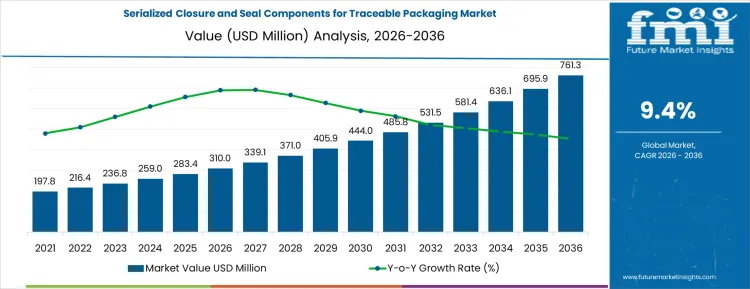
The growing demand for secure and traceable packaging, combined with increasing regulatory pressures for product identification and traceability, is driving the market for serialized closure and seal components. As packaging standards evolve, industries are adopting more advanced solutions, leading to increased use of serialized closures. Additionally, the expansion of e-commerce and the increased focus on consumer safety are fueling demand for packaging that ensures product integrity and authenticity.
What is the Growth Forecast for the Serialized Closure and Seal Components for Traceable Packaging Market through 2036?
The market share erosion or gain analysis for the serialized closure and seal components for traceable packaging market shows steady growth, with notable acceleration in the middle years of the forecast period. Starting at USD 310 million in 2026, the market grows to USD 338.9 million in 2027 and USD 370.6 million in 2028. These early years indicate a gradual increase in adoption as industries begin to embrace serialized packaging solutions in response to growing security and regulatory concerns.
From 2028 to 2030, the market experiences a noticeable acceleration, reaching USD 405.4 million in 2029 and USD 443.4 million in 2030. This period reflects a shift as more companies implement serialization systems to meet regulatory standards and consumer demand for product authenticity and safety. Between 2030 and 2035, the market continues to accelerate, with values reaching USD 485.9 million in 2031, USD 532.8 million in 2032, and USD 584.3 million in 2033.
By 2035, the market is projected to reach USD 640.7 million, with the final value of USD 761.3 million expected in 2036. The market share analysis suggests that while the market will see consistent growth in the early years, the rate of expansion accelerates as industries increasingly adopt serialized closure and seal components to ensure the integrity of traceable packaging. The market’s trajectory reflects the growing importance of security, transparency, and regulatory compliance, which will continue to drive growth in the coming decade.
Serialized Closure and Seal Components for Traceable Packaging Market Key Takeaways
| Metric | Value |
|---|---|
| Industry Sales Value (2026) | USD 310 million |
| Industry Forecast Value (2036) | USD 761.3 million |
| Industry Forecast CAGR (2026 to 2036) | 9.4% |
What Is Driving the Demand for Serialized Closure and Seal Components for Traceable Packaging in the US and Globally?
The demand for serialized closure and seal components for traceable packaging is being driven by rising requirements for product authentication, anti counterfeiting, and supply chain visibility. Brands in pharmaceuticals, food and beverage, cosmetics, and high value consumer goods are under increasing pressure from regulators and consumers to demonstrate that products are genuine, safe, and unaltered from manufacture to point of use. Serialization of closures and seals-using unique codes, barcodes, QR codes, or RFID tags-provides a robust method to link individual packages to digital records that can be scanned and verified throughout distribution.
This is particularly important for controlled or sensitive products where counterfeiting, diversion, or tampering poses safety and reputation risks. Traceable closures and seals also support compliance with global traceability regulations such as the US Drug Supply Chain Security Act (DSCSA) and similar frameworks in the EU and Asia Pacific, which require end to end tracing of product movement. Consumer demand for transparency and assurance of product integrity further reinforces adoption, as buyers increasingly expect verifiable information about where a product came from and that it has remained sealed until use.
Future demand for serialized closure and seal components for traceable packaging is expected to grow as digital tracking systems and regulatory frameworks mature across markets. Continued expansion of serialization standards, combined with advances in printing, tagging, and authentication technologies, will make it easier for manufacturers to implement unique identifiers at scale. Integration with enterprise resource planning, warehouse management, and point of sale systems will further extend the utility of traceable closures, enabling real time verification and data capture at multiple points in the supply chain.
The rise of omnichannel retail and direct to consumer distribution amplifies the need for reliable traceability because products often cross multiple networks before reaching the end user. Pressure to reduce losses from theft, diversion, and recalls will also motivate companies to adopt serialized components that enhance visibility and control. Suppliers that can offer closures and seal technologies compatible with high speed packaging lines, diverse materials, and sustainability goals are likely to see stronger uptake. As traceability becomes a competitive and regulatory expectation rather than a niche capability, demand for serialized closures and seals that support secure, verifiable packaging is expected to expand steadily worldwide.
What is the Segment Analysis for the Serialized Closure and Seal Components for Traceable Packaging Market?
The serialized closure and seal components for traceable packaging market is driven by key segments based on material types and serialization technologies. Among the material types, HDPE/PP combined with security additives is the dominant material, accounting for 50% of the market share, followed by multi-layer foil/PP, PP blends, and PE/foil composites. These materials are designed to ensure packaging security and product traceability, which are critical for sectors like pharmaceuticals and consumer goods. In terms of technology, laser coding and microtext serialization lead the market with a 55% share, followed by serialized foil seals, QR-enabled seal coding, and low-cost serialization technologies.
These technologies are key to providing tamper-evident, traceable, and secure packaging solutions that meet regulatory requirements and enhance consumer confidence. The market is influenced by the growing demand for traceability, security, and anti-counterfeiting measures across industries such as pharmaceuticals, food, and cosmetics. Regional demand, especially from North America, Europe, and parts of Asia, is accelerating the adoption of advanced closure and seal components. The ongoing focus on regulatory compliance and product security positions this market for steady growth.
What is Driving Growth in the HDPE/PP + Security Additives Segment of the Serialized Closure and Seal Components Market?
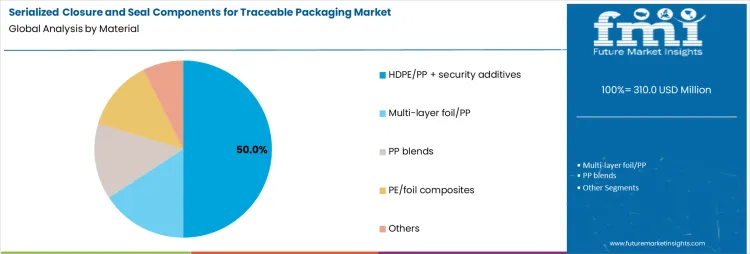
The HDPE/PP combined with security additives segment is the largest material category in the serialized closure and seal components for traceable packaging market, comprising 50% of the market share. This material is widely used for its durability, flexibility, and ease of processing, making it ideal for a range of packaging applications, particularly in the pharmaceutical and consumer goods industries. The addition of security additives enhances the material’s ability to provide tamper-evident features, which are crucial for ensuring product integrity and preventing counterfeiting.
HDPE/PP with security additives is commonly used in closures, seals, and caps, which require a high level of protection due to the sensitive nature of the products they contain, such as medications, health supplements, and food items. As regulatory frameworks around packaging security and traceability continue to tighten globally, manufacturers are increasingly turning to HDPE/PP solutions with security additives to meet compliance standards. This material’s combination of cost-effectiveness, security features, and versatility positions it as a dominant choice for secure packaging. As the demand for traceable and tamper-evident packaging solutions rises, this segment is expected to continue leading the market.
What is Contributing to the Growth of Laser Coding and Microtext Serialization Technology in the Packaging Market?
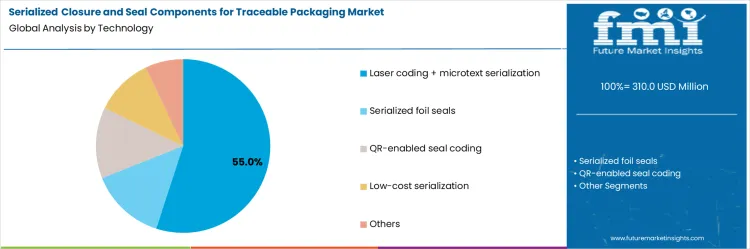
Laser coding and microtext serialization technology hold the largest share in the serialization technology segment of the serialized closure and seal components for traceable packaging market, representing 55% of the market. This growth is driven by the increasing need for secure, permanent, and tamper-proof marking solutions that ensure traceability and compliance with regulatory requirements, particularly in industries like pharmaceuticals, food, and cosmetics. Laser coding offers the advantage of high precision, permanence, and the ability to mark a wide variety of materials, including HDPE/PP, multi-layer foils, and composites. Microtext serialization, a form of very fine printing, is also a key component of this technology, offering enhanced security by making it difficult to replicate or alter markings.
As global regulations around product traceability become stricter, especially in the pharmaceutical sector, laser coding and microtext serialization technologies are becoming essential for ensuring product authenticity and preventing counterfeiting. Additionally, the ability of laser coding to integrate with automated production lines and high-speed manufacturing processes further drives its adoption in industries requiring high volumes of traceable packaging. As security concerns continue to rise, the demand for laser coding and microtext serialization is expected to grow, positioning this technology as a leading force in the market.
What are the Key Dynamics of the Global Serialized Closure and Seal Components for Traceable Packaging Market?
The global serialized closure and seal components for traceable packaging market is expanding as manufacturers and brand owners adopt technologies that enable individual item identification, authentication, and supply chain visibility. Serialized closures and seals include unique identifiers such as QR codes, barcodes, RFID tags or serialized printing applied to caps, lids, or tamper evident seals. These components support anti counterfeiting, recall management, and regulatory compliance across sectors such as pharmaceuticals, food and beverage, and high value consumer goods. Growth reflects increasing focus on product integrity, safety, and end to end traceability in global supply chains.
What are the Key Drivers for the Global Serialized Closure and Seal Components for Traceable Packaging Market?
Rising concerns about counterfeit products and diversion of legitimate goods drive demand for closures and seals that enable item level tracking. Regulatory and industry requirements for serialization in sectors like pharmaceuticals and medical devices reinforce adoption, as unique identifiers help meet compliance standards. Brands seeking to improve recall precision and minimize waste invest in systems that link closure codes to product data throughout the supply chain. Growth of digital supply chain platforms and real time data analytics supports integration of serial identifiers at the packaging level. Consumer interest in transparency and authenticity fuels deployment of traceable closures in premium and mass market segments.
What are the Restraints for the Global Serialized Closure and Seal Components for Traceable Packaging Market?
Higher costs associated with serialization technology and specialized closure or seal components can be a barrier for smaller brands or cost sensitive product lines. Implementation requires integration with existing production and packaging lines, which may involve capital investment in coding equipment, verification systems, and software. Variation in global serialization standards and timelines for regulatory mandates creates complexity for multinational operations, making harmonized deployment challenging. Technical requirements for consistent printing, readability, and durability of identifiers on closures across different substrates require validation and quality control, adding time and expense to rollout.
What is the Key Trends in the Global Serialized Closure and Seal Components for Traceable Packaging Market?
There is growing integration of advanced identification technologies such as serialized barcodes, digital watermarks, and RFID/NFC tags directly into closure and seal components to enable robust traceability. Adoption of automated verification systems on packaging lines that scan and validate serial identifiers supports quality assurance and reduces human error. Deployment of cloud based traceability platforms that link serialized closure data with supply chain events enhances transparency and decision support across stakeholders. Collaboration between closure manufacturers, brand owners, and traceability solution providers is increasing to develop standardized interfaces and ensure interoperability. Focus on tamper evident and consumer engagement features that leverage serialized markers is shaping product design and adoption across industries.
What are the Key Insights from the Serialized Closure and Seal Components for Traceable Packaging Market Analysis?
The serialized closure and seal components for traceable packaging market is expected to experience significant growth, driven by the increasing demand for secure and traceable packaging solutions. These components provide a level of security and authenticity through serialization, which helps combat counterfeiting, ensures product safety, and improves supply chain transparency. As industries such as pharmaceuticals, food and beverages, and consumer goods face rising pressure to comply with stringent packaging regulations, the demand for serialized closures and seals is rising. The market is expected to grow across various regions, with China, India, and the United States showing strong growth prospects. This growth is supported by advances in packaging technology, along with the global push for enhanced product traceability and tamper-proof solutions.
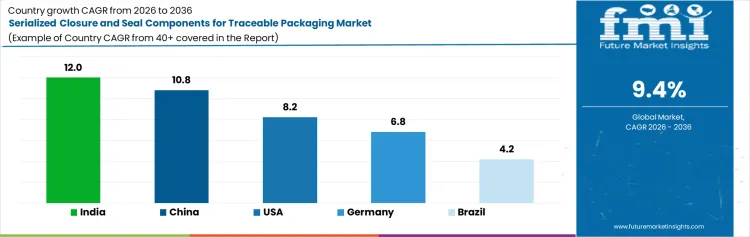
| Country | CAGR (2026-2036) |
|---|---|
| USA | 8.2% |
| Germany | 6.8% |
| China | 10.8% |
| India | 12% |
| Brazil | 4.2% |
What is the Growth Outlook for the Serialized Closure and Seal Components for Traceable Packaging Market in the USA?
The serialized closure and seal components for traceable packaging market in the United States is expected to grow at a steady pace, with a projected CAGR of 8.2%. The U.S. market benefits from advanced packaging technologies and stringent regulatory requirements, especially in industries like pharmaceuticals, food and beverages, and consumer goods, where traceability is crucial. The rising concern about counterfeiting and the increasing need for product safety and security are driving the adoption of serialized closures and seal components. The U.S. government’s regulatory frameworks that enforce compliance with traceability standards further contribute to the market’s growth. As these industries continue to prioritize consumer protection, the demand for traceable packaging solutions is expected to steadily rise.
What is the Market Outlook for the Serialized Closure and Seal Components for Traceable Packaging Market in Germany?
The serialized closure and seal components for traceable packaging market in Germany is projected to grow at a moderate rate, with a CAGR of 6.8%. Germany’s well-established manufacturing sector and strong regulatory environment make it a key market for traceable packaging solutions. The demand for serialized closure and seal components is driven by the need for enhanced product security, particularly in the pharmaceutical and food industries, where traceability and safety are paramount. Germany’s emphasis on quality and compliance with European Union regulations ensures that packaging solutions meet the highest standards. As more industries focus on preventing fraud and ensuring authenticity, Germany will continue to see steady adoption of these advanced packaging components.
What is the Growth Forecast for the Serialized Closure and Seal Components for Traceable Packaging Market in China?
The serialized closure and seal components for traceable packaging market in China is expected to grow rapidly, with a projected CAGR of 10.8%. China’s large manufacturing sector, combined with growing concerns about product safety, counterfeiting, and consumer protection, is fueling demand for traceable packaging solutions. The Chinese government’s increasing focus on regulatory standards, particularly in industries like food, pharmaceuticals, and consumer goods, is driving the adoption of serialized closures and seals. Additionally, China’s expanding middle class and growing export market create a strong need for secure, traceable packaging solutions that can meet global regulatory standards. As a result, China is expected to experience significant growth in the serialized packaging market.
What is the Market Outlook for the Serialized Closure and Seal Components for Traceable Packaging Market in India?
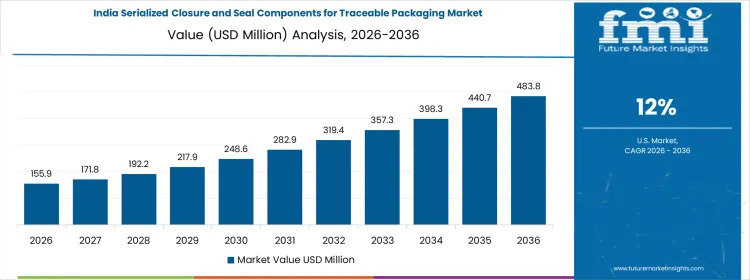
The serialized closure and seal components for traceable packaging market in India is projected to grow at the highest rate, with a CAGR of 12%. India’s rapidly expanding consumer market, along with increasing concerns about product safety and the rise of counterfeit goods, is driving the demand for traceable packaging solutions. The government’s initiatives to improve supply chain transparency and product security, particularly in pharmaceuticals and food packaging, are contributing to the growth of this market. India’s growing adoption of packaging technologies that offer enhanced traceability and anti-counterfeiting features makes it one of the fastest-growing markets for serialized closure and seal components. As India’s regulatory environment becomes more stringent, the demand for secure packaging solutions will continue to rise.
What are the Growth Prospects for the Serialized Closure and Seal Components for Traceable Packaging Market in Brazil?
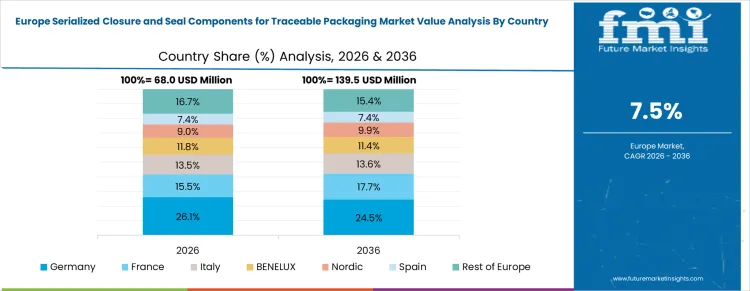
The serialized closure and seal components for traceable packaging market in Brazil is expected to grow at a slower rate, with a projected CAGR of 4.2%. While the demand for secure and traceable packaging solutions is rising in Brazil, particularly in the pharmaceutical and food sectors, the market is somewhat constrained by the country’s economic challenges and slower adoption of advanced packaging technologies compared to other regions. However, as regulatory standards evolve and consumer awareness of product safety grows, Brazil’s market for serialized packaging components is expected to gradually expand. With increasing pressure to ensure product authenticity and safety, the demand for traceable packaging solutions will likely see steady, albeit slower, growth in Brazil.
What is the Competitive Landscape for the Serialized Closure and Seal Components for Traceable Packaging Market?
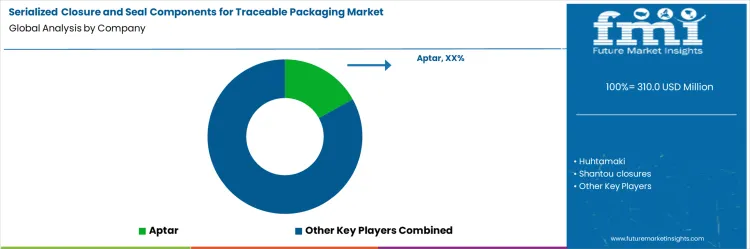
The serialized closure and seal components for traceable packaging market is expanding, driven by the growing demand for secure and transparent packaging solutions across industries such as food and beverage, pharmaceuticals, and consumer goods. Aptar leads the market with its innovative serialized closures and seals, offering enhanced traceability and tamper-evident features that ensure product authenticity and meet regulatory compliance. Aptar’s technology enables improved supply chain transparency, solidifying its position as a market leader. Huhtamaki, Shantou Closures, and UFlex are key competitors, providing high-quality closure solutions with traceability features. Huhtamaki emphasizes sustainable packaging components, while Shantou Closures and UFlex offer cost-effective and reliable serialized seal components tailored for various packaging applications.
Local cap converters, Tokan Kogyo, Berry Global, Silgan, and Tetra Pak Caps further intensify the competition. Tokan Kogyo specializes in high-performance sealing solutions for various industries, while Berry Global and Silgan deliver a wide range of secure closure products with serialized capabilities. Tetra Pak Caps focuses on sustainable and secure packaging for the food and beverage industry, offering traceability features that improve product security and consumer confidence. These companies compete by focusing on technological innovation, the ability to customize solutions, and ensuring compliance with industry standards for secure, traceable packaging. Their strategies emphasize reliability, supply chain security, and meeting the increasing demand for transparent and tamper-evident packaging.
Key Players of the Serialized Closure and Seal Components for Traceable Packaging Market
- Aptar
- Huhtamaki
- Shantou closures
- UFlex
- Local cap converters
- Tokan Kogyo
- Berry Global
- Silgan
- Tetra Pak Caps
Scope of the Report
| Items | Values |
|---|---|
| Quantitative Units (2026) | USD Million |
| End-use / Application | Pharmaceuticals & Nutraceuticals, Premium Food & Beverages, FMCG & OTC Pharma, Ayurveda & Pharma, Food Oils & Beverages, Others |
| Packaging Format / Type | Tamper-Evident Caps & Seals, Induction Seals, Flip-Top Caps & Liners, Induction Liners, Others |
| Material | HDPE/PP + Security Additives, Multi-Layer Foil/PP, PP Blends, PE/Foil Composites, Others |
| Technology | Laser Coding + Microtext Serialization, Serialized Foil Seals, QR-Enabled Seal Coding, Low-Cost Serialization |
| Companies | Aptar, Huhtamaki, Shantou Closures, UFlex, Local Cap Converters, Tokan Kogyo, Berry Global, Silgan, Tetra Pak Caps |
| Regions Covered | North America, Latin America, Western Europe, Eastern Europe, South Asia and Pacific, East Asia, Middle East & Africa |
| Countries Covered | United States, Canada, Mexico, Brazil, Argentina, Germany, France, United Kingdom, Italy, Spain, Netherlands, China, India, Japan, South Korea, ANZ, GCC Countries, South Africa |
| Additional Attributes | Dollar by sales by end-use/application, packaging format/type, material, technology, and region. Includes market trends in serialized closure and seal components, focusing on tamper-evident seals, induction seals, and flip-top caps. Highlights the role of laser coding, microtext serialization, QR-enabled coding, and low-cost serialization in pharmaceuticals, nutraceuticals, food, beverages, and FMCG packaging. Focus on regulatory compliance, market share, and competitive positioning of key companies. |
Serialized Closure and Seal Components for Traceable Packaging Market Segmentation
By End-use / Application:
- Pharmaceuticals & nutraceuticals
- Premium food & beverages
- FMCG & OTC pharma
- Ayurveda & pharma
- Food oils & beverages
- Others
By Packaging Format / Type:
- Tamper-evident caps & seals
- Induction seals
- Flip-top caps & liners
- Induction liners
- Others
By Material:
- HDPE/PP + security additives
- Multi-layer foil/PP
- PP blends
- PE/foil composites
- Others
By Technology:
- Laser coding + microtext serialization
- Serialized foil seals
- QR-enabled seal coding
- Low-cost serialization
- Others
By Region:
- Asia Pacific
- China
- Japan
- South Korea
- India
- Australia & New Zealand
- ASEAN
- Rest of Asia Pacific
- Europe
- Germany
- United Kingdom
- France
- Italy
- Spain
- Nordic
- BENELUX
- Rest of Europe
- North America
- United States
- Canada
- Mexico
- Latin America
- Brazil
- Chile
- Rest of Latin America
- Middle East & Africa
- Kingdom of Saudi Arabia
- Other GCC Countries
- Turkey
- South Africa
- Other African Union
- Rest of Middle East & Africa
Bibliography
- International Organization for Standardization. (2023). Packaging security features and traceability related standards for closures and seals. ISO Standards Publications.
- United States Food and Drug Administration. (2023). Drug supply chain security requirements impacting serialized packaging components. FDA Regulatory Guidance Publications.
- European Medicines Agency. (2023). Falsified medicines directive implementation and packaging traceability requirements. EMA Regulatory Publications.
- World Packaging Organisation. (2023). Anti tamper and traceable packaging components for regulated products. WPO Technical Reports.
Frequently Asked Questions
How big is the serialized closure and seal components for traceable packaging market in 2026?
The global serialized closure and seal components for traceable packaging market is estimated to be valued at USD 310.0 million in 2026.
What will be the size of serialized closure and seal components for traceable packaging market in 2036?
The market size for the serialized closure and seal components for traceable packaging market is projected to reach USD 761.3 million by 2036.
How much will be the serialized closure and seal components for traceable packaging market growth between 2026 and 2036?
The serialized closure and seal components for traceable packaging market is expected to grow at a 9.4% CAGR between 2026 and 2036.
What are the key product types in the serialized closure and seal components for traceable packaging market?
The key product types in serialized closure and seal components for traceable packaging market are pharmaceuticals & nutraceuticals, premium food & beverages, FMCG & otc pharma, ayurveda & pharma, food oils & beverages and others.
Which packaging format segment to contribute significant share in the serialized closure and seal components for traceable packaging market in 2026?
In terms of packaging format, tamper-evident caps & seals segment to command 45.0% share in the serialized closure and seal components for traceable packaging market in 2026.
Preview the report firsthand - request a free sample
Get SampleGet the brochure for pricing and purchase details.
Get PDFTable of Content
- Executive Summary
- Global Market Outlook
- Demand-side Trends
- Supply-side Trends
- Technology Roadmap Analysis
- Analysis and Recommendations
- Market Overview
- Market Coverage / Taxonomy
- Market Definition / Scope / Limitations
- Market Background
- Market Dynamics
- Drivers
- Restraints
- Opportunity
- Trends
- Scenario Forecast
- Demand in Optimistic Scenario
- Demand in Likely Scenario
- Demand in Conservative Scenario
- Opportunity Map Analysis
- Product Life Cycle Analysis
- Supply Chain Analysis
- Investment Feasibility Matrix
- Value Chain Analysis
- PESTLE and Porter’s Analysis
- Regulatory Landscape
- Regional Parent Market Outlook
- Production and Consumption Statistics
- Import and Export Statistics
- Market Dynamics
- Global Market Analysis 2021 to 2025 and Forecast, 2026 to 2036
- Historical Market Size Value (USD Million) Analysis, 2021 to 2025
- Current and Future Market Size Value (USD Million) Projections, 2026 to 2036
- Y-o-Y Growth Trend Analysis
- Absolute $ Opportunity Analysis
- Global Market Pricing Analysis 2021 to 2025 and Forecast 2026 to 2036
- Global Market Analysis 2021 to 2025 and Forecast 2026 to 2036, By End-use
- Introduction / Key Findings
- Historical Market Size Value (USD Million) Analysis By End-use , 2021 to 2025
- Current and Future Market Size Value (USD Million) Analysis and Forecast By End-use , 2026 to 2036
- Pharmaceuticals & nutraceuticals
- Premium food & beverages
- FMCG & OTC pharma
- Ayurveda & pharma
- Food oils & beverages
- Others
- Y-o-Y Growth Trend Analysis By End-use , 2021 to 2025
- Absolute $ Opportunity Analysis By End-use , 2026 to 2036
- Global Market Analysis 2021 to 2025 and Forecast 2026 to 2036, By Packaging Format
- Introduction / Key Findings
- Historical Market Size Value (USD Million) Analysis By Packaging Format, 2021 to 2025
- Current and Future Market Size Value (USD Million) Analysis and Forecast By Packaging Format, 2026 to 2036
- Tamper-evident caps & seals
- Induction seals
- Flip-top caps & liners
- Induction liners
- Others
- Y-o-Y Growth Trend Analysis By Packaging Format, 2021 to 2025
- Absolute $ Opportunity Analysis By Packaging Format, 2026 to 2036
- Global Market Analysis 2021 to 2025 and Forecast 2026 to 2036, By Material
- Introduction / Key Findings
- Historical Market Size Value (USD Million) Analysis By Material, 2021 to 2025
- Current and Future Market Size Value (USD Million) Analysis and Forecast By Material, 2026 to 2036
- HDPE/PP + security additives
- Multi-layer foil/PP
- PP blends
- PE/foil composites
- Others
- Y-o-Y Growth Trend Analysis By Material, 2021 to 2025
- Absolute $ Opportunity Analysis By Material, 2026 to 2036
- Global Market Analysis 2021 to 2025 and Forecast 2026 to 2036, By Technology
- Introduction / Key Findings
- Historical Market Size Value (USD Million) Analysis By Technology, 2021 to 2025
- Current and Future Market Size Value (USD Million) Analysis and Forecast By Technology, 2026 to 2036
- Laser coding + microtext serialization
- Serialized foil seals
- QR-enabled seal coding
- Low-cost serialization
- Others
- Y-o-Y Growth Trend Analysis By Technology, 2021 to 2025
- Absolute $ Opportunity Analysis By Technology, 2026 to 2036
- Global Market Analysis 2021 to 2025 and Forecast 2026 to 2036, By Region
- Introduction
- Historical Market Size Value (USD Million) Analysis By Region, 2021 to 2025
- Current Market Size Value (USD Million) Analysis and Forecast By Region, 2026 to 2036
- North America
- Latin America
- Western Europe
- Eastern Europe
- East Asia
- South Asia and Pacific
- Middle East & Africa
- Market Attractiveness Analysis By Region
- North America Market Analysis 2021 to 2025 and Forecast 2026 to 2036, By Country
- Historical Market Size Value (USD Million) Trend Analysis By Market Taxonomy, 2021 to 2025
- Market Size Value (USD Million) Forecast By Market Taxonomy, 2026 to 2036
- By Country
- USA
- Canada
- Mexico
- By End-use
- By Packaging Format
- By Material
- By Technology
- By Country
- Market Attractiveness Analysis
- By Country
- By End-use
- By Packaging Format
- By Material
- By Technology
- Key Takeaways
- Latin America Market Analysis 2021 to 2025 and Forecast 2026 to 2036, By Country
- Historical Market Size Value (USD Million) Trend Analysis By Market Taxonomy, 2021 to 2025
- Market Size Value (USD Million) Forecast By Market Taxonomy, 2026 to 2036
- By Country
- Brazil
- Chile
- Rest of Latin America
- By End-use
- By Packaging Format
- By Material
- By Technology
- By Country
- Market Attractiveness Analysis
- By Country
- By End-use
- By Packaging Format
- By Material
- By Technology
- Key Takeaways
- Western Europe Market Analysis 2021 to 2025 and Forecast 2026 to 2036, By Country
- Historical Market Size Value (USD Million) Trend Analysis By Market Taxonomy, 2021 to 2025
- Market Size Value (USD Million) Forecast By Market Taxonomy, 2026 to 2036
- By Country
- Germany
- UK
- Italy
- Spain
- France
- Nordic
- BENELUX
- Rest of Western Europe
- By End-use
- By Packaging Format
- By Material
- By Technology
- By Country
- Market Attractiveness Analysis
- By Country
- By End-use
- By Packaging Format
- By Material
- By Technology
- Key Takeaways
- Eastern Europe Market Analysis 2021 to 2025 and Forecast 2026 to 2036, By Country
- Historical Market Size Value (USD Million) Trend Analysis By Market Taxonomy, 2021 to 2025
- Market Size Value (USD Million) Forecast By Market Taxonomy, 2026 to 2036
- By Country
- Russia
- Poland
- Hungary
- Balkan & Baltic
- Rest of Eastern Europe
- By End-use
- By Packaging Format
- By Material
- By Technology
- By Country
- Market Attractiveness Analysis
- By Country
- By End-use
- By Packaging Format
- By Material
- By Technology
- Key Takeaways
- East Asia Market Analysis 2021 to 2025 and Forecast 2026 to 2036, By Country
- Historical Market Size Value (USD Million) Trend Analysis By Market Taxonomy, 2021 to 2025
- Market Size Value (USD Million) Forecast By Market Taxonomy, 2026 to 2036
- By Country
- China
- Japan
- South Korea
- By End-use
- By Packaging Format
- By Material
- By Technology
- By Country
- Market Attractiveness Analysis
- By Country
- By End-use
- By Packaging Format
- By Material
- By Technology
- Key Takeaways
- South Asia and Pacific Market Analysis 2021 to 2025 and Forecast 2026 to 2036, By Country
- Historical Market Size Value (USD Million) Trend Analysis By Market Taxonomy, 2021 to 2025
- Market Size Value (USD Million) Forecast By Market Taxonomy, 2026 to 2036
- By Country
- India
- ASEAN
- Australia & New Zealand
- Rest of South Asia and Pacific
- By End-use
- By Packaging Format
- By Material
- By Technology
- By Country
- Market Attractiveness Analysis
- By Country
- By End-use
- By Packaging Format
- By Material
- By Technology
- Key Takeaways
- Middle East & Africa Market Analysis 2021 to 2025 and Forecast 2026 to 2036, By Country
- Historical Market Size Value (USD Million) Trend Analysis By Market Taxonomy, 2021 to 2025
- Market Size Value (USD Million) Forecast By Market Taxonomy, 2026 to 2036
- By Country
- Kingdom of Saudi Arabia
- Other GCC Countries
- Turkiye
- South Africa
- Other African Union
- Rest of Middle East & Africa
- By End-use
- By Packaging Format
- By Material
- By Technology
- By Country
- Market Attractiveness Analysis
- By Country
- By End-use
- By Packaging Format
- By Material
- By Technology
- Key Takeaways
- Key Countries Market Analysis
- USA
- Pricing Analysis
- Market Share Analysis, 2025
- By End-use
- By Packaging Format
- By Material
- By Technology
- Canada
- Pricing Analysis
- Market Share Analysis, 2025
- By End-use
- By Packaging Format
- By Material
- By Technology
- Mexico
- Pricing Analysis
- Market Share Analysis, 2025
- By End-use
- By Packaging Format
- By Material
- By Technology
- Brazil
- Pricing Analysis
- Market Share Analysis, 2025
- By End-use
- By Packaging Format
- By Material
- By Technology
- Chile
- Pricing Analysis
- Market Share Analysis, 2025
- By End-use
- By Packaging Format
- By Material
- By Technology
- Germany
- Pricing Analysis
- Market Share Analysis, 2025
- By End-use
- By Packaging Format
- By Material
- By Technology
- UK
- Pricing Analysis
- Market Share Analysis, 2025
- By End-use
- By Packaging Format
- By Material
- By Technology
- Italy
- Pricing Analysis
- Market Share Analysis, 2025
- By End-use
- By Packaging Format
- By Material
- By Technology
- Spain
- Pricing Analysis
- Market Share Analysis, 2025
- By End-use
- By Packaging Format
- By Material
- By Technology
- France
- Pricing Analysis
- Market Share Analysis, 2025
- By End-use
- By Packaging Format
- By Material
- By Technology
- India
- Pricing Analysis
- Market Share Analysis, 2025
- By End-use
- By Packaging Format
- By Material
- By Technology
- ASEAN
- Pricing Analysis
- Market Share Analysis, 2025
- By End-use
- By Packaging Format
- By Material
- By Technology
- Australia & New Zealand
- Pricing Analysis
- Market Share Analysis, 2025
- By End-use
- By Packaging Format
- By Material
- By Technology
- China
- Pricing Analysis
- Market Share Analysis, 2025
- By End-use
- By Packaging Format
- By Material
- By Technology
- Japan
- Pricing Analysis
- Market Share Analysis, 2025
- By End-use
- By Packaging Format
- By Material
- By Technology
- South Korea
- Pricing Analysis
- Market Share Analysis, 2025
- By End-use
- By Packaging Format
- By Material
- By Technology
- Russia
- Pricing Analysis
- Market Share Analysis, 2025
- By End-use
- By Packaging Format
- By Material
- By Technology
- Poland
- Pricing Analysis
- Market Share Analysis, 2025
- By End-use
- By Packaging Format
- By Material
- By Technology
- Hungary
- Pricing Analysis
- Market Share Analysis, 2025
- By End-use
- By Packaging Format
- By Material
- By Technology
- Kingdom of Saudi Arabia
- Pricing Analysis
- Market Share Analysis, 2025
- By End-use
- By Packaging Format
- By Material
- By Technology
- Turkiye
- Pricing Analysis
- Market Share Analysis, 2025
- By End-use
- By Packaging Format
- By Material
- By Technology
- South Africa
- Pricing Analysis
- Market Share Analysis, 2025
- By End-use
- By Packaging Format
- By Material
- By Technology
- USA
- Market Structure Analysis
- Competition Dashboard
- Competition Benchmarking
- Market Share Analysis of Top Players
- By Regional
- By End-use
- By Packaging Format
- By Material
- By Technology
- Competition Analysis
- Competition Deep Dive
- Aptar
- Overview
- Product Portfolio
- Profitability by Market Segments (Product/Age /Sales Channel/Region)
- Sales Footprint
- Strategy Overview
- Marketing Strategy
- Product Strategy
- Channel Strategy
- Huhtamaki
- Shantou closures
- UFlex
- Local cap converters
- Tokan Kogyo
- Berry Global
- Silgan
- Tetra Pak Caps
- Aptar
- Competition Deep Dive
- Assumptions & Acronyms Used
- Research Methodology


