

- Industry Size (2025)
- USD 1.7 Bn
- Forecast (2035)
- USD 2.7 Bn
- CAGR (2025 to 2035)
- 4.9%
Ship Anchor Market Size and Share Forecast Outlook 2025 to 2035
The Ship Anchor Market is estimated to be valued at USD 1.7 billion in 2025 and is projected to reach USD 2.7 billion by 2035, registering a compound annual growth rate (CAGR) of 4.9% over the forecast period.
Quick Stats for Ship Anchor Market
- Ship Anchor Market Value (2025): USD 1.7 billion
- Ship Anchor Market Forecast Value (2035): USD 2.7 billion
- Ship Anchor Market Forecast CAGR: 4.9%
- Leading Segment in Ship Anchor Market in 2025: Stockless Anchors (32.7%)
- Key Growth Regions in Ship Anchor Market: North America, Asia-Pacific, Europe
- Top Key Players in Ship Anchor Market: Vryhof Anchors, Danforth Anchors, Lewmar Limited, Manson Anchors, Petersen Stainless Rigging Ltd, Anchor Marine & Industrial Supply, Hawboldt Industries, NABRICO (National Barge Company), Anchor Right Australia, AC-14 Anchor, Forespar Products Corporation, HHP Anchor
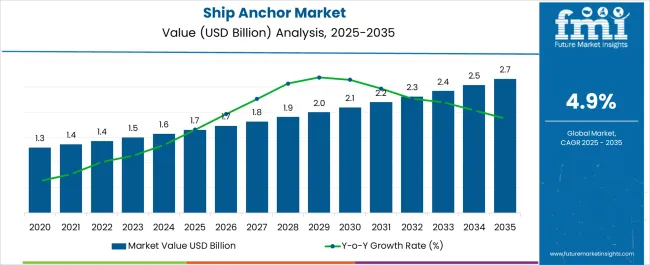
Ship Anchor Market Key Takeaways
| Metric | Value |
|---|---|
| Ship Anchor Market Estimated Value in (2025 E) | USD 1.7 billion |
| Ship Anchor Market Forecast Value in (2035 F) | USD 2.7 billion |
| Forecast CAGR (2025 to 2035) | 4.9% |
Why is the Ship Anchor Market Growing?
The Ship Anchor market is experiencing steady growth, driven by increasing global maritime trade and rising demand for secure mooring solutions across various vessel types. Growth in international shipping, logistics, and port activities has elevated the need for high-performance anchors that ensure stability and safety in diverse marine conditions. Steel anchors are being favored due to their strength, durability, and resistance to corrosion, which make them suitable for long-term deployment in harsh marine environments.
Technological advancements in anchor design, including optimized fluke geometry and weight distribution, have further improved holding capacity and operational reliability. The growth of commercial shipping fleets and expansion of port infrastructure in emerging economies is fueling demand for modern anchoring solutions.
Environmental regulations, vessel safety standards, and a focus on reducing maritime accidents are also driving the adoption of advanced anchors As maritime operations become more complex and vessels increase in size, the market for reliable, high-quality anchoring systems is expected to sustain long-term growth, with steel-based solutions being central to industry adoption.
Segmental Analysis
The ship anchor market is segmented by type, material, vessel type, weight, and geographic regions. By type, ship anchor market is divided into Stockless Anchors, Stock Anchors, High Holding Power Anchors, and Others. In terms of material, ship anchor market is classified into Steel, Aluminum, Composite, and Others. Based on vessel type, ship anchor market is segmented into Commercial Vessels, Naval Vessels, Offshore Vessels, and Others. By weight, ship anchor market is segmented into Medium Weight, Lightweight, and Heavyweight. Regionally, the ship anchor industry is classified into North America, Latin America, Western Europe, Eastern Europe, Balkan & Baltic Countries, Russia & Belarus, Central Asia, East Asia, South Asia & Pacific, and the Middle East & Africa.
Insights into the Stockless Anchors Type Segment
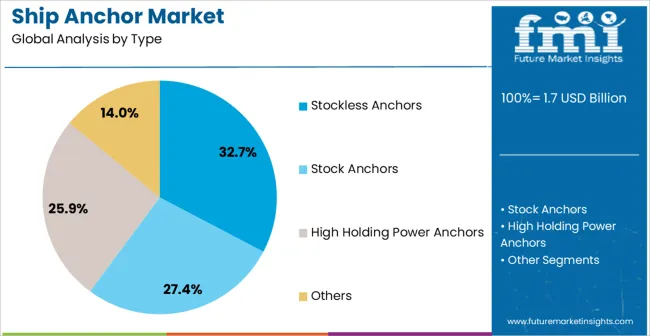
The stockless anchors segment is projected to hold 32.7% of the market revenue in 2025, making it the leading type in the Ship Anchor market. Growth in this segment is driven by the anchor’s ease of handling, storage efficiency, and versatility across a wide range of vessels. Stockless anchors are preferred for commercial and cargo vessels due to their ability to provide reliable holding power while occupying minimal deck space.
Their adoption is reinforced by modern ship design requirements, where operational efficiency and safety are prioritized. Stockless anchors also support rapid deployment and retrieval, enhancing turnaround times for commercial shipping operations.
Advances in material selection and manufacturing techniques have improved strength and durability, allowing them to withstand high loads and harsh marine environments As commercial shipping activity expands globally, stockless anchors are expected to maintain their leading position, supported by widespread preference among shipbuilders, fleet operators, and maritime regulatory compliance standards.
Insights into the Steel Material Segment
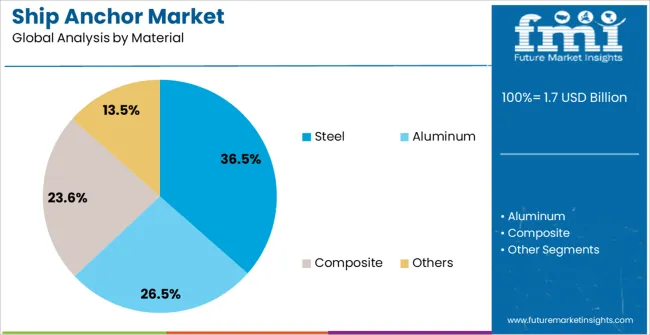
The steel material segment is anticipated to account for 36.5% of the market revenue in 2025, making it the leading material choice for ship anchors. Growth in this segment is being driven by steel’s superior mechanical strength, corrosion resistance, and longevity compared to alternative materials. Steel anchors provide high holding power and structural integrity, which is critical for ensuring vessel safety in turbulent marine environments.
Advancements in steel processing and coating technologies have further enhanced durability, reducing maintenance requirements and extending service life. The material’s availability, cost-effectiveness, and adaptability to various anchor designs, including stockless and traditional anchors, support widespread adoption.
Compliance with international maritime safety standards and increasing operational demands from large commercial fleets reinforce the preference for steel anchors As global shipping and port activities continue to expand, steel anchors are expected to remain the preferred material, providing reliable, long-lasting performance across a wide spectrum of vessels and operational conditions.
Insights into the Commercial Vessels Segment
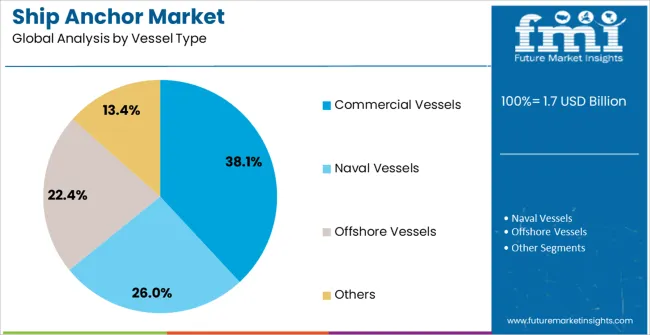
The commercial vessels segment is projected to hold 38.1% of the market revenue in 2025, establishing it as the leading end-use category. Growth in this segment is driven by the expansion of cargo transport, container shipping, and logistics operations worldwide. Commercial vessels require anchors that provide dependable holding capacity under varying sea conditions to ensure operational efficiency and safety.
Shipowners and operators prioritize anchors that reduce turnaround times, support heavy loads, and comply with maritime safety regulations. The stockless anchor design combined with steel construction is commonly adopted in commercial fleets due to its versatility and reliability.
Increasing trade activities, fleet modernization programs, and port expansions are further fueling demand for high-performance anchoring solutions in the commercial segment With global maritime trade expected to grow, commercial vessels will continue to drive the adoption of durable and efficient anchors, reinforcing their leading share in the market and sustaining long-term growth opportunities.
Market Overview
Ship Anchor Market Overview
Ship repair activities and shipbuilding are expected to surge demand for ship equipment such as ship anchor, electronics system, and machine engines, thereby creating lucrative opportunities for growth of marine equipment manufacturers.
In Greek companies, marine equipment output mainly involves ship operation equipment such as mooring and the cargo handling equipment that includes ship anchor, cables and wire ropes. Marine equipment manufacturers are now taking a closer look towards supply side considerations for exploring the complete growth potential of the global market.
Analysis of Ship Anchor Market By Key Countries
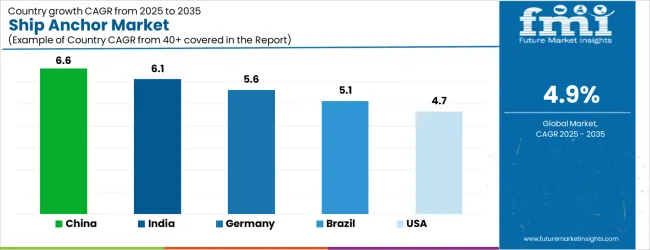
| Country | CAGR |
|---|---|
| China | 6.6% |
| India | 6.1% |
| Germany | 5.6% |
| Brazil | 5.1% |
| USA | 4.7% |
| UK | 4.2% |
| Japan | 3.7% |
Country-wise Analysis
The Ship Anchor Market is expected to register a CAGR of 4.9% during the forecast period, exhibiting varied country level momentum. China leads with the highest CAGR of 6.6%, followed by India at 6.1%. Developed markets such as Germany, France, and the UK continue to expand steadily, while the USA is likely to grow at consistent rates. Japan posts the lowest CAGR at 3.7%, yet still underscores a broadly positive trajectory for the global Ship Anchor Market. In 2024, Germany held a dominant revenue in the Western Europe market and is expected to grow with a CAGR of 5.6%. The USA Ship Anchor Market is estimated to be valued at USD 576.4 million in 2025 and is anticipated to reach a valuation of USD 576.4 million by 2035. Sales are projected to rise at a CAGR of 0.0% over the forecast period between 2025 and 2035. While Japan and South Korea markets are estimated to be valued at USD 74.6 million and USD 42.7 million respectively in 2025.
Key Players in the Ship Anchor Market
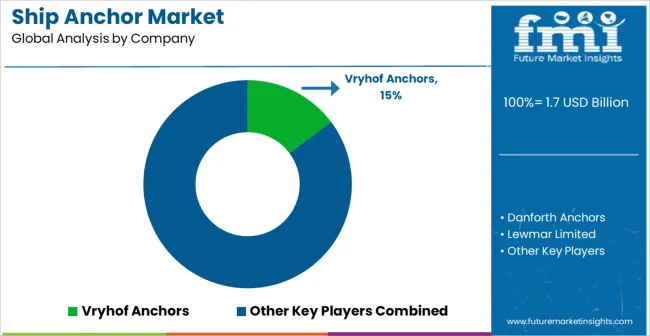
- Vryhof Anchors
- Danforth Anchors
- Lewmar Limited
- Manson Anchors
- Petersen Stainless Rigging Ltd
- Anchor Marine & Industrial Supply
- Hawboldt Industries
- NABRICO (National Barge Company)
- Anchor Right Australia
- AC-14 Anchor
- Forespar Products Corporation
- HHP Anchor
Scope of the Report
| Item | Value |
|---|---|
| Quantitative Units | USD 1.7 Billion |
| Type | Stockless Anchors, Stock Anchors, High Holding Power Anchors, and Others |
| Material | Steel, Aluminum, Composite, and Others |
| Vessel Type | Commercial Vessels, Naval Vessels, Offshore Vessels, and Others |
| Weight | Medium Weight, Lightweight, and Heavyweight |
| Regions Covered | North America, Europe, Asia-Pacific, Latin America, Middle East & Africa |
| Country Covered | United States, Canada, Germany, France, United Kingdom, China, Japan, India, Brazil, South Africa |
| Key Companies Profiled | Vryhof Anchors, Danforth Anchors, Lewmar Limited, Manson Anchors, Petersen Stainless Rigging Ltd, Anchor Marine & Industrial Supply, Hawboldt Industries, NABRICO (National Barge Company), Anchor Right Australia, AC-14 Anchor, Forespar Products Corporation, and HHP Anchor |
Ship Anchor Market by Segments
Type:
- Stockless Anchors
- Stock Anchors
- High Holding Power Anchors
- Others
Material:
- Steel
- Aluminum
- Composite
- Others
Vessel Type:
- Commercial Vessels
- Naval Vessels
- Offshore Vessels
- Others
Weight:
- Medium Weight
- Lightweight
- Heavyweight
Region:
- North America
- USA
- Canada
- Mexico
- Latin America
- Brazil
- Chile
- Rest of Latin America
- Western Europe
- Germany
- UK
- Italy
- Spain
- France
- Nordic
- BENELUX
- Rest of Western Europe
- Eastern Europe
- Russia
- Poland
- Hungary
- Balkan & Baltic
- Rest of Eastern Europe
- East Asia
- China
- Japan
- South Korea
- South Asia and Pacific
- India
- ASEAN
- Australia & New Zealand
- Rest of South Asia and Pacific
- Middle East & Africa
- Kingdom of Saudi Arabia
- Other GCC Countries
- Turkiye
- South Africa
- Other African Union
- Rest of Middle East & Africa
Frequently Asked Questions
How big is the ship anchor market in 2025?
The global ship anchor market is estimated to be valued at USD 1.7 billion in 2025.
What will be the size of ship anchor market in 2035?
The market size for the ship anchor market is projected to reach USD 2.7 billion by 2035.
How much will be the ship anchor market growth between 2025 and 2035?
The ship anchor market is expected to grow at a 4.9% CAGR between 2025 and 2035.
What are the key product types in the ship anchor market?
The key product types in ship anchor market are stockless anchors, stock anchors, high holding power anchors and others.
Which material segment to contribute significant share in the ship anchor market in 2025?
In terms of material, steel segment to command 36.5% share in the ship anchor market in 2025.
Preview the report firsthand - request a free sample
Get SampleGet the brochure for pricing and purchase details.
Get PDFTable of Content
- Executive Summary
- Global Market Outlook
- Demand-side Trends
- Supply-side Trends
- Technology Roadmap Analysis
- Analysis and Recommendations
- Market Overview
- Market Coverage / Taxonomy
- Market Definition / Scope / Limitations
- Market Background
- Market Dynamics
- Drivers
- Restraints
- Opportunity
- Trends
- Scenario Forecast
- Demand in Optimistic Scenario
- Demand in Likely Scenario
- Demand in Conservative Scenario
- Opportunity Map Analysis
- Product Life Cycle Analysis
- Supply Chain Analysis
- Investment Feasibility Matrix
- Value Chain Analysis
- PESTLE and Porter’s Analysis
- Regulatory Landscape
- Regional Parent Market Outlook
- Production and Consumption Statistics
- Import and Export Statistics
- Market Dynamics
- Global Market Analysis 2020 to 2024 and Forecast, 2025 to 2035
- Historical Market Size Value (USD Million) Analysis, 2020 to 2024
- Current and Future Market Size Value (USD Million) Projections, 2025 to 2035
- Y-o-Y Growth Trend Analysis
- Absolute $ Opportunity Analysis
- Global Market Pricing Analysis 2020 to 2024 and Forecast 2025 to 2035
- Global Market Analysis 2020 to 2024 and Forecast 2025 to 2035, By Type
- Introduction / Key Findings
- Historical Market Size Value (USD Million) Analysis By Type , 2020 to 2024
- Current and Future Market Size Value (USD Million) Analysis and Forecast By Type , 2025 to 2035
- Stockless Anchors
- Stock Anchors
- High Holding Power Anchors
- Others
- Y-o-Y Growth Trend Analysis By Type , 2020 to 2024
- Absolute $ Opportunity Analysis By Type , 2025 to 2035
- Global Market Analysis 2020 to 2024 and Forecast 2025 to 2035, By Material
- Introduction / Key Findings
- Historical Market Size Value (USD Million) Analysis By Material, 2020 to 2024
- Current and Future Market Size Value (USD Million) Analysis and Forecast By Material, 2025 to 2035
- Steel
- Aluminum
- Composite
- Others
- Y-o-Y Growth Trend Analysis By Material, 2020 to 2024
- Absolute $ Opportunity Analysis By Material, 2025 to 2035
- Global Market Analysis 2020 to 2024 and Forecast 2025 to 2035, By Vessel Type
- Introduction / Key Findings
- Historical Market Size Value (USD Million) Analysis By Vessel Type, 2020 to 2024
- Current and Future Market Size Value (USD Million) Analysis and Forecast By Vessel Type, 2025 to 2035
- Commercial Vessels
- Naval Vessels
- Offshore Vessels
- Others
- Y-o-Y Growth Trend Analysis By Vessel Type, 2020 to 2024
- Absolute $ Opportunity Analysis By Vessel Type, 2025 to 2035
- Global Market Analysis 2020 to 2024 and Forecast 2025 to 2035, By Weight
- Introduction / Key Findings
- Historical Market Size Value (USD Million) Analysis By Weight, 2020 to 2024
- Current and Future Market Size Value (USD Million) Analysis and Forecast By Weight, 2025 to 2035
- Medium Weight
- Lightweight
- Heavyweight
- Y-o-Y Growth Trend Analysis By Weight, 2020 to 2024
- Absolute $ Opportunity Analysis By Weight, 2025 to 2035
- Global Market Analysis 2020 to 2024 and Forecast 2025 to 2035, By Region
- Introduction
- Historical Market Size Value (USD Million) Analysis By Region, 2020 to 2024
- Current Market Size Value (USD Million) Analysis and Forecast By Region, 2025 to 2035
- North America
- Latin America
- Western Europe
- Eastern Europe
- East Asia
- South Asia and Pacific
- Middle East & Africa
- Market Attractiveness Analysis By Region
- North America Market Analysis 2020 to 2024 and Forecast 2025 to 2035, By Country
- Historical Market Size Value (USD Million) Trend Analysis By Market Taxonomy, 2020 to 2024
- Market Size Value (USD Million) Forecast By Market Taxonomy, 2025 to 2035
- By Country
- USA
- Canada
- Mexico
- By Type
- By Material
- By Vessel Type
- By Weight
- By Country
- Market Attractiveness Analysis
- By Country
- By Type
- By Material
- By Vessel Type
- By Weight
- Key Takeaways
- Latin America Market Analysis 2020 to 2024 and Forecast 2025 to 2035, By Country
- Historical Market Size Value (USD Million) Trend Analysis By Market Taxonomy, 2020 to 2024
- Market Size Value (USD Million) Forecast By Market Taxonomy, 2025 to 2035
- By Country
- Brazil
- Chile
- Rest of Latin America
- By Type
- By Material
- By Vessel Type
- By Weight
- By Country
- Market Attractiveness Analysis
- By Country
- By Type
- By Material
- By Vessel Type
- By Weight
- Key Takeaways
- Western Europe Market Analysis 2020 to 2024 and Forecast 2025 to 2035, By Country
- Historical Market Size Value (USD Million) Trend Analysis By Market Taxonomy, 2020 to 2024
- Market Size Value (USD Million) Forecast By Market Taxonomy, 2025 to 2035
- By Country
- Germany
- UK
- Italy
- Spain
- France
- Nordic
- BENELUX
- Rest of Western Europe
- By Type
- By Material
- By Vessel Type
- By Weight
- By Country
- Market Attractiveness Analysis
- By Country
- By Type
- By Material
- By Vessel Type
- By Weight
- Key Takeaways
- Eastern Europe Market Analysis 2020 to 2024 and Forecast 2025 to 2035, By Country
- Historical Market Size Value (USD Million) Trend Analysis By Market Taxonomy, 2020 to 2024
- Market Size Value (USD Million) Forecast By Market Taxonomy, 2025 to 2035
- By Country
- Russia
- Poland
- Hungary
- Balkan & Baltic
- Rest of Eastern Europe
- By Type
- By Material
- By Vessel Type
- By Weight
- By Country
- Market Attractiveness Analysis
- By Country
- By Type
- By Material
- By Vessel Type
- By Weight
- Key Takeaways
- East Asia Market Analysis 2020 to 2024 and Forecast 2025 to 2035, By Country
- Historical Market Size Value (USD Million) Trend Analysis By Market Taxonomy, 2020 to 2024
- Market Size Value (USD Million) Forecast By Market Taxonomy, 2025 to 2035
- By Country
- China
- Japan
- South Korea
- By Type
- By Material
- By Vessel Type
- By Weight
- By Country
- Market Attractiveness Analysis
- By Country
- By Type
- By Material
- By Vessel Type
- By Weight
- Key Takeaways
- South Asia and Pacific Market Analysis 2020 to 2024 and Forecast 2025 to 2035, By Country
- Historical Market Size Value (USD Million) Trend Analysis By Market Taxonomy, 2020 to 2024
- Market Size Value (USD Million) Forecast By Market Taxonomy, 2025 to 2035
- By Country
- India
- ASEAN
- Australia & New Zealand
- Rest of South Asia and Pacific
- By Type
- By Material
- By Vessel Type
- By Weight
- By Country
- Market Attractiveness Analysis
- By Country
- By Type
- By Material
- By Vessel Type
- By Weight
- Key Takeaways
- Middle East & Africa Market Analysis 2020 to 2024 and Forecast 2025 to 2035, By Country
- Historical Market Size Value (USD Million) Trend Analysis By Market Taxonomy, 2020 to 2024
- Market Size Value (USD Million) Forecast By Market Taxonomy, 2025 to 2035
- By Country
- Kingdom of Saudi Arabia
- Other GCC Countries
- Turkiye
- South Africa
- Other African Union
- Rest of Middle East & Africa
- By Type
- By Material
- By Vessel Type
- By Weight
- By Country
- Market Attractiveness Analysis
- By Country
- By Type
- By Material
- By Vessel Type
- By Weight
- Key Takeaways
- Key Countries Market Analysis
- USA
- Pricing Analysis
- Market Share Analysis, 2024
- By Type
- By Material
- By Vessel Type
- By Weight
- Canada
- Pricing Analysis
- Market Share Analysis, 2024
- By Type
- By Material
- By Vessel Type
- By Weight
- Mexico
- Pricing Analysis
- Market Share Analysis, 2024
- By Type
- By Material
- By Vessel Type
- By Weight
- Brazil
- Pricing Analysis
- Market Share Analysis, 2024
- By Type
- By Material
- By Vessel Type
- By Weight
- Chile
- Pricing Analysis
- Market Share Analysis, 2024
- By Type
- By Material
- By Vessel Type
- By Weight
- Germany
- Pricing Analysis
- Market Share Analysis, 2024
- By Type
- By Material
- By Vessel Type
- By Weight
- UK
- Pricing Analysis
- Market Share Analysis, 2024
- By Type
- By Material
- By Vessel Type
- By Weight
- Italy
- Pricing Analysis
- Market Share Analysis, 2024
- By Type
- By Material
- By Vessel Type
- By Weight
- Spain
- Pricing Analysis
- Market Share Analysis, 2024
- By Type
- By Material
- By Vessel Type
- By Weight
- France
- Pricing Analysis
- Market Share Analysis, 2024
- By Type
- By Material
- By Vessel Type
- By Weight
- India
- Pricing Analysis
- Market Share Analysis, 2024
- By Type
- By Material
- By Vessel Type
- By Weight
- ASEAN
- Pricing Analysis
- Market Share Analysis, 2024
- By Type
- By Material
- By Vessel Type
- By Weight
- Australia & New Zealand
- Pricing Analysis
- Market Share Analysis, 2024
- By Type
- By Material
- By Vessel Type
- By Weight
- China
- Pricing Analysis
- Market Share Analysis, 2024
- By Type
- By Material
- By Vessel Type
- By Weight
- Japan
- Pricing Analysis
- Market Share Analysis, 2024
- By Type
- By Material
- By Vessel Type
- By Weight
- South Korea
- Pricing Analysis
- Market Share Analysis, 2024
- By Type
- By Material
- By Vessel Type
- By Weight
- Russia
- Pricing Analysis
- Market Share Analysis, 2024
- By Type
- By Material
- By Vessel Type
- By Weight
- Poland
- Pricing Analysis
- Market Share Analysis, 2024
- By Type
- By Material
- By Vessel Type
- By Weight
- Hungary
- Pricing Analysis
- Market Share Analysis, 2024
- By Type
- By Material
- By Vessel Type
- By Weight
- Kingdom of Saudi Arabia
- Pricing Analysis
- Market Share Analysis, 2024
- By Type
- By Material
- By Vessel Type
- By Weight
- Turkiye
- Pricing Analysis
- Market Share Analysis, 2024
- By Type
- By Material
- By Vessel Type
- By Weight
- South Africa
- Pricing Analysis
- Market Share Analysis, 2024
- By Type
- By Material
- By Vessel Type
- By Weight
- USA
- Market Structure Analysis
- Competition Dashboard
- Competition Benchmarking
- Market Share Analysis of Top Players
- By Regional
- By Type
- By Material
- By Vessel Type
- By Weight
- Competition Analysis
- Competition Deep Dive
- Vryhof Anchors
- Overview
- Product Portfolio
- Profitability by Market Segments (Product/Age /Sales Channel/Region)
- Sales Footprint
- Strategy Overview
- Marketing Strategy
- Product Strategy
- Channel Strategy
- Danforth Anchors
- Lewmar Limited
- Manson Anchors
- Petersen Stainless Rigging Ltd
- Anchor Marine & Industrial Supply
- Hawboldt Industries
- NABRICO (National Barge Company)
- Anchor Right Australia
- AC-14 Anchor
- Forespar Products Corporation
- HHP Anchor
- Vryhof Anchors
- Competition Deep Dive
- Assumptions & Acronyms Used
- Research Methodology


