

- Industry Size (2026)
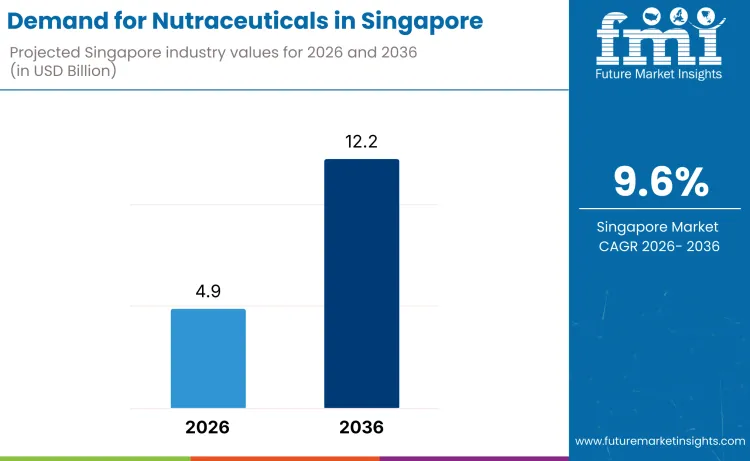
- USD 4.9 Bn
- Forecast (2036)
- USD 12.2 Bn
- CAGR (2026 to 2036)
- 9.6%
Nutraceuticals Demand in Singapore Forecast and Outlook 2026 to 2036
Nutraceuticals demand in Singapore is projected to reach USD 4.9 billion in 2026, supported by an advanced retail ecosystem and a consumer base that treats prevention as a routine spending priority rather than a seasonal response. Growth is expected to progress at a 9.6% CAGR through 2036, lifting total category value to USD 12.2 billion by the end of the assessment period. Purchasing behavior is increasingly shaped by repeat usage cycles, where consumers maintain monthly stacks across immunity, digestive support, and skin and hair health, with regimen continuity reinforced by subscription models and omnichannel replenishment.
The category is also evolving in how value is created per unit. Singapore brands are building differentiated proposition layers around clean label claims, sugar-free positioning, and vegan or plant-based formats, moving demand toward premiumized SKUs that justify higher price per dose.
Clean label continues to expand as a trusted decision shortcut in pharmacy-led and digital channels, with consumers leaning on recognizable ingredient narratives and simpler excipient profiles to reduce perceived risk. This is reinforcing the leadership position of tablets and capsules due to dose consistency and portability, while gummies and chews keep growing in lifestyle-driven segments where adherence is a key determinant of repurchase.
At the same time, product innovation is shifting from one-size offerings to modular stacks built for specific outcomes. Immunity remains the most influential application driver due to its relevance across families, aging consumers, and high-density working routines. Preventive positioning leads functionality because it matches the way Singapore buyers plan health spending, with daily intake framed as a habit anchored to productivity, sleep, and long-term vitality rather than short-term symptom management. These drivers are broad enough to support growth across functional foods and functional beverages, even as clinical nutrition lines expand into outpatient recovery, protein-forward aging support, and specialized metabolic needs.
Quick Stats for Nutraceuticals Demand in Singapore
- Nutraceuticals Demand Value (2026): USD 4.9 Billion
- Nutraceuticals Forecast Value (2036): USD 12.2 Billion
- Nutraceuticals Forecast CAGR (2026 to 2036): 9.6%
- Nutraceuticals Leading Product Type: Functional Food (44.0%)
- Nutraceuticals Leading Application: Immunity (48.0%)
- Nutraceuticals Leading Functionality: Preventive (55.0%)
- Nutraceuticals Leading Form: Tablets and Capsules (42.2%)
- Nutraceuticals Leading Claim: Clean Label (56.6%)
- Nutraceuticals Key Growth Regions: Central Singapore, East Singapore, Northeast Singapore, West Singapore, North Singapore
- Nutraceuticals Key Players: Eu Yan Sang Singapore, Ocean Health Pte Ltd, Hyphens Pharma International Limited, Kino Biotech Pte. Ltd. Kinohimitsu, Miraco Nutripharm Pte Ltd, Hockhua Tonic, Wellesta Holdings, Kingmao International S Pte Ltd
Food and Beverage Trends Likely to Influence Nutraceutical Demand in Singapore
Food and beverage reformulation is expected to shape product positioning and route-to-shelf decisions across nutraceuticals. Beverage labeling measures and nutrition signaling in Singapore are influencing consumer expectations around sugar management and transparency, increasing the success rate of sugar-free claims in functional drinks and powdered blends.
Menu engineering and healthier dining participation are also strengthening the value of preventive nutrition cues at the point of purchase. As more outlets align with structured nutrition guidelines, demand is expected to rise for products that sit naturally next to everyday meals, including functional foods designed for routine usage rather than short-cycle supplementation.
These shifts support three near-term impacts. First, functional beverages will gain more traction when they deliver clear benefits without sugar-heavy taste masking. Second, clean label priorities will extend into functional foods, raising demand for recognizable ingredient systems. Third, premiumization will strengthen in urban centers where buyers prefer higher efficacy positioning and brand trust over low-price experimentation.
Nutraceuticals Demand in Singapore Key Takeaways
| Metric | Value |
|---|---|
| Category Size (2026) | USD 4.9 Billion |
| Category Value (2036) | USD 12.2 Billion |
| CAGR (2026 to 2036) | 9.6% |
Source: Future Market Insights analysis, based on proprietary forecasting model and primary research.
What Drivers are Accelerating Preventive Health Spending in Singapore?
Preventive health behavior is becoming the strongest demand accelerator in Singapore because consumers treat daily wellness routines as a performance enabler rather than a reactive habit. Busy work schedules, high health awareness, and rising willingness to invest in long-term outcomes are strengthening repeat purchase cycles across immunity, digestive support, cognitive support, and healthy aging. Singapore consumers are increasingly building daily wellness stacks around routine health outcomes that also shape the wider category structure globally.
Clean label priorities are also strengthening conversion in pharmacy, specialty wellness, and online retail formats. Buyers increasingly associate shorter ingredient lists and recognizable source narratives with lower perceived risk, making claim discipline a core growth lever. Everyday-format nutrition is scaling fastest where fortified options blend into regular meals fortified options blend into regular meals without adding regimen complexity.
Channel momentum is reinforced by the expanding role of e-commerce subscriptions and targeted regimen bundles. Singapore consumers are actively building multi-product stacks that combine everyday immunity support with digestion, skin, or metabolic add-ons, increasing average basket value and improving brand retention. This stacking behavior is also strengthening the role of supplement-driven conversion pathways in modern retail baskets.
How is the Nutraceuticals Industry in Singapore Segmented?
Product type, application focus, functionality positioning, consumption form, and claim architecture structure Singapore demand. This segmentation framework matters because buyers respond differently depending on whether the product integrates into food routines, sits inside a structured supplement regimen, or targets lifestyle-led use cases such as beauty or sports performance.
Why Does Functional Food Maintain Leadership by Product Type?
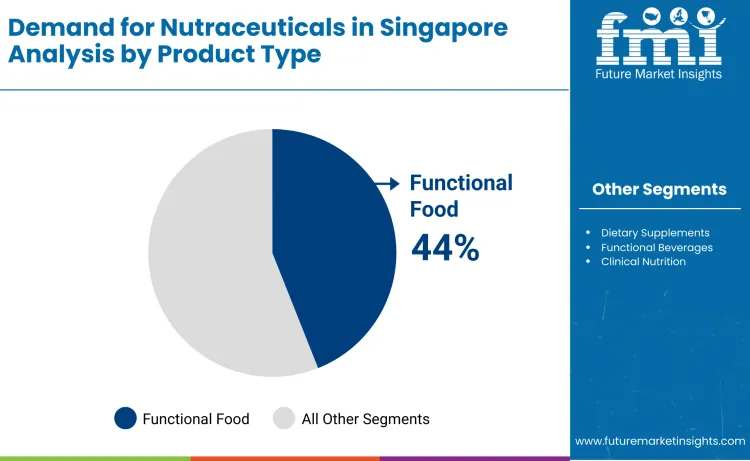
Functional food accounts for a 44.0% share, supported by its ability to blend into daily consumption without requiring behavioral change. Fortified everyday foods and nutrition-enhanced staples improve adherence because the intake pattern matches routine eating behavior. This makes functional food particularly strong for households and working professionals who prefer convenience-led consistency.
Why does Immunity lead Applications in Singapore?
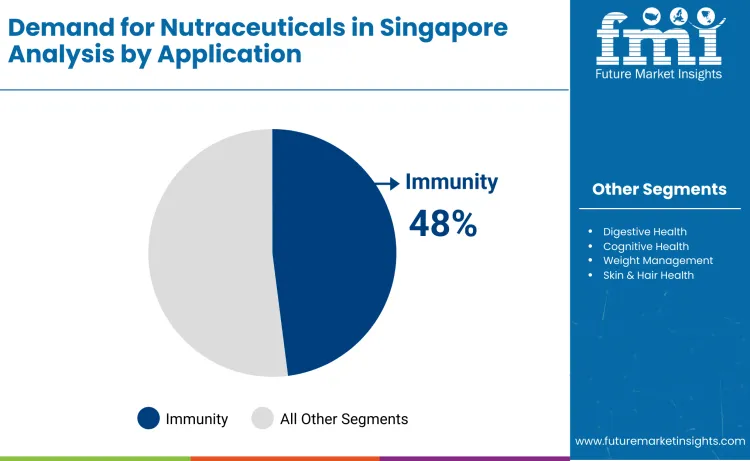
Immunity leads with a 48.0% share because it remains universally relevant across age groups, households, and work routines. Demand is amplified by frequent travel, dense urban lifestyles, and higher preference for daily resilience support. Immunity-led purchase behavior also strengthens add-on conversion into digestion and healthy aging stacks within supplement-led retail baskets.
Why does Preventive Positioning Dominate Functionality?
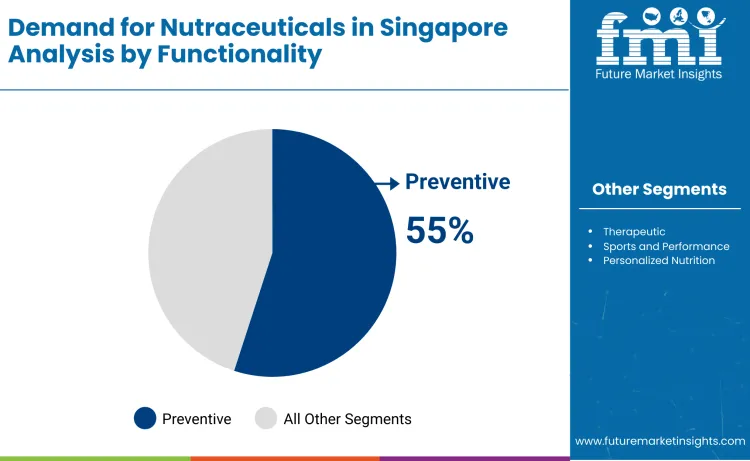
Preventive positioning holds a 55.0% share because Singapore buyers justify recurring spend through long-term stability outcomes such as energy consistency, immune readiness, and reduced downtime. This strengthens subscription conversion and repeat buying because products are framed as part of routine life management rather than temporary interventions.
How Will Product Formats and Claims Evolve Through 2036?
Tablets and capsules remain the leading form at 42.2% due to their portability, dosing precision, and stable storage performance. This dominance is expected to continue because Singapore consumers value convenience without sacrificing consistency, especially for immunity, digestion, and healthy aging regimens that rely on routine intake.
Powders are likely to expand through sports and performance use cases, where dosage volume is higher and blend flexibility matters. Gummies and chews will strengthen further in beauty-from-within and lifestyle categories because taste and convenience improve adherence, particularly for younger consumers and first-time users. Liquids and shots will remain relevant in fast-acting positioning where consumers prefer quick intake without preparation.
Clean label remains the leading claim driver at 56.6% because trust and ingredient clarity strongly influence repeat buying. Clean label growth is also raising formulation discipline requirements, especially around stabilizers and supporting ingredients that maintain label simplicity.
Vegan or plant-based positioning is expected to rise steadily, especially among wellness-first consumers who align nutrition choices with broader lifestyle preferences. Sugar-free claims will gain additional traction in functional beverages and gummy formats as consumers increasingly filter products based on metabolic alignment and daily consumption suitability.
How will Regional Consumption Patterns Evolve across Singapore?
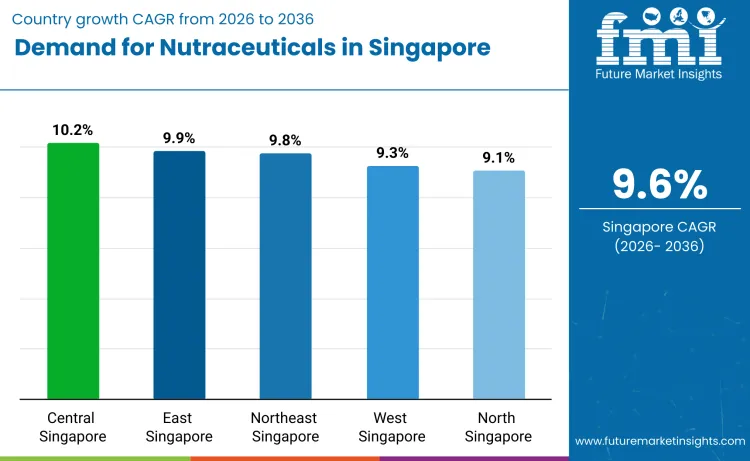
Singapore shows differentiated growth intensity across planning regions based on income concentration, premium retail access, and channel density. Central Singapore leads expansion due to higher exposure to premium wellness formats, stronger uptake of clean label SKUs, and faster adoption of routine regimen stacks.
East and Northeast Singapore continue to expand through household-driven purchasing, stronger pharmacy reach, and repeat-led immunity and digestion demand. West and North Singapore are expected to grow steadily through value-plus propositions that balance affordability with trusted brand selection.
| Region | CAGR (2026 to 2036) |
|---|---|
| Central Singapore | 10.2% |
| East Singapore | 9.9% |
| Northeast Singapore | 9.8% |
| West Singapore | 9.3% |
| North Singapore | 9.1% |
Source: Future Market Insights’ proprietary forecasting model and primary research
Why does Central Singapore Lead Nutraceuticals Demand Growth?
Central Singapore is expected to record the fastest expansion at a 10.2% CAGR because it concentrates premium wellness retail, higher disposable income groups, and stronger adoption of regimen-based daily intake. Buyers in this zone are more likely to spend on clean label and clinically proven positioning, especially in immunity, cognitive support, and healthy aging stacks.
Brand performance here is strongly linked to repeat purchase mechanics, product credibility, and the availability of tablets, capsules, and softgels that match routine consumption behavior. Digital ordering and subscription replenishment models also scale faster in Central Singapore, supporting long-term retention and higher basket value through multi-product bundles.
How is East Singapore Strengthening Repeat Purchase Cycles?
East Singapore is projected to expand at a 9.9% CAGR, supported by a strong mix of household-driven consumption and stable access to pharmacies, supermarkets, and online replenishment. Demand is anchored by functional foods and dietary supplements that fit everyday routines, particularly immunity and digestive health formats that show higher recurring purchase rates.
Consumers prefer reliable daily-use outcomes, which supports steady traction for preventive positioning and clean label products. Gummies and chews are gaining visibility in lifestyle-led segments, especially beauty-from-within and skin and hair health, where adherence and taste influence repeat buying.
What makes Northeast Singapore a High-Momentum Consumption Zone?
Northeast Singapore is forecast to grow at a 9.8% CAGR because of dense residential clusters, high daily commuting patterns, and sustained preference for convenient regimen formats. The region shows strong adoption of tablets and capsules as the default format due to portability and dosing convenience, while powders and functional beverages expand in performance-led routines.
Immunity remains the most consistent driver because it supports multi-user household purchasing, with digestive health gaining traction in routine wellness stacks. Online retail plays a major role here by enabling targeted product discovery and repeat purchasing through discounts, bundles, and subscription models.
Why is West Singapore Shifting toward Value-Plus Wellness Choices?
West Singapore is expected to grow at a 9.3% CAGR, supported by a value-plus consumption model that prioritizes trusted brands, consistent outcomes, and practical health benefits. Buyers in this zone respond strongly to preventive positioning in immunity and weight management categories, where daily regimen continuity is linked to measurable routine performance.
Functional foods and supplements remain central, while sugar-free claims gain importance as consumers filter beverage and gummy formats based on metabolic fit. Product success in West Singapore is also influenced by retail visibility and affordability discipline, with brands focusing on stable pricing, multipacks, and practical form factors that maintain convenience and repeatability.
How will North Singapore Maintain Steady Expansion Through 2036?
North Singapore is projected to advance at a 9.1% CAGR, driven by steady demand for everyday wellness formats that align with family purchasing patterns and repeat-led preventive routines. Immunity and healthy aging are expected to remain the most consistent categories, supported by tablets and capsules as the dominant format due to stability and easy compliance.
Growth is also reinforced by increasing traction for clean label and non-GMO claims, particularly among consumers who prioritize transparency and ingredient clarity. As digital commerce penetration continues to strengthen, North Singapore is likely to see improved access to regimen bundles and replenishment programs that raise retention and reduce brand switching.
What Is the Competitive Outlook for Nutraceuticals Demand in Singapore?
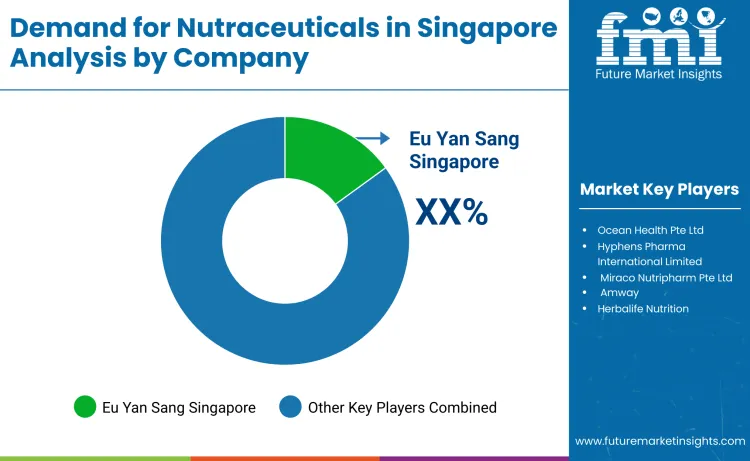
Competition in Singapore is increasingly shaped by credibility, regimen retention, and claim clarity. Brands that win tend to deliver consistent quality, stable formulations, and strong repeat purchase mechanics rather than depending on short-term novelty launches. Established players maintain advantage through trust, strong retail availability, and disciplined labeling practices, while growth-focused challengers build differentiated positions using lifestyle formats such as gummies, beauty stacks, and sugar-free functional products.
Portfolio strategy is shifting toward structured bundles that encourage multi-SKU baskets. Immunity stacks are often paired with digestion and healthy aging add-ons, increasing basket value while keeping consumption routines simple. Subscription models are strengthening this effect by turning replenishment into an automated behavior.
Online retail continues to increase competitive intensity because it accelerates product discovery, improves conversion through education-driven content, and allows brands to refine category positioning faster than traditional shelf cycles. Repeat-led consumption patterns and portfolio discipline remain central to scaling across preventive health categories.
Key Players in Nutraceuticals Demand in Singapore
- Eu Yan Sang Singapore
- Ocean Health Pte Ltd
- Hyphens Pharma International Limited
- Kino Biotech Pte. Ltd. Kinohimitsu
- Miraco Nutripharm Pte Ltd
- Hockhua Tonic
- Wellesta Holdings
- Kingmao International S Pte Ltd
- Amway
- Herbalife Nutrition
Scope of Report
| Items | Values |
|---|---|
| Quantitative Units | USD Billion |
| Product Type | Functional Food, Dietary Supplements, Functional Beverages, Clinical Nutrition |
| Application | Immunity, Digestive Health, Cognitive Health, Weight Management, Beauty-from-Within, Skin and Hair Health, Metabolic Disorders, Cardiac Health, Healthy Aging |
| Functionality | Preventive, Therapeutic, Sports and Performance, Personalized Nutrition |
| Form | Tablets and Capsules, Powders, Gummies and Chews, Liquids and Shots, Softgels |
| Claim | Clean Label, Vegan and Plant-Based, Sugar-Free, Non-GMO, Clinically Proven |
| Regions | Central Singapore, East Singapore, Northeast Singapore, West Singapore, North Singapore |
Nutraceuticals Demand in Singapore by Segments
Product Type
- Functional Food
- Dietary Supplements
- Functional Beverages
- Clinical Nutrition
Application
- Immunity
- Digestive Health
- Cognitive Health
- Weight Management
- Beauty-from-Within
- Skin and Hair Health
- Metabolic Disorders
- Cardiac Health
- Healthy Aging
Functionality
- Preventive
- Therapeutic
- Sports and Performance
- Personalized Nutrition
Form
- Tablets and Capsules
- Powders
- Gummies and Chews
- Liquids and Shots
- Softgels
Claim
- Clean Label
- Vegan and Plant-Based
- Sugar-Free
- Non-GMO
- Clinically Proven
Bibliography
- Health Sciences Authority. (2024). Health Supplements Guidelines GL-CHPB-3-001 Rev. No. 019. Health Products Regulation Group, Singapore.
- Health Sciences Authority. (2024). Guidelines for Testing Requirements of Health Supplements and Traditional Medicines. Health Products Regulation Group, Singapore.
- Health Sciences Authority. (2018). Regulatory overview of health supplements. Health Sciences Authority, Singapore.
- Health Promotion Board. (2023). Healthier Dining Program Nutrition Guidelines. Health Promotion Board, Singapore.
- Health Promotion Board. (n.d.). Measures for Nutri-Grade. Health Promotion Board, Singapore.
- Codex Alimentarius Commission. (2005). Guidelines for Vitamin and Mineral Food Supplements CXG 55-2005. FAO and WHO Codex Alimentarius.
- World Health Organization. (2023). Healthy diet. World Health Organization.
Frequently Asked Questions
How large is the Nutraceuticals Demand in Singapore expected to be in 2026?
Nutraceuticals demand in Singapore is estimated to be valued at USD 4.9 billion in 2026.
What will be the total category value in Singapore by 2036?
Total category value is projected to reach USD 12.2 billion by 2036.
What is the expected growth rate for nutraceuticals demand in Singapore between 2026 and 2036?
Nutraceuticals demand in Singapore is expected to grow at a CAGR of 9.6% between 2026 and 2036.
Which Product Type is poised to lead sales by 2026?
Functional food is expected to lead sales, capturing approximately 44.0% share in 2026 due to strong alignment with daily routines.
Which Claim Strategy holds the strongest influence on Purchase Decisions in Singapore?
Clean label claims are expected to remain most influential, holding approximately 56.6% share due to higher trust and transparency preference.
Preview the report firsthand - request a free sample
Get SampleGet the brochure for pricing and purchase details.
Get PDFTable of Content
- Executive Summary
- Industry Introduction, including Taxonomy and Market Definition
- Trends and Success Factors
- Macro-economic Factors
- Market Dynamics
- Recent Industry Developments
- Singapore Demand Analysis 2021 to 2025 and Forecast 2026 to 2036
- Historical Analysis (2021-2025)
- Future Projections (2026-2036)
- Pricing Analysis
- Singapore Market Analysis 2021 to 2025 and Forecast 2026 to 2036
- Product Type
- Application
- Functionality
- Form
- Claim
- Region
- By Product Type
- Functional Food
- Dietary Supplements
- Functional Beverages
- Clinical Nutrition
- By Application
- Immunity
- Digestive Health
- Cognitive Health
- Weight Management
- Beauty-from-Within
- Skin and Hair Health
- Metabolic Disorders
- Cardiac Health
- Healthy Aging
- By Functionality
- Preventive
- Therapeutic
- Sports and Performance
- Personalized Nutrition
- By Form
- Tablets and Capsules
- Powders
- Gummies and Chews
- Liquids and Shots
- Softgels
- By Claim
- Clean Label
- Vegan and Plant-Based
- Sugar-Free
- Non-GMO
- Clinically Proven
- By Region
- Central Singapore
- East Singapore
- Northeast Singapore
- West Singapore
- North Singapore
- Central Singapore Sales Analysis 2021 to 2025 and Forecast 2026 to 2036
- By Key Segments
- East Singapore Sales Analysis 2021 to 2025 and Forecast 2026 to 2036
- By Key Segments
- Northeast Singapore Sales Analysis 2021 to 2025 and Forecast 2026 to 2036
- By Key Segments
- West Singapore Sales Analysis 2021 to 2025 and Forecast 2026 to 2036
- By Key Segments
- North Singapore Sales Analysis 2021 to 2025 and Forecast 2026 to 2036
- By Key Segments
- Sales Forecast to 2036
- By Product Type
- By Application
- By Functionality
- By Form
- By Claim
- By Region
- Competitive Assessment
- Company Share Analysis by Key Players
- Competition Dashboard
- Company Profile
- Eu Yan Sang Singapore
- Ocean Health Pte Ltd
- Hyphens Pharma International Limited
- Kino Biotech Pte. Ltd. (Kinohimitsu)
- Miraco Nutripharm Pte Ltd
- Hockhua Tonic
- Wellesta Holdings
- Kingmao International S Pte Ltd
- Amway
- Herbalife Nutrition
- Other Players


