

- Industry Size (2026)
- USD 1.4 Bn
- Forecast (2036)
- USD 3.5 Bn
- CAGR (2026 to 2036)
- 9.7%
Skin-Barrier Repair Lipid Complexes Market Forecast and Outlook 2026 to 2036
The skin-barrier repair lipid complexes market is projected to grow from USD 1.4 billion in 2026 to USD 3.5 billion by 2036, reflecting a compound annual growth rate (CAGR) of 9.7%. These lipid complexes play a crucial role in improving and restoring the skin's natural barrier, making them essential ingredients in skincare products aimed at treating dry, damaged, or sensitive skin. As consumers increasingly seek products that address skin health and provide long-lasting protection against environmental stressors, the demand for skin-barrier repair lipid complexes is expected to rise. This market is also driven by the growing awareness of the importance of maintaining a healthy skin barrier for overall skin health and the increasing prevalence of skin conditions like eczema, psoriasis, and acne.
The market’s growth is further supported by the expanding global skincare industry, which continues to prioritize functional and effective solutions. With the rising trend toward clean, safe, and ingredient-conscious skincare, lipid complexes made from natural sources are becoming more popular. These complexes not only help repair and protect the skin barrier but also offer anti-aging and moisturizing benefits, which further contribute to their increased demand across different skincare categories, including facial moisturizers, sunscreens, and anti-aging creams.
Quick Stats of the Skin-Barrier Repair Lipid Complexes Market
- Skin-Barrier Repair Lipid Complexes Market Value (2026): USD 1.4 billion
- Skin-Barrier Repair Lipid Complexes Market Forecast Value (2036): USD 3.5 billion
- Skin-Barrier Repair Lipid Complexes Market Global Forecast CAGR (2026-2036): 9.7%
- Skin-Barrier Repair Lipid Complexes Market Leading Segment: Source (Bio-Identical / Biomimetic) 40%
- Key Growth Regions in Skin-Barrier Repair Lipid Complexes Market: China
- Top Players in Skin-Barrier Repair Lipid Complexes Market: Evonik, Croda, dsm-firmenich, BASF, Symrise, Givaudan Active Beauty, Kao Corporation, Ashland, Solvay, Clariant
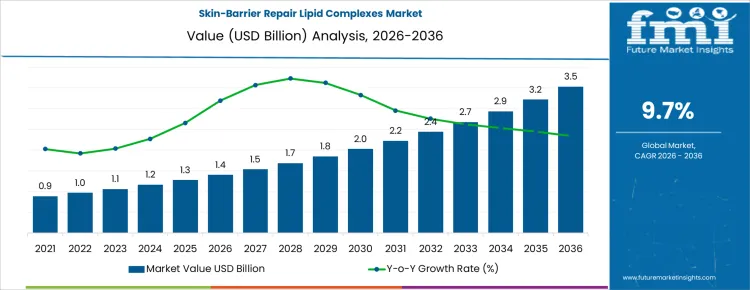
What is the Growth Forecast for the Skin-Barrier Repair Lipid Complexes Market through 2036?
The market growth curve shape analysis for the skin-barrier repair lipid complexes market shows consistent and steady growth throughout the forecast period, with a slight acceleration toward the later years. Starting at USD 1.4 billion in 2026, the market grows to USD 1.5 billion in 2027 and USD 1.7 billion in 2028, reflecting gradual adoption as consumers and skincare brands increasingly recognize the importance of skin-barrier health. These early years indicate steady growth driven by heightened consumer awareness of the benefits of repairing and maintaining the skin’s natural protective barrier.
From 2028 to 2030, the market continues to expand, reaching USD 1.8 billion in 2029 and USD 2 billion in 2030, showing moderate acceleration as the skincare industry embraces more advanced formulations. Between 2030 and 2035, the market experiences more rapid growth, reaching USD 2.2 billion in 2031, USD 2.4 billion in 2032, and USD 2.6 billion in 2033, fueled by ongoing product innovations and the growing popularity of skincare solutions that promote skin health. By 2035, the market is projected to reach USD 2.9 billion, with the final value of USD 3.5 billion expected in 2036, marking a significant increase driven by the increasing adoption of skin-barrier repair lipid complexes in various skincare products worldwide.
Skin-Barrier Repair Lipid Complexes Market Key Takeaways
| Metric | Value |
|---|---|
| Industry Sales Value (2026) | USD 1.4 billion |
| Industry Forecast Value (2036) | USD 3.5 billion |
| Industry Forecast CAGR (2026-2036) | 9.7% |
What Is Driving the Demand for the Skin-Barrier Repair Lipid Complexes Market Globally?
The global demand for skin-barrier repair lipid complexes is driven by rising awareness of skin health, increasing prevalence of barrier-related conditions, and consumer preference for science-backed skincare. Lipid complexes-combinations of ceramides, cholesterol, fatty acids, and similar biomimetic molecules-are formulated to mimic or restore the skin’s natural barrier. This barrier protects against moisture loss, environmental irritants, and pathogen entry, and its compromise is linked to conditions such as atopic dermatitis, eczema, rosacea, and increased sensitivity from frequent cleansing or pollution exposure. As more consumers recognise symptoms associated with impaired barrier function, there has been heightened demand for products that offer targeted repair rather than general hydration.
Dermatologists, aestheticians, and beauty brands promote lipid-rich formulations that support barrier recovery, enhance resilience, and improve overall skin comfort. Growth in premium and therapeutic skincare categories, rising disposable incomes in emerging markets, and the proliferation of online beauty education have all contributed to expanding interest. In addition, the trend toward minimalist, ingredient-transparent skincare has made lipid complexes particularly attractive because they are perceived as functional yet gentle, aligning with priorities for sensitive and compromised skin.
Future demand for skin-barrier repair lipid complexes is expected to grow as formulation science advances and consumer expectations evolve. Innovations in lipid technology-such as optimised delivery systems, plant-derived ceramide analogues, and combinations with microbiome-supportive ingredients-will broaden application across age groups and skin types. Rising incidence of dry, irritated, or barrier-compromised skin in both temperate and extreme climates will reinforce use of barrier-centric products. Social media and digital beauty platforms will continue to educate consumers about the importance of barrier integrity, which may elevate lipid complexes from niche therapeutic solutions to mainstream daily skincare essentials.
Regulatory frameworks and cosmetic safety standards that encourage clear labelling and substantiated claims will also influence adoption, as brands that can demonstrate efficacy are more competitive. Accessibility through e-commerce, subscription models, and direct-to-consumer channels will make advanced lipid formulations more widely available, supporting sustained market growth. As demand for personalised and multifunctional skincare persists, skin-barrier repair lipid complexes are well positioned to remain a core ingredient strategy in global skincare development.
What are the Leading Segments in the Global Skin-Barrier Repair Lipid Complexes Market?
The global skin-barrier repair lipid complexes market is segmented by source and lipid type. In the source segment, bio-identical/biomimetic lipids lead the market, followed by plant-derived, fermentation-derived, and synthetic lipids. Bio-identical/biomimetic lipids are valued for their ability to closely mimic the natural lipids found in the skin, offering superior barrier repair properties. In the lipid type segment, ceramides and analogues hold the largest market share, driven by their key role in skin hydration and barrier restoration. Other important lipid types include cholesterol complexes, essential fatty acids, and phospholipids/squalane blends. The growth of this market is influenced by increasing consumer demand for skin-care products that promote skin health and repair the natural skin barrier, supported by innovations in lipid-based formulations.
What Drives the Growth of Bio-Identical/Biomimetic Lipids in the Skin-Barrier Repair Lipid Complexes Market?
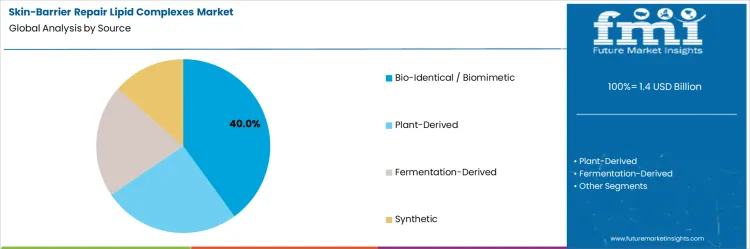
Bio-identical/biomimetic lipids are the leading source in the skin-barrier repair lipid complexes market, accounting for a substantial share due to their ability to closely replicate the skin’s natural lipids. These lipids are highly effective in supporting the skin’s barrier function, which is essential for protecting against environmental stressors such as pollution, UV rays, and harsh weather. Bio-identical/biomimetic lipids are prized for their compatibility with the skin, offering superior moisturization and hydration by mimicking the structure and function of naturally occurring lipids. As consumers increasingly seek products that offer both efficacy and safety, bio-identical/biomimetic lipids are favored in formulations designed to repair and maintain the skin’s natural barrier.
This trend is particularly evident in skin-care products targeting sensitive, dry, and aging skin, where maintaining the skin’s barrier integrity is crucial for optimal skin health. Furthermore, advancements in biotechnology and lipid science are improving the production of bio-identical lipids, making them more widely available and affordable. As the demand for high-performance, skin-repairing ingredients rises, bio-identical/biomimetic lipids are expected to remain a dominant force in the market, driving continued growth in the skin-care industry.
What is Driving the Demand for Ceramides and Analogues in the Skin-Barrier Repair Lipid Complexes Market?
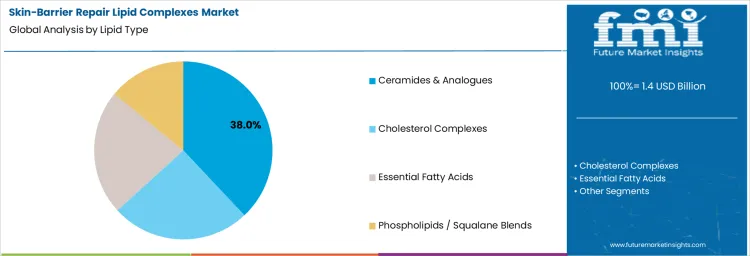
Ceramides and analogues are the leading lipid types in the skin-barrier repair lipid complexes market, driven by their essential role in strengthening the skin’s barrier function and improving moisture retention. Ceramides are naturally occurring lipids in the skin, responsible for maintaining the skin’s structure and preventing water loss. As a result, they are highly valued in the skin-care industry, especially in products aimed at dry, compromised, or aging skin. The growing consumer awareness of the importance of skin barrier health has contributed to the increased demand for ceramides in moisturizers, cleansers, and treatments designed to hydrate and protect the skin.
Moreover, ceramide analogues, which offer similar benefits, are gaining popularity due to their ability to enhance skin repair and boost the efficacy of formulations. The demand for ceramides is also being driven by their ability to address a wide range of skin concerns, such as eczema, psoriasis, and rosacea, where the skin barrier is often compromised. As the skin-care market continues to prioritize barrier repair and hydration, ceramides and analogues are expected to maintain their dominant position, with innovations in lipid formulations ensuring their continued relevance in the development of advanced skin-care products.
What are the Key Dynamics of the Global Skin-Barrier Repair Lipid Complexes Market?
The global skin-barrier repair lipid complexes market is expanding as demand rises for advanced skincare solutions that support barrier function and moisture retention. Lipid complexes often include ceramides, fatty acids, cholesterol and phospholipids that help restore the stratum corneum, improve hydration and reduce transepidermal water loss. Growth reflects rising consumer focus on skin health, sensitive skin concerns and products that support barrier integrity in daily care. Adoption is strong across moisturizers, serums and therapeutic formulations in both mass and premium personal care portfolios worldwide.
What are the Key Drivers for the Global Skin-Barrier Repair Lipid Complexes Market?
Increasing consumer awareness of skin barrier science and the role of lipids in maintaining skin health is a major driver. Dermatologists and skincare professionals are recommending lipid-rich complexes to address dryness, sensitivity, eczema and compromised barrier conditions. Advances in lipid delivery systems and encapsulation enhance penetration and performance, motivating formulators to integrate these materials. Growth in clean and clinical skincare trends supports use of barrier-focused ingredients that align with efficacy and gentle formulations. Expansion of wellness-oriented routines and education about barrier function further contributes to demand across age groups and global regions.
What are the Restraints for the Global Skin-Barrier Repair Lipid Complexes Market?
One restraint is formulating lipid complexes that balance stability with aesthetic appeal, as many barrier-supporting lipids can feel heavy or greasy without careful design. Achieving consistent sensory profiles while maintaining functional activity requires technical expertise and extensive testing. Ingredient cost pressures can influence formulation decisions, particularly in value-segment products. Regulatory review of novel lipid delivery technologies and claims related to skin repair varies by region, requiring investment in safety and compliance documentation. Some consumers may have limited understanding of barrier science, which can affect adoption of products that emphasize lipid function without clear education.
What are the Key Trends in the Global Skin-Barrier Repair Lipid Complexes Market?
A key trend is formulation of multi-layered lipid complexes that mimic the natural composition of the skin barrier, using biomimetic ratios of ceramides, fatty acids and cholesterol to support barrier resilience. Ingredient suppliers are developing plant-derived and biotechnology-sourced lipids to meet clean label and sustainable sourcing preferences. Lipid complexes are being paired with prebiotics, antioxidants and soothing actives to address barrier repair, microbiome balance and inflammation together. Advances in encapsulation and delivery systems are improving targeted release and stability in water-free and hybrid formulations. Consumer education tools and dermatologist collaborations are helping drive understanding of barrier science and performance expectations.
What is the Country-Wise Analysis of the Skin-Barrier Repair Lipid Complexes Market?
The skin-barrier repair lipid complexes market is projected to grow steadily, driven by increasing consumer demand for effective skin-care solutions that restore and maintain the skin's protective barrier. These lipid complexes are essential in repairing damaged skin barriers, helping to improve hydration, reduce irritation, and enhance overall skin health. As consumers become more aware of skin health and seek products with proven efficacy, the market for skin-barrier repair lipid complexes is seeing growth across various regions. High-growth markets like China are leading the market due to rising disposable incomes and increasing interest in skincare products, while developed markets such as the USA, UK, and Germany are seeing steady growth driven by the increasing demand for advanced and dermatologist-tested skin-care products
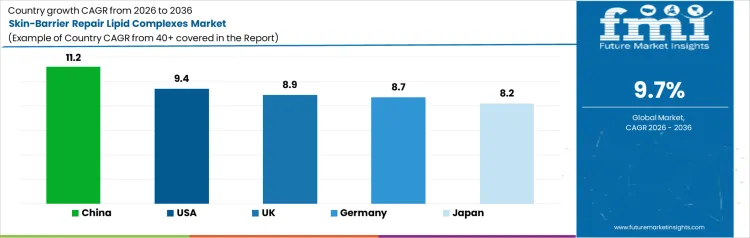
| Country | CAGR (2026-2036) |
|---|---|
| China | 11.2% |
| United States | 9.4% |
| United Kingdom | 8.9% |
| Germany | 8.7% |
| Japan | 8.2% |
What is the Growth Outlook for the Skin-Barrier Repair Lipid Complexes Market in China?
The skin-barrier repair lipid complexes market in China is expected to grow at the highest rate, with a projected CAGR of 11.2%. China’s rapidly expanding skincare market, coupled with increasing awareness of skin health, is driving the demand for skin-barrier repair solutions. As Chinese consumers seek more effective and advanced skincare products, the adoption of lipid complexes designed to repair the skin barrier is rising. With the growing middle class, rising disposable income, and an increasing interest in premium skincare solutions, China is poised to lead the market for skin-barrier repair lipid complexes in the coming years. The market is further supported by the growing popularity of natural and dermatologist-tested products in China’s beauty and personal care sectors.
What is the Market Outlook for the Skin-Barrier Repair Lipid Complexes Market in the United States?
The skin-barrier repair lipid complexes market in the United States is expected to grow steadily, with a projected CAGR of 9.4%. The USA is one of the largest skincare markets globally, driven by increasing consumer awareness of skin health and the demand for high-performance skincare solutions. With a growing focus on skin protection and repair, consumers are increasingly seeking products that restore the skin’s natural barrier. As the trend for more advanced, dermatologist-approved products continues, skin-barrier repair lipid complexes are gaining popularity in the USA market. Additionally, the growing interest in anti-aging and hydration products further supports steady market growth. As a result, the USA market for these lipid complexes is expected to continue its expansion.
What is the Growth Forecast for the Skin-Barrier Repair Lipid Complexes Market in the United Kingdom?
The skin-barrier repair lipid complexes market in the United Kingdom is projected to grow at a steady pace, with a projected CAGR of 8.9%. The UK’s skincare market, known for its focus on high-quality, effective products, is increasingly shifting toward solutions that improve and protect the skin barrier. With consumers becoming more conscious of the ingredients in their skincare products, there is growing demand for lipid complexes that restore the skin’s protective barrier. The UK’s strong focus on skin health and the increasing interest in dermatologist-recommended solutions are driving market growth. As the market continues to prioritize efficacy and ingredient safety, the demand for skin-barrier repair lipid complexes is expected to grow steadily in the UK.
What is the Market Outlook for the Skin-Barrier Repair Lipid Complexes Market in Germany?
The skin-barrier repair lipid complexes market in Germany is expected to grow at a moderate pace, with a projected CAGR of 8.7%. Germany’s established skincare industry is driven by consumers’ demand for high-performance, scientifically-backed products that address skin health concerns, such as dryness and sensitivity. As the German market increasingly focuses on natural, safe, and effective ingredients, skin-barrier repair lipid complexes are gaining traction, especially in the premium skincare segment. With growing consumer awareness of the importance of maintaining a healthy skin barrier, the demand for lipid complexes is expected to grow. Regulatory trends promoting the use of dermatologically tested and safe ingredients further support steady market growth in Germany.
What are the Growth Prospects for the Skin-Barrier Repair Lipid Complexes Market in Japan?
The skin-barrier repair lipid complexes market in Japan is expected to grow at a moderate pace, with a projected CAGR of 8.2%. Japan’s skincare market, known for its high demand for innovative and effective products, is seeing increasing consumer interest in solutions that enhance skin health and protect the skin barrier. As consumers in Japan focus on hydration, anti-aging, and sensitive skin care, the adoption of lipid complexes that repair and maintain the skin barrier is growing. Additionally, Japan’s growing preference for high-quality, dermatologically tested products is driving demand for these complexes. As the trend toward advanced skincare solutions continues, Japan’s market for skin-barrier repair lipid complexes is expected to grow steadily.
What is the Competitive Landscape for the Skin-Barrier Repair Lipid Complexes Market?
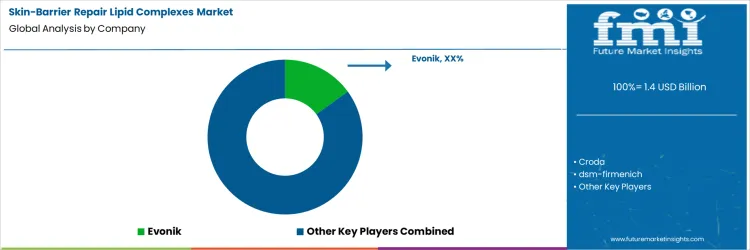
The skin-barrier repair lipid complexes market is growing rapidly as consumers seek effective solutions for improving skin health and restoring the skin’s natural barrier. Evonik leads the market with its advanced skin-barrier repair lipid complexes, offering innovative formulations that restore and protect the skin's natural lipid layers, enhancing skin hydration and resilience. Their focus on performance, sustainability, and scientific innovation positions them as a key player in the market. Croda, dsm-firmenich, and BASF are significant competitors, each providing high-quality lipid complexes that target skin barrier repair. Croda specializes in bio-based lipid solutions that focus on sustainable and effective skin care, while dsm-firmenich and BASF offer comprehensive lipid-based ingredients for skin health, focusing on enhancing skin barrier function and moisture retention.
Symrise, Givaudan Active Beauty, Kao Corporation, Ashland, Solvay, and Clariant further intensify the competition, offering specialized lipid complexes and ingredients aimed at improving skin care formulations. Symrise and Givaudan Active Beauty offer innovative lipid solutions that promote skin barrier repair, while Kao Corporation focuses on providing high-performance ingredients for the skin-care market. Ashland delivers specialized lipid complexes for sensitive skin, and Solvay and Clariant provide sustainable and effective solutions that enhance skin health. These companies compete based on their ability to offer scientifically backed, sustainable, and high-performance lipid complexes that meet the growing demand for skin-barrier repair solutions in the personal care industry.
Key Players of the Skin-Barrier Repair Lipid Complexes Market
- Evonik
- Croda
- dsm-firmenich
- BASF
- Symrise
- Givaudan Active Beauty
- Kao Corporation
- Ashland
- Solvay
- Clariant
Scope of the Report
| Items | Values |
|---|---|
| Quantitative Units (2026) | USD Billion |
| Lipid Type | Ceramides & Analogues, Cholesterol Complexes, Essential Fatty Acids, Phospholipids / Squalane Blends |
| Delivery System | Lamellar Emulsion Systems, Encapsulated / Micro-Delivery, Oil Blends / Concentrates, Powdered Complexes |
| Application | Face Moisturizers, Body Care, Sensitive / Atopic Skin Care, Baby Care |
| Source | Bio-Identical / Biomimetic, Plant-Derived, Fermentation-Derived, Synthetic |
| Companies | Evonik, Croda, dsm-firmenich, BASF, Symrise, Givaudan Active Beauty, Kao Corporation, Ashland, Solvay, Clariant |
| Regions Covered | North America, Latin America, Western Europe, Eastern Europe, South Asia and Pacific, East Asia, Middle East & Africa |
| Countries Covered | United States, Canada, Mexico, Brazil, Argentina, Germany, France, United Kingdom, Italy, Spain, Netherlands, China, India, Japan, South Korea, ANZ, GCC Countries, South Africa |
| Additional Attributes | Dollar by sales by lipid type, delivery system, application, source, and region. Includes market trends in skin-barrier repair lipid complexes, focusing on ceramides, cholesterol complexes, essential fatty acids, and phospholipids. Highlights the role of various delivery systems like lamellar emulsions, encapsulation, oil blends, and powdered complexes in applications such as moisturizers, body care, and sensitive skin care. Focus on cost-effectiveness, sustainability, regulatory compliance, and market share of key companies in the personal care ingredients market. |
Skin-Barrier Repair Lipid Complexes Market Segmentation
Lipid Type
- Ceramides & Analogues
- Cholesterol Complexes
- Essential Fatty Acids
- Phospholipids / Squalane Blends
Delivery System
- Lamellar Emulsion Systems
- Encapsulated / Micro-Delivery
- Oil Blends / Concentrates
- Powdered Complexes
Application
- Face Moisturizers
- Body Care
- Sensitive / Atopic Skin Care
- Baby Care
Source
- Bio-Identical / Biomimetic
- Plant-Derived
- Fermentation-Derived
- Synthetic
Region
- Asia Pacific
- China
- Japan
- South Korea
- India
- Australia & New Zealand
- ASEAN
- Rest of Asia Pacific
- Europe
- Germany
- United Kingdom
- France
- Italy
- Spain
- Nordic
- BENELUX
- Rest of Europe
- North America
- United States
- Canada
- Mexico
- Latin America
- Brazil
- Chile
- Rest of Latin America
- Middle East & Africa
- Kingdom of Saudi Arabia
- Other GCC Countries
- Turkey
- South Africa
- Other African Union
- Rest of Middle East & Africa
Frequently Asked Questions
How big is the skin-barrier repair lipid complexes market in 2026?
The global skin-barrier repair lipid complexes market is estimated to be valued at USD 1.4 billion in 2026.
What will be the size of skin-barrier repair lipid complexes market in 2036?
The market size for the skin-barrier repair lipid complexes market is projected to reach USD 3.5 billion by 2036.
How much will be the skin-barrier repair lipid complexes market growth between 2026 and 2036?
The skin-barrier repair lipid complexes market is expected to grow at a 9.7% CAGR between 2026 and 2036.
What are the key product types in the skin-barrier repair lipid complexes market?
The key product types in skin-barrier repair lipid complexes market are ceramides & analogues, cholesterol complexes, essential fatty acids and phospholipids / squalane blends.
Which delivery system segment to contribute significant share in the skin-barrier repair lipid complexes market in 2026?
In terms of delivery system, lamellar emulsion systems segment to command 32.0% share in the skin-barrier repair lipid complexes market in 2026.
Preview the report firsthand - request a free sample
Get SampleGet the brochure for pricing and purchase details.
Get PDFTable of Content
- Executive Summary
- Global Market Outlook
- Demand-side Trends
- Supply-side Trends
- Technology Roadmap Analysis
- Analysis and Recommendations
- Market Overview
- Market Coverage / Taxonomy
- Market Definition / Scope / Limitations
- Market Background
- Market Dynamics
- Drivers
- Restraints
- Opportunity
- Trends
- Scenario Forecast
- Demand in Optimistic Scenario
- Demand in Likely Scenario
- Demand in Conservative Scenario
- Opportunity Map Analysis
- Product Life Cycle Analysis
- Supply Chain Analysis
- Investment Feasibility Matrix
- Value Chain Analysis
- PESTLE and Porter’s Analysis
- Regulatory Landscape
- Regional Parent Market Outlook
- Production and Consumption Statistics
- Import and Export Statistics
- Market Dynamics
- Global Market Analysis 2021 to 2025 and Forecast, 2026 to 2036
- Historical Market Size Value (USD Million) Analysis, 2021 to 2025
- Current and Future Market Size Value (USD Million) Projections, 2026 to 2036
- Y-o-Y Growth Trend Analysis
- Absolute $ Opportunity Analysis
- Global Market Pricing Analysis 2021 to 2025 and Forecast 2026 to 2036
- Global Market Analysis 2021 to 2025 and Forecast 2026 to 2036, By Lipid Type
- Introduction / Key Findings
- Historical Market Size Value (USD Million) Analysis By Lipid Type , 2021 to 2025
- Current and Future Market Size Value (USD Million) Analysis and Forecast By Lipid Type , 2026 to 2036
- Ceramides & Analogues
- Cholesterol Complexes
- Essential Fatty Acids
- Phospholipids / Squalane Blends
- Y-o-Y Growth Trend Analysis By Lipid Type , 2021 to 2025
- Absolute $ Opportunity Analysis By Lipid Type , 2026 to 2036
- Global Market Analysis 2021 to 2025 and Forecast 2026 to 2036, By Delivery System
- Introduction / Key Findings
- Historical Market Size Value (USD Million) Analysis By Delivery System, 2021 to 2025
- Current and Future Market Size Value (USD Million) Analysis and Forecast By Delivery System, 2026 to 2036
- Lamellar Emulsion Systems
- Encapsulated / Micro-Delivery
- Oil Blends / Concentrates
- Powdered Complexes
- Y-o-Y Growth Trend Analysis By Delivery System, 2021 to 2025
- Absolute $ Opportunity Analysis By Delivery System, 2026 to 2036
- Global Market Analysis 2021 to 2025 and Forecast 2026 to 2036, By Application
- Introduction / Key Findings
- Historical Market Size Value (USD Million) Analysis By Application, 2021 to 2025
- Current and Future Market Size Value (USD Million) Analysis and Forecast By Application, 2026 to 2036
- Face Moisturizers
- Body Care
- Sensitive / Atopic Skin Care
- Baby Care
- Y-o-Y Growth Trend Analysis By Application, 2021 to 2025
- Absolute $ Opportunity Analysis By Application, 2026 to 2036
- Global Market Analysis 2021 to 2025 and Forecast 2026 to 2036, By Source
- Introduction / Key Findings
- Historical Market Size Value (USD Million) Analysis By Source, 2021 to 2025
- Current and Future Market Size Value (USD Million) Analysis and Forecast By Source, 2026 to 2036
- Bio-Identical / Biomimetic
- Plant-Derived
- Fermentation-Derived
- Synthetic
- Y-o-Y Growth Trend Analysis By Source, 2021 to 2025
- Absolute $ Opportunity Analysis By Source, 2026 to 2036
- Global Market Analysis 2021 to 2025 and Forecast 2026 to 2036, By Region
- Introduction
- Historical Market Size Value (USD Million) Analysis By Region, 2021 to 2025
- Current Market Size Value (USD Million) Analysis and Forecast By Region, 2026 to 2036
- North America
- Latin America
- Western Europe
- Eastern Europe
- East Asia
- South Asia and Pacific
- Middle East & Africa
- Market Attractiveness Analysis By Region
- North America Market Analysis 2021 to 2025 and Forecast 2026 to 2036, By Country
- Historical Market Size Value (USD Million) Trend Analysis By Market Taxonomy, 2021 to 2025
- Market Size Value (USD Million) Forecast By Market Taxonomy, 2026 to 2036
- By Country
- USA
- Canada
- Mexico
- By Lipid Type
- By Delivery System
- By Application
- By Source
- By Country
- Market Attractiveness Analysis
- By Country
- By Lipid Type
- By Delivery System
- By Application
- By Source
- Key Takeaways
- Latin America Market Analysis 2021 to 2025 and Forecast 2026 to 2036, By Country
- Historical Market Size Value (USD Million) Trend Analysis By Market Taxonomy, 2021 to 2025
- Market Size Value (USD Million) Forecast By Market Taxonomy, 2026 to 2036
- By Country
- Brazil
- Chile
- Rest of Latin America
- By Lipid Type
- By Delivery System
- By Application
- By Source
- By Country
- Market Attractiveness Analysis
- By Country
- By Lipid Type
- By Delivery System
- By Application
- By Source
- Key Takeaways
- Western Europe Market Analysis 2021 to 2025 and Forecast 2026 to 2036, By Country
- Historical Market Size Value (USD Million) Trend Analysis By Market Taxonomy, 2021 to 2025
- Market Size Value (USD Million) Forecast By Market Taxonomy, 2026 to 2036
- By Country
- Germany
- UK
- Italy
- Spain
- France
- Nordic
- BENELUX
- Rest of Western Europe
- By Lipid Type
- By Delivery System
- By Application
- By Source
- By Country
- Market Attractiveness Analysis
- By Country
- By Lipid Type
- By Delivery System
- By Application
- By Source
- Key Takeaways
- Eastern Europe Market Analysis 2021 to 2025 and Forecast 2026 to 2036, By Country
- Historical Market Size Value (USD Million) Trend Analysis By Market Taxonomy, 2021 to 2025
- Market Size Value (USD Million) Forecast By Market Taxonomy, 2026 to 2036
- By Country
- Russia
- Poland
- Hungary
- Balkan & Baltic
- Rest of Eastern Europe
- By Lipid Type
- By Delivery System
- By Application
- By Source
- By Country
- Market Attractiveness Analysis
- By Country
- By Lipid Type
- By Delivery System
- By Application
- By Source
- Key Takeaways
- East Asia Market Analysis 2021 to 2025 and Forecast 2026 to 2036, By Country
- Historical Market Size Value (USD Million) Trend Analysis By Market Taxonomy, 2021 to 2025
- Market Size Value (USD Million) Forecast By Market Taxonomy, 2026 to 2036
- By Country
- China
- Japan
- South Korea
- By Lipid Type
- By Delivery System
- By Application
- By Source
- By Country
- Market Attractiveness Analysis
- By Country
- By Lipid Type
- By Delivery System
- By Application
- By Source
- Key Takeaways
- South Asia and Pacific Market Analysis 2021 to 2025 and Forecast 2026 to 2036, By Country
- Historical Market Size Value (USD Million) Trend Analysis By Market Taxonomy, 2021 to 2025
- Market Size Value (USD Million) Forecast By Market Taxonomy, 2026 to 2036
- By Country
- India
- ASEAN
- Australia & New Zealand
- Rest of South Asia and Pacific
- By Lipid Type
- By Delivery System
- By Application
- By Source
- By Country
- Market Attractiveness Analysis
- By Country
- By Lipid Type
- By Delivery System
- By Application
- By Source
- Key Takeaways
- Middle East & Africa Market Analysis 2021 to 2025 and Forecast 2026 to 2036, By Country
- Historical Market Size Value (USD Million) Trend Analysis By Market Taxonomy, 2021 to 2025
- Market Size Value (USD Million) Forecast By Market Taxonomy, 2026 to 2036
- By Country
- Kingdom of Saudi Arabia
- Other GCC Countries
- Turkiye
- South Africa
- Other African Union
- Rest of Middle East & Africa
- By Lipid Type
- By Delivery System
- By Application
- By Source
- By Country
- Market Attractiveness Analysis
- By Country
- By Lipid Type
- By Delivery System
- By Application
- By Source
- Key Takeaways
- Key Countries Market Analysis
- USA
- Pricing Analysis
- Market Share Analysis, 2025
- By Lipid Type
- By Delivery System
- By Application
- By Source
- Canada
- Pricing Analysis
- Market Share Analysis, 2025
- By Lipid Type
- By Delivery System
- By Application
- By Source
- Mexico
- Pricing Analysis
- Market Share Analysis, 2025
- By Lipid Type
- By Delivery System
- By Application
- By Source
- Brazil
- Pricing Analysis
- Market Share Analysis, 2025
- By Lipid Type
- By Delivery System
- By Application
- By Source
- Chile
- Pricing Analysis
- Market Share Analysis, 2025
- By Lipid Type
- By Delivery System
- By Application
- By Source
- Germany
- Pricing Analysis
- Market Share Analysis, 2025
- By Lipid Type
- By Delivery System
- By Application
- By Source
- UK
- Pricing Analysis
- Market Share Analysis, 2025
- By Lipid Type
- By Delivery System
- By Application
- By Source
- Italy
- Pricing Analysis
- Market Share Analysis, 2025
- By Lipid Type
- By Delivery System
- By Application
- By Source
- Spain
- Pricing Analysis
- Market Share Analysis, 2025
- By Lipid Type
- By Delivery System
- By Application
- By Source
- France
- Pricing Analysis
- Market Share Analysis, 2025
- By Lipid Type
- By Delivery System
- By Application
- By Source
- India
- Pricing Analysis
- Market Share Analysis, 2025
- By Lipid Type
- By Delivery System
- By Application
- By Source
- ASEAN
- Pricing Analysis
- Market Share Analysis, 2025
- By Lipid Type
- By Delivery System
- By Application
- By Source
- Australia & New Zealand
- Pricing Analysis
- Market Share Analysis, 2025
- By Lipid Type
- By Delivery System
- By Application
- By Source
- China
- Pricing Analysis
- Market Share Analysis, 2025
- By Lipid Type
- By Delivery System
- By Application
- By Source
- Japan
- Pricing Analysis
- Market Share Analysis, 2025
- By Lipid Type
- By Delivery System
- By Application
- By Source
- South Korea
- Pricing Analysis
- Market Share Analysis, 2025
- By Lipid Type
- By Delivery System
- By Application
- By Source
- Russia
- Pricing Analysis
- Market Share Analysis, 2025
- By Lipid Type
- By Delivery System
- By Application
- By Source
- Poland
- Pricing Analysis
- Market Share Analysis, 2025
- By Lipid Type
- By Delivery System
- By Application
- By Source
- Hungary
- Pricing Analysis
- Market Share Analysis, 2025
- By Lipid Type
- By Delivery System
- By Application
- By Source
- Kingdom of Saudi Arabia
- Pricing Analysis
- Market Share Analysis, 2025
- By Lipid Type
- By Delivery System
- By Application
- By Source
- Turkiye
- Pricing Analysis
- Market Share Analysis, 2025
- By Lipid Type
- By Delivery System
- By Application
- By Source
- South Africa
- Pricing Analysis
- Market Share Analysis, 2025
- By Lipid Type
- By Delivery System
- By Application
- By Source
- USA
- Market Structure Analysis
- Competition Dashboard
- Competition Benchmarking
- Market Share Analysis of Top Players
- By Regional
- By Lipid Type
- By Delivery System
- By Application
- By Source
- Competition Analysis
- Competition Deep Dive
- Evonik
- Overview
- Product Portfolio
- Profitability by Market Segments (Product/Age /Sales Channel/Region)
- Sales Footprint
- Strategy Overview
- Marketing Strategy
- Product Strategy
- Channel Strategy
- Croda
- dsm-firmenich
- BASF
- Symrise
- Givaudan Active Beauty
- Kao Corporation
- Ashland
- Solvay
- Clariant
- Evonik
- Competition Deep Dive
- Assumptions & Acronyms Used
- Research Methodology


