

- Industry Size (2026)
- USD 1.8 Bn
- Forecast (2036)
- USD 4.1 Bn
- CAGR (2026 to 2036)
- 8.6%
Smart Kitchen Induction Energy Ranges Market Forecast and Outlook 2026 to 2036
The smart kitchen induction energy ranges market is expected to reach USD 4.1 billion by 2036, growing at a CAGR of 8.6% from its 2026 size of USD 1.8 billion. Procurement priorities will be influenced by a shift toward energy efficiency, sustainability, and technological innovation, as buyers increasingly seek appliances that reduce energy consumption and enhance convenience. Risk aversion among buyers is expected to drive a preference for well-established vendors with proven product reliability and long-term customer support.
Vendor lock-in could limit the flexibility of some buyers, particularly as integration with smart home ecosystems becomes more complex. Switching costs, both financial and operational, will play a role in procurement decisions, as consumers consider the costs of transitioning to newer technologies. These factors will shape the competitive landscape, with buyers balancing initial costs, long-term savings, and the potential for product obsolescence when making purchasing decisions.
Quick Stats for the Smart Kitchen Induction Energy Ranges Market
- Smart Kitchen Induction Energy Ranges Market Value (2026): USD 1.8 billion
- Smart Kitchen Induction Energy Ranges Market Forecast Value (2036): USD 4.1 billion
- Smart Kitchen Induction Energy Ranges Market Global Forecast CAGR (2026 to 2036): 8.6%
- Smart Kitchen Induction Energy Ranges Market Leading Segment: Residential Consumers (58%)
- Key Growth Regions in Smart Kitchen Induction Energy Ranges Market: India
- Top Players in Smart Kitchen Induction Energy Ranges Market: Whirlpool Corporation, Samsung Electronics, LG Electronics, Electrolux AB, Bosch Home Appliances
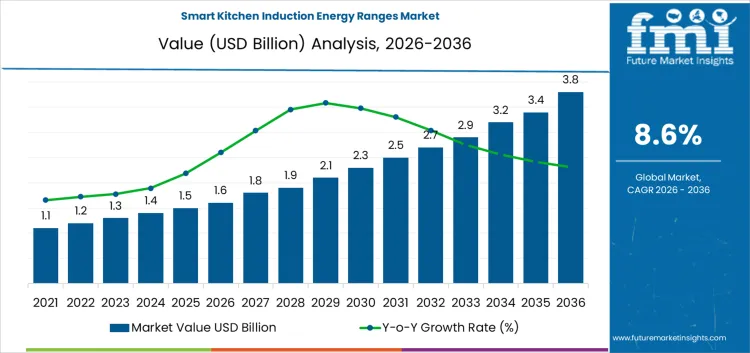
What is the Absolute Dollar Opportunity for the Smart Kitchen Induction Energy Ranges Market through 2036?
The absolute dollar opportunity for the smart kitchen induction energy ranges market is substantial, reflecting consistent and growing demand for smart appliances. Starting from USD 1.8 billion in 2026, the market is expected to grow by USD 0.1 billion annually in the first few years, reaching USD 2.1 billion by 2028. As the adoption of smart kitchen technologies increases, the market will see greater acceleration, with USD 0.2 billion increases each year from 2029 to 2036. By 2036, the market will reach USD 4.1 billion, representing a total absolute dollar opportunity of USD 2.3 billion over the forecast period.
This absolute dollar opportunity underscores the significant potential for growth in the market, driven by ongoing technological advancements, rising consumer demand for energy-efficient solutions, and the increasing trend toward smart homes. The market's expansion reflects the broader shift toward sustainability and convenience in the kitchen appliance sector, presenting opportunities for both established and new players to capitalize on this growing trend.
Smart Kitchen Induction Energy Ranges Market Key Takeaways
| Metric | Value |
|---|---|
| Industry Sales Value (2026) | USD 1.8 billion |
| Industry Forecast Value (2036) | USD 4.1 billion |
| Industry Forecast CAGR (2026 to 2036) | 8.6% |
What Is Driving the Smart Kitchen Induction Energy Ranges Market?
The smart kitchen induction energy ranges market evolved from broader shifts in residential and commercial cooking technologies toward safer and more efficient appliances. Conventional gas and electric coil ranges dominated kitchens for decades due to familiarity, low initial cost, and established installation practices. Early induction cooktops emerged as an alternative with faster heating and improved energy efficiency, yet adoption was gradual because of higher upfront costs and limited integration with smart home systems.
Traditional electric and gas ranges lacked precise power modulation and connectivity, which constrained user convenience and remote control capabilities. As consumer preferences shifted toward energy savings and cleaner indoor air quality, induction technology gained interest among early adopters. Initial uptake occurred in premium kitchen segments where performance, rapid temperature response, and controlled cooking were prioritized. These early use cases helped establish performance expectations and highlighted induction’s advantages in power efficiency and surface safety, while also identifying barriers such as compatibility with cookware materials and perceived complexity in operation. Retail appliance channels and culinary professionals contributed to awareness, shaping consumer interest beyond niche markets.
Future demand for smart kitchen induction energy ranges is expected to be shaped by increasing emphasis on energy efficiency, integration with smart home ecosystems, and growing consumer expectations for connected cooking experiences. Adoption will be driven by households seeking appliances that reduce energy consumption, provide precise temperature control, and offer remote monitoring and automation features via smartphone or voice activated platforms. Advances in sensor technologies and embedded controls will enable induction ranges to optimize power delivery, adapt cooking profiles, and integrate seamlessly with recipe and kitchen management applications. Growth factors will include expanding smart appliance infrastructure, rising electrification of household energy use, and regulatory incentives for energy efficient home technologies in many regions.
Manufacturers are likely to offer a broader range of models with enhanced user interfaces, interoperability with home energy management systems, and improved ergonomic design that appeals to mainstream consumers. Barriers include higher upfront purchase costs relative to conventional ranges, consumer education on induction cookware requirements, and variability in regional electrical standards that affect installation. Long term market expansion will depend on demonstrable energy savings, continuous improvement in smart features, and alignment of product offerings with broader trends in connected kitchens and residential electrification.
What are the Key Segments in the Smart Kitchen Induction Energy Ranges Market?
The Smart Kitchen Induction Energy Ranges market is segmented into channels and end users. Channel segments include online retail, specialty kitchen stores, electronics superstores, direct OEM sales, and others, with online retail holding the largest share at 44%. End-user segments consist of residential consumers, hospitality & commercial kitchens, property developers & builders, and others, with residential consumers representing the largest share at 58%.
The market is driven by the growing demand for energy-efficient, smart kitchen appliances that provide convenience, control, and energy savings. As consumers prioritize sustainability and technology integration in their kitchen appliances, induction energy ranges, especially smart models, are gaining popularity. Key regions driving the growth of this market include North America, Europe, and Asia Pacific, where advancements in smart home technology and the rise of modern cooking trends are influencing consumer behavior.
What is Driving Growth in the Online Retail Channel?
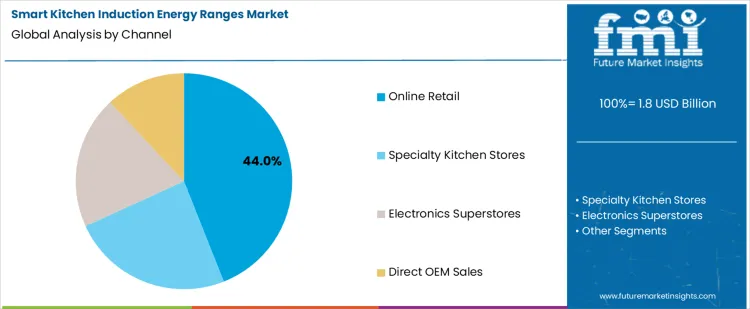
Online retail leads the channel segment in the Smart Kitchen Induction Energy Ranges market, accounting for 44% of the market share. This growth is primarily driven by the increasing preference for online shopping, where consumers can easily compare different models, read reviews, and make informed decisions. Online platforms provide a wide variety of smart kitchen induction ranges, along with competitive pricing and the convenience of home delivery, making it easier for consumers to purchase these advanced kitchen appliances.
The rise of e-commerce has also made it easier for manufacturers to reach a larger audience, including those in remote or underserved areas, further boosting sales. In addition, the growing trend of smart homes and the increasing adoption of IoT devices is propelling the demand for smart kitchen appliances that can be controlled via mobile apps or voice commands. Online retail channels are expected to continue dominating the market as more consumers embrace digital shopping, especially in regions like North America and Europe, where e-commerce is well-established.
What is Driving the Demand from Residential Consumers in the Smart Kitchen Induction Energy Ranges Market?
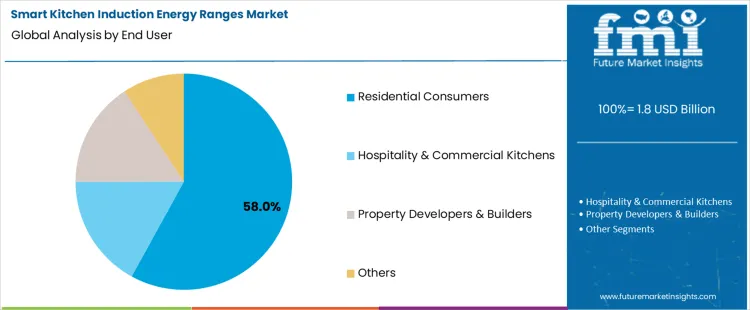
Residential consumers represent the largest end-user segment in the Smart Kitchen Induction Energy Ranges market, holding 58% of the market share. The demand for smart kitchen induction ranges is growing rapidly in the residential sector, driven by the increasing desire for energy-efficient, time-saving, and technologically advanced cooking solutions. Induction energy ranges offer faster cooking times, precise temperature control, and energy savings compared to traditional gas and electric stoves, making them an attractive option for modern households.
The integration of smart features, such as app control, voice activation, and connectivity with other smart home devices, appeals to consumers looking for convenience and efficiency in their kitchens. As the focus on sustainability and reducing household energy consumption increases, induction cooking, which uses less energy and produces less heat than traditional methods, is becoming more popular. The growing trend of modernizing kitchens with high-tech appliances, particularly in developed regions like North America and Europe, is further fueling demand from residential consumers. As more consumers seek to upgrade their kitchens with energy-efficient and smart appliances, the market for smart kitchen induction energy ranges is expected to continue growing.
What are the Key Dynamics in the Smart Kitchen Induction Energy Ranges Market?
The smart kitchen induction energy ranges market is expanding as consumers increasingly seek advanced kitchen appliances that combine energy efficiency, ease of use, and enhanced functionality. Induction cooking technology, known for its rapid heating and precise temperature control, is being further enhanced by smart features, such as connectivity with mobile apps, voice control, and integration with home automation systems. These smart features allow users to monitor and control cooking remotely, set timers, and receive notifications for more convenient cooking experiences. The market is driven by a growing preference for energy-efficient cooking solutions, as induction ranges use less energy compared to traditional gas or electric stoves. Consumers prioritize modern, sleek, and easy-to-clean appliances, the demand for smart induction ranges continues to rise. The increasing adoption of smart home technologies, along with the need for environmentally friendly products, further fuels the market’s growth.
What are the Key Drivers of Growth in the Smart Kitchen Induction Energy Ranges Market?
The growth of the smart kitchen induction energy ranges market is driven by several factors. First, the increasing consumer demand for energy-efficient cooking solutions is a significant driver, as induction cooking technology is more energy-efficient compared to traditional cooking methods, offering faster heat-up times and precise temperature control. With growing environmental concerns, consumers are increasingly choosing induction ranges as part of their efforts to reduce energy consumption and carbon footprints. Another key driver is the growing adoption of smart home technologies, with consumers looking to integrate their kitchen appliances with other smart devices, such as voice assistants and mobile apps. This trend allows for more convenient and connected cooking experiences, where users can control their ranges remotely, set cooking schedules, and monitor cooking progress. Advancements in induction cooking technology, including the development of more affordable and powerful models, are making smart kitchen induction ranges more accessible to a wider range of consumers. Finally, rising disposable incomes and a shift toward premium kitchen appliances, particularly in developed markets, are fueling market growth.
What are the Key Restraints in the Smart Kitchen Induction Energy Ranges Market?
Despite its growth potential, the smart kitchen induction energy ranges market faces several challenges. One major restraint is the relatively high cost of smart induction ranges, which can be more expensive than traditional gas or electric stoves. The premium price associated with these advanced features may deter price-sensitive consumers or those with budget constraints. The widespread adoption of induction cooking is hindered by the need for compatible cookware, as only certain types of pots and pans work with induction cooktops. Consumers may need to replace their existing cookware to fully utilize induction ranges, which adds to the overall cost of switching to this technology. Another challenge is the complexity of installation, as induction energy ranges often require specific electrical requirements, which could be a barrier for some consumers, particularly in regions with older homes or buildings. Furthermore, while smart features offer added convenience, they also introduce potential cybersecurity concerns related to the integration of kitchen appliances into the broader home network, raising privacy and security issues for some users.
What are the Key Trends in the Smart Kitchen Induction Energy Ranges Market?
Several trends are shaping the smart kitchen induction energy ranges market. One significant trend is the increasing integration of artificial intelligence (AI) and machine learning algorithms into smart induction ranges. These technologies are being used to enhance the cooking experience by offering features like auto-cooking programs, temperature adjustment based on food type, and personalized cooking preferences based on user behavior. There is growing interest in the development of energy-efficient and eco-friendly appliances. Consumers are increasingly opting for appliances that not only save energy but also have a lower environmental impact, with induction ranges being seen as a sustainable alternative to gas cooking. The trend towards connected kitchens is also driving the market, with induction ranges being integrated into smart home ecosystems that allow for remote monitoring, control, and automation of cooking tasks. Furthermore, there is a growing demand for induction ranges with sleek, modern designs that fit seamlessly into contemporary kitchens, with features such as touchscreens, voice control compatibility, and Wi-Fi connectivity. The continuous evolution of these technologies and the increasing consumer preference for convenience and sustainability are key factors driving the market forward.
What is the Country-Wise Analysis of the Smart Kitchen Induction Energy Ranges Market?
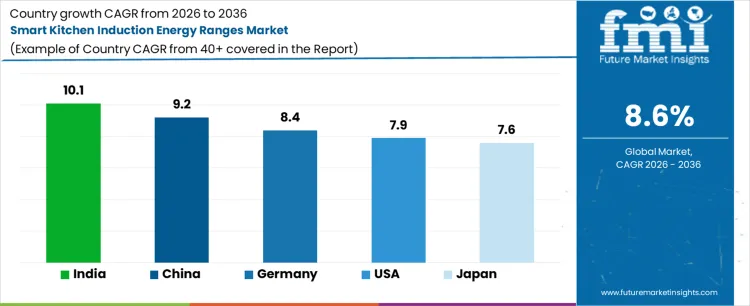
The smart kitchen induction energy ranges market is experiencing steady growth due to the rising demand for energy-efficient, convenient, and modern cooking appliances. Induction energy ranges, which offer precise temperature control, faster cooking times, and energy efficiency, are increasingly becoming popular in both residential and commercial kitchens. As consumers seek smarter, more sustainable kitchen solutions, countries such as the USA, China, Germany, Japan, and India are leading the way in the adoption of smart induction cooktops. These markets are influenced by factors such as increasing urbanization, rising disposable incomes, and a growing focus on energy conservation.
| Country | CAGR (%) |
|---|---|
| USA | 7.9 |
| China | 9.2 |
| Germany | 8.4 |
| Japan | 7.6 |
| India | 10.1 |
What is Driving the Growth of the Smart Kitchen Induction Energy Ranges Market in the USA?
The smart kitchen induction energy ranges market in the USA is growing at a CAGR of 7.9%. The demand for smart kitchen appliances is being driven by consumers’ increasing interest in energy-efficient and technologically advanced cooking solutions. Induction cooking offers significant benefits, such as faster cooking times and more precise temperature control, which are attractive to time-conscious consumers. The growing trend towards smart homes and connected appliances, where users can control and monitor devices remotely, is boosting the adoption of smart induction energy ranges. As sustainability becomes a priority in American households, induction energy ranges are gaining popularity due to their energy-saving capabilities, contributing to the market's growth.
How is the Smart Kitchen Induction Energy Ranges Market Performing in China?
China’s smart kitchen induction energy ranges market is growing at a CAGR of 9.2%. As China continues to modernize its urban infrastructure and consumers increasingly seek convenience and energy efficiency in their homes, the demand for smart kitchen appliances, including induction energy ranges, is rising. With a large population, rapid urbanization, and an increasing focus on sustainability, smart induction cooktops are becoming an attractive option for Chinese consumers. China’s growing middle class and higher disposable income levels are contributing to the increased demand for premium kitchen appliances. The market is also benefiting from innovations in smart home technologies and the growing popularity of IoT-enabled devices, which are driving the adoption of connected kitchen appliances in China.
What Factors are Shaping the Smart Kitchen Induction Energy Ranges Market in Germany?
Germany’s smart kitchen induction energy ranges market is growing at a CAGR of 8.4%. Known for its focus on sustainability and energy efficiency, Germany has become a key market for smart kitchen appliances. Induction energy ranges are highly valued in Germany due to their ability to reduce energy consumption and provide more precise cooking results. The German market is driven by consumer demand for high-performance, eco-friendly products, and the trend towards more intelligent, interconnected home appliances. With Germany’s well-established commitment to environmental sustainability, smart kitchen appliances that reduce energy consumption are gaining traction. The growing trend of smart homes and home automation is further contributing to the demand for induction energy ranges in Germany.
How is the Smart Kitchen Induction Energy Ranges Market Performing in Japan?
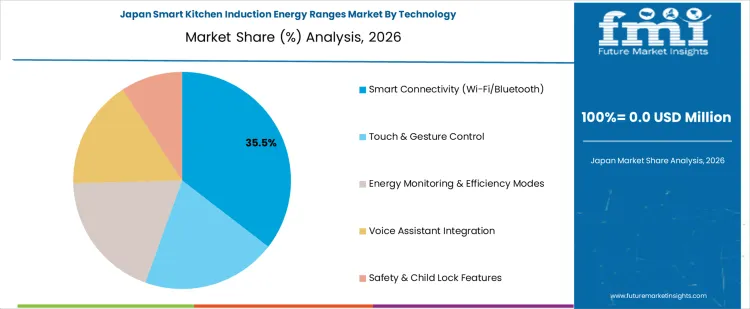
Japan’s smart kitchen induction energy ranges market is growing at a CAGR of 7.6%. Japan’s technological advancements and focus on energy-efficient solutions make it an ideal market for smart kitchen appliances. Induction cooking is gaining popularity due to its energy efficiency, precise temperature control, and faster cooking times, which are well-suited for Japan’s fast-paced lifestyle. As consumers in Japan prioritize convenience and sustainability in their homes, the demand for smart induction energy ranges is increasing. Japan’s strong inclination toward adopting new technologies, coupled with the increasing popularity of connected devices in the home, is driving the growth of smart kitchen appliances, including induction ranges.
What is Contributing to the Growth of the Smart Kitchen Induction Energy Ranges Market in India?
India’s smart kitchen induction energy ranges market is growing at a CAGR of 10.1%, the highest among the countries analyzed. India’s growing middle class, urbanization, and rising disposable incomes are key factors driving the demand for smart kitchen appliances. As consumers in India become more aware of the benefits of energy-efficient and time-saving cooking solutions, induction energy ranges are increasingly being adopted. The rise in the number of dual-income households and a shift toward more modern cooking solutions are contributing to the growth of the market. The Indian market is also seeing growing interest in smart home technologies, where consumers are looking for appliances that offer connectivity, convenience, and efficiency. As these trends continue, the demand for smart kitchen induction energy ranges in India is expected to grow rapidly.
What is the Competitive Landscape for the Smart Kitchen Induction Energy Ranges Market?
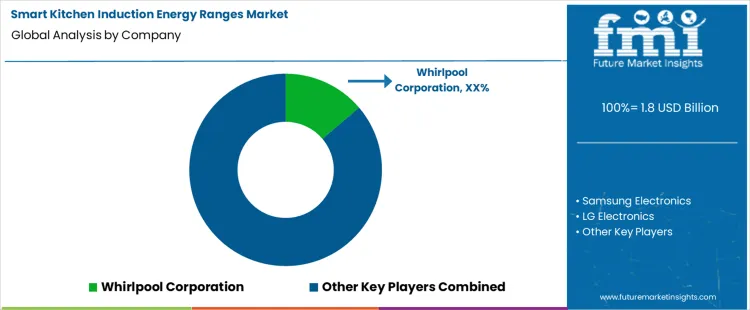
The smart kitchen induction energy ranges market is experiencing significant growth, driven by consumer demand for energy-efficient, innovative, and user-friendly kitchen appliances. Whirlpool Corporation leads the market with its smart kitchen induction ranges that combine energy-efficient induction cooking technology with smart connectivity features, allowing users to control and monitor cooking processes remotely through mobile apps. The company’s focus on integrating smart technologies, like voice control and automation, positions it as a market leader. Samsung Electronics is another key player, offering induction ranges with smart features, such as Wi-Fi connectivity, which allow users to adjust settings remotely and enhance cooking precision. Samsung’s integration of AI and smart sensors in its induction ranges helps optimize cooking performance. LG Electronics also competes strongly in the market, providing induction ranges with smart technologies, including ThinQ™ smart home integration for remote control and monitoring. LG focuses on offering intuitive and customizable cooking experiences, positioning itself as a key competitor in the smart kitchen space. Electrolux AB offers a range of smart induction ranges with advanced cooking features, focusing on energy efficiency, smart integration, and intuitive controls. Bosch Home Appliances is another major player, known for its high-quality induction energy ranges, integrating smart technologies that improve cooking efficiency and user experience. These companies are shaping the competitive landscape with their innovative product offerings, emphasizing the convenience of smart connectivity and energy-saving technologies.
In the competitive landscape of the smart kitchen induction energy ranges market, companies focus on technological innovation, smart integration, and consumer-centric design to maintain their market positions. Whirlpool Corporation continues to enhance its induction ranges with advanced cooking modes, smart features, and energy-saving technologies, positioning itself as a top choice for consumers looking for intelligent kitchen solutions. Samsung Electronics focuses on expanding its product lineup with AI-driven cooking technologies that automatically adjust cooking parameters for optimal results. LG Electronics is advancing its smart kitchen appliances by integrating them into broader smart home ecosystems, allowing for seamless integration with other connected devices. Electrolux AB is focusing on energy-efficient induction ranges that provide superior cooking performance while ensuring sustainability. Bosch Home Appliances is investing in smart technologies to improve cooking accuracy, safety, and ease of use, with an emphasis on quality and long-lasting durability. These strategies are positioning these companies to lead the growing market for smart kitchen induction energy ranges, where consumers demand efficiency, connectivity, and innovation.
Key Players of the Smart Kitchen Induction Energy Ranges Market
- Whirlpool Corporation
- Samsung Electronics
- LG Electronics
- Electrolux AB
- Bosch Home Appliances
- Others
Scope of the Report
| Items | Values |
|---|---|
| Quantitative Units (2026) | USD Billion |
| Technology | Smart Connectivity (Wi-Fi/Bluetooth), Touch & Gesture Control, Energy Monitoring & Efficiency Modes, Voice Assistant Integration, Safety & Child Lock Features |
| Channel | Online Retail, Specialty Kitchen Stores, Electronics Superstores, Direct OEM Sales |
| End User | Residential Consumers, Hospitality & Commercial Kitchens, Property Developers & Builders, Others |
| Companies | Whirlpool Corporation, Samsung Electronics, LG Electronics, Electrolux AB, Bosch Home Appliances, Others |
| Regions Covered | North America, Latin America, Western Europe, Eastern Europe, South Asia and Pacific, East Asia, Middle East & Africa |
| Countries Covered | United States, Canada, Mexico, Brazil, Argentina, Germany, France, United Kingdom, Italy, Spain, Netherlands, China, India, Japan, South Korea, ANZ, GCC Countries, South Africa |
| Additional Attributes | Dollar by sales by technology, channel, end user, and region. Includes market trends towards energy efficiency, smart connectivity, cost-effectiveness, and the role of advanced features in enhancing user experience in residential and commercial kitchens. |
Smart Kitchen Induction Energy Ranges Market Segmentation
Technology
- Smart Connectivity (Wi-Fi/Bluetooth)
- Touch & Gesture Control
- Energy Monitoring & Efficiency Modes
- Voice Assistant Integration
- Safety & Child Lock Features
Channel
- Online Retail
- Specialty Kitchen Stores
- Electronics Superstores
- Direct OEM Sales
- Others
End User
- Residential Consumers
- Hospitality & Commercial Kitchens
- Property Developers & Builders
- Others
Region
- Asia Pacific
- China
- Japan
- India
- Australia & New Zealand
- ASEAN
- Rest of Asia Pacific
- Europe
- Germany
- United Kingdom
- France
- Italy
- Spain
- Nordic
- BENELUX
- Rest of Europe
- North America
- United States
- Canada
- Mexico
- Latin America
- Brazil
- Argentina
- Rest of Latin America
- Middle East & Africa
- Kingdom of Saudi Arabia
- Other GCC Countries
- South Africa
- Rest of Middle East & Africa
Bibliography
- Whirlpool Corporation. (2023). Smart Kitchen Induction Energy Ranges: Advancing Energy Efficiency and Smart Home Integration. Whirlpool Insights.
- Samsung Electronics. (2023). Innovative Smart Kitchen Appliances: The Rise of Induction Energy Ranges with AI and Connectivity. Samsung Electronics Research Papers.
- LG Electronics. (2023). The Future of Smart Kitchens: LG’s Role in Revolutionizing Cooking with Smart Induction Ranges. LG Electronics Reports.
- Electrolux AB. (2023). Induction Cooking Technology: Sustainability and Efficiency in Modern Kitchens. Electrolux Smart Solutions.
- Bosch Home Appliances. (2023). Smart Induction Energy Ranges: Enhancing Cooking Efficiency and Convenience. Bosch Home Appliances Perspectives.
Frequently Asked Questions
How big is the smart kitchen induction energy ranges market in 2026?
The global smart kitchen induction energy ranges market is estimated to be valued at USD 1.8 billion in 2026.
What will be the size of smart kitchen induction energy ranges market in 2036?
The market size for the smart kitchen induction energy ranges market is projected to reach USD 4.1 billion by 2036.
How much will be the smart kitchen induction energy ranges market growth between 2026 and 2036?
The smart kitchen induction energy ranges market is expected to grow at a 8.6% CAGR between 2026 and 2036.
What are the key product types in the smart kitchen induction energy ranges market?
The key product types in smart kitchen induction energy ranges market are smart connectivity (wi-fi/bluetooth), touch & gesture control, energy monitoring & efficiency modes, voice assistant integration and safety & child lock features.
Which channel segment to contribute significant share in the smart kitchen induction energy ranges market in 2026?
In terms of channel, online retail segment to command 44.0% share in the smart kitchen induction energy ranges market in 2026.
Preview the report firsthand - request a free sample
Get SampleGet the brochure for pricing and purchase details.
Get PDFTable of Content
- Executive Summary
- Global Market Outlook
- Demand-side Trends
- Supply-side Trends
- Technology Roadmap Analysis
- Analysis and Recommendations
- Market Overview
- Market Coverage / Taxonomy
- Market Definition / Scope / Limitations
- Market Background
- Market Dynamics
- Drivers
- Restraints
- Opportunity
- Trends
- Scenario Forecast
- Demand in Optimistic Scenario
- Demand in Likely Scenario
- Demand in Conservative Scenario
- Opportunity Map Analysis
- Product Life Cycle Analysis
- Supply Chain Analysis
- Investment Feasibility Matrix
- Value Chain Analysis
- PESTLE and Porter’s Analysis
- Regulatory Landscape
- Regional Parent Market Outlook
- Production and Consumption Statistics
- Import and Export Statistics
- Market Dynamics
- Global Market Analysis 2021 to 2025 and Forecast, 2026 to 2036
- Historical Market Size Value (USD Million) Analysis, 2021 to 2025
- Current and Future Market Size Value (USD Million) Projections, 2026 to 2036
- Y-o-Y Growth Trend Analysis
- Absolute $ Opportunity Analysis
- Global Market Pricing Analysis 2021 to 2025 and Forecast 2026 to 2036
- Global Market Analysis 2021 to 2025 and Forecast 2026 to 2036, By Technology
- Introduction / Key Findings
- Historical Market Size Value (USD Million) Analysis By Technology , 2021 to 2025
- Current and Future Market Size Value (USD Million) Analysis and Forecast By Technology , 2026 to 2036
- Smart Connectivity (Wi-Fi/Bluetooth)
- Touch & Gesture Control
- Energy Monitoring & Efficiency Modes
- Voice Assistant Integration
- Safety & Child Lock Features
- Smart Connectivity (Wi-Fi/Bluetooth)
- Y-o-Y Growth Trend Analysis By Technology , 2021 to 2025
- Absolute $ Opportunity Analysis By Technology , 2026 to 2036
- Global Market Analysis 2021 to 2025 and Forecast 2026 to 2036, By Channel
- Introduction / Key Findings
- Historical Market Size Value (USD Million) Analysis By Channel, 2021 to 2025
- Current and Future Market Size Value (USD Million) Analysis and Forecast By Channel, 2026 to 2036
- Online Retail
- Specialty Kitchen Stores
- Electronics Superstores
- Direct OEM Sales
- Online Retail
- Y-o-Y Growth Trend Analysis By Channel, 2021 to 2025
- Absolute $ Opportunity Analysis By Channel, 2026 to 2036
- Global Market Analysis 2021 to 2025 and Forecast 2026 to 2036, By End User
- Introduction / Key Findings
- Historical Market Size Value (USD Million) Analysis By End User, 2021 to 2025
- Current and Future Market Size Value (USD Million) Analysis and Forecast By End User, 2026 to 2036
- Residential Consumers
- Hospitality & Commercial Kitchens
- Property Developers & Builders
- Others
- Residential Consumers
- Y-o-Y Growth Trend Analysis By End User, 2021 to 2025
- Absolute $ Opportunity Analysis By End User, 2026 to 2036
- Global Market Analysis 2021 to 2025 and Forecast 2026 to 2036, By Region
- Introduction
- Historical Market Size Value (USD Million) Analysis By Region, 2021 to 2025
- Current Market Size Value (USD Million) Analysis and Forecast By Region, 2026 to 2036
- North America
- Latin America
- Western Europe
- Eastern Europe
- East Asia
- South Asia and Pacific
- Middle East & Africa
- Market Attractiveness Analysis By Region
- North America Market Analysis 2021 to 2025 and Forecast 2026 to 2036, By Country
- Historical Market Size Value (USD Million) Trend Analysis By Market Taxonomy, 2021 to 2025
- Market Size Value (USD Million) Forecast By Market Taxonomy, 2026 to 2036
- By Country
- USA
- Canada
- Mexico
- By Technology
- By Channel
- By End User
- By Country
- Market Attractiveness Analysis
- By Country
- By Technology
- By Channel
- By End User
- Key Takeaways
- Latin America Market Analysis 2021 to 2025 and Forecast 2026 to 2036, By Country
- Historical Market Size Value (USD Million) Trend Analysis By Market Taxonomy, 2021 to 2025
- Market Size Value (USD Million) Forecast By Market Taxonomy, 2026 to 2036
- By Country
- Brazil
- Chile
- Rest of Latin America
- By Technology
- By Channel
- By End User
- By Country
- Market Attractiveness Analysis
- By Country
- By Technology
- By Channel
- By End User
- Key Takeaways
- Western Europe Market Analysis 2021 to 2025 and Forecast 2026 to 2036, By Country
- Historical Market Size Value (USD Million) Trend Analysis By Market Taxonomy, 2021 to 2025
- Market Size Value (USD Million) Forecast By Market Taxonomy, 2026 to 2036
- By Country
- Germany
- UK
- Italy
- Spain
- France
- Nordic
- BENELUX
- Rest of Western Europe
- By Technology
- By Channel
- By End User
- By Country
- Market Attractiveness Analysis
- By Country
- By Technology
- By Channel
- By End User
- Key Takeaways
- Eastern Europe Market Analysis 2021 to 2025 and Forecast 2026 to 2036, By Country
- Historical Market Size Value (USD Million) Trend Analysis By Market Taxonomy, 2021 to 2025
- Market Size Value (USD Million) Forecast By Market Taxonomy, 2026 to 2036
- By Country
- Russia
- Poland
- Hungary
- Balkan & Baltic
- Rest of Eastern Europe
- By Technology
- By Channel
- By End User
- By Country
- Market Attractiveness Analysis
- By Country
- By Technology
- By Channel
- By End User
- Key Takeaways
- East Asia Market Analysis 2021 to 2025 and Forecast 2026 to 2036, By Country
- Historical Market Size Value (USD Million) Trend Analysis By Market Taxonomy, 2021 to 2025
- Market Size Value (USD Million) Forecast By Market Taxonomy, 2026 to 2036
- By Country
- China
- Japan
- South Korea
- By Technology
- By Channel
- By End User
- By Country
- Market Attractiveness Analysis
- By Country
- By Technology
- By Channel
- By End User
- Key Takeaways
- South Asia and Pacific Market Analysis 2021 to 2025 and Forecast 2026 to 2036, By Country
- Historical Market Size Value (USD Million) Trend Analysis By Market Taxonomy, 2021 to 2025
- Market Size Value (USD Million) Forecast By Market Taxonomy, 2026 to 2036
- By Country
- India
- ASEAN
- Australia & New Zealand
- Rest of South Asia and Pacific
- By Technology
- By Channel
- By End User
- By Country
- Market Attractiveness Analysis
- By Country
- By Technology
- By Channel
- By End User
- Key Takeaways
- Middle East & Africa Market Analysis 2021 to 2025 and Forecast 2026 to 2036, By Country
- Historical Market Size Value (USD Million) Trend Analysis By Market Taxonomy, 2021 to 2025
- Market Size Value (USD Million) Forecast By Market Taxonomy, 2026 to 2036
- By Country
- Kingdom of Saudi Arabia
- Other GCC Countries
- Turkiye
- South Africa
- Other African Union
- Rest of Middle East & Africa
- By Technology
- By Channel
- By End User
- By Country
- Market Attractiveness Analysis
- By Country
- By Technology
- By Channel
- By End User
- Key Takeaways
- Key Countries Market Analysis
- USA
- Pricing Analysis
- Market Share Analysis, 2025
- By Technology
- By Channel
- By End User
- Canada
- Pricing Analysis
- Market Share Analysis, 2025
- By Technology
- By Channel
- By End User
- Mexico
- Pricing Analysis
- Market Share Analysis, 2025
- By Technology
- By Channel
- By End User
- Brazil
- Pricing Analysis
- Market Share Analysis, 2025
- By Technology
- By Channel
- By End User
- Chile
- Pricing Analysis
- Market Share Analysis, 2025
- By Technology
- By Channel
- By End User
- Germany
- Pricing Analysis
- Market Share Analysis, 2025
- By Technology
- By Channel
- By End User
- UK
- Pricing Analysis
- Market Share Analysis, 2025
- By Technology
- By Channel
- By End User
- Italy
- Pricing Analysis
- Market Share Analysis, 2025
- By Technology
- By Channel
- By End User
- Spain
- Pricing Analysis
- Market Share Analysis, 2025
- By Technology
- By Channel
- By End User
- France
- Pricing Analysis
- Market Share Analysis, 2025
- By Technology
- By Channel
- By End User
- India
- Pricing Analysis
- Market Share Analysis, 2025
- By Technology
- By Channel
- By End User
- ASEAN
- Pricing Analysis
- Market Share Analysis, 2025
- By Technology
- By Channel
- By End User
- Australia & New Zealand
- Pricing Analysis
- Market Share Analysis, 2025
- By Technology
- By Channel
- By End User
- China
- Pricing Analysis
- Market Share Analysis, 2025
- By Technology
- By Channel
- By End User
- Japan
- Pricing Analysis
- Market Share Analysis, 2025
- By Technology
- By Channel
- By End User
- South Korea
- Pricing Analysis
- Market Share Analysis, 2025
- By Technology
- By Channel
- By End User
- Russia
- Pricing Analysis
- Market Share Analysis, 2025
- By Technology
- By Channel
- By End User
- Poland
- Pricing Analysis
- Market Share Analysis, 2025
- By Technology
- By Channel
- By End User
- Hungary
- Pricing Analysis
- Market Share Analysis, 2025
- By Technology
- By Channel
- By End User
- Kingdom of Saudi Arabia
- Pricing Analysis
- Market Share Analysis, 2025
- By Technology
- By Channel
- By End User
- Turkiye
- Pricing Analysis
- Market Share Analysis, 2025
- By Technology
- By Channel
- By End User
- South Africa
- Pricing Analysis
- Market Share Analysis, 2025
- By Technology
- By Channel
- By End User
- USA
- Market Structure Analysis
- Competition Dashboard
- Competition Benchmarking
- Market Share Analysis of Top Players
- By Regional
- By Technology
- By Channel
- By End User
- Competition Analysis
- Competition Deep Dive
- Whirlpool Corporation
- Overview
- Product Portfolio
- Profitability by Market Segments (Product/Age /Sales Channel/Region)
- Sales Footprint
- Strategy Overview
- Marketing Strategy
- Product Strategy
- Channel Strategy
- Samsung Electronics
- LG Electronics
- Electrolux AB
- Bosch Home Appliances
- Others
- Whirlpool Corporation
- Competition Deep Dive
- Assumptions & Acronyms Used
- Research Methodology


