

- Industry Size (2026)
- USD 23.4 Mn
- Forecast (2036)
- USD 33.1 Mn
- CAGR (2026 to 2036)
- 3.5%
Demand for Massoia Bark Essential Oil in South Korea Forecast and Outlook 2026 to 2036
The demand for massoia bark essential oil in South Korea is expected to reach USD 23.4 million in 2026 and grow to USD 33.1 million by 2036, reflecting a 3.5% CAGR. While the market shows steady growth potential, it is not without its challenges. Execution risk looms as the sourcing and production of massoia bark are concentrated in specific regions, which exposes suppliers to fluctuations in supply chain stability. Adoption friction arises from the niche nature of the product, where it competes with a range of other essential oils, making it difficult to establish broader market penetration. Economic sensitivity remains a key constraint, as the product's appeal is highly dependent on consumer trends and the discretionary spending of industries such as personal care and aromatherapy. While the market offers upside, particularly in premium segments, suppliers must navigate these risks carefully, balancing supply security, pricing strategies, and market expansion efforts.
Quick Stats for the Demand for Massoia Bark Essential Oil in South Korea
- Massoia Bark Essential Oil in South Korea Value (2026): USD 23.4 million
- Massoia Bark Essential Oil in South Korea Forecast Value (2036): USD 33.1 million
- Massoia Bark Essential Oil in South Korea Forecast CAGR (2026 to 2036): 3.5%
- Massoia Bark Essential Oil in South Korea Leading Segment: Conventional Massoia Bark Essential Oil (65%)
- Key Growth Regions of Massoia Bark Essential Oil in South Korea: Jeju (leading CAGR ~4.2%)
- Top Players of Massoia Bark Essential Oil in South Korea: PT.Scent Indonesia, Nusaroma, Alabama Essential Oil, Penta Manufacturing Company, Berjé
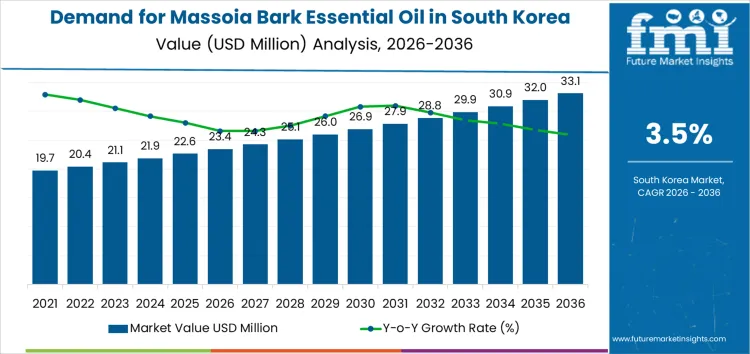
What is the Growth Forecast for the Demand for Massoia Bark Essential Oil in South Korea through 2036?
The contribution of volume vs price growth in the demand for Massoia bark essential oil in South Korea will show a balanced mix across the forecast period. From 2026 to 2030, volume growth is expected to drive the majority of market expansion as demand for Massoia bark oil increases with rising consumer awareness and preference for natural ingredients. The increased adoption of Massoia bark oil in luxury cosmetics, fragrances, and wellness products will lead to higher volumes of consumption. As the market matures, additional volume growth will come from expanding product lines and applications.
While price growth will contribute gradually to the overall market expansion, its impact will be relatively stable due to the competitive nature of the essential oils industry. Price increases will be driven by factors such as raw material costs, scarcity, and demand for high-quality extracts, but the overall contribution of price growth will remain secondary to the steady increase in volume. By 2036, the market will reach USD 33.1 million, with the volume growth being the key driver of this increase, contributing more significantly than price adjustments over the period.
Key Takeaways for Demand for Massoia Bark Essential Oil in South Korea
| Metric | Value |
|---|---|
| Industry Sales Value (2026) | USD 23.4 million |
| Industry Forecast Value (2036) | USD 33.1 million |
| Industry Forecast CAGR (2026 to 2036) | 3.5% |
Why is the Demand for Massoia Bark Essential Oil Growing in South Korea?
Demand for massoia bark essential oil in South Korea stems from its unique aromatic profile and functional properties that appeal to fragrance and wellness product developers. Perfumers and cosmetic formulators use this natural oil to impart creamy, sweet, and lactonic notes in perfumes, lotions, and personal care blends.
South Korean consumers show strong interest in distinctive sensory experiences and high-quality natural ingredients, especially in premium beauty and scented product segments. Massoia bark oil offers an alternative to synthetic lactones, aligning with product strategies that emphasize botanically derived components. Procurement teams in cosmetic and fragrance companies consider oil purity, organoleptic consistency, and supplier traceability when specifying massoia bark essential oil. These criteria reflect both regulatory expectations for ingredient documentation and brand efforts to meet consumer demand for transparent sourcing.
Looking ahead, several factors are likely to support continued demand for massoia bark essential oil in South Korea. Growth in the personal care and lifestyle fragrance markets fuels interest in diverse aromatic ingredients that help brands differentiate products in a crowded marketplace. Consumers in urban centres are drawn to products that combine sensory appeal with natural origin, reinforcing formulation choices that incorporate plant-derived oils. Wellness and aromatherapy applications extend demand beyond perfumes into diffusers and body care, where the oil’s characteristic scent contributes to product positioning.
Regulatory frameworks that encourage clear labeling of natural versus synthetic constituents further motivate brands to favour essential oils with authentic botanical sourcing. Additionally, collaboration between buyers and suppliers focusing on sustainable harvest and ethical sourcing practices enhances massoia bark oil’s appeal among buyers who prioritize environmental and social governance criteria. Together, these factors shape procurement strategies and support a solid trajectory for massoia bark essential oil within South Korea’s fragrance and personal care sectors.
What Shapes the Demand for Massoia Bark Essential Oil in South Korea?
The demand for Massoia bark essential oil in South Korea is influenced by two key factors: the nature of the product and its division within the market. Conventional Massoia bark essential oil holds the largest share at 65%, while essential oils comprise 55% of the product division. These two segments are central to understanding how Massoia bark essential oil is positioned in the South Korean market, reflecting consumer preferences for both conventional and organic solutions, and the widespread use of essential oils in industries such as cosmetics, personal care, and aromatherapy.
Why Does Conventional Massoia Bark Essential Oil Lead the Market?
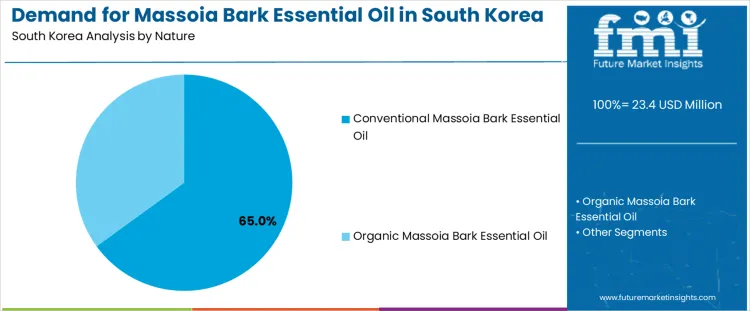
Conventional Massoia bark essential oil dominates the South Korean market with a 65% share, primarily due to its affordability, availability, and established use in various applications. Conventional oils are widely preferred for their cost-effectiveness, making them the go-to choice for mass production of products in sectors like cosmetics, personal care, and fragrance manufacturing. This oil is used for its soothing aroma, therapeutic properties, and versatility in skincare formulations such as creams, lotions, and bath products. Its distinct scent also makes it a popular ingredient in air fresheners, candles, and perfumes. The demand for conventional Massoia bark essential oil is further driven by its proven effectiveness and long-standing availability, with consistent supply chains supporting its use in both local and export markets. As South Korean consumers continue to prioritize natural and holistic wellness products, the preference for conventional essential oils in personal care and home fragrance products is expected to remain strong.
Why Do Essential Oils Comprise the Largest Product Division?
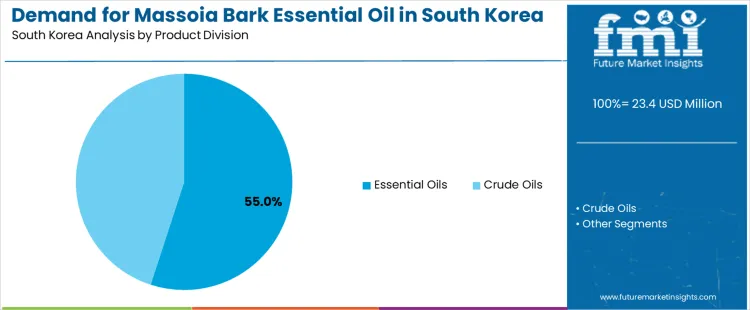
Essential oils account for 55% of the product division for Massoia bark essential oil in South Korea, driven by the growing popularity of aromatherapy and natural products. Essential oils are a key ingredient in a wide range of products, from personal care items like perfumes, hair care, and skincare to wellness products such as diffusers, massage oils, and bath products. The increasing demand for natural alternatives to synthetic fragrances and the rising interest in wellness and stress relief treatments has strengthened the market for essential oils in South Korea. Massoia bark essential oil, with its calming and soothing properties, is particularly valued in the wellness and relaxation sectors. As consumer interest in aromatherapy and holistic health solutions grows, the demand for essential oils, including Massoia bark oil, continues to rise, making them a central focus of the product division. The versatility of essential oils in multiple industries, coupled with the desire for more sustainable and natural ingredients, ensures their continued dominance in the South Korean market.
What Is the Current Demand for Massoia Bark Essential Oil in South Korea?
Demand for Massoia bark essential oil in South Korea is relatively specialized and remains smaller compared with major essential oils such as citrus, lavender, or tea tree. This oil, valued for its sweet, creamy, and lactonic aroma, is used by fragrance houses and niche formulators in perfumery, aromatherapy blends, and high-end cosmetics. Procurement by manufacturers reflects interest in unique scent profiles that differentiate premium products. The scale of uptake is tied to activity in the fine fragrance and boutique personal care segments rather than broad commodity use.
What Factors Are Driving Demand for Massoia Bark Essential Oil in South Korea?
Several factors support the demand for Massoia bark essential oil in South Korea. Growth in the premium cosmetics and fragrance segments encourages perfumers to explore distinctive aromatic ingredients that aid product differentiation. Niche brands and artisanal producers incorporate specialty oils to create signature scent profiles that appeal to discerning consumers. Increasing awareness of natural and plant-derived ingredients in personal care encourages formulators to evaluate alternative botanical extracts. Trade relationships with suppliers in Southeast Asia, where Massoia bark is sourced, influence availability and selection for South Korean buyers.
What Are the Constraints on Demand for Massoia Bark Essential Oil in South Korea?
Despite interest in unique aromatic ingredients, several constraints temper demand for Massoia bark essential oil in South Korea. The limited supply and higher cost of this essential oil relative to more common botanical oils restrict its use to niche or luxury product lines. Regulatory considerations around safety, purity, and allergen disclosure in cosmetic and aromatherapy applications add complexity to formulation and compliance. Competition from other specialty aroma chemicals or synthetic substitutes that mimic lactonic notes can reduce uptake of the natural oil. Awareness of the ingredient remains concentrated among specialist perfumers and premium segment formulators rather than mass-market manufacturers.
What Trends Are Emerging in South Korea’s Massoia Bark Essential Oil Use?
Emerging trends in the use of Massoia bark essential oil in South Korea reflect broader shifts in consumer preferences and formulation strategies. There is a modest rise in interest toward unique and exotic botanical extracts as brands seek to tell differentiated ingredient stories. Demand for natural scent profiles in boutique fragrances and small-batch cosmetics supports occasional inclusion of rare oils like Massoia bark. Sustainability considerations are also shaping sourcing decisions, with buyers seeking traceability and responsible harvesting practices. Collaboration between niche fragrance houses and ingredient suppliers influences how and where this essential oil is applied, especially in limited-edition or artisanal product lines.
What is the Regional Outlook for the Demand for Massoia Bark Essential Oil in South Korea?
The demand for Massoia Bark essential oil in South Korea is influenced by the growing popularity of natural and organic products in the fragrance, skincare, and wellness industries. Jeju leads the demand, driven by its tourism and hospitality sectors, which increasingly incorporate natural oils into their offerings. South Gyeongsang and South Jeolla follow with steady growth, supported by local manufacturing and wellness product production. North Jeolla shows moderate demand, driven by smaller-scale manufacturing and agricultural applications. As the trend for eco-friendly and natural ingredients in cosmetics, aromatherapy, and personal care products rises, the use of Massoia Bark essential oil is set to grow across all regions.
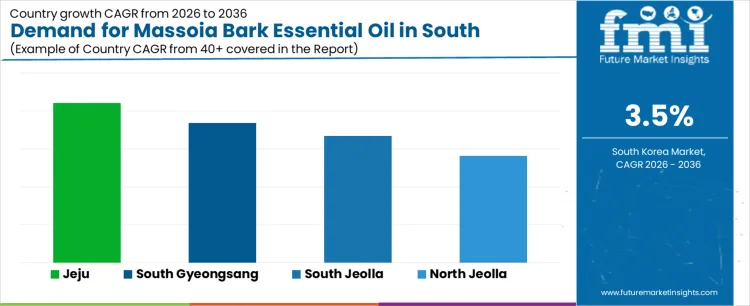
| Province | CAGR (2026–2036) |
|---|---|
| South Gyeongsang | 3.7% |
| North Jeolla | 2.8% |
| South Jeolla | 3.3% |
| Jeju | 4.2% |
What drives the demand for Massoia Bark Essential Oil in South Gyeongsang?
South Gyeongsang is projected to experience a CAGR of 3.7% in the demand for Massoia Bark essential oil from 2026 to 2036. The region’s increasing focus on wellness products, natural cosmetics, and eco-friendly consumer goods contributes to this growth. The rise in demand for plant-based ingredients in personal care, skincare, and fragrance products, where Massoia Bark oil is used for its soothing and aromatic properties, plays a significant role. South Gyeongsang’s expanding beauty and cosmetic manufacturing sectors, coupled with the growth in aromatherapy and wellness-focused industries, supports the steady adoption of this essential oil. Additionally, the region’s growing focus on sustainable production methods and consumer demand for organic ingredients further drives the use of natural oils like Massoia Bark.
What influences the demand for Massoia Bark Essential Oil in North Jeolla?
North Jeolla is expected to see a moderate CAGR of 2.8% in Massoia Bark essential oil demand from 2026 to 2036. While North Jeolla’s industrial and agricultural sectors are diverse, the region’s demand for Massoia Bark oil is driven primarily by the food, wellness, and natural product industries. North Jeolla’s growing agricultural base and interest in organic farming contribute to a steady need for essential oils in natural health products, including skin care and wellness items. As consumer preferences shift toward more natural and sustainable options in personal care products, Massoia Bark oil, known for its calming aroma and therapeutic properties, is increasingly used in cosmetics, aromatherapy, and organic health formulations. The growing awareness of the benefits of natural oils is expected to support gradual demand growth in the region.
What drives the demand for Massoia Bark Essential Oil in South Jeolla?
South Jeolla is projected to grow at a CAGR of 3.3% in the demand for Massoia Bark essential oil from 2026 to 2036. The region’s expanding wellness and cosmetic industries, coupled with its increasing adoption of natural ingredients in product formulations, contribute to this steady growth. South Jeolla’s role in manufacturing and agriculture makes it a key player in the production of natural oils and organic health products. The rising demand for Massoia Bark essential oil is driven by its use in skincare, personal care, and fragrance products that emphasize organic and plant-based ingredients. As the region’s consumer base becomes more health-conscious and environmentally aware, the need for natural, eco-friendly ingredients like Massoia Bark oil will continue to grow.
Why is Jeju projected to have the highest demand growth for Massoia Bark Essential Oil?
Jeju is projected to experience the highest demand growth for Massoia Bark essential oil, with a CAGR of 4.2% from 2026 to 2036. The island’s thriving tourism sector, which emphasizes wellness, relaxation, and natural beauty, plays a key role in driving the demand for natural essential oils. Jeju’s wellness-focused tourism industry increasingly incorporates Massoia Bark oil into spa treatments, aromatherapy, and luxury skincare products, further fueling the demand. Additionally, Jeju’s local beauty and personal care industries are expanding, with a strong preference for plant-based, sustainable ingredients in their products. As Jeju continues to develop as a hub for eco-conscious tourism and beauty, the demand for Massoia Bark essential oil is expected to grow significantly, positioning the region as the fastest-growing market for this product in South Korea.
How are Competitors Differentiating in the Massoia Bark Essential Oil Market in South Korea?
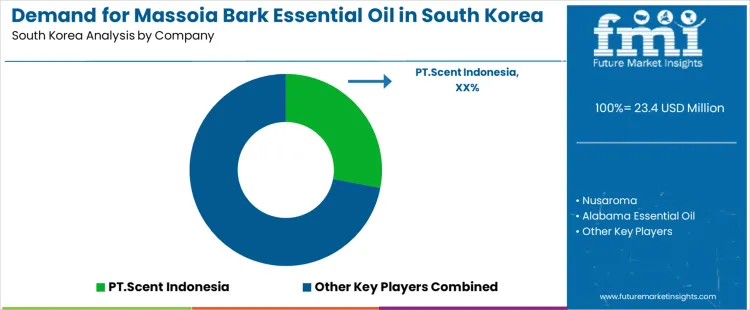
The demand for Massoia bark essential oil in South Korea is driven by its use in the fragrance, cosmetics, and aromatherapy industries, where its rich, warm, and sweet scent is highly valued. PT. Scent Indonesia, the leading player, dominates the market by offering high-quality Massoia bark essential oil that emphasizes purity and aromatic consistency. Their oil is prized for its deep, complex fragrance, making it a preferred choice for premium perfume and personal care brands. Nusaroma competes by providing high-quality, sustainably sourced Massoia bark essential oil, highlighting its commitment to ethical sourcing and environmental sustainability, which resonates well with South Korean consumers who prioritize eco-friendly products. Alabama Essential Oil differentiates itself with a focus on smaller batch production, ensuring high levels of control over the quality and consistency of its Massoia bark essential oil.
Penta Manufacturing Company offers Massoia bark essential oil with an emphasis on therapeutic-grade oils that appeal to aromatherapy practitioners and health-conscious consumers in South Korea. Their products are marketed as high-purity oils with superior aroma profiles, ideal for use in wellness and spa treatments. Berjé focuses on a broader range of essential oils, including Massoia bark, with an emphasis on their versatility and application across various industries, including food flavoring, perfumery, and personal care. Each of these companies uses product brochures to emphasize their commitment to quality, sustainability, and application-specific benefits, helping South Korean businesses in the fragrance and wellness sectors choose the most appropriate Massoia bark essential oil for their needs.
Key Players of the Demand for Massoia Bark Essential Oil in South Korea
- PT.Scent Indonesia
- Nusaroma
- Alabama Essential Oil
- Penta Manufacturing Company
- Berjé
Scope of the Report
| Items | Values |
|---|---|
| Quantitative Units (2026) | USD Million |
| Nature | Conventional Massoia Bark Essential Oil, Organic Massoia Bark Essential Oil |
| Product Division | Essential Oils, Crude Oils |
| Application | Flavoring Agent, Pharmaceuticals, Aromatherapy, Dairy Industry, Fragrances and Deodorants |
| Grade | 66%-90%, 40%-50%, 51%-65%, 91%-95% |
| Companies | PT.Scent Indonesia, Nusaroma, Alabama Essential Oil, Penta Manufacturing Company, Berjé |
| Region Covered | South Korea |
| Provinces Covered | South Gyeongsang, North Jeolla, South Jeolla, Jeju |
| Additional Attributes | Dollar sales by nature, product division, application, and grade. Demand is driven by growing use of Massoia Bark Essential Oil in flavoring, pharmaceuticals, and aromatherapy. Both conventional and organic grades see varying adoption, with higher-grade oils preferred for high-end fragrance and deodorant applications. |
Demand for Massoia Bark Essential Oil in South Korea
Nature
- Organic Massoia Bark Essential Oil
- Conventional Massoia Bark Essential Oil
Product Division
- Essential Oils
- Crude Oils
- Other
Application
- Pharmaceuticals
- Flavoring Agent
- Aromatherapy
- Dairy Industry
- Fragrances and Deodorants
- Other
Grade
- 40%-50%
- 51%-65%
- 66%-90%
- 91%-95%
- Other
Provinces
- South Gyeongsang
- North Jeolla
- South Jeolla
- Jeju
Bibliography
- Ministry of Food and Drug Safety (Republic of Korea). (2024). Regulations and ingredient standards for essential oils used in cosmetics and therapeutic preparations. Government of South Korea.
- Korea Aromatherapy Association. (2024). Domestic aromatherapy market and trends in natural essential oils, 2024 edition. Korea Aromatherapy Association.
- Korea Cosmetics Association. (2024). Plant-based and essential oil ingredients in South Korean cosmetic formulations. Korea Cosmetics Association.
Frequently Asked Questions
How big is the demand for massoia bark essential oil in south korea in 2026?
The demand for massoia bark essential oil in south korea is estimated to be valued at USD 23.4 million in 2026.
What will be the size of massoia bark essential oil in south korea in 2036?
The market size for the massoia bark essential oil in south korea is projected to reach USD 33.1 million by 2036.
How much will be the demand for massoia bark essential oil in south korea growth between 2026 and 2036?
The demand for massoia bark essential oil in south korea is expected to grow at a 3.5% CAGR between 2026 and 2036.
What are the key product types in the massoia bark essential oil in south korea?
The key product types in massoia bark essential oil in south korea are conventional massoia bark essential oil and organic massoia bark essential oil.
Which product division segment is expected to contribute significant share in the massoia bark essential oil in south korea in 2026?
In terms of product division, essential oils segment is expected to command 55.0% share in the massoia bark essential oil in south korea in 2026.
Preview the report firsthand - request a free sample
Get SampleGet the brochure for pricing and purchase details.
Get PDFTable of Content
- Executive Summary
- South Korea Market Outlook
- Demand-side Trends
- Supply-side Trends
- Technology Roadmap Analysis
- Analysis and Recommendations
- Market Overview
- Market Coverage / Taxonomy
- Market Definition / Scope / Limitations
- Market Background
- Market Dynamics
- Drivers
- Restraints
- Opportunity
- Trends
- Scenario Forecast
- Demand in Optimistic Scenario
- Demand in Likely Scenario
- Demand in Conservative Scenario
- Opportunity Map Analysis
- Product Life Cycle Analysis
- Supply Chain Analysis
- Investment Feasibility Matrix
- Value Chain Analysis
- PESTLE and Porter’s Analysis
- Regulatory Landscape
- Regional Parent Market Outlook
- Production and Consumption Statistics
- Import and Export Statistics
- Market Dynamics
- South Korea Market Analysis 2021 to 2025 and Forecast, 2026 to 2036
- Historical Market Size Value (USD Million) Analysis, 2021 to 2025
- Current and Future Market Size Value (USD Million) Projections, 2026 to 2036
- Y-o-Y Growth Trend Analysis
- Absolute $ Opportunity Analysis
- South Korea Market Pricing Analysis 2021 to 2025 and Forecast 2026 to 2036
- South Korea Market Analysis 2021 to 2025 and Forecast 2026 to 2036, By Nature
- Introduction / Key Findings
- Historical Market Size Value (USD Million) Analysis By Nature , 2021 to 2025
- Current and Future Market Size Value (USD Million) Analysis and Forecast By Nature , 2026 to 2036
- Conventional Massoia Bark Essential Oil
- Organic Massoia Bark Essential Oil
- Conventional Massoia Bark Essential Oil
- Y-o-Y Growth Trend Analysis By Nature , 2021 to 2025
- Absolute $ Opportunity Analysis By Nature , 2026 to 2036
- South Korea Market Analysis 2021 to 2025 and Forecast 2026 to 2036, By Product Division
- Introduction / Key Findings
- Historical Market Size Value (USD Million) Analysis By Product Division, 2021 to 2025
- Current and Future Market Size Value (USD Million) Analysis and Forecast By Product Division, 2026 to 2036
- Essential Oils
- Crude Oils
- Essential Oils
- Y-o-Y Growth Trend Analysis By Product Division, 2021 to 2025
- Absolute $ Opportunity Analysis By Product Division, 2026 to 2036
- South Korea Market Analysis 2021 to 2025 and Forecast 2026 to 2036, By Application
- Introduction / Key Findings
- Historical Market Size Value (USD Million) Analysis By Application, 2021 to 2025
- Current and Future Market Size Value (USD Million) Analysis and Forecast By Application, 2026 to 2036
- Flavoring Agent
- Pharmaceuticals
- Aromatherapy
- Dairy Industry
- Fragrances and Deodorants
- Flavoring Agent
- Y-o-Y Growth Trend Analysis By Application, 2021 to 2025
- Absolute $ Opportunity Analysis By Application, 2026 to 2036
- South Korea Market Analysis 2021 to 2025 and Forecast 2026 to 2036, By Grade
- Introduction / Key Findings
- Historical Market Size Value (USD Million) Analysis By Grade, 2021 to 2025
- Current and Future Market Size Value (USD Million) Analysis and Forecast By Grade, 2026 to 2036
- 66%-90%
- 40%-50%
- 51%-65%
- 91%-95%
- 66%-90%
- Y-o-Y Growth Trend Analysis By Grade, 2021 to 2025
- Absolute $ Opportunity Analysis By Grade, 2026 to 2036
- Market Structure Analysis
- Competition Dashboard
- Competition Benchmarking
- Market Share Analysis of Top Players
- By Regional
- By Nature
- By Product Division
- By Application
- By Grade
- Competition Analysis
- Competition Deep Dive
- PT.Scent Indonesia
- Overview
- Product Portfolio
- Profitability by Market Segments (Product/Age /Sales Channel/Region)
- Sales Footprint
- Strategy Overview
- Marketing Strategy
- Product Strategy
- Channel Strategy
- Nusaroma
- Alabama Essential Oil
- Penta Manufacturing Company
- Berjé
- PT.Scent Indonesia
- Competition Deep Dive
- Assumptions & Acronyms Used
- Research Methodology


