

- Industry Size (2026)
- USD 72.6 Mn
- Forecast (2036)
- USD 99.8 Mn
- CAGR (2026 to 2036)
- 3.2%
Demand for Neuromuscular Transmission Monitor in South Korea Forecast and Outlook 2026 to 2036
The demand for neuromuscular transmission monitors in South Korea is likely to grow from USD 72.6 million in 2026 to USD 99.8 million in 2036 at a CAGR of 3.2%. These monitors are essential in assessing the neuromuscular function of patients undergoing surgeries that require muscle relaxation or monitoring during anesthesia. As South Korea continues to invest in its healthcare infrastructure and adopts advanced medical technologies, the demand for neuromuscular transmission monitors will rise. The increasing prevalence of surgeries and the need for precise anesthesia management will contribute significantly to the market growth.
Advancements in neuromuscular monitoring technology, coupled with growing awareness about patient safety during surgical procedures, will further drive the demand for these monitors. The rising adoption of anesthesia monitoring systems in South Korean hospitals and clinics will support market growth, as they provide enhanced monitoring capabilities and help improve surgical outcomes by ensuring proper muscle relaxation.
Quick Stats for the Demand for Neuromuscular Transmission Monitor in South Korea
- Neuromuscular Transmission Monitor in South Korea Value (2026): USD 72.6 million
- Neuromuscular Transmission Monitor in South Korea Forecast Value (2036): USD 99.8 million
- Neuromuscular Transmission Monitor in South Korea Forecast CAGR (2026 to 2036): 3.2%
- Neuromuscular Transmission Monitor in South Korea Leading Segment: Hospitals (65%)
- Key Growth Regions of Neuromuscular Transmission Monitor in South Korea: Jeju (leading CAGR ~3.9%)
- Top Players of Neuromuscular Transmission Monitor in South Korea: GE HealthCare (Applied Precision), Nihon Kohden Corporation, Medtronic plc, Drägerwerk AG & Co. KGaA, Koninklijke Philips N.V.
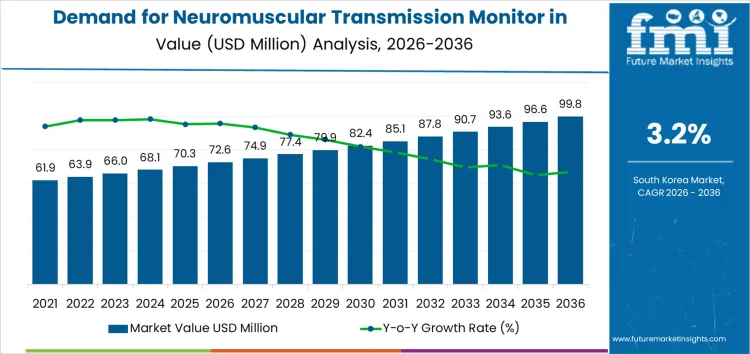
What is the Growth Forecast for the Neuromuscular Transmission Monitor Market in South Korea through 2036?
The neuromuscular transmission monitor market in South Korea is projected to grow steadily from 2026 to 2036. Starting at USD 72.6 million in 2026, the market is expected to rise to USD 74.9 million in 2027. By 2028, the market value will reach USD 77.4 million, followed by USD 79.9 million in 2029. The market will continue its gradual increase, reaching USD 82.4 million in 2030 and USD 85.1 million in 2031.
In the following years, demand for neuromuscular transmission monitors will keep rising, with the market projected to reach USD 87.8 million in 2032 and USD 90.7 million in 2033. By 2034, the market value will reach USD 93.6 million, and by 2035, it is expected to increase to USD 96.6 million. By 2036, the market will reach USD 99.8 million. The year-on-year (YoY) growth analysis shows steady, incremental growth, reflecting a consistent, though gradual, increase in demand for these devices driven by advances in surgical monitoring and anesthesia management.
Key Takeaways for Demand for Neuromuscular Transmission Monitor in South Korea
| Metric | Value |
|---|---|
| Industry Sales Value (2026) | USD 72.6 million |
| Industry Forecast Value (2036) | USD 99.8 million |
| Industry Forecast CAGR (2026 to 2036) | 3.2% |
Why is the Demand for Neuromuscular Transmission Monitors Growing in South Korea?
Demand for neuromuscular transmission (NMT) monitors in South Korea has strengthened as surgical teams and anaesthesia providers prioritise precision in perioperative care. These devices assess neuromuscular blockade depth during surgery, enabling clinicians to tailor muscle relaxant dosing and confirm recovery before extubation. Historically, manual assessment methods were subjective and prone to variability, prompting hospitals to adopt objective monitoring technologies that improve consistency in care delivery. In South Korea’s tertiary and specialised surgical centres, increasing volumes of complex procedures-such as laparoscopic, orthopaedic, and thoracic surgeries-have reinforced the need for reliable neuromuscular monitoring. Providers aim to reduce residual paralysis, decrease postoperative pulmonary complications, and shorten time in recovery units. Procurement teams evaluate NMT monitors based on accuracy, ease of integration with anaesthesia workstations, and waveform clarity, as these factors support clinical protocols and staff training. Hospitals with advanced anaesthesia information management systems seek devices that interface seamlessly with electronic records to document blockade depth and reversal events, enhancing data capture for quality assurance and audit purposes.
Looking ahead, demand for neuromuscular transmission monitors in South Korea is expected to grow as clinical standards evolve and healthcare facilities expand surgical capacities. Manufacturers and suppliers that focus on user-centric design, such as intuitive interfaces and automated calibration features, will appeal to anaesthesiologists and operating room staff. Compatibility with a broad range of patient types-including paediatric and bariatric populations-can widen applicability across hospital departments. Service, training, and technical support are key differentiators; vendors that provide in-hospital education on best practices and troubleshooting can strengthen adoption and long-term utilisation. Integration with broader perioperative decision support platforms, including analytics on blocker usage and recovery profiles, may influence purchasing decisions as facilities pursue efficiency and patient safety metrics. Alignment with local regulatory requirements and demonstration of clinical value through peer-reviewed evidence can support tenders and capital equipment planning, positioning companies to capture expanding demand in South Korea’s surgical device market.
What Are the Key Segments in Demand for Neuromuscular Transmission Monitors in South Korea?
The demand for neuromuscular transmission monitors in South Korea is driven by product type and end-user sectors. Key product types include nerve stimulating devices or monitors, which dominate the market with 55%, followed by electrodes and accessories. In terms of end users, hospitals are the leading segment, accounting for 65%, with specialty clinics and ambulatory surgical centers also contributing to the demand. As the need for accurate and effective monitoring during surgeries and anesthesia administration increases, neuromuscular transmission monitors are becoming critical in various healthcare settings.
How Does Product Type Influence Demand for Neuromuscular Transmission Monitors in South Korea?
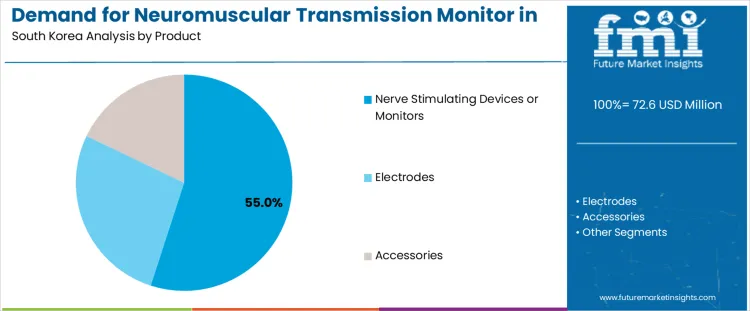
The demand for neuromuscular transmission monitors in South Korea is primarily driven by nerve stimulating devices or monitors, which make up 55% of the market. These devices are widely used to assess and monitor neuromuscular function, particularly during surgeries requiring general anesthesia, where precise control over muscle relaxation is essential. By stimulating specific nerves and measuring the resulting muscular response, these monitors help anesthesiologists and surgeons ensure that patients are receiving the appropriate level of muscle relaxation and that neuromuscular recovery is proceeding as expected. The growing number of surgeries, especially those requiring muscle relaxation such as orthopedic and abdominal surgeries, is driving demand for these devices.
Electrodes, while a smaller segment, are equally important for the proper functioning of neuromuscular transmission monitors. These components are crucial for delivering electrical stimulation and measuring the muscle responses accurately. As the precision of surgical procedures continues to improve, the demand for high-quality electrodes in neuromuscular transmission monitoring systems is expected to increase. Accessories, such as cables, battery packs, and calibration tools, are necessary for the optimal performance of these devices. While they represent a smaller portion of the market, accessories contribute to the overall functionality and longevity of the neuromuscular monitors, making them an integral part of the overall system.
What Is the Demand for Neuromuscular Transmission Monitors by End-User in South Korea?
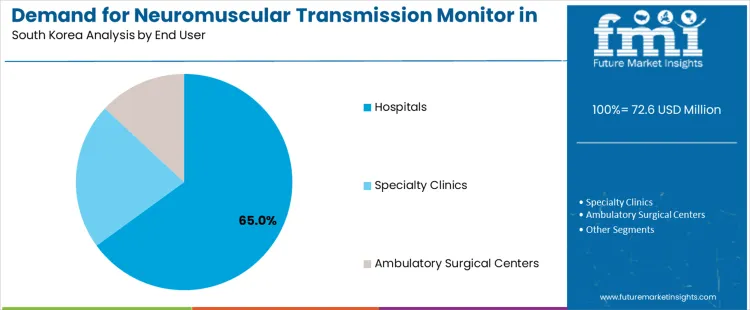
The demand for neuromuscular transmission monitors in South Korea is predominantly driven by hospitals, which account for 65% of the market. Hospitals are the primary settings for the use of neuromuscular transmission monitors, particularly in operating rooms where these devices are critical for ensuring proper muscle relaxation during surgeries. Hospitals require advanced, reliable monitoring equipment to maintain patient safety and optimize anesthesia management. The rising number of surgeries and increasing focus on minimizing post-operative complications, such as residual muscle paralysis, are driving the demand for these monitors in hospital settings.
Specialty clinics also contribute to the market demand, particularly in areas like pain management, where neuromuscular monitoring can assist in the administration of local anesthesia or muscle block procedures. These clinics require reliable monitoring tools to ensure the safety and comfort of patients undergoing non-invasive or minimally invasive procedures. Ambulatory surgical centers are another growing end-user segment, as they handle a variety of procedures that require precise control over anesthesia and muscle function. These centers benefit from neuromuscular transmission monitors to streamline their surgical workflows and ensure safe, efficient patient care during outpatient surgeries. As the demand for high-quality, precise monitoring equipment continues to rise across different medical settings, the neuromuscular transmission monitor market in South Korea is expected to grow, with hospitals remaining the dominant end-user segment.
What are the Key Dynamics in the Demand for Neuromuscular Transmission Monitors in South Korea?
Demand for neuromuscular transmission monitors (NMT monitors) in South Korea is shaped by clinical standards in anesthesia care, surgical throughput, and regulatory expectations for patient safety. These devices measure neuromuscular blockade depth during operative procedures, aiding anesthesiologists in dosing and recovery decisions. Tertiary hospitals, specialty surgery centers, and teaching hospitals constitute primary procurement segments. Institutional purchasing processes evaluate not only device accuracy but also integration with existing perioperative monitoring systems and electronic medical records. National health insurance reimbursement policies for anesthesia quality parameters influence adoption rates. Supplier engagement with clinical education and service support frameworks affects user confidence and long-term utilization.
What are the Drivers of Demand for Neuromuscular Transmission Monitors in South Korea?
A key driver is increasing emphasis on perioperative safety and quality outcomes, particularly in complex surgeries requiring balanced anesthesia. Clinical guidelines recommend objective monitoring of neuromuscular blockade to reduce risks of residual paralysis and postoperative respiratory complications. Growth in surgical volumes, including minimally invasive and ambulatory procedures, expands the need for precise neuromuscular assessment tools. Hospitals investing in operating room modernization prioritize monitors that deliver reproducible results, support decision making, and reduce anesthesia-related adverse events. Training programs for anesthesiology residents that incorporate objective monitoring principles further embed usage expectations. Competitive differentiation among hospital networks on safety metrics contributes to procurement momentum.
What are the Restraints on Demand for Neuromuscular Transmission Monitors in South Korea?
Restraints include budgetary constraints in smaller facilities where capital equipment purchases compete with other acute care priorities. The perceived cost of advanced monitors, including disposable sensors or accessories, can temper procurement decisions, especially where basic clinical outcomes are met without objective devices. Variability in clinician preference and familiarity affects uptake, as some anesthesiologists rely on qualitative methods rather than quantitative monitoring technologies. Service infrastructure and technical support availability are also factors; institutions with limited biomedical engineering resources may be hesitant to adopt devices that require specialized maintenance. Reimbursement frameworks that do not explicitly reward objective neuromuscular monitoring can slow investment cycles.
What Key Trends Affect Demand for Neuromuscular Transmission Monitors in South Korea?
A prominent trend is demand for quantitative NMT monitors that interface with perioperative data systems and support trend analysis over time. Hospitals are prioritizing devices that provide digital output compatible with clinical dashboards used in quality assurance programs. The integration of acceleromyography and electromyography technologies enhances measurement precision, attracting clinicians focused on evidence-based anesthesia care. Suppliers are responding with modular offerings that scale with operating room technology stacks, from basic standalone units to networked platforms. Training and certification initiatives by professional anesthesia associations highlight best practices for neuromuscular monitoring, reinforcing clinical adoption. Expansion of private surgical centers and multi-disciplinary perioperative care models also contributes to broader market engagement.
What is the Regional Demand Outlook for Neuromuscular Transmission Monitors in South Korea?
The demand for neuromuscular transmission monitors in South Korea is growing across various regions, driven by advancements in anesthesiology, critical care, and surgical practices. South Gyeongsang, with a projected CAGR of 3.4%, leads the market, supported by its advanced healthcare infrastructure and rising demand for precision monitoring during surgeries and intensive care. North Jeolla, with a growth rate of 2.6%, shows more moderate demand, influenced by regional healthcare expansion and increasing awareness of neuromuscular monitoring in clinical settings. South Jeolla, with a projected CAGR of 3.1%, is seeing steady demand growth, as more medical institutions incorporate neuromuscular transmission monitors in their anesthesia and ICU departments. Jeju, with the highest demand growth rate of 3.9%, stands out for its increasing focus on patient safety in surgical procedures, particularly in high-demand medical tourism. These regional trends highlight growing opportunities for suppliers of neuromuscular transmission monitors as healthcare facilities seek more precise monitoring tools to enhance patient outcomes.
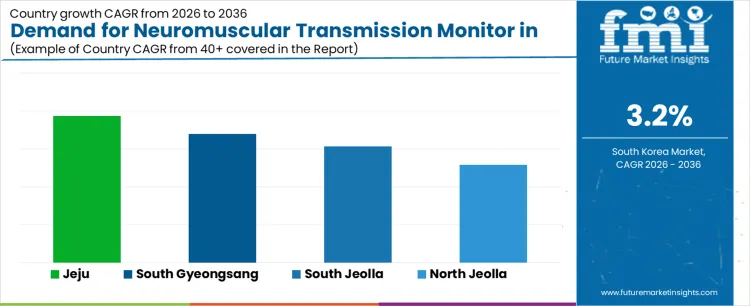
| Region | CAGR (2026 to 2036) |
|---|---|
| South Gyeongsang | 3.4% |
| North Jeolla | 2.6% |
| South Jeolla | 3.1% |
| Jeju | 3.9% |
How Can Manufacturers Target the Market in South Gyeongsang for Neuromuscular Transmission Monitors?
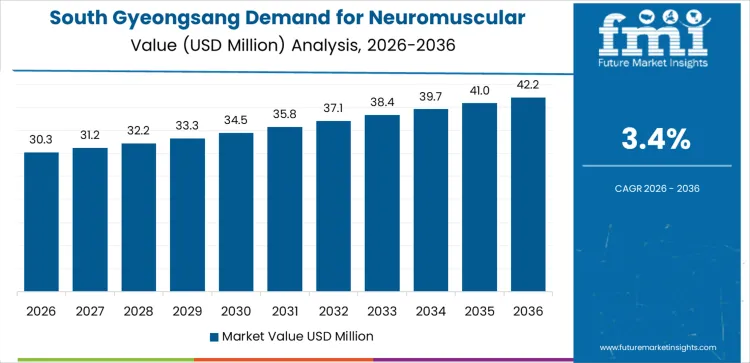
South Gyeongsang, with a projected CAGR of 3.4%, presents a robust market for neuromuscular transmission monitors. The region’s well-developed healthcare facilities, including advanced surgical centers and ICUs, are driving the demand for high-precision monitoring tools during anesthesia and critical care. Manufacturers should focus on offering reliable, easy-to-use, and accurate neuromuscular transmission monitors tailored to the needs of local healthcare providers. Building partnerships with hospitals, surgical centers, and anesthesiologists in South Gyeongsang can help establish credibility and expand market reach. As the region’s healthcare services continue to evolve, the demand for advanced monitoring solutions is expected to rise, creating long-term growth opportunities for suppliers in the market.
What is Driving Demand for Neuromuscular Transmission Monitors in North Jeolla?
North Jeolla, with a projected CAGR of 2.6%, is experiencing moderate demand for neuromuscular transmission monitors. The region is making steady progress in expanding its healthcare infrastructure, and as awareness of the benefits of neuromuscular monitoring during anesthesia increases, the need for these devices is expected to grow. Manufacturers targeting North Jeolla should focus on providing cost-effective, high-performance solutions that cater to the needs of local healthcare providers. Collaborations with local hospitals and anesthesia departments could help increase adoption and enhance the visibility of neuromuscular transmission monitors. As the region continues to develop its healthcare services, demand for these devices will likely grow gradually, presenting a growing opportunity for suppliers.
How is the Market for Neuromuscular Transmission Monitors Growing in South Jeolla?
South Jeolla, with a projected CAGR of 3.1%, is seeing steady growth in the demand for neuromuscular transmission monitors, particularly as the region’s healthcare infrastructure improves. The expanding number of surgeries, particularly in anesthesiology and intensive care, is driving the need for more accurate monitoring systems. Suppliers targeting South Jeolla should focus on providing devices that meet the growing demand for high-quality neuromuscular transmission monitoring in surgical and ICU settings. By working closely with hospitals and anesthesiology departments, companies can ensure that their products align with local medical standards and improve patient safety. The steady growth in this sector presents a solid market for neuromuscular transmission monitors in South Jeolla.
Why is Jeju Leading the Demand for Neuromuscular Transmission Monitors?
Jeju, with the highest projected CAGR of 3.9%, is experiencing the most significant growth in demand for neuromuscular transmission monitors. The region’s increasing focus on patient safety, particularly in medical tourism and high-quality healthcare services, is driving this rise. As Jeju continues to develop its medical tourism sector, the need for advanced anesthesia and monitoring devices becomes more critical. Suppliers can capitalize on this by offering highly accurate, user-friendly, and reliable neuromuscular transmission monitors that meet the needs of both local and international patients. The expanding healthcare infrastructure and the region’s focus on cutting-edge medical technologies present significant growth opportunities for manufacturers in Jeju’s growing medical market.
What is the Competitive Landscape for Neuromuscular Transmission Monitor Demand in South Korea?
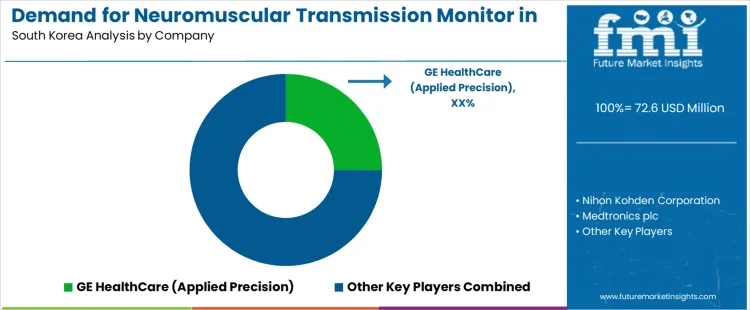
Demand for neuromuscular transmission monitors in South Korea is driven by hospitals, surgical centres, and anaesthesia departments that require precise assessment of neuromuscular blockade during operative procedures. Buyers specify devices that deliver reliable, real-time monitoring to improve dosing accuracy, minimise residual block, and support faster patient recovery. Clinical procurement decisions prioritise documented measurement performance, compatibility with existing anaesthesia systems, and ease of use in high-volume operating rooms. Requirements include validated algorithms for signal detection, display clarity for intraoperative interpretation, and robust sensor interfaces that withstand frequent sterilisation cycles. Regulatory compliance with Korean medical device standards and documented post-market safety records are key evaluation criteria for tender committees. Demand reflects broader initiatives to standardise anaesthesia practices across tertiary care institutions and regional hospitals, with emphasis on clinical outcomes and efficient utilisation of operating theatre resources.
Competition among major suppliers in South Korea’s neuromuscular transmission monitor segment is defined by product specification detail, clinical evidence support, and technical service frameworks. GE HealthCare (Applied Precision) is positioned as a leading supplier, with product brochures that specify measurement ranges, sensor types, calibration procedures, and integration pathways with anaesthesia workstations. Nihon Kohden Corporation materials outline neuromuscular monitoring solutions with emphasis on signal fidelity, display modes, and interoperability options that assist clinical engineering teams during evaluation. Medtronics plc documentation focuses on system accuracy, user interface features, and maintenance schedules that inform hospital procurement and biomedical support staff. Drägerwerk AG & Co. KGaA brochures describe monitors with performance tables on latency, sensitivity settings, and alarm functionality that help anaesthesia departments compare configurations. Koninklijke Philips N.V. literature presents neuromuscular monitoring devices with specification sheets on connectivity protocols, waveform analytics, and clinician-oriented workflows relevant to surgical units. These supplier materials typically include technical data parameters, usage guidelines, and quality certifications that aid South Korean hospital administrators, anaesthesiologists, and purchasing professionals when assessing offerings against clinical performance and operational integration requirements.
Key Players of the Demand for Neuromuscular Transmission Monitor in South Korea
- GE HealthCare (Applied Precision)
- Nihon Kohden Corporation
- Medtronics plc
- Drägerwerk AG & Co. KGaA
- Koninklijke Philips N.V.
Scope of the Report
| Items | Values |
|---|---|
| Quantitative Units (2026) | USD Million |
| Product | Nerve Stimulating Devices/Monitors, Electrodes, Accessories |
| Technology | Accelerography (ACG), Electromyography (EMG), Mechanomyography (MMG), Kinemyography (KMG) |
| End User | Hospitals, Specialty Clinics, Ambulatory Surgical Centers |
| Companies | GE HealthCare (Applied Precision), Nihon Kohden Corporation, Medtronic plc, Drägerwerk AG & Co. KGaA, Koninklijke Philips N.V. |
| Region Covered | South Korea |
| Provinces Covered | South Gyeongsang, North Jeolla, South Jeolla, Jeju |
| Additional Attributes | Dollar sales by product category, technology type, and end user. Increasing surgical volumes, greater emphasis on preventing residual neuromuscular blockade, and adoption of advanced EMG/ACG-based monitoring systems are driving demand across hospitals and surgical centers. |
Key Segments of Demand for Neuromuscular Transmission Monitor in South Korea
Product
- Nerve Stimulating Devices/Monitors
- Electrodes
- Accessories
- Other
Technology
- Accelerography (ACG)
- Electromyography (EMG)
- Mechanomyography (MMG)
- Kinemyography (KMG)
- Other
End User
- Hospitals
- Specialty Clinics
- Ambulatory Surgical Centers
- Other
Provinces
- South Gyeongsang
- North Jeolla
- South Jeolla
- Jeju
Bibliography
- U.S. Food and Drug Administration. (2024). Neuromuscular monitoring devices and anesthesia safety. FDA Center for Devices and Radiological Health.
- European Society of Anaesthesiology and Intensive Care. (2024). Guidelines on neuromuscular monitoring and patient safety. ESAIC.
- World Federation of Societies of Anaesthesiologists. (2024). Neuromuscular blockade monitoring standards. WFSA.
Frequently Asked Questions
How big is the demand for neuromuscular transmission monitor in south korea in 2026?
The demand for neuromuscular transmission monitor in south korea is estimated to be valued at USD 72.6 million in 2026.
What will be the size of neuromuscular transmission monitor in south korea in 2036?
The market size for the neuromuscular transmission monitor in south korea is projected to reach USD 99.8 million by 2036.
How much will be the demand for neuromuscular transmission monitor in south korea growth between 2026 and 2036?
The demand for neuromuscular transmission monitor in south korea is expected to grow at a 3.2% CAGR between 2026 and 2036.
What are the key product types in the neuromuscular transmission monitor in south korea?
The key product types in neuromuscular transmission monitor in south korea are nerve stimulating devices or monitors, electrodes and accessories.
Which technology segment is expected to contribute significant share in the neuromuscular transmission monitor in south korea in 2026?
In terms of technology, accelerography (acg) segment is expected to command 40.0% share in the neuromuscular transmission monitor in south korea in 2026.
Preview the report firsthand - request a free sample
Get SampleGet the brochure for pricing and purchase details.
Get PDFTable of Content
- Executive Summary
- South Korea Market Outlook
- Demand side Trends
- Supply-side Trends
- Technology Roadmap Analysis
- Analysis and Recommendations
- Market Overview
- Market Coverage / Taxonomy
- Market Definition / Scope / Limitations
- Market Background
- Market Dynamics
- Drivers
- Restraints
- Opportunity
- Trends
- Scenario Forecast
- Demand in Optimistic Scenario
- Demand in Likely Scenario
- Demand in Conservative Scenario
- Opportunity Map Analysis
- Product Life Cycle Analysis
- Supply Chain Analysis
- Investment Feasibility Matrix
- Value Chain Analysis
- PESTLE and Porter’s Analysis
- Regulatory Landscape
- Regional Parent Market Outlook
- Production and Consumption Statistics
- Import and Export Statistics
- Market Dynamics
- South Korea Market Analysis 2021 to 2025 and Forecast, 2026 to 2036
- Historical Market Size Value (USD Million) Analysis, 2021 to 2025
- Current and Future Market Size Value (USD Million) Projections, 2026 to 2036
- Y-o-Y Growth Trend Analysis
- Absolute $ Opportunity Analysis
- South Korea Market Pricing Analysis 2021 to 2025 and Forecast 2026 to 2036
- South Korea Market Analysis 2021 to 2025 and Forecast 2026 to 2036, By Product
- Introduction / Key Findings
- Historical Market Size Value (USD Million) Analysis By Product, 2021 to 2025
- Current and Future Market Size Value (USD Million) Analysis and Forecast By Product, 2026 to 2036
- Nerve Stimulating Devices or Monitors
- Electrodes
- Accessories
- Nerve Stimulating Devices or Monitors
- Y-o-Y Growth Trend Analysis By Product, 2021 to 2025
- Absolute $ Opportunity Analysis By Product, 2026 to 2036
- South Korea Market Analysis 2021 to 2025 and Forecast 2026 to 2036, By Technology
- Introduction / Key Findings
- Historical Market Size Value (USD Million) Analysis By Technology, 2021 to 2025
- Current and Future Market Size Value (USD Million) Analysis and Forecast By Technology, 2026 to 2036
- Accelerography (ACG)
- Electromyography (EMG)
- Mechanomyography (MMG)
- Kinemyography (KMG)
- Accelerography (ACG)
- Y-o-Y Growth Trend Analysis By Technology, 2021 to 2025
- Absolute $ Opportunity Analysis By Technology, 2026 to 2036
- South Korea Market Analysis 2021 to 2025 and Forecast 2026 to 2036, By End User
- Introduction / Key Findings
- Historical Market Size Value (USD Million) Analysis By End User, 2021 to 2025
- Current and Future Market Size Value (USD Million) Analysis and Forecast By End User, 2026 to 2036
- Hospitals
- Specialty Clinics
- Ambulatory Surgical Centers
- Hospitals
- Y-o-Y Growth Trend Analysis By End User, 2021 to 2025
- Absolute $ Opportunity Analysis By End User, 2026 to 2036
- Market Structure Analysis
- Competition Dashboard
- Competition Benchmarking
- Market Share Analysis of Top Players
- By Regional
- By Product
- By Technology
- By End User
- Competition Analysis
- Competition Deep Dive
- GE HealthCare (Applied Precision)
- Overview
- Product Portfolio
- Profitability by Market Segments (Product/Age /Sales Channel/Region)
- Sales Footprint
- Strategy Overview
- Marketing Strategy
- Product Strategy
- Channel Strategy
- Nihon Kohden Corporation
- Medtronics plc
- Drägerwerk AG & Co. KGaA
- Koninklijke Philips N.V.
- GE HealthCare (Applied Precision)
- Competition Deep Dive
- Assumptions & Acronyms Used
- Research Methodology


